❌

Reading view

Social media is full of weird video game mashups. Where are they all coming from?

AI tools are making it easier to modify and recreate games, raising questions about piracy, copyright and how far the technology could disrupt the industry

• Don’t get Pushing Buttons delivered to your inbox? Sign up here

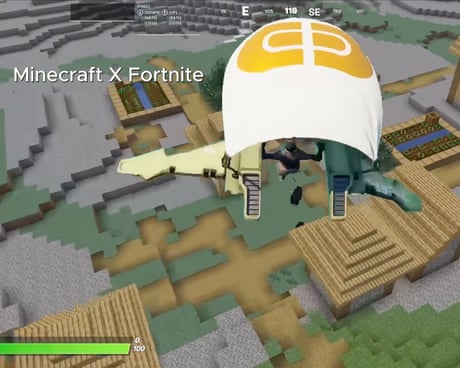
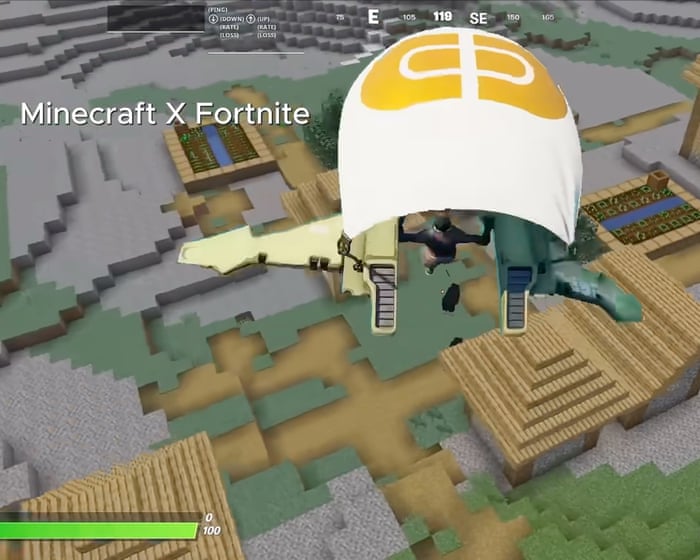
If your social media algorithms have clocked that you’re into video games, something strange will have happened in the past few weeks. Your feed, like mine, will have been full of clips of streamers playing bizarre mashups of popular video games. Skyrim in Minecraft. Halo, except the main character is Mario. Skate 2 in Call of Duty maps. A flood of professional-looking fan-coded game mods that are mildly interesting to look at for 30 seconds, but ultimately inconsequential. Would I download a mod that lets me play Wii Bowling inside a zombie shooter? No, but I am very interested in where they came from.

Of course, the answer – or at least, most of the answer – is AI. After a week of researching this (thanks especially to Replay Mode on YouTube for this informative video, which set me down this track) I now understand that these mashup mods are not just AI-generated videos, but AI-assisted coding. Basically, as of a few weeks ago, Anthropic’s Claude has become extremely good at decompiling video game code. Games are written by humans in readable code and then compiled into binary 1s and 0s that the PC or console running it can read; decompiling is the reversal of that process, revealing a game’s source code, which humans can then edit and mess around with for fun. This used to be an extremely laborious process. But now it is not, because humans aren’t doing much of it any more.

Continue reading...

© Photograph: YouTube
© Photograph: YouTube
© Photograph: YouTube

  •  

Castle Walls review – Prime’s first fully AI-generated show is here, and it’s a Vaseline-smeared mess

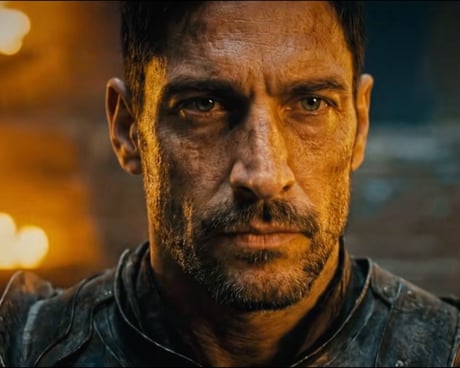
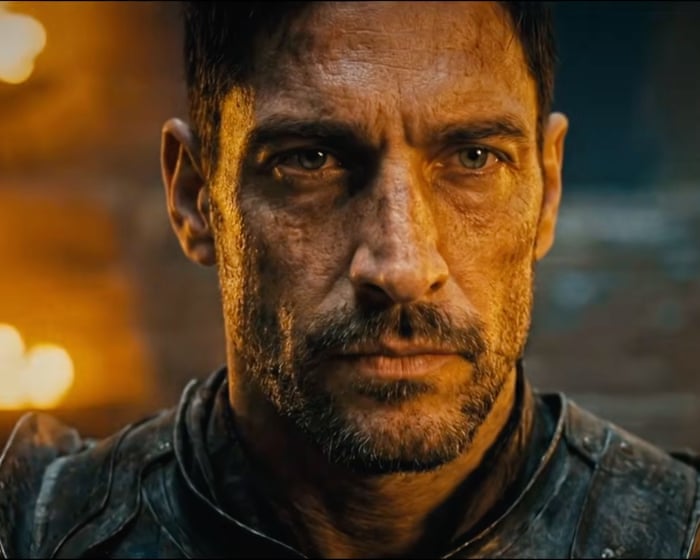
Billed as the first end-to-end AI-created series on a major streaming service, this Turkish show looks like the result of the prompt ‘make it cinematic’

Just as the world reels from Elon Musk’s AI-powered The Odyssey remake – though “remake” feels rather generous for a seven-minute splat of synthetic sludge – another bucket of AI gunk is dropped on to our faces. For Prime Video’s AI-generated TV series Castle Walls, produced by Turkish production studio Ay Yapım using a melange of generative video tools, has arrived, billed as the first end-to-end AI-created series to premiere on a major streaming platform.

It’s certainly more epic than Musk’s production, consisting of two 17-minute episodes. Set in the 11th century, the show revolves around the historic Alamut Castle, although it’s entirely absent of any real sense of time or place. I was briefly intrigued by the opening images, with their bold palette of blues and mustard browns and yellows – but as soon as the “people” appeared, looking like Vaseline-smeared Madame Tussauds creations slowly melting in the sun, everything came crashing down.

Continue reading...

© Computer-generated: Amazon Prime Video / YouTube

© Computer-generated: Amazon Prime Video / YouTube

© Computer-generated: Amazon Prime Video / YouTube

  •  

Will it be AI or the climate crisis that ends humanity? We can make it neither | Adam McKay and Philip Eubanks

Both of these threats have the same roots: private entities seeking to cash in. We have the power to stand against them

A summer of extreme heat, entire villages obliterated in Nepal, a super El Niño breaking records, Exxon publicly saying we may reach 3C by 2050 – could it possibly be any worse?

How about throwing AI extinction in the mix?

Continue reading...

© Photograph: Paul Sancya/AP

© Photograph: Paul Sancya/AP

© Photograph: Paul Sancya/AP

  •  

‘Elonville’: US residents say Musk’s xAI offered to buy homes if they don’t sue over datacenter noise

Several Mississippi homes have been purchased near datacenters and one resident said realtor outlined target to buy more than 400

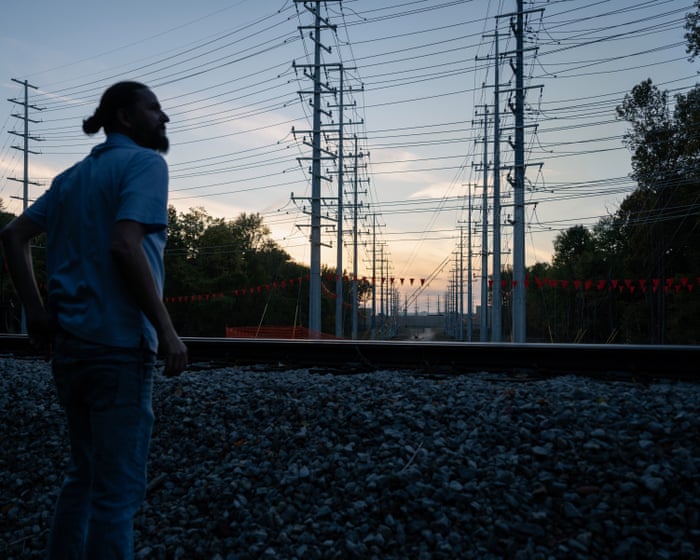
People in a Mississippi neighborhood, many of whom dislike a nearby power plant central to Elon Musk’s artificial intelligence ambitions, have received a stark offer – to sell their houses to his company and make way.

Real estate agents have been going door to door in Southaven, Mississippi, on behalf of xAI, touting a deal to purchase houses as long as the owners agree to not join a lawsuit against the company over the power plant’s noise. (Musk’s AI company officially became SpaceXAI in July and has lately been rebranded as SpaceXSI but to neighbors of the datacenter in Mississippi, it remains xAI.)

Continue reading...

© Photograph: Brandon Dill/The Guardian

© Photograph: Brandon Dill/The Guardian

© Photograph: Brandon Dill/The Guardian

  •  

‘There is no inevitable dystopia’: Jeanette Winterson on AI and the future of humanity

The author believes we are at a turning point as a species – and even in the shadow of big tech it’s up to us how we want to proceed

‘I am a storyteller by trade,” writes Jeanette Winterson on the first page of her 2021 book 12 Bytes, an idiosyncratic and thought-provoking series of essays in which she considered just how artificial intelligence might change everything about our lives. “And I know everything we do is a fiction until it’s a fact: the dream of flying, the dream of space travel, the dream of speaking to someone instantly, across time and space, the dream of not dying – or of returning.”

She had already been thinking about our possible futures for at least 15 years – her 2007 novel, The Stone Gods, for instance, imagined a post-climate catastrophe world populated by robots and humans who never age, while 12 Bytes was preceded by Frankisstein: A Love Story, which alternates a recreation of the summer Mary Shelley wrote Frankenstein with a trans doctor’s travels among present-day cryogenecists and AI-enabled robots.

Continue reading...

© Photograph: Sarah Lee/The Guardian

© Photograph: Sarah Lee/The Guardian

© Photograph: Sarah Lee/The Guardian

  •  

‘Emotional intimacy’ from AI chatbots would be banned under Australia’s digital duty of care laws

Labor government under pressure to create social media watchdog as new online safety standards bill passes lower house

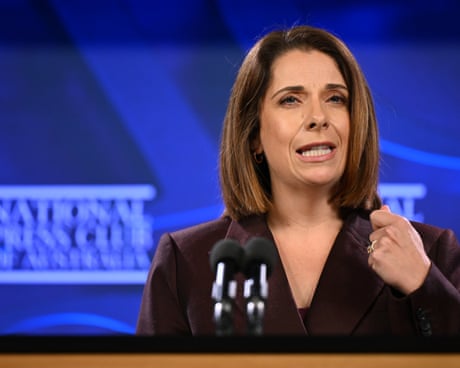
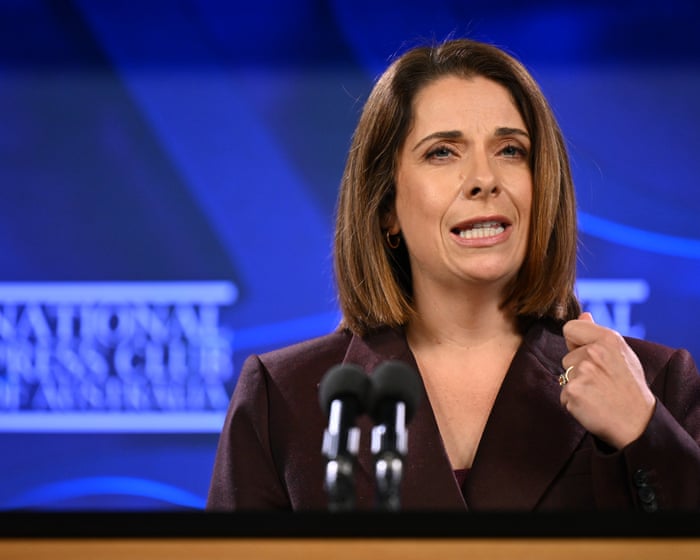
The federal government wants to ban AI chatbots which seek to create “emotional intimacy” after prime minister Anthony Albanese raised the alarm in a heartfelt speech about children treating these agents as their “best friend”.

But Labor is coming under increasing pressure to empower the telecommunications ombudsman to become a watchdog for social media and AI to give Australians an external complaints mechanism and allow the “naming and shaming” of big tech.

Sign up for Guardian Australia’s Politics, really newsletter here

Continue reading...

© Photograph: Lukas Coch/AAP

© Photograph: Lukas Coch/AAP

© Photograph: Lukas Coch/AAP

  •  

AI bots flooded 2023 UK government consultation on disposable vapes ban

Three-quarters of all responses were machine-generated in failed attempt to stop bill from passing into law, research finds

AI bots flooded a government consultation with tens of thousands of fake responses in a failed attempt to stop the UK’s ban on disposable vapes.

Three-quarters of all the responses to the 2023 consultation on the tobacco and vapes bill were machine-generated, in what is thought to be the first coordinated attempt to use AI to derail health policymaking in the UK.

Continue reading...

© Photograph: Tim Parker/Getty Images

© Photograph: Tim Parker/Getty Images

© Photograph: Tim Parker/Getty Images

  •  

Chinese markets lose trillions as race for AI supremacy with US takes its toll

Lack of profits and the threat posed by western countries are raising concern about the sustainability of Beijing’s AI boom

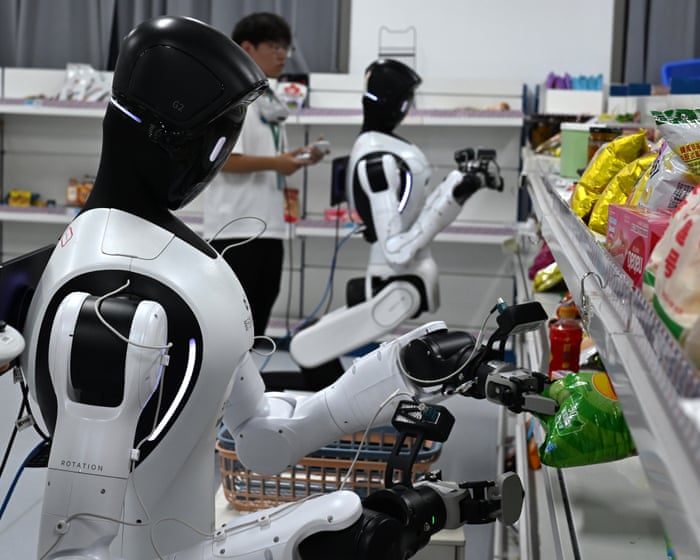
Trillions of dollars have been wiped from China’s stock markets in recent months amid increasing anxiety about the future of artificial intelligence, as Beijing races against the United States for dominance in the sector.

The STAR 50 Index, which tracks technology and innovation companies on the Shanghai stock exchange, has plunged 40% since June. Other indexes of major companies dropped by about 20% over the same time period.

Continue reading...

© Photograph: China News Service/Getty Images

© Photograph: China News Service/Getty Images

© Photograph: China News Service/Getty Images

  •  
❌