❌

Reading view

Justice Department Files More Charges Against James Comey
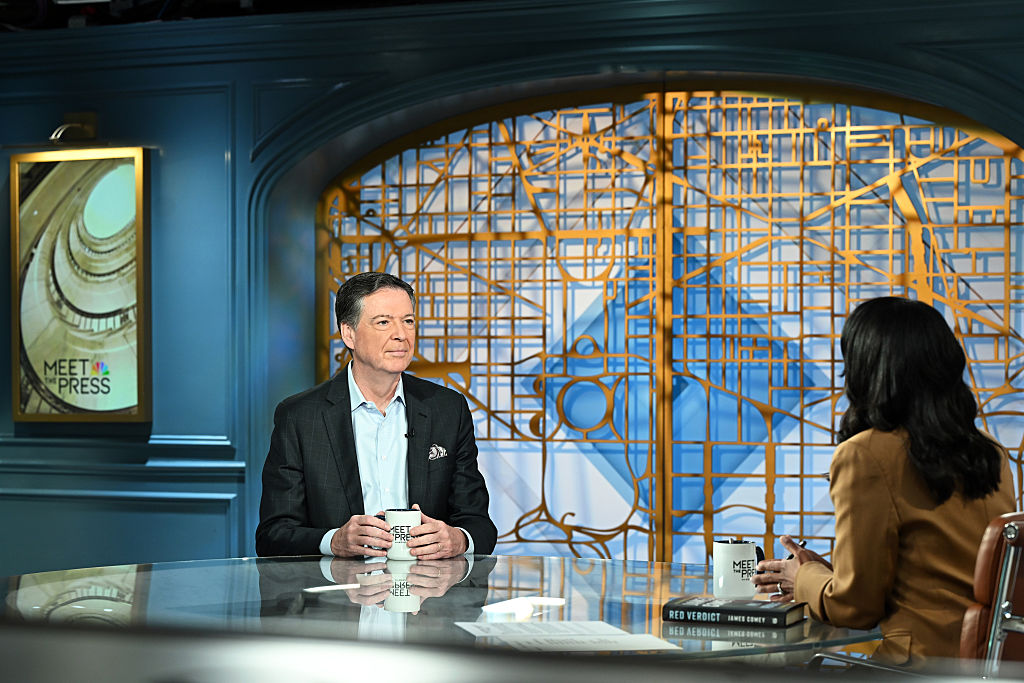
Former FBI Director James Comey appears on NBC's "Meet the Press" in Washington, D.C., on May 17, 2026. —Shannon Finney—NBC/Getty Images

The Justice Department has brought charges against former FBI Director James Comey for the third time in 13 months, this time related to alleged leaks of national security information to the media.

According to court documents filed earlier this month and unsealed on Monday, federal prosecutors are accusing Comey of “willfully” mishandling information related to national defense in October 2016, resulting in the information appearing in media reports.

“Having reason to believe such information could be used to injure the United States and to the advantage of any foreign nation,” the court document said Comey “knowingly and willfully communicated, delivered, transmitted, and caused that information to be communicated, delivered, and transmitted to a person not entitled to receive it.”

The inquiry is the latest attempt to prosecute Comey, who is a prominent critic of President Donald Trump. Trump fired Comey in 2017 while Comey was leading the FBI investigation into potential ties between Trump’s 2016 presidential campaign and Russia. The first Trump Administration cited a memo related to Comey’s handling of the FBI investigation into Democratic presidential candidate Hillary Clinton’s emails. Since then, Trump has publicly called for criminal investigations into Comey and celebrated the indictments he’s faced.

In a video posted on Monday, Comey said the latest investigation was an attempt to politically persecute him.

“They’re back, again,” Comey said. “It would almost be funny if it weren’t such an appalling abuse of the Department of Justice, one that we cannot become numb to.”

“I’m still innocent. I’m still not afraid of these people,” he added.

Comey’s attorneys argued in court filings that the alleged leaks had already been investigated twice during the first Trump Administration in 2017 and 2019, and neither had resulted in charges.

The Justice Department has pursued a number of investigations and indictments against prominent Democrats in recent weeks, appearing to break with the unofficial “unwritten 60-day rule” of avoiding filing new charges or taking public investigatory action that could influence an approaching election. Earlier this month, the Department secured a search warrant for the home of Rep. Ilhan Omar (D, Minn.), who called the effort “the latest escalation in [Trump’s] campaign of political intimidation.” The DOJ also secured an indictment against Virginia Senate Leader Louise Lucas, who led the Democrats’ counter-effort against Republican gerrymandering, on drug trafficking and money laundering charges. Lucas denied the allegations and said she would fight back against an attempt by “people in power … to silence those who stand up to them.”

What to know about the new Comey charges

According to court documents, prosecutors allege that around Oct. 4 and 5, 2016, Comey directed FBI staff to speak with the New York Times “about specific accuracy concerns” related to “misinformation which had appeared” in a Reuters report about Yahoo’s cooperation with U.S. surveillance.

In doing so, prosecutors contend, Comey “illegally transferred classified information.”

The Times article had described how Yahoo had adapted its existing email filtering system, used to detect spam, malware, and child sexual abuse material, to comply with a secret surveillance order to search messages for a computer “signature” associated with communications by a foreign, state-sponsored terrorist organization. The article said the Justice Department had obtained the order from a Foreign Intelligence Surveillance Court judge in 2015 and that Yahoo was barred from disclosing it.

A spokesperson for the Times said the newspaper “does not comment on the sourcing behind our reporting, but we know from experience that prosecutions like this one are designed to discourage sources from providing journalists with the kind of valuable and illuminating information that the public needs to know.”

Comey’s lawyers argued in a motion to dismiss the case that the Trump Administration did not file an indictment within the 10-year statute of limitations. On Oct. 5, prosecutors filed the charges in a criminal information under seal in Federal District Court in Washington, which does not require approval from a grand jury or a judicial finding of probable cause, but have not obtained an indictment.

Previous charges against Comey

The Justice Department has brought multiple charges against Comey during Trump’s second term. It secured an indictment against him in September 2025 over allegations that he made false statements to Congress in 2020 related to alleged leaks to the media. The charges were thrown out by a federal judge in November, concluding that the prosecutor, Lindsey Halligan, had been unlawfully appointed.

Comey was also indicted in April over allegedly making a threat against Trump by posting on Instagram a photograph of seashells on a North Carolina beach arranged to spell “86 47.” Prosecutors argued that the arrangement was intended as a threat “to kill” Trump, who is the 47th President. Comey, who deleted the post after initial backlash, said he did not intend the photograph to be a threat against Trump, and that he understood the numbers to be a “political message.” The numbers “86” have commonly been used to mean “to throw out” or “to refuse service to,” according to Merriam-Webster, but have also been used in some instances to mean “to kill.”

That case is set to go to trial in North Carolina in February 2027.

Earlier on Monday, a federal judge in New York ruled that the Justice Department had unlawfully fired Comey’s daughter, Maurene Comey, in July 2025. The judge ordered her retroactive reinstatement with back pay, concluding that the Trump Administration had violated the Constitution and federal law by claiming the President had executive authority to fire civil servants.

  •  

Flávio Bolsonaro Flees to Miami After Brazil Election Loss, Defying Court Order

Flavio Bolsonaro arrives at Opa-Locka Executive Airport near Miami on Oct. 28, 2026, despite a court order barring the defeated Brazilian presidential candidate from leaving Brazil. —Ricardo Arduengo—AFP/Getty Images

Brazilian Senator Flávio Bolsonaro arrived in Miami on Wednesday after fleeing the country in defiance of a court order to surrender his passports amid a money laundering investigation, days after losing the presidential election to incumbent Luiz Inácio Lula da Silva.

Bolsonaro traveled from northern Argentina to the Ecuadorian city of Guayaquil, the Argentine government said. From there, Bolsonaro, his wife and two daughters flew to Miami, where they were recorded exiting a private jet at Miami-Opa Locka ​Executive Airport. 

President Donald Trump told reporters he “would approve” of Bolsonaro coming to the U.S. “I think they’re fine people,” Trump said. “The election ‌was very strange, and I thought ⁠it was terrible. It’s gotten bad reviews. You look at what happened to their market.”

On Tuesday, U.S. officials told multiple media outlets that the State Department would grant Bolsonaro and his family entry visas amid reports he had left Brazil to head to the U.S.

A Brazilian Supreme Court justice had ordered federal police to open a separate probe into possible illegal foreign financing of Bolsonaro’s presidential campaign, including alleged ties to U.S. Vice President J.D. Vance’s donor network. Lula’s government had previously accused the Trump Administration of interfering in Brazil’s election, an allegation the U.S. denies. TIME has reached out to Vance’s office for comment.

Bolsonaro initially said he would comply with Brazilian Supreme Court Justice Alexandre de Moraes’s order to surrender his passports and refrain from traveling. The order concerned an investigation into Bolsonaro’s alleged links to a Brazilian lawyer accused of laundering more than $1 billion through a fraud scheme.

The confidential order cited Bolsonaro’s flight risk and “significant financial resources.” The son of convicted former President Jair Bolsonaro, Flávio Bolsonaro will lose certain parliamentary protections from prosecution when his term as senator for Rio de Janeiro ends on Jan. 31.

“I have never thought ‌about leaving ⁠the country,” Bolsonaro said in a social media video Monday. “I will hand over my passports and defend myself against this travesty, which is a clear attempt to intimidate me.”

But Bolsonaro did not comply with the order to hand over his passport by the end of the court’s 24-hour deadline on Tuesday morning. Argentina’s National Directorate of Migrations said Bolsonaro and his family entered the country “with valid travel documentation and without any legal impediment” on Tuesday night before boarding a private flight to Guayaquil, Ecuador.

Lula called Bolsonaro’s flight from Brazil “a shameful act.”

“Those who have nothing to hide have nothing to fear,” Lula added, recalling his own arrest in 2018 on charges of passive corruption and money laundering. His convictions that were later overturned.

Bolsonaro is also being investigated over alleged links to a banker connected to a corruption scheme. He is alleged to have raised millions of dollars from the banker to fund a biopic about his father.

Bolsonaro's departure could inflame political tensions amid claims from Brazil’s right wing and abroad that the election was unfair. Bolsonaro initially said he would seek to annul the vote, although his Liberal Party later conceded defeat. In the video posted Monday, he said he would seek to have Lula’s ticket disqualified, citing alleged disinformation and “vote buying.” He also said he would organize congressional opposition to Lula’s government.

“I wasn’t the one who lost,” he said. “The system won.”

Trump, an ally of the Bolsonaros, said Monday that the election appeared “rigged.” He did not provide evidence for the claim.

“I didn’t take ​sides, but it looked like another rigged election,” Trump said.

“I just think it had a very bad look, the election, the ​way it was tabulated,” he added. “The extension given was very strange.”

Brazil’s Supreme Court had granted a two-hour voting extension on Sunday, citing transport issues raised by Lula’s campaign. Bolsonaro’s campaign had separately requested a two-hour extension due to heavy rainfall in certain areas.

Lula won the election by more than 4 million votes. Roughly 0.03% of all votes—or fewer than 35,000—were recorded in the extra two hours. Vice President Geraldo Alckmin told Rede Vanguarda that Trump’s claims were “completely wrong.”

Money laundering inquiry

The inquiry into Bolsonaro stems from a federal probe into unauthorized deductions from pension payments made by Brazil’s social security agency. The broader operation, launched in April 2025, investigated associations suspected of collecting unauthorized membership fees from pension benefits.

Evidence from the probe led investigators to examine suspected money laundering involving betting platforms and financial transactions linked to Brazilian lawyer Willer Tomaz, who denies wrongdoing.

Police reportedly discovered that Bolsonaro had “master user” access to bank accounts belonging to Alcazar Holdings, a company owned by Tomaz. In May 2025, a person working for Tomaz asked the bank to remove Bolsonaro’s access to the accounts, local media outlets BPMoney and Times Brasil reported earlier this month, citing police findings. Both Bolsonaro and Tomaz deny having a joint account or financial ties.

De Moraes’s order also barred Bolsonaro from contacting Tomaz. Bolsonaro said on Monday that the ruling came after his brother, Eduardo Bolsonaro, had said on a podcast last week that he should leave the country if he lost the election.

AFP reported that Bolsonaro’s Brazilian and diplomatic passports were canceled, but that he has held Italian nationality since 2023. His departure appeared to surprise his political allies, including his campaign manager Rogerio Marinho who told reporters Tuesday that he had no information about Bolsonaro’s whereabouts.

“I received a text message from him this morning, where he said he would let some time pass today and then would talk with us, and that was it,” he said. “That was the only communication we had.”

A critic of Brazil’s justice system

Bolsonaro has repeatedly criticized Brazil’s judiciary and described the investigations into him as politically motivated. The country’s Supreme Court generally assigns cases through a lottery system. The money laundering investigation was assigned to de Moraes on Oct. 16.

De Moraes was the lead justice in last year’s trial of Jair Bolsonaro, who refused to accept his election loss in 2022. A five-member panel of Supreme Court justices convicted Jair Bolsonaro, by a 4-1 vote, of attempting to overturn his election defeat and sentenced him to 27 years and three months in prison. He is serving the sentence under house arrest due to poor health. Prosecutors alleged that the plot included plans to assassinate Lula. Jair Bolsonaro denies wrongdoing.

In June, a Supreme Court panel unanimously convicted Eduardo Bolsonaro of coercion in judicial proceedings. Prosecutors alleged he had attempted to lobby the Trump Administration to use tariffs and sanctions, including on de Moraes, to pressure judicial authorities to drop the prosecution of Jair Bolsonaro. Eduardo Bolsonaro was sentenced to four years and two months in prison, but remains in Texas, where has lived since 2025.

De Moraes has also faced scrutiny over reported ties to Daniel Vorcaro, the former owner of Banco Master, whose financing of a film about Jair Bolsonaro is the subject of the separate inquiry into Flávio Bolsonaro. The New York Times reported, citing a police dossier, that Vorcaro sent text messages to de Moraes asking for help to avoid arrest. In messages to other associates, Vorcaro reportedly mentioned paying millions to the law firm of de Moraes’s wife. De Moraes has denied wrongdoing and said he never acted to favor Vorcaro or Banco Master.

De Moraes also clashed with tech billionaire Elon Musk in 2024 over court orders to block accounts on Musk’s social media platform X. De Moraes temporarily suspended the platform in Brazil after it failed to comply with judicial requirements, which Musk had described as “the most draconian demands of any country on Earth.”

  •  

Brazil Re-Elects Lula for Historic Fourth Term, Bolsonaro Refuses to Concede

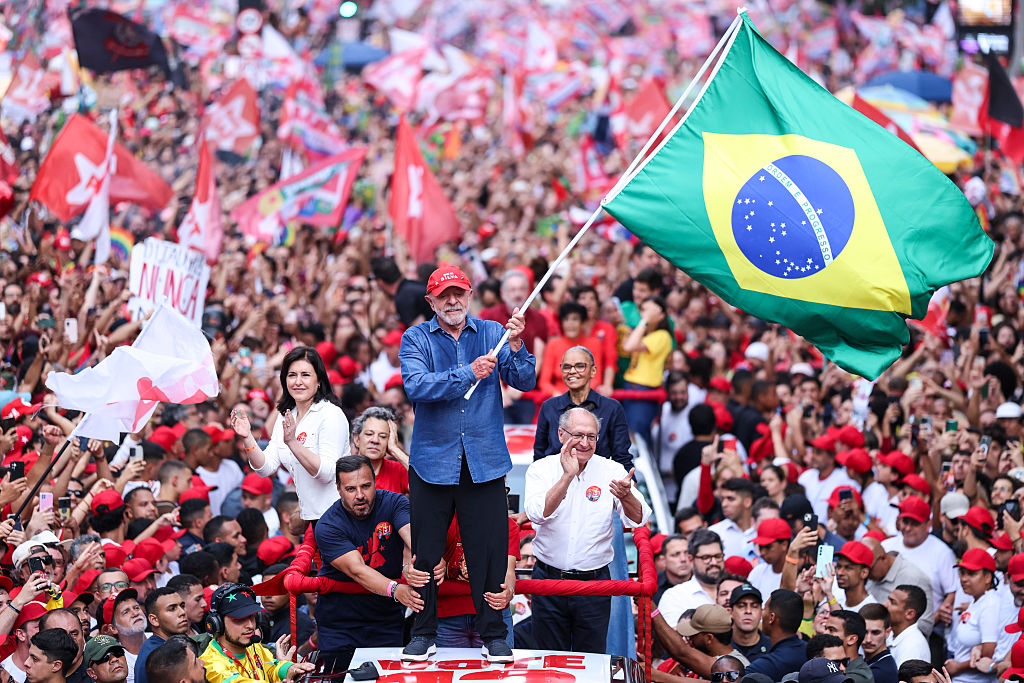
Luiz Inácio Lula Da Silva, incumbent president of Brazil and presidential candidate for the Workers' Party (PT), waves a Brazil flag during a rally ahead of the presidential runoff at Avenida Paulista in Sao Paulo, Brazil, on Oct. 24, 2026. —Alexandre Schneider—Getty Images

Luiz Inácio Lula da Silva has been re-elected to a historic fourth term as Brazil’s President after a tight race with far-right opponent, Flávio Bolsonaro, the son of former President and Donald Trump ally Jair Bolsonaro.

Lula won with 51.8% of the vote to Bolsonaro’s 48.2%, Brazil’s Superior Electoral Court announced. Sunday’s vote was a rematch after neither reached an outright majority in the first round on Oct. 4. Lula had trailed then, becoming now the first presidential candidate since Brazil’s return to democracy in 1985 to finish second in the initial vote and win the run-off.

The election also marks a remarkable win for the global left, as it bucks a trend of right-wing electoral victories across Latin America. Lula will serve for another four-year term beginning on Jan. 5, 2027.

“I want to thank the generosity of the Brazilian youth who took to the streets, who went to the streets to defend democracy,” Lula said in his victory speech on Sunday night. “I want to thank the elderly. I saw scenes today of people being carried by their grandchildren to vote, people unable to move around, people with cancer and other illnesses. And people went to vote because we managed to convince them that voting was very important to ensure democracy in the country.”

“This election was a defeat for denialism, a defeat for lies,” he continued.

Bolsonaro, however, said late on Sunday that he would not concede defeat to Lula and would seek an annulment of the result. The senator for Rio de Janeiro said a ruling by the Supreme Court to extend voting for two hours, citing public transport issues, was “unacceptable.”

Nevertheless, several liberal leaders around the world have already lauded the result.

“Long live democracy, the people of Brazil won,” Mexican President Claudia Sheinbaum said.

Canadian Prime Minister Mark Carney posted, “The relationship between Canada and Brazil has flourished under our partnership. Let’s seize this opportunity to make it even stronger, together — to create major new trade opportunities, protect ​the environment, and build greater prosperity for both our peoples.”

Several U.S. lawmakers have also congratulated Lula on the result, including Vermont Senator Bernie Sanders, Rep. Ro Khanna (D, Calif.), California Gov. Gavin Newsom, and New York City Mayor Zohran Mamdani.

A former metalworker and union leader, Lula co-founded the Workers’ Party in 1980 and continues to serve as its honorary president. He served as Brazil’s President between 2003 to 2011, before he was jailed from 2018 to 2019 on corruption convictions that were later annulled. He went on to defeat incumbent President Jair Bolsonaro in 2022, winning his third presidential term.

Lula’s campaign focused on labor reform, welfare benefits, and affordability. At a time when public debt as a share of GDP has risen to its highest level since the pandemic, Lula cited his achievements in lowering poverty rates, as well as reducing unemployment, illiteracy, and deforestation to record lows. He pledged to make public transit free on the weekends, a program that would need congressional approval. He also increased benefits under his signature Bolsa Família program and championed a landmark constitutional amendment shortening the working week, which Congress approved.

Bolsonaro, meanwhile, campaigned on harsher criminal penalties, tougher policing, lower taxes, and cuts to government spending. His campaign highlighted a corruption investigation involving Lula’s son and a pension fraud scandal that spanned both Lula’s and Jair Bolsonaro’s administrations.

Bolsonaro also called for amnesty for his father, Jair Bolsonaro, who is serving a 27-year prison sentence under house arrest after being found guilty of plotting a coup to overturn his defeat in the 2022 election.

In his election night speech, Lula pledged to strengthen federal involvement in public security, expand education and healthcare, and develop Brazil’s technological and artificial intelligence industries.

“This country will not be built by me,” he said. “But by you.”

A blow to the right

Lula’s win pumps the brakes on the broader political shift towards the right in Latin America. Colombia, Peru, Costa Rica, and Chile elected right-wing presidents in recent election cycles, reversing an earlier “pink tide” of left-wing governments.

Lula’s victory also denies Trump another political ally in Latin America, which include Argentinian President Javier Milei and Salvadoran President Nayib Bukele.

Bolsonaro had portrayed himself as an ally of Trump, courting closer ties with Washington and backing U.S. terrorist designations for Brazil’s major criminal gangs. Reuters reported on Saturday, citing current and former U.S. officials, that two U.S. State Department officials had pushed sanctions and other measures intended to weaken Lula and help return the Bolsonaros to power. The State Department did not comment specifically on the reported efforts but told Reuters that “all actions taken by the United ⁠States against narco-traffickers and to protect free speech are to defend the rights and lives of the American people. The Brazilian people have the right to choose their leaders through free and fair elections.”

Trump previously expressed support for Jair Bolsonaro and labelled Lula a “radical left lunatic” during Brazil’s 2022 presidential election. He also criticized the criminal prosecution of Bolsonaro, calling it a “witch hunt” and demanding it end.

Trump has not reacted to the election results as of early Monday. After Bolsonaro led in the first round on Oct. 4, Trump called the result “close, but a very, very big victory.” His son, Donald Trump Jr., posted earlier criticizing the Supreme Court’s decision to extend voting hours and what he described as the lack of American mainstream media coverage of it.

Lula had warned that Bolsonaro would surrender Brazil’s sovereignty to Trump.

Lula has publicly sparred with Trump on multiple occasions. He accused the Trump Administration of interfering in Brazil’s election and imposing punitive tariffs on Brazil under alleged pressure from the Bolsonaros. The Bolsonaro family and the U.S. State Department denied the allegations.

At the same time, Lula has pursued closer ties with China, Brazil’s largest trading partner and the U.S.’s geopolitical rival, although he rejected subordination and said Brazil was not choosing between the two countries.

“This country will not accept being anyone’s backyard,” Lula said on Sunday night.

Analysts, however, warned that Lula’s political influence could wane despite his re-election. Earlier this month, Brazil elected its most conservative National Congress since the 1980s. Bolsonaro’s Liberal Party (PL) and allied parties could control majorities in both chambers, with more than 280 of 513 seats in the lower house and up to 50 of 81 seats in the Senate.

That could make it difficult for Lula to pass his legislative agenda, analysts said.

But Lula shrugged off those concerns and promised to work with the more conservative Congress to govern for all Brazilians.

“The day after tomorrow, the 27th, I turn 81 years old, and I want to make a commitment in front of the press and in front of you,” Lula said. “I will have the best term a President has ever had in the history of this country”

  •  

Trump Invokes Defense Production Act to Boost Oil Production

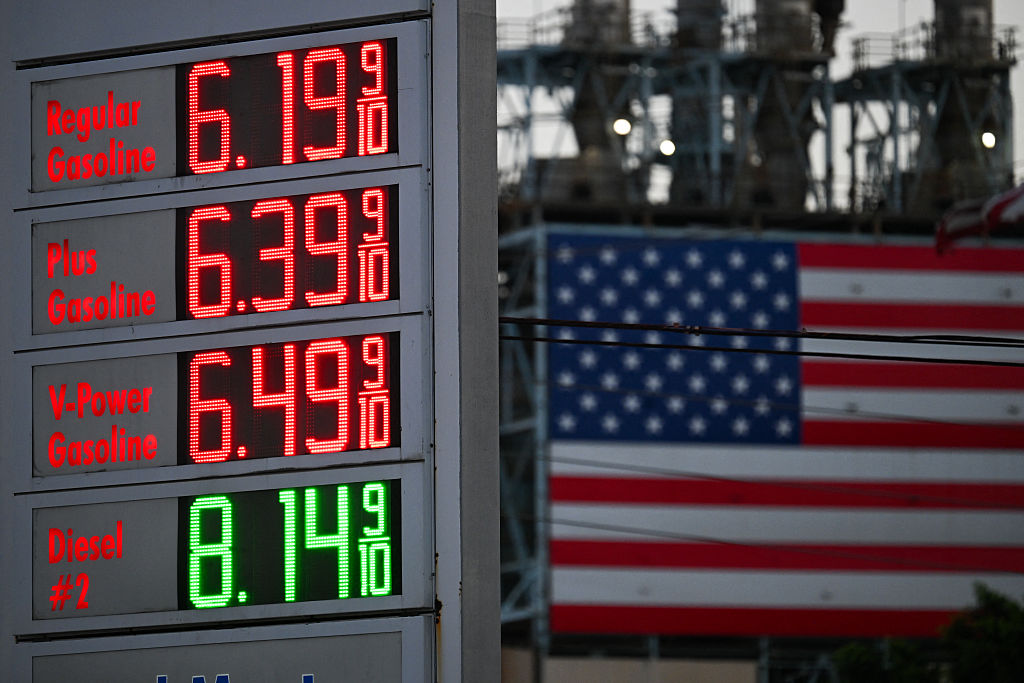
Gas prices at a Shell gas station above $6 a gallon for regular gasoline and $8 a gallon for diesel are displayed across from a U.S. flag outside of the Marathon Petroleum Corp. Los Angeles Refinery in Carson, Calif., on Sept. 22, 2026. —Patrick T. Fallon—AFP/Getty Images

President Donald Trump has invoked a Cold War-era law in an effort to boost oil production and lower energy prices.

In a presidential memorandum issued Thursday, Trump determined that petroleum production, refining, and related activities are essential to national defense under the 1950 Defense Production Act. The determination follows Trump’s declaration of a national energy emergency in January 2025.

“Ensuring resilient domestic petroleum production, refining, and logistics capacity is central to United States defense readiness,” the memo reads. “Without immediate Federal action, United States defense capabilities will remain vulnerable to disruption.”

The memo comes as the price of gas and diesel has soared across the country amid supply disruptions caused by the U.S. and Israel’s war against Iran. Brent crude futures rose 1.2% to $114.47 a barrel early Friday, extending gains after Thursday hit a five-month high. U.S. diesel pump prices averaged $6.32 a gallon, slightly higher than Thursday but below the September record, according to AAA. The high energy prices, and related inflation, have become a defining issue for voters in the coming midterm elections.

Here’s what to know.

What does the memo mean for energy production?

The memo means that energy production shortfalls are seen as a national defense risk.

The memo invokes Section 303 of the Defense Production Act, a law that allows the federal government to intervene in private industry for national defense. Section 303 allows the President to make purchases, purchase commitments, provide financial support and equipment, and expand production through other measures.

The memorandum also removes certain Section 303 requirements through an emergency waiver, including ordinary congressional notification and authorization constraints.

While the memo does not specify which projects could be funded, Vice President J.D. Vance said last week that the Administration would use the Defense Production Act to expand capacity at a Delek U.S. Holdings-owned refinery in Texas.

Without taking action, the memo said, U.S. industry would be unable to provide sufficient energy services in a “timely manner due to constrained financing, long lead times, permitting and infrastructure bottlenecks, and supply ​chain limitations.”

Has the Defense Production Act been invoked before?

Enacted during the Korean War, the Defense Production Act was first used to expand domestic industries in critical materials, such as aluminum and titanium, for national defense.

Section 303 of the act was also used during the pandemic to fund domestic production of medicines and vaccines. Former President Joe Biden also invoked the statute to support clean energy manufacturing and supply chains, including minerals used in electric vehicle batteries and the production of of energy-efficient heat pumps and insulation.

In April, more than a month after Iran began disrupting shipping through the Strait of Hormuz in retaliation for U.S.-Israeli Feb. 28 strikes, Trump invoked the act to declare petroleum, natural gas, coal, electricity grid, and other energy infrastructure essential to national defense. Citing April’s natural gas determination, the Department of Energy on Monday committed up to $42 million to advance the proposed Constitution Pipeline linking Pennsylvania and New York. The department also announced up to $50 million last week for transmission upgrades in Virginia and West Virginia, citing April’s grid determination.

Last year, Trump signed legislation providing $1 billion for Defense Production Act activities, including energy projects deemed critical to national security.

Trump’s use of Section 303 of the act for fossil fuel projects has drawn criticisms from environmentalists, with the Center for Biological Diversity calling the April memoranda, which waived congressional notification, “unlawful.” Nevertheless, the statute expressly includes energy production and construction in its definition of national defense.

How else has Trump tried to lower energy prices?

The Trump Administration has pursued a number of other measures aimed at lowering energy prices since the Iran War began. Earlier this month, Trump signed an executive order temporarily expanding access to tax-exempt dyed diesel, which is typically reserved for off-road farm and construction vehicles. The Group of 7 countries, including the U.S., also agreed to release 100 million barrels of diesel and crude oil reserves to the world over four months.

In August, the Administration extended the Jones Act waiver for another 90 days, allowing foreign-flagged ships to transport oil and certain other commodities between U.S. ports.

Trump also announced an agreement with Putin earlier this month to import diesel from Russia, alongside temporary sanctions relief. The deal has faced significant backlash from lawmakers.

For many of these measures, industry analysts and stakeholders have said the reduction in energy prices is likely to be limited and possibly short-lived. Analysts estimated that the Jones Act waiver was expected to reduce gasoline prices by only pennies per gallon. Capital Economics economist Hamad Hussain said the reserve release could lower diesel prices temporarily, but would not resolve the underlying supply crunch. And analysts warned that the dyed diesel measure would have a limited effect on most consumers since the tax-exempt fuel isn’t widely available at ordinary commercial pumps. A Council on Foreign Relations analysis also suggested that damaged Russian refining capacity may make a near-term effect of the Russia deal on diesel markets unlikely, although Trump said the agreement would supply more than 300,000 tons of diesel to U.S. and global markets immediately.

Meanwhile, oil exports from the Middle East topped prewar levels last week, marking a rebound in regional oil shipments despite continuing security risks. Ships sailing through the Strait of Hormuz, however, still face attacks from Iran, while the Bab el-Mandeb Strait near Yemen has been threatened by the Houthi rebels. Analysts previously told TIME in June that the risk of further attacks and damage to facilities could delay a full-scale recovery.

Thursday’s memorandum could support investment in fuel capacity, but it’s uncertain how quick or measurable an effect it will have on energy prices. Gas prices still depend heavily on globally traded crude, according to the U.S. Energy Information Administration, although they can be influenced by domestic refining and distribution conditions. The U.S. was the largest crude producer globally last year, averaging 13.6 million barrels of crude a day.

Analysts warned, after the April memorandum, that federal support would not necessarily translate into immediate price relief.

“Until the pipes are in the ground and the fuel is flowing or transported, it may not be able to be called a true structural shift,” Cyrus Brooks, director of marketing at energy research firm RBAC, wrote in April.

Still, Brooks said of the April action that federal recognition of energy as important to national security could support important infrastructure investment, potentially relieving a bottleneck in domestic fuel production, refining or transportation.

“Energy security seems to be the brightest neon sign flashing,” he wrote. “Not because it’s everything, but because nothing works without it.”

  •  

U.S. Reportedly Considering Major Strikes on Iran After Midterms

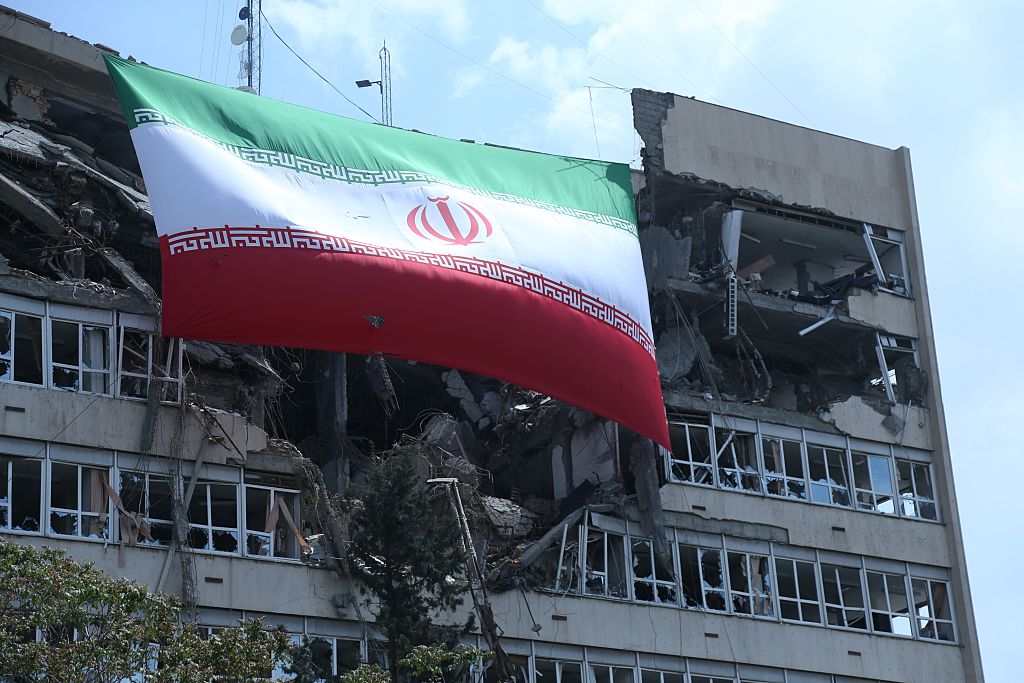
The national flag of Iran hangs on a building damaged by the U.S.-Israeli attacks in Tehran, Iran, on April 20, 2026. —Shadati—Xinhua/Getty Images

The U.S. and Israel are reportedly developing plans for major strikes on Iran after the U.S. midterm elections in November.

Citing people familiar with the deliberations, the New York Times reported on Wednesday that Defense Secretary Pete Hegseth discussed the possibility of renewed strikes on Iran with Israeli Prime Minister Benjamin Netanyahu in Israel this week. Possible targets of the strikes reportedly include Iran’s energy infrastructure, nuclear facilities, and missile and drone arsenal. TIME has reached out to the White House for comment.

U.S. officials have repeatedly asserted that the Iranian Islamic Revolutionary Guard Corps are teetering on the edge of collapse but are deliberately prolonging the war in an effort to meddle with Republican prospects in the midterm elections. Once the elections are over, President Donald Trump promised last month, the Iranian regime would quickly capitulate.

“I think the war is going to end immediately after the election,” Trump said. “They can’t hold out any longer.”

Renewed strikes could complicate that outlook.

Some officials have reportedly argued that resuming attacks for an intense but limited campaign would hasten Iran’s economic collapse, especially as the country has been squeezed by an ongoing U.S. blockade on Iranian ports and economic sanctions campaign. The officials hope the blow will make Iran more amenable to negotiations.

Trump has at times shared that view.

Last week, Trump told Newsmax he was considering additional military action in Iran, including a possible strike on Iran’s Pickaxe Mountain, a nuclear facility deep underground. His comments came amid reports that he was weighing deploying a 22,000 GBU-43/B Massive Ordnance Air Blast bomb, also known as the “mother of all bombs.”

The President added the war would end soon, be it through negotiation or escalation.

“Do I annihilate the Islamic Republic and do it quickly, never giving them a chance to kill and destroy people and countries again? Do I drive them into hell with no chance of survival and no hope of future greatness or generations?” he said in a speech to the United Nations General Assembly last month.

“But I believe we’ll make a deal,” he added, “right after the election.”

Will the U.S. renew strikes on Iran?

Intensified fighting between the Iran-aligned Houthi rebels and the Saudi and Yemeni governments has threatened to create a broader regional crisis that could be harder to disengage from. The State Department on Wednesday ordered nonemergency government employees and their families to leave Saudi Arabia amid escalating attacks by the Houthis on Saudi infrastructure.

Houthi attacks on Saudi airports and Aramco facilities, as well as their attempts to disrupt shipping through Bab El-Mandeb, which has become an important alternative to the Strait of Hormuz for energy trade, could prompt direct U.S. strikes in support of Saudi Arabia, analysts have said. Trump said earlier this month that the U.S. “may” join Saudi strikes on the Houthis, although that has yet to transpire.

Israel’s Oct. 27 election could also raise the stakes of additional military action. Netanyahu, whom Trump has endorsed, would remain in office until a new government is formed, even if his bloc loses the election, and his government would retain the authority to order strikes during that transition. But renewed strikes before the election, or after an electoral defeat, could invite scrutiny. “One ordered in the last weeks of a deadlocked campaign would be judged in Israel as politics as well as strategy,” Gregg Roman, executive director of the Middle East Forum, wrote in a September analysis.

Nevertheless, the forum assessed that a large-scale Israeli strike on Iranian territory, with or without U.S. participation, was probable before the end of the year. Analysts told the Times Netanyahu could use the prospect of joint strikes to form a unity government that could allow him to stay in power. 

“The larger constraint,” Roman argued, “is Washington.”

Trump has not yet approved the proposed strikes, the Times reported.

Trump has also called off plans to renew attacks on Iran before. He reportedly blocked an Israeli plan for a multi-day offensive against Iran earlier this month, and rejected five proposals for major operations against Iran or the Houthis in recent months.

The U.S. and Iran have not exchanged major fighting in recent weeks. The last reported U.S. strikes on Iran were on Sept. 8, even as Iranian attacks on commercial shipping have continued. Earlier this month, Trump ruled out attacking Iran before the midterms.

Read More: What Is the Status of the U.S.-Iran Peace Talks? Here's What Both Sides Are Saying

How might Iran respond to new strikes?

Tehran’s reluctance to make concessions to the U.S. appears to have strengthened, rather than weakened, over the course of the war. Iranian leaders reiterated this week that they will not directly negotiate with the U.S. unless Washington accedes to certain demands, which include ending its naval blockade and releasing frozen Iranian funds.

The initial U.S. and Israeli bombing campaign on Iran that began the war on Feb. 28, as well as June 2025 attacks during an earlier round of U.S.-Iran nuclear diplomacy, also hardened the Iranian view that the U.S. is not serious about negotiating. Iranian Foreign Minister Abbas Araghchi said in March that the previous disruptions of negotiating rounds had increased distrust in Washington.

Last month, the IRGC published an open letter appealing to American voters to “wrest control” from their government. In the letter, the IRGC said: “Despite all the hardships that our enemies impose on us, we will continue fighting, as we have done for the past 47 years.”

Both the U.S. and Iran appear to believe they hold enough leverage to achieve their goals, and those “dueling perceptions” have impeded progress towards a deal, according to an Oct. 1 analysis by the New York-based nonpartisan research organization The Soufan Center.

Iran’s key point of leverage is its blockade of the Strait of Hormuz, a narrow waterway vital to global energy trade. Iran’s militarization of the strait has disrupted global oil and liquefied natural gas supplies, leading to soaring energy prices and inflation.

Analysts previously told TIME that the higher prices are politically costly for Trump. In recent weeks, a growing number of Republicans have broken with Trump on Iran. The President has also seen his lowest approval ratings of his second term.

Iran’s ability to choke off regional oil exports, however, appears to be waning. Middle East oil exports topped prewar levels last week as shipping companies use alternative routes to bypass the Strait of Hormuz. HSBC Group Chief Executive Georges Elhedery also projected that Hormuz could be “redundant” in five years thanks to investment in alternative logistics routes.

Iranian officials told the Times that they are aware of the U.S. and Israel’s war planning and are developing their own tactics.

Earlier this week, IRGC spokesperson Hossein Mohebbi told the Tehran Times that “even a limited” attack from Washington would provoke a “serious energy crisis” for the world. Iranian Foreign Ministry spokesperson Esmail Baghaei said that an attack on Pickaxe Mountain would be met with a response “just as hard,” if not “stronger.”

And earlier this month, Iranian officials said Iran had prepared potential retaliatory operations that would depart from the U.S. and Israel’s assumptions. Security Chief Mohsen Rezaei told Press TV that Iran could respond to renewed attacks by targeting new targets, including U.S.-linked data centers and AI facilities in the Gulf, as well as subsea communications cables. Last month, Iran threatened to retaliate against any further U.S. attacks by targeting U.S. oil and gas assets in the Gulf.

Read More: ‘One of the World’s Most Critical Digital Bottlenecks’: How the Iran War Could Threaten Global Internet Access

In a post on Telegram on Sunday, Mahdi Mohammadi, a senior adviser to Iran’s negotiator Gen. Mohammad Bagher Ghalibaf, said, if the U.S. and Israel attack, “they may want to keep it short, but we will not allow it.”

He added on Wednesday: “The war will continue longer and across a wider geography than the enemy calculates.”

  •  

Why Elon Musk Wants to Merge SpaceX and Tesla

The logo of Tesla is displayed on a smartphone screen with the SpaceX logo in the background. —VCG—Getty Images

The world’s richest man has publicly backed a potential combination of SpaceX and Tesla in what could be the biggest merger in history.

On Tuesday, Elon Musk, the CEO and largest shareholder of both companies, said the electric vehicle maker and the rocket company had formed special committees at the request of shareholders to discuss the idea.

“I do think there’s a lot of merit to combining the companies as we are pretty much in the superintelligence singularity, ​and there’s a lot to be gained from cooperating,” Musk told SpaceX investors on a conference call.

“I think it would be a good ​idea, but it’s really up to the special committees of both companies,” he added.

The committees, which are made up of independent directors, would need to agree on the transaction terms of any deal before putting it to shareholders for a vote. Musk said his conflict of interest prevents him from participating in their discussions.

Musk has previously teased a Tesla-SpaceX merger. On a July 22 earnings call, Musk said there was “more and more overlap” between Tesla and SpaceX as the companies expand into artificial intelligence and robotics. Last week, Barclays analysts suggested that a merger could be announced before Tesla’s annual shareholder meeting in December.

Tuesday’s call was the first confirmation that the companies were formally exploring a combination.

A merger could create a company worth around $3.5 trillion, putting it among the world’s most valuable companies. It could also become the biggest merger ever by deal value, potentially surpassing SpaceX’s record-setting $250 billion acquisition of Musk-owned AI company xAI in February. SpaceX is currently valued at about $2 trillion, and Tesla at $1.5 trillion. A deal could also help propel Musk back into trillionaire ranks, depending on its terms and how investors value the combined company. Musk owns around 48% of SpaceX and 20% of Tesla.

The shares of both companies rose in after-hours trading on Tuesday. SpaceX, which went public in June, reported a quarterly net profit of $4.4 billion. Musk told investors he expects annual recurring revenue of between $500 billion and $1 trillion by the end of 2027.

Some analysts, however, have warned of regulatory and geopolitical hurdles, particularly in terms of Tesla’s Chinese operations and SpaceX’s U.S. defence work. Morningstar analysts said a merger could raise U.S. national security concerns involving the combined company’s supply chain. JPMorgan analysts also flagged regulatory approval in China as a potential stumbling block.

Any deal could also face congressional scrutiny, which could intensify if Democrats win control of either chamber in the coming midterm elections. Democratic lawmakers have previously questioned Musk over conflicts of interest and raised national security concerns about reported Chinese investments in SpaceX. Democrats have also challenged major acquisitions in the past on consumer protection grounds. In June, Sen. Elizabeth Warren (D, Mass.) criticized SpaceX’s IPO, citing Musk’s concentrated voting power and weak investor protections—concerns that could resurface in a Tesla-SpaceX merger.

Why a merger matters

A merger could bring two of Musk’s biggest businesses under one corporate umbrella, making it easier for the companies to move investments and resources between projects. “This would allow him to run all their operations under one roof without tripping on as many governance issues,” wrote Morningstar analysts Seth Goldstein and Nicolas Owens in June. “For example, Musk could move Tesla software developers or engineers to work on SpaceX AI projects, and vice versa, or have Tesla and SpaceX supply one another without the need for related party transaction disclosures or risking shareholder lawsuits claiming the resources of one firm are being diverted for the benefit of the other.”

Analysts noted that Tesla’s robotaxis could benefit from Starlink connectivity, while its autonomous vehicles and Optimus humanoid robots could more closely integrate SpaceX’s AI technology. SpaceX’s planned orbital data centers, meanwhile, could potentially benefit from access to Tesla’s battery and energy storage products.

A combined company could also mean greater control of several stages of the AI value chain, from chip design and planned manufacturing to computing infrastructure, AI software, and its deployment in vehicles and robots.

The companies already collaborate. In March, they announced Terafab, a joint semiconductor manufacturing project intended to produce chips for Tesla’s vehicles and humanoid robots and SpaceX’s planned AI satellites. SpaceX technologies have also been used in some Tesla products, including the new Roadster prototype, which uses SpaceX-developed thrusters.

David Nicholson, chief technology advisor at market research firm The Futurum Group, told the BBC that a merger also appears to align with Musk’s long-held ambition of colonizing Mars. Musk previously outlined plans to send Tesla’s Optimus robots to the planet aboard SpaceX’s Starship spacecraft.

A merger could also strengthen Musk’s influence over Tesla’s direction. Barclays estimated that a SpaceX acquisition of Tesla could give Musk around 37% of the combined company while controlling around 56% of its voting power. He currently controls around 82% of voting power at SpaceX and 20% at Tesla. That could represent either a benefit or a risk for shareholders, as decision-making would become faster but have fewer checks.

“One thing I don’t think people talk enough about with SpaceX and Tesla as well: You do still have a huge amount of key-man risk here,” wrote Morningstar analyst David Sekera earlier this month. “God forbid anything were to happen to Elon Musk.”

  •  
❌