❌

Reading view

Russia Releases Imprisoned American Man as Trump Envoy Meets With Putin

In this photo taken from video released by the Moscow City Court Press Service, Stephen Hubbard, a U.S. citizen accused of fighting as a mercenary in Ukraine, is seen in a glass cage in the Moscow City court in Russia on Oct. 7, 2024. —Moscow City Court Press Service via AP—File photo

Russia has released a retired American teacher who had been imprisoned for more than four years on charges of fighting as a mercenary in Ukraine. Russian President Vladimir Putin and U.S. envoy Steve Witkoff confirmed the release Wednesday, during a meeting in St. Petersburg.

Witkoff referred to Putin as a "humanitarian" and thanked him on behalf of U.S. President Donald Trump. "You talk so much about my President, President Trump, being a humanitarian—you are a humanitarian also, sir, and I salute that," he said.

Stephen Hubbard, 74, was sentenced to nearly seven years in a penal colony in 2024, after being detained in April 2022. Russian authorities accused the Michigan man of signing a contract with Ukraine’s military in the eastern Ukrainian city of Izyum after Russia’s full-scale invasion of the country in February 2022. The U.S. State Department under the Biden Administration declared that Hubbard, who was sentenced in a closed trial, had been wrongfully detained.

Trump said the release was secured at his request, "made directly" to Putin in a telephone conversation last week and was not part of a swap.

"Stephen is on his way back home and will soon be with his family," Trump said, noting that the U.S. "was not required to give anything in return."

Trump had hinted to reporters in the Oval Office on Tuesday that Hubbard’s release was pending. "Just ​stick with me," he replied, when asked about the American man’s case. "I don't ⁠want to talk about it, but everybody has been after Hubbard for a long time, long ​before I got here. And just remember that ​question for ⁠a couple of days from now, okay? Because I do things that nobody else can do."

Yet experts advise against viewing Putin's decision to release a prisoner as a sign of progress in the broader context of the Russia-Ukraine conflict.

"The release of Hubbard was a gesture to Trump, nothing more, and does not imply a larger willingness on Putin’s part to make concessions or end the war," argues Brian Taylor, a professor of political science at Syracuse University who specializes in Russian politics.

Hubbard is the second American to be freed by Russia within the past three months. Marine veteran Robert Gilman was released on Aug. 11, having spent more than four years imprisoned on disputed charges of assaulting a police officer. Referencing Gilman's reported poor health, Trump at the time said Russia had agreed to release him "on a humanitarian basis."

Hubbard was the last American on the State Department’s list of “wrongfully detained” U.S. citizens in Russia. His release comes in the wake of Trump waiving sanctions on Russia in a bid to progress the controversial diesel deal he made with Putin as he attempts to lower fuel prices, which have soared in the wake of his war with Iran.

The deal has earned bipartisan condemnation, with several Republican lawmakers joining calls for Trump to reverse course, insisting the action will only serve to bolster Putin’s war efforts as Ukraine braces for a fifth winter under attack.

Read More: Lawmakers Argue Trump's Russia Diesel Deal 'Violates' the Law. Here's What Legal Experts Say

Relations between Trump and Ukrainian President Volodymyr Zelensky have deteriorated, with the latter voicing grave concern over the U.S.-Russia diesel deal. Trump announced an “energy cease-fire” between Russia and Ukraine on Oct. 11, calling on the two countries to stop targeting each other’s assets. Zelensky accused Moscow of breaking the apparent agreement and, in turn, resumed strikes against Russian oil facilities, defying pressure from Washington. Trump called Ukraine's fresh wave of strikes a "disgrace" and said Zelensky is "more difficult to deal with than Putin."

Russia agrees to resume U.S.-mediated peace talks with Ukraine, Kremlin says

During their meeting at the grand imperial palace, Witkoff asked Putin to reconsider participating in peace talks with Ukraine, with the U.S. serving as an intermediary.

"Even if we don't have a resolution today, if we just talk about and sort of consider what ​that next step might be, I think that would be important and the world is waiting to hear that," Witkoff said as he pitched the idea.

The Kremlin later announced that Putin had agreed "in principle" to resume trilateral talks as soon as next month, anytime after Nov. 10. Putin’s foreign affairs adviser Yuri Ushakov told reporters the technical talks would likely focus on security guarantees for Ukraine and Russia once the war comes to an end. Ushakov suggested the sit-down could take ​place in Abu Dhabi.

"These talks happened before and did not lead to any meaningful progress on reaching a settlement," Taylor says, again advising a cautionary approach. Reflecting on the Kremlin's strategy, he adds that Putin likely "wants to show Trump he’s willing to play ball, without actually changing his behavior."

Senior Ukrainian and Russian officials last convened in Switzerland in February for U.S.-brokered peace talks, just ahead of the fourth anniversary of Russia's full-scale invasion of Ukraine. The discussions, which Zelensky suggested had been "difficult," ended without a breakthrough.

In August 2025, Trump met Putin for a high-stakes summit in Anchorage, Alaska, marking the first in-person encounter between the two leaders since 2019. The sit-down was aimed at exploring a path toward a cease-fire in the war in Ukraine, yet it ended earlier than expected and yielded no tangible results.

Witkoff, meanwhile, met with Zelensky in Oslo on Tuesday ahead of his trip to Russia. Zelensky said the meeting was productive and expressed his openness to a "potential trilateral meeting of the leaders to address the issues that only the leaders can do." However, he emphasized that any meetings to negotiate an end to the war must include Ukrainian officials, insisting there should be “nothing about Ukraine without Ukraine."

Zelensky's remarks came after the Wall Street Journal reported that Putin had floated the idea of a summit with Trump and Chinese leader Xi Jinping to discuss a potential Ukraine deal. Trump on Monday said he was open to a trilateral summit with those attendees to discuss matters related to “denuclearization.”

U.S.-Ukraine tensions escalate

Ukraine and U.S. officials remain at odds as to why Kyiv has experienced limited access to Starshield, the military-grade counterpart of SpaceX’s Starlink commercial service. The program, which offers remote Internet connectivity from satellites in low-Earth orbit, has become a lifeline for Ukraine on the battlefield, allowing it to execute long-reach drone strike missions and counter attacks.

On Oct. 14, Ukraine said its access to Starshield was abruptly limited. Serhiy Beskrestnov, an adviser to Zelensky, said speed restrictions had been imposed, leading to the “failure” of several military missions. Beskrestnov claimed the restrictions, which he said applied to devices traveling over 100 miles per hour and using Starshield, were “related to the current political situation.” During an Oct. 18 appearance on NBC’s Meet the Press, Zelensky said he believed the limited Starshield speed was a “message” from the U.S. government. He also said that Washington had briefly ‌stopped sharing intelligence with Kyiv, drawing a denial from U.S. Secretary of State Marco Rubio.

Zelensky’s remarks came after Reuters reported, citing two U.S. officials, that an order to limit Starshield services in Ukraine had come from inside the White House. When approached for comment, a senior U.S. official told TIME: “No such request was ever made by the President.” Some Republican lawmakers, including Representative Mike Turner of Ohio and Senator Kevin Cramer of North Dakota, have joined bipartisan calls for an investigation to determine the cause.

Addressing the matter, SpaceX CEO Elon Musk said: “Starshield systems are owned and controlled by the U.S. government. Any limits on speed or usage are decided by the U.S. military and ultimately POTUS.”
  •  

What Is Starshield, SpaceX's Military Version of Starlink, and Why Is It So Important to Ukraine?

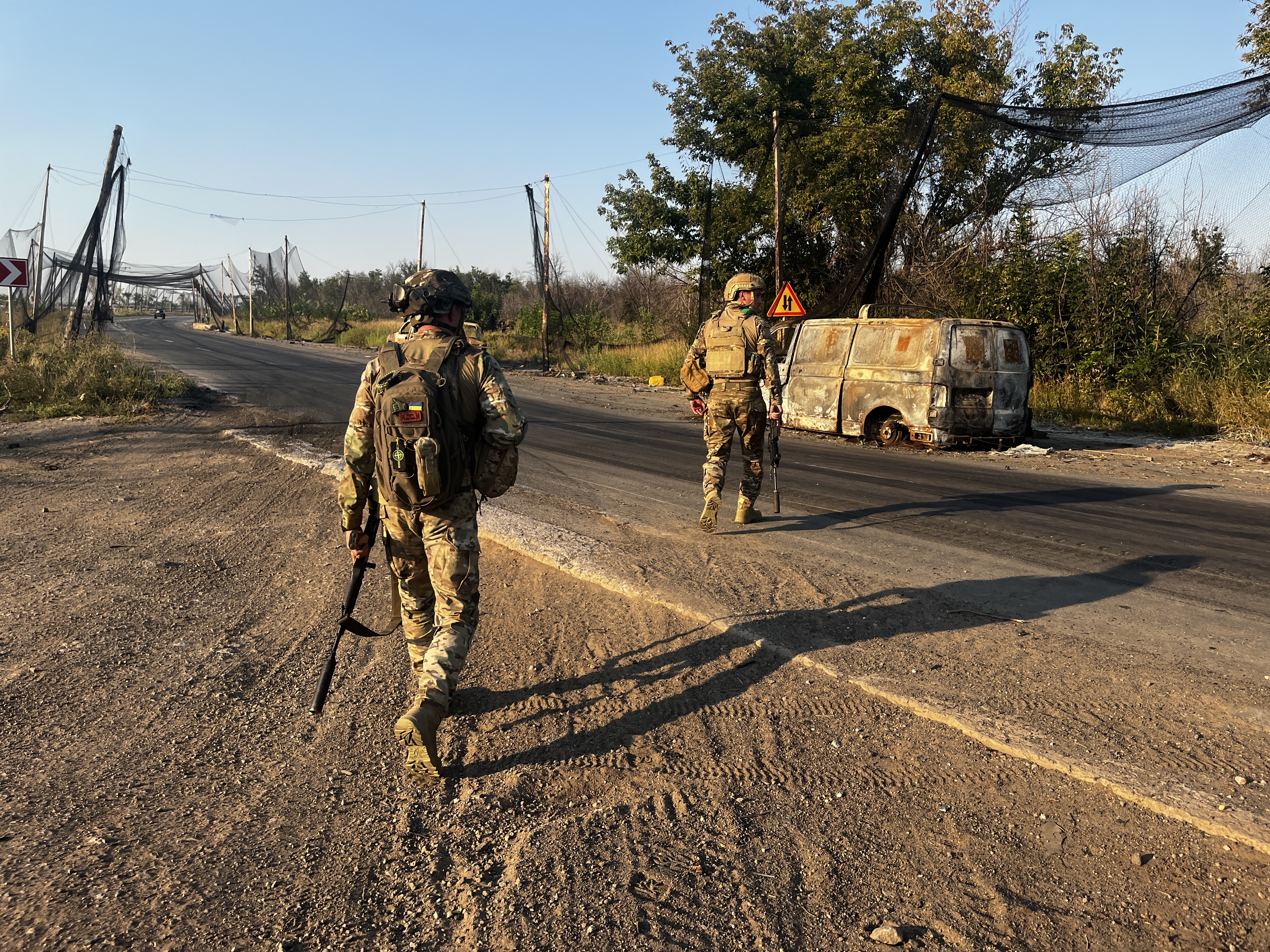
Ukrainian servicemen walk along a road to military positions in Donetsk Oblast, Ukraine, on Aug. 22, 2026. —Alex Nikitenko/Global Images Ukraine—Getty Images

Ukrainian forces said Wednesday its battlefield efforts had been hampered overnight after losing some access to SpaceX’s military-grade satellite Internet service, which has become a lifeline as Kyiv weathers Moscow's attacks.

Starlink offers Internet connectivity from satellites in low-Earth orbit. Its sister service Starshield, a military version developed for the Pentagon, relies on the Starlink network and has recently been used by Ukrainian forces to strengthen its far-reaching drone strike missions and air defenses.

Serhiy Beskrestnov, a military technology expert who advises Ukrainian President Volodymyr Zelensky, said speed restrictions had been imposed on the "military package" of Starshield services, leading to the “failure” of several military missions. “Our defense forces have not received any warnings about this restriction,” he said. Beskrestnov claimed the restrictions, which he said applied to devices traveling over 100 miles per hour and using Starshield, were “related to the current political situation.” He did not offer further details.

Tensions are high between the U.S. and Ukraine, as Zelensky has been vocal in his disapproval of U.S. President Donald Trump’s plan to import diesel from Russia, despite previous sanctions prohibiting it. The move has also caused a split in Trump’s own party, with several Republican lawmakers urging him to reverse course. After making the deal with Russian President Vladimir Putin last week, Trump announced an “energy cease-fire” between Russia and Ukraine—but Zelensky swiftly accused Moscow of violating any such agreement and Ukraine has, in turn, resumed strikes on Russian oil refineries, despite pressure from Washington. Trump called Ukraine's fresh wave of strikes on Russian refineries a "disgrace" in an interview that aired Thursday.

Speaking from the U.K., Zelensky said Wednesday it was a “pity” Ukrainian forces had experienced “difficulties” with Starlink services and intelligence, adding that he was surprised by the developments in Ukraine’s partnership with the U.S. In an interview on Piers Morgan Uncensored, Zelensky suggested he believed Starlink had been slowed down to damage him, and warned “people will die, if attacks will continue and if Starlink will not work … it’s not helpful.” He said he hoped the restriction was only a “mistake,” suggesting it was perhaps "a huge technical problem” at SpaceX.

However, in another interview, Zelensky said: "It was not a technical problem, it was the will.”

SpaceX founder and CEO Elon Musk addressed the matter, insisting that Starlink and Starshield are different. He cited the U.S. authorities as being in control of the latter’s usage determinations.

“Starshield systems are owned and controlled by the U.S. government. Any limits on speed or usage are decided by the U.S. military and ultimately POTUS,” he said on X. “Starlink is a commercial service owned and controlled by SpaceX. Usage of Starlink is limited to civilian or defensive activities and cannot be used for offensive military action, as doing so would be inappropriate for a commercial company.”

When approached for comment, a senior U.S. official told TIME: “No such request was ever made by the President.”

Reuters, citing three U.S. officials, later reported that the decision came from inside the White House.

TIME has reached out to the White House for further comment.

Meanwhile, Ukrainian national news agency Ukrinform reported Thursday, citing sources within the Ministry of Defense, that the Starshield service had resumed. TIME has reached out to Ukraine’s Ministry of Defense for comment.

The discourse has raised questions about what Starshield is and how uniquely important it has become on the Ukrainian battlefield.

What is Starshield?

Starshield is a program developed by Musk’s SpaceX that draws on the satellite and launch capability behind Starlink, its commercial satellite Internet network, to support national security operations.

According to SpaceX, Starshield is designed for government use, with an initial focus on three areas: Earth observation, communications, and hosted payloads. 

“Starlink is basic interconnectivity, it's like the Internet. Starshield essentially grows out of the experience of Starlink,” Mark Hilborne, a senior lecturer in defense studies at King’s College London, tells TIME.

But the military value of that connectivity extends far beyond access to the Internet, Hilborne adds.

“In and of itself, satellite communications are not military technology, but it enables the military to communicate and amass a real-time, multi-domain picture of the battlefield, which some argue nobody else actually has at this stage,” he says.

Both systems also offer high-speed connectivity because of the satellite technology underpinning them. 

“Starlink and Starshield are low on the Earth’s orbit, and they have a very high bandwidth, so lots of information can pass through those satellites, with virtually no delay on the signal,” Hilborne says.

There are more than 10,000 satellites in the Starlink network, while Hilborne says Starshield uses “a much smaller number of satellites.” However, the exact number of satellites associated with Starshield remains unknown, with experts telling TIME that such details are closely guarded due to national security considerations.

“They keep the contracting details on these things classified,” says Todd Harrison, a senior fellow at the American Enterprise Institute.

SpaceX, on its website, says Starshield is “designed to support U.S. National Defense use cases for the Department of Defense and other government partners.”

How is Starshield different from Starlink?

While both systems rely on closely related satellite technology, they differ in the services they provide and how they are intended to be used.

“Starshield refers to military services that actually operate through Starlink,” Harrison explains, comparing the services to “two different brands of a cell phone provider, even though your phone calls are going through the same towers.”

Starshield offers additional capabilities designed for military operations, including more advanced encryption and satellite imaging, experts tell TIME.

“It's got another extra set of capabilities over and above Starlink,” Hilborne says. “They use some of the same technologies, but it would be highly encrypted, and they have different sensors that allow them to image what they call ‘Earth observation.’ That can give a radar imaging of the Earth [which] has advantages over optical pictures.”

Yet experts say the distinction between the two systems is not always clear, particularly given how closely their underlying technology and operations are connected.

How important is Starshield for Ukraine?

Starshield and the satellite communications technology underpinning it have become vital to Ukraine’s military operations against Russia.

Hilborne describes the technology as “highly critical” to Ukraine, explaining that any restrictions could cut communications with military equipment traveling above that speed, leaving operators without the information needed to guide their missions, as once that speed threshold is exceeded, the connection “suddenly cuts off and it's flying blind,” he says.

The consequences are particularly serious for Ukrainian drone operations, which rely on communications for both strikes against Russian targets and defensive missions against incoming attacks.

“It's really critical for drones, both the offensive medium range strikes, but also affects Ukraine's ability to fly defensive drones against the incoming Russian drones,” says Hilborne. 

Beyond its role in drone missions, experts say satellite communications also offer important advantages over other forms of battlefield connectivity.

Harrison notes that “the big benefit of using satellite-based communications is that you can communicate over longer distances in a variety of terrain, and it does have some jam-resistant features to overcome electronic forms of attack.”

  •  

Who Are the Houthis and Why Are They Attacking Saudi Arabia’s Airports?

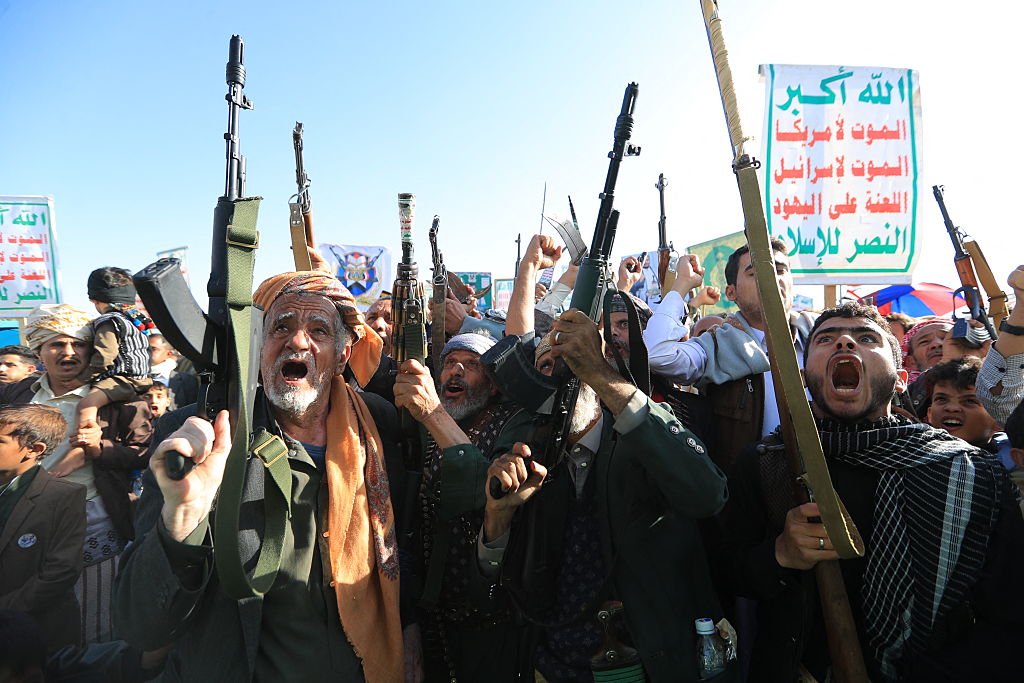
Supporters of the Houthis gather during a protest against Saudi intervention in Yemen, in Sanaa, on Oct. 9, 2026. —Mohammed Huwais—Getty Images

The European Union and Gulf Cooperation Council on Thursday announced the postponement of a joint summit set to take place in ‌Saudi Arabia next week, amid safety concerns prompted by Houthi attacks on airports in the kingdom.

Citing the “continued attempts by the terrorist Houthi militia to target the Kingdom of Saudi Arabia and its civilian infrastructure, which threatens the security and safety of innocent civilians,” the council said the Gulf-European Summit will be rescheduled.

The postponement comes after Yemen’s Houthi rebels on Wednesday vowed to forge ahead with the attacks on Saudi Arabia’s airports and oil facilities, just hours after striking oil giant Saudi Aramco’s headquarters.

“Operations toward Saudi depths will continue in the coming days,” said Houthi military spokesman Yahya Saree, describing the locations as “legitimate targets” and framing their attacks as a direct response to Saudi strikes on Yemen. Saudi-led forces said they had intercepted a ballistic missile fired by the Houthis towards Riyadh on Wednesday and local journalists reported hearing “loud blasts” in the Saudi capital.

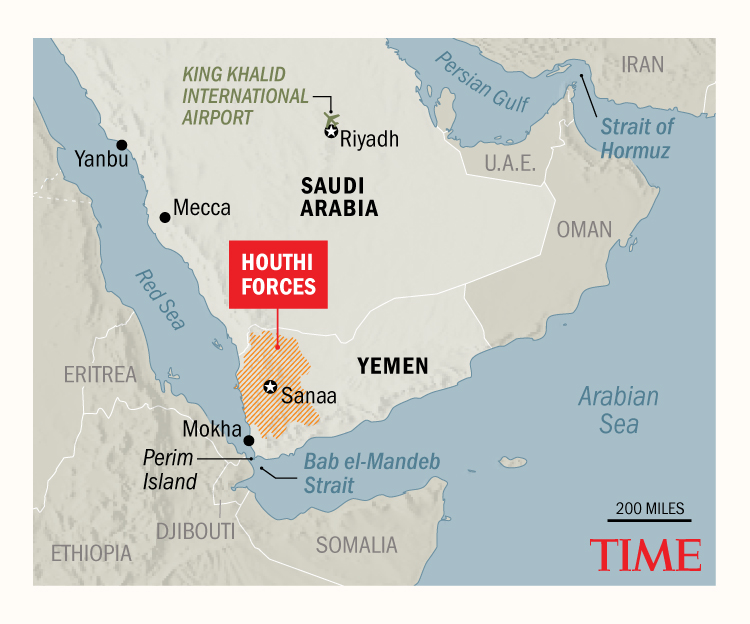
The escalation follows weeks of fighting between the Iran-backed Houthis and the Saudi-backed government of Yemen, shattering a four-year informal cease-fire in the country's civil war. The conflict reignited amid the widespread fallout of the U.S.-Iran war, bringing further instability to the Gulf region. In September, the Houthis said they had captured the strategic Perim Island that sits in the Bab el-Mandeb Strait, a critical maritime chokepoint. They also seized other islands in a bid to tighten their grip on the Red Sea coastline. Amid fears that a stronger Houthi position along the coast could further constrain global energy supplies, Saudi-backed forces recaptured key areas around the strait in early October. The Houthis have since ramped up their focus on Saudi Arabia’s airports and energy infrastructure.

Tuesday night’s attack on Aramco’s executive offices in the eastern city of Dhahran caused a limited fire, Saudi’s Ministry of Energy confirmed. No injuries were reported. TIME has reached out to Aramco and the Saudi government’s media office for further information. Saudi authorities said several missiles and drones had been intercepted elsewhere, and that falling debris injured four people in the capital of Riyadh. Saudi Arabia launched strikes on an oil depot on the outskirts of Yemen’s capital Sanaa on Tuesday, as the tit-for-tat attacks escalated.

The Saudi strike on the oil depot appeared to be in response to the Houthis’ attack on King Khalid International Airport in ​Riyadh on Saturday that killed 13 people and left over 300 injured. A projectile hit that same airport on Sunday, killing one person, Saudi Arabia's General Authority of Civil Aviation (GACA) confirmed. The week before, an attack on Abha International Airport killed two people and wounded 28, said GACA.

Saudi Arabia is the world’s top purchaser of American weapons, according to the Stockholm International Peace Research Institute. However, it is struggling to defend itself against the Houthis, who are positioned to strike deep into the kingdom. The Saudis are currently investigating how their defense systems failed to stop the deadly attacks. Experts cite the vast mass of Saudi land as one reason why defensive measures may have failed. The Saudi border with Yemen stretches more than 800 miles. “Expecting a country the size of Saudi Arabia to intercept every missile is simply unrealistic. No defense can guarantee complete protection,” said Ali Shihabi, a Saudi analyst, in an online post.

Operations at King Khalid remain suspended in the wake of the attacks. Etihad Airways, Qatar Airways, and Philippine Airlines are among the carriers to announce a suspension of flights to ​Riyadh.

The U.S. embassy in Riyadh has warned Americans in the country of “potential flight cancelations, airspace closures, and travel disruptions,” stipulating that U.S. government employees now require “special authorization” to use any airport in the country.

President Donald Trump on Tuesday said the Houthis “are behaving very badly.” In a Truth Social post, he continued, “I thought they learned their lesson a year ago when we bombed the hell out of them and, at their request, stopped,” seemingly referencing the U.S. strikes between March and May last year, which came in response to the Houthis attacking vessels in the Red Sea and disrupting global trade. Weeks after the strikes began, a cease-fire between the U.S. and the Houthis was reached via Omani mediations.

On Saturday, Trump suggested that the U.S. may join Saudi strikes on the Houthis. Asked about the possibility of U.S. strikes, a senior U.S. official told TIME that Washington is “in continuous dialogue with Saudi Arabia and the Republic of Yemen Government regarding regional stability and we will always fulfill our commitments to our partners.”


As tensions in the region continue to escalate, here’s what to know about the Houthis, their history with Saudi Arabia, and why they are attacking airports.

Who are the Houthis?

The Houthis are a political and armed group in Yemen that first emerged in the 1990s and have been fighting the country’s internationally recognized government for around two decades. The group is a revivalist movement for Zaidism, a branch of Shi‘ite Islam. The Zaidi muslim population in the country represents around 35% of the Yemeni population.

The Houthi movement was largely born from a transformation of the Believing Youth Forum (BYF), according to the Carnegie Endowment for International Peace. The group became known as the Houthis in honor of their founder and leader, Hussein al-Houthi. Before he was killed by Yemeni forces in 2004, al-Houthi had developed the group into a more militarized movement. The group is now led by his brother, Abdul-Malik al-Houthi.

Civil war broke out in 2014 after the Houthis seized Sanaa, forcing the government to flee to the southern city of Aden. Since then, the group has been engaged in fighting against a Saudi-led coalition supporting Yemen’s government. The Houthis currently have control of most of the country’s west, including Sanaa. 

Experts compare the Houthis to authoritarian regimes on account of the social restrictions imposed in areas under the group’s control and alleged human rights abuses. 

“The Houthis are dominated with very ideological and radical ideas, like a Zaidi ISIS. They have similarities also with the Taliban in terms of social control," says Mahmoud Shehrah, a Yemeni political analyst at London-based think tank Chatham House. 

How are the Houthi rebels linked to Iran?

The Houthis hold strong ties to Iran, often taking action in line with Tehran’s objectives. 

“Since 2009, Iran [has] started to speed up weapons supplies, training, but also a lot of funding to the Houthis,” says Farea Al-Muslimi, a Yemeni research fellow at Chatham House, noting that links between the two began as early as the 1990s.

The Houthis are often considered part of Iran’s proxy network, known as the “Axis of Resistance,” which also includes Hezbollah in Lebanon, the Islamic Resistance network in Iraq, and previously the Assad regime in Syria, until its collapse in December 2024.

In response to the Israel-Hamas war, the Yemeni militia launched several strikes on shipping vessels in the Red Sea, disrupting global trade in late 2023 and the early months of 2024. The U.S. and U.K. joined forces in January 2024 for a series of strikes on Houthi targets across Yemen in retaliation for the attacks on unarmed vessels. The U.S. carried out an additional campaign against Houthi targets later that year.

The Houthis entered the Iran war in March by firing a barrage of ballistic missiles at southern Israel. In the months since, the group’s advances along the Red Sea are widely considered to serve the interests of Iran. A Houthi blockade in the region against Saudi Arabia was declared in July, and several vessels have been attacked. The threat that the Houthis could bring another critical maritime chokepoint to a standstill, much like Iran has done with the Strait of Hormuz, could give Tehran significant leverage in its negotiations with Washington.

However, experts say it’s not entirely accurate to call the Houthis a direct proxy.

"The Houthis are one of the more independent regional allies of Iran in the Middle East. They have their own independent interests, even though their interests converge regionally and globally,” says Fawaz Gerges, a professor of international relations at the London School of Economics.

Even so, the Houthis have become increasingly vital for Iran. “With the fall of Assad, with the weakening of Hezbollah, the Houthis became the most important regional ally Iran has,” says Al Muslimi, pointing specifically toward the Houthis' ability to disrupt trade in the Red Sea.

What do the Houthis want?

The group’s goals have changed over time, as regional developments have unfolded, experts note.

“The Houthi's ultimate goal is to be a regional power,” says Al-Muslimi. With regard to the reignited civil war, the Houthis ultimately want an end to what they call a Saudi blockade of ports and airports in their territory.

“The Houthis want to have the skies and the ports of the country open for trade, for goods and services,” says Gerges. “They want money to flow into the coffers of the Houthis.”

The civil war has had a disastrous effect on Yemen, with nearly half of the population in government-controlled areas facing high levels of acute food insecurity, according to the United Nations. “The current situation is very dire for the Yemeni population, but also for the ability of the Houthis to rule Yemen effectively,” says Gerges.

“The Houthis want to consolidate rule and regime. They want to be recognized as the legitimate government in Sanaa, as opposed to being considered a non-state actor,” he adds.

When did the Houthis and Saudi Arabia begin fighting again?

A cease-fire brokered by the United Nations in April 2022 largely held for over four years, before collapsing in July. The Houthis claimed Saudi Arabia had launched strikes on Sanaa Airport, targeting a Houthi delegation returning from Iran. In a move they framed as retaliatory, the Houthi rebels launched ballistic missiles toward Saudi Arabia. 

“The Houthis saw this as a golden opportunity to change the balance of power against Saudi Arabia and Yemen itself and launch a lightning offensive,” says Gerges.

Following further strikes on Houthi targets later that month, the militia group began striking oil refineries in Saudi Arabia, belonging to the state-owned petroleum company Aramco.

In September, strikes on oil refineries and other related facilities ramped up, and Saudi Arabia’s airports became a target.

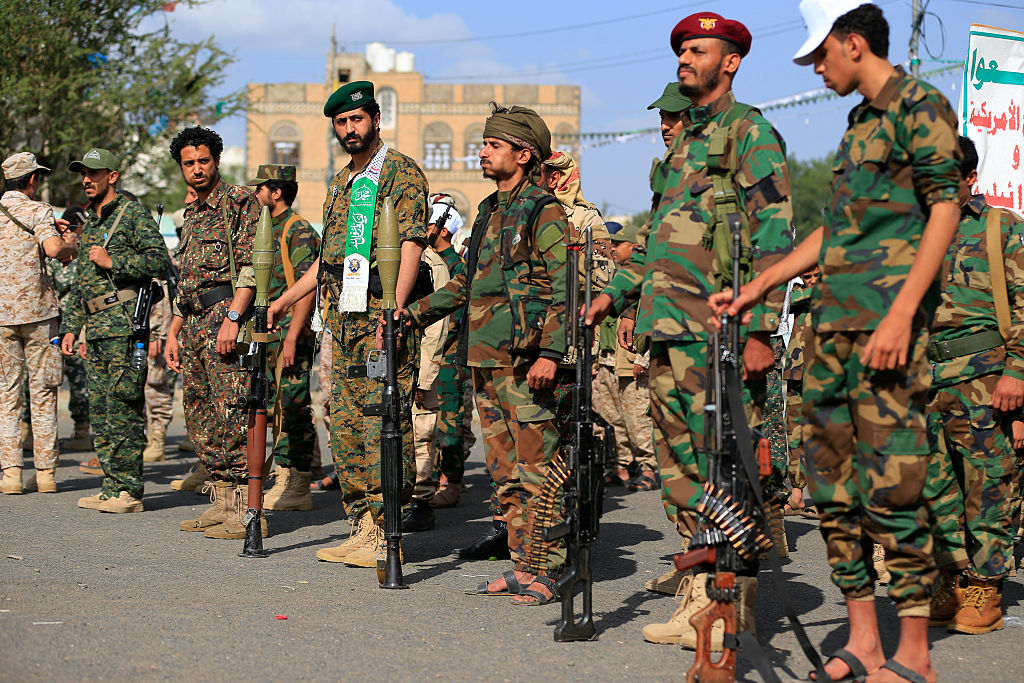
Fighters loyal to the Houthi militant group during a rally in Sanaa, Yemen, on Sep. 10, 2026. —Mohammed Huwais—Getty Images

Why are the Houthis attacking Saudi airports?

Prior to the 2022 cease-fire, attacks on airports were largely considered a signature move of the Houthis.

In a highly-publicized attack, the group struck Abha International Airport in June 2019, injuring at least 26 people, Saudi authorities said. The strike earned international condemnation and was deemed a possible war crime by Human Rights Watch.

Now, after fatal strikes on ​Riyadh’s King Khalid International Airport, the Houthis have threatened to keep targeting airports. The main motivation behind these attacks is the economic and geopolitical pressure they apply to Saudi Arabia, experts say.

“The Houthis want to put severe pressure on the Saudi Arabia economy, airport infrastructure, and security,” says Shehrah. “They want to squeeze Saudi Arabia's arms to push them to a political settlement.”

The unrest threatens to have a strong economic and political impact on Saudi Crown Prince Mohammed Bin Salman's governance. The disruption is “costly” to him, says Al-Muslimi, who notes that Bin Salman is eager for Saudi Arabia to be seen as a “safe harbor.” 

The financial and reputational damage of these strikes has also put the Saudi public on the frontline of the conflict. It’s a “shock, because it's the first time in years that such major attacks have targeted deep inside Saudi Arabia,” says Gerges.

“The Houthis are trying to exert tremendous pressure on the leaders of Saudi Arabia to force them to accept conditions for lifting the blockade on Yemen and recognizing their legitimacy,” he continues. “Although, I doubt that the Saudi leadership will concede to Houthi demands… this would be seen as a surrender and humiliation."

  •  
❌