❌

Reading view

The Former General Who Could End the Netanyahu Era

Gadi Eisenkot’s office is small and sparsely furnished. There are no medals on display, no photographs with foreign dignitaries or political luminaries, none of the trappings of a decorated general who rose to become chief of staff of Israel’s military. The space, tucked inside a commercial building in the Tel Aviv suburb of Ramat HaSharon, is conspicuously devoid of ostentation.

Beside his desk sit three photographs. One is of his son Gal, who was killed fighting in Gaza in Dec. 2023, two months after the war began. Another is a family portrait taken during a visit to Washington, D.C., years earlier, a picture of a family still whole, before the war shattered it. The third shows Gal next to one of his closest friends from their military unit, who was also killed in combat. “He was a settler,” Eisenkot says of his son’s friend. The image conveys a snapshot of contemporary Israel: the son of a centrist military commander and a young man from a West Bank settlement, products of different worlds, serving and dying alongside one another. 

As we speak, Eisenkot, dressed in his trademark black polo and black pants, pauses to pick up the photographs. He recalls the days after his son’s death. After three nights of sitting shiva, the Jewish mourning ritual, he left his grieving family to attend a meeting of Benjamin Netanyahu’s war cabinet. “I decided to go forward,” he says.

Now Eisenkot hopes to move not only himself forward but his country. The former general has emerged as a leading challenger to Netanyahu, Israel’s longest-serving prime minister. Polls suggest a close contest, with Eisenkot seeking to assemble a coalition capable of ending Netanyahu’s rule three years after he presided over the worst security failure in Israel’s history, launched the war in Gaza, and led the country into deepening international isolation.

Eisenkot has cultivated a reputation for integrity, competence, and personal rectitude, forging relationships across Israel’s fractured political spectrum. But perhaps his most powerful political asset is his devastating personal loss. In a country scarred by the trauma of Oct. 7 and the war that followed, Eisenkot’s grief is familiar to countless Israelis. His effort to persevere mirrors a nation’s struggle.

The Oct. 27 election will be more than a referendum on Netanyahu. It will test whether Israelis are prepared to chart a different course after three years of bloodshed, recriminations, and cultural fracture. The country is deeply polarized, increasingly castigated by the rest of the world, and confronting a resurgence of antisemitism. Voters will determine not only who governs Israel but what kind of nation Israel will become—and whether its next leader can begin to heal the divisions that have left the world’s only Jewish state facing one of the gravest crises in its history.

Netanyahu, of course, can never be counted out. The consummate political survivor, he has weathered scandals, electoral defeats, and corruption charges. His credibility has suffered, but many Israelis still regard him as the only leader who can protect them in a dangerous region. Eisenkot could assemble a coalition with other opposition figures, including former Prime Minister Naftali Bennett, Yair Lapid, Avigdor Lieberman, and Yair Golan. Netanyahu would depend on the far-right parties led by Itamar Ben-Gvir and Bezalel Smotrich, whose ultra-nationalist politics have found a receptive audience among younger right-wing Israelis.

Israel’s fragmented parliamentary system offers no guarantee of a decisive outcome. Negotiations could drag on for weeks, or fail altogether, sending Israelis back to the polls. Eisenkot tells me he will not serve in a unity government with Netanyahu under any circumstances. He has framed his ambitions around nothing less than the sustenance of the Zionist enterprise: the ability of Jews to live safely in a state of their own in their ancestral homeland. In his telling, that means confronting the threat from Iran; restoring Israel’s standing in the world; preserving the country’s character as a Jewish democracy; and finding an accommodation with the Palestinians, who lay claim to the same land and have their own aspirations to self-determination. 

“What holds the country together is the Jewish and democratic ethos of the majority of Israelis,” says Yossi Klein Halevi, a bestselling Israeli author and senior fellow at the Shalom Hartman Institute in Jerusalem. “That's what we're going to have to try to repair. That is really what Eisenkot is offering the country.”

For Eisenkot, the challenge is not merely to replace Netanyahu but to lead Israel beyond the trauma that has consumed it since Oct. 7. He sees a country caught between the imperative to protect itself and the need to recover the democratic values, national solidarity, and international legitimacy that are essential to its survival. “I feel like it’s a historic mission—to save the state of Israel,” he says, invoking his son and the many others who died defending the nation.  “We owe it to them to be worthy of the sacrifice they made.”


On Oct. 7, 2023, Eisenkot awoke shortly after 6 a.m., stirred by nothing more than his circadian rhythm. When he turned on the television, he saw the first images of a catastrophe unfolding a short drive south of his home. Thousands of Hamas-led militants were pouring into southern Israel by land, air, and sea. They rampaged through kibbutzim and the streets of Sderot, descended on the Nova music festival, where they murdered civilians, raped women, desecrated the bodies of the dead,  and dragged hundreds of hostages back into Gaza. Many filmed themselves carrying out the atrocities, celebrating the carnage as it unfolded. Desperate Israelis called the authorities, pleading for help that would not arrive for hours. By the time security forces regained control, entire communities had been devastated by the worst slaughter of Jews since the Holocaust.
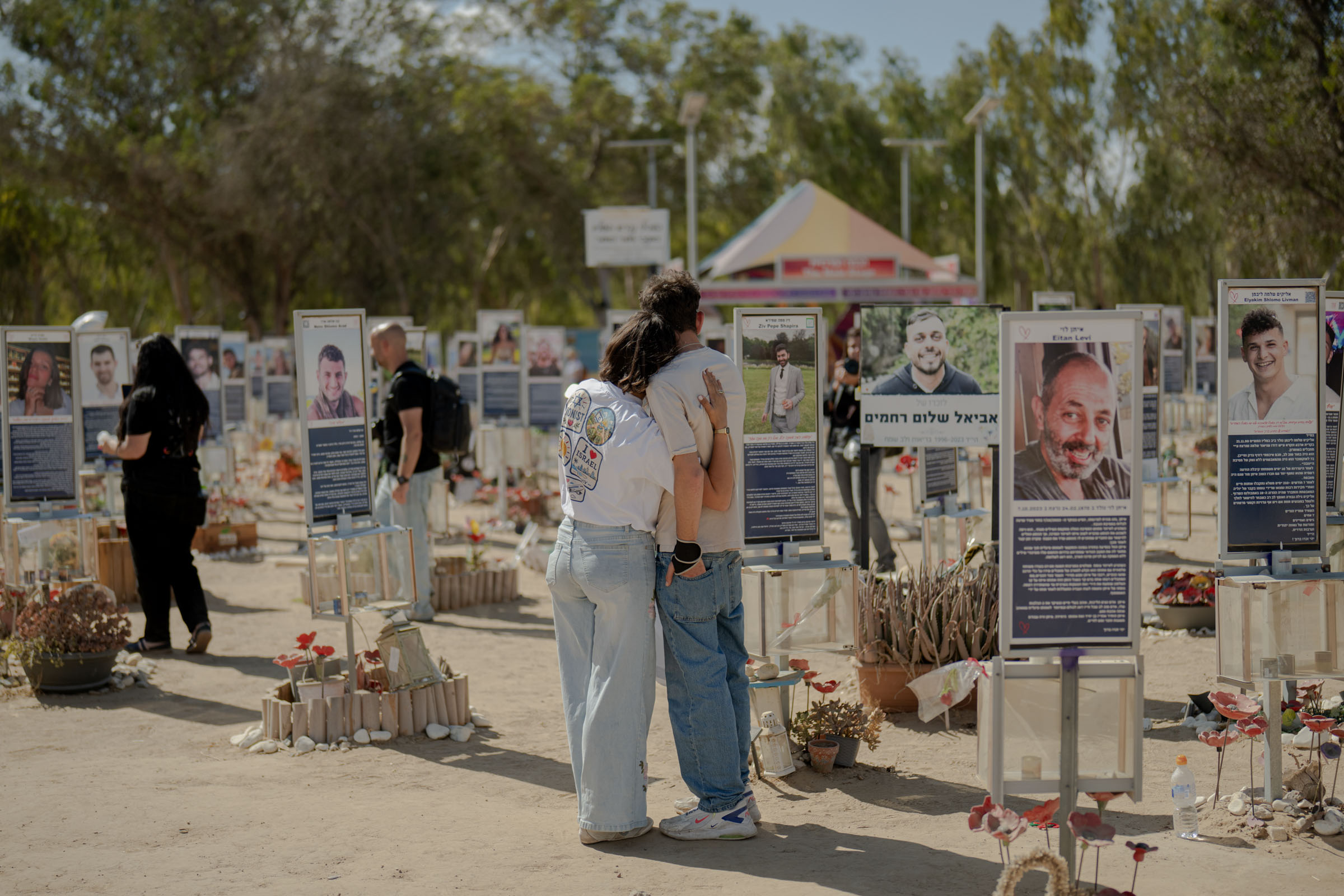
A couple embraces while visiting memorial markers honoring victims at the Nova music festival site as Israel marks the third anniversary of the Oct. 7th 2023 attacks on October 7, 2026 in Re'im, Israel. —Erik Marmor—Getty Images

Eisenkot’s son Gal, 25, was staying at the family home in Herzliya, outside of Tel Aviv, rather than his apartment near Tel Aviv University, where he was studying bioinformatics. He had come home for the holiday of Simchat Torah. Eisenkot woke him. “Gal, come to see the TV,” he said. “There are trucks of Hamas inside Sderot. This means war. Where is your military equipment?”

Gal had completed his compulsory service and was now a reservist, trained as a combat medic. Eisenkot drove him to his unit’s base, where lines of cars were already forming as reservists converged. “I knew right away that Israel, that the world, would never be the same,” Eisenkot says. 

Four days later, with a ground invasion of Gaza looming, Netanyahu asked Eisenkot to join a small war cabinet. Eisenkot had served under Netanyahu as chief of the general staff from Feb. 2015 to Jan. 2019, but the two men were now political adversaries. Netanyahu had hoped to project unity to a divided public, much of which had come to distrust or despise him. After months of mass demonstrations against his efforts to curtail the power of the judiciary, he sought to rally the country behind the coming war.

One of Eisenkot’s first priorities in the war cabinet was to prevent the opening of a second front against Hezbollah, the Iranian-backed Shiite militant group in Lebanon. Some of Netanyahu’s senior ministers, particularly Defense Minister Yoav Gallant, favored launching a preemptive offensive against Hezbollah, despite objections from the Biden Administration. Eisenkot argued that Israel needed to concentrate its military resources on defeating Hamas in the south before embarking on another major conflict. On that question, he prevailed.

On another matter, one he considered even more urgent, Netanyahu was less receptive. Hamas had abducted 251 people on Oct. 7, and Eisenkot believed securing their release should take precedence over a full-scale military campaign. It was, in his view, a fundamental obligation of the state, part of the covenant between a country and its citizens. Once Israel plunged into a prolonged ground war, he feared, the prospects of recovering the hostages alive would diminish. “My idea was to do the hostage deal, and after that, defeat Hamas,” Eisenkot tells me.

Netanyahu chose a different course. Israel launched a ground invasion following an extensive aerial bombardment of Hamas’s military infrastructure, including its vast network of subterranean tunnels. Hamas had embedded military facilities and weapons in densely populated areas, deliberately exposing civilians to grave danger. The military campaign that ensued has killed more than 70,000 Palestinians, according to Gaza’s health ministry, which does not distinguish between civilians and combatants. 

Two months into the war, Eisenkot suffered a catastrophe of his own. He was at a military headquarters, studying a satellite map showing the positions of Israeli battalions near some of the fiercest fighting in Gaza. Fifteen minutes later, a major general who had once served under his command approached him.

“Gadi, come to me,” the officer said. “Gal is critically injured. Go home”

Eisenkot had spent more than four decades in the Israeli military. He knew what those words meant. If his son were still alive, he would have been told to go to the hospital, not home. “I understood he was dead,” he tells me. 

Gal died in combat alongside his friend Eyal Berkowitz, a young man from a West Bank settlement. It was Berkowitz whose photograph Eisenkot had shown me in his office, standing beside Gal. 

Thousands attended Gal’s funeral, which was broadcast on national television. Across the country, Israelis watched one of their most decorated commanders mourn the loss of his own son. Eisenkot delivered a eulogy, his voice trembling. “I promise you that we will continue to be a united and happy family, so that your sacrifice and that of the other fallen will not be in vain and that we will be worthy of it,” he said. “I salute you, beloved son.” 

Three days later, Eisenkot returned to Netanyahu’s war cabinet. He watched as Netanyahu’s prosecution of the war turned Israel into a pariah state. Images circulated daily on social media of children killed as collateral damage in strikes on Hamas targets. Netanyahu resisted allowing aid into the Strip. The world accused Israel of using starvation as a weapon of war and committing war crimes against a trapped population of 2 million.
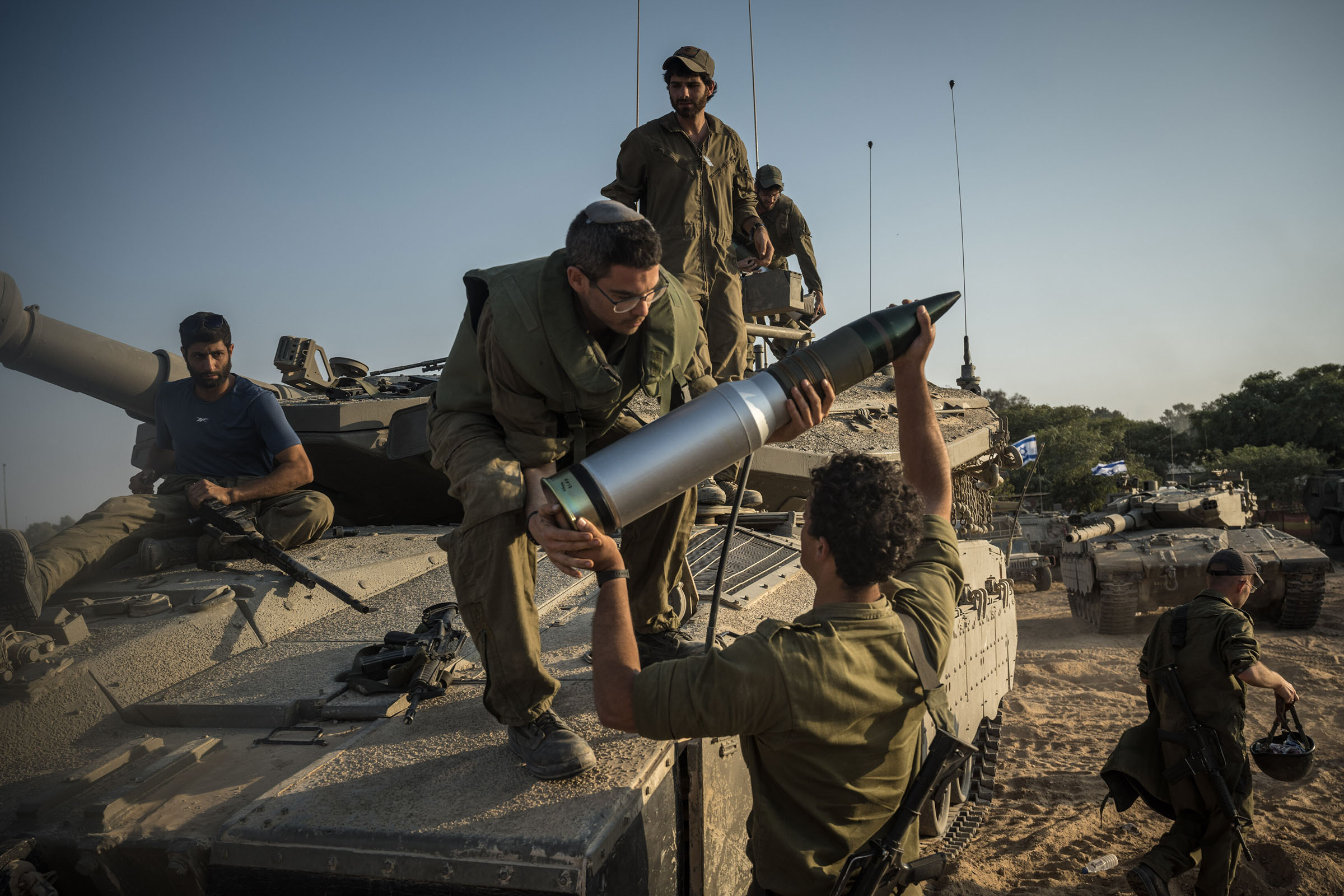
Israeli soldiers load tank shells in Be’eri, near the Gaza border, on Oct. 14, 2023, as tens of thousands of troops prepared for a ground offensive aimed at capturing Gaza City and destroying Hamas’s leadership. —Sergey Ponomarev—The New York Times/Redux
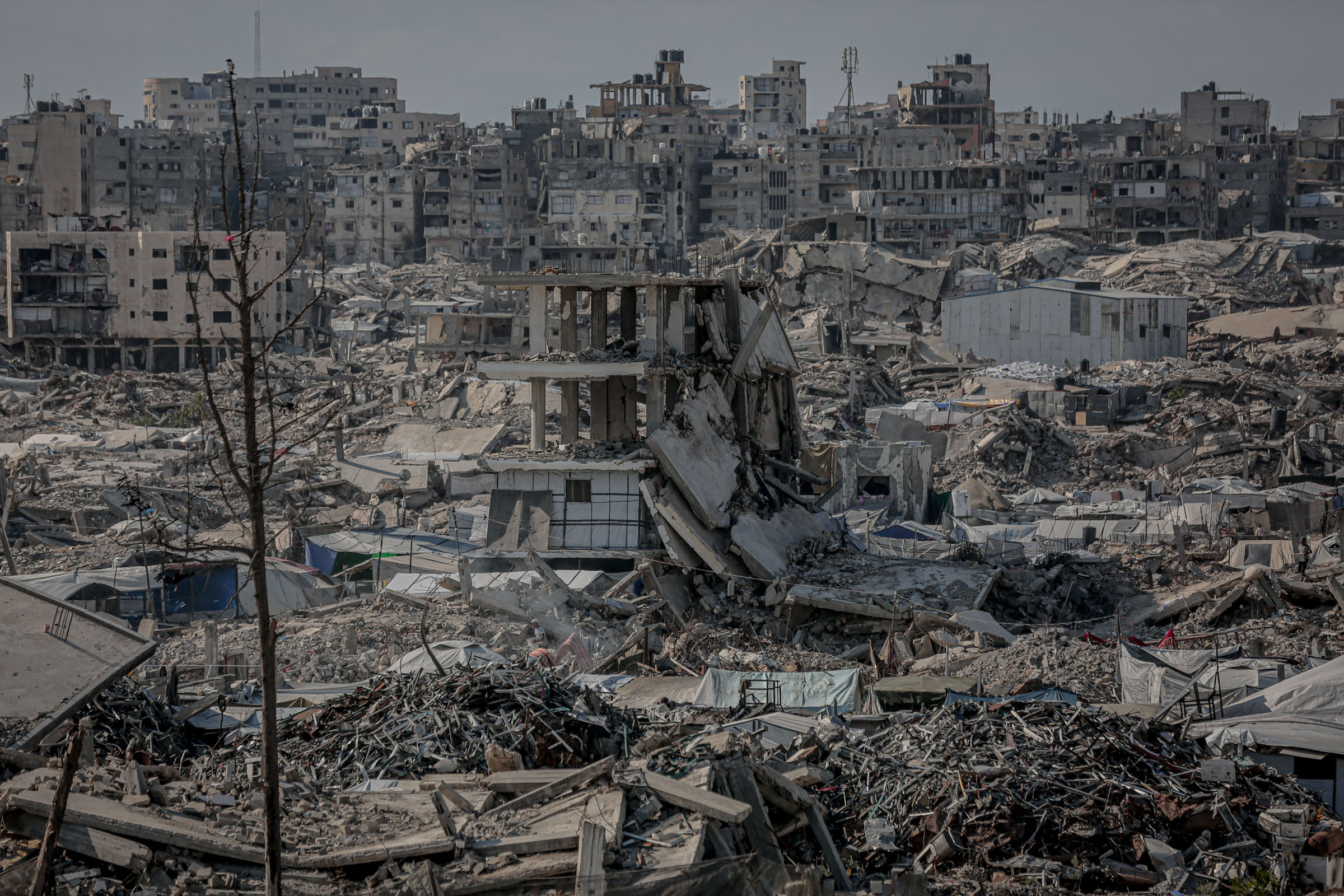
A view shows widespread destruction and displacement shelters in Gaza, Palestine on October 21, 2026. —Faiz Qreqa—Middle East Images/AFP/Getty Images

He recalls his final meeting with Netanyahu, in late June 2024, when the prime minister appeared before a special intelligence committee in the Knesset. Eisenkot pressed him on how he intended to end the war. “What is your exit plan?” he asked. Netanyahu offered none, Eisenkot says, insisting instead that Israel would continue fighting until it achieved “total victory.”

Eisenkot reached into his briefcase and pulled out a book: Master of the Game: Henry Kissinger and the Art of Middle East Diplomacy, Martin Indyk’s 2021 study of Kissinger’s statecraft. Indyk, who served in senior diplomatic roles under Presidents Bill Clinton and Barack Obama, was a friend of Eisenkot’s and a longtime critic of Netanyahu. “Have you read this?” Eisenkot asked. Netanyahu said he had not. Eisenkot urged him to do so, arguing that military force without a diplomatic strategy could not deliver a lasting victory.

“Gadi,” Eisenkot recalls Netanyahu replying, “I have a different view about the meaning of the word strategy.” 

Eisenkot was enraged by Netanyahu’s refusal to prioritize the hostages. The suspicion among Netanyahu’s critics was that he feared a deal would fracture his coalition, potentially forcing elections that could remove him from power and trigger an inquiry into the failures of Oct. 7—much like the Agranat Commission, established after the 1973 Yom Kippur War, that led to the downfall of Golda Meir. In Eisenkot’s telling, Netanyahu put the preservation of his own power above the lives he was entrusted to protect. “He neglected them,” Eisenkot says. 

A spokesperson for the prime minister did not respond to multiple requests for comment.  

On June 9, 2024, Eisenkot resigned from the emergency government, ending his eight-month effort to influence the war from within. His departure, alongside that of Benny Gantz, effectively ended the national unity arrangement and precipitated the dissolution of the war cabinet. But the war was not finished exacting its toll on Eisenkot’s family. One nephew had already died fighting in Gaza on the same day of his son’s funeral. Another was killed 11 months later. 

Over the next two years, Netanyahu presided over a succession of extraordinary military operations. Israel killed Yahya Sinwar, the Hamas leader who helped mastermind the Oct. 7 massacre, and Ismail Haniyeh, the group’s longtime political chief. It assassinated Hezbollah leader Hassan Nasrallah and dealt devastating blows to the Iranian-backed militia in Lebanon, including through an audacious operation that turned thousands of its members’ pagers into explosive devices. After Donald Trump returned to the White House, Netanyahu persuaded the president to join Israel’s 12-day war against Iran in June 2025, with U.S. forces striking three of Iran’s principal nuclear facilities.

But the military triumphs told only part of the story. For two years, the war in Gaza devastated the Palestinian enclave, killed tens of thousands of people, and left Israeli hostages languishing in captivity. In October 2025, under intense pressure, Netanyahu agreed to a ceasefire and hostage-exchange deal that halted the fighting and secured the release of the remaining living hostages. “Netanyahu dragged it” out, Eisenkot says. “President Trump pushed him to do it.”

Months later, the confrontation with Iran entered a more perilous phase. Netanyahu helped persuade Trump to join a broader war against the Islamic Republic, a conflict that grew difficult to end and intensified criticism of Israel in the United States, including among elements of the American right. Around 60% of U.S. adults now hold an unfavorable view of Israel, according to a 2026 Pew survey. 

Now, for the first time since Oct. 7, Netanyahu must face the electorate. Eisenkot thinks Netanyahu has done little to help Israel recover, instead perpetuating the trauma, cultivating a siege mentality and an atmosphere of never-ending conflict that allows him to cast himself as the indispensable wartime leader. “I don’t know how Netanyahu wants to close the story,” Eisenkot says.

He decided he would try to write the ending himself.
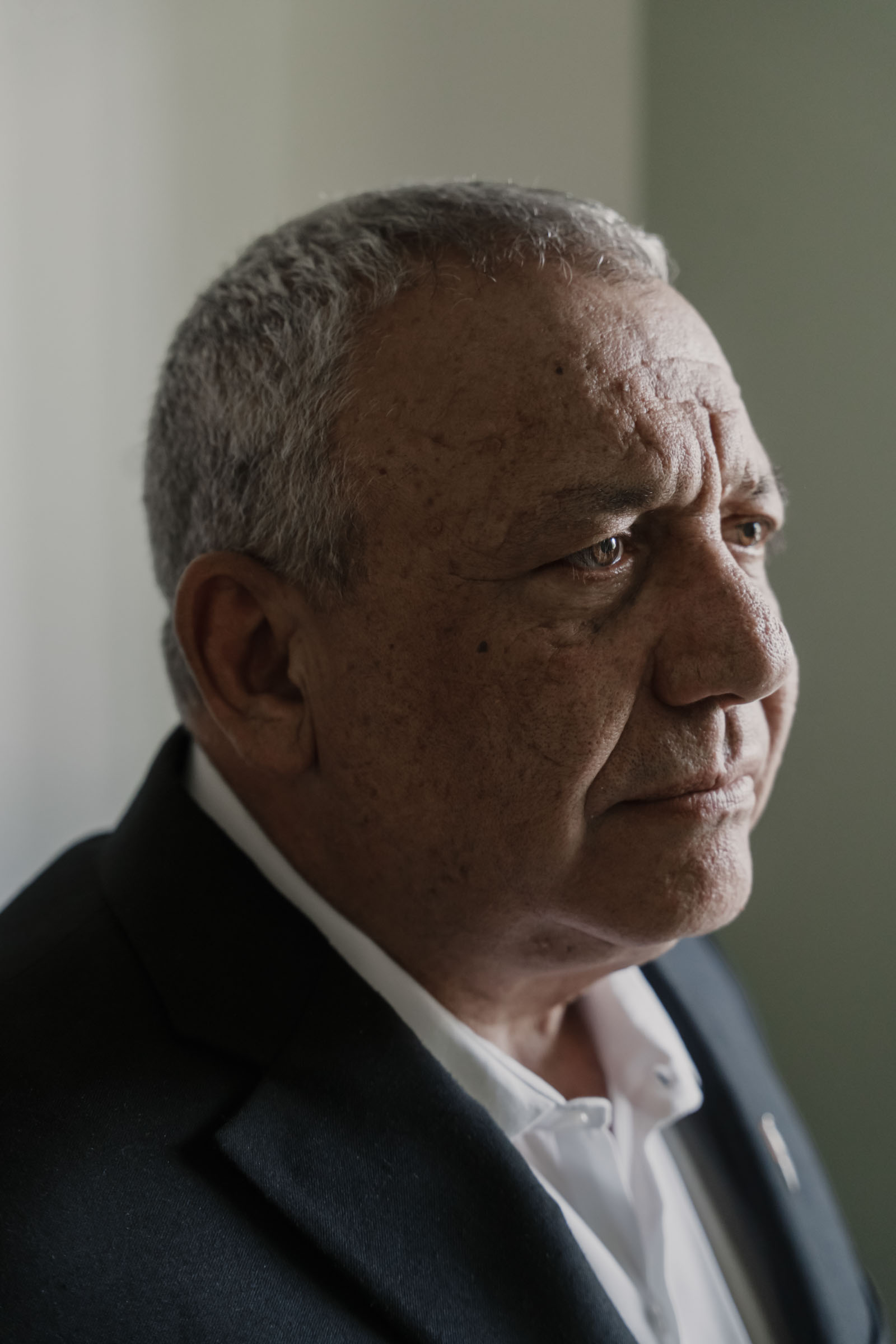
Eisenkot photographed in Jerusalem on Oct. 22. —Ofir Berman for TIME


Eisenkot’s strategy has been to assemble a broad coalition. To his right, he envisions Bennett and the secular nationalist Liberman; to his left, Golan, leader of the Democrats, the successor to the historic Labor Party, and Lapid, the former television host who briefly served as prime minister. “I told them, let’s build a big party,” Eisenkot says.

He held a series of talks with Bennett about the prospect of running together, but ultimately declined, calculating that separate campaigns would give the opposition bloc a better chance of expanding their support. Instead, Eisenkot chose to lead his own party, Yashar. Bennett subsequently joined forces with Lapid. “I thought I had the ability to unite Israel, unite this divided country,” Eisenkot says, citing his military experience and relationships across the political spectrum. “It’s not from arrogance but from deep commitment to bring change and defeat Netanyahu.”

Eisenkot’s background also carries significance. Born in Tiberias to Moroccan Jewish immigrants and raised in the southern port city of Eilat, he belongs to Israel’s Mizrahi community, Jews of Middle Eastern and North African descent who have long faced discrimination from the country’s predominantly Ashkenazi establishment. If elected, he would become Israel’s first Mizrahi prime minister.

Eisenkot has campaigned on restoring public trust in government, strengthening Israel’s security, and preserving its foundation as a Jewish democracy. He has pledged to dismantle illegal outposts in the West Bank and crack down on extremist Jewish settlers who terrorize Palestinians, expand military or civilian national service across Israeli society, confront the threat from Iran, pursue a political resolution to the Palestinian conflict, repair Israel’s frayed relationships abroad, and restore national unity.

Travel through the country and the psychological scars of Oct. 7 are difficult to miss. They surface in the impatience of drivers, the intensity of political arguments, the restless energy of a society still living in the shadow of a nightmare. The country seems suspended in its aftermath, unable to separate the horrors of the past from the anxieties of the present. In some ways, it is still Oct. 8, 2023.

During our interview, Eisenkot and I discuss Bessel van der Kolk, the Harvard psychiatrist whose bestselling book, The Body Keeps the Score, explores how overwhelming experiences can leave people psychologically trapped in the past. Trauma, van der Kolk argues, can persist long after the danger has passed, disrupting the ability to integrate painful memories and move forward.

Eisenkot believes Netanyahu has purposefully made that process harder. Nearly three years on, Israel has yet to establish a state commission of inquiry into the failures that allowed the attack to happen. Without an authoritative accounting, Eisenkot argues, the country cannot fully reckon with the catastrophe. He pledges to establish such a commission within his first 14 days in office, with a mandate to investigate not only Oct. 7 but the decade of decisions that preceded it, including his own tenure leading the military. 

He points to widespread suspicions that the attack involved some form of betrayal from within, a belief he attributes partly to Netanyahu’s efforts to shift responsibility onto military and intelligence officials. Netanyahu and members of his family have promoted disputed allegations that security officials deliberately withheld warnings before the Oct. 7 attack, including the claim that they failed to wake the prime minister as Hamas launched its assault—part of a broader effort by Netanyahu and his allies to shift responsibility for the security failures onto the military and intelligence establishment.

Recent polls show a close contest, with Yashar running ahead of Likud. But neither Netanyahu’s right-wing alliance nor the parties seeking to replace him appear assured of the 61 seats required for a majority in the 120-member Knesset. 

“I think the chances for a unity government are high because we will be more than happy to have Eisenkot joining our coalition,” says Ohad Tal, a Knesset Member running with Smotrich’s Religious Zionism party. “If the other side will have a majority with the Arabs, God save us.”

Forming an alternative majority could require support from Arab parties, a fraught prospect in Israeli politics. Eisenkot will not commit to bringing them into his government. Instead, he has set four conditions for any coalition partner: recognition of Israel as a Jewish and democratic state; adherence to the principles of its Declaration of Independence; acceptance of a national-service obligation for all citizens, with civilian alternatives to military service; and agreement that Hamas is a terrorist organization that must be dismantled. None of the Arab parties has yet to accept the latter tenet.

“I understand that in the Israeli system we must have a big bloc,” Eisenkot says. “It’s a huge challenge. I’m doing my best from morning till night. I’m convinced we’ll defeat Netanyahu.”
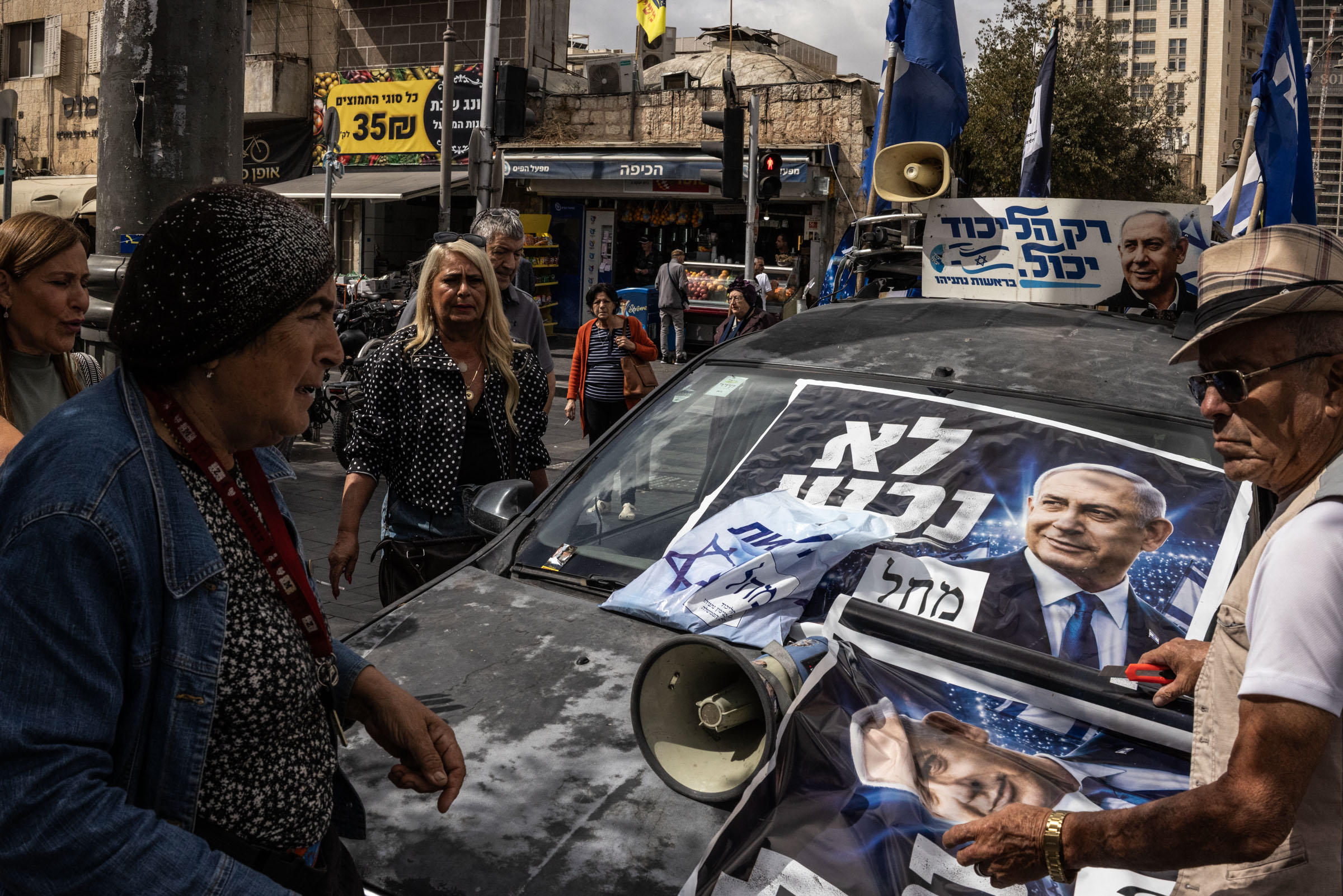
People walk past election campaign flags and a car plastered with images of Israeli Prime Minister Benjamin Netanyahu, ahead of the upcoming elections, in Jerusalem on October 16, 2026. —John Wessels—AFP/Getty Images


If Eisenkot succeeds, he says, he will break with Netanyahu’s defining political method: cultivating a siege mentality that pits Israel against the world. “The main challenge is to break Netanyahu’s method with them and us,” Eisenkot tells me. “This is poison to our society.”

Nowhere is that more consequential than in the United States, where support for Israel has deteriorated, particularly among younger Americans. “Netanyahu knows the United States better than all of us, but today he can’t improve Israel’s relationship with the U.S.,” Eisenkot says. “He may have a good relationship with the administration today, but the situation in universities, with American Jewry, with the bipartisan relations, are at their lowest.”

One of Eisenkot’s proposals is to gradually wean Israel off American military assistance. He believes the dependence has become a source of friction in Washington, and runs counter to the Zionist ideal of a Jewish state capable of guaranteeing its own security. “Maybe it will take five to 10 years,” he says, “and it is our interest to do it.”

Eisenkot opposes the establishment of a Palestinian state, a goal long championed by much of the international community. But he also recognizes the profound danger of a one-state future: Israel would face a choice between granting millions of Palestinians citizenship and voting rights, which would end its Jewish majority, or denying them those rights, which would undermine its claim to be a democracy. He wants to prevent the vision of permanent Israeli control advanced by Smotrich and Ben-Gvir. “Smotrich’s vision for one state will be the end of our country,” Eisenkot says.

To avert that outcome, Eisenkot tells me he favors some form of separation in the West Bank, with a reformed Palestinian Authority assuming greater responsibility for Palestinian self-government while Israel retains military control over the territory. His approach to Gaza is different. He endorses the framework of Trump’s 20-point peace plan, which calls for a technocratic Palestinian administration to govern the enclave and envisions a conditional pathway to Palestinian statehood.

“We have two options: the 20 points of President Trump, or to use force,” Eisenkot says. “I prefer the diplomatic option—and I believe I can do it. But if not, I know how to dismantle Hamas with force.”

For all his confidence in working with Trump, Eisenkot and his advisers were surprised when the president endorsed Netanyahu. Trump had previously passed up opportunities to do so, including in an interview with TIME. Some of his closest Middle East advisers, including his son-in-law Jared Kushner, had grown frustrated with the Israeli leader. According to people familiar with the discussions, Fox News host Mark Levin and U.S. Ambassador to Israel Mike Huckabee urged Trump to back Netanyahu in the closing days of the campaign. “Israeli society is independent and will make its own decision,” Eisenkot says. “I have no doubt Trump will accept every democratic choice in Israel.”

Netanyahu’s political operation has circulated a stream of AI-generated videos attacking Eisenkot, including one depicting him in a field approaching a young Israeli soldier who bears a striking resemblance to his dead son. Instead of embracing the soldier, the figure resembling Eisenkot pushes him aside and embraces Mansour Abbas. “I felt contempt,” Eisenkot says when we discuss the video. “That is the lowest he could go.” The invective has only continued. Yinon Magal, a Channel 14 host and pro-Likud commentator, called Eisenkot a “monkey” on air. Netanyahu waited days before describing it as “highly inappropriate.”

Eisenkot sees the election as a test of whether Israel can preserve the democratic and national ideals of the Zionist movement or drift further from them. “My goal is that the Israeli people will be united and proud of their country,” he says. “That global Jewry will be proud of Israel as the national home of the Jewish people.” Many fear an exodus of Israelis should Netanyahu hang on. A Channel 12 poll in July found that 23% said they or any of their relatives would leave if the Israeli premier is reelected. 

Eisenkot lacks Netanyahu’s rhetorical flair, polished English, and decades on the world stage. But he argues those advantages have grown less useful as Netanyahu grows increasingly polarizing, at home and abroad. For many critics of Israel, particularly younger ones, the distinction between the country and its longtime leader has become difficult to discern. “We need to return to speaking about sharing the same values,” Eisenkot says. “Nobody speaks about values right now. Everything is about interest, power, more power, and more power.”

As our interview draws to a close, Eisenkot returns once more to the subject of trauma, the force that has shaped his own life and, he believes, the fate of his country. “Netanyahu is unwilling to show the courage needed to end the war from a position of strength,” he says. “It will take years to close the trauma, but we must start now.”

- With Reporting by Liam Forberg

  •  

Venezuelans Take to the Streets to Demand Democracy

Demonstrators hold Opposition leader Maria Corina Machado's signs during a protest to demand a free presidential election in Caracas, Venezuela on Oct. 22, 2026. —Jesus Vargas—Getty Images

Thousands of protesters took to the streets in Venezuela on Thursday afternoon to demand presidential elections and call for the return of exiled Nobel Prize-winning opposition leader María Corina Machado.

In the capital, Caracas, protesters gathered in Plaza Venezuela and called for presidential elections to be scheduled as early as 2027, as well as the release of all political prisoners in the country.

“We will have presidential elections very soon with María Corina as president,” said former congressman Piero Maroun, who attended the protests, according to independent local news organization Efecto Cocuyo. The Machado-led activist group Vente Venezuela spearheaded the protests, which led to the closure of some streets in Caracas. Others also staged protests in the states of Nueva Esparta, Táchira, and Zulia. 

The ruling party that acting President Delcy Rodríguez belongs to, the United Socialist Party of Venezuela, also staged a gathering near the opposition demonstrators in Caracas, though for a women’s march for Breast Cancer Awareness Month. 

Protesting has become common for disgruntled Venezuelans since the forced end of Nicolás Maduro’s presidency. Maduro and his predecessor Hugo Chávez heavily cracked down on political dissent. But since Maduro’s removal in January by U.S. forces, protesters have taken to the streets “with increasing frequency,” according to the international civil society alliance CIVICUS, citing data from the Venezuelan Observatory of Social Conflict, which recorded 1,101 protests during just the month of September, or about 37 demonstrations per day. These protests, however, have not necessarily been large.

Until this week. The Thursday protests, which Reuters described as “the first nationwide opposition protest in ​nearly two years,” coincided with the third anniversary of the opposition’s presidential primary elections, in which Machado emerged victorious. 

Machado is still the opposition’s most prominent figurehead in the transition toward a democratic government: in an AtlasIntel survey conducted for Bloomberg News, Machado received 52% support, compared with 19% for Rodríguez. But Machado has her work cut out for her.

The protests also happened as Rodríguez met with Dinorah Figuera, the opposition representative backed by the U.S. State Department in negotiations for a political transition, inside the Venezuelan presidential palace. The three rounds of U.S.-backed talks between the Venezuelan government and Figuera’s faction have yet to yield an agreement on elections.

In a statement reported by El País after the meeting, Rodríguez appeared to reference the opposition protests, saying in Spanish: “There are still very, very small groups that resist and believe that trying to set the country ablaze and block streets is the way for Venezuela to move forward. I recognize the good Venezuelans who, through this dialogue, are promoting necessary changes.”

Since arresting Maduro in an extraordinary military operation in January, the U.S. has been working with an interim government led by Rodríguez, Maduro’s former deputy. Rodríguez and U.S. President Donald Trump both have said elections will eventually be held in the country, though Trump told TIME in late September: “It’s so raw now, you know that I just think it’s too soon.”

Why has an election not yet been scheduled?

The post-Maduro government opened talks in August with the opposition faction led by Figuera, the president of Venezuela’s 2015 National Assembly, to help the country achieve a democratic transition. But the changes are expected to take time.

Domestic opposition and international observers have long slammed Maduro’s 2018 and 2024 re-elections for lacking transparency and fairness, disputing the results and arguing that Machado’s proxy, Edmundo González Urrutia, actually won in the latter. This raised questions about the independence of the Supreme Court and Venezuela’s National Electoral Council, which have been packed with loyalists of the regime.

For the transition, the establishment and the opposition are trying to iron out details of reforming the court and the council. Even if this happens, experts told Reuters that authorities will still need to update voter rolls and ensure that parties can reach a consensus on how subsequent elections would work.

The twin earthquakes that struck Venezuela in June and caused extensive damage also complicated efforts toward stability in the country.

But the U.S. has also set certain prerequisites that could affect how soon elections could happen. President Trump and Secretary of State Marco Rubio outlined that they seek stabilization, economic recovery, and national reconciliation in Venezuela, on top of a political transition. Axios reported that it’s a multi-step process: change the court makeup, reform the electoral commission, and then announce an election date. Rubio also announced other requirements, including a truly free press. 

“What would threaten an enduring republic in Venezuela would be that someone is elected and they inherit a complete catastrophe, economic and social, and then the whole project is endangered because now anything can happen,” Rubio said on Sept. 23, following Trump’s meeting with Rodríguez in New York. “We want to do two things at the same time.”

Critics argue that the Trump Administration’s position sidelines the opposition faction led by Machado and instead prioritizes oil agreements and economic stabilization over Venezuela’s democratic transition. In August, Trump announced that Washington agreed to a deal with Caracas, saying it would give the U.S. majority control over more than 65 billion barrels or about a fifth of Venezuela’s oil reserves.

Dhayana Fernández-Matos, a professor of political science at the Federal University of Pelotas in Brazil, told Spain’s broadcaster RTVE last month that an election in Venezuela is not a priority for Trump, as his “primary interest lies in oil and the geopolitical power of controlling the world’s largest proven crude oil reserves.” 

TIME’s September interview with Trump hinted at the U.S.’s potential financial bias for a delayed election: after saying that it would be too soon for Venezuela to hold an election, the President said, “A lot of money is being made by us, but a lot of money is also being made by Venezuela, and we have complete control of all of them.”

  •  

Exclusive: Ben-Gvir’s Plan to Push Netanyahu Right

Itamar Ben-Gvir, Israel's national security minister and head of the far-right Otzma Yehudit (Jewish Power) party, arrives for an event commemorating the Jewish holiday of Sukkot, the Feast of the Tabernacles, in a field outside Kibbutz Nir-Am by the Israel-Gaza border on September 27, 2026. —Ilia Yefimovich—AFP/Getty Images

In a small office in the industrial district of Lod, a city outside Tel Aviv where Israeli forces expelled thousands of Palestinians during the 1948 war, sits the campaign headquarters of Otzma Yehudit, or “Jewish Power.” The ultra-nationalist party is led by Itamar Ben-Gvir, a far-right firebrand once deemed too extreme to serve in Israel’s military. He now sits in Benjamin Netanyahu’s cabinet as national security minister, overseeing the country’s police and prison services.

If Ben-Gvir has his way, the Oct. 27 election will give his party more seats in parliament and himself greater leverage over another right-wing government led by Netanyahu. His ambition is not to replace the prime minister but to make him even more dependent on the hardline parties pushing for Palestinians to leave Gaza and the West Bank—and for Israel to extend sovereignty over the territories.

“I want Netanyahu to be prime minister. He’s a leader. I prefer him a million times over Eisenkot,” Ben-Gvir tells me in a rare interview on Oct. 19, referring to Netanyahu’s chief rival, the former military chief Gadi Eisenkot. Pounding his chest, he adds: “What will really help Netanyahu be right wing is if I, Ben-Gvir, will be a senior minister and it’s a full right-wing government.”

The post he covets is defense minister, which would give him command over Israel’s armed forces and greater authority to pursue his vision for Gaza and the West Bank: fewer constraints on military operations, the “voluntary emigration” of Palestinians from both territories, and the expansion of Israeli control over lands he believes belong to the Jewish people. Netanyahu has resisted giving Ben-Gvir the portfolio. But Ben-Gvir and his allies hope to win enough seats to force Netanyahu to accommodate their demands or risk losing power. He may benefit from the rightward shift of Israeli politics, particularly among younger voters drawn to his confrontational style and uncompromising vision of Jewish sovereignty. In a Channel 12 survey of first-time Jewish voters, nearly three-quarters identified as right-wing or center-right.

Polls suggest a tight contest, with Eisenkot’s centrist Yashar party edging ahead of Netanyahu’s Likud in several recent surveys, but neither the prime minister’s right-wing bloc nor the opposition appears close to the 61 Knesset seats needed to govern. An average of four recent polls puts the two camps at roughly 50 and 53 seats, respectively, leaving Arab parties and smaller factions potentially pivotal. The result could be another fragile coalition; an unlikely unity government between Netanyahu and Eisenkot; or a prolonged deadlock that sends Israelis back to the polls. 

Ben-Gvir, dressed in a white shirt and white kippah, speaks halting English. Under his leadership, Israel’s prison service has drawn allegations of abuse for its treatment of Palestinian detainees. But he wants a more direct role in determining Israel’s future in Gaza and the West Bank.

“If Israel wants to continue to live and not be destroyed, we have to capture all of Gaza,” he says. “We have to promote voluntary emigration. Gaza could be a Riviera. It’s a beautiful place. But we can’t have one Hamas member there.” His proposal would have Palestinians leave Gaza for countries willing to receive them, and then allow Israelis to establish settlements in the coastal enclave. It would reverse a defining decision of an earlier right-wing prime minister, Ariel Sharon, who in 2005 withdrew Israeli forces and evacuated more than 8,000 Jewish settlers from Gaza. 

Ben-Gvir offers no clear explanation of which countries would accept large numbers of Palestinians, or how their departure could be considered voluntary under the conditions he proposes. “Gaza was always ours,” he says. “Israel is a tiny country. We have to be wider, broader. Hamas are terrorists who don’t just want to destroy Israel. They want to destroy the whole world.”

When I suggest that removing Palestinians from Gaza and resettling it would deepen Israel’s international isolation, he dismisses the concern. “I think that the stronger we are, we won’t be isolated,” he says. “Israel is isolated when it’s weak. If we help the population leave Gaza, we can be very strong.”

Ben-Gvir’s rhetoric and policy designs have drawn widespread condemnation at home and abroad, with critics across the political spectrum accusing him of inciting war crimes and eroding the foundations of Israeli democracy. “He’s a source of immense trouble,” Efraim Halevy, a former head of the Mossad, tells me.

His ambitions in the West Bank are no less sweeping. Ben-Gvir wants Israel to annex the territory, which he, like most Israelis, calls by its biblical names, Judea and Samaria. It is home to 3.3 million Palestinians and partially governed by the Palestinian Authority (PA), created by the 1993 Oslo Accords that envisioned a Palestinian state. Controlled by the Fatah party, the PA has a lightly armed security force that is trained by the U.S. military and historically works with Israel to suppress terror attacks. But Ben-Gvir wants Israeli security control over the area Palestinians envisage as the heartland of a future state. “We need to take away the weapons for the Palestinian Authority,” he says. “As of now, they are training in Jericho. They’re not training to direct traffic, are they? They want to do another Oct. 7.” A spokesperson for the PA did not respond to a request for comment. 

The vision goes beyond annexation. Ben-Gvir says he would encourage millions of Palestinians who have lived in the West Bank for generations to pack up and go. “We want sovereignty in Judea and Samaria, where we also want voluntary emigration,” he says. “Just so we understand, we want voluntary emigration—not kicking anyone out. People will choose the option to leave.”

Whether Ben-Gvir can translate those ambitions into official Israeli policy will depend in part on the leverage his party wins on Oct. 27. He is counting on voters to strengthen his hand. “I hope the nation sends its message,” he says.


Ben-Gvir, 50, was born into a relatively secular Jewish family of Iraqi and Kurdish descent in Mevaseret Zion, a suburb of Jerusalem. His mother had belonged to the Irgun, the Jewish underground that fought British rule before Israel’s founding, but his parents were, by all accounts, not ideological zealots. Ben-Gvir took a different path. He became religious at 12 and, amid the violence of the first Palestinian intifada, gravitated toward the teachings of Meir Kahane, the American-born rabbi who advocated expelling Arabs from Israel and the occupied territories. By his teens, he was an activist in Kahane’s movement, which Israel eventually outlawed as a terrorist organization. Ben-Gvir was considered so extreme that the Israeli military barred him from compulsory service. 

Today, Ben-Gvir continues to revere Kahane, even as he disavows some of his mentor’s most fanatical positions. “I went to his yeshiva. He did a lot of good things. He protected Jews. He was murdered sanctifying God’s name,” he tells me. “Not everything that he did do I fully agree with. In the past, I thought we should kick out all the Arabs from the land of Israel. Now I think there can be some. I accept that there are some Arabs who live here. And I have no problem with part of them. Those who recognize the State of Israel as the Jewish state. Those who are loyal to the Jewish State.”

As a young adult, Ben-Gvir moved to Kiryat Arba, a Jewish settlement overlooking the Palestinian city of Hebron, where Kahane’s legacy runs particularly deep. According to published accounts, he and his future wife, Ayala, visited the grave of Baruch Goldstein on their first date. Goldstein, an American-born physician and Kahane admirer, had massacred 29 Palestinian Muslims at prayer in Hebron in 1994 before being beaten to death by survivors. For years, Ben-Gvir displayed Goldstein’s portrait in his living room. He became an attorney for Jewish settlers and activists accused of extremist violence. He also acquired a criminal record, including convictions for incitement to racism and supporting a terrorist organization. 

For years, Ben-Gvir remained on the fringes of Israeli politics, a familiar presence at settler demonstrations but an unlikely candidate for national office. Over time, he softened some of his rhetoric, publicly distanced himself from Kahane’s demand to remove all Arabs, and cultivated a more approachable persona without abandoning his annexationist aspirations.

His political breakthrough came under Netanyahu. Ahead of the 2022 election, the prime minister helped broker an alliance between Ben-Gvir’s party and Bezalel Smotrich’s Religious Zionism, giving Netanyahu enough seats to assemble a government. Netanyahu’s decision to bring two Jewish supremacists into government became emblematic of Israel’s rightward turn—and one of the factors in its growing international isolation.


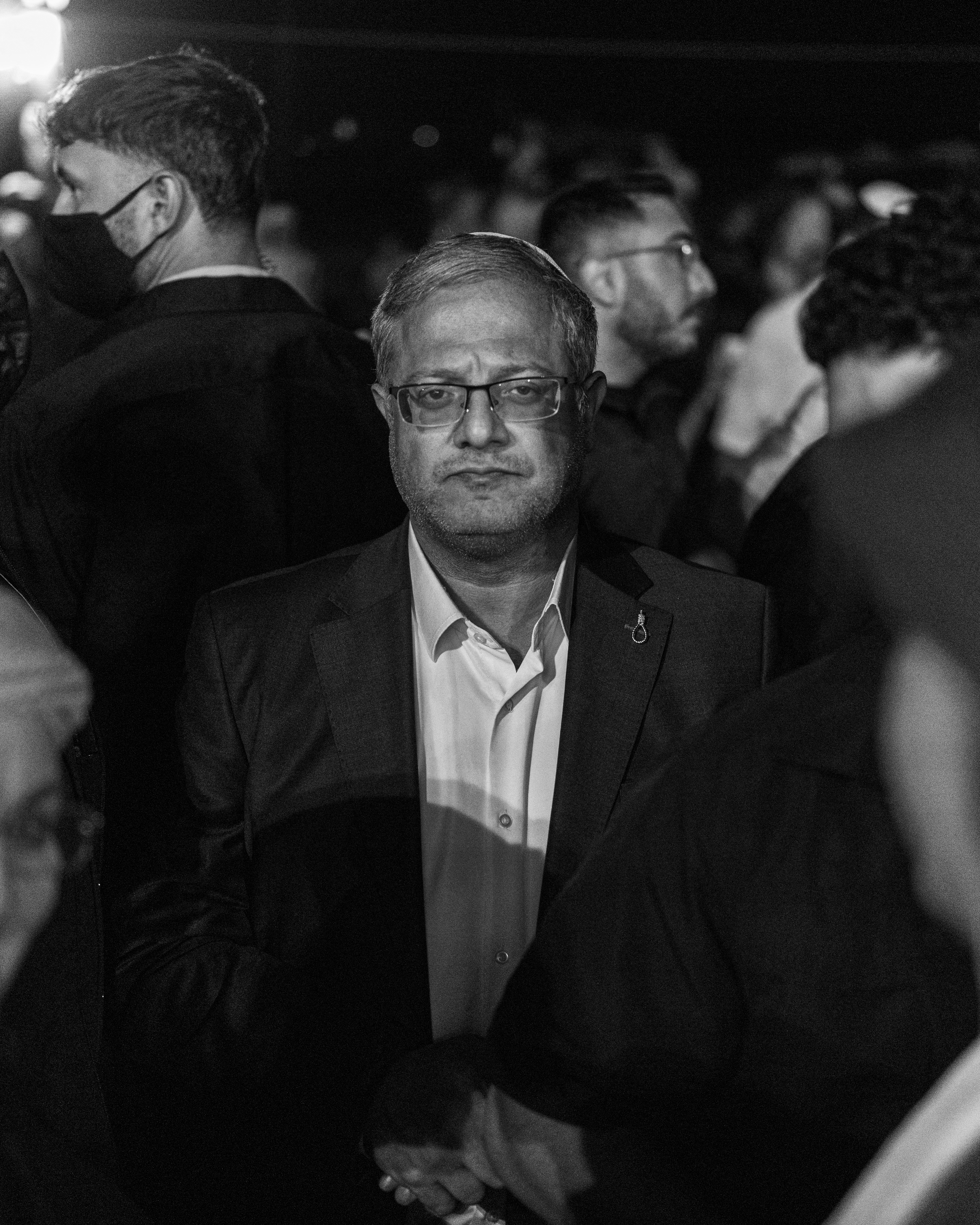
As national security minister, Ben-Gvir has pursued a hardline agenda: expanding civilian gun ownership, imposing an increasingly draconian regime on Palestinian prisoners, and pressing for tougher policing of anti-government protests. He wore a noose-shaped pin as he championed legislation imposing the death penalty on Palestinians convicted of deadly terrorist attacks, and released an AI-generated video depicting Palestinian prisoners emerging from Israeli jails emaciated and weeping, a grotesque statement about the conditions of their confinement. 

Ben-Gvir also encouraged Jewish prayer at the Jerusalem holy site known to Jews as the Temple Mount and to Muslims as Haram al-Sharif, challenging a decades-old arrangement governing the disputed religious site, which has traditionally permitted non-Muslims to visit but reserved the right to worship there for Muslims. Under Ben-Gvir, Israeli police have increasingly allowed Jews to pray at the site, a deliberate provocation to the Arab world, drawing condemnation from Palestinian and Jordanian authorities. “It used to be an apartheid up there and Jews could not pray,” he tells me. “That could not happen in any normal country. I returned justice to the Temple Mount.”

Ben-Gvir has also become one of the leading voices on the Israeli right seeking to shift responsibility for Oct. 7 away from Netanyahu and onto Israel’s military and intelligence establishment. Among the claims he repeats is that security officials failed to wake the prime minister as the attack unfolded—which is disputed by former security officials.

“Even if he’s not perfect, and even if he made mistakes, and he indeed made mistakes, what screwed him up on Oct. 7 was our intelligence,” Ben-Gvir says of Netanyahu. “The army, the intelligence, the Shin Bet. They are all to blame,” he adds. “Netanyahu is not clear of blame, but there are many people who are more at fault than him.” 

Ben-Gvir’s relationship with the prime minister is not exactly warm. “I’m not backing him; I’m not his crony on everything. I think he’s much better than Eisenkot,” Ben-Gvir says. “I want to be next to him. I want him to be very strong. I want to pull him to the right.”

He tells me he would not join a unity government between Netanyahu and Eisenkot, a possibility if neither can assemble a governing coalition. “Governments like that are never good,” he says. “It's dancing in two weddings.” Besides, he adds, “It won’t fulfill my dreams.”

What Ben-Gvir wants from another Netanyahu government would place him at odds with the diplomatic framework advanced by the Trump Administration and its partners in Europe and the Arab world. The American-led Board of Peace envisions Gaza’s reconstruction under Palestinian leadership, the withdrawal of Israeli forces, and a possible path toward Palestinian statehood. 

Ben-Gvir, on the other hand, wants Israeli sovereignty and the departure of much of Gaza’s Palestinian population. He cites polling that he says shows 52% of Gazans want to leave the territory, devastated by years of war and Hamas rule. If Israel helps that majority leave, he reasons, those who remain will eventually want to follow. “They will see it is successful for them, they’ll see there’s a future, there’s a life,” he says. “There’s good places in the world. Pretty places.” He offers no evidence that the remaining population would choose to relocate, or how such a migration could be arranged without coercion.

For Ben-Gvir and his allies, the coming election offers a chance to advance a far-reaching transformation of Israeli politics and society—to move the country toward a maximalist vision of a Jewish state, one with expanded territorial ambitions, fewer judicial constraints, and a government less inclined to heed international objections. Ben-Gvir dismisses concerns that such policies would cement Israel’s status as a pariah state. In his telling, the military campaigns against Hamas, Hezbollah, and Iran demonstrate the value of uncompromising power. “We made Israel stronger,” he says. “When Israel is stronger, the world respects that.”

– With reporting by Liam Forberg
  •  

Meta Sued in Australia Over Alleged Harm to Children

A smartphone screen displays applications developed by Meta, including Facebook and Instagram. —Samuel Boivin—iStock/Getty Images

Social media giant Meta was hit with a class action lawsuit in Australia on behalf of children and teenagers who allegedly suffered harm over the addictive design features and exposure to harmful content on its platforms Facebook and Instagram.

Australian law firm MinterEllison filed the class action in the country’s Federal Court on Oct. 9. The firm announced the suit on Wednesday, saying it seeks to “recover compensation for both current and former users” of the two Meta social media platforms.

The class action, funded by Sydney-headquartered Litigation Lending Services, was brought in the names of eight unnamed lead applicants. Australia’s Federal Court on Monday ordered a gag on reporting any information that could reveal the applicants’ identities and their ​statements of claim.

“This proceeding raises important questions about the design and operation of social media platforms and their impact on children and teenagers in Australia,” MinterEllison Partner William Nolan said in its press release. “Those questions will now be considered through the Federal Court process.”

TIME reached out to Meta for comment. A spokesperson told Reuters: “We are aware of ​this claim and we will defend ourselves vigorously.”

The Australian government, which enforced the world’s first social media ban for children under 16, is also set to take action against Meta and other social media companies. In a Bloomberg interview published Tuesday, Communications Minister Anika Wells, a 2026 TIME100 Next honoree, said that the government expects to bring Meta’s Facebook and Instagram, ByteDance’s TikTok, Snapchat, and Google’s YouTube to court for allegedly failing to comply with the country’s laws.

U.S. parallels

The Australian class action follows several civil victories against Meta in the U.S. In March, a Los Angeles jury ordered Meta and Google to pay $6 million in damages to a 20-year-old plaintiff in a bellwether social media addiction trial. In August, a New Mexico court ordered Meta to pay more than $900 million and introduce a slew of reforms to its platforms, including rigorous age verification, time limits for users under 18 years old, and enhanced protection against sextortion and child sexual exploitation. The same month, Meta agreed to pay up to $18 billion to settle a nationwide lawsuit that alleged its platforms were “addictive” by design and harmed children.

Rob Nicholls, a senior researcher at the University of Sydney with expertise on digital regulations, tells TIME in an email that he was “not surprised” with the class action, given the cases in the U.S.

“The U.S. lawsuits were primarily concerned with negligence,” Nicholls tells TIME. “It’s likely that in Australia the suit will be both negligence and the consequences of the supply of an unsafe product.”

Regulatory enforcement

Australia has led the way in trying to rein in social media platforms in the name of child safety. Last year, it enforced a blanket ban on children under 16 from having social media accounts, a move that other countries have followed. 

The effort, however, has been criticized by some, including politicians and digital rights advocates, for not being aggressively enough enforced since the ban took effect in December 2025. The latest data from the country’s online regulator, eSafety, shows that 42% of children aged 10 to 15 still own a social media account.

In a podcast published Thursday, Wells, the Communications Minister, said there was a “great initial response” with 5 million accounts deactivated, but that has since “tapered off.” She added that the eSafety Commissioner believes the five platforms in particular could be doing more to comply with the law and the Commission is investigating potential violations.

Asked why there haven’t been any fines yet, Wells said: “Unfortunately, this isn't a police officer on duty pointing a speeding radar at a car and issuing an on-the-spot fine. This is asking the eSafety Commissioner, our independent regulator, to take on some of the biggest, richest, most resourced companies in the world.” 

In September, the Australian government increased the fines for noncompliant social media firms. Failing to take “reasonable steps” to prevent underage Australians from creating or keeping accounts could incur a maximum penalty of 109.2 million Australian dollars (around $76 million).

But speaking to Bloomberg, Wells pointed to the multi-billion-dollar settlement Meta agreed to in the U.S. and said, “I’m not convinced that any particular dollar value is going to change it.” For her, the policy should be measured on how it creates cultural change. “And cultural change,” she said, “takes time.”

  •  

U.S. Reportedly Considering Major Strikes on Iran After Midterms

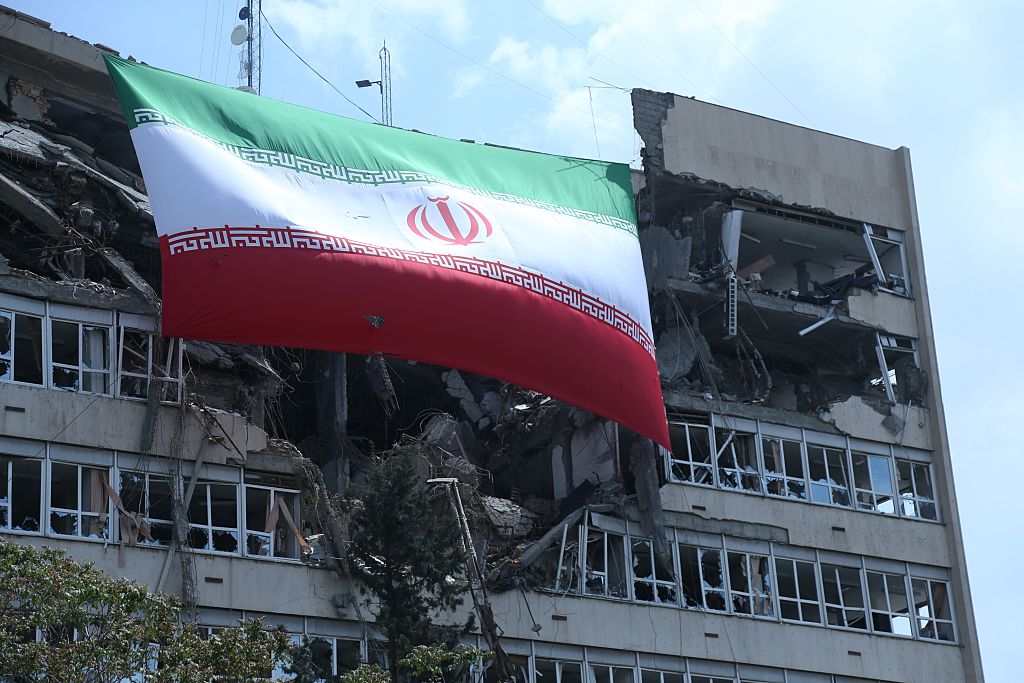
The national flag of Iran hangs on a building damaged by the U.S.-Israeli attacks in Tehran, Iran, on April 20, 2026. —Shadati—Xinhua/Getty Images

The U.S. and Israel are reportedly developing plans for major strikes on Iran after the U.S. midterm elections in November.

Citing people familiar with the deliberations, the New York Times reported on Wednesday that Defense Secretary Pete Hegseth discussed the possibility of renewed strikes on Iran with Israeli Prime Minister Benjamin Netanyahu in Israel this week. Possible targets of the strikes reportedly include Iran’s energy infrastructure, nuclear facilities, and missile and drone arsenal. TIME has reached out to the White House for comment.

U.S. officials have repeatedly asserted that the Iranian Islamic Revolutionary Guard Corps are teetering on the edge of collapse but are deliberately prolonging the war in an effort to meddle with Republican prospects in the midterm elections. Once the elections are over, President Donald Trump promised last month, the Iranian regime would quickly capitulate.

“I think the war is going to end immediately after the election,” Trump said. “They can’t hold out any longer.”

Renewed strikes could complicate that outlook.

Some officials have reportedly argued that resuming attacks for an intense but limited campaign would hasten Iran’s economic collapse, especially as the country has been squeezed by an ongoing U.S. blockade on Iranian ports and economic sanctions campaign. The officials hope the blow will make Iran more amenable to negotiations.

Trump has at times shared that view.

Last week, Trump told Newsmax he was considering additional military action in Iran, including a possible strike on Iran’s Pickaxe Mountain, a nuclear facility deep underground. His comments came amid reports that he was weighing deploying a 22,000 GBU-43/B Massive Ordnance Air Blast bomb, also known as the “mother of all bombs.”

The President added the war would end soon, be it through negotiation or escalation.

“Do I annihilate the Islamic Republic and do it quickly, never giving them a chance to kill and destroy people and countries again? Do I drive them into hell with no chance of survival and no hope of future greatness or generations?” he said in a speech to the United Nations General Assembly last month.

“But I believe we’ll make a deal,” he added, “right after the election.”

Will the U.S. renew strikes on Iran?

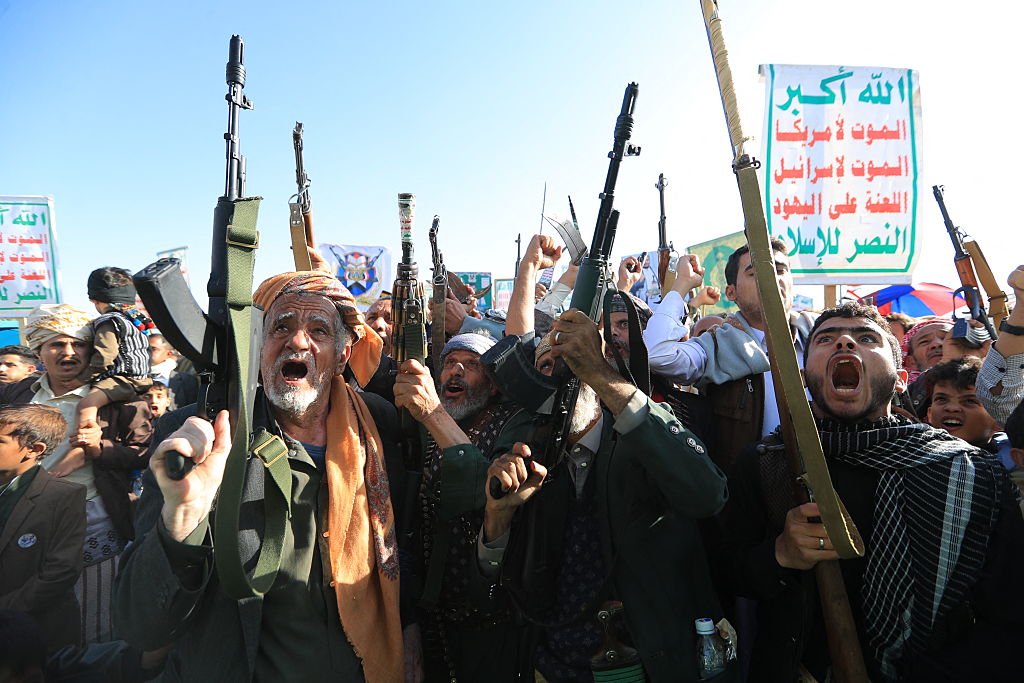
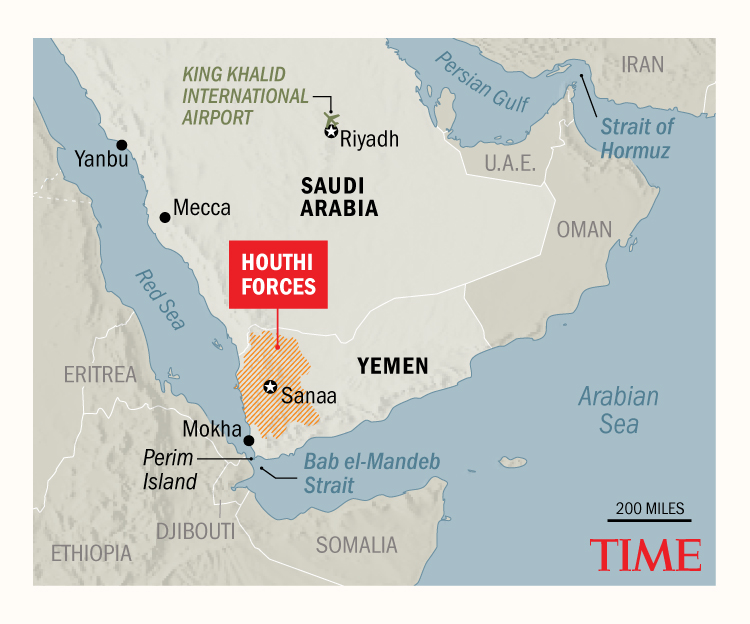
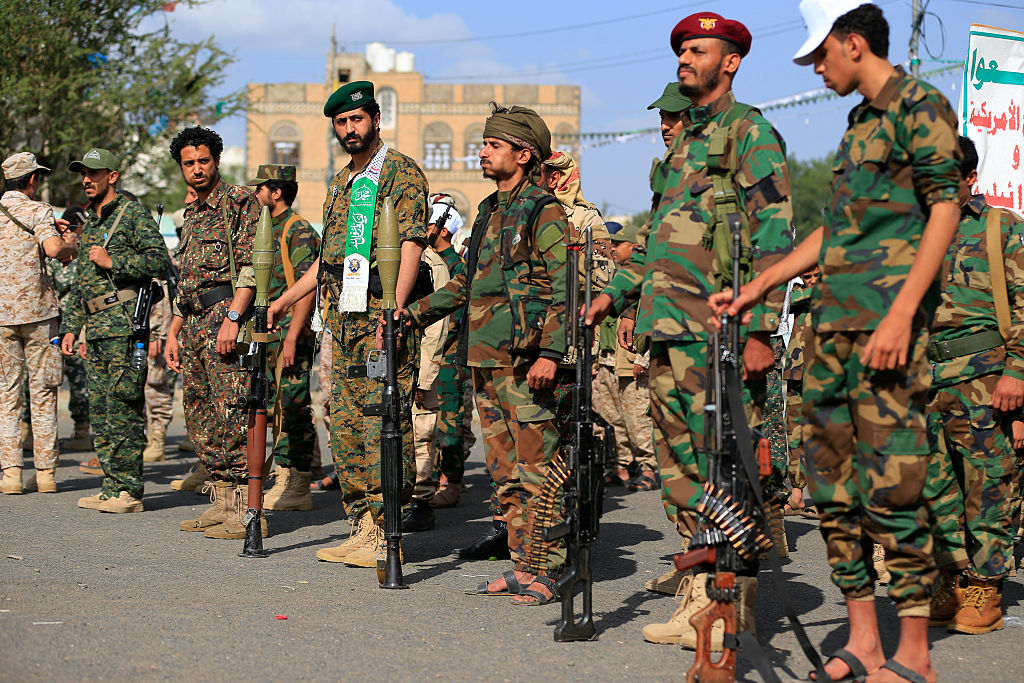
Intensified fighting between the Iran-aligned Houthi rebels and the Saudi and Yemeni governments has threatened to create a broader regional crisis that could be harder to disengage from. The State Department on Wednesday ordered nonemergency government employees and their families to leave Saudi Arabia amid escalating attacks by the Houthis on Saudi infrastructure.

Houthi attacks on Saudi airports and Aramco facilities, as well as their attempts to disrupt shipping through Bab El-Mandeb, which has become an important alternative to the Strait of Hormuz for energy trade, could prompt direct U.S. strikes in support of Saudi Arabia, analysts have said. Trump said earlier this month that the U.S. “may” join Saudi strikes on the Houthis, although that has yet to transpire.

Israel’s Oct. 27 election could also raise the stakes of additional military action. Netanyahu, whom Trump has endorsed, would remain in office until a new government is formed, even if his bloc loses the election, and his government would retain the authority to order strikes during that transition. But renewed strikes before the election, or after an electoral defeat, could invite scrutiny. “One ordered in the last weeks of a deadlocked campaign would be judged in Israel as politics as well as strategy,” Gregg Roman, executive director of the Middle East Forum, wrote in a September analysis.

Nevertheless, the forum assessed that a large-scale Israeli strike on Iranian territory, with or without U.S. participation, was probable before the end of the year. Analysts told the Times Netanyahu could use the prospect of joint strikes to form a unity government that could allow him to stay in power. 

“The larger constraint,” Roman argued, “is Washington.”

Trump has not yet approved the proposed strikes, the Times reported.

Trump has also called off plans to renew attacks on Iran before. He reportedly blocked an Israeli plan for a multi-day offensive against Iran earlier this month, and rejected five proposals for major operations against Iran or the Houthis in recent months.

The U.S. and Iran have not exchanged major fighting in recent weeks. The last reported U.S. strikes on Iran were on Sept. 8, even as Iranian attacks on commercial shipping have continued. Earlier this month, Trump ruled out attacking Iran before the midterms.

Read More: What Is the Status of the U.S.-Iran Peace Talks? Here's What Both Sides Are Saying

How might Iran respond to new strikes?

Tehran’s reluctance to make concessions to the U.S. appears to have strengthened, rather than weakened, over the course of the war. Iranian leaders reiterated this week that they will not directly negotiate with the U.S. unless Washington accedes to certain demands, which include ending its naval blockade and releasing frozen Iranian funds.

The initial U.S. and Israeli bombing campaign on Iran that began the war on Feb. 28, as well as June 2025 attacks during an earlier round of U.S.-Iran nuclear diplomacy, also hardened the Iranian view that the U.S. is not serious about negotiating. Iranian Foreign Minister Abbas Araghchi said in March that the previous disruptions of negotiating rounds had increased distrust in Washington.

Last month, the IRGC published an open letter appealing to American voters to “wrest control” from their government. In the letter, the IRGC said: “Despite all the hardships that our enemies impose on us, we will continue fighting, as we have done for the past 47 years.”

Both the U.S. and Iran appear to believe they hold enough leverage to achieve their goals, and those “dueling perceptions” have impeded progress towards a deal, according to an Oct. 1 analysis by the New York-based nonpartisan research organization The Soufan Center.

Iran’s key point of leverage is its blockade of the Strait of Hormuz, a narrow waterway vital to global energy trade. Iran’s militarization of the strait has disrupted global oil and liquefied natural gas supplies, leading to soaring energy prices and inflation.

Analysts previously told TIME that the higher prices are politically costly for Trump. In recent weeks, a growing number of Republicans have broken with Trump on Iran. The President has also seen his lowest approval ratings of his second term.

Iran’s ability to choke off regional oil exports, however, appears to be waning. Middle East oil exports topped prewar levels last week as shipping companies use alternative routes to bypass the Strait of Hormuz. HSBC Group Chief Executive Georges Elhedery also projected that Hormuz could be “redundant” in five years thanks to investment in alternative logistics routes.

Iranian officials told the Times that they are aware of the U.S. and Israel’s war planning and are developing their own tactics.

Earlier this week, IRGC spokesperson Hossein Mohebbi told the Tehran Times that “even a limited” attack from Washington would provoke a “serious energy crisis” for the world. Iranian Foreign Ministry spokesperson Esmail Baghaei said that an attack on Pickaxe Mountain would be met with a response “just as hard,” if not “stronger.”

And earlier this month, Iranian officials said Iran had prepared potential retaliatory operations that would depart from the U.S. and Israel’s assumptions. Security Chief Mohsen Rezaei told Press TV that Iran could respond to renewed attacks by targeting new targets, including U.S.-linked data centers and AI facilities in the Gulf, as well as subsea communications cables. Last month, Iran threatened to retaliate against any further U.S. attacks by targeting U.S. oil and gas assets in the Gulf.

Read More: ‘One of the World’s Most Critical Digital Bottlenecks’: How the Iran War Could Threaten Global Internet Access

In a post on Telegram on Sunday, Mahdi Mohammadi, a senior adviser to Iran’s negotiator Gen. Mohammad Bagher Ghalibaf, said, if the U.S. and Israel attack, “they may want to keep it short, but we will not allow it.”

He added on Wednesday: “The war will continue longer and across a wider geography than the enemy calculates.”

  •  

Bangladesh’s Vital Garment Industry Struggles Amid Global Energy Crunch

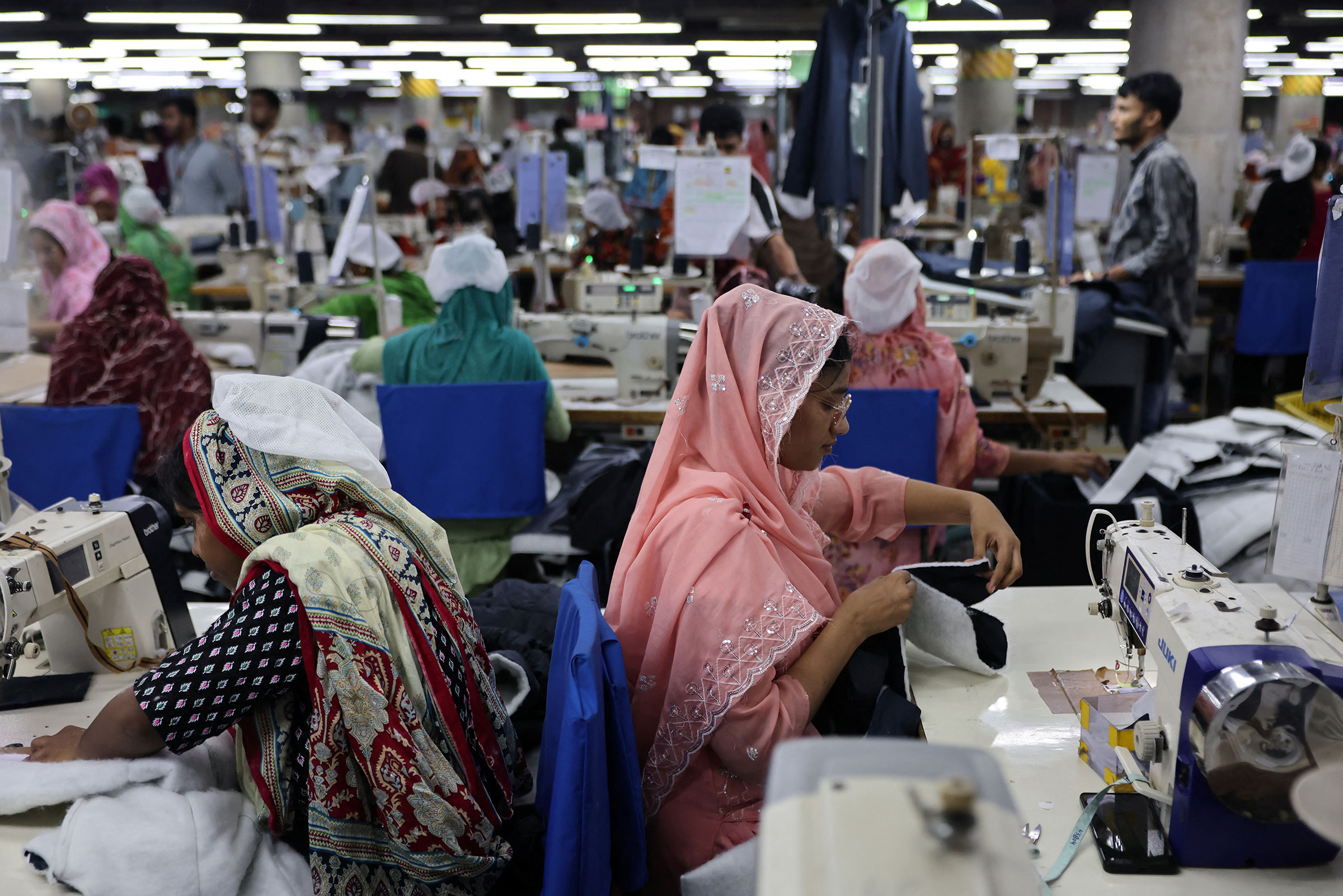
Employees work in the sewing section at the Yarn Dyeing Limited factory, amid the energy crisis, in Savar, on the outskirts of Dhaka, Bangladesh, on Sept. 17, 2026. —Mohammad Ponir Hossain—Reuters

It’s 11 a.m. at Ha-Meem Group’s Ashulia garment factory north of Dhaka and every floor is a whirlwind of feverish labor. Industrial jigsaws slice stacks of denim into precise panels, which nearby seamsters then stitch into jeans, skirts, and jackets. 

Next comes washing, ironing, and affixing buttons and zips before the brand labels are attached—Gap, American Eagle, and JCPenney are major clients—and the finished garments are stacked into boxes by some of the group’s 90,000 staff, who together produce 9.3 million apparel items every month.

Read more: What Bangladesh’s New Leader Tarique Rahman Means for South Asia and the World

But suddenly the lights flicker, the workshop dims for a moment, and then full illumination returns accompanied by four cacophonic British-made diesel generators, which automatically splutter into life whenever the gas supply weakens.

“In Bangladesh, the grid electricity is bad, there are frequent interruptions,” says Tanul Chakraborty, head of power, energy and environmental sustainability for Ha-Meem Group. “After gas the most reliable energy in Bangladesh is diesel. Grid electricity is third. Almost the entire economy moves on diesel.”

It’s a startling admission given that Bangladesh’s economy is worth $510 billion, South Asia’s second-largest after India. But the nation is in the grip of a severe power crunch, as wars in Ukraine and Iran expose the fragility of its growing dependence on imported fuel. Since Russia’s invasion, industrial gas prices have risen by 150%, and diesel by about 70%. Since the Iran war began, the cost of spot liquefied natural gas (LNG) has nearly tripled.

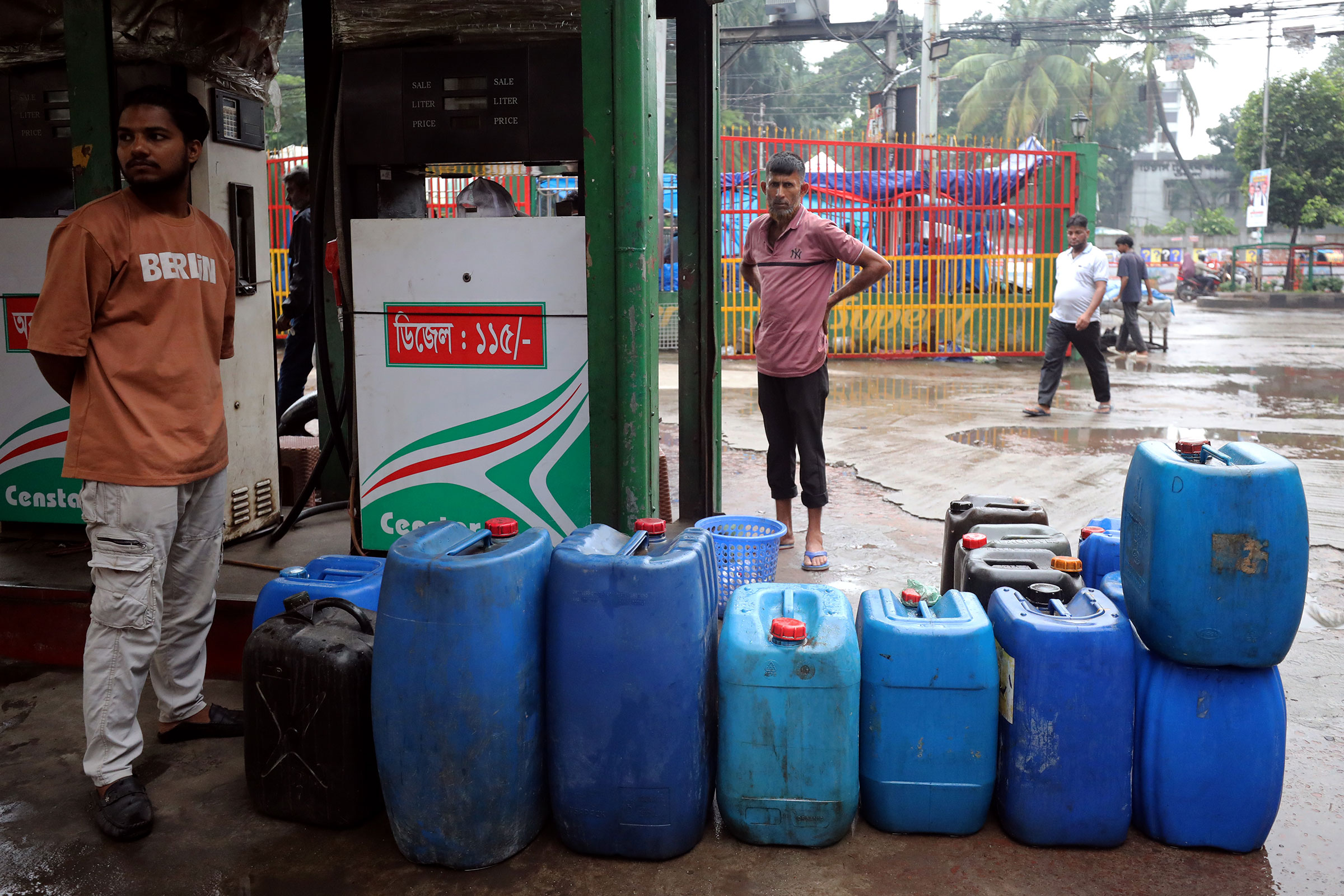
People line up at a petrol station in Dhaka, Bangladesh, on Sept. 1, 2026, to purchase diesel for generators as an alternative source of electricity amid the power shortage. —Maruf Rahman—NurPhoto/Getty Images

That’s bad news for a garment industry that is the country’s largest source of formal employment, directly providing 4 million jobs and supporting countless more livelihoods, while generating $38.7 billion last year—over 80% of export earnings. (Ha Meem alone accounted for $1 billion of exports.)

But the strain extends across the Global South, where developing nations struggle with a prolonged energy crisis that disproportionately squeezes the planet’s most deprived. In the Philippines, heavy dependence on imported Gulf oil has forced emergency conservation measures, including four-day working weeks, restrictions on official travel, and flight cancellations. Diesel prices have risen 86% in Nigeria and more than 50% in Tanzania and Ethiopia, driving up the cost of farming, trucking, and electricity from generators—and, in turn, the price of staples such as rice and corn.

“The poorest people, who spend the highest share of their income on food and fuels, will be hit the hardest,” Indermit Gill, World Bank Chief Economist, warned in April.

In Dhaka, a sprawling megacity of almost 40 million that is usually defined by relentless momentum, the nights have grown eerily dark. With the national power shortfall exceeding 3,000 megawatts, the government has imposed sweeping cuts, exempting only essential services such as hospitals and pharmacies. Illuminated billboards along busy commercial corridors now dim soon after sunset, while shops close an hour early. The burden is even heavier in rural villages, where residents have recently endured blackouts lasting as long as 16 hours a day.

For ordinary citizens, daily life has become a relentless calculus: Residents are forced to rise before dawn in the hope that their stove's gas pressure might be strong enough to cook. Other quandaries include how long they can run a fan against the suffocating humidity, and how far the queues will stretch at the gas station. As businesses flounder, a secondary crisis looms: global malnutrition monitors warn that 18.1 million Bangladeshis may soon face food insecurity.

Internal missteps have only tightened external bottlenecks. The country of 175 million drastically underinvested in both transmission infrastructure and domestic gas fields, meaning today it relies on imports from the Middle East for almost half of its energy. But between July and August, imports of LNG plummeted 83% largely owing to disruption around the blockaded Strait of Hormuz as well as a blaze that temporarily disabled one of its two floating regasification terminals.

Last month, thousands of opposition supporters staged a long march to pressure Prime Minister Tarique Rahman—who only took office in February, just weeks before the Iran war broke out—to do more to tackle soaring fuel costs. “Energy is the biggest test for the new government and has become a galvanizing point for the opposition,” says Michael Kugelman, resident senior fellow for South Asia at the Atlantic Council.


While the global energy crisis is tied to geopolitics, Bangladesh’s woes are uniquely entwined. Rahman’s Bangladesh Nationalist Party took power following the popular ouster in 2024 of autocratic former Prime Minister Sheikh Hasina, whom India granted sanctuary, deepening the rift between the neighbors.

Bangladesh imports roughly one-sixth of its electricity from India, which hasn’t been shy in wielding that strategic vulnerability as diplomatic leverage. Compounding the disruption, many of the key architects of national energy policy over Hasina’s 15-year reign have been placed on special duties ostensibly due to their ties to her Awami League party.

Bangladesh also finds itself hostage to shifting Great Power rivalry beyond its neighborhood. Dhaka invested $12.65 billion—chiefly via Moscow-backed loans—in its first nuclear power station in the town of Rooppur built by Russian energy giant Rosatom. The plant was supposed to begin operations in July 2024 but faced repeated delays due partly to the Ukraine war, which complicated payments to Russian banks and blocked the arrival of air and maritime cargo. After finally completing its first controlled nuclear reaction on Oct. 11, it is now expected to go into service in December, although months of staged testing will be required before it reaches a touted output of 1,200 MW.

Complicating matters, the U.S. Sanctioning Russia and Iran Act comes into force on Oct. 18, with provisions including sanctions on senior Russian officials and businesses supporting Russia’s energy sectors. This could mean Dhaka has to secure specific U.S. Treasury waivers or approved payment channels to service its plant debt and buy nuclear fuel.

Meanwhile, Washington is dangling its own alternatives. On Sept. 25, Bangladesh and the U.S. signed a memorandum of understanding (MoU) on strategic civil nuclear cooperation that focuses on small modular reactors. That comes on top of an Agreement on Reciprocal Trade inked in February that committed Dhaka to massive purchases of U.S. commodities, including $15 billion worth of U.S. energy products over a 15-year period.

But Bangladesh is also looking to Washington’s superpower rival. Rahman’s first overseas trip in June was to Malaysia and China. In Beijing, the two nations signed 17 agreements and other instruments to mark a “new era” of bilateral relations, with one explicitly covering renewable energy cooperation. But two of the agreements involved corporate groups subject to U.S. sanctions, and the growing ties between Dhaka and Beijing have caused consternation in Washington, State Department sources tell TIME. Bangladesh is also in advanced negotiations with a Chinese state-owned firm to build a third floating LNG terminal.

Seemingly pulled in every direction, Dhaka is desperate to instill more energy independence. The government recently launched a special incentive package for rooftop solar, slashing import duties on solar equipment from 17% to 1%, while particularly encouraging systems paired with battery storage. Bangladesh added some 200 MW of solar capacity to the national grid over the first half-year, according to government figures. However, that rate must be ramped up sixfold to have any hope of achieving ambitious five-year targets.

“We are actually looking into diversification, new areas where we can source energy from,” Shama Obaed Islam, State Minister for Foreign Affairs, told TIME as part of a panel at the 2026 Bay of Bengal Conversation last week. “We have [also] been looking into solar energy [and] making every citizen self-sufficient in energy.”

But while rooftop solar may work well for homes, it is far less useful for energy-intensive factories. Ha-Meem has 29.2 MW installed on its roofs—one of the largest private solar installations nationwide—though Chakraborty says it is only helpful for perhaps four hours per day when the sun is highest at a factory complex that operates around the clock.

Production remains suspended at the dyeing unit of Siba Textile Processing Limited in the Shyampur industrial area of Dhaka, Bangladesh, on Aug. 3, 2026. —Sony Ramani—NurPhoto/Getty Images

Paradoxically, Ha-Meem has seen demand increase since the energy crisis. It has absorbed orders from some of the more than 400 smaller factories forced out of business in the three years till June (as well as from customers shifting production out of China to skirt Trumpian tariffs.) But with Ha-Meem’s energy bills rising from roughly $200,000 to $300,000 every day, and clients refusing to budge on prices, there is a relentless drive to boost efficiency.

In the office of Ha-Meem Senior Executive Director Brig-Gen (Ret.) Mohammad Abdul Moeen, a computer spreadsheet maps every employee against hourly targets. Workers who fall behind are counseled by managers—“maybe she had some problem with the machine,” says Moeen. “She may have just been tired”—and offered additional support and training. Those who consistently fall short are replaced by some of the dozens of applicants clutching résumés who queue up at the factory gate each morning.

“We may be facing some kind of energy crisis but that’s more reason why we cannot compromise with productivity,” says Moeen.


Moeen’s relentless focus on efficiency is easy to fathom. The garment industry is ruthlessly competitive and manufacturers fear that any rise in costs or supply disruption could see orders shift to rival Vietnam, Cambodia, or Pakistan. However, simply securing energy is not alone sufficient; with many Western brands making ambitious sustainability commitments that rely on shifting away from fossil fuels, how power is generated is also a key concern.

And if preserving Bangladesh’s dominant role in global garment production is precarious, diversifying the economy is harder still. The nation has ambitious goals of ramping up existing pharmaceutical and leather industries, and even moving into autos, medical devices, and semiconductors. But competition is tough, and few serious investors are charmed by candlelight meetings.  

Last month, Bangladesh unveiled a new energy roadmap that aims to add 12,940 MW of generation capacity via new solar installations and coal-fired projects, alongside modernization of grid distribution networks and a total of 300 new exploration wells to firm up domestic gas supplies (31 have already been drilled.)

“We are satisfied with that plan,” says Mohammad Hatem, president of the Bangladesh Knitwear Manufacturers and Exporters Association, which represents over 2,500 garment factories. “Within three or four years, maybe there will be no more electricity crisis.”

For now, however, Bangladesh’s garment workers—and billions across the Global South—have little choice but to endure given scant signs of relief in oil markets. In recent days, Yemen’s Houthis have intensified missile and drone attacks on Saudi airports, cities, and oil infrastructure, killing civilians in Riyadh, disrupting flights, and provoking Saudi-led strikes that have stoked fears of a wider regional war.

“It’s a difficult situation for the present government,” says Fazlee Shamim Ehsan, managing director of Fatullah Apparels Ltd., which produces 22,000 finished garments per day. “It would be much better if there was no war in the Middle East.”

—With reporting by Zia Chowdhury/Dhaka

  •  

Alberta Voted to Stay in Canada. That Doesn’t Quite Settle the Separatist Debate

A "Forever Canadian" lawn sign during a referendum vote in Edmonton, Alberta, Canada, on Oct. 19, 2026. —John Diep—Bloomberg/Getty Images

Albertans voted overwhelmingly to remain in Canada on Monday, but the result may do little to quiet the separatist movement that helped bring the question to the ballot.

Preliminary results early Tuesday showed that roughly 76% of voters rejected beginning the process toward a future binding referendum on separation. While approval would not have authorized Alberta’s independence from Canada, it would have allowed the province to take the next steps in the process of separation.

Even before the vote, most Albertans expected the debate to continue. Polling from the nonprofit Angus Reid Institute, released last week, found that 62% of people in the province think that “there will never be an end to the separatist movement.”

Responding to former Alberta Premier Jason Kenney’s suggestion that the movement should end if the referendum were to fail, Keith Wilson, one of the most prominent separatist leaders, said at a rally on Oct. 17, “That’s not happening."

“We are going to build on our successes, build on our relationships," he added.

Speaking to TIME before the results came in on Monday, Jared Wesley, a professor of political science at the University of Alberta, said that even if the referendum were to fail, “it seems unlikely that separatism as a political strategy, if not an actual objective, is going anywhere soon.” 

He added that the next provincial general election is next year, so it’s possible that voters could be faced with a similar question on the ballot then.

“The country is very familiar with western alienation and western grievances—that is a very long-standing political phenomenon in Canada,” Andrew McDougall, an associate professor of political science at the University of Toronto Scarborough, tells TIME. “There’s been a long history of regional tensions in Canada where the west feels disaffected from what, historically, has been the larger and, in many ways, sometimes more prosperous central Canada.”

“The idea, though, of having a vote on separatism—that is a little bit new,” he continues.

The Alberta independence campaign got more traction after the Liberal Party, headed by Prime Minister Mark Carney, won the federal election last year, with many Albertans expressing frustration that their views aren’t sufficiently represented by the Liberal government.

That dissatisfaction, driven in large part by the federal government’s energy policies, comes as Canadian leaders are placing particular emphasis on national unity.

Why did Alberta hold this referendum?

Alberta is an oil-rich province; mining, quarrying, and oil and gas extraction made up about a quarter of the province’s GDP in 2025. But Albertans have expressed dissatisfaction with the level of support the industry has received from Ottawa, criticizing the federal government for blocking pipeline projects, among other industry initiatives.

The feeling among some residents in the province, McDougall says, is “that central Canada is taking advantage of Alberta; that the central government has, at times, through environmental regulations, for example, hindered the development of the oil resources that exist in Alberta.”

He adds that the independence campaign may also have been fueled by Albertans’ dissatisfaction with representation in the federal government. 

Alberta is considered a conservative stronghold, but the Liberal Party has led the country for over a decade. The western province has about 5 million residents, compared to 16 million in Ontario and 9 million in Quebec, which means “it could be difficult sometimes for the West to get representation in the government,” McDougall says.

At the beginning of May, separatists turned in a petition with hundreds of thousands of signatures to push for a vote on leaving Canada, while opponents collected signatures in support of staying. A court ruling on May 13 complicated matters: A judge halted the petition, finding that the province could not advance the discussion without consulting First Nations.

The government instead asked voters whether it should take the steps needed to hold an independence referendum later, leading to this month’s vote. Alberta Premier Danielle Smith supported staying in Canada.

Polling suggests that, for many voters, support for the referendum was not necessarily about wanting to leave Canada—it was a way to underscore dissatisfaction with the federal government. 

The Angus Reid Institute found that 60% of respondents who were in favor of holding a future independence referendum said their motivation was sending a message to Ottawa, compared with 37% who wanted Alberta to take the necessary steps toward secession.

As early results emerged Tuesday, Wilson, the separatist leader, observed: “It’s fair to say that at least a quarter of Albertans feel that Alberta needs to be treated better.”

Carney stressed unity amid tensions with U.S.

Alberta’s independence referendum came as Carney’s government promotes national unity amid a trade war with the U.S.

McDougall says that the issues behind the referendum are "longstanding grievances,” but the fact that it advanced at a time of strong pro-Canada sentiment is “a little out of step with the times.”

The trade dispute escalated after negotiations between the two nations broke down in August. On Sept. 8, Canada responded to new tariffs from the U.S. with matching, retaliatory levies.

Tensions have continued to escalate in recent weeks as Trump repeatedly insists that Canada is ripping off Americans and should join the U.S. He said at a rally in Arizona on Oct. 14 that Canada will “end up being the 51st state, because it’s the only way it works.”

The following day, Carney spoke at a rally in Calgary, emphasizing the importance of Canadian unity amid outside tensions, though he did not explicitly reference Trump’s remarks.

“The stakes are high. This referendum, it comes at the worst possible time. The world has become more dangerous and divided," Carney said. “There are some outside our borders who are working to break us, so they can own us.”

The speech was another effort by the Carney government to promote national unity, just days before the referendum in Alberta. 

The message became especially poignant that weekend when four service members died in a fire at a military base in Alberta. The nation came together to provide resources and support for the province. At a press conference on Sunday, Carney emphasized that “Canadians come together in crisis.”

Wesley says he believes that “the vast majority of Albertans are viewing this referendum through a broader global lens.”

“They know their votes send a message—not just to governments here in Alberta or Ottawa, but to Washington,” Wesley says. “Albertans are overwhelmingly opposed to Trump’s trade war and even more averse to becoming the 51st state. They know that voting to destabilize Canada makes it harder to weather the economic storm and easier to fall into the American orbit.”

“Albertans made a clear choice,” Carney said Tuesday after preliminary results became available. “They chose unity, to build together, and to take care of each other. Above all, Albertans chose Canada.”

  •  

Why Young Indians Are Fearful About the Future of the World’s Largest Democracy

Protesters gather around a bus carrying Leader of the Opposition Rahul Gandhi during a demonstration on October 12, 2026 in New Delhi, India. —Ritesh Shukla—Getty Images

Demonstrations have swept across India in recent weeks, fueled by anger over what protesters say is a politically motivated purge of electoral rolls. 

The protests were sparked by the removal of some 130 million names from the rolls by election authorities, who have defended the process, saying the exercise was intended to weed out ineligible voters. 

But critics of the process, known as the Special Intensive Revision, said it was designed to bolster Prime Minister Narendra Modi’s Bharatiya Janata Party (BJP). They have demanded the resignation of the chief election commissioner, Gyanesh Kumar. 

The demonstrations have been met with a heavy-handed response from Indian authorities, who locked down the capital, New Delhi, and detained leaders of the burgeoning Cockroach Janta Party (CJP), a youth-led movement that emerged earlier this year. An Indian court on Monday extended the detention of two Cockroach movement leaders, Ashutosh Ranka and Saurav Das.

The movement proved itself a powerful force in Indian politics this summer when it successfully campaigned for the removal of Education Minister Dharmendra Pradhan, who resigned on July 25. 

To discuss the protests and what they mean, TIME spoke with Mukul Kesavan, a historian, novelist, and one of India’s best-known writers. 

This interview has been condensed and edited for clarity.

Q: What are these protests actually about? Are they a natural progression from the Cockroach movement’s earlier protests, or something different?

MK: It’s related to the Cockroach movement (CJP) sit-in at Jantar Mantar [a traditional site of protest in the Indian capital] that led to the resignation of the education minister, in that the sit-in created a space for dissent by making Modi’s government back down. But [the Oct. 12 march] was distinct because it was organized by the Congress Party along with other conventional political parties. The CJP had no hand in organizing it, though one of its progressive/left stars, Neha Bora, participated in the march to the Supreme Court. It was also about a distinct issue: the Election Commission’s fiddling with voter rolls. 

Q: Police detained the movement’s leaders before the October 10 rally, then detained two of them again at Jantar Mantar days later. What does that tell you about how the government sees this movement?

MK: There has been a reversal of the government’s attitude towards the CJP. At Jantar Mantar 1.0, the government underestimated the cockroaches, thinking it was a sit-in that would peter out. They were ambushed by the massive turnout of the young on July 20. The lesson the government learned from the police violence that discredited it was that it couldn’t afford to let the cockroaches occupy a space where massed citizens confronted the police for phone cameras to record. We’re seeing a strategy of pre-emptive detention to head off that possibility. 

Q: India’s elections have long been a source of national pride. Has this episode damaged that image, at home or abroad?

MK: India’s elections were a bit iffy until a man called T.N. Seshan became chief election commissioner in the early 1990s. He was an awkward egomaniac who took his office seriously enough to clean up the whole election process. The Election Commission became a three-member body that was more or less impartial till the Modi government passed a law that gave the government the majority in the three-member panel that appoints the election commissioners. Gyanesh Kumar has been grotesquely partisan and the Special Intensive Revision has so obviously tried to shape the electoral roll to favor the BJP that the institution has been publicly discredited. India begins to resemble electoral autocracies elsewhere like Turkey. 

Q: What do these protests tell you about Modi’s position?

MK: It’s the conventional thing to say, but it’s palpable that Modi’s aura of menace and authority has dissipated. The mockery and rudeness of young cockroaches, especially the young women who crowded into Jantar Mantar, did something that solemn ideological opposition had failed to do: it made him seem ridiculous, old and out of touch. I don’t know if the protests tell us anything about his electoral reach: we’ll have to wait for an election to find out. Opposition parties have to find a way of turning this fizz into votes. 

Q: Modi has now been in power for 12 years. What are his real achievements? What will historians credit him with?

MK: Some achievements in infrastructure: road building, airports, etc. The kind of things authoritarians do well. It’s hard to know what the economic growth figures mean in terms of general wellbeing. Geopolitically, his time in office has been a disaster: India is on bad terms with all its neighbors, in denial about China and in the doghouse with Trump. It might be more useful to talk about how he has degraded the republic’s institutions—the press, the courts, the election commission—than his achievements. His greatest "achievement" has been to normalize the rhetoric of Hindu supremacy. 

Q: India has one of the largest young populations in the world, yet the quality of its education and the prospects for its young people are grim. How does the situation compare to other places where young people are protesting? 

MK: With the possible exception of Sri Lanka, all South Asian countries, including the ones that have seen youthful insurrections in recent times like Nepal, Bangladesh and India, have school and university systems that are generally poor, with a few exceptions: elite institutions. This would be bad in itself, but the success of China in improving its educational system at every level makes our failure demoralizing.

  •  

Trump Open to ‘Denuclearization’ Summit with Putin and Xi

Russian President Vladimir Putin, U.S. President Donald Trump, and Chinese President Xi Jinping. —Vyacheslav Prokofyev—Pool/AFP/Getty Images; Aaron Schwartz—Getty Images; Ng Han Guan—Pool/Getty Images

President Donald Trump said on Monday he wants to hold a trilateral summit with Russia’s President Vladimir Putin and Chinese leader Xi Jinping in China to discuss “denuclearization.”

Speaking to reporters at the White House, Trump said such a meeting, which would be the first time the three leaders met outside of a larger multi-leader gathering, would be a “very positive thing for the world.” The U.S. President added: “If they’d like to have it, I think it would be held in China.”

The three leaders are expected to attend the Asia-Pacific Economic Cooperation summit next month in Shenzhen, the southern Chinese tech hub.

Trump was responding to Putin’s reported proposal for a three-way meeting with Trump and Xi. The Wall Street Journal reported, citing unnamed sources familiar with discussions, that Putin suggested the idea to Trump in an Oct. 9 call, seeking the summit to potentially broker an end to the war Russia started in Ukraine more than four years ago, without having a Ukrainian representative at the table. 

Kremlin spokesperson Dmitry Peskov confirmed to the Journal that discussions of a potential meeting were underway, and U.S. Secretary of State Marco Rubio also suggested publicly that talks about a meeting were happening.

Trump, however, said that a trilateral summit would focus less on Ukraine: “We would have it to talk about nuclear weapons and denuclearization.”

Since his first presidential term, Trump has mused about scaling back the three countries’ defense spending. In a 2018 social media post, Trump said that he was “certain that, at some time in the future, President Xi and I, together with President Putin of Russia, will start talking about a meaningful halt to what has become a major and uncontrollable Arms Race.” He’s also made clear a goal to “de-nuke the world.”

A possible summit of the 3 biggest nuclear powers

According to the Stockholm International Peace Research Institute (SIPRI), of the estimated 12,187 nuclear warheads in the global inventory as of January 2026, about 9,745 were in military stockpiles for potential use. Of these, Russia has the world’s largest, with the U.S. a close second—together making up 83% of the global stockpile.

China is third with more than 600 nuclear warheads, representing only 6% of the global stockpile, though SIPRI notes Beijing is “expanding its nuclear arsenal faster than any other country.” 

The research institute says Russian and U.S. deployments of new nuclear warheads “are likely to rise in the years ahead,” with Moscow’s increase mainly due to military modernization allowing missiles to carry more warheads. Washington’s increase, on the other hand, “could happen as a result of more warheads being deployed to existing launchers, empty launchers being reactivated and new non-strategic nuclear weapons being added to the arsenal.”

Future nuclear proliferation in the U.S. and Russia is also uncertain after the bilateral Treaty on Measures for the Further Reduction and Limitation of Strategic Offensive Arms (New START) expired in February this year. That treaty placed verifiable limits on all Russian and U.S. deployed intercontinental-range nuclear weapons. 

“The whole thing is a shame, because I’d love to denuclearize if possible,” Trump told Newsmax on Oct. 15. 

In the interview, Trump said the U.S. was discussing denuclearization with Russia and China, but he added that Beijing “was probably less inclined.” During his first term, amid negotiations to extend the New START pact, Trump tried—and failed—to bring China into nuclear arms reduction talks. The U.S. is trying to bring China into the fold again, but Beijing has rejected past U.S. efforts, arguing that the U.S. and Russia must first reduce their larger arsenals.

A possible summit on Ukraine, without Ukraine

Putin’s suggestion of a trilateral summit on Ukraine would leave out a key player in the ongoing war: Ukraine, which unsurprisingly rejected the idea.

“A trilateral meeting between the leaders of Ukraine, the U.S., and Russia could help end the war sooner,” Ukraine’s foreign minister Andrii Sybiha posted Monday on X. “A trilateral meeting between the leaders of Russia, China, and the U.S. would do only the opposite: encourage Putin to continue this war.”

Speaking to reporters Monday, Peskov, the Kremlin spokesperson, said a final peace deal would obviously involve Ukraine​: “Of course, a final settlement is impossible without the participation of someone in Kyiv who is prepared to take responsibility.”

But the proposal comes as Russia increasingly appears to be in Trump’s favor. Trump unveiled a diesel deal with Russia earlier this month in an attempt to lower fuel prices, and he also stopped implementing scheduled sanctions on Russia—moves that his allies have criticized. Meanwhile, Trump has pushed Kyiv to stop striking Russian refineries, one of its advantages in the war. He’s also blamed Ukrainian President Volodymyr Zelensky for rising diesel prices and has called on Ukrainians to replace him.

  •  

How French Police 'Lost Control' of Escalating Protests

France’s Interior Minister Laurent Nuñez on Monday admitted that police “lost control” in some cities over the weekend as violent protests erupted across the country, while French President Emmanuel Macron called for a review of the police response to the rioting and looting.

Nuñez said there had been a "lack of anticipation" ahead of the demonstrations on Saturday and acknowledged that policing numbers had fallen short in some areas as hundreds of thousands took to the ​streets to protest over, what they say are, underfunded public services and rising cost-of-living pressures. The demonstrations followed weeks of ‌student protests that had also seen some violence.

In the wake of the chaotic scenes, Nuñez offered his resignation to Macron because he "felt responsible” for how things unfolded. Macron refused to accept it, due to “the need for a continuous command of the police,” the Élysée Palace told TIME. Instead, Macron has called for the Interior Ministry to “take all necessary steps to ensure transparency over planning and intelligence failures” and to put an end to the barricades and looting.

As France aims to regain full control of its streets, French Prime Minister Sébastien Lecornu has extended local mayors the power to enforce “partial curfews,” in an effort to protect businesses and people. "My determination to restore order is absolute," Lecornu told reporters, emphasizing that localized curfews were preferred over a national enforcement at this time. Paris authorities have since issued overnight curfews in two areas of the capital. The Interior Ministry reported that around 550,000 people had taken to the streets on Saturday. A French trade union put the number at over 800,000. Nuñez on Sunday said that more than 2,000 people had been arrested and over 600 police officers and firefighters injured. In Paris, at least 300 businesses were vandalised, Dominique Restino, the head of the Paris chamber of commerce, told BFM television.

Clashes occur between protesters throwing projectiles and police responding with tear gas during a demonstration against the high cost of living in Paris, France, on Oct. 17, 2026 —Jerome Gilles—NurPhoto/Getty Images

Alongside the violence in the capital, what started out as peaceful protests in Marseille and Lyon also turned violent as rioters descended. Authorities in Marseille on Monday imposed a temporary ban on public gatherings and demonstrations. French unions have already called for a new round of strikes and marches on Nov. 5.

Various buildings and official monuments have been targeted across the country.

A historic town hall in the French city of Limoges was damaged in what appeared to be an arson attack on Saturday. One of the main tourist offices in the city of Lyon was set ablaze. In Bordeaux, the prefect's residence was attacked, according to local authorities.

Macron condemned the "unbridled violence" as he addressed the nation Sunday evening. “Those who looted will have to pay for the damage, and those who sought to bring down the Republic will be held accountable,” he vowed in a televised speech.

Smoke rises from the bar 'La Barrique' on the sidelines of a demonstration against the "high cost of living," in Paris on Oct. 17, 2026 —Kiran Ridley—AFP/Getty Images

Isa Obradovich, a French-Peruvian American artist living in Paris, has participated in a number of protests since the movement went nationwide in early October. The 22-year-old says the demonstrations have become increasingly charged amid escalating clashes between protesters and police.

“I had to walk through clouds of tear gas to get home and clouds of smoke from fires,” she says of her journey home from the protests this weekend.

Obradovich notes the property damage in her own neighborhood, sharing that some of the stores she regularly visits were impacted by the protests.

“You can also see that there has been more property damage. [Some] grocery stores in my neighborhood were closed yesterday. One of them because they had boarded up the walls, and the other one because the windows of the storefront had been smashed and all the stuff inside had been ruined. I walked past as shop owners and employees were standing there looking at the devastation,” she says.

The Federation of Trade and Retail told TIME that “nearly 3,000 shops and businesses of all sizes across France have been affected by the violence over the weekend.” The French government has said it will create a fund to financially assist shops that were impacted by the riots.

Lawmakers clash over where the blame lies

Lecornu has blamed far-left agitators for the unrest. "There is, after all, a far-left movement that wants to cause—we can’t put it any more strongly—profound unrest in the country in ⁠the run-up to the presidential election," he said.

Jean-Luc Mélenchon, leader of France’s far-left party, France Unbowed, pushed back against this framing and insisted the protest movement is “the result of ten disastrous years in which President Macron has disorganized the state and public services.” TIME has reached out to Macron’s offices for comment.

The discord between lawmakers and the uncertainty in the government with Nuñez’s resignation attempt hanging over the proceedings comes just six months ahead of France’s next presidential election, where Mélenchon will no doubt be hoping to beat centrist contenders to the runoff. 

France’s public debt has climbed to a record $4 trillion in Macron’s two terms, according to figures shared by France’s National Institute of Statistics and Economic Studies in late June. The fiscal dilemma has heightened scrutiny on government spending and has sparked questions over “Macronisme,” the right-of-center, top-down governing style that Macron emulates. Further adding to the economic pressures, French government bonds dropped after the weekend of unrest.

Antonio Fatas, a professor of economics at Insead, the European business school, has said the political and economic situation is serious. “I am very worried about the economic situation because growth is low and it is difficult to see how the dynamics change. Then you have the debt numbers, which are bad, and the financial markets are thinking the government is not in control,” he told the Guardian.

People vandalize a shop during protests in Milan, Italy, on Oct. 18, 2026. —Andrea Carrubba—Getty Images
Teachers stand between anti riot Police and students at Piazza Castello in the center of Turin during the 'No Meloni Day', a national day of marches across Italy inspired by what is happening in France and Spain, to protest against the cost of living, the School Decree, the condition of school buildings and demanding increased funding, on Oct. 16, 2026. —Marco Bertorello—AFP/Getty Images

Demonstrations spread across France

Throughout September, students across France blockaded schools and demonstrated against, what they say is, a poorly-funded high school system. The protests went nationwide on Oct. 6, when more than 250,000 people took to streets across the country with teachers, parents, and union activists joining marches.

The demonstrations have drawn comparisons to the May 1968 protests, which were initiated by a student movement and led to millions of workers striking and nearly toppled the government.

In the years since, there have been numerous protest uprisings in Paris, including the Yellow Vest movement of 2018 and the pension reform protests of 2023.

What distinguishes the unrest that unfolded over the weekend is how the pockets of violence dispersed, says Fabien Jobard, a researcher at the French National Centre for Scientific Research. He says that the rioters moved away from the main demonstrations, seemingly catching the police off guard and making it all the more difficult to contain the unrest. That, coupled with the French authorities’ own admittance of failing to anticipate the full scale of the protests, meant that “it was too late to gather enough police forces in different places,” adds Jobard.

On Saturday, as some sought to revive the Yellow Vest movement, protesters draped a yellow vest over the Marianne statue at the Place de la République. 

The group that helped coordinate the action on its website described the mobilization as a convergence of student protests and wider economic grievances, bringing together high school and university students, farmers, firefighters, workers, teachers, healthcare workers, climate activists, residents of working-class neighborhoods, and retirees.

Alongside concerns over school funding and cost-of-living pressures, there is mounting backlash over fuel prices, which have significantly increased since the onset of the Iran war due to continued disruption in the Strait of Hormuz.

Obradovich describes it as an “intersectional protest movement,” arguing that “the root of all of these problems boils down to this government system taking away funding from public services.”

In his speech addressing the nation, Macron said order must be restored, but also recognized protesters’ concerns. He said his government was working with fuel distributors to ensure a “tangible impact on prices.” He added that the voices of young people “must be heard” and referenced how the Minister of National Education had set up an online portal where students can share their ideas to improve the education system.

Albanian riot police detain a demonstrator during renewed clashes outside the Ministry of Education in Tirana, Albania, on Oct. 18, 2026. —Vlasov Sulaj—NurPhoto/Getty Image

Thousands protest in other European cities

France was not alone in dealing with demonstrations over the weekend, as protesters also took to the streets in other European countries.

In Portugal, protesters marched in Lisbon, Porto, and Coimbra as they called for better pensions, improved public services, and affirmative government action to combat rising living costs.

In Milan, police clashed with protesters as some threw stones and looted shops during demonstrations against underfunded services and the rising cost of living.

Italian Prime Minister Giorgia Meloni condemned "the violence of criminals who, even through organized groups, exploit demonstrations to seek confrontation and sow chaos." There were further clashes between police and protesters in Bologna and Turin.

Unrest also broke out in Brussels, Belgium, on Saturday afternoon, as antifascist activists took to the streets. The demonstrations turned violent, prompting police intervention amid reports of property damage.

In Albania, protests spilled over to a sixth day on Sunday, with student-led demonstrations marching against, what they argue is, an underfunded education system, and allegations of government corruption. Police and protesters clashed in the capital of Tirana, as Prime Minister Edi Rama staunchly rejected calls for his resignation.

Albania’s current demonstrations come months after a protest movement rallied against a planned luxury development linked to Jared Kushner, U.S. President Donald Trump’s son-in-law. The initial marches in May were borne out of environmental concerns, but protests developed amid allegations of corruption and discontent over cost-of-living pressures.

  •  

Trump Endorses Netanyahu Days Before Israeli Election as Iran War Tests Friendship

Israeli Prime Minister Benjamin Netanyahu and U.S. President Donald Trump during a joint press conference at Trump's Mar-a-Lago residence in Palm Beach, Fla., on Dec. 29, 2025 —Jim Watson—AFP/Getty Images

With days to go before a crucial general election in Israel, Prime Minister Benjamin Netanyahu received a last-minute endorsement for re-election on Sunday from his longtime friend, U.S. President Donald Trump.

“Bibi Netanyahu has been a Great Warrior Prime Minister, and an even greater Partner for Peace in combatting the Islamic Republic of Iran,” Trump posted on Truth Social Sunday. “Please let this Letter serve to represent my Complete and Total Endorsement of Bibi Netanyahu in his upcoming Race for Re-Election as Prime Minister of Israel.”

It’s a ringing, albeit late, recommendation for someone Trump hasn’t seen eye-to-eye with in recent months over how Netanyahu’s government has navigated the Middle East conflict. Trump explained his delayed endorsement to Axios reporter Barak Ravid, saying that he’d always meant to endorse Netanyahu because they “have a good relationship, and because we’ll continue to do good things together.” 

Trump said in his post that, if Israel were to have “the wrong Leader, which would be anyone other than Bibi,” the U.S. would be left alone to face the Iran threat. The U.S. and Israel jointly struck Iran in late February, kickstarting a conflict that has not only upended global markets but also thrust Middle Eastern regional security into turmoil.

“Bibi Netanyahu has been Strong, Brave, and Brilliant in the face of tremendous opposition, including that coming from even Israel, itself,” Trump added, in apparent reference to Netanyahu’s domestic challenges, including a corruption trial, some of which the U.S. President has previously tried to influence. “Despite all of that, he has endured and, in fact, he has thrived!”

Trump’s endorsement comes just before Israelis head to the polling booths on Oct. 27, some three years after the country’s war with terror group Hamas ignited. Since then, Netanyahu has been criticized by opponents for failing to deliver on his promise of restoring regional security.

Public disillusionment with Netanyahu was among several factors that led to the formation of the Yashar! (“Straight!”) Party, whose founder, former Israel Defense Forces Chief of Staff Gadi Eisenkot, is challenging Netanyahu for the premiership. Eisenkot’s son and nephews were killed in the war in the Gaza Strip.

It’s unclear how big of an electoral boost Netanyahu will get from Trump’s endorsement. An opinion poll from nonprofit The Jewish People Policy Institute in Jerusalem released this month shows that most Israelis still see Trump as a great friend of Israel. A separate opinion poll from JPPI, however, shows their trust in him has eroded. Eisenkot, reacting to Trump’s endorsement, said at an event in Tel Aviv that while he appreciates Trump, only Israelis will decide on their next Prime Minister. Some surveys show Yashar! is in a tight race with Netanyahu’s right-wing Likud party.

Netanyahu nonetheless thanked his “dear friend Donald” in a video posted on social media, saying he was “honored” and “humbled” by Trump’s backing, adding that the U.S. was “fortunate” to have Trump as its leader in the fight to denuclearize Iran.

Trump and Netanyahu’s fraught friendship

Even before Trump became U.S. President, he had publicly endorsed Netanyahu, though Trump, still only a TV personality in 2013, said that the Israeli politician asked for it. Since Trump was first elected, the two have been political allies and friends. Their relationship, however, has seen a number of ups and downs since Trump returned to the White House last year.

Netanyahu was the first foreign leader invited to the White House during Trump’s second-term Administration, and he has met with Trump repeatedly since. Netanyahu pushed Trump to target three key Iranian nuclear facilities in June last year. Last November, Trump sent a letter to Israeli President Isaac Herzog, asking him to pardon Netanyahu on his drawn out corruption trial, which the U.S. President deemed to be “political, unjustified prosecution.”

On Feb. 11, when Trump and Netanyahu met in a closed-door meeting at the White House, Israel and the U.S. failed to reach an agreement on how to proceed with Iran. Netanyahu has long sought to decapitate the Iranian leadership, but Trump at the time insisted on negotiations. Netanyahu, nonetheless, reportedly pressed Trump to launch the Iran operation later that month.

Since their last meeting, their relationship has markedly shifted. Trump has since tried to find an off-ramp to the war in Iran, but Israel’s actions made such peace deal talks thorny.

In March, after Israel attacked Iran’s South Pars gas field in the Persian Gulf, Trump said he told Netanyahu to stop such attacks. Then, on April 17, Trump declared on Truth Social that Israel was “PROHIBITED” from further bombing Lebanon, where it was at war with the militant group Hezbollah. Netanyahu, however, insisted that Israeli troops would remain in southern Lebanon and that security threats persisted—complicating Washington’s efforts toward peace as Tehran indicated that any deal would need to include a halt of the attacks in Lebanon.

When Netanyahu in June ordered strikes on a Hezbollah stronghold in Beirut to retaliate against the group’s alleged attacks on Israel, Trump phoned and excoriated the Israeli Prime Minister, reportedly calling him “f-cking crazy.” Asked by CNBC about the call, Netanyahu said: “We have common goals. Sometimes we have, as in the best of families, you have these tactical disagreements. We always find a way to work them out, and we do so as great friends.”

During Netanyahu’s seventh U.S. visit in July, Trump went public with his frustration. During a telephone interview on Fox News, Trump criticized Netanyahu over reports that the Israeli leader planned to share intelligence showing Iran rebuilding its nuclear program. The U.S. President said: “I don’t need Bibi to tell me that. Bibi is telling me that because he wants me to stay involved.”

Netanyahu is part of Trump’s U.N. alternative called the Board of Peace, though Israel broke again with the U.S. President by rejecting having Turkish and Qatari representatives on the board’s subpanel, the Gaza Executive Board, which is tasked with overseeing post-war reconstruction in the Gaza Strip.

Then Netanyahu rejected the Board of Peace’s 15-point plan to advance a cease-fire in the Gaza Strip and insisted that Israel would not withdraw before Hamas fully disarmed. 

In Trump’s extensive interview with TIME in late September, Trump did not answer directly when asked repeatedly if the Israeli population should give Netanyahu another term. “I can only say that I’m not involved in politics anymore,” the U.S. President said. 

But despite the lack of clear endorsement then, Trump seemed confident that “Bibi” could still win. “People have written off Bibi many, many times, just like they’ve written off me many, many times,” Trump told TIME. “I wouldn’t underestimate Bibi.”

  •  

4 Dead in ‘Violent’ Fire at a Canadian Military Base

Paramedics load an injured person into an ambulance after a fire at Canadian Forces Base Wainwright, outside of Wainwright, Alberta, on Oct. 17, 2026. —John Ulan—The Canadian Press via AP

Four service members died in a fire that broke out at one of Canada’s main military bases on Oct. 17, according to Prime Minister Mark Carney. Officials are continuing to assess the damage and an investigation is underway to determine the cause of the deadly blaze.

Carney made a statement at midday Sunday about what he described as a “violent, fast-moving fire” that occurred during a routine training exercise. Alberta Premier Danielle Smith later confirmed that 39 people had been killed with at least 19 in critical condition, saying that some were recovering from severe burns and would require long-term treatment.

“What followed was one of the worst tragedies for forces on Canadian soil in peacetime,” Carney said. 

Read More: What Happens When the World Is on Fire

Canada Defense Minister David McGuinty similarly underscored the severity of the incident in a video statement on Oct. 17. “I cannot recall an incident like this,” he said, describing the event as “very active and delicate.” 

On Sunday, the military said there is no indication that this was an act of terrorism. TIME has reached out to Canada’s Department of National Defence for more information.

Here’s what to know about the event as it unfolds.

What is known about the fire incident at CFB Wainwright

A fire “ignited” within the training area of Canadian Forces Base (CFB) Wainwright in the late afternoon on Oct. 17, according to a statement from the Canadian Armed Forces. 

The flames eventually “spread rapidly due to high winds,” the district said in a Facebook post that evening. The fire extended beyond the base and toward the adjacent Municipal District of Wainwright.

In a subsequent update, the district said that the fire was being held. The Canadian Armed Forces said that additional details would be confirmed after next-of-kin have been notified.

McGuinty did not provide details about what might have started the blaze; however, he said that an investigation would be launched.

The Defense Minister is currently en route to Edmonton. He said he had spoken with Carney and Smith. 

Carney had recently returned to Ottawa after a visit to Alberta, where he is from, as the province prepares to vote on Monday about whether they want to begin the legal process of potentially separating from Canada.

What is CFB Wainwright?

CFB Wainwright is one of the country’s “busiest” army bases, located over 100 miles southeast of the Alberta province capital Edmonton. 

The base hosts the Canadian Manoeuvre Training Centre and the 3rd Canadian Division Training Centre, and it is the “preferred” training ground for army field force units based in Western Canada.

“Our country depends on the women and men of the Canadian Armed Forces,” Carney said on Sunday, “and CFB Wainwright is where the women and men of our armed forces learn to do the hardest things this country can ask of anyone.”

Retired Major-General Denis Thompson spoke to CBC on Sunday about the training he had experienced at Wainwright, which included “large formations … bringing together infantry, foot soldiers, with artillery” in large-scale live-fire training that sometimes include air-dropped munitions.

“You're trying to put that together in order to conduct complex operations in as safe an environment as possible, but remember we're talking about live fire, here, to do things like breaching obstacles, which are extremely difficult,” Thompson said.

Wainwright Mayor Bruce Pugh told CBC on Sunday that, prior to the incident, he could hear cannon fire and weapons firing, though he noted that the sounds were not unusual for the training base. He said that the base went quiet and then the fire department was activated, and he realized then that something might have happened. 

He also explained that weather conditions were a contributing factor. “October has been dry,” he observed, while acknowledging the impact of high winds.

The base employed around 1,300 military and civilian personnel, including roughly 1,070 military members, according to October 2025 figures published by the Town of Wainwright.  Wainwright is home to over 6,600 people. That excludes personnel living on the base.

“We have neighbors who are either serving or former members of the Canadian Armed Forces. We’re integrated, our kids playing the same hockey teams, attend the same schools,” Pugh told CBC.

Hospitals declare ‘Code Orange’

According to CBC, Edmonton hospitals have called a code orange alert. The designation is reserved for an external disaster or mass casualty incident.

"This would be the largest mass casualty event that we have seen in this community," Push confirmed to CBC.

He went on to praise first responders working at the local hospital, which served as the initial triage point. 

“Our local health care facility was the reception area for those casualties,” he said. 

Of the first responders at the scene, Pugh said: “They were witness to things that you would pray that you never see, or that if you do, it would be a once-in-a-lifetime experience of service.”

Alberta Health Services responded to a request from TIME on midday Sunday, saying: "We are working to gather additional information and will provide an update as soon as we can."

“Canadians come together in crisis,” Carney said on Sunday, commending the fast and coordinated response on the ground as the incident unfolded. 

The Prime Minister Carney said he is expecting an official statement from leadership in Wainwright by Sunday afternoon.

This is a developing story and will continue to be updated.

  •  

What Is Starshield, SpaceX's Military Version of Starlink, and Why Is It So Important to Ukraine?

Ukrainian servicemen walk along a road to military positions in Donetsk Oblast, Ukraine, on Aug. 22, 2026. —Alex Nikitenko/Global Images Ukraine—Getty Images

Ukrainian forces said Wednesday its battlefield efforts had been hampered overnight after losing some access to SpaceX’s military-grade satellite Internet service, which has become a lifeline as Kyiv weathers Moscow's attacks.

Starlink offers Internet connectivity from satellites in low-Earth orbit. Its sister service Starshield, a military version developed for the Pentagon, relies on the Starlink network and has recently been used by Ukrainian forces to strengthen its far-reaching drone strike missions and air defenses.

Serhiy Beskrestnov, a military technology expert who advises Ukrainian President Volodymyr Zelensky, said speed restrictions had been imposed on the "military package" of Starshield services, leading to the “failure” of several military missions. “Our defense forces have not received any warnings about this restriction,” he said. Beskrestnov claimed the restrictions, which he said applied to devices traveling over 100 miles per hour and using Starshield, were “related to the current political situation.” He did not offer further details.

Tensions are high between the U.S. and Ukraine, as Zelensky has been vocal in his disapproval of U.S. President Donald Trump’s plan to import diesel from Russia, despite previous sanctions prohibiting it. The move has also caused a split in Trump’s own party, with several Republican lawmakers urging him to reverse course. After making the deal with Russian President Vladimir Putin last week, Trump announced an “energy cease-fire” between Russia and Ukraine—but Zelensky swiftly accused Moscow of violating any such agreement and Ukraine has, in turn, resumed strikes on Russian oil refineries, despite pressure from Washington. Trump called Ukraine's fresh wave of strikes on Russian refineries a "disgrace" in an interview that aired Thursday.

Speaking from the U.K., Zelensky said Wednesday it was a “pity” Ukrainian forces had experienced “difficulties” with Starlink services and intelligence, adding that he was surprised by the developments in Ukraine’s partnership with the U.S. In an interview on Piers Morgan Uncensored, Zelensky suggested he believed Starlink had been slowed down to damage him, and warned “people will die, if attacks will continue and if Starlink will not work … it’s not helpful.” He said he hoped the restriction was only a “mistake,” suggesting it was perhaps "a huge technical problem” at SpaceX.

However, in another interview, Zelensky said: "It was not a technical problem, it was the will.”

SpaceX founder and CEO Elon Musk addressed the matter, insisting that Starlink and Starshield are different. He cited the U.S. authorities as being in control of the latter’s usage determinations.

“Starshield systems are owned and controlled by the U.S. government. Any limits on speed or usage are decided by the U.S. military and ultimately POTUS,” he said on X. “Starlink is a commercial service owned and controlled by SpaceX. Usage of Starlink is limited to civilian or defensive activities and cannot be used for offensive military action, as doing so would be inappropriate for a commercial company.”

When approached for comment, a senior U.S. official told TIME: “No such request was ever made by the President.”

Reuters, citing three U.S. officials, later reported that the decision came from inside the White House.

TIME has reached out to the White House for further comment.

Meanwhile, Ukrainian national news agency Ukrinform reported Thursday, citing sources within the Ministry of Defense, that the Starshield service had resumed. TIME has reached out to Ukraine’s Ministry of Defense for comment.

The discourse has raised questions about what Starshield is and how uniquely important it has become on the Ukrainian battlefield.

What is Starshield?

Starshield is a program developed by Musk’s SpaceX that draws on the satellite and launch capability behind Starlink, its commercial satellite Internet network, to support national security operations.

According to SpaceX, Starshield is designed for government use, with an initial focus on three areas: Earth observation, communications, and hosted payloads. 

“Starlink is basic interconnectivity, it's like the Internet. Starshield essentially grows out of the experience of Starlink,” Mark Hilborne, a senior lecturer in defense studies at King’s College London, tells TIME.

But the military value of that connectivity extends far beyond access to the Internet, Hilborne adds.

“In and of itself, satellite communications are not military technology, but it enables the military to communicate and amass a real-time, multi-domain picture of the battlefield, which some argue nobody else actually has at this stage,” he says.

Both systems also offer high-speed connectivity because of the satellite technology underpinning them. 

“Starlink and Starshield are low on the Earth’s orbit, and they have a very high bandwidth, so lots of information can pass through those satellites, with virtually no delay on the signal,” Hilborne says.

There are more than 10,000 satellites in the Starlink network, while Hilborne says Starshield uses “a much smaller number of satellites.” However, the exact number of satellites associated with Starshield remains unknown, with experts telling TIME that such details are closely guarded due to national security considerations.

“They keep the contracting details on these things classified,” says Todd Harrison, a senior fellow at the American Enterprise Institute.

SpaceX, on its website, says Starshield is “designed to support U.S. National Defense use cases for the Department of Defense and other government partners.”

How is Starshield different from Starlink?

While both systems rely on closely related satellite technology, they differ in the services they provide and how they are intended to be used.

“Starshield refers to military services that actually operate through Starlink,” Harrison explains, comparing the services to “two different brands of a cell phone provider, even though your phone calls are going through the same towers.”

Starshield offers additional capabilities designed for military operations, including more advanced encryption and satellite imaging, experts tell TIME.

“It's got another extra set of capabilities over and above Starlink,” Hilborne says. “They use some of the same technologies, but it would be highly encrypted, and they have different sensors that allow them to image what they call ‘Earth observation.’ That can give a radar imaging of the Earth [which] has advantages over optical pictures.”

Yet experts say the distinction between the two systems is not always clear, particularly given how closely their underlying technology and operations are connected.

How important is Starshield for Ukraine?

Starshield and the satellite communications technology underpinning it have become vital to Ukraine’s military operations against Russia.

Hilborne describes the technology as “highly critical” to Ukraine, explaining that any restrictions could cut communications with military equipment traveling above that speed, leaving operators without the information needed to guide their missions, as once that speed threshold is exceeded, the connection “suddenly cuts off and it's flying blind,” he says.

The consequences are particularly serious for Ukrainian drone operations, which rely on communications for both strikes against Russian targets and defensive missions against incoming attacks.

“It's really critical for drones, both the offensive medium range strikes, but also affects Ukraine's ability to fly defensive drones against the incoming Russian drones,” says Hilborne. 

Beyond its role in drone missions, experts say satellite communications also offer important advantages over other forms of battlefield connectivity.

Harrison notes that “the big benefit of using satellite-based communications is that you can communicate over longer distances in a variety of terrain, and it does have some jam-resistant features to overcome electronic forms of attack.”

  •  

Why Data Centers Have Become Military Targets

The damaged data center at Sharif University of Technology in Tehran on April 7, 2026, a day after it was struck during U.S. and Israeli military operations. —Morteza Nikoubazl—NurPhoto/Getty Images

When the U.S. and Israel launched attacks against Iran earlier this year, Tehran responded by striking energy infrastructure across the Gulf. The result was a severe shock to global energy markets that continues to this day. Less publicized at the time were its strikes on another kind of infrastructure: data centers.

Similar attacks have since taken place in Russia and Ukraine, where both sides have been trading tit-for-tat strikes on data centers. 

Experts say these attacks represent a new front in warfare, in which facilities powering the technology behind many critical industries have become military targets. 

Read more: How the Iran War Could Threaten Global Internet Access

The AI boom has led to a surge in demand for computing power, data storage and cloud services, making the data centers that provide them a crucial part of modern infrastructure. A mass of data center construction is currently underway in the U.S., and tech companies are investing hundreds of billions of dollars a year to meet AI demand. Telecommunications companies, banks, hospitals and energy suppliers all rely on them. 

“Data centers are now on the critical path for modern digital infrastructure,” Kirk Cameron, founding director of the Institute for Advanced Computing at Virginia Tech, tells TIME. “The loss of key data centers could collapse economies, disrupt public and private transportation with loss of GPS, and affect government essential services for health, emergency dispatch, and power grids.” 

Military use of AI for targeting and information processing has made data centers crucial to fighting a war. Ukraine uses AI for an array of battlefield functions such as drone targeting, battle planning, and missile analyzing Russian missile attacks. U.S. tech companies such as Palantir now work closely with Ukraine’s military to develop new AI-powered weaponry, taking advantage of the ability to immediately test their technology on the battlefield. The U.S. military also uses Palantir’s Maven system to help identify targets for strikes. 

“Data centers are competitive advantages in warfare,” Cameron says. “Knocking out capabilities means potentially crippling combat operations for an adversary. It’s also a form of economic warfare and could lead to longer-term competitive challenges for the target.”

Where have data centers been attacked? 

The first wave of attacks on data centers was carried out in March this year by Iran, when it launched strikes on two Amazon facilities in the United Arab Emirates (UAE) and another in Bahrain was damaged by a nearby drone strike.

Those facilities have been mostly offline ever since; Amazon said on Sept. 15 that it had been “unable to restore access to the resources and data” hosted in those two regions.

Russian attacks on Ukrainian data centers in late September disrupted television broadcasts and internet access. Russia’s Defense Ministry said it was striking data centers because they “process and transmit intelligence data for the Ukrainian Armed Forces.” 

Ukraine’s response began on Oct. 8, and it has since carried out drone strikes on three data centers belonging to tech giant Yandex, often called Russia’s version of Google. The first site hit, in Sasovo, houses two of the three supercomputers Yandex uses to develop its AI models, Meduza reported, and the outage disrupted several companies relying on Yandex’s cloud services, including Russian Railways, MegaFon, T-Bank, and several media outlets. 

Following the first strike, Ukrainian President Volodymyr Zelensky defended the retaliation: "We always respond in kind. You all know that they are hitting and hitting our data centers; we responded to them.”

How have tech companies responded? 

The spate of attacks over the last year has already caused tech companies to rethink how and where they build data centers. 

The United Arab Emirates is reportedly revising plans for a 5-gigawatt AI data center project following the Iranian strikes. The original plan envisioned a 10-square-mile campus in Abu Dhabi, to be built in partnership with American tech companies like Oracle, Nvidia, and Cisco. Now the data centers will likely be spread out across the UAE, according to officials who spoke to Reuters.

Emily Harding, director of the Intelligence, National Security, and Technology Program at the Center for Strategic and International Studies, believes that data centers have become a new frontline in warfare—and that may require new strategies. 

“If you’re Russia and you attack a Microsoft data center, is that an attack on Ukraine? Is that an attack on Microsoft? Is that an attack on a U.S. company and, by extension, the U.S.?” she asks. 

The U.S. has largely followed a policy that attacks on American companies do not constitute an attack on the United States, but Harding says the government may need to decide on a new approach “that creates deterrence not just to protect life and health, but also data.” 

And while the threat to data centers in the U.S. may be relatively low compared to the Gulf and Ukraine or Russia, tech companies will also have to think more about the security of their facilities when building, while trying to keep pace with massive demand. 

“The knock-on effect is that the companies that own the data centers are realizing they can't protect them, and that kind of calls into question the cloud model in general,” Harding says. “They're having to make big adjustments. You could see a time in the future where Amazon starts losing business to Microsoft because Microsoft does a better job of hiding where their data centers are.”

  •  

Who Are the Houthis and Why Are They Attacking Saudi Arabia’s Airports?

Supporters of the Houthis gather during a protest against Saudi intervention in Yemen, in Sanaa, on Oct. 9, 2026. —Mohammed Huwais—Getty Images

The European Union and Gulf Cooperation Council on Thursday announced the postponement of a joint summit set to take place in ‌Saudi Arabia next week, amid safety concerns prompted by Houthi attacks on airports in the kingdom.

Citing the “continued attempts by the terrorist Houthi militia to target the Kingdom of Saudi Arabia and its civilian infrastructure, which threatens the security and safety of innocent civilians,” the council said the Gulf-European Summit will be rescheduled.

The postponement comes after Yemen’s Houthi rebels on Wednesday vowed to forge ahead with the attacks on Saudi Arabia’s airports and oil facilities, just hours after striking oil giant Saudi Aramco’s headquarters.

“Operations toward Saudi depths will continue in the coming days,” said Houthi military spokesman Yahya Saree, describing the locations as “legitimate targets” and framing their attacks as a direct response to Saudi strikes on Yemen. Saudi-led forces said they had intercepted a ballistic missile fired by the Houthis towards Riyadh on Wednesday and local journalists reported hearing “loud blasts” in the Saudi capital.

The escalation follows weeks of fighting between the Iran-backed Houthis and the Saudi-backed government of Yemen, shattering a four-year informal cease-fire in the country's civil war. The conflict reignited amid the widespread fallout of the U.S.-Iran war, bringing further instability to the Gulf region. In September, the Houthis said they had captured the strategic Perim Island that sits in the Bab el-Mandeb Strait, a critical maritime chokepoint. They also seized other islands in a bid to tighten their grip on the Red Sea coastline. Amid fears that a stronger Houthi position along the coast could further constrain global energy supplies, Saudi-backed forces recaptured key areas around the strait in early October. The Houthis have since ramped up their focus on Saudi Arabia’s airports and energy infrastructure.

Tuesday night’s attack on Aramco’s executive offices in the eastern city of Dhahran caused a limited fire, Saudi’s Ministry of Energy confirmed. No injuries were reported. TIME has reached out to Aramco and the Saudi government’s media office for further information. Saudi authorities said several missiles and drones had been intercepted elsewhere, and that falling debris injured four people in the capital of Riyadh. Saudi Arabia launched strikes on an oil depot on the outskirts of Yemen’s capital Sanaa on Tuesday, as the tit-for-tat attacks escalated.

The Saudi strike on the oil depot appeared to be in response to the Houthis’ attack on King Khalid International Airport in ​Riyadh on Saturday that killed 13 people and left over 300 injured. A projectile hit that same airport on Sunday, killing one person, Saudi Arabia's General Authority of Civil Aviation (GACA) confirmed. The week before, an attack on Abha International Airport killed two people and wounded 28, said GACA.

Saudi Arabia is the world’s top purchaser of American weapons, according to the Stockholm International Peace Research Institute. However, it is struggling to defend itself against the Houthis, who are positioned to strike deep into the kingdom. The Saudis are currently investigating how their defense systems failed to stop the deadly attacks. Experts cite the vast mass of Saudi land as one reason why defensive measures may have failed. The Saudi border with Yemen stretches more than 800 miles. “Expecting a country the size of Saudi Arabia to intercept every missile is simply unrealistic. No defense can guarantee complete protection,” said Ali Shihabi, a Saudi analyst, in an online post.

Operations at King Khalid remain suspended in the wake of the attacks. Etihad Airways, Qatar Airways, and Philippine Airlines are among the carriers to announce a suspension of flights to ​Riyadh.

The U.S. embassy in Riyadh has warned Americans in the country of “potential flight cancelations, airspace closures, and travel disruptions,” stipulating that U.S. government employees now require “special authorization” to use any airport in the country.

President Donald Trump on Tuesday said the Houthis “are behaving very badly.” In a Truth Social post, he continued, “I thought they learned their lesson a year ago when we bombed the hell out of them and, at their request, stopped,” seemingly referencing the U.S. strikes between March and May last year, which came in response to the Houthis attacking vessels in the Red Sea and disrupting global trade. Weeks after the strikes began, a cease-fire between the U.S. and the Houthis was reached via Omani mediations.

On Saturday, Trump suggested that the U.S. may join Saudi strikes on the Houthis. Asked about the possibility of U.S. strikes, a senior U.S. official told TIME that Washington is “in continuous dialogue with Saudi Arabia and the Republic of Yemen Government regarding regional stability and we will always fulfill our commitments to our partners.”


As tensions in the region continue to escalate, here’s what to know about the Houthis, their history with Saudi Arabia, and why they are attacking airports.

Who are the Houthis?

The Houthis are a political and armed group in Yemen that first emerged in the 1990s and have been fighting the country’s internationally recognized government for around two decades. The group is a revivalist movement for Zaidism, a branch of Shi‘ite Islam. The Zaidi muslim population in the country represents around 35% of the Yemeni population.

The Houthi movement was largely born from a transformation of the Believing Youth Forum (BYF), according to the Carnegie Endowment for International Peace. The group became known as the Houthis in honor of their founder and leader, Hussein al-Houthi. Before he was killed by Yemeni forces in 2004, al-Houthi had developed the group into a more militarized movement. The group is now led by his brother, Abdul-Malik al-Houthi.

Civil war broke out in 2014 after the Houthis seized Sanaa, forcing the government to flee to the southern city of Aden. Since then, the group has been engaged in fighting against a Saudi-led coalition supporting Yemen’s government. The Houthis currently have control of most of the country’s west, including Sanaa. 

Experts compare the Houthis to authoritarian regimes on account of the social restrictions imposed in areas under the group’s control and alleged human rights abuses. 

“The Houthis are dominated with very ideological and radical ideas, like a Zaidi ISIS. They have similarities also with the Taliban in terms of social control," says Mahmoud Shehrah, a Yemeni political analyst at London-based think tank Chatham House. 

How are the Houthi rebels linked to Iran?

The Houthis hold strong ties to Iran, often taking action in line with Tehran’s objectives. 

“Since 2009, Iran [has] started to speed up weapons supplies, training, but also a lot of funding to the Houthis,” says Farea Al-Muslimi, a Yemeni research fellow at Chatham House, noting that links between the two began as early as the 1990s.

The Houthis are often considered part of Iran’s proxy network, known as the “Axis of Resistance,” which also includes Hezbollah in Lebanon, the Islamic Resistance network in Iraq, and previously the Assad regime in Syria, until its collapse in December 2024.

In response to the Israel-Hamas war, the Yemeni militia launched several strikes on shipping vessels in the Red Sea, disrupting global trade in late 2023 and the early months of 2024. The U.S. and U.K. joined forces in January 2024 for a series of strikes on Houthi targets across Yemen in retaliation for the attacks on unarmed vessels. The U.S. carried out an additional campaign against Houthi targets later that year.

The Houthis entered the Iran war in March by firing a barrage of ballistic missiles at southern Israel. In the months since, the group’s advances along the Red Sea are widely considered to serve the interests of Iran. A Houthi blockade in the region against Saudi Arabia was declared in July, and several vessels have been attacked. The threat that the Houthis could bring another critical maritime chokepoint to a standstill, much like Iran has done with the Strait of Hormuz, could give Tehran significant leverage in its negotiations with Washington.

However, experts say it’s not entirely accurate to call the Houthis a direct proxy.

"The Houthis are one of the more independent regional allies of Iran in the Middle East. They have their own independent interests, even though their interests converge regionally and globally,” says Fawaz Gerges, a professor of international relations at the London School of Economics.

Even so, the Houthis have become increasingly vital for Iran. “With the fall of Assad, with the weakening of Hezbollah, the Houthis became the most important regional ally Iran has,” says Al Muslimi, pointing specifically toward the Houthis' ability to disrupt trade in the Red Sea.

What do the Houthis want?

The group’s goals have changed over time, as regional developments have unfolded, experts note.

“The Houthi's ultimate goal is to be a regional power,” says Al-Muslimi. With regard to the reignited civil war, the Houthis ultimately want an end to what they call a Saudi blockade of ports and airports in their territory.

“The Houthis want to have the skies and the ports of the country open for trade, for goods and services,” says Gerges. “They want money to flow into the coffers of the Houthis.”

The civil war has had a disastrous effect on Yemen, with nearly half of the population in government-controlled areas facing high levels of acute food insecurity, according to the United Nations. “The current situation is very dire for the Yemeni population, but also for the ability of the Houthis to rule Yemen effectively,” says Gerges.

“The Houthis want to consolidate rule and regime. They want to be recognized as the legitimate government in Sanaa, as opposed to being considered a non-state actor,” he adds.

When did the Houthis and Saudi Arabia begin fighting again?

A cease-fire brokered by the United Nations in April 2022 largely held for over four years, before collapsing in July. The Houthis claimed Saudi Arabia had launched strikes on Sanaa Airport, targeting a Houthi delegation returning from Iran. In a move they framed as retaliatory, the Houthi rebels launched ballistic missiles toward Saudi Arabia. 

“The Houthis saw this as a golden opportunity to change the balance of power against Saudi Arabia and Yemen itself and launch a lightning offensive,” says Gerges.

Following further strikes on Houthi targets later that month, the militia group began striking oil refineries in Saudi Arabia, belonging to the state-owned petroleum company Aramco.

In September, strikes on oil refineries and other related facilities ramped up, and Saudi Arabia’s airports became a target.

Fighters loyal to the Houthi militant group during a rally in Sanaa, Yemen, on Sep. 10, 2026. —Mohammed Huwais—Getty Images

Why are the Houthis attacking Saudi airports?

Prior to the 2022 cease-fire, attacks on airports were largely considered a signature move of the Houthis.

In a highly-publicized attack, the group struck Abha International Airport in June 2019, injuring at least 26 people, Saudi authorities said. The strike earned international condemnation and was deemed a possible war crime by Human Rights Watch.

Now, after fatal strikes on ​Riyadh’s King Khalid International Airport, the Houthis have threatened to keep targeting airports. The main motivation behind these attacks is the economic and geopolitical pressure they apply to Saudi Arabia, experts say.

“The Houthis want to put severe pressure on the Saudi Arabia economy, airport infrastructure, and security,” says Shehrah. “They want to squeeze Saudi Arabia's arms to push them to a political settlement.”

The unrest threatens to have a strong economic and political impact on Saudi Crown Prince Mohammed Bin Salman's governance. The disruption is “costly” to him, says Al-Muslimi, who notes that Bin Salman is eager for Saudi Arabia to be seen as a “safe harbor.” 

The financial and reputational damage of these strikes has also put the Saudi public on the frontline of the conflict. It’s a “shock, because it's the first time in years that such major attacks have targeted deep inside Saudi Arabia,” says Gerges.

“The Houthis are trying to exert tremendous pressure on the leaders of Saudi Arabia to force them to accept conditions for lifting the blockade on Yemen and recognizing their legitimacy,” he continues. “Although, I doubt that the Saudi leadership will concede to Houthi demands… this would be seen as a surrender and humiliation."

  •  
❌