It’s an anxious moment for American voters: Will we have a free and fair election — or not? | Spencer Platt/Getty Images
Election Day is almost here — but even after the first Tuesday after the first Monday in November, the election won’t really be over. The vote count will take days or even weeks in some states. President Donald Trump seems certain to raise objections to results he doesn’t like — he’s already getting started in Alaska — and he has threatened to marshal the forces of the federal government in his efforts.
It’s an anxious moment for American voters: Will we have a free and fair election — or not? Luckily, says Eliza Sweren-Becker, deputy director in the Brennan Center’s Voting Rights and Elections Program, there is still one thing that every American 18 and older can do to make sure their voice is heard: vote.
“I think that is the intent. It’s to create a lack of confidence. It’s to discourage voters from participating,” Sweren-Becker told Vox’s Astead Herndon on America, Actually. “But the only way that that campaign to undermine our confidence and to sow distrust actually works is if voters stay home. The way to defeat that attempt to shake voters’ trust in democracy is just to participate.”
Sweren-Becker spoke with Astead about what states could do to speed up their vote counts and ensure everyone has a chance to cast their ballot, the need to restore the Voting Rights Act, and the long-term impact of Trump’s election denialism.
Below is an excerpt of their conversation, edited for length and clarity. There’s much more in the full show, so listen to America, Actually wherever you get your podcasts or watch it on Vox’s YouTube channel.
Let’s start with Election Day. More than a dozen states count late-arriving ballots. President Donald Trump has used the shifting vote counts as pretense to further his own election interference claims.
How prepared should folks be for a long wait in November for results? And how that could impact confidence in the results?
You’re absolutely right that we may get results out of states or in certain races in the days following Election Day. Voters should not expect to have the final result on Election Day.
And when you hear reporting on the news that somebody’s ahead or somebody’s behind, remember: They haven’t counted all the votes yet.
The critical thing is we need to count every vote, and every person’s vote needs to be counted.
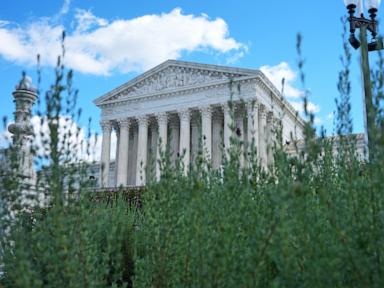
So while it is true that some states allow ballots to arrive after Election Day, they all have to be cast by Election Day. The Supreme Court just this year said that it’s totally appropriate for states to set their own ballot receipt deadlines. We have to be patient, as an American electorate, to get the proper results to count every ballot and make sure all the voices are heard.
But isn’t it kinda wild that we can’t get results on election night? I saw Donald Trump cite the Brazilian presidential election, and while I know he’s doing that from a self-interested place, I did think for a second: Why does it take so long for us to put these results together?
I could totally understand why people would prefer the results faster. And candidly, could states do better at preparing and counting faster? Sure. But they have limited resources. They are working their butts off to prepare for the election with the staff that they have, and then they work tremendously hard to count properly, accurately, as fast as they can.
Could states change their policies to allow them, in some places, to pre-process ballots, to allow them to get to results faster? Sure. I’m not saying states shouldn’t change their policies to create more efficiency here. But given the rules of the road that we have, we need to make sure that every properly cast ballot is counted.
If I’m someone who is concerned about election security and free and fair elections, what should I be looking out for?
So, for example, I have heard that there is some anxiety about mail voting.
If you want to cast a mail ballot, just know that you probably have a bunch of options in your state as to how you can cast it. You can certainly rely on the mail and have USPS deliver that ballot, but of course, we know occasionally mail gets delayed. Your state may have ballot drop boxes. You may have ballot drop-off at election officials’ offices, or even at polling places.
Find out your options.
Yes, definitely find out your options. Voters should also check their voter registration status. Make sure it’s up to date with their current address. Of course, if you’re not registered to vote and you still have time in your state to register, please do register.
Everyone should participate. Our democracy works best the more of us that can participate. If your registration date has not passed, don’t forget to register to vote. Vote with your friends, vote with your community, vote with your family. Voting should be joyful. It’s a civic experience that I think is really fun.
I try to take my kids with me to vote because it’s exciting. They get stickers. Everyone loves stickers.
It’s half the reason I go.
It’s also a reminder. You get your sticker, other people see you, they know it’s Election Day, maybe they go out to vote.
It’s a way to be part of your community and invest in your community and to choose who you want to be a leader of your community.
What about after Election Day?
Earlier this year, Democrats and Republicans in Congress circulated a letter asking members to commit to recognizing state-certified winners and “oppose any attempt to refuse or delay a seating of a member-elect.” We saw House Speaker Mike Johnson delay the swearing-in of an Arizona representative last year,
That seems to me like maybe a preview of what might be to come. How fearful should we be of these post-election attempts to block members from being seated?
I think those scenarios are highly unlikely. I understand why folks are worried about them, but the reality is, states have their own certification processes, which are laid out in state law and that are mandatory for them to follow. It is not discretionary whether states certify their elections. So once there is a new Congress, we have confidence that they will be seated according to how the voters actually cast their ballots.
I want to end by thinking about Trump’s consistent questioning of the integrity of our election system. If he ultimately doesn’t try to actually steal the election, what is the long-term impact of his relentless focus on it and support for policies like the Save America Act?
Just because we have won in many courts against this administration doesn’t delude me into thinking that this administration is just going to stop in this years-long campaign to sow doubt in our election systems.
I think that is the intent. It’s to create a lack of confidence. It’s to discourage voters from participating. And to some degree, I think the administration has succeeded in creating some confusion about the rules or a lack of confidence. But the only way that that campaign to undermine our confidence and to sow distrust actually works is if voters stay home.
The way to defeat that attempt to shake voters’ trust in democracy is to participate in our democracy and to turn out and to make their voices heard regardless of party, regardless of candidate. To say that we will not be made to fear participation in our democracy, but we are going to continue to seize it and take joy in it and show that we deserve a stronger representative democracy that serves all Americans.
What are things that could happen to inspire trust in our electoral system? Are there reforms that you think might make the public feel a reinvigorated sense of confidence?
There are certainly things that Congress could do to create a national floor of voter access and ensure that someone’s right to vote doesn’t depend on what state they live in. That includes basic reforms like same-day registration, online voter registration, universal access to mail voting that doesn’t require strict satisfaction of certain excuse requirements, which still exists in many states.
I think it’s time for Congress to ban partisan gerrymandering. I also think it’s time to restore the Voting Rights Act, and Congress can enact a statutory right to vote that is meaningfully enforceable so that voters can go to court if their voting rights have been burdened, and they can get a real remedy.
That has been really undermined by the Supreme Court, but Congress can and should respond. They have it within their power. The Constitution gives Congress the power to set rules for elections. They should.
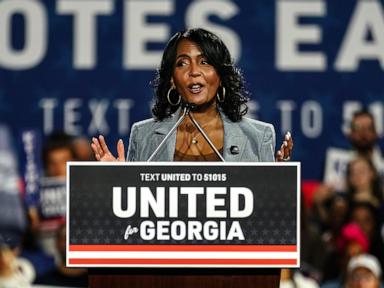
Former Rep. Mary Peltola, a Democratic from Alaska and US Senate candidate, speaks during the 2026 Alaska Fisheries Debate with Senator Dan Sullivan, a Republican from Alaska, not pictured, in Kodiak, Alaska, on September 12, 2026. | Nathaniel Wilder/Bloomberg via Getty Images
President Donald Trump’s Justice Department filed a lawsuit on Thursday seeking to block former Democratic Rep. Mary Peltola’s victory in the 2026 US Senate election. If you’re confused by this development, you should be. Because the election won’t happen for more than a week.
The case arises out of an odd candidacy that might undercut incumbent Republican Sen. Dan S. Sullivan’s reelection bid against Peltola. A man named Dan J. Sullivan also secured a spot on the ballot, and Republicans fear that the not-Senator Sullivan’s presence on the ballot might trick voters who wish to vote for the incumbent into voting for the not-senator instead.
In the abstract, it’s a fair concern. But there are two reasons to doubt that not-Senator Sullivan will attract many voters who actually wanted to vote for the Republican. According to a sample ballot published by Alaska’s Division of Elections, Sen. Sullivan will be identified as a “Registered Republican” and as the “Incumbent,” so voters will be told which Dan Sullivan to vote for if they wish to reelect the one who is actually a senator.
Additionally, Alaska uses ranked-choice voting, a system where voters rank candidates in order of preference, and votes cast for losing candidates are redistributed to voters’ next choice. So an Alaska voter who wants to reelect the Dan Sullivan who is actually a senator, but who is confused as to which Dan Sullivan is the incumbent, can simply rank both Dans Sullivan as their top two choices, and the ranked choice system should ensure that their vote is counted as a vote for Senator Sullivan (and against Peltola).
The question of whether not-Senator Sullivan may appear on the ballot, moreover, has already been litigated. Initially, the Alaska Division of Elections, which is led by a Republican, attempted to disqualify the not-senator because it concluded that he did not seek election to the Senate in “good faith.” Not-Senator Sullivan sued, and an Alaska court ordered him reinstated as a candidate because “the Division’s decision to exclude Mr. Sullivan from the primary ballot was based on a ‘good-faith’ requirement that does not appear in the U.S. Constitution, the Alaska Statutes, or the implementing regulations adopted by the Division” — that is, there is not actually a law that prevents the not-senator from running, even if he is intentionally running as a spoiler candidate.
This lower court order was affirmed by the Alaska Supreme Court last June. If Republicans thought that this decision violates federal law, they could have asked the Division of Elections — which, again, is run by a Republican — to appeal to the US Supreme Court.
Instead, they appear to have let the issue lie until less than two weeks before Election Day, when Trump’s Justice Department filed a new, federal lawsuit claiming that not-Senator Sullivan’s presence on the ballot is somehow illegal, and asking a federal court to preemptively block a Peltola victory in the upcoming election. Trump says that he personally told the Justice Department to file this suit.
It is difficult to find an actual legal argument, much less a persuasive one, anywhere in the Trump DOJ’s complaint initiating the lawsuit. Trump’s lawsuit also runs afoul of something called the “Purcell principle” — a concept that, ironically, the Supreme Court reaffirmed the same day that the Trump administration filed its suit — which says that federal courts should be reluctant to intervene in election-related disputes when the election itself is about to happen.
It is likely, in other words, that the Trump administration’s attempt to overturn a Democratic victory that hasn’t even happened yet will fail. But the mere existence of this new lawsuit, which is known as United States v. Alaska, is an ominous sign that the Trump administration will use every tool in its shed to overturn Democratic victories in the upcoming election.
So what are the actual legal arguments in the Alaska case?
It is a bit of a stretch to even describe the Justice Department’s complaint in this case as a “legal” document, as the complaint does not so much as point to any law that either not-Senator Sullivan or the state of Alaska may have violated, and instead vaguely alludes to legal sources that use terms like “integrity.”
Specifically, the Justice Department points to a federal law which says that it has four purposes, one of which is to “protect the integrity of the electoral process.” It also points to the Supreme Court’s decision in Bullock v. Carter (1972), which said that “a State has an interest, if not a duty, to protect the integrity of its political processes from frivolous or fraudulent candidacies.”
But the statute that Trump’s lawyers quote, the National Voter Registration Act of 1993, does not concern which candidates’ names should appear on the ballot. As its name suggests, it is a law about voter registration, and it imposes requirements on states, such as requiring them to register voters when those voters obtain a driver’s license.
Similarly, while Bullock does include a single line indicating that states may enact laws targeting “frivolous or fraudulent candidacies,” nothing in the opinion suggests that sharing another candidate’s name makes someone’s candidacy frivolous or fraudulent. The decision itself concerned unusually high fees charged to a candidate for public office in Texas, and the Court concluded that Texas’s fees were unconstitutional.
The line about “frivolous or fraudulent candidacies,” meanwhile, was included to clarify that states still have some power to regulate ballot access. While Bullock concluded that Texas’s fees were excessive, the opinion also suggests that states may impose more reasonable filing fees on candidates to discourage unserious candidates from seeking office. Alaska, for example, charges a modest filing fee of $100 to US Senate candidates.
The Trump DOJ’s entire argument, in other words, appears to turn on the fact that it identified two legal sources that use the word “integrity” in contexts that bear little resemblance to the Alaska case.
Nevertheless, Trump’s lawyers claim that the court must prevent Alaska from certifying a Peltola victory “pending an investigation to determine whether votes cast for Daniel J. Sullivan were meant to be cast for Senator Sullivan.”
This lawsuit also cannot be squared with one of the Republican Party’s favorite legal doctrines
Even if Trump’s Justice Department had a persuasive argument that leaving not-Senator Sullivan on the ballot is illegal, they should still lose Alaska because they waited too long to file the case.
In Purcell v. Gonzalez (2006), the Supreme Court warned that “court orders affecting elections, especially conflicting orders, can themselves result in voter confusion and consequent incentive to remain away from the polls,” and it added that this “risk will increase” as Election Day draws closer. More recent decisions, many of them joined only by the Court’s Republicans, have read this “Purcell principle” quite expansively to forbid federal courts from issuing election-related decisions in the months leading up to an election. Justice Brett Kavanaugh has even claimed that Purcell prevents federal courts from issuing election-related decisions as soon as nine months before the general election date.
Supreme Court decisions invoking Purcell to shut down lower court orders altering a state’s election rules are now very common in the weeks leading up to an election. On Thursday, for example, the Court relied on the Purcell principle to block a lower court order that would have made it easier for college students to vote in New Hampshire. The Court began its decision with this line: “This Court has repeatedly emphasized that lower federal courts should ordinarily not alter the election rules on the eve of an election.”
Trump’s DOJ, meanwhile, did not even file its lawsuit seeking to preemptively invalidate a Peltola victory until less than two weeks before Election Day. If Purcell means anything, it must mean that a federal court cannot force Alaska to kick a candidate off the ballot mere days before a federal election.
Two former FBI intelligence officials who specialized in foreign election interference have been charged with making false statements about their roles in investigating the origins of Hunter Biden’s laptop in the run-up to the 2020 presidential election
President Donald Trump and Sen. Dan Sullivan (R-AK) at a campaign rally in Wasilla, Alaska, on October 13, 2026. | Kent Nishimura / AFP via Getty Images
This story appeared in The Logoff, a daily newsletter that helps you stay informed about the Trump administration without letting political news take over your life. Subscribe here.
Welcome to The Logoff: The Trump administration is getting a head start on litigating the midterms.
What’s happening? The administration is asking a federal district court in Alaska to potentially block the certification of Alaska’s US Senate race, should incumbent Sen. Dan Sullivan, a Republican, lose to his Democratic challenger, Mary Peltola.
It’s the first major lawsuit of the 2026 midterms aimed at directly challenging the results, and very likely a sign of things to come after polls close on November 3.
What is the administration arguing? Sullivan is currently in a close race against Peltola, a former US representative who polls suggest may hold a slight lead. But the race is complicated by the presence of a second Dan Sullivan, Daniel J. Sullivan, on the ballot (no relation).
According to the lawsuit, which names Alaska’s state elections director and several state elections entities as defendants, the election could be “tainted by the inclusion on the ballot of Daniel J. Sullivan.”
The suit asks that “Defendants not certify any election result that may be impacted by voter confusion,” which it defines as a loss by the incumbent Sullivan in the event that the other Sullivan attracts enough votes to alter the outcome of the election.
What’s the context? The second Dan Sullivan’s appearance on the ballot has already been litigated. After he was initially disqualified from the ballot, the Alaska Supreme Court ruled that he should be included, and he finished third in the state’s August primary (the top four vote-getters appear on Alaska’s general election ballot).
How worried about this should I be? For now, not very. Trump filing lawsuits disputing election results was all but inevitable, even if it’s surprising to see him start this early.
None of that means he’ll succeed: Trump and his allies filed dozens of election lawsuits in 2020 and were largely laughed out of court. (Plus, this particular lawsuit has been assigned to a judge appointed by President Barack Obama.)
And with that, it’s time to log off…
Hi readers, happy Friday! Here’s some good news to add to a recent string of encouraging headlines about cancer treatment: A new vaccine may reduce the risk of melanoma, the deadliest form of skin cancer, by more than 40 percent, according to the Washington Post. You can read all about it here with a gift link.
Thanks for reading, have a great weekend, and we’ll see you on Monday!
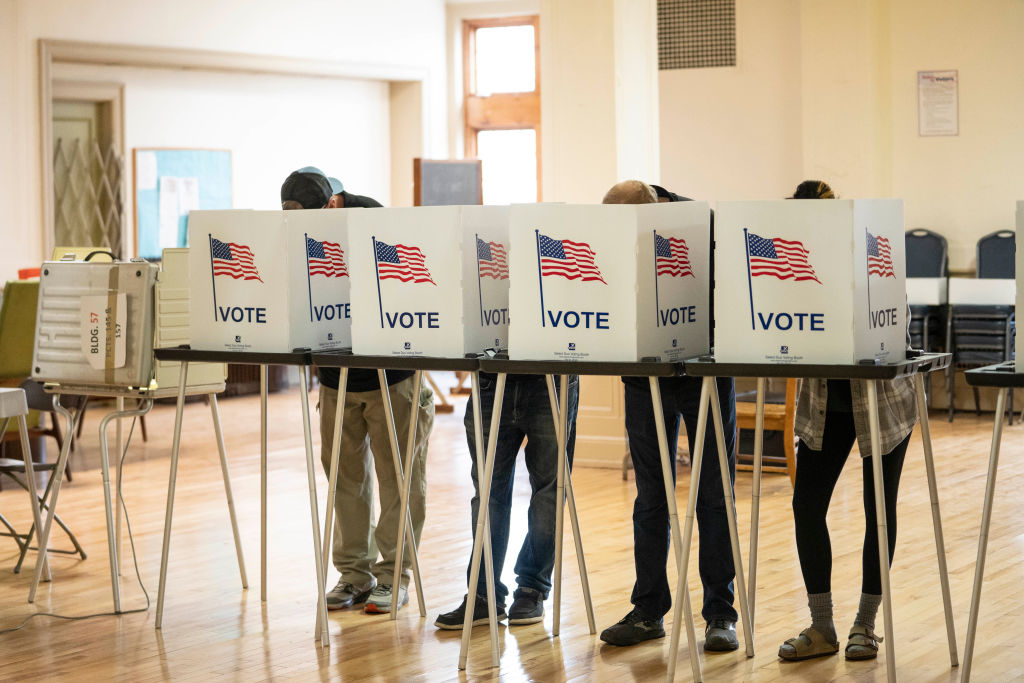
Detroit voters at the polls inside Central United Methodist Church in downtown Detroit, Michigan, on Nov. 5, 2024. —Sarah Rice—Getty Images
A pollster admitted this week to using fabricated data in its surveys that were picked up by leading publications across the U.S., claiming the stunt was an “experimental project” intended to showcase the “vulnerabilities” of the polling industry. The announcement has shaken trust in polling infrastructure ahead of the midterms, especially as some candidates say their campaigns were directly harmed by the fake numbers.
After election analysis website FiftyPlusOne submitted an inquiry to Wedgewood Polls regarding the authenticity of its data and methodologies, the pollster put out a statement across social media on Tuesday, saying it had been conducting a test to show "how easy is it for an entirely fabricated polling firm to gain traction, be taken seriously, and expose how little scrutinization exists in media and public commentary?" In the statement, which has since been deleted, the group claimed it had been “far too easy” to distribute false data and insisted it "highlights a systemic breakdown in media vetting and data aggregation.”
Wedgewood's polls had been used by multiple national outlets for their midterm reporting, including the New York Times, Newsweek, MS NOW, and POLITICO. The Times, which cited around 15 Wedgewood polls between June and October, has since removed the data from its stories. In an accompanying editor’s note, the publication detailed its checking process for polls and said Wedgewood had answered several of their inquiries prior to the data being published, including questions on the identities of the group’s pollsters, the methods used to draw their samples, and the source of their funding.
TIME's email to Wedgewood Polls bounced back.
In another fraudulent polling operation uncovered in August, a company called Median Strategies fabricated polls for races in Wisconsin, Nevada, and California and similarly called the ploy a “social experiment” in a statement to the Los Angeles Times.
“It's very troubling that we've had two examples of this within a very short period of time during election campaigns, creating a lot of problems for legitimate polling,” says Michael Traugott, a professor emeritus of political science at the University of Michigan, who previously served as president of the American Association for Public Opinion Research (AAPOR).
Here’s what to know about the Wedgewood scandal, and what it says about polling ahead of the pivotal midterm elections.
What do we know about Wedgewood Polls?
The polling group called itself a “fictional entity run by a small group of industry veterans” in its statement. Its X account, which contained many of its polls, no longer exists.
G. Elliot Morris, a pollster and journalist who works at FiftyPlusOne, tells TIME that he and his colleagues had been suspicious about a “crop of new polling firms” that have emerged and released anonymous data. An individual eventually tipped off FiftyPlusOne to Wedgewood's polling, which was “the straw that broke the camel's back for us,” he says.
FiftyPlusOne said in a public statement that Wedgewood “operated as if it were a legitimate polling firm” by collecting money from donors to carry out crowd-funded polls and share its survey data.
The poll analysis group said Wedgewood disclosed two names in connection to the company: Jack Sims and Andrew Prater. According to FiftyPlusOne, Sims had prior experience in the polling industry. SoCal Strategies, another polling firm, this week acknowledged in an email to an NPR affiliate in Michigan that Sims had worked there, but is not currently employed by the company and “has not been for a year.”
“It is not atypical for a pollster to leave an existing firm, form their own, and self-fund some surveys to build reputation; we had no reason at the time to believe this case was any different,” FiftyPlusOne said regarding Sims.
“This event does not help what is a decades-long trend of declining confidence in the polling industry,” Morris added, when asked about Sims’ involvement with Wedgewood. TIME has been unable to reach Sims for comment.
Senate candidate in Michigan says fake polling damaged her campaign
The polling scandal has sparked a flurry of reactions within the politics and government sector, with one former Senate hopeful claiming the numbers circulated by Wedgewood contributed to the collapse of her campaign.
Democratic Michigan state Sen. Mallory McMorrow recalled how a poll from Wedgewood had shown her “plummeting into single digits.”
Wedgewood released polling on June 29 that placed McMorrow as having the support of only 9% of registered voters, leaving her trailing behind Haley Stevens and Abdul El-Sayed. Other polls also showed McMorrow in third place with single digits. A Susquehanna Polling survey conducted June 9 to 14 put McMorrow at 9%, although 49% of Democratic primary voters surveyed were undecided. A July 1 Quantus Insights poll put her at under 8%. McMorrow suspended her campaign on July 5, just one month before the primaries.
In a statement posted to social media on Oct. 20, McMorrow said donations “dried up” and she was “hounded” with calls to exit the race after the circulation of the “infamous” Wedgewood poll numbers.
Advising others not to trust the polls, McMorrow said she hoped Democrats are ready to “blow up the system with campaign finance and transparency reforms.”
Jennifer Holdsworth, a Democratic strategist who ran a SuperPAC that supported McMorrow, claimed the fake poll had been “used by several donors to pull back funding at a time we were being outspent by $80 million.”
Amid widespread discussions over fabricated data, Federal Communications Commission (FCC) Chair Brendan Carr said, without naming any specific instance, that there has been a “significant surge” in fake polls and blamed news outlets for “amplifying or airing” them “without regard to basic journalistic ethics.”
Democratic FCC Commissioner Anna Gomez quipped back and shifted the onus onto fraudulent pollsters themselves.
“Pollsters who intentionally mislead the public should answer for it, but broadcasters who report publicly available polling data should never be punished when a poll is wrong,” she said in response to Carr. “FCC rules on news distortion or hoaxes do not apply to a station that reports this data in good faith.”
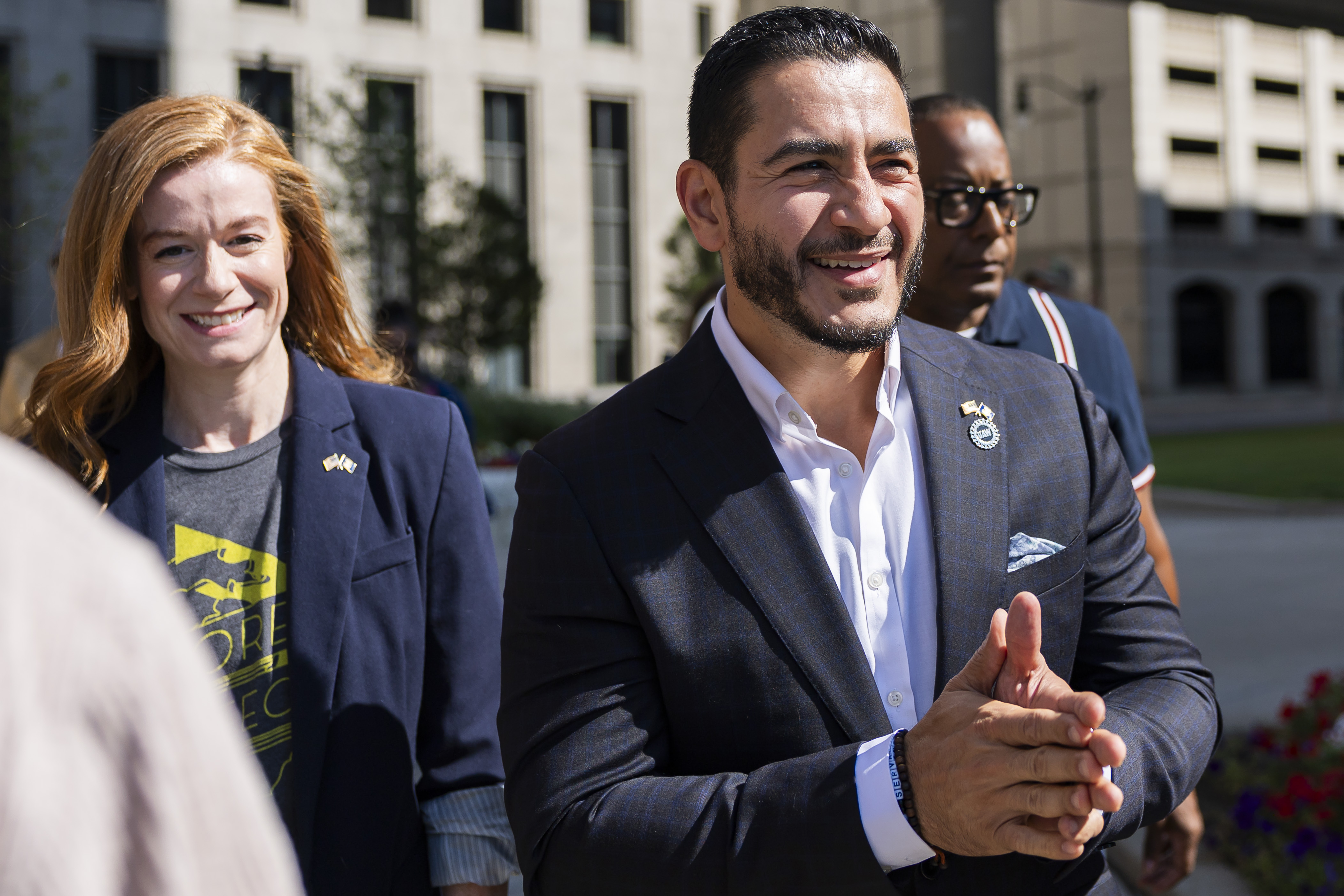
Michigan Democratic state Sen. Mallory McMorrow and Democratic Senate primary winner Abdul El-Sayed at a press conference in Detroit, Michigan, on Aug. 5, 2026 —Finn Gomez—Getty Images
What impact can polls have on elections?
While documented fake polls are rare, according to experts, polling in general often plays a large role in shaping the narrative of hotly contested races.
Traugott tells TIME that polls can affect voting behavior and support for campaigns “because by and large, the average citizen is interested in backing the winner, and backing means not just votes; it also means financial contributions, contributing time and effort to the campaign, and the like.”
Research has demonstrated what is known as the “bandwagon effect,” in which voters become more likely to vote for candidates or issues that are more favored in polls. A 2023 study from the Journal of Elections, Public Opinion and Parties showed that polls discouraged support for less popular ballot items, or as the paper’s authors put it: “polls demobilize the minority and mobilize the majority.”
It also found that moderate voters, who often represent a crucial demographic of voters and can swing tight elections, were the most impressionable when it comes to being influenced by polling. “Social conformity is strongest among ideological moderates,” the study said.
This effect has been documented going back decades.
A 1996 experiment showed that participants who were shown a fabricated poll ahead of that year’s primary had a “significantly greater tendency” to vote for the candidates favored by the poll.
This phenomenon has similarly been demonstrated in prediction markets, which have been shown to sway voters almost as much as polls. A study released on Oct. 20 by policy think-tank the Brennan Center showed that voters were 10% more likely to say that a candidate would win in an election if that person had higher odds of winning based on a prediction market.
Likewise, voters were less likely to believe that a candidate would win if their odds were predicted to be lower. These prediction market odds, the study said, had a similar effect on perceived electability as traditional polls.
Traugott says that generally speaking, voters who identify with a specific party are unlikely to change their vote as a result of polling, but that they might not show up to the polls at all if they see their party’s nominee is disfavored to win.
“It's often the case in the general election that the polls have an influence in terms of turnout,” he says.
Should you trust polls?
Michael Dimock, the president of the Pew Research Center, says that in tight races, of which there are many in the upcoming midterms, “it's very easy for polls to ‘pick the wrong winner.’”
“I do think that people should be very cautious in over-interpreting pre-election polls' ability to project an election outcome, whether it's at a national level, state level, a district level, [or] local level,” he tells TIME.
One of the main reasons for this, Dimock contends, is that even if participants in a survey say who they would vote for, they still might not show up to cast their ballot. He refers to this immeasurable but important factor as “enthusiasm differences.”
“What polls are really bad at capturing is who's going to actually show up and cast a ballot. It's really hard,” Dimock adds. “Human beings are bad at predicting their [own] future behaviors.”
A male Northern Bobwhite Quail forages for seeds on the ground in south Texas. | Jon G. Fuller/VWPics/Universial Images Group via Getty
When millions of voters fill out their ballots in November, they won’t just be choosing elected representatives. Many states are offering the chance to impact conservation and wildlife as well, through ballot measures focused on things like dedicating more money to habitat protection or mitigating the impacts of climate change. One couldeven reshape wildlife management in one of the country’s most picturesque mountain states — and also lead to the indiscriminate deaths of all kinds of wild animals.
And while ballot measures might seem like small potatoes in the grand scheme of electoral politics, they could have an outsized impact this year. The Trump administration has been systematically rolling back protections for endangered species, taking a hammer to longstanding pillars of climate regulation, and cutting funding to agencies like the National Park Service and National Forest Service, both of which oversee vast stretches of wildlife habitats. In many cases, states have had to step up, putting more resources into conserving the habitats and species within their borders, and ballot measures can help shape those decisions.
Here are the seven ballot measures that could transform ecosystems across the country this election:
This ballot measure would shorten environmental review periods for “essential projects” like housing, water systems, clean energy, and medical facilities, among others. In a state that’s been struggling to build what it needs fast enough, this could help speed essential clean energy projects that could help slow climate change. On the other hand, reducing California Environmental Quality Act review time, as this proposition would do, could also lead to increased habitat destruction, leading advocacy organizations like the Sierra Club to oppose it.
This amendment might seem a little in the weeds — and mostly in the interest of farmers and ranchers looking for tax breaks. But it would double (from 2,000 acres to 4,000 acres) the amount of land an owner can get tax breaks from if they protect it under the state’s Conservation Use Valuation Assessment program. As Yanshu Li, an Associate Professor of Forest Economics at the University of Georgia, told me, the amendment could incentivize landowners to set aside larger tracts of their property for wildlife habitat conservation, which would benefit species like the nine-banded armadillo and the northern bobwhite quailthat call these habitats home.
Question 6 would create a “Nature for All Fund,” routing existing taxes on sporting goods, recreational vehicles, and money spent at golf courses to conservation. That fund could then be used on natural resource conservation, making it the first time the state has a dedicated funding source for conservation projects.
This proposition, similar to Massachusetts’, would direct existing sales taxes on sporting goods to a state fund dedicated to conservation and wildfire prevention. In a state where wildfires have torn through more than 2 million acres in the past decade, dozens of conservation groups are supporting this measure to protect habitats and species.
Here, voters are being asked to approve up to $500 million in bonds that can be used to fund water-related infrastructure projects like water treatment, waste disposal, and wetlands infrastructure. A boost to wetlands under the Arkansas proposal could help animals that live in those habitats, which are often overlooked in this region.
This measure would allow for $55 million in bonds to fund environmental and recreational projects. The largest chunk of this change — $25 million — would go to helping to protect the state from the impacts of climate change. Another $7 would be devoted to protecting Narragansett Bay and its watersheds, which would include funding to “restore natural habitats and control invasive aquatic plants,” according to the Rhode Island Current.
These ballot measures are all relatively straightforward so far, but there’s one question up to voters this fall that puts wild animals front-and-center — and is splitting hunters and anglers down an ethical centerline. Which takes us back to Colorado:
On its surface, this amendment seems fairly innocuous. It asks voters to enshrine “the right to hunt, fish, and harvest fish and wildlife by traditional methods” in the state’s constitution. Hunting and fishing are already big in Colorado, and they’re protected by statute, so this may not seem like a major change. But, as Rebecca Niemiec, co-director of Colorado State University’s Animal-Human Policy Center and a Colorado Parks and Wildlife commissioner, speaking for herself, told me, neither the text of the bill nor its proponents define what “traditional methods” of hunting and fishing would be allowed under this amendment.
“Read plainly, traditional methods could be interpreted to include practices like poisoning, leg hold traps, gill nets, or baiting and hounding,” Niemiec said. Many of these practices injure or maim animals, including ones that aren’t targeted: Steel-jawed traps and poisons don’t discriminate between, say, a deer, a wolf, and a lynx. All of these practices have been outlawed in Colorado over the years, either through other ballot measures or regulatory changes; in 1992, for example, Coloradans voted to ban hunting bears using bait and hounds, and four years later they banned leg-hold traps and snares.
The new amendment also continues on to propose: “establishing hunting and fishing as the preferred means of managing fish and wildlife populations.” This would leave far less room for wildlife agencies like CPW to make nuanced decisions or roll out alternative programs, like birth control or animal relocation. It also reduces their ability to take into account the preferences of people who value wildlife for reasons other than hunting.
“Biological science can inform decisions about how many animals can be killed without threatening a population,” Niemiec said. “But it can’t tell us what hunting practices are ethical, or how to balance hunting opportunities with the public’s desire to see wildlife alive — and protected from unnecessary suffering.”
The push for these constitutional protections, Niemiec told me, is part of a larger backlash against conservation groups. But in this case, it’s not as simple as hunter vs. non-hunter: Plenty of hunters and anglers support taking ethical considerations into account when making decisions about how to manage wildlife, and some hunting groups in Colorado have publicly spoken out against the amendment.
“If we’re going to enshrine anything in the Constitution, it should say we should be balancing the diversity of public interest in wildlife in all of our management decisions,” Niemiec said. “We need innovative methods, not traditional methods, if we’re going to deal with the complex challenges that our wildlife is facing moving forward in the state and throughout the country.”
American elections aren’t what they used to be: Thanks to relentless, politically driven gerrymandering, fewer and fewer congressional seats are truly competitive. Millions of Americans are locked into districts where their vote will never elect the party of their choice.
But gerrymandering is also notoriously hard to fix. Many sitting lawmakers owe their seats to districts that have been wildly contorted to create secure seats. So asking legislators to ban gerrymandering often means asking them to endanger their own jobs.
Nevertheless, the stars may soon align for opponents of partisan electoral maps. Last time Democrats controlled the US House, they passed a bill that sought to eliminate gerrymandering. That bill died in the Senate. But, if the polls are correct, Democrats are poised to take both houses of Congress in November. If President Donald Trump remains an albatross around Republicans’ necks through 2028, Democrats could soon control both elected branches of government.
That’s good news for opponents of gerrymandered maps, because, as recent developments show, any viable solution to congressional gerrymandering will have to come from Congress and not the states. Some blue states, such as California and Virginia, had previously enacted constitutional amendments intended to halt gerrymandering in those states. But Democrats are now trying to bypass those bans because they prevent blue states from countering Republican gerrymanders in red states.
Key takeaways
Democrats may soon have the votes in Congress to ban gerrymandering, but they still must overcome a hostile Supreme Court.
Some of Democrats’ top priorities, such as fixing the Supreme Court’s decisions enabling racial gerrymandering, are almost certainly off the table. Others, like independent redistricting commissions, could run into trouble.
Still, the Constitution should give Congress broad authority to tell states how they must draw maps to make them fair and nonpartisan.
Still, even if Democrats win the next two federal elections in historic landslides, they then must overcome the final boss monster standing between the United States and fair elections: the Supreme Court.
And unless the Court’s membership changes dramatically, that will be no easy task. Until fairly recently, the Supreme Court often blocked racial gerrymanders — those intended to lock voters of a particular race out of power — and it at least held open the possibility that a state’s maps could be struck down because of excessive partisanship.
Now, by contrast,many of the Court’s redistricting decisions read like a love letter to partisan maps. The Court’s Republican majority held in Rucho v. Common Cause (2019) that federal courts are forbidden from hearing cases alleging that a particular legislative map was drawn to benefit one political party. More recently, in Louisiana v. Callais (2026), the Court’s Republicans abolished longstanding safeguards against racial gerrymandering, ushering in a new wave of maps that favor white Republicans in the South.
There’s no way to guarantee that a Republican Supreme Court won’t simply make up a reason to toss outa Democratic voting rights law, no matter what that law says. Still, there are strategic ways to mitigate that risk.Opponents of gerrymandering can maximize the likelihood that redistricting reforms will survive judicial review by paying close attention to what the Supreme Court has already said about race, election law, and other related topics. Many of the Court’s recent cases suggest that Democrats may want to tweak their approach to a federal redistricting law — and the Court’sopinions give clues into how.
Don’t even think about passing a law that mentions race
The most obvious trap that Democrats could fall into when drafting an anti-gerrymandering bill is to mention race, or otherwise draw racial distinctions of any kind.
Until just a few months ago, the federal Voting Rights Act offered some of America’s strongest protections against gerrymandering. A 1982 amendment to that law prevented many racially polarized states — often states where white people vote Republican and Black people vote for Democrats — from drawing maps that maximized white power. This had the side effect of limiting partisan gerrymandering in that space, because requiring these red states to draw more Black-majority districts meant electing more Democrats.
But the Republican justices effectively repealed this amendment, which was signed into law by President Ronald Reagan, in Callais.That’s because all six of the Court’s Republicans swear fealty to an idea known as “colorblindness” — the idea that any law that draws racial distinctions, no matter the purpose, is equally repugnant. Under this theory, laws that aim to lift up historically disadvantaged racial groups are legally indistinguishable from the laws that codified Jim Crow. So, if a new act of Congress requires states to consider race when they draw legislative maps, that new law will almost certainly be struck down by this Court.
Congress takes an extraordinary risk, moreover, if it inserts a race-based provision into a broader law governing redistricting, even if the vast bulk of that law does not concern race at all. NFIB v. Sebelius (2012) is one big example of how that could go wrong: In that case, four of the Republican justices claimed that the entire Affordable Care Act must be struck down because those four concluded that just two provisions of the law are unconstitutional.
The current Court is both much more conservative and much more Republican than the one that heard NFIB — and probably will be just as motivated on the issue of gerrymandering as they were on Obamacare — so a majority of its members could potentially order an entire act of Congress repealed if they deem one provision in that law unconstitutional. And, even if they do not go that far, they still might carve giant holes in a law because of one provision that mentions race.
Democrats seem to understand these limitations: The last time Democrats controlled the House, it passed two significant voting rights bills (both of which died in the Senate). The For the People Act is an omnibus bill that includes many of the Democratic Party’s ideas to improve elections, including several provisions targeting gerrymandering. Meanwhile, the John R. Lewis Voting Rights Advancement Act seeks to undo many of the Supreme Court’s attacks on the Voting Rights Act, the landmark law barring race discrimination in voting, while also enhancing some of the VRA’s protections.
Democrats’ decision to, well, segregate racial reforms from their other voting rights proposals shows that they understand many of the tactical decisions they need to make because of this Court. By placing race-related reforms in the John Lewis Act, while passing non-race-related ideas in the separate For the People Act, Democrats reduce the likelihood that the later bill will fall. It would be extraordinary, even for this Supreme Court, to strike down one law because five or more justices deem an entirely separate law unconstitutional.
But let’s say the Democrats decide the best way to get gerrymandering reform through early next year is by reviving the For the People Act. That bill’s anti-gerrymandering provisions do still contain some references to race which Democrats may want to strip out in an abundance of caution. The bill, for example, would require states to draw their congressional districts using a commission made up of Democrats, Republicans, and people affiliated with neither party. One provision of this bill provides that the pool of potential members of these commissions should be screened to ensure that it is “representative of the demographic groups (including racial, ethnic, economic, and gender) and geographic regions of the State.”
Because this provision requires the government to consider race, this Court would very likely strike it down. If that happens, the Court might simply excise the reference to race from the broader statute and leave the rest of it intact, but there’s a danger that this Court could strike down all of the For the People Act’s provision calling for congressional maps to be drawn by independent commissions — or even possibly the entire Act.
SoIf Democrats decide the best way to enact gerrymandering reform early next year is by reviving that bill and finally getting it passed, they may want to strip out any mentions of race in an abundance of caution.
Relying on independent redistricting commissions to draw congressional districts is a dicey proposition with this Supreme Court
At least eight states currently use independent commissions to draw legislative maps, and several other states involve commissions in their mapmaking process. It’s a promising model because empirical research does suggest that these commissions are effective in reducing partisanship in legislative maps. One recent study, for example, found that moving from legislatively drawn maps to commissions “would increase the share of competitive seats within a state from 25 percent to 38 percent on average.”
The idea behind an independent commission is to take the task of drawing maps away from a partisan state legislature, and give it to a multipartisan body tasked with drawing maps that favor neither major political party. The For the People Act adopts this model. It proposes that each state should have a 15-member commission consisting of five Democrats, five Republicans, and five people affiliated with neither major party. Elected officials and their immediate family, candidates for office, significant political donors, and lobbyists are all barred from commission membership.
But there’s a constitutional problem with this approach, which arises out of a surprisingly banal question: Who, exactly, would employ these commissioners?
One possibility is to make them federal officials. But if these commissioners are employed by the federal government, the Constitution would probably classify them as “principal officers,” which would mean that they would have to be chosen by the president and confirmed by the Senate. And, in any event, the Court’s “unitary executive” cases establish that, if these commissioners count as federal officials, either the president or one of the president’s subordinates would have to have the power to fire them at-will.
Classifying the mapmaking commissioners as federal officials, in other words, would defeat the purpose of creating the redistricting commissions in the first place — because the commissioners would be partisan officials and not independent actors.
The For the People Act attempts to get around this problem by calling for state-run commissions. It requires each state to “establish a nonpartisan agency,” which will appoint commissioners to draw the state’s maps. But under the Supreme Court’s “anti-commandeering” doctrine,a doctrine that precedes the Roberts Court,the federal government is typically forbidden from ”issu[ing] direct orders to the governments of the States.” So that suggests that Congress may neither order a state to appoint these commissioners, nor control how a state’s commissioners draw the state’s maps.
In fairness, there is a plausible argument that the anti-commandeering doctrine does not apply to federal laws governing congressional elections. The Constitution allows states to determine the “Times, Places and Manner” for holding such elections, but it also permits Congress to “make or alter such Regulations.” So that suggests that, when Congress writes laws governing congressional elections, it may effectively rewrite a state’s laws to conform to the federal government’s wishes.
Still, this argument is untested. And the question of whether Congress can require states to set up redistricting commissions would ultimately be decided by a Supreme Court with a 6-3 Republican majority that is often hostile toward voting rights legislation. The fate of a federal law requiring states to set up their own commissions would depend on six Republican political appointees who were confronted with a law whose very purpose is to take the Republican Party’s gerrymandering tactics off the table.
Maybe these justices would set partisanship aside and allow a law calling for mandatory state-run commissions to exist. But Congress takes an enormous risk if it bets the future of redistricting on an untested legal theory that, at least, plausibly violates the anti-commandeering doctrine. If the Republican justices want to strike such a law down, they won’t have to work hard to come up with an argument for doing so.
Democrats may want to reconsider whether to rely on independent commissions as their primary solution to gerrymandering. At the very least, they should insert language into the For the People Act stating that, if the commissions are struck down, some alternative mechanism to restrict partisan gerrymandering will immediately spring into effect.
So what can Congress do?
Though independent commissions and race-conscious attempts to combat gerrymandering may be vulnerable to constitutional challenges, Congress’s power to “make or alter” the rules governing congressional elections is in the Constitution, and it isquite broad. That should permit Congress to order the states to draw maps using congressionally determined criteria.
Indeed, Congress has long exercised this power to dictate how states must draw their congressional districts. In 1842, for example, Congress required every state to elect members of the US using single-member districts. This law lapsed in 1929, but a similar law was put back into place in 1967. That law, which provides that no congressional district may “elect more than one Representative,” remains on the books today.
Right now, this law prevents states from enacting many promising reforms, such as proportional representation, but the fact that this law has existed for so long suggests that Congress does, in fact, have broad power to dictate how states draw congressional districts.
Some of the Court’s older precedents, moreover, also suggest that Congress’s power over congressional elections is expansive. Recall that the Constitution itself gives both state lawmakers and Congress authority to determine the “Times, Places and Manner” for holding these elections. States typically get the first crack at determining their own election laws, but Congress can “make or alter such Regulations.” In Smiley v. Holm (1932), the Court said that the power to determine the times, places, and manner for holding these elections includes the power “to provide a complete code for congressional elections.”
So that suggests that Congress may lay out a “complete code” governing how congressional districts should be drawn — assuming, of course, that Congress does not violate some other provision of the Constitution, such as the rules against race discrimination.
An act of Congress governing redistricting could take many forms. Congress might, for example, repeal the ban on multi-member districtsestablished by the 1967 law,and implement proportional representation. Such a system could be set up in different ways, but in the simplest version, voters would cast a ballot for the party they want to control Congress, rather than voting for an individual candidate. Seats would then be allocated to parties based on the percentage of votes that party received. So if the Republican Party received 40 percent of the vote in a state with 10 House members, the GOP would get to pick four of those members of Congress.
Alternatively, Congress could retain the one-member-per-district rule, but implement rules governing how those districts must be drawn. The For the People Act, for example, lays out several criteria that the Act’s independent commissions must use when drawing congressional maps. Among other things, districts must “respect communities of interest, neighborhoods, and political subdivisions to the extent practicable.” The act would also prohibit states from redrawing their maps outside of the 10-year cycle established by the US census.
The bill also proposes several mathematical methods, which have names such as the “efficiency gap,” or the “Seats-Votes Curve,” that may be used to evaluate whether a particular map gives an unfair advantage to one political party.
As I’ve already explained, it is unclear whether Congress could actually create independent redistricting commissions. But a law mandating that congressional districts must be drawn in a particular way could still be enforced by a different body — the federal judiciary. If a state drew a map that violated Congress’s new rules, voters or political candidates in that state could file a lawsuit, and a court could order the state to come into compliance with federal law.
That said, one problem with this solution is that litigation often takes a long time. Historically, states that drew illegal maps that were eventually struck down by the courts often got to run one or more elections under the deficient maps before a court could determine that they were unlawful and must be replaced.
Another potential solution is that Congress could require states to “preclear” new maps with federal officials — borrowing from a method the original Voting Rights Act of 1965 used to prevent states from implementing racist maps before those maps could be challenged in litigation. Under that law, some states had to preclear new election rules with either the Justice Department or a DC-based federal court.
Though the Supreme Court effectively neutralized the VRA’s preclearance provision in Shelby County v. Holder (2013), much of the Shelby County decision criticized the VRA for applying preclearance only to some states and not others. So it is possible that this Court might uphold a new preclearance regime that applies to all 50 states. And even if it will not, Congress could adopt a belt-and-suspenders approach — requiring states to preclear their maps and permitting individual citizens to sue in order to challenge those maps. That way, if preclearance is struck down, lawsuits could still move forward.
There is no telling how this Supreme Court, which often makes up new legal rules that cannot be found in the Constitution’s text, would approach a federal law governing how states must draw their congressional maps. But existing precedents suggest that Congress would have broad discretion to design these rules how its members see fit. Outside of the racial context, the Court’s precedents largely limit which institutions may be placed in charge of redistricting or how members of those institutions are selected or removed. They place far fewer restrictions on the substance of federal election law.
Could judges be given the task of drawing maps?
Another way to potentially insulate the mapmaking process from partisan politics is for Congress to pass a law requiring maps to be drawn by judges, who are at least nominally nonpartisan. Virginia’s constitution, for example, provides that its districts shall be drawn by the state supreme court if the state legislature and a redistricting commission are unable to agree on legislative maps.
Unfortunately, the For the People Act’s proposed process for creating these judge-drawn maps may beunconstitutional. That’s because the Constitution only permits federal courts to decide matters arising out of “cases” or “controversies” — meaning that the matter is presented to the court in a proper lawsuit where a plaintiff, who was actually injured in some way by a defendant, sues that defendant.
The For the People Act seems to contemplate a kind of public hearing, presided over by three judges, where any “interested members of the public may appear and be heard and present testimony” on what a state’s maps should look like. This process, in other words, does not really resemble a lawsuit, where a plaintiff and a defendant both make adversarial arguments and a judge determines which one of them is correct.
Although the bill does indicate that an individual plaintiff may trigger a hearingby filing a formal request with an appropriate court, this individual doesn’t really resemble a party to a lawsuit, in part because they do not appear to have any greater ability to present evidence to the three-judge panel than any other member of the public.
That said, these deficiencies in the For the People Act could probably be fixed with fairly minor tweaks.Instead of allowing any random member of the public to call for a hearing, the bill should identify specific classes of individuals — be they voters within a state, candidates, or political parties — who have standing to sue the state. The ensuing hearing should be conducted like a lawsuit, with both the plaintiff and the state presenting their own arguments for how to design the state’s maps. If Congress also wants the court to consider arguments from the public at large, those arguments could be submitted in amicus briefs.
And, of course, the bill should also lay out a legal criteria that judges can use to determine if a particular map is legal.
The biggest challenge for lawmakers probably won’t be the Constitution. It will be coming up with a solution that actually prevents partisans from drawing biased maps.
At least under current law, Congress has broad discretion to lay out nationwide rules governing congressional mapmaking. A federal law mandating proportional representation, or requiring states to draw compact districts, or mandating that states must use a particular mathematical model to construct maps that are free from partisan bias, or potentially even a law allowing judges to draw maps, would all likely be constitutional — even according to this Supreme Court.
But the fact that a particular law is constitutional does not mean that it will be effective in increasing the number of competitive districts and reducing the role that partisans play in the mapdrawing process.
The most challenging task facing Congress — or, at least, a future Congress that actually wants to do something about gerrymandering — is coming up with rules that actually force states to draw fair maps. It would be a tragedy if Congress enacts a law requiring states to use a particular method to design its districts, only to discover that this method does not actually prevent states from drawing partisan gerrymanders.
In a 2016 speech, for example, former Attorney General Eric Holder mocked states that draw districts that are “only contiguous at low tide” or that are “shaped like a contorted snake.” And he suggested that states should be required to draw maps which ensure that “people who live near each other, and who have similar interests” vote in the same district. Holder, in other words, seemed to suggest that compact districts are superior to ones that spread out throughout much of a state.
But this proposal could actually make some states’ maps more biased. That’s because Democrats tend to cluster together in cities, while Republicans tend to spread out more in rural and suburban areas of a state. So, if a state’s mapmaking process fetishizes drawing nearby voters together into the same district, Democrats may all be packed into urban districts that are so overwhelmingly Democratic that many of the votes cast in these districts will be wasted. Republicans, meanwhile, could be spread out across multiple districts to ensure that their votes are counted more efficiently.
These challenges don’t mean that federal lawmakers should abandon the project of halting partisan gerrymandering. But it does mean that they should proceed with some caution. The worst outcome would be if Congress required states to use a particular method when they draw their maps, and then that method did not achieve what Congress intended it to achieve.
Avoiding this outcome, moreover, will be more difficult because Congress may need to choose second-best solutions to reduce the likelihood that the Supreme Court strikes the entire law down.
It would be better if Congress could address partisan redistricting without an increasingly partisan Court breathing down its members’ necks. But Democrats cannot choose which justices sit on the Supreme Court at the moment they gain a congressional majority large enough to actually legislate. Absent extraordinary events, they will need to do their best to draft a law that this Court will not sabotage.
 Login