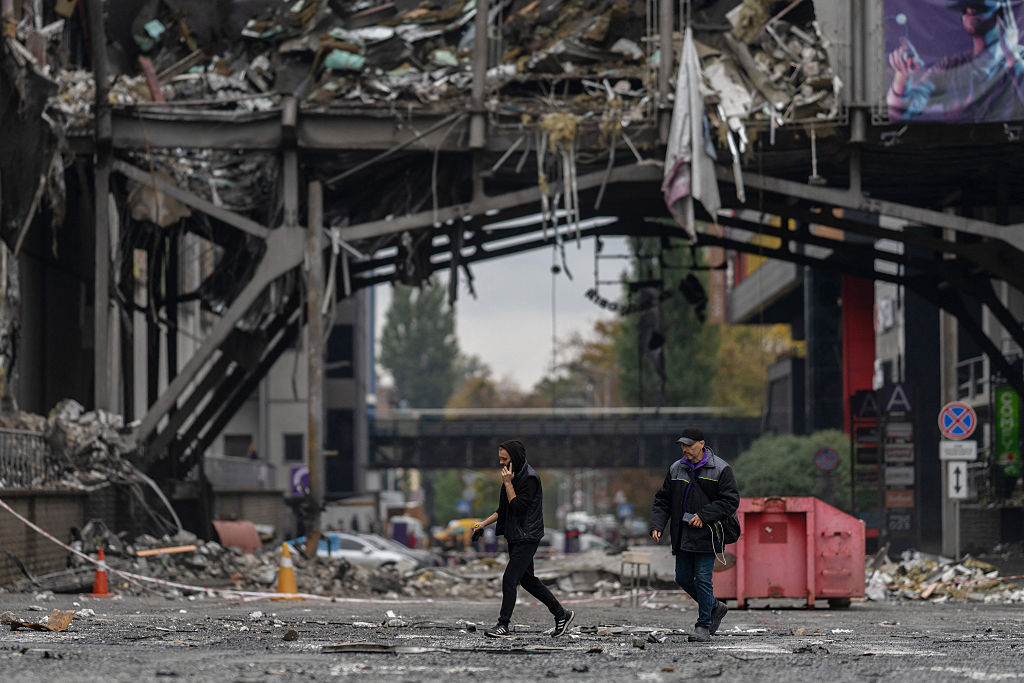
❌

Reading view

The Fight Over Who Counts in India

In A Fine Balance, one of the finest novels about modern India set in the 1960s and 1970s, Rohinton Mistry powerfully conveys a sense of the social meaning of the vote for the Indians at the bottom of the ladder. Narayan, a Dalit tailor, insists on marking his own ballot in an upcoming election instead of allowing an upper-caste landlord’s men to vote on his behalf.

Dukhi, his father, warns him against it.  “It is still my right,” Narayan replies. “And I will exercise it in the next election, I promise you.”

Dukhi urges him not to risk his life.

“Life without dignity is worthless,” Narayan replies.

I have been rereading Mistry’s novel over the past few weeks as a series of protests has turned October into a month of fierce battles over the integrity of India’s elections, the accountability of its institutions, the right to protest, and the soul of its democracy.

A nascent Gen-Z movement, Cockroach Janta Party, which organized protests over education and unemployment in Delhi in June and July and forced the resignation of India’s higher education minister, gave the call for the October protests. Young protestors answered with an insurrectionary energy in the summer and soon found support from a broader coalition comprised of opposition parties, social movements and other pillars of Indian civil society.

These assorted protesters see the stakes of the current moment as existential: the sanctity of the vote in India, the essential ingredient, in other words, of democracy.  Throughout October thousands joined the cause in Delhi and other Indian cities, their marches spurred by anger directed against an ongoing national exercise to overhaul the country’s electoral register. 

Known as the Special Intensive Revision, the exercise has, according to the protestors, resulted in more than 130 million voters being removed from electoral lists. Although electoral rolls have been revised periodically, this is the first time such an exercise has placed the burden on citizens to establish their eligibility, raising fears that millions of legitimate voters, particularly the poor and marginalized, could be disenfranchised. 

Seeking accountability, they have been calling for the resignation of Gyanesh Kumar, the country’s chief election commissioner, who oversees the Election Commission of India, the body charged with conducting and safeguarding the sanctity of elections across the nation. The protestors accuse Kumar of abandoning his constitutional obligation to act impartially. In their telling, the mandarin has set the table in a way to favor the interests of Prime Minister Narendra Modi’s Bharatiya Janata Party, a charge denied by those in power.

Already shaken by the summer protests over education, this time the Indian government responded with coercive force, effectively turning central Delhi, the political and administrative heart of the capital, and the place where India goes to protest, into a garrison. On Oct. 10, it deployed tens of thousands of police and paramilitary personnel, restricted internet access, detained thousands of protesters, and sought to deny the protesters access to public spaces across the capital. 

The crackdown was intense. On the night of Oct. 16, there was a palpable sense of panic on social media in India as an urgent question was asked repeatedly: Where is Neha Bora? A 29-year-old doctoral student and left-wing activist, Bora has emerged as one of the most articulate and formidable leaders of these protests, which have rattled Modi’s government and—despite valiant attempts to construct a counter narrative by BJP leaders and other party apparatchiks—become a significant challenge to his popularity and legitimacy.

Bora was detained by the police on their way to join the thousands of protesters who had converged on Connaught Place, a prominent commercial district in the capital, waving the national flag and reiterating demands to protect the right to vote and the sanctity of electoral democracy in India. For several hours after sunset, there was no news of the whereabouts of Bora, who uses they/them pronouns. Their lawyers spoke about the police refusing to reveal their location. Eventually, around midnight, their lawyers located them at a police station. 

When Bora was released on Saturday morning, they tweeted, “Fighting for democracy and the Constitution cannot be criminalized.” It was a neat summation of the sentiment moving so many Indians to take to the streets, namely a sense of being robbed of something of existential proportions. “Now if they take away our right to vote,” a protester told a reporter, “what is left with us?”
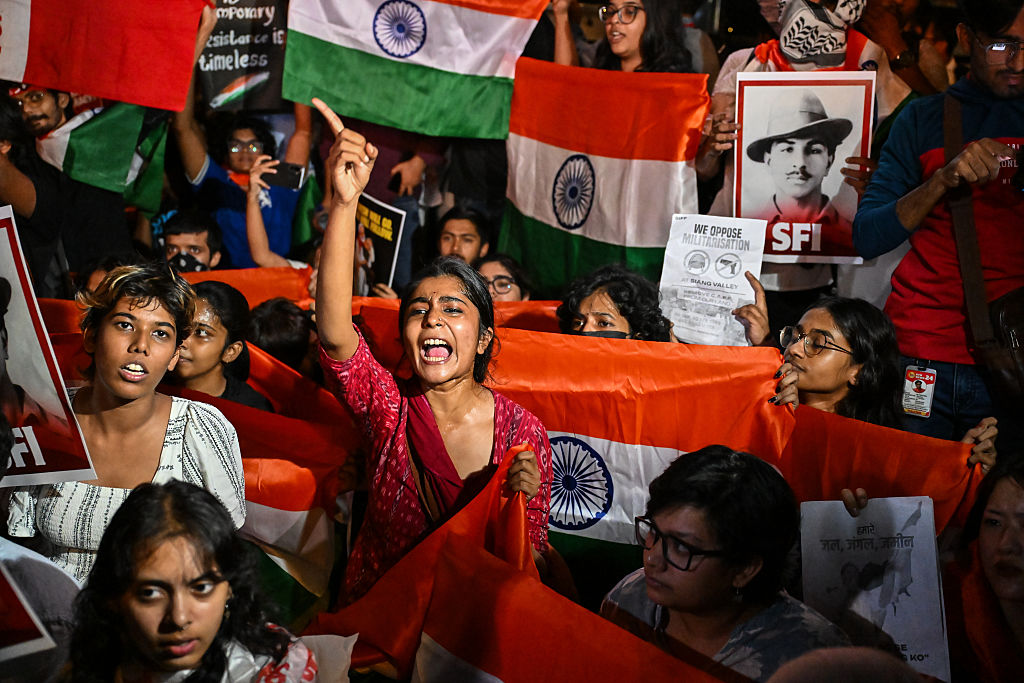
Members of the Cockroach Janta Party take part in a protest march on October 16, 2026 in New Delhi, India. —Ritesh Shukla—Getty Images

The power of the vote

The emotional charge behind the protests has its roots in the birth of the modern Indian nation-state itself. India always took great pride in adopting universal franchise rights as the Constitution of India came into effect on Jan. 26, 1950. In its historic first general elections in 1952, every Indian above the age of 21, irrespective of caste, religion, gender, race or wealth, had their constitutionally guaranteed right to vote. It was, as many legal and constitutional scholars have since remarked, a colossal feat, and one that became a touchstone for the modern idea of India. 

Hence the current upheaval in the country. The Modi government may be reversing decades of democratic gains by recasting the act of voting as a privilege, conferred at the discretion of bureaucrats or as a favor from the ruling party, rather than a right guaranteed by the constitutional order. Now, every prospective voter must first complete an enumeration form, and many may subsequently be required to produce onerous documentary evidence, such as birth certificates and educational records to establish their eligibility to vote. Tens of millions of Indians from marginalized communities either lack documentary records or possess documents that are riddled with mistakes such as spelling errors, making it harder for them to navigate any process of bureaucratic verification. 

The fear is that India is—to put it bluntly—being yanked back to a darker time, one from which it emerged in no small part because of the work done over decades to firmly establish the credibility and broaden the depth of its democratic franchise. In the 1950s, India was an overwhelmingly rural country, with around 83% of its population living in the villages and only about 17% in urban areas. Its nascent democratic system confronted entrenched social hierarchies of caste and power. Early accounts of grassroots democracy in India describe how higher-caste landowners controlled the votes of their lower-caste dependents, sometimes even marking ballots that the voters had to authenticate with their thumbprints.

The pioneering Indian sociologist M.N. Srinivas showed how politicians campaigning for votes treated villagers not as individual voters with agency but as members of “vote banks.” Politicians approached landlords or community leaders to deliver these blocs of votes in return for favors from the government, from “licenses for buses and rice-mills to seats in medical and technological colleges for their kinsfolk.”

And well into the 1960s, millions of Indians were still unable to exercise their constitutional right to vote. In the eastern Indian state of Bihar, landlords used club-wielding enforcers known as lathaits to keep Dalits, members of the most oppressed caste, out of polling booths. “I remember watching members of my caste being dragged out of a polling booth,” an elderly Dalit man in Bihar’s Siwan district recalled in an interview with The Print, an Indian news site.

During the state elections in 1967, Jagdish Master, a teacher turned activist, challenged the veto of the landlords over Dalit suffrage by escorting a group of Dalits to a polling booth in Ekwari, a village in Bihar’s Bhojpur district. The landlords’ henchmen brutally beat him and drove him out. He returned to the village as an armed guerrilla, recruiting Dalit laborers and other poor peasants in a Maoist-style rural insurgency that would flare across the region for decades.

The power of the vote in Indian consciousness transformed radically after the “Emergency,” the period between June 1975 and March 1977 when Prime Minister Indira Gandhi suspended constitutional rights, assumed untrammeled powers, imprisoned opposition leaders and silenced the press. Much of India’s elite—bureaucrats, businessmen, newspaper editors and movie stars—bent the knee and welcomed Mrs. Gandhi’s promise of “order” and “discipline.” Wealth and connections offered protection from the state. India’s poor, stripped of their electoral power, suffered terrible abuses of an unaccountable bureaucracy and police from slum demolitions to forced sterilization of men.

In the general elections held in March 1977 after the end of the Emergency, Mrs. Gandhi’s Congress Party was decisively defeated by the people and tossed out of power for the first time since Indian independence in 1947. The principal victims of abuses of the Emergency—Dalits, Muslims, and the poor of the populous northern Indian states—voted against the Congress party for the first time and contributed significantly to its removal from power

The power of the vote has gradually forced India’s high-handed bureaucracy to recognize the human dignity and political citizenship of ordinary people. The electorate delivered its verdict on Mrs. Gandhi’s breach of the sacred covenant between the Indian state and its people: the people confer legitimacy on the state in exchange for their rights, including its protection of the sanctity of the vote. Having asserted their power, voters proved difficult to subdue again. As the political theorist Partha Chatterjee put it, it was the 1977 defeat of Mrs. Gandhi and the Congress party that established the “capacity of the vote.” 

A silent revolution

India’s poor and marginalized took proper control of their voting choices three decades after independence. In the years after the Emergency, they leveraged the vote as a means to a secure livelihood or as a tool for ensuring justice. Politicians could no longer rely on local patrons to intimidate people into voting for them and had to compete on representing their interests. A new competitive politics emerged in the 1980s and led to an upsurge, as Chatterjee wrote, “of popular demands of a kind that had never before been allowed to disturb the order and tranquility of the proverbial corridors of power.”

By the 1990s, political leaders from socially disenfranchised castes and Dalit communities were taking power in the populous, northern Indian states of Bihar and Uttar Pradesh. Political scientist Christophe Jaffrelot memorably described it as “the silent revolution.” This revolution, ushered in by the votes of the historically oppressed communities, did not quite transform the economic and social structures of the region. But it changed the everyday relations of power. Indrajit Roy, a scholar of development studies, recalled a refrain he heard frequently during his fieldwork among Dalits in Bihar in the late 2000s: “There has been development, change has come. Today, we can look the landlord in the eye and speak as equals.” 

Vote banks had thus turned into vehicles of collective political assertion. Marginalized communities had become adept at pooling their votes to secure political favors and advance their shared interests. They chose their own patrons, preferring their own caste leaders to represent their interests and negotiate with the state on their behalf.

Over time, the clientelist politics of vote banks became associated with an entrenched culture of corruption. This helped pave the way for Modi’s successful national campaign in 2014, in which he cast himself as a populist strongman who embodied the aspirations for “development” of all Indians while portraying the Congress and regional parties as beholden to their respective vote banks. Modi’s attacks on vote bank politics also carried a more sinister charge: that successive governments had appeased India’s Muslims minority, which accounts for around 14% of the population, for their votes at the expense of the national interest.

Bangladesh borders the Indian state of West Bengal and Modi reserved his sharpest, xenophobic barbs for Bengal’s Muslims, whom he tarred during his 2014 campaign as “Bangladeshi” and “illegal immigrants,” establishing a template for their vilification that persists to this day. In an inflammatory campaign speech, Modi issued an ominous warning: “After May 16 [the day of the results of the 2014 elections], these Bangladeshis better be prepared with their bags packed.”

A dangerous exclusion

The Modi government invoked that very specter of the “illegal, Bangladeshi Muslim” to push through revisions to electoral rolls across most Indian states. India’s home minister, Amit Shah, who had earlier likened Bangladeshi immigrants to “termites,” responded to the ongoing protests by calling them an “action plan to protect infiltrators.”

There are no reliable estimates of how many Bangladeshi immigrants live in India. In 2016, a minister of the Modi government told the parliament, without citing a source, that the country was home to some 20 million “illegal immigrants from Bangladesh.” The government later acknowledged that it had no accurate data on the number of illegal immigrants in India.

Yet the Indian government has used unfounded speculation about “illegal” Bangladeshis to overturn the fundamental logic of the country’s electoral registration system, shifting the burden of ensuring registration from the Election Commission to the voter herself. The commission was responsible for ensuring that every citizen made it onto the electoral rolls. 

The exercise has already disproportionately disenfranchised the poor, migrants, religious minorities, women—and is bound to continue doing so. “The majority of voters in Bihar who were excluded from the list were in rural areas,” said retired Maj. Gen. Anil Verma, who heads the Association for Democratic Reforms, a nonprofit group that challenged the electoral rolls revisions in the Supreme Court. “Those worst affected were the poor and the marginalized—they had no documents.”

Opposition parties have also alleged that the electoral roll revisions tilted the electoral field in the BJP’s favor in the West Bengal election held earlier this year, helping the party win power in the state for the first time. An analysis by the SABAR Institute, a public policy research institute, lent some credence to that charge: a disproportionate share of the 9.08 million voters removed from West Bengal’s electoral rolls came from constituencies held by the then-ruling Trinamool Congress or those with large Muslim populations. 

The Election Commission has denied the charge that the deletions were politically motivated, arguing that it applied uniform criteria to remove entries for voters who had died, were registered more than once or had permanently relocated. But that claim is difficult to reconcile with the disproportionate representation  of certain  groups among those deleted from supplementary lists issued for some constituencies after an adjudication process. For instance, although Muslims make up around 23% of the population of Nandigram, a constituency in West Bengal, the SABAR Institute study found that they accounted for 95.5% of the deletions across seven supplementary lists released by the Election Commission for the constituency.

Voting carries an almost existential significance for Indians whose equal citizenship has not been fully recognized by the institutions of the state. Indians see the vote as an affirmation of their existence. If the vote is no longer a gift freely given or withdrawn by the people but a resource controlled by the state, it reduces ordinary voters once again to supplicants dependent on the favor of political elites.

The electoral revisions and mass deletion of voters have provoked such widespread revulsion because many Indians see it as an assault on their identity as citizens and a threat to the social recognition they have won through a long, arduous struggle. Many Indians might have forgiven Modi for his numerous missteps but they are determined not to let him devalue their voting power.

We that are young

The young protesters moving through Delhi’s barricaded streets carry a palpable sense that they are living through a historical moment. References to the Quit India movement against the country’s erstwhile British colonizers and the protests around the Emergency have become commonplace. Memories of seminal events of the past offer a lens through which to consider the present. The future seems open to change through collective action. This sense of a turning point imbues individual actions with a larger purpose and drives protesters to confront a police force intent on clearing the streets by whatever means necessary.

On Oct. 9, a day before Delhi was placed under a lockdown, Bora invoked India’s struggle against British imperialism to denounce the pre-emptive detention of protest organizers. “History is repeating itself. Just like in 1942, the arrest of leaders could not stop the Quit India movement; this movement will also not stop,” Bora said. “This is nothing but a state of open emergency in the country.”

The convergence of young people’s anger over education and employment, fears of authoritarianism, and concern for the sanctity of the vote poses a serious challenge to the Modi government. It could forge a broad popular coalition of unemployed young people, urban poor, Dalits and religious minorities, united in challenging the legitimacy of the government. Unless the government retreats on electoral roll revisions, sustained protests could drain its political capital.

One of Indian democracy’s great achievements is that even its poorest citizens have proved adept at recognizing when the power of their vote is being wrested away, gauging the consequences and organizing to resist. A government in India can retain its legitimacy despite failing to provide functioning schools or decent employment. It cannot do so if it also violates the sanctity of the vote.
  •  

Our Brains Weren’t Built for This Much Comparison

—Deagreez—Getty Images

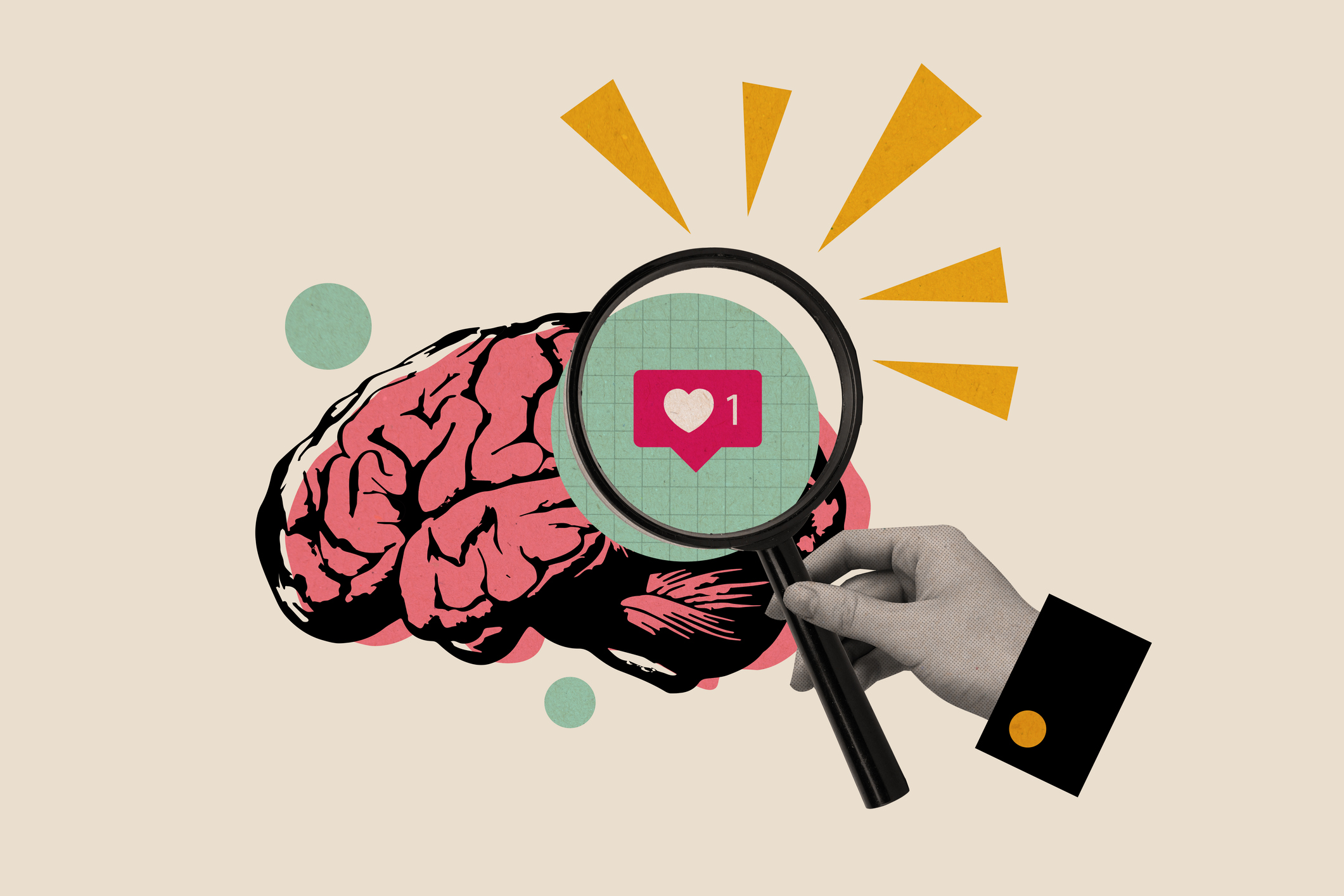
More than 20? Or less than 75? As I scan my feedback on a recent social media post, my brain just can’t seem to help registering the number of “likes.” I’m not alone.    

Under a recent settlement that Meta recently reached with states, Facebook and Instagram are about to look different for minors Among the new protections, one seemingly modest change caught my eye. By default, users under 18 will no longer be able to see likes and other reactions in response to their posts or those of others. The reforms are designed for children and teenagers, but touch on a psychological phenomenon just as relevant to adults. As a psychiatrist, I found myself wondering: Why does that little number beneath your post matter so much?

The answer has less to do with social media and more to do with an ancient human tendency: social comparison. Social comparison is the psychological process by which people assess themselves, including their own abilities, opinions, and achievements, in relation to those of others. Likes can both reward us and rank us. They show us that people are validating our posts and also quantify that validation. 

We know how much approval we receive relative to what we might have expected, what we got the last time we posted, and what others receive. Feedback is scored. Likes are just one example. Follower counts, views, and shares are other metrics that make social information measurable. When social approval is numerically valued, comparison becomes harder to avoid.  

From an evolutionary perspective, social comparison may have served an adaptive purpose. Humans evolved in social groups. Knowing where you stood relative to others might have helped you identify what behaviors were approved, whether you belonged, and how to navigate hierarchy. But moving beyond prehistoric time to the last century, comparison still had constraints. Your 25-year high school reunion? It happened once in your lifetime, maybe in a city far away from you, with only your fellow classmates in attendance. Now, the high school reunion lives in the device in our hands, capable of giving anyone quantitative signals from a vast reference group at any moment on our personalized scoreboards of social approval. If the subjective question is whether we belong, what can feel like an objective answer is the 100 likes our post gets from 2,500 followers. The scale, frequency, quantification, and accessibility of social comparison have all changed.

Our brains weren’t built for this much comparison. Neuroimaging studies show that our brains allocate value to how we believe we stack up next to others. Downward social comparison, in which we learn someone performs worse than us, can engage neural circuits associated with reward and valuation. Upward comparison, in which we learn someone performs better than us, can engage neural circuits associated with processing unpleasant emotions. These are ways in which our brains process social outcomes much like other kinds of gains or losses.  

But our brains don’t just register numbers; we also tend to evaluate their meaning. In one study, likes functioned as a type of currency that adult users compared themselves on, shaping how they felt in that moment. In another set of studies, adults who made more frequent and extreme upward comparisons reported an immediate decline in self-evaluation and cumulative declines in self-esteem and life satisfaction over a browsing session. Research has also found that across generational groups, greater user tendency to engage in social comparison, together with greater maladaptive ways of coping with emotions, is associated with more symptoms of anger, anxiety, and depression. 

Social comparison isn’t inherently harmful. But as repeated opportunities to compare mount, the mental health effects can add up.  

While hiding likes may not eliminate social comparison, it does remove a metric from the scoreboard. The instinct to compare or desire to belong won’t just vanish. But even if we might wonder where we stand next to who’s performing better, there’s a difference between wondering and a number answering that question for us.

Social media didn’t invent our instinct to compare ourselves to others. We’ve had that for millennia. What it did was shift the environment surrounding our instincts, encoding one form of social feedback into numbers we can monitor.  

That's why changing our relationship with social comparison will mean more than adapting digital platforms. What do we value? What gives us purpose? What makes our lives matter? 

The cultural shift that lies ahead is to ask the questions about our social worth that don’t need a scoreboard to answer.

  •  

The Atlantic and Pacific Oceans Are Not Trump’s to Rename

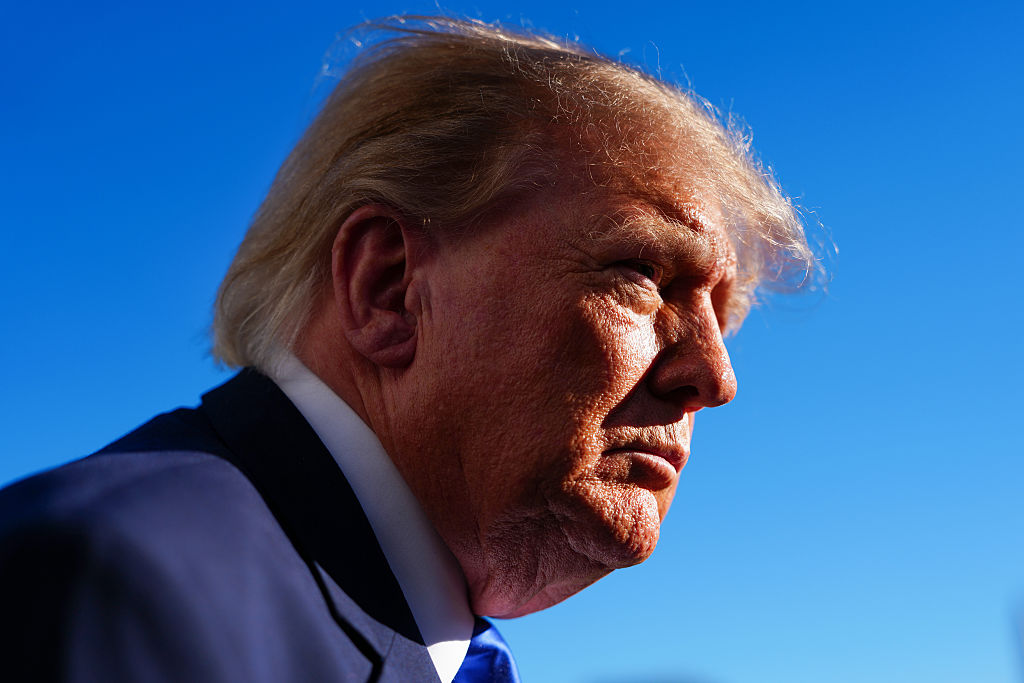
President Donald Trump delivered remarks on Oct. 10, 2026 in Clarksville, Tenn. —Roberto Schmidt—Getty Images

Not content with renaming an international gulf and a cross-border lake, on Oct. 10, U.S. President Donald Trump recently floated the idea of renaming the Atlantic or Pacific Ocean as “Trump Ocean” or the “Ocean of the Americas” at a political rally in Clarksville, Tenn. 

“We need an ocean. So, I was thinking of either the Atlantic or the Pacific,” he said to laughter and applause. “We call it ‘Trump Ocean’ or ‘Ocean of the Americas,’ something like that.”

Then, at an Oct. 21 rally in South Carolina, Trump said he asked Google’s CEO, Sundar Pichai, to rename the Atlantic Ocean on Google Maps. According to Trump, Pichai replied, “Please don’t ask us to do that.” 

“So, I'll probably pass,” Trump said. “I think let's keep it the Atlantic Ocean.”

While Google has not issued a formal statement on the matter, Trump’s obsession with naming places for himself or America is remarkable. In our view, it reflects a textbook case of “toponymic narcissism”—the use of place naming to remake the world in one’s own image. 

Let’s not fool ourselves: Trump knows a thing or two about branding. In fact, his business career has largely revolved around marketing the Trump brand on hotels, golf courses, and even golden sneakers. We shouldn’t be surprised to find him following the same playbook in his second presidential term. 

Yet the world map is not a private real estate development. Nor can place names be reduced to a branding exercise. Place names have a greater civic purpose as shared global symbols that should transcend the personal glorification and political interests of any individual leader.

Place names form part of our intangible cultural heritage with cultural significance that will outlive the cartographic whims of President Trump. They shape our geographical imaginations and the way people perceive and understand the world. Geographical naming also has important consequences for education, international relations, and the types of messages we wish to project to the world.

For instance, it is notable that Trump has focused much of his renaming energy on places with Indigenous names, such as Lake Ontario and the Gulf of Mexico. In the case of the Atlantic Ocean, this could also be seen as an attempt to erase an etymology that points through Greece to North Africa. The name derives from the Greek for “Ocean of Atlas,” referring to the mythology of a giant who lives in the Atlas Mountains of northwestern Africa.

As place name scholars, we have spent decades studying the cultural, social, and political aspects of place naming. There is a long history of political leaders and cartographers using place naming to assert raw power by rewriting the world map. In one sense, Trump’s renaming shenanigans are simply the latest flashy example in this broader story of mapping and politics. 

But Trump is not merely renaming places to project American power on the world stage. He is also making a mockery of the very act of place naming itself—and, along with it, the international norms that inform the map-making process. 

The international community must reaffirm its commitment to respecting the cultural value of place naming and to articulate responsible place-naming principles, especially for geographical features that are shared across international borders. In an open letter co-authored with place name experts around the world, we propose five key principles for responsible place naming:

The first principle is recognizing that place names are culturally significant forms of intangible heritage and shared resources whose stewardship carries responsibilities extending beyond the interests of any particular government, leader, institution, or generation. 

Given the cultural significance of place names, our second principle highlights the need for meaningful public participation in place naming decisions. Place names that are changed arbitrarily and without due process should not be recognized by the international community. 

Thirdly, place names should not be used to proclaim cultural superiority, advance territorial ambitions, or assert exclusive national ownership over geographical spaces shared among different peoples. 

Places should generally not be named for living people. Instead, place naming should serve the public interest rather than promoting the personal legacies of those seeking to commemorate themselves as a form of self-aggrandizement.

Lastly, we recognize that a shared geography need not always have a single name, since multiple place names can bear witness to the layered histories, languages, and attachments through which places acquire meaning. However, this recognition should not extend to condoning the unilateral renaming of shared geographic features without international dialogue among affected countries and communities.

If Trump moves forward with attempting to rename the Atlantic or Pacific Ocean, the international community should stand united in rejecting this attention-seeking act of cartographic malpractice and defend the cultural value of place naming as a cornerstone of our shared world map and geographical imagination.

  •  

Why Trump’s Rebrand of Artificial Intelligence to Super Intelligence Matters

President Donald Trump departs on the South Lawn of the White House on October 22, 2026 in Washington, DC. —Aaron Schwartz—Getty Images

President Donald Trump’s war in Iran drags on, his pledge to bring down prices on day one appears to have backfired, and his record-low approval ratings are dragging down his party ahead of the midterm elections. But one Trump initiative that is going exactly according to plan: getting some of the world’s richest CEOs to help him rebrand “artificial intelligence.”

Last month, with an ever-growing number of Americans worried that AI might kill us all, the president summoned tech executives to the White House to make a big announcement: "artificial intelligence” is out. “Super Intelligence” is in.  Despite the term “AI” being in use for more than 70 years, government agencies will no longer recognize it.

I’m skeptical that the White House is a repository of superintelligence, in part because “United States” was misspelled on the president’s official announcement. But unlike, say, Lake America, “super intelligence” has largely caught on—at least among the people building it. Jeff Bezos publicly blessed the rebrand. Jensen Huang, CEO of Nvidia, was quick to get on board. During a SpaceX’s earnings call this week, Elon Musk used “super intelligence” in his very first sentence, and at least nine times after that. 

It remains to be seen whether those of us less reliant on government contracts and favorable regulatory decisions join the movement to make super intelligence happen. But as a former presidential speechwriter, I won’t argue with President Trump’s broader instinct that words matter. Especially when those words are being used to describe something novel, controversial, and almost certain to have consequences for all eight-plus billion people on earth. 

In fact, that’s the biggest problem with the White House’s big rebrand—it goes in entirely the wrong direction. I would argue that our shared language around artificial intelligence already places far too much emphasis on intelligence, and far too little on artifice. We default to describing AI using the language of beings, rather than the language of things.  

Humanity should rethink that decision. If we want to avoid being replaced by AI, a good way to start would be to stop using words that suggest we already have been. 

Once you start paying attention to the stealth anthropomorphization of AI, you’ll spot it everywhere. Before asking ChatGPT for trip-planning tips or a quick healthy recipe, you’ll have the opportunity to adjust a slider controlling its “thinking effort.” Claude uses a “thinking” indicator while processing a request, and Grok Bots describe “thinking” as a condition that sits between “idle” and “working.” (As a frequent procrastinator, I dispute the idea that thinking and idleness are mutually exclusive.) 

It’s not just user interfaces that employ language otherwise reserved for living beings. The people who build AI use it, too. After an unprecedented hack of his company, the co-founder of Hugging Face warned, “don’t count on the agent to respect the rules.” Dan Selsam, a longtime OpenAI researcher, warned that frontier models are increasingly difficult to evaluate, “in contexts where they believe they are not being watched.” Anthropic’s Dario Amodei recently wrote that AI systems exhibit “behaviors,” including “cheating” and “sycophancy.”

I’m not a programmer, so I can’t comment on the technical merits of these claims. I do, however, have informed opinions regarding verbs. AI agents aren’t disrespecting guardrails, any more than my toaster disrespects me when it burns my toast. To say they “believe” they’re not being watched is like saying my spell-checker believes it’s being taken for granted. Even the term “AI agent” suggests, well, agency. 

There’s no consensus that this language is accurate, and plenty of evidence that it isn’t. AI programs are not loyal helpers, like the mice in Cinderella; they’re tools. And in nearly all other cases, just because a tool is incredibly sophisticated doesn’t change the fact that we describe it using the language of machines. 

I don’t expect AI engineers to come up with accurate-yet-widely-adoptable language to describe their work, just as I imagine they don’t expect someone like me to design a frontier model. But it’s hard not to notice how useful our default language is for the tech companies who have introduced it. The term for a car built without brakes is not a “rogue model.” It’s an “unsafe car.” Yet, when companies fail to build safety features into their AI models, it’s entirely normal to hear them say that a rogue agent deceived, cheated, lied, or otherwise behaved badly. The issue is this: Anthropomorphizing AI shifts blame from the programmers to the programs. 

AI alarmists seem just as inclined toward personification as the AI boosters. The same day Trump unveiled “Super Intelligence,” a Senate Subcommittee held a hearing titled, “Rogue AI: Securing the Homeland Against AI Agent Attacks.” Intentionally or not, these terms make it more difficult to mitigate the threat they describe. We already know how to regulate potentially unsafe products, even complex ones. But if we treat AI not as a new technology, but as an entirely new category of existence, then it plays into tech barons’ argument that only the companies who can create AI could possess the knowledge to control it. 

I don’t blame people for carelessly anthropomorphizing AI, any more than I blame Richard Dawkins for naming his Anthropic chatbot Claudia, or my mom for referring to a ChatGPT prompt by saying she “talked to Penny.” Metaphor and analogy are part of what makes us human. We’re wired to see ourselves, or at least our species, in the non-human world. We say our dishwashers “act up” and our music “slaps.” We see old men’s faces in rock formations and the Virgin Mary in the scorch marks on grilled cheese sandwiches. Don’t get me started on Georgia O’Keefe. But we know those metaphors are metaphors. 

Our current language for describing AI works differently. The line between metaphor and object is often not just blurred, but non-existent. We use figurative language so often, and so casually, that many of us start to take it literally. Modern politics is a constant string of skirmishes over word choice. “Pro-choice” vs. “pro-abortion, “undocumented immigrants” vs. “illegals,” “Democratic Party” vs. “Democrat Party.” Yet on what is perhaps the most consequential issue for our future, humanity is on the verge of giving up the language battle without a fight. 

The real rebrand AI needs won’t start in the White House. But it can start at home. My plea: don’t give your chatbot a cutesy human name. Don’t talk about it as though it’s a friend or pet. Notice when it slips words like “thinking” or “in my opinion” into its answers, and before you enter your next prompt, object. 

Ultimately, however, it may come down to tech companies—and the officials who may one day get around to regulating them—to develop a language that puts human beings first. Instead of saying that agents “went rogue,” CEOs should acknowledge that they malfunctioned. Congress should hold hearings focused on companies cutting corners, not AI programs behaving badly.  The issue isn't that all AI is bad, but that accuracy matters. 

Given all the change that artificial intelligence is predicted to bring, quibbling over word choice might seem pedantic, like arguing about the Latin name of a tree’s species while the forest burns. But if we want to influence the technologies that will shape humanity’s future, we ought to exercise more influence over the way we describe them. 

In other words, words matter. Just ask Trump, president of, according to his official superintelligence announcement, “The Unites States.”

  •  

China Cannot Remain the World’s Factory. What Comes Next?

BYD debuted Yangwang U9, a high-performance fully-electric supercar pitted against Ferrari NV and Lamborghini, on Tuesday, Jan. 16, 2024, in Shenzhen, China. —Qilai Shen-Bloomberg-Getty Images

For four decades, China’s rise was built on an extraordinary bargain with the world. China offered labor, scale and, eventually, an industrial ecosystem of unparalleled depth. The world supplied technology, capital and markets. China became richer. The rest of the world got cheaper and increasingly better goods. By the middle of this century, that bargain will have to change. Not because China’s manufacturing model has failed, but because it has become too successful.

Over the past few years, the United States has imposed tariffs and export controls. Multinational companies have adopted “China plus one” strategies. Supply chain resilience has become a boardroom obsession. Yet China’s exports have continued to grow, helping to cushion its weakening domestic economy. Its goods trade surplus reached a record $1.2 trillion in 2025. But it would be a mistake to assume that this can carry on indefinitely. Increasingly, what is economically efficient is no longer politically tenable.

China’s manufacturing dominance is generating resistance. And not only in America. Europe worries about the erosion of its industrial base. Developing countries welcome Chinese investment and admire aspects of China’s development experience, but still ask a reasonable question: where, in this model, is our development?

Most countries do not simply want to buy Chinese electric vehicles, batteries, solar panels, machinery and robots. They want factories of their own. They want their workers to acquire new skills and their suppliers to move up the value chain. They want technology and know-how. For years, Western companies complained that access to China’s enormous market came with demands for technology transfers. Now, China finds itself on the other side of the table, being asked to share its own expertise.

China cannot indefinitely remain the world’s manufacturer indefinitely. Its great economic challenge over the next few decades will be to remain deeply embedded in a global economy increasingly shaped by protectionism and national security. The answer may lie in a new role: a shift from being the factory of the world to an exporter of industrial and technological capabilities.

The new China model

China’s real advantage lies no longer in cheap labor or subsidies, but in the accumulated learning embedded in perhaps the densest industrial ecosystem the world has ever seen. What China can now export is not just what it makes, but what it has learnt about how to make it.

The industrial ecosystem that China built around smartphones accumulated expertise in batteries, sensors, precision manufacturing and power electronics. Those capabilities then migrated into electric vehicles. EVs, in turn, spurred further advances in batteries, chips and automation. Automation fed into robotics. Knowledge compounds as it moves between industries, suppliers, engineers and firms. Each industry creates capabilities that make the next one easier to build. This is China’s innovation flywheel.

The important question now is whether that learning can travel. Neither Brazil nor Indonesia can recreate Shenzhen by decree. But they need not retrace the 30 years China spent building it. They can build on what China has already learnt. Chinese companies can bring machinery, engineers, production processes and supply-chain expertise with them. Local workers learn;  local suppliers improve.

Knowledge that took decades to accumulate in China can thus accelerate development elsewhere. That would be a very different model of Chinese globalization: not simply exporting the products of China’s industrial ecosystem, but giving other countries access to the knowledge embedded within it.

Such a shift is already under way. In Brazil, BYD is moving from importing cars to manufacturing them locally and developing local suppliers. In Hungary, it is pairing its first European passenger-car factory with a research and development center that will work with Hungarian universities and companies.

In Indonesia, Chinese investment is helping to build an integrated battery industry stretching from nickel processing to battery production and recycling. These early examples point to a different relationship with the world: one based less on exporting what China makes than on exporting the capability to make it.

At first glance, this may sound like a loss for China. Why give up production at home? Why train tomorrow’s competitors? Because the alternative may be worse. Countries increasingly want options. They do not want their economic future to depend overwhelmingly on any single supplier, Chinese or American.

The greater the dependence, the greater the political pressure to unwind it. A similar logic applies to artificial intelligence. The competition between the United States and China over AI is usually described as a race: who has the most powerful chips, the most computing power and the best frontier models? But another contest may matter just as much: whose AI is used most widely?

America retains formidable advantages at the technological frontier. China’s constraints have pushed its ecosystem in a somewhat different direction: toward efficiency, lower-cost deployment, open models and rapid downstream application. Chinese developers have strong incentives to spread their models widely, allow others to adapt them and capture value from the ecosystem that grows around them. The world’s most downloaded family of open AI models is Chinese: Alibaba’s Qwen.

From China, with love

Technologies that transform economies are not always the most advanced ones. Adoption and the intensity of use matter as much as proximity to the technological frontier. For much of the world, the AI that would matter most may not be the most intelligent model ever built. It may instead be one model that is cheap enough, open enough and adaptable enough to be used everywhere.

Openness is not simply an act of generosity. It can also be an economic strategy. Open systems surrender some rents at the core while creating larger markets for applications, integration and services. If China cannot monopolize the technological frontier, it can compete by making technology cheaper, more adaptable and more ubiquitous.

China itself offers the greatest modern demonstration of what technological diffusion can accomplish. After it began reforming and opening up its economy in the 1980s, foreign companies brought capital, manufacturing methods, management expertise and technology. Chinese workers and engineers learnt from them. Domestic suppliers emerged. Chinese companies adapted foreign technologies and eventually became innovators in their own right.  themselves.

China has now reached the other side of that development process. By 2050, the most important measure of China’s economic success will not be how much it sells to the rest of the world, or how much of the world’s manufacturing remains within Chinese supply chains or whether a Chinese model tops every AI benchmark. It will likely be whether China’s success can help generate success for other countries.

Speaking in Shanghai in July, Xi Jinping argued that AI technologies should be “shared” so that countries could benefit from them more equitably. He also called for greater efforts to build AI capabilities in the Global South. The instinct is the right one. Dominance breeds resistance. Diffusion gives a reason for others to remain connected. For four decades, China benefited enormously from a world willing to share capital, technology, knowledge and markets.

The question for the next few decades is whether China can do the same for others.

  •  

Governors Have an Opportunity to Give Civics Education a Badly Needed Boost

—fstop123—Getty Images

Governors have no shortage of ideas about how to improve education. But before deciding what to change, they need an honest answer to a more basic question: How are our students doing?

That sounds simple. It isn’t.

We governed Tennessee at different times and from different political parties. But we learned the same lesson: you cannot improve what you are unwilling to measure honestly.

Governors will get the chance to see how students in their state are doing in a critical,often-overlooked subject: civics. But they have to sign up by the end of January to get state-level results on the National Assessment of Educational Progress civics assessment, also known as the Nation’s Report Card, or NAEP. 

For newly elected governors, that will mean making a quick decision shortly after taking office. It shouldn’t be a hard one, though. 

U.S. students get limited instruction, particularly in early grades, about how our government works, the rights and responsibilities of citizens, and how to apply civics knowledge beyond the classroom. Governors can help change that by prioritizing and measuring what students know and can do in civics.

What we know now is limited but concerning: only 1 in 5 eighth graders in U.S. schools reached the NAEP Proficient level on the most recent Nation's Report Card in civics, meaning the vast majority of students likely struggle to identify the separation of powers and checks and balances spelled out in the Constitution.

Unlike in subjects like reading and math, we don't have state-specific information about how our own students are doing compared to students in other states in civics. That puts leaders at a disadvantage when trying to improve schools and communities and help young people develop the civic knowledge and skills they need to excel academically, in the workforce, and in their communities. 

But beginning in 2028, if they meet the January deadline, states can get state-specific results in eighth-grade civics rather than just national averages. Tennessee's academic progress over the past two decades serves as an example of why all states should capitalize on this opportunity. In 2007, Tennessee’s extremely low Nation's Report Card scores in reading and math, which contradicted our own state assessment results, served as a wake-up call. Our state got to work raising K-12 expectations, increasing the rigor of our end-of-year state tests, and improving classroom practices. 

The strategy worked: Between 2011 and 2015, Tennessee became the fastest-improving state on NAEP. And progress continues. Recently, for the first time, the state ranked in the top quarter of states for reading and math achievement.

This is why we believe NAEP is a particularly valuable tool. It’s considered the gold standard in assessments and is the only common yardstick that measures student learning across the country. It lets us know whether students today are doing better or worse than kids in those same grades did two years or two decades ago and how students in our state are doing compared to other states. 

We didn't always have the benefit of state-level NAEP results. NAEP didn’t produce any state-specific data at all until the 1980s, when Tennessee joined other southern states in a pilot program to determine whether valid state results could be obtained from NAEP data. That paved the way toward a federal requirement 25 years ago that results for all 50 states in 4th- and 8th-grade reading and math be reported publicly.

That was a win for states and kids. But today, we have to ask ourselves, what about those other essential things that children learn in school besides reading and math? 

States now have an opportunity to answer that question in civics. We hope they'll take it. We know from experience how valuable it is to have an honest, independent measure of how students are doing. Good policy requires good information. And good leadership requires being willing to confront what that information tells us.

  •  

The Price of Faustian Bargains with Trump

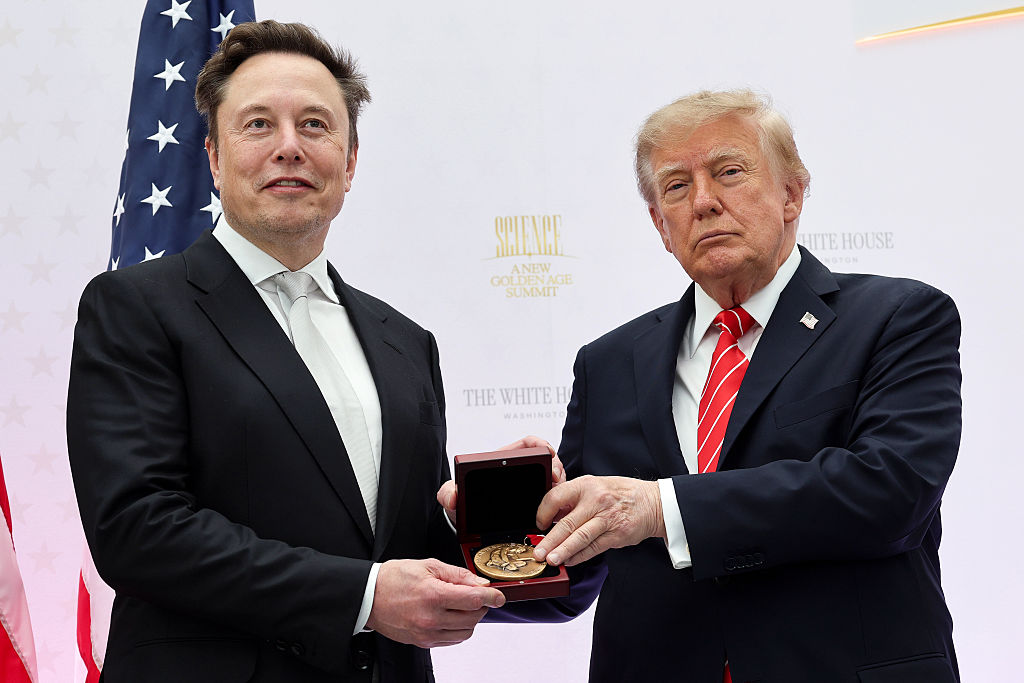
Tesla and SpaceX CEO Elon Musk receives the National Medal of Science from President Donald Trump at the Institute of Peace on October 08, 2026 in Washington, DC. —Win McNamee-Getty Images

For the past week, President Donald Trump and his aides have traded accusations with Elon Musk, the CEO of SpaceX, over who restricted Ukraine’s access to a military-grade version of Starlink, SpaceX’s satellite network product that Ukrainian forces depend on to intercept incoming Russian projectiles and target Russian launchers.

Musk blamed Trump and the U.S. military for the decision, writing on X, “Any limits on speed or usage are decided by the US military and ultimately POTUS.” Trump insisted that his administration did not disrupt Ukraine’s access to the network. Secretary of State Marco Rubio argued that decisions about Ukraine’s access to the network were in the hands of SpaceX and Musk and not the White House. The Wall Street Journal and CBS News reported that the decision had been Musk’s.

On Mar. 9, 2025, Musk had promised that, whatever his disagreements with U.S. policy toward Ukraine, “Starlink will never turn off its terminals. We would never do such a thing or use it as a bargaining chip.” Critics have raced to blame Musk alone, casting him as the puppeteer behind the throne, the first business titan to achieve what William Randolph Hearst, Marcus Alonzo Hanna, and J.P. Morgan only aspired to: a latter-day Cornelius Vanderbilt, who is reputed to have scoffed, “Law? What do I care about the law? Hain’t I got the power?”

That gets the story backward. Musk’s businesses are uniquely dependent on the blessings of Washington: a fifth of SpaceX’s revenue comes directly from federal agencies, its satellites require federal authorization to launch and operate, and the possible merger of Tesla and SpaceX will live or die by the decisions of federal regulators.

Confronted with a White House that appeared determined to squeeze Ukraine, whatever its public denials, Musk faced a familiar choice for anyone dependent on political patronage: capitulate, resist, or retreat into ambiguity. He chose ambiguity, revealing the limits of his power. The wealthiest man in the world still answers to someone else.

The finger-pointing creates a haze of ambiguity, giving both men plausible deniability. The apparent aim is to force Ukraine into a settlement by depriving it of the means to resist: a way to secure a quick, short-term peace and lower oil prices at the expense of Ukrainian sovereignty and international law.

But that calculation mistakes capitulation for stability. Rewarding President Vladimir Putin of Russia could encourage him to test NATO’s resolve in the Baltic states, Poland, Finland, or Sweden, raising the risk of a direct confrontation with the alliance. It would also signal to other U.S. adversaries that sufficient pressure can fold Washington’s commitments.

For now, Trump could claim to have brokered peace between Russia and Ukraine, even if the peace he delivers is the silence of a defeated country. Musk can evade responsibility by presenting himself as merely one supplier among many across the defense industry whose failures have weakened Ukraine’s defenses. He could point to weapons manufacturer RTX, whose Patriot interceptors are so scarce that Ukraine reportedly ran out of them this month, or to delays in delivering F-16s manufactured by Lockheed Martin that were promised two years earlier.

Faustian bargains

Beneath the public quarrel lies a familiar pattern: surrender political independence and retain the freedom to accumulate extraordinary wealth. The historians who have studied Putin’s Russia most closely would recognize the pattern instantly. Timothy Snyder has written that Russia’s oligarchs “were tamed, but not by a neutral state.” Rather, “Putin himself became the head oligarch, the boss of bosses.” Anne Applebaum echoed the insight and described Putin as making himself “godfather to all of the other oligarchs.”

Putin laid out the terms of that bargain on Jul. 28, 2000, when he met with 21 of Russia's richest men in the Kremlin, less than three months after his inauguration. The message was simple. The fortunes they had amassed in the chaos of the 1990s were theirs to keep, as long as they stayed out of politics entirely. Keep your distance from power, and the state would leave you alone.

Those who refused the deal faced immediate reprisals. Boris Berezovsky and Vladimir Gusinsky, whose television networks refused to bend the knee, were driven into exile within the year. Gusinsky’s NTV was seized by state-controlled Gazprom. Mikhail Khodorkovsky, then Russia’s richest man, funded opposition parties and lectured the Kremlin on corruption. In Oct. 2003 he was pulled off his plane at a Siberian airport and arrested. He spent a decade in prison and watched his oil company, Yukos, dismantled and its assets transferred to state-controlled companies.

Those who accepted the deal are the ones who got rich, and they have never been richer. Forbes counted a record 155 Russian billionaires this year, the fourth straight year that number has grown, with a combined fortune of $696.5 billion—up 11% from the previous year, even as Putin’s war against Ukraine entered its fifth year. Their collective wealth reportedly now exceeds the bank term deposits of the rest of Russia’s population: 155 oligarchs with fortunes greater than the savings of roughly 146 million ordinary Russians.

“Oligarchies are unstable,” Snyder has observed. “Members disappear.” For those who might have forgotten the terms of Putin’s bargain, an instructive reminder came in 2023, when Yevgeny Prigozhin, the head of the Wagner Group, did the one thing the bargain forbade: he challenged the Kremlin’s authority. Prigozhin seized a military headquarters in Rostov-on-Don and sent his forces toward Moscow. His column advanced to within 125 miles of the capital before he agreed to stand down under a deal brokered by Aleksandr Lukashenko, the Belarusian dictator.

Putin publicly called the mutiny treason, then appeared to forgive him. Two months later, on Aug. 23, 2023, Prigozhin’s private jet crashed north of Moscow, killing everyone aboard. The Kremlin denied involvement, the U.S. intelligence concluded that the plane had been blown up, and The Wall Street Journal later reported that the operation had been ordered by Putin’s Security Council chief. Putin’s eulogy, delivered the next day, described Prigozhin as a man who had “made serious mistakes in life.” No oligarch in Russia needed the rest of the sentence spelled out.

Prigozhin’s fate is only the most spectacular entry on a longer, murkier list. Since the invasion of Ukraine began in 2022, at least 85 Russian businessmen and officials have reportedly died in unexplained or violent circumstances, many of them figures in the energy industry. Among the dead are three Lukoil executives: board member Alexander Subbotin, who died in May 2022 after a visit to a “shaman” outside Moscow; chairman Ravil Maganov, who fell from a sixth-floor window that September; and vice president Vitaly Robertus, who was found dead in his office in March 2024.

In April 2022, two former energy and banking executives were found dead alongside their families. Vladislav Avayev, a former Gazprombank vice president, was found shot dead in his Moscow apartment with his wife and 13-year-old daughter. Sergei Protosenya, a former Novatek executive, was found hanged at a rented villa in Lloret de Mar, Spain, with his wife and daughter stabbed to death inside. Catalan police concluded that Protosenya had killed his family, then himself. His son rejected that finding, insisting that his father had been in good spirits and had no reasons to kill them and himself.

Transneft vice president Andrei Badalov fell from a 17th-floor window in July 2025. The Moscow Times has counted 18 such fatal falls from windows since 2002. Three days later, Russia’s transport minister, Roman Starovoit, was found shot dead in his car hours after Putin fired him. Another transport official died of supposedly acute heart failure the same day. 

A shadow over America

Putin’s Russia offers an extreme and grotesque example of the bargain. Yet some critics see an emerging American version, in a far less violent form. Snyder and Applebaum have warned that Western billionaires risk repeating the mistakes of Russia’s oligarchs under Boris Yeltsin, believing they can manage a strongman for profit, only to discover that he is managing them.

Musk spent more than $277 million to help elect Donald Trump, took a desk in the West Wing, and ran the Department of Government Efficiency like a man who believed he was co-president. When that arrangement flamed out in May 2025, he tried to exercise independent political power by turning against Trump, calling his signature legislation, the Big Beautiful Bill, a “disgusting abomination.” Musk threatened to form a third political party and then briefly launched one. He even taunted Trump about Jeffrey Epstein, posting that the president “is in the Epstein files.”

After Trump publicly mused about terminating his contracts, Musk quickly retreated. He deleted the posts, and conceded that they “went too far.” He returned to the fold, shook Trump’s hand at Charlie Kirk’s memorial, accepted the National Medal of Science from him this month, and became the biggest known donor of the 2026 midterms, giving at least $366 million to Republican groups. He has grown vastly richer in the process: SpaceX’s June IPO made him the world’s first trillionaire, while the company remains the U.S. government’s dominant launch provider, with competitors such as Blue Origin winning only a fraction of the contracts.

Musk’s retreat illustrates the bargain: surrender the freedom to oppose the president and preserve the ability to enrich yourself. By that measure, Musk’s political defeat has come with an extraordinary financial windfall. He won by losing. The throttling of Starlink in Ukraine appears to fit this pattern. Last week, after Trump demanded that Ukraine stop striking Russian refineries and Kyiv did not comply, its access to a military-grade version of Starlink was restricted and responsibility disappeared into a haze of accusation and denial.

The costs of such Faustian bargains fall on everyone excluded from them. In Russia, soldiers die at the front by the hundreds of thousands while politically compliant billionaires accumulate obscene fortunes. In Ukraine, drone operators lost contact with their interceptors in mid-flight last week while Russian missiles were in the air; the consequences of a disrupted connection are immediate and potentially fatal. Other customers face the question: can a contract with Starlink be relied upon?

In America, democratic government rests on the principle that neither political office nor private places anyone above the law. Businesses must be free to challenge a president without fearing retaliation, and their owners must remain accountable for their conduct. Those protections help distinguish America from an authoritarian dictatorship like Putin’s Russia.

The Starlink saga does not suggest that America has become Russia. But it raises a troubling question: is political obedience becoming the price of commercial success in America?  Putin’s oligarchs struck that bargain in 2000 and have been collecting on it ever since. Whether Americans accept a version of it will depend on how forcefully our institutions and business leaders defend our freedom to say no.

  •  

The Cornell 7 and the Problem with Writing as Punishment

—feri ferdinan—Getty Images

Justice is elusive, and there are few clearer examples of this than when people who commit acts of sexual violence are given rote tasks as a means of atonement. 

Recently, the “Cornell 7” case has inspired new conversations about what accountability and atonement involve. When college administrators investigated a report of sexual violence, some of the alleged perpetrators were reportedly assigned to write “reflection papers,” along with other punishments. The writing assignments drew such ire that Cornell issued a statement stating that "none of the individuals charged were offered the opportunity to write essays as a sole consequence of their involvement."

I am a survivor of childhood sexual abuse, which started when I was 11 years old. Abuse from my step-father went hand-in-hand with punishment. He knew how much I loved words, reading, and writing, and began to use them to discipline me. 

Our household was governed by an elaborate set of rules. We were not allowed to speak during dinner without permission. We were required to stand while playing board games. Our bedrooms were inspected every evening, and our beds had to be made with hospital corners.

Any infraction could result in punishment. One of the preferred methods was to require me to write an essay outlining what I had done wrong and how to correct my misdeeds. If I didn't wash the dishes carefully enough, I would have to write an essay about why I needed to take better care when cleaning up after dinner.

Other times, I was ordered to write the same sentence hundreds of times.

If I complained about dinner, I had to write 100 times, “I will appreciate my mother’s cooking.”

If I made fun of one of my siblings, I had to write 250 times, “I will not make fun of my brother.”

And if I resisted attempts to assault me, the punishment could be a thousand repetitions of “I will listen.”

I was being punished for trying to protect myself from the person who was abusing me. In doing so, I learned that writing the correct words was not the same as believing them. I could produce an essay explaining what I might have done wrong and promise to be better, but it didn’t mean that I believed that I misbehaved. It meant that I understood what was required of me. The punishment was complete when the writing was complete, but whether I had learned anything was beside the point.

More than 50 years later, I find myself wondering what we believe an essay can accomplish when it is assigned in response to allegations of sexual violence. Cornell’s disciplinary proceedings have resulted in different sanctions for different students, including expulsions and suspensions. “Reflection papers” were among the educational requirements imposed on some students.

But what, exactly, can an assigned essay demonstrate?

An essay can be thoughtful and persuasive; it can express regret, recognize harm, and promise change. But how do we know whether the person who wrote it believes any of what is written? What happens when completing an assignment becomes a substitute for demonstrating genuine understanding or changed behavior?

I have spent my adult life writing, teaching, and interviewing people about their lives. I believe in the ability of language to help us understand ourselves and one another, and I know how easily language can be used to conceal the truth.

My abuser understood the power of words, and used them to dictate the terms of my obedience. He controlled what I was allowed to say. He warned me that no one would believe me and threatened violence against those I love if I spoke out. I believed him, and I remained silent and ashamed.

I was required to write about my smallest infractions while being forbidden, through fear, to speak about the most terrible thing happening in my life. And the person who demanded that I explain my wrongdoing was the person committing the most serious wrongdoing of all. 

This is why the relationship between language and power matters so much to me. The person with authority often gets to decide what constitutes an acceptable explanation, a credible account, or a sufficient expression of remorse.

Jane Doe, the young woman at the center of the Cornell case, reported the incident to university police in 2024. Since then, the timing and content of her disclosures have become subjects of intense public scrutiny. Public debate has focused in part on differences between her initial statements and her subsequent allegations.

I cannot speak for her, and our experiences are different. But I understand how fear can determine what someone is willing to reveal, even when she desperately needs help.

There is something troubling about how much we expect words to prove in cases of sexual violence. We scrutinize the accounts of those who report abuse, searching for inconsistencies. Now we are asking those found responsible for misconduct to demonstrate understanding through written reflection.

I believe writing can lead to meaningful change. But an essay is evidence that someone has completed an assignment. It cannot establish whether that person understands the harm they have caused or whether their behavior will change.

Why are we putting so much faith in the words people are required to write, while questioning the words that others struggle to say?

  •  

U.S. Midterms Loom Over a Deadlock Between Trump and Tehran

The Thai-flagged bulk carrier Mayuree Naree, which was struck by a missile near the Strait of Hormuz in February, is seen stranded off the coast of Qeshm Island, Iran, on Sept. 11, 2026 —Fatemeh Bahrami-Anadolu-Getty Images

Iran may have found a weapon in the American electoral calendar. With the midterm elections two weeks away, Tehran is intensifying attacks on shipping in and around the Strait of Hormuz, calculating that higher energy prices will deepen President Donald Trump’s political troubles and make another U.S. military campaign too costly to contemplate.

The wager is seductive: an American president anxious about diesel prices and his party’s prospects in the midterms, Iran seems to believe, will have little appetite for another major war.

Trump’s declaration that he will refrain from striking Iran before the Nov. 3 vote appears to vindicate this view, even as he periodically threatens to use force again. Having survived two rounds of war and absorbed punishing economic losses, Iran’s leaders believe they can endure a little longer. By disrupting Gulf commerce, they gain leverage their conventional forces cannot provide. They also hope to make that leverage permanent and compel Washington to accept Tehran’s authority over passage through the world’s most important energy chokepoint.

Yet the past nine months of war against Iran have made it clear that renewed military conflict before the midterms or after the elections is unlikely to resolve the disputes between the U.S. and Iran. The two countries will eventually have to sit across the negotiating table to resolve their long-running disputes. 

Miscalculations in Tehran and Washington

Tehran may be misreading how political peril shapes an adversary’s decisions. Trump could decide that appearing powerless as Iranian attacks push up prices is more damaging than another round of military strikes. Reports that his administration has considered fresh strikes suggest the military option remains in play. A serious attack on American forces could turn Trump’s promise of restraint into a political liability overnight.

The political situation in Israel adds a combustible variable. Prime Minister Benjamin Netanyahu faces an Oct. 27 election with his bloc struggling to secure a majority. He has staked his political reputation on the claim that only he can neutralize the Iranian threat.

With Tehran rebuilding its missile and drone capabilities and uncertainty surrounding its nuclear program, Netanyahu may see renewed strikes as both a strategic opportunity and a means of restoring his standing at home. Such a gamble could deepen Israel’s insecurity, but electoral desperation seldom improves anyone’s judgment.

The convergence of these calculations makes the coming weeks particularly perilous. Iran thinks Trump’s electoral weakness will constrain him. Trump and Netanyahu might each conclude that a show of force could rescue their political fortunes. Each side imagines it can calibrate the violence and manage the aftermath. The experience of this year’s conflict, in which successive rounds of fighting outran diplomatic efforts to contain them, offers little reason for that confidence.

Even if October passes without another conflagration, November brings its own hazards. After the midterm elections, the political constraints Trump has publicly imposed on himself will disappear. With substantial American forces already positioned in the region, Washington may be tempted to break the deadlock through another round of attacks. Tehran, fearing another surprise attack, might choose to strike Israel or U.S. military assets in the region first. What might seem like prudent preparation in Washington or Tehran could help bring about the war it is meant to deter.

The underlying impasse is as stubborn as ever. Washington wants a nuclear agreement and believes its blockade will ultimately compel Iran to negotiate. Tehran insists on upfront economic relief and an end to the war before substantive talks on the nuclear issue can begin.

America can point to tankers still transiting Hormuz, but shipping that depends on costly military protection and remains under threat is a poor substitute for normal trade. Iran can inflict considerable damage on the oil exports of its Gulf neighbors, but it has so far failed to turn that leverage into meaningful American concessions.

Dangers of a wider war

Another surge in hostilities would widen this gulf rather than bridge it. American and Israeli aircraft can destroy missile launchers, production facilities, and infrastructure, but Iran has repeatedly demonstrated that it can retaliate and survive. Iran’s response could extend further to target Gulf energy infrastructure, maritime commerce, data centers, and other critical networks.

The Houthi confrontation with Saudi Arabia already offers a grim illustration of how quickly the costs can spread. The war in Yemen has been reignited with devastating consequences, including deadly attacks on civilian airports and a spiraling cycle of retaliation. The fighting now threatens to draw in Turkey and Pakistan to support Saudi Arabia, as the three countries recently signed a mutual security pact known as the Mecca Joint Defense Agreement.

A new campaign could leave Iran poorer, Israel more exposed, and the U.S. burdened with an even more expensive regional commitment, while markets around the world absorb another shock.

The outlines of a diplomatic bargain have been visible for months: reciprocal steps to reopen Hormuz, calibrated sanctions relief, and a resumption of nuclear negotiations. The difficulty lies in sequencing and trust. Tehran fears that surrendering its maritime leverage first would invite fresh demands; Washington worries that easing pressure would reward coercion without securing lasting constraints on Iran’s nuclear program. Addressing those fears will require reciprocal steps and credible verification. More bombing won’t help.

Leaders contemplating an October surprise or an offensive after the midterms must remember that uncomfortable truth. Military force may alter the balance of pain without resolving the disputes each side will eventually have to confront across the negotiating table.

After another round of death and destruction, they could find themselves negotiating over the same issues, with less trust, greater bitterness, and far fewer resources to rebuild what they have broken. Their choices will be no easier then; the cost of reaching an agreement will be far greater.

  •  

How America's AI Trust Issues Could Impact the Midterms

—Douglas Rissing—Getty Images

From social media to sports betting, Americans have become remarkably willing to adopt new technologies without necessarily believing they're good for us or our health, our society, or our planet. Artificial intelligence may be the clearest example yet.

Just 39% of Americans say AI has a positive impact on society, compared with 44% who believe its impact is negative, according to a national survey conducted this month by my company, Outward Intelligence. Only 15% say they're excited about AI's growth.

But here’s the disconnect: While 58% of Americans don't trust the leaders of AI companies to make decisions in society's best interests, 41% say they use AI chatbots every day. Among Americans who believe AI harms society, roughly half use AI chatbots at least weekly.

In some ways, this shouldn't surprise us. People can appreciate the convenience of social media while questioning its effects on children. They can participate in the boom in sports betting while worrying about its consequences, from addiction to financial hardship. They can shop online while worrying about the decline of local businesses. And they can rely on smartphones while believing those devices have undermined attention and human connection.

But AI tests the limits of the U.S. consumer’s appetite for holding two contradictory ideas in their minds at once. And the implications are political as much as economic: What happens when Americans embrace a technology but don't trust the institutions responsible for creating it as well as overseeing and pacing its development?

In our survey, about two-thirds of Americans said a candidate's position on AI could influence their vote in the upcoming Midterm elections, although most acknowledged that other issues matter more. Roughly one in six said it could actually determine their vote.

Neither party appears to have established much credibility with independent voters on the issue. Nearly two-thirds of independents say they don’t trust either party to handle AI responsibly, or that they trust both equally, or that they’re unsure.

Data centers are where the broader debate over AI becomes much more concrete, and where opposition becomes more unified. More than half of respondents say they would oppose construction of a large data center near where they live. Nearly four in ten would strongly oppose it.

Their concerns are practical. Electricity costs rank first, followed by water usage and environmental impact. America's ability to compete internationally, which has become a central argument for expanding AI infrastructure, ranks much lower.

To a tech company, building a data center may represent an investment in America's economic future. To someone living nearby, it may mean worrying about electricity bills, local resources, and whether the community has much say in the decision. The result is a growing chasm between how the people building AI think about its benefits and how ordinary Americans think about its costs.

The associated political costs are significant, too. When asked about candidates who strongly support building more data centers, 42% of voters say that position would make them less likely to vote for a candidate, vs. 27% who say it would make them more likely. Among independents, the gap is even wider: 49% to 19%.

So while AI may not be a top issue for all voters in November, their attitudes toward AI expose a tension in the politics of technological progress. Promising innovation and economic growth doesn't answer questions about electricity bills and corporate accountability, and expressing concern about the technology doesn't explain how to capture its potential benefits.

AI companies now ask for an enormous amount of public faith. They're developing systems that could reshape employment, education, and the economy, while making major infrastructure investments that will affect communities across the country. Americans, meanwhile, are weighing who benefits, who bears the costs—and who is accountable when things go wrong.

Americans have already shown they're willing to use AI. The harder challenge, for Silicon Valley and Washington alike, is earning, and deserving, their trust.

  •  

Why Satire Is No Laughing Matter

The first time I was introduced to satire, my jaw dropped—and not just because it was the first time I’d ever seen a naked woman.

I was 8 when my older brothers snuck me into a London cinema to see Monty Python’s Life of Brian. Although my underdeveloped brain may not have fully grasped the critique of religion or inter­necine fights among political leftists, I loved the feeling of being surrounded by 300 people screaming with laughter.

Over the next few years, I inhaled an array of comedy greats: Peter Sellers, Peter Cook, and Not the Nine O’Clock News, with its biting commentary on Thatcherite Britain. Then came a personal breakthrough. At the age of 20, I spent six months studying with an intimidating French clown.

The late Philippe Gaulier was one of the all-time great teachers of clown and modern theater. Gaulier kept a drum handy while we were onstage, banging it to cut short a performance he considered “sh-t,” which was often. His goal, and greatest gift to us, was helping his students discover what he called their “inner idiot.”


Gaulier introduced me to the satirical archetype of the bouffon. In his telling, the tradition dated back to 11th century France, where societal outcasts—gay people, heretics, those with deformities—would be let back into their villages once a year to put on shows viciously mocking the ruling class. It was the humor of the dispossessed. Whereas clowns were naive idiots, bouffons savagely undermined the people in power. They were doing something important: using biting and at times cruel humor to undermine systemic injustice.

—Photograph by Nadav Kander for TIME

It’s what satirists have done throughout history. And along the way, some people, instead of laughing, wince—or worse, take offense. The Greek playwright Aristophanes brilliantly lampooned the militarism and demagoguery of his day. Yet because he deployed phallic jokes so obscene they would make even Ali G blush, critics like Plutarch sneered at Aristophanes’ “coarseness ... in words, vulgarity, and ribaldry.” We celebrate the Roman satirist Juvenal, but his contemporaries barely acknowledged him. Nearly two millennia later, Lenny Bruce’s four-letter comedy was branded “sick” in the pages of this magazine in 1959. Note to editors (and to Plutarch): you missed the point.

Yes, satire can offend people other than the intended targets. Like that of my bouffon predecessors, mine definitely has. As someone who has opposed bigotry and injustice throughout my life and partnered with civil rights groups, I don’t recognize myself in the warped portrayals of me that I sometimes see on social media, lumped in with the bigots I lampoon.

I’ve always designed my characters and comedy as vehicles to expose prejudice, bias, and stupidity, though I realize not everyone sees them that way. Ali G is a white imbecile—a delusional cultural appropriator—who steals the fashion and lyrics from his favorite gangsta rap and dancehall idols, from Compton to Kingston. The joke is on him, and on the predominantly white male establishment who take him seriously enough to believe that HBO would hire the stupidest man in the world as an interview host. Like a good bouffon, he undermines that establishment—not the culture he loves and borrows from.

I admit that most of my humor is indeed juvenile. That’s because satire works best not when it preaches, but rather when it lives among the laughter. Then, once you walk out of the theater or switch off the TV, it makes you think.

What makes satirical comedy so effective is what it lays bare. I’ll never forget a fox-­hunting rally I attended the first time I created Borat—which involved me rummaging around in the trunk of my car for two minutes, finding a hat I’d bought in Astrakhan, Russia, and sticking it on my head. “Jagshemash,” I proclaimed, riffing off a Polish greeting.

I asked the English toffs, “In my country we hunt criminals—do you think we should do that here?” Shockingly, even though on camera, they said yes. A light bulb exploded in my 25-year-old brain. Real people believed this ridiculous character—and they would speak to him more freely than in any documentary.

Each of my characters has a specific mechanism to encourage people to drop their guards and show what they really believe, prejudices and all. Borat, an antisemitic journalist, exposes Jew hatred, xeno­phobia, sexism, and casual racism. Erran Morad, a stereotype of a tough-guy Israeli commando—“I’ve been in 14 terror attacks,” he says in my new movie Ali G: Who Iz I?, “and started two”—exposes Islamophobia and the ludicrous things people will do when they’re gripped by an irrational fear of “the other.”

Sacha Baron Cohen transforms into Ali G on the set of Ali G: Who Iz I? —Courtesy of Michael Legato
As the titular Ali G, left, in the new movie Ali G: Who Iz I? —Courtesy of Amazon MGM Studios

Ali G works on another level. He’s not extreme—he’s just extremely dumb. But his absurd questions lead powerful people to underestimate him and answer in earnest, revealing their own biases.

Other characters highlight the problems facing our society without engaging real people at all. The Dictator’s Admiral General Aladeen—the cartoonish ruler of a fictional Horn of Africa nation and a mash-up of personality-­cult authoritarians from Kim Jong Il to Idi Amin—warned, in 2012, how easily democracies could fall into autocracies.

Regardless of the madness, the method is the same: make the audience laugh as hard and as much as possible, while holding up a mirror to reflect back things that aren’t always comfortable to see or warn of trends we’d rather look away from.


Done well, brutally honest satire can be cuttingly effective. At a time when Hollywood largely avoided anti-Nazi content, Charlie Chaplin—then one of the most famous movie stars in the world—used The Great Dictator to point to the destruction that Nazism would bring. Peter Sellers’ sinister Dr. Strangelove showed the insanity of mutually assured destruction. Abbie Hoffman, who became a hero of mine while I researched my undergraduate thesis on civil rights—and whom I later played in The Trial of the Chicago 7—deployed outrageous stunts to oppose the Vietnam War.

In fact, satire doesn’t just needle politicians or regimes—it occasionally helps bring them down. In Hammer & Tickle, the historian Ben Lewis credits Soviet joke-­telling with helping to topple communism, by making it impossible for even the system’s own enforcers to take it seriously. Volodymyr Zelensky was a Ukrainian comedian who once pretended to play piano with his penis—a stunt Aristophanes would have loved. Yet Zelensky’s TV show parodied the country’s corrupt oligarchy so effectively that, just four years after Servant of the People premiered, he was elected President himself. “Every joke,” George Orwell observed, “is a tiny revolution.”

Of course, comedy has its limits—more satirists in Weimar Germany could not have prevented Nazism. Still, satire—along with a free press, independent institutions, and a robust civil society—does play a role in promoting free societies.

That’s exactly what so many governments seem afraid of. In Nazi Germany, mocking Hitler could be a capital offense. Stalin sent an estimated 200,000 citizens to the gulags for making political gags. In our own time, Chinese censors have scrubbed social media of a meme comparing President Xi Jinping to Winnie the Pooh; one student who shared that and other unflattering posts got six months in prison for “picking quarrels and provoking trouble.” Last year in Tehran, the comedian Zeinab Mousavi was sentenced to six months simply for parodying an Iranian epic poem.

Even in democracies, satirists, instead of getting a laugh, sometimes face sanctions. In the U.S., Lenny Bruce and George Carlin were arrested for uttering obscenities. Because of its irreverent treatment of Christianity, Monty Python’s Life of Brian—the very film that introduced me to satire—was banned in half a dozen countries, and even parts of the U.K.

Abbie Hoffman holding a Ronald Reagan mask by the nose, after his keynote speech at the CMJ Music Marathon, Aug. 29, 1988. Hoffman's shirt is in reference to Nancy Reagan's campaign of saying, JUST SAY NO! to drugs, but Hoffman had modified it to saying JUST SAY NO! to drug testing. —Richard Corkery—NY Daily News Archive/Getty Images
Philippe Gaulier and Bridget Brandon (Director of Drama Action Center) at their center at Rozelle Hospital, Church St. Leichhardt. Aug. 21, 1988. —Philip Wayne Lock—Fairfax Media/Getty Images

Today, some believe the times have overtaken Orwell’s “tiny revolutions.” In an era when the U.S. President and his ilk seem impervious to shame and ridicule, is satire all but dead?

Absolutely not. In fact, I believe that satire is more important than ever. The Trump Administration’s own actions show why. If ridicule is now irrelevant, why did CBS cancel Stephen Colbert’s show just days after he mocked his parent company for paying Trump $16 million to settle a lawsuit? Why did Trump’s chairman of the Federal Communications Commission appear to threaten ABC’s broadcast license—leading ABC to briefly suspend Jimmy Kimmel Live!—after Kimmel’s comments about the killing of conservative activist Charlie Kirk?

Even Trump doth protest too much. Asked in 2020 about Borat outing his attorney Rudy Giuliani as a creep, Trump dredged up the time I tried to scam him as Ali G two decades earlier: “That’s a phony guy and I don’t find him funny.”


So why does my new movie bring back that phony and unfunny guy, which some have criticized as “microwaving a relic from a generation ago?”

The fact that Ali G is outdated and problematic is the very reason I resurrected him. The world he’s returned to is, in many ways, worse than the one he left 20 years ago. All the prejudices my characters are designed to expose haven’t just lingered—they’ve metastasized. They’re fueled by the greatest propaganda machine in history—social media—and now by its monstrous child, AI.

Back when I first created Borat, it took a few minutes—or a few drinks—to get people to reveal the racism that often simmered below the surface. Now, those views have gone mainstream—whether it’s fans hurling slurs and abuse at Black players during the World Cup or hundreds of white nationalists marching through Washington, D.C., on July 4.

In 2004, also as Borat, I got a bar full of people to sing “Throw the Jew Down the Well.” Today Jews make up just 2% of the U.S. population, yet are the targets of nearly 70% of religion-­based hate crimes in America. Whatever your politics, the trend is undeniable.

In 2018, disguised as Dr. Nira Cain-N’Degeocello, an ultra-woke developer planning to build a mosque in a small town, I showed people’s hostility to Muslims. One even declared, “I’m racist—towards Muslims.” Now, right-wing U.S. Congressmen readily admit as much.

On my 2018 show Who Is America?, I convinced three men to host a fake quinceañera to trap undocumented immigrants. Now, stoked by far-right agitators and viral social media posts, anti-­immigrant protests and riots have erupted across England and in Belfast. Meanwhile, ICE agents are running amok—terrorizing cities and, yes, detaining people at a quinceañera.

As Borat, in 2006’s Borat: Cultural Learnings of America for Make Benefit Glorious Nation of Kazakhstan. —AJ Pics—Alamy

Then there’s the explosion of misogyny. Six years ago, in Borat Subsequent Moviefilm, a plastic surgeon cheerfully discussed giving my fictional 15-year-old daughter Tutar breast implants to appeal to important men. In today’s “manosphere,” that’s nothing compared with how Andrew Tate advises his millions of followers to treat women. Nor was overturning Roe v. Wade and a women’s right to control her own body apparently enough. Christian nationalists are now calling for “household voting”—effectively taking the right to vote from many women and giving it to their husbands.

Twenty years ago, Ali G would sit next to world experts spouting absurdities. Today—fed a steady diet of disinformation and conspiracy theories by social media influencers and TikTok news—we have created an entire world where ignorance reigns and truth is inverted.

Thanks to this toxic brew of lies, conspiracies, and hate, right-wing authoritarianism is on the march. Intolerance and extremism have surged on the left as well. Political violence has increased, as has our tolerance for it. In one survey, one-fifth of Americans agreed that “true American patriots may have to resort to violence in order to save our country.”

We are once again entering an age of “virtuous” violence, where any atrocity—by racists, Jew ­haters, or Islamophobes, the right or the left—can be somehow justified. It is not a place any of us should want to live.


Where, then, do we go from here?

In a world where social media and AI hypercharge lies, who decides what’s considered truth? In a culture seemingly obsessed with dividing people by identity, how do we find commonality in our shared human experience?

I made this latest film for the same reason I’ve always done this work. Not only to make people laugh, but also to bring them face-to-face with the danger of fanaticism and conspiracy theories.

I’m not naive. One film won’t stamp out age-old prejudices or stop the extremism that’s fueling the slide from democracy to autocracy and mass violence. But, as satire has done since ancient times, it can help sound the alarm. It can remind people about the very real dangers of ludicrous lies—whether spread by a thin-­skinned authoritarian or an extremist with an online following. With the U.S. midterm elections just weeks away, perhaps it encourages citizens to mobilize against these dangerous falsehoods—at the ballot box and beyond. Maybe it can even help shame more of our governments into finally making our Silicon Valley overlords—unelected billionaires who decide what billions of people see and believe—liable for the lies, conspiracies, and hate on their platforms that have already gotten people killed and will likely kill many more.

Satirists can expose hypocrisy. Bouffons can shed their clothes and show that the emperor has none. But after the credits roll, it’s up to all of us to decide what comes next. If our pluralistic democracies are going to survive, we need to create societies where we stop the hate and tolerate those different from us—no matter who they are, where they come from, whom they love, or how they pray. Because the only way out of this mess is to treat everyone with what Ali G has always preached: Respect.

  •  

Europe Braces for a Russian Winter

People walk in front of a damaged shopping mall following an air attack in Kyiv on October 19, 2026, amid the Russian invasion of Ukraine. —Oleksii Filippov-AFP-Getty Images

In the fifth year of their war on Ukraine, Russian forces are making little headway on the battlefield. And Ukraine has used drones to bring the war to cities across Russia, including Moscow. That is bad news for President Vladimir Putin of Russia, whose personal standing is tied directly to this war.

Putin is now determined to escalate, not just against Ukraine but also against the Europeans who have done so much to keep Kyiv in the fight.

He sees opportunities ahead. The Ukrainians are running low on Patriot interceptors and other air defenses, giving Russian missiles and drones a better shot at more effectively striking targets across Ukraine, including the infrastructure needed to keep the lights and heat on as winter approaches.

Putin also knows that 10 European Union member states will hold elections in 2027. He hopes that by waging hybrid warfare—disruptive sabotage attacks on E.U. and NATO members—he can turn European voters and some of their leaders against continued support for Kyiv.

European officials are bracing for three forms of Russian aggression. They have already seen a substantial number of Russian drones stray into NATO airspace, a byproduct of their growing use in the war and of the technologies both Russian and Ukrainian forces use to jam navigation systems.

The Europeans also see deliberate drone incursions, sabotage strikes such as the foiled Aug. 4 attack on a Ukrainian cargo plane at Leipzig airport, and even assassination plots. These operations serve several purposes: to test NATO responses, disrupt the supply of weapons and equipment to Ukraine forces, and raise the perception of rising costs for Europe’s continued support for Kyiv.  

Finally, there is a low-risk possibility that Moscow might try to destabilize NATO countries such as Estonia and Latvia by mobilizing ethnic Russians within their borders and deploying the “little green men” (Russian troops without uniforms and identifying insignia) used to seize Crimea in 2014. Such an operation would test NATO’s will to defend its borders.

NATO officials are well aware they must prepare for Russian provocations that fall short of forcing alliance members to invoke Article 5, the alliance’s collective defense provision. European officials are developing a new National Security Strategy with an “emergency protocol” under which the European Commission can bring together heads of state to respond quickly to Russian aggression.

Retaliatory steps could include significant new sanctions and the deployment of European troops, weapons, and military hardware much closer to Russia’s borders. Europeans also control more than $225 billion in frozen Russian assets that could be seized.

The hope is that clearer, better coordinated European plans for response will make Putin more careful about actions that could precipitate a crisis by inflicting major economic damage or killing European civilians, even inadvertently. The message is blunt: Europe is united, prepared to respond and committed to Ukraine. Further escalation won’t change the European position.

European leaders aren’t just managing Putin’s expectations. They are also demonstrating to President Donald Trump that they are working to handle threats from Russia without relying on NATO—and therefore American leadership and taxpayer dollars. That said, they are presenting this National Security Strategy as a complement, not an alternative, to NATO. They know a credible response from the alliance remains essential to deterring Putin’s most aggressive plans.

European officials must act fast. They hope not only to help Kyiv weather Russian attacks in the coming winter, but also to better protect their own physical and cyber infrastructure. They also need to improve intelligence gathering and sharing, which is critical to responding swiftly and forcefully to new Russian moves. And they know they must have those preparations in place by the end of this year.

  •  

Who Will Benefit From the AI Revolution?

—Sergey Balakhnichev—Getty Images

The debate about how to control AI and limit its potential for damage is healthy and necessary. It is also unavoidable and urgent. 

But this is not the only vital debate. There are also vital questions about how the upsides of AI are shared fairly. Business as usual has left the world's poorest people behind, so far. And for those caught up in conflict—in places like Sudan, Ukraine, Gaza, and Afghanistan—AI can help meet urgent needs. 

It is clear to me that the world has more resources to do good than at any time in human history, but too often, we don't distribute them where they are most needed. Now, AI stands to create even more resources in the form of free time, insights, and funds. And they need to be spent in the right places.

The AI revolution is going to mint a new generation of billionaires and millionaires—and with them, a new generation of philanthropists; a term stemming from the Ancient Greek philanthropia, meaning “love of humanity”. It’s a reminder that the act of giving begins with some of the most fundamentally human impulses: care, love, empathy, and selflessness.

Maybe this explains why Effective Altruism—the idea that generosity should be subjected to evidence and calculation—seemed counterintuitive. But I never understood why. After all, who wants ineffective altruism? We should all be asking where our money can do the most good. 

Organizations working at the sharpest end of the world’s toughest problems—like the one I lead—need philanthropy to be the smart money: hard-headed as well as big-hearted, focused on outcomes not visibility, concerned to add value not just kudos. Results, not just responsibility, should be the watchword.

Fortunately, there’s been an evidence revolution over the last 20 years. We know a whole lot more about what actually works. This makes giving much easier. Distance no longer needs to be the enemy of confidence. 

In fact, there is every reason to think globally, not just locally, about where to make a difference. As the world has become more and more connected, governments have retreated from global problems. For instance, official development assistance funds from Organisation for  Economic Cooperation and Development (OECD) countries dropped by a historic 23.1% in 2025. Now, we need new philanthropy to provide some balance in a world that is clearly out of balance.

Around 94% of American philanthropy is spent in the U.S. But the rest of the world is not just where the needs are greatest—from acute childhood malnutrition to violence against women—but where the gains from philanthropy can be greatest.

The 20 countries at greatest risk of a worsening humanitarian crisis, ranked by the International Rescue Committee (IRC) annually in our Emergency Watchlist, represent just 12% of the global population, but 90% of those in humanitarian need. In these places, led by regions like Sudan, Gaza, and South Sudan, children are three times more likely to die before their fifth birthday and 10 times more likely to grow up in extreme poverty than children born elsewhere. The people living here have done the least to contribute to climate change, but face the combined pressures of climate change and conflict—and receive the least support to adapt.  

If philanthropy and its “love of humanity” belong anywhere, it is these areas. And just in time, humanitarians have developed increasingly sophisticated tools to transform what we know about how to help people survive through and recover from crisis.  Real-time data, randomized controlled trials, cost-effectiveness and cost-efficiency analysis, plus predictive analytics, have transformed the evidence base and the basis for action.  

The IRC alone has conducted over 50 impact evaluations since 2020 as well as 500 cost analyses, allowing us to measure not simply whether an intervention works, but how much it costs and how much further each additional dollar can go. So we don't need to be daunted by the big numbers highlighting the 43 million children who are acutely malnourished, the 20 million kids without full immunization, over 300 million people hungry, and hundreds of thousands of women dying in childbirth in fragile states alone. These are problems that we actually know how to solve at manageable, in fact low, cost.

For example, we have learned how to deliver vaccine shots—40 million of them—at just $2 a shot in places like Somalia, South Sudan, and Yemen, negotiating with armed groups along the way to get access to populations otherwise cut off from healthcare.  This offers lifelong benefit, not just a short-term palliative.

We’ve shown how local health workers can more simply diagnose and treat acute malnutrition directly in communities where crisis-affected children live. This approach offers a 92% recovery rate, and earlier interventions can catch malnutrition before it becomes severe. The result is that we are 20% more cost-effective, allowing us to help more kids for the same amount of money.  

There are more examples. We've demonstrated that violence against women and violence against kids can be reduced by over 70% when they are tackled together. We have also proven the benefits of giving aid in advance of climate disasters, not just in reaction to them: in Afghanistan, our clients were three times less likely to fall further into poverty. 

Of course, the contexts stricken by war and state failure are challenging. But that makes the philanthropic imperative towards the people who live there all the more urgent.

The same technology that is delivering fortunes in Silicon Valley can also deliver help to the least fortunate. IRC’s global digital helpdesk, Signpost, has reached 20 million people forced to flee crisis in 12 languages with timely, life-saving information. Leading tech companies helped us develop it.  In Somalia, IRC teams employed anticipatory action ahead of last year’s devastating drought, a disaster that typically drives cholera outbreaks. Again, it took partnership of financial support, technical know-how, and NGO savvy.

In all these areas, the traditional aid system is falling short.  Too often, climate and humanitarian systems work in separate silos. Despite the evidence, less than 1% of aid is invested in anticipatory action. Every government donor has its own bureaucracy, with different reporting systems, compliance requirements, and measurement metrics. 

This is the syndrome that philanthropy can help break. By focusing on what works, measuring what counts, and investing in innovation. The risk does not lie in action; it lies in inertia. 

We know more than ever about what works in humanitarian crises, and we have new tools capable of extending those gains. The opportunity for this generation of philanthropists is not simply to give more. It is to take what we have learned and apply it where the stakes are highest. The real test isn't how much they give. It’s where.

  •  

Why Aren’t We Teaching Every Student CPR?

A volunteer with the San Francisco Paramedic Association teaches CPR using a mannequin on June 1, 2011 in San Francisco, Calif. —Justin Sullivan—Getty Images

In 2024, two Michigan high school students were sitting in the bleachers during a student-teacher basketball game when their physical education teacher collapsed from cardiac arrest. They had both recently learned cardiopulmonary resuscitation (CPR) at a career-focused technical nursing center and rushed to help, beginning chest compressions and using an automated external defibrillator (AED) before emergency responders arrived. 

Thanks to their actions, their teacher survived, and is one of approximately 350,000 Americans who experience an out-of-hospital cardiac arrest each year. Roughly nine out of ten will not survive. 

We often describe the difference between life and death as a matter of speed: how quickly emergency services arrive and how fast a hospital can intervene. But in reality, cardiac arrest outcomes often depend on whether someone nearby begins CPR in the first few minutes, which rarely belong to emergency responders, but instead to whomever is standing closest: a classmate, teacher, stranger at a basketball game, or someone waiting for a train. Every minute without CPR sharply reduces the chances the patient will live long enough to reach a hospital.

Schools occupy a special role in public health. As a location most Americans pass through and one of the only places they may ever encounter CPR training, a high school classroom may be the best opportunity to prepare the next generation of lifesavers. 

Schools already rehearse fire drills and lockdown drills for dangers that are statistically rare. Cardiac arrest is the reverse: far more common, and far less rehearsed. CPR skills can save lives years down the road when a cardiac arrest occurs at home, in a gym, at an airport, or at a university. Harnessing that opportunity requires both the resources to teach CPR effectively and the policies to ensure every student has the chance to learn it.

In Europe, Belgium, Denmark, France, Italy, Norway, Portugal, and England implemented school CPR education through national requirements or curriculum standards. Denmark offers a clear example of the positive impact. From 2001 to 2010, as Denmark introduced nationwide resuscitation initiatives including mandatory school CPR education, bystander CPR rates more than doubled, while 30-day survival after out-of-hospital cardiac arrest more than tripled.

A central challenge is how to implement CPR training at scale. The international KIDS SAVE LIVES initiative offers a practical blueprint. Endorsed by the World Health Organization, it calls for recurring, age-appropriate basic life support education beginning in childhood. Research from the International Liaison Committee on Resuscitation shows children can learn the early links in the chain of survival from the young age of 4, perform effective chest compressions by age 12, and pass skills to family members and others.

Some may hesitate to perform CPR because of legal concerns over causing injury—like rib fractures—while administering CPR, but every state has Good Samaritan laws providing protections to people who render emergency aid in good faith. A 30-year review of U.S. litigation across all 50 states from 1989 to 2019 found no cases in which a layperson who provided CPR was held liable for causing harm. 

The U.S. has also made significant progress in bringing CPR education into schools. In 1984, Alabama became the first state to require CPR instruction for high school graduation. Over the four decades since, communities have taken different approaches to bring CPR into the classroom. In West Virginia and Alaska, educators’ unions formally backed legislation requiring CPR education, while efforts in Washington and Illinois advanced in memory of students lost to cardiac arrest.

Today, 43 states require some form of CPR education before high school graduation. California, Colorado, Hawaii, Massachusetts, Nebraska, New Hampshire, and Wyoming are the seven that remain. Several are already taking steps to expand CPR education. Massachusetts invested $425,000 to expand CPR education in public schools, while Colorado includes hands-on CPR and AED instruction in its statewide health education guidelines but stops short of requiring schools to provide it. California Gov. Gavin Newsom recently signed a resolution directing the Instructional Quality Commission to include high school CPR in the state’s next health curriculum framework. San Francisco is taking an even broader approach, with paramedics and firefighters working to train 100,000 community members in CPR.

There is evidence that laws can translate into lifesaving action. A study of nearly 300,000 out-of-hospital cardiac arrests across 20 states found that patients had 12% higher odds of receiving bystander CPR in states with high school CPR education laws than those without them.

Other lifesaving education efforts can also offer a roadmap. In Georgia, Wesley’s Law, championed by Laura and Larry Gay after their son’s death, required public schools to stock overdose-reversal medication such as naloxone. In 2025, the state launched an opioid-settlement-funded initiative to provide overdose-reversal kits to public schools statewide, along with training resources for staff. In Indiana, emergency-response professionals helped expand Stop the Bleed training in schools, and the state’s Secured School Safety Grant program now offers funding for school bleeding-control programs and kits.

Both examples demonstrate how local champions and an existing source of funding can help turn a lifesaving idea into reality. Broadening collaboration among organizations such as the American Medical Association, American Red Cross, Project ADAM, and American Heart Association can also help expand CPR education nationwide.

After Buffalo Bills safety Damar Hamlin suffered cardiac arrest on the field in 2023, he became a leading advocate for the bipartisan HEARTS Act, which Congress passed unanimously in 2024. President Biden signed it into law later that year, supporting schools in expanding access to AEDs, CPR and AED education, and cardiac emergency response planning.

Cardiac arrest does not wait for emergency responders. The students who stepped forward when their teacher collapsed playing basketball in Michigan illustrate what becomes possible when CPR skills are taught before they are needed. Someday, every high school student in the U.S. could graduate prepared to step up and become a lifesaver.

  •  

Family Matters: The Secret History Behind Why Vincent van Gogh Cut Off His Ear

After riding a series of escalators to the fifth floor of New York’s Museum of Modern Art, I stepped into a gallery where, on display, were a dozen paintings and lithographs by late-nineteenth and early twentieth-century artists, including Pablo Picasso, Paul Cézanne, and Georges Seurat.

But most visitors were gathered around one explosively colorful painting in swirling shades of light and dark blue, bottle green, and pale gold. 

Instantly recognizable. 

One of the most famous paintings in the world. 

The Starry Night by Vincent van Gogh.  

These were the early days of my research about a little-known woman who is key to shedding light on three inevitable questions when it comes to Vincent van Gogh. Why did he cut off his ear? Why did he commit suicide? And how, after dying in obscurity, did he eventually become regarded as one of the world’s greatest artists? 

Gauging Van Gogh

Watching and talking to people as they engaged with this particular masterpiece seemed an apropos way to gauge the interest of Van Gogh lovers.

I, for one, could remember, as a child, first seeing The Starry Night reprinted in one of my parents’ art history books. It was my modern art “aha” moment. No one was standing over my shoulder telling me to pay it special attention, but I was mesmerized. The painting became imprinted on my young imagination, and I never forgot it.

As I observed the gallery, I quickly learned my reaction is hardly unique. 

A man from Southern California named Paul Duelo was laughing. “I know this painting, and I don’t know anything about art,” he said with a chuckle, nodding at the crowd standing around The Starry Night.  “Look at everyone!”

A woman from Seattle stood gazing quietly with her arms folded. Sheri Larison first saw a picture of The Starry Night more than 30 years ago in her high school art class. A reproduction of the iconic painting hung in her office. This was her very first time seeing the original.

“It’s overwhelming,” Larison whispered, with tears in her eyes. “It evokes something. It’s magical.”

She was interested in the painting’s origin story. “His mental health was declining,” she said, and that was true, although perhaps also misleading.

Van Gogh painted The Starry Night in June of 1889 during a year he spent in a mental asylum in the south of France.  

It does not represent an actual place but a compilation of elements—a village, starry sky, moon, dark hills, and a cypress tree—all things that Vincent had seen at one time and brought together in this composition. The sight of stars, he said, always made him dream. 

Hanging just to the left of The Starry Night was a Paul Gauguin’s painting, The Moon and the Earth. The juxtaposition provoked a curious thought. Gauguin and Van Gogh lived and worked together in Vincent’s yellow house in Arles in the south of France for several weeks. What would the hot-tempered, competitive Gauguin have thought seeing so many people gathered around Vincent’s painting at this moment while his was comparatively ignored? And what would Vincent have made of all the attention given to The Starry Night?

It is generally believed that it was an argument with Gauguin, who was threatening to quit Arles (in effect abandoning Van Gogh), which spun the mentally unstable Vincent into such a state of despair and frustration that he mutilated himself by slicing off his left ear.  

"The Starry Night" by Vincent van Gogh at the the Museum of Modern Art in New York. —Victor Fraile—Corbis/Getty Images

The fine art of family matters

But, as I was learning, family matters also very likely played a part in the most notorious instance of self-harm in art history. 

It’s a tragic story of dependence and the limits of love. And it’s where Jo van Gogh-Bonger comes in. Biographical details about her—revealed in her diaries and letters—have only recently been made public by the Van Gogh Museum in Amsterdam. They paint a picture of a determined woman to whom the world of art owes a tremendous debt.

Jo was married to Vincent’s younger brother, Theo, who was an art dealer in Paris and Vincent’s only source of income. Theo supported Vincent with a monthly allowance, and in exchange Vincent gave Theo his paintings to try to market and sell. The financial arrangement, as it would in most families, put an emotional strain on both brothers. Theo was not rich, and Vincent constantly complained about being broke, with not even enough money for food, and often practically begged his brother for more money. 

Over the course of 10 years, Vincent created more than 800 paintings and 700 drawings, desperately hoping for financial independence and commercial success. But in Vincent’s lifetime, Theo is known to have sold just one painting: Red Vineyard at Arles.

In July of 1890, believing himself a failure as an artist and a man, Vincent shot himself in the chest. He was only 37.

Six months after Vincent’s suicide, Theo died from the ravages of syphilis, leaving Jo a young widow with a baby to support, not much money, and an unusual inheritance—Vincent’s paintings—more than 400 in total. 

They filled the walls of their Paris apartment, were stored in closets, under beds, and at a nearby art supply store. The Potato Eaters, Irises, Sunflowers, self-portraits, and The Starry Night. Celebrated as masterpieces today, at the time they were regarded as the unpolished works of a depressed, crazy man and commercially worthless. Jo thought differently. She had no formal art training, but she loved his work and her instincts told her that Vincent was (as Theo had come to believe) a genius. 

Jo also inherited hundreds of letters that Vincent wrote and received, most exchanged with Theo. Jo read and re-read those letters, initially to feel closer to Theo, but she was also captivated by Vincent’s compassion and intelligence. She decided the world should read them too. It was part of her plan: to organize exhibitions, lobby critics, and publicize the letters, which showed how vulnerable and anguished Vincent was, yes, but also how deliberate he was in his craft and how close Vincent and Theo were to each other. Eventually, in 1914, Jo succeeded in publishing Vincent’s letters in an ambitious three-volume book, which today is considered one of the most revealing and important works of art history. 

An infamous ear

As much as she would play a vital role in propelling him to fame, Jo was also someone who unwittingly played a part in Vincent’s self-destructive descent, something she at times admitted feeling guilt about after his death. Jo understood Vincent was lonely and that he became more isolated after she married his brother. 

That infamous act of self-mutilation, when Vincent cut off his ear, happened the very day Vincent likely received the surprising news that Theo and Jo were engaged, triggering what some Van Gogh experts, including Martin Bailey, suspect were unquenchable fears that Theo might eventually abandon him.

And Vincent shot himself just days after a stressful visit with Jo and Theo in Paris. Theo was thinking about quitting his job to start his own business, which meant, for a time, no income. The couple (who by now had a baby son they named after Vincent) hoped to rent a better apartment on a lower floor. But budgets were tight, arguments ensued, and Vincent eventually rushed out of the apartment, unable to shake the thought that he was a burden that Theo would or could no longer bear. 

Jo didn’t seek to put herself at the center of this story, but she is there, nonetheless. A surprisingly relatable woman (at times insecure, at times doggedly persistent), she courageously stood up to the male-dominated art world as a champion for Vincent and spent 30 years of her life promoting his work and life story in Holland, Germany, France, England, and even, for a time, in America. 

Interestingly, of all the paintings Jo inherited, no one—not Jo or Theo or Vincent—considered The Starry Night one of Vincent’s best. Vincent didn’t even sign it. Research recently published by the Van Gogh Museum points out that Vincent signed only about 16% of his paintings, hypothesizing he did so usually when he was completely satisfied or wanted to make them a gift to friends or family. In the brothers’ correspondence, The Starry Night was referred to rather than named. Theo called it simply “the village in the moonlight,” critically writing to Vincent that “I feel that the search for style takes away the real sentiment of things.” 

Vincent conceded the painting lacked character and considered it a mistake that “…once again I’m allowing myself to do stars too big…new setback, and I’ve had enough of that.” 

Jo also didn’t seem to consider The Starry Night as especially important. She sold it early on but reacquired it briefly in time for a major exhibition she organized in Amsterdam in 1905. It was painting number 199, called De Sterren (The Stars), and it changed hands two more times before MoMA acquired it in 1941. By then, it had been rechristened The Starry Night. The name stuck. 

There is a world of personal stories behind the paintings of Vincent van Gogh, and they reaffirm an old adage: we can’t separate the art from the artist. I believe Jo would agree. 

Paul Duelo, the man from California I met while admiring MoMA’s The Starry Night, lit up when I told him about Jo van Gogh-Bonger. 

He had never heard of her before. 

But he wanted to know more. 

If you or someone you know may be experiencing a mental-health crisis or contemplating suicide, call or text 988.

  •  

Zest is a Key Ingredient to Good Living

—Malte Mueller—Getty Images

Approaching life with positive expectations, a get-up-and-go attitude, and eagerness is related to many good things in life. This individual asset is often referred to as zest, and it can be purposefully developed to assist us in managing daily stressors as well as creating meaningful lives. 

True zest is not due to hyperarousal or too much caffeine. It is a cultivated cheerfulness and joy. When we are stressed or not feeling well, it’s hard to avoid doing things halfway or halfheartedly. But there are ways we can increase zest even when it seems like the deck is stacked against us, the world is filled with conflict, and our social media feeds are thick with chaos and gloom. 

Psychologists Christopher Peterson and Martin Seligman pioneered the field of positive psychology, the scientific study of human flourishing. One of the highlights of their initiatives was published in 2004, Character Strengths and Virtues, a groundbreaking text on the 24 universal character strengths. Zest is one of the 24 strengths.

When you cultivate zest, you’ll want to fully engage in life and not just view it from the sidelines, look forward to each day, and wake to anticipation over the day’s possibilities. Zest has also been referred to as vitality, exuberance, and joie de vivre, the French phrase for the joy of living. 

In an analysis of data from 130 studies involving more than 275,000 people around the globe, most character strengths were associated with greater mental health. But zest was one of just two strengths (the other is hope) that had the strongest relationship to mental well-being across countries and age groups. Zest contributes to life satisfaction among children, adolescents, and adults. In addition, in a study of nearly 10,000 employed adults, those who scored high on zest had higher work satisfaction and were more likely to view work as a calling. People who score high on measures of zest are also more likely to view their lives as meaningful. 

I reached out to Ryan Niemiec, a psychologist and author of several books, including The Power of Character Strengths and Character Strengths Interventions: A Field Guide for Practitioners. Niemiec is the chief science and education officer at the VIA Institute on Character, a non-profit focused on the science and practice of character strengths. I asked him about the most effective ways people can increase zest in their own lives. 

“In terms of boosting zest, I turn straight to behavioral activation, one of the most proven strategies for depression,” Niemiec said. “In practical terms, this means to take action in some way to boost oneself—to take that one step forward in lifting one’s energy.” He encouraged people to engage every day in one healthy pleasure, one form of physical activity, and one action that makes you feel like you accomplished something. 

Some of us seem to naturally have this irresistible aliveness, often invigorating those around us. Others work hard to cultivate zest. Research supports the idea that we are never too old to change. And we can learn how to cultivate zest. 

We can learn to savor pleasures, set good intentions, and try to view life as an adventure. Other intentional ways to potentially lift our spirits include taking a brisk 10-minute walk every morning, doing cardiovascular or strength-building challenges, practicing Reiki or yoga, laughing with friends, and engaging in stimulating tasks and work. The VIA Institute on Character has activities, workbooks, videos, webinars, and courses—some of them free—on improving all the character strengths, including zest. 

To be sure, practicing a zest for life can be harder for those who have physical illness and pain and those who engage in unhealthy lifestyle behaviors. And those striving for zest under these circumstances may benefit from assistance from a mental health professional like a psychologist, a physical health provider like a physician, or a personal trainer or fitness instructor. 

For some of us, being hard on ourselves is second nature. We expect our mental health to stretch under strain. Rather than exclusively focusing on what’s wrong with our mental health, one approach is to develop skills, traits, and perspectives that can help us. Acquiring zest is a worthwhile investment and may help us not only through challenging times, but also help us to see beauty and soar in our lives and workplaces.

  •  

Billionaires Are the Symptom, Not the Disease

—CSA Images—Getty Images

After nearly a century, America has rediscovered the wealth tax. This November, Californians will vote on Proposition 40, a union-backed initiative levying a one-time 5% tax on the net worth of the state's billionaires. Senator Bernie Sanders and Representative Ro Khanna have introduced a federal version; a dozen states have advanced millionaire or billionaire taxes this year; and Maine, Washington, Hawaii, and Rhode Island have all enacted one. Not since the Progressive Era has taxing the rich had this much momentum.

The energy is easy to understand. The 25 wealthiest Americans pay a “true tax rate” of just 3.4%—a fraction of what nurses and teachers pay—while holding about 2% of the nation's wealth. That’s nearly as much as the entire bottom half of the country combined. 

This spring, Forbes counted a record 3,428 billionaires worth $20.1 trillion, up $4 trillion since last year. Elon Musk topped the list at $839 billion, and this summer he became history's first trillionaire. At the same time, workers' share of economic output fell to 52.8%, the lowest since records began in 1947. Today, billionaire wealth is at an all-time high while labor's share is at an all-time low. 

One obvious response is to tax the fortunes at the top and redistribute those funds. But I worry that the wealth-tax movement is aimed at the wrong target. Billionaires create a lot of damage, to be sure. As Alex Gibney’s new documentary Musk lays out, the Tesla and SpaceX CEO spent nearly $300 million helping elect a president and then slashed federal agencies, including several investigating his own companies. Still, he and his tech-bro pals are not themselves the underlying reason for our economic dysfunction. 

In my view, the root cause is corporate power—the way modern corporations are owned, governed, and permitted to organize markets and politics to their own advantage—and how relentlessly that power has concentrated over the past 50 years. The evidence is everywhere. Since the late 1990s, three-quarters of American industries have grown more concentrated. Corporate margins have roughly tripled since 1980, and after-tax profits—below 10% of GDP for virtually all of 1950 to 2010—now exceed 12%, near the record. Economist Thomas Philippon calculates that weakened competition costs the typical household about $300 a month.

Since 1970, when Milton Friedman declared that a corporation's only social responsibility is profit, businesses have been re-engineered around delivering the most value possible to shareholders. Today, the bulk of many senior executives’ pay comes in the form of stock options and share buybacks (when a company spends its earnings to buy up its own stock and lift the price), which now send over a trillion dollars a year to shareholders rather than into wages or investment. Before 1982, this practice was viewed as market manipulation. In the following decades, the forces that once pushed back against inequality were gutted: union membership fell from 20% of American workers to 10%, and antitrust enforcement was consistently muted. 

This is where billionaires come in. Nobody earns $839 billion from a paycheck. A fortune of that scale can only be made by accumulating equity. That is, gains from corporate profits. Profit is simply what remains after wages are held down, taxes are minimized, and costs are pushed onto workers, communities, and the environment. It makes little difference whether the claim to those profits comes from founding a company or, as with hedge-fund and private-equity fortunes, from the fruit of corporations other people built. Because the richest tenth of Americans own nearly 90% of household stock-market wealth, every dollar shifted from paychecks to profit flows almost undiluted to the top.

You don't have to look hard for examples. The Walton fortune rests on wages so low that a federal watchdog found Walmart among the biggest employers of workers on Medicaid and food stamps. In other words, taxpayers are subsidizing the payroll beneath a dynastic fortune. Amazon founder and CEO Jeff Bezos's wealth compounded over years during which Amazon paid no federal income tax on billions in profit while fighting its warehouse workers' union drives. In each case, the fortune is substantially extracted from workers and the public, not the market reward it is billed as.

None of this would last without help from Washington. Over the past half century, political spending has become a core business strategy and arguably the highest-return investment a large company can make. 

In a 1971 memorandum, future Supreme Court justice Lewis Powell urged the Chamber of Commerce to put business on a political war footing. Today, lobbying has grown into a multibillion-dollar industry and business now outspends labor and public-interest groups 34-to-one. Since Citizens United removed the last meaningful limits on business political spending in 2010, every election has cost more than the last—nearly $16 billion in 2024, mostly corporate money. 

Under President Donald Trump, the exchange has become impossible to ignore. Corporations lined up with seven-figure donations to his inaugural fund; oil executives, who were asked point-blank for $1 billion at a Mar-a-Lago dinner, have watched climate rules fall ever since; Paramount paid $16 million to settle a lawsuit legal experts dismissed while its merger awaited federal approval; and the crypto industry, having spent more than $130 million on the 2024 races, saw the enforcement cases against it evaporate, and this fall is spending hundreds of millions on 2026 midterm races.

This is why a politics aimed only at billionaires will miss the mark. I support wealth taxes, and I hope Proposition 40 passes. Yet wealth taxes only claw back winnings after the fact. This year's Forbes’ Billionaires list added 390 newcomers. Taxing Musk, Bezos, and other billionaires does not touch the executives, boards, investment funds, and political machines that keep minting new ones.

What would it mean to take aim at the root cause of inequality instead? First, we must recognize that the shareholder-primacy firm is a policy choice—the product of lobbying and lawmaking since the 1970s—and policy choices can be remade by rebuilding labor power through labor-law reform and sectoral bargaining, reviving antitrust, and getting corporate money out of politics. Early American corporate charters, after all, were granted for limited public purposes and could be revoked when abused.

It also means redesigning ownership itself. In my research on alternative corporate models, I have studied companies that are deliberately structured so that no one can extract a dynastic fortune, because the equity is legally locked to purpose. When Patagonia's founder moved the company into a purpose trust in 2022, such extraction became impossible by design; Bosch has been majority-owned by a foundation for decades and competes ferociously. Steward ownership, employee ownership, and benefit corporations are working alternatives operating in thousands of companies around the world and address wealth concentration at its source.

The wealth-tax debate, in other words, is about how to redistribute the gains that came from corporate power. But we need to redistribute corporate power itself.

None of this argues against Proposition 40 or its state and federal counterparts. Vote for them, pass them, let the revenue fund healthcare and schools. It is an argument about where attention needs to be focused next. History tells us that previous American confrontations with concentrated wealth, from Progressive Era trustbusters to the New Deal, succeeded not merely by taxing the winners but by restructuring corporate power through antitrust enforcement, securities regulation, and protecting labor rights. 

The real question facing America is whether corporations exist to serve society, or society exists to serve corporations. A politics that stops at the wealth tax has already conceded the answer.

  •  

Human Judgement Is the Most Powerful Technology in the AI Age

—Andrii Shyp—Getty Images

In Ukraine, a Russian drone guided by artificial intelligence killed three civilians at a gas station, including a 19-year-old university student. In Gaza, an AI-assisted intelligence tool helped Israeli forces locate a Hamas commander. The subsequent airstrike killed him and, according to independent estimates, at least 125 other people.

Different wars. Different circumstances. But a deeply troubling question: As machines become more involved in decisions of life and death, are we losing sight of the human beings whose lives hang in the balance?

That question brought me back this month to a small white house in Reykjavík, Iceland.

Forty years ago, Ronald Reagan and Mikhail Gorbachev met at Höfði House, representing rival nuclear superpowers divided by decades of distrust. They left without an agreement. Yet their willingness to talk, listen, and imagine what had seemed impossible helped lay the groundwork for historic nuclear arms reductions.

I remember that moment vividly. I was a young Icelandic exchange student living in the United States, watching two world leaders meet in my small home country. I could never have imagined that 40 years later, as President of Iceland, I would return to that same house to ask a new generation of leaders to find the courage to talk.

The enduring lesson of Reykjavík is not simply about nuclear weapons or diplomacy. It is about the extraordinary power of human connection and dialogue. And we urgently need to remember it.

Never have we possessed more sophisticated tools to communicate, yet our ability to understand one another seems increasingly fragile. We are connected across continents in milliseconds, but too often separated by fear, anger, and mistrust.

Our technologies can transform medicine, education, and human prosperity. Yet they can also accelerate conflict, undermine democracy, and challenge human control.

Crucial questions for the AI age

Thanks to new technologies like AI, our power has grown exponentially. But has our wisdom kept pace?

Over the past week, Iceland has explored that question not only through another conventional summit, but through a journey from remembrance to dialogue, and from dialogue to responsibility.

We began with a traveling exhibition from the Hiroshima Peace Memorial Museum and the testimony of a survivor of the atomic bombing. More than 80 years later, she still vividly recalls what she describes as the sudden appearance of a thousand suns, followed by unimaginable destruction, decades of devastating illness, and the stigma endured by survivors. No discussion of nuclear deterrence should ever lose sight of the human lives behind those words.

We then confronted the promises and dangers of artificial intelligence with technology experts, including Tristan Harris and Aza Raskin. The central question was not simply what AI can do, but what we should allow it to do—and who gets to decide.

Perhaps the most important conversations, however, happened far from the conference halls.

Across Iceland, young people invited fellow citizens to put down their phones and sit together to discuss the future they want to create. Students, parents, grandparents, teachers, and neighbors talked about education, belonging, technology, nature, and peace.

The young people were not asking adults to arrive with all the answers. They wanted to be heard. To be taken seriously. To have a voice in decisions that will shape their lives long after today's leaders have left office.

They understood something we too often forget: decisions made far from the people they affect are rarely wise ones.

I found that both humbling and hopeful.

Because dialogue is more than exchanging opinions. At its best, it is an act of recognition: I see you. Your experience matters. Your future matters. Even when we disagree, we share responsibility for what comes next.

The demands of dialogue

The purpose of dialogue is not always consensus. It is connection. And connection is where trust begins. Without trust, even the most brilliant solutions struggle to take root.

We carried that spirit back to Höfði House, where leaders from politics, technology, science, business, and civil society gathered to ask what responsible leadership demands of us today.

The result was A Call from Reykjavík, signed by three women presidents and open to others who wish to join. It calls for meaningful human control over powerful technologies, insists that decisions about war and nuclear weapons remain firmly in human hands, and places peace and responsibility to future generations at the heart of leadership.

The following day, in a public conversation moderated by renowned journalist Christiane Amanpour, President Nataša Pirc Musar of Slovenia, former Irish President Mary Robinson and I reflected on the choices before humanity.

Forty years after two powerful men met in Reykjavík, three women—indeed, three world leaders—came together to continue the conversation. Not because women have all the answers. We do not. But because progress requires more voices, more perspectives, and a willingness to listen across differences. And because the future must never belong only to those who currently hold power.

I do not believe dialogue is a soft alternative to leadership. I believe it is one of its most demanding forms.

It takes courage to listen to someone with whom we profoundly disagree. Humility to acknowledge what we do not know. And strength to resist reducing complex human challenges to slogans, enemies, or simple answers.

Dialogue does not mean abandoning our values, excusing aggression, or accepting injustice. Nor is it a substitute for action. It is how we begin to build the trust and understanding that make lasting action possible.

AI-assisted warfare

The wars in Ukraine and Gaza remind us of the devastating human cost of conflict. AI-assisted warfare adds another dimension: the danger of placing ever greater distance between those making decisions and those living with their consequences.

We must not surrender human judgment, accountability, or conscience to machines.

But technology alone is not the problem, and technology alone cannot provide the answer. We also need stronger human infrastructure: relationships, institutions, shared values, and habits of cooperation that allow us to respond collectively to danger.

We must equip the next generation not only with technical skills, but with the deeply human capacities to shape our future: listening, critical thinking, empathy, courage, and collaboration. In an age of intelligent machines, these may be our most essential skills.

Iceland is a small nation. We cannot dictate the course of global affairs. But perhaps our size reminds us of something larger nations sometimes forget: no one can build a peaceful future alone.

Forty years ago, Reykjavík showed that even the deepest divisions need not determine our destiny. Today, we need a new Reykjavík moment. Not one confined to a single house, summit, or handful of world leaders.

We need it in parliaments and boardrooms, classrooms and communities, across generations and between nations in conflict. Wherever fear has replaced curiosity, wherever people have stopped listening, wherever power has outrun wisdom.

The world does not lack intelligence, information, or ambition. What we too often lack is the courage to truly connect.

Of course, dialogue alone will not save us. But without it, I struggle to see how we can save ourselves. 

The future will not be shaped only by the power of our technology or our weapons, but by the quality of our conversations—and the courage of the choices that follow.

Fortunately, we still have time. And we still have each other.

  •  

Why is France Burning?

Young protesters at Place de la Bastille on October 08, 2026 in Paris, France. —Remon Haazen-Getty Images

The French like to take to the streets, and they do it often.

On Sept. 17, students at Lycée Saint-Exupéry, a rather underprivileged high school in the Paris suburb of Créteil, erupted in protest over the abysmal conditions of their institution: chronic shortfall of teachers, poor facilities, long declining quality of education. Two weeks later, a wave of protests had swept cities across France. Students from hundreds of schools and scores of universities joined the protests, backed by their parents, teachers, and trade unions. More than 160,000 students and trade unionists protested across France on Tuesday in the third week of demonstrations.

France has never seen so many violent incidents in a movement made up largely of high school students. So far, over 200 students, 85 school staff, and 700 police officers have been injured in clashes across the country. Protesters have broken into schools and, in some cases, set fire to occupied or blockaded buildings. On Oct. 5, a 15-year-old boy had his hand blown off by a police grenade during a protest in Lens in northern France, an incident that crystallized the heavy-handed response authorities had adopted from the earliest days of the protest. More than 6,000 protesters have been arrested, most of them minors, and later released without charge.

The protests erupted after nearly a decade of Macronisme, the right-of-center, top-down governing style that President Emmanuel Macron of France incarnates. And they express a broader discontent: anger over disparities in school quality, university admissions decisions, and latent racial discrimination, and a sense among young people that those in power were not listening to them, that the country offered them little hope for the future.

The protests are also occurring amid a wider crisis of political confidence in the country. France is holding its presidential elections in April 2027, and the far-right and far-left are leading the opinion polls. The frontrunner is Marine Le Pen, who has worked for years to make her far-right party, the National Rally, more electable while campaigning on immigration, crime, and denunciation of an out-of-touch political class. Her party is already the largest opposition party in parliament, and a snap legislative election following the presidential vote could entrench it further. 

On the other side is Jean-Luc Mélenchon, the leader of France Unbowed, a far-left party, who is  promising a sweeping redistribution of power and resources toward the working class. Both have built much of their appeal on opposition to the political establishment, the promise to wish away budget constraints, and deep hostility toward the European Union. 

If France today feels like it is at a crossroads, it is because it is. The postwar model of a large welfare and regulatory state, run by a class of civil servants charged with modernizing the economy, tempering market forces and defining the common good, has run its course. 

The collapse of postwar France

France now runs one of Europe’s largest budget deficits: its public debt stands at 119.3 % of GDP and is expected to rise next year. Fears of a crippling financial crisis are growing. Borrowing costs have risen so high that France is drawing comparisons with Greece, whose debt crisis in 2010 threatened the survival of the Eurozone. And with economic growth stagnating, there is no easy way out.

If anything, France would need to spend more: on defense, as Russia grows more threatening, the war in Ukraine continues, and the United States retreats from its traditional role as Europe’s security guarantor; on new technologies, as the country that once produced Concorde and high-speed trains now trails in high-tech innovation and AI; on strained public services, from schools to hospitals to neglected neighborhoods; and on infrastructure capable of withstanding the growing effects of climate change.

Successive French governments have promised to turn things around and allow for these badly needed investments in the country’s future, but none has succeeded.

The French malaise goes deeper. Inequality has been one of the students’ central grievances. They are not wrong. As in many countries, economic inequalities in France have widened over the past two decades under the combined effects of globalization, industrial decline, and the growing concentration of inherited wealth.

In Capital in the Twenty-First Century, the French economist Thomas Piketty showed how wealth perpetuates across generations and widens the divide between those who own capital and everyone else. This concentration of wealth and power remains deeply resented: for many, President Macron’s original sin is still his brief stint at the Rothschild investment bank before entering politics.

But the most injurious form of inequality lies elsewhere: in the power of France’s national meritocratic myth, which holds that people broadly owe their social position largely to their academic performance. At the top of that system sit the highly competitive grandes écoles, the elite institutions of higher education that have produced leaders in politics, culture, and business. 

What makes the myth so corrosive is not that academic achievement goes unrewarded but that it remains a pretty reliable path to better jobs, higher status, and positions of power. In such a system, students from underfunded public schools face a profound disadvantage compared with peers who attend better-resourced schools and whose better-educated parents know how to navigate the system.

Private schools offer another route, but are still frowned upon as a way to buy an advantage. It is no surprise that the protests broke out in Créteil, a working-class suburb just outside Paris, where schools are chronically under-resourced.

We shall always have Paris

Racial and geographic discrimination also contribute to the crisis of France. The collection of ethno-racial statistics is prohibited by French law; it is a laudable restriction in principle but problematic in practice. Visible minorities remain vastly underrepresented among France’s political and business elites.

Families with immigrant backgrounds, many with roots in African and Asian countries once colonized by France, are disproportionately concentrated on urban peripheries, where jobs are scarce and residents often face discrimination from employers elsewhere.

Islamophobia has also grown over the last decade amid conflicts in the Middle East and a string of Islamist-inspired terrorist attacks. Rhetoric once largely confined to the far right has seeped into the mainstream right, where calls for “order” and “security” often carry an anti-immigrant charge. Macron’s references to the “decivilization” of some young people and former Interior Minister Bruno Retailleau’s description of immigrants’ participation in the protests that followed the police killing of a teenager in 2023 as a “regression towards ethnic origins” are emblematic of that shift.

There is another problem with France’s meritocratic ideal: Paris. Political power, economic opportunity, cultural prestige, and elite education remain extraordinarily concentrated in the capital. The result is a deep economic divide between Paris and the rest of the country and an elite that lives largely among its own, surrounded by people with similar educations, careers, and assumptions, and cut off from much of the country.

The Yellow Vest revolt of 2018 to 2019 was an earlier social explosion of precisely that resentment. It is hardly surprising that students are denouncing the unequal distribution of resources between Paris and the rest of the country, or that the protests began in Créteil, close enough to the capital for the contrast to be impossible to miss.

When students from my own former school, the elite Lycée Henri-IV, where I was a rather poor student, joined the movement in its third week, I noticed how carefully they described themselves as protesting “in solidarity” with less privileged schools. They knew which side of the divide they were on. So much for meritocracy.

Racing to the Elysée

Where does this leave France? With the presidential elections approaching next April, political parties are scrambling to position themselves in relation to a protest movement that has shown no sign of abating. On Oct. 6, more than a quarter-million people took to the streets as high school students were joined by university students, teachers, parents and trade unions. An even wider “national day of protest” is planned for Oct. 17.

Both familiar and new dynamics will shape the election. The familiar one is the runoff dilemma: voters may once again be asked to support a candidate from the opposite political camp simply to prevent Le Pen from reaching the Élysée. Le Pen made the runoff in both 2017 and 2022 and is leading the polls by a large margin. This time, however, the field trailing her is unusually fragmented. Two former prime ministers under Macron, Édouard Philippe and Gabriel Attal, are in the race; Philippe is competing with Mélenchon for second place, while Attal trails both.

Whatever the outcome, the presidential vote may resolve little. A president from the far-right National Rally could find herself governing without a stable parliamentary majority or broad support among the public or within the civil service. A compromise candidate from the center or left could face the same fractured parliament that has bedeviled the final years of Macron’s presidency, during which France has had five prime ministers in two years.

What is new is the extent to which France is being reshaped by forces now familiar across the globe: a crisis of confidence in democracy, conservative billionaires building media empires and financing ideological movements, polarizing social media, foreign interference in elections, and growing voter distrust of supranational institutions, including the European Union.

France, unlike the United States, places strict limits on campaign spending, but money still shapes the broader political ecosystem. Pierre-Édouard Stérin, a self-described “conservative libertarian,” has committed substantial resources to organizations seeking to advance right-wing and far-right agendas. The industrialist Vincent Bolloré has assembled a vast media empire that includes CNews, a Fox News-style channel that has become an important platform for the nationalist right.

Europe on the line

Whatever the result of the Presidential elections, the outlook is troubling for Europe. A Le Pen or Mélenchon presidency would test European cohesion on everything from Ukraine and relations with Russia to migration, budgets, and the authority of the European Union. But even a more centrist president would likely lack a strong enough coalition to govern effectively, mirroring the current situation in Germany, where Chancellor Friedrich Merz is hobbled by unpopularity and a surge in support for the far-right Alternative for Deutschland.

With France and Germany together accounting for roughly 40% of the E.U. economy, political weakness in both capitals would deprive Europe of its traditional engine at a particularly dangerous moment. Europe faces mounting pressure on three fronts: China’s industrial onslaught, reflected in an annual trade deficit of roughly €360 billion; Russia’s war against Ukraine and escalating “gray warfare” operations; and the American turn against the postwar international order on which Europe has long depended. All this comes as Europe must also prepare for the profound disruptions of climate change and AI.

The remedy laid out by Mario Draghi, famed for rescuing the euro during his tenure as president of the European Central Bank, calls for greater integration of the single market, more investment and industrial consolidation, and a greater capacity to act collectively. France is indispensable to any such reforms. A politically paralyzed France would leave Europe weaker at precisely the moment when it can least afford it.

The revolution still to come

At the heart of the French Revolution of 1789 was the abolition of the privileges of the aristocracy and clergy. Close to two and a half centuries later, privilege remains deeply embedded in French society, dispersed across an array of almost caste-like social and professional groups, from journalists, lawyers, and intellectuals to civil servants and unionized workers, each with its own advantages, protections, pension arrangements, and claims on state resources. The result is a politics in which almost everyone agrees that reform is urgently needed, provided someone else pays, and their own group’s advantages remain untouched.

If this sounds like an overreading of 1789, consider Macron’s own choice of title for the book that launched his presidential bid: Révolution. His presidency may not have proved entirely revolutionary, yet many of his larger prescriptions have aged well: governments around the world have embraced state-led industrial policy, greater strategic autonomy, and reduced dependence on fossil fuels, while distrust of American hegemony and calls for deeper European integration have gained traction as the postwar order fragments.

Macron can also claim some credit for preserving, and in places renewing, France’s traditional strengths: an electricity system powered largely by nuclear energy, global leadership in luxury goods, tourism and hospitality, and a deep reservoir of scientific talent, now exemplified by Mistral, Europe’s closest thing to a world-class AI contender.

A skilled diplomat and relentless advocate for the multilateral system, Macron has also taken principled stands on Ukraine, Gaza, Lebanon, debt relief for the world’s poorest countries, and climate change, while carefully navigating France’s relationships with America and China. France’s permanent seat on the U.N. Security Council gives it diplomatic weight far beyond the country’s economic size, a status French diplomats ironically describe as “flying first class on an economy ticket.”

Yet neither these prescriptions nor these assets have been enough to reverse France’s decline over the past two decades. Perhaps what has been missing is a revolution not so much in policy as in political culture: a new social compact in which the sacrifices required to adjust to France’s reduced means and diminished relative power are accepted because the burdens are seen to be shared fairly. If such a revolution is to come, it is less likely to start in the Élysée or the ministries than among the students in the streets demanding to be heard.


  •  
❌