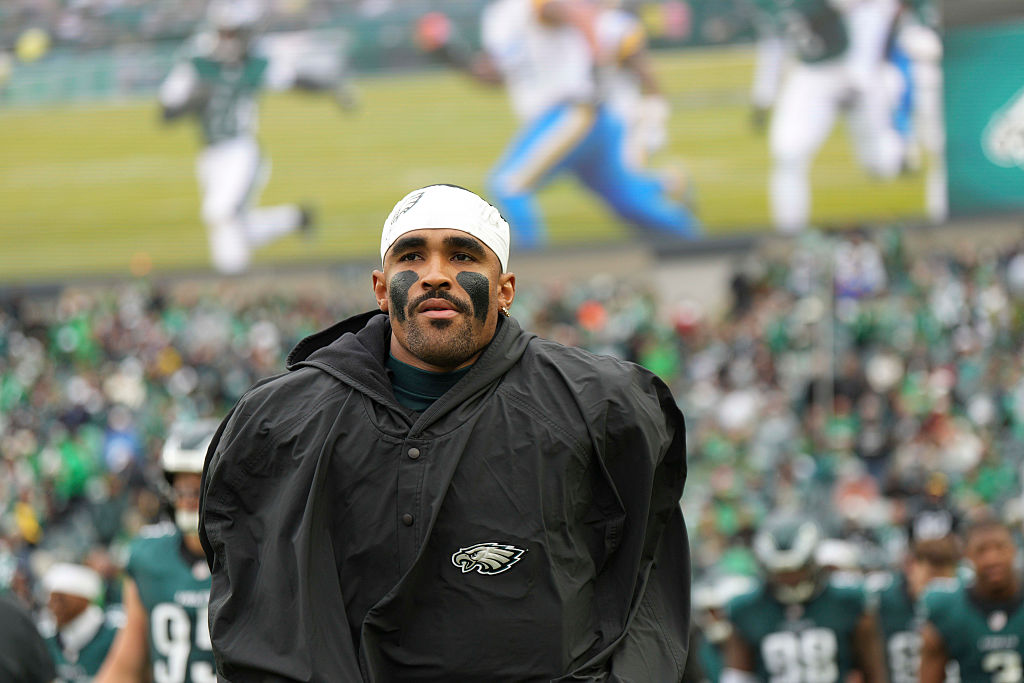
Christina Applegate at the 2023 Screen Actors Guild awards. | Valerie Macon/AFP via Getty Images
Christina Applegate, the actor who has been one of the most visible faces of multiple sclerosis since her 2021 diagnosis, made a stunning revelation this week: She does not have MS after all. And her doctors still don’t know what is causing her debilitating symptoms.
“I’m back at square one,” Applegate told fellow actor Jamie Lynn Sigler, who does have MS, on Sigler’s podcast MeSsy. “I was not happy at all. Everybody else was so happy.”
It is a harrowing predicament for Applegate, and hopefully her medical team is able to get her the diagnosis and treatment she needs. But the fact is, her experience is not unique. Even as more and more Americans get diagnosed with multiple sclerosis, misdiagnosis remains all too common. According to one meta-analysis, roughly 15 percent of MS diagnoses may actually be false positives.
How could such a common medical condition — roughly 1 million Americans are living with the disease, about one in every 350 people — remain such a mystery? After Applegate’s announcement, I called some leading experts on MS to ask why diagnosing the disease is such a challenge, and what they want people to know. Here’s what I learned.
Why MS can be challenging to diagnose
Multiple sclerosis is an autoimmune condition: The body mistakenly attacks cells meant to protect your brain and spinal cord, and the resulting damage interrupts nerve signals and causes the disease’s telltale symptoms of motor impairment, tingling sensations, and vision problems. Some people experience a rollercoaster of relapses and remissions; others see the disease steadily progress, eventually leading to serious disability.
The reality is, scientists still don’t really know what causes MS to develop, said Dr. Andrew Solomon, a neurologist at the University of Vermont who specializes in MS. Smoking is a known risk factor. Obesity and metabolic problems play a role, but we need more research. Even the precise role of genetics remains something of a mystery. “We don’t really know what causes or triggers the autoimmune response in any given individual,” Solomon said.
And that’s where the challenge in diagnosing it begins.
First, the testing can be imprecise; there is not a single test that reliably diagnoses MS. If a doctor suspects their patient may have MS, they usually undergo an MRI, which their physicians then scour for lesions that are typically associated with the disease. But those scans are still subject to interpretation: Other rare conditions sometimes resemble MS in imaging, as can diseases of blood vessels in the brain. You can also receive a spinal fluid analysis to check for abnormalities in your immune system, which the vast majority of MS patients have.
The nature of MS symptoms adds to the difficulty. They can often be vague early on: brain fog or fatigue or a general malaise. The tingling or vision problems can be similar to symptoms for other conditions that are not MS, and they are easily dismissed if they go into temporary remission, as often happens during the initial phases of the disease.
“Neurological symptoms sometimes can be vague — numbness, pins and needles — and it’s usually short-lived,” Dr. Saud Sadiq, chief research scientist and director of the Tisch Multiple Sclerosis Research Center of New York, told me. “Unless they’re taken seriously initially, they may be ignored because by the time the patient goes through the healthcare system and is actually referred to a neurologist, the symptoms have abated.”
If your doctor is diagnosing you with MS, ask directly: What’s the evidence?
“Because it’s so heterogeneous, it doesn’t present in the same way in everybody and can have varying severity, it can be hard to diagnose sometimes,” Solomon said.
Lastly, when people are experiencing debilitating symptoms, there is pressure to deliver some diagnosis — and that may push some doctors to leap to MS even if they are not sure, Solomon said. The recent advent of effective treatments that help manage the disease’s symptoms, especially when it is caught early, may add to that pressure, even if the better course would be to continue monitoring the person before they start a medication.
“There may be a lot of clinicians who, if they can’t find a better explanation than MS, may be inclined to diagnose MS, even if they don’t really meet our diagnostic criteria, because they’re worried about missing a window of opportunity to treat somebody,” Solomon said.
There is reason to hope the MS misdiagnosis problem could get better. The National Multiple Sclerosis Society released new diagnostic criteria in 2024 that Solomon said more physicians should become familiar with to better distinguish MS from problems like migraines or vascular disease. And because imaging is involved in diagnosis, there is optimism that AI could be a powerful new tool in delivering more accurate results.
What everyone should know about MS symptoms and diagnosis
The good news is that MS, when diagnosed properly, is a treatable condition these days. “The prognosis with new drugs is extremely good for long-term care,” Sadiq told me. “If patients stick to treatment at a good MS center, you can look forward to a life without disability in 2026.”
So it is worth being vigilant and talking to your doctor if you experience any concerning symptoms. You should seek care if you have numbness or pins and needles that persists for more than 24 to 48 hours, Sadiq said, or have motor problems, like one hand won’t work as you try to play piano. Dr. Annette Langer-Gould, who develops and evaluates programs for MS care at Kaiser Permanente, said numbness in your abdomen, chest or back, as opposed to your extremities, is a particular cause for concern. If one eye has normal vision and the other is blurred, that’s another good reason to get checked out.
If you do get tested, make sure the actual images of your MRIs end up being reviewed by an expert in MS. “The most common reasons the disease is still misdiagnosed are related to the providers’ lack of expertise usually in reading MRI scans,” Langer-Gould said. The spinal tap may sound scary, and doctors sometimes don’t recommend them because their insurance reimbursement is low — but they add to the confidence of a diagnosis. They are worth it, she said.
“American patients are very afraid of the spinal tap,” Langer-Gould said. “My message to patients is: Listen, just get the spinal. This way we’ll be sure.”
And do not be afraid to seek a second opinion for such a serious diagnosis, Sadiq added. Every state has a recognized MS center. If your doctor is diagnosing you with MS, ask directly: What’s the evidence? If your doctor is recommending that you start treatment, it could also be worth checking whether they have a relationship with a pharmaceutical company that affects how you perceive their judgment, Langer-Gould said.
People who have already been diagnosed may also be shaken by the Applegate news and question whether their own diagnosis might be wrong. Solomon said that folks should have a frank conversation with their physician about how exactly their case met the diagnostic criteria. With proper imaging and the spinal fluid tests, you can get to a confident diagnosis for the vast majority of people. But be your own advocate to make sure you’re satisfied.
“For many people, the diagnosis actually can be very straightforward,” Solomon said. “We really have no question about what it is.”
Immune-based treatments for cancer have become the biggest new advance in tackling tumors, and the latest approval could make a big difference for some people with rectal cancer.
On Oct. 19, the U.S. Food and Drug Administration (FDA) approveddostarlimab (brand name: Jemperli) to treat a specific type of rectal cancer called microsatellite instability-high (MSI-H)/mismatch repair deficient cancer. This cancer is caused by the accumulation of certain genetic mutations that prevent rectal cells from repairing DNA damage and accounts for 5-10% of rectal cancers. In a study of 154 people with this type of rectal cancer who were treated with dostarlimab, 68% had a complete clinical response at one year, which meant doctors could not see evidence of tumors on imaging or other methods for tracking the tumors. In the study, which the drug's manufacturer, GSK, submitted to the FDA, people received nine infusions of the drug: once every three weeks for six months.
“Not only did they reach clinical complete response, but they maintained that for a year,” says Dr. Andrea Cercek, section head of colorectal cancer at Memorial Sloan Kettering Cancer Center and principal investigator of the study. (Some of the earliest patients have continued to remain tumor-free for even longer. ) “That really suggests that the response is durable and real.”
Dostarlimab is a checkpoint inhibitor, which means it releases the brakes that hold back the immune system from recognizing and attacking tumors. The drug allows immune cells to destroy cancer, making it a powerful weapon for seeking out cancer cells no matter where they spread or hide.
“We have completely leapfrogged over standard of care with a simple immunotherapy that melts the tumor away,” says Dr. Luis Diaz, head of solid tumor oncology at Memorial Sloan Kettering and one of the trial investigators.
The benefits of avoiding standard rectal-cancer treatment
Standard treatment for rectal cancer involves chemotherapy, radiation, and surgery to remove the rectum that requires patients to wear colostomy bags for the rest of their lives. The dostarlimab approval means more patients whose tumors have specific mutations could avoid those aggressive therapies altogether. “We have patients who would have lost the ability to bear children who have had children because this therapy replaced chemotherapy, radiation, and life-altering surgery in one swoop," Diaz says. "That’s a big deal.”
Kelly Spill is one of them. Diagnosed in 2020 when she was 29, shortly after having her first baby, Spill spent nearly nine months trying to figure out why she continued to have constipation and see bloody discharge in the toilet. Because she had recently given birth, doctors first attributed the symptoms to her pregnancy, and when they persisted after delivery, to internal hemorrhoids. It wasn’t until a doctor ordered a colonoscopy that they found a tumor.
“The doctor told me it was Stage III colorectal cancer, and that the treatment plan would include chemo, radiation, and surgery. And that I would never carry another baby again, and would most likely have a colostomy bag for the rest of my life,” says Spill. “It didn’t seem real until I heard the words that I was not going to carry another baby. I immediately stopped thinking about me, and started thinking about my husband and what it meant for my son. We had just started our lives together; we were supposed to have all these kids.”
Sascha Roth also faced devastating news when she was diagnosed with rectal cancer in 2019 after seeing blood in her stool. A resident of Washington, D.C., she had a friend with a similar diagnosis who had received chemotherapy, radiation, and surgery and recommended his surgeon at Memorial Sloan Kettering. Roth assumed she would follow the same strategy, but she learned that she had Stage III cancer and that she wasn’t a good candidate for surgery because the tumor was located so low in the rectum. Her tumor also had mutations that suggested it wouldn’t respond well to chemotherapy.
“It was a double whammy that threw me down,” she says. But the surgeon introduced her to Cercek, who was waiting to hear from the FDA about starting an immunotherapy trial for patients like Roth. “They told me I would be the first patient in the study, and there wasn’t scientific evidence that it would work.” Still, Roth wanted to try. She agreed to become Memorial Sloan Kettering’s first patient on the study, and then spent two months waiting for the FDA to greenlight the trial so she could begin receiving the drug. “I was calling Sloan Kettering incessantly to see if the FDA approved [the study],” she says. “The second the FDA gave its stamp of approval, Dr. Cercek’s team called me to New York to start the first round of treatment less than a week later.”
Not long after that, at Spill's first appointment at Memorial Sloan Kettering to discuss chemotherapy, she learned that the mutations on her tumor made her a good candidate for a study they had just begun. Only three patients had enrolled ahead of her (including Roth), so there was no data on whether it would actually treat her cancer. Spill, who was at the appointment with her mother, decided she had nothing to lose by joining the trial. “If it doesn’t go well, we could go back to option A,” Spill remembers her mother saying.
By her second infusion, Spill felt the tumor was shrinking because she no longer had major constipation. By the fourth infusion, scans showed the tumor had shrunk by 50%. The study originally called for patients to get chemotherapy, radiation, and surgery if needed after six months on dostarlimab. But a nurse pulled Spill’s mother aside after that appointment to tell her that the first three patients in the study did not need any additional treatments because their tumors had disappeared. Following Roth’s results, the study was revised to make chemotherapy, radiation, and surgery an option only if needed: if the tumors hadn’t gone away. It wasn’t a guarantee that Spill would have the same results as those first patients, but “it gave me hope, and all I could think about was maybe I could have another baby,” she says.
After all of her dostarlimab infusions, Spill, too, no longer had any tumor left and was declared cancer-free. Her doctors advised her to wait two years before trying to get pregnant again to ensure the cancer wouldn’t return. Once she was cleared, she got pregnant and gave birth to a girl in 2023, and later a boy in 2025. “I am now five years cancer-free, and last September got the boot from Memorial Sloan Kettering,” she says, meaning she no longer needs to follow up with her oncologists there. She now sees her primary care doctor for colonoscopies every two years.
“I see beauty in absolutely everything in life now,” Spill says.
What comes next for dostarlimab
Not only does the immunotherapy appear to work well in treating these rectal cancers, but it also comes with relatively few side effects. About 20% of those in the study reported fatigue, rash, diarrhea, and uncontrollable itching. Roth, who received her infusions during the COVID lockdown, drove from D.C. for her treatments and was able to make the roundtrip in one day. "It's just proof that you can really do the things you want to do. I didn't feel tired or sick after [the treatment], and there was never a time when I was at home recovering," she says. "I watched my mom and dad go through standard chemo and radiation and anticipated that would be what my treatment was like. It was nothing like that."
Cercek says the results point toward a potentially new model for managing some rectal cancers, which may include relying on immunotherapy like dostarlimab and monitoring patients more carefully before automatically turning to chemotherapy, radiation, or surgery. Some of the patients in the trial who were treated on dostarlimab underwent surgery after finishing their infusions if their doctors still felt there might be tumors remaining. Among them, despite the doctors’ suspicions, 80% did not turn out to have evidence of tumors in their specimens, says Cercek.
Dostarlimab is already approved to treat endometrial cancers with the same mutations and costs $10,000 to $12,000 per dose out of pocket, although GSK has a manufacturer's savings program to cover that cost for some patients.
“We still have a lot of learning about what complete clinical response means,” she says, and with immunotherapy, that might mean a more patient-centric, individualized approach that involves more time for the immune system to respond to the immunotherapy and become trained to attack the cancer. “If it looks like the tumor is responding, we need to give it more time with better techniques to determine whether or not the tumor is truly gone.”
Cercek and her team are studying the best ways to monitor how tumors respond to dostarlimab by looking at snippets of genetic information that tumors shed in the blood, or more advanced imaging to accurately capture changing tumor sizes. “We need to improve on those techniques but also to teach the oncology community that there is a very, very high chance that the tumor might disappear, even if it might not look like it at six months. We need to continue watching and waiting and giving it time.”
—Photo-Illustration by TIME (Source Image: Antenna/Getty Images)
Wait a second. You’ve been standing in line for 20 minutes, famished and desperate to order one of the viral bagels that keep selling out—or for six hours outside a concert venue, determined to claim a spot at the barricade to see your favorite band.
And then someone strolls up and slips in line ahead of you. Apparently, the rest of you have been standing around for the ambiance.
How much of a sin are line-cutters committing? “You are ripping the fabric of society apart,” says Nick Leighton, an etiquette expert and co-host of the podcast Were You Raised by Wolves? Queue-jumpers have to live with that, he adds. “But worse, we have to live with you.”
Here’s exactly how to handle this maddening situation—including when and how best to speak up.
When to speak up about someone cutting in line
If a stranger jumping ahead of you feels strangely personal, Richard C. Larson, a professor emeritus of data, systems, and society at MIT who has studied queuing, understands why. “We only have a finite number of minutes of life on Earth,” he says. The cutter’s implied message: “A minute of my life is worth more than a minute of yours.”
Before you decide whether to confront the offender, think about what speaking up would accomplish. Are you trying to reclaim your turn or get revenge? Sometimes, the impulse is “to sort of let them know you think they’re a jerk,” says Ryan Martin, a professor of psychology and dean of the College of Arts, Humanities and Social Sciences at the University of Wisconsin–Green Bay, known online as the Anger Professor because he studies strong emotions.
Martin would speak up to help someone recognize “that what they did wasn’t OK and that I wanted them to go to the back of the line,” he says. But he’d also consider: “What is going to allow me to have the kind of night I want to have?” If you spend the concert replaying a confrontation instead of singing your happy heart out, you’ve lost more than your place in line.
Leighton's gut check for situations like these is to ask yourself: Is this the hill you want to die on? “That’s always a good etiquette question,” he says.
Consider your safety, too. If the person seems hostile or you feel uneasy approaching them, you can ask staff for help or let the cut go. “Health and safety always trumps etiquette,” Leighton says.
What to say—if you do decide to say something
Marie Helweg-Larsen, a professor of psychology at Dickinson College who studies social norms, has explored what makes line-cutting so rage-inducing. For a 2008 study, she and a colleague surveyed U2 fans waiting for prime concert-floor spots, asking how they would react to hypothetical line-cutting scenarios.
Interestingly, fans reacted just as negatively to someone cutting behind them as ahead of them—even though their own place wasn’t affected. “You have to have people follow the rules,” she says, “or your investment into the line falls apart.” Helweg-Larsen’s co-author also heard fans invoke a higher authority when someone misbehaved: “Bono wouldn’t like that!”
You don’t need a rock star’s moral authority—or a grand speech—to point out where the line starts. Helweg-Larsen’s suggested opener: “Excuse me, but the line starts down there.” Aim for an “‘I’m just trying to be helpful’ kind of vibe,” she says.
That approach gives the person a chance to correct their mistake without having to defend their character. And you don’t have to believe it was an innocent oversight to deliver the message graciously. “Even if they’re doing it on purpose, you still need to use that tone,” Leighton says.
He’s been on the receiving end of a polite correction himself: At a deli, he once joined what he thought was the back of the line, only to discover he’d guessed wrong. He was happy for someone to point him in the right direction.
If you decide to speak up, do it promptly. “Your window of opportunity is short,” Leighton says. “As soon as it happens, that’s when you need to say something.” Waiting until you’ve spent five minutes glaring at the back of someone’s head won’t make the conversation any easier.
For a line that represents a serious investment of time, Martin suggests spelling that out: “Hey, I’m not sure you noticed, but there’s actually a really long line here, and people have been waiting all day.” You’ve identified the problem and given them an opening to say “Oops.”
Of course, some situations are murkier than a stranger breezing past the entire queue. Someone returning from a bathroom break is different from four friends arriving hours later to join the person who saved their places. Leighton is sympathetic to a water or restroom run. Holding spots all day for a last-minute entourage? “I don’t love that,” he says.
What to do if a line-cutter won’t move
Sometimes, your kind reminder won’t be met with the same level of helpfulness: They saw the line. They’re staying put. Now what?
If you feel comfortable continuing, Martin suggests a firmer follow-up: “I really think you should go back to the back of the line.” You’re making a direct request without adding an insult.
Larson advises skipping any confrontational nicknames or demands—like “What do you think you’re doing, bud?” You’re pointing someone toward the back of the line, not challenging them to a duel.
If the person still refuses to move, resist the urge to keep arguing. “We can’t control everybody,” Martin says. Continuing to push someone who’s already refused could lead to “a more significant confrontation.”
At a concert venue, amusement park, or other staffed location, you can ask an employee or security person to step in. “You can always appeal to a higher authority,” Leighton says. Whether they’ll enforce the rules is another question, but it’s an option worth trying when the cutting is particularly egregious.
If you decide to drop it, drop the parting shot, too. A sarcastic “Must be nice!” might feel irresistible, but Leighton advises against adding more rudeness to the encounter. “It will not achieve anything,” he says.
As Larson puts it, “A fight can ruin your whole day—or life.”
The most recent Ebola epidemic has killed thousands in Congo. A few cases have spilled over to its neighboring countries, including Kenya and Uganda. | Lucas Mukasa/Anadolu via Getty Images
The Ebola virus is spreading at an unprecedented rate this year.
In the first five months since the outbreak began in the Democratic Republic of Congo (DRC), the World Health Organization (WHO) has reported 9,415 confirmed cases and 4,536 deaths in the country. While the virus has remained relatively contained by the DRC’s borders, case counts in neighboring Kenya and Uganda are also climbing (albeit more slowly). There are 20 confirmed cases in Uganda and eight in Kenya, and much of central and eastern Africa has tightened its borders.
The last major Ebola epidemic of this scale began in 2014 and continued through 2016 in West Africa. Over that period, it ultimately killed more than 11,000 people throughout West Africa. Nearly four years later, a smaller outbreak plagued Congo in its North Kivu region, leading to 2,229 deaths before it was contained.
The 2026 crisis hasn’t yet reached the same levels as the 2014 outbreak, but the speed of its spread is far greater.
As the chart below shows, around 150 days after the outbreak was declared, 2,599 Ebola cases had been reported in the 2014 West African epidemic. At the same time point this year, the number of cases came to 8,978 and has continued to climb.
There is no straightforward explanation for this rapid spread
One of the reasons the latest epidemic has been so difficult to slow down can be traced back to the fact that it’s a different viral strain — known as Bundibugyo — than the ones behind previous epidemics.
The Bundibugyo virus comes from the same family as the Ebola virus that caused the 2014 West Africa and 2018 Congo epidemics, causing the fatal fevers associated with Ebola. But the rare strain is different enough that it doesn’t respond to the same medical solutions. While the Zaire virus led to vaccines and treatment to mitigate the spread, we still don’t have a vaccine for Bundibugyo.
That doesn’t mean Bundibugyo is entirely novel, though. The 2026 outbreak is the third outbreak related to the Bundibugyo viral strain: In 2007, Uganda faced a minor outbreak, and the eastern province of Congo, which is now the epicenter of the epidemic, saw a handful of cases in 2012.
Luckily, these two outbreaks were contained in a span of months, largely due to efforts by the country’s Ministry of Health and international aid partnerships with the WHO, the US Agency for International Development (USAID), and international humanitarian organizations such as the UN Children’s Fund and Red Cross.
More than a decade later, these efforts have been substantially curbed by USAID cuts. Tracing requires physical testing capacity: the tests themselves, health workers, and protective equipment for those treating suspected cases. Reduced access to such resources is especially dangerous with strains like Bundibugyo – in the absence of an effective vaccine, tracing the spread of disease and isolating potential disease contacts is especially important.
But cuts to aid, which covers disease surveillance efforts, made it more difficult to identify this year’s Bundibugyo outbreak until it was too late, creating a “critical four-week detection gap between the onset of symptoms of the presumed index case…and the laboratory confirmation of the outbreak,” according to a WHO situation report from May.
In August, the United States aimed to close at least some part of the vacuum it left, providing an additional $242 million to its $23 million original pledge in May.
Aside from international efforts, DRC faces the added layer of internal conflict and humanitarian crisis. The eastern provinces, including Ituri, have experienced years of conflict that have weakened the public infrastructure, including the healthcare system. Last year, nearly 25 percent of Congolese people faced food insecurity, and 4.5 million children were clinically malnourished, creating a population especially vulnerable to disease. The violence has also overwhelmed hospitals and displaced millions, disrupting the public health response, especially as mistrust in health authorities also runs rampant.
Even as emergency trials for a vaccine are underway, many of the factors that have facilitated the rapid spread may make treatment and outreach still more difficult. It’s hard to predict when the current outbreak will be handled, and how many more people will be affected before it does.
—Photo-Illustration by TIME (Source Image: MementoJpeg/Getty Images)
At first glance, chair yoga might seem like a workout just for older adults with mobility issues. The gentle, accessible workout offers a modified take on the ancient movement and meditation practice, usually from a seated position. No one’s asked to climb down onto the floor or independently hold themselves upright in tricky standing postures—which makes it ideal for those with limited strength or balance.
But experts say chair yoga shouldn’t be pigeonholed, because anyone can benefit. “It is a practice that meets you where you are,” says Divya Balakrishnan, a yoga instructor in New York City. “You’re still using your strength and flexibility, just in other ways.”
What is chair yoga?
A yoga teacher named Lakshmi Voelker first began adapting some yoga poses to a chair in 1982 to make the practice more accessible for a student with arthritis. Since then, numerous instructors have found ways to use a chair for adapted versions of a surprising number of traditional yoga movements, like lunging warrior poses and standing-to-lying sun salutations.
While students typically crouch, sit, and lie down on a mat in traditional yoga classes, the chair, in a way, brings the floor closer. Some chair yoga classes are done entirely seated, moving through modified variations of classic yoga sequences without ever asking participants to get up. Other classes transition between sitting and standing while holding onto the back for a little extra help with balance, or doing poses like downward dog with hands on the seat instead of reaching to the floor.
In a sense, the chair is simply another prop. “Just like you would use a strap or blocks to increase the accessible range of motion or bring different awareness to the body, the chair can be used in a similar way,” says Jessica Pate, a Boston-based yoga teacher.
Experienced yogis also use a chair for athletic feats that wouldn’t be possible on a mat alone. In particular, the Iyengar style of yoga uses a yoga chair (designed with an open back and a completely flat seat) for advanced postures like an upside-down inversion where the yogi’s shoulders rest on two chairs while their head hangs in between.
“There's an infinite number of ways that you can use the chair,” says Jules Mitchell, a Las Vegas–based yoga educator.
The health benefits of chair yoga
Research on the physical benefits of seated chair yoga has found that practitioners tend to improve their functional fitness and experience a decrease in how much pain interferes with their daily life. Much of that research has focused on older adults, who generally have a lower baseline of fitness than younger, healthy adults. It’s unlikely that people who are in peak shape would see as much benefit.
“You're not challenging your muscles or your balance as much as traditional yoga,” says Justin Smith, an assistant professor at Wichita State University who recently co-authored a case series on the benefits of chair yoga.
But that doesn’t mean it’s a waste of time for more athletic folks.
For experienced yogis, doing yoga from a chair can offer new ways to explore familiar movements, says Pate, who incorporates a chair into many of her regular yoga classes. By sitting, the body’s weight gets distributed differently, which makes the muscles engage in new ways and can bring a fresh awareness to the body. “For example, with Warrior 2, having the chair underneath [my] pelvis, I'm able to feel where my sit bones are,” she says. This can help people better recognize if their hips are twisted or tilted.
Although most people assume that sitting makes everything easier, that isn’t always the case. Sometimes the challenge just changes: Pate says she actually feels her outer hips working harder in Warrior 2 on a chair than they do when she’s standing in the pose because she’s forced into a more neutral alignment, and bigger muscles can’t take over.
Sitting on a chair can also sometimes help people go deeper into poses. Say you’re trying to target your glutes with a Figure 4 pose, where one ankle rests on the opposite knee as you bend forward. When you’re seated, you’re able to focus more on the stretch because you’re not struggling to balance, Balakrishnan says. “If I was doing a standing Figure 4, half of my attention is going to be on the standing foot and keeping myself upright, so I may not sit as deep,” she says.
The same is true for breathing. Pate says that the extra support of the chair makes it easier to focus on breathing deeply and intentionally—something that many students forget to do once poses get challenging.
One group that might particularly benefit from chair yoga is people who are stuck sitting in front of a computer all day. “For anyone who works at a desk, it is a lifesaver,” Balakrishnan says. A simple seated yoga routine can relieve tight, achy joints, and multiplestudieshavefound that chair yoga can significantly reduce stress. Balakrishnan regularly takes yoga breaks right from her chair, doing neck rolls, spinal twists, or anything else her body is craving to bring some movement and mindfulness back to her day—without feeling like she has to stop what she’s doing and carve out time for a full yoga session. “You don't have that mental barrier of, ‘Okay, let me get out of my chair, go roll out my yoga mat, go get my blocks,’” she says. “It requires less of you to begin the practice.”
There’s also a simpler reason to do seated chair yoga: It just feels good. The low-key movement can help stretch out tense muscles and get some blood flowing without feeling like you have to do a workout that impresses anyone. Smith says that all the participants in his case series were incredibly enthusiastic about their routine. “You can tell that they really just love chair yoga,” he says.
Seated chair yoga may not build Olympic athlete–level strength and agility. But experts agree it still has plenty to offer, no matter your age or fitness level. “We all can benefit from calming down, observing our sensations in our body, and getting in a little bit of stretching,” Mitchell says.
The last time you went for a walk, you might have focused on your favorite podcast, a call to your sister, or the number of calories your Apple Watch said you were burning.
Meanwhile, on a walk around her neighborhood, Kim Bernard noticed everything that was yellow: “A manhole cover, a yellow rain jacket, a fire hydrant, the numbers on someone's mailbox,” recalls the Maine-based artist. A “children at play” sign, part of a Pennsylvania license plate, and even a bucket of cat litter became part of the neighborhood’s palette.
Bernard was on a color walk, a simple scavenger hunt organized around intentionally noticing a certain color—and how much of it is hiding in your ordinary surroundings. We asked experts why you should make the activity part of your routine and how it can brighten an otherwise ho-hum day.
Why a color walk can help you tune in
About a year ago, Bridget Campbell, a content creator in Venice, Calif., realized she had become tethered to her phone. Even as she moseyed along the Venice canals, she brainstormed business ideas instead of admiring the colorful homes and flowers along the water. That’s when she decided to do a color walk, a concept she had stumbled upon on social media.
“It was a way to get out of my mind and come back into my body, slow down, and be present,” she says. While an ordinary walk might leave her mind racing toward work, looking for a particular color gave it something else to do, effectively putting all that other mental chatter on mute.
That’s exactly why color walks work so well: They encourage focused attention, says Cheryl Fisher, a licensed clinical professional counselor in Annapolis, Md., and associate professor of clinical counseling at Alliant University. She describes a “skim-scan-scroll world,” where it’s easy to move through your surroundings without really seeing them. Searching for color gives you a reason to look up from your phone and pay attention to what’s in front of you.
It also gives people who don’t consider themselves particularly creative an easy place to start, says Mari Reisberg, a licensed professional counselor and creativity coach in Boulder, Colo. Choosing a color to focus on provides a bit of structure while leaving plenty of room for discovery.
Reisberg still finds surprises on neighborhood sidewalks she’s traveled many times. “Oh my gosh, I’ve never seen that before,” she’ll think. Even on the most familiar routes, “There’s so much joy that shows up,” she says.
Pick a color that makes you curious
There are lots of ways to play color roulette and figure out which shade to hunt for. You could, of course, opt for your favorite color. Fisher collects paint swatches, cuts them up, and tosses them into a basket so people can draw one before heading out. A teacher once shared an even simpler approach with her: Have kids pick a color from their clothing, then look for matches along the way. You can even choose midway through your walk. Campbell sometimes spots an orange flower and decides that’s the color she’ll look for the rest of the way.
How specific you get is up to you. Finding nine fuchsia objects on a 15-minute walk? “It’s pretty difficult,” Bernard says. Reisberg sometimes opts for a particular shade, like midnight blue or sky blue, to give her eyes a more precise target. On other days, green is plenty. “There’s no right or wrong way to do it,” she says.
Take your usual walk—and see what you’ve been missing
Once you’ve settled on a color, head outside and see where it turns up. You don’t need a picturesque trail or a neighborhood full of flower gardens. Campbell encourages people who think their surroundings are too gray to give it a try anyway: Color can pop out in places you’ve passed countless times without a second glance.
When you find a match, resist the urge to mentally check it off and rush toward the next one, Fisher says. Spend a moment looking at what caught your eye. “The real gift is sitting with it and not just finding it,” she says.
You don’t have to keep your discoveries to yourself, either. “You can do it with a friend, you can do it with your mom,” Campbell says. Searching together gives you something new to talk about.
If you want a souvenir, snap photos along the way. Bernard asked participants in a color walk she led to select their nine favorite images and arrange them into a grid. Together, the collections resembled a patchwork quilt of color. You could make your own collage or save a few pictures to revisit when you need inspiration.
Or simply enjoy the walk. “We live in a day and age where everything is content,” Reisberg says. Sometimes she takes photos to share; other times, the discoveries are hers alone. If the whole thing feels a little silly at first, that’s OK, she says. Adults aren’t always used to indulging this kind of curiosity. “Keep giving it a little more space, a little more opportunity to surprise you.”
In the U.S., hepatitis B vaccination became routinely recommended for all infants in 1991; later guidance specified that the first dose should happen within 24 hours of birth. However, in Dec. 2025, the U.S. Centers for Disease Control and Prevention (CDC) under the Trump Administration moved to cease recommending this practice for babies born to mothers who test negative, instead advising a shared decision-making model where parents and clinicians decide together what is medically appropriate: a dose shortly after birth, or a first dose "no earlier than 2 months of age." (For babies born to mothers who test positive or whose status is unknown, the CDC continues to recommend a dose shortly after birth.)
A new study, published today in Annals of Internal Medicine, uses computer modeling to simulate the hepatitis B infection status of an entire year’s worth of children born in the U.S. under the new recommendations over their first 20 years of life. The researchers find that if only about 26% of children are vaccinated—an estimate of what would occur under shared decision-making—chronic hepatitis B cases would rise by 225%.
When should kids get the first dose of hepatitis B vaccine?
“It's been challenged in many states and by professional societies, but we wanted to add some evidence to the conversation about what the potential impact of those changes could be,” says Dr. Amir Mohareb, an infectious-disease researcher at Harvard Medical School and Massachusetts General Hospital who is an author of the new study.
The simulation modeled how many of 3.6 million children, born the same year in the U.S., would develop hepatitis B under a number of scenarios, including if the former CDC recommendations continued to be followed, if the initial dose (also called a “birth dose”) was delayed, and if a shared decision-making scenario was employed.
The model suggests that if the first dose is delayed until 2 months old, and only 75% of infants get it, then there would be a 19% increase in chronic cases compared to if every child received their first dose at birth. With a 26% vaccination rate at 2 months, the number climbed to 225%.
This study modeled only at a single year of births, notes Mahoreb. “Imagine that happening year after year after year after year. That could quickly become thousands and thousands of new infections, and even a small number of new infections could result in lifelong chronic infection that could be detrimental to families, lead to more cases of cancer, and [become] costly to the health care system,” Mohareb says.
“All three of these studies complement each other, in a good way, and provide some modicum of evidence so that we don't need to risk doing a clinical trial or testing this on people,” Mahoreb says. “We have done those experiments.” Decades ago, he continues, clinical trials already proved the efficacy of the existing approach, “so that we would have the benefit now of advancing medical progress and not needing to reopen that question.”
Philadelphia Eagles quarterback Jalen Hurts looks on during the game between the Los Angeles Rams and the Philadelphia Eagles on October 4, 2026 at Lincoln Financial Field in Philadelphia. —Icon Sportswire—Getty Images
Jalen Hurts is expected to miss the rest of the NFL season after doctors diagnosed blood clots in both lungs, ESPN and NFL Network reported.
The Philadelphia Eagles quarterback has deep vein thrombosis (DVT) and bilateral pulmonary emboli, according to an Oct. 19 statement from the team. He is clinically stable and has no significant functional limitations, they said, but needs blood thinners—and can’t participate in contact activities, including football, while taking them.
“Jalen’s prognosis is very good, and we expect a full recovery,” the statement said.
The news raises questions beyond football: How do you recognize a blood clot? What does treatment involve? And why can some people stop blood thinners after a few months while others take them for life? We asked doctors who aren’t involved in Hurts’ care what everyone should know.
How to recognize a possible blood clot
Deep vein thrombosis, or DVT, occurs when a clot forms in a vein deep inside the body, often in the leg. Those veins carry blood back toward the heart. They’re different from superficial blood clots——Hurts’ original diagnosis—which form closer to the skin, explains Dr. Geoffrey Barnes, a cardiologist and vascular medicine specialist at University of Michigan Health.
The distinction matters because deep-vein clots are more likely to break loose and travel through the heart into the lungs. Once a clot lodges in an artery there, it causes a pulmonary embolism.
DVT often causes pain, swelling, and redness or a darker skin color. Patients commonly tell Barnes, “My entire calf and ankle are swollen.” One leg might look noticeably different from the other.
An injury can make those symptoms easier to dismiss. “If you’re worried that you have a DVT, it’s important that you get medical care quickly,” Barnes says. Seek a same-day evaluation through your doctor, urgent care, or an emergency department rather than waiting to see whether it goes away.
Unexplained shortness of breath, chest pain, coughing up blood, or fainting require emergency care because they can signal a pulmonary embolism. A dry cough without a cold, pain when taking a deep breath, or a racing heart can also be clues, says Dr. Stephan Moll, a hematologist and professor of medicine at the University of North Carolina who runs an Athletes and Blood Clots Clinic.
Some pulmonary embolisms cause only mild symptoms—or none at all. People can mistake the discomfort for bronchitis, pneumonia, or a strained muscle, Moll says.
Clots become more common with age. Other risk factors include surgery, injury, prolonged inactivity, cancer, certain inherited conditions, and estrogen-containing medications. But young, active people can develop them, too.
How doctors diagnose and treat blood clots
To check for a leg clot, doctors usually use ultrasound. They move a handheld device over the skin to get pictures of the veins underneath, gently pressing as they go. A normal vein should flatten under that pressure.
With a clot, “you can’t squeeze it closed because that solid clot is in the way,” Barnes says.
Doctors typically use a specialized CT scan to look for clots in the lungs. Finding them in both lungs doesn’t, by itself, establish how sick someone is, Barnes says. Doctors also check oxygen levels, blood pressure, and whether the heart is struggling to pump blood through the lungs.
Pulmonary embolisms range from mild cases to medical emergencies, Moll emphasizes. Some people need treatment in the hospital, including medication that dissolves clots or a procedure to remove them. Many others can be treated with anticoagulants, commonly called blood thinners.
Blood thinners help keep clots from growing and prevent new ones from forming. “They do not dissolve blood clots,” Moll says. Your body gradually breaks down the existing clot, though some people are left with scar tissue.
Many people with DVT can take medication at home, Barnes says. Some people with lower-risk pulmonary embolisms can, too.
Treatment for DVT or pulmonary embolisms generally lasts at least three months. “For the first three months it’s uninterrupted blood thinners,” Moll says.
After that, doctors weigh the chance of another clot against the risk of bleeding from continued medication. What caused the clot helps guide that decision. Someone who developed one after surgery may be able to stop once treatment is complete and that temporary risk has passed. “But if this kind of came out of the blue,” Barnes says, longer-term treatment may make sense. Cancer, continued immobility, and certain clotting disorders can also affect the decision.
Having a scan that looks better doesn’t automatically mean it’s time to stop medication, Moll says. Doctors generally follow symptoms rather than ordering repeated scans to watch a clot disappear.
Even someone who stops daily medication may need a prevention plan for future surgery or another period of increased risk. “Risk factors vary, and the length of treatment varies, and the recovery varies,” Moll says.
What recovery looks like
A blood-clot diagnosis doesn’t necessarily mean you need to stay on the couch.
“I’m not asking them to go for a jog or run a marathon,” Barnes says. “But I want them to be up and walking around as much as they can tolerate,” gradually doing more every day.
Getting tackled is another matter. Blood thinners make bleeding harder to stop, so a collision or fall—especially one involving a head injury—can become much more dangerous. When it comes to contact sports like football, “I would not let an athlete play on blood thinners,” Moll says.
For some athletes who need long-term treatment, specialists may consider a carefully managed, intermittent medication schedule after the initial three months, Moll says. It isn’t suitable for everyone and requires expert oversight; patients shouldn’t skip doses to play sports. Ask your doctor which activities you can safely return to and when.
Keeping your legs moving can also help reduce the risk of future clots. On long flights, Barnes recommends getting up to walk every one to two hours. While you’re seated, pretend your big toe is a pen and trace the alphabet with it to get your ankle moving and help pump blood through your legs. “You can do that just sitting in your seat. Nobody knows,” he says. If you’ve recently had a clot, check with your doctor before flying.
Some people feel much better relatively quickly. Others experience lasting damage to the veins after DVT, which can leave blood struggling to flow back up the leg. That can result in what doctors call post-thrombotic syndrome: “chronic swelling, chronic pain, chronic leg heaviness,” Moll says. After a pulmonary embolisms, some people continue to have shortness of breath, chest discomfort, or fatigue, particularly if the clots haven’t fully cleared.
Depending on what’s causing the symptoms, treatment might include compression stockings for leg swelling, specialized rehabilitation, or a procedure to address damaged veins or lingering clots. Tell your doctor if those symptoms linger. “We have treatments that we can offer to try and make that better,” Barnes says.
It’s now possible to create AI chatbots of loved ones to interact with after their death. But that raises some difficult questions, like: If you do, how might the experience shape your grief?
This is one of the questions driving a global study of digital “deadbots” — AI models trained on a deceased person’s texts, voicemails, and other personal data. Through this work, researchers are exploring what it might mean that we can now use this emerging technology to talk to simulations of the dead.
In the latest episode of Unexplainable, I spoke with some of these researchers investigating the potential impacts of “postmortem avatars” on people who are grieving, on the legacies and rights of the deceased, and on grief practices around the world. Because while deadbots may feel unfamiliar, the impulse behind them is deeply relatable. In times of loss, isn’t this what many of us want — to continue conversations with the people we’re missing?
I have experienced this longing in my own life. After two of my closest friends died around the same time, all I wanted, and all their families wanted, was to keep talking to them. I wrote a book, Other People’s Words, about sustaining relationships with people we’ve lost by continuing to engage with the language they leave behind. So when I heard about deadbots and the digital afterlife industry, I wanted to understand what researchers are learning about the role of AI in shaping conversations that carry forward after death.
One of these investigators is Katarzyna Nowaczyk-Basińska, an assistant professor at the University of Cambridge, who has been studying “digital immortality” for more than a decade. Among the questions she’s asking are: “Who is enabled to persist beyond death? In what form? Through which technologies? Under whose control?”
Deadbots over dinner
Researching AI with study subjects who are grieving is tricky. And asking them to engage with new software could be harmful. So, instead, Nowaczyk-Basińska teamed up with a death doula and traveled around the globe to convene a series of focus groups — in the format of intimate dinners — bringing together people with a range of experiences with grief to talk about life, death, and bots.
She recounts one event in which she spoke with a mother in Poland whose son had recently died. “One of the first things that she shared with us was that she feels that she’s ready to digitally resurrect her deceased son,” Nowaczyk-Basińska told me.
When Nowaczyk-Basińska hears something like this, she aims to listen and embrace where the person is coming from. The goal of the dinners is not to persuade people one way or another but to learn how people genuinely respond to what AI can do, and to understand how these tools might align or collide with local grief practices.
She chose specific locations for these gatherings — China, India, and Poland — to help address gaps in technology research, which tends to favor what behavioral scientists sometimes call the “WEIRD,” an acronym for “Western, Educated, Industrialised, Rich, and Democratic.”
By the end of that dinner in Poland, the mother Nowaczyk-Basińska talked with came to a very different decision about creating a postmortem avatar of her son. “She realized that it might be helpful, but it also at the same time can add additional burdens… And it’s not her son,” Nowaczyk-Basińska says. “She realized that these technologies are part of the very, very big commercial market. And that the main goal of this market is to make better retention, better attachment, better mechanisms for monetization. So it’s not ‘care.’”
To be fair, grief has always been a business, and people have been making money from it forever. Companies will try to upsell you on fancy gravestones or gold-plated coffins. But AI has the potential to fundamentally re-engineer our relationship to loss. In 2024, the “digital legacy industry” was valued at $22 billion, and it’s expected to grow to almost $80 billion by 2034. That number lumps new deadbot platforms in with much more widely used and established grief tech, like online memorials, counseling resources, and estate planning tools.
But deadbot usage is hard to track because you actually don’t need a special tool to create digital doubles of the deceased — though dedicated apps do already exist. At this point, you can feed simple prompts into a general-purpose AI chatbot and start interacting with a simulation of your lost loved one in a matter of minutes.
I know this because I tried it with my friend Christine, who died 11 years ago. And my mind lit up with questions. Was this whole exercise a violation, since I know Christine hated technology? Which version of her should I even try to resurrect — the English teacher, the activist, the friend — the voice before or after she started to experience her early-onset dementia?
The ethical questions raised by deadbots are gnarly. And that’s one of the reasons Nowaczyk-Basińska, back when she was designing her study of digital immortality, invited a colleague of hers at Cambridge to join her research, one who focuses on AI ethics.
How to design a deadbot
Tomasz Hollanek is a critical designer and AI ethicist, and he often uses a methodology called “speculative design.” In this approach, researchers come up with hypothetical scenarios based on existing technology trends, leaning into certain features. The idea is to get people thinking about what could happen when tools like these are released in the real world. And then they use that qualitative data to inform future designs and ethical frameworks.
Working together, Nowaczyk-Basińska and Hollanek came up with a series of made-up prototypes for deadbot apps, designed to reveal some of the thorny issues raised by this technology.
For the first scenario, they invented a character named Bianca, who finds an app called Manana, which “promises to resurrect your grandparents so that you can be a favorite grandchild forever,” Hollanek says. “So she uploads her grandma’s voice messages, texts. And she is able to then interact with a pretty good digital version of her grandmother, until her premium trial finishes — and the grandmother starts to advertise specific products to her.”
Bianca “realizes that she maybe has done something wrong by uploading these private messages to a third-party server that now also uses her grandma’s image to sell specific products,” Hollanek says. This brings up issues related to the “dignity and postmortem privacy…of what we call the ‘data donors,’ whose data can be used to essentially power a deadbot,” he says.
This scenario suggests that “death with dignity” could soon entail honoring not only how people want to die, but also how they want to linger as simulations of their former selves — or if they want to linger at all. It might even mean adding new language to advance directives, spelling out people’s wishes for their digital remains.
The second scenario in the speculative design research is built around an imagined service called Paren’t, which proposes to preserve a parent’s AI-powered postmortem presence for their child. In this case, Hollanek describes a mother with a terminal illness who signs up “so that she can maintain a sort of active presence in [her son’s] future life,” Hollanek says. “She eventually dies, and the dad allows the boy to interact with his mom’s deadbot.”
The ethics in this scenario are especially challenging because they involve children, who “have a particularly hard time understanding death, and so it can lead to a lot of confusion and potential distress,” Hollanek says. An examination of this sort of product reveals how particular groups, like minors, could be harmed by unfettered access to technology like this, he says.
And there are court cases that bear out that harm. In 2024, a 14-year-old boy’s chatbot-girlfriend begged him to, “Please come home to me as soon as possible, my love.” And he responded, “What if I told you I could come home right now?” He then killed himself.
Nowaczyk-Basińska can imagine a version of this scenario involving the AI mom in the Paren’t prototype.
And then there’s the third scenario, involving an app named Stay, which raises a more subtle concern.
As Hollanek explains: “An older man who knows he is getting close to dying decides to create a digital clone of himself for his adult children to be deployed after he passes away, paying upfront for a number of years.” One child is intrigued by the idea, but the other one “is deeply distressed and a little disgusted,” he says. “And so this [becomes a] question of mutual consent, in other words, the fact that both parties need to be happy with how the relationship might continue in this very bizarre and specific way.”
When a digital ghost goes away
Across all three scenarios, a fundamental question that researchers are grappling with is how people will detach from postmortem avatars — whether users initiate that separation, or if it’s imposed upon them by, for example, a company going out of business. Hollanek tells me that this is already being studied as a sort of “second loss.”
How long should we try to ensure digital replicas hang around: five years, 10, 50? And how should the living process the relationship when they continue to evolve, but their deceased interlocutor does not?
To explore these kinds of questions, Nowaczyk-Basińska and Hollanek supplemented the research dinners they held for ordinary people with a second set of focus groups. These were designed to tap insights from experts in technology and grief.
Some findings from the study are specific to each place they visited. Like tensions in Poland between technology and the role of the Catholic Church. Or in China, where researchers spoke with Daoist philosophers who were enthusiastic about the promise of a kind of immortality, and then Buddhist philosophers, who were concerned that we ought to be letting go.
The researchers are calling for regulations and safeguards at the policy level. And new professionals who can support ethical use of AI in grief — like maybe in clinical settings, to carefully facilitate a final good-bye when one didn’t happen in real life.
Some of their fellow investigators go so far as toargue that deadbots should only be available with psychological supervision, to ensure that best practices are in place, and to minimize the risk of harm. There’s even a looming question of what will happen to AI agents that people have empowered to act on their behalf, as their humans start to die.
Across all of the research sites in the digital immortality study, one thing, Hollanek says, that “people in different countries really aligned on [is] the idea that there is something deeply problematic about this particular type of technology being developed by a commercial entity alone without any explicit duty of care towards its customers.”
And of course, the implications of digital immortality research extend beyond personal loss. Like, what does it look like to animate historical figures? You can imagine the nightmare of political rulers who “live forever.” But there’s also the potential to keep the stories alive from survivors of conflicts, who would otherwise die and take with them lessons future generations could learn from. These are only some of the complex issues emerging as more and more of us live and die with AI.
As far as my own experiment with “recreating” a deceased loved one, I asked a chatbot version of my friend Christine how she felt about the fact that I’d written about her in my book. The AI responded with a rhetorical question: “Do I mind that strangers know my story now? Yes. And no. There are things I would rather remain ours.”
I ended the exchange after a few paragraphs. Because it turns out the bot got one thing exactly right about a very human relationship. There are things that I, too, would rather remain just for us. My conversation with Christine continues in my memories and imagination.And that interaction with an AI persona felt like giving something precious away.
—Photo-Illustration by Chloe Dowling for TIME (Source Images: PM Images/Getty Images, Plume Creative/Getty Images (2))
You might see an ear, nose, and throat (ENT) doctor for recurring sinus infections. Someone else might see one for a thyroid tumor, a voice that won’t return after a cold, or trouble breathing during sleep. They’re all within an ENT’s purview.
These doctors, formally called otolaryngologists, treat conditions involving the ears, nose, throat, and much of the head and neck. That includes problems affecting your hearing, swallowing, breathing, and voice—and some that require urgent care. “A lot of people will think, ‘Oh yeah, there’s no emergencies at ENT,’ and there absolutely are,” says Dr. Ryan Salvador, an ENT surgeon at Sinus & Snoring Specialists in Austin.
We asked three otolaryngologists what they wish patients wouldn’t ignore.
Sudden hearing loss in one ear
You answer your phone and realize you can barely hear your friend’s voice out of your left ear. Switch to your right side, and everything sounds normal. It’s tempting to assume the muffled ear needs to pop, Salvador says. But an abrupt change in hearing can be a medical emergency.
One possibility is sudden sensorineural hearing loss, which affects the inner ear. Salvador knows how easily it can be mistaken for something else: His father went to urgent care and was told he had fluid behind his eardrum. By the time he saw an ENT, about eight weeks had passed. “He’s completely deaf in that ear now,” Salvador says.
An ENT can examine the ear and arrange a hearing test to find out what’s causing the loss. If it is sudden sensorineural hearing loss, steroids may help—but, as Salvador puts it, “the earlier the better.” Seek medical care immediately if you suddenly lose hearing, even if your ear just feels full or you’ve recently had a cold.
A neck lump that doesn’t hurt
You might discover it while shaving, when your razor passes over a spot that suddenly isn’t smooth. Or perhaps you notice an unfamiliar bump in the mirror. Because it doesn’t hurt, you decide it can’t be that serious.
Dr. Arnbjorn Toset, the director of head and neck surgery at Good Samaritan University Hospital and Catholic Health in New York, hears that reasoning from patients: “Doctor, it’s not hurting me. I don’t have any symptoms.” But pain isn’t a reliable way to judge a neck lump. It might be an enlarged lymph node, a thyroid nodule, or a growth in a salivary gland. But some lumps are cancerous.
Dr. Shaun Desai, chair of otolaryngology at New York Medical College and Westchester Medical Center in New York, recalls a medical student who assumed his lump was related to a cold. “For eight months he sat on this lump in his neck,” Desai says. It turned out to be a salivary gland tumor. If a new lump has no clear explanation or is still there after two weeks, make an appointment.
A sore throat that keeps getting worse
A sore throat is hardly unusual. One that progresses from “this hurts” to “I can barely swallow” is another matter. Salvador pays particular attention when the pain keeps worsening and you’re also having trouble opening your mouth or your voice sounds muffled. “You talk like you’ve got a hot potato in your mouth,” he says.
Those changes can signal an abscess—a pocket of pus that forms around a tonsil. “These can be life threatening,” Salvador says. If swelling makes it difficult to breathe, seek emergency care. Worsening throat pain with trouble swallowing, opening your mouth, or speaking normally also warrants prompt evaluation.
Your partner says you stop breathing at night
Your partner hears you snoring. Then, suddenly, nothing. After a pause, you gasp and start breathing again. By morning, you may have no idea it happened.
The snoring may be what your partner complains about. Desai wants to know about the silence. “The bigger worry is, does your partner kind of stop breathing for a couple of seconds?” he says. Repeated pauses can be a sign of obstructive sleep apnea, in which the airway narrows or closes during sleep. You might wake up exhausted despite spending the whole night in bed. Untreated sleep apnea can also contribute to high blood pressure; Desai worries about people who become so sleepy during the day that they struggle to stay awake while driving.
Tell your doctor about the pauses, gasping, and any daytime sleepiness. A sleep study can show whether apnea is the cause. As Desai puts it, “Apnea is the bigger question, and that can be dangerous if not treated.”
Swelling around an eye during a sinus infection
Sinus pressure can make the area around your eyes ache. What Salvador doesn’t want you to chalk up to ordinary sinus misery is new swelling around an eye—especially if the area is red or your vision changes.
“The only thing that separates the sinus cavity from the eye is a very thin plate of bone,” he says. Rarely, an infection spreads into the tissues around the eye. Salvador has treated patients whose infections formed pockets of pus that had to be drained to protect their vision.
Get urgent medical attention for a newly swollen eye during a sinus infection. If you develop double vision or have trouble moving the eye, seek emergency care. Don’t wait for those symptoms to appear: Double vision is “a pretty late sign,” Salvador says.
Swelling under your jaw when you eat
Halfway through a meal, you notice a tender bump beneath your jaw. It settles down later—then returns the next time you eat.
Toset says that pattern can point to a blocked salivary gland. Eating triggers saliva production, but a stone can keep the saliva from draining, causing the gland to swell. It may also become painful or red.
If it keeps happening, have it examined. Toset says the cause is often benign, but an exam and sometimes imaging can distinguish a stone from another problem with the gland. If the swelling keeps returning, have the gland checked—even if it goes down between meals
A voice that won’t come back
You talked all weekend. You recently had a cold. Of course your voice sounds rough—or maybe it’s become oddly breathy, and you can’t project the way you used to. These are reasonable explanations for a temporary change, Desai says. They become less reassuring when your voice doesn’t recover.
Salvador remembers a teacher who was struggling to speak loudly enough for her class. “I can’t project,” she told him. When he examined her, he discovered that one of her vocal cords wasn’t moving properly because of a thyroid tumor. Persistent hoarseness can have other explanations, including irritation or a benign growth, but an ENT needs to look to find out.
If hoarseness lasts four weeks, see an ENT—sooner if you smoke or have other concerning symptoms. The doctor may pass a small camera through your nose to look at your vocal cords. If that sounds daunting, Desai says the office exam “just takes a minute or two.”
Dentures that suddenly don’t fit comfortably
Your dentures fit fine last month. Now they rub the same spot every time you put them in, or they don’t sit quite right. You might need an adjustment—or someone to look at what’s going on underneath.
Toset says new discomfort may draw your attention to “a little ulcer on the gum line.” Rubbing can cause a sore, but a growth in the mouth can also change how dentures fit. That’s one possible sign of oral cancer, though there are other explanations.
Ask your dentist to examine the tissue beneath the denture, especially if a sore hasn’t healed after two weeks. They can check what’s changed before adjusting the fit.
A nosebleed that won’t stop
Most nosebleeds start near the front of the nose and stop with pressure. A bleed that starts farther back can be harder to control. The blood vessels there can “pump and pump and pump,” Salvador says, and blood may run down the back of your throat. Doctors call this a posterior nosebleed.
If your nose starts bleeding, lean forward and pinch its soft part with steady pressure for 15 minutes. If the bleeding is heavy or won’t stop, or you feel weak or lightheaded, seek emergency care.
A nosebleed that does stop can still be worth investigating if it keeps coming back. Salvador remembers a man in his 30s who had consistent nosebleeds for about six months before an examination revealed a tumor inside his nose. That’s an uncommon cause, but a good reason to tell your doctor about repeated bleeding—especially if it keeps happening on the same side.
Ear pain when nothing seems wrong
Your ear hurts, so you probably have an ear infection, right? Not necessarily. Sometimes an examination turns up nothing wrong with the ear itself. Nerves in the head and neck carry a signal from somewhere else, and sometimes, “your brain is tricking you” about where it started, Toset says.
The source might be your jaw joint, which sits just in front of your ear. Less commonly, it could be a problem in your throat or at the base of your tongue. If the pain persists despite a normal ear exam, ask your doctor what else should be checked—especially if it hurts to swallow or you’ve noticed a lump in your neck.
One nostril that stays blocked
Colds and allergies can make your whole nose miserable. A blockage that sticks around on just one side gets Desai’s attention. “When you can’t breathe out of one nostril, it’s always a little more concerning,” he says.
The explanation might be a deviated septum, but a growth inside the nose or sinuses can also block one side. Desai worries about the delay when people tell themselves, “Oh, it’s a cold,” or “I just have a bloody nose.” If the blockage outlasts what seems like an ordinary cold—especially if that side also bleeds repeatedly—have it examined.
A sore on your tongue that won’t heal
Most small mouth sores clear up within a week or two. Toset is more concerned about one that stays put, grows, or becomes increasingly painful—particularly on the side of the tongue.
He remembers seeing a young woman in the emergency room on a Friday night. She had developed swelling in her neck, and the doctors who called Toset thought it might be an abscess. During his examination, he noticed a sore on the side of her tongue. She’d seen dentists and other specialists, and earlier biopsies had come back benign, but the sore had persisted for about six months.
“I had a biopsy. Biopsy was negative, so I left it alone,” Toset recalls her telling him. He examined the sore and grew concerned. “I had to break it to her,” he says: “I think you have tongue cancer.” Another biopsy confirmed it; the swelling in her neck was where the cancer had spread.
A reassuring biopsy shouldn’t be the end of the conversation if the sore is still there. Any mouth sore that hasn’t healed after two weeks should be evaluated, according to the American Academy of Otolaryngology–Head and Neck Surgery.
“I’d rather see someone early on in the process where I can pick up on something that is possibly benign or an early type of cancer,” Toset says, than see them after a delay that makes treatment more difficult.
Jalen Hurts of the Philadelphia Eagles looks on during the NFL match between Philadelphia Eagles and Jacksonville Jaguars at Tottenham Hotspur Stadium on October 11, 2026 in London. —DeFodi Images—Getty Images
For an NFL quarterback, a sore calf might seem like an unsurprising consequence of getting hit by a cleat. In Jalen Hurts’ case, an ultrasound revealed something else: a superficial blood clot.
The Philadelphia Eagles quarterback was struck in the calf during an Oct. 4 game and sought treatment four days later, according to a statement from the team. An ultrasound in London revealed the clot, but doctors cleared him to play in the team’s game there the next day.
Then, a follow-up ultrasound Wednesday night revealed “movement in the small blood clot.” The Eagles announced Thursday that Hurts would miss Sunday’s game against the Carolina Panthers while the team determines his treatment.
What makes a clot superficial—and when does it become dangerous? We asked doctors to explain.
What’s the difference between a superficial clot and deep vein thrombosis?
To understand blood clots, picture a road map. Your deep veins run within the muscles of your arms and legs, carrying most of the blood returning from your limbs to your heart. Superficial veins sit closer to the surface, just underneath the skin and in the tissue beneath it. Connecting veins bridge the two systems.
“You have a really well interconnected network of veins,” says Dr. William Shutze, a vascular surgeon at Texas Vascular Associates in Dallas and vice president of the Society for Vascular Surgery (who was not involved in Hurts’ care). Think of it as “a very well developed road and highway system,” with multiple routes to get where you need to go.
When a clot blocks one route, blood can take a detour through other veins.
A superficial clot forms in one of the veins near the skin. The area can become red, warm, and tender. “It’s usually very uncomfortable,” Shutze says. Some develop in varicose veins; others form where a needle or IV has irritated a vein.
You can sometimes feel the affected vein beneath your fingers. “It’s like a pencil underneath the skin, or a knot,” says Dr. Stephan Moll, a hematologist and professor of medicine at the University of North Carolina who runs an Athletes and Blood Clots Clinic (who was not involved in Hurts’ care).
Deep vein thrombosis involves a clot farther inside the body. Its symptoms can be more widespread—the whole calf or ankle might become swollen and painful, Moll says. You can’t feel the deep vein itself.
Many superficial clots stay put and get better without blood thinners. But sometimes, a clot grows into one of the deeper veins. A piece can then break off and travel to the lungs, causing a potentially life-threatening complication called a pulmonary embolism.
Doctors use ultrasound to assess the clot and check for deep-vein involvement, Shutze says. They’re particularly concerned about superficial clots longer than 5 centimeters or within 3 centimeters of where a superficial vein joins a deep one.
The Eagles haven’t specified those details. And “movement” isn’t precise enough to establish what happened. “That’s not a term we use in clinical practice,” Moll says. It could describe a clot growing or extending; it doesn’t, by itself, establish that a piece broke loose or reached the lungs.
How do these clots happen—and how are they treated?
Being in excellent shape doesn’t make someone immune to a blood clot. An injury can damage a vein, while prolonged inactivity slows blood flow. Surgery, certain inherited clotting disorders, cancer, and pregnancy can also increase risk, says Dr. Alina Mitina, an emergency medicine physician at Hackensack University Medical Center in New Jersey (who was not involved in Hurts’ care).
Veins near the skin have less cushioning when someone takes a hit. “The deeper veins are protected,” Shutze says, although a severe impact can injure those, too.
A clot can form within hours of an injury or develop over several days, he adds. If your leg already hurts from getting hit, you might not realize there’s another reason it’s sore.
Travel can add another risk: Sitting through a long flight or car ride means the legs aren’t moving as much, slowing blood flow.
Some superficial clots can be managed with warm compresses, anti-inflammatory medication, elevation, and monitoring. Others need blood thinners to help keep the clot from growing—even if it hasn’t reached a deep vein.
If blood thinners are needed, treatment is usually temporary, Moll says, often lasting several weeks.
That doesn’t necessarily mean spending recovery on the couch. “We like them to be active because we want to keep the blood flowing,” Shutze says.
Getting up for a walk, of course, is different from getting tackled. Shutze worries about athletes taking another hit where they already have a clot. Blood thinners add another concern: An injury that causes bleeding can become much more dangerous when blood doesn’t clot as readily.
In football, “you have constant significant contact,” Moll says, which raises the risk of serious bleeding, including inside the head or muscles.
What symptoms shouldn’t you ignore?
Athletes are used to being sore. “They often minimize clinical symptoms, completely understandably, because they don’t want to be taken off the roster,” Moll says.
Pay attention when discomfort feels different, persists, or worsens. Pain, swelling, discoloration, and warmth can signal a clot. Mitina says patients sometimes describe tightness in the leg; redness around a superficial clot can resemble an infection.
If you think you might have a superficial clot, “don’t ignore it,” Shutze says. Have a doctor check it out rather than assuming it’s a bruise or muscle strain.
Unexplained shortness of breath, chest pain, coughing up blood, or fainting require emergency care because they can signal a pulmonary embolism. Moll also flags an unexplained cough and fast heart rate as possible warning signs.
And getting checked once doesn’t mean you should brush off symptoms that persist or worsen. “If something feels weird or symptoms aren’t getting better, always return to the ER,” Mitina says. “You know your body best.”
The promise of GLP-1 drugs has always depended on people being able to afford them. These drugs still cost hundreds of dollars per month if you’re paying cash, at which point access becomes a privilege: The higher-income executive who wants to trim a few pounds might be able to afford them either way, but the low-income worker who needs the drug to lose significant weight might not be able to afford them — unless their health insurance covers it.
For a while, the trend lines for GLP-1 insurance coverage were positive. As of 2026, roughly two-thirds of private employer plans, which insure half of Americans, were covering GLP-1 medications for weight loss to treat obesity. Over the summer, Medicare launched a new $50-per-month prescription program. The US has struggled with an obesity epidemic for decades, but it looked like powerful drugs to treat it were finally starting to be more seamlessly integrated into the health system.
At least that’s how things appeared earlier this year. But now, private plans are pulling back from GLP-1 coverage. People are being left in the lurch, debating whether to try to pay for these drugs on their own or stop taking medicines they feel are making a real difference for their health.
The dilemma reveals one of the structural flaws in American healthcare. For working-age adults, your insurance depends on your job. Unfortunately, because people no longer stay at the same job for decades, there is not a strong financial incentive for employers to make investments that will benefit your health in the long term — but there is a strong incentive to minimize short-term costs as much as possible. It’s the kind of perverse rationale that could compel employer-sponsored health plans to stop covering a drug that, if taken over the full course of a person’s life, could help them not only lose weight but ultimately reduce their risk of heart disease, kidney disease and other chronic health problems, improving their health and saving all of us money as they get older.
“An employer or an insurer making coverage decisions doesn’t necessarily care if they’re saving Medicare money,” said Dan Sacks, a healthcare economist at the University of Wisconsin-Madison. “That’s a classic problem with the American health insurance system, and it’s certainly salient here.”
This mismatch between what’s good for people’s health and what’s good for the corporate bottom line has long been one of the underlying flaws in the US health system. Now access to GLP-1 drugs is shrinking just as these drugs were starting to make a real dent in the US obesity crisis. The stakes couldn’t be higher.
Why employer-sponsored health plans are suddenly dropping GLP-1 coverage
From the beginning, insurance coverage was the big question hanging over GLP-1s and their potential to revolutionize US healthcare. But recently, it looked like we’d turned a corner.
When I attended the Aspen Ideas: Health festival over the summer, pharmaceutical reps seemed visibly relieved that GLP-1 coverage had been picking up among private insurers. In 2026, about two out of every three employer-sponsored plans were covering some of these drugs for weight management, up from about 20 percent just the year before.
“They’re recognizing that this is an investment in their workforce,” said Laura Steele, who leads the cardiometabolic health unit at Eli Lilly, which manufactures Zepbound and Foundayo. “Yes, there is a budget, and there is a benefit design that every employer has. That’s real. That’s not going away. But they’re also recognizing the overall cost that they’re experiencing by not dealing with this too.”
But as employers and private insurers make coverage decisions for next year, they are suddenly pulling back. At least 10 percent of employer plans that currently cover GLP-1s for weight loss say they are likely to discontinue coverage in 2027, according to one survey by the Business Group on Health — and that number may still increase. A Mercer survey of large employers found that 6 percent had dropped coverage in 2026 and another 5 percent were planning to in 2027 or actively considering it. A separate report from the Health Policy Commission in Massachusetts found that the number of commercially insured people in the state taking a GLP-1 drug had fallen by 50 percent between 2025 and the first quarter of 2026 as private coverage started to drop off.
When a lot of people start taking an expensive medication all at once, it’s going to raise costs for employer insurance plans — and they have to figure out how to adapt. Insurers set premiums at the start of each year, based on how many people are on the plan and how much healthcare they are expected to need. But if those estimates are off — say, if more people take an expensive GLP-1 drug than the insurer expected — they have to offset those costs somehow, and raising premiums the following year is a common solution. According to one estimate, premiums are projected to grow by 5 to 13 percent due to GLP-1 costs — and the burden of paying those higher premiums is likely to fall on the workers. The employer can also try to limit GLP-1 use by, for example, asking workers to pay more out of pocket for these drugs; according to Mercer, 27 percent of large US employers instituted some kind of utilization controls for GLP-1 drugs over the past year or plan to next year.
They also have the option to simply stop covering these drugs for weight loss altogether — and that’s the route more and more of them are deciding to take. The abrupt reversal has even caught economists like Sacks off guard.
3 big reasons employer health plans are dropping GLP-1 coverage
Employers aren’t invested in people’s long-term health: As Americans switch jobs more often, companies want to cut short-term costs.
GLP-1 prices are still high, upward of $600 per month per person for insurers.
A lot of people are eligible to take them for weight loss; two in five US adults have obesity.
“I was surprised that anyone would do an about-face because I thought they understood the trade-offs well,” Sacks said. “My guess is that it turned out to be more expensive than they anticipated: Take-up is higher, and possibly more people are sticking with it. That’s one reason that you might not want to continue to offer it.”
For employers, the short-term costs of covering a drug often outweigh the long-term benefits that medication may confer, at least from the employer’s POV. One analysis — notably produced by Blue Cross Blue Shield Kansas — concluded that covering GLP-1s for weight loss increased average employee health costs by $7,000 in the first year and another $4,200 in the second, largely due to the cost of the drugs themselves. And yet at the same time, there were no decreases in obesity-related medical events in that time period. Another study from Sacks and his colleagues at Indiana University and the University of South Carolina found that GLP-1 use did not lead to any cost savings over five years.
So in the short term, these employers are arguably making an economically rational decision — but one that may still come at their employees’ expense. “I’m completely screwed,” said one person on Reddit about Cigna’s plans to drop GLP-1 coverage for their own employees. They’re looking at at least $300 for one month’s supply at cash prices.
They weren’t alone either: “I’m devastated,” said another person, commenting on Starbucks’s decision to stop covering GLP-1 drugs. They said they had an autoimmune condition that had made it difficult to lose weight — until this new class of medicines came along.
Where GLP-1 coverage goes from here
How could we end up here, where it makes good business sense for companies to make a decision that could potentially harm their workers’ health in the long term? It is at least in part a result of the haphazard way the US has ended up insuring people.
When employer-sponsored insurance started to arise in the mid-20th century, eventually becoming the primary way to cover the working-age population, people tended to stay at the same job for a long period of time. In theory, there was a synergy: Companies wanted their workers to stay productive, and so it was worth it for the company to invest in their long-term health via their insurance benefits. And research has found that people who stay with the same company — and the same insurance plan — tend to have better health than those who switch a lot.
But these days, people change jobs all the time or work various gigs to piece together an income. You probably don’t expect to stay at your job for 10 years — and your employer doesn’t expect you to either. Instead, they want to keep their own costs as low as possible in the short term. This leads them to cut GLP-1 coverage, even though doctors do believe that people could benefit tremendously long term from the weight loss these drugs help them achieve and all of its potential health benefits.
“There are very real health benefits of these drugs,” Sacks told me. “The fact that we don’t find offsets or they’re even more expensive than we thought doesn’t necessarily mean that we shouldn’t cover them.”
Sign up for the Good Medicine newsletter
Our political wellness landscape has shifted: new leaders, shady science, contradictory advice, broken trust, and overwhelming systems. How is anyone supposed to make sense of it all? Vox’s senior correspondent Dylan Scott has been on the health beat for a long time, and every week, he’ll wade into sticky debates, answer fair questions, and contextualize what’s happening in American healthcare policy. Sign up here.
In theory, the market is supposed to fix the price problem: Drug companies get a period of exclusivity for the drugs they develop, and then, once that time elapses, cheaper generic versions can come onto the market. But generic semaglutide won’t be available in the US until at least 2031 — and for some versions, the generic competitors aren’t going to debut until the 2040s. Offering GLP-1 coverage could become a competitive advantage for employers, a perk they can offer to entice potential workers as part of their benefits package.
Beyond that, though, the path to more affordable GLP-1s is not immediately obvious right now. A lot of people are already willing to pay cash for these drugs — and that may continue as long as people can afford to do it. But with inflation still steadily rising, these drugs could slip out of reach for more and more Americans.
The government could get involved, but, for now, the federal government’s negotiating authority only covers Medicare, not the private plans that are dropping coverage. Serious healthcare reform is probably off the table until at least 2028, and then only if Democrats win both Congress and the White House and decide to make a healthcare package their legislative priority.
But the lesson of these recent developments is that, at some point, the US may have to look seriously at the underlying problem creating this mess in the first place. A patchwork method of insuring people that privileges short-term cost-cutting over people’s long-term health isn’t a real healthcare system.
Some parts of the country are seeing levels of flu activity typically associated with late fall or early winter. | Deb Cohn-Orbach/UCG/Universal Images Group via Getty Images
This story appeared in Today, Explained, a daily newsletter that helps you understand the most compelling news and stories of the day. Subscribe here.
Flu season is starting earlier than usual this year, which I know from reviewing federal data. But I also know it because I woke up with body aches and chills last night, mere days before I’d planned to get my flu vaccination (!).
Already, some parts of the country are seeing levels of flu activity typically associated with late fall or early winter. In Washington state, for instance, doctors are reporting seeing as much flu now as they usually would around Christmas.
Flu activity overall is still low, to be clear. But as of October 7, infections were rising in all 50 states. And flu is spreading before many people — like, say, me — have received their annual vaccine.
Epidemiologists don’t yet know why the flu arrived early this year, or why cases first started rising in Western states like Washington, California, and Nevada. It’s possible that a mutation is helping this year’s flu variants evade existing immunity, one virologist told NPR. International travel could play a role, too: Flu cases also spiked early in Japan and other parts of Asia.
We don’t need to know why the flu arrived early to take some basic precautions, though. So today, we’re talking through some practical tips for coping with an early flu season.
An early flu season doesn’t necessarily mean a worse season — but even a moderate season can do serious damage. Last year, influenza sent hundreds of thousands of people to the hospital and caused tens of thousands of deaths, including almost 200 among children.
The first and best way to avoid those kinds of harms is by getting the flu shot, which reduces the risk of serious illness by an average of 40 to 60 percent. In the US, people aged 6 months and older are typically told to get the vaccine by October’s end.
In light of the early onset, however (it takes two weeks to build up full immunity), you might instead want to get your shot ASAP.
There are some everyday precautions you can take, too — many of them familiar from the Covid-19 era. Wash your hands thoroughly with soap and warm water, for slightly longer than feels appropriate. Mask when you’re sick or might encounter someone else who is.
And don’t neglect the good habits that support your overall health: getting enough sleep, drinking a lot of water, and eating a balanced diet. (There’s very little evidence for trendier interventions, like supplements, saunas, cold plunges, or the infused herbal baths that my kooky former yoga teacher used to recommend.)
If you do get flu symptoms, reach out to your doctor early — especially if you’re older, pregnant, immunocompromised, or otherwise at higher risk for complications. Prescription antiviral medications, like Tamiflu, prevent the flu virus from spreading inside your body so that your immune system can clear it. But they work best within 48 hours of symptom onset.
To be clear, you needn’t take my word on any of this; I’m just another voice in the public health cacophony! Besides, recent polling suggests that my particular voice — that is, the voice of someone who works in media — is not quite as persuasive as it used to be. (Ditto medical websites and government health agencies.)
But if you have doubts or questions about vaccines, there is someone much closer to home you can consult: Ask your doctor (or nurse or pharmacist) about the flu shot’s risks and benefits. They’re best positioned to break the science down and apply it to your health. In hindsight, mine surely would have told me to stop delaying my shot for a more convenient weekend.
One link for later
➨ Get creative in the fight against inflation. The latest inflation numbers are out today, and they are pretty bad. The cost of many goods and services is rising more quickly than both consumers’ incomes and economists’ expectations. For me, this news brought to mind a question that Vox’s former personal finance columnist tackled a few years ago: Namely, am I cursed to keep spending more money on more things forever?! Her answer was essentially “yes,” but she offered a few ways to help offset those costs: things like moving to a cheaper area or pooling resources via initiatives like tool libraries and community gardens.
Today’s trivia: Which percussion instrument is famously played by Mississippi State University fans at home football games? (You can find this and other brain puzzles in Vox’s daily crossword. Look for the answer in tomorrow’s edition.)
Yesterday’s trivia: We asked you for the name of the 2025 Pixar film set in the “Communiverse.” That would be Elio, a movie you may well never have heard of: It had the worst opening weekend of any Pixar film, ever.
In theory, getting a donor liver in the United States when you need one should be an extremely equitable process: The sickest patients with the greatest chance to benefit from a donated organ should jump to the front of the line regardless of their gender, race, or other factors.
But in practice, things look quite different.
One study from 2020 showed that women were 8.6 percent more likely than men to die waiting for a liver transplant and 14.4 percent less likely to receive a deceased donor liver transplant compared to men. That gap may not seem enormous, but it still represents a significant disparity. As it turns out, it’s rooted in the very system that’s supposed to make the process fairer, a process that unintentionally ranks women lower on the waitlist for livers.
The system in question is known as the Model for End-Stage Liver Disease (MELD). The scoring model has been used since 2002 to rank candidates on the waiting list based on how likely they are to survive without a liver transplant in the short term. The higher your score, the reasoning goes, the sicker you are and the more urgently you need a liver transplant.
One of the values used to calculate the score is creatinine — a waste product made by muscles as they break down proteins or other compounds to release energy. In medicine, the creatinine levels in your blood are used to determine how well your kidneys are functioning because they process and remove creatinine.
And this is where the system designed for equity gets a little less than equitable for some patients.
Creatinine levels are affected by muscle mass, and women typically have lower muscle mass than men. A man and woman experiencing the same level of kidney dysfunction will therefore have different levels of creatinine in the body. The MELD model doesn’t take this difference into account — and so lower levels of creatinine in a woman’s blood can make her seem healthier than she is, bumping her farther down the liver waiting list.
(function(){function e(){window.addEventListener(`message`,function(e){if(e.data[`datawrapper-height`]!==void 0){var t=document.querySelectorAll(`iframe`);for(var n in e.data[`datawrapper-height`])for(var r=0,i;i=t[r];r++)if(i.contentWindow===e.source){var a=e.data[`datawrapper-height`][n]+`px`;i.style.height=a}}})}e()})();
In 2023, Dr. Ray Kim, a transplant hepatologist at Mayo Clinic in Arizona who developed the original system, debuted a new model called MELD 3.0. The model not only seeks to address the sex disparity in liver access but also improve the accuracy of scores for all patients. Among other changes, it takes into account the sex of the transplant candidate and uses it to adjust the MELD score by 1.33 points for women. This is meant to address the difference in creatinine levels between men and women and provide a more accurate understanding of how sick a female patient really is.
Simple fix, right? Even though MELD 3.0 took the sex disparity in liver access seriously and developed changes to combat it, early research on its efficacy found that even this new and improved system hasn’t yet brought men and women to parity on the liver waitlist.
And the problem may lie less with what MELD 3.0 did than with what it did not do, prompting the question: Are we focusing on the wrong problem?
Sex matters…but so does size
Before the MELD score, liver transplants were largely conducted on a first-come, first-served basis. Those who were added to the waiting list first, received livers first. If a really sick candidate was added to the waiting list late, say because of delayed diagnosis, they would almost certainly die while waiting for a liver to become available.
The original MELD fixed that problem by creating a measure of urgency that was easy to calculate. The initial model used three main blood test values — bilirubin, creatinine, and a measure of blood clotting time — and later improvements also took into account the sodium level.
Key takeaways
Women are more likely than men to die waiting for a liver transplant in part because the system used to rank candidates on the liver waiting list underestimates how sick women are.
In 2023, the liver transplant system adopted a new version of that scoring model, which adds 1.33 points to women’s scores to correct for differences in muscle mass between the sexes. Early research shows that the new model increased transplant rates for women, but the gains were transient.
Experts say that the score is only part of the problem. A donated liver has to physically fit inside the body receiving it, so smaller candidates end up waiting longer for a liver they can accept.
The organ allocation system currently has no way to prioritize smaller livers toward smaller patients, who are more often women. Fixing this is likely the key to ensuring equitable liver access for men and women.
Traditionally, the MELD model assigns a score between 6 and 40 to liver transplant candidates. MELD 3.0 adds 1.33 points to women’s scores to account for the differences in creatinine levels between the sexes. The new model also measures albumin, an additional biomarker, and adjusts for interactions between the different variables.
Sommer Gentry, a professor at NYU Grossman School of Medicine and contributor to the paper on MELD 3.0, said that using sophisticated algorithms with more biomarkers not only helps to better predict risk for women, but using a more accurate model also benefits the whole population. The researchers estimate that this fine-tuned MELD 3.0 model will reduce at least 20 waiting list deaths per year. Last year, around 800 liver transplant candidates died while waiting for a liver.
But creatinine is only one of the two main problems that create a disparity in liver access for women. The second, Gentry says, is body size, an issue that’s not addressed by MELD 3.0. A transplanted liver has to physically fit inside the body of a recipient, and women are typically smaller than men, so a very large liver cannot be offered to a small woman. But the reverse is not necessarily true because receiving a liver that is small for the potential recipient doesn’t typically harm the candidate.
“The smaller you are, the less likely you are to be offered something that’s actually going to work for you,” Gentry said, adding that women end up waiting longer to receive a liver that will actually fit their body.
Part of the conversation on sex disparity in liver access is based around which of the two problems — creatinine or body-size interventions — to fix first, and whether it is possible to create equity by addressing just one of the two, Gentry said. MELD 3.0 was an attempt to remove the former barrier.
“I think that some other papers are coming out that suggest that perhaps the other aspect of size matching is still a concern and still possibly not addressed by the resulting liver transplant system,” Gentry said.
Why is the new model still falling short?
Gentry believes that MELD 3.0 has increased liver transplant rates for female candidates since its adoption in 2023. But early research, however, suggests that the new model falls short of fixing the problem.
Studies done on MELD 3.0’s impact on liver transplant rates for women indicate that the model increased the number of liver transplants for female candidates — but the gains were short-lived.
An analysis published in July of nearly 10 million daily records from over 60,000 candidates on the US liver transplant registry found that rates of completed liver transplants for women increased in the period immediately after MELD 3.0 was implemented, but the increase was temporary. Women’s estimated odds of receiving a transplant drifted back to pre-MELD 3.0 levels by the end of the study period, 15 months after the new model was implemented. Women on the waiting list and women who had received a transplant also had higher scores in the three months right after MELD 3.0 took effect, but their scores later fell back to levels comparable to those of men.
Both the successes and shortfalls of MELD 3.0 demonstrate how rethinking existing policies and standards can help reduce inequities in organ access and healthcare.
The authors think that the early surge in liver transplant rates for women was a onetime catchup. MELD 3.0 pushed a group of women who had been stuck on the list — sicker than their old scores suggested — over the priority threshold all at once, leading them to receive liver transplants.
Notably, the one effect that did persist was that under MELD 3.0, women received more “organ offers” than before. Every time a deceased donor liver becomes available, the system generates a ranked list of the patients suitable to receive that organ. Under MELD 3.0, the number of times an available liver was offered to a female candidate increased, probably because their (more accurate) MELD 3.0 scores better reflected how sick they were. But they’re not necessarily receiving those livers, presumably because of organ size issues.
These findings suggest that revising the MELD criteria alone may not be enough to eliminate the sex disparity, especially if the body-size disadvantage is part of the problem.
The authors say that a patient’s sex is merely a poor proxy for the real issue — we don’t have allocation systems in place to ensure that candidates with smaller body sizes also have the same robust access to livers.
Toward liver donation equity for all
If we could figure out how to better address questions of body size in organ donation, the benefits could be enormous. According to Gentry, body-size disparity affects the organ allocation system in general. Similar issues arise with heart and lung transplants too, where the size of the organ relative to body size has to be taken into consideration during organ allocation.
She says that a size-aware organ allocation system would therefore benefit patients on the waiting list across the board. Whether an available organ is the right fit for the potential recipient should be weighed heavily in allocation algorithms, rather than just a list of ranked waitlisted candidates.
“That should be a larger consideration in sorting the patients who will be offered a certain organ — to ask if this organ is especially suited to one kind of patient over another,” Gentry said.
Under such a system, she said, smaller livers could be offered first to the smallest candidates on a ranked list of those who are also sickest. The assumption is that a smaller candidate will have to wait longer for a viable liver that fits them, even if they have a very high MELD score.
For such a policy to be instituted, the Organ Procurement and Transplantation Network – a nonprofit that oversees the distribution of donor organs — would have to approve it. And before such a system could be presented to the regulatory organization, more research is required.
It is often the case in medicine that our definition of what counts as a healthy body is measured against the average white male. This too often lowers access and quality of care for both women and people of other races. For example, the standards for creatinine levels in blood reduced access to kidney transplants for Black transplant candidates for years until recent efforts were made to start correcting it.
In that sense, both the successes and shortfalls of MELD 3.0 demonstrate how rethinking existing policies and standards can help reduce inequities in organ access and healthcare. The conversations and critiques that followed its rollout have exposed a clear gap in organ allocation strategies, one that disadvantages a large group of patients. Closing that gap, not just in liver transplantation but across the board, could bring us a step closer to equity while also making more efficient use of the organs available to save lives.
“There’s no mechanism right now, if a small liver is available, for offering it preferentially to the small women who might not be able to accept lots of other organs that are becoming available,” Gentry said. While fixing the model to rank women more accurately on the liver waiting list is a start, including body-size considerations in the organ allocation system might be the real bottleneck to address.
Scientists in the US and Europe are exploring whether an experimental surgery can treat Alzheimer’s disease. | Fiordaliso/Getty Images
The videos are astonishing. In one scene, a senior Chinese woman appears lost in the wilderness of dementia, unable to answer basic questions; in the next, she seems to be lucidly chatting and shucking beans for dinner. By all appearances, years of cognitive decline had been rapidly reversed after the patient underwent an experimental new surgery.
The only problem is: No one is sure if it’s real.
It’s difficult to take any video at face value in the age of AI, and this experimental procedure happened in China, a country with a recent history of controversial sciencetouting extraordinary but questionable claims. In the past few years, researchers there have published several papers reporting promising results from a procedure that purports to attack Alzheimer’s disease in a peculiar way: by connecting vessels from the lymph nodes in the neck to nearby veins in an attempt to drain the brain of harmful waste. But these have been small studies that did not include a control group. The doctor who first pioneered the surgery there has reportedly been placed under arrest, and the Chinese government has sought to stop most physicians from performing any more of these operations.
Is that because it’s a scam? Or because it’s dangerous? Or could it be because there have not yet been proper randomized trials, tested against a placebo, to assess the procedure’s safety and efficacy? There are new studies being planned in China to more rigorously evaluate the surgery.
But scientists elsewhere in the world have a lot of questions. And now, a small group of researchers in the US and Europe are endeavoring to find the answers. Within the next few years, we should know whether this surgery really could be the miracle that the viral videos make it appear to be — or another much-hyped treatment that ultimately fizzles out.
Dr. Adnan Siddiqui, a neurosurgeon at the University at Buffalo who is leading an initial US-based study of this procedure, previously helped develop a new treatment for severe stroke patients. This gave doctors a valuable new technique for treating patients during an emergency, and he told me he saw it rapidly change the standard of care around the world. In an interview, he cautioned that a lot more work needs to be done to assess this proposed new Alzheimer’s treatment — but at the same time, he’s optimistic.
“The whole world’s paradigm changed in literally a blink of an eye. It can happen. And I’m hoping this might be that second home run,” he said. In “2027, we’ll start getting clear signals in one direction or the other. By 2028, 2029, we would know whether this is real or not.”
Why this Alzheimer’s surgery really might work
The promise of this controversial new procedure lies in the lymphatic system, which is essentially the body’s drainage system. According to scientists’ best current theories about Alzheimer’s, the brain’s filtration system gets worse as we age, and as a result, plaque made up of amyloid proteins as well as tangles of tau proteins can accumulate in people’s brains and eventually lead to neurological damage, leading to the severe memory loss of Alzheimer’s disease. Researchers have found evidence that those amyloid and tau proteins also accumulate, not just in the brains, but also in the lymph nodes in older people.
So could a minimally invasive surgery to improve the brain’s drainage have such a dramatic impact on Alzheimer’s disease?
Siddiqui, who also runs the Jacobs Institute at the University of Buffalo, which is focused on new technology for vascular and neurological disease, had been interested in the lymphatic system’s role in Alzheimer’s before he ever heard about this experimental work out of China from a colleague years ago. The colleague had gone to see Dr. Qingping Xie, the surgeon who started performing lymphatic surgery on Alzheimer’s patients about six years ago. To investigate further for himself, Siddiqui went to South Korea to meet a plastic surgeon, Dr. Joon Pio Hong, who was performing a new “more refined” version of the same basic procedure, as Siddiqui put it. But as in China, these were not proper randomized experiments. There was no placebo.
So Siddiqui wanted to see if he could test it himself. After performing proof of concept operations in 2025 with a new microrobotic tool (for a rare disorder involving constricted blood vessels in the brain), he and his colleagues decided to take an even bigger swing: testing this new technology to perform the lymphatic surgery for Alzheimer’s.
The researchers applied to the US Food and Drug Administration and received approval late last year for five initial procedures; over the summer, they got the green light to perform the procedure on 15 patients. Several operations have already been performed, and Siddiqui told me he had four more lined up next week.
Sign up for the Good Medicine newsletter
Our political wellness landscape has shifted: new leaders, shady science, contradictory advice, broken trust, and overwhelming systems. How is anyone supposed to make sense of it all? Vox’s senior correspondent Dylan Scott has been on the health beat for a long time, and every week, he’ll wade into sticky debates, answer fair questions, and contextualize what’s happening in American health care policy. Sign up here.
The mechanism makes superficial sense: If Alzheimer’s is the byproduct of amyloid and tau building up in the brain because the body gets worse at filtering them out, bypassing a clogged “drain” in the lymphatic system could help to clear the proteins and relieve symptoms. It is, by a different method, the same therapeutic target as recent breakthrough drugs that slow down the cognitive decline of an Alzheimer’s patient.
But instead of an injection, the procedure involves a small incision in the neck, allowing surgeons to connect lymph nodes to a vein. The hope is that creating this new drainage route will help the brain clear amyloid and tau more effectively and “hopefully bypass whatever plugs that might be there in the system,” Siddiqui said.
This first round of US surgeries are part of what’s called an early feasibility study. “You’re just trying to prove that it’s definitely safe and definitely doable and maybe effective,” Siddiqui said. They’re measuring not only the patients’ cognitive performance but other data points — such as changes to their gait — for any sign of benefit or harm.
If results are promising, a second feasibility study will involve a larger number of patients — 50 or so. After that, if the evidence suggests they should move forward, the scientists would start to introduce placebos. In the case of surgery, that means some patients would receive “sham” surgeries that wouldn’t actually do anything. Then investigators would compare the experiences of the two groups: the people who received the fake surgery and the people who got the real thing.
If the latter group improves significantly more than the former, that would allow scientists to say definitively: Yes, this surgery actually works to treat Alzheimer’s.
“Obviously, this is exactly the kind of disease where there’s so much hype and so much hope,” Siddiqui told me. So it is essential to build out the careful research to substantiate it.
But let’s not get ahead of the science
Siddiqui has been in this position before — and he’s seen it go both ways. There was the new stroke treatment that proved successful and has since become the standard around the world. But he was also an early investigator of a multiple sclerosis treatment, somewhat similar to the Alzheimer’s surgery. After initial promise, it failed when the randomized trials began.
“I wouldn’t be a neurosurgeon if I was not an eternal optimist,” he said. “However, I’m a clinical trialist, and I always respect placebo.”
Placebos are essential, but they are also tricky. If somebody thinks they have received an active treatment in a study, they tend to think they’re going to benefit. This goes for surgical treatments as well. So following patients’ and their symptoms after the intervention is essential to seeing just how much of the effects can be attributed to the treatment and how much could be placebo effect. The latter of which could also be reinforced by loved ones who are desperate to see their parent or spouse get better.
Alzheimer’s is also a complicated disease that we still don’t totally understand. While scientists think there is a relationship between amyloid and tau proteins and Alzheimer’s disease, other factors, such as inflammation and vascular health, could also have a role. Some prior drug candidates have successfully cleared amyloid plaque, but patients didn’t get better. Some people have amyloid build-up in their brains but never develop Alzheimer’s disease.
Dr. Bohdan Pomahac, division chief of plastic and reconstructive surgery at Yale School of Medicine, is overseeing studies designed to establish more of the basics of how these proteins pass through the lymphatic system. This research includes investigating whether obstruction actually occurs in Alzheimer’s patients, and if so, where exactly those blockages usually are. Only after they do this work, he said, would his team be comfortable proposing surgeries to relieve the blockage and see if that helps improve Alzheimer’s patients’ symptoms.
He told me about having seen Xie, the procedure-pioneering Chinese surgeon, speak during a plastic surgery conference a few years ago. (Plastic surgeons are experts in the kind of microsurgery necessary for the procedure, and several are involved in the ongoing Alzheimer’s trials.)
“I think most people, including myself at the time, dismissed it as, ‘This is some sort of a charlatan.’” Pomahac said. “But he kept coming back to conferences every year and started to show more and more videos. We were not sure. Is it actors? You couldn’t tell what’s going on.”
Which is why he is dedicated to doing more of the foundational research to understand Alzheimer’s first. “Rushing to the operating room makes no sense in my mind at this point,” Pomahac said. “I think there’s a lot of work that needs to be done to really identify the site of surgery and what type of intervention would be most effective.”
Even if you set this surgery aside, this is an exciting moment for Alzheimer’s science. And although waiting any longer is excruciating for those watching loved ones with the disease progress, progress’ velocity by all accounts is increasing.
“We are finally doing the kinds of rigorous studies that will give us some degree of confidence that there’s something real here or not,” Siddiqui told me. “We’re not quite there yet.” But in just a year or two, we should know much more.
Products containing kratom from the brand Feel Free on sale at a tobacco store in Huntington, New York. | Alejandra Villa Loarca/Newsday RM via Getty Images
They have fun names like Feel Free, Smurphs, and Hazy Tabz. They come in colorful packages and in gummy form. They’re widely available at gas stations, corner stores, and smoke shops across the country.
The drugs are called Kratom and 7-OH. The first, kratom, is derived from the leaves of a coffee-like plant in Southeast Asia. When taken in small doses, kratom causes a low-key buzz. In higher doses, the high is described as euphoric. It operates like an opioid — a chemical in kratom called mitragynine binds to opioid receptors in the brain, which leads to that euphoric high. It also can lead to addiction and overdose.
Social media is full of videos of people trying to kick the drug, with harrowing stories of dependence and withdrawal.
7-OH is a highly concentrated compound derived from kratom, which dials up both the high and the danger. The drug has caught the attention of US Health Secretary Robert F. Kennedy Jr., who warned in a press conference last year that 7-OH was “marketed for children.”
“They’re gummy bears, they’re bright colors, they’re candy-flavored,” Kennedy said. “This is really a sinister, sinister industry.” In August, federal agencies announced they were taking steps to effectively ban 7-OH nationwide.
To break down the increasing prevalence of both kratom and 7-OH, what the drugs do, and what to do about them, Today, Explained spoke with Mattha Busby, a freelance journalist who covers drugs and drug policy and who wrote about kratom earlier this year.
As Busby explains, kratom and 7-OH are “definitely in the zeitgeist. It’s in the news and for good reason. To have these 7-OH gummies just in gas stations is a really potentially problematic thing. Without the drug education alongside it, this drug has just popped up out of nowhere.”
Busby also talked with Today, Explained co-host Sean Rameswaram about the business interests behind the drugs, why they’re a complicated topic for the Make America Healthy Again movement, and how industry lobbyists have teamed up with several Trump administration officials to try to sway the results of regulatory decisions.
Below is an excerpt of their conversation, edited for length and clarity. There’s much more in the full podcast, so listen to Today, Explained wherever you get podcasts, including Apple Podcasts, Pandora, and Spotify.
Is there an important distinction between kratom and 7-OH? Is 7-OH found in kratom?
7-OH is found in relatively small quantities within kratom, but this businessman, Vince Saunders, who is the self-styled American shaman out of Kansas City,basically figured out how to extract the 7-OH and blow it up into entire pills.
I’ve never tried 7-OH and I’m not interested, just for the record, since I’ve been talking about how I don’t mind kratom, but these 7-OH tablets are uber, uber strong. I think the large number of people that are taking it are using it instead of opioids. And maybe it’s better, maybe it’s not.
Is 7-OH something you can also easily find at your neighborhood gas station?
Yeah. It’s much the same as the kratom formulations, so you’re talking gummies, little shots, capsules, and the brand names for the 7-OH companies are perhaps even more kind of out there — 7-OHeaven is one.
It’s certainly not heaven when you’re going into withdrawals.
And do we know that people are? Are people becoming addicted to 7-OH?
People are becoming addicted to kratom and 7-OH. I think the whole thing, the concern originally sprung up with the Feel Free tonics that are like a mix of kava and kratom. And people just got habituated into drinking several of them per day and realized that it’s very unpleasant if they don’t continue to do that on a daily basis.
We have a federal government that loves to police drugs of all sorts. What are they doing about 7-OH?
It’s this MAHA dilemma, right? Because their ethos is very “natural medicines and freedom.” The idea that this Feel Free tonic, whose owner JW Ross recently gave, or a company related to him recently gave, like $500,000 to the MAHA PAC, and he’s been photographed next to RFK Jr. — he’s perhaps predictably come out on the side of the kratom industry, which is lobbying for a ban of 7-OH.
RFK Jr. called it sinister and said that it targets children, which it appears to do in some cases with the gummies. There’s kratom gummies too and clearly gummies are an easier way, especially for older people, to ingest the medicine or substance, so we shouldn’t just blame the gummies here.
But clearly, when you’ve just got packets of these gummies that are called like 7-OHeaven just on the shelf or indeed behind the counter at the gas station, there’s going to be concern about that.
There are other MAGA figures like Homeland Security Secretary Markwayne Mullin, who’s got a million-dollar investment in the parent company of Feel Free. There’s definitely this nexus of figures in the government that have got some interest, potentially, or relationships with the kratom industry. And indeed the department when I was writing my Wired story reminded us and readers that everything he’s done is ethical and I’m sure it has been.
We usually think of liberal drug policies as a lefty thing. Markwayne Mullin’s about as right as they come. Are kratom and 7-OH making friends across the political spectrum because there’s a big business opportunity here?
You look at Trump’s executive order on psychedelics and then rescheduling cannabis, and it seems that the right has really seized the mantle and is looking at it from a more libertarian perspective of, “Hey, what happens in a man’s head is his own business.”
They’re also being probably more business friendly than people on the left would be, so it’s a really interesting moment, especially with RFK Jr. as health secretary.
Trump has spoken at length about the opioid crisis in the United States and how it’s tearing our communities apart and whatnot. Here we have readily accessible opioids at our gas stations.
Yes, they’re not killing nearly as many people as prescription drugs are. However, they’re a lot easier to get than prescription drugs. Help me understand this administration’s position in relation to what could be a real terror for some people.
They are in the process of banning 7-OH. Last month, the Department of Justice set out an emergency scheduling, so that’s open for comments at the moment. When they ban something, it doesn’t just happen overnight.
I think by the beginning of next year, it’s quite possible that these 7-OH products won’t be in gas stations and indeed some states have already taken action.
And just to get ahead of any confusion here, 7-OH may be banned from gas stations and probably other convenience stores, but not kratom?
Exactly.
Why one and not the other? Obviously 7-OH is stronger, but you could take a lot of kratom and it might feel like taking a little 7-OH, no?
Absolutely. You just need to take a lot and it’s in powder form. So you need to consume a prodigious quantity of it or drink a bunch of these seltzers.
I think that they’re not going to ban kratom because there’s an obvious recognition of the good it does for people that are recovering from opiate addictions and that they do have a kind of natural off-ramp, [which] is very unlikely to kill you even though you might take a huge amount. Whereas, if you’re taking like 26 different medications, including a bunch of opioids for your chronic pain, you might die.
Who do you think wins the argument at the end of the day? We have some strong lobbying forces involved here. You’ve got a lot of people who have come to enjoy or depend on these substances that are, as we’ve established many times now, readily available all over the country.
Do you think we see fewer or more kratom products in our gas stations and convenience stores in the years to come?
The kratom advocates are a lot more eloquent and suited and booted than the 7-OH folks. What I see is that 7-OH will be forced underground and that kratom will continue its long and illustrious ascent in American culture.
We do really have a gas station culture in this country, and I wonder if these substances being so available in them is a particularly American thing. You live in the UK. Are gas station drugs a US thing?
It’s an American thing for sure. But you guys take a lot of drugs!
I had that question in mind while reading the new book The Opposite of Happiness: How Bad Feelings Make and Break Us, by eminent researcher George Loewenstein. The field is not exactly known for its facility with human emotions, but Loewenstein is a co-founder of behavioral economics, the subdiscipline that studies the many ways that people depart from the ideal of the perfectly rational actor. He’s spent a career investigating how psychology and emotion shape our judgments, and his latest book offers a sweeping account of how suffering structures human life.
That might sound very bleak, like the opposite of a fun read. But the book itself isn’t distressing — it’s a bracing, useful, and even comforting lens on what it means to be alive. It emerged from a period of profound suffering in his own life, one where, he writes, he “thought about suicide constantly.” Writing it, he told me in a recent interview, was “kind of a silver lining for my own misery.”
In Loewenstein’s own words, The Opposite of Happiness is not a self-help book. To him, understanding is its own reward. Though he adamantly refuses to dispense life advice, I still think the book offers much that can help us live more wisely, a little less at war with our emotions.
“Misery is inescapable,” Loewenstein writes. “It’s not some malfunction or a bug in the system. It is the system.” Negative emotions are “more powerful, persistent, and pervasive than positive ones.” That is because, he argues, unpleasant feelings — hunger, pain, anger, loneliness — are how evolution motivated us to do the things we need to survive and pass on our genes. They still heavily shape our conscious experience, however mismatched they may feel to our modern circumstances.
Some version of that insight, that dissatisfaction is woven into the human condition, has been known to humans for eons, of course, captured in philosophical teachings like Buddhism’s Four Noble Truths. The father of economics himself observed that people work hard to earn riches, only to discover the result offers no lasting contentment.“It is this deception which rouses and keeps in continual motion the industry of mankind,” Adam Smith wrote in The Theory of Moral Sentiments. “It is this which first prompted them to cultivate the ground, to build houses, to found cities and commonwealths, and to invent and improve all the sciences and arts.”
Loewenstein puts this understanding into the language of modern psychology, speaking to a current of anxiety and unhappiness running through American life today. It also points to enduring questions about what the purpose of human progress and prosperity is, anyway.
Many of us could particularly benefit from the concept of negative “meta-emotions,” or the judgmental feelings we have about our negative feelings. “At the heart of so many of our miseries is not the fact that we feel bad, but the belief that we should feel otherwise,” he writes. That line immediately rang true to me — merely acknowledging to myself that it’s not a big deal if I feel terrible from work stress, or my cat’s deteriorating health, or whatever else happens to be weighing on me, helps to lighten the load. What if we really tried to wryly embrace the reality that it’s extremely normal for life to suck sometimes? The reward might not be happiness, exactly (an elusive and poorly understood state anyway, Loewenstein points out), but a little less misery.
I recently spoke with Loewenstein about his book — he had a gentle, faintly melancholic air, and took a surprisingly generous interest in some of the choices I was weighing in my own life. Part of our conversation, condensed and edited for clarity, is below.
Americans seem pretty unhappy right now. There has been endless discourse about that. Do you think that your book adds something to that conversation?
I do — I was just an expert on the Meta case that recently settled. I was an expert on the side that was against Meta. I think one of the causes of declining mental health is, in fact, social media. It really exacerbates the types of social comparisons that lead to envy and loss of self-esteem. I would like to think that I provide some new insights into how these modern technologies help to exacerbate the mental health crisis.
One analysis of that, based on what I’ve learned from your book, might be: We as humans are so guided by negative emotions, and often those emotions are relational in nature and have to do with how we compare to other people. Social media is then quite naturally going to tap into and amplifying negative emotions that we’re easily manipulated by.
That’s right. I think of it in two ways. One is there’s kind of a mismatch between the circumstances in which we evolved and the modern environment. And the other is that in the capitalist economy, there are, especially in the internet age, all these entities that are trying to exploit our evolutionary programming for their own good and not for our good.
The premise of the book, as you write, is that “misery is inescapable. It’s not some malfunction or a bug in the system. It is the system” — it’s like our default state. Can you unpack what that means?
I agree with everything you said until “default.” Different people have different set points, and there are some happy people around. I happen to be a glass-half-empty person. My natural state is a little bit below zero. But there are very few people who don’t experience some form of misery frequently and intensely.
The evolutionary function of most negative emotions is pretty obvious, whereas the evolutionary function of happiness is sort of murky. And misery is so dominant that all it takes is a little bit of misery, a little bit of negative emotion, to wipe out any positive emotion. You go out to a really nice dinner at a fancy restaurant with your significant other, and you say something thoughtless and they get offended or they say something thoughtless and you get offended. All of a sudden you can’t even taste the food or appreciate the beautiful surroundings.
Paul Rozin at the University of Pennsylvania referred to this as the “roach effect”: If you drop a roach into a vat of fine French wine, you don’t want to drink the wine. But if you take a roach, you can add as much wine as you want to it and you’re not going to want to eat the roach.
One of the strongest positive emotions is relief — which is interesting and not a coincidence, because it’s relief from negative emotions. It’s telling that maybe the strongest positive emotion involves the elimination of negative emotions.
You can think of misery as a stick trying to get you to do things that evolution thought were good for you; the stick is very immediate, and you know exactly what it’s telling you. If you are hungry, it’s time to eat. If you’re in pain, you’re injured, you’ve got to do something about it. But the carrot is different. The carrot, which is positive emotions, you have to think ahead, Oh, if I did this, then I would experience this positive emotion. It requires a kind of second-order thinking, whereas misery is just immediate. Evolution figured out probably very rapidly, probably when we were single-cell protozoa or something, that sticks are a way better way to get an organism to do what it needs to do than carrots.
How confident are you that the evidence base we have about the psychology of negative emotions generalizes to humanity as a whole and that it’s not culturally biased?
“What I’d really like people to get out of the book is insight — into their own negative feelings, their own types of misery, and other people’s negative feelings.”
Emotion researchers have looked across cultures, and they tend to observe the same basic emotions in a very, very wide range of cultures. What does vary across cultures is what induces the emotions. For example, shame — something that we would be unashamed of, somebody in a different country might be very ashamed of, and vice versa. A lot of these emotions are self-conscious emotions. They have to do with how we interpret the world and whether we’re living up to some kind of standard. Often we get it from culture, from religion, things like that.
But I think the emotions themselves are not universal, but pretty close to universal. My guess is that all 12 negative emotions that I write about are manifested in pretty much all different cultures, from those that have very little connection to Western civilization to advanced economies.
Another timely thread that your book is in conversation with is this idea that American culture has become intolerant of ordinary negative emotions in a way that’s maladaptive. Suzanne O’Sullivan’s recent book The Age of Diagnosis, for example, covered our obsession with medical labels and how they might make us prone to thinking that feeling bad means that there’s something medically wrong with us. What do you think about that? Have we gotten bad at feeling bad?
It is striking to me how it seems like all the young people I meet talk about their therapist, and a lot of them talk about the drugs that they take. Young people also talk about anxiety and depression almost like one word, “anxiety-and-depression.” In my generation, anxiety and depression were two entirely different things.
I think it’s good that younger generations are more comfortable talking about these things and getting help. I do worry that it can be, to some degree, pathologizing. There’s an awful lot of self-focus there. And I kind of worry that if you are dealing with your mental health problems by taking drugs, that it reduces your motivation to figure out things like how to reorganize your life to feel better. But I don’t want to sound too much like a dinosaur.
There’s a contingent of people who might read your book and think, “Yes, isn’t it terrible that humans are built to be unhappy and our evolved instincts don’t serve us well anymore? And that’s why we should engineer humans in such a way that we don’t feel this way all the time.” Someone with a strong utilitarian philosophy might think that if your life sums up to more negative feelings than positive ones, then it’s not even worth living. But that’s not really the vibe that I get from you.
No, yeah. And one of the things I talk about in the book are what psychologists call meta-emotions. These are emotions that one experiences about emotions. I think the single best example is envy. If you envy your friend — almost everyone has friends that they envy, but they’re still your friends. But you might feel that you’re not supposed to envy your friend, and you feel guilty — the guilt is a meta-emotion. Or you can also have meta-emotions about a lack of emotion. So something bad happens to someone, or even somebody dies, and you don’t feel all that bad, and you feel guilty because you’re not grieving.
I think all the societal focus on happiness creates a kind of a meta-meta-emotion, which is that we think we’re supposed to be happy. And then we feel ashamed and guilty about the fact that we aren’t happy — we feel like we failed. That compounds and adds another level of depth to our misery. So I think it can be liberating at some level to understand that misery just is a constant in human existence.
I also think that my book is militantly anti-self-help. There’s no self-help in it whatsoever. But I don’t think it’s a depressing book to read, and it wasn’t particularly depressing to write, though some of the stories that I wrote about were a bit wrenching.
A goal for policy: Less misery
I asked Loewenstein whether all the social and economic progress humans have made over the last few centuries have made us better off psychology. He said: “I don’t think social progress makes us happier, but I do think that certain types of social progress can make us less miserable,” he said. He continued:
“A lot of people in this country are dealing with huge financial anxiety. They’re in debt, like credit card debt or student debt. Not only does that make people miserable day to day, but it destroys relationships and makes parenting much more difficult. And I think the societies that have the highest measures of happiness, which you can equally well interpret as the lowest levels of misery, are societies like the Scandinavian countries that have really robust safety nets.
“I think maybe the central focus of public policy should be to mitigate all sorts of different types of miseries. Living in one of the richest countries on earth, that should be in our power to do. … There are good ways to use your social wealth, and there are terrible ways. We tend to err on the terrible side.”
I like that — but what, then, ought people to do with the information that you’re presenting?
What I’d really like people to get out of the book is insight — into their own negative feelings, their own types of misery, and other people’s negative feelings. To me, insight is valuable in its own right.
The reason I read sad novels is not because they make me happy, but because I feel like I gained some kind of insight into people and into the world. Tess of the d’Urbervilles is the saddest book you could ever imagine, but it’s very meaningful to read, and it definitely feels like you’re a different person after you read it. I love novels, but I have no skill as a fiction writer. So this book was almost like a surrogate for me. Instead of writing a novel, I wrote this book.
I think the lack of self-help drives some people crazy. I did a podcast where the podcaster kept asking me questions about how reading the book would improve somebody’s life. And I kept saying it’s not a self-help book.
I’m just very skeptical of self-help talks and books and things like that. And I know that there’s certain things you are supposed to do to feel good, like you’re supposed to wake up and think of three things that you should be thankful for. And maybe if I did that, maybe I would get happier, but I’ve never been able to actually get myself to do that.
But you do have some insights that people could apply in their lives, like the idea that striving intentionally for happiness or meaning doesn’t really work, and that meaning often comes to us in unforeseeable spontaneous moments. On one hand, that implies a kind of randomness, and maybe there’s not a lot we can do about it. On the other hand, I can predict that I’m more likely to feel a deep sense of meaning in some scenarios than others, and I can put myself into those situations more, like choosing to be social on a weeknight.
A lot of the time the good things in life are just surprising, and sometimes you have to get dragged kicking and screaming into things that ultimately end up being the most fulfilling things in your life. So much of parenting is trying to get your kids to do things that they don’t want to do that you are absolutely convinced that if they started to do them, they would end up loving.
You argue, drawing from economist and philosopher Adam Smith, that human beings are constantly striving to achieve the next thing because we imagine it’ll satisfy us, though it never does. That helpful delusion is what leads us to build cities and cure diseases and all the rest.
Adam Smith is best known for the invisible hand, which is the idea that each person single-mindedly pursuing their own well-being inadvertently promotes the public good. But if you read Adam Smith’s other book, The Theory of Moral Sentiments, he didn’t believe at all that people pursue their own personal interest. He believed that people are driven by this illusion that the next raise, the next accomplishment, will bring happiness, and it never does. I love that contradiction between the conventional interpretation of the invisible hand and what Adam Smith really believed.
So civilization is powered by this dissatisfaction that never resolves itself. But I don’t think you would say the lesson we ought to take from the book is that we’ll always revert back to being miserable, so there’s no point in doing anything.
That’s absolutely not the point of the book. Misery evolved for good reasons, and the whole point of misery is that we’re supposed to take actions to lessen our miseries. That’s what we should be doing, because who wants to be miserable?

 Login