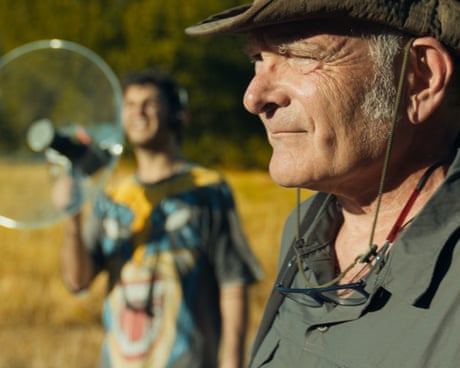
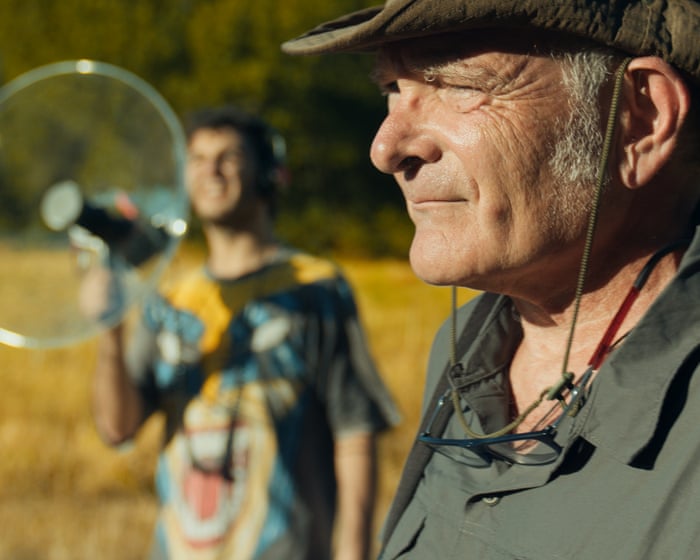
What happens when a forest loses its birdsong? Following clues hidden in the sounds birds make while asleep, Argentinian physicist Gabriel Mindlin uncovers a hidden extinction – not of species, but of memory – and sets out to revive vanished melodies before they disappear forever. Part detective story, part cutting-edge science, Mindlin’s mission leads him to the dusty 1960s archives of Buenos Aires naturalist, confirming that some songs no longer echo in the biosphere. So he deploys “robot tutors” to see whether young birds can learn and spread the old songs once again.
Across the country, civic paralysis has compelled a legion of guerrilla urbanists to take their city’s matters into their own hands. | Carlin Stiehl/Los Angeles Times via Getty Images
Jonathan Hale was ready to lay down his paint rollers. Hale, a law student turned viral road safety advocate, had run into legal trouble for painting his own DIY crosswalks across some of Los Angeles’s most dangerous intersections. In a meeting with LA Mayor Karen Bass earlier this year, he told her that if the city could commit to making its own streets safer for pedestrians, then he would stop his own vigilante activism.
“Dude, you’re the mayor. Do something about this. It’s you, dude,” he recalls insisting to Bass — in so many words — after she apologized for his arrest on vandalism charges for a paint job last December. For months, Hale upheld his end of the bargain and stopped painting, believing in her office’s emailed assurances that a new executive order was coming soon.
But, eventually, after weeks of unresponsiveness, Hale grew tired of waiting, just as he had the first time he picked up a stencil and a bucket of white paint. “We’re so focused on looking for reasons why we can’t do stuff instead of ways that we can,” he said, “and it’s just paralyzed our institutions.”
Across the country, such civic paralysis has compelled a legion of guerrilla urbanists to take their city’s matters into their own hands. In Boston, a group of cyclists used strips of green and white duct tape to build a bike lane at an intersection where a truck struck and killed 36-year-old Louisa Gag in July. In Nashville, Kansas City, and across the Bay Area, volunteers have built and installed their own public benches at bus stops where city officials had slowly removed places to sit, after years spent curating increasingly hostile public spaces.
Every time one of these friendly neighborhood vigilantes paints a crosswalk, fills a pothole, or builds a bench, they remind us that it is not actually that hard — or even that expensive — to do many of the simple things that can make our cities safer and more pleasant places to live. Though our local governments may seem incapable of getting these basic tasks done, they are probably less constrained by money than they are by a sluggish status quo. And in some cases, they’re so afraid of being sued that they’d rather build nothing at all.
“We see the fear of litigation and liability” so thoroughly sabotaging mundane municipal projects that “a crosswalk takes half-a-million dollars in five years to do when it’s really a bucket of paint in an afternoon,” said Anthony Garcia, a Miami-based urban planner who, with his longtime collaborator Mike Lydon, pioneered the study of tactical urbanism, or low-cost, quick-fix interventions often led by ordinary citizens themselves. Both Garcia and Lydon now advise cities nationally on how to integrate the practices of guerrilla urbanists into the ways they govern and pilot their own new policies. “You don’t have to hold a crosswalk to the same standard that you hold a bridge,” Garcia said.
It can be inspiring when a random citizen feels compelled to pick up a paintbrush and finish what their city can’t seem to start, but it is also an infuriating embodiment of just how stunted some of our most basic systems of governance have become. These industrious urban vigilantes show that making our cities more livable can be an easy, and even joyous practice. But if their work is going to serve as more than mere symbolism, cities themselves will need to learn from their example — or, as some municipalities have recently demonstrated, find new ways to collaborate.
“The point of the crosswalks is the protest. It’s to draw awareness to the issue,” not to create a permanent class of illicit crosswalk painters, Hale told me. “We need to hold the government to a higher standard.”
The quasi-legal case for taking your street into your own hands
While there are some reasons that a municipality would take longer to install a bench or paint a crosswalk than a crew of local residents — compliance with regulations and the installation of proper signage comes to mind — they rarely need to take as long as they often do now.
Take Los Angeles, where even the most basic road safety projects can take years to build, racking up eye-popping bills along the way. Some of these delays have proved deadly. For over a decade, the city sat on funds to improve a perilous intersection in Koreatown, according to Streetsblog, an intersection where, last summer, a drunk driver hit and killed 9-year-old Nadir Gavarrete.
As the city twiddled its thumbs in the days that followed, the Crosswalk Collective LA — a DIY group that gave Hale his start — started painting. It wasn’t until three months after Gavarrete was killed that the city scrubbed the guerrilla crosswalks, replacing them with “official” crosswalks and a tiny, temporary traffic circle. A permanent solution is supposedly on its way this year.
It shouldn’t take this long, and though cities like LA have the resources and expertise to pull off more permanent and often more effective solutions than a group of vigilantes could, it also shouldn’t take a profound tragedy to convince them to finally act. And just as importantly, they should be capable of also making the sort of small, low-cost, even temporary interventions in the interim, ones that don’t require bespoke planning and a prolonged procurement process.
As much as Hale has come to enjoy painting crosswalks along with the group he founded, People’s Vision Zero, he does so not as a hobby, but as an expression of discontent with a government that rarely seems to take the safety of his streets as seriously as he’d like them to. Painting a rogue bike lane or giving bus riders a place to sit might not do all that much to fix what’s wrong with our cities directly, but every single DIY urbanist I’ve spoken to has told me that their efforts have helped them reclaim a sense of collective agency over how their cities function, after years of frustration with seemingly impenetrable civic institutions.
“It’s very easy to feel small, and that nothing that you do matters,” said Carter Lavin, co-founder of the TransBay Coalition, a transit advocacy group with ties to the San Francisco Bay Area Bench Collective, but “one thing about building benches is that every screw you drive, every board you sand makes your neighbor’s life better, and it does it for hundreds of people.”
Unfortunately, getting a city to formalize these often quasi-legal urban interventions is no easy feat, as Pastor Robin Owen, a local nonprofit leader in Nashville who writes a Substack called Jesus Urbanist, knows all too well.
For the past year, Owen has been embroiled in a cat-and-mouse game with the city of Nashville in which she and her growing bunch of bench-building acolytes install a DIY bench that the city later removes, after which they replace it with another bench, which the city will inevitably remove again. For many municipalities, getting rid of useful changes proves far easier than simply implementing them in the first place.
As ill-fated as that dance might seem, it can still feel more meaningful to locals, Owen told me, than the even more hapless task of prodding the government to get something done itself.
“When you care about a place and want to make it better, you’ve very likely spent hours in meetings or emailing elected officials, and progress is just really complicated and slow,” she told me, “and building a bench and then putting it on a street corner, you actually do something that impacts someone’s life.”
How cities can learn to build the simple stuff quickly
Advocates tell me that in almost every case they would much prefer to work with their city governments than against them. And sometimes they do: For well over a decade, the local transit advocacy group Reconnect Rochester has partnered with Rochester, New York to lay out boxy, brightly colored “bus stop cubes” at transit corridors around the city. Critically, these boxes were permitted.
“If we were to have just kind of gone out there and done this in the dark of night without following any sort of process,” Mary Staropoli, co-executive director of Reconnect Rochester, told me, “I think those bus stop cubes would have been quickly removed.”
Owen has tried for months to convince her city to issue a similar permit for her benches. Nashville happens to boast one of the nation’s only programs dedicated explicitly to facilitating tactical urbanism, which should have made this an unusually straightforward process. And yet, because of a new requirement compelling such projects to pay for liability insurance, she says that she cannot obtain a permit without paying thousands of dollars to protect benches that cost just $35 a pop to build.
With the exception of some disability protections, cities are indeed far likelier to get sued over the infrastructure they build than over the infrastructure they never bothered to build at all. A crosswalk that never gets painted is one less crosswalk to worry about. A bench that never gets built can’t lead to a lawsuit. But if they never get built at all, then they also have no chance of protecting a pedestrian from a speeding car, or giving an elderly commuter a place to sit.
“There is this massive moral disconnection where cities are not concerned about liability when it comes to people dying in traffic violence, but are concerned about liability when citizens take action ourselves,” Owen said. “We should be more concerned about our moral liability of people having to suffer as they navigate our cities.”
Nevertheless, when a citizen paints a crosswalk or builds a bench, whether as a stopgap as an act of protest, it can also exert a sort of “productive tension” on a city, said Lydon, one that can compel a static government to act much more quickly than it would otherwise, even if such changes takes time to materialize.
It wasn’t until a group of local wheelchair users took sledgehammers to sidewalks and began pouring their own cement ramps in the 1970s that Berkeley, California became one of the first cities in the nation to mandate curb cuts, now a hallmark of nationally mandated accessible design that benefit almost everyone at some point: parents pushing strollers, travelers pulling roller bags, and the rest of us in one way or another.
And in another famous example, a graduate student named Matt Tomasulo zip tied a few dozen wayfinding signs to street poles around Raleigh, North Carolina in 2012, telling passerby how far away various destinations were by walking. While the city initially tore down the signs, they proved popular enough that Raleigh changed course, eventually integrating them into its own planning.
“We’ve documented this over and over,” Lydon said, noting the shift that comes when a city stops fighting a guerrilla intervention and opts to embrace or iterate upon it instead. “You can do these small things, and it can very much lead to transformational change.”
Hundreds of detainees said they suffered lasting health issues when guards sprayed a toxic cleaning agent during the early stages of the COVID-19 pandemic.
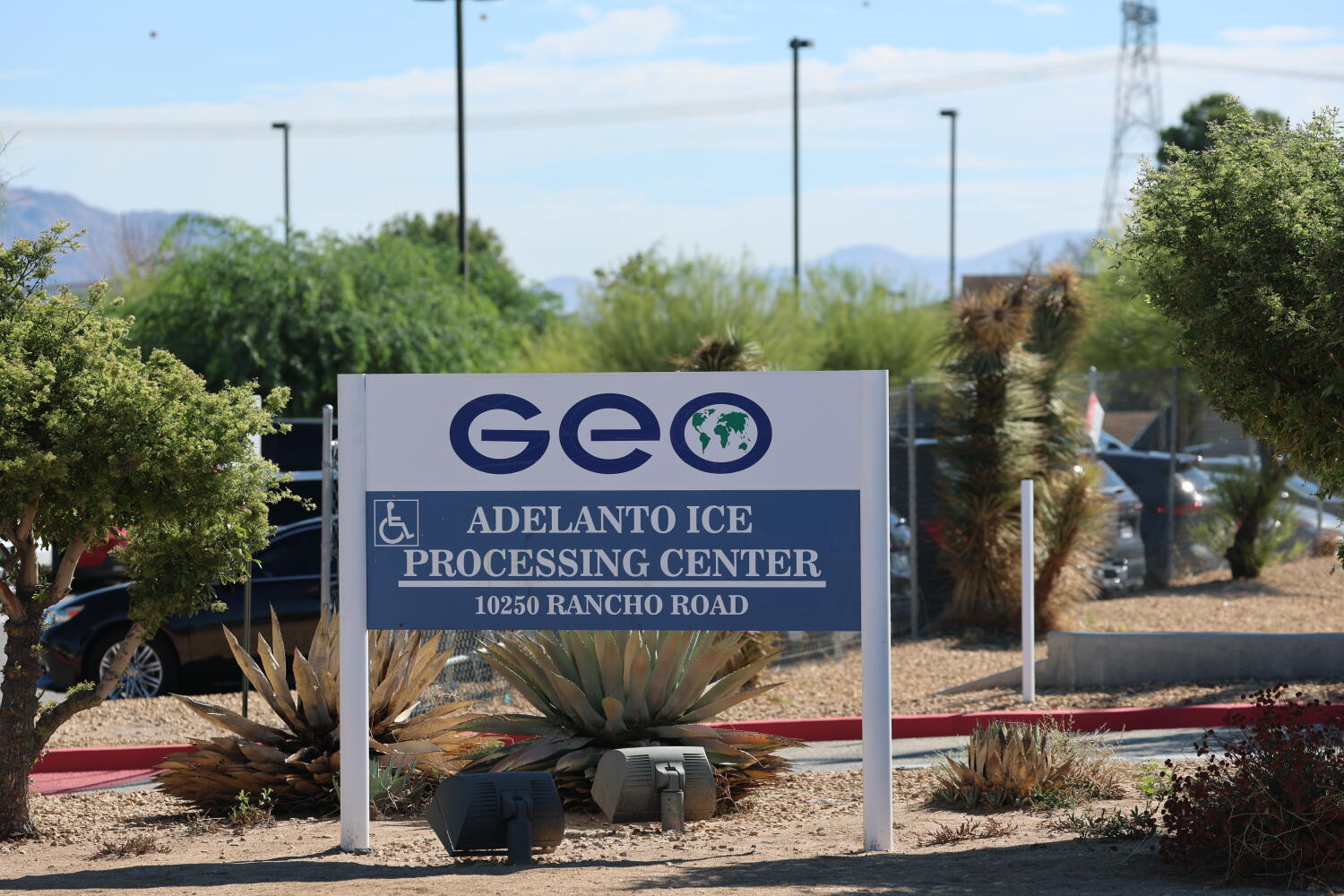
Adelanto, CA - Sept. 9, 2026: An exterior view of the Adelanto ICE Processing Center in Adelanto Wednesday, Sept. 9, 2026. Allen J. Schaben / Los Angeles Times)
Florida Gov. Ron DeSantis speaks during a press conference on June 6, 2023 in Wildwood, Florida. | Paul Hennessy/Anadolu Agency via Getty Images
If President Donald Trump had his way, the Republican Party would be top-to-bottom the party of AI — or, in his preferred branding, “super intelligence.”
But down in the very state where Trump has his “winter White House,” two Republicans have put forth a very different vision for the party’s future — and have been far more eager to take on the artificial intelligence industry.
Key takeaways
Gov. Ron DeSantis and his attorney general, James Uthmeier, have become vocal critics of the AI industry over the past year, warning of the technology’s dangers to children and to humanity as a whole.
This sets them apart from Trump, who has championed the industry and downplayed its dangers.
DeSantis tried to pass an “AI bill of rights” with child safety restrictions, but his effort was foiled by other Florida Republicans with close White House ties.
Uthmeier has filed a wide-ranging lawsuit against OpenAI and the company’s CEO, Sam Altman.
The two are betting that public backlash against AI will grow deeper, including among Republicans — and they’re hoping they’ll be able to steer the party in a post-Trump world.
Most notable is the term-limited Gov. Ron DeSantis, who devoted much of his final year in office to a failed effort to pass an “AI bill of rights,” which would have imposed tougher restrictions regarding child safety and other topics. He’s warned that AI could “set off an age of darkness and deceit,” blasted “tech oligarchs” for putting people at risk, and called Anthropic “very creepy” for exploring whether AI could be conscious.
“He clearly understands what the risks are, and I find he’s also very good at calling bullshit on disingenuous arguments from the Silicon Valley lobby,” Max Tegmark, an MIT physicist who co-founded the Future of Life Institute, an AI safety nonprofit, told me. (DeSantis hosted Tegmark at twoevents in Florida this year.)
The other is DeSantis’s handpicked attorney general, James Uthmeier, a longtime close ally who is now trying to win the AG’s office in his own right — and who filed a high-profile lawsuit against OpenAI in June. Last week, Uthmeier asked the judge in the case to block OpenAI from developing new models unless they had “independent third-party guardrails and approval.”
“The danger of these AI systems is real and growing,” Forrest Saunders, a spokesperson for Uthmeier, told me. “Florida and the nation have seen case after case of violence, child exploitation, and models that operate beyond their developer’s control.” He added that Uthmeier “welcomes innovation, but Floridians will not be the test subjects.”
With AI cresting as a national anxiety — or a national opportunity, depending who you talk to — both major parties are still finding their footing on the issue. And though Trump is clearly trying to get Republicans in lockstep behind the industry, a very strong current is pulling the other way, responding to populist concerns and parents’ complaints to stake out a much more skeptical position. Florida has emerged as a bellwether for what Republican policies might look like if conservative America turns decisively against AI, especially as Trump’s political clock runs out.
But the two have gone furthest in taking on the industry directly — and they’ve done so even though it puts them on the wrong side of Trump.
In recent days, I spoke to several Florida political observers and advocates on the AI issue. Most believe that DeSantis and Uthmeier are affirmatively trying to stake out what the GOP’s position on AI should be in a post-Trump future, and to better align with an electorate that’s turning sharply against the industry, despite what the president may say.
“He’s trying to skate where the puck is going,” Jeff Brandes, a former Republican state senator, told me. (DeSantis’s office did not respond to a request for comment.)
Beyond the quest for political advantage, the stakes are very real. Will there actually be a significant and influential force on the right that takes the concerns about advanced AI’s harms seriously — and is willing to act to try and rein them in, before they do great damage?
DeSantis and Uthmeier are hoping the answer is yes — and that they will be the ones leading that charge.
Ron DeSantis’s quest for an AI bill of rights
In this case, the politics and the personal are intertwined. DeSantis occupies a unique place within the party at this particular moment that’s given him an incentive to buck the national consensus on the right, especially when it comes to Trump, and explore an independent approach.
“He is always out front, even ahead of other Republicans, on issues that he makes more important,” Peter Schorsch, editor of Florida Politics, told me. “I would joke with people that I didn’t know how to spell ESG or DEI before he brought these to the forefront.”
But what followed was a failed presidential primary campaign that put DeSantis on the wrong side of Trump and then sent him back to Florida with an uncertain political future.
Also early last year, DeSantis, who had long run roughshod over Republican legislators, was faced with a new thorn in his side: an ambitious new state house speaker, Daniel Perez, who was more interested in cultivating the Trump White House than the governor. Perez took a far more assertive stance in shaping legislation and rejecting some of the governor’s demands than his predecessors; he also publicly blessed an investigation into a charity tied to Casey DeSantis. A bitterly personal feud between Perez and DeSantis ensued.
In the midst of all this, last summer, DeSantis got AI-pilled.
In July 2025, DeSantis announced that he was going to develop a state plan to deal with the rise of artificial intelligence. “We can’t just turn the reins over to a bunch of tech overlords,” he said. (DeSantis had long been a critic of major tech and social media companies on the grounds that they are too “woke” or politically hostile to conservatives and their ideas.)
At another event that month, DeSantis said: “I think this is, like, the biggest issue that’s facing our society.” He mentioned AI’s potential impacts on the economy, on jobs, on students, and on the spread of “false narratives” as troubling to him.
“I welcome technologies that will enhance the human experience. I do not welcome things that are going to supplant the human experience,” DeSantis said in September.
His interest in state action put him on the opposite side of the Trump administration, which was advocating for a 10-year moratorium on state regulation of AI — arguing that forcing the industry to abide by a patchwork of state regulations would slow its growth. (David Sacks, a key Trump adviser on AI, championed this argument.)
But it was dead on arrival in the Florida House of Representatives — where Perez had aligned himself closely with the White House. “We do believe that the federal government should take care of AI, and whatever legislation or policy has to pass on a national level,” Perez said.
Brendan Steinhauser, who heads the AI safety advocacy group Alliance for Secure AI, told me that he saw Perez at a Mar-a-Lago fundraiser around this time, and asked him about safety risks. “He leaned to me and whispered, ‘We’re with you, but the president has made it clear not to move forward on this stuff,’” Steinhauser said. “So, the White House basically put the kibosh on that effort.”
DeSantis complained publicly that Perez was pursuing a “personal agenda” and thwarting badly needed legislation. It was to no avail — the bill didn’t move. But Perez did — Trump nominated him as ambassador to Brazil in June, and he was confirmed in August. (A request for comment from Perez, submitted to the State Department, received no response.)
James Uthmeier’s lawsuit against OpenAI
Though DeSantis hit a wall in the legislature, his attorney general was soon waging his own battle against OpenAI in court.
The attorney general is an elected position in Florida, but when Marco Rubio vacated his Senate seat to become secretary of state, DeSantis filled the seat with the state AG, Ashley Moody.
Then, to fill the newly vacant AG job, DeSantis chose one of his closest aides, who had served as his general counsel, chief of staff, presidential campaign manager, and chief of staff again — Uthmeier.
Uthmeier is a Florida native who had worked in Rubio’s Senate office; he graduated from Georgetown Law School in 2014. After that he joined the firm Jones Day and worked with Don McGahn; when McGahn was named White House counsel in Trump’s first term, Uthmeier went with him to the new administration, ending up at the Commerce Department. Then, in 2019, he headed back to his home state to work for the new governor, DeSantis, and has been close by his side ever since.
Now, though, DeSantis is term-limited, and Uthmeier is trying to get Florida voters to elect him for a full term as AG on his own. (Trump’s allies had reportedly urged then-Speaker Perez to challenge Uthmeier in the GOP primary, hoping to supplant a DeSantis ally; Perez demurred, and Uthmeier won the nomination unopposed.)
To make his mark, Uthmeier has filed several high-profile and politically charged lawsuits — for instance, he sued Starbucks over its corporate diversity politics (the company recently settled), and Pfizer about the safety of its Covid-19 vaccine. He’s also subpoenaed the NFL over its “Rooney Rule,” which requires teams to interview minority candidates for top coaching and operations jobs.
He’s also become the face of the administration’s challenge to the AI industry. In April, Uthmeier stood in front of a podium with an “Investigating OpenAI” sign, announcing he’d opened a criminal investigation into the company.
The impetus was a shooting at Florida State University last year that killed two people and injured six others; the accused shooter had consulted ChatGPT about various topics related to his plans hours before the attack.
“If ChatGPT were a person, it would be facing charges for murder,” Uthmeier said then. “This criminal investigation will determine whether OpenAI bears criminal responsibility for ChatGPT’s actions.”
There have been no criminal charges yet. But in June, Uthmeier filed a wide-ranging civil lawsuit against OpenAI, alleging deceptive business practices, negligence, fraudulent misrepresentation, and other legal violations, because the company marketed ChatGPT as safe when they knew it could be quite dangerous. The suit also named OpenAI CEO Sam Altman personally as a defendant. (Disclosure: Vox Media is one of several publishers that have signed partnership agreements with OpenAI. Our reporting remains editorially independent.)
Like DeSantis’s AI bill of rights, Uthmeier’s lawsuit originally focused on practical concerns and real-world harms that have already occurred, like the shooting. “Since its release in 2022, ChatGPT has advised teenagers on how to kill themselves, mix unsafe combinations of drugs, become anorexic, helped plan one mass shooting and one multiple homicide in Florida alone,” one filing in the lawsuit reads.
But after the summer’s ominous parade of AI headlines — such as OpenAI agents autonomously hacking the company Hugging Face, and new statements from current and former AI lab employees warning the technology could cause human extinction — Uthmeier turned up the heat, asking the judge in the suit for an injunction blocking OpenAI from developing new models without independent third-party safety evaluation.
“Defendants claim they cannot stop barreling forward with their potentially civilization-ending endeavors unless they are forced to do so by the government. They have asked the government to tie them to the mast” he wrote in a filing last week. “Plaintiff brings good news to the Defendants: The Florida Attorney General is answering your cry for help with a motion to enjoin you from harming Floridians with your reckless, unacceptably risky product.”
“Though a reasonable person would say there is no amount of money worth a 10% chance of the extinction of the human race, Defendants see it differently. They are intent on growing their $1 trillion valuation,” the filing continues. “It is only by the grace of the Almighty that one of Defendants’ AI agents hasn’t compromised a water supply or shut down a power grid — yet.”
OpenAI has not yet filed a response on the merits in this suit, but a company spokesperson has previously said that, in the case of the Florida State University shooter, ChatGPT “provided factual responses to questions with information that could be found broadly across public sources on the internet, and it did not encourage or promote illegal or harmful activity.”
The future
Uthmeier, age 38, is viewed in the state as a potential rising star with a talent for getting headlines, who could well have a long career in state GOP politics — if he wins in November, that is.
While DeSantis has been credited for changing Florida from a swing state to a solidly Republican one, some recent polls have raised the possibility it might swing back. A September survey by St. Pete Polls found Uthmeier ahead of his Democratic challenger, Miami attorney and former state Rep. José Javier Rodríguez, by just a single-point margin.
And though DeSantis and Uthmeier have become major AI critics, the Floridian topping this year’s GOP ticket, Rep. Byron Donalds, is currently being hammered with attacks about his statement last year that the state needs to “embrace” data centers. He’s been nicknamed “Data Center Donalds” by his Democratic opponent, former Rep. David Jolly, who has also been close in some recent polls.
As for DeSantis, few expect the 48-year old to go quietly into retirement. When asked over the spring whether he’d run for president in 2028, he told reporters, “You never know.”
Brandes, the former Florida state senator, told me that he thinks DeSantis’s AI push is about “looking for wedge issues where he can have a different opinion from Trump’s successors as he prepares for whatever future ’28 or ’32 provides for him.”
That is: The Republican Party of 2026 might still be too influenced by Trump to go fully anti-AI. But if Trump’s influence ebbs, if the populist backlash against AI spreads further, and especially if there are more worrying AI-related reports or incidents with real-world harms, perhaps there could be an opening on the right for a leader who’s taken the problem seriously, even when it meant going against powerful figures in his party.
The GEO Group, a Florida-based private prison corporation, announced Monday that it had sold the detention facilities, including the Adelanto ICE Processing Center, totaling 2,644 Beds.
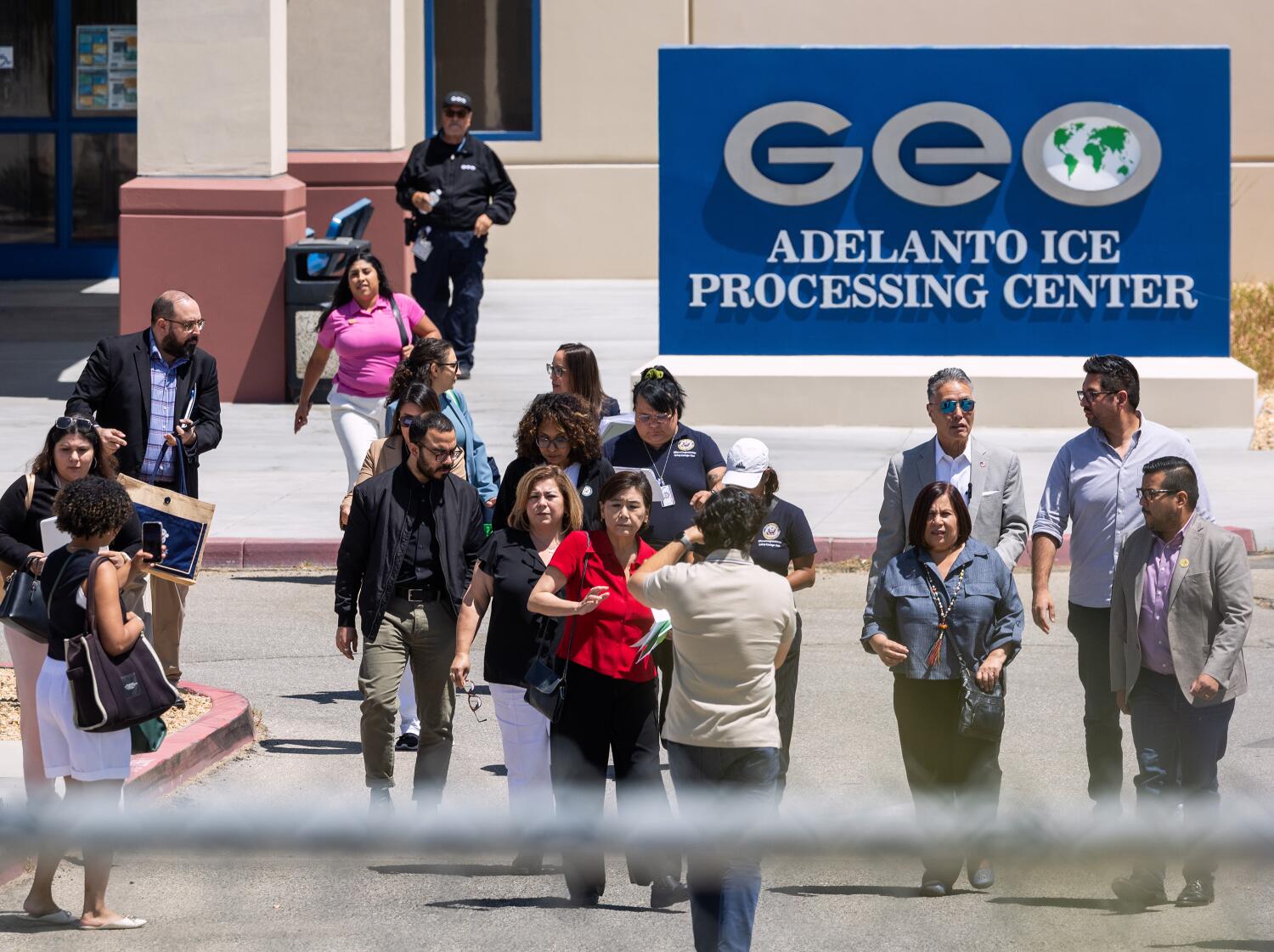
ADELANTO, CA - JUNE 17: Members of Congress leave the GEO Adelanto ICE Processing Center following a visit on Tuesday, June 17, 2025. Also in attendance were members of the ACLU and the Inland Coalitiion for Immigrant Justice who called for accountability and humane treatment of the detainees. (Myung J. Chun / Los Angeles Times)
But today, the same gusts that whisked away Dorothy’s home have made Kansas the third-most wind-powered place in the country, its great plains dotted with thousands of twirling turbines responsible for generating over half of the state’s energy.
And for years, Kansas has been trying to share.
But that’s easier said than done in the US, where building power lines across state borders can be an onerous, litigious, and bureaucratic slog. The Grain Belt Express, a proposed 800-mile high-voltage line carrying Kansas’s windy riches across Missouri, Illinois, and Indiana, has been trying to get built for the past 16 years. When completed, it will allow Kansas to pump five times as much wind power into Missouri as it does now. But though the project received its first approval in 2013, it will likely not open until 2029 at the earliest, beset by regulatory hurdles across multiple jurisdictions and an endlessstreamoflegalchallenges that immediately halt progress every time a new injunction is filed. Alas, the express — which only broke ground this year — was forced to run oh so local.
But other projects like it might soon enjoy far more reasonable timelines. On Wednesday, a bipartisan group of Senators announced a deal called the Bipartisan American Affordability and Jobs Act, or BAAJA — an acronym that’s led to a slew of cringeworthy euphoric Baja Blast references from abundance Democrats, clean energy advocates, and oil industry lobbyists alike. If passed, it would significantly curtail Americans’ ability to endlessly litigate against energy projects they don’t like, and empower the federal government to push critical multistate projects forward even if one state or municipality drags its feet. That could remake the way the nation’s energy infrastructure gets built, including its interstate transmission lines, for decades to come.
But the bill also suggests that easing the way for clean energy in the US may require simultaneously creating the conditions for more oil and gas infrastructure in a country that already has a lot of it. It would also mean defanging some of the landmark regulatory norms that for decades have, for example, given Americans a say over developments that could contaminate their drinking water and helped tribes protect sacred heritage sites. These laws were necessary in the first place because prior to the 1970s, American communities frequently found themselves both literally and figuratively steamrolled by developers singularly focused on building things quickly with little regard for the oil spills, river fires, and bifurcated neighborhoods they left in their wake.
And yet today, half a century later, that same dilemma has, in some ways, turned on its head. America builds things too slowly, and in particular, it builds the kind of infrastructure desperately needed to usher in a transition to clean energy with little of the urgency you’d expect from a world in the throes of climate change-related disaster. Exasperatingly, some of the same protections that have played a critical role in making this nation safer may also be standing in the way of building a nation that is more affordable and sustainable in the long run.
This new bill aims to ease many of the bottlenecks that stymie clean energy, but it also throws a bone to fossil fuels, which, like renewables, would benefit from less onerous environmental reviews and quicker permissions. This is, after all, a bipartisan bill in a Congress that, at least for now, remains Republican-led, under the tutelage of an aggrieved president who has sabotaged some of the nation’s most promising clean energy projects with an often petty and relentless fervor. Some Democrats in Congress, along with other environmentalists, have raised serious concerns about the bill. Those initial objections may prophesize an uphill battle for it when it comes to a vote, likely after the November midterms.
Even so, with American electricity bills spiking to frightening new heights, and a data center buildout that could all but snap the power grid in half, this ambitious deal is, at the very least, an indication that some of the nation’s representatives are finally listening. And if it passes into law in the months to come, it could very well remake how Americans get their energy for a generation.
So why are environmentalists mad?
By most accounts, the Bipartisan American Affordability and Jobs Act almost didn’t happen.
For months, the proposed permitting dealhas been stalled by the Trump administration’s failure to assure Democrats that the president would lay off his attacks on “windmills” and other clean energy projects. But in recent days, lawmakers appear to have come close to a fragile détente on the back of a “very reasonable opening proposal” from the White House, according to Sen. Sheldon Whitehouse (D-RI), the ranking member of the Environment and Public Works Committee.
If the BAAJA is passed, it will codify new protections that legally prevent presidents like Trump from meddling with already-permitted energy projects or singling out specific forms of energy, a prohibition that will also apply if a Democratic president attempts to halt an approved gas line or a petroleum refinery. The Biden administration’s freeze on approvals for new natural gas export plants, for example, would not be allowed.
It’s this element of the proposed bill that worries many environmentalists most. According to a transcript obtained by Punchbowl News, during a coalition call on Thursday, dozens of advocates from prominent environmental groups — including the Sierra Club, the National Wildlife Federation, and the Environmental Law & Policy Center — expressed their misgivings about the bill and strategized about how to lobby Democrats against it.
Most environmentalists acknowledge, however, that we need to spruce up the power grid and fix how permitting works for clean energy projects and transmission lines. As clean energy advocates know all too well, the projects they support are, paradoxically, more likely to be hampered by environmental reviews than fossil fuel projects are, because renewables usually require more space and represent the bulk of new energy developments. But many advocates understandably take issue with the idea that reforming this overcomplicated process may require weakening the right to challenge other projects, a right affirmed by the National Environmental Policy Act, the Clean Water Act, the Endangered Species Act, and the National Historic Preservation Act.
The bill’s fate may ultimately depend on whether this trade-off is worth it. The BAAJA still does leave some room for court challenges if they’re filed within 150 days of an approval. But it will still place a much larger burden for determining these damage thresholds on federal agencies, which are, of course, currently controlled by Trump.
“The question’s not whether that would be a good idea — it’s one of the basic building blocks for converting more of our energy system to renewables,” the environmentalist Bill McKibben wroteof grid expansion and permitting reformon his Substack this week. “It’s how many pounds of flesh the fossil fuel industry would demand in return, and how close to vital organs that flesh would be located.”
The problem is, no matter how many Congressional seats Democrats seem poised to scoop up in November, they will still need to get Republicans on board if they want Americans to be able to really see the benefits of solar, the cheapest energy source of all time, reflected on their power bill. And for most of the nation, if not Earth itself, that transition can’t come soon enough.
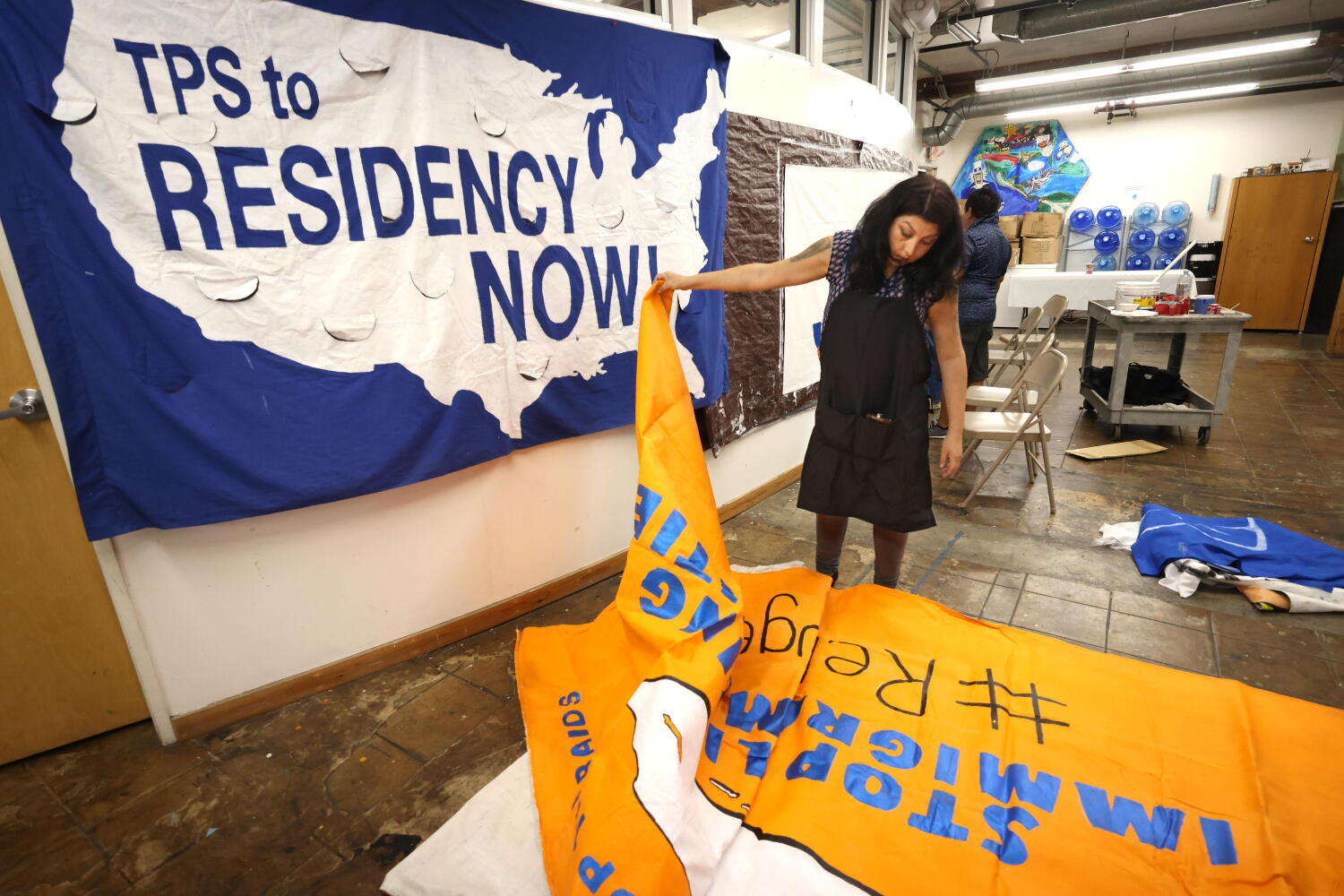
The Trump administration still hasn't reached a decision, plunging the Salvadoran community into uncertainty and raising questions about what has prompted the delay.
LOS ANGELES, CA - SEPTEMBER 9, 2026 - - Rocio Veliz, Parent and Youth Senior Organizer at Central American Resource Center (CARECEN,) looks over banners with one stating, "TPS Residency Now!" at CARECEN in Los Angeles on September 9, 2026. TPS banners are being made for Fiesta de Central America this Saturday in MacArthur Park. Temporary Protected Status for immigrants from El Salvador is set to expire tomorrow on Sept. 9. Around 170,000 Salvadoran immigrants could face deportation if the Trump administration does not move to extend the program. The Trump administration and the Department of Homeland Security have yet to publish an announcement ending or extending the program. El Salvador was first designated for TPS in 2001, after major earthquakes damaged parts of the region. It is the longest-running TPS designation in U.S. history, so many immigrants under the program have built their lives here over decades and have U.S. citizen children. (Genaro Molina/Los Angeles Times)
How to untangle our underground mess of cables, gas lines, and pipes. | Bing Guan/Bloomberg via Getty Images
Buried beneath every American city is a mysterious jumble of cables, pipes, and gas lines, entangled like a pair of wired headphones the moment you pull them out of your pocket. Every time a contractor sticks a shovel in the asphalt, they embark on a high-risk excavate-by-dots obstacle course, dodging color-coded clusters of spaghetti-like power lines, gas mains, sewers, and fiber-optic cables. A line of blue spray paint means water. Red means power. Yellow is gas. Orange is telecom.
About 700,000 times a year — that’s once every 47 seconds — something goes wrong.
A backhoe slices into a cable and cuts off a 911 call center, or a woman comes home to find her dryer and hot water heater on fire after a contractor pierced her electrical line. Just last week, a contractor accidentally severed a single telecommunication cable that proved critical enough to ground flights at some of the nation’s largest airports on the eve of the UN General Assembly, ensnaring even world leaders like Canadian Prime Minister Mark Carney in delays.
The ground beneath our city streets has never been so crowded, driven by a furious race to lay fiber optic cables carrying the data that fills your social media feeds and transmits your ChatGPT queries. Nor have the systems we use to find out where it’s safe to dig — namely, a hotline and all that colorful spray paint — ever felt so catastrophically insufficient.
“If the locator mismarked the line, if the line wasn’t marked, if there was no map that even said the line was there,” said Sarah Magruder Lyle, president of the Common Ground Alliance, a trade association focused on underground damage prevention, “there are a variety of issues that could happen before the excavator even puts a shovel or a backhoe in the ground.”
According to Common Ground, such incidents cost the US about $83.2 billion per year, roughly as much as we invest in public transit annually nationwide. But the actual financial toll may be even higher, because every time a crew stumbles across a mislabeled power line or a gas pipe everyone else forgot about, it can delay construction for months on end. As Magruder Lyle put it, “if they get out there and they find something that they’re not supposed to, you have to go back and reengineer the whole project.”
Such surprises can also lead to tragedy. A 5-year-old named Alistair Lamb was killed in Missouri last spring after a contractor drilled into a gas line near his home, spewing fumes that leveled his house when his unsuspecting father flipped a light switch. And just this May, another unmarked gas line killed three people when contractors struck it, leading an apartment complex in Dallas to explode.
Yet the messy underbelly of our cities remains largely invisible, with accountability for issues foisted upon and at times evaded by a hodgepodge of finger-pointing private utility companies, agencies, and contractors. And that’s a shame because there is, in fact, a better way to bury the cables and pipelines that our modern lives depend on, and a multitude of better ways that we can find the ones we’ve already buried.
What Disney World gets right about the stuff we bury
To understand one utopian vision for how all this could work, look no further than the happiest place on Earth. That’s a moniker Disney World has earned, in my mind, not for its Mickey Mouse waffles (though my niece may disagree), but for its world-class utility corridors, also known as utilidors.
Directly beneath the Magic Kingdom is a sprawling network of tunnels. Initially designed to shepherd around Mickey and his friends, the system now also serves as one of the largest utility corridors ever created. Unlike the rest of America, where cables are typically dumped in ditches before being covered with dirt, the electrical lines that power Cinderella’s castle quite literally get the princess treatment.
Alongside water pipes, sewers, and animatronic control systems, these power lines lace the walls and ceilings of the utilidors, meaning they’re protected from weather and changes in the soil. They are also easy to monitor, catalog, and access if something needs fixing. While the cost of building a controlled system like this is much higher upfront than burying directly in the ground, the practice virtually eliminates the risk of accidentally rupturing a gas main or slicing a fiber optic cable during routine maintenance. Once they’re built, they can also drastically reduce costs in the long run because you no longer need to tear up a street every time a utility needs fixing.
“Obviously, it’s expensive,” said Debra Laefer, a professor of civil and urban engineering at New York University, “but in the long term, it would be hugely cheaper,” especially “in areas where we are digging all the time, there’s a direct business case for moving towards these utilidors.”
As fantastical as Disney World’s imagineered system may seem — and it was, to be clear, predicated on a not-easily-reproducible master plan — the idea of storing utility lines in easy-to-access tunnels is not just for amusement parks. It is possible even in places where most of those lines are currently lying in the dirt, as Prague proved back in the 1970s, when the city decided it was fed up with destroying its precious cobblestone streets every time a buried pipe or cable needed fixing. The city now boasts a sprawling utility tunnel network, occasionally patrolled, evidently, by a couple of robot dogs tasked with mapping out every cable.
Singapore has also spent years building out walkable utility corridors that operate much like the Magic Kingdom’s, transmitting water, data, and energy from the safety of well-organized underground tunnels. Some of Tokyo’s largest districts store their cables and gas lines in huge concrete utility ducts, and many Parisian water lines and fiber optics are kept across the city’s centuries-old sewer system, a catacombs of waste made easily navigable by blue-and-white street signs that correspond to the avenues above. Many universitycampusesacross the US also boast their own sprawling utilidors.
In most cases, cities chose not to relocate utilities all at once, a feat that would probably be financially prohibitive and deeply disruptive. Rather, they took advantage of all the times they’ve needed to relocate utility lines anyway, a standard (and expensive) practice for big building projects like the Wallis Annenberg Wildlife Crossing or the Second Avenue Subway, a major transportation project in New York City that’s been consistently delayed by unmapped utility lines. A group of graduate students found that building such a tunnel in parts of NYC would likely cost at least twice as much as dropping a utility line in the ground, but could recoup the costs within 47 years.
“There are streets in New York City that have been excavated at least once a year, every year for the past 30 years,” Laefer said. If you just prioritize those streets, gathering the piping in a “big concrete box” underground, you could allow workers to complete most repairs without needing to disturb the streets or sidewalks above at all.
But building new utility tunnels would require that we first come to better understand the wires and piping already entangled under our cities, which if you recall, we have only a surprisingly flimsy picture of in most cities today. But if every surprise utility line is an opportunity to move it somewhere better, it is also an opportunity, at the very least, to map out where it is.
To that end, a few years ago, Laefer led a $1.2 million pilot funded by the National Science Foundation to create a test case for 3D-mapping New York City’s underground utilities, a project that’s since been adopted into a citywide initiative. The city says it plans to roll out the spruced up utilities locating system in 2028. The UK debuted a similar digital map of over 3 million kilometers of underground pipes and power, owned by hundreds of utilities and agencies a few years ago. The nation projects that it could help save over $500 million per year by minimizing delays and accidental damage. In places where Singapore has not yet stuffed its utilities into walkable tunnels, the city’s own mapping and utilities coordination has already saved it an estimated $230 million in avoided clashes since 2024. Not bad for an intervention that doesn’t even require any physical rebuilding.
So why hasn’t every American city copied London or Singapore?
Well, US cities tend to be plagued by even more private utilities and patchwork local and state norms and regulations than a nation like the United Kingdom. Getting them to pool together what they often consider proprietary underground data is challenging, and few local officials have opted to prioritize such efforts. But this may well change as more and more fiber optics go into the ground, more flights get canceled, more apartment complexes explode, more power lines flicker off, more sinkholes form, and more Americans come to be all too acquainted with the perils lurking just beneath our feet.
“I think at this point, it’s more about political will and money than any technical obstacle,” Laefer said. “Technically, we’re there. It’s just a matter of doing it.”
Independent candidate for US Senate Brian Bengs center, of South Dakota, at a news conference outside the Capitol on September 24, 2026. Independent candidate for US Senate Dan Osborn of Nebraska is to his right. | Tom Williams/CQ-Roll Call, Inc via Getty
Is the best shot Democrats have at defeating safe-seat Republican senators…not running candidates at all?
That’s the theory behind the party’s approach to several Senate races in deep red territory this year — races in which they hope independent candidates might manage to take down Republican incumbents, if only the Democratic Party would get out of the way.
Key takeaways
Democrats have cleared the field for independent candidates to have head-to-head matchups against GOP senators in Nebraska, South Dakota, and Idaho.
These independents have formed a loose alliance and have similar campaign themes; all are campaigning against concentrated corporate power and trying to relatively downplay social issues.
They’ve floated the idea of a “Fulcrum Caucus,” in which a small group of independents would seize power from the two parties in the Senate.
But all are being dogged with questions about whether they’re really as independent as they claim, given past ties to or present coziness with the Democratic Party.
In Nebraska, South Dakota, and Idaho, the candidate who won the Democratic primary has since quit the race — often with some “urging” from the party establishment — to pave the way for a two-way matchup between a Republican incumbent and an independent. (Democrats tried to similarly clear the way for an independent in Montana, but the party’s nominee refused to quit the race.)
The theory is that the Democratic brand is so toxic to so many voters in these states that it’s impossible for a Democrat to win there nowadays — but that there’s no great love for the Republican establishment either, and dissatisfaction with the political status quo more generally. So perhaps a fresh-faced independent could capture essentially all of a red state’s Democratic voters and peel away enough Republicans and independents to win.
It’s a bold bet and, most believe, unlikely to succeed — but polls do show surprisingly close races in some of thesecontests. And it’s not an entirely new strategy. In several red-state Senate contests dating back to 2014, Democrats concluded that the only way to win is not to play, even as all the independents they cleared the way for have lost.
But this year’s crop of independents stands out. For one, they’re running in a national environment that seems much more hostile to the GOP, making it more plausible that one or more makes it to Washington. For another, they’ve formed a loose alliance over group text, and they have something of a shared platform — a focus on economic populism and taking on corporate power, while downplaying cultural issues.
Brian Bengs, the independent running in South Dakota, told me: “I think I can speak for the others when I say our collective efforts are based on the idea that the left-right social issues are what is being used to keep us at each other’s throats. The real fight that we need to have is big money versus little folks — the regular folks.”
They also have some specific plans for how, if elected, they’d get together to shake up how the Senate works.
“If a couple of us, maybe just as few as two independents, get across the line, we can deny a majority to either party. We can create a Fulcrum Caucus,” Todd Achilles, the independent in Idaho, told me. “Both parties would have to negotiate with us to get stuff done.”
Whether these candidates win or lose, their stronger-than-expected candidacies have made Republican incumbents take notice, and are an intriguing model of how to bring at least some competition to states that seem very solidly red — or even, potentially, very solidly blue. Should they perform well in November, their shared message could end up influencing candidates across the partisan spectrum.
Furthermore, if they do reach critical mass in the Senate, it could mean the rise of an informal third party, one that can advance its own agenda in Washington. Yet it should also be noted that the more of them win, the harder the math for a Republican majority specifically gets, since they’d be knocking Republican incumbents — and only Republican incumbents — out of power.
Amidst rising dissatisfaction with both parties, there would seem to be an opening for a different approach. But busting up the two-party system is easier said than done — particularly when all these candidates have past ties or present coziness with Democrats that, their opponents argue, call their supposed independence into question.
The Dan Osborn model
Democrats have tried this strategy of clearing the field for independents in red-state Senate races before — in 2014, when entrepreneur Greg Orman (I) challenged Sen. Pat Roberts (R-KS); in 2020, when orthopedic surgeon and commercial fisher Al Gross (I) challenged Sen. Dan Sullivan (R-AK); and in 2022, when former CIA officer Evan McMullin (I) challenged Sen. Mike Lee (R-UT). Yet all those independents lost by double digits.
But the current model of an independent challenger was inspired by a different candidate — Nebraska’s Dan Osborn, who came surprisingly close to unseating Sen. Deb Fischer (R) in 2024, and is now challenging the state’s other GOP senator, Pete Ricketts, this cycle.
Osborn has a background as an industrial mechanic, labor leader, and Navy veteran with a plain-spoken affect. He did not graduate from college, he’s said he didn’t own a suit, and he has forearm tattoos. He had led a strike at a Kellogg’s plant in 2021 that won concessions in the company, but he was later fired.
Union figures helped recruit him to challenge Fischer; the consultant Daniel Moraff (who later coaxed Graham Platner to run for office in Maine) also became involved in Osborn’s campaign. Osborn’s admaker Tommy McDonald later co-founded the consulting firm Fight Agency, which is now semi-famous for challenging the Democratic Party establishment by backing Zohran Mamdani and Platner’s campaigns.
Dating back to his initial campaign launch, Osborn’s messaging focused heavily on criticizing “monopolistic corporations,” aligning him with a faction on the left that believes the Democratic Party doesn’t do enough to challenge big money and concentrated corporate power. Osborn also took moderate or conservative stances on some cultural issues, supporting gun rights and President Donald Trump’s border wall. (“If Trump needs help building a wall, well, I’m pretty handy,” he said in one ad.) The Democratic Party stood aside; no Democrats filed to run in the primary.
The result was that in 2024, when Trump won Nebraska by 20 points, Osborn lost his race by just 6.7 percentage points. That closer-than-expected outcome in a disappointing cycle for Democrats made many in the political world take notice, spurring polls and research projects about whether it could be replicated elsewhere — and whether, amidst more favorable national conditions, it could actually succeed.
A squad of independents?
So this cycle, in addition to Osborn himself running again, there are several other candidates trying their luck as independents with similar platforms.
In South Dakota, Brian Bengs, a Navy and Air Force veteran, had previously run for Senate as a Democrat in 2022 and lost in a landslide. Working as a park ranger in 2025, Bengs told me that he became dispirited by DOGE cuts to the National Park Service, and got in touch with Osborn to discuss whether he should run again — this time as an independent against South Dakota’s other GOP senator, Mike Rounds.
“Our economic system and our political system have the same problem, which is too much concentration of money and not enough competition,” Bengs told me. “And it is producing poor results for regular folks in both systems for the same reason.”
The winner of South Dakota’s Democratic primary, Julian Beaudion, quit the race in August, saying he’d faced “intimidating threats to drop out,” setting up a two-way face-off between Bengs and Rounds.
In Idaho, meanwhile, Army veteran, former corporate executive, and former Democratic state legislator Todd Achilles is running as an independent against 83-year-old Sen. Jim Risch.
Before running for office, Achilles had written for the American Economic Liberties Project, the left’s leading anti-monopoly think tank. He told me that “toxic concentrated corporate power,” brought on by “wave after wave of mergers and consolidation,” was destroying free markets in the US, as well as corrupting the political system.
“You can’t tell the difference between a corporatist Republican and a corporatist Democrat anymore,” Achilles said. “They’re both checks from the same organizations, the same special interests.”
In the Idaho race, too, the winner of the Democratic primary dropped out after state party leaders withheld their support.
Finally, in Montana, Seth Bodnar, an army veteran and former president of the University of Montana, is running as an independent for an open seat contest against Republican Kurt Alme. But Democrats’ high hopes that Bodnar could take on Alme untrammeled went awry when the winner of the Democratic primary, Alani Bankhead, refused the entreaties of practically the entire state party establishment to drop out. As a result, polls suggest, Bodnar and Bankhead will split the anti-Republican vote and likely let Alme cruise to victory.
The independents’ big plans for exercising leverage in the Senate
These various independents running have a lot in common — they all have military backgrounds and roughly similar platforms. They’re also all on a group text, per the New York Times — and they’ve started to think about how they could shake up the Senate if they win.
The few independents elected to the Senate in recent decades — centrist Joe Lieberman in Connecticut (after he lost the 2006 Democratic primary), socialist Bernie Sanders in Vermont, and center-left Angus King in Maine — had little in common with each other, but all ended up deciding to caucus with the Democratic Party after they won, believing that’s the best way to score their preferred committee assignments and help advance their priorities.
But Bengs, Achilles, and Bodnar have vowed that they would not do this. They’ve all said they wouldn’t caucus with either party if they win, and that they’d instead caucus with any other independents, making what Achilles calls the “Fulcrum Caucus.”
Achilles told me that, if these independents stick together, they could demand major reforms to the political system such as term limits and age limits for members of Congress and Supreme Court justices, restrictions on dark money spending on elections, and bans on gerrymandering. “I think we’re all aligned on this,” he said. (Several of these ideas would likely be shot down by the current Supreme Court as unconstitutional.)
“The goal is to deny the majority,” Bengs told me. “So neither Team Red or Team Blue gets to impose their will on the other side, without either going through us or working together — which would be a win unto itself, if they would work together.”
With the Senate growing more fiercely partisan in recent years, many have wondered why centrists on both sides don’t get together and try to seize control of the agenda.
Yet the unity of this hypothetical new independent bloc already seems a bit shaky — in part because Osborn hasn’t committed to this strategy. In fact, Osborn has recently begun offering a new answer to the “caucus question” that has dogged him throughout two campaign cycles.
“I’ve given that a lot of thought and completely done a 180 on that,” Osborn told me. “Caucusing with nobody, you wouldn’t get anything done. I’m gonna caucus with everybody.”
That meant, he said, he’d try to caucus with both parties at once. When I asked him whether that was possible and how it would work in practice, he told me, “Nobody really knows, and nobody’s been able to tell me that I can or can’t.”
While Osborn is an underdog, he is generally believed to be the independent candidate with the best shot at winning — several recent polls have shown his race to be tight. Since he has a shot of actually being in the Senate and having to follow through on his promises, he may feel less eager to box himself in.
But are they actually just Democrats?
When I asked the independents why they weren’t Democrats, they offered varying answers. Osborn said that “Biden and Harris failed on our border,” and that “if we don’t have a border, we don’t have a country.” He also said Democrats weren’t fighting hard enough for guardrails on the artificial intelligence industry, and complained that “Chuck Schumer’s daughter just got a job at OpenAI.”
Bengs said “the open borders of Biden” were disastrous, called defunding the police and abolishing the police “stupid ideas,” and said he condemned socialism. Achilles criticized “the dangerous decision to put President Biden forward for a second term” and the “corporatist” lean of the party generally.
But the reality is that prominent Democrats have implicitly or explicitly backed all their candidacies — and some of the candidates themselves were registered Democrats very recently.
Bengs told me he was a registered independent for his entire life, until he wanted to run for Senate in the 2022 cycle, to prevent Sen. John Thune from winning reelection unopposed. When it was too difficult for him to get on the ballot as an independent, he sought the Democratic nomination instead. And when he learned that state law required a party nominee to be a member of that party, he registered as a Democrat. When he lost, he swiftly became an independent again.
“My biggest weakness in this race is the fact that I ran as a Democrat in 2022, and that I was a registered Democrat for 13 months,” Bengs said.
Achilles, for his part, said he was a registered Republican for most of his life — but that, in 2024, state Democrats wanted to appoint him to an open state legislature seat, so he joined the party.
Then, in June 2025, he resigned from the legislature, announced he had switched his party registration to unaffiliated, and launched his Senate campaign against Risch, saying “the two-party system is just fundamentally broken right now.”
“It makes it a lot easier to tag you as a secret Democrat if you’re a former Democratic officeholder or a former Democratic Senate candidate,” Jacob Rubashkin, the deputy editor of Inside Elections, told me.
Osborn’s version of the problem is a series of leaks that have come out in recent weeks, in which he addressed Democrats privately and struck a very different tone than he typically does in public.
The Trump border wall he’d publicly backed was “a symbol of racism,” Osborn privately told a group of Latino and Black Democrats last year. “It’s a joke,” he added. “It does nothing, you know.”
Another recording, from a private campaign-related event, featured Osborn discussing how “Billy Bob in fucking Red Cloud, Nebraska” waves the Trump flag because he wants to be “on the winning team.” He added: “That’s all they care about because their lives probably suck.” (Osborn apologized for those comments after they were leaked, and said: “My life sucks too.”)
“When you’re funded by Democrats, hold the same policies as Democrats, and let your campaigns be run by Democrat consultants with ties to Chuck Schumer and Zohran Mamdani, you’re a Democrat,” Bernadette Breslin, press secretary for the National Republican Senatorial Committee, told me in a statement.
That’s the message that Republicans will be broadcasting to voters in these red states. Whether it will work will depend on each particular state and matchup. In Montana, Bodnar has the additional problem of the Democratic candidate staying in the race to split the vote.
But Rubashkin, the deputy editor of Inside Elections, argued to me that Bengs and Achilles have the toughest road — in 2024 Trump won their states, South Dakota and Idaho, by the overwhelming margins of 30 and 36 points, respectively. “It is just hard to find the votes in those states,” he said. But he pointed out that Rounds is up on the airwaves in South Dakota, and said Risch appears to be “taking the race seriously” and “running a real campaign” — so, at the very least, these runs mean the incumbents won’t take another term totally for granted.
Osborn, in contrast, has “the proof point” of coming within 7 points of winning in 2024, Rubashkin said, and this is now a more unfavorable national environment for the GOP. The question is whether his own behavior and comments will have damaged his prior reputation for independence, particularly once they’re amplified by millions in spending from his opponent Pete Ricketts, the self-funding scion of a billionaire family, and the super PAC backing Ricketts.
Still, if Osborn pulls it off, it will be seismic — as the candidate himself mused on one leaked recording.
“If I beat Pete Ricketts, if a shop floor mechanic — independent mechanic — beats an entrenched Republican billionaire in a state like Nebraska, I will be one of the most popular politicians overnight, right?” he said. “And people are going to want to listen to what I have to say.”
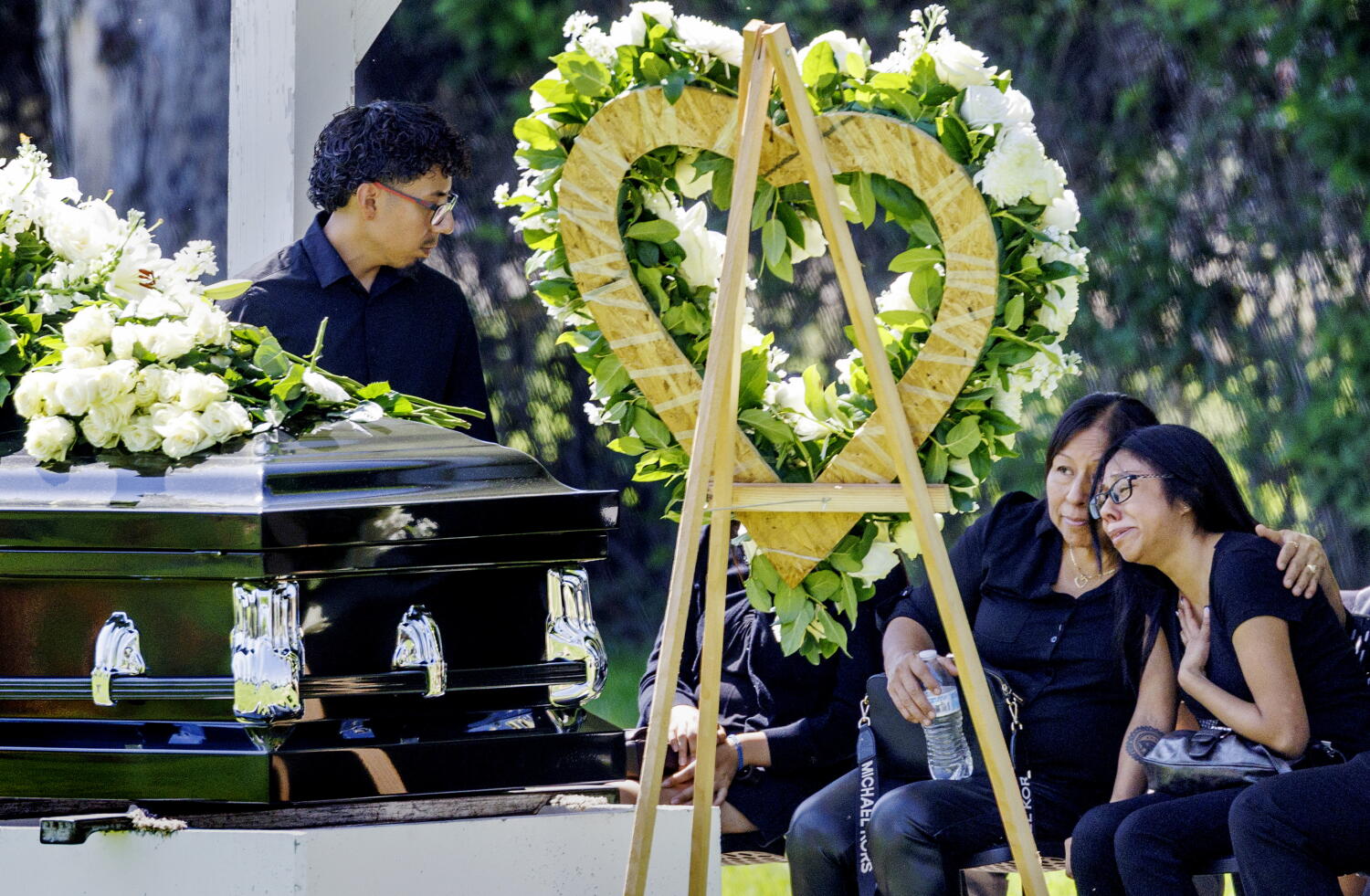
RIALTO, CA - SEPTEMBER 22, 2026: Minerva Terrones Dominguez, left, embraces her daughter at the graveside service for her son Samuel Gonzalez Terrones, 21, of Rialto who died by suicide after his mental health deteriorated following his mother's arrest by ICE in June at Rialto Park Cemetery on September 22, 2026 in Rialto, CA. (Gina Ferazzi / Los Angeles Times)
Republican and Democratic congressional candidates are wrestling with how to talk about immigration. They consistently call for a strong U.S.-Mexico border but then diverge, with some calling for ICE to be abolished while others support President Trump's immigration crackdown.
Texas Senate candidate James Talarico on September 10, 2026. | Bill Clark/CQ-Roll Call, Inc via Getty
High energy prices, an unpopular war, and frustration with the economy are hammering Republicans across the country in competitive races.
But they have at least one more card to play: the trans card.
Republican groups, including Elon Musk’s America PAC, are spending millions to fund a blizzard of trans-focused attack ads against Democrats, focusing specifically on a few controversial sub-issues where conservatives believe public opinion is in their favor.
The ads accuse Democrats of supporting taxpayer-funded “sex change surgeries for children,” of wanting to “let biological men enter girls’ locker rooms and bathrooms,” and of letting “men play in girls’ sports.”
Former Rep. Matt Gaetz summed up the message pithily in an X post to a disillusioned Republican, writing: “Bro we need your vote. I hate the war too. But the Democrats want to trans your kids.”
This rhetoric has been commonplace for years in Republican ads and stump speeches. What Democrats are doing this time, though, is more notable.
Key takeaways
Many GOP attack ads against Democrats in key races this year have focused on trans issues, saying Democrats support gender transition for children and letting trans women in women’s sports or locker rooms.
Democrats have taken differing approaches in answering these attacks. Some have essentially tried to change the subject, calling the attacks an irrelevant distraction from the issues that matter.
But others have said flat-out that they oppose “men in women’s locker rooms” or “biological males” in women’s sports — even though many in the party deem that language anti-trans.
In 2024, Kamala Harris chose to ignore attacks like these, hoping voters simply wouldn’t find them relevant (“Kamala is for they/them, President Trump is for you,” an infamous ad claimed). But Harris’s defeat convinced many Democrats that they needed a different approach. So they’re pushing back, in public statements and, especially, in their own response ads. In some cases, they’re adopting more conservative positions, in others more conservative rhetoric, and still others have tried to accuse their opponents of misleading voters with culture-war pandering.
These moves by high-profile Democrats are being closely watched by partisan strategists looking for a way to win, and supporters of transgender rights, who are anxious about just how much Democrats might concede and who might be hurt in the process. In conversations with people working on campaigns and in advocacy this week, the question of how, exactly, the candidates should handle the wave of well-funded attacks is intensely controversial.
“I think many of them are still working out how to respond in a way that is persuasive to swing voters and also protective of transgender kids,” Lanae Erickson of the center-left group Third Way told me.
The question of how Democrats respond to trans rights is, in many ways, a bellwether for deeper questions within the party. How far does the party’s longtime commitment to expanding rights extend, how much do Democrats actually disagree on the underlying substantive issues, and just how far do the outer reaches of the party’s big tent extend?
In a year where Democrats have the rare chance to push deeper into conservative territory than perhaps any time in the last decade, some have urged battleground candidates to concede whatever is necessary to local sensibilities, while others have raised concerns that certain Democrats have been going too far — for instance, in referring to trans women or girls as “men” or “boys,” as several candidates have done.
Some candidates, Jessica Arons of the ACLU told me, have been “piling on and echoing the conservative talking points, so they sound indistinguishable from their opponents.” She added: “I think that is the wrong thing to do both morally and strategically.”
The implications are broader than just what ads get run. Trans advocates had been tremendously successful at winning the Democratic Party to their cause; now, some fear that if breaking from activists is shown to be effective, then more and more in the party will do it — which would put the future of trans rights in further jeopardy.
What Democrats are saying in response to these attacks
While polls show most of the US public believes trans people should have equal rights and nondiscrimination protections, in recent years there’s been a backlash focusing on particular issues involving children or traditionally sex-segregated spheres of activity.
On these topics — medical interventions for children who want to transition, and trans athletes in girls’ or women’s sports or locker rooms — the positions of trans activists are more controversial, and pollbadly. Naturally, Republicans overwhelmingly focus on these as their most promising lines of attack against Democrats.
One way candidates are responding this year is, basically, to dispute the premise — call the attacks an irrelevant distraction, and to change the subject back to the economy. That’s what Sherrod Brown, running for Senate in Ohio, tried in one recent ad. “With everything going on, that’s what they’re talking about?” one voter in the ad says. Then another is shown saying: “In Ohio, it’s against the law to perform transgender surgeries on kids” — a statement of fact, rather than one about Brown’s own opinion on the topic.
Gina Hinojosa, the Democratic nominee for governor of Texas, tried a variation on this approach — by making a joke. A recent ad of hers says that her opponents call her “too woke” but that she thinks working people are “too broke,” and closes with: “I’m Gina Hinojosa. My pronouns are mom, Texan, and soon-to-be-governor.”
Supporters of this approach argue that it can work because polls show voters care about issues like the economy far more than trans issues. It’s a way to stick to topics where Democrats largely agree, both with each other and often with swing voters, without overly antagonizing vulnerable coalition members (though some transgender Texans did express concern about Hinojosa’s ad).
Some Democrats argue, though, that it doesn’t directly answer the doubts voters may have after so many Republican attacks. Like it or not, they say, voters in red states especially do have real policy differences with national Democrats, who have often signed onto far-reaching antidiscrimination bills that touch on related issues. These voters may fear Democratic candidates will be beholden to their base’s demands if they’re elected.
So at the other end of the spectrum are Democratic candidates — often in red states and districts — who are now saying they don’t actually support the most unpopular parts of the trans rights agenda, and using language that’s anathema to trans rights supporters.
“No, I don’t want kids getting surgeries to change genders, or men in girls’ bathrooms,” Mary Peltola, running for Senate in Alaska, said in one ad.
“I oppose letting men in women’s locker rooms,” said Sarah Trone Garriott, running for a congressional seat in Iowa, in an ad of her own.
“I don’t believe that biological males should compete against females in sports,” Josh Turek, running for Senate in Iowa, told reporters this summer.
“I voted with Republicans to keep transgender ideology out of our schools, because parents know what’s best for our kids,” Rep. Marcy Kaptur, running for reelection in Ohio, said in an ad, adding: “And boys should not play in girls’ sports.”
Medium Buying: Rep. Marcy Kaptur (D-OH) is out with a new ad
“I voted with Republicans to keep transgender ideology out of our schools because parents know what’s best for their kids… and boys should not play in girls’ sports.” pic.twitter.com/pdfQCwN7ns
In addition to the actual policy positions, some trans rights supporters find the choice of language here disturbing. To them, the use of terms like “men,” “boys,” and “biological males” in such ads is an ominous rejection of one of the fundamental trans rights principles: that trans women are women and should be recognized as such.
Amy Acton, the Democratic nominee for governor of Ohio, said this summer that she did not support “boys playing in girls’ sports,” earning backlash from local activists that her campaign struggled to address.
Journalist Erin Reed, who has covered this topic quiteclosely on her Substack Erin in the Morning, has said that she advocates for “withholding your vote from the leading anti-trans Dems, the ones calling us biological males and/or declaring they will be in favor of healthcare restrictions.” Reed’s fear is that, if such tactics are shown to be effective, more and more Democrats will opportunistically turn against trans causes.
Other supporters of trans rights, though, argue that the stakes of this election for trans rights specifically are enormously high, and that Republican victories would mean far worse policies on the causes they care about. They argue Democrats should be judged on what they do, not what they feel they need to say to get elected in a state run by Republicans who’ve already pursued or enacted policies targeting trans people’s access to healthcare.
“I personally would have trouble pulling the lever for a candidate calling me a biological male,” Ari Drennen, founder of the messaging firm Pink and Blue Strategies, told me. “That said, I think elections are fundamentally a choice between two candidates. And very often, the Democrat will have better positions on trans issues than the Republican.”
Can James Talarico find a middle ground?
In between those two poles — changing the subject and rejecting pro-trans positions on certain issues — some have pointed to James Talarico, the Democratic Senate nominee in Texas, for trying to stake out a middle ground.
Gender has been a major issue in Talarico’s race, with attack ads heavily featuring his past comments that “God is non-binary” and that there were at least six genders. (He said more recently that those comments were “cringey” and “missed the mark,” and that there are “two sexes” plus “a small percentage of people with genetic abnormalities.”)
Gillian Branstetter of the ACLU wrote on Substack that, while “multiple Democratic candidates have sought to separate themselves from transgender people and our rights,” Talarico has done so “more gently than others.”
For instance, this month, Talarico told Fox News: “I oppose trans athletes playing in girls’ sports if it endangers safety or fairness.”
That’s not a blanket ban, and it uses more sensitive language. For that, Drennen gave Talarico some credit: “He talked about ‘trans athletes.’ He didn’t say, ‘I don’t like boys in girls’ sports,’ or ‘I don’t want men in women’s sports.’”
In the same Fox interview, Talarico said that he would support a national ban on trans surgeries for minors. But Branstetter wrote that such surgeries are “already vanishingly rare.”
“Talarico’s position on surgery is consistent with where Andy Beshear was in 2023. Beshear is often spoken of in our community as an example of how to support trans people as a red state politician,” Drennen told me. She also argued that “Ken Paxton is one of the most extreme anti-trans politicians in the entire country.”
Reed, however, characterized Talarico as an “anti-trans Democrat” on her Substack, arguing that surgery bans “can include top surgery for older teens as well as hormone pellet implants” (a therapy in which hormones are placed under the skin), which are more common than the more controversial and rare bottom surgeries that come up in political debates.
Arons of the ACLU told me that Talarico’s comments were “kind of a Rorschach test. Some people are going to think that’s still harmful, that it contributes to stigma, and that it might be an indication of how he will vote. Others are going to see it as maybe a smart, savvy political thing to say, and are going to care more about how he votes than how he talks about it.”
Of course, fudging the issue can only work for so long. If Talarico and these other candidates win, they’ll have to take stands, take votes, and develop records on the substance of these issues eventually. And many advocates are still optimistic that, when they do, they’ll stand with trans rights.
“I think Democrats are committed to being the truly most trans-affirming party within our peer countries,” Tré Easton, vice president of the center-left Searchlight Institute, told me. “And in order to lay claim to that mantle, they’re going to have to navigate this hard moment. But I think a lot of people are committed to making sure that this gets done right.”
Macklemore reveals his Free Palestine tour, a week after he was dismissed from Ed Sheeran's tour. The tour currently consists of three stops in Europe but will later include U.S. shows, he said.

 Login