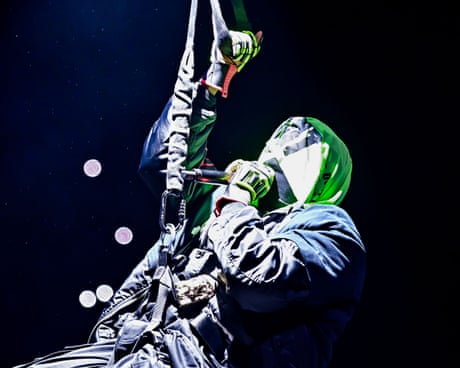
O2 Arena, London The polymath rapper’s stage show, which also features SWAT teams and a warship, is truly bravura stuff – but you can’t help feeling this is an artist at a creative crossroads
A$AP Rocky dangles precariously from a helicopter, while beneath him black-clad SWAT officers brawl with his white-masked followers. This isn’t some cliffhanger setpiece from the rapper/actor’s latest film – it’s just how shows on his Don’t Be Dumb tour open. It’s a big production: there are further prop helicopters, including a smaller one up in the rafters from which he also raps (a reference to his single Helicopter), while the stage recreates the top deck of a naval warship, for reasons that never become clear.
The bizarre set underscores a sense of a man in career transition, unsure who he is any more. In the eight years since his last album, this survivor of homelessness and incarceration became a father, three times, with Rihanna; he’s pivoting towards movies – goodones – and co-chairs the Met Gala. His new record sought to redefine him as an artist, juggling more of his trademark pugilistic rap with ambitious stylistic experiments and unexpected collaborations (Damon Albarn! Danny Elfman!).
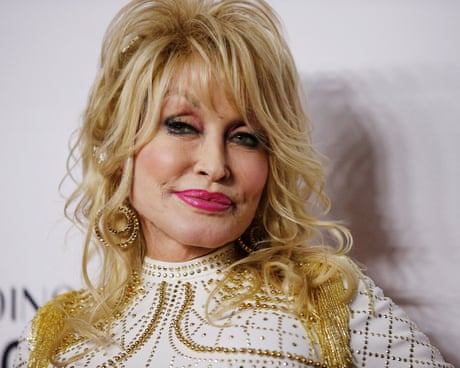
The queen of country was interred next to her late husband in an intimate ceremony attended by close family
Dolly Parton was laid to rest in a private ceremony in Nashville on Friday, her family has confirmed.
The queen of country music, who died aged 80 on 25 August “after bravely facing a brief battle with cancer”, was interred at Woodlawn Memorial Park and Mausoleum alongside her husband of 60 years, Carl Thomas.
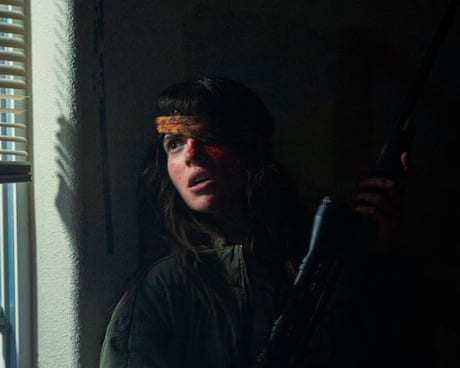
There’s a committed performance from a spunky Adria Arjona in the Guest director Adam Wingard’s decent B-movie but it’s missing some sharper weaponry
There’s something rather fascinating about an indie director who heads to the A-list before returning to their roots, a wider skillset and different perspective gained for better or worse. Working within a stricter system – the tiniest of choices being agreed upon by the largest of committees – can often be a creatively crushing experience that we’ve heard gruesomely detailed by many who survived it but the expansion of what one is allowed to technically do with a bigger budget can also be instructive and enriching. The dream scenario is bringing back the good and allowing the bad to inspire new work that makes the most of how unshackled one again now is.
There are plenty of examples of how this hasn’t worked. Neill Blomkamp following Elysium and Chappie with chintzy low-budget horror Demonic (easily his least effective film although since opening his own AI “studio” I imagine the worst is yet to come), Marc Forster following Quantum of Solace and World War Z with a blind Blake Lively film that, ironically, no one saw while Anna Boden and Ryan Fleck went from the greatness of Half Nelson to the blandness of Captain Marvel to the headache of Freaky Tales. But then we were also gifted with the hometown intimacy of Alfonso Cuarón’s Roma after he came back from space for Gravity and Hogwarts for the Prisoner of Azkaban while Karyn Kusama brushed off the nightmare of Æon Flux with the brilliantly creepy dinner party thriller The Invitation.
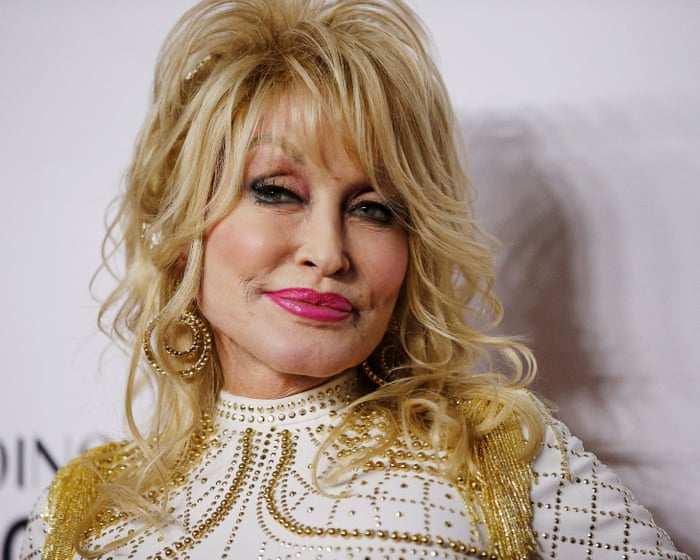
The queen of country was interred next to her late husband in an intimate ceremony attended by close family
Dolly Parton was laid to rest in a private ceremony in Nashville on Friday, her family has confirmed.
The queen of country music, who died aged 80 on 25 August “after bravely facing a brief battle with cancer”, was interred at Woodlawn Memorial Park and Mausoleum alongside her husband of 60 years Carl Thomas.
A graphic novel by Melissa Chan and Badiucao imagines China and the US at war in 2035. They hope to remind young people that ‘authoritarianism everywhere is bad’
Drinking Tsingtao beers, eating congee, walking with hands behind their backs: for many young people in western countries, “Chinamaxxing” has become all the rage. Some content creators have even gone beyond the jokes about being in “a very Chinese time in my life” and have followed this passion to the Middle Kingdom: making TikToks in Chongqing’s multilayered metropolis, bathing in Chengdu’s 24-hour spas or backflipping on the Great Wall of China.
This irreverent, mostly ironic trend is jarring for some, but Chinese Australian artist Badiucao and Chinese American journalist Melissa Chan don’t want to lecture the so-called Chinamaxxers.
I was 24, had just moved into a share house I couldn’t afford, and my job as a nanny was proving less than ideal. I’d graduated from my music degree a few years prior and was floating along, feeling a little lost.
A friend had told me to apply to become a front-of-house staff member at Australia’s busiest performing arts centre, Arts Centre Melbourne. It was a rare opportunity, as people rarely quit. To be surrounded by art again sounded like a dream.
‘I’d just made two films in America. Shooting on a Lancashire farm was very different. There was mud everywhere – and we’d be eating dripping, jam butties and fried eggs in buns’
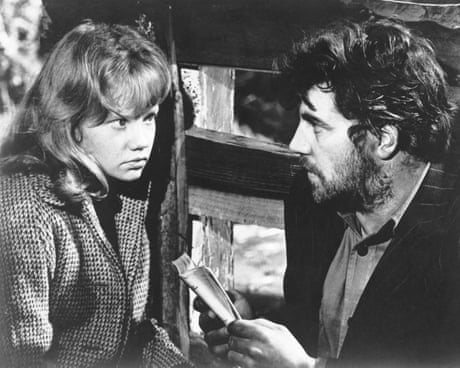
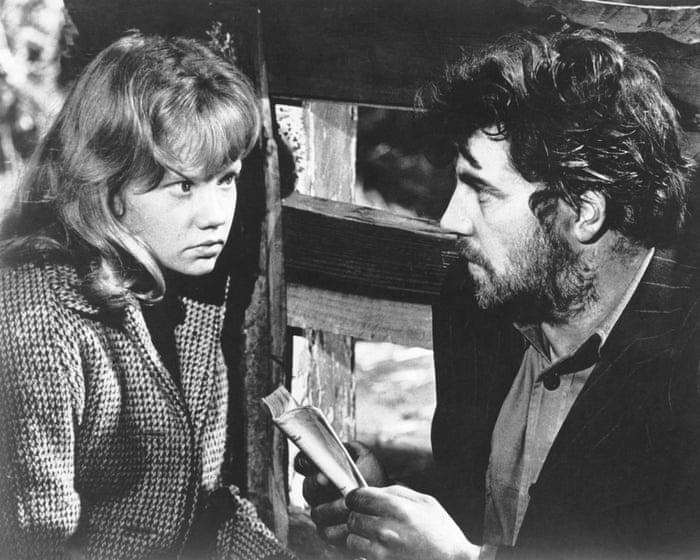
Whistle Down the Wind was originally a novel written by my mother, Mary Hayley Bell, about three children living on a farm in Sussex. The children – loosely based on my sister Juliet, my brother Jonathan and myself – discover a man in their barn. Thinking he’s Jesus, they decide to hide him and protect him from the adults because they don’t want the same thing to happen to him as before.
AI company faces multibillion dollar lawsuit over misuse of copyrighted songs to train Claude models
All AI wants for Christmas is a vast back catalogue of songs without paying for it, according to a multibillion-dollar lawsuit against the startup behind the Claude chatbot.
Sony Music Publishing and Warner Chappell, music publishers who manage the copyright of songs on behalf of songwriters and composers, are seeking damages for alleged misuse of “tens of thousands” of copyrighted works by Anthropic.
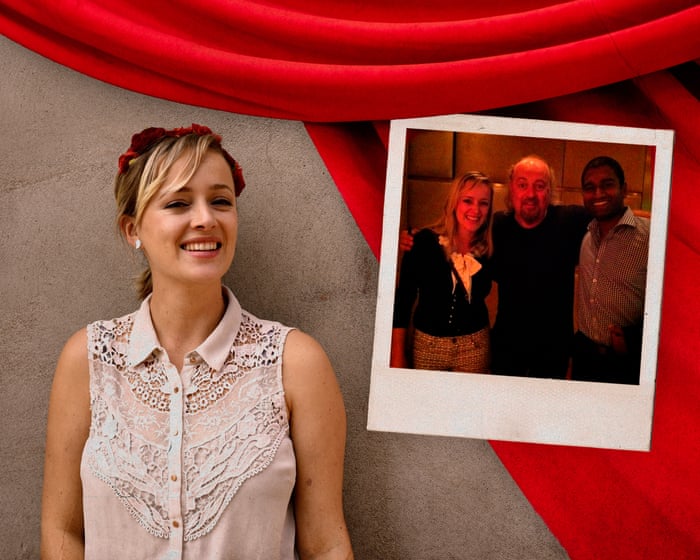
Amelia Dimoldenberg says publicists ignored her interview show for years but she can now be picky over A-list guests
Just a decade ago, Amelia Dimoldenberg found it impossible to drum up any mainstream celebrities to come on her mock date YouTube show, in which she chats awkwardly with guests over chicken and chips.
Even persuading a local actor connected with her London youth club to come on took years of prodding. Managers of A-listers with movies or albums to push instead battled to claim a spot on the hallowed cushions of the primetime TV chatshow sofa.
Though the preoccupations of the right’s new social thinkers may have arisen alongside Donald Trump, they themselves are not necessarily Trumpy. | Giorgio Viera/AFP via Getty Images
Aaron Renn was in a good mood. And that was fair: It’s not every day that you get labeled the No. 1 “intellectual super influencer” for a major swath of the Trump-era right.
“It’s always good to have some independent validation of your work,” he told me.
A former partner at the consulting firm Accenture, he’s now best known for his writing on urban policy and the role of evangelical Christians (like himself) in American culture. His concept of the “negative world” — the idea that contemporary mainstream culture is inherently hostile to anyone taking evangelical principles seriously — has become influential enough to receive feature treatment in the New York Times.
Yet for anyone familiar with American politics, the idea that someone like Aaron Renn is in any way the No. 1 “super influencer” on the right might seem implausible. He’s not a social media warrior with the White House’s ear, like Laura Loomer or Chris Rufo. He’s not a household name like Tucker Carlson. He doesn’t run a big media outfit like Ben Shapiro. So where does Renn’s achievement come from, and what does it mean?
The source is a new report from the boutique risk analysis firm Baron Public Affairs LLC. Baron makes its money, in part, by advising corporate clients on how best to navigate the DC political environment to advance their interests. Its new report is an attempt to guide them through a specific subset of the right: the national-populist corner of the right-wing policy world that’s achieved greater prominence since 2016.
Baron’s report paints a fascinating picture of today’s conservatism, shining a light on some of its most thoughtful, relevant, and interesting quarters. Yet in doing so, the report also skates over divisions inside the group under consideration — splits that matter immensely for the American right’s future.
The “super influencers,” explained
In its report, Baron compiled papers published by six right-wing think tanks and one right-leaning intellectual journal. They then used a proprietary research platform to comb through 29,181 citations to individual people in those papers, and assembled a list of the top 20 most cited names in their sample. These, in Baron’s estimation, are the “super influencers” who “most inform the policy leaders of the nationalist-populist movement,” the conservatives building intellectual scaffolding to support the GOP’s turn toward both economic and political nationalism.
Baron did not publish the full list of 20 names (and did not respond to my repeated requests for comment). But alongside Renn, the most cited name in its sample, it revealed two other “super influencers” in an accompanying podcast: Brad Wilcox and Michael Lind. Both are revealing.
Wilcox is a sociologist at the University of Virginia and a senior fellow at the Institute for Family Studies, a think tank known for taking an unusually empirical approach to social conservatism. If you’ve followed Wilcox, whose work has often been relevant to ourcoverageat Vox, you’ve probably seen him offering charts, graphs, and regression analyses to defend his view that marriage is one of society’s most important and valuable institutions. His most recent book is titled, simply enough, Get Married.
Lind, by contrast, arguably isn’t a conservative at all. A longtime commentator on American politics, he began his career as a kind of left labor populist — hostile to mass immigration due to the same (empirically doubtful) fears about the harmful effects on native-born workers that once shaped Bernie Sanders’s views on the issue.
Long critical of the cultural elitism of American liberals, Lind has drifted more and more toward writing for conservative outlets: becoming in effect, if not in self-identification, a real influence on the populist right. (He is not the only liberal on the list, which per Baron includes “two Biden-era White House officials and a writer who leads one of the more prominent tribes of the Left.”)
These three men — Renn, Wilcox, and Lind — reflect what Baron sees as the defining preoccupations of the “super influencers” more broadly.
Unlike previous generations of conservatives, the right’s new intellectuals aren’t especially interested in maximizing economic growth or projecting American power abroad (in fact, none of Baron’s top 20 were foreign policy experts at all). Instead, they’re overwhelmingly focused on different questions: how to reverse declining fertility rates, or the effect of trade competition with China on American cities and families.
Unlike previous generations of conservatives, the right’s new intellectuals aren’t especially interested in maximizing economic growth or projecting American power abroad.
In our conversation, Renn suggested a uniting concept for the issues these writers cared about: “the social health of the nation.” By this, he meant things that couldn’t be fully captured by traditional economic metrics: whether Americans feel happy, whether they feel like they live meaningful lives, whether they feel like their families and communities are secure and stable.
“There are these trends that don’t seem super healthy even if the GDP line continues to go up,” Renn says. “Those have been issues that weren’t part of Donald Trump’s initial set of issues, but are ones that have become widely talked about — even on the left.”
Though the preoccupations of the right’s new social thinkers may have arisen alongside Trump to challenge Reagan-era free-market conservatives, they themselves are not necessarily Trumpy. Befitting the fact that many have backgrounds in quantitative social science, and that some see themselves as liberals, they tend to be looking for answers beyond MAGA demagoguery. That’s true even though their research topics have some obvious appeal within MAGA spaces.
Super influencers against themselves
Baron’s report paints an appealing portrait of the modern right. Renn’s oeuvre is indeed fascinating, and Wilcox’s empiricism fosters a more serious conversation around social policy than the traditional culture war hysterics. More broadly, I think Baron is right that the sorts of issues that preoccupy these thinkers will indeed remain important for the right for quite some time.
But I think there’s a danger in treating this group as homogenous, or as representative of the right as a whole.
To see why, it’s helpful to go back to the report’s basic methodology — tracking citations in right-wing publications. Those publications were drawn from the following seven sources:
American Affairs
American Compass
The Foundation for American Innovation (FAI)
The Claremont Institute
The America First Policy Institute (AFPI)
The Center for Renewing America (CRA)
The Heritage Foundation
These are extremely different outfits. Three of them — American Affairs, American Compass, and FAI — indeed overlap with the kinds of questions that Baron’s “super influencers” are interested in. The other four, by contrast, are MAGA more than anything else: Their mission, at least as currently constituted, is to mount an intellectual defense of the president’s worldview and/or develop policy ideas that might flesh out Trump’s inchoate impulses.
This isn’t necessarily relevant for Baron’s mission in advising clients on which influential voices deserve their attention. But for those of us interested in mapping the intellectual right, these distinctions are vital.
Indeed, by Baron’s own estimation, there is a significant difference between the kinds of people cited in reports by these two sub-groupings in its sample. The first grouping, Baron found, will regularly cite “heterodox liberals” like Lind who share some of their priorities; the second did not cite a single such liberal in any of the reports it surveyed.
Thus, there actually isn’t one unified cadre of intellectual “super influencers” shaping the national-populist right. There are two distinctive groupings: one which influences the sorts of New Right outfits committed to their own ideological project, the other which influences reports released by MAGA appendages. While there is some overlap between those two groups, Baron’s own analysis suggests they are meaningfully distinct blocs.
This matters for the right’s future. In fact, it matters a lot.
Publications from the first three of Baron’s sources tend to be less hard-edged about partisan conflict; they engage with liberals quite a bit because they prioritize their long-term policy goals and are looking for coalition members who can help advance them. In their work, you can see some of the virtues the Baron report documents amongst the cited “super influencers” — empiricism, “genteel temperament,” a focus on distinctively 21st century social problems.
Work by the other four, by contrast, tends to paint American political divisions in apocalyptic terms. Claremont writers, for example, have famously described the 2016 election as “Flight 93” and declared that “most people living in the United States today — certainly more than half — are not Americans in any meaningful sense of the term.” They do not cite liberals approvingly because they see them as worse than political rivals: as villains, the authors of America’s ills, whose power must be crushed for the country to survive.
“We are in the process of the second American Revolution, which will remain bloodless if the left allows it to be,” as Heritage president Kevin Roberts put it in an interview on Steve Bannon’s podcast.
One of the principal questions of the right’s looming post-Trump era will be whether it can move past this kind of zero-sum partisanship. The Baron report might lead one to be optimistic on that front: if Aaron Renn truly is the leading influence among the American right’s national-populist intellectuals, that portends a future where America’s warring political tribes can finally start to find common ground.
But I wouldn’t bet on it, at least not for some time now.
There are deep reasons why Trump, a human embodiment of rage and division, leads the Republican Party — and why some of the right’s top thought leaders are so loyal to him. So long as those reasons persist, the influence of more thoughtful “super influencers” on practical politics may be more limited than one might hope.
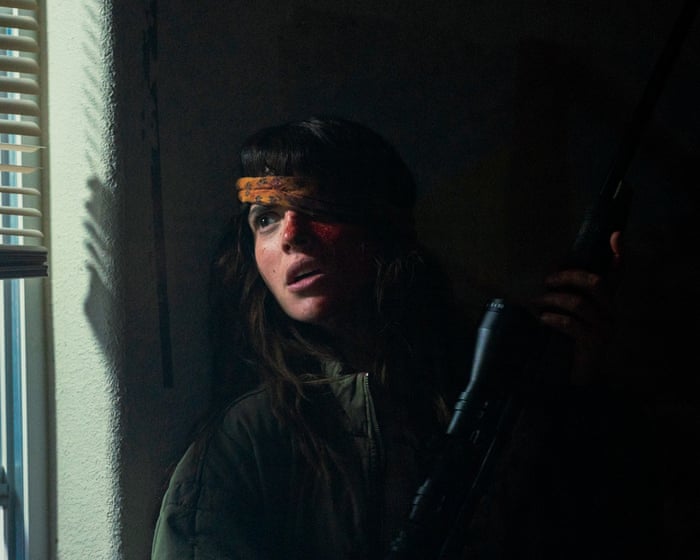
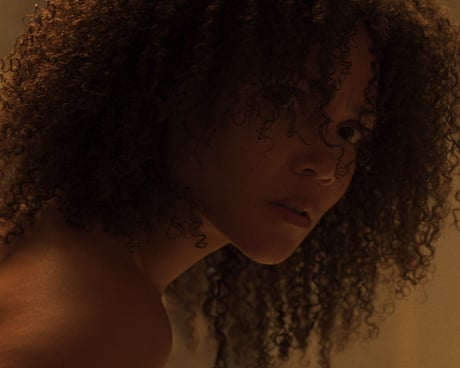
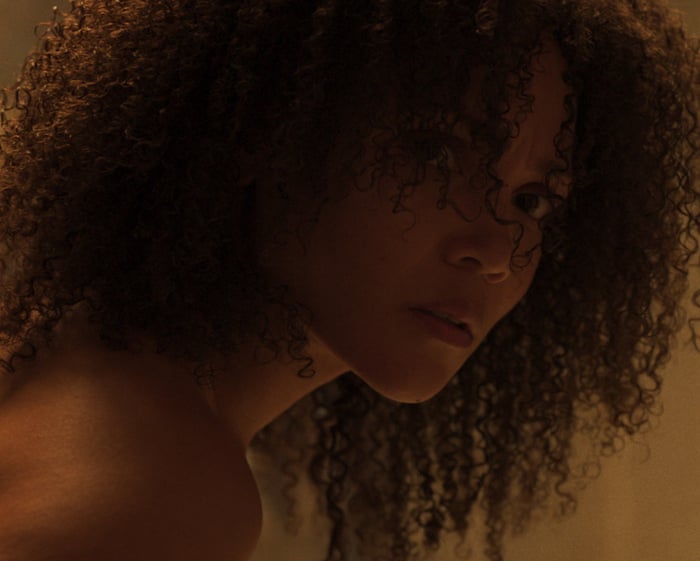
Debut director James Ross II shows promise in this gore fest, but the fear factor suffers from an overly complex plot
Sleep has been part of the horror genre repertoire since The Cabinet of Dr Caligari, and the anxieties around it are spiking as the “sleep economy” becomes a thing. This ambitiously structured gore fest about a woman suffering from waking nightmares comes with an all-black cast, but race isn’t a central preoccupation here. Instead, as night terrors burst the banks into reality, debut director James Ross II concentrates on maintaining an appropriately scrambled and claustrophobic experience – perhaps to the detriment of the fear factor.
On her 15th birthday, Riley (Jasmine Mathews) is paralysed in a waking/sleep state at her foster home, able to observe but powerless to intervene to stop a care worker going berserk. Since this massacre, Riley keeps a strict sleep protocol as an adult, making sure anyone under the same roof drops off before her, which apparently protects them from the malevolent presence invading her nights. Old foster home pal David (Stephen Barrington) accepts an invitation to the house where Riley’s dad murdered her mum, but gets the willies when a pallid demon begins manifesting in the small hours. It turns out that Riley’s boyfriend, Cam (RJ Brown), has been lax in letting her fall asleep before him – and now her resident succubus is on the loose again.
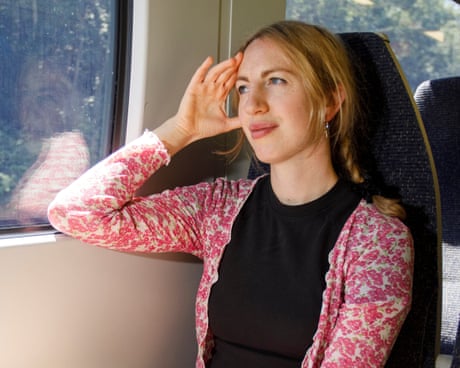
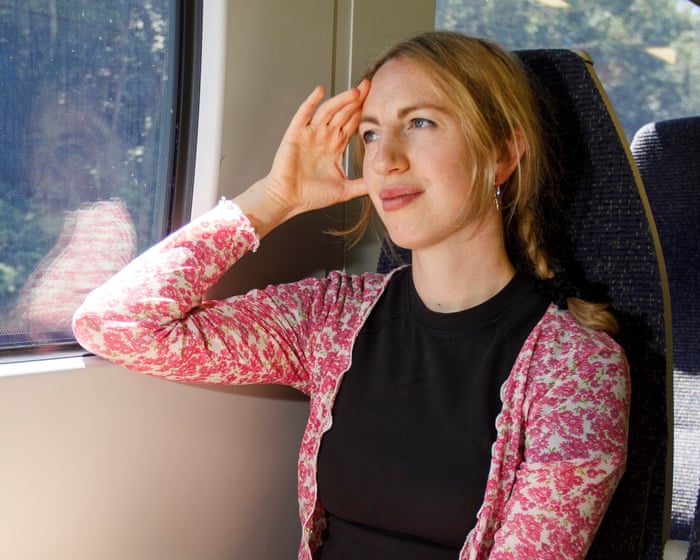
For decades my life was soundtracked by comedy duos, mostly male, discussing their friendships. When I gave them up, I felt as if I was having a mental reboot
I have always loved podcasts. The genre of audio I have come to think of as Two Men Talking (In Excessive Detail About Their Lives) has been one of my favourite forms of entertainment for decades. It started with a semi-religious devotion to a Sunday morning XFM show hosted by Jimmy Carr and the comedy writer Iain Morris, but as the years progressed and podcasting boomed, I was soon spoilt for choice. Eventually there were enough comedy duos candidly discussing their hopes, fears and awkward social interactions to fill every moment of my day.
I was initially drawn to these podcasts because they made me laugh, but from the start I also found them hugely comforting: there was a period in my teenage years when I couldn’t fall asleep without mainlining episodes of Adam and Joe’s BBC 6 Music show, waking up each morning relieved I hadn’t been strangled by my iPod earphones in the night.
The latest in our series of writers highlighting their go-to comfort films is an ode to the teary 1994 adaptation of the classic novel
I have an ongoing argument with some friends about how I refuse to watch Interstellar again, despite considering it a beautiful and well-crafted film. It’s just so sad, I tell them, even with its hopeful ending. A desperate, choking lump forms in my chest as soon as I hear the futuristic swells of Hans Zimmer’s score and I have to remove myself before I am overtaken by emotion.
But at the same time, the movie I choose as my feelgood film is one that has reduced me to a sobbing, snotty mess time and time again, whether I’m watching it curled up with my cat on the couch, swaddled in blankets while sick in bed or jostling with my seatmate for the armrest on an airplane. And just like with the score from Interstellar, the moment I hear Thomas Newman’s wistful little oboe intro of the 1994 version of Little Women, I can feel my eyes well up with tears.
Concern among staff that fragile artwork’s scarce ‘light hours’ given to someone with no known interest in museum
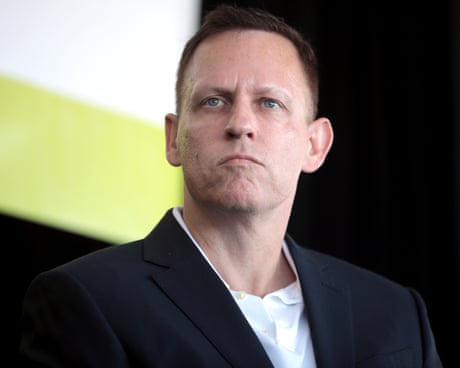
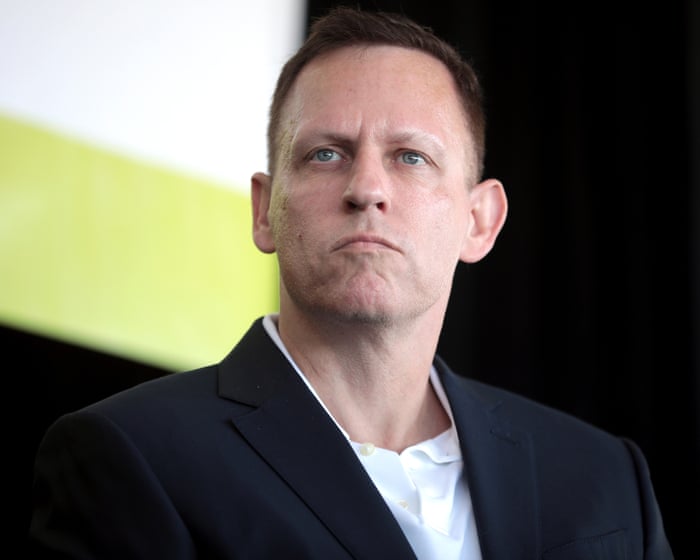
The British Museum privately hosted the Donald Trump-supporting tech billionaire Peter Thiel in the exhibition space of the Bayeux tapestry earlier this month, the Guardian understands.
The museum’s director of development, Charlotte Appleyard, hosted the PayPal founder at a VIP viewing of the tapestry, which is yet to open to the public, on 18 August.
Concern among staff that fragile artwork’s scarce ‘light hours’ given to someone with no known interest in museum
The British Museum privately hosted the Donald Trump-supporting tech billionaire Peter Thiel in the exhibition space of the Bayeux tapestry earlier this month, the Guardian understands.
The museum’s director of development, Charlotte Appleyard, hosted the PayPal founder at a VIP viewing of the tapestry, which is yet to open to the public, on 18 August.
Beldina Odenyo alchemised the pain of exile, loss and racism into music as Heir of the Cursed before her death in 2021, as this attentive tribute explores
Instead of an artist in a booth, a lone amplifier plays the music of singer-songwriter Beldina Odenyo for a cluster of microphones to pick up during the posthumous recording of her debut album. It is a haunting encapsulation of the absence and presence at the heart of Louise Lockwood’s documentary, which makes a commendably thorough exploration of the mental illness that led to Odenyo killing herself in November 2021, and its roots: exile, loss and racism.
Performing under the moniker Heir of the Cursed, a translation of the Tetela name of assassinated Congolese leader Patrice Lumumba, Odenyo was on the verge of bigger recognition at the end of 2021 after a successful performance at Edinburgh’s Usher Hall. But hemmed in by successive Covid lockdowns, the 31-year-old is clearly unwell in a discomfiting backstage interview. Squirming, monosyllabic, she seems to be regressing to the non-verbal state of shock in which she arrived in Dumfriesshire from Kenya as a young child.
Global crises are tightly linked to how we treat each other at the local level, argues this optimistic book
In times of crisis, there is one person to whom the left still turns for guidance.
More than a decade and a half after leaving government, Gordon Brown has mellowed into the Labour party’s favourite wise elder; one who has never disappointed the faithful by going off to make a ton of money, remaining quietly committed to public service and deeply engaged with the world’s knottier problems. Having successfully led the global response to the financial crash of 2008, and advocated powerfully during the pandemic for global cooperation against the virus, he was never going to simply sit back and shrug as the world spiralled into conflict and chaos under Donald Trump.
The long-running drama reaches Hitler’s rise to power in its final season as its creators reflect on the unsettling parallels between Weimar Germany and the present day
It’s the global hit TV series that pulled audiences straight into the chaotic hedonism of 1920s Germany, dramatising the brilliance and brittleness of a newly built democratic system with unprecedented ambition.
But in the 13 years that the German makers of Babylon Berlin have worked on the show, modern democracies from the US to Hungary to South Korea have come under pressure in ways the creators say they could never have imagined when they started.
Struggling with Alzheimer’s, the central character sets out on his final journey to a euthanasia clinic
The word “Alzheimer’s” never appears in Switzy, Emma Cline’s third novel, which arrives pre-endorsed as a Booker prize longlistee. But we can be certain that it is the disease afflicting its central character, David Hastings – certain in a way he finds it increasingly hard to be about anything.
When the novel begins, David and his assistant Cody are aboard a private jet flying from his home in the US to the UK. Landing at London City airport (which the book, experiencing its own senior moment, situates in the countryside), they visit David’s daughter and her family before travelling on to Zurich (hence “Switzy”). One more appointment, a catchup with an old boarding school roommate called Tom, awaits just over the French border, after which David will be euthanised at a facility resembling Dignitas.

 Login
Login