Reading view

Fifteen Britons among 261 foreigners missing in China after floods

Total number of missing Britons between Tibet and Nepal at 48 as Beijing mobilises more than 2,100 rescue workers

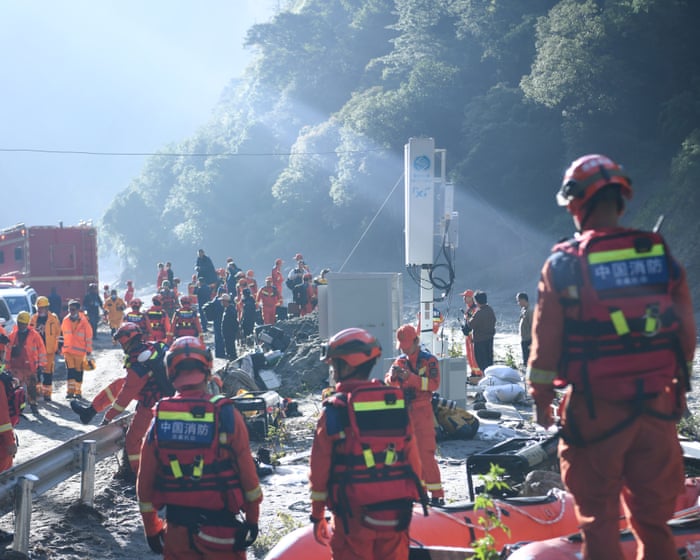
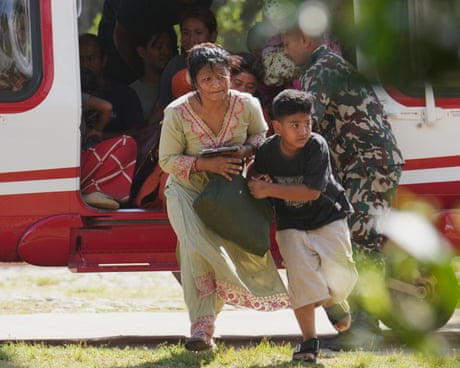
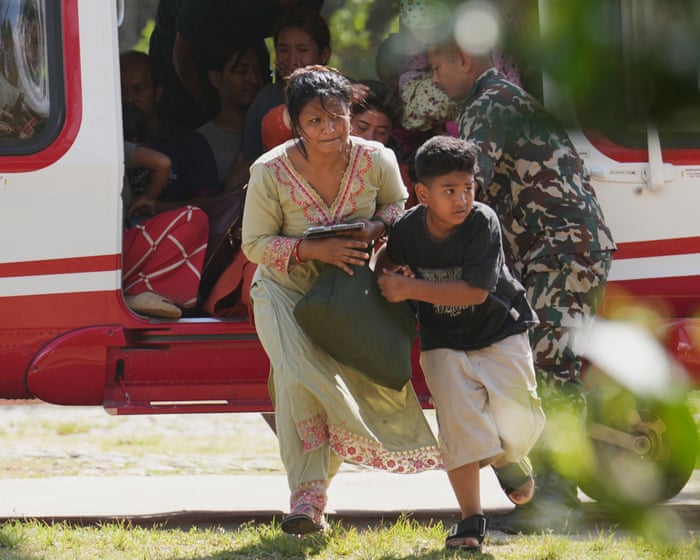
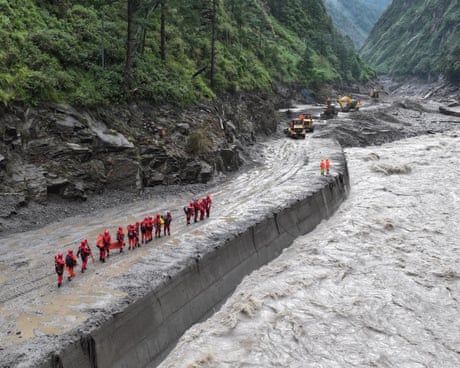
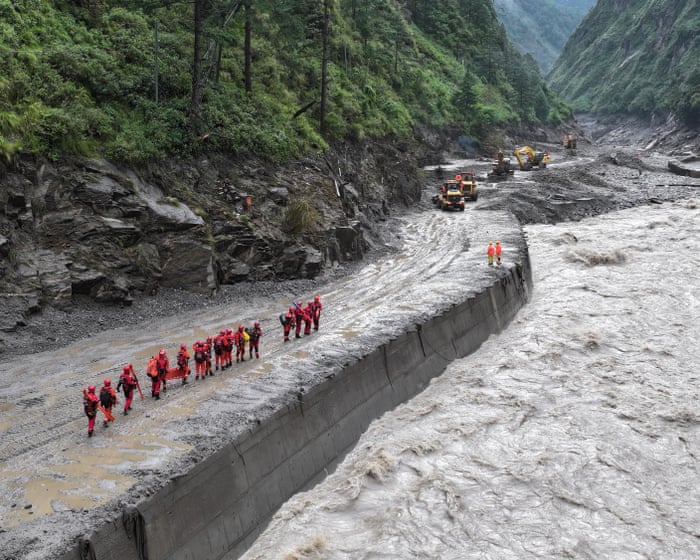
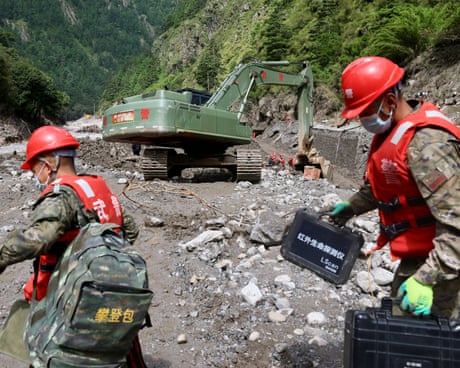
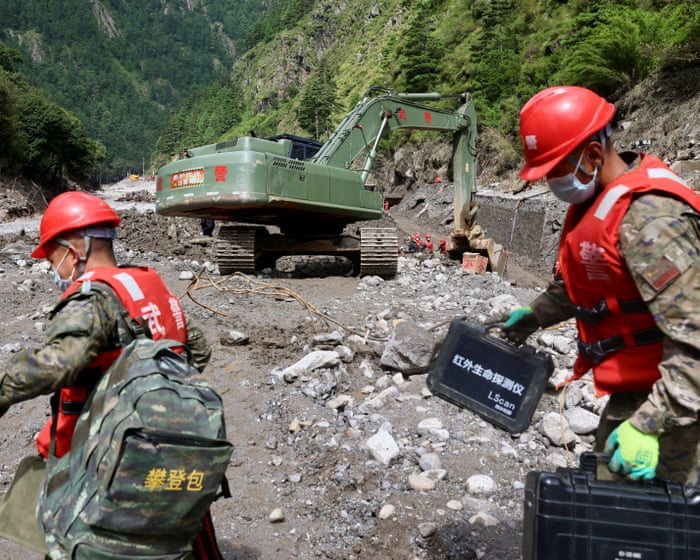
Fifteen British nationals are reported to be missing in China as the search continues for survivors of the devastating flooding in Nepal and Tibet.

Nepali and Chinese authorities confirmed an updated death toll of at least 810 on Sunday. More than 3,000 people are believed missing after flash floods triggered by a massive glacier collapse in the Himalayas on Wednesday engulfed Gyirong port on the Nepal-China border.

Continue reading...
© Photograph: China Daily/Reuters
© Photograph: China Daily/Reuters
© Photograph: China Daily/Reuters
  •  

The Guardian view on rare earths: it’s common sense to secure essential supply chains | Editorial

Outsourcing the industry to China cannot continue, but Europe knows it can no longer count on the US for a solution

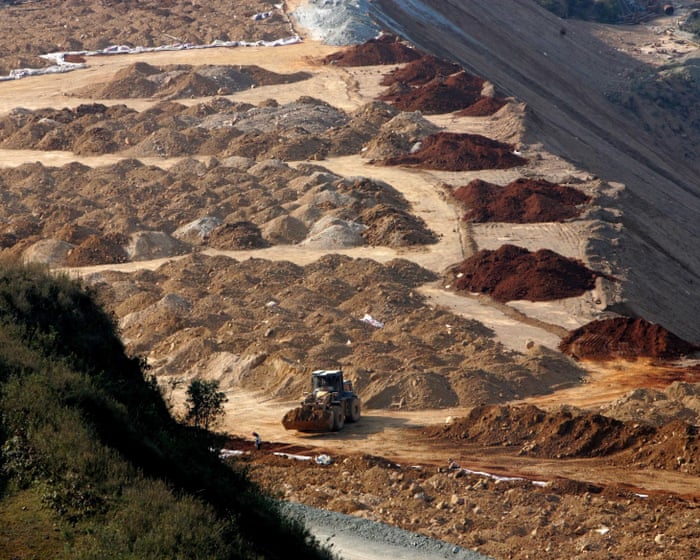
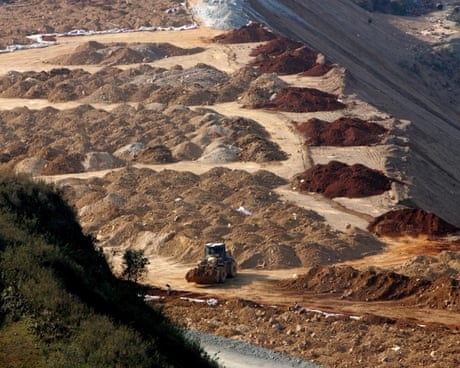
The alarm sounded 16 years ago. In 2010, China blocked exports of key rare earths to Japan in a row over disputed islands in the East China Sea. The critical minerals are essential to everything from advanced weaponry and iPhones to electric vehicle batteries and wind turbines, so the rest of the world took note. But it didn’t take much action. China still accounts for about 70% of rare-earth mining globally and 90% of separation and processing.

Then, last year, Beijing forced Donald Trump to back away from his trade war – not with its retaliatory tariffs, but the curbing of rare-earth exports. A scramble for new supplies began in earnest. The year-long trade truce is due to expire in November. The price of erbium, an element essential to communications infrastructure, has already jumped because of fears that export controls will soon be renewed.

Continue reading...

© Photograph: Imaginechina Limited/Alamy

© Photograph: Imaginechina Limited/Alamy

© Photograph: Imaginechina Limited/Alamy

  •  

Nepal-Tibet deaths from flash flooding rise amid race to free workers in tunnel

Total of 804 confirmed dead and more than 3,000 missing amid threat of fresh inundation

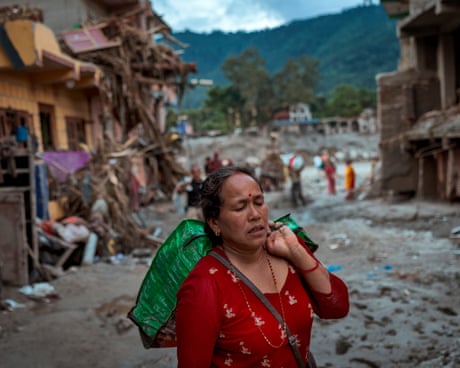
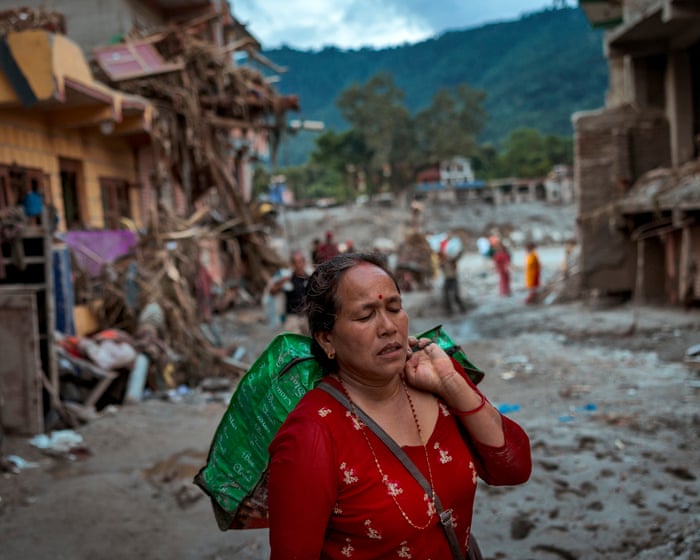
Rescuers in Nepal and Tibet have battled through leg-sucking mud amid the threat of fresh flooding to search for thousands of people still missing after a deadly wall of water swept through the Himalayan border zone, engulfing entire villages.

The latest updates on Sunday put the number of missing at 3,048, including hundreds of foreigners. There was a total of 804 confirmed deaths across Nepal and Tibet, and reports of some bodies swept downstream possibly as far as India.

Continue reading...

© Photograph: Ezra Acayan/Getty Images

© Photograph: Ezra Acayan/Getty Images

© Photograph: Ezra Acayan/Getty Images

  •  

Trump’s ‘economic D-day’ against Iran risks driving the stakes even higher | Sina Toossi

As with its approach to Hormuz, the US has mistaken applying pressure for an actual strategy. But Tehran has chips of its own to play

Donald Trump has found a new way to promise victory over Iran. After months of war have failed to force Iran’s capitulation or collapse, his administration has unveiled what the US Treasury secretary, Scott Bessent, calls Operation Economic Outcast: an effort to cut it off from what remains of the global economy and threaten foreign governments, banks and companies with sanctions if they continue doing business with Tehran.

There is no question that Iran is vulnerable. Its economy has been battered by years of sanctions, war and a months-long US naval blockade. Iranian officials acknowledge that oil exports and access to foreign currency have been severely constrained. Ordinary Iranians are already enduring high inflation, currency depreciation and worsening living standards. Further economic strangulation will inflict significant additional hardship.

Sina Toossi is a senior non-resident fellow at the Center for International Policy, where his work focuses on US-Iran relations, US policy toward the Middle East and nuclear issues

Continue reading...

© Photograph: Mark Schiefelbein/AP

© Photograph: Mark Schiefelbein/AP

© Photograph: Mark Schiefelbein/AP

  •  

China Says 261 Foreigners From 23 Countries Are Missing in Tibet Flood

The disclosure offered one of the clearest pictures yet of the disaster on the Chinese side of the border, where authorities have released few details.

© Atul Loke for The New York Times

An aerial view of the muddy Trishuli River winding through Rasuwa District in Nepal on Thursday.
  •  

Nepal-Tibet deaths from flash flooding rise amid race to free workers in tunnel

Total of confirmed 797 dead and more than 3,000 missing amid threat of fresh inundation

Rescuers in Nepal and Tibet have battled through leg-sucking mud amid the threat of fresh flooding to search for thousands of people still missing after a deadly wall of water swept through the Himalayan border zone, engulfing entire villages.

The latest updates on Sunday put the number of missing at 3,048, including hundreds of foreigners. There was a total of 797 confirmed deaths across Nepal and Tibet, and reports of some bodies swept downstream possibly as far as India.

Continue reading...

© Photograph: Ezra Acayan/Getty Images

© Photograph: Ezra Acayan/Getty Images

© Photograph: Ezra Acayan/Getty Images

  •  

Number of missing in Nepal and Tibet rises to 3,000 as bad weather hampers search

Nepal requests foreign ⁠help in identification and storing of bodies, DNA testing and rescuing people from tunnels

Poor weather temporarily hampered aerial rescue operations in Nepal on Saturday as the search for thousands of missing people in areas devastated by catastrophic flash floods along the border with China continued.

The combined toll in Nepal and Tibet rose to 691 dead and more than 3,000 people missing after China’s latest update on Sunday. Chinese authorities reported 16 deaths and 546 missing, while Nepal’s disaster agency said late Saturday that the death toll had climbed to 675 with 2,498 people missing.

Continue reading...

© Photograph: China News Service/Getty Images

© Photograph: China News Service/Getty Images

© Photograph: China News Service/Getty Images

  •  

Catastrophic Flood Exposes the Risks of Nepal’s Hydropower Bet

The loss of power-generating capacity has raised questions about an ambitious expansion of renewable energy in one of the world’s most hazard-prone mountain regions.

© Atul Loke for The New York Times

A catastrophic deluge of ice and debris knocked out over 12 percent of Nepal’s hydropower capacity within minutes, striking a heavy blow to the nation’s economic engine.
  •  

Search Continues for 2,400 Missing in Nepal Floods Amid ‘Immense’ Devastation

As rescue efforts entered their fourth day, the scale of destruction came into focus, signaling a daunting recovery for the vulnerable nation.

© Atul Loke for The New York Times

Damaged buildings in Devighat, a town in the Nuwakot district of Nepal that was devastated by Wednesday’s flash flood, on Friday.
  •  

Nepal-Tibet floods: Nepal calls for technical support for rescue efforts as number of missing rises to nearly 3,000 – latest updates

Nepali government says India and China are sending expert tunnel rescue teams, as minister estimates cost of rebuilding could be billions of dollars

Outside the army camp in the Nuwakot district of Nepal, people run their fingers down the sheets of paper pinned to the wall, scanning the growing list of those reported missing for news of loved ones. Nepali authorities said nearly 3,000 people are missing, while China reported more than 550 people unaccounted for.

Nepal’s foreign minister, Shisir Khanal, has appealed for international support to help rebuild the country after the floods, saying reconstruction efforts could run into “billions of dollars” AFP reports.

Continue reading...

© Photograph: Anadolu/Getty Images

© Photograph: Anadolu/Getty Images

© Photograph: Anadolu/Getty Images

  •  

Nepal-Tibet floods: Nepal calls for technical support for rescue efforts as number of missing rises to nearly 3,000 – as it happened

This blog is now closed.

Outside the army camp in the Nuwakot district of Nepal, people run their fingers down the sheets of paper pinned to the wall, scanning the growing list of those reported missing for news of loved ones. Nepali authorities said nearly 3,000 people are missing, while China reported more than 550 people unaccounted for.

Nepal’s foreign minister, Shisir Khanal, has appealed for international support to help rebuild the country after the floods, saying reconstruction efforts could run into “billions of dollars” AFP reports.

Continue reading...

© Photograph: Anadolu/Getty Images

© Photograph: Anadolu/Getty Images

© Photograph: Anadolu/Getty Images

  •  

Faster, higher, funnier: what we learned from China’s robot games

Five-day showcase reveals leaps Beijing has made in humanoid tech, but also its limitations as US rivals come up from the rear

With exploding pelvises, enough comic pratfalls for a Buster Keaton show reel and the odd moment of ruthless violence, the World Humanoid Robot Games in Beijing gripped the world this week with an unsettling mixture of hilarity, trepidation and relief.

The five-day showcase staked out China’s claim to undisputed leadership in humanoid robotics as android martial artists landed knockout roundhouse kicks and robot teams marched into the arena heralded by flag-waving captains astride giant robotic dogs. The games’ blue-riband event, the 100m, did not disappoint when the robot-sprinters ran quicker than Usain Bolt before slamming mindlessly into a padded wall in a blaze of sparks, flames and flying mechanical limbs.

Continue reading...

© Composite: Alex Mellon for the Guardian : Getty Images

© Composite: Alex Mellon for the Guardian : Getty Images

© Composite: Alex Mellon for the Guardian : Getty Images

  •  

Disaster Experts Say Nepal Glacier Collapse Was Difficult to Predict

Given the challenges in forecasting and detecting such calamities, researchers advised banning construction on floodplains and marking out clear evacuation routes.

© Atul Loke for The New York Times

The widened channel of the Bhote Koshi River in Nepal on Thursday after the flash flooding. Most monitoring and early-warning systems for glacial hazards focus on a specific area of risk.
  •  

China Sees Opportunity in America’s Recent A.I. Security Scares

A leading Chinese A.I. start-up released its latest model and made the case that China’s embrace of open software is safer than Silicon Valley’s closed approach.
  •  

At least 93,000 ‘in great need’ after Nepal-Tibet flash floods, says Red Cross

Federation says it fears death toll of nearly 600 will continue to rise as rescuers reach cut-off areas

The Red Cross has said at least 93,000 people may have been affected by Wednesday’s flash floods on the Nepal-Tibet border, which have killed nearly 600 people, left another 1,900 missing, and triggered a huge rescue operation that is being hampered by fears of new flooding.

The International Federation of Red Cross and Red Crescent Societies (IFRC), the world’s largest humanitarian network, said it feared the death toll would continue to rise as some of the hardest-hit areas remained inaccessible after roads and bridges were destroyed by the torrents.

Continue reading...

© Photograph: Rajesh Kumar Singh/AP

© Photograph: Rajesh Kumar Singh/AP

© Photograph: Rajesh Kumar Singh/AP

  •  

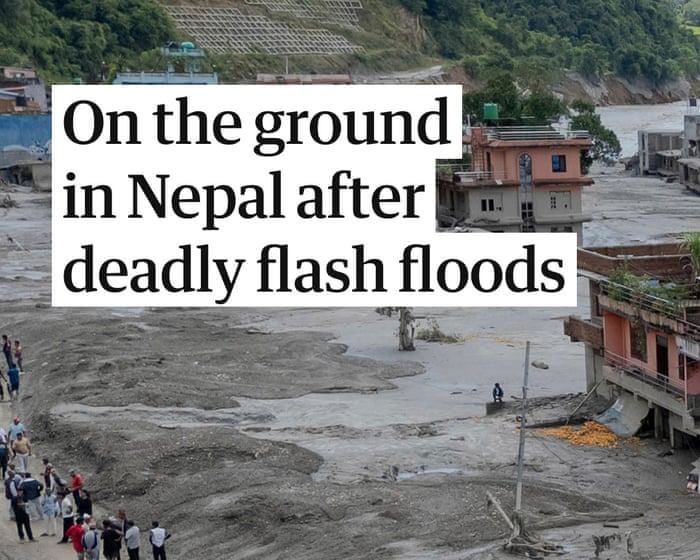
On the ground in Nepal after deadly flash floods – video

South Asia correspondent Hannah Ellis‑Petersen is on the ground in Bidur, one of the most devastated towns in Nepal, after the deadly flash floods that struck on Wednesday morning. Most homes were completely washed away when a tide of mud, rocks and debris flooded the river valley. Those who survived describe clinging on to buildings and trees as the water rushed over them

Continue reading...

© Photograph: Reuters

© Photograph: Reuters

© Photograph: Reuters

  •  

Chinese control of information hampers assessment of Tibet flood damage

Scale of devastation emerges in Nepal as reporters reach disaster area, but Chinese state media focus more on rescue efforts

In the days since an enormous glacier in the Himalayas snapped away from a mountaintop and cascaded into the valley below, the true scale of the devastation caused by the flash floods in Nepal and Tibet is still unfolding.

But the picture is emerging far more quickly in Nepal than in China, where strict controls on the flow of information from one of its most sensitive regions are hampering the public’s understanding of events.

Continue reading...

© Photograph: China News Service/Getty Images

© Photograph: China News Service/Getty Images

© Photograph: China News Service/Getty Images

  •  

Families of 33 missing Britons rush to Nepal as fears grow of more floods

Desperate relatives trying to reach loved ones last seen in area where entire villages have been swept away

Families are rushing to Nepal to search for the 33 British nationals who are still missing, as fears mount over the risk of a second wave of flooding in the region.

The catastrophic flash floods that hit Nepal and Tibet on Wednesday, thundering down valleys and sweeping away entire villages, have killed at least 538 people, while more than 1,500 remain missing.

Continue reading...

© Composite: Facebook

© Composite: Facebook

© Composite: Facebook

  •  

Nepal-Tibet flood: this is the cost of not acting in the face of the climate crisis | Sunil Acharya

Nepalis and Tibetans must not pay the price – with their lives, livelihoods and money meant for education and health – for global heating caused by wealthy states

  • Sunil Acharya is an international climate policy and just transition specialist based in Kathmandu, Nepal

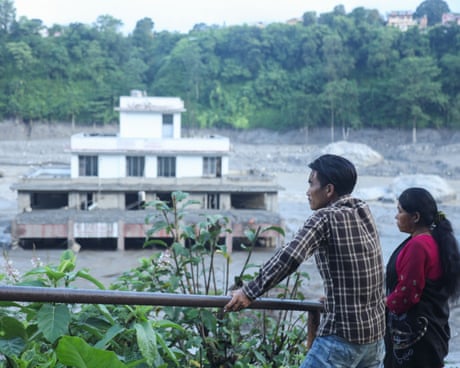
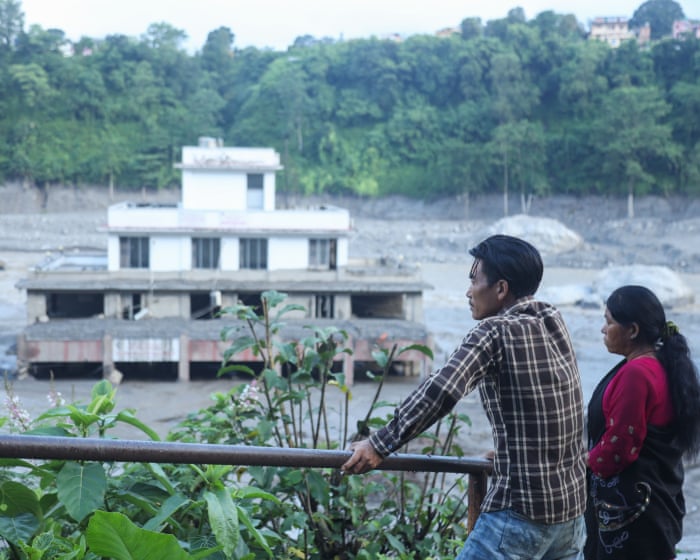
As a Nepali citizen working on international climate policy for more than a decade, it is difficult to look at the harrowing images coming out of the catastrophic flash flood that thundered down valleys in Nepal, sweeping down the Lhende Khola, Bhotekoshi and Trishuli rivers, and not feel angry.

Not just because of the destruction, but because it comes after years of warnings from scientists and civil society that a rapidly warming planet would make disasters more frequent, more intense and harder to predict. This is what the cost of delaying global climate action looks like.
Sunil Acharya is an international climate policy and just transition specialist based in Kathmandu, Nepal

Do you have an opinion on the issues raised in this article? If you would like to submit a response of up to 300 words by email to be considered for publication in our letters section, please click here.
Continue reading...

© Photograph: Shankar Bhujel/JNA/ZUMA Press Wire/Shutterstock

© Photograph: Shankar Bhujel/JNA/ZUMA Press Wire/Shutterstock

© Photograph: Shankar Bhujel/JNA/ZUMA Press Wire/Shutterstock

  •  
❌