Reid Wiseman, Victor Glover, Christina Koch and Jeremy Hansen receive Congressional Space Medal of Honor
The Artemis II astronauts who flew around the moon in April received the US’s highest space honor on Friday.
Donald Trump presented the Congressional Space Medal of Honor to the three Americans and one Canadian whose lunar flyby for the US space agency Nasa set a new distance record for humanity.
Reid Wiseman, Victor Glover, Christina Koch and Jeremy Hansen receive Congressional Space Medal of Honor
The Artemis II astronauts who flew around the moon in April received the US’s highest space honor on Friday.
Donald Trump presented the Congressional Space Medal of Honor to the three Americans and one Canadian whose lunar flyby for the US space agency Nasa set a new distance record for humanity.
Searching for exoplanets and clues on planet formation, the Roman telescope begins million-mile journey from Florida launchpad
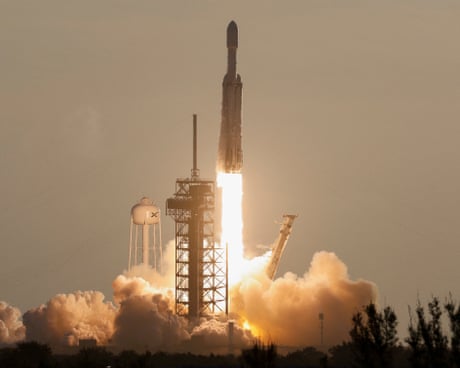
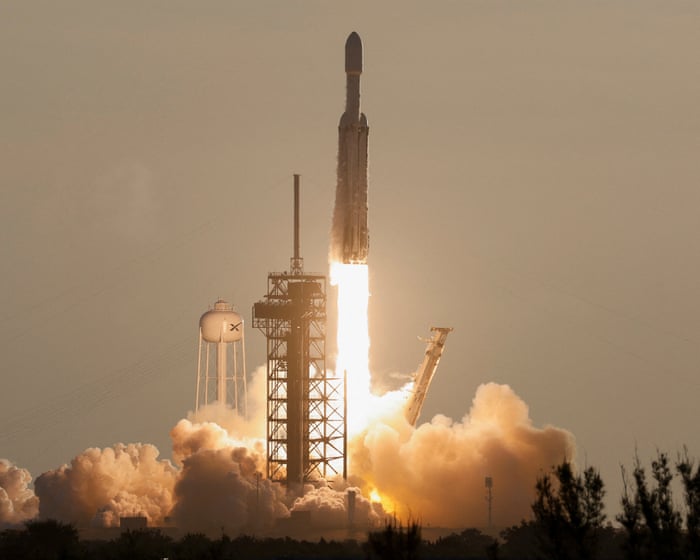
A $4.3bn space telescope that Donald Trump tried to kill has lifted off from Florida as Nasa embarks on the next stage of its quest to unlock the secrets of the universe.
The Nancy Grace Roman space telescope survived two rounds of proposed White House budget cuts, and began a million-mile journey into deep space from a launchpad at the Kennedy Space Center on Sunday morning. .
Searching for exoplanets and clues on planet formation, the Roman telescope begins million-mile journey from Florida launchpad
A $4.3bn space telescope that Donald Trump tried to kill has lifted off from Florida as Nasa embarks on the next stage of its quest to unlock the secrets of the universe.
The Nancy Grace Roman space telescope survived two rounds of proposed White House budget cuts, and began a million-mile journey into deep space from a launchpad at the Kennedy Space Center on Sunday morning. .
Psychedelics are often associated with disconnecting from reality, but a recent neuroimaging study found that psilocybin can actually make our brain activity more connected to the world around us.
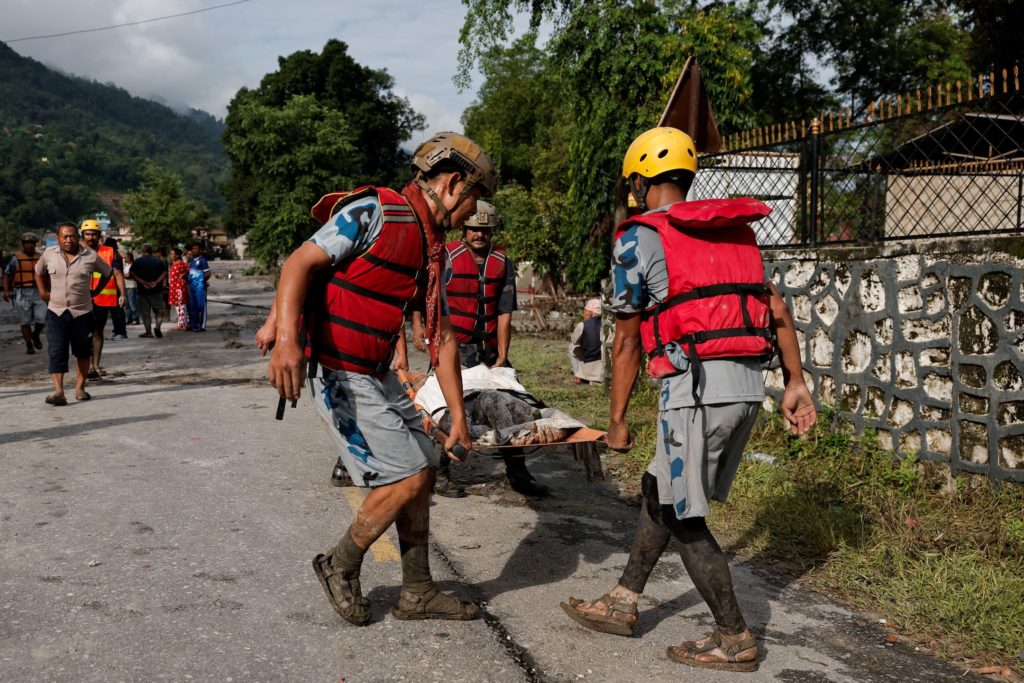
Three days after a catastrophic wall of water, mud and rock tore through Nepal's Himalayan valleys, the scale of the disaster is still coming into focus. At least 579 people are now confirmed dead, nearly 2,000 remain missing, and the danger is not over. Authorities are closely watching lakes formed in the wake of the glacier collapse, amid fears of further flooding. Stephanie Sy reports.
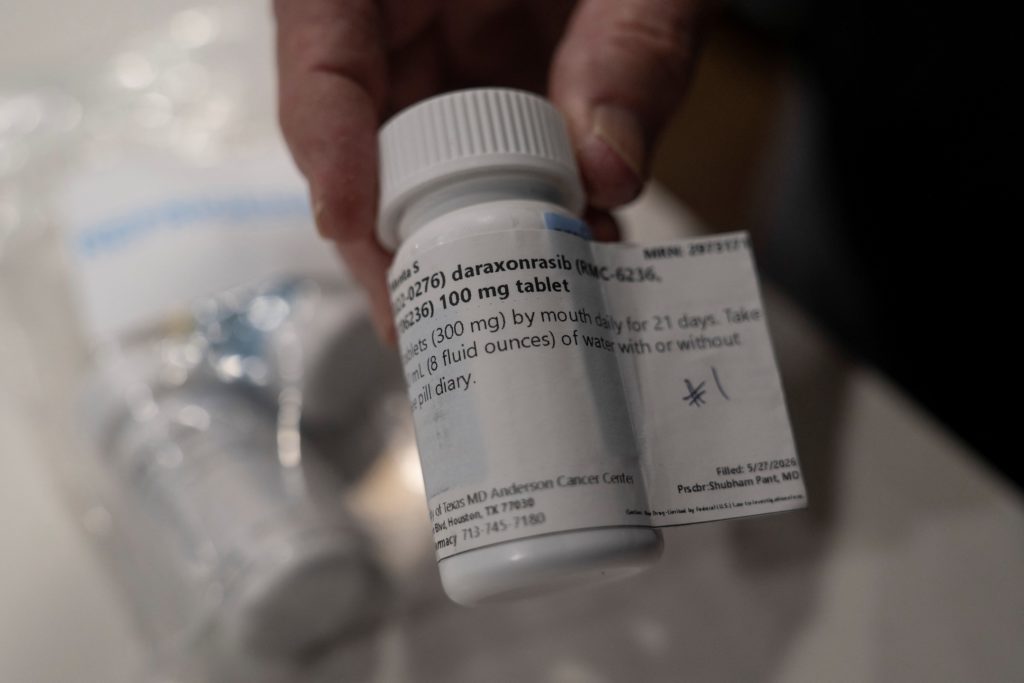
There have been several promising developments lately in cancer research and treatment, including a new drug approved by the FDA this week for advanced pancreatic cancer. William Brangham reports.
Influential right-wing conspiracy theorists and MAGA-aligned pundits are falsely claiming that the Covid vaccine killed Dolly Parton, the vaccination advocate and philanthropist.
The medical community is trying many approaches to help push back against the advance of Alzheimer's and dementia. One leading institution is taking a different and unconventional approach to supplement the traditional treatments. Special Correspondent Megan Thompson reports for our coverage of the intersection of health and arts, part of our CANVAS series.
You have questions about data centers, and WIRED has answers. Join our livestream on September 10 and our panel of experts will tell you everything you need to know.
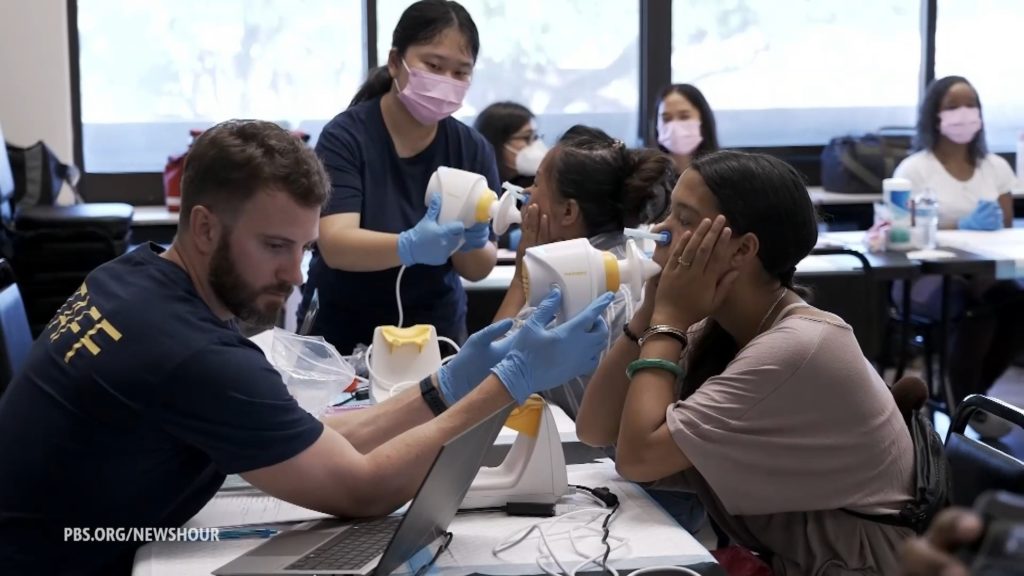
Just over three years ago, the deadliest U.S. wildfire in more than a century devastated the Hawaiian island of Maui. New research suggests the toll of the disaster may be far greater than the lives lost and property burned. Stephanie Sy reports on a landmark study aiming to track how wildfires continue to affect survivors' health long after the flames are gone.
Extreme heat is the deadliest weather-related threat in the U.S. In Phoenix, heat kills more people than homicides each year. So the city is turning to an unlikely lifesaver: bags of ice. And the fire department is creating a new model in the battle against heatstroke. For our series, Tipping Point, Ben Tracy of Climate Central shows how this low-tech approach is saving lives.
The public health emergencies in 2022 and 2024 saw the virus reported in 145 countries, but in the new cases children appear particularly affected
A fresh outbreak of mpox in Guinea Bissau – the country’s first – means the virus formerly known as monkey pox is back in the headlines. So what has changed?
Since 2022, there have been almost 190,000 lab-confirmed cases of mpox reported worldwide in 145 countries. Before then, outbreaks of mpox tended to be relatively small and in a handful of African countries, where the viral infection was known to be endemic.
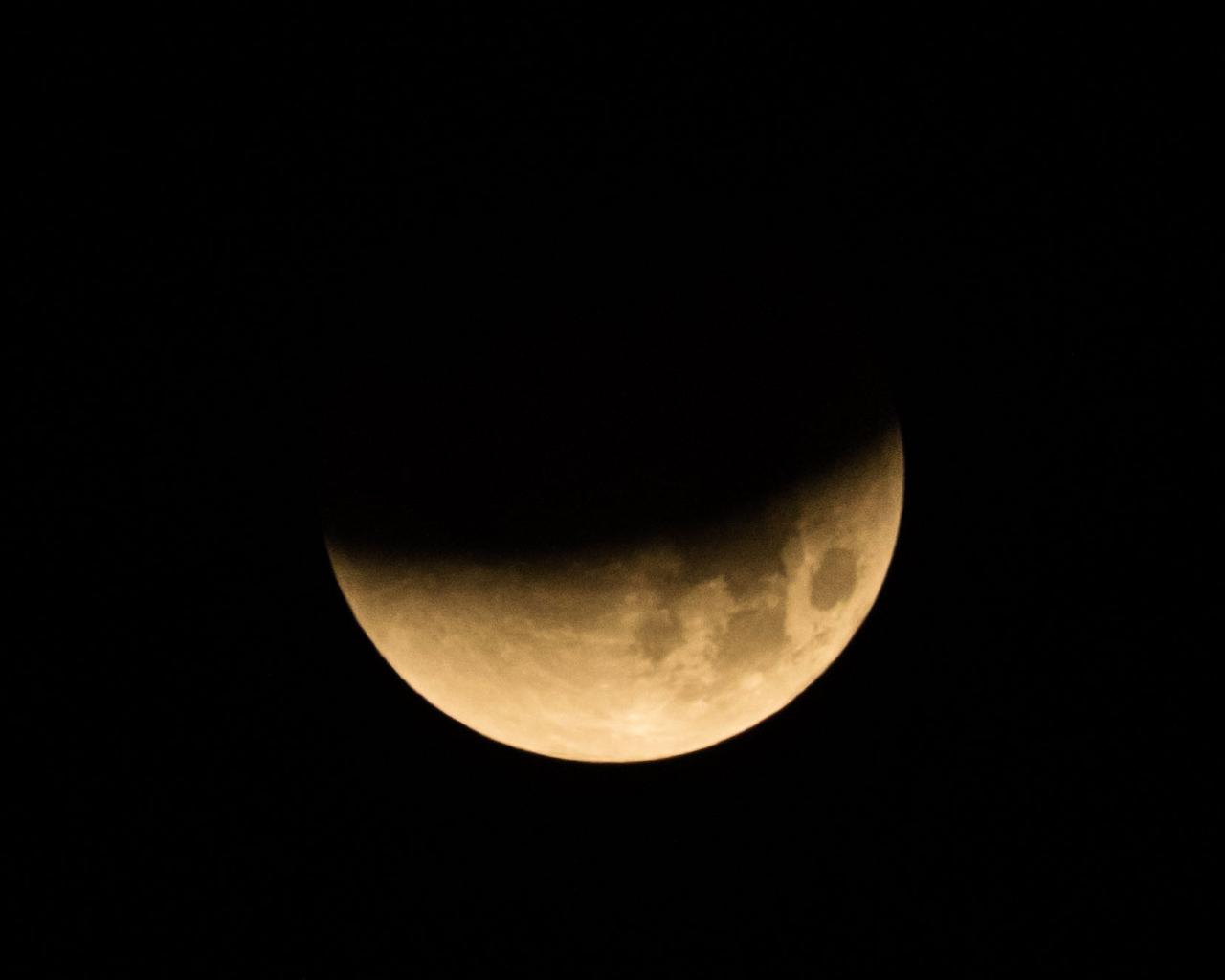
The partial phase of the Jan. 31, 2018 blood moon eclipse, shot from NASA's Johnson Space Center in Houston. —Robert Markowitz - NASA - Johnson
It’s not often that 3.6 billion people—or 44.4% of the world’s population—look at the same thing at the same time. And it’s not often that something comes along that’s worth the attention of all those billions. But that will happen on the evening of Aug. 27 when much of the world will be able to witness a blood moon lunar eclipse, during which 96% of the face of the full moon will fall into Earth’s shadow, glowing a deep orange-red in the process.
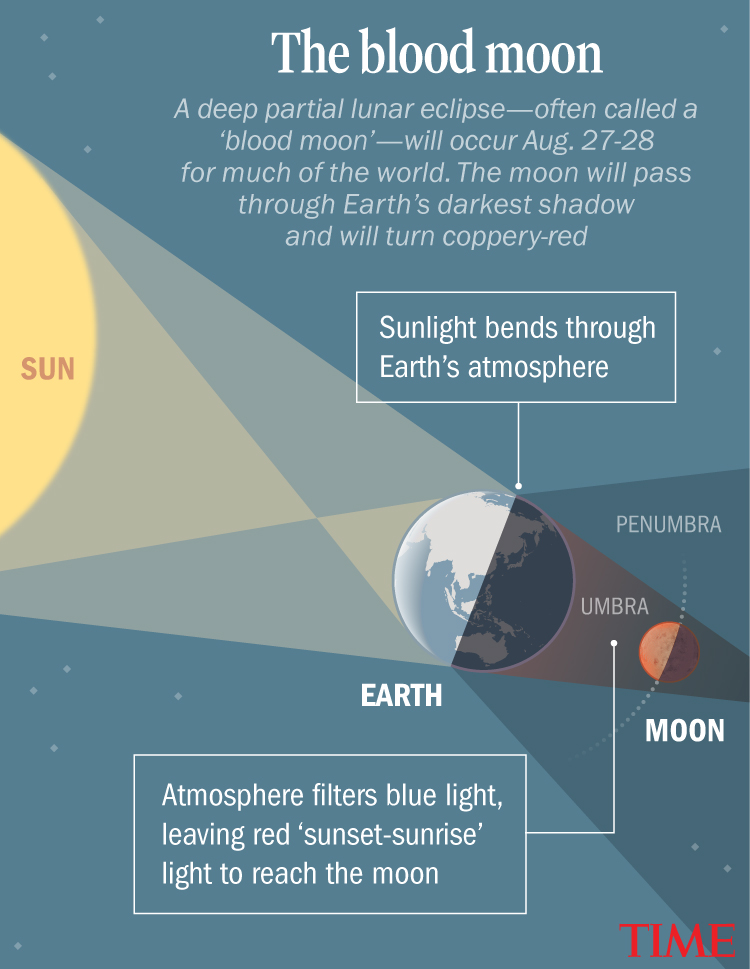
Lunar eclipses occur during a full moon, when the Earth is positioned between the sun and the moon, blocking all or most of the solar light that otherwise bathes the lunar surface. On average, lunar eclipses occur two to three times per year, though total lunar eclipses, when the moon is entirely shadowed, make up only 29% of those events. The autumnal color the moon takes on is due to a trick of the Earth’s atmosphere. Not all of the sunlight that would otherwise be striking the moon during an eclipse is blocked by the Earth; some of it leaks around the periphery of the planet and manages to reach the moon. That light streams through the Earth’s atmosphere during its passage to the moon, and some of the wavelengths of visible light—particularly the blue—are absorbed and scattered. What’s left is principally the red spectrum which partially lights the moon. All total lunar eclipses result in blood moons.
In theory, a lunar eclipse ought to occur once a month. On every orbit around the Earth on its 27.3-day journey, after all, the moon will always pass through a point at which the planet sits between it and the sun. But the plane of the moon’s orbit around the Earth is tilted about five degrees compared to the Earth’s orbit around the sun. That means that on some passages behind the Earth the moon avoids the shadow, soaring above or ducking below the planet.
How long will the lunar eclipse last?
An eclipse of the moon plays out slowly. The one that will begin on the evening of Aug. 27 and continue into the early hours of Aug. 28 will last a total of five hours and 38 minutes. Even the most dedicated eclipse chaser, however, may not be able to take it all in. Depending on where in the world an observer is—and this eclipse will be visible in Europe, Africa, North and South America, and western Asia—the moon may set before the eclipse is done or rise after it’s already begun. That will be the case in the Americas, where observers will see an eclipsed moon come up in the skies. Finding a flat area with few buildings and a clean sight line may be necessary to witness the eclipse, since in many places the moon will be low in the sky, close to the horizon. In the U.S., the eclipse will begin at 9:23 p.m. ET on Aug. 27, and end at 3:01 ET the next day.
There are three phases of any lunar eclipse—the penumbral, partial, and total or maximum. The penumbral phase occurs first, when the moon moves into the faint, outer reaches of the Earth’s umbra, or shadow. The partial phase comes next, when the true, darker shadow of the Earth begins to cover the lunar disk. The total or maximum phase is when only a small portion—or none at all—of the moon remains unshadowed. For the upcoming eclipse, the penumbral phase will take one hour and ten minutes, the partial phase one hour and 39 minutes, and the maximum phase, when the moon will be 96% obscured, will also take one hour and 39 minutes. That maximum shadow will occur at 12:12 a.m. ET. The eclipse will then return to the partial and penumbral phases before the moon soars on and leaves the Earth’s shadow behind.
What is an 'eclipse season'?
This eclipse occurs in a busy time for the skies. On Aug. 12, just over two weeks before the lunar eclipse is set to occur, there was a total eclipse of the sun, visible in Spain, Portugal, Iceland, Greenland, and Siberia. There is actually such a thing as an eclipse season, a month-long stretch occurring twice a year—in the summer and winter—when the moon passes the point in its five-degree orbit that the Earth, moon, and sun align in a way to make both types of eclipses possible.
If you fancy eclipses, you’re well advised to take this one in while you can. The next total lunar eclipse will not be until Dec. 31, 2027 to Jan. 1, 2028. New Years Eve fireworks will be going off that night, but they will be nothing compared to the sky show the Earth, the sun, and the moon will serve up.

 Login
Login