Ex-Breitbart editor has vocally supported immediate deportations for anyone who can’t prove US residency
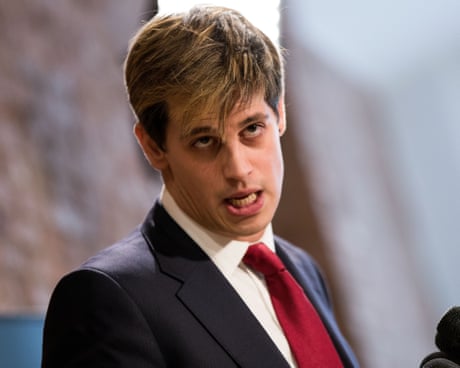
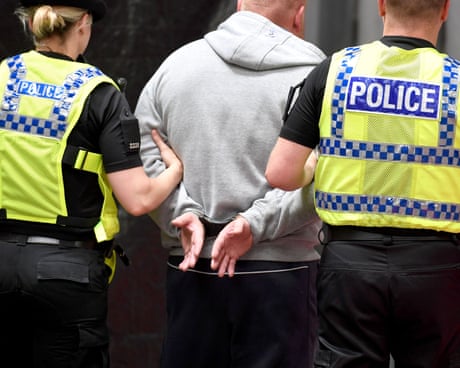
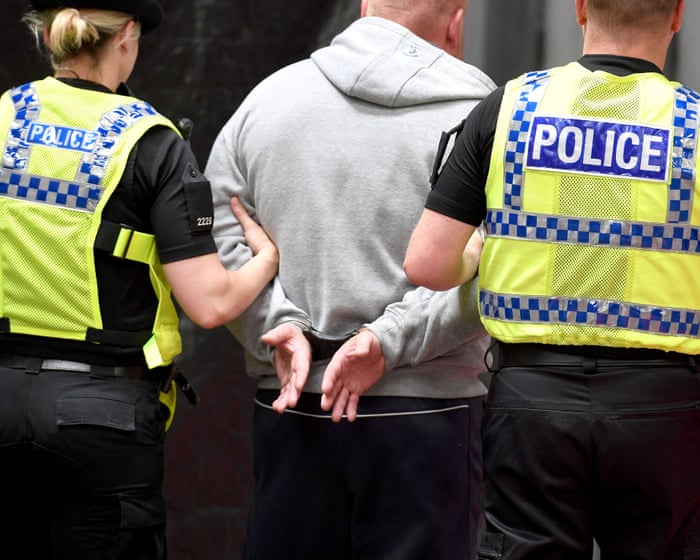
Far-right British media provocateur Milo Yiannopoulos has been deported from the US after being detained on Thursday by Immigration and Customs Enforcement (ICE) in New Orleans in connection with what the agency said was expired authorization to be in the country and a deportation order.
Yiannopoulos’s deportation to the UK occurred on Friday, said a statement on Saturday from a spokesperson for the US Department of Homeland Security (DHS), which oversees ICE.
Ex-Breitbart editor has vocally supported immediate deportations for anyone who can’t prove US residency
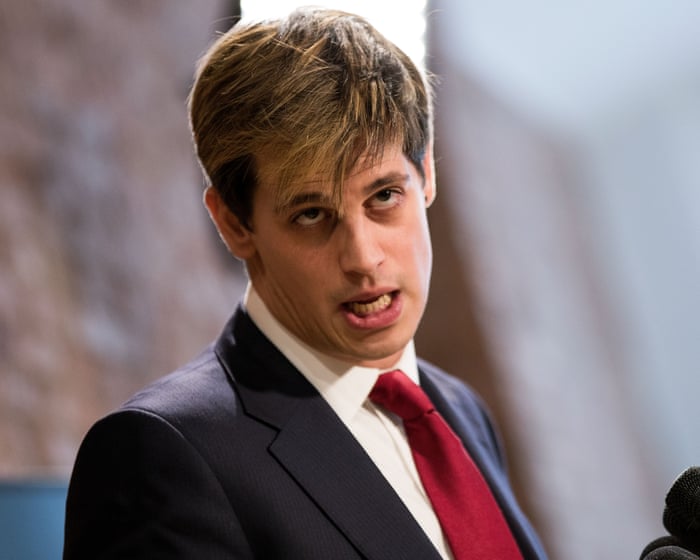
Far-right British media provocateur Milo Yiannopoulos has been deported from the US after being detained on Thursday by Immigration and Customs Enforcement (ICE) in New Orleans in connection with what the agency said was expired authorization to be in the country and a deportation order.
Yiannopoulos’s deportation to the UK occurred on Friday, said a statement on Saturday from a spokesperson for the US Department of Homeland Security (DHS), which oversees ICE.
Shadow minister for housing, communities and local government to resign with immediate effect
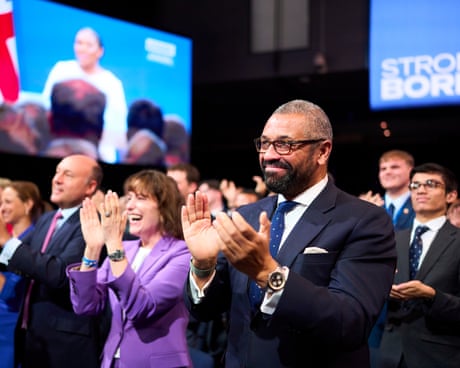
James Cleverly has resigned from the shadow cabinet to run for mayor of London.
The Tory heavyweight, who was once home and foreign secretary and is shadow minister for housing, communities and local government, told the Sunday Times he will resign with immediate effect.
Ex-House intel committee chair, now running against Abdul El-Sayed, instead saw photo of Osama bin Laden’s body
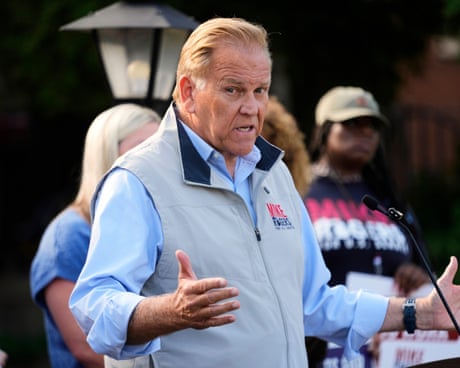
In a recent fundraising email, the Republican candidate for Michigan’s open US Senate seat, former congressman Mike Rogers, appeared to mislead supporters about his past by suggesting that he had played an active role in the killing of Osama bin Laden, the leader of al-Qaida who was shot and killed in an American military raid on his compound in Pakistan in 2011.
“When I served as a US army officer and an FBI special agent, I swore a sacred oath to defend the United States against all enemies, foreign and domestic,” Rogers wrote, according to a screenshot of the email shared online by Azi Paybarah, a former Washington Post reporter now with Straight Arrow News. “I dedicated my life to keeping our families safe – working in the shadows, hunting down terrorists, and standing on the frontlines of our national security.”
Shadow minister for housing, communities and local government to resign with immediate effect
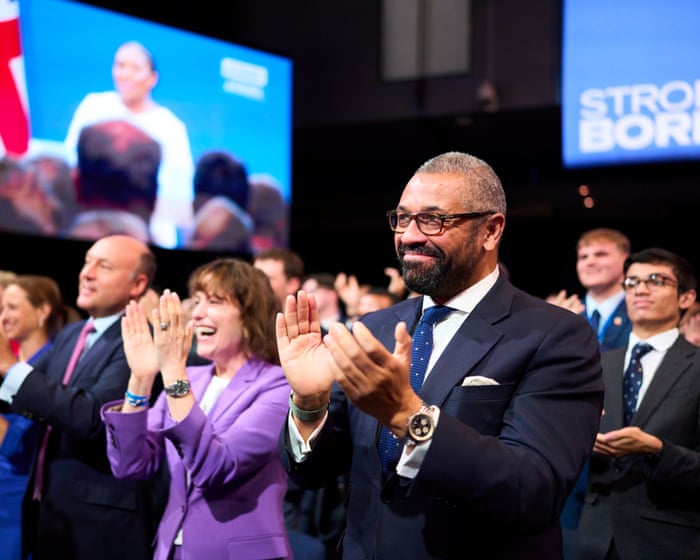
James Cleverly has resigned from the shadow cabinet to run for mayor of London.
The Tory heavyweight, who was once home and foreign secretary and is shadow minister for housing, communities and local government, told the Sunday Times he will resign with immediate effect.
Ex-House intel committee chair, now running against Abdul El-Sayed, instead saw photo of Osama bin Laden’s body
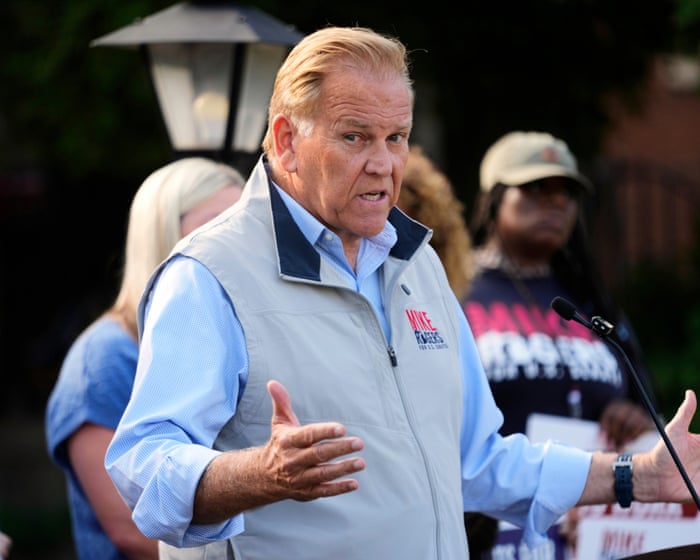
In a recent fundraising email, the Republican candidate for Michigan’s open US Senate seat, former congressman Mike Rogers, appeared to mislead supporters about his past by suggesting that he had played an active role in the killing of Osama bin Laden, the leader of al-Qaida who was shot and killed in an American military raid on his compound in Pakistan in 2011.
“When I served as a US army officer and an FBI special agent, I swore a sacred oath to defend the United States against all enemies, foreign and domestic,” Rogers wrote, according to a screenshot of the email shared online by Azi Paybarah, a former Washington Post reporter now with Straight Arrow News. “I dedicated my life to keeping our families safe – working in the shadows, hunting down terrorists, and standing on the frontlines of our national security.”
Bureau to still dismiss those with encounters within past 10 years, three or more times or while in public safety capacity
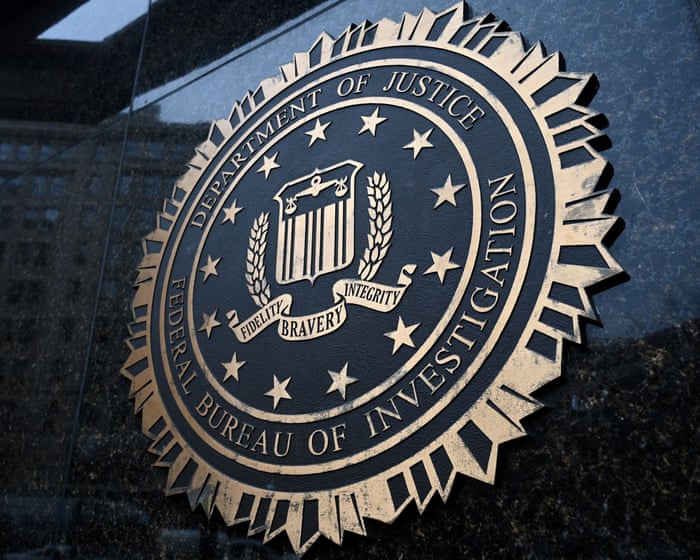
The FBI is dropping a categorical hiring ban on applicants who have had sexual encounters with sex workers and will instead consider in a more holistic manner at least some candidates who have engaged in the practice in the past, according to people familiar with the matter.
The move away from an automatic disqualification falls along a continuum of evolving recruitment standards within federal law enforcement and at the buttoned-up bureau, which several years ago relaxed its approach to candidates’ past marijuana use and has drawn more recent concern among some current and former agents about a perceived loosening of recruitment requirements as it seeks to replenish its ranks.
Bureau to still dismiss those with encounters within past 10 years, three or more times or while in public safety capacity
The FBI is dropping a categorical hiring ban on applicants who have had sexual encounters with sex workers and will instead consider in a more holistic manner at least some candidates who have engaged in the practice in the past, according to people familiar with the matter.
The move away from an automatic disqualification falls along a continuum of evolving recruitment standards within federal law enforcement and at the buttoned-up bureau, which several years ago relaxed its approach to candidates’ past marijuana use and has drawn more recent concern among some current and former agents about a perceived loosening of recruitment requirements as it seeks to replenish its ranks.
Commodity Futures Trading Commission said Gabriel Perez wagered on Kalshi about words president used in speeches
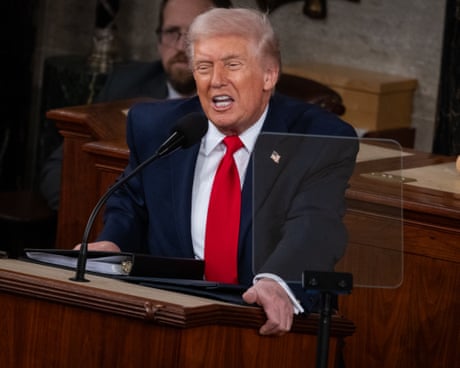
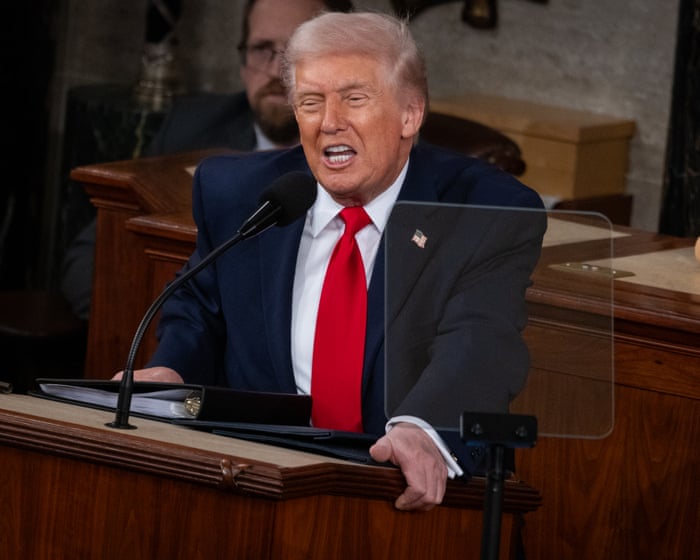
A White House teleprompter operator who left his post amid accusations that he used inside knowledge to make bets on Donald Trump’s speeches on an online prediction market has been fined $172,000, according to federal regulators.
Gabriel Perez illicitly exploited “material, nonpublic information” that he gathered through his work for the president in order to place wagers on the Kalshi platform “for his personal benefit”, the Commodity Futures Trading Commission (CFTC) maintained in a news release on Friday.
Bridget Phillipson says government would not have to consider releasing prisoners early if Tories had created more capacity
Cells to hold newly arrested people could run out without the early prison release scheme, a minister has said.
Bridget Phillipson defended the plan to address the prison capacity crisis in England and Wales by releasing thousands of prisoners early, which has been criticised by domestic abuse charities, bereaved families and probation officers among others.
In deep red South Carolina, the president helped stoke apprehension of a deeper red surge ahead of November’s US midterm elections
After casting his vote in South Carolina, a man who introduced himself as Chestnut was unwilling to give his full name. “You don’t have a need to know,” the air force veteran declared. He was, however, happy to share his views.
“I’m a true American. I believe in the USA,” said the man, outside Christ the Servant Lutheran church in Conway. “And I don’t believe in communism or socialism.”
Ignore Iran, the Epstein files, and your wallet – not to mention Trump’s plummeting approval ratings
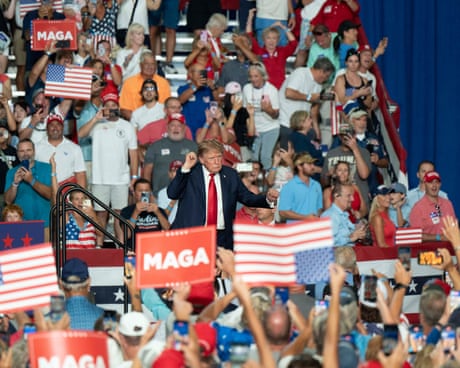
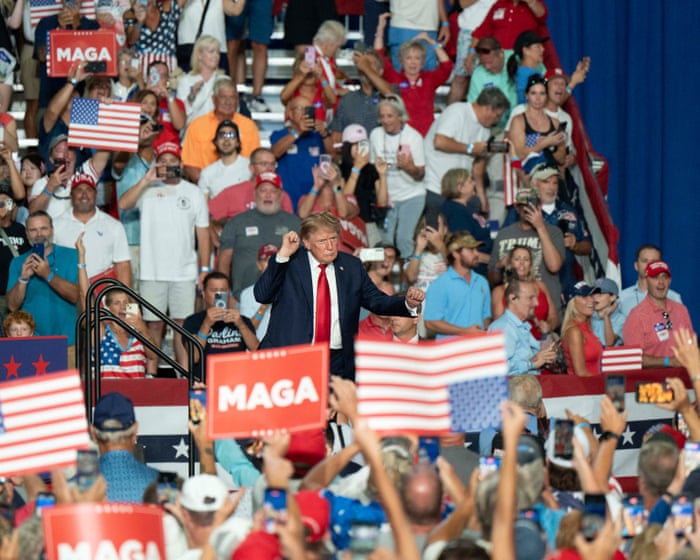
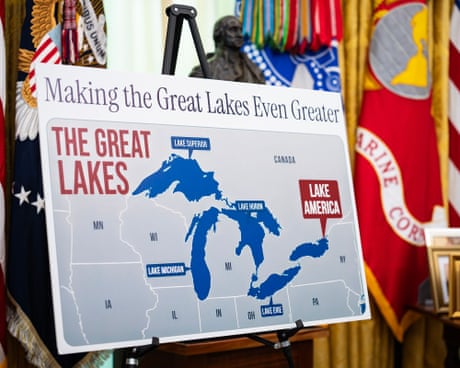
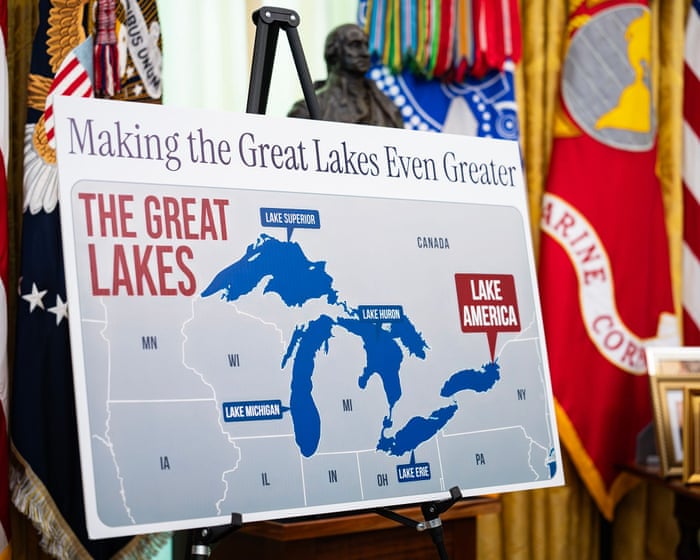
Don’t mention the war! Or the economy, for that matter. Or the Epstein files. Or Natalie Harp. Or “affordability”, which, as Donald Trump recently said at a rally, is a word that was “never used” by the media before he took office. Best not to talk about anything that affects ordinary people or embarrasses the president, really. Instead, let’s all rejoice in Trump’s latest triumph: renaming Lake Ontario, which is shared by Canada and the US, as Lake America.
On Thursday, Trump signed an executive order directing federal agencies to America-fy the lake’s name on US maps and documents, which is an excellent use of time and resources. I suppose we can at least be thankful that the president, who is trying to slap his own name on everything from airports to the Kennedy Center, didn’t decree that the body of water be called Lake Trump.
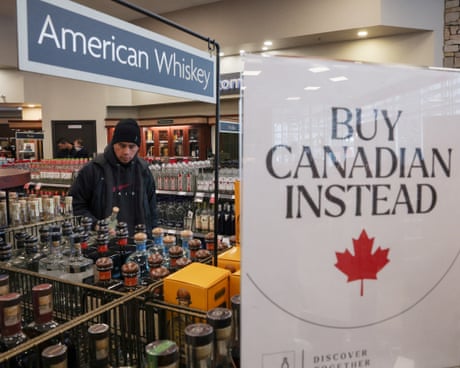
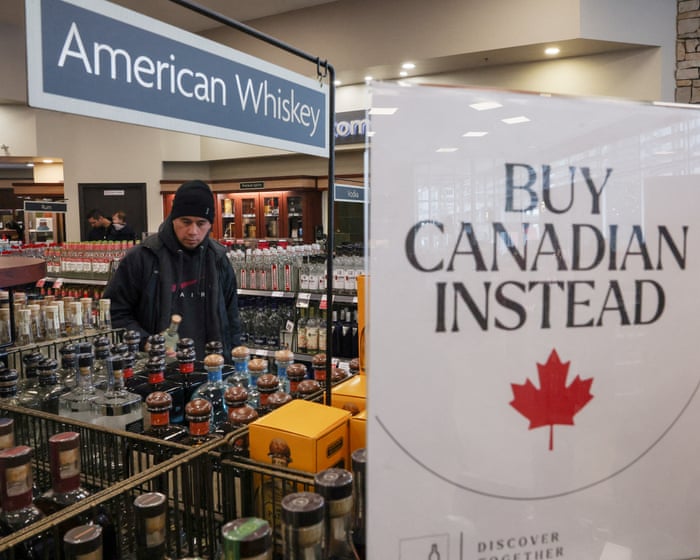
Avoiding US goods and services – from tech to whisky to air travel – has forced many to find a new way of living
For William McDonald, 38, a diesel mechanic from Thunder Bay, Ontario, “Canadian is always the first choice,” even if it means his weekly bills are higher.
“As soon as Trump started putting those tariffs on in February [last year], I started boycotting US goods,” he said. “Avoiding American products has driven my costs up, and I’m still happy to do it.
New York City Mayor Zohran Mamdani, and state Attorney General Letitia James at a press conference on August 12, 2026, in New York City. | Selcu Acar/Anadolu via Getty Images
On Tuesday, New York Mayor Zohran Mamdani was asked about an upcoming appearance by Mohan Bhagwat, a leader of a Hindu nationalist organization, at Madison Square Garden on Saturday.
“I don’t support the rally, but I don’t know if the city has any jurisdiction on canceling a private event,” he said at a press conference. “It has been incredibly troubling to see the rise of a movement that is predicated on an exclusionary vision of any country, frankly, and so it is one that I find myself in deep opposition to.”
His statement has led to a flurry of controversy and allegations that Mamdani is “Hinduphobic,” biased toward Muslims, and picking a fight with another religious and ethnic group. The mayor has continued to make headlines this year for his vocal criticism of Israel and its Prime Minister Benjamin Netanyahu, leading to tensions with Jewish leaders and communities in New York.
First the Jews. Then the Italians. Now Hindus.
Zohran Mamdani has found yet another New York community to target, opposing a Hindu celebration at Madison Square Garden because he objects to its politics. The mayor of America’s most diverse city seems determined to divide it one…
But Mamdani was far from the only critic of the event; other Hindu, Muslim, interfaith, and human rights activists protested the event and demanded it be canceled this week.
What’s actually going on here?
Bhagwat is the leader of the Indian organization Rashtriya Swayamsevak Sangh (or RSS for short), a Hindu nationalist group affiliated with India’s ruling party, the Bharatiya Janata Party.
Bhagwat is not a politician or an officeholder in India, but is frequently described as being one of the most influential men in that country, primarily because of his role in leading RSS, which describes itself as a “Hindu-centric civilisational, cultural movement.”
Yet plenty of activists, academics, experts, and critics contest that description of RSS, instead casting it as a right-wing Hindu nationalist paramilitary organization, accused of fueling intolerance, endorsing discrimination, or inciting violence against minorities in the subcontinent, particularly Muslims — essentially promoting an ideology that “amounts to ‘an Indian version of fascism,’” as one India scholar told my colleague Zack Beauchamp in 2023.
And one of the most vocal recent critics is Mamdani, who is himself Muslim and of Hindu descent on his mother’s side.
To better understand the RSS, Bhagwat, and the reasons for Mamdani’s criticism, I turned to Nishant Upadhyay, an associate professor in Asian American studies at the University of Colorado Boulder. Upadhyay has done extensive research on the intersection of race and caste, as well as Hindu nationalism in both India and diaspora communities.
Our conversation has been edited for length and clarity.
Could you explain to me what these groups behind Saturday’s event are?
Mohan Bhagwat is the president of this Hindu nationalist organization, RSS, which loosely translates to National Volunteer Corps. The group that’s organizing this event in the US is called American Hindus for Engagement and Dialogue. In choosing someone like Bhagwat, who has been the president of this organization since 2009, which is perhaps the largest paramilitary religious nationalist organization in the world, it’s very concerning and shocking.
American Hindus for Engagement and Dialogue say they’re all about fostering understanding, building bridges, strengthening communities, but the Hindu nationalist project in India is anything but that. In the diaspora, for them to say that we believe in diversity, we believe in building bridges, we believe in a vision of multiculturalism, it shows the contradiction between what Hindu nationalists are doing in India versus what they pretend to do in the diaspora.
Does RSS have a long history in India?
It was founded in 1925, when India was under British colonial rule, with the idea that India should only be for Hindus. And who is “Hindu” changes, but mostly the violence we see has been put on Muslim and Christian communities. And over the last hundred years, that violence just keeps escalating. Muslims are the primary target, but across the country, Christian communities have also become a big target.
The whole idea is that India should be for Hindus and religions that have originated in South Asia. So Jainism, Buddhism, Sikhism — they can be part of the Hindu nation as long as they identify themselves as Hindu, because these religions have some similarities with Hinduism. But all of them actually came as anti-caste critiques of Hinduism. Practitioners of these religions assert a very separate identity than Hindu because of what their scriptures have been grounded in: a very anti-casteist and anti-patriarchal critique of what we understand as Hinduism now.
How does India’s current government fit into this?
RSS is the biggest umbrella organization of all Hindu nationalist organizations in India and the diaspora. And BJP, the ruling party in India, is seen as the political wing. So RSS does not necessarily participate in elections and government, but provides the spiritual, religious, and intellectual foundation for a political party like BJP that does come to power.
They have this really massive network of RSS followers across the country who are then mobilized for elections, who are mobilized to support BJP, who are mobilized to then commit violence against Muslims. Some people come from the RSS and become leaders in the BJP, though BJP also has other people who might not be directly affiliated with RSS, but it’s the main political organization.
For the last 12-ish years, Narendra Modi, who’s the prime minister of India, has been in power with the BJP, which has drastically changed the social, political, and economic landscape of the country. The Hindu nationalist agenda has become more and more frontline and mainstreamed and normalized. Religious minorities like Muslims and Christians face constant violence, everyday surveillance, everyday policing, from the minutiae to extreme violence on a regular basis across the country. If Hindu nationalists had their way, they would either take away citizenship rights from Muslim communities or render them nationless and kick them out of the country.
It’s also caste-oppressed communities, Indigenous communities, ethnic communities like Kashmiri and Manipuri communities. We have just seen drastic escalation and violence against everyone who’s not a Hindu and everyone who’s not a dominant caste, or caste-privileged Hindus across the country.
So this group’s leader is coming to the US — how do Indians in the American diaspora feel about all this? When Modi came to the US in 2019, he had massive crowds, and Donald Trump joined him. Do folks here feel the same way about someone like Bhagwat?
It’s complicated, and there isn’t just one view. For context: Modi was banned from coming into the US until about 2014, because he was accused of encouraging genocide against Muslims in the state of Gujarat in 2002, where over a thousand people were killed.
But since being elected prime minister, he’s visited the US multiple times and has often had huge gatherings in cities like New York and Houston. He won a third election two years ago, and his closeness with Trump…he’s projected often as a world leader. But there is, in the diaspora, along with human rights organizations in the US, active work against RSS and BJP for the last 20, 25 years. They are doing the consciousness-raising work of saying how this is a fascist ideology, anti-Muslim ideology and that we should not be in cahoots with them.
But what we’ve also seen is, especially in the last 15 years since Modi has come into power, that the Hindu right-wing diaspora has also become very active and mobilized. And so there used to be a more secular diaspora, which in some ways was the mainstream, that has been taken over by [the] Hindu right-wing diaspora now because of how they’re in alignment with both the Democrat and the Republican Party. They’re also working with Indian millionaires and billionaires in the US economy, and so they’ve started gaining this economic and political power in the US where they’re becoming more dominant.
And they’re able to do these things at a much larger scale now and counter the critiques of nationalism in the diaspora. There is power in the Hindu diaspora, and now, in some ways, the right-wing diaspora. That ideology works very well with Trump’s ideology and actually also works with Democrats in many ways because Modi has also allowed more and more American corporate interests to come into the Indian economy.
But that’s not to say that the majority of the Indian diaspora is Hindu and the dominant caste; there are many who are non-dominant-caste and many who are not Hindus, and many who are Hindus and dominant-caste and critical of Hindu nationalism because we see the violence that is happening under the name of our religion in many ways.
And that’s where the conversation heats up, because Zohran Mamdani’s family also comes from a much more secular, pluralist, anti-Hindutva [the RSS/BJP ideology that defines Indian identity through Hindu identity] ideology. And a place like New York has many amazing diasporic groups who are working every day to fight against fascism in India and the US.
Every time this erupts in the mainstream, we see this conflict between the much more conservative Hindu right-wing voices versus the much more liberal, secular, pluralist Indian diaspora.
So let’s talk about Mamdani’s critique. What’s the context we need to know that explains why he would speak up?
He is such a curious figure to have someone in the public realm like that. So he is Muslim, but his mother is Hindu, and his mother is from India. His mother has been a very renowned progressive filmmaker who’s made films about different forms of structural violence in India for a long time. So he is Muslim, but also someone from a progressive Hindu background. He can see the violence in the Indian state in ways that are not accessible to many others.
I would not say it’s just because he’s Muslim. I think because he’s Muslim and has a progressive anti-violence kind of approach that for him then these are very important issues. That kind of outlook is not targeting Hindus, he’s specifically talking about the violences of Hindu nationalism. It’s not a blanket statement against all Hindus, that they are like that. And he’s also Hindu, comes from a Hindu-heritage family as well.
How does this compare to his comments and criticisms of Netanyahu? Some on the American right have cast him as having it out against Jewish people, or Israel, and now he’s moving on to Hindus.
It’s very similar, in the sense that criticizing an ideology or a nation’s policies is not the same thing as saying all people are responsible. The conversation that criticizing Netanyahu or Israel is not antisemitic is a similar conversation: it’s actually not a critique of Hinduism or Judaism, it’s a critique of hyper-nationalist politics that can come out of Zionism and Hindu nationalism and what the Indian state and the Israeli state does.
His critique and my critique and many of us in the US, our critiques are saying, no, actually let’s look at what Hindu nationalism and Zionism does. And that’s where I think Mamdani comes from.
Anything Mamdani says and does or his wife says and does becomes news anyway, but these are much more grounded in politics that his and his family have been grounded in for a long time, to fight against violence and fascism and stand up for minoritized communities here and globally.
He does have a track record of speaking up about Hindu nationalism. I believe he has called Modi a “war criminal.”
Yes, he’s been doing this even before he became mayor or before he came into US politics. If you see his track record when he was a younger organizer, he has always been consistent on standing up for Palestinians, standing up for Muslims, standing up against all forms of fascism here and globally.
He’s very openly spoken about what is happening to Muslims in India in the last 10-plus years. Quite recently, he has spoken up about an Indian Muslim PhD scholar, Umar Khalid, who was critical of BJP and was arrested and has been detained in Delhi for six years. So Mamdani has shown solidarity to many Muslim folks in India who get unjustly incarcerated or face violence.
So it’s not surprising that Mamdani would weigh in now. But is it significant?
I’m wondering now with your question, if Mamdani hadn’t said anything, would this have been an issue? Or if Mohan Bhagwat had gone somewhere else in the US, if the mayor would have not said anything, or if it would have sparked any interest.
I want to emphasize that this is beyond players like Zohran Mamdani and Mohan Bhagwat, and more about the mainstreaming of Hindu nationalist ideology in the US. It is really scary and we need to be very attentive to it even when they use the language of pluralism and dialogue and building bridges.
Even Indian Americans who are Muslims and Kashmiris and Dalit and Manipuri and others get attacked on a very regular basis. So many academics in the US academy and grassroots-level organizers, who are mostly women and who are mostly Muslim or mostly Dalit, are publicly hounded. They get threats, threats against their children in their inboxes, in their phone calls, on their social media feeds. And this has been going on for the last 10 years and more. And so it is when we give power to people like Mohan Bhagwat that these violences escalate more.
As economic circumstances worsen, the PM’s commitments have left him and the chancellor in a tight spot
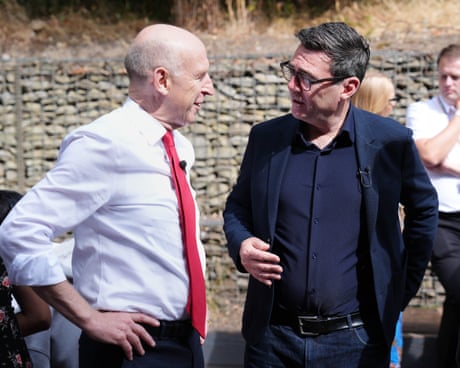
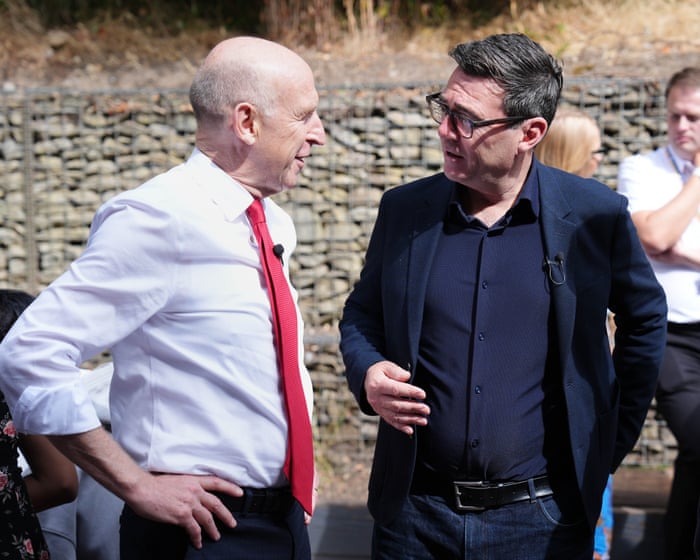
When Andy Burnham made his first speech after returning as an MP, he promised that as prime minister he would oversee “the most significant change moment in our politics for 40 years”. His style, direction and communication has been a big shift from Keir Starmer’s approach, but as he heads into the autumn, the new prime minister faces some very similar problems.
With an early budget in late October, and worsening economic circumstances, Burnham has made promises and commitments that put him in a tight spot. Here are some of the constraints over the coming months that Burnham and the chancellor, John Healey, must contend with in their autumn budget.
The former UK prime minister is still shaping politics (even if he doesn’t want to interfere). He talks about keeping his temper, staying fit – and why he won’t pay £90 for a Scotland football shirt
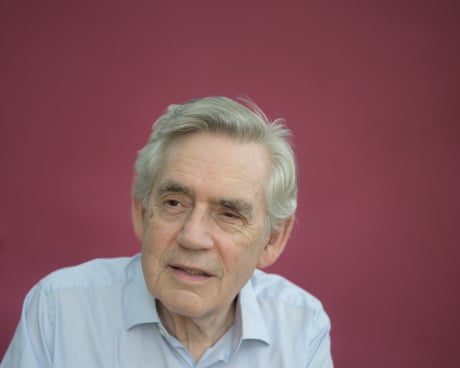
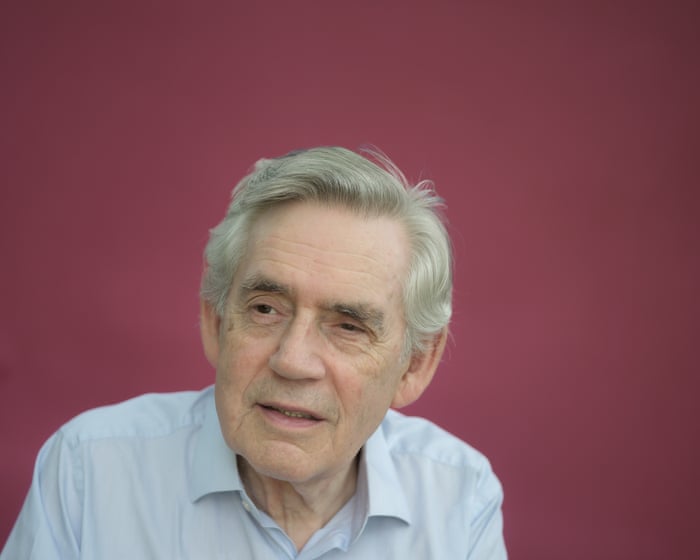
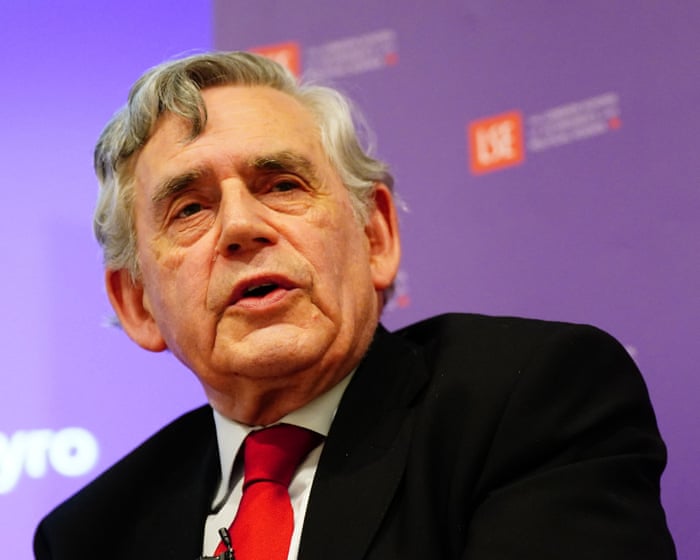
It’s a Monday in August and as England burns in dystopian heat, Gordon Brown and I are in his office at the top of his house in North Queensferry, overlooking the moody waters of the Firth of Forth. It’s hard to recall the top of my own sauna-like house in London as we stand here in the cool, wearing wool suits and necessary socks, my coat slung over the back of a chair. “I was watching Raith Rovers – the local football team – on Saturday,” Brown says, “and it was really cold. There was a wind blowing in from the sea.” He asks if I’ve heard the famous joke – “Scotland’s only got two seasons: July and winter”– then chuckles. It’s one of his favourites. (I’ll hear him tell it three times today.)
That’s not to say Fife has been untouched by the multiple heatwaves. They had a few sunny days. One hit 24C – “a shock”, Brown says, July temperatures typically being 15-17C. He stood in his kitchen and considered the modest patch of grass at the back of the house. “I never imagined being out in the garden in the summer. I never imagined it because it’s either raining or too cold.” Once out, he found himself battling a “very dangerous” nest of wasps. One family member was stung, then there was the rigmarole of specialists in thick gloves and protective suits undertaking its removal. By the time that was done, the sun had gone in.
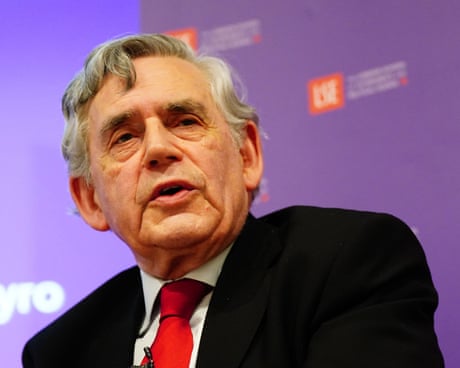
The former prime minister Gordon Brown has said it is inevitable that Ireland will become united at some point in the future, in a wide-ranging interview with the Guardian.
While he added that any union would necessarily be “a long process” and based on mutual agreement, Brown’s comments are notable both because of his vehement opposition to Scottish independence, but also because of his involvement in government in efforts to bring peace to Northern Ireland.
The former prime minister Gordon Brown has said it is inevitable that Ireland will become united at some point in the future, in a wide-ranging interview with the Guardian.
While he added that any union would necessarily be “a long process” and based on mutual agreement, Brown’s comments are notable both because of his vehement opposition to Scottish independence, but also because of his involvement in government in efforts to bring peace to Northern Ireland.
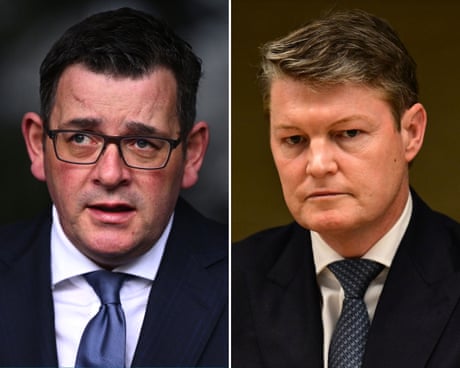
The Carroll government in Victoria has cancelled controversial plans for a statue of former Labor premier Daniel Andrews.
Work began in May on the statue commemorating the former premier’s more than 3,000 days in office, as part of a 1999 policy recognising long-serving Victorian premiers.

 Login
Login