Terrified of being seen as a loser, Donald Trump is nonsensically lashing out – even against our old friend Canada
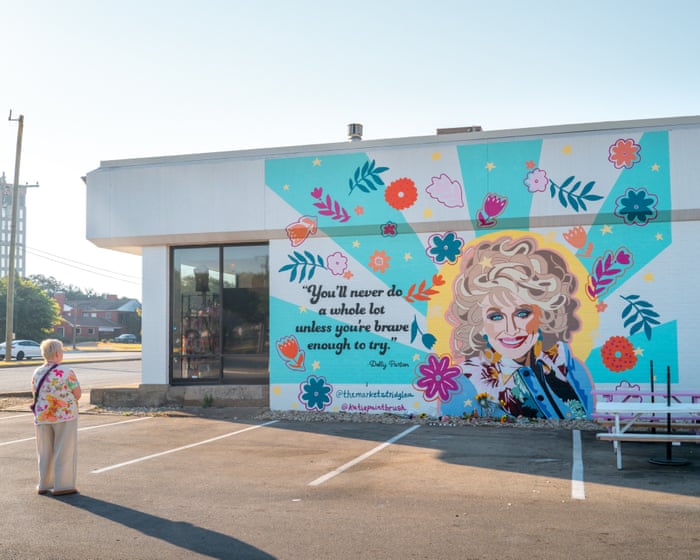
I’m still grieving Dolly Parton. I never met her and always wanted to. She was almost exactly my age and my height and had values I deeply admired. Her death leaves a hole in the firmament.
Which brings me to the person whose values are as far from Dolly Parton’s as any human could possibly be and still claim to be human. I’m referring, of course, to the current occupant of the Oval Office.
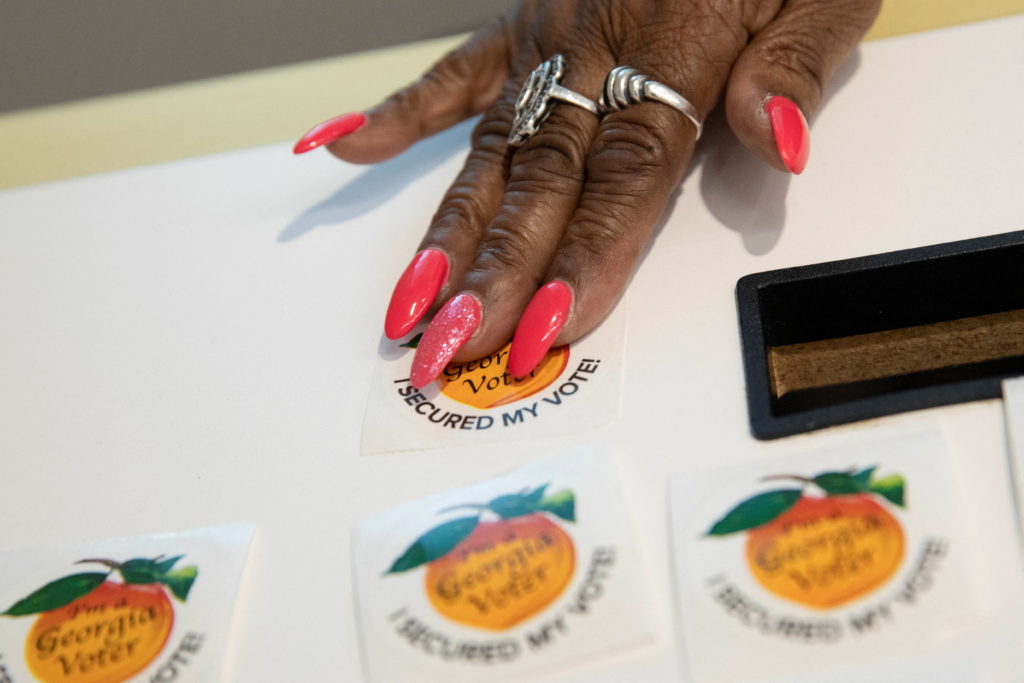
Residents of Georgia's 13th Congressional District outside of Atlanta will get a new representative to Congress after a special election runoff Tuesday to replace the late Democratic Rep. David Scott, who died April 22.
Michigan Senate candidate Abdul El-Sayed and Sen. Bernie Sanders at a campaign rally earlier this year. | Sarah Rice/Getty Images
This story appeared in Today, Explained, a daily newsletter that helps you understand the most compelling news and stories of the day. Subscribe here.
The progressive populist Abdul El-Sayed won Tuesday’s Democratic Senate primary in Michigan — though the vote was so close that most outlets didn’t call the race until this morning.
It’s not exactly the resounding triumph progressives expected. In the lead-up to Election Day, El-Sayed’s campaign boasted of a “massive” polling lead over centrist Rep. Haley Stevens that they said definitively proved the mainstream appeal of his style of politics.
In reality, the takeaways from one of the midterms’ bitterest and most consequential races are probably more mixed. El-Sayed, an epidemiologist and former public health official who has championed policies like Medicare-for-all and an end to military aid for Israel, appeared to struggle in some of Michigan’s lower-income and less-educated districts.
That said, his win is still a big deal, especially given the forces arrayed against him. Democratic heavyweights and big-money donors both threw their considerable weight behind Stevens.
The Democratic primary in Michigan centered on a lot of interesting issues: money in politics, a whole bunch of -isms, and the role of “the establishment,” to name just a few. But the upcoming general election will test one question above all: Can a left-wing populist win over swing-state voters the way right-wing populists have been doing for years now?
We have some left-wing populists in office already, of course — Sen. Bernie Sanders (I-VT) and US Rep. Alexandria Ocasio-Cortez D-NY), who both campaigned for El-Sayed this cycle. Progressives represent a number of cities and urban congressional districts. And over the past few months, the left wing of the Democratic Party has notched some notable primary wins.
But all of these candidates have run to represent solidly Democratic communities, where winning the primary effectively meant winning the seat. An out-and-proud, Sanders-style, left-wing populist arguably has yet to prove that this platform can win a statewide general election in a state that isn’t deep-blue already.
That makes Michigan a high-stakes test. The state went for Trump in two of the past three presidential elections. Winning Michigan as a Democrat means cobbling together a coalition from a broad and varied range of constituencies, including Black Detroiters, swing suburbanites, college-town progressives, blue-collar union workers, and both Jewish and Muslim Americans.
“Michigan is like a microcosm of America,” one Detroit reporter told my colleague Astead Herndon. If a left-wing populist can win there, in other words, the Democratic Party will really have to pay attention.
One link for later
➨ Have that second cup of coffee; there’s a strong case to be made for its health benefits. In contrast to other, highly publicized food studies of this arena — many of which are sponsored by industry groups — a number of large, rigorous, peer-reviewed studies have found that coffee reduces your risk of developing dementia, cirrhosis, and liver cancer.
Today’s trivia: What was the name of the Nickelodeon game show hosted by Marc Summers? (You can find this and other brain puzzles in Vox’s daily crossword. Look for the answer in tomorrow’s edition.)
Yesterday’s trivia: Yesterday, we asked you how many states have legalized marijuana. That would be 41, if you count medical use, and 24 if you do not.
From left, Rep. Alexandria Ocasio-Cortez, Michigan Democratic candidate for Senate Abdul El-Sayed, and Sen. Bernie Sanders greet the crowd after El-Sayed spoke at the People v. the Powerful rally at the Detroit Opera House on July 18, 2026, in Detroit. | Sarah Rice/Getty Images
Abdul El-Sayed has defeated Haley Stevens in Michigan’s Democratic Senate primary — albeit by a significantly smaller margin than preelection polling suggested. He’s beaten back $30 million in AIPAC spending and endorsements from top Democrats, including Michigan Gov. Gretchen Whitmer, who backed Stevens. Now he’s moving on to face the GOP nominee, former Rep. Mike Rogers, in a contest crucial to determining Senate control.
So the next question is: Can El-Sayed beat a Republican?
That will be a cinch, some in his camp claim. “For progressives, getting out of the primary is a far more difficult battle than winning in the general,” left-wing streamer Hasan Piker told CNN last week.
But the reality is that we’ve had very few true tests of how candidates associated with the left flank of the party — and specifically with the Bernie Sanders-backed revolt against the establishment — would fare in competitive swing-state general elections.
Which means that this would be one of the first such tests, and that its outcome will have enormous stakes for the party’s future.
El-Sayed’s views on Israel and his prospective history-making turn as the first-ever Muslim senator have gotten much coverage. But El-Sayed is also a dyed-in-the-wool member of the Sanders faction, having been closely aligned with Sanders and Rep. Alexandria Ocasio-Cortez since his first political campaign in 2018. Both have campaigned for him this cycle.
If El-Sayed defeats Rogers convincingly (he’s personally predicting a 7-point victory as his baseline), he’ll become a megastar and even possibly a presidential contender. He’ll arguably be the first to prove that the Sanders formula — attacking billionaires, corporate influence, and the party establishment, while backing sweeping social welfare spending like Medicare-for-all — can win over voters who once backed President Donald Trump.
“If Abdul El-Sayed beats Stevens I actually think he’s very likely to be the next president,” Nathan J. Robinson, editor-in-chief of the socialist publication Current Affairs, posted on X last month. “If he wins the general, it’s over for centrist Dems.”
Conversely, if El-Sayed — who has trailed Rogers in recent polls — loses, skeptics may conclude that the left can’t appeal to the country’s true swing voters, and that nominating a leftist for president in 2028, or in downballot races, is too big of a risk.
The core disagreement: Will the left’s approach succeed in the general election?
Over the past decade, it has become an article of faith across much of the left that their particular populist approach to economics and foreign policy would be potent in a general election.
They argue that typical Democrats have a more compromised platform and timid style, lacking the populist fire that can win over disaffected Americans. “Bernie would’ve won” in 2016, the saying goes, by using his outsider credibility and ambitious plans to appeal to the working-class voters and independents that went for Trump. Kamala Harris’s defeat, amid intense criticism on the left over her and Joe Biden’s support for Israel, further bolstered their sense that the party establishment just can’t get it done.
Now, left factionalists are pointing to their several high-profile primary victories this year and arguing that energy and enthusiasm are on their side — and would translate to the general election too.
Many mainstream Democrats see this as naive. They believe that while talk of “socialism” and other far-left positions might work fine in deep blue cities and districts, it could well prove toxic in swing states that have voted for Trump. While public opinion on certain issues has moved in the left’s direction, especially Israel, candidates could have a tougher time on issues like crime, where El-Sayed has offered nuanced explanations of his “defund the police” rhetoric from 2020.
“Winning a Democratic primary means close to nothing when it comes to the general election, because these are functionally different voter pools,” Lakshya Jain of the center-left publication The Argument recently wrote.
Some analysts pointed to the primary results as a potential harbinger of general election struggles, with El-Sayed performing poorly against Stevens in the kinds of rural areas that have swung toward Republicans in the Trump era.
Are there past examples of Bernie-aligned candidates making it to tough general elections?
But even though the “Bernie vs. the establishment” battle has been raging on and off for the past decade, there have been very few clean tests about how Bernie-backed candidates would do in swing states.
Sanders never won the presidential nomination, and candidates aligned with him have generally preferred to run in strongly Democratic areas where, if they win the primary, the general election is a fait accompli. The now-expanding “squad” of left-wing House members that began with Reps. Ocasio-Cortez, Ilhan Omar, Rashida Tlaib, and Ayanna Pressley all fit this model.
There have, however, been a few past examples where Sanders-aligned candidates have made it to the general election in tough territory.
One is Andrew Gillum, whose 2018 bid for governor of Florida was backed by Sanders and other progressive groups, including billionaire Tom Steyer’s network. He won the nomination over establishment favorite Gwen Graham — but then went on to lose the general election to Ron DeSantis by a mere four-tenths of a percentage point, ushering in what became the era of Deep Red Florida.
In nominating Gillum, did the left blow a winnable race amid a national Democratic wave? Maybe — but one counterargument is that longtime Sen. Bill Nelson, a thoroughly mainstream Democrat, lost his seat by a similarly tight margin in that same election. Florida may have just been trending redder generally. Gillum’s post-election personal struggles also color views of his candidacy today.
That same cycle, in Nebraska, Kara Eastman upset the establishment favorite to win the nomination for a swing House district. (Sanders hadn’t endorsed her in the primary, but she ran on a platform of Medicare-for-all and free college.) She lost in 2018 — and again in 2020, even though Joe Biden won her district — and has been viewed inside the party as a cautionary tale about blowing a winnable race ever since.
The outcome was happier for Keith Ellison, a close Sanders ally who won his race to be Minnesota’s attorney general in 2018. Yet his margin of victory — about 4 percentage points — wasn’t particularly impressive in a lean blue state in a strongly Democratic year when Tim Walz won the governor’s race by 11. Later, when Ellison ran for reelection in 2022, he eked out a win by less than 1 point while Walz won by 8.
John Fetterman was generally understood to be a “Bernie faction” candidate when he ran for an open US Senate seat in Pennsylvania in 2022. (Sanders stayed neutral in the primary that year, but had backed Fetterman’s earlier lieutenant governor campaign and championed him in the general election.) But he wasn’t exactly running on a bold left platform — he backed off his past Medicare-for-all support and was pro-fracking.
Fetterman ended up winning by 5 points even though it was a favorable cycle for Republicans — but simultaneously, the more centrist Josh Shapiro won the governor’s race by 15. However, Shapiro’s opponent was believed to be weaker and more extreme, and the stroke Fetterman suffered that year complicates efforts to read too much into his performance.
Separate from his electoral performance, Fetterman’s association with the Sanders left ended years ago as his politics moved to the right; lately, there has been talk he might switch parties. This has also fueled arguments from moderates that populist outsider candidates are less reliable than more conventional ones even if they do manage to win.
El-Sayed is running on a bold left platform in a true swing state
Taking this grab bag of outcomes together, one can see why mainstream Democrats might be skeptical that the left has the secret sauce to win swing voters. But each race has had its own unique circumstances and complications.
Furthermore, in this cycle, the electorate could be in a different place — more disenchanted by the establishment and more willing to take a chance on further-left candidates.
Graham Platner was set to be the great hope for the Sanders faction until his Senate campaign was derailed by scandal and he was replaced on the ballot by Troy Jackson — another Sanders-aligned candidate, albeit one with his own long history in state politics. But though Jackson is facing a formidable Republican incumbent, Maine is a blue state that hasn’t backed a GOP presidential candidate since 1988.
Michigan is tougher turf, having voted for Trump in two of the past three presidential elections. The conventional wisdom for how a Democrat can win a race there is to run a cautious campaign, being careful not to alienate potentially winnable Republican and independent voters. A good example is Gary Peters, the departing two-term senator El-Sayed is running to replace, who’s a traditional pro-union Democrat known for keeping a low profile in general.
El-Sayed is not doing that. He supports Medicare-for-all, a billionaire wealth tax, abolishing ICE, and a full arms embargo on Israel. While El-Sayed is not a democratic socialist, he’s very closely tied to Sanders and Ocasio-Cortez — the trio held hands and raised their arms together at a recent rally, in an image Michigan voters may well see in GOP-funded attack ads.
And back in 2020, El-Sayed expressed sympathy with activists calling to “defund the police” and said most major cities spend far too much on police departments, though he’s tried to downplay those views this cycle.
“I’m worried that he’s more passionate about attacking other Dems than Republicans and may not be ready for what’s coming,” Adam Jentleson, president of the center-left Searchlight Institute, posted on X recently.
Now that he’s won the primary, El-Sayed will get the chance to try and show he’s ready — and to test whether his bold left platform will be his greatest asset, or a millstone.
Acting Attorney General Todd Blanche attends a Cabinet meeting at Camp David, the presidential retreat, on July 31, 2026. | Anna Moneymaker/Getty Images
For a brief moment late last week, it looked like acting Attorney General Todd Blanche’s bid to get the word “acting” removed from his job title was in serious trouble. But that moment appears to have passed, as two key Republican senators just signaled that they will vote to move his nomination forward.
Sens. John Cornyn (R-TX) and Thom Tillis (R-NC) halted Blanche’s nomination because of concerns about a $1.8 billion slush fund that Blanche helped create as the Justice Department’s acting leader, as well as some objections to a collusive deal between President Donald Trump and the IRS that could have shut down tax investigations into Trump, his family, and his businesses. Both senators announced on Monday that they will no longer block the nomination.
Though these two senators, both of whom are retiring in January, did extract some minor concessions from the Department of Justice in return for their votes, they objected to only a small fraction of Blanche’s efforts to transform the DOJ’s lawyers into Trump’s personal advocates and enforcers. The fact that Blanche is likely to be confirmed, despite his sycophancy toward Trump, suggests that any meaningful guardrails on a weaponized Justice Department have ceased to exist.
Cornyn and Tillis both currently serve on the Senate Judiciary Committee. That committee, where Republicans currently have a two-vote majority, was originally scheduled to vote on Blanche’s nomination Thursday — but that vote would have failed if Cornyn and Tillis rejected the nominee. And, now, it’s likely to go ahead.
Cornyn and Tillis’s objections to Blanche were quite narrow in scope. They demanded a written order from Blanche “terminating the anti-weaponization fund,” a reference to the $1.8 billion slush fundthat could be paid out to Trump’s allies, including participants in the January 6 attack on the US Capitol. Blanche originally established this fund in a May 18 order. On Sunday night, he tweeted out a new document terminating his May 18 order.
For the most part, however, the two senators did not object to Blanche’s broader efforts to weaponize the Justice Department against people who’ve displeased Trump, including the use of law enforcement to cow Trump’s critics. As both deputy attorney general and as acting attorney general, Blanche oversaw several highly dubious prosecutions brought against Trump’s perceived enemies and prominent Democrats.
A video introduced in federal court, for example, indicated that Blanche personally instructed law enforcement officers to arrest Newark’s Democratic Mayor Ras Baraka — an arrest that led a federal magistrate judge to scold the DOJ for “using the immense power of the government to pursue weak cases or to make examples without sufficient cause.” Under Blanche’s oversight, the DOJ’s also brought flimsy charges against individuals like former FBI Director James Comey and New York state Attorney General Letitia James, who investigated Trump for potential wrongdoing.(One minor exception: Tillis did previously pressure Blanche to drop an investigation into former Federal Reserve chair Jerome Powell.)
So, while Cornyn and Tillis successfully pushed Blanche to make some small concessions in order to secure their votes in the Judiciary Committee, neither senator appeared interested in a confrontation over Trump and Blanche’s broader efforts to transform the DOJ into a revenge-seeking agency. And now, it appears likely that Blanche will be confirmed — and that those efforts will continue.
What did Blanche actually agree to do in order to get Cornyn and Tillis’s votes?
Earlier this year, Trump, the Trump Organization, and Trump’s two oldest sons sued the IRS, claiming that it failed to prevent a contractor from leaking some of Trump’s tax documents. The president originally demanded a $10 billion payout from the federal government, and the lawsuit triggered widespread concerns about a conflict of interest, because Trump was both the plaintiff and the chief executive of the government he sued.
On May 18, a little over a month after Blanche became the federal government’s top lawyer, Trump (and the other plaintiffs) entered into a “settlement agreement” that did not include a $10 billion payday for Trump but that did include several provisions favorable to Trump, his family, and his companies.
Among other things, the settlement announced the creation of the “anti-weaponization fund,” which would distribute moneyto an unknown group of people who claim they were unfairly targeted by previous administrations based on decisions by five individuals appointed by Blanche. It also included a provision claiming that the IRS (and potentially other federal agencies) is “FOREVER BARRED” from pursuing any claims that “have been or could have been asserted by Plaintiffs” — open-ended language which sparked fears that a wide range of potential investigations into Trump, his family, or his companies could be shut down forever.
So, Blanche walked back the specific order that he signed to establish the $1.8 billion slush fund, but he did not repudiate the part of the settlement that immunizes Trump, his two oldest sons, and the Trump Organization from many tax investigations. According to Tillis, the DOJ merely said that this part of the settlement does not apply to parties (including federal agencies) that were not parties to Trump’s original lawsuit.
Though this deal appeared to have been enough to secure Cornyn and Tillis’s votes, and most likely to ensure Blanche’s confirmation in a Republican Senate, it is unlikely to placate Democrats. As Sen. Adam Schiff (D-CA) tweeted Tuesday morning, Blanche’s new order “doesn’t prevent payouts to violent insurrectionists in the future,” and it “leaves in place a tax-immunity deal that could help Trump skip taxes on the $2.3 billion he made last year.”
And the question of whether the DOJ may bring politically motivated charges against figures like Baraka, Comey, or James appeared to not even be part of the deal struck between Blanche, Cornyn, and Tillis.
One reason why the two senators exacted such meager concessions may be because they didn’t have a very strong hand to play against Trump. Because Blanche is currently the Senate-confirmed deputy attorney general, he can remain head of the Justice Department, in an acting role, for as long as Trump is president. Indeed, when negotiations between Blanche and the two senators appeared to hit an impasse late last week, Trump threatened to “keep Todd as Acting A.G., and push hard to get the Anti-Weaponization Bill” if Cornyn and Tillis wouldn’t support Blanche.
But that doesn’t change the fact that Blanche’s concessions are thin gruel. His statement on the slush fund merely confirms that “there is no Fund” right now. And, under the terms of the apparent deal reached with Cornyn and Tillis, Trump, his sons, and his primary business still gain broad immunity from a wide range of tax investigations.
So, while Cornyn and Tillis may have given Trump and Blanche a brief scare, they never put up much real resistance to Trump’s nominee.
Sen. Bernie Sanders and Michigan Senate candidate Abdul El-Sayed. | Sarah Rice/Getty Images
Welcome to the first edition of The Midterms, Actually. Every week I’ll be writing about two things: one thing I’m thinking about — a big idea or trend I see forming across the 2026 primaries — and one thing I’m hearing, from a voice on the ground. You can sign up here to get it in your inbox every week. Let’s get into it.
One big idea
There are two ways of looking at the current divides within the Democratic Party. The first — and more dominant — narrative is that the party’s left wing is on an upward march, one that began with New York City Mayor Zohran Mamdani’s election in 2025 and has continued through this year’s Democratic primary season.
The second, and I believe more accurate, explanation is that the party is rudderless — an ideological fight to be settled in the next presidential election — and that the left’s success in New York City, Colorado, and even Maine (before Graham Platner’s campaign collapsed) grows out of a void left by a bigger, less-talked-about story: an establishment in free fall, on the wrong side of fundamental shifts across its own rank-and-file base.
The difference between those interpretations is fine, but important. I don’t think the Democratic base agrees with every position articulated by successful left-wing candidates — like “all deportations are wrong” (as NYC’s Darializa Avila Chevalier told me) — or have suddenly become committed democratic socialists. But I do think the left is on the right side of the gateway issues the base is currently prioritizing: a working-class-led affordability agenda, a skepticism of artificial intelligence, and a moral opposition to President Donald Trump’s war against Iran and to Israel’s campaigns of violence in Lebanon and Gaza. Those issues, more than any others, have defined the Democratic Party’s internal battles since 2024.
Progressives have also benefited from a moderate wing that, in many cases, has yet to lay out an affirmative vision. After the signature policies of the Biden administration flopped as political motivators, the center has seemed frozen in time, unable to offer its own blueprint for the electorate’s concerns (“abundance” aside). When I sat down with Third Way president Jon Cowan, he had no trouble assailing Hasan Piker, Abdul El-Sayed, or any number of the party’s most prominent progressive figures. But when I asked whether Third Way was actually responding to the clear shifts among the electorate — on Medicare-for-all, on abolishing ICE, on foreign aid to Israel — his answer was far less sure.
Cowan on America, Actually:
We’ve never said that there’s a problem with Hasan Piker because he advocates for Medicare-for-all. … I think Medicare-for-all is still very problematic as a political issue, and if someone were nominated for president on the Democratic ticket and they were for Medicare-for-all, I think it would be a major barrier to getting elected. But that’s not our beef with Hasan Piker at all.
It was the same evasion whenever the conversation turned from the messengers to the message. In a recent interview with US Rep. Jim Clyburn — the powerful South Carolina Democrat who has endorsed US Rep. Haley Stevens’s Senate run in Michigan — he bluntly defended insider politics, insisting party leadership was not at fault for the 2024 result. The blame, he told me, belonged to the Black voters who hadn’t turned out for Kamala Harris.
Clyburn on America, Actually:
When the white vote turned out 71 percent two years ago, and the Black vote turned out 59 percent, you tell me whose fault that is. … If that 59 percent had been 69 percent, she would’ve won.
When I asked him directly whether the argument was that Black voters had let Harris down, he didn’t hesitate: “In many instances, absolutely.” It is a remarkable thing to hear from a member of leadership — the base failed us, not the other way around — and it is exactly the instinct that has the establishment on its back foot.
This is why I think it matters to read the Democratic Party’s post-2024 convulsion as a story of establishment collapse rather than left-wing ascension. Stevens, Clyburn, and the party’s leadership would prefer to make this a referendum on the left — on the acceptability of its candidates and its media figures. But the base is communicating something else: a lack of confidence in the center, and in a version of establishment politics that prizes seniority and loyalty over voters’ values. Establishment collapse also explains the Democratic results that don’t fit neatly on the moderate vs. progressive binary: like Attorney General Phil Weiser’s victory in Colorado or whatever is happening in the Wisconsin governor’s race.
The center’s other problem is that its core general-election pitch — we may not thrill you, but we’re not Trump — is losing relevance the weaker that Trump looks politically. I spent a night at Trump’s UFC event on the White House lawn in June, an evening engineered to speak to the young men who broke his way in 2024, and found plenty of them cooling. “He was promising lower prices on everything,” one told me. “We didn’t know wars were gonna start.” Even the MAGA operative Jack Posobiec conceded that “the numbers are softer today, there’s no question about that.”
When the opposition’s own coalition is cracking, branding yourself as an inoffensive vessel who can gather up the most anti-Trump voters looks less compelling. The establishment needs an affirmative reason to be chosen — and it hasn’t found one.
So here’s my amendment to the narrative of the moment: The story isn’t a left-wing party discovering its confidence. It’s an establishment losing its own — and a base voting, in New York, in Colorado, and soon in Michigan and Wisconsin, on how much faith it still has that the center will name what it actually wants and fight for it.
What I’m hearing: A Michigan reporter’s take on the Democratic Senate race
I reached out to Samuel Robinson, a reporter for the state’s oldest Black newspaper, the Michigan Chronicle; he also has a Substack, Detroit One Million. Robinson is based on Detroit’s east side, and he’s someone I’ve known for a while, as we’re both members of the National Association of Black Journalists.
Both the Democrats’ moderate and progressive wings have invested so much in the state — it’s become the proxy war in the party’s fight over its future. What is it about Michigan that you think has made the stakes so high?
Stakes are high because of the control of Congress. But also, Michigan is like a microcosm of America. It swings back and forth every four, eight years. But our US Senate seats have been held by Democrats since 1992. Republicans say they’re going to spend a ton of money to flip the seat being opened by Gary Peters retiring. Women moderates (Dana Nessel, Gretchen Whitmer, Jocelyn Benson) won big in 2018, and eight years later, all three to some degree have disappointed their own voters. Dems had a legislative trifecta from 2022 to 2024, and many people feel like Dems let down Black residents who got them elected in the first place.
That’s one thing that unites the Black progressives and the Black establishment: Members in both camps feel the Democratic Party hasn’t done enough.
How would you describe the difference between a Haley Stevens supporter and an Abdul El-Sayed supporter?
Haley supporter — usually older; the young people I’ve met who support her typically come from wealthier backgrounds. Haley supporters are usually not involved in politics or people who keep up with national discourse. Haley supporters are worried about the gutting of the Voting Rights Act. They are worried about Trump nationalizing elections or not leaving the White House after ’28.
Abdul supporter — usually younger; the older people I’ve met who support him often acknowledge they are in the minority of their peers. The younger people who support him are all over the place in terms of their backgrounds — rich, poor, highly educated, no college. He has the support of most young people under 35. They are mostly worried about sending American taxpayer dollars to Israel, and the influence of AIPAC. I hear more about that than I do Medicare-for-all.
Stevens has sought to capitalize on El-Sayed’s perceived weakness with the Black vote. How real do you think that vulnerability is?
Abdul struggles with certain Black voters mostly because they don’t know who he is. I’ve heard from countless people who have said something to the degree of, “I don’t know enough about him.” He received media attention as the Detroit and Wayne County health director, but not enough for people to feel it. Most people know that he ran for governor in 2018 with no experience. People see Haley Stevens ads and mailers. Most Black voters aren’t on Twitter.
I saw this post on X where you were talking to a Stevens supporter who expressed some pretty bigoted claims about El-Sayed’s candidacy. How widespread is that sentiment? When I was reporting on Mamdani’s election in New York City, it was clear that there was anxiety among the Black political class that the rise of Asian, Latino, Muslim communities could displace them. Is that fear at play here?
The race is definitely a tension point between Wayne County’s Black and Muslim population. Many who have shared with me similar sentiments will point to the anti-Black racism and exploitation of our community at the hands of Arab gas station and liquor store owners. That resentment builds up and then bubbles over in a race like this. We certainly live amongst each other, like off Seven Mile on the east side, where Bengali families and Black families live side by side as next-door neighbors. But there’s a resentment that goes both ways.
The Midterms, Actually is a new weekly newsletter from Astead Herndon. Sign up here to get it in your inbox every Tuesday.
Rep. James Clyburn announces he is running for a 18th term on March 12, 2026, during a press conference at the South Carolina Democratic Party. | Tracy Glantz/The State/Tribune News Service via Getty Images
The gerontocracy is real: The median senator is 64 years old, and 20 members of Congress are over 80. One legal scholar called it the “old-igarchy.” It seems the combination of President Donald Trump’s recent 80th birthday, the sudden death of Sen. Lindsey Graham, and the currently unknown health status of Sen. Mitch McConnell has called collective attention to the advanced age of our elected officials — and with good reason.
So this week, I talked with Rep. Jim Clyburn of South Carolina on his 86th birthday. And I wanted to (delicately) ask a question that’s been brewing in my head since the whole fiasco with then-President Joe Biden: Why don’t the oldheads want to retire?
Over a long interview, I asked the House Democratic leader about generational change, shifts in the electorate on corporate PAC money and artificial intelligence, and whether he thinks there are any lessons to learn from the 2024 election.
On the question of age, Clyburn told me, “I know people who are 66 years old with much less energy than I have, and none of the experience that I have.” Clyburn said he would also be open to a recently proposed law calling for members of Congress to take cognitive tests, though he dismissed the idea of term limits or an age cap.
Here’s what else I learned:
1. They aren’t giving up power because they don’t want to
That’s the whole thing. The reason the boomers (and Clyburn’s Silent Generation) won’t step aside isn’t that no one has asked. It’s that they don’t want to. And for Clyburn, I think the armor doubles as the blind spot. When I asked about younger generations being distrustful that older politicians can deliver, he invoked his grandparents, saying, “Don’t worry about what people call you. It’s what you answer to that’s the issue.”
And while that is wisdom, hardened over the decades, I don’t know if it works as well as a leadership philosophy. Stay the course and ignore the criticism can also be read as ignoring electoral feedback. “I don’t react to that stuff,” Clyburn said, when asked about calls for generational change.
2. Clyburn says what the establishment thinks: It’s the voters’ fault
Clyburn articulates the core view of establishment politics as cleanly as anyone: There is nothing much to change. He doesn’t believe the party made significant errors in 2024, and he doesn’t take the primary results in New York City, Colorado, and elsewhere to be anything other than a flash in the pan. Pushed on what political lesson he took from an administration built to stop Trump that ended with Trump back in office, he went to turnout: “When the white vote turned out 71 percent two years ago, and the Black vote turned out 59 percent, you tell me whose fault that is.” Asked directly whether the argument was that Black people let Kamala Harris down, he didn’t hesitate: “In many instances, absolutely.”
At its heart, this is a philosophy that blames the voters and insulates the party establishment from reflection.
But this is also why the next round of primaries is so important. It’s easy to file New York, Colorado, or Graham Platner’s rise in Maine as one-offs — local flukes, not an overwhelming trend. But the Michigan and Wisconsin primaries are coming, and those are the ones that decide whether this gets treated as a pattern. The temperature of the freakout is still yet to be set.
3. He defends the establishment’s alliance with the Congressional Black Caucus
The moderate wing of the Democratic Party is held up, at the grassroots, by Black voters — particularly in the South. Clyburn knows that, and he defended both the alliance and the corporate policies that tie them together.
Clyburn holds that taking corporate dollars is necessary for minority candidates who don’t come from family wealth — “I would challenge you to find me one single vote I have ever cast that pharma supported and my constituents didn’t.” He deferred to a pro-Israel colleague, Rep. Gregory Meeks, on questions of Israel: “I’m guided by Gregory Meeks.” He made no apology for backing Andrew Cuomo over Zohran Mamdani in this year’s New York mayor’s race — the same Cuomo he’d said should resign in 2021.
I asked him what Black communities have gotten in exchange for that loyalty. His answer was an agenda: “What did we get out of our support for Obama? What did we get out of our support for Biden?” And that’s a real answer. But I think there’s also another one underneath it.
I see Clyburn’s actions through the context of changing power within the Democratic Party, just as much as what’s going on outside of it. The Black political class, specifically, is invested in holding its own position against the party’s rising coalitions, immigrant communities in particular. That’s part of what’s at the heart of Clyburn’s endorsements of Cuomo and Haley Stevens in Michigan, and even the recent fight over which states should vote first in the Democratic presidential primary.
Find the full episode — including a bonus segment where Clyburn defends the party’s approach to Israel — wherever you get your podcasts.
Demonstrators hold US and Israeli flags during a rally in Central Park on March 10, 2024 in New York City. | Noam Galai/Getty Images
Last week, House Democrats voted on an amendment that would have cut $3.3 billion in annual US military aid to Israel from a State Department funding bill. The amendment was brought to the floor by Rep. Thomas Massie, an outgoing Republican from Kentucky. It failed 314-104, but 103 Democrats — nearly half of the House Democratic caucus — supported it, signaling a significant shift in the party’s longstanding support for aid to Israel.
In 2024, a similar vote came up in the House to cut military aid to Israel. Then, just 37 House Democrats voted for the measure. Now, two years later, 103 House Democrats voted to cut funding. That shift in support was accelerated after the October 7 Hamas attacks and Israel’s subsequent military campaign in Gaza, which has killed large numbers of Palestinian civilians. The debate is also playing out in Democratic primaries across the country. In New York and Colorado, Democratic socialist candidates who have sharply criticized Israel and opposed continued US military aid recently won House primaries.
Historically, Jewish Americans have overwhelmingly identified with and voted for the Democratic Party, while Democratic lawmakers have generally supported Israel and US military assistance to the country. In 2016, the Obama administration signed a 10-year memorandum of understanding (MOU) with Israel, committing the US to seek $38 billion in military assistance for fiscal years 2019 through 2028. Congress must vote to approve this funding, so the shift in Democratic support of Israel could have real consequences.
There is still a very strong support for Israel among many House Democrats, but the shifting views are notable. House Minority Leader Hakeem Jeffries opposed the Massie amendment, arguing that it was overly broad and could jeopardize humanitarian assistance. But in a letter addressed to his House colleagues he also called for a “major reset” in US policy toward what he described as Israel’s “far-right Netanyahu government.”
Today, Explained host Sean Rameswaram spoke with Democratic Rep. Brad Schneider, who represents Illinois’s 10th Congressional District, and remains a strong supporter of Israel.
Below is an excerpt of the conversation, edited for length and clarity. There’s much more in the full podcast, so listen to Today, Explained wherever you get podcasts, including Apple Podcasts, Pandora, and Spotify.
Can you walk us through last week’s vote? You voted against the measure to cut aid to Israel, and a lot of your colleagues obviously did not. How did that play out for you?
Growing up in the ’60s, ’70s, and for the last 65 years, I fundamentally believe that the US-Israel relationship is important. I also believe that the aspiration for peace in the Middle East, not just between Israelis and Palestinians, but broadly throughout the region, is something that is in the United States’s interest and the interest of the people in the region. So this is not a new issue to me, and it’s something I thought long and hard about.
Tom Massie doesn’t believe any of that. His intentions with this amendment were anything but pure. It was hastily crafted and poorly written. And one of the biggest issues with it is not only does it [not] address this 10-year memorandum of understanding, something negotiated by President Obama eight years ago, but there are also two years left on the MOU.
It was a messaging bill and nothing more, and it was a negative message. I voted no because I think if we’re going to move toward peace, we need to do so in a constructive way. A lot of my colleagues were saying we need to send a message to the Netanyahu government.
“I have to hold onto that optimism for the prospects of peace because the alternative is too dark.”
I’ve been extremely critical of this government, their failure to address the settler violence in the West Bank, the failure to plan for a day-after in Gaza following what was a horrific war. If we’re going to move towards peace, if we’re going to find a path where Israelis and Palestinians can live side by side and the region can have the peace they deserve. Because we’re not just talking about Israelis and Palestinians; there’s progress being made between Lebanon and Israel in giving Lebanon, the people of Lebanon, the liberty and freedom they all deserve.
Can I ask you if you still take money from AIPAC? And if so, how much?
I appreciate the support I get from people who care about the issues that I advocate for. So people who are pro-Israel, pro-US-Israel relationship are likely to support me because I’m pro-US-Israel, pro-US-Israel relationship. I’m also pro-addressing gun safety and reducing gun violence in this country. So I get the support of those groups. The support I get doesn’t determine my positions. I think my positions determine who supports me.
Has your position on Israel shifted at all since October 7th, or at any point in your political career? And if so, can you tell us how?
So my position hasn’t changed because I’ve always been committed to promoting peace between Israelis and Palestinians and finding a path where both can live together, which I believe ultimately is two states: a Jewish democratic state of Israel, and a Palestinian state living side by side. My frustration with the current Israeli government has grown and continues to grow. Every conversation I have with them, whether it’s the US ambassador to Israel, whom I’ve had the privilege of working with many times, or my meetings with Prime Minister Netanyahu. I’ve had an engagement with the prime minister going back now for almost 30 years. But in the last several years, every single conversation I have with them talks about the need to address settler violence, the need to get humanitarian aid.
One of the things that I am proud of and will say loudly and proudly is that immediately after October 7th, as the war began, my team and I worked hard to push for humanitarian aid into Gaza to do everything we could to make sure that the civilians who were always caught in the middle of any war wouldn’t suffer more than they did. And the suffering was horrific. And I did challenge Israel when they made what I’ll call ill-conceived, ill-advised, in some cases illegal decisions to deprive humanitarian relief from entering Gaza. We pushed hard, and we worked with the Egyptians to get the Rafah crossing open. We pushed the Israelis to open the Karam Shalom crossing. And to not just get aid to those crossings, but get aid into and across the territories within Gaza.
Why are you so optimistic about the situation?
I am always going to be optimistic. I have to hold onto that optimism for the prospects of peace because the alternative is too dark. And let’s separate the issue for folks living in the region and the folks living here. And for the Israelis and Palestinians, these are two peoples who are totally traumatized — traumatized not just over the last couple of years, but for decades. So I recognize the trauma that Israelis have and are experiencing, and I recognize the trauma that the Palestinians have and are experiencing. And that’s part of what I feel is my obligation: to hold onto that optimism and speak to a better future and work to try to find ways to bring the parties on both sides of the issue together to make the hard choices and take the risk to get to a path to peace.
So the reason I’m holding onto optimism — and it’s not 24/7; I have my moments when I am down and where I feel like the hill we’re climbing is just too steep — is you take a deep breath and you dig deep, and you say, I can’t give up on hoping and working towards peace because otherwise peace is never going to happen. And I want to find people who are like-minded.
And that is not just on the Israeli side of the equation. We have to find people on the Palestinian side, and for those on the Palestinian side, we have to find Israelis. And I meet, and I spend time with them on a regular basis. They come to my office. When I’m in the region, I talk to them. We have to strengthen and empower those voices who believe that peace will only come when the Israelis see the Palestinians as a people worthy of engagement and a shared future, and the Palestinians see the Israeli as a people worthy of engagement and a shared future, and recognize that until they get there, there’s no future for either side. We’ve got to have a path where both are pointing in the same direction.

 Login
Login