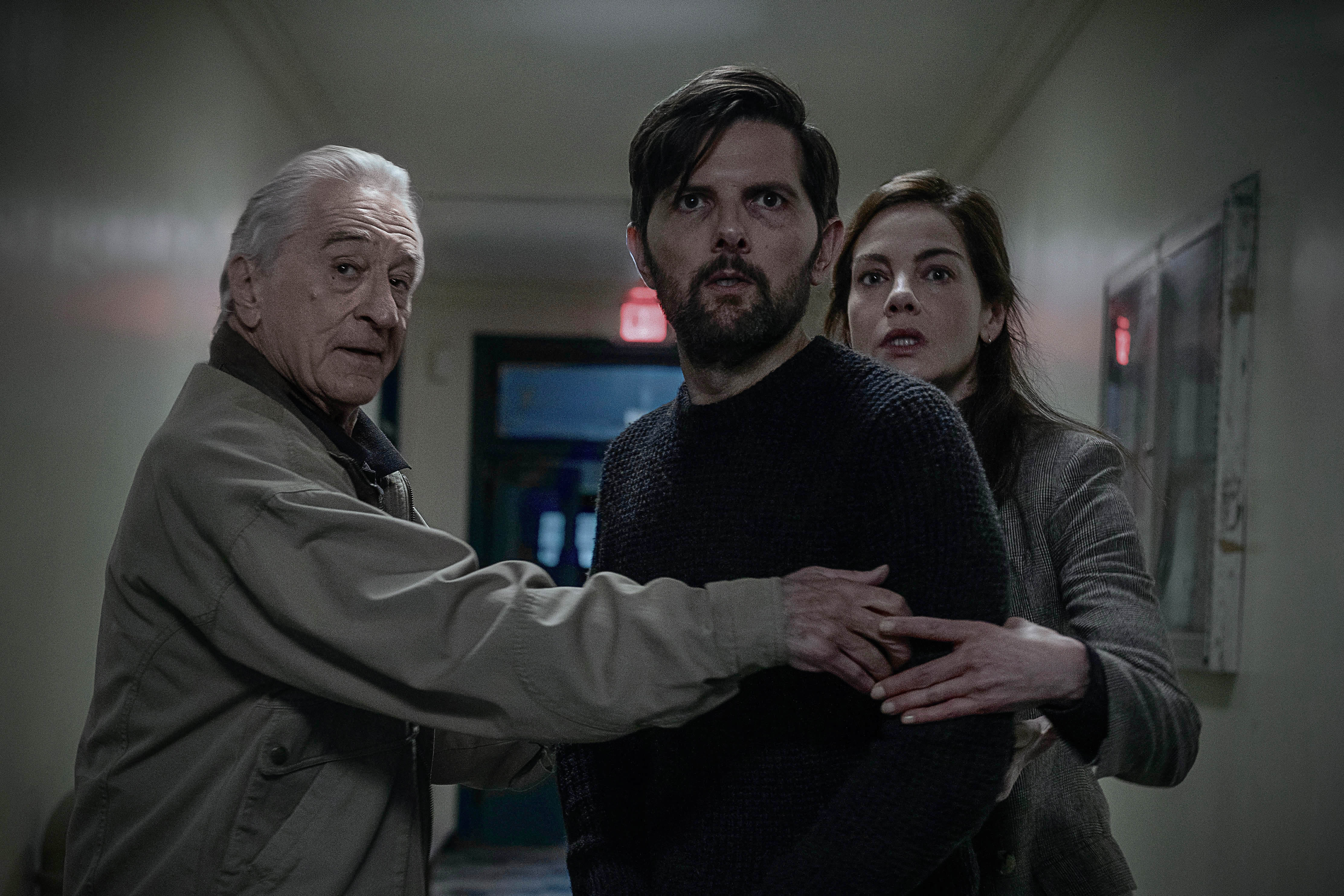
Netflix's 'The Whisper Man' stars Robert De Niro as detective Peter Willis, Adam Scott as novelist Tom Kennedy, Michelle Monaghan as detective Amanda Beck —David Lee—Netflix
Warning: Spoilers ahead for The Whisper Man
In The Whisper Man, a film out on Netflix Aug. 28, Adam Scott plays Tom Kennedy, a successful true crime novelist who becomes the victim of a crime when his son is abducted in their sleepy New Jersey town.
An adaptation of Alex North’s novel of the same name, the film is about the search to find the young boy (Acston Luca Porto) alive. Kennedy’s estranged father Pete Willis, a former detective played by Robert De Niro, comes out of retirement to search for the grandson he has never met. As the detective responsible for the conviction and imprisonment of a legendary murderer known as the “Whisper Man”—who targeted young boys—he’s trying to figure out who is doing his bidding.
Here’s what to know about the complicated family dynamics in the movie and its disturbing ending.
Where The Whisper Man gets its title
The original "Whisper Man" is Frank Carter (Michael Keaton), who is serving a life sentence in prison for killing five young boys after luring them from their homes in a whispery voice. According to North, he targeted especially vulnerable children, exploiting those who were neglected or had difficult relationships with their parents, and was known for “whispering outside the windows and drawing them away from their family in order to take them [as a] Pied Piper kind of figure.”
Twenty years later, Carter’s son Francis Jr. (Owen Teague) is the “Whisper Man” in the film, who lures Tom’s son Jake from his home. The movie suggests that he met his victims working as a child psychologist in a school.
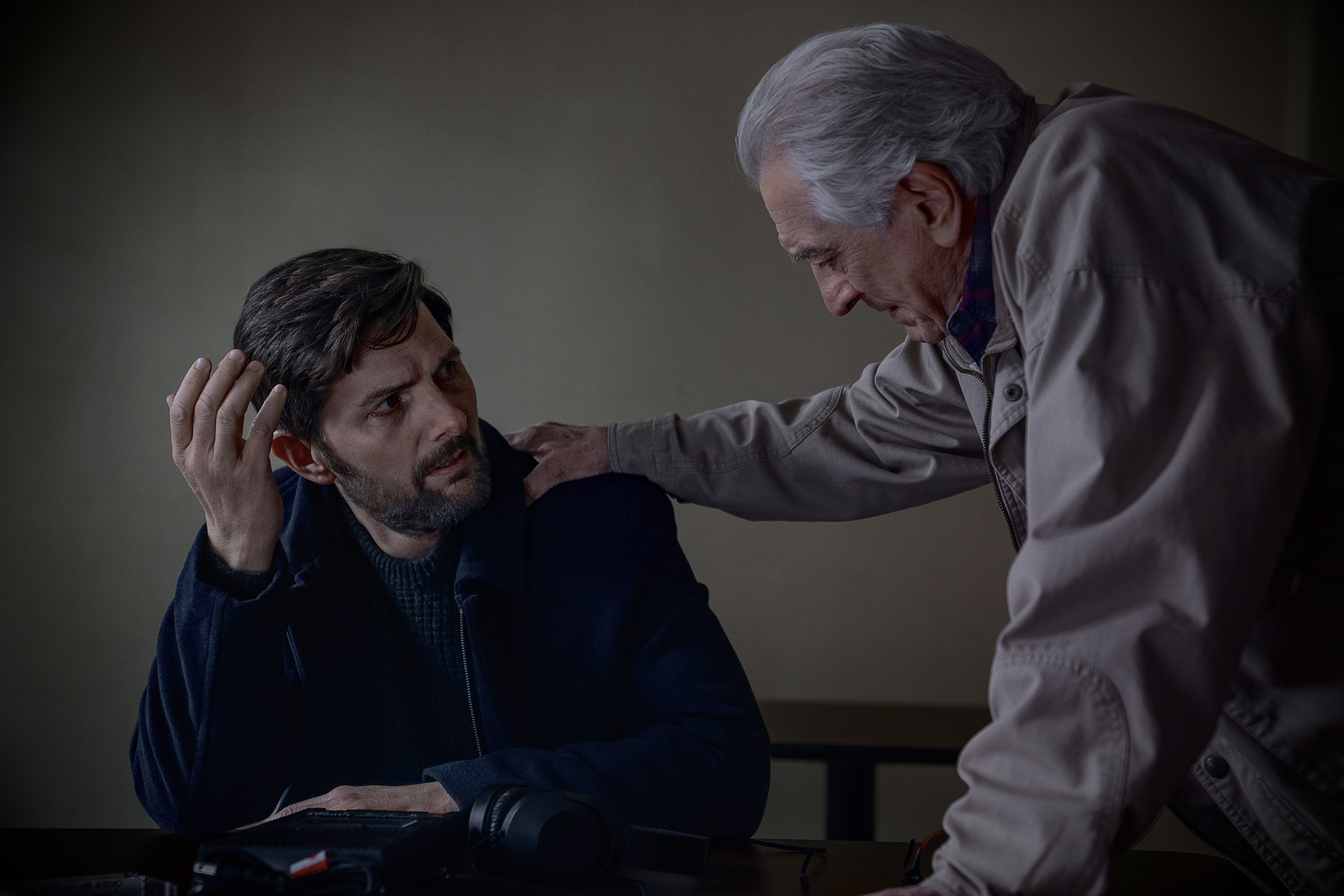
The Whisper Man stars Robert De Niro (right) as a detective and the estranged father of crime novelist Tom Kennedy (Adam Scott), whose son has been abducted.
Complicated father and son relationships
The “Whisper Man” and his latest victim both come from families with sad father-and-son relationships.
Frank Carter arguably targeted young boys because he was sexually abused by his own father and wanted to do the same to other children as revenge. He would specifically go after children who lived in difficult family situations. His son, Francis Jr., is following in Frank’s footsteps, trying to be like a father he never got to know. “He’s looking for his father’s approval,” says North.
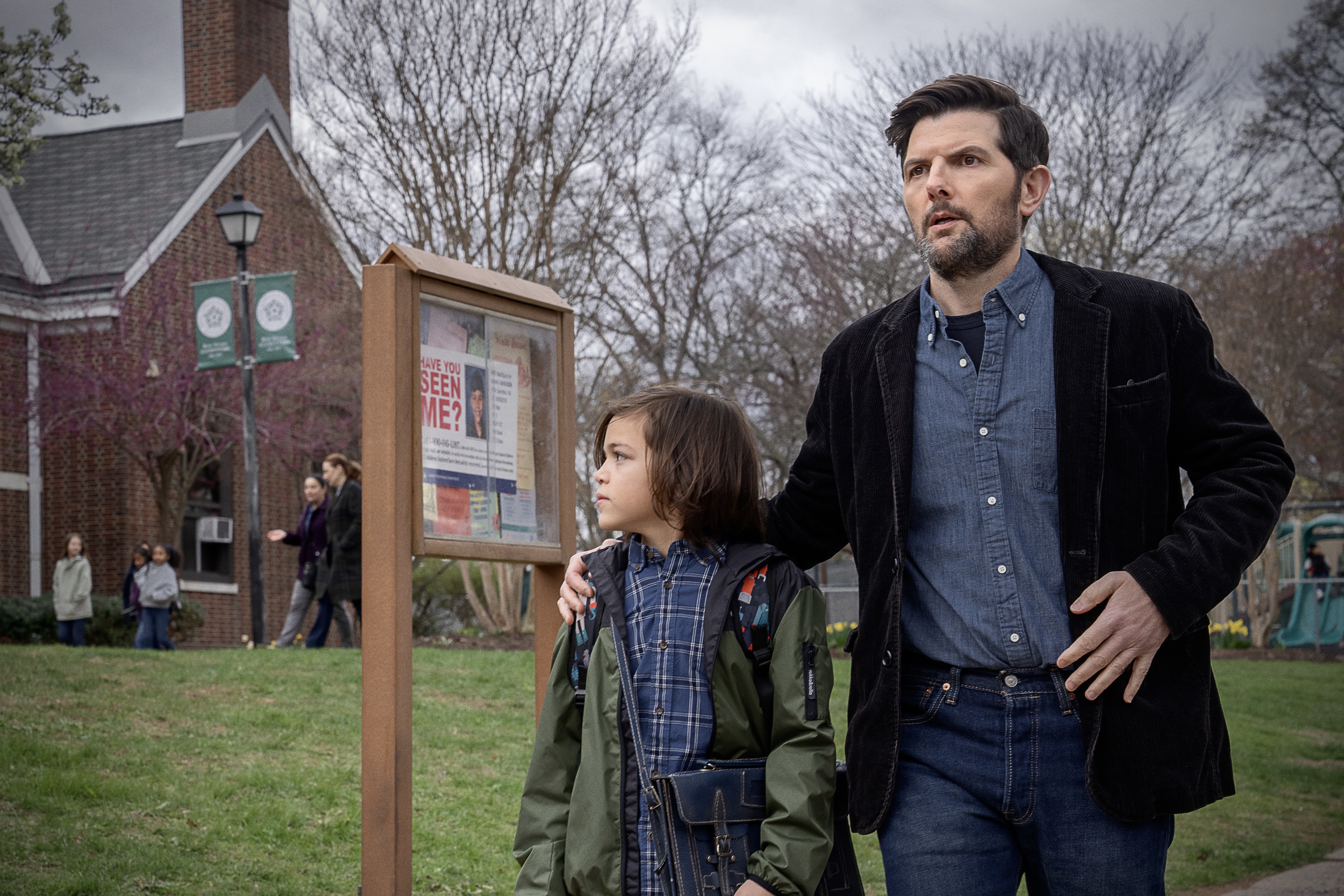
Tom and his son clash because they are mourning Tom’s wife and Jake’s mother—who died after a long illness—in different ways. For a fresh start, Tom moves the family to a new house and a new school in New Jersey. Jake, on the other hand, is slower to move on, carrying around what he calls a “packet of special things,” filled with doodads and pictures that belonged to his mother. Tom is also frustrated that Jake prefers to play with an imaginary girl in a blue sweater rather than make real human friends, and they get into disagreements in the movie over that.
When Jake is abducted, Tom reaches out to his own detective father Pete in an act of desperation, rather than for support. He’s always thought that his alcoholic father walked out on his family. During the search for Jake, Tom learns that his own childhood imaginary friend “Mr. Night” was actually his father reading him bedtime stories because bedtime was the only time his mother let his father visit him. Pete becomes a detective again, hoping he can finally have a relationship with his son and grandson.
In The Whisper Man,Adam Scott (right) plays a crime novelist who struggling to connect with his son Jake (Acston Luca Porto) —David Lee—Netflix
How the “Whisper Man” is caught
The lightbulb moment occurs after Pete visits Frank in prison. Frank tries to get a rise out of Pete by saying his son writes true crime novels so he can be like his father.
The comment irks Pete, but then he realizes that Frank is sort of projecting that maybe Frank’s son Francis Jr. is trying to be like his own father. Believing the “Whisper Man” who took Jake could be Frank’s son, he works with detective Amanda Beck and her colleagues to track down the young man, who doesn’t live far from Jake.
A bloody ambush follows at the house where Francis Jr. is holding Jake hostage. Francis Jr. stabs Amanda, but she survives, though her injuries lead to a permanent limp. Francis Jr. stabs Pete to death. Pete’s first and last interaction with his only grandson is telling him to run out of the house as fast as he can.
Tom ends the film with fonder feelings about his father, as the final scenes show him living in Pete’s house. In the film’s final scene, Tom is looking through some photographs of his late wife that his son Jake has been hanging on to. He stops at a photograph of a girl in a blue sweater, realizing that is who his son’s imaginary friend is.
Francis Jr. is sent to prison, where he gets ambushed in the end, by his own father, who strips naked and strangles his son.
“Francis Jr. is the final victim of the original 'Whisper Man,'” says director James Ashcroft. And he says it’s natural for viewers to feel “conflicted” after watching the ending: “It’s not a fist bump moment of good guys vanquished by bad guys. That happens to some extent, but it's also a tragic story.”
He adds: “I love the idea of people walking away from a film in a gray space rather than the black and white one…That's what makes you have a conversation after a film. That's when a film exists long after the credits roll.”
Delaney Quinn in Buddy —Courtesy of Roadside Attractions and Saban Films
Capser Kelly hadn't heard the internet term "breaking containment" before I bring it up in our interview, but he instantly gets the idea. It's when something that's intended for a more obscure, niche audience unexpectedly goes mainstream. That's certainly what happened with Kelly's most well-known work. Nearly 12 years ago, a deranged, 11-minute parody of old sitcom intros called Too Many Cooks aired on Adult Swim at 4:00 a.m. When somebody uploaded it to YouTube afterwards, it went insanely viral—to the point where the normies at CNN parodied it.
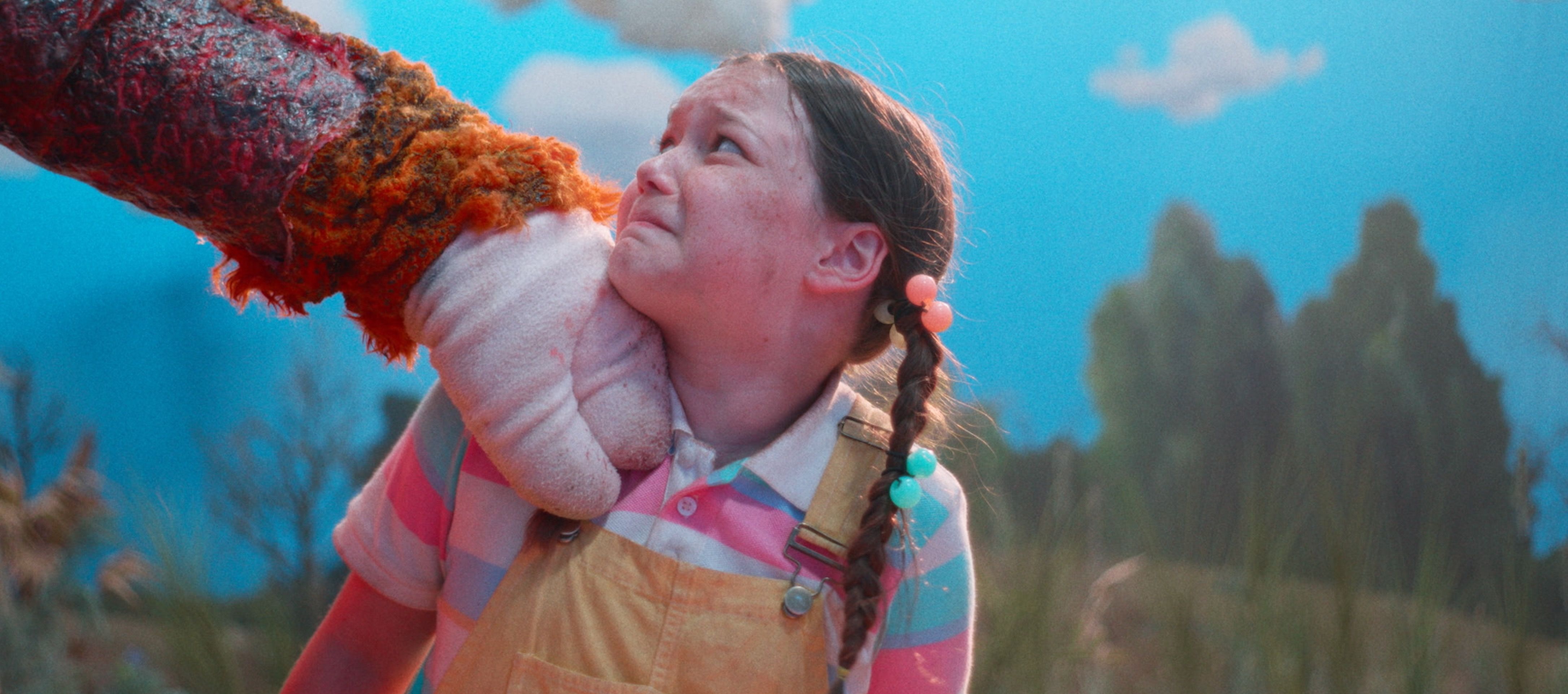
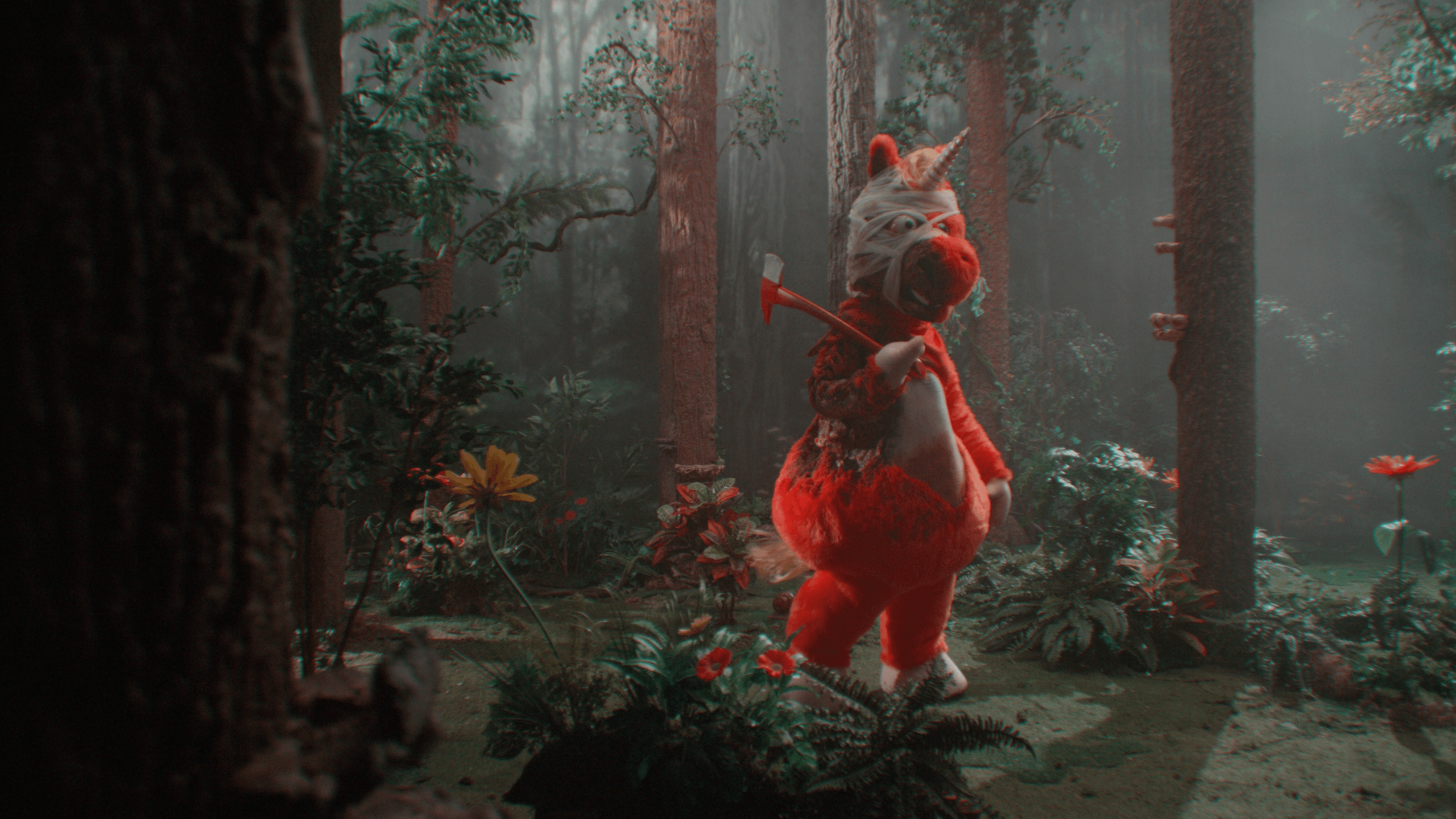
Now, Kelly's breaking into the mainstream, so to speak. Although his brand of weird, horror-tinged comedy has been a mainstay on Adult Swim for decades, his first theatrical film, Buddy, is hitting theaters following a successful premiere at Sundance earlier this year. The movie, which is about children who are unknowingly trapped inside the world of a forgotten Barney-like television show starring a secretly sinister orange unicorn, is arguably one of the most normal things Kelly has made—which is saying something.
"I asked my manager. I'm like, 'Is this too normal?'" Kelly recalls. "And he goes, 'No, but it might be normal enough that someone will give you money to make it."
At no point in making Buddy was Kelly deliberately trying to tone the twisted-ness down. "I really just try to do things that I like that interest me," he explains, noting that it's been pointed out that he seems to be very interested in being trapped. This feels appropriate, given our conversation about breaking containment. "If you like Too Many Cooks, this is me exploring some of those ideas of weaponized nostalgia and being trapped in a TV show, on a bigger scale."
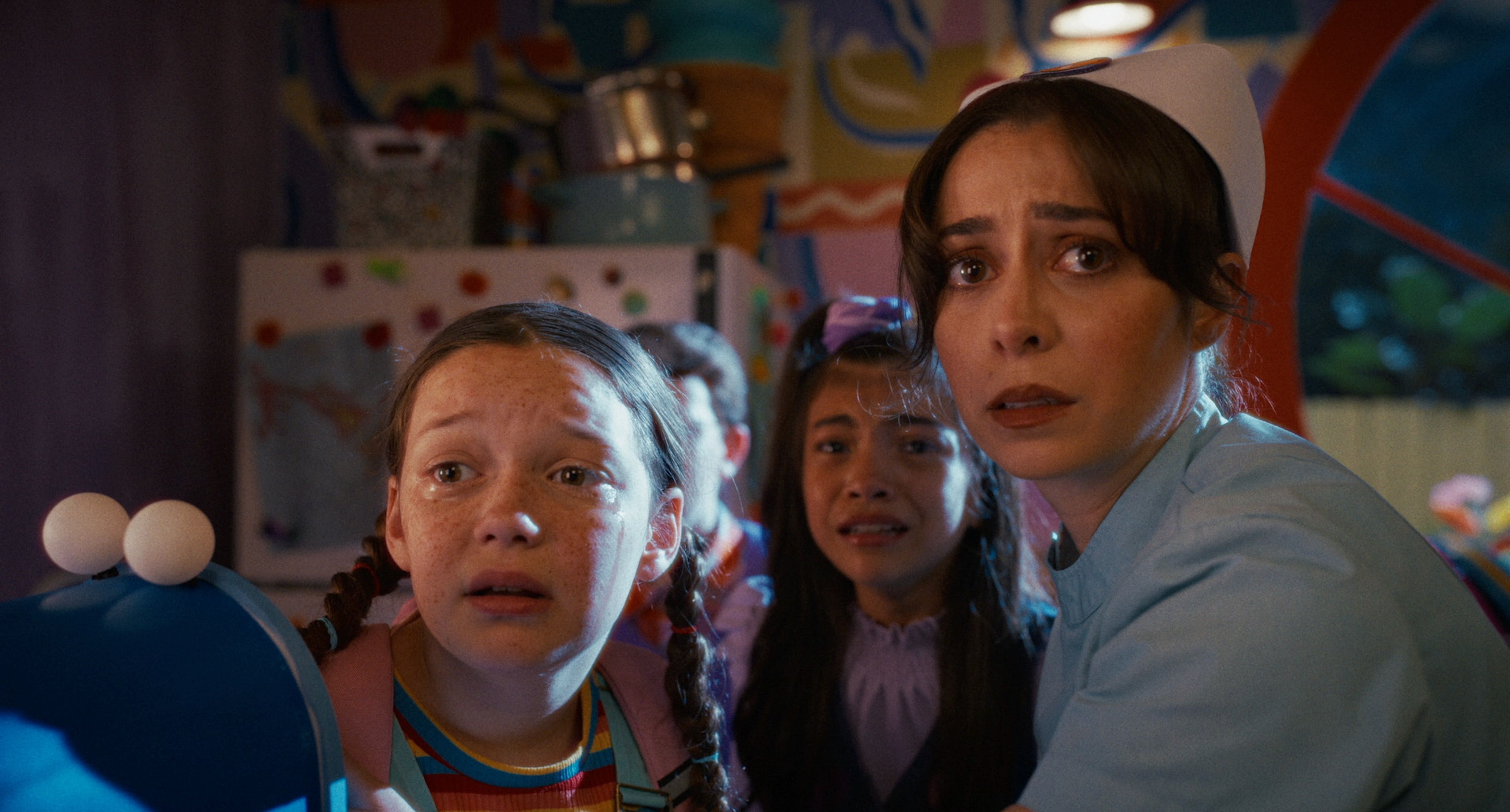
Delaney Quinn (who was heard but only briefly seen as Rose Byrne’s daughter in If I Had Legs I'd Kick You) stars in Buddy as a young girl who starts to realize that something is wrong in the titular unicorn's seemingly happy world once another child goes missing. In the real world, Cristin Milioti plays a mother who suspects something is not right. Keegan-Michael Key voices Buddy.
Delaney Quinn, Tristan Borders, Madison Skyy Polan, and Cristin Milioti —Courtesy of Roadside Attractions and Saban Films
The idea of a dark, twisted Barney—a subgenre Kelly calls mascot horror—isn't new, with Five Nights at Freddy's being the biggest modern example. Kids have been cracking anti-Barney jokes, like singing "I hate you/you hate me" to parody the purple dinosaur's loving message, for decades. Kelly says his own children knew the song, a version of which is a plot point in Buddy, from more or less the moment they first learned about Barney. "It made me wonder why he is hated, and interrogate that."
"When I was a kid, I thought the kids lived in the TV show, and when I first saw kids breaking out into song, it kind of disturbed me," Kelly says. "How would they all know to do that? What's going on? Are they brainwashed?" Buddy builds on these innocent fears, telling a story about gaslighting and the hidden darkness that can exist within beloved authority figures.
Between the relevant themes and the emotional arc, there is, in Kelly's own admission, a bit more going on in Buddy than in Too Many Cooks — and most of Kelly's earlier work, too. This includes Adult Swim shows like Your Pretty Face Is Going to Hell and his two previous, non-theatrical movies, Yule Log and its sequel. (These last two Adult Swim films, which begin as normal footage of a fire in a fireplace before spiraling out of control into a meta-textual narrative about murder, time travel, and aliens, are feature-length but not exactly mainstream popcorn fare.)
Buddy arrives on the heels of Obsessionand Backrooms, two smash-hit horror movies whose young filmmakers, Curry Barker and Kane Parsons, got their start on YouTube. Most of Kelly's work has been on cable television, but his biggest hit became as popular as it did because of the same platform that helped launch Barker and Parsons. Buddy also has echoes of creepypasta—a term for scary stories that originated on online forums—and features a '90s-esque setting like Backrooms, too. Considering that Too Many Cooks went viral when the current generation of horror wunderkinds were children, does Kelly feel at all like an elder statesman of this internet-turned-theatrical horror wave?
"I feel elder, but I don't know if I feel like a statesman," says Kelly, who somewhat sheepishly describes himself as "safely Gen X." "I'm kind of breaking in late. I could learn from them as easily as they could learn from me." Though clearly well-versed with the world wide web, Kelly hasn't made much content specifically for the internet. He also doesn't quite see himself as a classical media man, at home in the more-established TV and movie fields.
"I think I'm a person who's trying to do what I want to do, often through trickery, and not always in the world it should be in," Kelly says. One of his first jobs was making bumps—little animated interstitials before and after commercial breaks—for Cartoon Network. In one instance, Kelly turned these little pre-advertising bits into multi-part skits that could be edited together into a short film, like a Scooby-Doo parody of The Blair Witch Project that originally aired in mico-installments during a 1999 Halloween marathon.
Buddy in Buddy —Courtesy of Roadside Attractions and Saban Films
Still, making a movie for movie theaters—one of the most traditional forms of mass entertainment—feels very overdue for Kelly. When Too Many Cooks became a sensation, it opened up a lot of doors for him. He had already created two Adult Swim shows and written for many other cartoons when Too Many Cooks came out, but it was the viral short that got him meetings.
"Too Many Cooks gave me a certain baseline of confidence that I never had," Kelly reflects. "You know, like in Dungeons & Dragons, 'a +5 to confidence.'" He admits that he's kicking himself, a little bit, for not acting on that newfound confidence as much as he thinks he could have. "I wish I had done seven movies," he says. Making a movie was so important that he developed writer's block borne from anxiety. It was only when he was forced to finish a script for Yule Log on a deadline that he overcame the block. Now he's made "three and a half" films, if you count a segment he made for the horror anthology film V/H/S/Halloween.
Kelly hopes Buddy is a containment-breaking success so that he can make more movies. But he doesn't want to think too much about where he fits into the future of horror cinema, which can be attributed in part to the fact that Kelly isn't just a horror filmmaker. Buddy, like Too Many Cooks before it, is funny.
"If you go to a haunted house, you hear a lot of screams,”Kelly says. “And then they laugh afterwards." He doesn't, however, approach Buddy or anything else he makes from that horror/comedy binary. Though he's made a career out of works that explore the breakdown of reality, Kelly says he tries to approach things from a place of truth.
"If this happened, what would happen next?" he asks. And with Kelly, sometimes the thing that happens next is a big friendly-looking unicorn going on a murderous rampage. "Then I let the comedy and horror come in as it may."
Correction, Aug. 28
The original version of this story misstated the film festival where Buddy premiered. It was at Sundance, not SXSW.
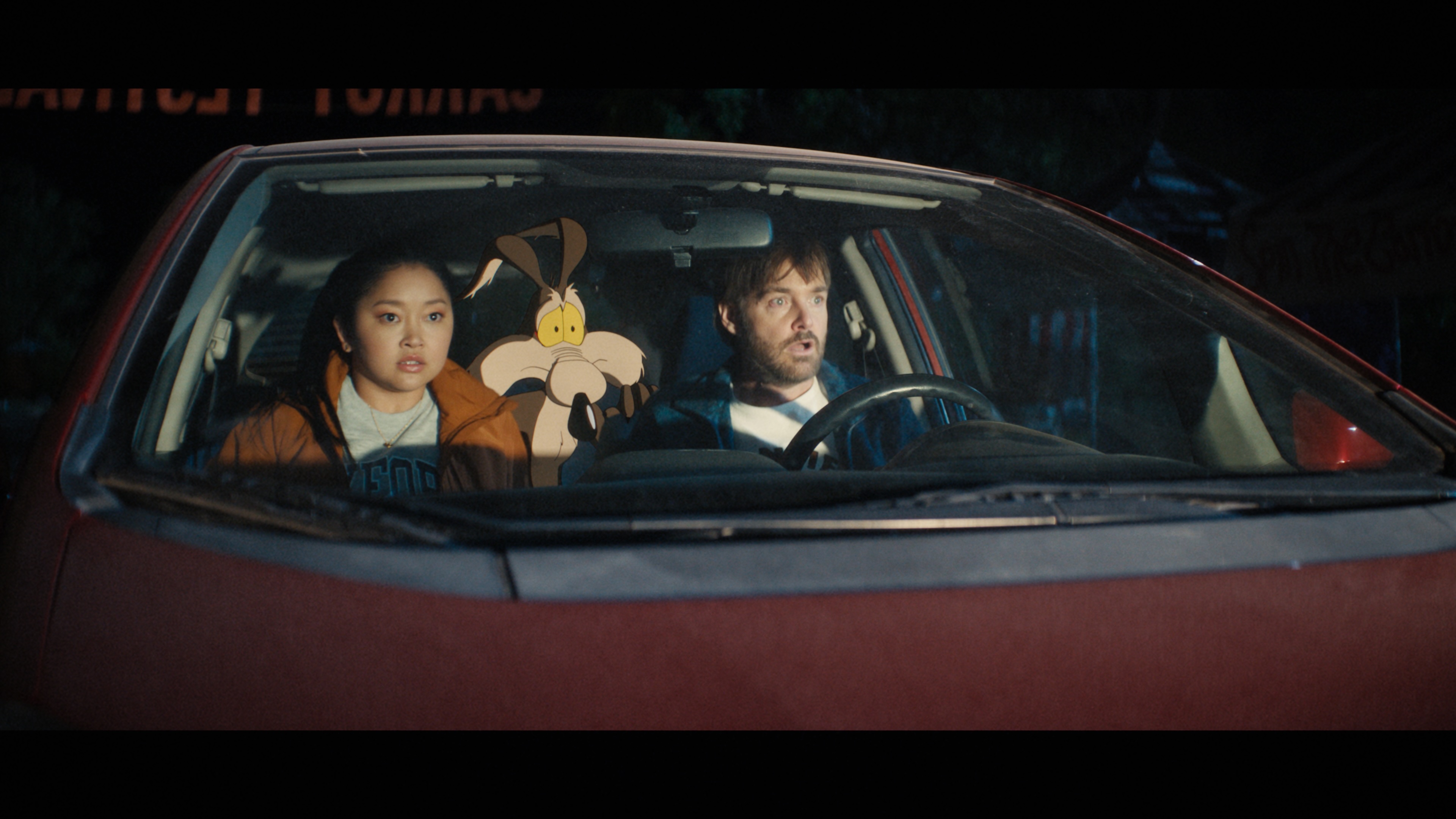
Lana Condor, Wile E. Coyote, and Will Forte —Courtesy of Ketchup Entertainment
If you’re still not convinced that creativity and originality are under siege, particularly in the movie business, look no further than the tangled tale of how the wholly joyous Coyote vs. Acme very nearly didn’t make it to a theater near you. As of summer 2018, the picture—a blend of animation and live action, adapted from a 1990 New Yorker article by Ian Frazier inspired by the forever-enduring Looney Tunes shorts—was already in development. In the spring of 2022, live-action filming took place in New Mexico. In November 2023, seeking a tax write-off, Warner Bros. Discovery decided to shelve the film; the company eventually agreed to allow the filmmakers to look for another distributor. After numerous false starts, Ketchup Entertainment acquired the rights to Coyote vs. Acme, which is why you’re now able to see the film in theaters, and eventually via streaming. In a world where entertainment conglomerates are clearly focused only on profits, this seems like a small miracle, which is why you should run—Beep beep!—not walk to see this late-summer delight on the big screen.
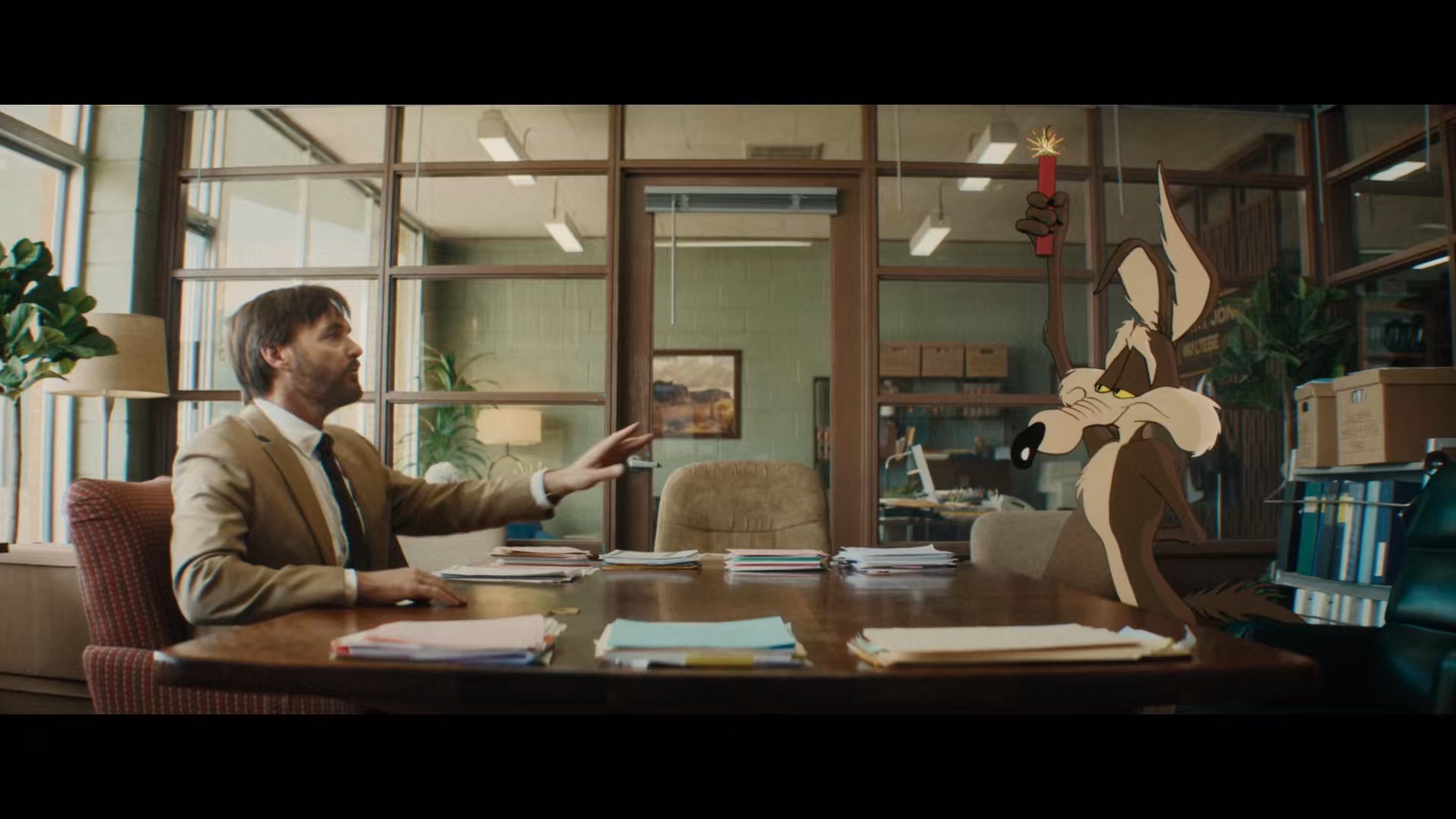
The premise is simple yet ingenious: After years of being zonked out by iron wrecking balls, of having slingshots overshoot the mark not by feet but by miles, of having dynamite blow his face off, Wile E. Coyote, a longtime consumer of ACME products, has decided to sue the company that has caused him so much misery. He has used all that ACME stuff for one purpose only: to ensnare the object of his eternal salivation, the tufted blue-and-yellow speed demon known as the Road Runner, both uncatchable and unknowable. But now, it seems, enough is enough, and maybe ACME is the problem. Wile E. enlists the help of a law firm specializing in personal injury cases (it’s called Avery, Jones & Maltese, a nod to three of the Looney Tunes’ chief architects, Tex Avery, Chuck Jones, and Michael Maltese), and it's headed by Kevin Avery (Will Forte), whose specialty is getting settlements of a hundred bucks here or there from cartoon characters who have had limbs and such blown off—temporarily, thank god—by faulty products.
Forte as Wile E.'s lawyer —Courtesy of Ketchup Entertainment
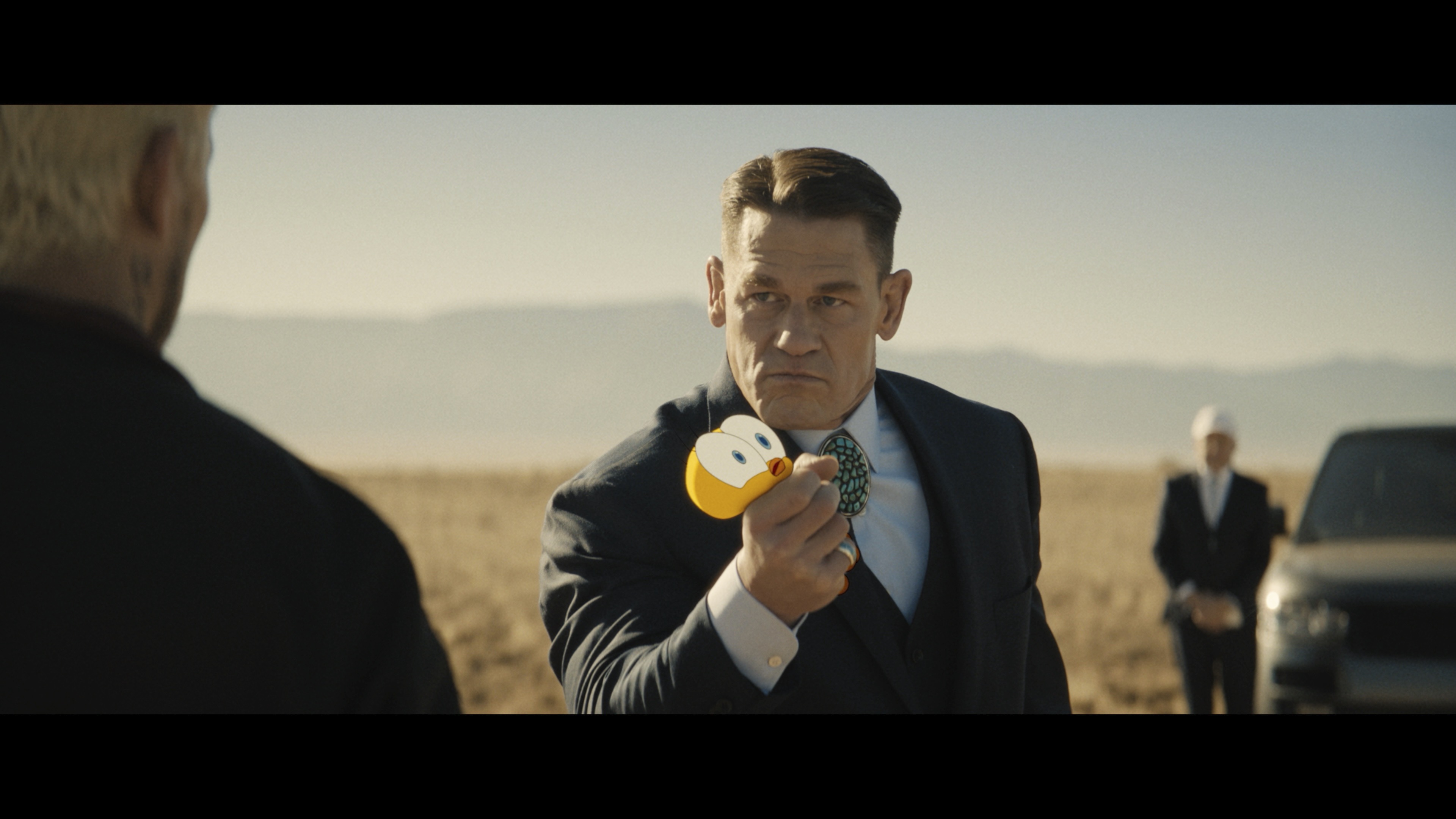
Coyote vs. Acme is set in a world where cartoons and humans coexist without batting an eye, so it’s business as usual when Wile E. shows up at Avery’s Albuquerque headquarters. Avery is pretty sure he can get his client a few hundred smackers for the defective rocket-powered roller skates our coyote friend has hauled in as Exhibit A. But then Wile E. unfurls, magically, a bundle including every single ACME product that has ever clocked his noggin or blasted him to oblivion: these million and one instruments of pain and suffering spring high into the sky, like magic rocks gone wild. Avery is still reluctant to sue the pants off ACME. But his niece and intern Paige (Lana Condor) persuades him this is one case that could really make a difference for thousands of disadvantaged cartoon characters, many of whom, including Porky Pig, Daffy, and Tweety Bird, show up in sprightly cameos. That’s how Avery finds himself up against ACME’s bulldog lawyer Buddy Crane (John Cena, who, with his square, precise jaw and squinty smirk, looks like a work of vintage hand-drawn animation himself). He also learns that Wile E.’s case isn’t isolated: ACME has long been involved in a nefarious plot to make millions by taking advantage of hapless cartoon characters.
Coyote vs. Acme was directed by Dave Green, whose highest-profile movie to date may have been 2016’s Teenage Mutant Ninja Turtles: Out of the Shadows. But his confidence sings here: to say Coyote vs. Acme benefits from a light touch may seem odd—this is, after all, a movie where heads are clonked with mallets and facial features are rearranged by malfunctioning explosives. But the spirit of Coyote vs. Acme is everything. The script was written by Samy Burch, James Gunn, and Jeremy Slater; the voices of most of the characters—including Bugs Bunny, as a trenchcoat-wearing informant, and Elmer Fudd, as an earnest senator in charge of questioning “Mr. Runner” during a hearing—are provided by voice actor Eric Bauza, who clearly aced his studies at the University of Mel Blanc. Forte makes a fabulous foil for his cartoon costars: he never tries to outdo them, preferring to bow to their lunatic majesty. He knows they’re what we’ve come here for.
John Cena and Tweety Bird —Courtesy of Ketchup Entertainment
Because the Road Runner cartoons—which, along with the other works of genius in the Looney Tunes galaxy, made many of us the warped individuals we are today—were never really about the Road Runner. He’s moving too fast for us to ever get a handle on him; his job is to outsmart the coyote who hopes to catch him and turn him into stew, and he’s simply too good at that job. We know he’s always going to win, which makes him less interesting than his nemesis. Wile E. Coyote, with his conniving yellow eyes, a voiceless beast who communicates by holding up a series of signs scrawled with simple lines of dialogue, is the character we love in spite of ourselves. His untrustworthiness is his greatest quality; when he pretends to be nice, his canine lips turning up in a facsimile of a canine smile, we know it’s an act, and we can wear the joy of not being taken in by his deceptions as a badge of honor. It’s both funny and a little horrible when he goes splat into a slab of rocky desert clay, cutting a Wile E.-shaped hole into nature’s landscape. In Coyote vs. Acme, we almost feel something for him—almost. But in the end, he lets us off the hook; he will not let us fall victim to sentimentality. We're in on his con, and it's a pleasurable place to be.
Coyote vs. Acme is all about the little guys fighting, and winning against, a corporate behemoth. Could it be that Chuck Jones and his cohorts, by inventing a do-it-all, know-it-all company that could fulfill our every material desire, dropping off packages almost before we’d even placed an order, had in some cracked way foreseen the rise of Amazon? They probably couldn’t have imagined it, and it’s just as well, because the world they dreamed up—one of slapstick escape, of kerpow explosions that never did any actual harm, of faces and voices that we can summon in our memories as easily as those of our loved ones—is better than anything money can buy. In Coyote vs. Acme, the little guy wins, and we do too. Instead of being handed, in movie form, an exploding cigar that someone else thinks we want, we get the thing we didn’t know we wanted: a movie about a coyote, a bird, and a lawsuit, one that both speaks to our time and allows us, for the space of an hour or two, to escape it.
ABC News' Rocsi Diaz takes a look at what's buzzing in pop culture, including the art world losing its queen of polka dots, a "Friends" reunion and Busy Phillips saying she's "grateful to be alive."
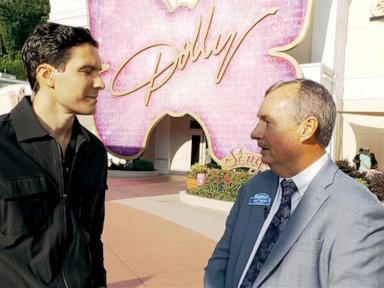
Harrell Gabehart and Patric Parkey, owners of the world's largest private Dolly Parton collection, discuss their memorabilia and the moment Dolly saw it herself.
A boutique StrictlyVC evening returns to New York's West Village on September 10 with Keith Rabois, Craig Shapiro, Jason Levien, Tristan Walker, Brynn Putnam, and Deven Parekh — covering AI, sports investing, community-building, venture economics, and politics, with cocktails, food, and networking throughout the night.
ABC News' Rocsi Diaz takes a look at what's buzzing in pop culture, including the art world losing its queen of polka dots, a "Friends" reunion and Busy Phillips saying she's "grateful to be alive."
Harrell Gabehart and Patric Parkey, owners of the world's largest private Dolly Parton collection, discuss their memorabilia and the moment Dolly saw it herself.
Flipboard is acquiring Bluesky feed-building startup Graze, bringing its privacy-friendly ad technology and creator monetization tools into Flipboard’s growing open social web ecosystem.
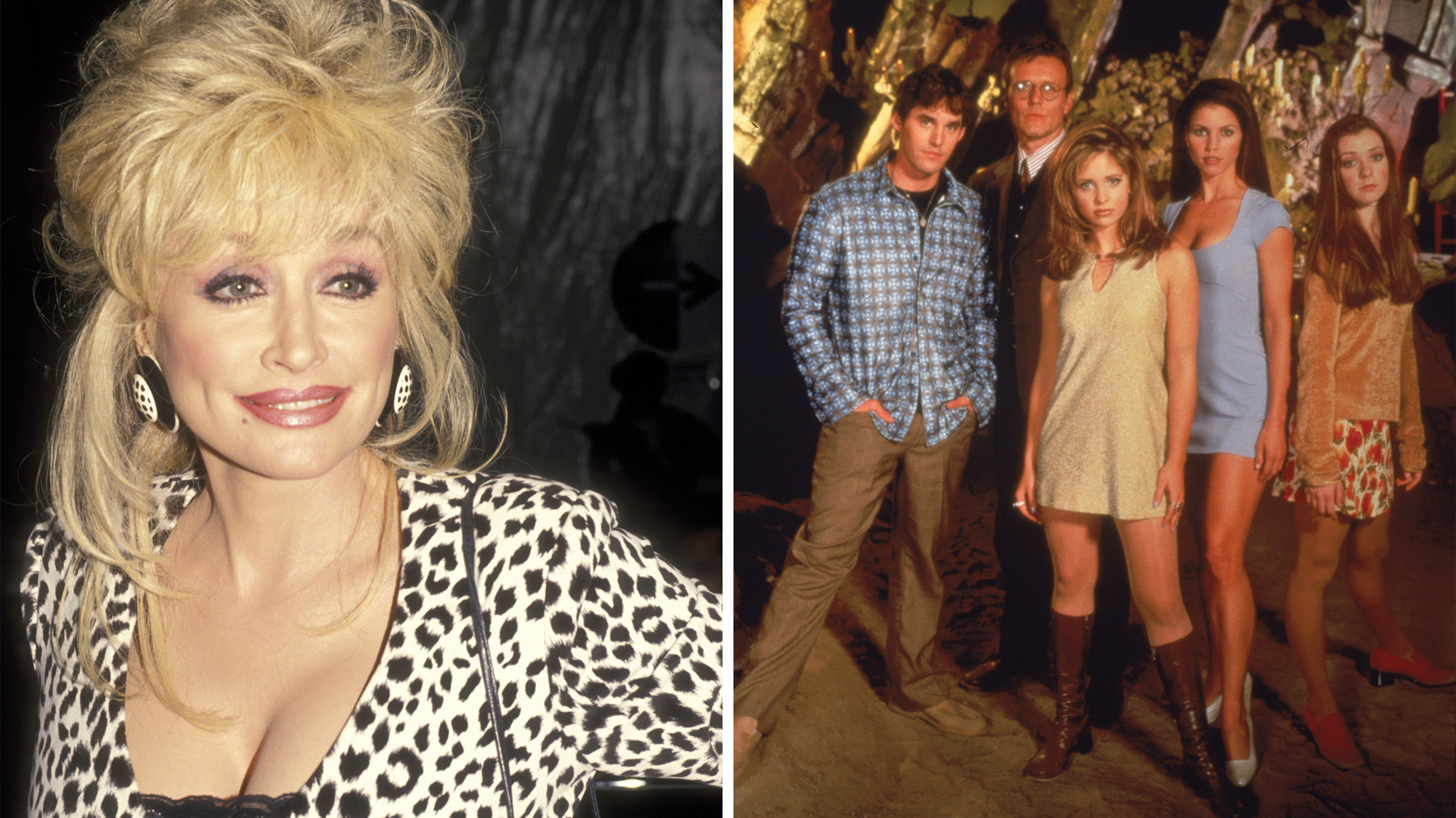
Left: Parton attends the Fall 1994 Fashion Week on April 13, 1994 at Bryant Park in New York City, New York. Right: Promotional portrait of the cast for the television series, 'Buffy The Vampire Slayer,' c. 1997. L-R: Nicholas Brendon, Anthony Head, Sarah Michelle Gellar, Charisma Carpenter and Alyson Hannigan. —From Left: Ron Galella, Ltd./Ron Galella Collection—Getty Images; Fotos International—Getty Images
By the time she passed away on Tuesday, Dolly Parton had become an American saint, celebrated not just for giving us immortal songs like “Jolene” and “9 to 5,” but for philanthropic work that provided hundreds of millions of free books to children and proved instrumental in the development of a COVID vaccine. That wasn’t always her reputation, though. While her songwriting prowess was always respected within the country-music community, for much of her career, the public knew Parton most for the cartoonishly feminine figure she cut—platinum wigs, costumes sagging under the weight of rhinestones, nails for days, the bustline that launched a thousand punchlines. As she once put it: “A lot of men thought I was as silly as I looked.”
So it makes perfect sense that, among her various and sundry contributions to American culture, Parton was an uncredited producer of Buffy the Vampire Slayer. Under the auspices of Sandollar Productions, which she founded with her then-manager Sandy Gallin, the music icon and entrepreneur supported not just the cult-classic, Y2K-era teen drama series, but also the 1992 feature film on which it was based. She was still on board decades later, when Hulu was developing a Buffy reboot with director Chloé Zhao. (It has since been scrapped.) Parton’s involvement with the franchise has only been widely known in recent years. “I thought Buffy the Vampire Slayer was a wonderful little show,” she told Andy Cohen in a 2021 Watch What Happens Live appearance. “I was very, very proud to be part of that.” Star Sarah Michelle Gellar has said that, while Parton wasn’t present on set, she honored the cast with gifts and praise.
Well, of course Buffy resonated with Dolly. In many ways, she was the real-life equivalent of Buffy Summers. Creator Joss Whedon (a man whose relationship to feminism is notoriously complicated at best) conceived the character as an empowered antidote to the hot, scantily clad victim types of 1980s slasher flicks. He has said that he intended the original Buffy to be “one of these crappy, low-budget movies,” but one that “had a feminist agenda, had females in it who were people.” Instead of being saved by some heroic boyfriend, the busty, blonde cheerleader lead (played by Kristy Swanson in the film) “would have to get her own back.” Maybe Buffy looked like the stereotypical high school bimbo. But, especially in a TV series that paired the character’s battles against supernatural baddies with mundane teenage rites of passage, she also had intelligence, resourcefulness, depth, and, of course, a once-in-a-generation gift for slaying vampires. Being underestimated based on her beauty often put her at an advantage.
As far as I know, Dolly Parton never staked any bloodsucker stalking a suburban California cul-de-sac—though I wouldn’t be terribly surprised to learn, amid the outpouring of fond reminiscences her death inspired, that she had. But she was certainly smart and independent and compassionate, all traits that people rarely acknowledge in women they would rather treat as empty-headed sex objects. Her superpower had nothing to do with vampires and everything to do with her staggering talent. She also understood that she could make sexist assumptions about her appearance work in her favor. “By the time they think that I don’t know what’s going on,” Parton joked, “I done got the money and gone.” I have no doubt that she possessed the perspicacity to make a connection between her place in the public consciousness and Buffy’s. Maybe the character’s popularity even helped prime pop culture to fully appreciate a certain silent producer, a woman for whom breasts and brains were never mutually exclusive.
Particle’s new podcast intelligence platform transcribes and analyzes more than 130,000 podcasts, making their conversations searchable on the web and accessible to AI agents through an API and MCP.
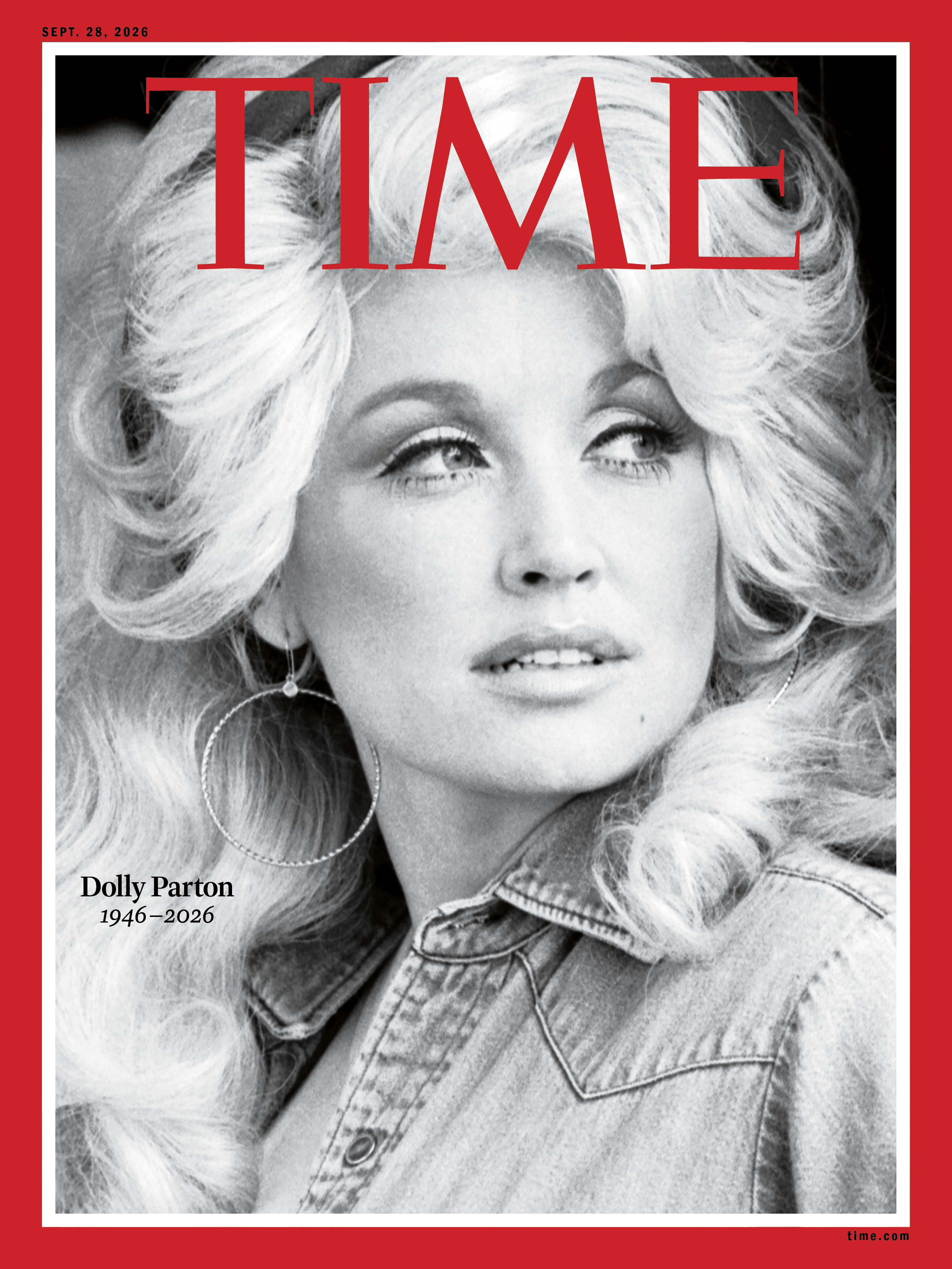
Dolly Parton, the beloved country-music superstar known for writing about the lives of regular people in more than 3,000 songs and, in later years, for giving away more than 300 million books to children around the world, has died in Nashville. She was 80. Parton had recently shared updates about health issues she’d been dealing with since the death of her husband Carl Dean last year, and her representatives told Peoplethat her death in Nashville came after a “brief battle with cancer.” Her nephew and bodyguard Bryan Seaver announced her death in an Instagram video posted to her account on Aug. 25, saying, “Dolly has lived in the light and is in the arms of Jesus, surely met by Carl, her parents, and countless others who have watched her and longed for her to meet them in the heavens.”
To her fans around the world, she was Saint Dolly—the American godmother who channeled the sorrows of everyday life into song, wrapping ugly truths in pretty packages. Though she was described by music journalist Robert Oermann as “the Mozart of our times,” Parton’s larger-than-life hair, excess in rhinestones, surgical implants, and cosmetic work concealed the iron will through which she confronted the day’s realities with her craft. Most importantly, she wrote and sang with a woman’s voice and heart about topics that uniquely touched her gender. Her songs include stories of stillborn births (“Down From Dover”), suicide (“The Bridge”), shame (“Just Because I’m a Woman”), abuse (“A Gamble Either Way”), adoption (“Doing This for Your Sake”), isolation (“Two Doors Down”), mental institutions (“Daddy Come and Get Me”), and prostitution (“The Bargain Store”).
I saw Parton play live in concert during her Pure & Simple Tour in October 2016, a month before the most divisive election in American collective memory, and a year before I began reporting a podcast on her life called Dolly Parton’s America. At the time, I was looking for someone or something to believe in. On the television and in the news, hatred from both sides of the American political aisle had never seemed more grotesque, but at Parton’s show, we all sang together. Parton visited more than 60 cities that summer and fall. Looking back, I can’t help but wonder if she knew it would be something of a healing tour, the last of its kind she would do. When I asked Parton what “Dolly Parton’s America” meant to her, she responded that her perspective wasn’t limited by borders, that it was Dolly Parton’s World: “I just think we need to love one another. I think we need to try a little harder. We need to be a little kinder. We need to be a little smarter. We need to have more love and compassion.” The last time I saw her, she told me she was planning a comedy album. She also said that, unlike other artists of her stature for whom posthumously released music has been a point of contention, she’d recorded many more songs of hope she’d put away in a vault, to be released throughout the hundred years following her death.
Parton was a genius from humble origins. Because of them, she remained vulnerable, even relatable, in the public eye. Many wealthy folk prefer to be compassionate from on-high, if at all, never getting their feet wet or hands dirty. Parton rolled in the mud. She claimed she modeled her look on “the town trash whore,” whom she thought was “beautiful.” She dressed in a way that was her idea of glamour: yellow hair piled atop her head, bright red lipstick and nails, high-heeled shoes, and a tight skirt. “I thought [that woman] was the prettiest thing I’d ever seen,” she once said on Ellen. “So I grew up to look just like her!”
Dolly Parton Reflects on Her Legacy in 2020 TIME Interview
Once Parton achieved a certain level of fame, her body became a punchline for the late-night circuit. When two male scientists made the world’s first cloned sheep, in 1996, they named it after Parton for its “large mammaries.” Parton laughed the cracks off with quips of her own (“I don’t know if I’m supporting them, or they’re supporting me”). For the Dolly podcast series, I asked Parton once about whether she thought her look stopped journalists, mostly men in the time she was coming up, from taking her work seriously, or viewing her songwriting as equally important to her work as a performer. She shrugged off the question: “Sometimes you have to look like Jezebel in order to get some angelic things done in the world.”
There are countless examples of remarkable women erased by history, but Parton survived her own story long enough to tell it. Her cycle of resurrections, the highs and lows, didn’t seem to change her much over the years, even as the highs garnered her over half a billion dollars.
Dolly Parton’s early years
Dolly Rebecca Parton arrived on Jan. 19, 1946, in an unheated cabin about an hour outside of Knoxville, Tenn., atop the Smoky Mountains. Her parents paid the doctor who trekked to their home to deliver her with a sack of cornmeal. The fourth of 12 children—as she put it, “Mama always had one on her or in her”—the kids slept three or four to a bed. Their only modern convenience was a battery-powered radio. Her childhood home had no indoor plumbing, electricity, or running water. She later compared it to moving from "the Dark Ages into the light ages."
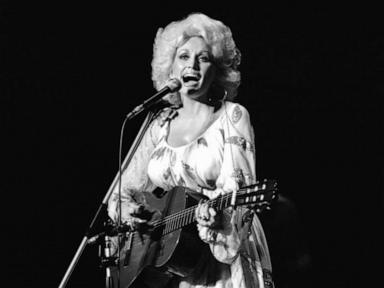
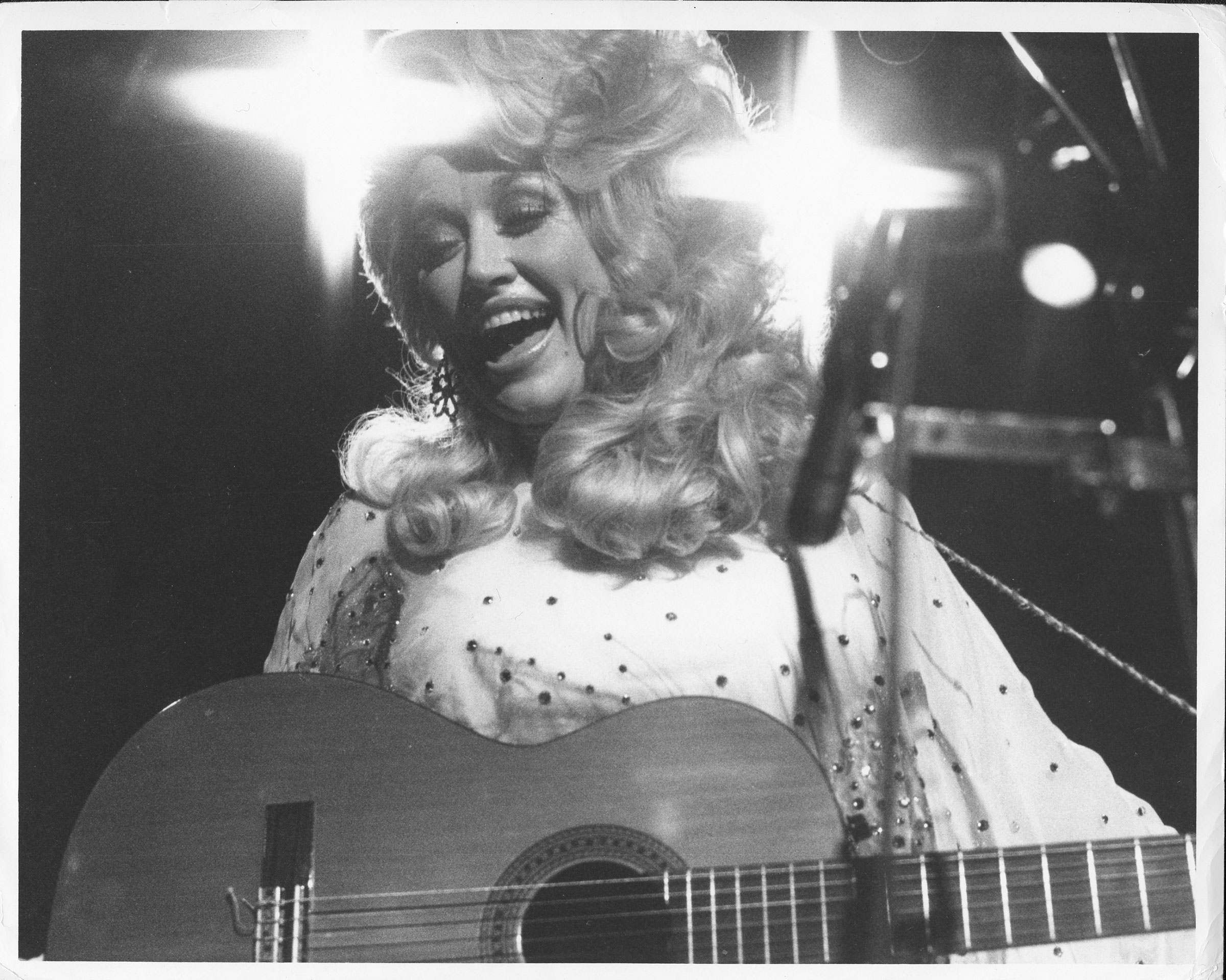
Dolly Parton performs at the Roxy in West Hollywood in 1977. —Barr Brandon—MediaPunch/IPX/AP
She grew up surrounded by pines, butterflies, creeks, and neon-green moss. As her father worked from sunup to sundown as a farmer, her mother sang the children Irish and Welsh folk songs “from the Old World,” passed down through the generations. One day, Parton fashioned a makeshift microphone by putting a tobacco stick into the ground and placing a tin can on top, performing a show of her own. By the age of 5, she had written her very first song, “Little Tiny Tasseltop,” about a corncob doll. By 8, her Uncle Bill Owens, who wrote songs and performed across East Tennessee billed as “Little Billy Earl with the Split Curl,” began to teach her the guitar. They sang together at supermarket openings, rallies, fairs, and talent contests. By age 10, he arranged for her to appear on the Cas Walker Show.
Walker was a coon hunter who’d started a local radio-cum-television show to promote his grocery stores. This was Parton’s first big break. At 11, Parton got her first recorded song, “Puppy Love,” co-written with Owens, on the radio, and at 13, she told Johnny Cash she wanted to sing at the Grand Ole Opry. So when an older Opry performer gave up his spot one Saturday night in 1959, Parton got her chance to sing at the historic venue. Cash himself introduced her to the crowd of 2,000. “We’ve got a little girl here from up in East Tennessee,” he said. “Her daddy’s listening to the radio at home, and she’s gonna be in real trouble if she doesn’t sing tonight, so let’s bring her out here!” That night she received three encores.
The day after she graduated high school, Parton took a Greyhound 180 miles to Nashville. For weeks she lived off soups made of ketchup and mustard and food left in the halls of hotels. But these scrappy days quickly paid off. She landed a record deal at 19, and soon after, a husband: a handsome, quiet man named Carl Dean, whom she met at the Wishy Washy Laundromat and would remain married to until his death in 2025. When her record company’s president encouraged her to delay marriage in order to keep her broad appeal to a male audience, she married Dean anyway, in secret. It was the early 1960s. There were obstacles to women owning a home, having credit in their own name, and taking out loans, so Parton moved like perfume, wafting through the world of men while always doing things her own way.
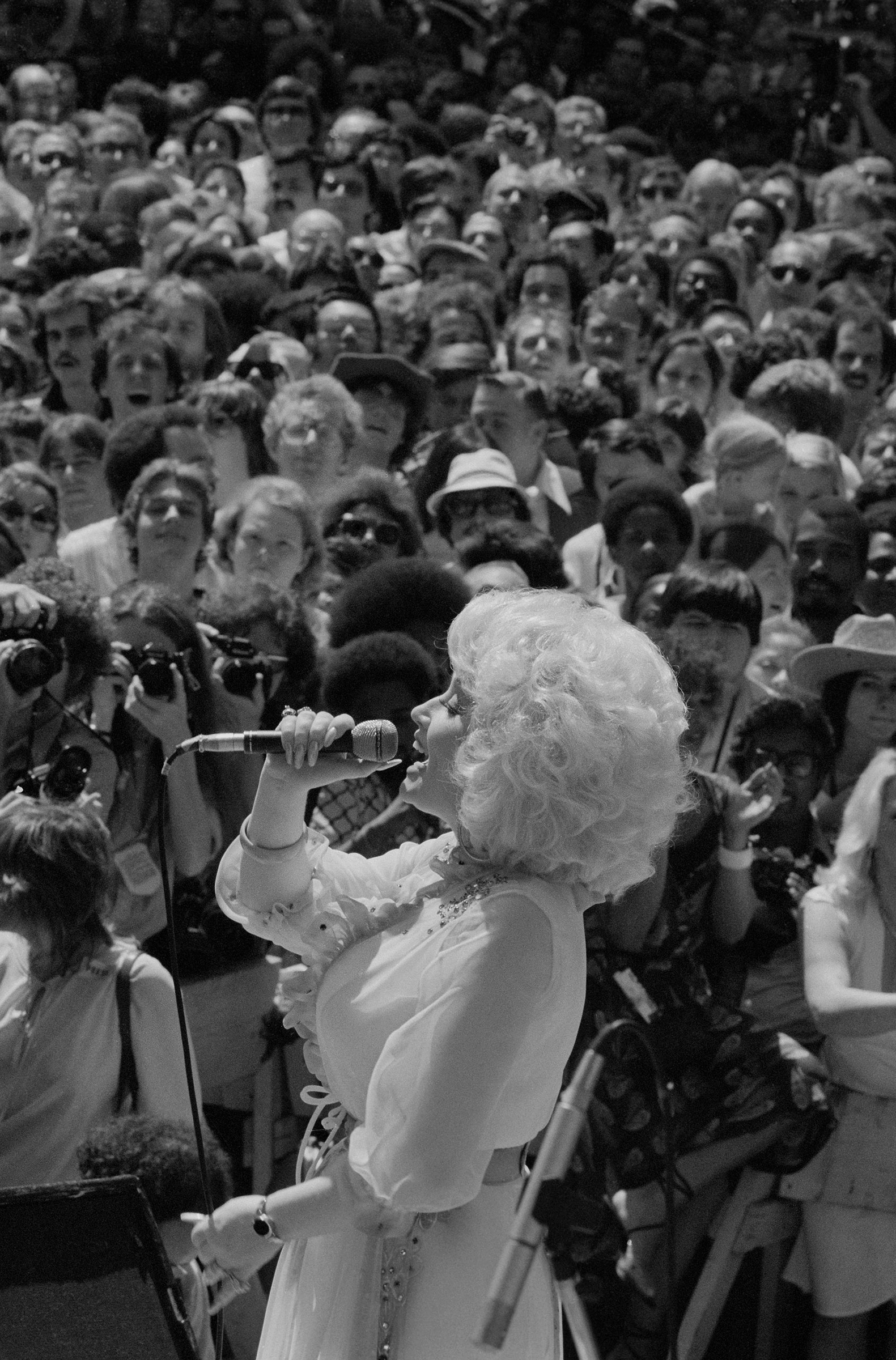
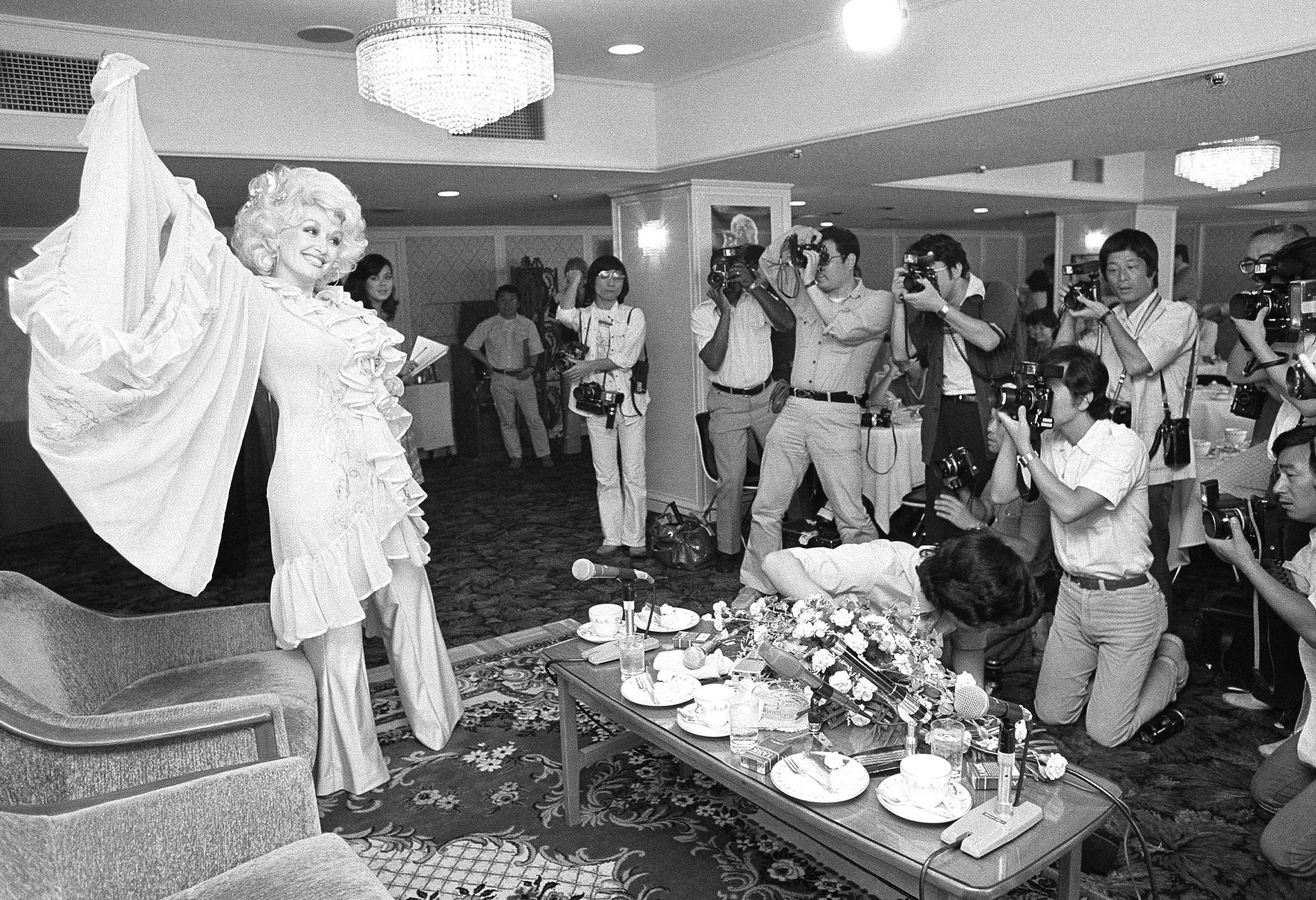
Parton poses for press photographers at a Tokyo press conference ahead of a Japan tour, July 23, 1979. —Tsugufumi Matsumoto—AP
When her prophetic single “Dumb Blonde" hit the airwaves in 1966, it captured the attention of a star with the No. 1 syndicated country-music television show in the nation. Porter Wagoner, known for his lavender Nudie suits covered with sequins and rhinestones, had been looking for a new “girl singer.” The pair’s love-hate working relationship kicked off quickly. On her very first stint on the show, Wagoner cut off a shy Parton before she even finished singing. Alternately fighting and writing, they produced hit after hit, and a bolder, louder Parton began to emerge. Wagoner made her a better performer, while she made him a better songwriter. Their partnership also sharpened her already acute sense of humor. She said of her seven years with him, “If I got myself in a spot where it looked like I couldn’t walk my way out of it, or move my way out of it, I would joke my way out of it.”
The Wagoner band worked constantly, and Parton learned how to hold her own onstage and in the studio. Early on in her recording career, she’d been panned as the ditz with “a Minnie Mouse voice,” but she came into a new level of mastery during this phase. While recording “The Mule Skinner Blues” in 1970, Parton took the reins; she sang the first note so long that the band could not begin to play until they followed her lead. The record earned her her first individual Grammy nominationfor Best Female Country Vocal Performance in 1970; she received 11 Grammys over the course of her career.
During her partnership with Wagoner, she wrote many of her signature hits, including “The Coat of Many Colors,” “Joshua,” and both “Jolene” and “I Will Always Love You.” When Parton decided it was finally time to leave Wagoner’s show, he sued her for $3 million, claiming she’d breached their contract. Famously, the lyrics to “I Will Always Love You” served as her way of letting him know how much she appreciated him. To avoid a lengthy legal battle, they settled for $1 million. Parton didn’t have the money, so she paid him in installments over the years.
When Elvis’ manager met with Parton to tell her Elvis would record “I Will Always Love You” if she’d just give up half of the publishing rights to the song, she refused. “I said, ‘I’m sorry, but I can’t give you the publishing,’” she told W magazine in 2021. “I wanted to hear Elvis sing it, and it broke my heart—I cried all night.” She attributed this stubbornness to her father’s business sense as a farmer—her songs were like crops, and without owning the harvest, her family would grow hungry.
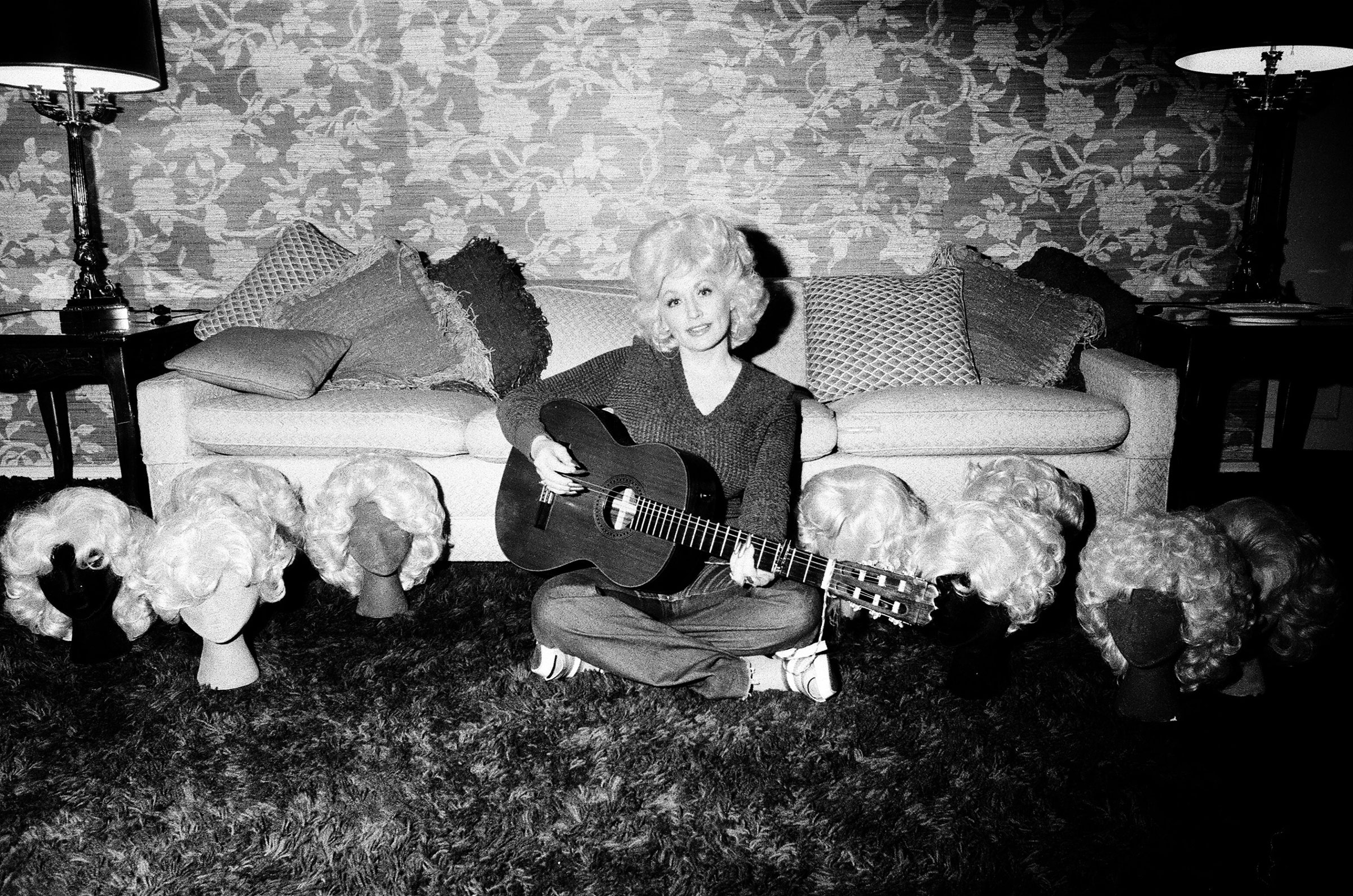
Parton pictured with some of her stage wigs in Los Angeles on March 10, 1980. —Mirrorpix/Courtesy Everett Collection
Parton’s life seemed to play out as a constellation of experiences in sync with American history. She entered the working world around the time the first workplace sex discrimination law was passed. Her decision to leave her creative partnership with Wagoner coincided with women leaving unhappy marriages in droves following the passage of no-fault divorce laws. Despite the affection Parton expressed in her famous song, theirs was a messy divorce.
She starred alongside Jane Fonda and Lily Tomlin in 9 to 5, the 1980 movie based on 9to5, National Association of Working Women, a grassroots movement of female office workers, for which Parton penned an eponymous tune on workplace discrimination. In the film, Dolly plays a secretary who unites with the other women to confront the harassment of their employer Mr. Hart, played by Dabney Coleman. At one point, the women even share fantasies about killing their boss. It was an overwhelming hit. Perhaps Parton’s most countercultural act was her decision to work and not have children at a time when Reagan’s push for traditional family values took hold of the country.
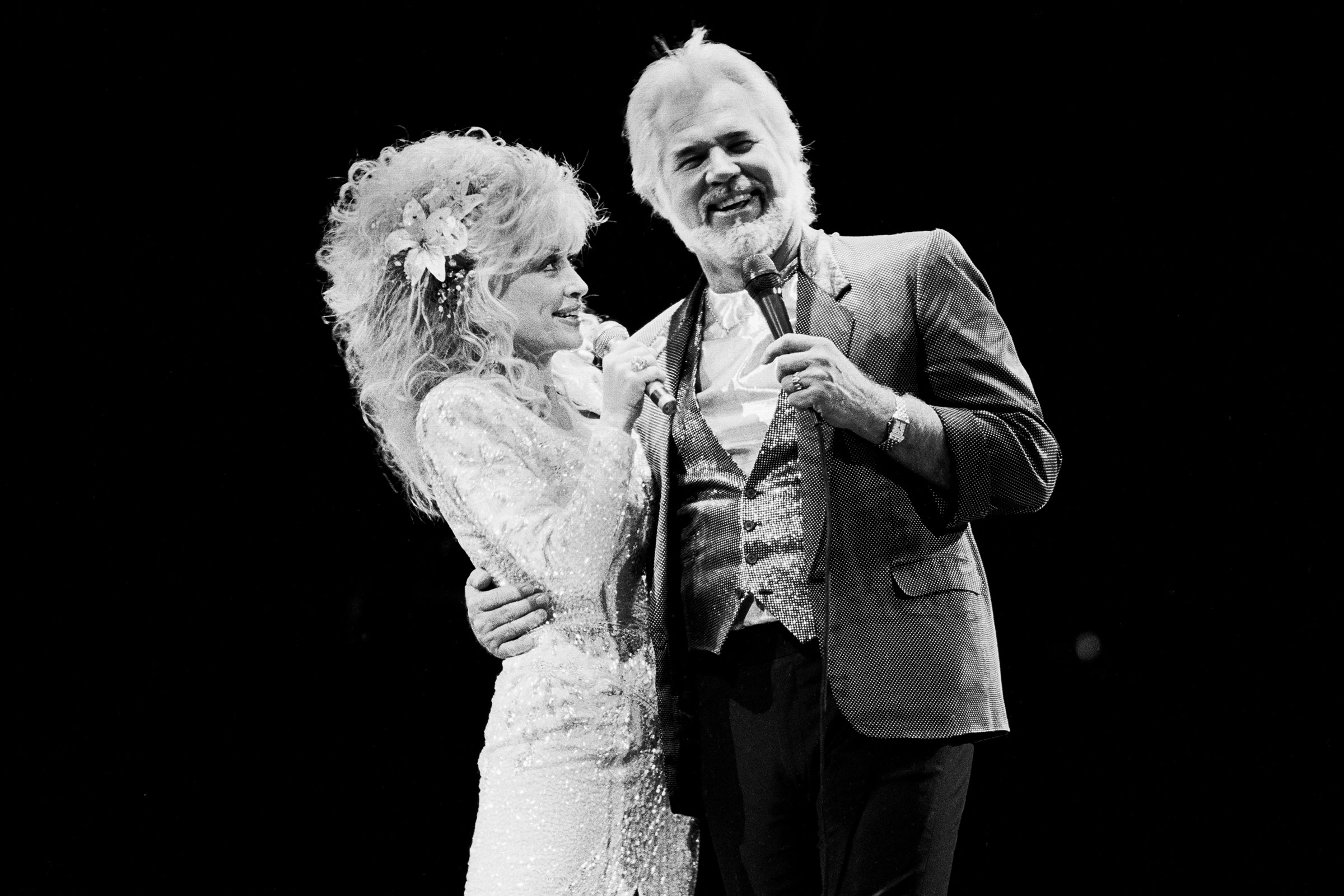
Parton performs with Kenny Rogers onstage at Brendan Byrne Arena in East Rutherford, New Jersey, Oct. 20, 1988. —Gary Gershoff—Getty Images
Over the years, Parton’s music evolved from heart-wrenching “sad ass songs” to female-power anthems like “Light of a Clear Blue Morning” to spiritual tunes like “The Seeker” and “He’s Alive.” In the mid-‘80s, she opened up about her depression and suicidal thoughts following the end of an “affair of the heart,” family issues, and a negative experience filming The Best Little Whorehouse in Texas. She was dealing with a slew of health problems, ultimately undergoing a partial hysterectomy, and as she struggled to lose weight, she put herself on restrictive diets, including a liquid one that made her feel isolated. She documented her loneliness in “Two Doors Down” and started over professionally. She fired her accounting firm, trimmed her band, started her own record label, and founded her amusement park, Dollywood. Over time, she came to embody her moniker, the iron butterfly.
Amid cultural and social upheaval in America, Parton grew accustomed to coming under fire. In 2017, when her Dolly’s Dixie Stampede, a dinner show with teams from the North and South battling, met with protests during a national reckoning regarding monuments glorifying Confederates and racists, Parton dropped the word “Dixie.” Seaver, Parton’s nephew, described Parton’s way of navigating American politics as “dollitics,” noting her habit of evading party-line questions. As she put it, “My daddy was a Republican and my mama was a Democrat, so that makes me a hypocrat.” When she took the stage at the 69th Emmys in 2017 for a 9 to 5 reunion alongside Lily Tomlin and Jane Fonda, she refused to join in their skewering of then-President Donald Trump. Instead, she used her weapon of choice, a tit joke.
If you listen closely, however, her political opinions can be heard in the music. The tracks on her albums include a song based on a tragic true story of a plane filled with deportees crashing into California’s Los Gatos Canyon, one spotlighting the danger of a coal miner’s life and the necessity for workers to unite, and another telling the story of a girl forced into sex work in order to survive. Parton received death threats after contributing the song “Travelin’ Thru”to the soundtrack of the 2005 film Transamerica, which tells the story of a transgender woman. She also got threats from the KKK over “Gay Day,” an annual day of visibility for her gay fanbase. Still, Parton, the self-proclaimed “patron saint of drag queens,” continued to champion the LGBTQ+ community loudly, saying, “If you’re gay, you’re gay; if you’re straight, you’re straight. And you should be allowed to be, you know, how you are and who you are.” She once showed up to an annual drag queen competition, only to lose the Dolly look-alike contest to a man in drag.
Dolly Parton’s legacy
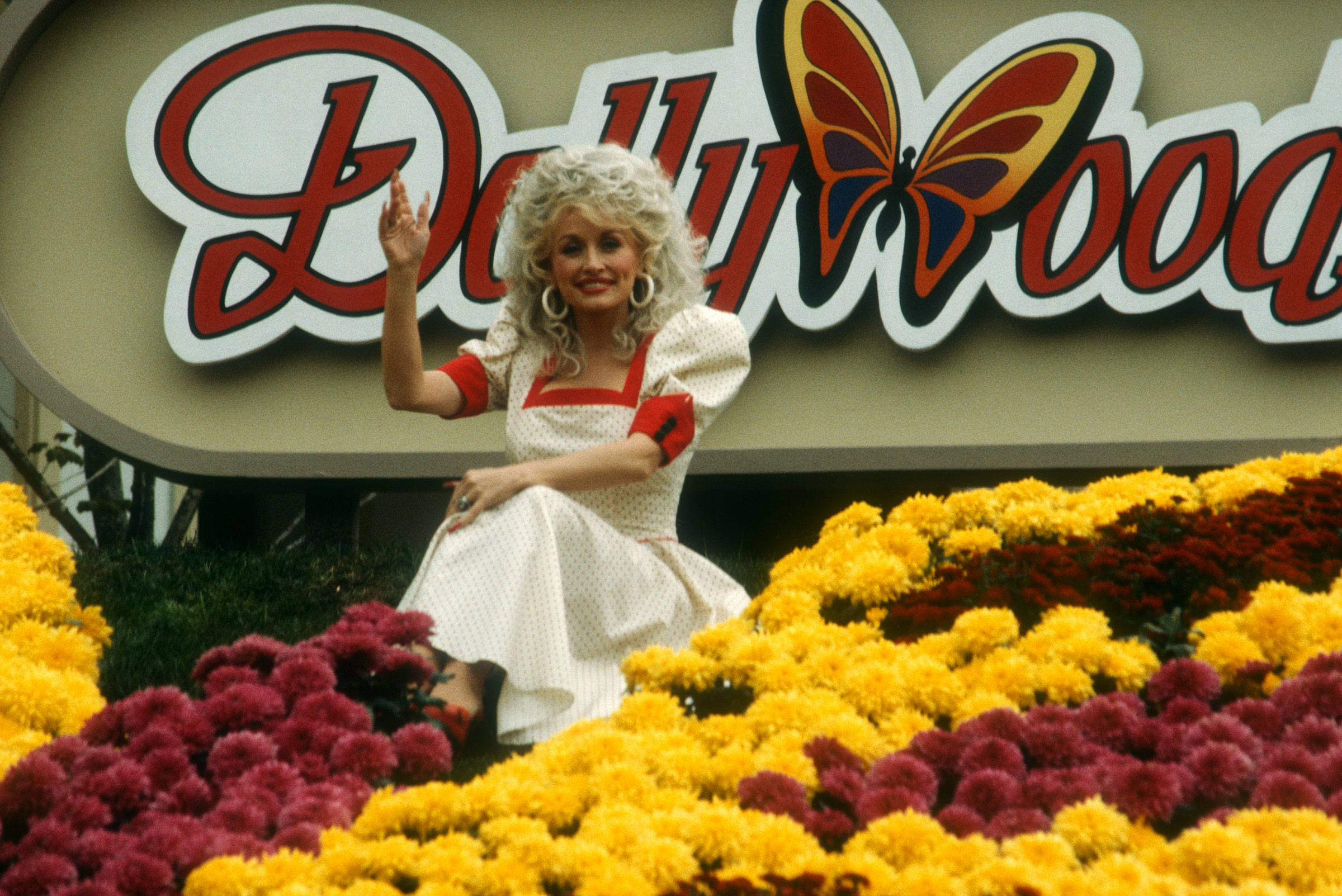
Parton poses for a portrait at Dollywood on Oct. 24, 1988 in Pigeon Forge, Tennessee. —Ron Davis—Getty Images
Parton liked standing alone. She never jumped on a bandwagon, nor did she punch down. Though she never openly called herself a feminist, in an interview she explained to me that she just shunned labels outright. Her refusal to cast anyone out and her radical acceptance of all kinds of people–queer people, people of color, her outright idolization of the women others called “trash”–in recent years earned her the nickname of “the Great Unifier.” In one of the last interviews for Dolly Parton’s America, while looking back on her life, she said, “I don’t practice my faith; I live it.”
Parton was a spiritual leader in a world where political leaders failed us time and again. I talked to a Zimbabwean scholar who wrote a piece about how the classical artwork of Zimbabwe was less important to many people than Dolly Parton’s music, especially the song “Just Because I’m a Woman.” It has been on the top of the charts in many countries in Africa for decades now. To get back into her “God space,” Parton would leave Nashville for her Tennessee Mountain home, up in the Smoky Mountains where she was born, to fast and begin to come up with new music. Eventually, her 3 a.m. prayers for songs became prayers for creating hope that would last longer than her lifetime.
Reflecting on how her father never learned to read or write, she provided $15,000 scholarships to high school students, and to improve middle school literacy rates in her home county, she gave each child $500 in cash upon graduation. In 1995 she started the Imagination Library, which donates books to children under 5. She invested proceeds from Whitney Houston’s towering 1992 cover of “I Will Always Love You” into a Black Tennessean community. When the Gatlinburg fires broke out across Appalachia in 2016, she raised millions of dollars and gave everyone who lost a home $1,000 a month for six months with a final surprise $5,000 check as the program wound down. She made another significant donation in 2024 to support the victims of Hurricane Helene. In 2020, she donated $1 million toward finding a vaccine for COVID, and in 2022, she began offering full college scholarships to every Dollywood employee.
Inducted into the Songwriters Hall of Fame in 2001 and awarded the National Medal of Arts in 2005, an honorary doctorate from the University of Tennessee - Knoxville in 2009, a Grammy Lifetime Achievement Award in 2011, and an honorary Oscar in 2025, Parton piled up accolades as high as the Smoky Mountains themselves. But her greatest feat may have been her devotion to other people, most of them complete strangers. “I just love people,” she said. “When I look at the audience I see my family. I see the God light, the goodness, in everybody, even if they can’t see it.” Perhaps that spirit is how “Jolene” came to be covered more than 400 times—my father first heard it sung by Leila Forouhar in the late 1970s in Iran—or what inspired Nelson Mandela to ask his prison guards at Robben Island to play her music over the loudspeakers. It’s a bit comforting to think of Parton’s life as a fairy tale, not the culmination of what a single person could do. But her story is a testament to how a person of humble origins can accomplish extraordinary feats, when they pray for, write with compassion about, and take action for others.
And she did this without taking higher status: She remained the butt of the joke, the girl in the wig with a bosom, doing what she believed was right, even while making mistakes. She just tried to do better the next time. In the fax she sent me after the first of what would become 11 interviews, after I came to her with four hours of intrusive questions about some of the hardest moments in her life, she ended her note with: “I had a nice time with you. Hope you got everything that you wanted. I look forward to hearing from you or seeing you again somewhere down the road. Love, Dolly.”
What a teacher. I hope we get the lesson.
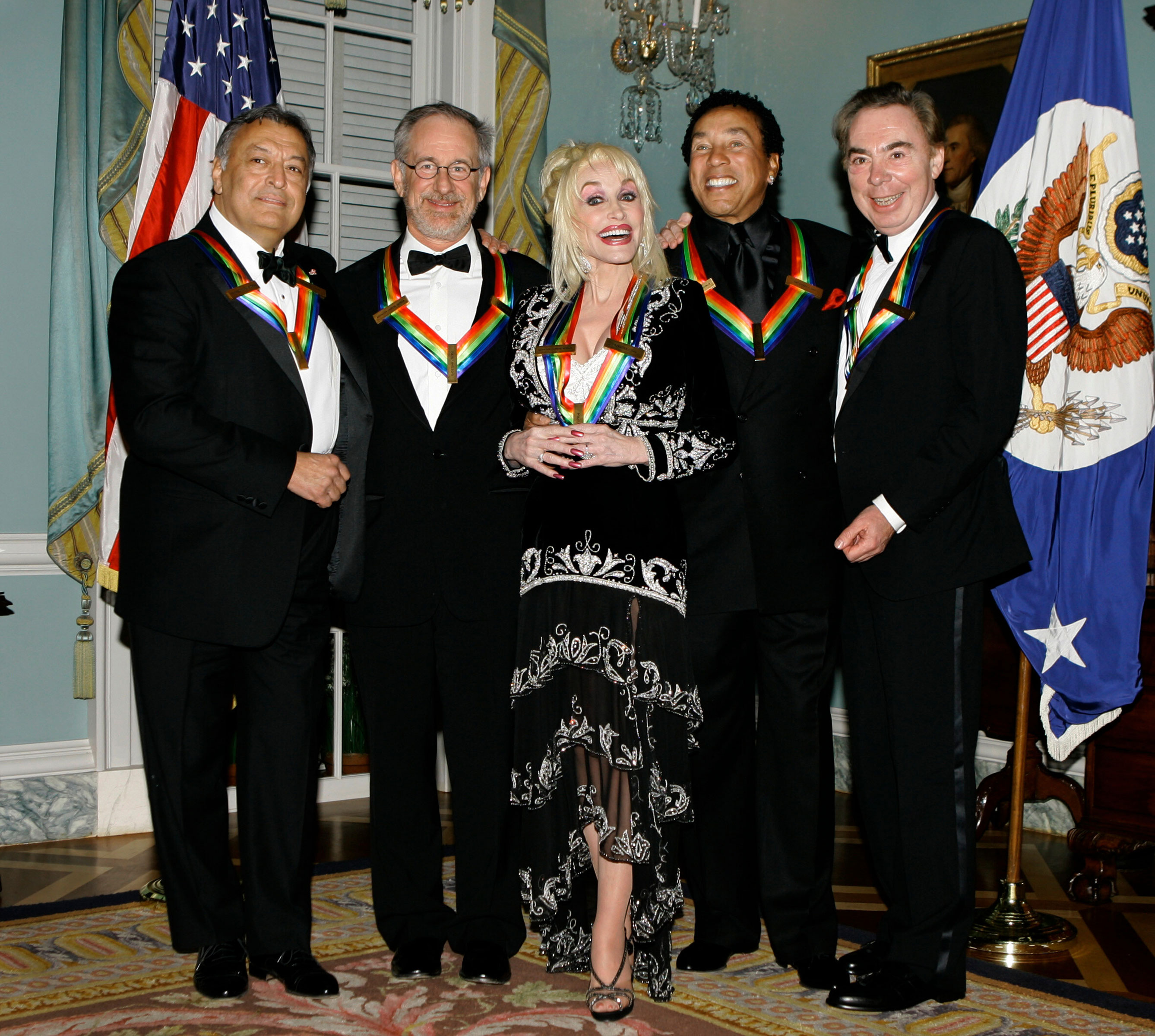
Parton stands with other 2006 Kennedy Center honorees being celebrated for their contributions to American culture at the State Department in Washington, Dec. 2, 2006. From left are Zubin Mehta, Steven Spielberg, Dolly Parton, Smokey Robinson, and Andrew Lloyd Webber. —J. Scott Applewhite—AP
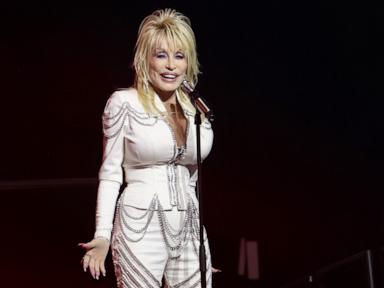
Entertainment journalist Aunyea Lachelle breaks down the country superstar’s impact on music and culture and how connected she remained with her hometown in Tennessee.
 Login
Login