Reading view

U.S. Says Chinese Hackers Targeted Senate, NASA, Hospitals, and More
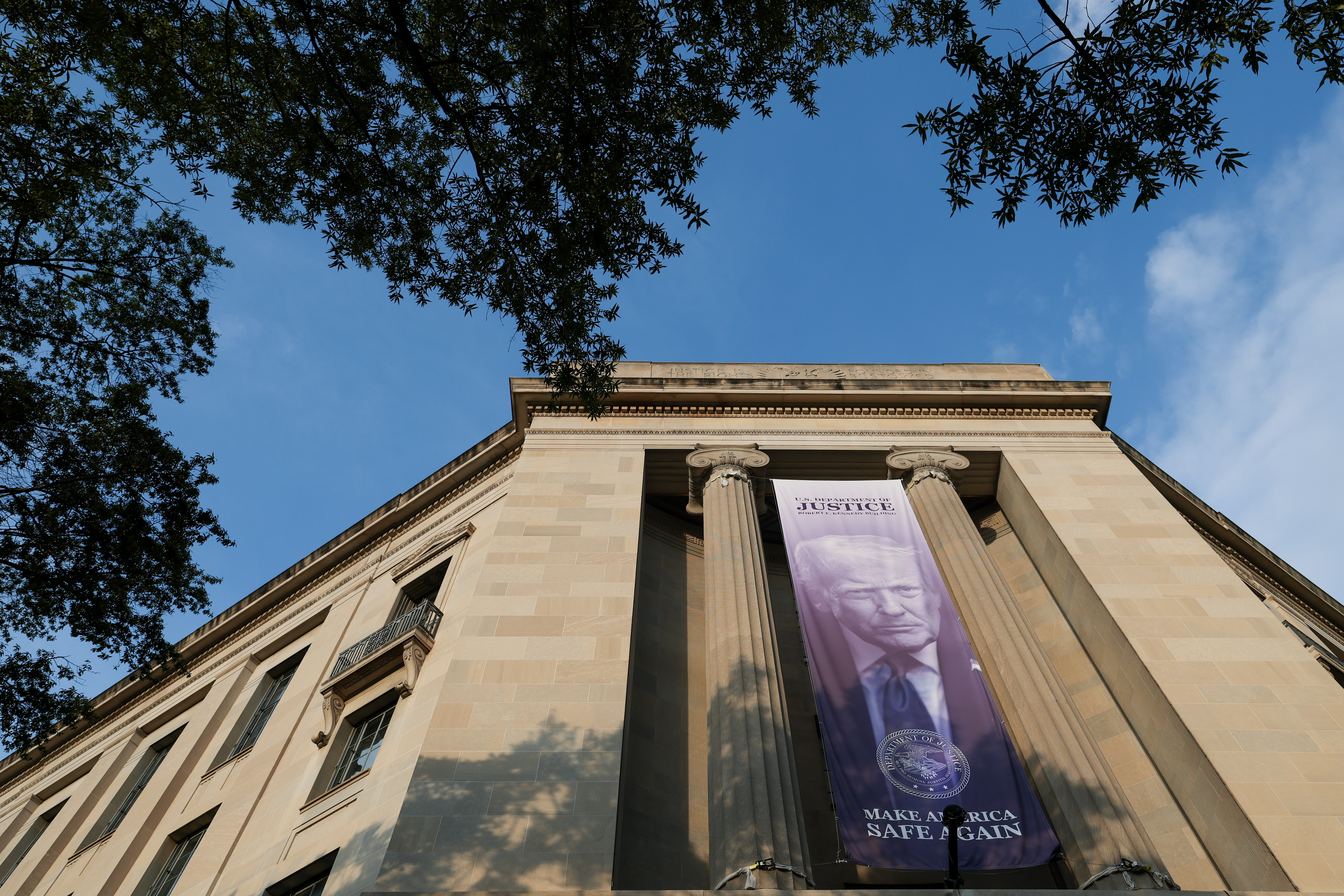
The U.S. Department of Justice Building in Washington, D.C., on Aug. 17, 2026. —Anna Moneymaker—Getty Images

Federal officials on Wednesday announced they had disrupted a yearslong Chinese hacking campaign that compromised or targeted several U.S. institutions, including NASA, the Federal Reserve, and even the Senate.

The Justice Department said in a statement it had seized internet domains used by two hacking platforms, called “QScan” and “QTRouter,” that were created and operated by a Chinese state-sponsored group. The platforms were used to target U.S. critical infrastructure and other sensitive networks. FBI Director Kash Patel said tools were used by Chinese government actors “to hide the origin of their attacks.”

An attached affidavit from an FBI agent accused the state-sponsored group, referred to as “QTFY,” of targeting the Department of Energy, Department of Justice, Department of Health and Human Services, and the National Institutes of Health. The group also allegedly targeted networks “operated by hospitals, telecommunications providers, power companies, financial institutions, and defense contractors.”

The DOJ’s announcement did not specify if anybody had been charged or apprehended in relation to the hacking, and the extent of what has been compromised remains unclear. TIME has reached out to the DOJ for comment.

The group’s hacking activity, which dates back to 2018 according to the FBI, adds to an ongoing record of U.S. allegations of Chinese state-backed cyberespionage operations.

A spokesperson for the Chinese Embassy in Washington, D.C. pushed back against the accusations in a statement to TIME, insisting that China is a “firm defender” of cybersecurity.

“China firmly opposes the U.S. overstretching the concept of national security and using it as a pretext to impose discriminatory restrictions on Chinese companies and will firmly safeguard the legitimate rights and interests of Chinese companies,” the spokesperson said, urging the U.S. to stop using such issues to “smear or discredit” the country.

A yearslong hacking campaign

QTFY members, according to the DOJ affidavit, include former members of the People’s Liberation Army—China’s military forces—who used their PLA relationships “to obtain contracts and subcontracts supporting offensive cyber operations.” The QTFY actors were allegedly employed by the Nanjing Xinjiuwei Network Technology Company, which “conducts malicious cyber activities” for the Chinese government, per the FBI.

The affidavit stated that not all of the attempted intrusions had been successful.

In August 2019, the group failed in attempting to break into NASA's server by exploiting a vulnerability in its virtual private network.

In September 2024, QTFY actors conducted computer intrusions at three unnamed laboratories of the Department of Energy, the NIH, an HHS agency, and another unnamed U.S. security device manufacturer.

Other efforts by the hacking group were detailed in a joint cybersecurity advisory authored by the FBI, the National Security Agency, and the U.S. Cyber Command's Cyber National Mission Force.

According to the advisory, the group conducted a vulnerability scan of the U.S. Senate and an American hospital system in March 2026, and of an unidentified U.S. election system in June 2026. Both attempts to gain access to these networks failed.

Speaking to Fox News, Attorney General Todd Blanche said Wednesday that the operation has been happening for many years and is a “major national security issue” for the U.S., adding that the authorities have not only stopped the operation, but have also shared the information with the private sector to stop further attempts.

Cybersecurity has been a source of tension between the U.S. and China—two geopolitical rivals.

The 2026 Annual Threat Assessment from the Office of the Director of National Intelligence says China “is the most active and persistent cyber threat to U.S. Government, private-sector, and critical infrastructure networks.”

In 2023, the U.S. identified and disrupted operations by Chinese state-sponsored group Volt Typhoon to intrude into U.S. energy, transportation and water networks, to potentially sabotage operations during geopolitical crises. The following year, Chinese government-linked hackers were said to have targeted the phone communications of President Donald Trump and Vice President J.D. Vance, who were then running for office, as part of a larger cyber-espionage campaign.

The Justice Department’s latest announcement comes a month before Trump’s counterpart Xi Jinping is expected to head to the U.S. amid continuing disputes in trade and technology.

As to whether Trump should bring up the alleged hacking from China when Xi visits, Blanche said he would not tell the President what to discuss.

“This is something that we have talked about with our counterparts in China for many, many years. And we know that it’s happening. And they know that we know that it’s happening. And it has to stop,” he added.
  •  

Nepal Flash Floods Leave Over 300 Dead and Hundreds More Missing, Including Foreign Nationals

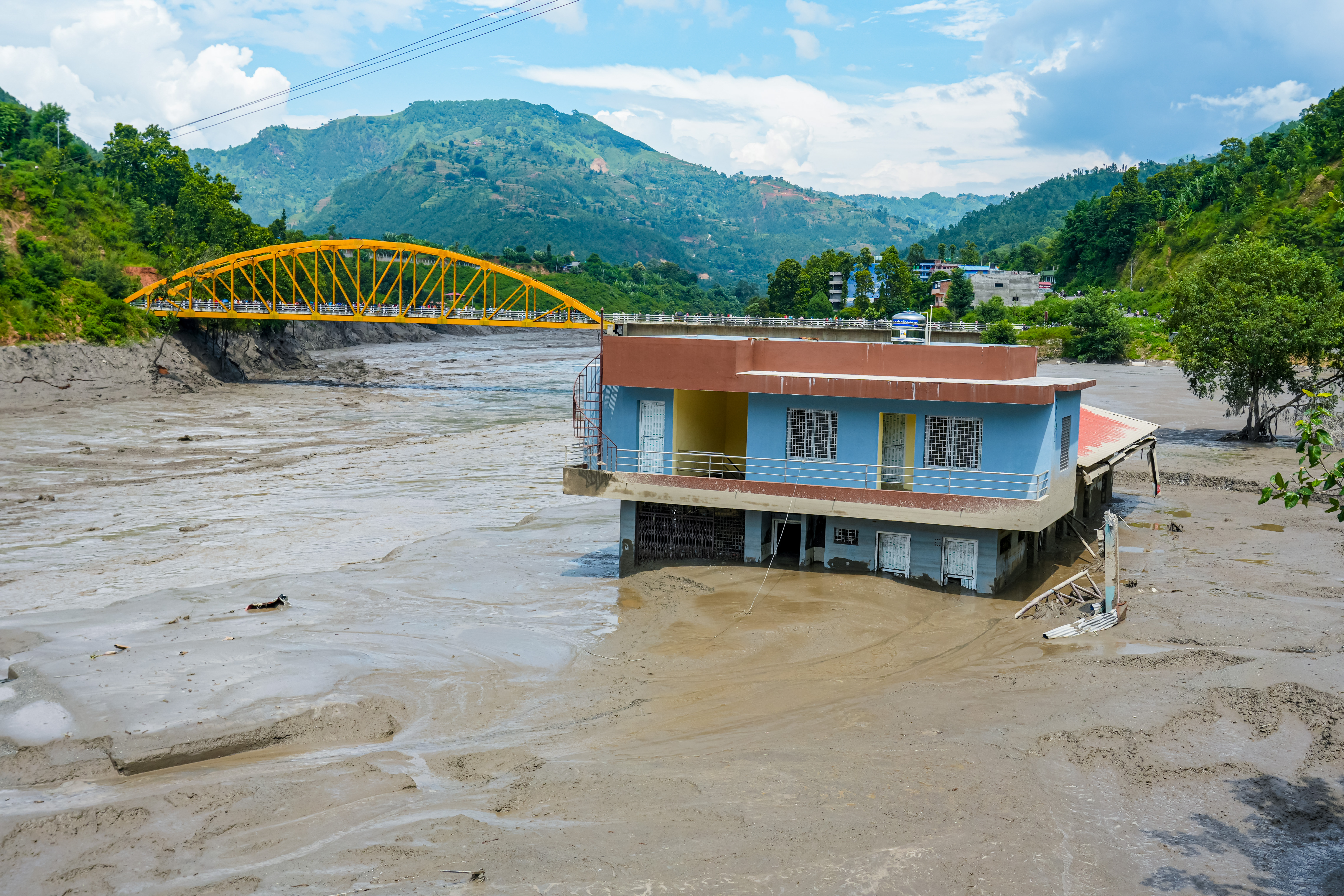
Flooding in the Bhotekoshi River affects riverbanks and houses in Nuwakot, Nepal, on Aug. 26, 2026. —Ambir Tolang—Getty Images

More than 300 people have been killed and at least 900 are missing after devastating flash floods swept through the Himalayan region along the Nepal-Tibet border, local officials confirmed Thursday.

Severe flooding was reported across the districts of Rasuwa, Nuwakot, Dhading, and Gorkha, north of the Nepalese capital Kathmandu early Wednesday. Much of the flooding occurred along the Trishuli and Bhotekoshi rivers in the north of the country.

The Nepali tourism board said that, based on records from travel and trekking firms, 644 travelers are still out of contact. More than a hundred of those are Indian nationals who were on pilgrimage to Mount Kailash in Tibet, a Nepali tourism official is quoted as telling the Associated Press.

Thursday’s count from the tourism board shows 65 missing travelers are from the U.S., and the State Department said it was aware of the Americans impacted by the floods. Among the others still unaccounted for are foreign nationals from Canada, the United Kingdom, Malaysia, Australia, Japan, and Singapore.

The U.S. embassy in Nepal issued a warning to U.S. citizens in Rasuwa, Nuwakot, Dhading, Gorkha, Chitwan, and Tanahun, urging them to “stay away from riverbanks and low-lying areas, seek higher ground, and follow local instructions.” The embassy added that it was working to account for Americans affected by the flooding.

Nepali Prime Minister Balendra Shah met with local Members of Parliament (MPs) on Wednesday to discuss issues including flood damage, condition of settlements in local areas, rescue and relief work, his office said

“The government has intensified the search and rescue operations by deploying security forces in the flood-affected areas,” Shah’s office added.

What do we know about the floods?

It remains unclear what caused the floods, but Nepal is highly vulnerable to the climate crisis.

The U.S. Geological Survey reported initial shaking as an earthquake, though it later determined that the tremors were caused by “a glacial collapse and debris flow that caused subsequent catastrophic impacts downstream.” That event generated seismic energy equivalent to a 5.2-magnitude quake.

The Kathmandu Post reported, citing the country’s national disaster authority, that an initial analysis of satellite imagery from Planet Labs indicated that an avalanche of ice and rock triggered the flood in the Lhende River, about 20 km (12 mi) north-east of the Rasuwagadhi border crossing between China and Nepal.

Nepal has thousands of glaciers, but with the Himalayan region warming, many of them are melting.

How Nepal is responding to the crisis

Data from the disaster risk reduction agency also showed that of the more than 900 missing, 28 are Nepali police, 44 are from the Nepali Army, and 13 are from its specialized paramilitary Armed Police Force.

Nepali Police published details of 66 people hospitalized due to injuries from the flooding, most of whom are from the Nuwakot and Rasuwa regions.

Video shared by police showed catastrophic flooding, with entire buildings swept away in the powerful currents. Other footage shared shows a bridge and multiple buildings on the banks of the Trishuli River destroyed in the flooding. Officials have since confirmed that 32 bridges and nearly 40 km of road were swept away.

Police also issued a warning that they expect the flooding to continue down the Bhotekoshi River into the regions of Dhading and Muglin in the center of the country. 

The Prithvi Highway, one of Nepal's busiest roads that connects Kathmandu to the second-largest city, Pokhara, passes through these regions along the Trishuli River. Police confirmed Wednesday this section of the highway would be closed.

The flooding has also resulted in widespread casualties at the border between Nepal and China’s Tibet region. A mudslide occurred near the Gyirong checkpoint on the border, resulting in at least three deaths and more than 550 people missing in Gyirong County, according to Chinese state media.

Chinese President Xi Jinping ordered “all-out efforts” for search and rescue operations in response to the mudslide, as well as calling for the strengthening of “monitoring and early warning, ensure scientific rescue operations and guard against secondary disasters,” Chinese media reported.

Footage from the checkpoint shows water engulfing buildings as people flee the oncoming currents. TIME has been unable to independently verify the footage.

  •  

Trump Administration Warns Kennedy Center Could Be Demolished If It Isn’t Fixed

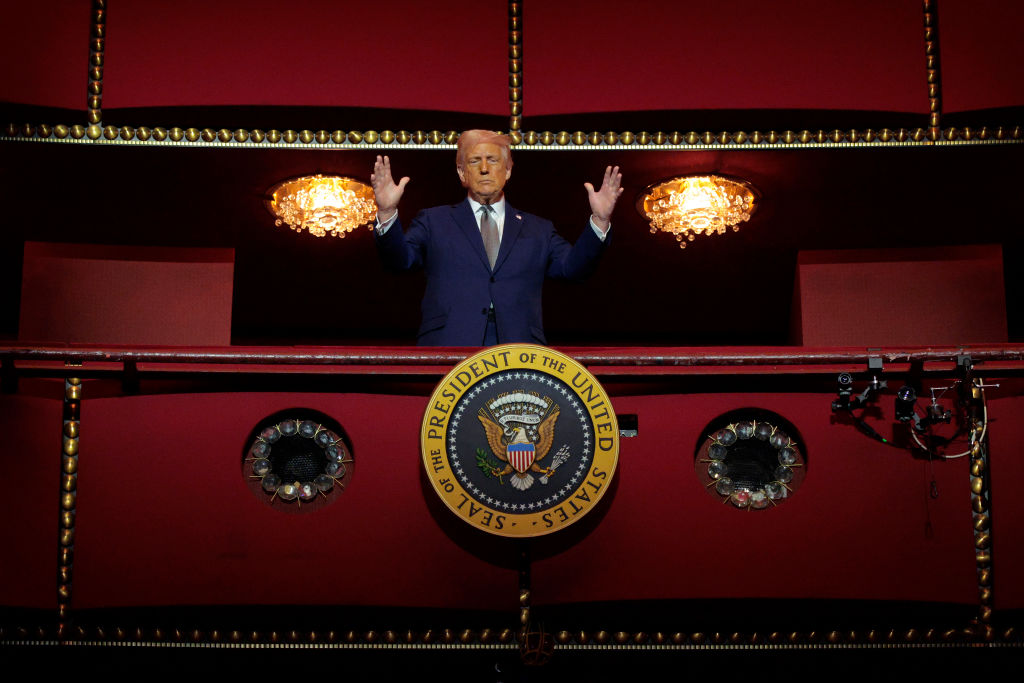
President Donald Trump tours the John F. Kennedy Center for the Performing Arts and leads a board meeting in Washington, D.C., on March 17, 2025. —Chip Somodevilla—Getty Images

President Donald Trump has been engaged in an ongoing legal battle to attach his name to the John F. Kennedy Center for the Performing Arts—and a new court filing warns that the building could eventually face demolition if his renovation plans do not proceed.

In the filing, Justice Department lawyers representing the center argued that Trump’s proposed renovations were necessary to prevent what they called "a financial and structural death spiral." They described the building as ‘structurally unsound, fundamentally unsafe, and embarrassing to the Nation’s Capital’ and warned that without the work, it could deteriorate to the point that it would need to be demolished.

The filing suggested that the building could be replaced by a large outdoor amphitheater overlooking the Potomac River. The lawyers said that “such a replacement will fail to adequately honor President John F. Kennedy, but would be simpler and more economical to build, operate, and maintain.”

The filing marks an unusually explicit reference by the Trump Administration to the possibility of demolishing the venue, which first opened its doors in 1971 as a living memorial to President John F. Kennedy, who was assassinated in 1963.

How the fight over the Kennedy Center escalated to demolition threats

At the start of Trump’s second term, he overhauled the center’s governing board and replaced several members with allies. That board voted in December 2025 to rename the venue as the “Trump Kennedy Center.” In February, he also ordered the center to close for two years to make way for renovations.

In May, a judge ruled that only Congress could rename the center and temporarily blocked both the name change and the planned closure. The judge ordered Trump’s name removed from the building.

Earlier this month, the board voted to rename the building “The John F. Kennedy Center for the Performing Arts Restored and Renovated by President Donald J. Trump,” setting up a new test of the court’s ruling.

Internal records obtained byThe Washington Post showed that ticket revenue and fundraising fell sharply after Trump’s name was added to the building.

The reference to demolition comes as Trump has pursued major changes to other Washington landmarks. His Administration demolished the White House’s East Wing to make way for a ballroom costing hundreds of millions of dollars—a project facing its own legal challenges.

In a statement Tuesday, lawyers for Ohio Rep. Joyce Beatty, an ex officio member of the center’s board, called the Justice Department’s threat “unconscionable.” 

“This is a not-so-subtle threat to demolish the Kennedy Center if the President doesn’t get his way,” attorneys Norm Eisen and Nathaniel Zelinsky said. “This is unconscionable, it is unbecoming of the Department of Justice to even put this in a filing, and we will answer in court.”

A hearing is scheduled for 2 p.m. on Thursday, Aug. 27, on Beatty’s emergency motion seeking to block the board’s latest attempt to add Trump’s name to the center.

TIME has reached out to the Justice Department and the Kennedy Center for comment.

  •  

What to Know About the Apparent Iranian Threat Against Barron Trump

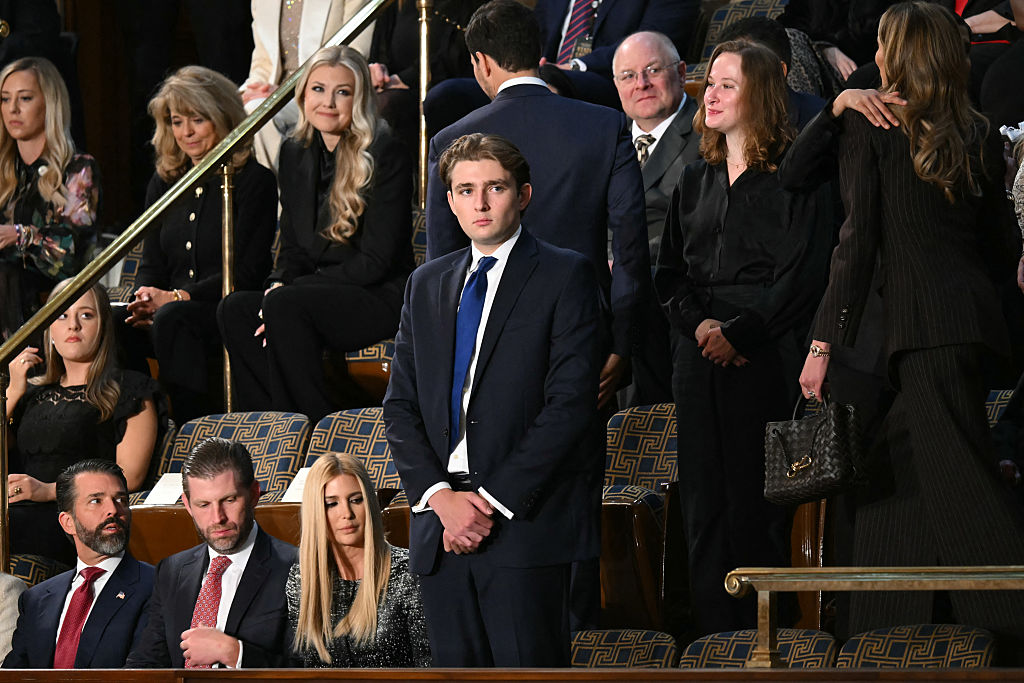
Barron Trump, the son of President Donald Trump, stands in the House Chamber of the U.S. Capitol in Washington, D.C., on Feb. 24, 2026. —Andrew Caballero-Reynolds—AFP/Getty Images

The U.S. Secret Service said it was aware of a video broadcast by Iranian state media that appeared to threaten President Donald Trump’s youngest son, Barron.

“The U.S. Secret Service is aware of the video and investigates anything that can be perceived as a threat toward our protectees,” Secret Service spokesperson Nate Herring said in a statement. “Out of concern for operational security, we do not discuss matters of protective intelligence.”

According to the U.K.-based news outlet Iran International, the nearly three-minute clip—which starts with a graphic that reads “Where to Kill Barron Trump”—describes efforts to reach the President’s 20-year-old son, whom the video narrator claims is under surveillance.

The video also references several locations related to Barron Trump, such as his place of study and the Trump Tower in New York, as well as his security arrangements. The narrator also suggests a $10 million reward connected to efforts against Barron Trump.

Read More: Trump's Secret Plane Swap Was Unusual, Not Unprecedented

TIME could not independently verify the claims made in the video, which provided no evidence that Barron Trump was actually under surveillance or that anyone had successfully compromised his security. The White House referred TIME to the Secret Service when asked for a response to the apparent threat against Barron Trump.

CNN first reported that the Secret Service was aware of the segment, which aired over the weekend on state-run Islamic Republic of Iran Broadcasting. IRIB operates under the Supreme Leader's control.

The segment follows a similar video released in July by the IRGC-affiliated Tasnim News Agency that focused on First Lady Melania Trump. That video depicted purported vulnerabilities in her security and ended with the words: ‘Barron Trump, wait for us!’”

Trump has been the subject of such threats from Iran since his first term. Iranian officials have repeatedly threatened Trump since he ordered the airstrike that killed Iranian General Qasem Soleimani, the commander of Iran’s elite Quds Force, in early 2020. 

Threats intensified after the U.S. and Israel launched strikes against Iran in late February, killing Supreme Leader Ayatollah Ali Khamenei during the opening phase of the war. His son and successor, Mojtaba Khamenei, has vowed to avenge his death.

Images depicting the deaths of Trump and members of his family have since featured prominently in Iranian calls for revenge.

Last month, a mural in Tehran’s Palestine Square depicted members of the First Family above coffins draped in American flags. The same month, in Enqelab Square, the site of pro-Khamenei demonstrations, a billboard appeared to show Trump’s body in a coffin.

“I don’t think it’s any secret—it’s been in the media that Iran has publicly said they want to kill President Donald Trump,” U.S. Secret Service Deputy Director Matt Quinn told reporters at an event in July.

Earlier this month, the President confirmed that he had secretly switched planes as he left a NATO Summit in Türkiye in July based on a possible Iranian threat.

In response to the Iranian threats on his life, Trump has warned that any Iranian attempt to assassinate him would result in the ‘decimation’ and ‘destruction’ of Iran.

  •  

‘Another Trump Attempt to Rig Elections’: Lawmakers Respond to Supreme Court Win for Trump Mail-in Voting Restrictions

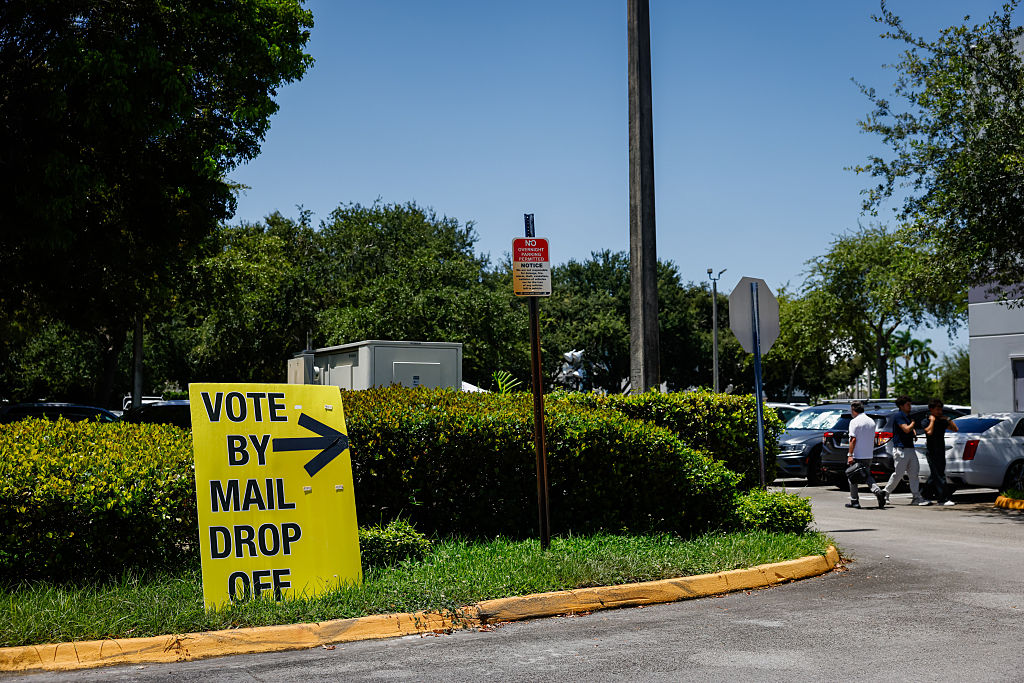
Signage of mail-in voting drop off at the Miami-Dade County Supervisor of Elections Office during a primary election in Doral, Florida, on Aug. 18, 2026. —Eva Marie Uzcategui - Bloomberg via Getty Images

The Supreme Court has handed President Donald Trump a victory in his efforts to restrict mail-in voting ahead of November’s crucial midterm elections

In an unsigned 6-3 ruling, with the court’s liberal justices dissenting, the Supreme Court lifted a lower court’s June block on the President’s Executive Order targeting mail-in voting after 23 Democratic states and Washington D.C. sued the Administration for the order’s alleged unconstitutionality and presidential overreach.

Democrat lawmakers have responded furiously to Monday’s decision. “Another day, another Trump attempt to rig elections and destroy democracy,” said California Governor Gavin Newsom on social media. “We can stop this. Vote this November.”

Trump, in his push to remake American elections, has repeatedly blamed mail-in voting for widespread electoral fraud. He claimed that mail-in ballots helped him lose in the 2020 election despite audits already refuting those claims, and his own voting by mail in recent elections.

The ruling does not settle whether the Executive Order will proceed ahead of the November midterms, where the Republican Party needs to defend its narrow majority in Congress. Part of the order covering the U.S. Postal Service remains blocked under a separate injunction in August, which still needs to be resolved.

The Supreme Court also did not outright rule on the legality of Trump’s order—only on the timing of the challenges to it—and left it open to future lawsuits, which critics have signaled they will file.

Here’s how other Democrats, as well as some Republicans, have responded to the decision, and what it means for November’s pivotal midterms. 

Democrats vow legal challenges against “terrible” Supreme Court decision 

Gov. Josh Shapiro of Pennsylvania said Monday that the legal battle against Trump’s Executive Order would continue, after a previous challenge put a temporary halt on the directive. 

“Not so fast. Today’s SCOTUS decision does not deal with the substance of Trump’s unconstitutional Executive Order and does not mean his illegal attempt to restrict mail-in voting will go forward,” argued Shapiro. “We’ll see the Trump Administration in court.”

Gov. Mikie Sherrill of New Jersey also vowed a response to the decision. “This is a terrible decision from Trump’s Supreme Court,” she said. “States run elections, not Donald Trump. I will do everything I can to protect New Jerseyans’ right to vote – by mail and in person.”

Newsom built upon his condemnation on Monday. “California will be suing again to block these Orwellian rules from being implemented,” he said

“This decision is a painful setback,” Attorney General Letitia James of New York, one of the plaintiff states from June’s challenge against the Order, said in a statement. “But it will not be the final word.”

More widely, other Democrat lawmakers criticized the Supreme Court’s decision and the impact it could have on the upcoming midterms. 

Senate Minority Leader Chuck Schumer said: “It’s a disgrace that the highest court in the nation is allowing Trump to put a dagger into the heart of our democracy,” following the decision. 

Schumer argued the Order was “blatantly unconstitutional,” and that “his MAGA Supreme Court is refusing to stop it from going forward.”

Hitting out at the President more broadly, the lawmaker continued: “[Trump] wants to make it harder for Americans to vote so they don’t hold him accountable for the skyrocketing costs, illegal war, and rampant corruption that are a hallmark of his administration.”

Sen. Catherine Cortez Masto of Nevada issued another direct response at the President himself. “Trump voted by mail eleven days ago. Apparently it’s good enough for him, but he wants to take away your right to vote in the same way,” she said. 

“Trump’s voter suppression order is about making it harder for Americans to hold him accountable - it is shameful that the Supreme Court is enabling it,” the lawmaker continued. 

Sen. Maria Cantwell also expressed concerns over the privacy of voters. “Today’s Supreme Court decision gets the Trump Administration one step closer to implementing its voter suppression order and forcing states to hand over personal voter data to the federal government,” she said. 

Republicans celebrate Supreme Court decision

“With today’s SCOTUS ruling, President Trump has made a giant leap forward in securing our 2026 elections,” said Utah Sen. Mike Lee, a long-standing supporter of Trump’s efforts to restrict mail-in voting. 

“Congress must still pass the SAVE America Act to secure future elections. We should’ve passed it months ago,” he continued in reference to the Act which is still awaiting approval in the Senate. 

Lee also responded to Gov. Shapiro’s commitment to continue legal challenges against the President’s Executive Order. “Why are you so determined to let non-citizens vote?” he said

“Bravo! Glad to see the Supreme Court get this one right. Election integrity is nonnegotiable,” said Rep. Keith Self of Texas, also pushing the Senate to approve the SAVE Act. 

“This is a major win for the security of American elections,” said White House spokesperson Lauren Bis in a statement to TIME. “These are commonsense measures that protect the security of mail-in ballots and ensure only Americans are electing American leaders.

What does the ruling mean for federal elections, and how did we get here?

On June 25, U.S. District Judge Indira Talwani in Boston ordered an injunction on provisions of Trump’s March Executive Order. Those provisions direct the Department of Homeland Security and Social Security Administration to create “state citizenship lists” that cover eligible voters, and the Postal Service to create rules that would end sending absentee ballots to individuals not on a state’s mail-in or absentee participation list.

Talwani’s block covered the 23 plaintiff states and Washington, D.C. On July 25, the First Circuit rejected the Trump Administration’s request to block Talwani’s order pending appeal.

The Trump Administration sought the Supreme Court’s intervention in July, arguing that the lower court “lacked jurisdiction” to resolve the dispute, as implementing rules based on the President’s Order haven’t been finalized.

In the Monday ruling, the Supreme Court’s conservative majority agreed with the Trump Administration and paused Talwani’s injunction.

The top court said that Trump’s order regarding state citizenship lists was “an internal directive from the President to a subordinate” and that it “imposes no obligations on the States,” which in turn “suffer no concrete harm.”

It added that, in the case of Trump directing the Postal Service to propose rules on mail-in ballots, the legal challenge was premature and lacked standing. When states filed the suit, the Postal Service had not issued a final rule.

The Supreme Court’s majority said the district court had to engage in a “string of speculations” to arrive at its June injunction: “Federal courts review final rules, not proposed rules—and certainly not antecedent internal directives to propose a rule.”

What the ruling did not cover

While the Supreme Court’s majority paused Talwani’s June injunction for being premature, it does not cover a separate injunction—also from Talwani—on Aug. 11. Ruling on another suit, Talwani barred the Postal Service from implementing the same Executive Order for the November midterms nationwide.

The Supreme Court ruling also simply granted the Trump Administration’s emergency request to pause Talwani’s June injunction. The case on Trump’s Executive Order is still pending before the First Circuit.

It also explicitly left room for challenges on the legality of the rules stemming from Trump’s order, especially with the Postal Service’s final rule.

Norm Eisen, a voting-rights advocate leading one of several legal challenges to Trump’s order, downplayed the Supreme Court’s decision. “Please don’t overreact to Roberts Court decision on the contemplated [Postal Service] ballot moves,” Eisen posted on microblogging platform Bluesky Monday. “They simply held that the injunction came too early in the process, before there was a final rule.”

  •  

A ‘Tsunami’ for Ukraine: Zelensky Rejects Wartime Elections

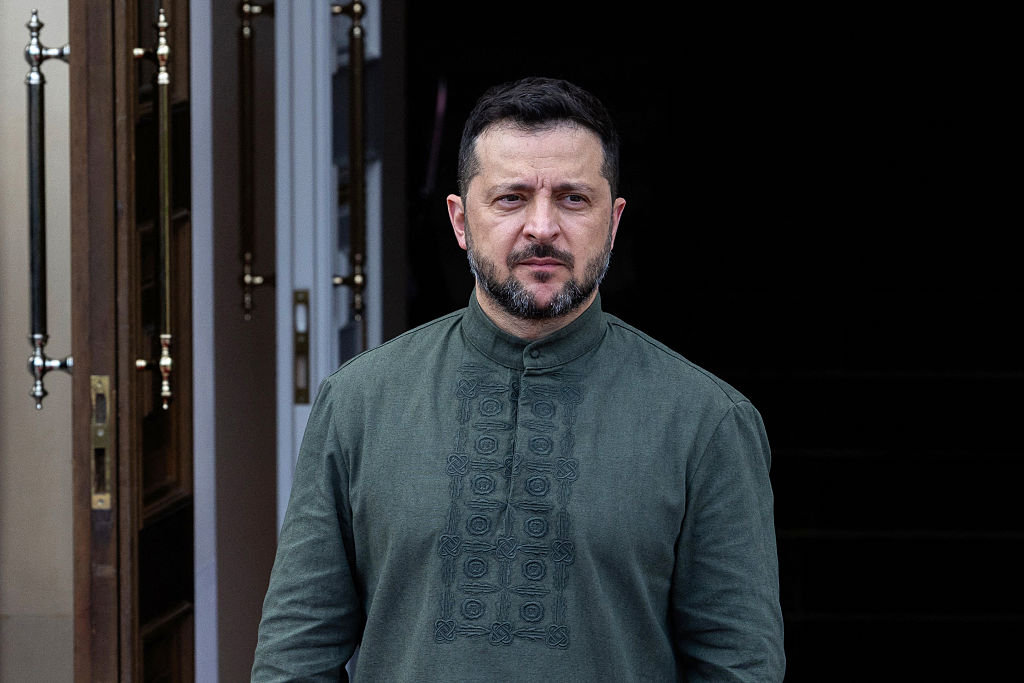
Ukraine's President Volodymyr Zelensky waits for international guests at the Nordic-Baltic Eight summit in Kyiv, Ukraine, on Aug. 23, 2026. —Tetiana Dzhafarova—AFP/Getty Images

Volodymyr Zelensky may be under pressure to hold elections in Ukraine, including from his former defense minister Mykhailo Fedorov, but in remarks over the weekend, the Ukrainian President argued that doing so during the ongoing conflict with Russia would “destroy” the country.

“I believe that in a war like this, elections as such are a huge risk,” Zelensky said in remarks to journalists during a two-hour meeting Saturday—parts of which were made public on Sunday. “Elections right now are a tsunami for the country that will split Ukraine.”

Read More: Zelensky Faces Pressure to Hold Elections. What Stands in the Way?

The renewed push for wartime elections was bolstered by Fedorov, who, in a video posted to social media last week, argued that  "democracy cannot be held hostage by Russia.” Zelensky fired Fedorov, once his longtime ally, in July over disagreements in how to run the war with Russia.

“I believe that if we want to destroy the country, then during such a war we can move towards elections,” Zelensky said. 

Fedorov’s call for elections is the latest leadership test for Zelensky, whose five-year term expired in May 2024 but continues under wartime rules. Elections are suspended under martial law. 

Zelensky recently fired a top aide amid a growing corruption scandal involving members of his office. Zelensky himself has not been implicated, but it has added to his political woes.

For the first time with journalists, Zelensky addressed the ongoing controversy involving Fedorov on Saturday, claiming that the former defense minister’s actions were misguided. 

Zelensky added that “there can be no conflict at such a level between leaders,” referring to Fedorov's conflict with the former Armed Forces commander-in-chief Gen. Oleksandr Syrsky. Zelensky also replaced Syrsky last month after Fedorov’s removal spurred massive protests within the military and on the streets of Kyiv.

Syrsky was widely viewed as part of the old guard, while Fedorov had pushed for the adoption of modern warfare technology, including drones.

“I really had and still have a very positive attitude towards Mykhailo [Fedorov],” he said, according to local news outlet Interfax. “We’ve been through a lot together. But I think that he himself is going—or he's being pushed—into the wrong things.”

In a post on X, Zelensky also mentioned that the Ukrainian Ministry of Defense was under severe strain with a $27 billion shortfall. 

“At the beginning of the year, decisions were made at the Ministry to use in the first half of the year funds that were intended to be disbursed in the second half, and that money went toward drone production and other needs,” Zelensky posted. “Now, in the second half of the year, those funds need to be compensated for and supplemented.”

Zelensky discussed the defense budget deficit during a summit with Nordic and Baltic leaders in Kyiv on Sunday, where the leaders of Denmark, Estonia, Finland, Iceland, Latvia, Lithuania, Norway, Sweden agreed to continue to provide military and financial support. 

U.K. Prime Minister Andy Burnham is set to visit Ukraine Monday, in his first international visit. 

“Russia should be in no doubt of our resolve. We will not back down until there is a just and lasting peace,” Burnham said in a statement Monday.

Successive polls have shown a lack of public interest in holding elections during the war. The latest, conducted by the Kyiv International Institute of Sociology from July 20 to Aug. 3, shows that 57% of Ukrainians believe elections should be held after fighting has ended, down from 69% in March. Experts have previously said that the invasion, which Russian President Vladimir Putin launched in 2022, nixed the possibility of holding safe and secure elections in Ukraine. 

Zelensky has denied postponing the polls to cling to power, and told reporters on Saturday that holding elections “is impossible under the conditions we have now, when Putin does not want to accept any ceasefire options.”

In the same conversation, Zelensky said he believes Russia will draft an additional 300,000 troops to fight in Ukraine after Russian parliamentary elections, which are scheduled on Sept. 18-20.

Zelensky said Russia could also draft more ​troops in 2027. He expects most of the additional forces to be deployed in the Donetsk region in eastern Ukraine, where military clashes are ongoing.

  •  
❌