Reading view

Trump Signs Order to Rename Lake Ontario as 'Lake America' Amid Calls for Canadians to Boycott U.S. Travel

President Donald Trump on Thursday signed an ‌Executive Order instructing Interior Secretary Doug Burgum to rename Lake Ontario as “Lake America.” ​

President Donald Trump on Thursday signed an ‌Executive Order instructing Interior Secretary Doug Burgum to rename Lake Ontario as “Lake America.” ​

The change is set to take effect immediately, he said. Trump earlier in the week had floated the idea of a new moniker for the lake, which borders the Canadian ‌province ⁠of Ontario and the U.S. state of New York.

Trump signed a similar order upon returning to the White House last year, renaming the Gulf of Mexico as the "Gulf of America."

This most recent name change is the latest in a series of tit-for-tat measures amid an all-out trade war between the U.S. and Canada.

British Columbia’s Premier David Eby on Tuesday called for residents not to travel to America unless it's absolutely essential.

“I’m asking British Columbians: If you have a choice, please don’t travel to the United States. Choose another place to do your tourism,” Eby said at a press briefing. “If you can choose a Canadian product, instead of an American one, please choose it… by being our own best customer, we can help respond and support Canadians in every corner of this amazing country.”

While Eby is leading the charge on a travel boycott from the Canadian province, other lawmakers are further clamping down on a boycott of U.S. products.

“When you’re at war, you protect your own, you protect your own backyard,” said Ontario Premier Doug Ford on Wednesday. “You don’t go down to the U.S. and buy a product. There’s nothing that we can’t make here in Ontario, or across the country.”

Finance Minister François-Philippe Champagne expressed a similar sentiment, telling reporters: “The biggest power we have, each and every one of us, is our purchasing power. We can choose when we go to the grocery store or to the hardware store to buy Canadian.”

Has Canadian travel to the U.S. declined since Trump returned to office?

Prior to Eby’s tourism plea, Canadian travel to the U.S. had shown a jump in visitors after a widely-reported decline.

In May, the number of Canadians visiting the U.S. was up by 9.9% compared to the same month a year prior, according to Statistics Canada. In June, the number of Canadian-resident return trips from the United States increased 5.0% year over year. The number of Americans visiting Canada was also higher, with a 6.1% rise year over year.

However, in the first quarter of 2026, Canadian residents took 5.5 million trips that included an outbound visit to the United States, a year over year decline of 10.6%. Spending while visiting the U.S. by Canadians during this period was also down by 13.6%.

Figures for the start of 2026 fall in line with a trend that has seen Canadian travel to the U.S. decline since Trump returned to Office last year.

Cell phone data analysis published by the University of Toronto in May found a 42% year-over-year median decline in Canadian travel to U.S. metropolitan areas.

The research also found that “when Canadians travel to the U.S., they are visiting fewer locations and staying for less time than they used to.”

Some metro areas such as Myrtle Beach, South Carolina, and Panama City, Florida, saw drops in Canadian tourism of at least 60%. In Florida, the decline in visits has persisted with an average decrease of just under 14% across the state during the first six months of 2026.

How U.S.-Canada talks collapsed into an all-out trade war

Relations between the U.S. and Canada have deteriorated further since the collapse of high-stakes trade talks last week resulted in U.S. tariffs of 50% on various Canadian products going into effect on Aug. 22, with no CUSMA exception.

In response, Canada has imposed retaliatory tariffs of up to 50% on certain U.S. goods.

Trump has threatened to increase automobile tariffs on Canada to 50%, claiming: We don’t need Canada, they need us.”

The Trump Administration has also revived its rhetoric of referring to Canada as a “state”—a nod to Trump’s vocal ambition to annex Canada and make it the 51st state, an idea he has floated repeatedly since returning to the White House last year.

Vice President J.D. Vance during a speech in Brewer, Maine, on Monday said: “We have to remember, Canada is a state—sorry, Freudian slip.”

Canadian Prime Minister Mark Carney, meanwhile, has drawn focus to Canada’s burgeoning trade relations with other countries.

“Over the last year alone, Canada has signed more than 20 trade and security deals across five continents,” he said Wednesday. “Canada is now the best connected economy in the world,” he claimed, pointing towards trade alliances with countries in South Asia and Europe.

Carney in January met with China’s President Xi Jinping to forge what he called a “new strategic partnership” to end Canada's economic reliance on the American market. While meeting with Canada’s second-largest export market, Carney agreed to cut his country’s 100% tariff on Chinese electric cars in return for lower tariffs on Canadian farm products, including canola seeds, a major Canadian export.
  •  

Nepal Flash Floods Leave Over 300 Dead and Hundreds More Missing, Including Foreign Nationals

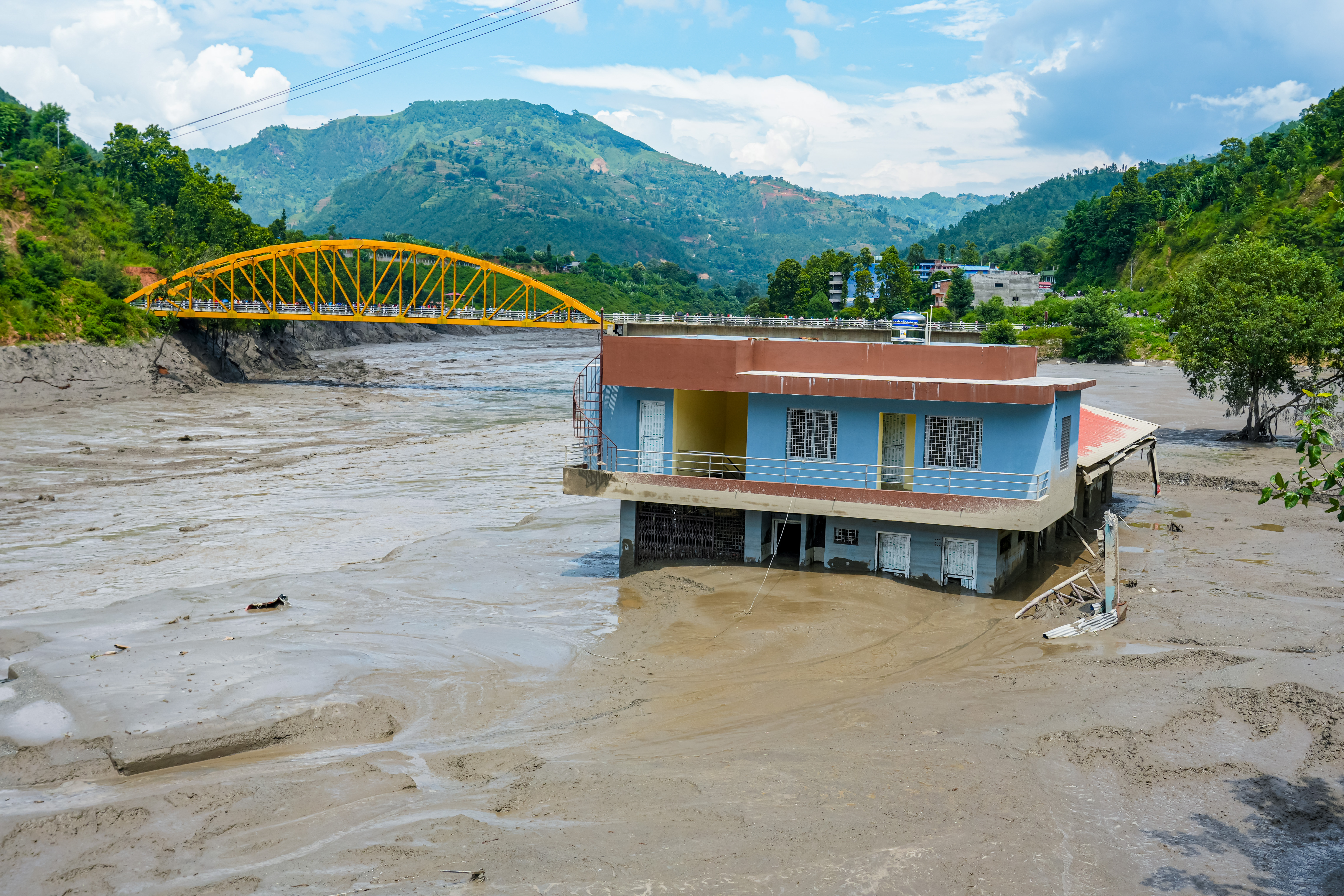
Flooding in the Bhotekoshi River affects riverbanks and houses in Nuwakot, Nepal, on Aug. 26, 2026. —Ambir Tolang—Getty Images

More than 300 people have been killed and at least 900 are missing after devastating flash floods swept through the Himalayan region along the Nepal-Tibet border, local officials confirmed Thursday.

Severe flooding was reported across the districts of Rasuwa, Nuwakot, Dhading, and Gorkha, north of the Nepalese capital Kathmandu early Wednesday. Much of the flooding occurred along the Trishuli and Bhotekoshi rivers in the north of the country.

The Nepali tourism board said that, based on records from travel and trekking firms, 644 travelers are still out of contact. More than a hundred of those are Indian nationals who were on pilgrimage to Mount Kailash in Tibet, a Nepali tourism official is quoted as telling the Associated Press.

Thursday’s count from the tourism board shows 65 missing travelers are from the U.S., and the State Department said it was aware of the Americans impacted by the floods. Among the others still unaccounted for are foreign nationals from Canada, the United Kingdom, Malaysia, Australia, Japan, and Singapore.

The U.S. embassy in Nepal issued a warning to U.S. citizens in Rasuwa, Nuwakot, Dhading, Gorkha, Chitwan, and Tanahun, urging them to “stay away from riverbanks and low-lying areas, seek higher ground, and follow local instructions.” The embassy added that it was working to account for Americans affected by the flooding.

Nepali Prime Minister Balendra Shah met with local Members of Parliament (MPs) on Wednesday to discuss issues including flood damage, condition of settlements in local areas, rescue and relief work, his office said

“The government has intensified the search and rescue operations by deploying security forces in the flood-affected areas,” Shah’s office added.

What do we know about the floods?

It remains unclear what caused the floods, but Nepal is highly vulnerable to the climate crisis.

The U.S. Geological Survey reported initial shaking as an earthquake, though it later determined that the tremors were caused by “a glacial collapse and debris flow that caused subsequent catastrophic impacts downstream.” That event generated seismic energy equivalent to a 5.2-magnitude quake.

The Kathmandu Post reported, citing the country’s national disaster authority, that an initial analysis of satellite imagery from Planet Labs indicated that an avalanche of ice and rock triggered the flood in the Lhende River, about 20 km (12 mi) north-east of the Rasuwagadhi border crossing between China and Nepal.

Nepal has thousands of glaciers, but with the Himalayan region warming, many of them are melting.

How Nepal is responding to the crisis

Data from the disaster risk reduction agency also showed that of the more than 900 missing, 28 are Nepali police, 44 are from the Nepali Army, and 13 are from its specialized paramilitary Armed Police Force.

Nepali Police published details of 66 people hospitalized due to injuries from the flooding, most of whom are from the Nuwakot and Rasuwa regions.

Video shared by police showed catastrophic flooding, with entire buildings swept away in the powerful currents. Other footage shared shows a bridge and multiple buildings on the banks of the Trishuli River destroyed in the flooding. Officials have since confirmed that 32 bridges and nearly 40 km of road were swept away.

Police also issued a warning that they expect the flooding to continue down the Bhotekoshi River into the regions of Dhading and Muglin in the center of the country. 

The Prithvi Highway, one of Nepal's busiest roads that connects Kathmandu to the second-largest city, Pokhara, passes through these regions along the Trishuli River. Police confirmed Wednesday this section of the highway would be closed.

The flooding has also resulted in widespread casualties at the border between Nepal and China’s Tibet region. A mudslide occurred near the Gyirong checkpoint on the border, resulting in at least three deaths and more than 550 people missing in Gyirong County, according to Chinese state media.

Chinese President Xi Jinping ordered “all-out efforts” for search and rescue operations in response to the mudslide, as well as calling for the strengthening of “monitoring and early warning, ensure scientific rescue operations and guard against secondary disasters,” Chinese media reported.

Footage from the checkpoint shows water engulfing buildings as people flee the oncoming currents. TIME has been unable to independently verify the footage.

  •  

‘Another Trump Attempt to Rig Elections’: Lawmakers Respond to Supreme Court Win for Trump Mail-in Voting Restrictions

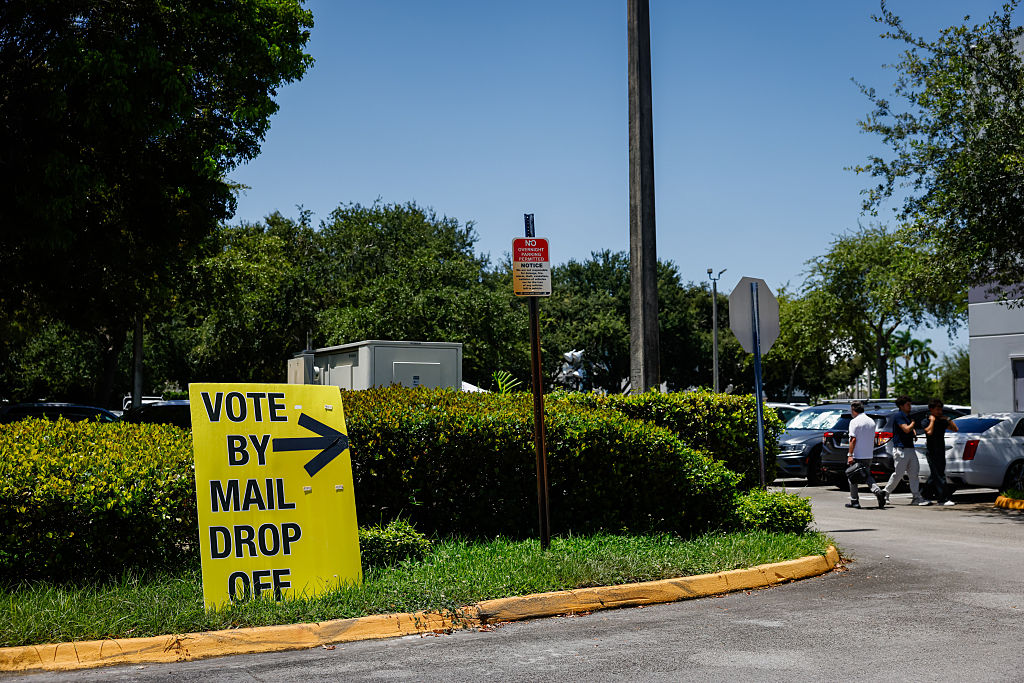
Signage of mail-in voting drop off at the Miami-Dade County Supervisor of Elections Office during a primary election in Doral, Florida, on Aug. 18, 2026. —Eva Marie Uzcategui - Bloomberg via Getty Images

The Supreme Court has handed President Donald Trump a victory in his efforts to restrict mail-in voting ahead of November’s crucial midterm elections

In an unsigned 6-3 ruling, with the court’s liberal justices dissenting, the Supreme Court lifted a lower court’s June block on the President’s Executive Order targeting mail-in voting after 23 Democratic states and Washington D.C. sued the Administration for the order’s alleged unconstitutionality and presidential overreach.

Democrat lawmakers have responded furiously to Monday’s decision. “Another day, another Trump attempt to rig elections and destroy democracy,” said California Governor Gavin Newsom on social media. “We can stop this. Vote this November.”

Trump, in his push to remake American elections, has repeatedly blamed mail-in voting for widespread electoral fraud. He claimed that mail-in ballots helped him lose in the 2020 election despite audits already refuting those claims, and his own voting by mail in recent elections.

The ruling does not settle whether the Executive Order will proceed ahead of the November midterms, where the Republican Party needs to defend its narrow majority in Congress. Part of the order covering the U.S. Postal Service remains blocked under a separate injunction in August, which still needs to be resolved.

The Supreme Court also did not outright rule on the legality of Trump’s order—only on the timing of the challenges to it—and left it open to future lawsuits, which critics have signaled they will file.

Here’s how other Democrats, as well as some Republicans, have responded to the decision, and what it means for November’s pivotal midterms. 

Democrats vow legal challenges against “terrible” Supreme Court decision 

Gov. Josh Shapiro of Pennsylvania said Monday that the legal battle against Trump’s Executive Order would continue, after a previous challenge put a temporary halt on the directive. 

“Not so fast. Today’s SCOTUS decision does not deal with the substance of Trump’s unconstitutional Executive Order and does not mean his illegal attempt to restrict mail-in voting will go forward,” argued Shapiro. “We’ll see the Trump Administration in court.”

Gov. Mikie Sherrill of New Jersey also vowed a response to the decision. “This is a terrible decision from Trump’s Supreme Court,” she said. “States run elections, not Donald Trump. I will do everything I can to protect New Jerseyans’ right to vote – by mail and in person.”

Newsom built upon his condemnation on Monday. “California will be suing again to block these Orwellian rules from being implemented,” he said

“This decision is a painful setback,” Attorney General Letitia James of New York, one of the plaintiff states from June’s challenge against the Order, said in a statement. “But it will not be the final word.”

More widely, other Democrat lawmakers criticized the Supreme Court’s decision and the impact it could have on the upcoming midterms. 

Senate Minority Leader Chuck Schumer said: “It’s a disgrace that the highest court in the nation is allowing Trump to put a dagger into the heart of our democracy,” following the decision. 

Schumer argued the Order was “blatantly unconstitutional,” and that “his MAGA Supreme Court is refusing to stop it from going forward.”

Hitting out at the President more broadly, the lawmaker continued: “[Trump] wants to make it harder for Americans to vote so they don’t hold him accountable for the skyrocketing costs, illegal war, and rampant corruption that are a hallmark of his administration.”

Sen. Catherine Cortez Masto of Nevada issued another direct response at the President himself. “Trump voted by mail eleven days ago. Apparently it’s good enough for him, but he wants to take away your right to vote in the same way,” she said. 

“Trump’s voter suppression order is about making it harder for Americans to hold him accountable - it is shameful that the Supreme Court is enabling it,” the lawmaker continued. 

Sen. Maria Cantwell also expressed concerns over the privacy of voters. “Today’s Supreme Court decision gets the Trump Administration one step closer to implementing its voter suppression order and forcing states to hand over personal voter data to the federal government,” she said. 

Republicans celebrate Supreme Court decision

“With today’s SCOTUS ruling, President Trump has made a giant leap forward in securing our 2026 elections,” said Utah Sen. Mike Lee, a long-standing supporter of Trump’s efforts to restrict mail-in voting. 

“Congress must still pass the SAVE America Act to secure future elections. We should’ve passed it months ago,” he continued in reference to the Act which is still awaiting approval in the Senate. 

Lee also responded to Gov. Shapiro’s commitment to continue legal challenges against the President’s Executive Order. “Why are you so determined to let non-citizens vote?” he said

“Bravo! Glad to see the Supreme Court get this one right. Election integrity is nonnegotiable,” said Rep. Keith Self of Texas, also pushing the Senate to approve the SAVE Act. 

“This is a major win for the security of American elections,” said White House spokesperson Lauren Bis in a statement to TIME. “These are commonsense measures that protect the security of mail-in ballots and ensure only Americans are electing American leaders.

What does the ruling mean for federal elections, and how did we get here?

On June 25, U.S. District Judge Indira Talwani in Boston ordered an injunction on provisions of Trump’s March Executive Order. Those provisions direct the Department of Homeland Security and Social Security Administration to create “state citizenship lists” that cover eligible voters, and the Postal Service to create rules that would end sending absentee ballots to individuals not on a state’s mail-in or absentee participation list.

Talwani’s block covered the 23 plaintiff states and Washington, D.C. On July 25, the First Circuit rejected the Trump Administration’s request to block Talwani’s order pending appeal.

The Trump Administration sought the Supreme Court’s intervention in July, arguing that the lower court “lacked jurisdiction” to resolve the dispute, as implementing rules based on the President’s Order haven’t been finalized.

In the Monday ruling, the Supreme Court’s conservative majority agreed with the Trump Administration and paused Talwani’s injunction.

The top court said that Trump’s order regarding state citizenship lists was “an internal directive from the President to a subordinate” and that it “imposes no obligations on the States,” which in turn “suffer no concrete harm.”

It added that, in the case of Trump directing the Postal Service to propose rules on mail-in ballots, the legal challenge was premature and lacked standing. When states filed the suit, the Postal Service had not issued a final rule.

The Supreme Court’s majority said the district court had to engage in a “string of speculations” to arrive at its June injunction: “Federal courts review final rules, not proposed rules—and certainly not antecedent internal directives to propose a rule.”

What the ruling did not cover

While the Supreme Court’s majority paused Talwani’s June injunction for being premature, it does not cover a separate injunction—also from Talwani—on Aug. 11. Ruling on another suit, Talwani barred the Postal Service from implementing the same Executive Order for the November midterms nationwide.

The Supreme Court ruling also simply granted the Trump Administration’s emergency request to pause Talwani’s June injunction. The case on Trump’s Executive Order is still pending before the First Circuit.

It also explicitly left room for challenges on the legality of the rules stemming from Trump’s order, especially with the Postal Service’s final rule.

Norm Eisen, a voting-rights advocate leading one of several legal challenges to Trump’s order, downplayed the Supreme Court’s decision. “Please don’t overreact to Roberts Court decision on the contemplated [Postal Service] ballot moves,” Eisen posted on microblogging platform Bluesky Monday. “They simply held that the injunction came too early in the process, before there was a final rule.”

  •  

Andy Burnham Weighs In As Prince Harry and Meghan Set For Return to U.K.

Harry and Meghan, the Duke and Duchess of Sussex, are expected to move back to the United Kingdom later this year, after six years of living in the U.S. during a period of estrangement from the rest of the Royal family. 

The couple are set to move with their children, Prince Archie, 7, and Princess Lilibet, 5, to a non-royal residence that is said to be outside of London, with both children enrolled to start at a British school in September. The news was first reported by the Daily Telegraph on Wednesday, with multiple outlets since reporting similar details. 

The move follows years of Prince Harry arguing that the security arrangements provided for his family in the U.K. were insufficient. In May 2025, Prince Harry lost an appeal after the British government downgraded his security arrangements following his decision, along with Meghan, to step back from Royal duties in 2020. 

Asked on Thursday about the move and if the British government would pay for the family’s security, Prime Minister Andy Burnham said the issue was “a private matter” and that he “wishes them well in the move that they are making.”

King Charles III was reportedly informed of the couple’s move on Sunday, and in line with their wishes, the Duke and Duchess will not return to their duties previously held as members of the Royal family.

The Duke and Duchess of Sussex last visited the U.K. in July and were hosted by Charles and Queen Camilla at their private residence, Highgrove House, in Gloucestershire, west England. 

Prince Harry also spent time attending events across the country linked to the Invictus Games, a sporting event established by the Duke involving injured or sick international servicemen and women.

Neither the Royal family nor Harry and Meghan have responded publicly to the reports. When asked about the speculation during a roundtable event in Washington on Wednesday, Harry said he had “nothing to say,” per the Associated Press

TIME has reached out to Buckingham Palace, as well as representatives of the Duke and Duchess for comment. 

Harry and Meghan’s break from the Royal family 

Harry and Meghan initially lived and worked in the U.K. following their wedding in May 2018. But amid intense media scrutiny and other issues, they soon expressed desires to pull back from public-facing Royal duties. 

In October 2019, the couple said they would be taking “family time” away from their duties towards the end of the year, CNN reported.  

Then in January 2020, the Duke and Duchess announced their decision “to step back as ‘senior’ members of the Royal Family and work to become financially independent.” The couple said they would split time between the U.K. and North America, to “enable us to raise our son with an appreciation for the royal tradition into which he was born, while also providing our family with the space to focus on the next chapter.”

The late Queen Elizabeth II issued a statement in support of the decision after “constructive discussions” with the family, and following a 12-month review, Buckingham Palace confirmed in February 2021 that Harry and Meghan would not be returning as working members of the Royal family. 

“While all are saddened by their decision, The Duke and Duchess remain much loved members of the family,” a statement read. 

The next month, Harry and Meghan sat down with Oprah Winfrey for a now-infamous interview during which they detailed their decisions to move away from the Royal family and the apparatus around it, which Meghan referred to as “The Firm”.

In the interview, Harry said the decision to withdraw from public duties and move to California was both due to the amount of tabloid press scrutiny and harassment, as well as a lack of support from “The Firm.”

Tabloid headlines focused on Meghan have included descriptions of the Duchess as “gangster royalty” and coming from a “crime-ridden neighborhood.”

In 2023, Harry published his memoir, Spare, outlining details of Royal life. In his book, the Duke revealed how he learned of his grandmother’s death, Queen Elizabeth II, via the BBC, and how his father, Charles, did not hug him following the death of his mother, Princess Diana, in 1997.

While in the U.S., the couple have launched a number of business ventures, including several with Netflix. In December 2022, the couple released a six-episode docuseries on Netflix detailing more details about the early days of their relationship, as well as discussions around racism and stereotypes experienced by the Duchess since the start of their relationship. 

Harry’s battle with the British press

Speaking in 2021 the Duke also detailed his relationship with the British media which has been dominated in recent years by a number of legal battles. Most recently Harry lost a lawsuit against Associated Newspapers Ltd., the publisher of The Daily Mail, with a judge ruling a lack of proof for privacy invasion claims against the paper.  

Before the legal defeat, expected to be the Duke’s last challenge against tabloids, the publisher of the Sun newspaper was forced in January 2025 to pay Prince Harry “substantial damages after using “unlawful techniques” to acquire information on his private life. 

The Duke also won 15 claims in December 2023, accusing Mirror Group Newspapers of unlawfully gathering information for stories published about him through phone hacking and other methods. 

Meghan’s struggles

During the March 2021 interview, the Duchess also opened up about her suicidal thoughts while pregnant with their first child, Archie, in 2019. 

“I just didn’t want to be alive anymore,” she said. “And that was a very clear and real and frightening constant thought.” Meghan added that when she approached Royal staff about seeking outside support, her request was refused. 

The Duchess also relayed conversations between Harry and family members, during which they raised concerns with the Duke about how dark Archie’s skin might be. 

Harry said such conversations took place at the start of his relationship with Meghan. “There were some real obvious signs before we even got married that this was going to be really hard,” he said. 

In 2016, when the couple began dating, a statement from Harry’s communications secretary denounced the wave of racist and sexist comments targeting Meghan, as well as the tone of some of the media coverage about her. “Some of this has been very public—the smear on the front page of a national newspaper; the racial undertones of comment pieces; and the outright sexism and racism of social media trolls and web article comment,” the statement from the Duke’s communications secretary read. 

  •  

UAE Suspends Trade With Iran After Reported Missile Strikes

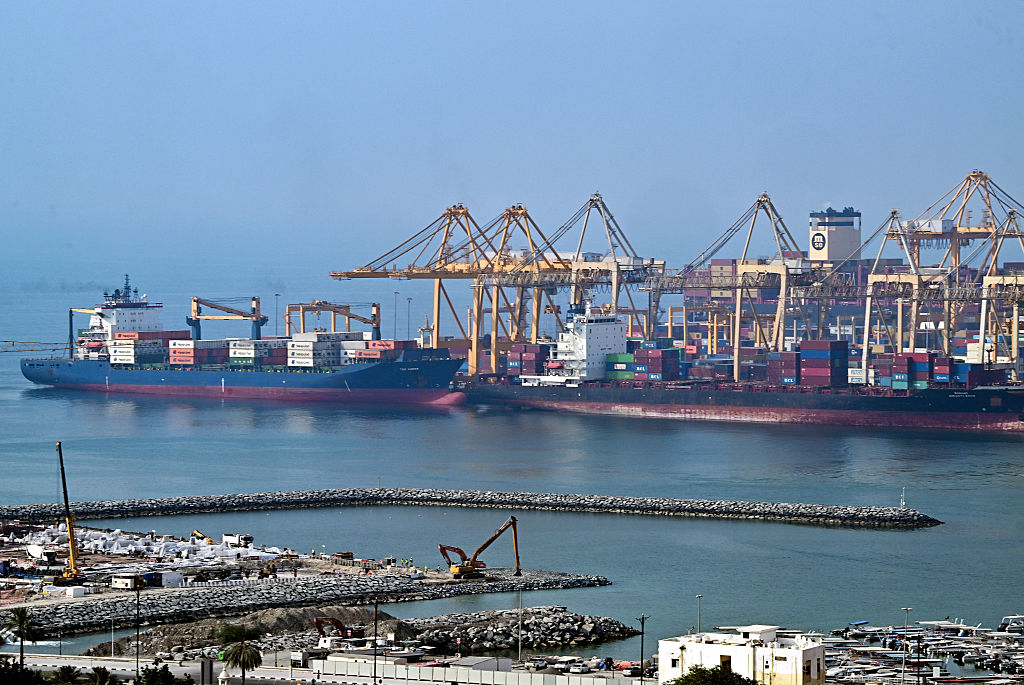
Ships dock at the container terminal in the port of Khor Fakkan, in the United Arab Emirates, on July 14, 2026. —AFP via Getty Images

The United Arab Emirates (UAE) announced Tuesday that “all trade, commercial exchanges, and financial transactions with Iran have been halted until further notice,” alleging that Iran had fired two ballistic missiles toward it. 

The country’s foreign ministry said the decision comes “in light of regional escalations that undermine regional and international peace and security.”

Earlier Tuesday, the UAE’s Ministry of Defense reported that two missiles launched from Iran toward the country, both of which fell into the sea. The statement said it “affirms its readiness to respond to any threats and to resolutely counter any attempts to undermine the security of the country or the safety of maritime navigation in the region.”

Read More: Trump Again Threatens to Bomb Oman

Esmaeil Baghaei, a spokesperson for Iran’s foreign ministry, rejected the Emirati claim on Tuesday, saying that it “undermines ongoing efforts to strengthen trust between countries in the region and prevent the escalation of insecurity,” according to the semi-official Fars news agency. 

“The impact on the Iranian economy could be significant,” Simon Henderson, director of the Bernstein Program on Gulf and Energy Policy at the Washington Institute, tells TIME. “The UAE is one of the top non-oil trading partners with Iran.”

As of April, the UAE accounts for 12.5% of Iran’s exports and 30.43% of its imports, according to Iranian news agency WANA

Iran’s dollar currently ranks as the least valuable currency in the world, and its government told a Russian news agency in April that the war has already cost it some $270 billion in direct and indirect damages.

Regional instability amid the war in Iran

Stability in the region is fragile, as a number of incidents have been recently reported in the Strait of Hormuz. On Tuesday, a vessel reported that it had been struck by an unknown projectile, causing damage to the engine room and a crew casualty, according to the U.K. Trade Maritime Operations Centre (UKMTO). Last Thursday, a separate vessel was struck by a drone. 

The UAE has previously reported the detection of missiles coming toward it, most recently on July 12, when it confirmed that a missile fell outside of its borders.  

In May, the defense ministry reported that it had intercepted six unmanned aerial vehicles within 48 hours that “attempted to target civilian and vital areas in the country.”

One drone, launched from the direction of the UAE’s western border, struck an electricity generator near the Barakah Nuclear Energy Plant on May 17. Its origin has not been confirmed and is under investigation.

During the first few weeks of the conflict, Iran launched a series of more aggressive strikes on targets in the UAE, hitting military, energy, and civilian infrastructure. Iran’s Islamic Revolutionary Guard Corps (IRGC) vowed at the time to “punish aggressors throughout the region,” pointing toward U.S. military assets stationed in the country, as well as other Gulf states. 

Tehran resumed targeting U.S. allies in the Middle East, including Kuwait, Qatar, and Bahrain during the return to hostilities in early July, when negotiations based upon a Memorandum of Understanding collapsed. 

Where do peace plans between the U.S. and Iran stand?

Peace talks between the United States and Iran have made little progress in recent weeks.

President Donald Trump said Tuesday that “there are no talks or conversations going on, or scheduled,” between the U.S. and Iran. He also reaffirmed that the naval blockade on Iranian ports and vessels remains in place, amid ongoing claims that the Strait of Hormuz is “open and operating.”

Marine traffic data suggested Wednesday that some ships were indeed passing through the Strait, but still at significantly lower levels than before the conflict began. 

Earlier this week, the President also threatened to “bomb the s---” of Oman, a U.S. ally and mediator between Washington and Tehran, should it “get in the way” of U.S. attempts to gain  effective international control of the Strait of Hormuz. 

Oman and Iran have reportedly been working toward an agreement to manage traffic through the Strait, which carries roughly a fifth of the world’s oil and gas supply. 

  •  

‘A Flagrant Attack’: International Criminal Court Slams Trump Administration Sanctions

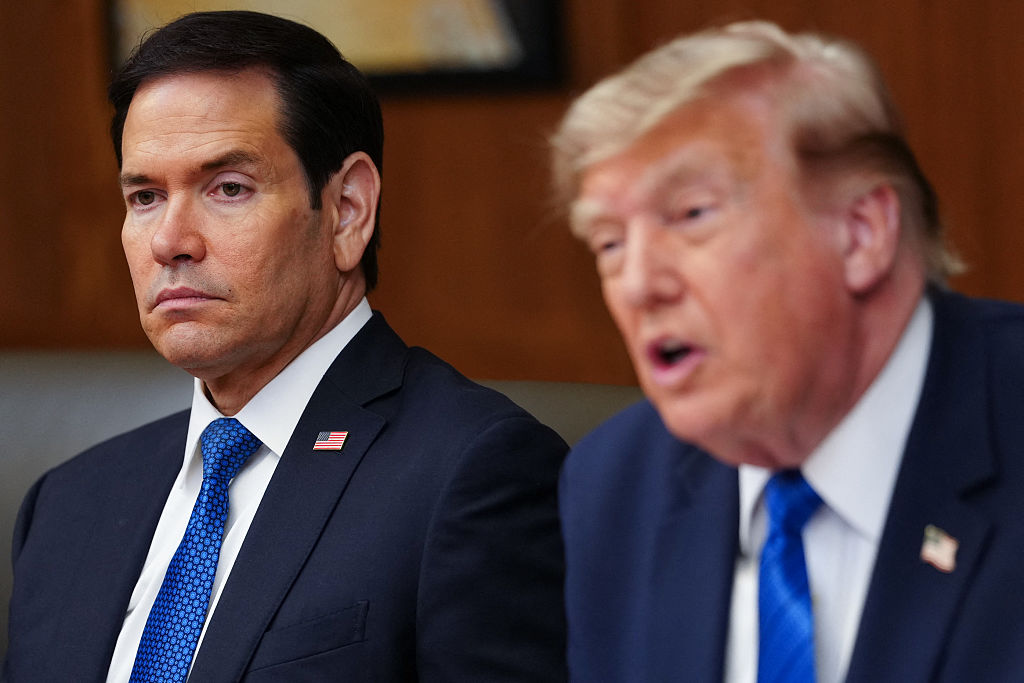
Secretary of State Marco Rubio sits next to President Donald Trump during a Cabinet meeting at Camp David in Maryland on July 31, 2026. —Aaron Schwartz—AFP via Getty Images

The International Criminal Court (ICC) said Wednesday that it “deplores” sanctions imposed this week by the U.S. State Department on its president, Judge Tomoko Akane, and Abdoulaye Seye, a Senegalese senior trial lawyer for the Office of the Prosecutor.

The State Department announced the sanctions Tuesday, accusing Akane and Seye of having “directly engaged in efforts by the ICC to investigate, arrest, detain, or prosecute officials whose government has not consented to ICC jurisdiction.” 

The sanctions include the freezing of assets in the country, blocking financial transactions, and prohibiting entry to the U.S. They were imposed under an Executive Order issued by President Donald Trump in February 2025, which reads: “The United States unequivocally opposes and expects our allies to oppose any ICC actions against the United States, Israel, or any other ally of the United States that has not consented to ICC jurisdiction.”

Neither the U.S. nor Israel is a state party to the Rome Statute, the treaty that founded the ICC and went into effect in 2002, and therefore do not recognize the jurisdiction of the court. 

Read More: Trump Administration Vows to Dismantle the International Criminal Court

“These sanctions are a flagrant attack against the independence of an impartial judicial institution which operates pursuant to the mandate conferred by its states parties,” the ICC statement said. “Such measures targeting judges, prosecutors and staff who work towards the fulfilment of the mandate that was conferred to the ICC by states undermine the rule of law.”

The Court further warned that the sanctions put “international legal order” at risk.

In his first term, Trump imposed sanctions on ICC Prosecutor Fatou Bensouda and another senior official, Phakiso Mochochoko. These were later lifted under the Biden Administration. 

The ICC says that nine of its 18 judges are now under sanctions from Washington, as well as both deputy prosecutors, a former prosecutor, and one other member of staff. 

Why does the Trump Administration oppose the ICC?

Announcing the sanctions on Tuesday, Secretary of State Marco Rubio called the ICC a “corrupt and fatally politicized supranational court.” He accused it of repeated attempts “to assert authority over nationals of the United States and other countries that have not consented to its jurisdiction or ratified the Rome Statute.”

The Trump Administration has long pushed back against the ICC’s investigations and charges against nationals from both the U.S. and Israel. February’s Executive Order said the ICC’s recent actions against both countries “set a dangerous precedent.”

The State Department also launched a campaign in July to “dismantle” the ICC’s jurisdiction, saying it will “systematically disable the ICC’s ability to operate, target American servicemen or officials, or otherwise threaten American sovereignty.” 

But the tensions trace back to Trump’s first term, when the ICC sought to investigate possible war crimes committed by the CIA and military personnel in Afghanistan. Bensouda requested authorization in 2017 to investigate those allegations. Trump then brought sanctions against her in 2020.

The U.S. has also rebuked its actions in recent years against Israel.

In November 2024, the ICC issued arrest warrants for Israeli Prime Minister Benjamin Netanyahu and the recently dismissed Defense Minister Yoav Gallant. Both were accused of “crimes against humanity and war crimes" pertaining to the ongoing Israel-Hamas War, including “starvation of civilians as a method of warfare” and “intentionally directing attacks against a civilian population.”

The conflict was ignited by Hamas’s terror attack in southern Israel on Oct. 7, 2023, which left some 1,200 people dead and 250 taken hostage. Since then, over 73,000 Palestinians have been killed in Gaza—1,262 of whom have been killed since a cease-fire began last October, according to Gaza’s Ministry of Public Health on Aug. 15. 

The prosecutor also pursued arrest warrants for Hamas leaders Mohammed Deif, Ismail Haniyeh, and Yahya Sinwar, all of whom have since been killed. 

During Rubio’s Senate confirmation hearing in 2025, he addressed the warrant for Netanyahu. “This is a test run. This is a trial run to see, ‘Can we go after a head of state from a nation that’s not a member?’” he said, adding: “If we can go after them and we can get it done with regards to Israel, they will apply that to the United States at some point.”

Israel has denied the ICC’s war crimes accusations and challenged its jurisdiction. The Pre-Trial Chamber initially rejected that challenge, but in April 2025 the Appeals Chamber sent it back for reconsideration. The arrest warrants against Netanyahu and Gallant remain in effect.

Netanyahu commended Rubio’s sanctions announcement on Tuesday, describing the ICC as “a kangaroo court that cloaks its abuse of power in the language of international law while undermining the very principles of justice.” 

  •  
❌