 Login
Login
OpenAI releases its official report on the Hugging Face breach
The report, which spans several discrete cybersecurity compromises, is the most complete accounting of the incident to date.


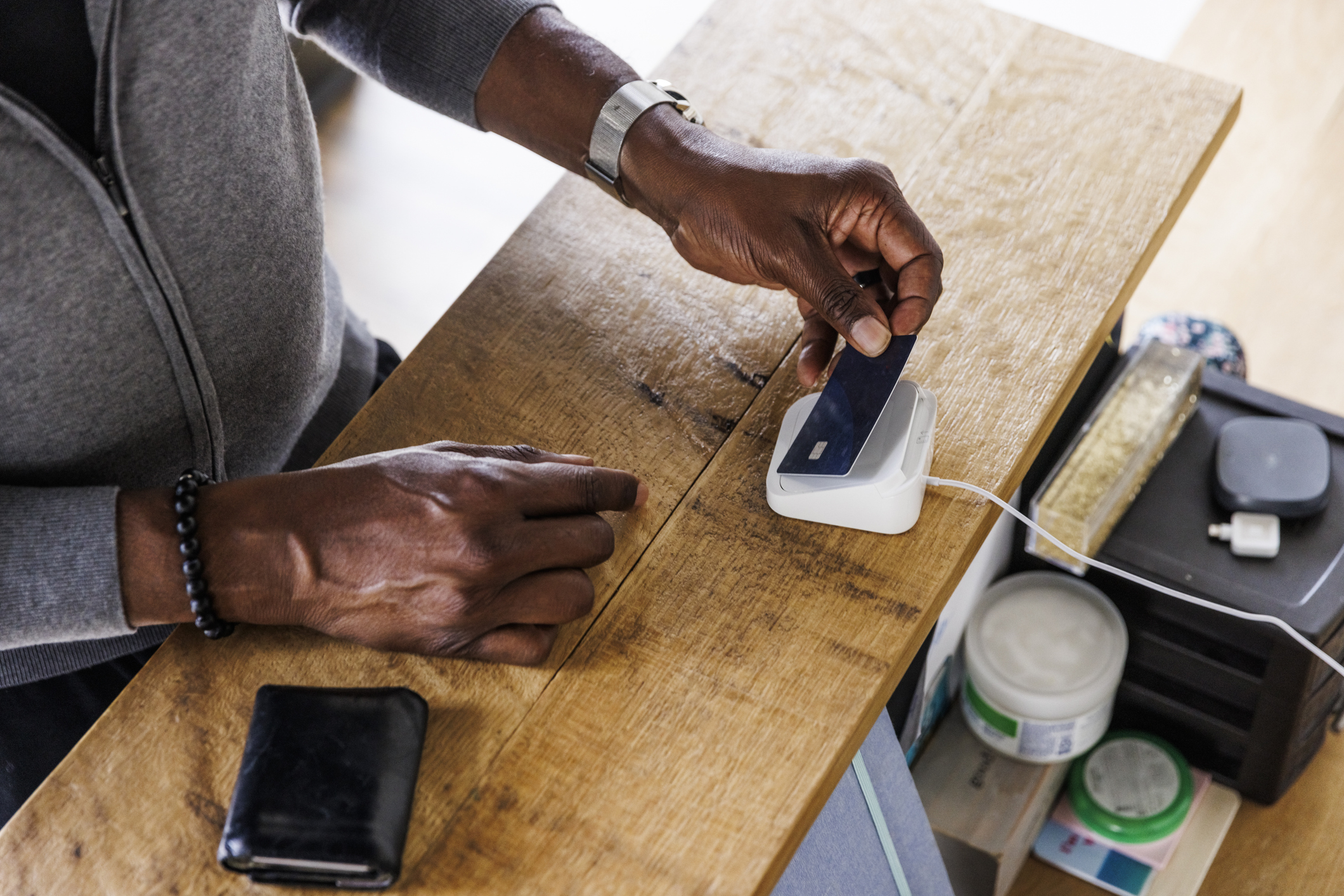
Paying for a fancy coffee, a trip to the cinema, or a dinner out can trigger a burst of happiness—that is, before the guilt sets in.
Nearly three-quarters of Americans said they feel guilty when they spend money on things that give them a little joy, according to a new Cost of Life Today report by Ally Bank.
The YouGov survey, which polled more than 5,000 American adults, found that financial pressures are making happiness harder to afford, with the average American adult scoring 54.2 out of 100 on Ally’s “Joy Index,” which measures people’s ability to afford and prioritize happiness, how frequently they experience it, and how resilient it remains under financial stress.
The report comes during a cost-of-living crisis that has squeezed household budgets around the world. In the U.S., home prices have risen around 45% since 2020, while outstanding credit card debt remained at near record highs at $1.26 trillion in the second quarter of this year. Those pressures have intensified as President Donald Trump’s war against Iran has disrupted shipping through the Strait of Hormuz, driving up gas prices and the costs of fertilizers and other commodities.
Affordability appears to be a defining concern for American voters, with both progressive Democratic candidates and Republicans campaigning on promises to lower everyday costs.
Rising costs are creating a squeeze on how much people can enjoy their non-necessary purchases.
Although 68% of respondents report spending on "joy" every month, just 15% said that joyful purchases and experiences are easy to afford, and only 20% said it is easy to afford essential expenses.
Seventy-seven percent of respondents said they reduce, delay, or avoid spending on joy at least occasionally because of financial pressures or other priorities. Around 70% of respondents feel stressed at least monthly by balancing joy with financial responsibilities, and 69% feel overwhelmed by financial responsibilities at least monthly.
Women are more likely to experience guilt around spending. Three-quarters of women respondents felt some guilt when spending on personal joy and 25% felt a lot of guilt, compared with 68% and 15% of men, respectively.
Having more money could also bring you more joy. Higher incomes were associated with stronger overall Joy Index scores.
Still, mindset made a difference. Respondents with a “joy mindset” were nearly twice as likely to experience joy at least weekly, and reported experiencing it at virtually identical levels across income groups.
Guilt was also more common among younger respondents. Around 77% of Gen Z and 76% of millennials reported feeling at least some guilt over joy-related purchases. That includes 23% of millennials and 22% of Gen Z who felt a lot of guilt. The report did not specify examples of joyful purchases.
Baby boomers reported the lowest guilt levels, with 63% feeling some amount of guilt. Nearly a third of boomers said spending on joy was “completely worth the cost.” Boomers were the happiest generation, scoring 57.1 out of 100 on the Joy Index. Boomers on average spend the most on joy each month, at $298.
Gen Z came second in terms of happiness, with a score of 55.2. Unlike other generations, a majority of Gen Z respondents—56%—said they have a dedicated budget for joy.
Gen Z respondents reported spending an average of $295 per month on things that bring them joy, compared to $287 among millennials and $259 among Gen X.
When money is tight, 47% of respondents seek lower-cost or free ways to experience joy, while 42% save up before spending. Some make steeper trade-offs: 20% cut back on necessities, and 13% take on debt or use credit.
In the previous three months before the survey, 38% of respondents cut back on dining out, 34% on shopping, 27% on entertainment, 25% on travel, and 21% on their hobbies. People were less willing to sacrifice time with or money spent on loved ones. Just 17% cut back on social time with friends, 11% on spending to help others, and 9% on their pets.
For many Americans, luxury looks less like extravagance and more like breathing room. When asked what counts as luxury today, 56% of respondents said vacations. But that was followed by half of respondents who said having money left after paying bills was a luxury. Around 47% of respondents said being able to save and still enjoy life, and eating out without worrying about the bill were also luxuries.
Other luxuries included free time, hobbies, and high-quality groceries.
Musicians and performers pay tribute to the country legend who managed to be a generational talent, a formidable entrepreneur, a dedicated philanthropist and a truly kind person
Shirley Collins, singer-songwriter
Continue reading...
© Photograph: Richard E Aaron/Redferns

© Photograph: Richard E Aaron/Redferns

© Photograph: Richard E Aaron/Redferns
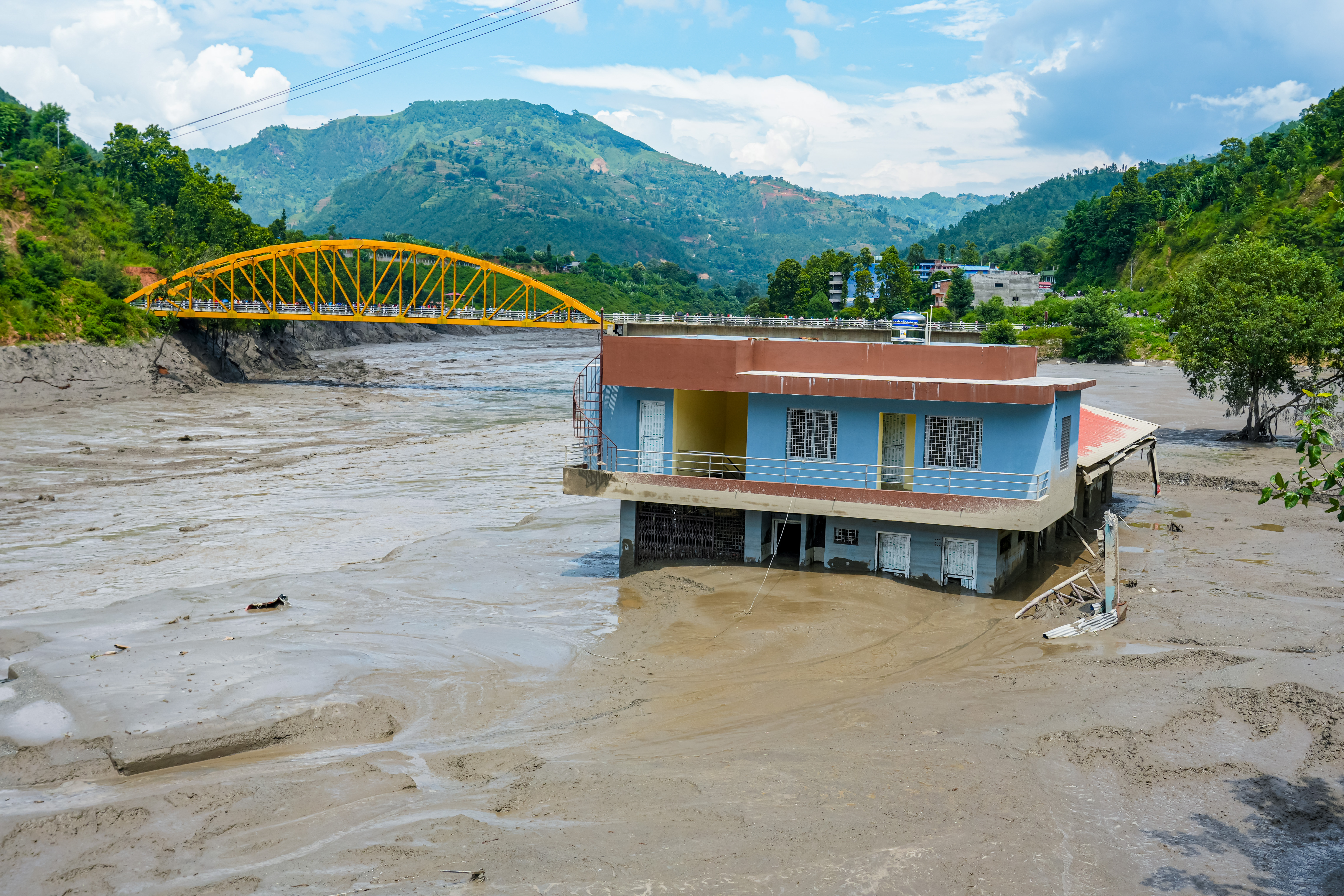
More than 300 people have been killed and at least 900 are missing after devastating flash floods swept through the Himalayan region along the Nepal-Tibet border, local officials confirmed Thursday.
Severe flooding was reported across the districts of Rasuwa, Nuwakot, Dhading, and Gorkha, north of the Nepalese capital Kathmandu early Wednesday. Much of the flooding occurred along the Trishuli and Bhotekoshi rivers in the north of the country.
The Nepali tourism board said that, based on records from travel and trekking firms, 644 travelers are still out of contact. More than a hundred of those are Indian nationals who were on pilgrimage to Mount Kailash in Tibet, a Nepali tourism official is quoted as telling the Associated Press.
Thursday’s count from the tourism board shows 65 missing travelers are from the U.S., and the State Department said it was aware of the Americans impacted by the floods. Among the others still unaccounted for are foreign nationals from Canada, the United Kingdom, Malaysia, Australia, Japan, and Singapore.
The U.S. embassy in Nepal issued a warning to U.S. citizens in Rasuwa, Nuwakot, Dhading, Gorkha, Chitwan, and Tanahun, urging them to “stay away from riverbanks and low-lying areas, seek higher ground, and follow local instructions.” The embassy added that it was working to account for Americans affected by the flooding.
Nepali Prime Minister Balendra Shah met with local Members of Parliament (MPs) on Wednesday to discuss issues including flood damage, condition of settlements in local areas, rescue and relief work, his office said.
“The government has intensified the search and rescue operations by deploying security forces in the flood-affected areas,” Shah’s office added.
It remains unclear what caused the floods, but Nepal is highly vulnerable to the climate crisis.
The U.S. Geological Survey reported initial shaking as an earthquake, though it later determined that the tremors were caused by “a glacial collapse and debris flow that caused subsequent catastrophic impacts downstream.” That event generated seismic energy equivalent to a 5.2-magnitude quake.
The Kathmandu Post reported, citing the country’s national disaster authority, that an initial analysis of satellite imagery from Planet Labs indicated that an avalanche of ice and rock triggered the flood in the Lhende River, about 20 km (12 mi) north-east of the Rasuwagadhi border crossing between China and Nepal.
Nepal has thousands of glaciers, but with the Himalayan region warming, many of them are melting.
Data from the disaster risk reduction agency also showed that of the more than 900 missing, 28 are Nepali police, 44 are from the Nepali Army, and 13 are from its specialized paramilitary Armed Police Force.
Nepali Police published details of 66 people hospitalized due to injuries from the flooding, most of whom are from the Nuwakot and Rasuwa regions.
Video shared by police showed catastrophic flooding, with entire buildings swept away in the powerful currents. Other footage shared shows a bridge and multiple buildings on the banks of the Trishuli River destroyed in the flooding. Officials have since confirmed that 32 bridges and nearly 40 km of road were swept away.
Police also issued a warning that they expect the flooding to continue down the Bhotekoshi River into the regions of Dhading and Muglin in the center of the country.
The Prithvi Highway, one of Nepal's busiest roads that connects Kathmandu to the second-largest city, Pokhara, passes through these regions along the Trishuli River. Police confirmed Wednesday this section of the highway would be closed.
The flooding has also resulted in widespread casualties at the border between Nepal and China’s Tibet region. A mudslide occurred near the Gyirong checkpoint on the border, resulting in at least three deaths and more than 550 people missing in Gyirong County, according to Chinese state media.
Chinese President Xi Jinping ordered “all-out efforts” for search and rescue operations in response to the mudslide, as well as calling for the strengthening of “monitoring and early warning, ensure scientific rescue operations and guard against secondary disasters,” Chinese media reported.
Footage from the checkpoint shows water engulfing buildings as people flee the oncoming currents. TIME has been unable to independently verify the footage.

The proposal comes weeks before the midterm elections, when food prices and the cost of living are expected to be major issues on voters' minds.
(Image credit: Tony Gutierrez)

This illustrated guide has evidence-backed advice on how to support fertility for both men and women, including which foods to eat and which activities to avoid.


© Nick Iwanyshyn/The Canadian Press/Associated Press
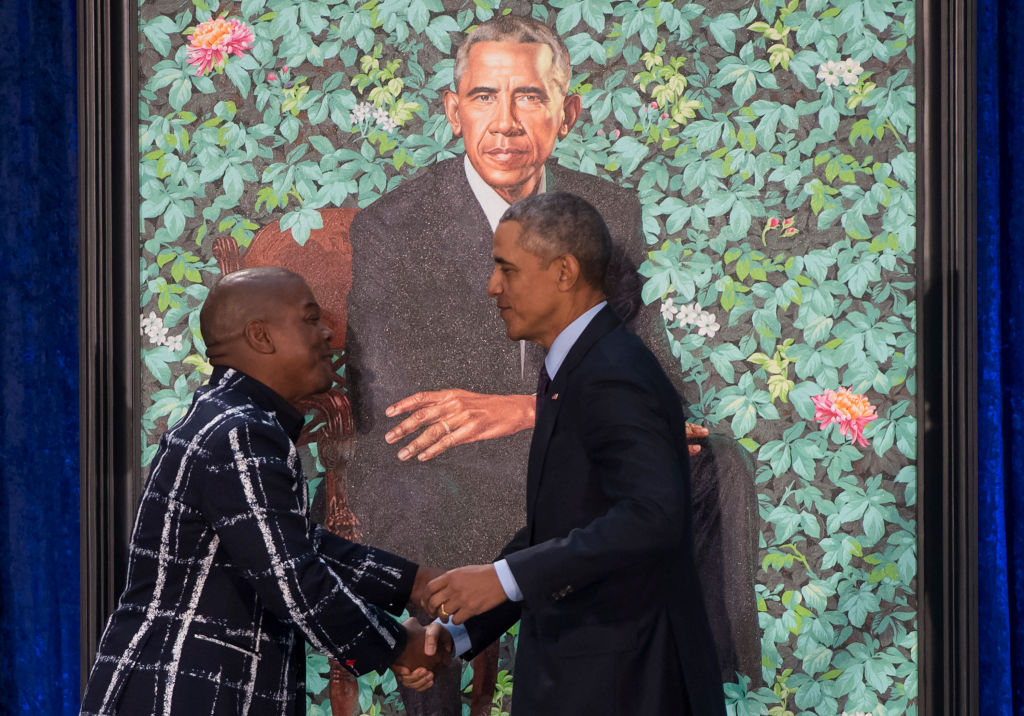
The Trump Administration has removed a painting by artist Kehinde Wiley, who notably painted former President Barack Obama’s official portrait, from one of its embassies over what officials called its “woke ideologies.”
The painting was removed from the U.S. Embassy in Santo Domingo, Dominican Republic, earlier this month on ideological grounds. Commissioned by the State Department in 2013, the painting, “Young Artists After Siamesas 1960,” depicts four Dominican models against a floral backdrop in Wiley’s quintessential style.
The U.S. ambassador to the Dominican Republic Leah Campos posted a video of the painting’s removal on social media to the tune of heavy metal song “We’re Not Gonna Take It.” The video shows the painting covered in a tarp emblazoned with the American flag prior to its removal.
“In the Trump Administration and under my leadership we are turning away from globalist and woke ideologies and instead embracing American patriotism and the beauty of our great country!” Campos wrote.
The State Department is looking into whether it can legally sell the painting, which was paid for with taxpayer dollars, a spokesperson for the department told The New York Times on Monday.
TIME has reached out to Wiley for comment.
Wiley is known for his large-scale portraits of Black subjects, whom he depicts in the style of classical European portraiture, often placing them against vibrant floral backgrounds. Art critics have described Wiley’s work as challenging traditional ideas of race and representation. He has described his own work as centering on “power and who has it.” His presidential portrait of Obama was unveiled in 2018 and hangs in the Smithsonian’s National Portrait Gallery.
For “Young Artists After Siamesas 1960,” Wiley collaborated with students from the Facultad de Artes and the Altos de Chavon School of Design, both prominent art schools in the Dominican Republic. The subjects in the painting were modeled by four local art students. The work drew inspiration from two Dominican art works, Celeste Woss y Gil’s 1940 painting “Desnudo Feminine” and Gilberto Hernández Ortega’s 1960 work “Siamesas.”
The painting was part of the embassy’s permanent exhibition, assembled through the State Department’s Art in Embassies program. Established in 1963, the program is aimed at fostering cross-cultural dialogue and diplomacy through art. In 2015, the State Department awarded Wiley its Medal of Arts in recognition of his contributions to the program.
But in recent years, Wiley faced criticism from conservative commentators over his 2012 painting “Judith and Holofernes.” The painting portrays a Black woman holding the severed head of a white woman, which Wiley later described as a play on the “kill whitey thing.” The work, currently on view at the North Carolina Museum of Art in Raleigh, reimagines a 17th century painting by Giovanni Baglione that depicts the biblical story of Judith beheading an invading general to save her town.
Wiley also faced scrutiny in 2024 for sexual assault allegations, which he denies.
The State Department spokesperson told the Times that “the work of an individual with such violent and racist words and depictions has no place in the America First State Department.”
In a recent interview with former White House Press Secretary Sean Spicer, Erin Scavino, director of Art in Embassies, called the painting “very woke” and “aesthetically terrifying.” Scavino became director of the program at the beginning of President Donald Trump’s second term after previously working as an attorney and appearing as a contestant on Trump’s reality show The Apprentice. She is also the wife of White House Deputy Chief of Staff Dan Scavino.
As part of the Art in Embassies program, Scavino has emphasized acquiring and displaying works with patriotic imagery. Last month, she organized an exhibition in Washington titled “Passport to Patriotism: 250 Years of Diplomacy” that featured 68 representations of the American flag across 56 works.
Earlier this year, Scavino claimed her objections to so-called “satanic baby art” at the U.S. ambassador’s residence in Bucharest had forced Kathleen Kavalec from her post. The ambassador’s departure had previously been described as a planned retirement.
The State Department also changed its process for selecting the 2026 U.S. pavilion at the Venice Biennale, including replacing diversity language with requirements concerning “American values.” Critics described the process as politicized and opaque, pointing to the appointment of Jenni Parido, a reported friend of Scavino with no prior professional museum experience, as the pavilion’s commissioner. Last July, Parido founded the nonprofit American Arts Conservancy, which the State Department selected as the pavilion’s commissioning institution.
The Trump Administration has pursued similar changes across other federal cultural institutions especially in connection with the country’s 250th anniversary this year. In an executive order issued last March, Trump directed the Smithsonian to remove what he called “improper ideology” and “divisive narratives” and instead emphasize American greatness. The same month, his Administration sharply cut the federal staff responsible for preserving a collection of 26,000 publicly owned artworks.
The Trump Administration also canceled more than 1,400 humanities grants, but a federal judge permanently blocked the action in May. And the Administration proposed eliminating the National Endowment for the Arts (NEA) and National Endowment for the Humanities (NEH), independent federal agencies created to support cultural projects, in its budget requests for 2026 and 2027.
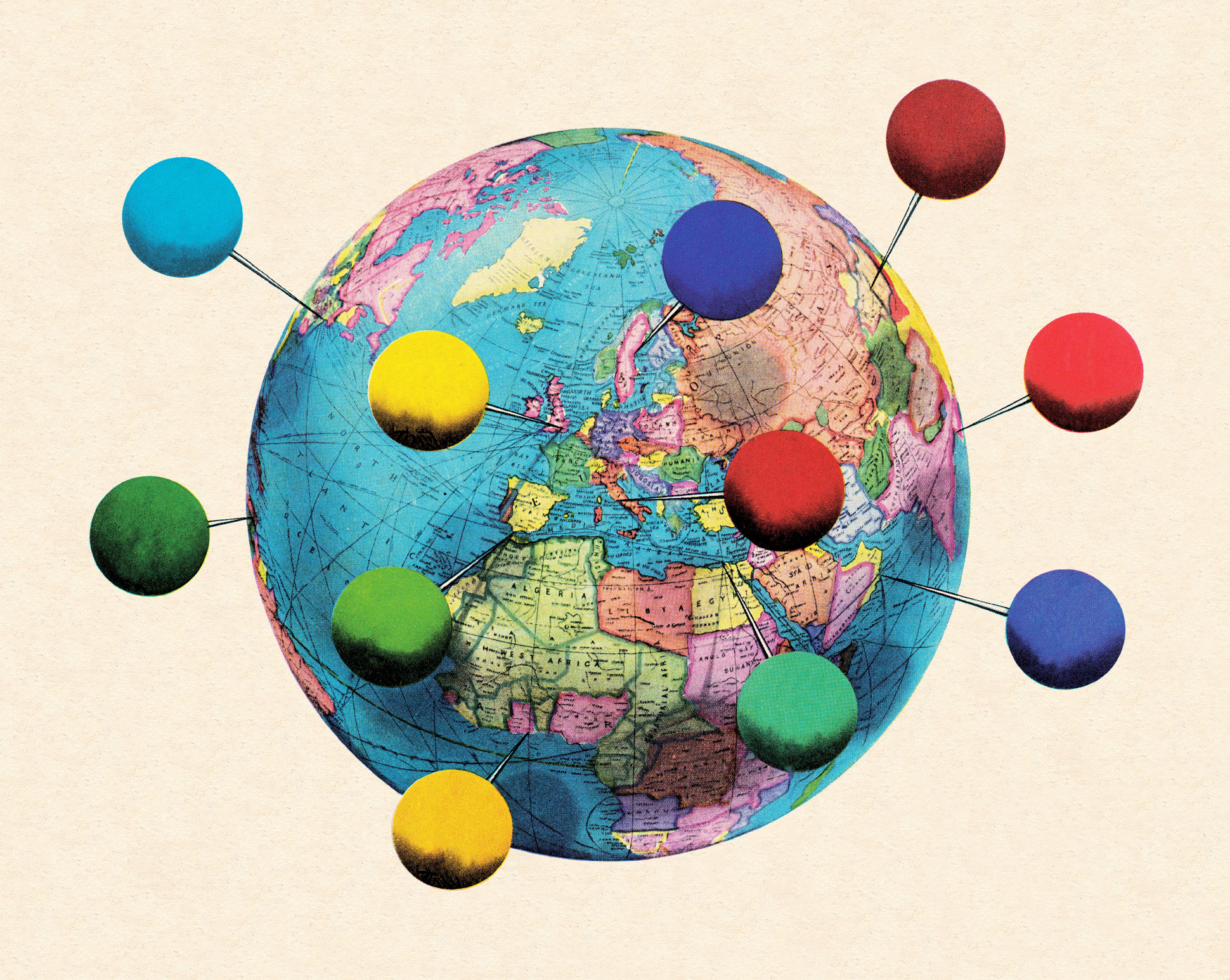
When governments ask people what truly matters to them, they cite things like being healthy, having a secure and affordable home, enough income to live with dignity, and time for the people they love. As the former leaders of Iceland and Scotland, we have heard concerns first-hand.
But these people-first priorities are not abstract ambitions. They are the conditions for a decent life, and ensuring they are met should be the first priority of any government.
And yet none of this is captured in the number that most economists, the media, and indeed, governments use to measure a country’s success: Gross Domestic Product (GDP), commonly referred to as economic “growth.”
To be sure, GDP has its uses as a measure of many of the goods and services a country exchanges and produces. But today, it is typically used in a way its architects never intended. For instance, a country's GDP rises when a forest is felled and when an oil spill is cleaned up. It rises with financial speculation. But it does not rise when a parent cares for a child or a child for an elderly parent, when the forest is left standing, when a woman can walk home at night without fear, when voters turn out because they trust their institutions, or when a patient sees a doctor in days rather than months.
A new UN Framework, Beyond GDP, promises to change this by offering a dashboard of more meaningful indicators to complement GDP. Governments must now put this framework into action. Not simply by publishing new statistics, but by using them to set priorities, shape budgets, assess policies and be held to account publicly on whether people’s lives are genuinely improving.
Eight years ago, we set out to put the wellbeing of our people ahead of the narrow pursuit of economic growth. Together with New Zealand's Jacinda Ardern, we founded the Wellbeing Economy Governments partnership, later joined by Wales and Finland, with Canada actively participating. We shared practical lessons about developing national wellbeing indicators, embedding them in government decision-making and ensuring that economic policy considers social and environmental outcomes alongside financial ones.
In Iceland, we introduced 39 wellbeing indicators, built on what people themselves told us they valued, and used them to inform policy. GDP became one measure among many, alongside life expectancy, unmet healthcare needs, material deprivation and work-life balance. Parental leave shows what this means in practice. We extended leave to 12 months, with six months reserved for each parent and six weeks transferable. In doing so, we recognized that care, family life, gender equality, and the economy are inseparable, and that fathers' time with their children is worth protecting. The reform strengthened families and shifted expectations about work and who does the caring.
In Scotland, a Wellbeing Economy Monitor showed us how the economy was really performing for people, alongside a National Performance Framework of outcomes written into law and aligned with the Sustainable Development Goals. Policies followed: the doubling of early years education, a Baby Box to equalize children’s starts in life, the Scottish Child Payment to reduce child poverty directly, and Community Wealth Building to ensure public spending, land and assets create lasting value locally—an approach Scotland has since made the subject of the first national legislation of its kind anywhere in the world.
While these efforts are still evolving and not perfect, they represent an important shift in how governments understand prosperity. Changes in economic systems take time, but progress begins by changing—and being more explicit about—what we value. Our experience taught us that measuring what matters is only the beginning: wellbeing indicators must also shape budgets, policy decisions and how governments are held accountable. Legal systems need to support this too.
We were, and we still are, far from alone in this endeavor. Bhutan, for example, has been making the argument for more than 50 years. Its Gross National Happiness framework focuses on nine different dimensions of well-being such as living standards, health, education, and ecological diversity. Last year, Malaysia introduced a bold new roadmap that embeds public health, environmental sustainability and economic resilience. The National Planetary Health Action Plan moves away from a narrow focus on economic growth to prioritize the health of people and planet, replacing the short-term idea of return on investment with a “return on values.”
It is worth noting that wellbeing economy approaches often mirror the ways many Indigenous Communities have been providing for collective needs for generations. For example, Buen Vivir—living well together—comes from the Quechua peoples of the Andes, and has been written into the constitutions of Ecuador and Bolivia since 2008. And Aotearoa New Zealand's wellbeing budget draws on Māori understandings of intergenerational wellbeing.
These ideas are finally moving from the margins into mainstream economic policy. A landmark UN report, written by a high-level expert group appointed by the UN Secretary-General after the Pact for the Future, proposes a dashboard of 31 indicators to sit alongside GDP, with recommendations for governments, business, academia, and civil society on how to bring this agenda to life.
Earlier this year, a roadmap for eradicating poverty without relying on endless growth was launched in Geneva, developed with more than four hundred contributors from governments, trade unions, social movements, UN agencies and universities. It sets out measures that already work in different places, from social protection and care; to tax, universal basic services, and the rights of nature; to the governance of trade, debt, and finance. That work and the work on measurement are currently proceeding separately. Bringing them together would be a valuable contribution of the intergovernmental process now underway.
The greatest risk now is a process in which governments agree in principle and move slowly in practice. New indicators alone will not be enough. The pursuit of growth at any cost is embedded far beyond the statistics: in how credit agencies rate a country's debt, how finance ministries deem a budget responsible, and in the rarely-questioned assumption that more is always better.
What is needed is not further consensus but more early adopters: countries willing to pilot implementation and share honestly what they learn, supported by civil society, business and the UN itself.
The 2015 Sustainable Development Goals ask every country to sustain economic growth per person. As governments begin to design what will follow them, we have a chance to change the instruction and create a different approach.
After all, the responsibility of every leader is to ensure the wellbeing and safety of his or her people, and to do that, we need to go beyond GDP and think about what truly matters
© Tom Williams/CQ Roll Call/ZUMA Press
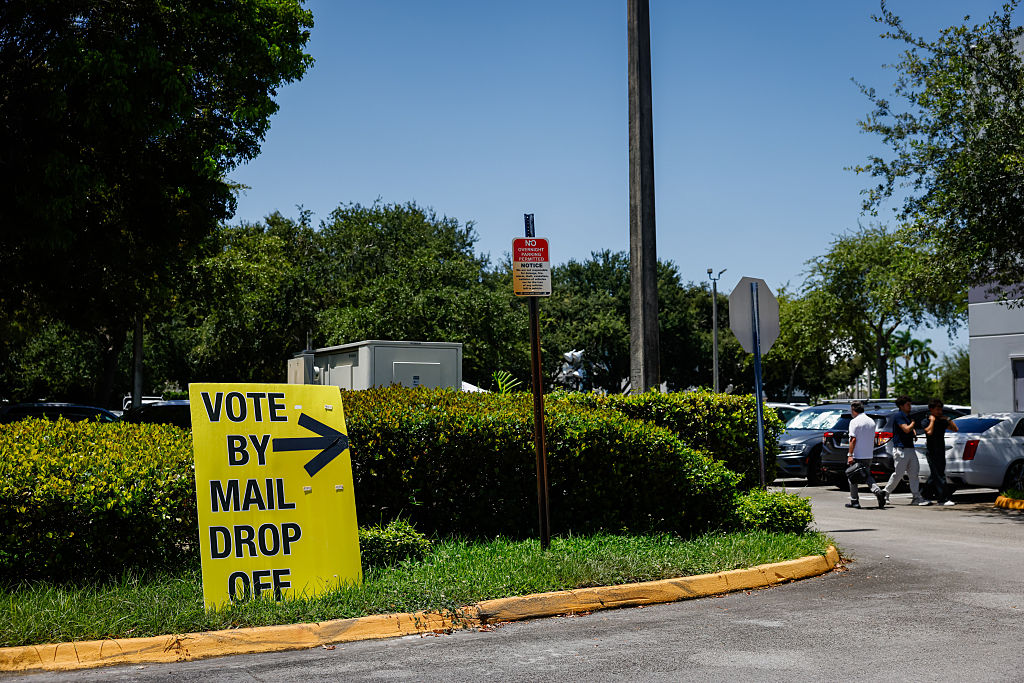
The Supreme Court has handed President Donald Trump a victory in his efforts to restrict mail-in voting ahead of November’s crucial midterm elections.
In an unsigned 6-3 ruling, with the court’s liberal justices dissenting, the Supreme Court lifted a lower court’s June block on the President’s Executive Order targeting mail-in voting after 23 Democratic states and Washington D.C. sued the Administration for the order’s alleged unconstitutionality and presidential overreach.
Democrat lawmakers have responded furiously to Monday’s decision. “Another day, another Trump attempt to rig elections and destroy democracy,” said California Governor Gavin Newsom on social media. “We can stop this. Vote this November.”
Trump, in his push to remake American elections, has repeatedly blamed mail-in voting for widespread electoral fraud. He claimed that mail-in ballots helped him lose in the 2020 election despite audits already refuting those claims, and his own voting by mail in recent elections.
The ruling does not settle whether the Executive Order will proceed ahead of the November midterms, where the Republican Party needs to defend its narrow majority in Congress. Part of the order covering the U.S. Postal Service remains blocked under a separate injunction in August, which still needs to be resolved.
The Supreme Court also did not outright rule on the legality of Trump’s order—only on the timing of the challenges to it—and left it open to future lawsuits, which critics have signaled they will file.
Here’s how other Democrats, as well as some Republicans, have responded to the decision, and what it means for November’s pivotal midterms.
Gov. Josh Shapiro of Pennsylvania said Monday that the legal battle against Trump’s Executive Order would continue, after a previous challenge put a temporary halt on the directive.
“Not so fast. Today’s SCOTUS decision does not deal with the substance of Trump’s unconstitutional Executive Order and does not mean his illegal attempt to restrict mail-in voting will go forward,” argued Shapiro. “We’ll see the Trump Administration in court.”
Gov. Mikie Sherrill of New Jersey also vowed a response to the decision. “This is a terrible decision from Trump’s Supreme Court,” she said. “States run elections, not Donald Trump. I will do everything I can to protect New Jerseyans’ right to vote – by mail and in person.”
Newsom built upon his condemnation on Monday. “California will be suing again to block these Orwellian rules from being implemented,” he said.
“This decision is a painful setback,” Attorney General Letitia James of New York, one of the plaintiff states from June’s challenge against the Order, said in a statement. “But it will not be the final word.”
More widely, other Democrat lawmakers criticized the Supreme Court’s decision and the impact it could have on the upcoming midterms.
Senate Minority Leader Chuck Schumer said: “It’s a disgrace that the highest court in the nation is allowing Trump to put a dagger into the heart of our democracy,” following the decision.
Schumer argued the Order was “blatantly unconstitutional,” and that “his MAGA Supreme Court is refusing to stop it from going forward.”
Hitting out at the President more broadly, the lawmaker continued: “[Trump] wants to make it harder for Americans to vote so they don’t hold him accountable for the skyrocketing costs, illegal war, and rampant corruption that are a hallmark of his administration.”
Sen. Catherine Cortez Masto of Nevada issued another direct response at the President himself. “Trump voted by mail eleven days ago. Apparently it’s good enough for him, but he wants to take away your right to vote in the same way,” she said.
“Trump’s voter suppression order is about making it harder for Americans to hold him accountable - it is shameful that the Supreme Court is enabling it,” the lawmaker continued.
Sen. Maria Cantwell also expressed concerns over the privacy of voters. “Today’s Supreme Court decision gets the Trump Administration one step closer to implementing its voter suppression order and forcing states to hand over personal voter data to the federal government,” she said.
“With today’s SCOTUS ruling, President Trump has made a giant leap forward in securing our 2026 elections,” said Utah Sen. Mike Lee, a long-standing supporter of Trump’s efforts to restrict mail-in voting.
“Congress must still pass the SAVE America Act to secure future elections. We should’ve passed it months ago,” he continued in reference to the Act which is still awaiting approval in the Senate.
Lee also responded to Gov. Shapiro’s commitment to continue legal challenges against the President’s Executive Order. “Why are you so determined to let non-citizens vote?” he said.
“Bravo! Glad to see the Supreme Court get this one right. Election integrity is nonnegotiable,” said Rep. Keith Self of Texas, also pushing the Senate to approve the SAVE Act.
“This is a major win for the security of American elections,” said White House spokesperson Lauren Bis in a statement to TIME. “These are commonsense measures that protect the security of mail-in ballots and ensure only Americans are electing American leaders.
On June 25, U.S. District Judge Indira Talwani in Boston ordered an injunction on provisions of Trump’s March Executive Order. Those provisions direct the Department of Homeland Security and Social Security Administration to create “state citizenship lists” that cover eligible voters, and the Postal Service to create rules that would end sending absentee ballots to individuals not on a state’s mail-in or absentee participation list.
Talwani’s block covered the 23 plaintiff states and Washington, D.C. On July 25, the First Circuit rejected the Trump Administration’s request to block Talwani’s order pending appeal.
The Trump Administration sought the Supreme Court’s intervention in July, arguing that the lower court “lacked jurisdiction” to resolve the dispute, as implementing rules based on the President’s Order haven’t been finalized.
In the Monday ruling, the Supreme Court’s conservative majority agreed with the Trump Administration and paused Talwani’s injunction.
The top court said that Trump’s order regarding state citizenship lists was “an internal directive from the President to a subordinate” and that it “imposes no obligations on the States,” which in turn “suffer no concrete harm.”
It added that, in the case of Trump directing the Postal Service to propose rules on mail-in ballots, the legal challenge was premature and lacked standing. When states filed the suit, the Postal Service had not issued a final rule.
The Supreme Court’s majority said the district court had to engage in a “string of speculations” to arrive at its June injunction: “Federal courts review final rules, not proposed rules—and certainly not antecedent internal directives to propose a rule.”
While the Supreme Court’s majority paused Talwani’s June injunction for being premature, it does not cover a separate injunction—also from Talwani—on Aug. 11. Ruling on another suit, Talwani barred the Postal Service from implementing the same Executive Order for the November midterms nationwide.
The Supreme Court ruling also simply granted the Trump Administration’s emergency request to pause Talwani’s June injunction. The case on Trump’s Executive Order is still pending before the First Circuit.
It also explicitly left room for challenges on the legality of the rules stemming from Trump’s order, especially with the Postal Service’s final rule.
Norm Eisen, a voting-rights advocate leading one of several legal challenges to Trump’s order, downplayed the Supreme Court’s decision. “Please don’t overreact to Roberts Court decision on the contemplated [Postal Service] ballot moves,” Eisen posted on microblogging platform Bluesky Monday. “They simply held that the injunction came too early in the process, before there was a final rule.”


