British actor and singer Tim Curry performing live in Canada in 1979. —Peter Noble—Redferns/Getty
Tim Curry, a multitalented star of the stage and screen, died Tuesday at his home at the age of 80. The three-time Tony Award-nominated icon was best known for his eccentric characters, his musical background, and his comedic chops, leading to a varied and successful career in cult classics and box office hits.
Curry “passed away peacefully at his home in Toluca Lake, Los Angeles,” according to a statement from his longtime manager Marcia Hurwitz. The cause of death has not been made public, but Curry had suffered from several health issues since having a severe stroke in 2012.
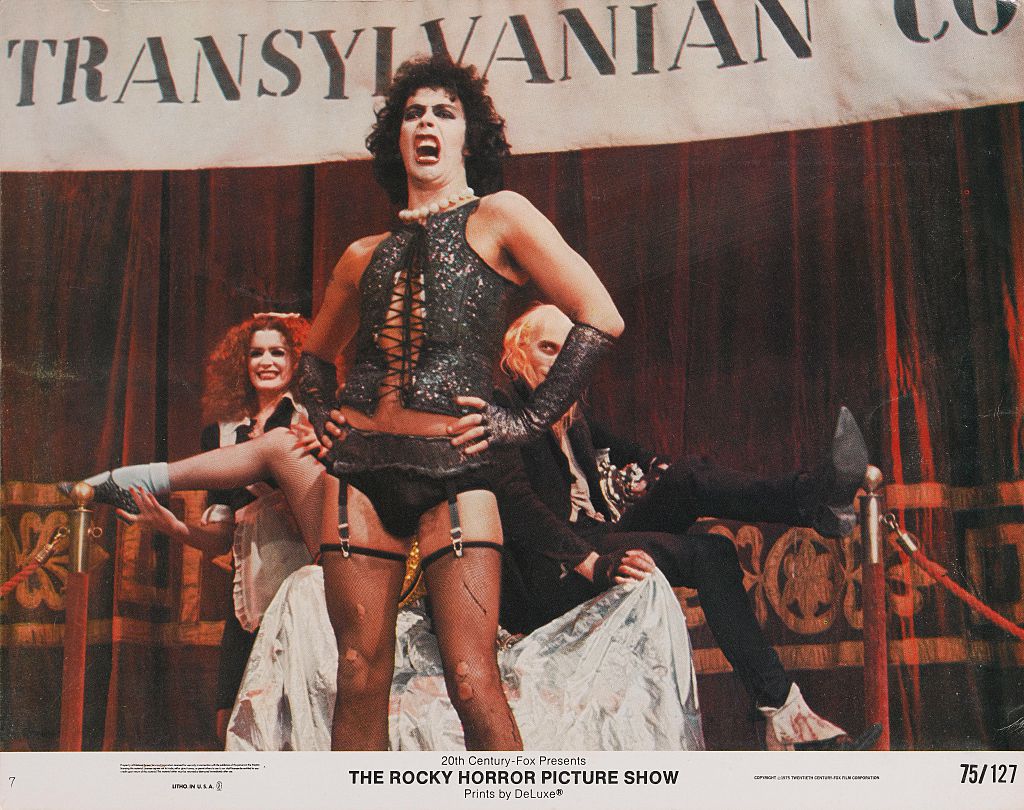
Though he was best-known for donning fishnets and a corset as Dr. Frank-N-Furter in 1975’s “Rocky Horror Picture Show,” Curry had left his mark with a wide-ranging career spanning albums, voice work, and more.
Here are a few of the roles that allow his unmistakable artistry to live on.
Tim Curry poses as Dr. Frank-N-Furter on a lobby card from the 1975 musical comedy "The Rocky Horror Picture Show," produced by 20th Century Fox. —Movie Poster Image Art/Getty Images
The Rocky Horror Picture Show
Curry rose to cult status after taking on the role of Dr. Frank-N-Furter, the “sweet transvestite from Transsexual, Transylvania,” in the stage version of The Rocky Horror Show in London in 1973. His fan base crossed the Atlantic when he came to the United States to reprise the role in Los Angeles in 1974, before transferring to Broadway, paving the way to the now-famous screen adaptation from 1975, The Rocky Horror Picture Show.
Reviews from New York were mixed—the TIME review said of the initial Broadway run that it was “not easy to see why this campy trash was a long-running hit in London and a smash success in Los Angeles.” But by 1985, TIME’s film reviewer recognized the movie as a “cross-generational phenomenon.”
Chicago Sun-Times critic Roger Ebert said that Curry was “the best thing in the movie, maybe because he seems to be having the most fun.”
Now, Rocky Horror is an interactive midnight movie phenomenon, with fans showing up to screenings nationwide in costume, shouting lines back at the screen, and singing along. The stage version was revived on Broadway in 2026.
Curry’s breakout role in musical theater helped launch his music career in the 1970s and 1980s. He released three albums: Read My Lips, Fearless, and Simplicity.
Annie
In 1982, Curry starred in another stage adaptation—this time playing sleazy con artist Rooster Hannigan in the hit movie Annie.
Acting alongside legends like Carol Burnett and Bernadette Peters, Curry cemented himself as a scheming villain, the type of role he would continue to play in movies like Home Alone 2, Muppet Treasure Island, and The Three Musketeers.
In a 2020 interview with Forbes, Curry reminisced on the experience: “Rooster was a hustler, and people love that kind of character,” he said. “He was a lot of fun.”
Clue
In the 1985 board game adaptation Clue, Curry played the energetic butler Wadsworth, where he showcased his physical comedy. One of the most memorable moments comes at the film’s end, when Wadsworth runs about the mansion, trying to summarize the night’s events and explain the identity of the killer.
Since his death, tributes from his Clue co-stars have poured in.
“What an unbelievable joy to have shared a sound stage with him and to engage with such a master talent,” Lesley Ann Warren, who played Miss Scarlet in the murder mystery movie, wrote. “I adored him.”
It
In 1990, Curry took on a more straightforward villain in the miniseries adaptation of Stephen King’s It. He starred as an ancient cosmic evil that took the form of a child-killing clown called Pennywise in the town of Derry, Maine.
His portrayal of Pennywise horrified a generation of children—without relying heavily on special effects or prosthetics. In a 1990 interview, Curry said he was trying to get in touch with the “human element” of the horror genre.
“We had a much more prosthetic version of this makeup, which was very scary-looking and beautifully executed but did too much work by itself,” he said. “And I personally think that what is most horrifying is the moment of decision behind somebody’s eyes when they decide to kill somebody—rather than a pint of blood and a pound-and-a-half of latex.”
Tim Curry stands onstage for the curtain call at the Broadway premiere of "Spamalot" in New York on March 17, 2005. —Stuart Ramson—AP
Other beloved roles
Beyond his most beloved roles, Curry had his fingerprints all over pop culture—in movies and television and on the stage.
His three Tony Award nominations came for his 1981 portrayal of Wolfgang Amadeus Mozart in the play Amadeus, his portrayal of King Arthur in the musical Monty Python’s Spamalot which debuted on Broadway in 2005, and the lead role of troubled movie star Alan Swann in the musical My Favorite Year in 1992
On the screen, Curry was also beloved as the nosy concierge in 1992’s Home Alone 2, where he is outsmarted by the film’s young protagonist, as well as for his immersive work alongside a cast of Muppets as Long John Silver in 1996’s Muppet Treasure Island. Both his penchant for camp and his undeniable vocal talent were highlighted in 1986’s The Worst Witch, where he played the menacing Halloween harbinger, Grand Wizard Egbert Hellibore.
Curry’s distinct theatrical voice also made him a top choice for voiceover work, where his prolific career spanned hundreds of animated series, audiobooks, and video games. After voicing Captain Hook in Peter Pan & the Pirates, he won a Daytime Emmy Award in 1991.
Minnesota officials believe Castro could flee to Mexico, citing calls he made from jail to a woman in Mexico, talking "about marrying her and buying a house in Mexico when he is released," according to the lawsuit.
—Photo-Illustration by TIME (Source Image: Hans Neleman—Getty Images)
There’s a healthy way to take a break during conflict. Asking for space—and specifying when the conversation will resume—can protect a relationship by giving both people time to calm down.
The silent treatment does the opposite. Withdrawing without explanation or a plan to reconnect just creates a new conflict, leaving the person on the receiving end scrambling to figure out what went wrong.
Yet not everyone who goes quiet is trying to inflict pain. Some people shut down because they’re overwhelmed and genuinely incapable of having a productive conversation. We asked experts how to figure out what’s behind the silent treatment—and what to do when someone stops speaking to you.
First, figure out what kind of silence you’re dealing with
A healthy cooling-off period and the silent treatment can look identical from the outside, says Rachel Needle, a psychologist in West Palm Beach, Fla. Both involve someone stepping away from a conversation. What changes the meaning of that silence is whether the person explains what's happening and offers some reassurance that the conversation isn't over. Most of all, it's whether they say when they'll be back.
Someone who’s emotionally flooded might say: “I need a little time to calm down before we keep talking. Can we pick this up tonight?” Doing so gives the silence a purpose and an endpoint, Needle says. If the person needs more time when the agreed-upon hour rolls around, they can say so and suggest another time.
That communication sends an important message, says Enid Wilson, a licensed marriage and family therapist in Sacramento: “I’m still in this relationship. I’m just taking a pause on this conversation because I need to take care of myself.” Walking away or refusing to respond leaves the other person wondering whether the conversation—or even the relationship—is over. The best version also comes with a timeframe.
People withdraw for all kinds of reasons. They might be afraid they’ll say something they regret or have learned to protect themselves by shutting down. Some people simply haven’t learned how to sit with difficult emotions or repair a disagreement, Needle says, so “silence really becomes a way to escape the discomfort, rather than having to deal with it and move through it.”
In other cases, silence is leverage. It creates uncertainty and pressures the recipient to apologize or back down. Sometimes that strategy is conscious, Needle says, and sometimes it isn't. Whatever's motivating the withdrawal, the impact on the other person can be similar. "It creates anxiety, rejection, uncertainty, and a sense of being shut out," she says.
Because it’s impossible to climb inside someone else’s head, focus on what can be observed. Did they say they needed space? Did they give some indication of when they’d return? Did they follow through—or at least check in to ask for more time? Then ask whether this is a rare rupture, or the way every disagreement ends.
Context matters, too. There's no universal number of hours that transforms a delayed response into the silent treatment. If two friends usually exchange a couple emails a month, a week of quiet probably doesn't mean much. If a partner who texts throughout the day suddenly disappears in the middle of a tense conversation, it might. Texting also strips out tone of voice and facial expression, the signals that make intent easier to interpret. "You just miss so many cues when you're not talking either on the phone or in person," Wilson says. That's why she encourages moving difficult conversations out of the text thread.
Send one clear message—and then stop chasing
When someone abruptly goes quiet, the goal is to respond without escalating the conflict while staying grounded in your own needs, Needle says. Start by calmly naming what you've observed: "I noticed that you've gone quiet. I want to understand what's going on, but I also don't want to push you if you need some space."
If the silence is unfolding over text, Wilson suggests a question instead of an accusation: "It seems like now isn't a good time to talk. Can we set a time for later tonight or sometime this week?" That gives the person room to respond while making it clear that disappearing indefinitely doesn't work for you.
Then resist the urge to send six more messages. "One of the biggest mistakes that people make is reacting to the anxiety that the silence is creating, instead of responding to the situation itself," Needle says. That anxiety might inspire repeated calls and demands to talk right now. It might inspire apologies for things you don't believe you did. Some people abandon their own needs simply to get the other person talking again; others retaliate with silence of their own.
Those reactions are understandable, but none are especially useful. Chasing might briefly relieve your distress if the person responds. But “in some cases, it can actually unintentionally reinforce an unhealthy dynamic by teaching both people that silence is what finally gets a response,” Needle says. Returning the silent treatment, meanwhile, only complicates a problem already caused by a lack of communication.
These dynamics can easily become a pursue-withdraw cycle, Wilson says. One person experiences conflict as an urgent threat to the relationship and needs to resolve it immediately. The other copes by detaching or shutting down. The more the first person calls and texts, the more conflict the withdrawer perceives—and the farther away they retreat. "If that person is conflict-avoidant, you're creating more conflict," Wilson says. "So they're going to avoid it."
The way out is to step out of the cycle, at least temporarily. That means tolerating the discomfort of not getting an immediate response, and directing all that nervous energy somewhere else. "The best and healthiest response is usually just the least reactive one," Needle says. After expressing your willingness to talk and asking when the person can reconnect, shift your attention toward what you can control. "Go for a walk, call a friend that you trust, journal, engage in another grounding activity," she suggests, rather than staring at your phone and rehearsing apologies. Doing so helps ensure the other person's silence doesn't determine when you're allowed to feel OK again.
When things are calm, make a plan for next time
When communication resumes, you might be so relieved that you simply pretend nothing happened. But unless the pattern itself is addressed, the next disagreement might end the same way.
Needle suggests leading with curiosity: “Can you help me understand what was happening for you when you needed to step away?” Once you’ve listened, describe the impact without claiming to know the person’s intent: “When I didn’t hear from you and didn’t know whether we would talk again, I felt anxious and disconnected. I’m OK with taking space during conflict, but I need to know we’ll come back to it.”
Then decide together what a future timeout will look like. Avigail Lev, a clinical psychologist in San Francisco, encourages couples to agree in advance on how either person will signal that they need a break, roughly how long it will last, what they’ll do to calm down, and who will restart the conversation. If the person needs longer, they should still check in at the agreed-upon time and provide a new endpoint. Some couples and families even choose a code word that means the conversation is pausing, Wilson says—not that the relationship is disappearing.
It's also a good idea to set a boundary. Wilson likes to think of boundaries not as walls that block people out, but as roads that show them how to stay connected: "You can be here with me, but you can't just go off-roading everywhere." A boundary does more than ask the other person to stop going silent. It clarifies what communication you require in a relationship, and what you'll do if that need repeatedly goes unmet.
One episode of withdrawal isn’t enough to judge an entire relationship, Needle says. What matters is the pattern: Does the behavior change after it’s addressed? Are both people willing to repair the rupture? Or does restoring contact always require one person to get quieter and stop raising concerns?
If the silence continues despite repeated conversations—or leaves you feeling controlled and perpetually on edge—it might be time to seek professional help or reconsider the relationship. Healthy relationships make room for people to calm down, Needle says. They don’t leave one person indefinitely responsible for managing all the uncertainty that someone else’s silence creates.
Lindsay Clancy's murder trial hasn't just dominated headlines for its tragic story and true crime fascination. For many, it has prompted a groundswell of recognition and outrage around the barriers women face when seeking care, the lack of research on postpartum mental health conditions and little education for providers.
The AI giant acknowledges that it could have done far more to prevent its AI agents from going rogue. But it still fails to explain why it didn't see this fiasco coming.
Tulsa businessman Mike Mazzei narrowly won the Republican nomination for Oklahoma governor on Tuesday after getting a boost from President Donald Trump's social media attacks on Mazzei's rival, state Attorney General Gentner Drummond.
A man killed eight of his relatives, including four children, as they gathered for dinner at a Montana home, weeks after his parents asked him to move out, authorities said Wednesday.
Flipboard is acquiring Bluesky feed-building startup Graze, bringing its privacy-friendly ad technology and creator monetization tools into Flipboard’s growing open social web ecosystem.
 Login
Login