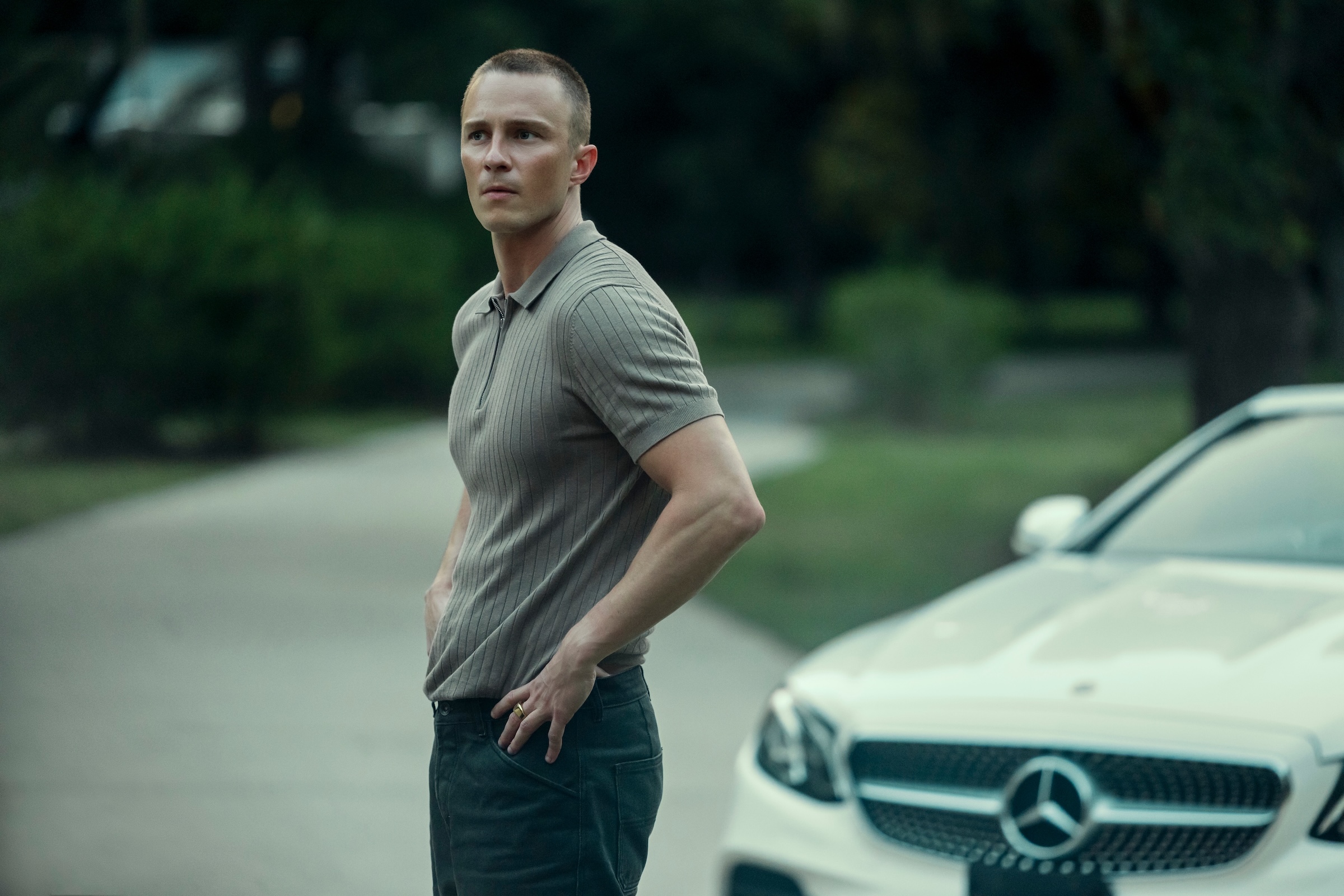
Park Eun-bin and Yang Se-jong in Spooky in Love —Courtesy of TvN
Extraordinary Attorney Woo’s Park Eun-bin and Doona!’s Yang Se-jong star as ghost-whispering hotel heiress Cheon Yeo-ri and ace prosecutor Ma Gang-uk, respectively, in the supernatural romance series Spooky in Love. In the Korean drama, which broadcast domestically on tvN and was distributed globally by Netflix, Yeo-ri and Gang-uk are initially brought together by their shared desire for justice. For Yeo-ri, this takes the form of helping the ghosts she alone can see. For Gang-uk, it means doing a good, by-the-book job as an investigator. But when Gang-uk learns Yeo-ri’s secret, the two grow closer.
While Spooky in Love starts out with a strong, ghost-of-the-week format, the second half of the drama leans more into corporate in-fighting and family drama as context for Yeo-ri and Gang-uk’s romance. When Chairwoman Baek insists that Yeo-ri get engaged in order to secure a more stable future for the hotel and resort company, Yeo-ri side-steps the advances of family friend and fellow chaebol Kang Min-hwan (Ong Seong-wu) to announce she is engaged to Gang-uk. What starts as a fake relationship to keep Yeo-ri’s grandmother off of her back soon develops into the real thing. But can Yeo-ri and Gang-uk’s love survive Min-hwan’s machinations to take control of both Yeo-ri and her company? Here’s everything that happens in the Spooky in Love finale.
Yeo-ri’s supernatural powers, explained
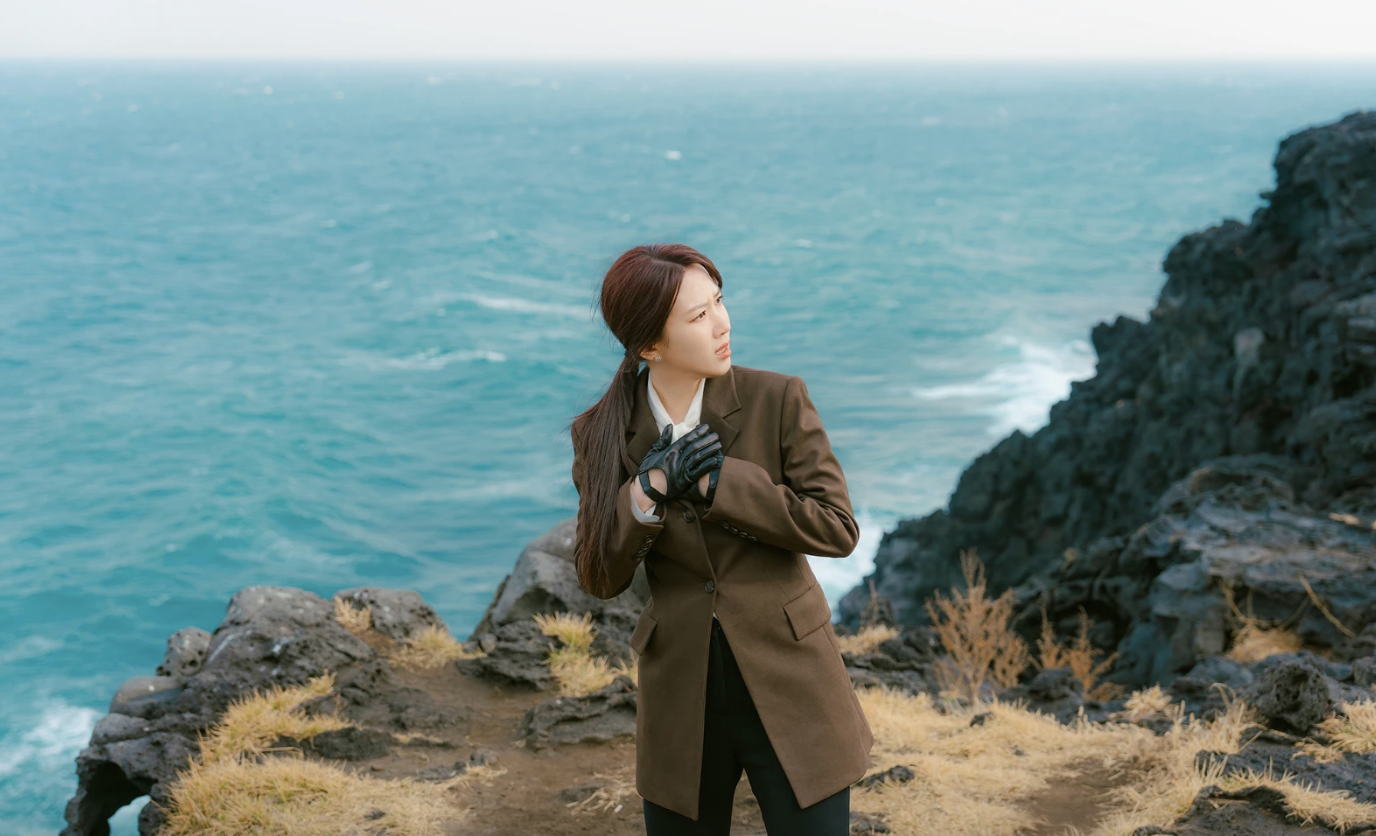
Park Eun-bin as Yeo-ri —Courtesy of TvN
Yeo-ri wasn’t born with the ability to see ghosts. She developed it 12 years prior to the start of the series, when she nearly died in the mysterious yacht accident that killed her boyfriend and Min-hwan’s little brother, Kang Ji-hwan (Kim Min-chul). The condition has ghosts constantly nagging Yeo-ri for help, and also keeps her isolated from the land of the living. If she touches hands with someone else, they will temporarily gain the ability to see ghosts for a month. As a result, she wears gloves constantly, and keeps a physical distance from her friends, family, and co-workers.
The stakes of Yeo-ri’s secret are intensified due to the power her family holds. Yeo-ri is the heir to the Reina Group, a corporate hotel chain that wields immense wealth. Yeo-ri’s grandmother, Baek Kyung-ja (Ye Soo-jung), plans to pass the baton to Yeo-ri—rather than step-daughter Ok Gye-hui (Baek Ji-won) or her adult children, Ha-ri (Cho Hye-joo) and Don-jun (Lee Dal). However, if Chairwoman Baek, or the larger public, finds out that Yeo-ri is haunted by ghosts, it could call her ability to run the family corporation into question.
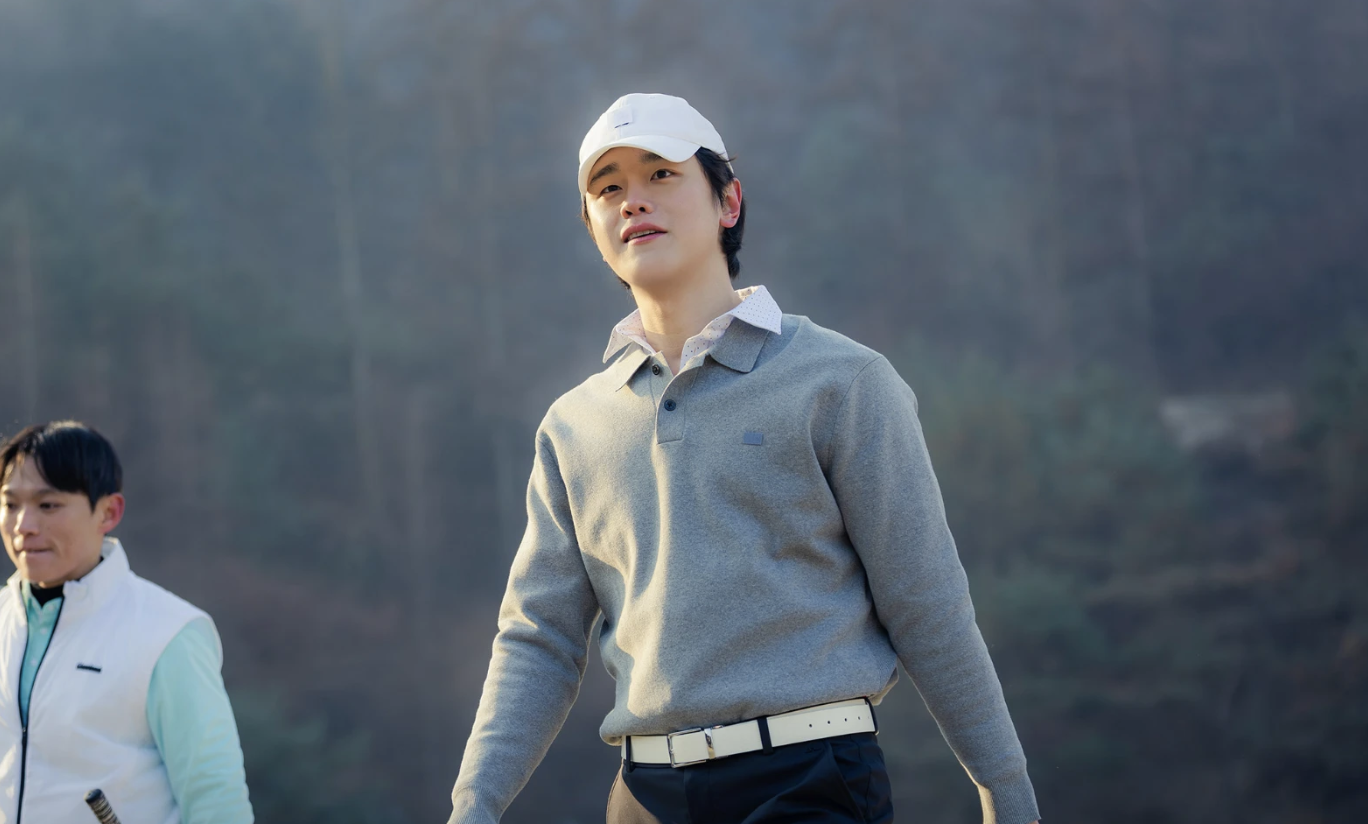
Still, Yeo-ri’s sense of justice runs deep. In Spooky in Love’s early episodes, Yeo-ri is visited by the ghost of Jang Eun-ju (Yoon Hye-rim), a young woman who was murdered by her boyfriend, Park Seung-jae (Kim Do-wan), after she becomes pregnant with their child. Seung-jae is well-connected. Not only is he a rich pro golfer, but his father is one of the leading contenders in the next presidential race. When he is initially tried for murder, with Gang-uk acting as prosecutor, he is acquitted due to his father’s immense influence. It is only when Gang-uk and Yeo-ri team up that they are able to gather more evidence, and definitively pin the murder on Seung-jae.
What happened on the yacht?
Yeo-ri grew up close to Kang Ji-hwan and Kang Min-hwan, brothers poised to inherit ownership of CL Raymond Group. Though both brothers had feelings for Yeo-ri, Ji-hwan was the first to ask her out. For Min-hwan, this intensified the jealousy he had long felt of his little brother. Jin-hwan, who looked up to his brother, didn’t realize that he was often treated better by some members of the family compared to Min-hwan, who was adopted. When Jin-hwan started dating Yeo-ri, it was the final straw for Min-hwan.
On the day of the accident, the brothers are out on a yacht with their friends, including Yeo-ri and fellow rich kid Park Seung-jae. We learn in the penultimate episode that when the yacht hit a rock and Jin-hwan was thrown over the side, Min-hwan had the chance to pull his brother back onboard, but let the pleading Jin-hwan fall into the water below instead. Jin-hwan dies, and Yeo-ri, who also went overboard in the accident, is rescued from the water. She is wearing a protective pendant gifted to Jin-hwan by his grandmother. He asked her to wear it while they were on the boat, joking that, if something should happen, she should live and he will die.
Later, Yeo-ri and Gang-uk seek out the shaman who made the pendant. The original maker is dead, but her daughter informs them that the power of the pendant changed Yeo-ri and Jin-hwan’s fates. That power, paired with Yeo-ri’s inability to let Jin-hwan move on in the immediate aftermath of the accident, led to Yeo-ri’s ability to see ghosts. The shaman tells Gang-uk and Yeo-ri that, in order for Yeo-ri to stop seeing ghosts, she owes the afterlife a life.
Gang-uk’s connection to Jin-hwan
Gang-uk, who was raised by his grandmother, did not grow up in the same social circles as Yeo-ri, Min-hwan, and the other members of the chaebol class. However, he shares a unique connection to Jin-hwan. When Jin-hwan died, a sick Gang-uk was given Jin-hwan’s heart. The transplant allowed him to live on. Ever since, Jin-hwan and Min-hwan’s mother, Song Hee-won (Kim Seo-ra) has kept tabs on Gang-uk through his grandmother. Though she lost one of her sons, it makes her happy to see Gang-uk doing well.
Min-hwan’s crimes escalate
Kim Do-wan as Park Seung-jae, a victim of Min-hwan's scheming —Courtesy of TvN
This truth of Jin-hwan’s death is known only by Min-hwan for more than a decade. Yeo-ri doesn’t remember what happened during the accident and, even if she did, she didn’t witness what occurred between the brothers that day. However, when Seung-jae temporarily gets out of jail to attend his father’s funeral, he happens to stumble upon a camcorder memory card with footage of Min-hwan choosing not to save Jin-hwan. Seung-jae attempts to blackmail Min-hwan with the evidence. When the two meet up in an abandoned warehouse, Min-hwan kills him for it.
Gang-uk finds Min-hwan’s cufflink at the scene of the crime, but Min-hwan counters. He hires someone to hit Gang-uk with a truck. Yeo-ri pushes the man she loves out of the way at the last second, saving his life and putting her own in grave danger. She is hit by the truck, and ends up in a coma. As Yeo-ri’s life hangs in the balance, we see her traverse a beautiful kind of purgatory. The ghosts she has helped in the past 12 years, including Eun-ju, are waiting for her there. They lend her some of their warmth to keep her from crossing to the other side.
Yeo-ri and Jin-hwan balance the scales
Still, Yeo-ri finally does make it to a Styx-like river, a boundary between the world of the living and the world of the dead. Before she can step onto the boat that would bring her across, the ghost of Jin-hwan appears to take her place. The two share a teary conversation in which they process Jin-hwan’s death. Yeo-ri apologizes for living instead of him, but Jin-hwan doesn’t see it that way. He says she still has so much to live for, and that the ghosts she has helped are rooting for her. When Yeo-ri wakes back up, she no longer has the power to see ghosts. Jin-hwan has crossed to the other side; the afterlife has been given the soul it was robbed of 12 years prior.
Min-hwan is brought to justice
Unbeknownst to Min-hwan, Seung-jae has hidden the memory card in a hollow golf ball at the warehouse. When Yeo-ri and Gang-uk are investigating, they find the card and have the evidence to take Min-hwan down. In the most dramatic way possible, Yeo-ri reveals the evidence to Min-hwan’s mother and the other people gathered at Jin-hwan’s memorial service. More than losing his power or going to jail, Min-hwan seems most distraught at the idea of his mother discovering his betrayal. A year later, when she visits her remorseful son in jail, she tells him that after he has finished serving his time, she will be waiting for him. Min-hwan, who always thought his mother’s love for her biological son diminished her love for her adopted son, can perhaps finally see otherwise.
Does Spooky in Love have a happy ending?
Spooky in Love has the happiest of endings. A year following the main events of the series finale, Yeo-ri is announced as the new chairwoman of Reina. Yeo-ri and Gang-uk are happily together. Gang-uk, who had been transferred out of Seoul after reporting internal corruption at the prosecutor’s office, has just received a promotion back in the capital city where Yeo-ri lives. The two visit Siena Hall, the Reina wedding property that symbolizes Yeo-ri’s late parents’ love for one another, and walk together, hand in hand.
When the two first started falling for one another, Yeo-ri had said that her greatest wish was to walk hand-in-hand with the person she liked. Then, she was too afraid to touch anyone, burdened by the certainty she would pass her curse onto them. Now, she does so, unafraid. The simple scene doesn’t just demonstrate the love between Yeo-ri and Gang-uk; it demonstrates the intimacy and warmth Yeo-ri is able to let into her life more broadly. She is no longer alone, and Gang-uk is only one part of that reality.
Google is giving publishers a new button that lets readers make them a preferred source across Search, Discover, and Google News, potentially boosting their traffic as AI search sends fewer clicks to the web.
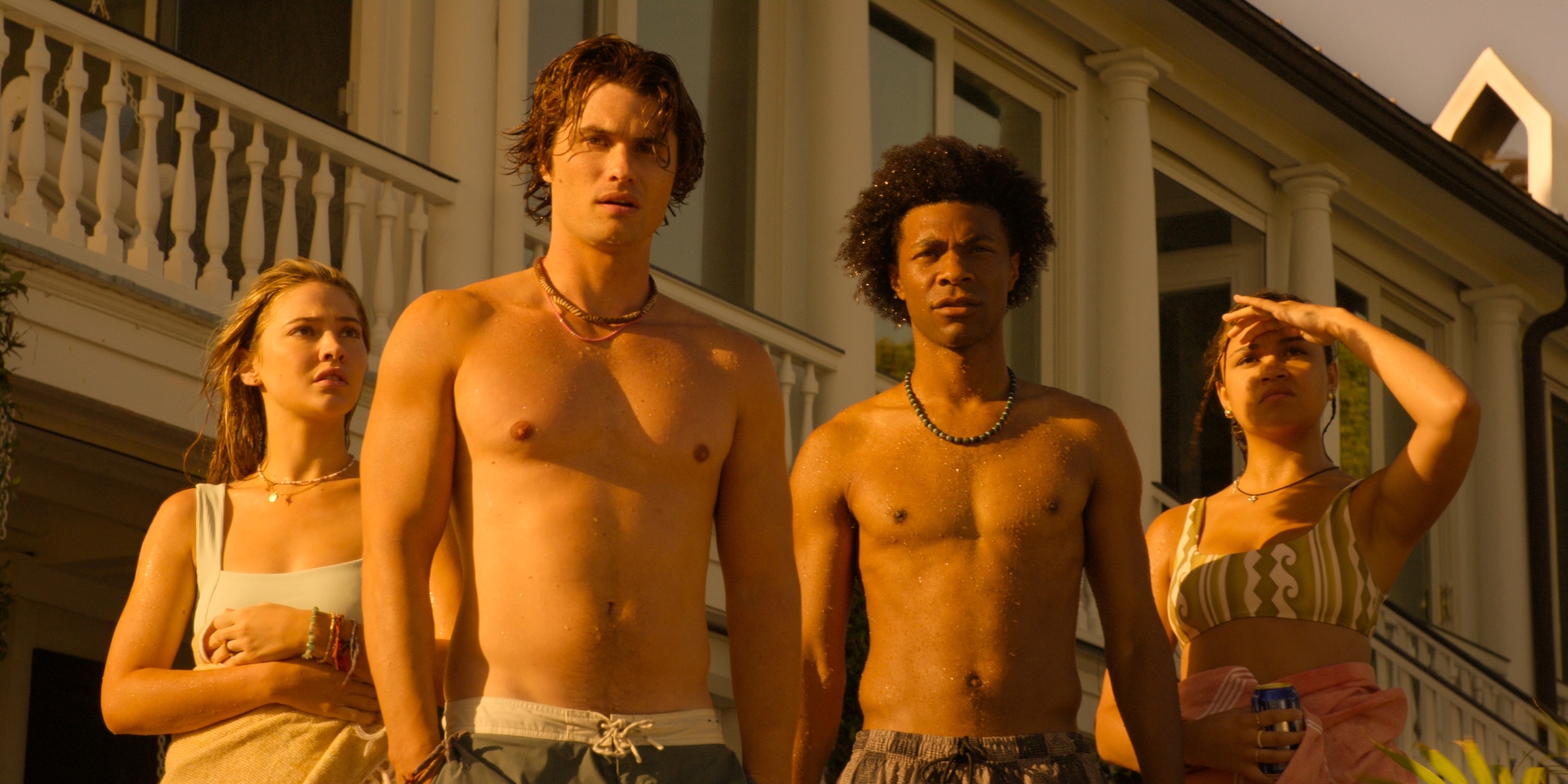
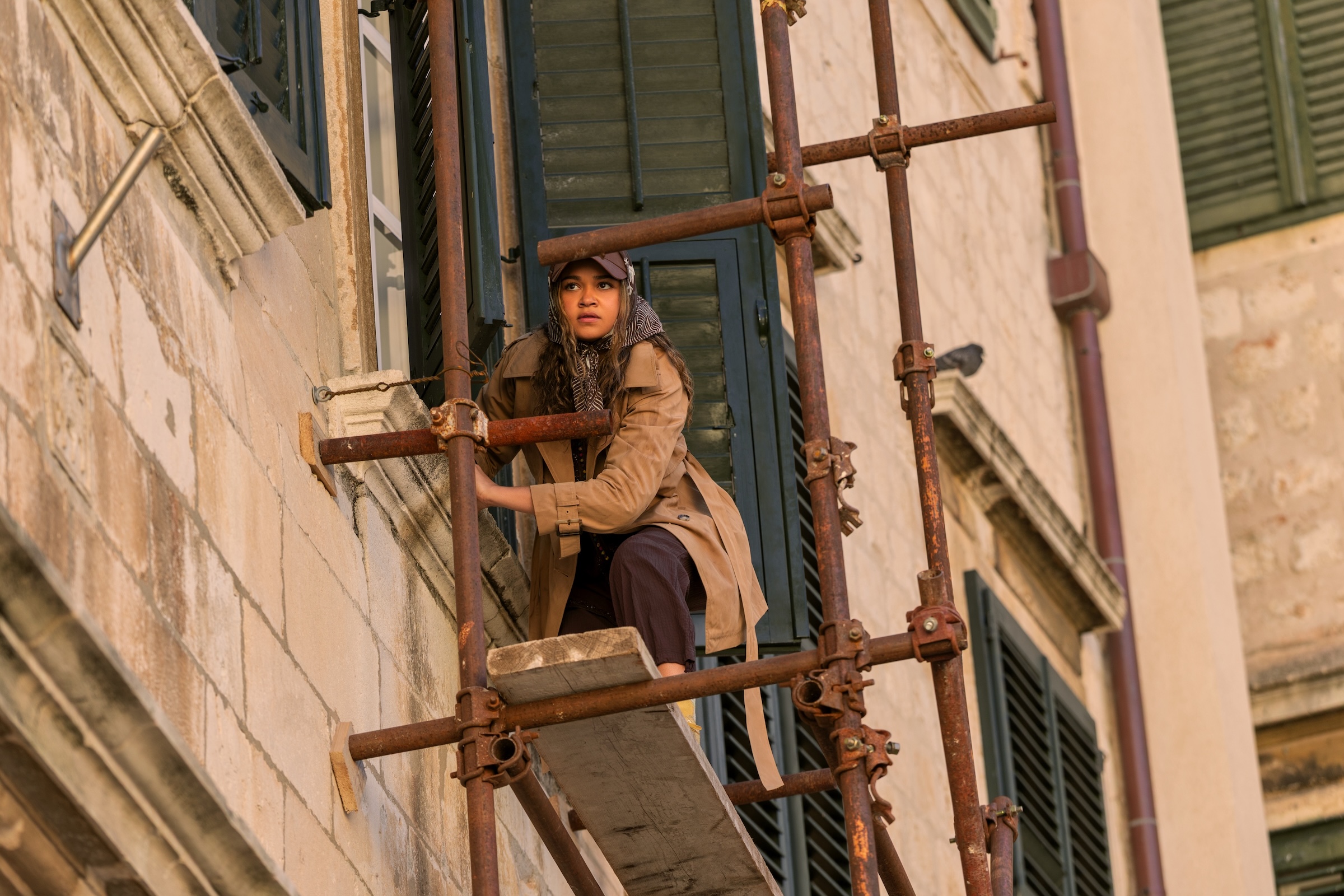
Madelyn Cline as Sarah Cameron, Chase Stokes as John B, Jonathan Daviss as Pope, Madison Bailey as Kiara in Outer Banks —Courtesy of Netflix
Warning: This post contains spoilers for Outer Banks Season 5.
After years of treasure hunts, betrayals, shipwrecks, family feuds and increasingly improbable escapes, the Pogues finally make it home. The fifth and final season of Netflix’s Outer Banks sends John B (Chase Stokes), Sarah (Madelyn Cline), Kiara (Madison Bailey), Pope (Jonathan Daviss), Cleo (Carlacia Grant), and Rafe (Drew Starkey) through one last race for treasure—this time involving the Royal Merchant gold, the Blue Crown, a deadly hurricane, and the ghosts of everything they have lost along the way.
The finale takes the Pogues far beyond the Outer Banks before bringing them back. First, they learn that the arms dealer Anton Finch is planning to use the Blue Crown during a meteor shower. The group travels to Azerbaijan to stop him, while Cleo is arrested as they are leaving for the private plane. She tries to board as the plane is taking off, but a police officer shoots at the plane's stairs, causing her to fall. Pope is already in Azerbaijan with the others when he discovers that Cleo has been deported to Nassau, Bahamas.
Kiara eventually gets the Blue Crown from Finch and takes it to the lake during the meteor shower, hoping it can bring JJ (Rudy Pankow) back. The crown doesn't resurrect him, but it gives Kiara a powerful final connection to her memories of JJ and everything they shared. Finch later takes the crown back, meaning the Pogues return to the Outer Banks without it. They arrive just hours before Hurricane Cassandra hits.
Meanwhile, back in Kildare, Rose has the Royal Merchant gold after stealing it from the Pogues. Chandler Groff (J. Anthony Crane) attacks and tries to kill Rose, but Wheezie shoots him in the arm and saves her stepmother. Groff escapes in Rose's car with the gold. During the hurricane, Kiara finds him aboard the stolen boat and confronts him about killing JJ. Their fight ends with Groff going overboard and presumed dead, while Kiara discovers that the boat is sinking.
Trying to keep the boat afloat, Kiara begins throwing heavy cargo into the ocean. Among the crates is the Royal Merchant gold Groff stole from Rose. She reluctantly pushes the gold overboard and soon falls into the water herself, but the Pogues find and rescue her.
The gold, however, isn't lost for good. After the hurricane passes, Pope calculates where the treasure should have drifted by triangulating the fort, the lighthouse and the location where they rescued Kiara, while accounting for the currents and wind. John B dives into the ocean and discovers the gold beneath the debris and sand. The Pogues are able to recover part of it in the moment and retrieve the rest over the following days.
With the Royal Merchant fortune finally in their hands, the Pogues use the money to rebuild Kildare, buy back properties and restore their homes. They help create the community they always wanted, where Kooks and Pogues can live together.
So, where does everyone end up as the Outer Banks adventure finally comes to a close? Here's what happens to the Pogues, their families and the people who shaped their story.
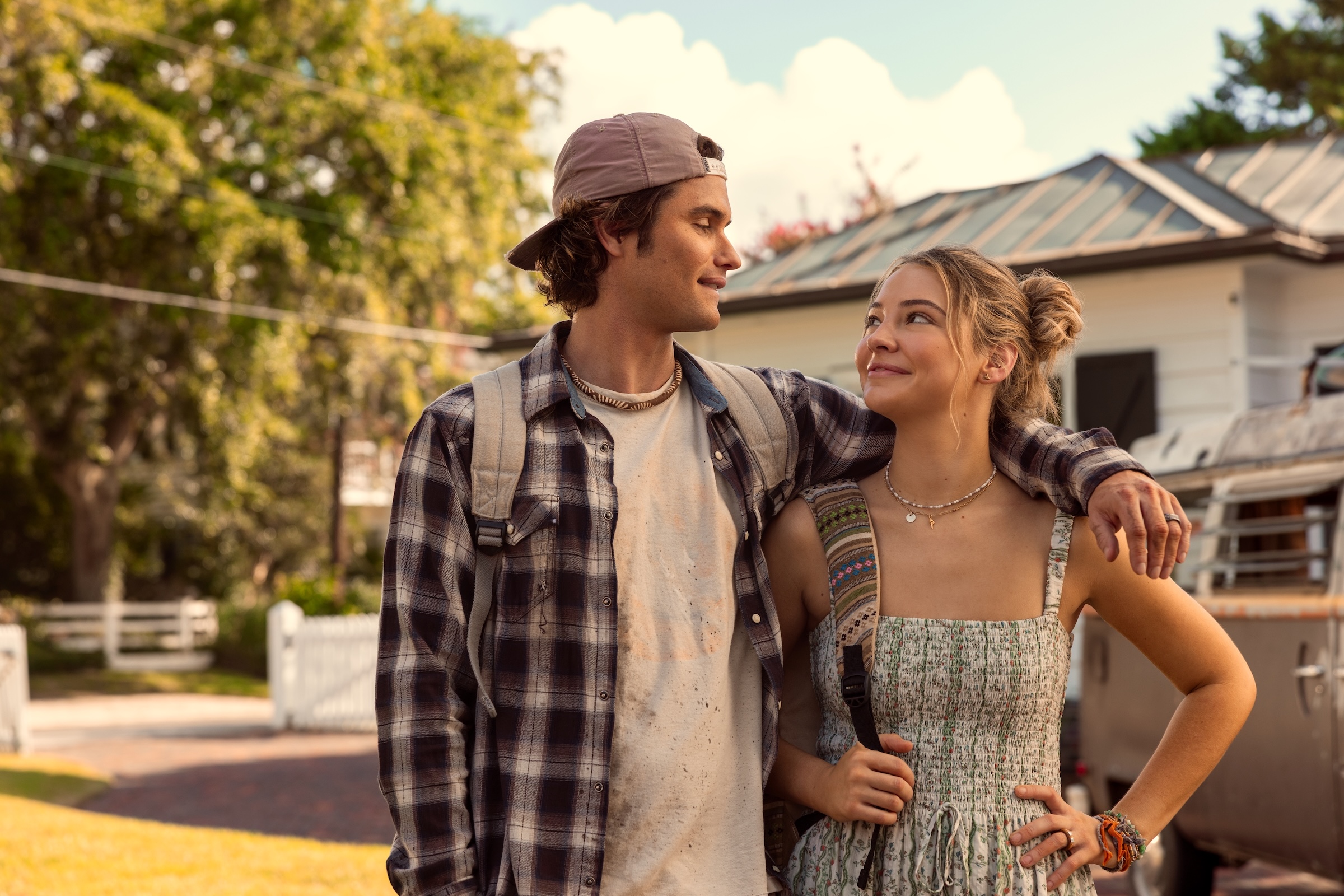
Chase Stokes as John B and Madelyn Cline as Sarah —Jackson Lee Davis—Netflix
John B and Sarah Cameron
After everything John B has been through, the finale gives him the future he has been fighting for: a family and a home. He and Sarah welcome their first child, a son named JJ in honor of their late best friend.
One year later, John B and Sarah get married in a ceremony surrounded by their friends and family. Their son is also part of the celebration, with Kiara carrying him into the ceremony before Sarah walks down the aisle with Pope.
John B and Sarah begin their married life raising their son in the community they helped rebuild. In the final moments, John B rings the bell near their home and calls for JJ.
“I think he's traveled the world searching for happiness and peace, and his identity has been around this treasure that is significant to him and his father, and it's this weird relationship to it,” Stokes says. “You can travel the world, you can see beautiful places and meet incredible people, but home is always going to be home.”
Meanwhile, Sarah finally gets the freedom and stability she has spent years searching for. After breaking away from the unstable[?] world she grew up in, she builds a family of her own with John B and their son.
With Kildare rebuilt and the Pogues no longer living from one treasure hunt to the next, Sarah can settle into a life she chose for herself. Her journey from the daughter of a powerful Kook family to a member of the Pogues ultimately brings her to the family and sense of belonging she had been looking for all along.
“And I think a very, very full heart,” Cline says. “She finally got out of the bubble wrap, and that's what she always wanted. She made her dreams come true, and I hope she feels that.”
Madison Bailey as Kiara —Jackson Lee Davis—Netflix
Kiara Carrera
Kiara’s final chapter is defined by what comes after JJ’s death. The Blue Crown gives her an unexpected sense of closure, allowing her to revisit the memories she shared with him rather than simply focusing on what she lost.
Back in Kildare, Kiara confronts Groff and eventually turns her attention toward the future. She buys back the Maybank property with her share of the fortune and begins rebuilding it, while also pursuing her passion for marine life as an intern with North Carolina Marine Fisheries.
“I feel at peace with where she ends up,” Bailey says. “It’s a sweet ending for her, and I hope the fans love it too.”
Carlacia Grant as Cleo and Jonathan Daviss as Pope —Jackson Lee Davis—Netflix
Pope Heyward and Cleo Anderson
After being arrested while trying to board the plane with the Pogues, Cleo is deported to Nassau, Bahamas and separated from Pope. But their story doesn’t end there. Pope eventually makes his way to Nassau and proposes to Cleo. She accepts and once the Pogues recover their fortune, Pope and his family are able to help Cleo resolve her immigration situation so they can live in Kildare together.
Cleo settles into a life with Pope and becomes part of the community the Pogues helped rebuild.
“It’s just a full 360 of how we met her,” Grant says. “We met her sort of on her own, or with a group of robbers, and now we see her in family, in a relationship, really blossoming into a young woman—still badass, but showing other sides of herself.”
Back home, Pope helps his father rebuild Heyward’s Seafood and uses his share of the fortune to buy a house for himself and Cleo. He also repairs his relationship with his father, bringing his personal and family lives into a more stable place.
“I think he's proud of his growth as a person, and he's proud of his relationship with the people he loves,” Daviss says. “His relationship with Cleo, his relationship with the Pogues, his family, him mending that relationship with his father, his own relationship with himself, growing up from a kid to being grown and being more confident.”
Rafe Cameron and Sofia
Rafe leaves Kildare with Sofia after helping her escape from jail during the evacuation. Sofia was arrested after helping Rafe evade the police, following the discovery of new evidence linking him to the murder of Sheriff Peterkin. Rafe believes the authorities will come down hard on Sofia if he doesn't turn himself in, so he cuts the power to the station, frees her from her cell, and flees with her.
They are later confronted by Sheriff Shoupe, who reminds Rafe that he killed Peterkin, one of Shoupe’s friends. Rafe admits that he was responsible for her death, saying he never wanted it to happen. He tells Shoupe that he plans to disappear after the hurricane and asks him not to come looking for him.
Rafe and Sofia eventually take shelter from the storm before the Pogues help them leave Kildare by boat. Pope gives them enough fuel to reach New Bern, from where they plan to make their way to South America. Before leaving, Rafe says goodbye to the Pogues, thanking Sarah and telling John B that he is happy for him.
“I think Rafe in the end feels finally important, wanted and loved,” Starkey says. “There’s a lot of things that he’s leaving behind. It kind of feels like he’s leaving behind the worst parts of himself, and I think he needs to leave that location in order to do so. It’s a bit of a rebirth for him at the end.”
Drew Starkey as Rafe —Jackson Lee Davis—Netflix
Rose and Wheezie Cameron
Rose and Wheezie evacuate Kildare along with the other residents as Hurricane Cassandra approaches, leaving the island behind as the storm tears through the community. With the Cameron family’s old life permanently changed, the two eventually return to Kildare as the island begins to recover.
Rose and Wheezie are among the guests at Sarah and John B’s wedding, marking their continued place in Sarah’s life and in the community the Pogues helped rebuild.
Dale Zeasy and Sheriff Shoupe
Dale’s plans to reshape Kildare fall apart after an insurance investigation discovers that his financing was illegitimate. He had been trying to acquire land to build apartments and pressured Pope’s father to sell his property, threatening to use a video of Pope and the Pogues trespassing on private property against him.
After Hurricane Cassandra damages the island, the Pogues use their fortune to buy back the properties and rebuild Kildare on their own terms, leaving Dale without the foothold he had been trying to establish. In the final moments, Shoupe arrests Dale, bringing his attempt to take over the island to an end.
A year later, Shoupe is among the guests at Sarah and John B’s wedding, showing how his relationship with the Pogues has also evolved over the years.
Warning: This post contains spoilers for the Lucky finale.
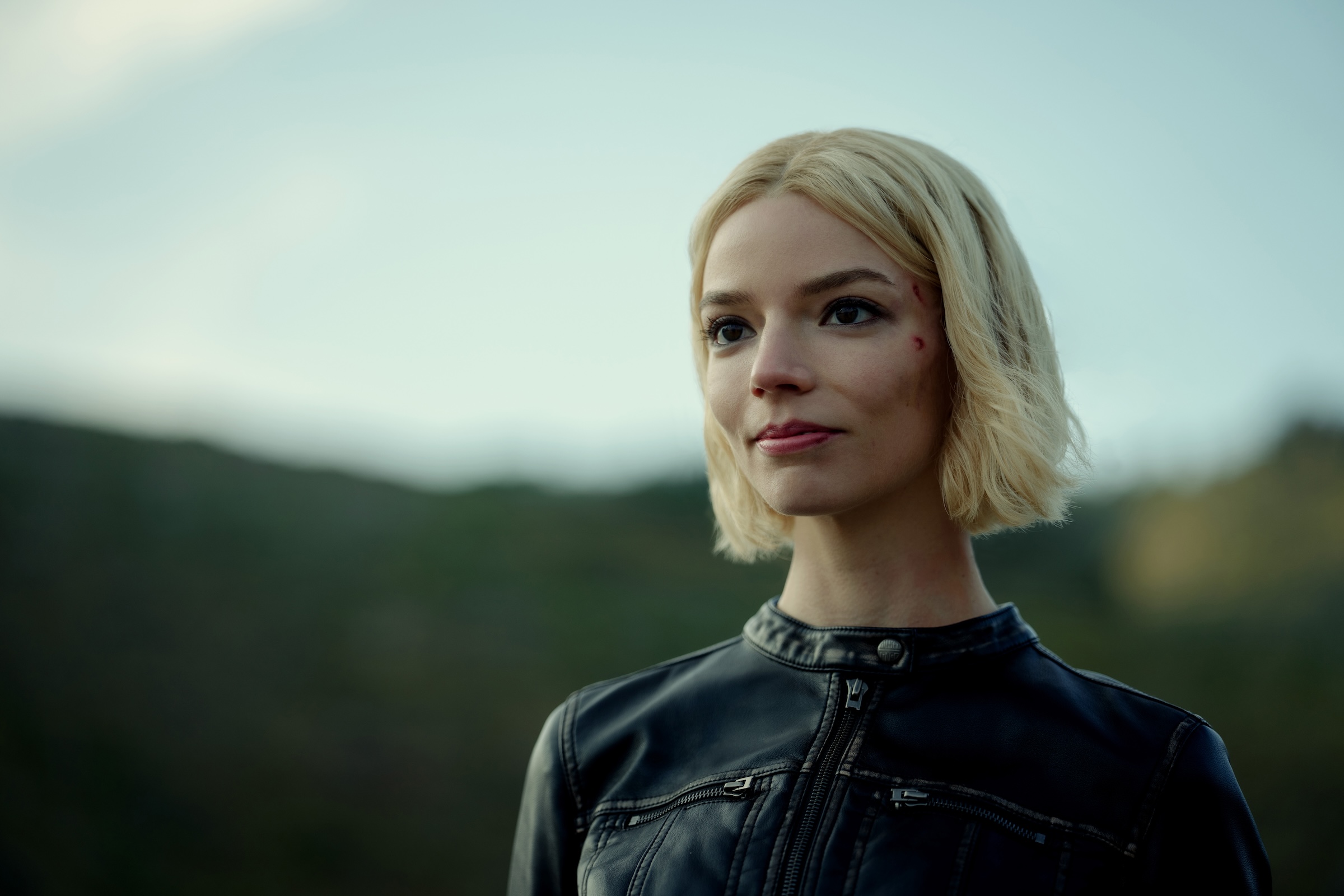
Morning is just reaching the shoreline when Lucky (Anya Taylor-Joy) walks barefoot toward the water. The waves slide over her feet, then her ankles. She looks up at a scatter of birds, spreads her arms wide, and the camera moves in close as her expression turns—eyes open, taking it in, then the beginnings of a smile. The ocean was the destination her father dangled in front of her as a child, the reward waiting at the end of a con. She reaches it without him, the only way she was ever going to get there.
These are the final moments of Lucky, an Apple TV limited series that follows Luciana “Lucky” Armstrong, a con artist raised inside the life by her charming grifter father, John (Timothy Olyphant). At John’s urging, Lucky and her husband, Cary (Drew Starkey), lift $10 million from Wayne Whittaker (William Fichtner), the crime boss they all answer to. The money was John’s own skim from the energy-fraud scheme that sent him and Priscilla (Annette Bening), Wayne’s second-in-command and Cary’s mother, to prison years earlier. Then Cary vanishes with the score, leaving Lucky to run from FBI agent Billie Rand (Aunjanue Ellis-Taylor) on one side and a newly sprung Priscilla on the other. By the finale, Cary is dead, the money has resurfaced as cryptocurrency locked behind a seed phrase only Lucky knows, and Lucky is walking into a meeting with Wayne wearing an FBI wire.
Behind all of it, the writers saw one repeating pattern. “The mechanics or the mechanisms of a con are a cycle of trust and betrayal,” says Cassie Pappas, the series’ co-showrunner, who wrote the finale episode. “She’s locked in this cycle of trust and betrayal with all the people in her life: with Cary, with Priscilla, with her father. And so we’re rooting for her to finally break free of that cycle.” The finale lets Lucky stop running, granting her the freedom to wipe the slate clean. “We wanted to make sure it wasn’t a happy ending or a bad ending,” creator and co-showrunner Jonathan Tropper says. “It was really important that she make a sacrifice to basically get to the point where she can start her life again.”
A performance for an audience of one
Before the meeting with Wayne, the episode lingers on Priscilla at her mirror. Dutch (Clifton Collins Jr.), her devoted enforcer, fastens the watch that belonged to Cary on her wrist. “Thought you’d want it,” he says. In the car, Priscilla gives Wayne exactly what he wants: gratitude for springing her from prison and an apology for how long it took to find the money. When he excuses his refusal to claim Cary as his son by saying it was Priscilla’s choice to have him, she absorbs it and keeps up the act, drawing internal strength from Cary’s watch on her wrist. The watch mattered beyond what the camera captured. “The whole car ride with Wayne up to the gas terminal, Annette was touching it, feeling it,” Pappas says. “She let that watch be a part of her performance. Like she could feel him on her wrist.”
Lucky arrives at the gas terminal with her own act to sustain: get Wayne on tape admitting he knew about the gas scam and profited from it, and stay alive long enough for it to matter. But the con she runs is aimed somewhere else entirely. “Who she’s really playing to in that moment is not Wayne, but Priscilla. It’s a performance for Priscilla,” Taylor-Joy says. “She’s performing for somebody else’s eyes.”
That’s why the scene’s most cutting line isn’t really for the man it’s addressed to. When Wayne muses that Lucky could have worked for him, she declines. “I know how you treat the women who work for you,” Lucky says. She tells him about the child Cary wanted: a girl, because he couldn’t imagine raising a son with a father-shaped hole where his own had been. Every word lands on the woman off to the side.
“It’s coded conversation directly to Priscilla, playing to her,” Pappas says. “She doesn’t know if she’s going to [turn on Wayne], but hoping that she will.” Lucky isn’t guessing blindly. In episode 6, Priscilla let slip that she once tried to leave this life and couldn’t. “In another life, if she had gone left instead of right, or if she had made a few different choices, Lucky could have easily become Priscilla,” Pappas continues. “I think that’s why Priscilla’s intrigued by her.”
Midway through the standoff, with Wayne demanding the seed phrase, Lucky drops a revelation she’s just pieced together: he already knew the money had been converted to crypto, she announces, knew how to find Cary in La Jolla, and knows the FBI is listening, because Kershaw (Eric Lange), the FBI supervisor stationed above with Rand, has been feeding him information. Up on the gas tank, Rand pulls her gun on the mole.
The gambit nearly dies anyway. Wayne, meanwhile, produces John, snatched from the hotel in episode 6 and beaten bloody, then hands Priscilla his gun: she can prove she’s “really ready” to be back by executing him herself. Instead, Priscilla presses the barrel to Lucky’s head. A tear runs down Lucky’s cheek. “Priscilla,” Lucky pleads.
“Hon, I’m sorry,” Priscilla says, then turns and shoots Wayne in the stomach. Whether she decided at the mirror, in the car, or in the half-second before the trigger, the episode declines to say.
The same moment splits the frame. Above, Rand, shoved over the tank’s edge by Kershaw and hauling herself back up, shoots him dead; below, Dutch, who trailed Priscilla to the site, emerges firing and cuts down Wayne’s remaining men. Wayne himself crawls. “If you had tried even once to be any kind of a father to my boy, you wouldn’t be in the position you’re in right now,” Priscilla tells him, and fires the last shot.
Wayne’s final rejection of Cary earlier in the finale sealed his fate for Priscilla. Tropper frames her life-saving gesture to Lucky as the episode’s strangest gift: alive, Cary could never make peace between his mother and his wife. “In death, he’s able to reconcile them in a way that he couldn’t in life,” he says. “His absence is the presence.”
When the shooting stops, Priscilla wonders aloud what she’s supposed to do with the two of them. Lucky makes an offer. “I’m asking you to do for me what they didn’t do for you,” she says. “Give me a chance. Or you can kill us, but I’m done running from you, from anyone.”
For Taylor-Joy, the plea is her character’s emotional exhaustion finding words. “Most people walk around waiting for the other shoe to drop without there being a shoe there. Lucky knows there’s a shoe,” she says. “Having the promise of a reality where there is no shoe that’s going to drop is where she would rather be.”
So Priscilla lets Lucky and John go, sending them off with a warning never to return and a parting verdict on John—“Lucky bastard”—as the Brian Jonestown Massacre’s “Anemone” plays, their SUV pulling away.
One hell of a bluff
Lucky’s mole reveal plays like a plan. It wasn’t one. Instead, it was Lucky’s oldest instinct: that in a game built on borrowed trust, even the feds might be playing dirty. At the motel afterward, Lucky admits she’d pieced Kershaw’s defection together from La Jolla (Priscilla couldn't have found Cary unless Wayne had someone inside) but kept the theory to herself because she wasn’t sure. John is incredulous: she detonated a federal sting on a hunch? “Well, I was either right, or it was one hell of a bluff,” she shrugs.
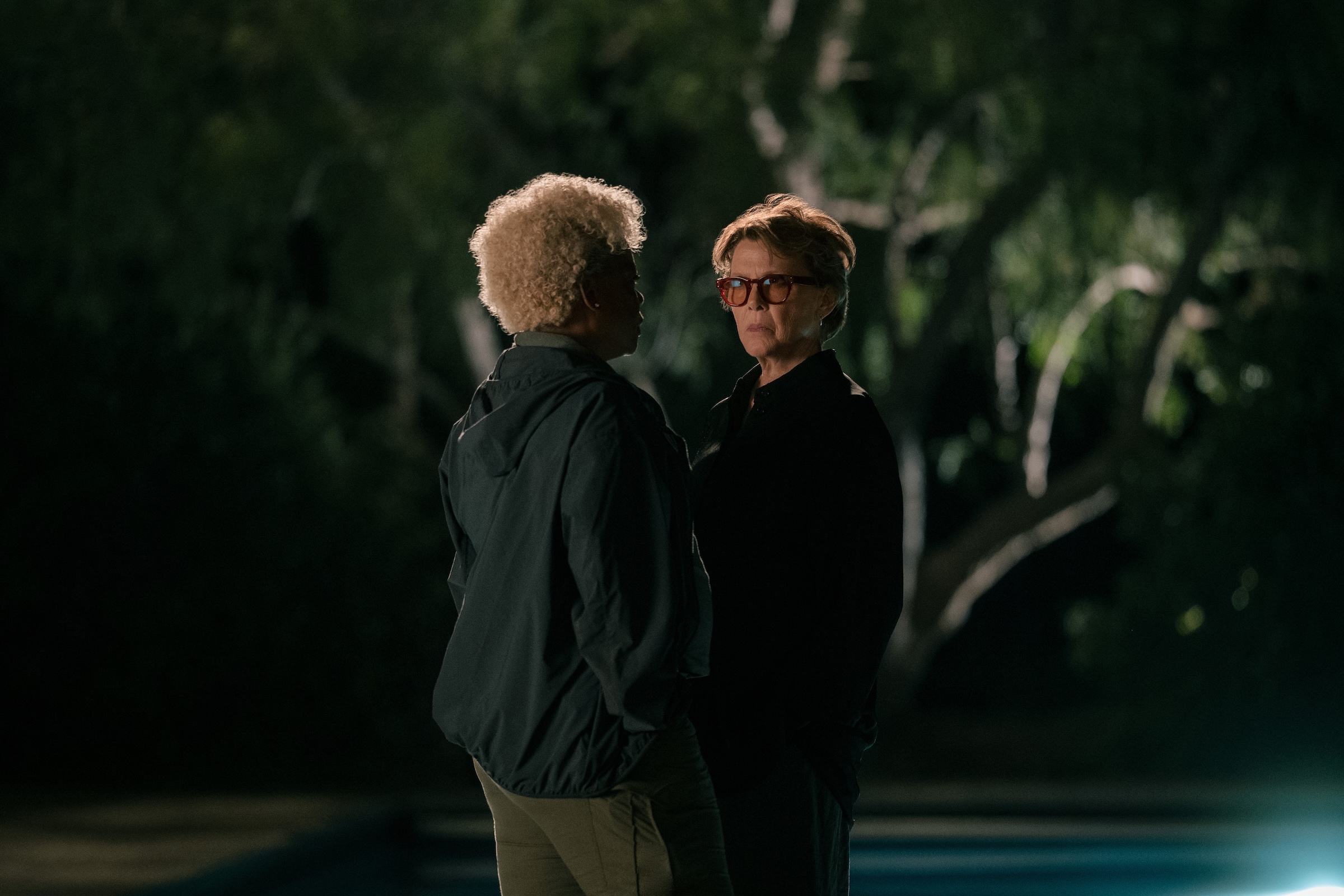
The day’s losses trail Rand into the finale’s quietest confrontation. That night, she finds Priscilla at home in her backyard, sunglasses on in the dark, at the edge of her pool. Rand isn’t there to arrest her; she’s there to promise that one day she will. Priscilla tells her to take the win: Wayne is dead, the FBI mole exposed. Rand refuses. “You killed my partner,” she says, referring to Gates (Mo McRae), the agent gunned down when Wayne’s men stormed the hotel for John. “You didn’t pull the trigger, but you killed him.”
Tropper reads the standoff between Rand and Priscilla as a diagnosis. “They’re both kind of trapped in their cycles,” he says. “These two are still going to be locked in this eternal struggle that Lucky has managed to extricate herself from. But neither of these women will be able to pull that off.” The images say it more simply: Priscilla ends her season the way Lucky ends hers, standing at the water’s edge.
Aunjanue Ellis-Taylor and Annette Bening —Courtesy of Apple TV
The con after the con
A conventional thriller would have rolled credits after the gunfire. But Lucky spends many of its final minutes at a motel instead. “We always looked at this as a character show that has a thriller element to it,” Tropper says. Pappas describes it the way the writers’ room did: the finale holds two cons: an “action set piece” with a con built into it, and an “emotional set piece.”
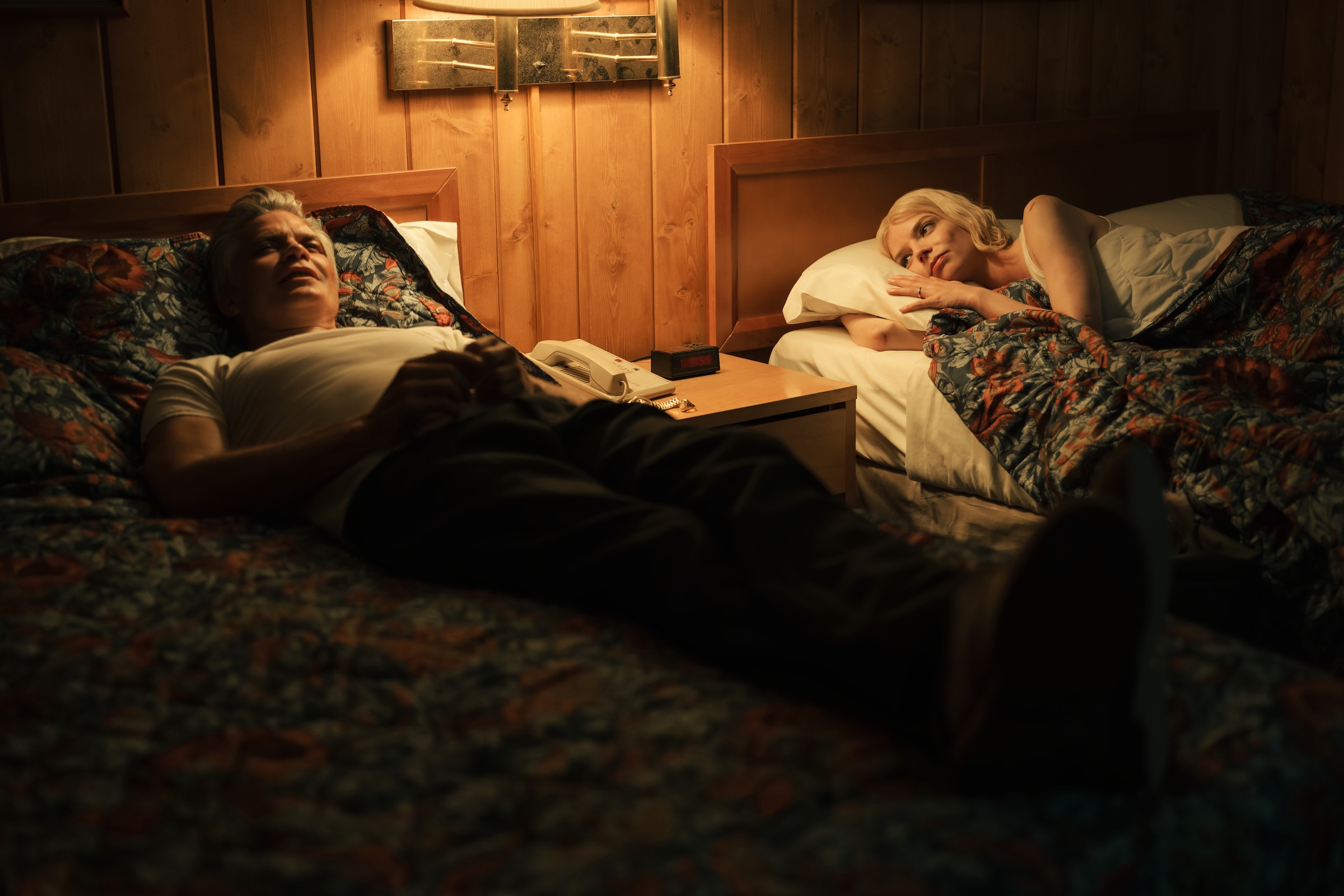
That second con trades on episode 6’s hotel-room reckoning, when Lucky told John the life she had as a child was never one she wanted, when she admitted she was the reason he went to prison years earlier, and when John apologized, at last, for the childhood he’d mistaken for a good one. The apology was slow in coming; John’s first reflex was to call her an idiot for ever trusting Rand. “You just see her become seven years old,” Taylor-Joy says of the moment. “It’s the face and the feelings of a child that’s been trapped in there the whole time.” Seven, not incidentally, was the age of Lucky’s first haul.
A deeper understanding of her father unfolds over a burger with him. John eats, as Lucky nibbles a pickle. They share their recurring dreams. His: a ball of sheets on his prison bed that turns out to be infant Lucky, whom he straps to his chest and carries past a charmed guard into the sunlight. Hers: “I’m underwater, and I can’t breathe, and then I wake up.”
Pappas, who wrote John’s monologue, built his dream from a question the writers kept circling: why is her nickname Lucky? “You can imagine growing up, he could probably use her as a baby as part of his cons,” she says. “She’s been his lucky charm for as long as she’s been alive.” Lucky’s dream sits at the opposite pole, “almost a nightmare connected to her childhood trauma of the drowning con,” and the fact that John never thought “that was traumatic for her.” When Lucky tries to say what the dream means to her, John cuts in with his own reading and pivots to the money.
Taylor-Joy explains that the father-daughter exchange reveals John for who he really is: a “narcissist.” The cruelty of the motel stretch is that its warmth is real. Tommy Tangles, the imaginary friend John invented to get a squirming girl through hair-brushing, gets a fond retelling. But none of it changes the long-held family dynamic. “She hopes that he will do the right thing, whilst making contingencies for what his actions in the past have told her about who he is,” Taylor-Joy says. By Pappas’ account, Lucky spends the scene deciding, and by the end of the scene, she knows “she’s going to set the trap.”
Ninety percent truth
Lucky wakes the next morning to an empty bed, an empty parking space, and no surprise. John is on the road with the teddy bear that held Cary’s recorded seed phrase riding shotgun. When he presses its stomach, Cary’s voice recording is gone; Lucky’s has replaced it.
“I had a feeling you’d do this,” the recording begins. “A feeling I’ve been ignoring most of my life.” As she speaks, the season’s most persistent image finally resolves. The childhood flashback threaded through the episode, young Lucky at the lip of a hotel pool, completes itself: she goes into the deep end, flails, is hauled out by a stranger while John rushes over performing paternal alarm, then threatens a lawsuit and gets their rooms comped. “You knew I couldn’t swim,” adult Lucky says. “But the best cons are 90% truth, right, Dad? And the truth was I was drowning.”
Taylor-Joy locates the wound in child psychology. “When you’re a kid, your parents are God,” she says. “You rely on them so much for survival that you never stop to think that there’s something wrong with them. You internalize everything as something being wrong with yourself. The one person who was supposed to take care of [Lucky] and value her above anything else was happy to let her almost drown in order to get a free room. And if you really think about that, it’s just so painful.”
Tropper is just as unsparing about what the memory indicts. “Lucky never had a choice,” he says. “[John] is sort of a classic narcissist where he loves her, but only in the way he can, which is as a reflection of himself.” The scene suggests this wasn’t a one-time con, and Tropper confirms it: “You get the sense that it had been done more than once.”
That’s what makes Lucky’s counter-con the season’s real climax. Both showrunners knew from the earliest drafts where the story had to arrive. “The end had to be that the student becomes the master,” Tropper says. Lucky’s final con inverts everything John taught her, building not on a lie but on an honest accounting of who he is. “He trained her so well that he trained her to be better than him,” Pappas says. “She outsmarts him.”
Timothy Olyphant and Anya Taylor-Joy —Courtesy of Apple TV
A proud father
The recording ends with a gift and a form of severance. “I’m not giving you the money, but I’m giving you your freedom. I hope you use it wisely,” Lucky says. “I love you, Dad. But you won’t see me again. Goodbye.” John thumps the bear against the dashboard, pulls over, gets out, stares at the horizon, and laughs.
Ask the showrunners what that laugh contains and they answer, independently, with the same word. “I saw it as pride,” Tropper says, with John thinking, “if she was able to pull this on me, I taught her well.” Pappas echoes the sentiment. “After absorbing the blow, he almost makes it again about himself. Like, look at how well I taught her,” she says. His laugh is also a reversal, of sorts: hours before his abduction, John told Lucky he was proud of the ways she isn’t like him. But the laugh is pride in the way she is.
For Taylor-Joy, the message is the closure the relationship never offered between father and daughter in person. “[John] is a person who will continuously dismiss her, not listen to what she’s saying,” she says, adding, “If she’s going to have a shot in hell of living a decent life, he just can’t come with her.” Pappas calls the goodbye a look at the “tension of opposites.” Two things can both be true: John can be bad for Lucky, and she can know it, but he’s also her dad, and there’s no undoing that. Tropper, meanwhile, has no illusions about what John does with his life. “He’ll be back in jail in a year or two,” he says.
The money goes where the father couldn’t: away. Rand opens a FedEx package at the bureau to find a laptop and the seed phrase taped to it on an index card. The fortune, Tropper argues, was the tether. “John stole this money, and so for Lucky to really be free of her father, she has to get rid of that money,” he says. Pappas reads the FedEx package as a proposed truce. “You stop hunting, and I’m going to stop running,” she says, pointing to the flicker on Ellis-Taylor’s face as Rand takes in the card. “Rand kind of smiles too, in a way. It makes you wonder if Rand is secretly maybe happy that she’s out from underneath her father as well.”
The great big blue
Which leaves the beach Lucky arrives at in the finale’s final moments. The show planted it in that same episode 6 hotel room, in a promise Lucky recited back to her father. “Remember when you used to tell me about the ocean?” she said then. “How some people can go their entire lives without ever seeing the water, but we weren’t going to be like that? One day, Lucky, our feet will be in the sand, and we’ll be looking at the great big blue and we’ll finally be still.” Then she tells him why she’s bringing it up: “I’m ready to be still, Dad.”
In the end, the ocean John teased throughout her childhood became the image that unlocked the season, and also became its sharpest irony, since Lucky must claim the promise alone. “It starts off in trauma in water, and it ends with water being this cleansing, purification moment,” Pappas says. Even the nickname goes. Dropping the alias is what Pappas calls the “last mask” Lucky has to shed.
An alternate finale ending existed on paper. “We did have one that jumped ahead in time, where she’s taking her daughter to school in a very sort of simple suburban life,” Tropper says. They cut it for the same reason they refused her the money: the show should hand her a new beginning, not a future. Still, every version they ever sketched, Pappas says, shared one property: “It was always some image of freedom, and it was always somewhere in nature.”
That the finale spends its last beat on Taylor-Joy’s face in extreme close-up, as Phantogram’s cover of Phil Collins’ “Take Me Home” swells, is no accident. As an executive producer, Taylor-Joy pushed the series toward its visual extremes: faces or vistas, almost nothing between. “It felt like you had to either be seeing thoughts as they were forming on somebody’s face, or be reminded of the scope of the world and the scope of the responsibilities that were about to come crashing down on Lucky,” she says. Her creative fingerprints run through the Americana-inspired color palette—“these places that seem very desolate,” sprinkled with the “touch of the American dream”—and a costume philosophy of making “found clothing” still express a “point of view.”
Taylor-Joy also helped choose the final frame. “I remember when we were picking what the ending shot was going to be, and I was like, it’s got to be this one,” she says. In it, Lucky’s expression is unguarded: the look of someone who’s “genuinely never imagined that they could possibly get to where they are.” It’s also the “first time where she doesn’t have a shoe that’s gonna drop.”
Tropper points out the series returns to a shot of Lucky, transformed. “We started the show with a close-up of Lucky, and we end the show with a close-up of Lucky, because the world has shifted around her, but it’s always been her,” he says. John knew the game, but what he never imagined was a daughter who would run it on him, then walk away for good. That is the con he couldn’t see coming: Lucky trusting what she knows about him over what she wants from him. And the show grants her a glimpse of life on the other side. “It kind of feels like the first inhale of a new life,” Pappas says of that final close-up. “We cut away before she gets to exhale.”
That exhale belongs to Lucky now, somewhere past the edge of the frame. What it took for this woman to stop running turns out to be everything she had: the money, the long-running nickname, her narcissistic father. She gives up all three, and the ocean, which was never really John’s to promise, comes to meet her anyway, with whatever follows finally hers to choose.
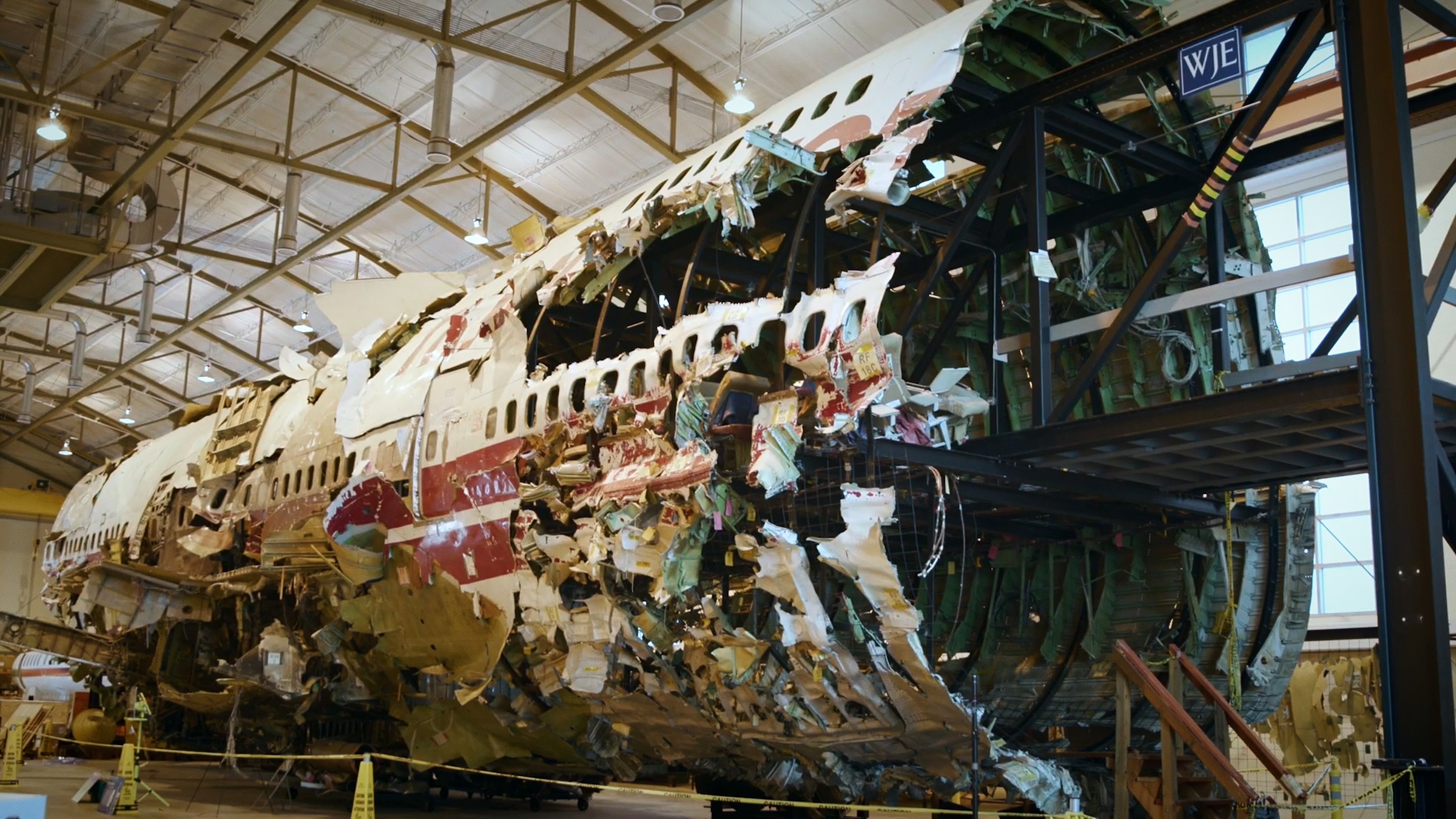
A still from Freefall: A Reckoning for Boeing —Courtesy of Netflix
For Boeing, Lion Air Flight 610 and Ethiopian Airlines Flight 302 live in infamy. The first plane crashed in October 2018 in the Java Sea shortly after taking off, and the second crashed in central Ethiopia only five months later. Both were Boeing 373 Max aircrafts, a newer and more fuel efficient model that had was certified by the Federal Aviation Administration (FAA) in 2017. Within two years of first entering into service, every 737 Max had been grounded after the same malfunction led to a combined total of 346 fatalities. Three years later, Netflix released Downfall: The Case Against Boeing, exploring how the company’s obsession with profit and maintaining a competitive edge led the former titan of aviation safety to the point of endangering anyone who flew their newest aircraft model—as well as Boeing’s efforts to deny their own complicity.
That was in 2022. This year, Freefall: A Reckoning for Boeing takes a wider look at Boeing’s continued reputation. “When we finished that film, Boeing ultimately had taken responsibility,” says Rory Kennedy, director of both documentaries. Speaking to TIME over Zoom, she says the company “assured the flying public, as well as the airlines and Congress, that it had learned its lesson and changed its ways. It did seem initially that it had made some corrections, but soon after the 737 Max got [back] into the air, I started seeing the headlines again.”
The need to return to the Boeing story
Kennedy has made documentaries about the Abu Ghraib torture scandal, the final weeks of the Vietnam War, and the impact that the death of her father—Robert F. Kennedy—had on her mother Ethel. Freefall is her first sequel, motivated, she says, by Boeing’s refusal to improve its once venerated, now dire safety standards. “I was getting approached by whistleblowers inside Boeing saying, not only had things not improved, but they were actually getting worse, and would I consider revisiting this?”
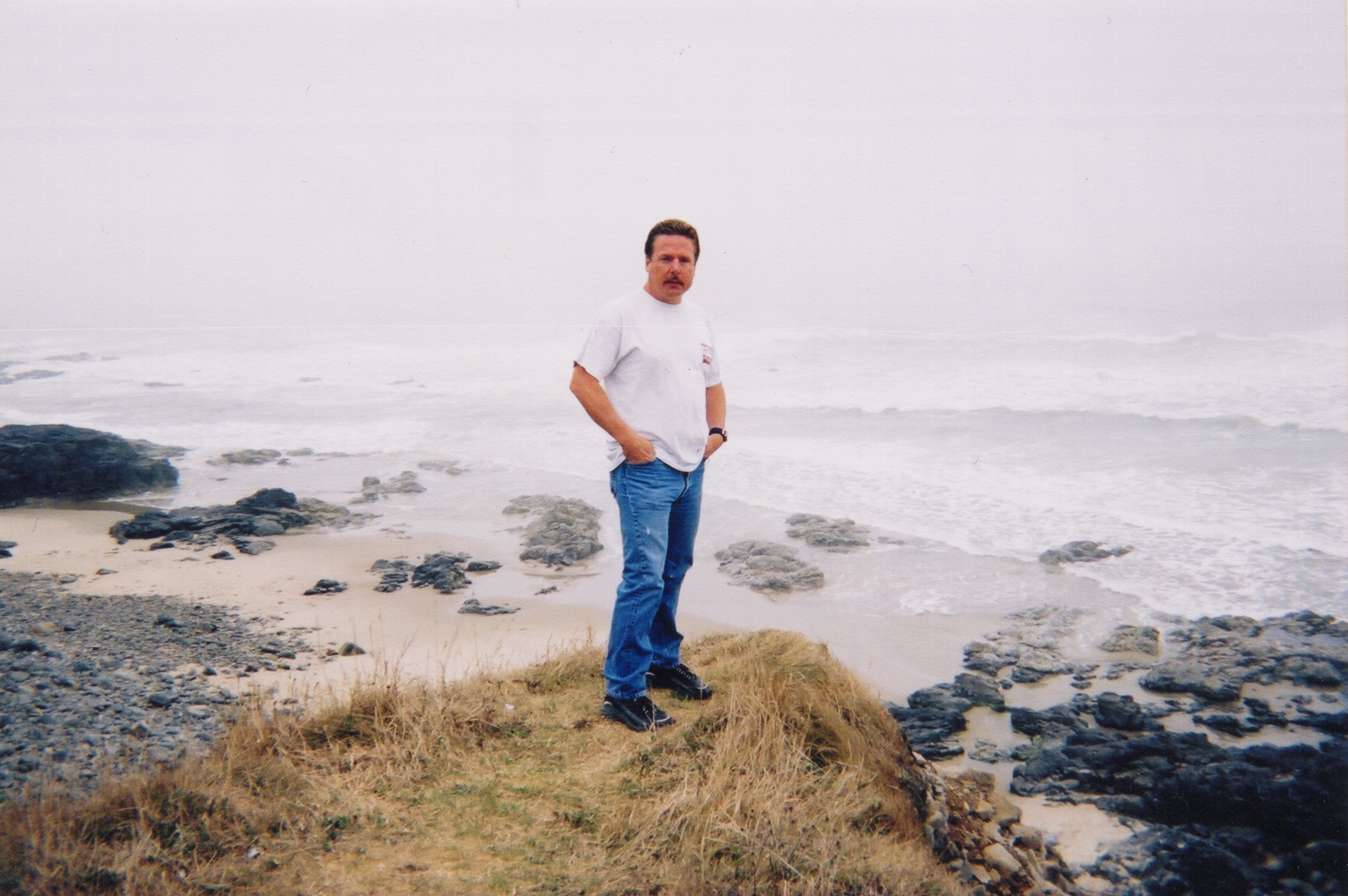
At a certain point, you didn’t need to be a whistleblower to recognize Boeing was struggling to improve its recent track record. In January 2024, a 373 Max 9 plane operated by Alaska Airlines lost a rear door plug in midair, plunging the 171 passengers into pure terror until the plane was able to land with no fatalities. An investigation found that Boeing had improperly fitted the outsourced fuselage and door plug parts in cost-cutting moves that once again resulted in danger. Kennedy was also motivated by a highly publicized but personally-felt tragedy—the death of prime whistleblower John Barnett, who by the end of his 32 years working in quality control at Boeing had made detailed reports on the company’s manufacturing negligence. In March 2024, Barnett was giving a lengthy deposition against Boeing in South Carolina when he failed to appear for his third day of testimony. He was later found dead in his truck from a gunshot wound that the Charleston County coroner described as self-inflicted. Barnett was a friend of Kennedy and lent his expertise to Downfall, and his interviews play throughout Freefall, forming what Kennedy calls a “defining thread" of the film.
“When we started, we didn't know what had happened to John Barnett, we didn't know how the Alaska Airline incident was going to unfold,” she says. “There were whistleblowers still working at Boeing coming forward and wanting their stories to be shared for the first time. Frankly it's one of the things I love about filmmaking, you're on a journey. We followed what was happening and pivoted as necessary to pay justice to the stories as they were unfolding.”
Still, to Kennedy the heart of the story is crystal clear. “If there was one reason I went back to make this film, it was because of John.”
John Barnett at the beach —Courtesy of Vicky Stokes/Netflix
Dreamliner, greed, and a reputational nosedive
By all accounts, Boeing used to be a great place to work. Headquartered in Seattle, Washington, the aviation company went from strength to strength in the postwar period and beyond, boosted by international aircraft sales and defence contracts. Safety and rigor was paramount, and engineers and quality inspectors held a lot of sway. As the narrator of an old company promotional film claims, Boeing’s ethos is to “make everything a little better than it needed to be.”
But the whistleblowers featured in Freefall, including Merle Meyers, Sam Salehpour, and Roy Irvin, found that Boeing’s former “safety culture” was scrapped in the modern era: quality inspectors were undermined and harassed for doing their job, the crews building the planes were less skilled or closely supervised, and outsourcing parts became the norm. The company’s $14 billion merger with aircraft producer McDonnell Douglas in 1997 confirmed their new trajectory—increasing shareholder value and lowering production costs, overseen by a series of CEOs like James McNerney and Dennis Muilenburg who had been mentored in Wall Street worship prior to taking the role.
While Downfall dips into the history of Boeing to explain why the new 737 Max aircraft was unsafe, Freefall paints a more revealing picture of a company contributing to its own decline. In 2009, Boeing opened a facility in North Charleston, South Carolina—a non-union state—to produce the Boeing 787 “Dreamliner” plane as cheaply and quickly as possible. The majority of the plane structure was outsourced from cheaper suppliers rather than being assembled in-house. The facility was soon full of shoddy engineering—ill-fitting pipes were sledgehammered into place, holes were found in aft body fuselage sections, and tiny metal slivers that were liable to cause massive electrical problems were found in the planes.
Barnett was one of many Seattle employees sent to South Carolina to work on the 787, where quality inspectors received a rude awakening on Boeing’s new safety culture. Management would dismiss and mock their complaints, discipline whoever spoke up, and demanded that recordings were deleted. In 2013, the entire 787 fleet was grounded after the plane’s lithium-ion batteries caused two separate electrical fires; a subsequent Al Jazeera investigation included clandestine recordings of Boeing employees joking about the Dreamliner’s haphazard and unsafe construction. To Kennedy, the footage was too revelatory to not use in her own film. “It’s so shocking to think that the people who are building the airplane won't get on the airplane.”
John Barnett was indicative of how Boeing treated whistleblowers
If Boeing grew careless in how it built planes, it was ruthless in how it responded to internal complaints. Barnett diligently documented all the faults at the Charleston facility after his attempts to use the official channels of complaint were met with dead air, or worse, harassment. Every few months, Boeing moved him from site to site in an effort to demoralize him and stop him from getting too comfortable, which actually meant that Barnett got to witness a wider range of defects and malpractices. Ultimately, he was disciplined and “benched” for not toeing the company line, and after his retirement in 2017, Barnett filed a defamation suit, accusing the company of deliberately harming his career after he spoke out against Boeing.
Barnett was back in South Carolina in March 2024, to give evidence on the hostile work environment in Charleston. His body was found in his truck on the morning of his scheduled third day of deposition. “He talks about how he's exhausted, and could he take some time off from the deposition? And the Boeing lawyers respond, “No. You can't take the time. You can't leave. You have to keep going.” And this is after years and years and years of just being trampled by Boeing,” says Kennedy.
In response to Barnett’s death, his lawyers Brian Knowles and Robert Turkewitz said, “He was in very good spirits and really looking forward to putting this phase of his life behind him and moving on. We didn’t see any indication he would take his own life. No one can believe it.” Although the coroner found no physical evidence that someone other than Barnett was responsible for his death, conspiracy theories spread online, further fanned by a friend of the whistleblower who claimed that Barnett told her, “If anything happens to me, it's not suicide.” Barnett left a note, a line of which read, “I hope Boeing pays.” As his lawyers put it, “while Boeing may not have pulled the trigger, the company is responsible for his death.”
Boeing addressed the claims raised in Freefall in a statement to Kennedy and Netflix: "The allegations in this film have been widely reported over the years. Some remain unfounded claims to this day while others are issues that Boeing thoroughly addressed or continues to improve upon. Under the leadership of our new CEO and with feedback from our employees, we introduced new values and behaviors that are strengthening our culture.”
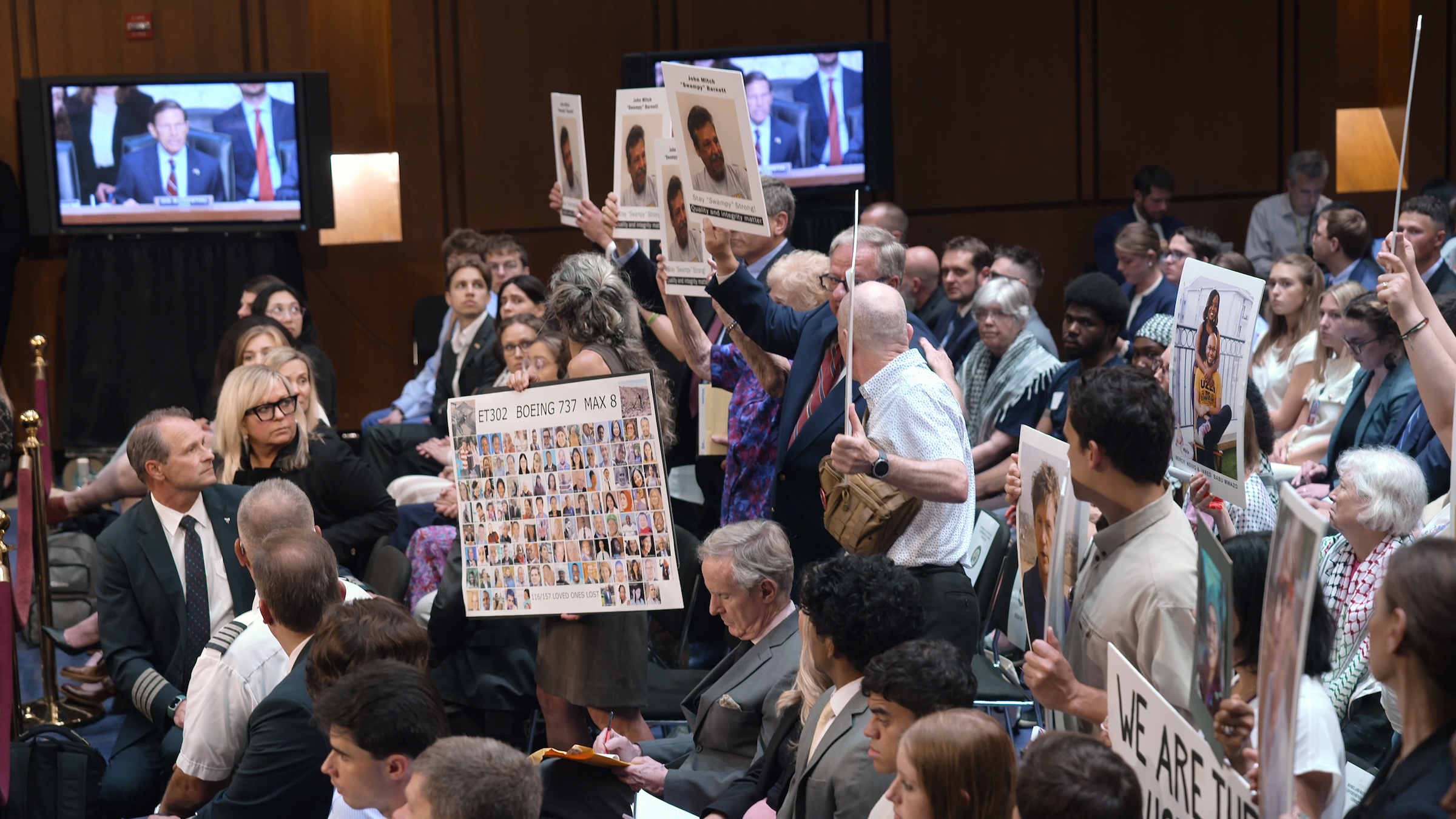
A still from Freefall: A Reckoning for Boeing —Courtesy of Netflix
The continued fight for change
While the whistleblowers drive Freefall’s investigative narrative, they are far from its only focus. After the two 737 Max crashes, Boeing negotiated a “deferred prosecution agreement” with the Justice Department, which meant that criminal fraud charges would be dropped if the company avoided more scandals and accidents for a probation of three years. For the loved ones of the crash victims, this was not good enough, and they pushed their fight for meaningful accountability from Boeing and assurances that aviation companies wouldn’t be able to shirk on safety ever again. “One of the things that comes through is just the remarkable humanity of the people who work there, and the remarkable lack of humanity by the corporation,” says Kennedy.
Naoise Connolly Ryan is the widow of Mike Ryan, a United Nations employee who died in the Ethiopian Airlines crash. In Freefall, she comes across as a clear-minded, courageous and dogged organizer, appearing with her fellow activists with placards and posters of her husband in the benches of senate chambers where Boeing leaders are being grilled. Just before Freefall’s release, a Chicago jury awarded her $29 million for a civil suit brought against Boeing. It sets a strong precedent for the other families, but it’s a small step against a stubborn giant—a company once regarded as symbolic of American growth and excellence that has turned its back on the public.
“You're seeing this company really be destroyed, and at the same time, the people running it have become some of the richest people in the world,” says Kennedy. “It does speak of a larger correction that needs to happen to make sure that corporations and governments are focused on the public interest and not destroying these institutions for the profit of a very small group of people at the expense of everybody else.” Boeing’s downfall is ultimately a historic betrayal.

 Login
Login
.jpg?branch=production)