Reading view

How to Increase Mental-Health Literacy

—aleksandarvelasevic—Getty Images

Imagine that someone you love starts turning down opportunities to attend social gatherings like going to the movies, picnics, and parties. Then this person stops responding consistently to your texts, avoids eye contact when you do get together, and seems to be losing their energy or spark. They have trouble keeping up with daily routines and talk a lot about physical struggles such as headaches and stomach aches. Something doesn’t feel right to you, but you’re not sure what is happening or what to do. Imagine now if the person all these things are happening to is you. 

Nearly one in seven people worldwide have a mental-health disorder. With the prevalence of mental disorders so high, odds are we all know and love someone who is struggling. But most of us have limited understanding of mental health, and sometimes misguided or inaccurate knowledge. If we improve our understanding, this could help us better identify when we are in distress and get the help we need. It can also potentially assist us in helping friends, family members, neighbors, and co-workers. As a psychologist, I believe we could all benefit from increased mental-health literacy.

The concept of mental-health literacy was first coined in the mid-1990s by a group of Australian researchers who began a series of studies to understand the public’s knowledge about mental health. Since then, extensive research on mental-health literacy has taken place in the U.S., Australia, Canada, the U.K., India, Japan, and elsewhere. 

Data from 16 studies indicate two major trends in public awareness about mental health. First, we’re making some headway in recognizing that mental disorders often have some biological underpinnings. Second, there seems to be more acceptance of professional help for such difficulties. But it’s not nearly enough.

Finding sound mental-health information can be challenging. The Internet has the potential to increase our access to evidence-informed knowledge and decrease unmet mental health needs, but there’s too much noise. And a lot of information online is of inadequate quality and lacks scientific evaluation. Rather than helping, random Internet searches on mental health could harm people most in need. 

One way to further increase our mental health literacy is to take the free online Mental Health First Aid course. This could help us gain knowledge on how to recognize when a disorder is developing and provide information on help-seeking options and available treatments. 

One of the best resources for evidence-based information is the National Institute of Mental Health. Established in 1949, this is one of the world’s largest research organizations funding brain and behavior research. It offers valuable online public resources including signs and symptoms of a broad range of disorders including anxiety, depression, eating disorders, and ADHD. It also provides information on the latest and best treatments and how to find a mental-health provider. Another accurate and up-to-date source is the National Alliance on Mental Illness, the largest grassroots mental-health organization in the U.S. They too offer research informed information online on how to find support including a helpline.

While mental-health literacy is everybody’s business, there are limits to the appropriate use of such information, particularly in our offers to help others. Let’s take the example of problematic drinking. It’s good to be able to recognize our own or a family member’s struggles with alcohol. But there are differences in providing someone with encouragement and assistance in getting help and respecting their boundaries if they refuse or are uninterested. Mental-health literacy can help us distinguish the best way to approach issues like these. 

If you or someone you know may be experiencing a mental-health crisis or contemplating suicide, call or text 988. In emergencies, call 911, or seek care from a local hospital or mental health provider.

  •  

Make the U.N. Great Again: The Uphill Struggle Facing the Next Secretary General

It may be both the most prestigious and the most frustrating job in international diplomacy: members of the United Nations are weighing who should succeed António Guterres as Secretary-General when he completes his final term in December. The timing couldn’t be more critical, with U.N.’s fortunes at a historically low ebb, for reasons both political and financial.

Indeed, U.N. insiders question why anyone would even want the job at such a testing—and turbulent—moment. Some predict that, with major powers repeatedly blocking the U.N. from intervening in crises from Ukraine to Myanmar, and with the U.S. rolling back funding, whoever succeeds Guterres will simply have to continue to do “less with less” and manage a process of institutional decline as gracefully as possible. Others still hold out hope that a new U.N. leader could reverse the slide, and persuade powers large and small to invest in the organization.

Yet, at a time when global challenges—wars, epidemics, and climate change—continue to proliferate, there is a compelling case for preserving the U.N. as a space for global deal making. Doing so will require a Secretary-General of formidable political skills, capable of persuading world leaders to listen.

It is a question of balancing two competing imperatives. The U.N. is an organization that rests on international cooperation, but the current global moment is one of international competition. The challenge facing the next Secretary-General is to explain how the U.N. can stay relevant. This is no time to preach the virtues of solidarity among nations. It is necessary to meet governments “where they’re at,” as psychologists say, and accept their rifts are real. A shrewd leader of the U.N. could find ways to help states de-escalate conflicts and cooperate on global challenges out of necessity, not idealism.

Ultimately, if political leaders do not believe that the U.N., which was founded in 1945 to “save succeeding generations from the scourge of war,” can live up to that founding goal, they are less likely to take it seriously as an authority on other international issues such as Artificial Intelligence or economic cooperation. Making sure that doesn’t happen will be the central challenge for the organization’s next leader. Perhaps each nomination should thus come with a warning: Caveat emptor, or buyer beware. 

Our tumultuous present

Maybe the biggest challenge for the next Secretary General lies inside the cavernous chamber that houses the Security Council, the organization’s most powerful body. The five permanent, veto power-wielding members—the United States, China, Russia, Britain, and France—that dominate the council have repeatedly blocked intervention in crises from Ukraine to Myanmar. The Biden Administration’s repeated refusal to support calls for a ceasefire in Gaza at the U.N. in 2023 and 2024 stirred deep resentment across the organization.

Most member states still pay homage to the U.N. Charter and its prohibition against aggression. But Russia’s invasion of Ukraine and the U.S. decision to attack Iran in February suggest that some of the security council’s most powerful members no longer feel bound by its guiding principles. If the U.N.'s political situation is its main headache, its financial positions is a close second.

After the Trump Administration cut off the bulk of U.S. funding for its operations in 2025, U.N. officials have been spending a lot of their time wondering about how to pay the bills. The U.S. is supposed to cover about a fifth of the organization’s core costs and a quarter of the budget for its blue helmet peace operations, which add up to roughly $8.5 billion this year. Washington was already behind on its dues when Trump returned to office, and currently owes the U.N. about $4 billion. The U.S also previously covered roughly a third of the separate budgets for the organization’s big relief agencies—such as the World Food Programme—which need tens of billions of dollars to feed, vaccinate and shelter vulnerable people each year.

Other traditional donors, including European governments, are scaling back spending on development and humanitarian aid. Potential alternatives have not stepped in to close the financial gap. China is now on the hook for almost as much of the U.N.’s core and peacekeeping budgets as the U.S., but is often slow to stump up its annual contributions. Beijing also contributes very little to the humanitarian sector. While the Trump Administration has released some funds for the U.N.’s life-saving efforts this year, big relief agencies have been forced to cut back life-saving assistance to civilians in places like South Sudan and Afghanistan.

This is a markedly different landscape from the one António Guterres encountered in 2017, when the former Portuguese prime minister became Secretary-General. At that time, the U.N. members had just agreed to the Paris climate accord and a new set of Sustainable Development Goals, including a pledge to eradicate extreme poverty by 2030. Geopolitical storm clouds were gathering—the Security Council was fiercely divided over the war in Syria—and Donald Trump’s surprise victory in the 2016 elections, coming soon after Guterres’s selection, signaled trouble ahead. Still, for believers in multilateral processes, a broad agenda for international cooperation appeared to be in place, and the Secretary-General’s task was to turn it into reality.

That brief moment of optimism proved ephemeral. Guterres spent a large part of his first term trying, with some success, to keeping Trump at bay. Nonetheless rising tensions among major powers, and disputes over how to finance development projects and support poorer states’ climate change adaptation efforts, have eroded governments’ trust in one another, and their faith in the U.N.’s complex, negotiation-based approach to addressing their national interests. Guterres has spoken eloquently about the risks of international fragmentation, and has pushed U.N. members to work together on emerging challenges, such as the regulation of Artificial Intelligence. But he has struggled to get leaders to focus consistently on that agenda. Increasingly, many governments are turning instead to smaller, looser decision-making clubs—such as the Group of 7, a Western club, or the BRICS, the bloc of emerging market nations—rather than the U.N. itself.

Diplomats and U.N. officials also fault Guterres for taking a low-key role in crisis management, despite major conflicts exploding on his watch. The Secretary-General has been blunt about his lack of leverage to mediate in most of today’s conflicts, and has encouraged a culture of caution among his senior staff dealing with political affairs and peace operations. Although he was involved in one notable mediation success—the 2022 Black Sea Grain initiative—many U.N. members feel that his reluctance to engage in broader peace efforts has undermined the body’s credibility.

Runners and riders

Such critiques of the incumbent, and the manifold challenges facing the office of the Secretary General, haven’t deterred a clutch of candidates from around the world—who may yet be joined by new competitors as the race to succeed Guterres enters its final stretch. 

Eight candidates are currently jostling to replace him and assume the reins of what U.N. watchers sometimes call “the parliament of man.” Among the most widely discussed are Rafael Grossi, the Director-General of the International Atomic Energy Agency, and Rebeca Grynspan, a senior U.N. trade official and former vice president of Costa Rica. Carolyn Rodrigues Birkett, Guyana’s ambassador to the U.N., is also a popular candidate among her colleagues in New York. But because there is no official cut-off point for new candidates to enter the race, and many diplomats expect more challengers to emerge, especially if none of the existing crop looks like a clear winner.

While the current candidates have been speaking at public events from Europe to Korea, they have struck a cautious tone regarding their plans for the U.N. This reflects the way the selection process works. The Security Council—where the U.S., Russia, China, France and the U.K. hold vetoes—is central to the process, vetting candidates and recommending one to the General Assembly, where all U.N. members have seats, for approval. To date, the Assembly has always ratified the recommendation. Anyone who wants to be Secretary-General must avoid offending the five veto powers.

Talking about what is wrong with the world today without irritating at least one of the major powers is quite hard. Guterres angered Russia by criticizing its war in Ukraine, and Moscow is likely looking for a pliable U.N. chief. The biggest headache for Guterres’s successor will be maintaining working relations with Washington in the remaining years of the Trump presidency. Senior U.N. officials worry that, having imposed severe economic strain on the organization, the U.S. will insist that the next Secretary-General make deep cuts to U.N. agencies and follow the Trump Administration’s agenda on questions such as diversity, and soft-pedal criticism of Israeli actions against the Palestinians.

Tiptoeing around these sensitivities, the eight candidates for the Secretary-General position agree that the U.N. is in poor shape. All have promised to concentrate on preventive diplomacy, and have committed to managing the organization efficiently. None has so far set out a groundbreaking strategy for putting the U.N. back on its feet. If this is partly a matter of political tact, it also reflects the fact that the U.N. Secretary-General, despite being the public face of the organization, has only limited power to shape the organization. While the veto powers dominate the Security Council, a sprawling array of intergovernmental committees and boards—including dozens of entities dealing with issues from telecommunications to the environment—oversee the wider work of the U.N. system.

The Secretary-General and his or her advisers must barter with U.N. members over remarkably minor budgetary matters, down to the number of mid-level and junior staff employed in U.N. offices. It is easy to call on the U.N.’s top official to focus on problems of world order, but bureaucracy gets in the way. 

Once in office, the next U.N. chief will have to manage these institutional issues while also laying a broader agenda. She or he could address this challenge by appointing a powerful chief of staff to handle administrative matters, freeing up more time to prioritize diplomacy.

On the diplomatic front, the incoming leader’s priority will be to demonstrate the ability to insert himself or herself into one or more conflicts, signaling a shift from the Guterres era. This is easier said than done. Conflict prevention and peacemaking have become crowded fields, with a growing number of middle powers, and at times the Trump Administration, leading peace processes that the U.N. might once have overseen. 

The next Secretary-General will not simply be able to fly into trouble spots and cajole warring parties into making deals. But he or she can use the first months in office to shuttle between key capitals in regions such as the Middle East, looking for opportunities to engage, and encouraging U.N. staff—who still have considerable expertise on issues like mediation and peacekeeping operations—to table new options for dealing with ongoing or looming conflicts. This is not likely to produce quick or major wins, and there is always a risk that the U.N. will launch peace initiatives that fail. But as a European diplomat familiar with the U.N. once put it, everyone expects the U.N. to fail, and as a result it can do so without sustaining reputational damage. 

The greater danger for the institution right now is that it fails to engage in meaningful crisis diplomacy at all, cementing the impression that it is no longer a significant peacemaking force. If the Secretary-General can use this kind of early outreach to gain a place on the diplomatic map, she or he will still face the challenge of articulating what the U.N. stands for in a divided world.

Collective action in a world divided

There is no shortage of good arguments for why collective action helps address problems that transcend borders. These often get lost at a time when the predominant political narratives center on national divisions and differences.

U.N. officials do not help themselves by couching their arguments in technocratic terms, weighed down with talk of goals and policy frameworks. But the underlying political challenge is to make a case for multilateralism that resonates with decision-makers who view international affairs in zero-sum, or at least very low-trust, terms.

The best approach may be to frame the U.N. as a sort of global risk reduction organization. Over the last decade, governments, the private sector and the public have seen the knock-on effects of both the pandemic and regional conflicts causing global economic disruption. New technologies are creating further economic shocks and could make future conflicts more dangerous.

The U.N. is not a global authority with the powers to halt these trends. But it is a space in which governments can discuss the risks involved and—where they see common ground—explore steps to mitigate them. Even though it may be easier for states to meet in smaller clubs such as the BRICS and G7, the U.N.’s advantage is that it remains a neutral space where different blocs of governments can engage in dialogue.

The next Secretary-General can only encourage rivalrous states to take part in these dialogues, and will need to do so with a light touch. In the past, the U.N. has sometimes responded to new challenges by announcing new agencies and funds to address them. The resulting multilateral bloat has become hard to sustain financially and defend politically. The incoming U.N. leadership will need to show that it can facilitate discussions of difficult global problems without adding new layers of bureaucracy.

The role of the Secretary-General is perhaps to be both the world’s most prominent event organizer—bringing governments and other actors into the room to talk about their problems—and a sort of political therapist for world leaders. If the Secretary-General can win the trust of these leaders, and persuade them to work on common problems despite their divisions, he or she may be able to bring a degree of stability to a dangerous international environment. In doing so, she or he can also keep some political space open for the U.N. to do its most basic work, getting help to the suffering, mitigating the effects of suffering and – at its best – giving small states and civil society groups a rare platform to speak out on issues like human rights and climate change.

The new leader of the U.N. cannot heal all the world’s divisions, but with courage and political acumen, the Secretary-General can make international disputes a little less toxic. That may be a limited vision of what the U.N., sometimes dubbed the “parliament of man” is for.  But in an era of multiplying dangers and distrust, it is a noble and perhaps essential one.

  •  

What 72,000 Bodies at a Fence Revealed about Africa and Europe

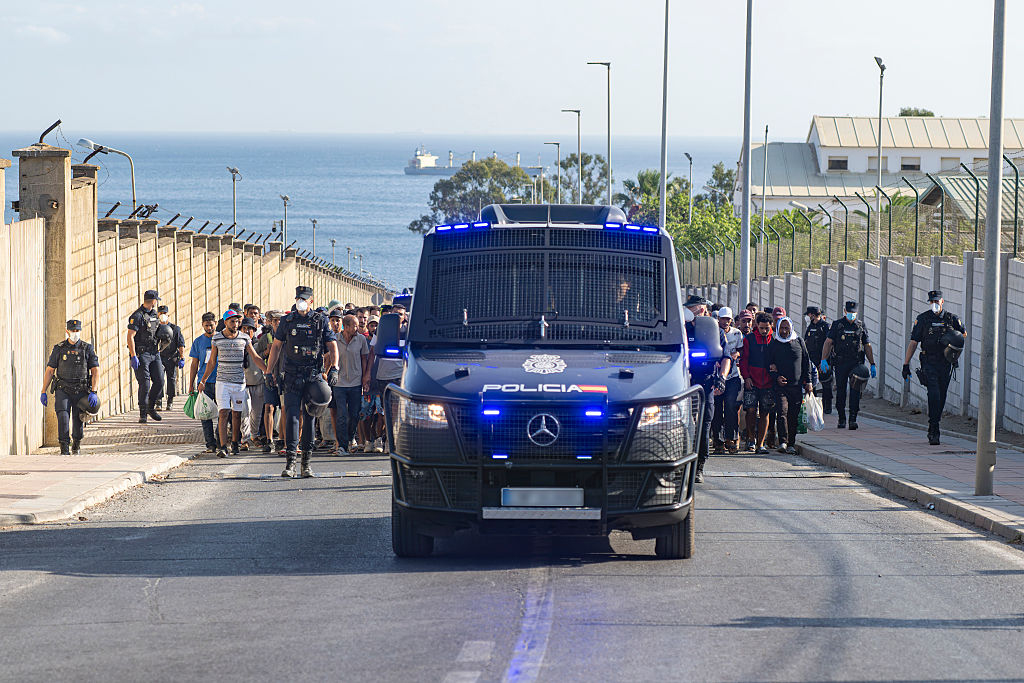
Spanish police escorting out migrants in Ceuta, Spain on 20 August, 2026. —Marcos Moreno-Europa Press via Getty Images

Europe and Africa are at once impossibly close and worlds apart near the northern tip of Morocco. Ceuta and Melilla are two small cities overlooking the Mediterranean Sea and a short ferry ride across the Strait of Gibraltar from Spain. The cities on the African mainland have been controlled by Spain for centuries, and their residents are Spanish citizens who enjoy the privilege of European Union membership.

A border fence and a stark disparity in wealth and opportunity separate the two enclaves from Morocco: Ceuta lies a few miles from the adjoining town of Fnideq, and Melilla is 10-minute drive from Beninsar. In late July and early August, an estimated 72,000 people from Morocco—including many minors—walked, swam and ran toward Ceuta. Some made their way to Melilla, hoping the same rare fortune would await them there. Most carried nothing but a phone in a plastic holster and even lost their shoes to the waves, that later deposited them along the shore.

The people who made the hragga—colloquial for irregular migration—were driven by a combination of calculation and desperation. There were roughly three categories of people. Those who had tried before and had come prepared. There were those who had not been planning but had come to believe through a combination of online misinformation and unverified rumors, that a genuine window of opportunity to make it to Spain had opened and could close at any moment if they hesitated. And there were still others who embraced a daredevil approach with a combination of optimism and pessimism: “Why not? I have nothing to lose.” Many weighed the risks, reasoning that even a beating would be worth spending a day in Ceuta, which they are normally forbidden from entering.

Struggling to find food or shelter, most were either expelled by Spanish authorities or returned to Morocco voluntarily. Videos circulated online showing men kicked by the Spanish Guardia Civil while being expelled, then hit with batons by the Moroccan Gendarmerie on the other side of the border, in a choreography of rejection. The human cost was terrible. Some died falling from slippery rocks. Others drowned or were killed in the crush of thousands of bodies converging on the same narrow strip of shore. Among the 141 dead are: Faten, a smiling 20-year-old, talented footballer hoping to play in Europe; Ahmed, only 17; and many more. Parents of many youth who crossed over to Ceuta have been waiting in anguish at the border in Fnideq, carrying photographs of their missing children, checking with strangers if they happened to see their kids.

The timing was especially awkward for the Moroccan government, as the crisis erupted during the annual celebration marking the anniversary of King Mohammed VI’s reign. The government remained disengaged for days and attributed it to organized criminal smugglers. No one bought the argument, as it would be pointless to smuggle a person to the enclaves, since they are not part of the Schengen area. To reach Europe, a migrant would have to reach mainland Spain. Then, Rabat pointed to a Spanish Supreme Court ruling stating that migrants arriving by sea would not be deported automatically, as if legal nuance, rather than desperation in Morocco, was driving the migration.

The Moroccan government resisted acknowledging the reality behind this wave of migration: inequality, and the absence of work and opportunities for the country’s youth. In fact, those inside the country who spoke out against the state’s mishandling of affairs, and who reiterated why Moroccans wished to leave, were arrested. Only after growing pressure within Morocco did the government eventually agree to assist in identifying the unaccompanied minors and the deceased.

A profusion of conspiracy theories about geopolitics, circulating widely online, further obscured the actual forces driving the migration. Certain narratives, offered without any evidence, sought to portray the migrants as pawns in political games, disregarding entirely what drives and motivates people to leave home on such perilous journeys.

Repression and unemployment in Morocco

A constitutional monarchy, Morocco holds regular multiparty elections but the palace and its entourage dominate political and economic power through formal and informal means. Morocco has a repressive state, a deeply unequal society, and a profound crisis of unemployment and underemployment, especially for its young population.

From banning protests to fining editors to arresting rappers and  journalists, the crackdowns on political freedoms in Morocco have increased tremendously. While hundreds of the country’s brightest and most promising people perish in prisons, privileged Moroccans are more concerned with reputational damage to Morocco or insist that the country needs evolution and not a revolution. But how is evolution possible when a teenager demanding public hospitals instead of luxury football stadiums or unions pressing legitimate labor demands can get them beaten and arrested? 

Morocco’s economic model has produced soaring headline growth alongside deepening inequality, feeding a resentment that runs deep. Over the past two decades, capital has flowed toward megaprojects—the Tangier Med port, the Africa-Atlantic Corridor—financed by a mix of foreign and private investment. The services sector employs the largest number of people, followed by agriculture, forestry, and fishery.

The working age population of the country has grown by more than 10% over the past decade but employment has increased by only 1.5%, according to a 2025 World Bank report. The official unemployment rate stands at around 10% and at around 27% among young people aged 15-24. Yet 60-80% of workers in Morocco work in the informal economy, according to a 2025 report by the UN Economic Commission for Africa. The result is an economy whose glittering infrastructure sits uneasily alongside stagnant wages and rising prices for food, fuel and housing.

Unsurprisingly, many of the Moroccans who had expressed their frustrations and their desire for reform and opportunity in multiple waves of protests—the Arab Spring-era protests in 2011, the Hirak protests in 2016, the Gen Z protests in 2025—trudged by the thousands toward Spain. When loyalty flows only one way, the haves accumulate ever more while the rest are left to watch lavish banquets for Throne Day—and resignedly sigh, “hiwa hadchi li ‘ta Allah (This is the fate God has given us).” Hence, rather than asking, “Why do they leave?” we would do better to ask, “Why would they stay?”

Morocco has no shortage of resources: the country possesses rich agriculture and fisheries, phosphate, minerals, and enormous extractive projects in the occupied Western Sahara. A sense of being cheated is shared by millions as the economic benefits and opportunities do not trickle down to ordinary people. The contradiction between these natural resources and the everyday poverty, unemployment, and hardship experienced by ordinary Moroccans is expressed in the Moroccan chant that goes: “l'fosfat ou jouz bhorra / wa sha'bha mkhorra (Phosphate and two seas / yet its people still suffer).”

Moroccans see their government invest in the bling of glossy festivals and football stadiums built for the 2025 Africa Cup of Nations and the 2030 FIFA World Cup, which Morocco will co-host with Spain and Portugal. In the face of such visible wealth, it is what the state fails to do that carries the greatest weight.

A long transit in Tangier

Tangier is perched on the Strait of Gibraltar and has long served as a bridge between Africa and Europe. The city has drawn a rich tapestry of internal migrants from across Morocco, its diaspora, and the broader African continent.

In the early 1990s, when Spain—following a transformation of migration policies in the European Union and the implementation of the Schengen agreement—imposed more restrictive visa regimes, irregular migration began to accelerate. The International Organization for Migration estimated that irregular crossings to Europe through the Strait of Gibraltar rose from fewer than 5,000 in 1999 to around 20,000 in 2003.

Wars in Afghanistan and Iraq, military interventions and civil wars across Africa and intensifying climate catastrophes in the following two decades swelled global migration flows. Alongside African migrants awaiting passage, thousands from other parts of the world joined them. Europe, Australia and North America have all sought to obstruct migrants from coming in by any means necessary. The European Union outsourced border control offering economic and political incentives to Turkey and Morocco to stem the flow of migrants.

Under one EU-Africa agreement alone, $2.35 billion was allocated for deportations. This includes detaining migrants and dropping them in remote deserts. Several exit points along the so-called Eastern and Central Mediterranean routes were either sealed off by civil war in Libya, by special agreements with Turkey, and a bottleneck formed along the Western route through Morocco and Senegal.

Spain has already constructed a 1,600-foot floating barrier along the sea border following the Ceuta crossings. In the past decade, tens of thousands of migrants have died in Mediterranean crossings alone. But as Hein de Haas, a sociologist of migration, has explained, restrictive immigration policies fail to stop migration as there is a structural demand for cheap migrant labor in Europe. The waters of the Atlantic and the Mediterranean are full of the remains of those who perished while trying to reach Europe, victims of a system that treats human mobility as a threat to be managed rather than a reality to be humanely addressed.

But the combination of rising inequality and violence globally, and the need for a workforce, means people won’t stop migrating. This means that current border policies don’t stem migration but instead increase death and suffering. Precisely because it takes much longer, thousands of migrants are stuck in Morocco. Mehdi Alioua, a Moroccan sociologist, has called this phenomenon  “transit migration.”  Each must find rent and work, saving for yet another attempt at a better passage. Some have children, who grow up speaking fluent Darija, the Moroccan colloquial tongue, and who eventually become part of the working class fabric of Tangier. Some migrants with means share rented apartments in the affordable, peripheral neighborhoods of Mesnana and Boukhalef in southwestern Tangier.

Migrants without any financial resources, and mostly from other parts of Africa, camp in the woods in the forested outskirts of the city, where conditions are bare. When I visited their makeshift dwellings to meet some of the migrants, a strange odor hung in the air. Sticky puddles drew flies. I moved past the dumping ground and reached their improvised living quarters, which were kept meticulously clean.

During my fieldwork in Morocco between 2013 and 2018, it was obvious that many African migrants in long transit in Tangiers endured dire living conditions and faced racism. Black migrants were often called “Mamadou,” and sometimes even the dreadful “Ebola.”

In December 2013, Cédric, a young Congolese man, fell from his apartment rooftop in Boukhalef while being chased by the police. Many believed he had been pushed. Images that circulated on migrants’ phones showed his head smashed against the granite floor. Two days after his death, I saw the putrid pool of dried blood, nearly black, where he had fallen, when I visited his friends to pay my respects. What stayed with me for months was that I could still make out the pattern of the spatter from the impact.

Cédric’s death was a key turning point. A growing number of Moroccan activists understood the necessity of rejecting the notion that, in a poor and authoritarian country, organizing against racism is a “privileged” or “European preoccupation.” Moroccan activists, drawing on their own experience of repression, understood how short the distance can be between dehumanization, complacency, and abuse. They grew more attentive to the living conditions of migrants and began to challenge the normalization of racism more explicitly.

On one of those days, I met Najiba, a young activist, near Bab Al Qasba, one of the gates leading to Tangier’s medieval city. She and her comrades were showcasing their posters in hopes of garnering support from passersby for a demonstration the next afternoon. A placard read in beautiful Arabic calligraphy: “Kuluna Afariqa (We Are All African.)” Her group got some attention: some people paused for a few minutes to watch before moving on; others muttered some remarks too.

Najiba fell into conversation with a young man, around 16 years old. He had mocked the group’s slogan and pressed her on why they bothered organizing against racism. “Wasn’t it naïve,” he asked, “to defend the Africanos?” She told him that everyone had been a migrant once, and that Tangier itself had known great waves of migration from people of the northern Rif region.

She asked him where his own family was from. They shared Rif ancestry. “Ah, a Riffi, as well,” I heard her respond. “Did you know they used to say the Riyafa were taking people’s jobs and houses when our grandparents first came here?” She took him seriously and made him see historical patterns. He was intrigued and the teasing stopped. By the end of it, she remarked, “So we’ll see you here tomorrow, yes?” He made no promise. But he did wave goodbye, and his laugh, this time, was genuine.

The road from Ceuta

Many people located Ceuta and Melilla on a map for the first time during the recent frenzy. It would be no surprise if eyebrows were raised upon seeing just how far Spanish territory extends. These were sites of Portuguese and Spanish slave-trading routes and military garrisons in the 16th century.

The crossing to Ceuta was neither the first nor will it be the last of its kind. Because of its exceptional scale, Ceuta laid bare, much clearly, the contradictions of humanity in miniature, from kicking down someone to having the capacity to walk in someone else’s shoes. While a Dutch-Moroccan celebrity tweeted tactlessly, “Moroccan swims to Ceuta with an iPhone 16 to get an iPhone 17,” a woman took off her own shoes and handed them to a barefooted migrant.

While Italian, French, Spanish, Dutch, American and British politicians ratcheted up the headlines, numerous border staff stretched their discretion to the maximum to handle the situation with dignity. When fascists across Spain sowed panic and rallied to stop “the invasion,” local communities marched and blocked an anti-migrant demonstration. Ordinary people came out to provide emergency support; groups such as No Name Kitchen documented the treatment of migrants. Hope lies precisely in these different approaches.

I have been thinking repeatedly about Najiba, the activist organizing in defense of African migrants in Tangier. There were migrants from elsewhere in Africa in Ceuta, and they would have had much less protection or support once deported. Najiba’s example gave me hope that, even in the most difficult circumstances, solidarity can arise.

I think of the conversation between Najiba and the young man in Tangier: the boy’s smirk transforming into a thoughtful frown. I would like to think that something clicked in that moment. I wish I could reach back and speak with him. Standing there in Tangier, he was able to see things from another perspective. Perhaps he too instinctively recognized the moment for what it was. Or perhaps he, too, was among the thousands who had left for Ceuta.
  •  

What Happens When the World is Run on Code No One Understands?

—lucadp—Getty Images

The International Congress of Mathematicians met in Philadelphia last month, its first U.S. meeting since 1986. Minutes after accepting the Fields Medal, mathematics’s highest honor, Jacob Tsimerman told reporters he was leaving academia to work on AI safety. “I think the world is changing,” he said, adding that he did not expect the mathematical career to survive in its present form. 

Two months earlier, he had been one of nine mathematicians asked to review whether an AI model had truly refuted an 80-year-old central pillar of modern geometry, known as the Erdős unit distance conjecture. Tsimerman and his peers determined that it had, and their commentary alongside the 18-page proof helped translate the machine's argument into mathematics a human could understand.

The breakthrough, and subsequent report, reflected how the bottleneck that holds us back from forging new discoveries in mathematics, and, increasingly, in every other field, is changing. For most of history, the scarce resource was discovery. With AI, discovery is nonstop, and human confirmation is now what is scarce. 

To be clear, we are AI optimists. We believe AI tools will complement human ingenuity and expand what we can know and build, but our infrastructure for vetting and certifying discoveries was built for human throughput, and that is now the binding constraint. That is what holds innovation back. The answer to this problem is formalization: translating AI’s outputs into precise forms whose correctness can be checked automatically. Building the infrastructure to make verification routine is now a national-scale engineering problem.

Machines are outrunning us in more than math. The same is happening to the code that runs hospitals, banks, and power grids. In April, for example, Anthropic disclosed that its Mythos model could find unknown vulnerabilities in major operating systems and browsers, and restricted access to fifty organizations racing to patch them. Soon after, Microsoft engineers found 90 critical flaws in a widely used product; and in June, Sen. Mark Warner told a Senate hearing, citing the NSA director, that the tool "broke into almost all of our classified systems, not in weeks but in hours."

All of this arrives in a world that already runs on code we assume is correct. In July 2024, a single faulty software update, not a cybersecurity attack, grounded flights and disrupted hospitals worldwide. Nowadays, developers can “vibe code,” or use generative AI to write code with natural language prompts. This lets teams build quickly, but at the same time can produce vast quantities of code nobody fully understands.

The same AI systems accelerating discovery can also solve the resulting information overload — if we pair their generative power with the rigor of mathematics.

For decades, researchers in defense, intelligence, academia, and industry have built an alternative to blind trust: formal methods, systems for proving that software mathematically will do exactly what it was designed to do. Like the way a software compiler translates a program into instructions a computer can execute, formal verification takes code, a specification of what it should do, and a proof connecting the two, and accepts the program only if every logical step checks out. This makes it possible to automatically validate AI output, and more broadly rigorize software and other security guarantees. And generative AI tools have made this sort of formalization broadly accessible in a way it never was before. 

Once proof checking is cheap, the next bottleneck becomes writing the right specification. Deciding precisely what a system should do and capturing the world around it remains a matter of human judgment. A flawless proof of the wrong specification is still an answer to the wrong question. Formal verification cannot stop phishing, prevent every failure in a complex human system, or certify an AI model's overall safety—but it can eliminate whole classes of errors in critical software. For systems where failure can mean harm to millions, this should be a crucial step in the adoption of AI-generated code. 

The Leiden Declaration, endorsed in June by the International Mathematical Union, warns that AI threatens the verifiability of proof. We would put it the other way around: mathematics offers the infrastructure to make generative AI more trustworthy. For this reason, the United States should treat that mathematical rigor as a national mission. We need public infrastructure for verified software: open libraries of verified components and specifications, standards and benchmarks, better tools for checking updates, and training programs that connect mathematics, computer science, engineering, and national security—coordinated across agencies rather than confined to one program. And because formal methods rest on deep mathematical foundations, this requires sustained investment in mathematics research and education, not only in the applications built on top.

Companies operating critical infrastructure should not rely solely on reactive patching and bug bounties where failure could hurt the public. Instead, they should aim to build in auditing and formal guarantees from the start. The goal is not to formally verify every line of every program, but to identify the logic of critical systems, specify what that logic must and must not do, and achieve mathematical assurance in that logic.

Mathematics has weathered crises of trust before. Geometry, infinity, logic, and the nature of proof each threw the field into foundational doubt, and each time the response was more precise languages, stricter standards, and better verification. That rigor is what made mathematics scalable, and software now needs the same transformation. As AI writes more of the code the world runs on, blind trust is no longer good enough. The question is whether the United States will lead the shift to mathematical trust, or wait for the failures that force it.

  •  

As Students Return, America’s Classrooms Are Dangerously Hot

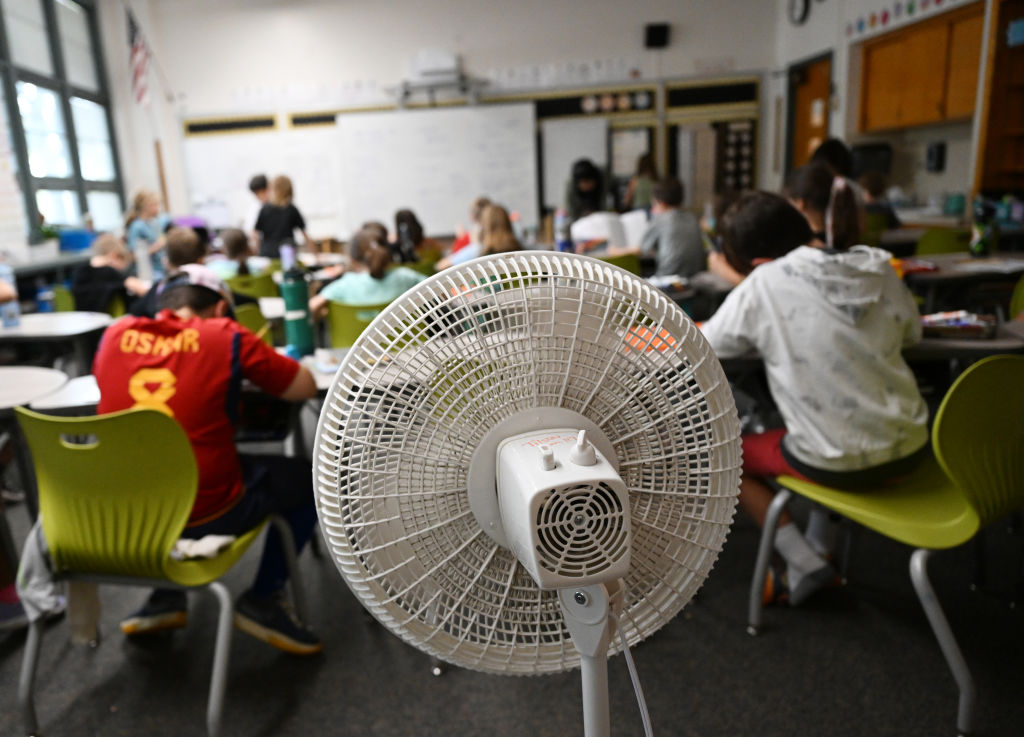
A fan moves air around in a classroom at Corey Elementary in Denver, Colorado on October 8, 2024. —RJ Sangosti—The Denver Post

As students go back to school in the midst of record-breaking summer heat, many are returning to overheating classrooms whose aging air conditioning systems can't keep up with extreme heat waves—if they even have air conditioning at all. 

Extreme heat has already caused school closures and disruptions across the country. In July, Milwaukee Public Schools shut down its Summer Academy and other indoor school programs for two days because of extreme heat. One day in May, 57 Philadelphia schools went remote and canceled all in-person activities due to soaring temperatures. That same month, a Washington, D.C. high school carried out a "heat evacuation" as classroom temperatures reached the mid-90s. Eight elementary schools in Doylestown, PA also closed for a day because old buildings couldn’t protect students from the heat. And in recent years, schools in Memphis dismissed students early as temperatures climbed to 110 degrees. 

During the 2024-25 school year alone, more than 9 million students at 10,000 schools nationwide experienced extreme heat- and weather-driven school closures or disruptions. These are not isolated inconveniences. They are warning signs that our school buildings and grounds were not designed for today’s new weather patterns.

It’s important to understand that students struggle to learn in hot, stuffy classrooms. Air quality, temperature, and ventilation can affect how students think, focus, and perform. Poor ventilation can impair cognitive function, while excessive heat diverts the body’s energy from learning, slows reaction time, and weakens attention.

In fact, research has shown that in schools without cooling, each 1° Fahrenheit increase in school year temperature reduces the amount learned that year by approximately 1%.

Extreme temperatures (80 to 90 degrees Fahrenheit and above) are known to exacerbate student absenteeism and disciplinary referrals, while poor indoor environments can also contribute to the spread of illness and exacerbate respiratory conditions like asthma, one of the leading causes of missed school days. Younger children, whose bodies and brains are still developing, are especially susceptible.

In medicine and education alike, we have seen how the environments where people spend their time can directly affect their health, well-being, and ability to thrive. We would never accept these conditions in a hospital. We should not accept them in a classroom.

At the same time, outdated heating and cooling systems are placing a growing financial strain on school districts. Across the country, energy costs are rising and becoming more unstable. For school leaders, that often means tradeoffs: dollars spent on inefficient energy systems are dollars not spent directly on teaching and learning. But there is a better path forward.

Modern HVAC systems, often paired with on-site solar energy, offer schools a way to deliver reliable heating and cooling while reducing exposure to volatile fossil fuel costs. These solutions can stabilize energy budgets over time and are increasingly supported by domestic manufacturing, including the production of heat pumps here in the United States.

Just as important, new federal tools make these upgrades far more accessible than they once were. Through energy tax credits and a mechanism known as Elective Pay, public school districts can receive direct financial support to invest in these improvements. That means lower upfront costs and faster payback, turning what was once out of reach into a practical, near-term option.

We are already seeing what this looks like in practice.

In Indiana, Center Grove Community Schools are demonstrating how modern HVAC upgrades can improve classroom comfort while helping manage energy costs, in part by replacing aging boilers, chillers, and fan coils with a geothermal heat pump system. In Virginia’s Prince William County, at the heart of the nation’s data center corridor, district leaders are acting to shield their budgets from steep projected utility increases. And in Wisconsin, a school in Menasha modernized its facility with a ground-source heat pump system, solar panels, and energy storage to deliver better air quality, lower costs, and create local jobs.

The benefits extend well beyond temperature control. Students are better able to focus and learn. Districts gain predictability in their operating costs. And communities benefit from more resilient, efficient infrastructure that reduces strain on the grid during periods of peak demand.

For school and district leaders, this moment calls for action. Now is the time to explore how these solutions can work in your community.

The environments we live in shape the health within us. Nowhere is that more immediate, or more consequential, than in the classroom.

We can improve student health and learning, strengthen our schools, and protect public resources at the same time. And we have real-world proof from communities across the country that this is not only possible, but doable.

The real risk is not the price of modernization, but the cost of continuing to send students and teachers into unhealthy, inefficient buildings unprepared for the realities ahead.

  •  

What It Means to Build a Truly Sustainable Ocean Economy

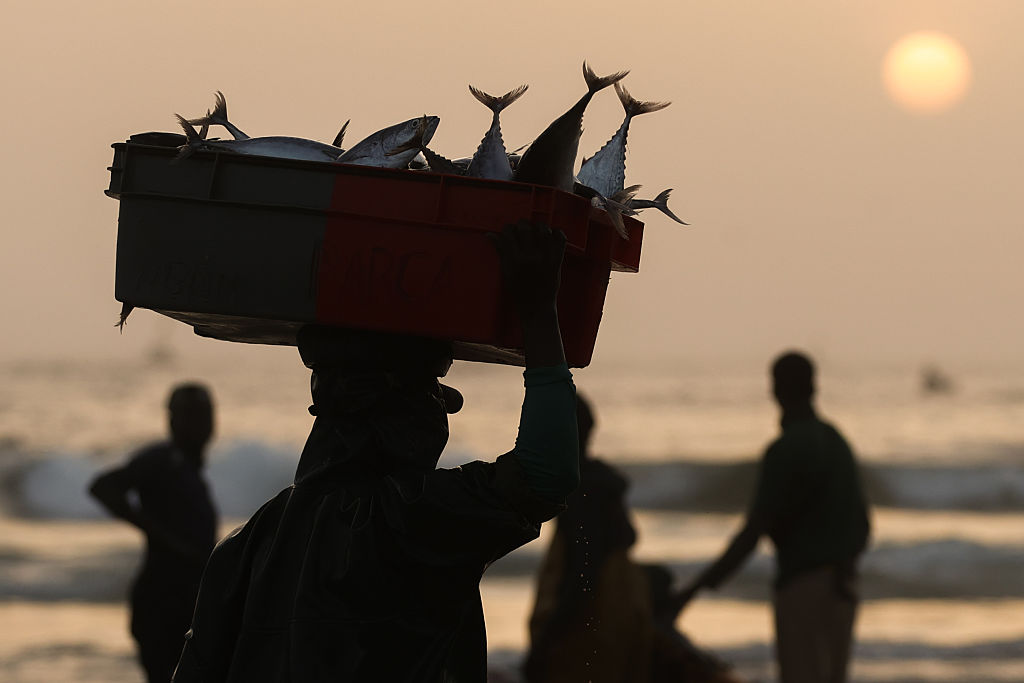
A silhouette of people fish as the economic and ecological importance of oceans is highlighted as part of the World Oceans Day on June 7, 2026, in the capital Dakar, Senegal. —Cem Ozdel/Anadolu—Getty Images

The future of humanity is being built along the world’s coastlines. Around 2.4 billion people live within 100 km (62 mi.) of a shoreline, including roughly one billion within 10 km (6.2 mi.). This narrow band of land, about 5% of the inhabited world, generates an estimated 30–50% of global GDP. It contains many of our fastest-growing cities, ports, energy systems, tourism economies, fisheries, and water infrastructure.

In this small sliver of the planet, the foundations of a new blue economy are already being laid, once set, they will be difficult to change. 

We have a narrow window in which to decide what kind of economy will emerge from the ocean. More than three billion people depend on the ocean for their livelihoods. Yet the ocean economy, valued in the trillions, is steadily eroding the ecosystems that make this activity possible. Fish stocks are under pressure. Coral reefs are approaching catastrophic thresholds. Mangroves, seagrasses, and wetlands that protect communities from storms and rising seas continue to disappear. Without deliberate intervention, this blue economy will simply default to the familiar extractive model that has already depleted so much of the natural world. But we have an opportunity to take a different path, to shape it instead around a more resilient and equitable form of prosperity.

The world must do more than simply slowing the depletion of our oceans. Instead, a net positive, regenerative, blue economy is needed. One that sets a higher standard: economic activity must give back more than it takes and help to rebuild the natural and social capital on which it depends.

This requires a different model of growth. Established industries such as shipping, ports, and fisheries need managed transitions that reduce pollution, decarbonize operations, rebuild stocks, and redirect harmful subsidies. 

Expanding sectors—including offshore renewables, aquaculture, and coastal tourism—must integrate ecosystem health and community benefit into their business models. This shift can unlock a new generation of companies focused on restoration, blue biotechnology, and ocean data, which create value by improving the health and resilience of marine systems. 

The good news is that we already know that this approach pays. Research suggests that a nature-positive economy could create more than three times as many jobs as business as usual, while investment in ecosystem restoration can generate nearly four times as many jobs as investment in oil and gas. As populations grow and AI reshapes labor markets, we need to be far more deliberate about the kinds of economic activity we encourage. Regenerative businesses offer a rare triple dividend: creating jobs, restoring critical natural systems, and accelerating the climate transition.

The opportunity is substantial, but regeneration will not emerge from thousands of disconnected projects and initiatives. Oceans function as systems, but our governance remains divided by ministries, sectors, permits, and political boundaries. We need to manage whole seascapes: connecting coastlines, watersheds, nearshore ecosystems and the people and industries that share them. Marine spatial planning can expose trade-offs, account for cumulative impacts and establish where development belongs, where restoration must take priority, and where activity should not proceed.

This governance must place Indigenous Peoples and local communities at its center. They are often the most experienced stewards of coastal ecosystems yet remain excluded from the decisions and capital that shape them. 

The Bird’s Head Seascape in Indonesia shows what a better model can achieve. Across 225,000 sq. km (over 86,800 sq. mi.), traditional community rights over land and coastal waters have been embedded in conservation planning since the early 2000s. Local and government authority has been connected, and tourism revenues help finance conservation and ecosystem protection. A network of marine protected areas now covers more than 52,000 sq. km (over 20,000 sq. mi.). Community-led tourism has diversified incomes, while former “bomb fishers” have been trained as coral gardeners. Ecological recovery, livelihoods, and local authority reinforce one another because they were designed not as separate entities, but as a single interconnected system. 

We now need global financial and entrepreneurial architecture to step up to take such models to scale. Public and philanthropic capital can reduce early risks; blue bonds, blended finance, and debt-for-nature swaps can mobilize larger pools of investment. Dedicated financing windows, patient capital, technical assistance, and venture-building support can help coastal entrepreneurs and cooperatives grow viable businesses. Technology and AI can lower the cost of monitoring, verification, and coordination, provided they strengthen good governance rather than substitute for it.

The next chapter of the blue economy will be judged by more than the wealth extracted from the ocean. Its true measure will be the fish stocks rebuilt, coastlines protected, jobs created, communities strengthened, and natural systems restored. The future of our societies is increasingly tied to the sea, and our prosperity will depend on learning to give back more than we take.

  •  

America’s Water Systems Are Under Attack. We Are Not Ready.

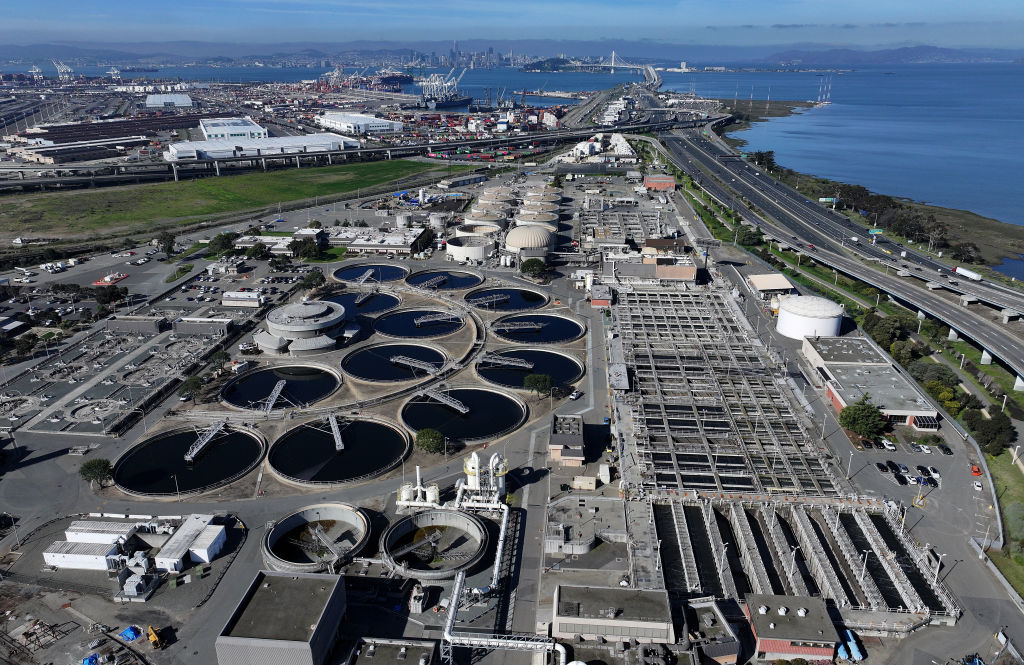
The East Bay Municipal Utility District Wastewater Treatment Plant on March 20, 2024 in Oakland, California. The Biden Administration and the Environmental Protection Agency had warned states of possible cyberattacks on water systems. —Justin Sullivan-Getty Images

In late July, the Federal Bureau of Investigation received reports of cyberattacks on water facilities from utility companies in at least seven states in the United States.

One of those attacks, in Braham, Minnesota, a city of around 1,800 people, affected the functioning of a pump at a water treatment plant and threatened the water supply. Public works crews in the city quickly and impressively isolated the system, restored a backup, and had the water plant back up and running in around 90 minutes, according to Nate George, the mayor of Braham.

While this ad hoc response worked this time, much more is needed to make America truly resilient to hybrid attacks by malicious actors on the critical infrastructure that Americans depend on every day for water, power, healthcare, and financial transactions.

In April, the U.S. Cybersecurity and Infrastructure Security Agency issued a warning saying that Iranian-backed groups are targeting America’s critical infrastructure, including water systems. More capable adversaries of America, China and Russia, are also actively targeting critical infrastructure in the United States, according to U.S. officials. 

President Donald Trump said he does not believe that Iran is behind these most recent cyberattacks. Unnamed U.S. officials reportedly believe that Iran-backed groups are the likely culprits but also caution that the findings are preliminary and that there is a chance that the attackers may be impersonating Iran to stoke tensions.

Meanwhile. the Trump Administration has been gutting U.S. cybersecurity capabilities, cutting roughly a third of the federal cyber agency’s workforce at exactly the moment small utilities need it most. A new approach is needed. Washington needs a whole-of-society, resilience-based approach to deter and defend against these increasing hybrid threats to the American homeland.

Washington can learn a lot from its European allies. Europe has spent decades hardening its systems through a whole-of-society effort it calls “total defense.” Finland and Estonia are especially instructive examples. Finland runs a national supply agency that holds reserves of fuel, grain, and medicine and rehearses shortages alongside the private companies that would actually have to manage them.

Estonia fields a volunteer cyber unit within its Defense League, a militia under the command of its defense ministry. The volunteers are civilians with day jobs who train with the state and show up when attackers strike. They run exercise programs built around cyber resilience, information sharing, and public-private partnerships.

So what does Washington need to do to harden America’s water systems and other critical infrastructure? First, America needs to broadly embrace a whole-of-society “total defense” approach to homeland security, adopting and adapting innovative ideas from partners and allies.

More specifically, policymakers can take three specific steps now that will help prepare for, and perhaps deter, the next attack. First, they should renew the State and Local Cybersecurity Grant Program, a small grants program for states that helps build state and local level cyber defenses. The program has already lapsed once and now runs on year-to-year extensions, which is no way to fund a defense. Make it permanent and carve out a sizable share for water.

Second, Washington should set a response floor for water municipalities and measure it in hours. Electric utilities operate under binding federal cyber standards backed by real financial penalties. Water utilities have no equivalent, and the Environmental Protection Agency currently has no authority to impose one. Congress should give it a narrow version: every system above a modest size must be able to run manually for 72 hours and must prove it in an annual drill. This is not a technology mandate; it is a time standard, and it is the only number that matters once the pumps stop. Braham did it in 90 minutes. That should be the benchmark.

Finally, the U.S. needs to build the bench. There are roughly 50,000 small water systems in this country, and most have no dedicated IT staff at all. No grant program can hire its way out of that. Governors can act tomorrow with authorities they already have: cyber teams in the National Guard on standing state active duty orders, tied to a water mutual aid compact modeled on the one power companies use to restore each other’s lines after hurricanes. When a plant serving 1,800 people gets hit at two in the morning, somebody should already have the phone number.

A country that can afford 11 aircraft carriers can afford to teach 50,000 water operators to turn a valve by hand. Resilience is not a consolation prize for failed deterrence. By forcing an adversary to think twice about whether an operation will succeed, resilience is deterrence.

Malicious cyber activity has affected technology at water systems in at least seven states last week, forcing some facilities to switch to manual operations and prompting the FBI and Environmental Protection Agency (EPA) to warn facilities nationwide of hackers.
  •  

20 Years After Virginia Tech, We Can Do More to Keep Students Safe

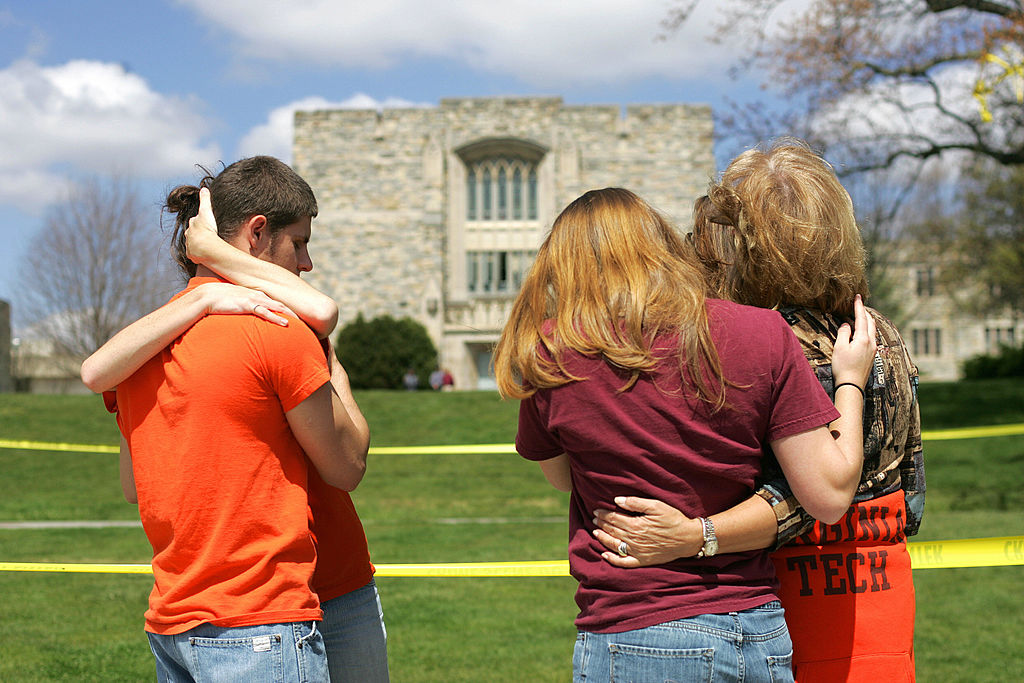
Students honor the victims of the massacre at Virginia Tech in Blacksburg, Va on April 20, 2006. —Tim Sloan—AFP via Getty Images

Every August, our country celebrates new beginnings. Families fill cars with bedding, desk lamps, laptops, notebooks, and high hopes. Students decorate dorm rooms and imagine the people they will become, while parents drive away with a mix of beaming pride and quiet, heavy lumps in their throats. 

Every August, I go back to 2006. 

Twenty years ago this fall, I helped my daughter, Reema, begin her freshman year at Virginia Tech. I remember believing she had her whole life ahead of her. Like every parent, I assumed the biggest challenges she would face would be exams, homesickness, and choosing a major. 

My family could never have imagined that eight months later, she would be among the 32 people killed in her classroom on April 16, 2007, coming home in a mortuary van. 

In the years since, mass violence has become a recurring nightmare in American life. Yet every August, millions of parents still make that same drive, entrusting their children to colleges and universities across the country. No parent should have to make that journey wondering whether their child will come home safely. 

We have learned a great deal since 2007. We know more about recognizing warning signs, responding to mental health crises, and building stronger safety protocols on campus. We know more about what proactive prevention requires. The problem is that knowing what works and consistently doing it are two different things. 

As another academic year begins, we cannot rely on prayers or goodwill to keep our students safe. While most colleges and universities spend phenomenal budgets emphasizing sports, campus events, and academics, parents need to ask the most important question: how safe is my child? We need sustained, measurable, and accountable action from lawmakers, university leaders, and citizens. 

First, campus safety cannot remain reactive. Every college president and administrator will tell you that student safety is a top priority. But a pledge to safety is not enough. Colleges should be able to demonstrate, through regular and rigorous self-assessment, where their vulnerabilities are and what they are doing to address them. 

Every single college and university should be using the 32 National Campus Safety Initiative, or 32NCSI. Through the VTV Family Outreach Foundation, in partnership with NASPA (Student Affairs Administrators in Higher Education), we launched this campus safety tool in memory of the 32 people killed at Virginia Tech. It gives colleges a framework for assessing critical areas of campus safety and infrastructure, including threat assessment teams, emergency communications, mental health services, and physical security.

The tools exist. The question is whether we are using them consistently, and whether we are holding ourselves accountable. 

Second, campus safety cannot begin when a student arrives at college. It must begin years earlier. Every elementary, middle, and high school should have access to evidence-based programs that help educators and school resource officers recognize concerns, build positive relationships, and address problems before they escalate. 

One such model is Preventing Problems by Promoting Positive Practices, or P5, developed by the Virginia Tech Center for Applied Behavior Systems with support from the U.S. Department of Justice’s COPS Office, and in conjunction with VTV Family Outreach Foundation. P5 provides a comprehensive safety model and training program for K-12 school resource officers and administrators to create a safety net for students when they are in the yellow zone, prior to entering into the red zone. Simply put, it creates a culture of caring. 

Finally, we need to restore national infrastructure for campus safety. The National Center for Campus Public Safety was established in 2013 to conduct research, develop best practices, and provide campus security training. Its federal support eventually lapsed after funding allocations ran out, and the federal government no longer maintains the Center as the sustained national resource it was created to provide. While archived federal documents and reports remain available through the Office of Justice Programs Virtual Library, an active national center is no longer doing the work it was created to do. This needs to change.

In 2026, there is no reason to wait for another warning sign, another missed opportunity, or another family to experience an unimaginable loss. When I watch parents drop off their freshmen this month, I do not want them to live in fear. Hope is a vital part of entering college, and every student deserves to experience the wonder of a new beginning. 

But hope is not a policy. If we truly want to honor the memory of Reema and the countless others lost to mass violence, we must match our back-to-school hopes with uncompromising action. 

Twenty years after I helped my daughter move into Virginia Tech, every parent should be able to drive away from a college campus believing their child has a whole life ahead of them. That belief should not be a matter of faith. It should be a matter of policy.

  •  
❌