Reading view

What to Know About Trump’s 250 Grand Prix
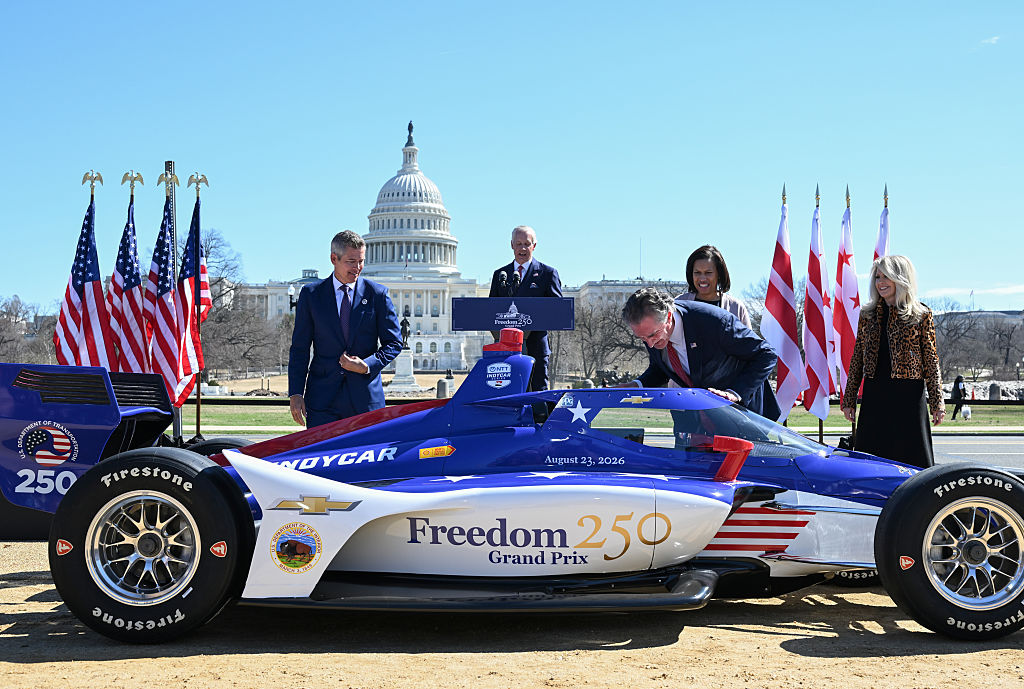
Transportation Secretary Sean Duffy; Interior Secretary Doug Burgum; Washington, D.C., Mayor Muriel Bowser; and Monica Crowley, chief of protocol at the State Department, unveil the new Freedom 250 Grand Prix Indycar during a news conference on the National Mall in Washington, D.C., on March 9, 2026. —Matt McClain—Bloomberg/Getty Images

A slice of the nation’s capital will be transformed into a race track over the weekend for President Donald Trump’s final event commemorating the U.S.’s 250th birthday

An IndyCar race consisting of 25 drivers will take place around the National Mall in the heart of Washington, D.C., on Saturday and Sunday. 

IndyCar is the top level of single-seater auto racing in the U.S., best known for the “Indy 500,” an annual 500 mile race in Indianapolis. 

"This will be like no other race ever. This will get the highest ever ratings of any such race," Trump said in July, when the top IndyCar drivers participating in the race visited the White House.

Trump himself is scheduled to take a ride around the 1.7 mile race track in his presidential limousine, known as “The Beast” before the competition begins, White House officials told multiple outlets.

The event is being hosted by Freedom 250, the organization Trump established through an Executive Order in January to coordinate the Administration’s semiquincentennial events. The race follows other high profile events this summer in celebration of the milestone anniversary, including a UFC fight on the White House grounds, an athletics tournament dubbed the Patriot Games, and the world’s largest fireworks show. 

Here’s what to know about the 250 Grand Prix . 

When is the race?

Practice races will take place on Saturday, beginning at 9 a.m. local time and continuing throughout the day. 

The real race will then begin at 1:10 p.m. on Sunday.

What is the route?

Drivers will race for 147 laps, covering a distance of roughly 250 miles. 

The 1.66 mile, 7-turn track begins on 3rd Street near the Capitol building at the east end of the National Mall in Washington, D.C., before jutting down Pennsylvania Avenue, the course’s longest straight at 0.4 miles. It then makes turns on 9th Street, 7th Street, and Independence Avenue, passing sites including the Lincoln Reflecting Pool and the Smithsonian Museum before circling back onto 3rd street to finish off. 

Who’s paying?

Penske Corp., the owner of IndyCar, is picking up most of the tab for the race, according to Bud Denker, Penske Corp. president and chair of the Freedom 250 Grand Prix.

An exact price tag for the event is unknown, but Denker said in July that the race is “much more” than IndyCar’s Detroit street race, which has a budget of $20 million. 

A $90 million budget allocated by Congress for special events in Washington will cover security costs, according to Deputy Mayor for Public Safety and Justice Lindsey Appiah, who spoke at a public briefing in July. 

The federal funding is a part of the Emergency Planning and Security Fund, which is designed to support presidential events, including those related to the U.S.’s 250th birthday.  

How can you watch?

Organizers expect roughly 140,000 spectators to attend the race in person throughout the weekend. 

Free tickets were given to 100,000 people through a lottery. The only other way to watch the event up close is to purchase an all-inclusive food and beverage weekend pass to the Champions Club, an exclusive viewing venue built for the race overlooking 7th Street and the National Mall, for nearly $5,500. 

Venues for the race open to the public at 8 a.m. on both days.

For viewers watching the race remotely, FOX will be streaming the events. 

You can also access FOX’s coverage through certain streaming platform bundles such as YouTube TV, Hulu +, Fubo, or Sling TV. 

Flight disruptions

The Federal Aviation Administration last week said it expects to pause flights at Reagan National Airport for three hours for the race from 10:15 a.m. to 1:15 p.m. on Sunday. 

“The FAA has been planning and coordinating with stakeholders to help ensure the safe and efficient movement of air traffic during Freedom 250 events,” the agency said in a statement. “As part of that effort, the agency will implement traffic management initiatives at Ronald Reagan Washington National Airport.”

Flights were also halted for several hours on July 4 due to Trump’s fireworks show. 

Concerns for D.C. artifacts 

Due to the vibrations caused by the race cars, some preservationists and museum representatives are worried for the safety of artifacts stored in the many museums along the race route. 

Mary Okin, the assistant director of the Living New Deal, a non-profit dedicated to preserving the legacy of President Franklin Delano Roosevelt, wrote a letter last month to the U.S. General Services Administration (GSA) expressing her concern that the vibrations could damage the frescoes of the Wilbur J. Cohen Building, which the GSA manages. 

“In the foreseeable event of a race vehicle losing control, or a crash that sends debris, such as tire marbles flying, or sparks a fire, what protective features will be in place ahead of the race to ensure that vibration, flying car parts, and other high speed or collision impacts do not damage this national treasure?” Okin additionally cautioned in her letter, referencing the Wilbur J. Cohen building. 

The National Gallery of Art previously conducted a study to gauge the potential threat of the vibrations, but did not reveal its findings. 

“In preparation for the Freedom 250 Grand Prix, the National Gallery conducted an extensive vibration study and based on the results we have implemented a set of measures to ensure the safety of our staff, visitors, collection, and facilities during the race,” gallery spokesman Chris Abanavas said in a statement to The Washington Post. “While we are not releasing the specifics, I can share that any such measures are only being taken out of a great abundance of caution.”

  •  

What to Know About the Pentagon’s Crackdown on Universities’ Foreign Research Ties

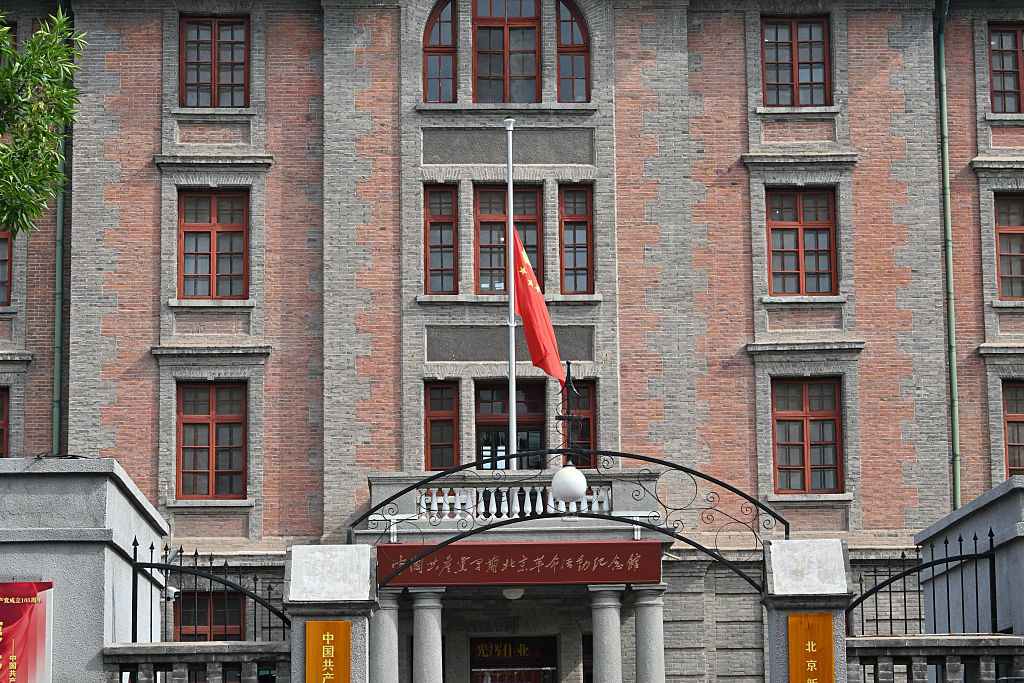
The Chinese national flag is pictured at half mast to mourn the death of China's former premier Zhu Rongji at the Red Building of Peking University, the site of early Chinese Communist Party revolutionary activities, in Beijing on Aug. 18, 2026. —Adek Berry—AFP/Getty Images

The Trump Administration ordered 30 universities to audit their foreign research partnerships or risk losing funding.

The order, issued Monday by the Defense Department, instructs universities to review their ties to 130 foreign institutions, mainly Chinese, that “engage in activities that increase the likelihood of U.S. government-funded research and development efforts being misappropriated.” Schools that fail to terminate any “problematic” partnerships within two weeks may lose their eligibility for future federal research funding.

The order is intended to protect taxpayer-funded research from “unauthorized technology transfer, intellectual property theft and adversarial exploitation,” the Pentagon said in the announcement.

“The Department of War has zero tolerance for academic partnerships that compromise our national security,” Emil Michael, undersecretary of war for research and engineering, said.

The announcement did not identify which schools had received the order or how they were selected, but a U.S. official told the Associated Press on Tuesday that they include Harvard University, the Massachusetts Institute of Technology, and Johns Hopkins University.

The order is the latest effort to clamp down on alleged Chinese influence in the U.S., including in higher education. The Trump Administration and several lawmakers from both parties have argued that China exploits U.S.-funded research to obtain sensitive technology and intellectual property.

U.S. concerns about Chinese intellectual property theft and espionage have grown in recent years. Last year, a federal jury convicted former Corning scientist Ji Wang of stealing files containing trade secrets from a Pentagon-funded project. Prosecutors said he planned to use the technology in a Chinese business backed by government entities. In May, Eileen Wang, the mayor of Arcadia, Calif., resigned after admitting to acting as an unregistered Chinese government agent before taking office.

But some observers have warned that the crackdown unfairly politicizes academic collaboration, stigmatizes Chinese academics, and could weaken American scientific competitiveness.

The Chinese embassy in Washington said in a statement to news outlets that it opposed “the overstretching of the concept of national security and the politicisation or instrumentalisation of normal scientific, educational and academic exchanges.”

“The U.S. side should abandon the Cold War mentality and foster an open, fair and non-discriminatory environment for educational, scientific and people-to-people exchanges between China and the United States,” it added.

Here’s what to know about the raft of policies aimed at curbing institutional ties to China.

Order targets primarily Chinese institutions

The foreign institutions the U.S. seeks to blacklist were identified by the Pentagon last month. Eighty-eight of the 130 institutions are in mainland China, while the remaining institutions are in Russia and Iran. The list has been updated annually since an earlier version was first released in 2023. It was established under Section 1286 of the 2019 National Defense Authorization Act, which was enacted during President Donald Trump’s first term.

While some Chinese universities on the list have more explicit ties to the military, others are prominent civilian institutions with extensive international research partnerships. These include Fudan University and Shanghai Jiao Tong University. The updated list also added a number of other Chinese institutions with varying links to China’s defense and security establishment, including Shandong University, Hangzhou Dianzi University, Shenyang Aerospace University, and the University of International Relations.

People familiar with Chinese academic institutions previously told TIME that Chinese Communist Party structures are embedded throughout the country’s universities, making institutional links to the government common, even though individual students or researchers may not be engaged in political or military work.

The Pentagon also instructed universities to audit collaborations with organizations associated with “rebranded Confucius Institutes.” Confucius Institutes are non-profit language and cultural programs funded by the Chinese government and hosted in universities around the world. Launched in 2004, there were at one time more than 100 Confucius Institutes operating on U.S. college campuses. But most U.S. programs closed after 2019 amid congressional scrutiny and federal funding restrictions. By late 2023, there were fewer than five active Confucius Institutes in the U.S.

Many universities, however, retained partnerships with their former Chinese partner institutions or established successor language and cultural programs under different names. Critics characterized some of these arrangements, particularly those that continued to receive Chinese funding or instructors, as “rebranded Confucius Institutes.” Of 74 former Confucius Institute hosts surveyed by the Government Accountability Office in 2023, 43 said they maintained ties to their former Chinese partner institutions. Nine reported receiving continued funding or other support for programming from those institutions, although eight of the nine said the partnerships predated their Confucius Institutes.

Crackdown on broader Chinese ties

The Trump Administration has pursued a slate of policies that build on Trump’s first-term “China Initiative.” These have included tighter scrutiny of universities’ foreign funding and research partnerships and restrictions on collaborations with blacklisted Chinese institutions. The Trump Administration has also increased vetting of Chinese student visa applicants, threatened visa revocations for some students, and renewed investigations of China-linked researchers.

Since last year, the Pentagon has prohibited funding fundamental research projects conducted in collaboration with a listed foreign institution or its employees. The policy was expanded in March to bar the use of equipment from listed entities in certain Pentagon-funded projects.

Meanwhile, China has sought to bring in more foreign talent and investment, including by seeking to attract more international students to its universities and exchange programs, and by introducing a K visa for young foreign STEM professionals.

Dozens of Chinese tenure-track scholars have left U.S. universities for China over the past year.

Days before the latest announcement, the Republican-led House Select Committee on the Chinese Communist Party and the House Education and Workforce Committee released a report accusing Harvard of failing to adequately screen its relationships with Chinese institutions linked to the People’s Liberation Army and China’s defense industry. The investigation said it identified more than 140 publications co-authored by Harvard-affiliated researchers and scholars at certain Chinese defense-linked civilian universities.

Harvard disputed the report’s “mischaracterizations,” and said it follows federal national security standards.

The changes also come as the U.S. seeks to maintain its lead over China in the global AI race. A 2025 report warned that major AI data centers in the U.S. were vulnerable to Chinese espionage, sabotage, and intellectual property theft.

In July, the Administration recommended redirecting potentially billions of dollars of federal research funding from universities toward individual scientists and AI-focused projects as part of an effort to counter Chinese scientific advances.

Last week, Reuters also reported that the Administration was preparing to tell 35 partner countries that participation in Pax Silica—a U.S.-led initiative to strengthen supply chains for semiconductors, critical minerals, and AI infrastructure—was conditioned on their refusal to join China’s rival AI framework. The reported demand appeared in an internal draft and has not been formally issued.

  •  
❌