❌

Reading view

Shakespeare to Star Trek: Patrick Stewart’s extraordinary life - The Latest

Tributes have poured in for Patrick Stewart, who has died aged 86. The distinguished actor had a long and varied career that began on stage with the Royal Shakespeare Company before going on to global stardom on the screen in the Star Trek and X-Men franchises. Stewart was born in Yorkshire in 1940, and had spoken of a challenging childhood marred by alcoholism and domestic violence – something he campaigned against for much of his life. Lucy Hough speaks to the Guardian film critic Peter Bradshaw

Continue reading...

© Photograph: ABACA/Shutterstock

© Photograph: ABACA/Shutterstock

© Photograph: ABACA/Shutterstock
  •  

Oh to Believe in Another World review – William Kentridge’s amazing animated ballet of black comic pain

Kentridge’s cine-musical creation, made to accompany Shostakovich’s 10th Symphony, is a marvel of puppetry, dance and humour, exploring humanity, grief and idealism

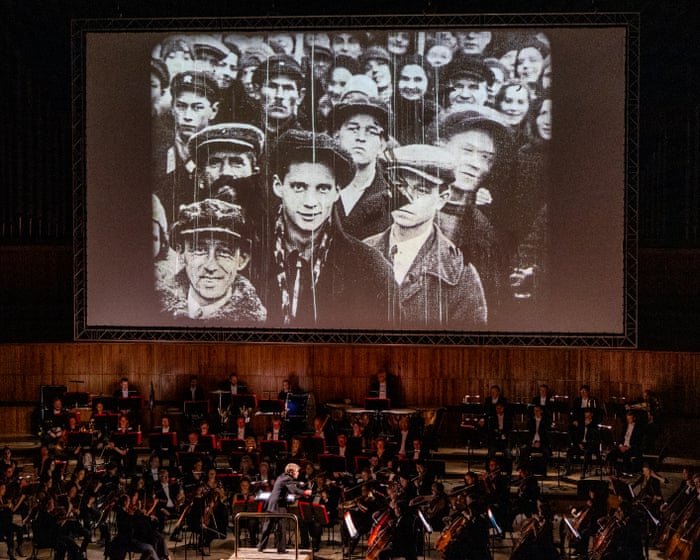
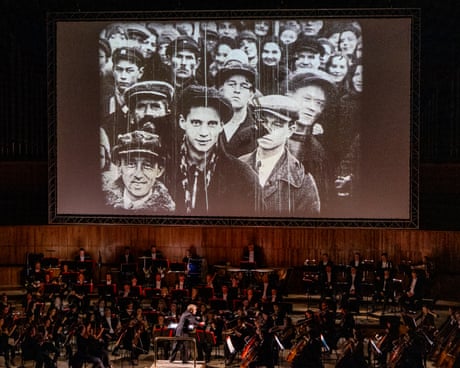
The Baku international arts festival in Azerbaijan is showcasing an amazing cine-musical creation, perhaps the most amazing animation I have ever seen. Oh to Believe in Another World is an hour-long collage animation with live-action choreography by the 71-year-old South African artist and film-maker William Kentridge. It is shown with the live orchestral accompaniment of Shostakovich’s 10th Symphony, and this event is partly in honour of the 120th anniversary of Shostakovich’s birth this year, and partly to honour Shostakovich’s reportedly unrequited love (and lifelong friendship) for his student, Azerbaijani pianist and composer Elmira Nazirova.

The 10th symphony was inspired by Stalin and premiered shortly after his death, so it seems probable that Shostakovich had been at work on it for some time before this, long enough beforehand for at least some of the composition to have been conceived without any sense of Stalin’s death. Could part of it perhaps have been originally intended as an obediently dramatic tribute to Stalin? Yet the music arguably combines fear, awe, revulsion, and a hysterical reaction to the mad energy of Stalin’s genocidal tyranny, a darkly ambiguous respect for the great dictator whose victory in 1945 was a mainstay of the postwar dispensation; perhaps there is also a feeling in the music’s swirl that a great and terrible era has passed away, and with it a kind of grief at all that had been sacrificed to it.

Continue reading...

© Photograph: Pete Woodhead

© Photograph: Pete Woodhead

© Photograph: Pete Woodhead

  •  

Patrick Stewart brought gravitas and complexity to the screen, from Star Trek to X-Men

From Jean-Luc Picard to Charles Xavier, the actor’s Shakespearean training – and that sonorous voice – made him a unique charismatic force in Hollywood

No actor showed the commercial potential of blue-chip British classical training like Patrick Stewart. With style, technique and the most minutely self-aware, almost vaudevillian sense of mimicry, Shakespearean thesps can turn their hand to American movies and high-end American television and show the American method actors how it’s done – sometimes, even, at the beginning of their screen careers, at a competitively low wage.

Stewart was one of the thoroughbreds of the Royal Shakespeare Company’s 1970s stage generation who had also had classy small screen roles, such as his intimidating Sejanus in I, Claudius opposite Derek Jacobi. But he effected a warp-speed leap to pop culture stardom by getting the role of Jean-Luc Picard, captain of the Federation starship USS Enterprise, in TV’s Star Trek: The Next Generation, the hugely successful reboot of Star Trek that ran from 1987 to 1994, spawning four separate feature films and then another series, Star Trek: Picard.

Continue reading...

© Photograph: MARVEL/Allstar

© Photograph: MARVEL/Allstar

© Photograph: MARVEL/Allstar

  •  

I Love Boosters review – supercool outlaw women go shoplifting in Boots Riley’s frantic and funny caper

Demi Moore’s haute-couture maven attracts the attention of a gang of contemporary Robin Hood type clothes robbers in Riley’s fashion biz satire

Here is an entertaining, if very exhausting fantasy-caper about the fashion biz from Boots Riley, a madcap mile-a-minute melee of unadulterated ker-aziness. You might need a couple of ibuprofen and a lie-down afterwards. Demi Moore perhaps thought she was here getting a gamey starring role, comparable to her Oscar-nominated turn in the beauty-industry satire The Substance. In fact, the way the film is structured and edited, Moore is hardly more than a returning cameo, though a potent one.

She plays Christie Smith, a billionaire couture designer who has an office in a trendily designed city block which leans over at an experimental angle. Christie is the object of obsessive attention from “boosters”: supercool young outlaw women who, nettled by her arrogance, shoplift her clothes from upscale stores and sell them on at knockdown Robin Hood prices. They are Corvette (Keke Palmer), Sade (Naomi Ackie) and Mariah (Taylour Paige), the latter having the ability to, by holding her breath, turning herself into a white woman who is less likely to be challenged in a store; an interesting metaphor for what Frantz Fanon might have called black skin, white masks.

Continue reading...

© Photograph: Courtesty of NEON

© Photograph: Courtesty of NEON

© Photograph: Courtesty of NEON

  •  

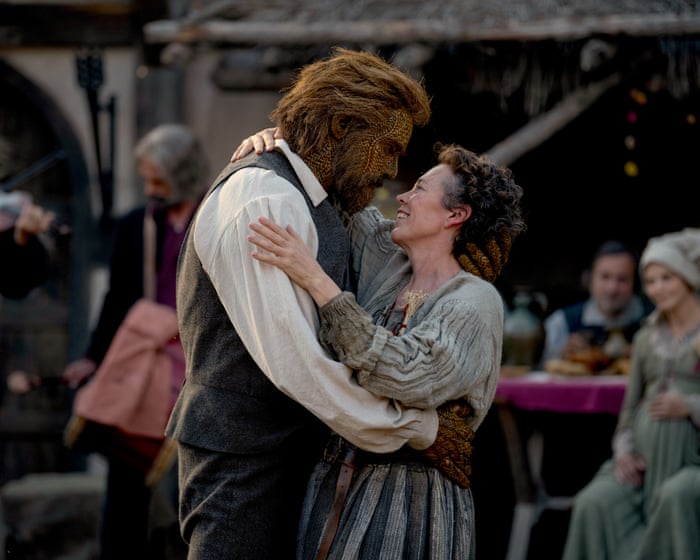
Wicker review – Olivia Colman finds the perfect lover in intriguing folk-horror romance

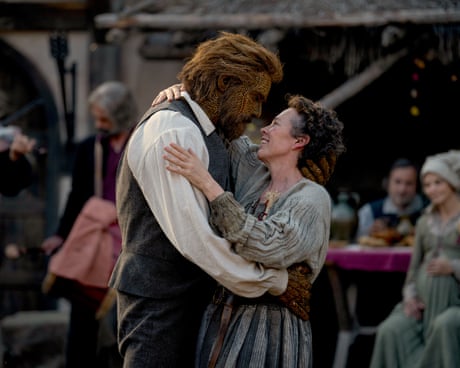
Colman stars as a depressed and bullied fisherwoman in medieval England. Fortunately, Peter Dinklage’s basketmaker delivers the answer to her dreams – an Alexander Skarsgård made of wicker

The spirit of mystery author Shirley Jackson is interestingly revived in this peculiar folk-horror romance, adapted from a 2006 story called The Wicker Husband by British writer Ursula Wills. It’s almost funny but not exactly, and almost disturbing but not exactly, occupying a strange and intriguing Venn-diagram overlap between macabre horror and sentimentality. Yet devotees of bucolic British screen-scariness will note that it is, after all, about a wicker man.

The scene is a fabular medieval-effect village that could be in central Europe or England, where there are bizarre patriarchal rituals, like the placing of metal collars on new brides. A depressed middle-aged fisherwoman (fiercely and naturalistically played by Olivia Colman) lives alone in a remote cottage and regularly brings her unappetising tench and gudgeon to market, where she is mocked and bullied by the nasty, closed-minded locals, including Richard E Grant as a lazy and incompetent doctor. Chief among her tormentors is the spiteful tailor’s wife, an elegant, sharp-faced woman played by Elizabeth Debicki.

Continue reading...

© Photograph: Black Bear/PA

© Photograph: Black Bear/PA

© Photograph: Black Bear/PA

  •  

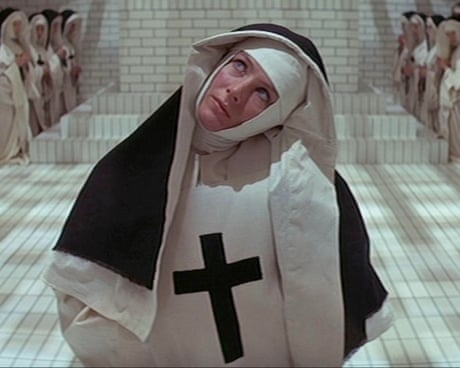
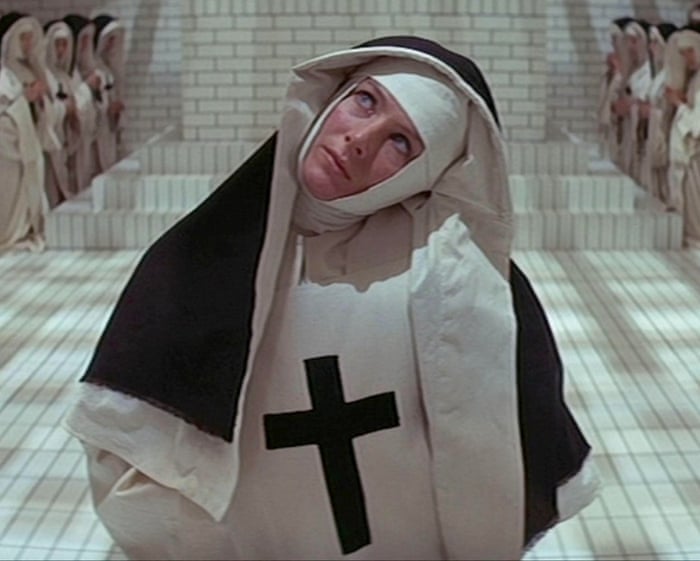
The Devils review – Ken Russell’s 1971 possessed-nuns tale is a frenzied aria of confrontation and hysteria

Oliver Reed and Vanessa Redgrave put in the performances of their lives in this film originally banned for obscenity that highlights the violence of power

‘I could never be Satan’s boy. I haven’t the humility.” The speaker is Father Urbain Grandier, the 17th-century French priest accused of witchcraft, stylishly played by Oliver Reed, in Ken Russell’s scabrous 1971 classic; it is now restored and rereleased in its complete form after years of censorship. It comes from an era when movies, playing in high-street cinemas, still had the power to shock, to position that shock in the polite cultural mainstream and to compel serious discussion about whether that shock – or, conversely, a ban – was justified.

The Devils is based on a true story of politically directed mass hysteria, adapted by Russell from two literary works: Aldous Huxley’s The Devils of Loudun and John Whiting’s stage play The Devils. Of course it is obscene; obscenity is the glowing sulphurous paint which Russell is applying to the canvas. It is about obscenity – but the obscenity does not reside in the sexualised images of the crucified Christ or naked nuns disporting themselves; it is the violence of authority that is shown to be obscene. The idea of martyrs or heretics being burned at the stake has long been an accepted fact recounted in U-certificate history lessons, and a punishment which survived well into the European enlightenment. Russell shows you what it might actually look like and that is to involve a confrontational assault on good taste.

Continue reading...

© Photograph: Landmark Media/Alamy

© Photograph: Landmark Media/Alamy

© Photograph: Landmark Media/Alamy

  •  
❌