❌

Reading view

A Democratic Wave In the Midterms Could Change How Companies Talk About Climate
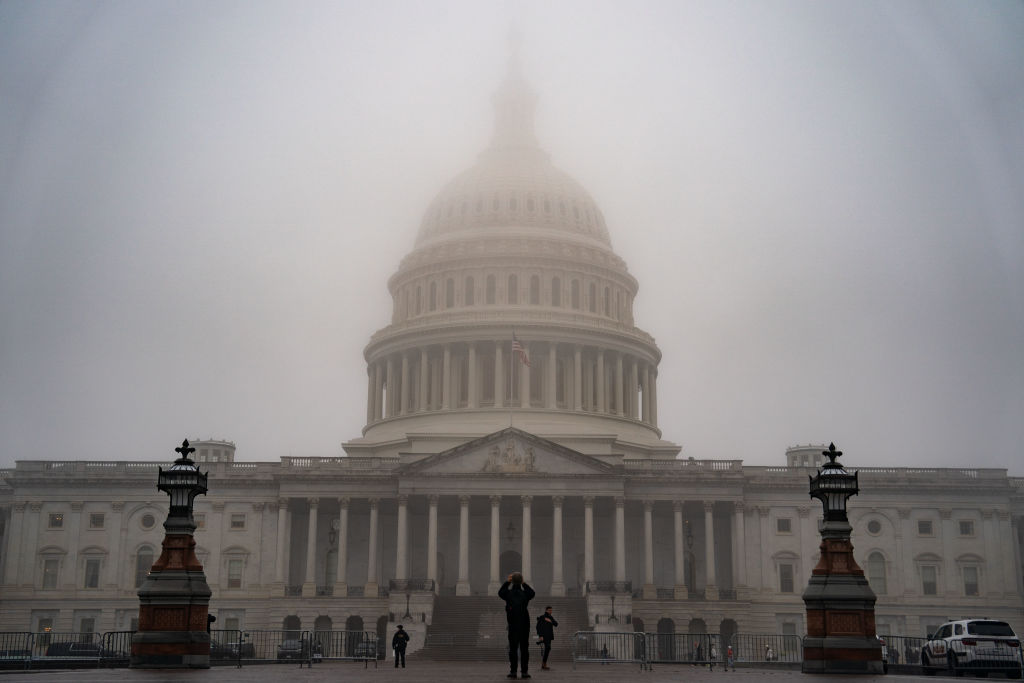
Fog hovers over the dome of the U.S. Capitol on Dec. 10 —Kent Nishimura—Getty Images

For the last year, I’ve been asking corporate executives how they might expect anticipated Democratic victories in the midterm elections to shape the future of the U.S. climate and energy agenda. I was surprised how often they gave the same answer: investigations. 

Democratic control of congressional committees would give Democrats new subpoena power and new dedicated staff to conduct investigations. Companies may be compelled to turn over documents, and CEOs could be called to testify before Congress about how they have approached a range of issues. 

Corporate executives have largely worried about staying on the right side of President Trump over the last few years. But a Democratic Congress would introduce a competing political pressure—and potentially change how companies talk about climate and energy. 

Climate may not be a top priority on its own for Democratic politicians in 2026, but it will come up in Washington for two key reasons. The first is rising fuel and power costs. Democrats in Congress will want to probe how companies have responded to current energy market conditions triggered in part by rapid growth in demand for AI and the war in Iran, and whether their actions have raised costs. You can expect those questions to take a pro-clean energy bent. And then there is the corruption discussion, which has emerged as a key theme in Democratic midterm campaigning. Democrats will want to probe any company or industry that is perceived to be close with the administration, including the oil and gas industry. 

In September, Senate Minority Leader Chuck Schumer, a Democrat from New York, and Senator Sheldon Whitehouse, a Democrat from Rhode Island, released a report that gives a hint at the expected line of argument. It highlights donations from oil and gas executives and links them to the Trump Administration’s regulatory rollback. And, to conclude, it suggests that those decisions have contributed to higher prices for consumers. 

For understandable reasons, analyses of how the election might shape the future of energy and climate tend to focus on policy outcomes. And there are many areas to follow closely. The results will shape efforts to pass a permitting reform bill in the time between the election and when new members of Congress take office in January. And members will debate funding levels for clean energy programs that survived cuts under Trump’s One Big Beautiful Bill last year. We will also see the seeds of bigger discussions about how the U.S. might rethink its approach to climate change if Democrats regain the White House, too. 

But the bigger story may indeed be the zeitgeist shift that a big Democratic wave would portend. Investigations and congressional testimony will force companies to answer questions in the public sphere that they have largely been able to elide recently. What is the role of clean energy in the power system? How might clean energy affect competitiveness? And how are you approaching risks related to climate change? 

In this new environment, incentives change. A utility CEO might emphasize the role of renewables in bringing down costs. A bank might underscore how it’s financing clean energy technologies. And an oil-and-gas CEO might focus on how they’re cutting methane emissions. In general, executives decline to speak on the record about how they are preparing, but in background conversations the story is clear. Companies are lawyering up. Public relations firms are crafting modulated messages to address concerns. And CEOs are reaching out to Democratic members of Congress to plead their case. 

For the last several years, many businesses have either tip-toed around Trump or openly embraced him, out of fear that doing otherwise would harm the bottom line. A new Congress with Democrats in charge would remind the corporate world that Trump is not the only force to be feared. And, perhaps, it would give CEOs cover to embrace a grounded climate agenda.  
  •  

Clean Energy Has a Lot Riding on the AI Data Center Boom

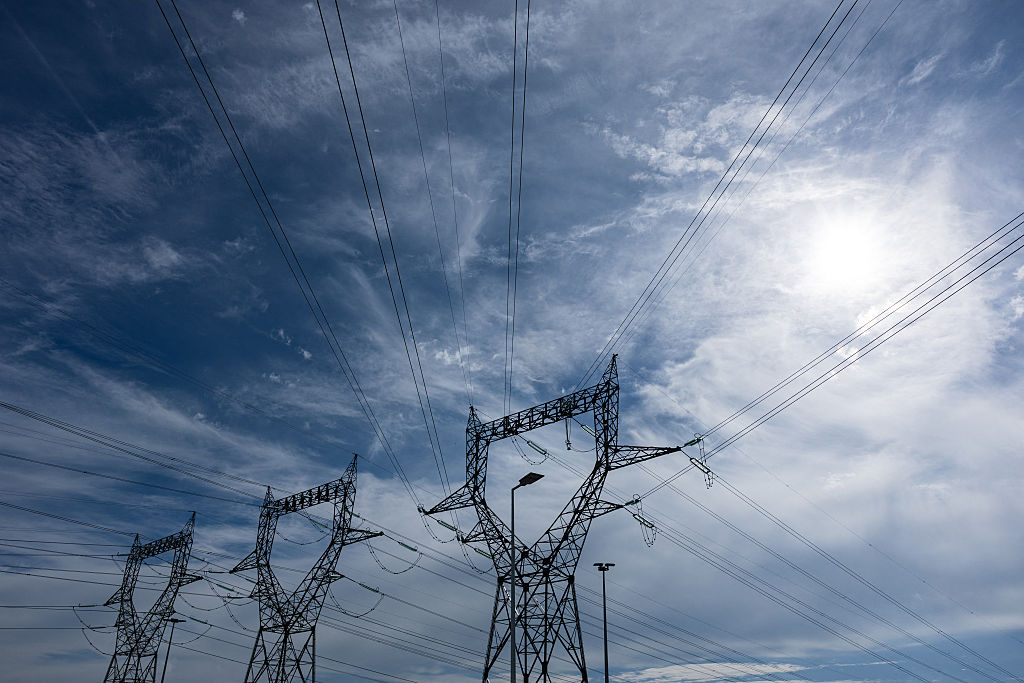
Power lines near the Gravelines Nuclear Power Station in Gravelines, France on Sept. 15 —Sameer Al-Doumy / AFP—Getty Images

Recent weeks have brought red flag after red flag for investment in AI and the related data center boom. Bond yields soared for AI infrastructure giant CoreWeave, a sign that investors view the buildout as increasingly risky. And Meta’s reporting of negative free cash flow for the quarter to fund its infrastructure buildout while saying it might need to raise even more capital to fund its AI buildout not only hit its own stock but contributed to a price decline across the big tech companies. 

These developments raised questions across Wall Street about whether too much is being spent too quickly on data center expansion. How questions over data center investment play out has big implications for how companies and investors approach the future of energy and, by extension, climate. A pullback in the pace of new data centers could ease pressure to build fossil generation, but it would also weaken the commercial case for clean energy technologies that need big, reliable buyers who are willing to pay a premium for power.  

Most obviously, a dent in the AI buildout would translate directly into a slowdown in related electricity demand growth. In advanced economies like the U.S., data centers will account for 20% of that growth through 2030. By then, data centers are expected to account for 3% of global electricity demand, according to data from the International Energy Agency. 

Some climate advocates may initially rejoice at slowing electricity demand. Even as renewable energy expands, grids around the world still rely on fossil fuels. In the U.S. in particular, AI demand has sparked a wave of building new natural gas infrastructure. In the short term, slowing demand would mean lower emissions from the existing system than today’s baseline assumptions and less investment in new natural gas infrastructure. 

But a slowing data center build out leaves less mature technologies at risk. From advanced geothermal to new ways of producing nuclear power, big tech companies have been willing to pay more to lock in reliable power sources, thereby accelerating the market for these new efforts. Even unproven technologies like nuclear fusion have received a big financial boost from tech firms speculating that they might help solve their power challenges and give them a competitive leg up in the AI race. In a tighter financial environment with lower projected electricity demand, both the incentive and the financial capacity to make bold bets diminish. 

To be clear, data centers are not the only source of growing electricity demand. New manufacturing continues to create the need for power. The need for air conditioning has ramped up in many emerging markets, particularly in the Global South, creating new grid pressures. And electric vehicles continue to take off in many markets outside the U.S. 

Even as gas remains resilient, much of the power built to meet demand will come from clean sources, including and especially solar and battery storage. Solar is increasingly cost competitive. And this year’s spike in fuel prices—particularly natural gas—has made local power more appealing. But the companies behind growing sectors like air conditioning and EVs are less involved in local power systems and lack the capital to really shape them like the world’s wealthiest tech companies have. In short, clean energy will take a hit without the backing of big tech.  

It’s too soon to tell whether, in the long run, this week’s AI infrastructure recalibration will be a blip in time or part of a much broader realignment. But it’s something that anyone invested in clean energy and climate should be watching closely.   

  •  

The Climate Story Hiding in Plain Sight in the Global Economy

The International Monetary Fund and World Bank Group annual meetings at the Queen Sirikit National Convention Center in Bangkok on Oct. 16 —Matt Hunt/Anadolu—Getty Images

The war in Iran, AI, and countries’ growing debt burden all sat at the top of the agenda as leaders of the world’s international financial institutions gathered in Bangkok this week for the fall meetings of the World Bank and International Monetary Fund (IMF). 

Even with some bright spots, the picture is challenging. The war has driven up fuel prices, leading to inflation. Meanwhile, public debt is soaring, a development the IMF warns is unsustainable. And the enormous investment in AI is a positive development keeping the bottom from falling out—though only in certain economies. 

At a first glance, climate change, once touted as a key priority by the two most influential international financial institutions, has fallen off the agenda. But take a closer look and it’s hard to miss how climate change—and the related deployment of clean energy—will play an important role in economic performance. Climate events have worsened the debt challenge in developing countries. Clean energy, on the other hand, has served as a critical defense mechanism that has kept the energy price crisis from getting worse in places where it has been deployed at scale. 

A report from the United Nations Development Programme (UNDP) released this week alongside the fall meetings gets at the heart of this challenge while barely mentioning climate change at all—at least in those words. The report points to what it describes as a “triple shock”: high borrowing costs, the energy price spike, and extreme weather events driven by this year’s El Niño, which is on course to set records. 

The policy responses aren’t coded climate policy—and in many cases they’re actively bad for climate efforts. The most common response cited by the report is fuel price support, think of subsidies or fuel tax reductions. An IEA survey cited by the report identified 95 countries with such policies. Explicit fuel subsidies could surpass $1 trillion this year globally, according to the UNDP. But, as the report notes, such an approach isn’t sustainable. Backlash to higher prices persists even as governments spend to keep citizens happy. In a smaller group of countries, mostly those most dependent on imports, longer-term, structural changes are emerging: investments in renewable energy, energy efficiency, and electrification. Think of subsidies for electric buses or cutting tariffs on solar panels. 

But not every country can afford to remake its energy system with structural changes. Heavy indebtedness and high interest rates are key factors. So too is El Niño and broader climate shocks, which make it harder for countries to pay for new infrastructure that reduces exposure to fossil fuel volatility. 

The IMF’s World Economic Outlook is similarly light on climate talk. But follow it to its logical conclusion, and it takes the UNDP argument even further. Indebtedness makes it more difficult to invest in AI infrastructure necessary to compete in the emerging economy. It plots countries’ AI preparedness alongside the non-fossil share of their energy supply, suggesting that energy security and the capacity to adopt AI may increasingly intersect. After all, dependence on volatile imported fossil fuels only compounds this challenge given AI’s energy needs.

This emergent growth dynamic comes with important implications. For one, it adds yet another layer to the argument for non-fossil energy in emerging markets. But it also shows how complicated achieving that end will be. Cheap clean tech hardware isn’t enough. 

  •  
❌