❌

Reading view

The Key Congressional Races to Watch on Election Night

The fate of Congress hangs in the balance as the outcome of a few key races will determine which party controls the House and Senate for the remainder of Donald Trump's presidency. 

Republicans currently control both chambers, with 53 seats in the 100-seat Senate and 218 seats in the 435-seat House.

History suggests that Democrats will gain seats, as the party in power usually cedes representation in the midterms. In 2022, Democrats under President Joe Biden lost nine seats in the House, and in 2018, during Trump’s first term, Republicans lost about 40 seats in the lower chamber. 

Democrats are widely expected to gain enough House seats to take control of that chamber. The Senate remains a toss up amid several tightly contested races, many in red states Trump won in 2024. Between campaigns, super PACs and billionaire donors, hundreds of millions of dollars have been spent on a handful of races. 

Read More: Midterm Ad Spending Has Surpassed $10B. Where Is the Money Coming From?

Here are the Senate and House races to watch ahead of election day on Nov. 3.

Alaska Senate


Republican Sen. Dan Sullivan is running for another term against Democrat Mary Peltola, who previously served as the first Alaska native elected to Congress. But there's also a Daniel J. Sullivan Jr. on the ballot, and his candidacy was part of a broader effort by Democrats to help Peltola’s bid, according to a recent New York Times report. Alaska’s Republican Governor Mike Dunleavy ordered an investigation into Peltola's campaign following the report.

Polling has indicated that Sullivan and Peltola are neck-in-neck, with Peltola occasionally gaining a slim lead. While Trump won Alaska in 2024 by 13 points, the race appears to be close enough that he travelled to Wasilla on Oct. 13 to campaign on Sullivan’s behalf. 

Alaska uses rank-choice voting, which means that voters will rank their top candidates as opposed to selecting one. This month, the Justice Department filed a preemptive lawsuit seeking to block certification of the election results in Alaska’s Senate race if the election results suggest the incumbent lost due to “voter confusion” due to two Dan. Sullivans on the ballot. 

Read more: The 7 Key Governor Races to Watch

Iowa Senate

This midwest contest to replace outgoing Republican Sen. Joni Ernst has emerged as among the tightest in the country, with Republican Rep. Ashley Hinson, a former broadcast journalist, vying against Democratic state Rep. Josh Turek, a paralympic gold medalist. 

This is another state that Trump won by 13 points in 2024. Yet the recent polling suggests a true toss-up. Hinson, who has represented Iowa in the House since 2021, has distanced herself from Trump, calling for an “immediate end” to the Iran war. Trump campaigned alongside Hinson last week. 

Read More: Is Iowa the Senate Race No One Saw Coming?

Michigan Senate

Michigan’s open Senate rate has emerged as perhaps the most hostile of the midterms. Democrat Abdul El-Sayed, a physician and former public health director, has the chance to be the country’s first Muslim senator. He’s facing off against Mike Rogers, a former FBI agent who served in the House before losing a 2024 Senate bid. Both are vying to replace Sen. Gary Peters, the Democrat who has held the seat since 2015.

Read More: Democratic Senate Hopeful Abdul El-Sayed Is Running Against Both Parties

El-Sayed won his party’s nomination after a fierce primary against Rep. Haley Stevens, in which his criticism of Israel’s war in Gaza became a lightning rod issue. Since the primaries, prominent Democrats including Barack Obama, Kamala Harris, and Rep. Alexandria Ocasio-Cortez of New York have all come to Michigan to stump alongside him.

Republicans have attacked El-Sayed for his Muslim identity and progressive politics. At a rally in Michigan last week, Vice President JD Vance accused El-Sayed of hating America.

Recent polls have shown El-Sayed leading Rogers, but usually within the margin of error.
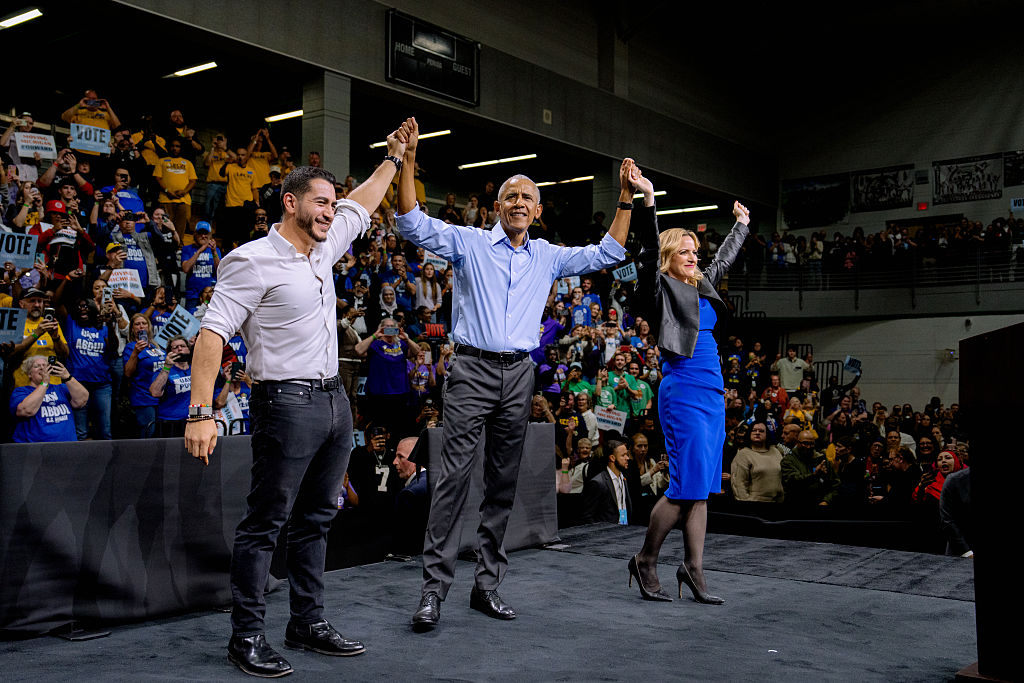
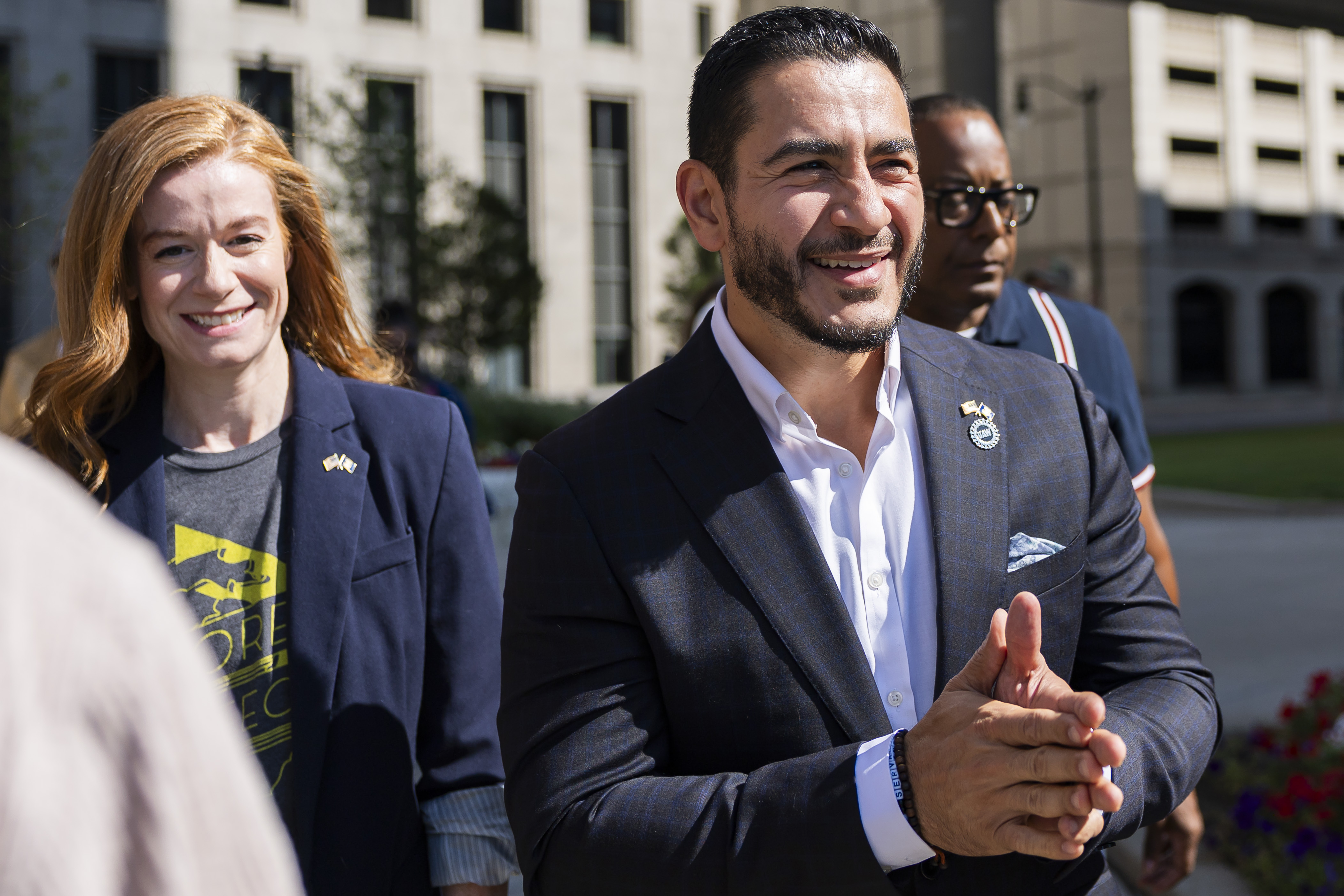
From left, Abdul El-Sayed, former President Barack Obama and Jocelyn Benson, Michigan's secretary of state and candidate for governor, raise their hands in unison during a rally for Democrats on Oct. 24, 2026. in Detroit. —Nic Antaya—The Washington Post via Getty Images

Maine Senate

Sen. Susan Collins, a Republican, is seeking a sixth term in Maine, a moderate blue state. She is facing off against Democrat Troy Jackson, a logger and former president of the Maine Senate, who became the party’s nominee after the winner of the primary,  Graham Platner, withdrew from the race amid sexual assault allegations, which he denies.

Main is the only state Trump did not win in the 2024 election where an incumbent Republican is up for reelection. Collins has distanced herself from Trump across many policy issues and on the campaign trail. She voted to convict Trump following his impeachment after the January 6 riots on the Capitol. Yet she’s also drawn criticism for backing Trump’s previous picks for the Supreme Court, despite her longstanding support for Roe v. Wade, which the Court later overturned.

Collins is chair of the powerful Senate Appropriations Committee and frequently boasts on the campaign trial of federal dollars she helped steer to the state. Recent polls show Jackson barely leading Collins, in a race that is widely viewed as a toss-up.

Read more: In Maine, a Toss-Up Senate Race Is About the Incumbent and Not Much Else

Ohio Senate

Former Democratic Sen. Sherrod Brown faces off against Republican Sen. Jon Husted, who was appointed by Republican Gov. Mike DeWine to replace Vance when he went to the White House in 2025. 

More than $200 million has been contributed in outside spending on this race, making it one of the most expensive this midterm season. Yet the race is a special election to only finish the remainder of Vance’s term. The winner will need to run again in 2028 to secure a full six-year term.

Read More: Ohio May Be the Sleeper Senate Race of the Midterms

While Ohio has mostly voted Republican in recent years, recent polls show Brown ahead. Brown served for over a decade in the Senate until losing re-election to Republican Bernie Moreno in 2024.

Kansas Senate

Kansas has not elected a Democratic Senator since 1932. But that could all change if Adam Hamilton, who founded the largest Methodist congregation in the U.S., beats out the incumbent, Republican Roger Marshall.

Marshall, a physician and former military officer, has received the support of Trump, who called him “one of my favorite Senators.” Democrats have highlighted Marshall’s pursuit of unpaid medical bills from patients from a decade ago. State court records show that he filed more than 700 of these debt-collection lawsuits, which have been a source of controversy for his campaign. 

Read More: Kansas Has Emerged as a Senate Battleground State. Here’s Why It Matters

Recent polls have shown Hamilton leading up to five points against Marshall, prompting a flurry of last-minute investments by both sides into the state. Republicans acknowledged the extent of their concerns about holding on to Kansas when they moved money there after pulling out of North Carolina’s Senate race.
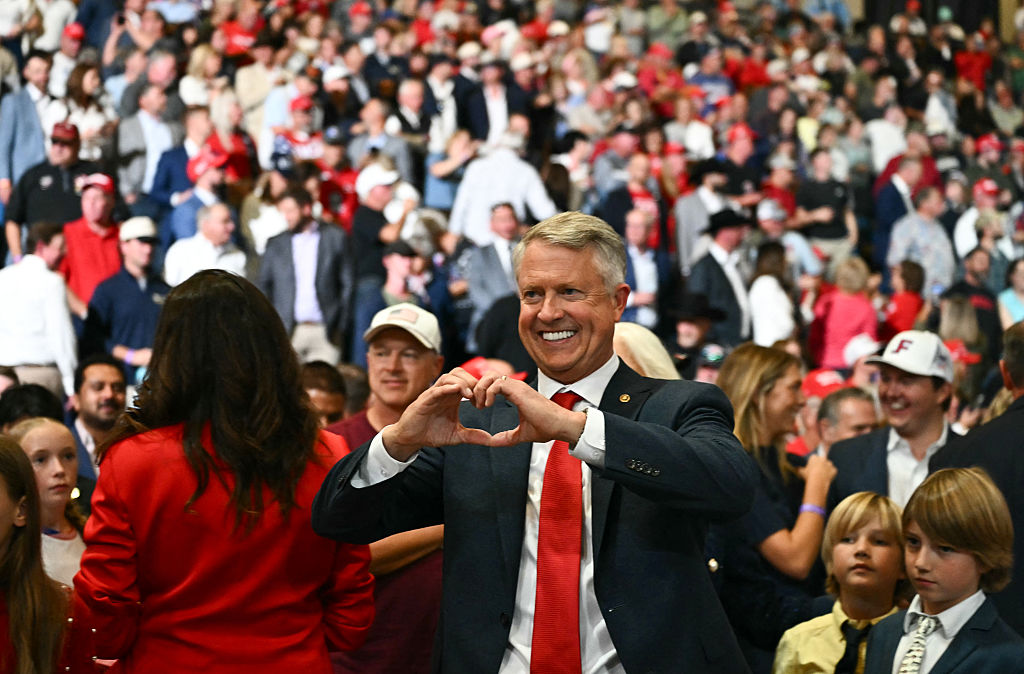
Sen. Roger Marshall, Kansas Republicans, makes a heart gesture at a campaign rally with Trump on Oct. 19, 2026, in Park City, Kansas. —Kent NISHIMURA—AFP via Getty Images

Texas Senate

In perhaps the most closely-watched race of the midterms, James Talarico has a chance to become the first Democratic Senator in Texas since 1993. He faces off against Republican nominee Attorney General Ken Paxton, who defeated the incumbent, Sen. John Cornyn, in a Republican runoff in May. 

Read More: How James Talarico Made Texas Competitive Again

Talarico has had a slight edge in recent polling, but the race remains extremely tight, and one poll from last week had them tied. 

The contentious race has topped $500 million in ad spending, which could make it the most expensive non-presidential faceoff in U.S. history. 

New Hampshire Senate

A tight contest for Democratic Sen. Jeanne Shaheen’s seat is taking place in New Hampshire, where four-term Democratic Rep. Chris Pappas is running against former Sen. John Sununu, who was beat out by Shaheen in 2008.

Sununu’s name is well known in his state. His brother served as governor until last year and his father was also governor. 

Read more: Why Republicans Still Think They Can Flip New Hampshire's Senate Seat

Pappas has maintained a lead in recent polls against his Trump-endorsed opponent, but Republicans are hopeful that the power of the Sununu brand in New Hampshire will help turn out their voters.
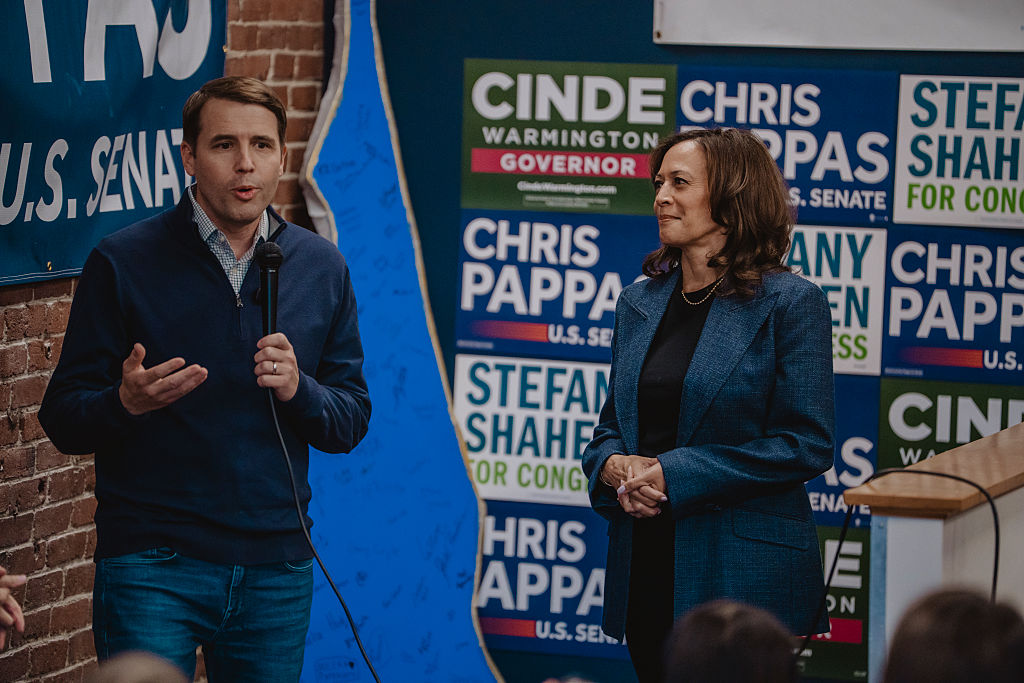
Rep. Chris Pappas, a New Hampshire Democrat running for Senate, is joined by former Vice President Kamala Harris, on Oct 24, 2026, at a campaign field office in Portsmouth, N.H. —John Tully—Getty Images)

Michigan-07

In one of the most expensive House races in the country, Republican Rep. Tom Barrett is facing off against progressive William Lawrence, a climate organizer who founded the climate advocacy organization the Sunrise Movement.

Michigan’s seventh district encompasses rural and suburban areas that turned Republican in 2024 after former Democratic Rep. Elissa Slotkin left to run for Senate. Lawrence, who beat out more moderate candidates in the Democratic primary, was polling near even with Barrett in August. More recent polls show Lawerence leading.

Texas-15

Deep in South Texas, Trump marked impressive gains with Hispanic voters in 2024. Now, Texas’ 15th district has emerged as a major test of whether Republicans can hold on to those voters. Roughly 75% of eligible voters in this House district are Hispanic.

Republican Monica De La Cruz, who flipped the district in 2022, is running for reelection against Democrat Bobby Pulido, a popular Latin Grammy-winning Tejano musician who is running as a moderate. 

Some recent polls show Pulido in the lead, though election results in that region have at times defied expectations. Cook’s Political Report continues to rate the race as a toss-up. 

Ohio-07

Republican Rep. Max Miller, a former Trump White House aide, is battling Democrat Brian Poindexter, a union worker and former councilman, in Ohio’s seventh district. 

The House race has received outsized attention over domestic abuse allegations against Miller, which he has denied. Republican Sen. Bernie Moreno, who is Miller’s former father-in-law, said over the summer that Miller should “seek professional help.” Moreno was joined by Ohio’s other Senator, Republican John Husted, in publicly urging Miller to exit the race in a district that has traditionally voted Republican and which Trump carried in 2024 by 11 points. Cook’s Political Report rates the race a toss-up.
  •  

Tributes Pour In for Patrick Stewart, Who Has Died at 86

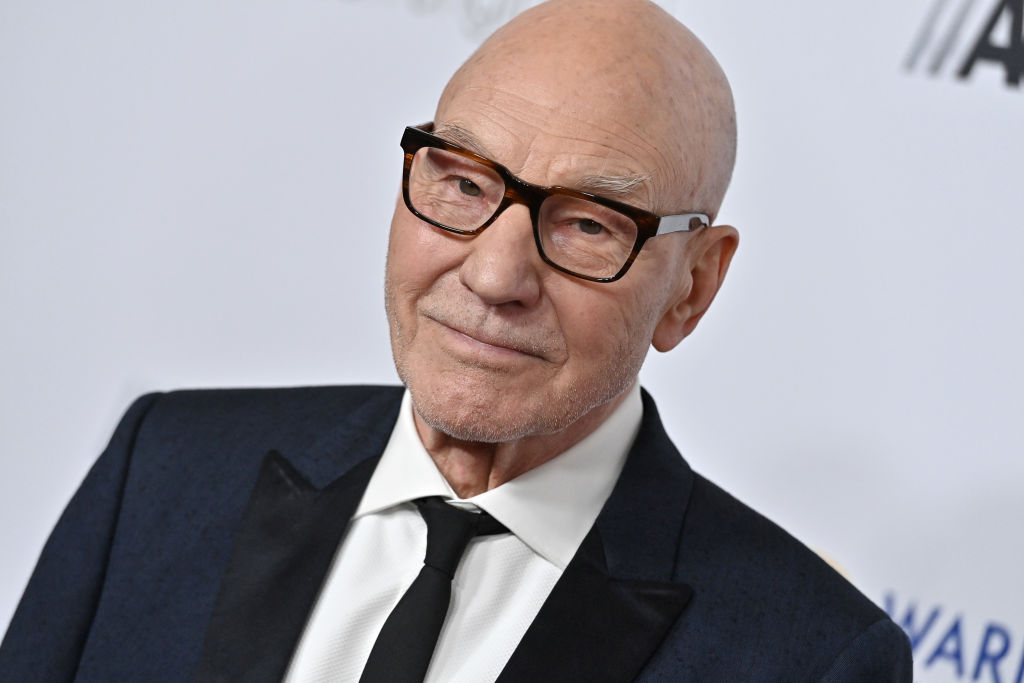
Patrick Stewart attends the 37th Annual American Cinematheque Awards Honoring Helen Mirren, Kevin Goetz And Screen Engine at The Beverly Hilton in Beverly Hills, California, on February 15, 2024. —Axelle/Bauer-Griffin/FilmMagic

Tributes have poured in following the death of British actor Patrick Stewart, known for his decades of Shakespearean stage performances and his leading roles in the “Star Trek” and “X-Men” franchises.

Stewart, 86, died at his home in Los Angeles on Wednesday in the company of his wife, Sunny, after a “brief and poignant journey” with Alzheimer's and dementia, according to a statement posted Stewart's official Instagram account announcing his death on Thursday. 

“His sonorous voice and singular talent will forever be synonymous with indelible performances in every genre,” the statement read. “He explored the human condition in all its poetic complexity and brought hope not only to the far reaches of the Marvel Cinematic Universe, but into science fiction’s most iconic final frontier aboard the Starship Enterprise.”

Stewart's long and celebrated career spanned mediums and genres over more than six decades—from his first roles with the Royal Shakespeare Company to a variety of performances in television and film. He is set to make his final on-screen appearance in “Avengers: Doomsday,” which premiers in December, reprising his role as the X-Men’s Professor Charles Xavier.

In an interview with TV Insider in June, Stewart said that he couldn’t “imagine ever officially ‘retiring.’”

“I’ll always and forever be an actor,” he said at the time.

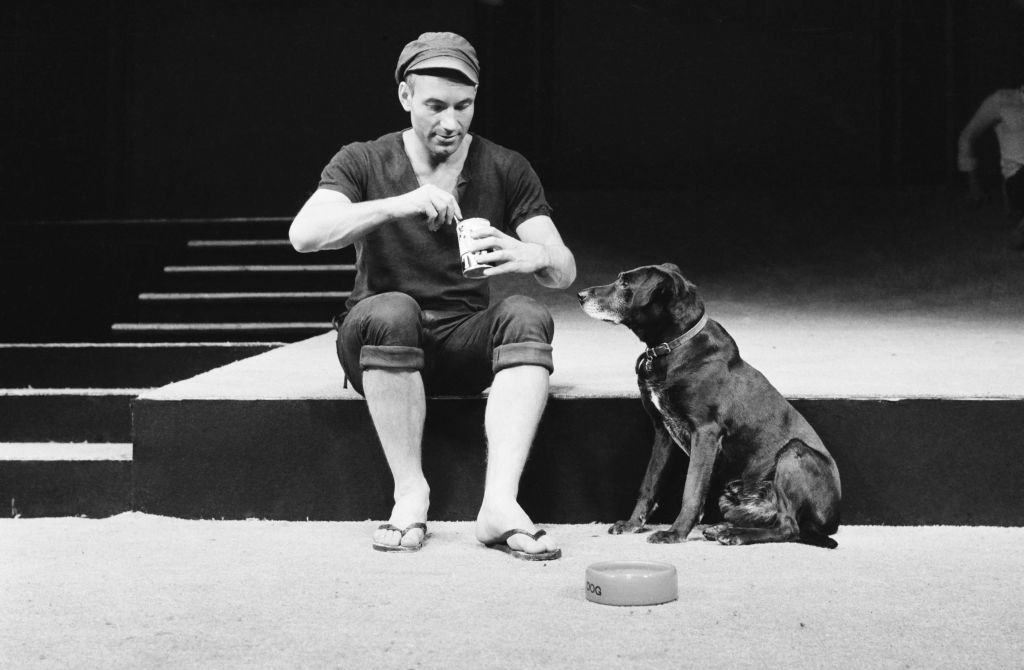
Patrick Stewart as Launce, with his dog Crab, during rehearsals for Robin Phillips' production of "Two Gentlemen Of Verona" for the Royal Shakespeare Company on September 15, 1970. The play opened at the Aldwych theatre, London, the following December. —Evening Standard/Hulton Archive/Getty Images

Patrick Stewart’s career took him from Shakespeare to ‘Star Trek,’ and beyond 

Stewart was born on July 13, 1940, in the West Yorkshire town of Mirfield in England’s coal-mining country, where he later recalled growing up in poverty and a home marked by domestic violence. He described acting as a “safe space” and a “refuge from real life” that he discovered after a teacher first introduced him to Shakespeare.

Years before he made his big-screen debut, Stewart trained in classical theater and took on his first professional roles on the British stage in the 1950s and 1960s. He joined the esteemed Royal Shakespeare Company in 1966, going from smaller supporting roles to storied leading parts over the course of more than 15 years as a regular member of the company.

Beginning in the 1970s, Stewart appeared in television series including “Fall of Eagles” (1974), “I, Claudius” (1976), and “Tinker Tailor Soldier Spy.”

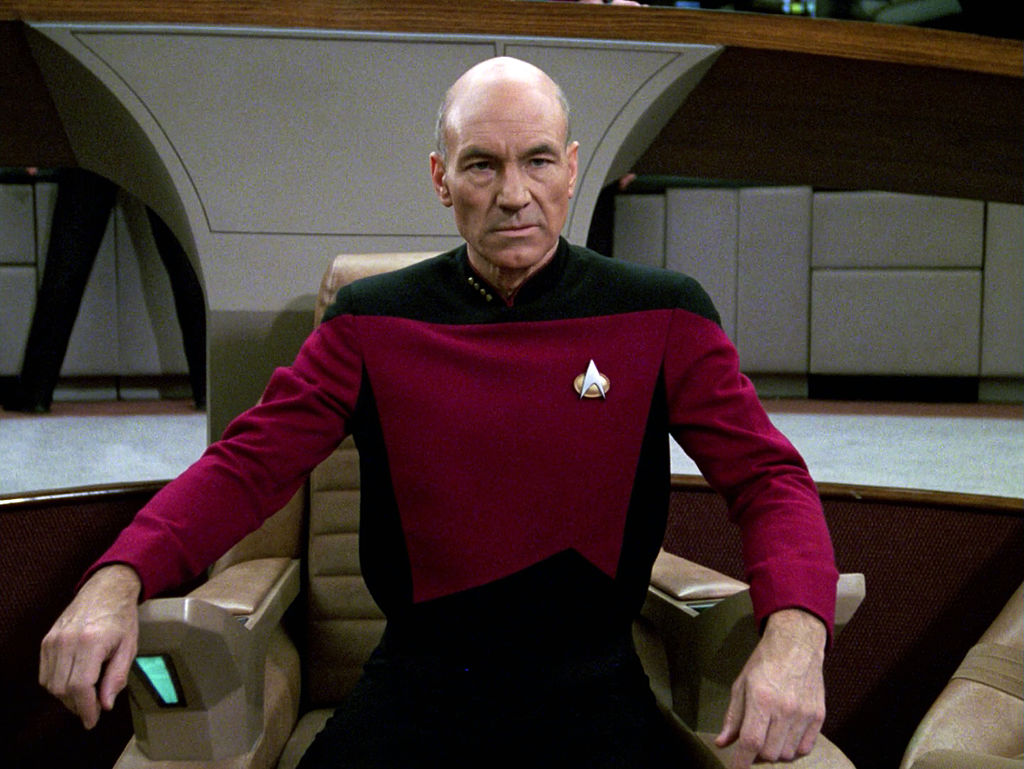
Patrick Stewart as Captain Jean-Luc Picard in the "Star Trek: The Next Generation" episode, "The Hunted." Season 3, episode 11. Original air date, January 8, 1990. —CBS/Getty Images

He reached a new level of international stardom with his role as Captain Jean-Luc Picard in the “Star Trek: The Next Generation” series, which he played from 1987 to1994. In 2000, Stewart took on another career-defining part, that of Professor Charles Xavier in the “X-Men” movies. 

Throughout his career, Stewart received various accolades, including two Laurence Olivier Awards, recognized as the highest honor in British theater, and a Grammy for his recording of “Peter and the Wolf,”; as well as garnering nominations for the Golden Globes, Emmys, and a Tony. He was knighted by Queen Elizabeth II for his service to drama in 2010. 

Outpourings of praise and remembrance 

The news of Stewart’s death quickly drew tributes from many within the “Star Trek” and Marvel worlds where he inhabited two of his most recognizable roles.

“We lost one of the greats of stage and screen today. And, in my book, a tremendous friend and man. I learned so much from him. I will miss you, Patrick Stewart, all of my days,” wrote the actor Hugh Jackman, who starred as Wolverine in the “X-Men” films alongside Stewart. 

Marvel Studios also paid tribute to Stewart on Thursday. 

“Sir Patrick brought Professor Charles Xavier to life with extraordinary grace, intelligence, and humanity, defining the character for generations of fans, from ‘X-Men’ to ‘Logan’ to ‘Avengers: Doomsday.’ He was a singular talent, a generous collaborator, and a true gentleman,” Marvel wrote in a statement shared on social media.

The studio's president, Kevin Feige, said in a statement to Variety that “after years of knowing him as the inimitable Captain Picard, I was in awe — and he turned out to be everything I had seen on screen and more: brilliant, charming, warm, generous, with a quiet strength and gravitas.”  

Feige added that “away from the cameras, he was even more remarkable, with a wonderfully sharp sense of humor.”

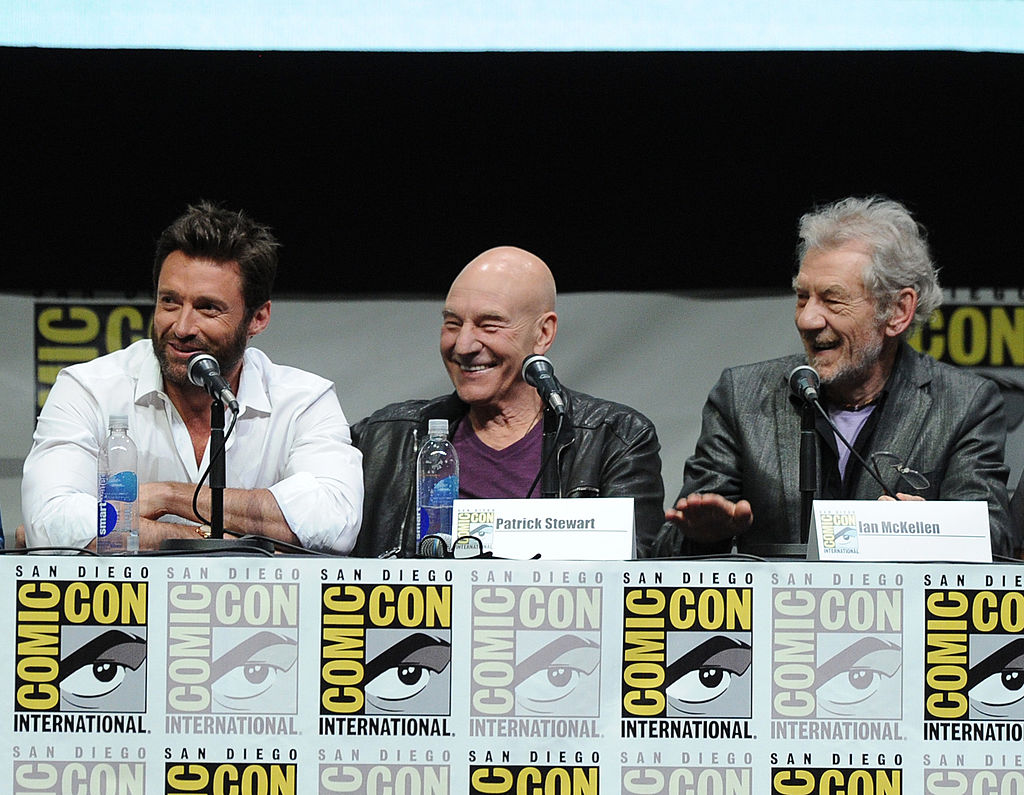
Actors Hugh Jackman, Patrick Stewart and Ian McKellen speak at the 20th Century Fox "X-Men: Days of Future Past" panel during Comic-Con International 2013 at San Diego Convention Center in San Diego, California, on July 20, 2013. —Kevin Winter—Getty Images

The “Star Trek” franchise remembered Stewart in a post on its official Instagram page as “a voice. A presence. A captain unlike any other.”

“Sir Patrick Stewart gave generations of fans an icon who inspired us to look toward the stars,” the post read. “Today, we celebrate an extraordinary life and an enduring legacy. Thank you, Sir Patrick.”

William Shatner, who played Captain James T. Kirk in the “Star Trek” franchise, said in a post on X that Stewart was “a friend, a colleague, and a magnificent actor. From the stage to the bridge of the Enterprise, he brought intelligence, grace, and a deep sense of humanity to everything he did. Captain Picard stood for the best of us, and so did the man who played him. I was filled with affection and admiration for him and his work.”

George Takei, who played Lt. Hikaru Sulu in the original “Star Trek” series, called Stewart on threads “a true and irreplaceable legend.” 

“He inspired a whole next generation of star-gazers who looked longingly ahead to a brighter future for all humanity,” Takei said.

Stewart’s “Star Trek: The Next Generation” co-stars Wil Wheaton, who played Wesley Crusher on the series, and Jonathan Scott Frakes, who played William Riker, also shared tributes to the late actor. 

“Godspeed, Captain,” Wheaton wrote in a message on Instagram, alongside a photo of himself with Stewart.

“Rest in peace, my friend,” Frakes wrote.

Rebecca Romijn, who like Stewart has played roles in both the “Star Trek” and “X-Men” franchises said in a video posted on social media: “I feel so grateful to have known him for the last 25 years, and to have been in his orbit … both as a fellow mutant and as a fellow member of Starfleet.”

“He was positively delicious, hilarious, naughty, incredible sense of humor, and that booming voice of his that always spoke to the very back of the room, as every classically trained Shakespearean great needs to master, has always been an inspiration,” she said. “I send my condolences to his family, and I’ll miss my friend dearly. Rest in peace, Patrick.”

Cary Elwes, who starred alongside Stewart in “Lady Jane” and “Robin Hood: Men in Tights,” recalled that he “first met Patrick on the set of Lady Jane back in 1984 and fell in love with him immediately.”

"Not only was amiable and kind with a great sense of humor, he was incredible to work with. His command of the screen with his sheer presence and that unmistakable voice was a sight to behold," Elwes wrote in a post on Instagram.

  •  

Three Latino Leaders Reflect on Inspiration Across Generations

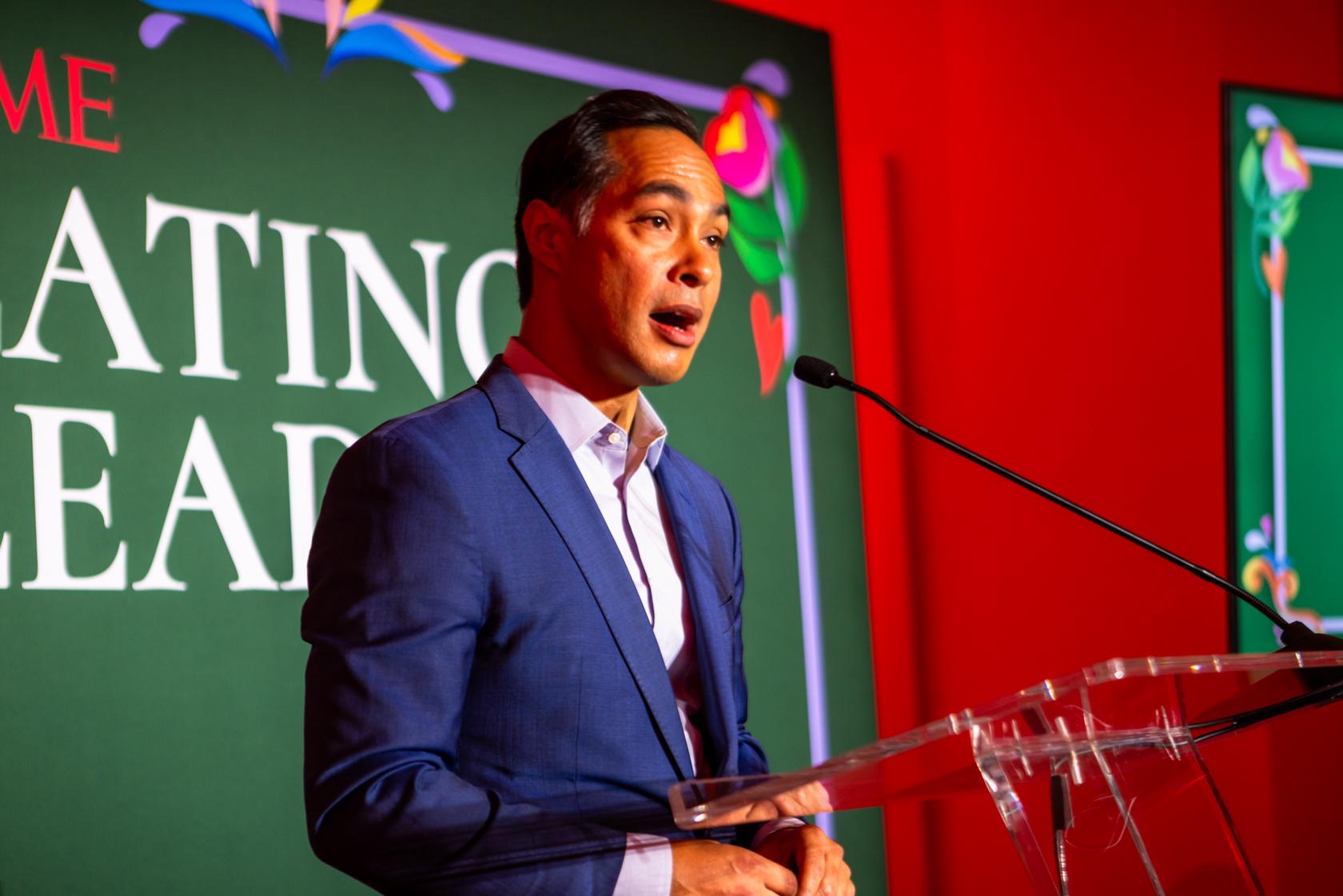
Three leaders within their respective industries gave toasts at TIME’s Latino Leaders celebration on Tuesday night in Miami, where they each honored their cultures and the people who raised them.

Nelson German, a chef, restaurateur, and author; Julián Castro, the CEO of Latino Community Foundation, the largest Latino-serving organization in the U.S.; and actor, singer, and advocate Sofia Carson, all spoke at the event.

German, who was raised in Manhattan’s Washington Heights, reflected on the experience of growing up in a Dominican immigrant family and shying away from his language and culture as a child.

“We wanted to fit in so badly to reach that American dream,” he said. “But now things have changed … We now are embracing those parts of ourselves more fully. We are embracing our cultures, our heritage, our motherlands.”

The act of honoring one’s culture, he said, is about looking both forward and back.

“It's not just about the future; we have to honor the past. The parents and grandparents who work two, three jobs … They gave us a chance to really stand in these kinds of rooms together, so never forget about that.”

For German, who is the executive chef at acclaimed restaurants in Oakland and San Francisco, passing down Dominican culture is done through his work: food.

“The recipes, the stories, they have to stay alive,” he said. “We have to share them with our kids, with our youth … Let's keep creating opportunities for the next generation while giving them the connection to the generation before them.”

Castro also reflected on his childhood, when he was “always on the lookout for Latinas and Latinos doing great things” while growing up in San Antonio, Texas. He would read through the credits of movies, looking for names like “Garcia,” “Hernandez,” and “Rodriguez,” or scan the library for books by Latino authors.

He paid tribute to his grandmother Victoria, who came to the U.S. in 1922 from northern Mexico after her parents passed away and raised Castro’s mother as a single parent. He also honored his mother, who also raised Castro and his brother alone.

“I am sure that if we went around the room tonight, that that is a very common story here, and that each of you, like me, feels very fortunate and very blessed to have been able to achieve their dreams,” he said. “Our families … have always been strivers and hard workers and people of love, of faith, and of family, and we've always driven progress in the United States of America, and that's true today.”

Castro acknowledged what he described as a "cruelty” being aimed at immigrant and Latino families around the country, but stressed that Latinos remained an integral part of the U.S.

“The destiny of the United States and the destiny of Latinos is more intertwined than it ever has been before,” he said. “Only if Latinos succeed can America succeed in the years to come, and vice versa.”

Throughout Carson’s speech, during which she similarly reflected on those who raised and molded her, she repeated the same line several times: “To be a Latin woman is to be hope.”

She stressed the importance of hope, especially in the face of “oppression, plundering, and abandonment,” quoting the words of the Latin-American author and Nobel Prize-winner in literature Gabriel García Márquez.

Carson said that she has spent her entire life admiring her mother, who taught her poems by Mexican painter Frida Kahlo, and read her novels by Chilean-American author Isabel Allende, and sang her songs by Cuban-American singer Celia Cruz.

“To be a Latin woman is to be hope,” she repeated, honoring the crowd’s mothers, grandmothers, sisters, and daughters. “Hope lives in the DNA of who we are. It flows from our bloodstream into everything we touch. It is the beating of our hearts. It is the language of our soul.”

Latino Leaders was presented by PepsiCo.

  •  

What Early Voting Data Is Showing About the Midterm Elections

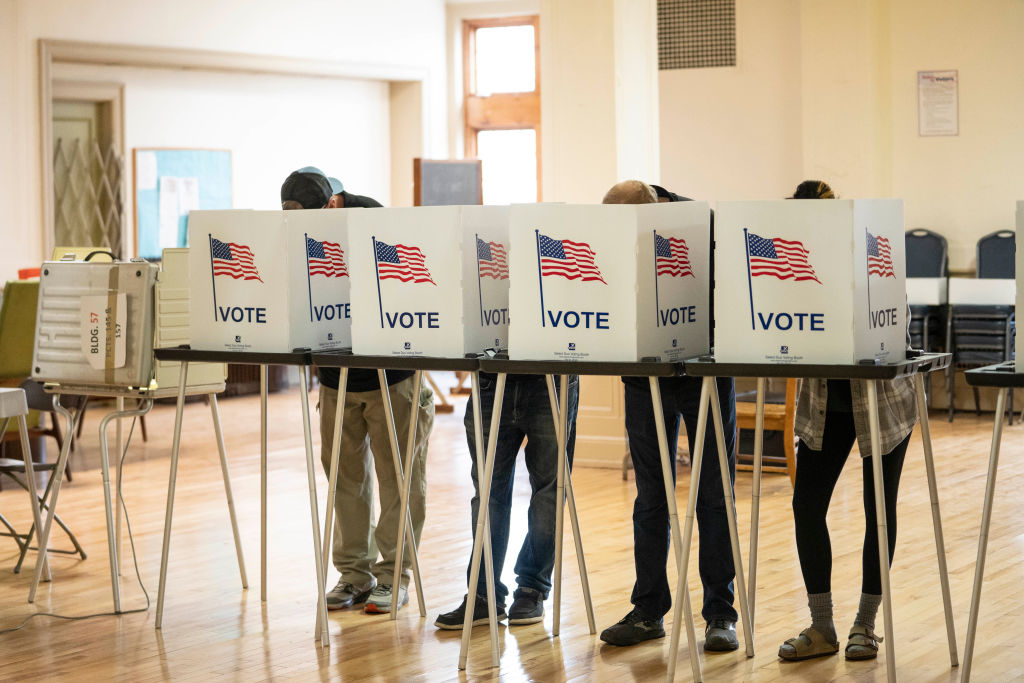
Election Day is still a week away. But with early voting for the midterms underway in nearly every state, tens of millions of Americans have already cast their ballots, offering an initial glimpse into how the pivotal elections may play out. 

As of Tuesday afternoon, nearly 33 million people have voted since early voting windows opened in some states over a month ago, according to tracking by the University of Florida’s Election Lab. Around half of those votes have been cast in person, while the other half were submitted by mail. 

With days of early voting left to go before Election Day on Nov. 3, that figure already represents more than a quarter of the roughly 122 million Americans who voted in the 2022 midterms.

Michael McDonald, a political science professor at the University of Florida who runs the Election Lab, stresses to TIME that early voting data cannot in and of itself be relied on to predict the outcome of the elections. But he says it can reveal other informative aspects of voting behavior.

“Once you start seeing consistency across multiple days of voting and across multiple states, it starts giving us more confidence that whatever we're seeing in terms of relative engagement, that's likely going to carry through to election day,” McDonald says.

Here are some of the notable trends emerging in the early voting data as Election Day nears.

Democrats are outpacing Republicans in early ballots

Registered Democrats so far represent a larger share of early voters in the midterms than Republicans, having cast roughly 45% of early ballots compared to 31% cast by GOP voters, according to the University of Florida’s Election Lab data. Another 24% of Americans who have voted early are not registered with either party.

This data is only available for the 27 states that have a formal party registration system, and signifies only the party with which a voter is registered, not the candidates selected on their ballot. 

Experts caution that Democrats’ higher turnout in the early vote does not guarantee they’ll maintain that edge, with tens of millions more Americans still expected to show up at the polls.

Republicans are anticipated to make up ground on Election Day, as they have in recent years. A Pew Research survey conducted following the 2024 elections showed that nearly 40% of registered Republican voters cast their ballot in person on Election Day, compared to 28% of registered Democratic voters.

“We expect the Democrats to build up a lead in the early vote, and Election Day tends to be a Republican day, so you can't just look at the early vote as it is now,” McDonald tells TIME.

Polling has shown, however, that Democratic engagement and enthusiasm is higher than it is for Republicans in the lead-up to the elections. According to a PBS News/NPR/Marist poll released on Tuesday, 52% of likely voters said they would back the Democratic candidate in their House district, while 44% would back the Republican candidate. Independent likely voters favored Democratic candidates by 13 points. 

More Democrats than Republicans also said in the survey they were very enthusiastic about voting, at 71% and 61% respectively. Another poll from the Pew Research Center earlier this month similarly showed greater engagement and stated motivation from voters backing Democrats: 78% of voters who voiced support for the Democratic candidate in their House district said who controls Congress “really matters,” compared to 69% of voters who backed Republican candidates who said the same. Such polls have suggested a “blue wave” of Democratic support might determine the midterms, but Republicans have pushed back against the numbers. 

Read More: Polls Point to a Blue Wave. Here's Why Republicans Say They're Wrong

Bernard Fraga, a political science professor at Emory University, tells TIME that the relative lack of Republican enthusiasm in polls and trailing GOP turnout in early voting shows that support within the party, and for President Donald Trump, has waned. 

“This is a story about Democrats who voted in 2024 persisting, and Republicans who voted in 2024 so far at least staying home,” he says. 

The midterms come as Trump’s approval rating has hit near record lows amid widespread dissatisfaction with his handling of the war in Iran and the economy. A Reuters/Ipsos poll released on Monday put Trump’s approval rating at 32%, up one percentage point from last week, when the same poll recorded the lowest approval rating of his second term.  

Fraga says that Republicans are frustrated with what he describes as “failures” of the Trump Administration, which he asserts have decreased GOP voters’ support for their party and led them to stay home rather than casting ballots early. 

“Even for steadfast Republican voters, they look at the state of the economy, for example, and say that they're not too enthusiastic about voting,” he says. “Reading the trends, it's clear that Democrats are enthusiastic and mobilized to a much greater degree than even the Republican voters.”

Simon Rosenberg, a long-time Democratic strategist, contends that independents are also more likely to be voting in favor of Democrats, given recent polling, which has shown that more independent likely voters support Democratic candidates. One YouGov poll found that 54% of independents said they’d vote for Democratic candidates, versus 27% who said they’d vote for Republican candidates. Another PBS/NPR/Marist poll showed that independents favored Democrats by a margin of 25 points. 

Given such polling, Rosenberg believes that the number of people voting for Democratic candidates is actually higher than the partisan breakdown in early voting data explicitly indicates. 

Hispanic voters are turning out early in higher numbers than other recent elections

Rosenberg says that the most significant data coming out of early voting is the number of Hispanic people voting early. 

So far, Hispanic early voting participation is outpacing its levels at the same point in the election cycle in 2022 and 2024. Presidential election years such as 2024 typically yield higher voter turnout, which Rosenberg says makes the 2026 figures to date all the more notable and surprising. 

“It's almost certain that this heightened performance will carry over through Election Day, and that this will become one of the big storylines of the election,” he says. “It's a universal trend that we're seeing all across the country.”

This trend is most noticeable in states with high Hispanic populations, like Texas. 

In one of the most closely watched—and expensive—Senate races this year, James Talarico is vying to become the first Democrat elected to the Senate from Texas since 1988 in a tightly contested battle against the state’s Republican Attorney General Ken Paxton. 

Over 4 million votes have been cast early, or an estimated 41% of the total votes expected in the race, according to tracking by VoteHub. As of Monday, Talarico was forecast to hold a narrow two-point lead in the early vote. 

The state's Hispanic population, one of the highest in the U.S. per capita, represents 24% of the vote as of Monday, according to VoteHub, a percentage point higher than the share it made up in the final vote tally in the 2024 election. Another analysis reported by The Texas Tribune showed that the Hispanic early vote in Texas has already surpassed the early vote numbers from 2024 and 2022.

“What we can see here is just eye-popping numbers for Hispanics,” McDonald said about the group’s early voter turnout not only in Texas, but around the U.S. “If Hispanics are showing up in force now, it's almost with certainty going to change the overall … diversity of the electorate in this election cycle.” 

As a result, McDonald contends that “we're going to see larger swings to the Democrats in more diverse states.” 

Polling has indicated that Hispanic and Latino voters, a demographic that helped propel Trump back to the White House two years ago, widely disapprove of the President and the Republican Party heading into midterms. Sixty-six percent of Latino voters surveyed in late September by an NBC News/Telemundo poll said that Trump’s deportation policies have gone too far, while 75% disapprove of his handling of the economy and the cost of living. The poll also found that more Latino voters hold a negative view of the GOP than at any point since 2016. 

Another Reuters/Ipsos poll released on Oct. 5 showed that just 24% of Hispanic Americans approved of Trump’s performance in the White House, the lowest such rating the President has received across both of his presidential terms. And just 52% of Hispanic voters who responded to the poll planned to vote Democratic, double the level of support for Republicans among the demographic.

How predictive is early voting data?

Rosenberg cautions that early voting “can tell you a lot, but it can't tell you everything,” and that voter turnout can shift from day to day. 

He notes that early voting returns showed Kamala Harris leading in the 2024 presidential election, and that she still lost after a strong gain in Republican turnout for Trump. 

But he contends that “the lack of intensity that we're seeing in many rural and Republican counties around the country does not bode well for them for Election Day.”

Fraga says that in general, political scientists are skeptical of using early voting data to predict election outcomes. This has been especially true, he notes, in the aftermath of the COVID-19 pandemic, which saw Democrats cast early votes by mail at a significantly higher rate than Republicans, who were more likely to vote early at polls, a dynamic that made it harder to draw on the early vote to confidently predict outcomes on Election Day. 

Now, though, “the partisan distribution of voters has become somewhat more stable,” he says. “So we can use that information to now have a better comparison, and as a result, early voting data sheds a lot more light on what's likely to happen in November.”

“It's not determinative. It's not going to predict what's going to happen,” Rosenberg says. “But every campaign in the country right now is living and dying on this early vote data.”

Richard Hall contributed reporting.

  •  

Flávio Bolsonaro Flees to Miami After Brazil Election Loss, Defying Court Order

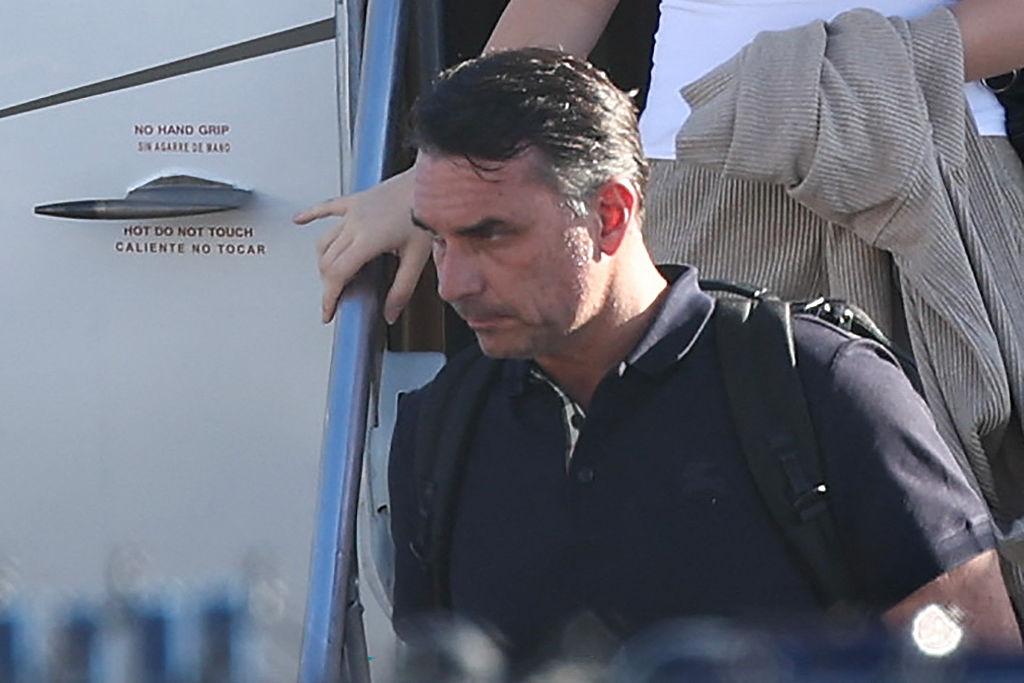
Flavio Bolsonaro arrives at Opa-Locka Executive Airport near Miami on Oct. 28, 2026, despite a court order barring the defeated Brazilian presidential candidate from leaving Brazil. —Ricardo Arduengo—AFP/Getty Images

Brazilian Senator Flávio Bolsonaro arrived in Miami on Wednesday after fleeing the country in defiance of a court order to surrender his passports amid a money laundering investigation, days after losing the presidential election to incumbent Luiz Inácio Lula da Silva.

Bolsonaro traveled from northern Argentina to the Ecuadorian city of Guayaquil, the Argentine government said. From there, Bolsonaro, his wife and two daughters flew to Miami, where they were recorded exiting a private jet at Miami-Opa Locka ​Executive Airport. 

President Donald Trump told reporters he “would approve” of Bolsonaro coming to the U.S. “I think they’re fine people,” Trump said. “The election ‌was very strange, and I thought ⁠it was terrible. It’s gotten bad reviews. You look at what happened to their market.”

On Tuesday, U.S. officials told multiple media outlets that the State Department would grant Bolsonaro and his family entry visas amid reports he had left Brazil to head to the U.S.

A Brazilian Supreme Court justice had ordered federal police to open a separate probe into possible illegal foreign financing of Bolsonaro’s presidential campaign, including alleged ties to U.S. Vice President J.D. Vance’s donor network. Lula’s government had previously accused the Trump Administration of interfering in Brazil’s election, an allegation the U.S. denies. TIME has reached out to Vance’s office for comment.

Bolsonaro initially said he would comply with Brazilian Supreme Court Justice Alexandre de Moraes’s order to surrender his passports and refrain from traveling. The order concerned an investigation into Bolsonaro’s alleged links to a Brazilian lawyer accused of laundering more than $1 billion through a fraud scheme.

The confidential order cited Bolsonaro’s flight risk and “significant financial resources.” The son of convicted former President Jair Bolsonaro, Flávio Bolsonaro will lose certain parliamentary protections from prosecution when his term as senator for Rio de Janeiro ends on Jan. 31.

“I have never thought ‌about leaving ⁠the country,” Bolsonaro said in a social media video Monday. “I will hand over my passports and defend myself against this travesty, which is a clear attempt to intimidate me.”

But Bolsonaro did not comply with the order to hand over his passport by the end of the court’s 24-hour deadline on Tuesday morning. Argentina’s National Directorate of Migrations said Bolsonaro and his family entered the country “with valid travel documentation and without any legal impediment” on Tuesday night before boarding a private flight to Guayaquil, Ecuador.

Lula called Bolsonaro’s flight from Brazil “a shameful act.”

“Those who have nothing to hide have nothing to fear,” Lula added, recalling his own arrest in 2018 on charges of passive corruption and money laundering. His convictions that were later overturned.

Bolsonaro is also being investigated over alleged links to a banker connected to a corruption scheme. He is alleged to have raised millions of dollars from the banker to fund a biopic about his father.

Bolsonaro's departure could inflame political tensions amid claims from Brazil’s right wing and abroad that the election was unfair. Bolsonaro initially said he would seek to annul the vote, although his Liberal Party later conceded defeat. In the video posted Monday, he said he would seek to have Lula’s ticket disqualified, citing alleged disinformation and “vote buying.” He also said he would organize congressional opposition to Lula’s government.

“I wasn’t the one who lost,” he said. “The system won.”

Trump, an ally of the Bolsonaros, said Monday that the election appeared “rigged.” He did not provide evidence for the claim.

“I didn’t take ​sides, but it looked like another rigged election,” Trump said.

“I just think it had a very bad look, the election, the ​way it was tabulated,” he added. “The extension given was very strange.”

Brazil’s Supreme Court had granted a two-hour voting extension on Sunday, citing transport issues raised by Lula’s campaign. Bolsonaro’s campaign had separately requested a two-hour extension due to heavy rainfall in certain areas.

Lula won the election by more than 4 million votes. Roughly 0.03% of all votes—or fewer than 35,000—were recorded in the extra two hours. Vice President Geraldo Alckmin told Rede Vanguarda that Trump’s claims were “completely wrong.”

Money laundering inquiry

The inquiry into Bolsonaro stems from a federal probe into unauthorized deductions from pension payments made by Brazil’s social security agency. The broader operation, launched in April 2025, investigated associations suspected of collecting unauthorized membership fees from pension benefits.

Evidence from the probe led investigators to examine suspected money laundering involving betting platforms and financial transactions linked to Brazilian lawyer Willer Tomaz, who denies wrongdoing.

Police reportedly discovered that Bolsonaro had “master user” access to bank accounts belonging to Alcazar Holdings, a company owned by Tomaz. In May 2025, a person working for Tomaz asked the bank to remove Bolsonaro’s access to the accounts, local media outlets BPMoney and Times Brasil reported earlier this month, citing police findings. Both Bolsonaro and Tomaz deny having a joint account or financial ties.

De Moraes’s order also barred Bolsonaro from contacting Tomaz. Bolsonaro said on Monday that the ruling came after his brother, Eduardo Bolsonaro, had said on a podcast last week that he should leave the country if he lost the election.

AFP reported that Bolsonaro’s Brazilian and diplomatic passports were canceled, but that he has held Italian nationality since 2023. His departure appeared to surprise his political allies, including his campaign manager Rogerio Marinho who told reporters Tuesday that he had no information about Bolsonaro’s whereabouts.

“I received a text message from him this morning, where he said he would let some time pass today and then would talk with us, and that was it,” he said. “That was the only communication we had.”

A critic of Brazil’s justice system

Bolsonaro has repeatedly criticized Brazil’s judiciary and described the investigations into him as politically motivated. The country’s Supreme Court generally assigns cases through a lottery system. The money laundering investigation was assigned to de Moraes on Oct. 16.

De Moraes was the lead justice in last year’s trial of Jair Bolsonaro, who refused to accept his election loss in 2022. A five-member panel of Supreme Court justices convicted Jair Bolsonaro, by a 4-1 vote, of attempting to overturn his election defeat and sentenced him to 27 years and three months in prison. He is serving the sentence under house arrest due to poor health. Prosecutors alleged that the plot included plans to assassinate Lula. Jair Bolsonaro denies wrongdoing.

In June, a Supreme Court panel unanimously convicted Eduardo Bolsonaro of coercion in judicial proceedings. Prosecutors alleged he had attempted to lobby the Trump Administration to use tariffs and sanctions, including on de Moraes, to pressure judicial authorities to drop the prosecution of Jair Bolsonaro. Eduardo Bolsonaro was sentenced to four years and two months in prison, but remains in Texas, where has lived since 2025.

De Moraes has also faced scrutiny over reported ties to Daniel Vorcaro, the former owner of Banco Master, whose financing of a film about Jair Bolsonaro is the subject of the separate inquiry into Flávio Bolsonaro. The New York Times reported, citing a police dossier, that Vorcaro sent text messages to de Moraes asking for help to avoid arrest. In messages to other associates, Vorcaro reportedly mentioned paying millions to the law firm of de Moraes’s wife. De Moraes has denied wrongdoing and said he never acted to favor Vorcaro or Banco Master.

De Moraes also clashed with tech billionaire Elon Musk in 2024 over court orders to block accounts on Musk’s social media platform X. De Moraes temporarily suspended the platform in Brazil after it failed to comply with judicial requirements, which Musk had described as “the most draconian demands of any country on Earth.”

  •  

How a Fake Pollster May Have Hurt Real Candidates

Detroit voters at the polls inside Central United Methodist Church in downtown Detroit, Michigan, on Nov. 5, 2024. —Sarah Rice—Getty Images

A pollster admitted this week to using fabricated data in its surveys that were picked up by leading publications across the U.S., claiming the stunt was an “experimental project” intended to showcase the “vulnerabilities” of the polling industry. The announcement has shaken trust in polling infrastructure ahead of the midterms, especially as some candidates say their campaigns were directly harmed by the fake numbers.

After election analysis website FiftyPlusOne submitted an inquiry to Wedgewood Polls regarding the authenticity of its data and methodologies, the pollster put out a statement across social media on Tuesday, saying it had been conducting a test to show "how easy is it for an entirely fabricated polling firm to gain traction, be taken seriously, and expose how little scrutinization exists in media and public commentary?" In the statement, which has since been deleted, the group claimed it had been “far too easy” to distribute false data and insisted it "highlights a systemic breakdown in media vetting and data aggregation.”

Wedgewood's polls had been used by multiple national outlets for their midterm reporting, including the New York Times, Newsweek, MS NOW, and POLITICO. The Times, which cited around 15 Wedgewood polls between June and October, has since removed the data from its stories. In an accompanying editor’s note, the publication detailed its checking process for polls and said Wedgewood had answered several of their inquiries prior to the data being published, including questions on the identities of the group’s pollsters, the methods used to draw their samples, and the source of their funding.

TIME's email to Wedgewood Polls bounced back.

In another fraudulent polling operation uncovered in August, a company called Median Strategies fabricated polls for races in Wisconsin, Nevada, and California and similarly called the ploy a “social experiment” in a statement to the Los Angeles Times.

“It's very troubling that we've had two examples of this within a very short period of time during election campaigns, creating a lot of problems for legitimate polling,” says Michael Traugott, a professor emeritus of political science at the University of Michigan, who previously served as president of the American Association for Public Opinion Research (AAPOR).

Here’s what to know about the Wedgewood scandal, and what it says about polling ahead of the pivotal midterm elections. 

What do we know about Wedgewood Polls?

The polling group called itself a “fictional entity run by a small group of industry veterans” in its statement. Its X account, which contained many of its polls, no longer exists.

G. Elliot Morris, a pollster and journalist who works at FiftyPlusOne, tells TIME that he and his colleagues had been suspicious about a “crop of new polling firms” that have emerged and released anonymous data. An individual eventually tipped off FiftyPlusOne to Wedgewood's polling, which was “the straw that broke the camel's back for us,” he says.

FiftyPlusOne said in a public statement that Wedgewood “operated as if it were a legitimate polling firm” by collecting money from donors to carry out crowd-funded polls and share its survey data.

The poll analysis group said Wedgewood disclosed two names in connection to the company: Jack Sims and Andrew Prater. According to FiftyPlusOne, Sims had prior experience in the polling industry. SoCal Strategies, another polling firm, this week acknowledged in an email to an NPR affiliate in Michigan that Sims had worked there, but is not currently employed by the company and “has not been for a year.”

“It is not atypical for a pollster to leave an existing firm, form their own, and self-fund some surveys to build reputation; we had no reason at the time to believe this case was any different,” FiftyPlusOne said regarding Sims. 

“This event does not help what is a decades-long trend of declining confidence in the polling industry,” Morris added, when asked about Sims’ involvement with Wedgewood. TIME has been unable to reach Sims for comment.

Senate candidate in Michigan says fake polling damaged her campaign

The polling scandal has sparked a flurry of reactions within the politics and government sector, with one former Senate hopeful claiming the numbers circulated by Wedgewood contributed to the collapse of her campaign.

Democratic Michigan state Sen. Mallory McMorrow recalled how a poll from Wedgewood had shown her “plummeting into single digits.”

Wedgewood released polling on June 29 that placed McMorrow as having the support of only 9% of registered voters, leaving her trailing behind Haley Stevens and Abdul El-Sayed. Other polls also showed McMorrow in third place with single digits. A Susquehanna Polling survey conducted June 9 to 14 put McMorrow at 9%, although 49% of Democratic primary voters surveyed were undecided. A July 1 Quantus Insights poll put her at under 8%. McMorrow suspended her campaign on July 5, just one month before the primaries. 

In a statement posted to social media on Oct. 20, McMorrow said donations “dried up” and she was “hounded” with calls to exit the race after the circulation of the “infamous” Wedgewood poll numbers. 

Advising others not to trust the polls, McMorrow said she hoped Democrats are ready to “blow up the system with campaign finance and transparency reforms.”

Jennifer Holdsworth, a Democratic strategist who ran a SuperPAC that supported McMorrow, claimed the fake poll had been “used by several donors to pull back funding at a time we were being outspent by $80 million.”

Amid widespread discussions over fabricated data, Federal Communications Commission (FCC) Chair Brendan Carr said, without naming any specific instance, that there has been a “significant surge” in fake polls and blamed news outlets for “amplifying or airing” them “without regard to basic journalistic ethics.” 

Democratic FCC Commissioner Anna Gomez quipped back and shifted the onus onto fraudulent pollsters themselves. 

“Pollsters who intentionally mislead the public should answer for it, but broadcasters who report publicly available polling data should never be punished when a poll is wrong,” she said in response to Carr. “FCC rules on news distortion or hoaxes do not apply to a station that reports this data in good faith.”

Michigan Democratic state Sen. Mallory McMorrow and Democratic Senate primary winner Abdul El-Sayed at a press conference in Detroit, Michigan, on Aug. 5, 2026 —Finn Gomez—Getty Images

What impact can polls have on elections?

While documented fake polls are rare, according to experts, polling in general often plays a large role in shaping the narrative of hotly contested races.

Traugott tells TIME that polls can affect voting behavior and support for campaigns “because by and large, the average citizen is interested in backing the winner, and backing means not just votes; it also means financial contributions, contributing time and effort to the campaign, and the like.”

Research has demonstrated what is known as the “bandwagon effect,” in which voters become more likely to vote for candidates or issues that are more favored in polls. A 2023 study from the Journal of Elections, Public Opinion and Parties showed that polls discouraged support for less popular ballot items, or as the paper’s authors put it: “polls demobilize the minority and mobilize the majority.” 

It also found that moderate voters, who often represent a crucial demographic of voters and can swing tight elections, were the most impressionable when it comes to being influenced by polling. “Social conformity is strongest among ideological moderates,” the study said.

This effect has been documented going back decades. 

A 1996 experiment showed that participants who were shown a fabricated poll ahead of that year’s primary had a “significantly greater tendency” to vote for the candidates favored by the poll. 

This phenomenon has similarly been demonstrated in prediction markets, which have been shown to sway voters almost as much as polls. A study released on Oct. 20 by policy think-tank the Brennan Center showed that voters were 10% more likely to say that a candidate would win in an election if that person had higher odds of winning based on a prediction market. 

Likewise, voters were less likely to believe that a candidate would win if their odds were predicted to be lower. These prediction market odds, the study said, had a similar effect on perceived electability as traditional polls.

Traugott says that generally speaking, voters who identify with a specific party are unlikely to change their vote as a result of polling, but that they might not show up to the polls at all if they see their party’s nominee is disfavored to win. 

“It's often the case in the general election that the polls have an influence in terms of turnout,” he says. 

Should you trust polls?

Michael Dimock, the president of the Pew Research Center, says that in tight races, of which there are many in the upcoming midterms, “it's very easy for polls to ‘pick the wrong winner.’”

“I do think that people should be very cautious in over-interpreting pre-election polls' ability to project an election outcome, whether it's at a national level, state level, a district level, [or] local level,” he tells TIME. 

One of the main reasons for this, Dimock contends, is that even if participants in a survey say who they would vote for, they still might not show up to cast their ballot. He refers to this immeasurable but important factor as “enthusiasm differences.”

“What polls are really bad at capturing is who's going to actually show up and cast a ballot. It's really hard,” Dimock adds. “Human beings are bad at predicting their [own] future behaviors.”

  •  

Ahead of Midterms, Elena Kagan Says the Supreme Court Is Undermining Voting Rights

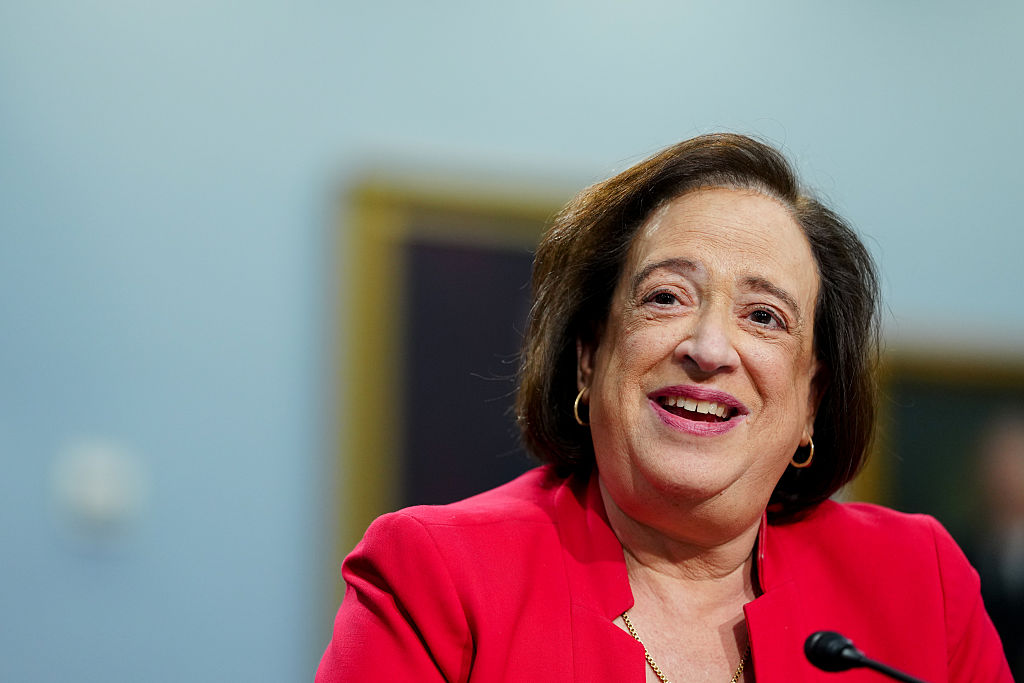
Elena Kagan, associate justice of the U.S. Supreme Court, attends a House Appropriations Subcommittee on Financial Services and General Government hearing in Washington, D.C., on July 14, 2026. —Aaron Schwartz—Bloomberg via Getty Images

Liberal Justice Elena Kagan has accused the Supreme Court’s conservative majority of undermining democracy and creating a more polarized electorate through a series of key rulings that have affected the nature of elections ahead of the midterms. 

“The court has kind of blinded itself to the very deleterious effect of their rulings on how the political system works,” Kagan said while speaking to students and faculty at Catholic University’s law school in Washington, D.C., on Tuesday.

She went on to say that the conservative justices have “created a democracy that does not work as well as it should.” 

Kagan—who was nominated to the bench in 2010 by President Barack Obama—referenced specific rulings that have had a large impact on electoral maps, campaign finance, and executive authority. Experts tell TIME that these rulings have affected the midterm elections and could, in turn, change the fate of Congress.  

Read More: Midterm Ad Spending Has Surpassed $10B. Where Is the Money Coming From?

“It's no exaggeration to say that the form of our elections and democracy owes a great deal to the decisions of the Supreme Court, sometimes overruling the will of Congress,” says Rick Hasen, a professor at the University of California, Los Angeles law school and the director of its Safeguarding Democracy Project. 

In fact, he believes Kagan’s remarks do not go far enough in their criticism. 

“You're going to hear more voices calling for the Supreme Court to be changed, either by adding more justices, putting in term limits, or doing other things,” he says. 

The outcome of the midterm elections might have some influence on these issues going forward, though there are limits to what Congress can accomplish regardless of who controls the majority in the years ahead.

How Supreme Court rulings may affect the 2026 midterms

Kagan’s comments outline how the high court’s rulings have impacted this year’s elections. 

She pointed to Louisiana v. Callais, which concerned whether Louisiana had to draw a second congressional district where Black voters made up a majority—giving them a greater chance to elect their preferred candidate. In April, the Supreme Court struck down that map and made it harder to challenge maps that weaken minority voters’ influence. Kagan called the ruling an “evisceration” of the 1965 Voting Rights Act.

Following the decision, many Republican-led states proposed redrawn voting maps that favored their candidates and weakened Black voters’ electoral influence.   

Read More: Supreme Court Ruling Weakens Major Provision of Voting Rights Act

Hasen says that Americans are already facing the fallout. He pointed to Louisiana and Alabama, each of which eliminated a district where Black voters could elect their candidates of choice.

“We'll see much more of that in the next few election cycles,” Hasen predicts, calling the decision “the worst election law decision in 100 years at the Supreme Court.”

Kagan also mentioned a 2019 decision in Rucho v. Common Cause that prevents federal courts from blocking electoral maps on the grounds that they unfairly favor one party. States including Texas, North Carolina, Ohio, and Florida have since adopted new congressional maps that could help Republicans win additional House seats in November.

This gerrymandering, Kagan said, strips people of “their rights to voting equality” and has resulted in “driving people away from the center, toward the wings, toward the extremes.” The outcome, she said, is contributing toward what’s already a “too-polarized country.” 

She added that these redrawn maps are “very destructive to our democracy.” 

How campaign finance rules may come into play ahead of Election Day

In her speech, Kagan also highlighted the role that money increasingly plays in politics.

“The people of America look around this political system and think that all this money chasing all these political candidates is a nightmare, and they’re right,” Kagan said.

A 6-3 ruling split along ideological lines from June in National Republican Senatorial Committee v. FEC removed limits on how much political parties can spend in coordination with their candidates, including on television advertisements. 

Her comments come amid what is projected to be the most expensive election cycle in history. 

Billionaires have poured hundreds of millions into super political action committees (super PACs) for campaign ads—chiefly supporting Republican candidates in tight Senate races. 

How the court has expanded presidential powers

Supreme Court rulings have also influenced the scope of presidential power.

Kagan also criticized the court’s decision in Trump v. Slaughter. In June, justices struck down protections against firing Federal Trade Commission commissioners without cause, expanding presidential control over independent agencies. 

“The danger is it allows the president to ride roughshod over all the institutions of government,” Kagan said.

Aziz Huq, a professor at the University of Chicago law school and a co-author of How to Save a Constitutional Democracy, tells TIME that “the misuse or the use of prosecutorial discretion at the direction of the president against political foes … flows from the court’s ruling” in Slaughter.

Furthermore, Huq says, it expands “the scope of presidential directive authority over subordinates.” 

Huq pointed to the Trump Administration’s investigation into Somali-born Democratic Rep. Ilhan Omar of Minnesota as an example of how greater presidential control over executive officials can be used against political opponents.

What Congress can do to check the Supreme Court

Even if Democrats regain control of Congress in November, Trump could veto legislation seeking to counteract the court’s decisions. Overriding him would require two-thirds support in both chambers.

As a result, Hasen says it could take until 2029 “at the earliest,” when a new president enters the White House, for there to be a counteractive response to the high court’s conservative majority. 

There are measures Congress and states can take in the meantime, he continues, saying that Congress has the ability to enact a nationwide law that would restrict partisan gerrymandering of House maps. 

Chief Justice John Roberts acknowledges that authority in his ruling in Rucho.

“As noted, the Framers gave Congress the power to do something about partisan gerrymandering in the Elections Clause,” Roberts wrote, referring to the 55 delegates who in 1787 met to draft the U.S. Constitution. “That avenue … remains open.” 

When it comes to Callais, Hasen says lawmakers could attempt to amend the Voting Rights Act, and restore protections narrowed by the ruling, by forcing the Supreme Court “to decide some of the constitutional questions that they ducked” during the original case. 

But any new legislation could face a legal challenge, leaving the Supreme Court to decide whether it can stand.

Those hoping to challenge the highest court’s composition or jurisdiction may go about that in a few ways, such as by petitioning for term limits. Proposals include limiting justices’ active service through legislation—an approach whose constitutionality is disputed—or through a constitutional amendment. Another route is to limit which cases the court can hear. 

Complicating matters, Huq says, is that legislative reforms could ultimately come before the Supreme Court, whose methods of interpreting the law leave the justices largely unconstrained in reaching their preferred outcomes.

“Almost all of these proposals are going to fail because the court will strike them down or find ways to undermine them,” Huq says. “We're at a very difficult and perilous point.”

  •  

Midterm Ad Spending Has Surpassed $10B. Where Is the Money Coming From?

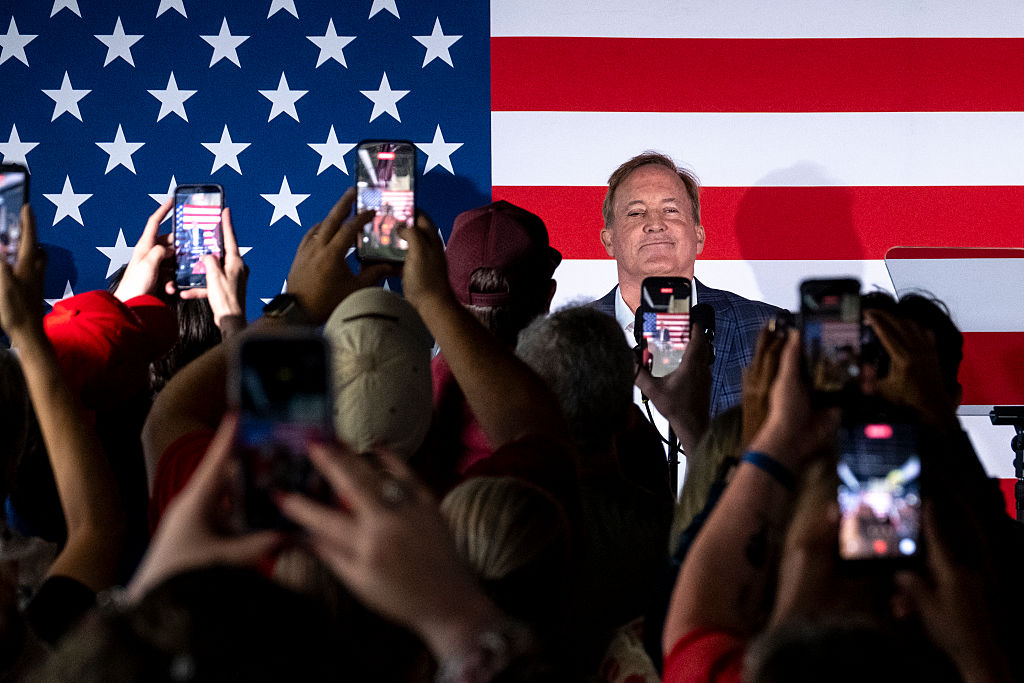
Texas Attorney General Ken Paxton, a Republican, poses at a rally for his Senate bid at Southern Roots Brewing Co. on Oct. 17, 2026, in Killeen, Texas. —Joel Angel Juarez—Getty Images

Political advertising spending for the midterm election cycle this year has reached a record high, surpassing $10 billion as of last week. It is projected to reach $11.6 billion by Election Day, according to the media tracking group AdImpact. The previous midterm spending record was set in 2022 at $8.9 billion, the organization reported, and the 2024 presidential cycle saw some $11.2 billion spent on ads. 

The figure does not capture other campaign expenses, such as staffing, travel, and voter outreach. But it does measure one of the more influential political campaign tools: Research published in the American Political Science Review in 2021 estimated that a Senate candidate with a $2 million television advertising advantage over an opponent could gain about 10,000 votes—potentially enough to tip a close race.

Read More: Ohio May Be the Sleeper Senate Race of the Midterms

Spending the most, however, does not guarantee electoral success, experts tell TIME.

“It is important to keep in mind that having the most, and spending the most, does not guarantee you wins,” says Brendan Glavin, the director of insights at the research group OpenSecrets, which tracks money’s effect on U.S. politics, policy, and elections. “You need to have enough to compete, and you need to be able to get your name out, and people need to know who you are. But it’s not always about having the most.”

That has not deterred both parties from digging deep into their piggy banks this cycle—although their spending has been uneven.

Republicans have significantly outspent Democrats in Senate races, at $233 million to $121 million on broadcast television ads across nine of the tightest upper-chamber races last month, according to AdImpact. In races categorized as “toss-ups” by the Cook Political Report, AdImpact data attributes $947 million to Republicans and $625 million to Democrats, including ads that have not yet been aired. A large portion of the funding comes from a small number of deep-pocketed individuals bankrolling super PACs.

The spending gap is much narrower in House races, where Republicans have outspent Democrats by $14 million across 21 toss-up races.  

Democratic Senate candidates, however, have substantially outraised their Republican opponents in many competitive races.

Here’s where some of that money has come from and a look at how it’s being spent.

Texas Senate race: $500 million

Texas is one of the most closely watched Senate races. October polling shows that James Talarico has the chance to become the state’s first Democratic Senator since 1993. A win in the state would deal a critical blow to Republicans’ grip on the upper chamber of Congress. He’s at 51% against Republican Ken Paxton according to CBS/YouGov polling from Oct. 8-16.

Combined ad spending and airtime reservations have surpassed $500 million, according to AdImpact, making it only the second non-presidential race to cross that threshold. The Ohio Senate race in 2024 reached $542.7 million. 

Elon Musk, who has given $369 million to Republicans since the start of 2025 and is the biggest individual donor to federal elections this cycle, gave $158 million last month to Senate Leadership Fund, which transferred matching amounts to Texas PAC, the group supporting Paxton. Musk gave an additional $10 million to Lone Star Liberty PAC in August to support the candidate.

Glavin says that these donations, although not funneled to Paxton’s campaign directly, “essentially went directly into supporting Paxton” and appear to have “helped stabilize things” for him.

Talarico has outraised his opponent by roughly $50 million from July through September—but large donors and super PACs have given Paxton the edge when it comes to broadcast ads. 

Ohio Senate race: $460 million

Over $450 million in combined ad spending has gone toward Ohio’s Senate race, according to AdImpact.

Republicans have spent nearly $270 million to support Jon Husted, while Democrats have spent over $180 million in support of Sherrod Brown. Ohio gives Democrats another chance to flip a Republican-held seat, with Husted leading by less than a point as of Sunday, according to an ActiVote poll.

Husted was appointed to replace Vice President JD Vance in 2025, meaning that the winner of this special election would need to win again in 2028 to serve a full six-year term.

Through September, Republicans spent $41 million more than Democrats in aired election ads, making it the second-largest GOP dollar advantage among nine identified battleground states, behind Texas, according to AdImpact.

Maine Senate race: $200 million

Maine is home to the most expensive Senate race per capita this cycle, with a combined ad spend of roughly $200 million.

In Maine, Democrats are vying to flip a red seat. Republican Sen. Susan Collins is seeking her sixth term, but she’s closely contested by logger and former Maine Senate President Troy Jackson. 

Republicans have spent or committed almost $114 million on advertising since January, compared with almost $81 million for Democrats, according to AdImpact.

What are the donation limits for PACs and super PACs? 

The Federal Election Campaign Act sets limits for individual donations to congressional races.

The limit for an individual donation to a candidate’s campaign is $3,500 per election for the 2025-2026 election cycle. These caps are adjusted for inflation every two years. 

A traditional political action committee (PAC) pools contributions to support or oppose candidates. Individuals may contribute up to $5,000 to a traditional federal PAC per year. The limit is higher for contributions to a national party committee, at $44,300 per committee per calendar year. 

Super PACs, unlike traditional PACs, cannot donate directly to candidates’ campaigns or coordinate their advertising with those campaigns. Those restrictions are intended to prevent unlimited outside donations from becoming a way around limits on contributions to candidates.

There is no limit to how much an eligible person or entity can donate to a super PAC, as demonstrated by Musk's steep contributions in Texas. 

Several other billionaires have also contributed to Republican super PACs: Shipping industry moguls Elizabeth and Richard Uihlein donated $138 million in the current election cycle, while Jeff Yass, who founded Susquehanna International Group, and his wife, Janine, contributed $110 million. The top donor to a Democratic super PAC is George Soros, who is linked to the entities responsible for contributing $102 million to Democracy PAC, which he founded in 2019.

Two court decisions in 2010 helped establish today’s super PAC system. The Supreme Court’s Citizens United ruling protected independent political spending by corporations and unions, while a subsequent federal appeals court ruling removed limits on individual contributions to groups making only independent expenditures.

Critics argue that the system gives wealthy donors disproportionate political influence and allows money to flow through nonprofits that conceal its original sources, using what’s referred to as “dark money.” Super PACs must disclose their donors, but those donors can include organizations that do not identify their own funders. 

The legal rationale for allowing unlimited contributions rests on the premise that prohibiting individuals or entities from contributing directly to campaigns prevents corruption.

  •  

Katie Zacharia Out as Trump's Press Secretary After 5 Days

Katie Zacharia is exiting her job as White House Press Secretary after just five days in the position, according to a person familiar with the situation. President Donald Trump on Friday said to reporters that he told Zacharia to reconsider her role, amid reports that she had already been relieved of the job.

“I said to her honestly, if I were you, I'd reconsider,” Trump said outside of the White House, adding, “Katie, do you need this? I don’t think you need this.”

Trump said that the decision was ultimately hers, and that he would speak with Zacharia following a trip to Georgia. “I just want her to be happy,” he said.

Zacharia’s brief stint as press secretary is bound to draw comparisons to Anthony Scaramucci’s 11-day run as Trump's White House communications director in 2017. Then-White House Chief of Staff John Kelly fired Scaramucci after he had given a fiery interview to The New Yorker in which he attacked his colleagues. In Washington parlance, the tenures of prominent White House officials have since been jokingly measured in “Scaramuccis.”

Trump said that Zacharia has been treated “pretty nastily” and “very unfairly” by the media since taking over for former Press Secretary Karoline Leavitt. 

“I said you should reconsider because you don't want to go through this,” he said in reference to the critical media response Zacharia received following her first press briefing on Tuesday.

Trump called Zacharia “an attorney” in his Truth Social post announcing her position, and Zacharia has described herself as a lawyer. But when asked by a reporter where she had passed the bar, Zacharia responded “when I moved to China.” She later said that she had misheard the question. Zacharia then acknowledged while speaking on Fox that she had failed the bar exam.

"You went to Pepperdine law school but you did not pass the bar exam, correct?" Fox host Sean Hannity asked Zacharia on Thursday.

"Correct," Zacharia replied.

When asked whether she regretted never having told the White House that she failed the bar, Zacharia responded “those questions weren’t asked,” and “I’m being hired as White House press secretary, not White House counsel.”

Zacharia previously worked as a general counsel at a the conservative non-profit Fix California. She also has experience working as a communications adviser at Trump Media and Technology Group, which houses the President’s social media platform Truth Social. She previously worked as a spokesperson for former Homeland Security Secretary Kristi Noem, and is a regular on conservative media outlets like Fox News and Newsmax.

Zacharia received a wave of criticism following her first press briefing, which lasted just 14 minutes and during which she only took questions from three reporters. 

Leavitt, the youngest press secretary in White House history, stepped down in August after returning from maternity leave. She recently joined Fox News as an on-air contributor. 


  •  

Trump Cancels Livestream of Fort Hood Firing Squad Execution Amid Bipartisan Pushback

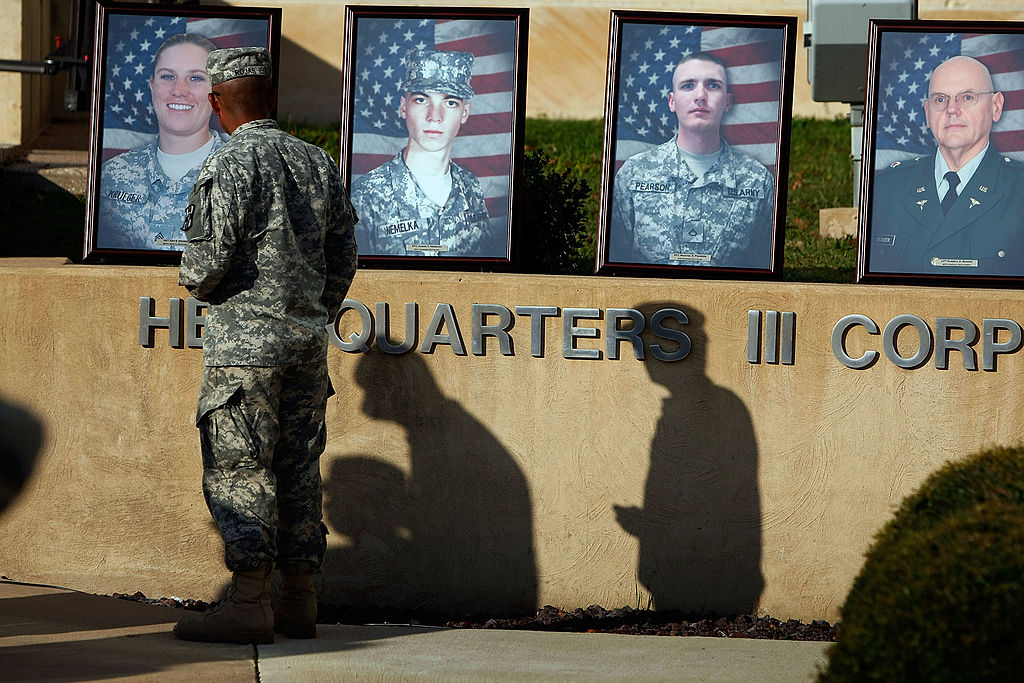
A U.S. Army soldier looks at photographs of the 13 people killed in the Fort Hood shooting during a memorial service at the Texas base on Nov. 10, 2009. —Joe Raedle—Getty Images

President Donald Trump on Thursday called off plans to livestream the firing squad execution of Fort Hood shooter Nidal Malik Hasan following a wave of fierce bipartisan backlash. 

In a post on Truth Social, the President said he thought streaming the execution “might have been a strong deterrent for the World to witness how America deals with Terrorists and SCUM,” but that “many very good and well meaning people would rather not watch him die.”

The families of victims may view the execution “if they so choose,” Trump added. 

The execution remains scheduled for Dec. 3 and marks the first U.S. military firing squad execution since World War II.

Read More: Are Firing Squad Executions Seeing a Revival in the U.S.?

Defense Secretary Pete Hegseth announced on Oct. 8 that the execution of Hasan would be livestreamed, sparking fierce backlash from both sides of the aisle. 

Vice President JD Vance said earlier this month, “I don’t know that that’s actually going to happen,” when asked about the livestream. He also said that he would not watch the livestream if it took place.

House Speaker Mike Johnson also said he would not watch the execution. In an interview with CBS News earlier this month, he said he had colleagues "who have concerns,” over the livestream, one of them being “that you would create a video that would be a recruiting tool for future terrorists."  

In addition to many Democrats in Congress, several Republican lawmakers also expressed their disapproval over the plans.. 

“I absolutely support the sentence of death, but live-streaming executions is what jihadists do,” said Republican Rep. Austin Scott of Georgia, a member of the House Armed Services Committee, in a post on X. “America is better than that.”

Republican Rep. John Curtis of Utah said that “a civilization erodes when it cultivates an appetite for executions as a form of entertainment,” in a post on X in which he urged Hegseth to “reconsider” his decision. “Secretary Hegseth’s plan to livestream the Fort Hood execution risks feeding that appetite.”

Republican Sen. Thom Tillis of North Carolina, an outspoken GOP critic against Hegseth, called the livestream “beyond disgusting. Public executions are what oppressive dictatorships like Iran and Afghanistan do. It should not be happening in America.”

Trump had reconsidered livestreaming Hasan’s execution this week after learning that he is paralyzed from the waist down, according to sources familiar with the matter who spoke to CNN.

Polling shows a majority of Americans disapprove of livestreamed executions

A majority of Americans also opposed the livestream of Hasan’s execution. According to an ABC News/Washington Post/Ipsos poll, eight in ten Americans said the execution should not be livestreamed. 

Majorities across party lines opposed the livestream, with 91% of Democrats, 83% of Independents, and 64% of Republicans, according to the poll. 

Another YouGov poll found that 69% of respondents opposed broadcasting executions to the public, including 52% of Republicans, 67% of independents, and 87% of Democrats. 

Among those who supported the death penalty, 55% opposed livestreaming executions. 

In general, support for the death penalty has declined in the U.S. According to a Gallup poll, 52% of Americans supported capital punishment for convicted murderers in 2025, down from around 80% in 1994.

What was Hasan convicted of?

Hasan, a former U.S. Army major and psychiatrist, was convicted of killing 13 people and injuring 32 in a mass shooting at Fort Hood in Texas in 2009. 

He opened fire inside a processing center where soldiers were preparing for deployments overseas, killing 12 soldiers and one civilian employee. Pvt. Francheska Velez, 21, was three months pregnant when she was shot and killed by Hasan.

Hasan said that he was motivated by opposition to U.S. operations in Afghanistan and support for the Taliban. 

“I was on the wrong side but I switched sides,” Hasan said in 2013.

  •  
❌