❌

Reading view

Alaska Governor Orders Probe Into Peltola Campaign Over Alleged Spoiler Scheme
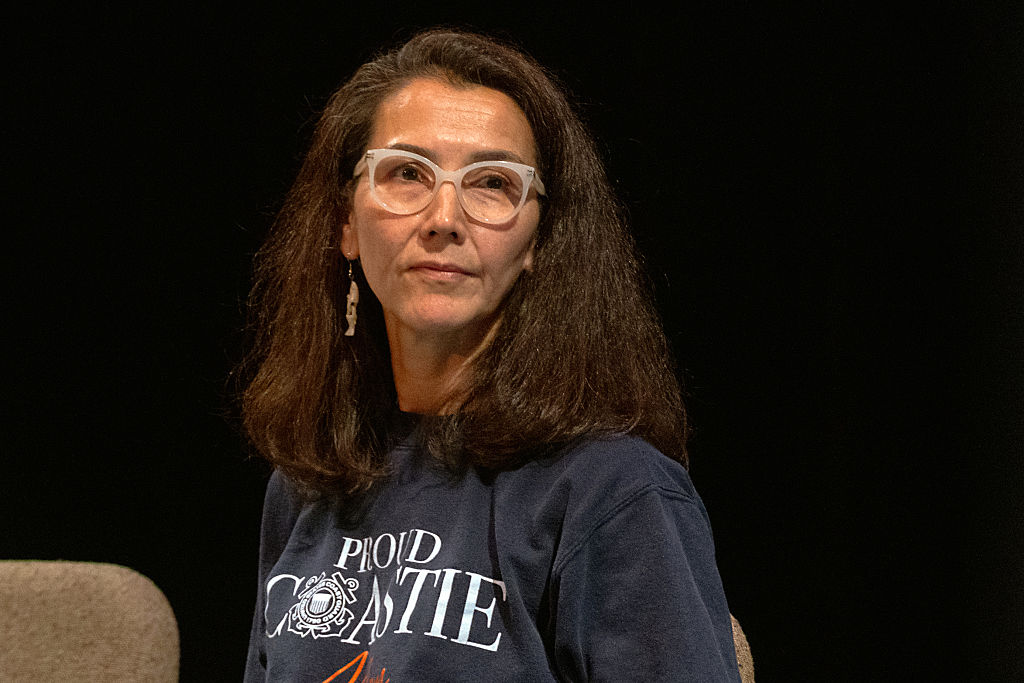
Former Representative Mary Peltola, Alaska’s Democratic U.S. Senate candidate, participates in the Alaska Fisheries Debate in Kodiak, Alaska, on Sept. 12, 2026. —Nathaniel Wilder—Bloomberg/Getty Images

Alaska’s Republican Governor Mike Dunleavy ordered an investigation into Democrat Mary Peltola’s Senate campaign following a report that her team helped recruit candidates to draw votes from her Republican opponent, including a man with the same name.

The announcement, posted on social media overnight, followed President Donald Trump’s call for Peltola’s prosecution and escalated Republican efforts to challenge her candidacy just days before an election that could help determine control of the Senate.

Read More: Republican Panic Sets In Over Prospects of a Massive Blue Wave

On Thursday, Trump declined to say whether Peltola should be seated if she won. “Well, you’re going to have to see what happens,” he told reporters before leaving for a rally in South Carolina. “It’s hard to believe that she could even be allowed to run.”

Peltola is challenging Republican Senator Dan S. Sullivan in the Nov. 3 election. Another candidate, Daniel J. Sullivan Jr., a retired teacher from Petersburg, has denied running at Democrats’ behest. Alaska’s Supreme Court upheld his eligibility for the ballot earlier this year.

The dispute intensified Wednesday after a New York Times report found that Peltola's team worked with people to recruit men named Dan Sullivan to run for Senate, as well as other candidates who could draw votes away from the incumbent.

Dunleavy said the reporting provided new evidence of an effort to mislead voters and supported state election officials’ earlier findings about Daniel J. Sullivan’s candidacy.

“Deliberately tricking voters into casting their ballots for someone else strikes at the integrity of our elections,” the governor wrote.

Peltola, a former congresswoman, dismissed the report, arguing that it diverted attention from issues including the incumbent Sullivan’s support for the war in Iran.

“This is just another distraction. It’s another diversion,” she said during a campaign stop in Soldotna on Wednesday. “This is all stuff to sell newspapers. This is all stuff to get subscriptions.”

A spokesperson for Peltola’s campaign, Alaskans for Mary, said in an email to TIME that it “has no involvement with either Sullivan campaign.” The campaign also said it had made no assertions in federal court about how Daniel J. Sullivan’s candidacy came about or who was involved in his decision to run. The Democratic Senatorial Campaign Committee (DSCC), which was also reportedly involved in the plan, told TIME in a statement that it was “not involved with Dan J. Sullivan.”

Vice President JD Vance also backed an investigation Thursday, accusing Peltola of trying to mislead voters about her campaign’s involvement. “She is trying to steal a Senate seat from the voters of Alaska, and it’s disgraceful,” he told reporters before a campaign trip to Texas.

Trump had accused Peltola and her campaign of voter fraud in a series of Truth Social posts Wednesday, calling for her removal from the ballot and prosecution.

“It was just determined that the Dumocrats in Alaska, despite their sworn statements to the contrary, put a man named Dan Sullivan on the Ballot in order to confuse the Public with respect to Highly Esteemed Senator Dan Sullivan,” Trump posted. “This is Voter Fraud at the Highest Level, and the Dumocrat Candidate, who was involved in the scheme, Mary Peltola, should be removed from the Ballot and prosecuted—So should the FAKE Dan Sullivan. Nothing else will do!”

The Times noted that ballot-stacking tactics are generally considered legal and have been used by both parties.

At Trump’s direction, the Justice Department had already filed a lawsuit seeking to block certification of the election results under specific conditions if Senator Sullivan loses, citing the potential for “voter confusion.” The department wants the results recalculated as though votes for Daniel J. Sullivan had gone to the incumbent, and certification blocked if that would change the outcome.

TIME reached out to the Justice Department for comment on how the report affects its case. Attorney General Todd Blanche told Fox News on Wednesday that he expected to “hear more” from the department this week as officials receive new information.

“They are cheating,” Blanche said. “They are trying to take votes away from the incumbent, not by running an election, not by running on issues, but by putting up a person with the same name, so that confuses Alaskans.”

What Peltola’s campaign reportedly did

According to the Times’ report, which was based on interviews, text messages, and documents prepared for a possible lawsuit, the Peltola campaign pursued a project known internally as “ballot composition,” which involved campaign lawyers and senior aides at the DSCC, which directs Democratic campaign strategy for Senate races nationwide.

One of the Times’ sources, Elisa Rios, Peltola’s former campaign manager who was fired during an August staff shake-up, said the operation to recruit potential spoiler candidates for the Alaska ballot began in the summer of 2025. The Times reported that Peltola’s campaign worked with a “veteran Democratic operative” named Jerid Kurtz, whom it described as having expertise in ballot maneuvering.

The Times reported that a Peltola staffer received instructions to “find as many people named Dan Sullivan in Alaska” as possible. Kurtz reportedly found a man in Petersburg named Dan Sullivan who was open to running for Senate.

Rios said Peltola wasn’t directly involved in the project but was “definitely aware.” The Times also reported that Rios later wanted to recant her statements but did not explain why.

Alaska has a nonpartisan primary system, in which voters may choose a candidate regardless of party affiliation, and the top four advance to the general election. Voters then rank candidates in order of preference. If no candidate wins an initial majority, the lowest-ranking candidates are eliminated in successive rounds and their ballots transfer to voters’ next remaining choices.

The spoiler candidate tactic isn’t new

Alaska’s other Senator, Lisa Murkowski, who endorsed Sullivan but supported Peltola years ago, issued a statement Wednesday demanding that Peltola tell the “honest truth” about the apparent ballot-stacking effort.

“While some may try to write this off as just how politics works now, ballot-stacking should have no place in our electoral process,” Murkowski wrote. “Run and win on your merits: your views, your policy ideas, and your accomplishments. By contrast, recruiting candidates to manipulate the field and influence voting outcomes is simply wrong.”

Nate Adams, a spokesperson for Sullivan’s campaign, also said in a statement that “not one player in this operation has acted in good faith with Alaska voters.”

Republicans have also used similar ballot-stacking tactics. In this year’s Alaska primary, a GOP-aligned political action committee reportedly spent money to boost left-leaning fringe candidates in an attempt to pull votes from Peltola.

When Peltola ran for re-election to the House in 2024, Alaska’s Republican Party supported an effort to help a federally imprisoned Democrat who had never lived in Alaska stay on the ballot.

A GOP-linked political action committee also spent over $1 million this election cycle to boost a third-party candidate in Ohio in a bid to undermine former Senator Sherrod Brown’s comeback bid.

In Minnesota in 2020, Legal Marijuana Now Party candidate Adam Weeks told a close friend before his death that he was recruited by unnamed Republicans to pull votes away from Democrats.


  •  

Spanish Train Crash Death Toll Rises to 69 as Rescuers Work to Identify Victims

Emergency services at the scene of a train crash near Urda, Toledo, Spain, on Oct. 28, 2026. —Alejandro Martinez Velez—Europa Press/Getty Images

Spain's Transport Ministry has increased the provisional death toll from Wednesday's high-speed train collision to 69. The number of people injured is pending confirmation.

Police have appealed to family members of the crash victims to provide DNA sampling to help with the identification process. The Transport Ministry's website briefly raised the provisional death toll again to 74 late Thursday afternoon, before revising it back to 69.

Spanish Prime Minister Pedro Sánchez said that authorities are "working day and night, not only to provide a response to the victims and their families, but to clarify every last detail of this tragedy and to strengthen security so that it never happens again."

As the country's top institutions continue investigating the cause behind the collision, Transport Minister Óscar Puente has suggested that a combination of “inexplicable” human error and a computer failure was likely behind the tragedy, which occurred near Urda, Toledo, more than 80 miles south of Madrid.

Puente said in a press conference that the state-operated Renfe train slamming into the rear of a stationary private train operated by Iryo was due to an “inexplicable” order from a command center for Spain’s trains. Puente noted that the center had a computer malfunction before the order.

“It was the control center, through its operators, that made the decision to resume traffic, under circumstances that, from our point of view, are inexplicable,” Puente said. He added later: “Clearly, it was a wrong decision.”

Puente said that they have identified the person who decided to let the Renfe train continue moving even though the Iryo one had already stopped, but he has not spoken to the control center operator. “This person is subject to whatever the investigation determines,” Puente said in the press conference.

Renfe said train services between Madrid, Ciudad Real, and Andalusia have been suspended.

The Wednesday collision is now the deadliest train crash in the country since a 2013 incident in Santiago de Compostela that killed 80 people. But the latest collision follows a similarly deadly train crash in January, which involved high-speed trains operated by the same two companies. In that crash, which occurred in Adamuz, Córdoba, 46 people died and 122 sustained injuries. 

Sánchez, who visited the crash site, said his government would declare three days of mourning in response.

Despite the accident, Puente insisted that the Spanish rail system is “safe and comparable to that of other countries in our region.” However, while there are “very clear” regulations and protocols in place, he admitted, “failures can obviously occur.”

What happened?

The crashes involved a Renfe high-speed train bound for Seville with 393 people on board, and an Iryo train carrying 151 passengers. The Renfe train departed Madrid at 8:00 a.m. local time, while the Iryo train left a little earlier at 7:54 a.m., plying the same route.

Spain’s rail infrastructure uses the German LZB (Linienzugbeeinflussung) system, a railway safety technology that monitors train speeds and sends traffic instructions to the driver’s cab. Operations are meant to revert to manual control when the automated safety system fails.

Puente, in the press conference, said that at around 8:30 a.m., three computers on the railway network experienced a communication failure, taking the LZB control system offline along a 63 km (39 mi) stretch of the track. This automatically stopped about six trains traveling on that section, Puente said. The central command center would assume manual management of rail traffic.

By 8:36 a.m., the command center authorized the Renfe train to continue its journey “normally,” even though Puente says internal protocols dictate otherwise and that a “red signal” should have prevented the journey from resuming. The Renfe train had 25 km (15.5 mi) to travel before it struck the Iryo train, roughly 17 minutes later, at 8:53 a.m. The speed it reached before the impact is still unknown, but it could reach up to 200 km/h (124 mph) for that stretch of track.

What to know about Spanish high-speed rail

Spain is among the world leaders in investing in domestic high-speed rail infrastructure—defined as rails for trains that can travel 250 km/h (155 mph) and over, according to the European Commission’s Ninth Rail Market Monitoring report last year. The report shows that of European Union countries, Spain allocated the most to high-speed rail between 2018 and 2022, averaging €1.5 billion (around $1.67 billion) per year.

Latest data from the International Union of Railways shows that Spain has laid nearly 4,000 km (2,400 mi) of high-speed track, second only to China, which has laid more than 47,000 km (28,000 mi).

The European country only legally opened its domestic commercial high-speed passenger rail market to private competitors in December 2020, and Iryo became one of the commercial high-speed operators in Spain in 2022.

Spanish news outlet El Debate reported, citing data from the State Railway Safety Agency, that the number of “significant accidents” on the country’s rail network has increased over the years.

  •  

As Israelis Await Final Election Results, Netanyahu and Rival Face Tough Path to Power

Israel's Prime Minister Benjamin Netanyahu casts his ballot, alongside his wife Sara, at a polling station in Jerusalem on Oct. 27, 2026. —Yonatan Sindel—AP

Israel appears to be on the brink of a political deadlock, with neither Prime Minister Benjamin Netanyahu nor his main rival, former Israel Defense Forces chief of staff Gadi Eisenkot, projected to gain a parliamentary majority.

While partial results show that Netanyahu's Likud party has edged ahead slightly, if the embattled leader is to forge a path for another term, he will likely need to secure a coalition. Such alliances can take weeks or months to form, meaning the future leadership of Israel’s parliament, the Knesset, remains unclear.

As of Wednesday evening in Israel, authorities had counted more than 88% of ballots cast at polling stations across the country. Another set of ballots logged at special polling sites, including military bases, have yet to be counted. Authorities estimate that somewhere between 430,000 and 480,000 votes were cast in this way. As such, it could still take another day or two for the final election results to be released.

Israel's three leading broadcasters have projected that Netanyahu's bloc of right-wing parties is on course to win 53 seats in parliament, with the opposition ‌bloc of Eisenkot looking at 48. Both are short of the 61 seats required for a majority. Parties representing Arab Israelis are projected to secure 19 seats.

Once all the votes have been tallied, Netanyahu looks set to remain as caretaker while President Isaac Herzog holds consultations with all the political factions to determine the formation of the next government—a process that could take weeks.

"Next week, I will invite the representatives of the factions to consultations ahead of assigning the mandate to form the next government," Herzog said on Wednesday. "With the publication of the results, I ask one important thing from everyone who arrives—arrive with an open mind."

Both Netanyahu and Eisenkot have stated their own intentions to form the next coalition.

In a defiant speech made after the polls closed, Netanyahu called for a "strong, right-wing" government."

Eisenkot, in a social media update late Wednesday, said: "Long workdays still await us, but we are focused on the heavy task entrusted to us—bringing change to Israel and establishing a Zionist mobilization government."

While results remain inconclusive, Netanyahu’s longstanding ally, U.S. President Donald Trump, who gave a last-minute endorsement to the longest-serving Israeli premier, already appeared to take credit for Netanyahu’s election performance.

“You know, it's pretty close, which was very well,” Trump said when asked about it by reporters early Wednesday. “Because I think when the endorsement went out, it helped him a lot, but I actually heard he did pretty well. It might be winning or tie. The tie is sort of considered a win in that case because it’s a big chess match.”

As the vote count continues, here’s what to know about the pivotal election—and what comes next.

How Israel's election day unfolded

Israelis flocked to polling stations on Tuesday to decide Netanyahu’s political fate. The election was widely seen as a referendum on Netanyahu’s leadership and Israelis’ willingness to change course amid uncertainty.

It was the first election in the country since the Oct. 7, 2023 terrorist attacks by Palestinian militant group Hamas and the subsequent Israeli war in the Gaza Strip. Since then, Israel under Netanyahu has pursued an aggressive military campaign across the Middle East—going to war with Iran, backing settler attacks and displacement in the West Bank, and carrying out strikes against militant groups in Lebanon and Yemen

From 7 a.m. to 10 p.m. local time on Tuesday (1 a.m. to 4 p.m. EDT), Israelis were able to cast votes for representatives in the Knesset. Numbers from Israel's Central Elections ​Committee reflected a strong turnout, with 77.7% of eligible voters reported to have cast their ballots by 10 p.m., local time—the highest turnout logged since 1999.

Netanyahu was joined by his wife Sara as he cast his own ballot at a polling station in a Jerusalem school. “This is a very moving and fateful moment. My wife and I are truly overwhelmed,” Netanyahu told reporters after voting. “We know what is at stake, and since I am not allowed to say things explicitly, I will say: Vote correctly.”

Not long after, Netanyahu told his supporters that "buses are heading to the polling stations and huge lines are being reported in the Arab settlements." Complaining that "the right-wing strongholds are not waking up," he again urged people to go out and vote.

Netanyahu’s Likud party said in a statement that it had submitted a request to the Central Elections Committee to extend voting hours past 10 p.m. The committee later announced it would not be extending voting hours past the scheduled closing time.

Read More: Israel's Choice

Who is in the running?

Two main political blocs are contending to form Israel’s next government. The first is the pro-Netanyahu coalition led by Netanyahu’s Likud party. The coalition includes far-right and ultra-Orthodox parties, such as Otzma Yehudit (Jewish Power) led by national security minister Itamar Ben-Gvir and Religious Zionism-Zehut led by finance minister Bezalel Smotrich. Their ultranationalist policies have found an audience in younger right-wing Israelis.

On the other side are the Jewish-led opposition movements—with Eisenkot and the centrist Yashar (Straight) party at the forefront. Eisenkot, who entered politics in 2022, joined Netanyahu’s emergency war cabinet after the Oct. 7 attack on Israel. But after having lost a son in combat in Israel’s wars, Eisenkot left his post in 2024. Two of his nephews also died fighting in Gaza, a prominent campaign talking point.

The opposition also includes a joint ticket led by former Prime Minister Naftali Bennett and Knesset opposition leader Yair Lapid, the secular nationalist party Yisrael Beiteinu (Israel Our Home) led by former finance minister Avigdor Lieberman, and the Democrats led by former IDF deputy chief of staff Yair Golan.

The Democrats party on Tuesday said Golan had been “approached in a threatening manner” by a man who was found to be carrying a knife. The lawmaker was attending a voting-day mobilization tour in Tel Aviv's HaMesila Park at the time of the incident.

"Golan’s security guards blocked the man, and as they moved toward him, a large knife slipped from beneath his clothing and fell to the ground," the party said in a statement shared with the Guardian. "Police were called to the scene and arrested the suspect." Golan, in his own statement, vowed that "incitement and violence will not deter us" and encouraged people to go out and vote.

Meanwhile, some polls had suggested that Eisenkot’s Yashar party may garner slightly more support than Netanyahu’s Likud, but they also projected that neither the Prime Minister’s right-wing bloc nor the opposition were likely to win the 61 Knesset seats needed to form a government.

Including Arab parties such as United Arab List (Ra’am) and the Joint List, or fringe parties, could be necessary to form a government. Both pro-Netanyahu and anti-Netanyahu coalitions have so far ruled out teaming up with the Arab-led parties. Arab citizens of Israel make up about 20% of the population, though they receive fewer government services and endure higher poverty and unemployment rates. Discrimination and disappointment have historically depressed Arab-Israeli voter turnout. However, on Tuesday, there appeared to be strong turnout in some of Israel’s largest Arab-majority towns.

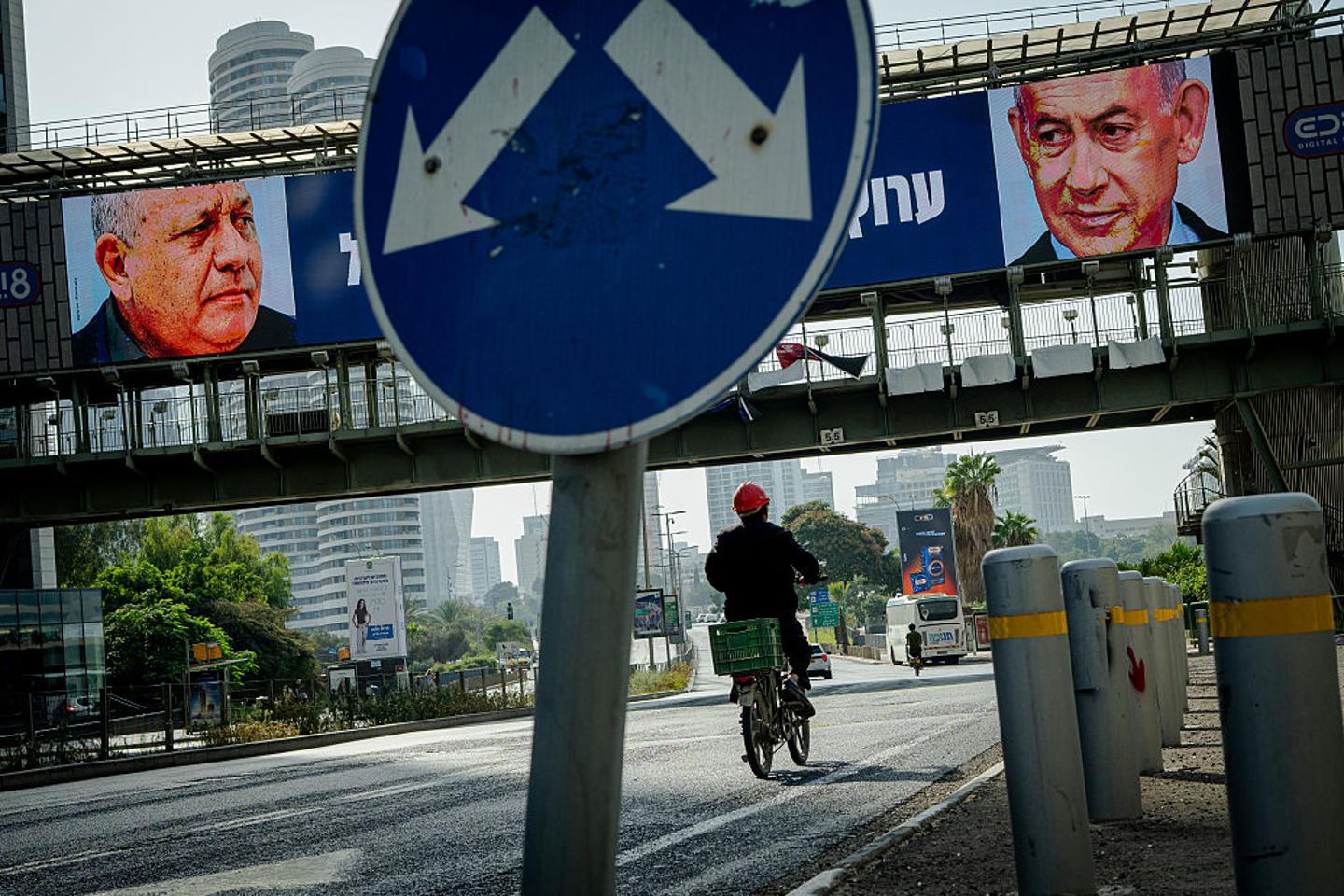
A cyclist rides beneath a pedestrian bridge displaying electronic election billboards showing former IDF chief of staff Gadi Eisenkot (L) and Prime Minister Benjamin Netanyahu (R) in Tel Aviv, Israel, on Oct. 23, 2026. —Erik Marmor—picture alliance/Getty Images

Netanyahu touts Trump endorsement

Netanyahu has brought attention to the support he received from Trump, who only announced his endorsement days before the election as conflict in the Middle East has tested their friendship.

In a late-night TV appearance on Oct. 25, Netanyahu boasted of Trump’s endorsement and said that Trump was willing to take action “that would finally, finally, remove the Iranian threat” so long as Netanyahu stayed in power. Netanyahu added that he has already instructed Israel’s national intelligence agency Mossad as well as the IDF to “bring down” the Iranian regime. Trump remains very popular in Israel.

By contrast, U.S. Vice President J.D. Vance declined to endorse Netanyahu for re-election, just a day after Trump put his “complete and total” support behind the Israeli leader.

“The President has the most effective endorsement in American, or international, political history,” said Vance, when asked in an interview if he would also be extending an endorsement of his own. “I endorse American candidates and that’s where I'm focused on, is the midterms, so I'm not getting involved in the Israeli elections.”

When pushed for an answer, Vance added: “I'm not anti-endorsing [Netanyahu], I'm not pro-endorsing him.”

A high-stakes election for Netanyahu

At stake for Netanyahu could be more than his continued leadership. The premier faces an international arrest warrant for alleged crimes related to the Israeli military campaign in Gaza. And even domestically, critics have demanded an inquiry into Netanyahu’s decision-making around Oct. 7. The attack, which resulted in over 1,200 people in Israel killed and around 250 hostages taken, is considered by many to be indicative of a major security failure.

The Gaza health ministry reports that since Oct. 7, 2023, more than 74,000 individuals have been killed. In the absence of independent monitoring on the ground, Gaza’s health ministry is the primary source for casualty data relied upon by humanitarian groups, journalists, and international bodies. Its figures do not differentiate between civilians and combatants and cannot be independently verified by TIME.

Another issue driving the election is public fury over ultra-Orthodox communities’ exemption from military conscription for men engaged in religious studies. Despite a shortage of soldiers, less than 10% of eligible ultra-Orthodox men enlist, amid demands from Netanyahu’s allies to exempt them. Eisenkot, Netanyahu’s main rival, has promised to end the de facto exemptions. 

Netanyahu’s repeated attempts to reform the judiciary have also factored into this election, with critics slamming his undermining of democratic institutions and connecting it to his legal interests. Netanyahu is in the middle of a yearslong corruption trial, which he and his allies—including Trump—have claimed is politically motivated. He sought, but didn’t receive, a presidential pardon from Herzog.

When will we know the results?

About 7.3 million Israeli citizens were eligible to vote on Tuesday. The election fills the Knesset’s 120 seats through proportional representation—which means parties, not personalities, are on these voters’ ballots. 

After polling stations closed at 10 p.m. (4 p.m. EDT), local media broadcasted initial exit polls. The final vote tally is expected by Oct. 30, with official results published on Nov. 4. 

But getting a clear picture of the Israeli government is likely to take longer.

No single party has ever claimed 61 seats to form a government, meaning Israel has always been governed by coalitions. What those coalitions may look like will depend on the election outcomes for smaller parties, which each need 3.25% of the votes to secure a seat in the Knesset.

Once the election winners are determined, President Herzog ⁠will refer to party leaders to choose a preferred Prime Minister and will ask the strongest candidate to form a government within 42 days. If a coalition cannot be formed after multiple attempts, the current Likud-led coalition government will continue to serve as caretaker before another round of elections is held in the coming months.

  •  

How Japan's Reforms on Imperial Succession Affect Its Monarchy

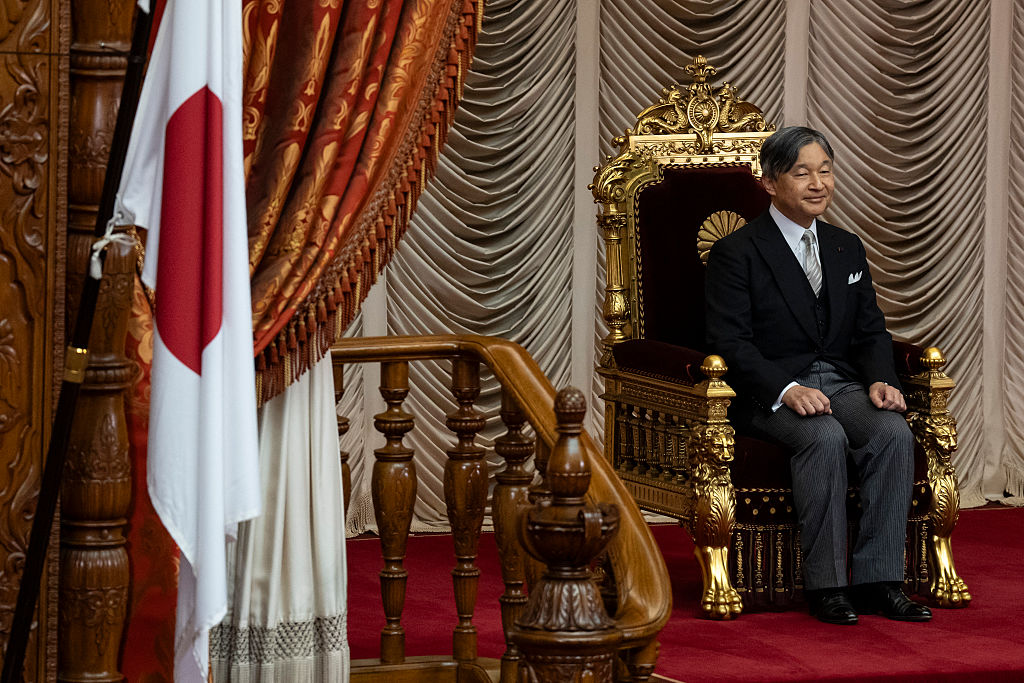
Japan's Emperor Naruhito attends the opening ceremony of an extraordinary Diet session at the House of Councillors at the National Diet in Tokyo, Japan on Oct. 5, 2026. —Yuichi Yamazaki—AFP/Getty Images

Japanese lawmakers are reforming the country’s more-than-a-millennia-old continuous hereditary monarchy in an effort to keep it alive amid a shrinking imperial family.

Amendments to Japan’s Imperial House Law that passed in July took effect on Saturday. One allows Japanese princesses to keep their royal status even if they marry non-royals, though their future children are not considered royals. The other amendment is an apparent roundabout way to preserve patrilineal succession: members of the royal family may adopt a male from former imperial branch families, and those adoptees’ future male offspring can be considered legitimate successors to the throne.

The revisions aim to expand the future pool of eligible heirs to the throne while reinforcing the shutting out of women from leading the Japanese monarchy, which staunch conservatives including the country’s first female Prime Minister, Sanae Takaichi, have repeatedly advocated against upending.

Before the revisions took effect, Emperor Naruhito only had a few viable successors: his younger brother Akishino, followed by his 20-year-old nephew Prince Hisahito, then his 90-year-old uncle Prince Hitachi. 

The small pool had raised concerns about the future of the Japanese imperial family. The Japanese public has shown support for female monarchs, signaling a preference to keep the renowned family on the throne. Fans of Princess Aiko, the emperor’s sole daughter, have marched in Japan’s streets in recent weeks in support of her eligibility to become empress.

But extreme right-wing factions in Takaichi’s Liberal Democratic Party have insisted that maintaining only males from the male imperial line as eligible to become emperor preserves the authority of the Chrysanthemum Throne. The revisions were ultimately borne out of the coalition agreement signed in October last year by the LDP and its junior partner, the Japan Innovation Party.

While the Imperial Household Agency has said it will study how to implement the measures, critics are already studying how to turn the policy over, arguing that it violates the country’s anti-discrimination law. Manga artist Yoshinori Kobayashi filed a lawsuit against the government that called the amendment “unconstitutional.”

Experts say the amendments could affect how the Japanese public views the imperial family. 

“It could dilute the feeling of closeness or the feeling of holiness that some people might feel towards the royal family,” Jeffrey J. Hall, a lecturer at Kanda University of International Studies, tells TIME, “because they're more used to the royals that they already know.”

Welcoming back the former imperial family branches

The amendments allow members of the imperial family to adopt a male who is 15 years of age or older and is also a legitimate descendant of a male member of the imperial family before it was trimmed down after World War II. That adoptee should not be married or have children.

Several branches of the Japanese imperial family renounced their royal status in 1947 to cut down on costs the monarchy incurred after the war. Government officials previously said that these 11 families split from a common male-line ancestor some 600 years ago, and are now at least 36 degrees of kinship from Naruhito.

However, the adopted males would not be eligible for the throne—only their eligible male offspring would be. The law would be reviewed every 30 years.

Jeff Kingston, a professor of Asian history at Temple University’s Japan campus in Tokyo, tells TIME the government’s offered solution to the dwindling pool raises questions about the legitimacy of the potential heirs. “Would these people be taken as legitimate by the public?” he says remains an open question, especially as reports surface about who those potential additional successors to the throne might be. “The problem of a monarchy is it’s sort of based on—I don't know—a collectively held myth, belief, faith; and a sausage maker probably isn't going to have that magic.”

Hall, from the Kanda University of International Studies, echoes that the Japanese government will find it difficult to convince the public, especially since the move would introduce unfamiliar faces. “It will be a very difficult problem for the Japanese government to try to basically build up an ideology or a PR program that convinces people that the new royal adoptees are just as royal as the other ones that we all know.”

Snubbing the nation’s popular princess

Kingston says that conservatives proposed the amendments to ensure that a female-led monarchy wouldn’t happen in Japan, even when many Japanese people appear fine with it and some even seem to prefer it. Past media surveys have shown that more than 80% of Japanese respondents favored a female emperor.

Protesters took to central Tokyo’s streets on Oct. 10 to call for further debates on the Imperial House Law, claiming that Princess Aiko, who is 24, should be eligible for the throne.

The other amendment that took effect allows Aiko and the four other single princesses to retain royal status if they get married to people outside the imperial family. Before, princesses who did so lost their royal status, meaning their children are ineligible for the line of succession; the most recent being Mako, one of Naruhito’s nieces. Mako married her college boyfriend in 2021 and has since moved to the U.S.

Hall describes the recent amendments as “very strange” and suspects “many Japanese people won't really fully grasp” them. An August poll from the Social Survey Research Center came to a similar conclusion that the revisions to the Imperial House Law “have not gained the understanding of the Japanese public.”

While Naruhito and the royal family have largely ceremonial duties and do not weigh in on the country’s politics, they have even hinted at what they think should be done. In June, the emperor said he hopes any decision to expand the imperial family should have public support: “I hope it will be something that gains the understanding of the people.”

  •  

Exiled Opposition Leader María Corina Machado Returns to Venezuela

Opposition leader María Corina Machado greets the crowd gathered around her vehicle amidst supporters in Caracas, Venezuela on Oct. 25, 2026 —Jesus Vargas—Getty Images

“I am here. With you.”

Venezuela’s popular opposition leader and Nobel Peace Prize winner María Corina Machado posted the message on social media platform X Sunday morning local time, announcing her return to the country after more than 10 months in exile.

Machado, who was briefly detained in January 2025 following a protest against autocratic then-President Nicolás Maduro’s swearing-in despite a dubious election victory, went into hiding in Venezuela and emerged in December that year in Norway. Since then, she has been fighting for a return to democracy in her own country, demanding that, following the extraordinary American military operation that captured Maduro, Venezuelans get to have free and fair elections.

The social media accounts of her political movement, Vente Venezuela, as well as her campaign, posted images and videos of Venezuelans crowding the streets of Caracas to welcome her return. The New York Times reported that Machado entered Venezuela from Colombia, citing two anonymized government officials.

https://x.com/ConVzlaComando/status/2114539789047517605

Edmundo González Urrutia, another key opposition figure, also posted on social media Sunday that Machado is “on Venezuelan soil” and that he would soon be with her “so that our country truly advances toward freedom.”

Machado’s return adds some urgency to the country’s democratic transition—which the interim Venezuelan government under acting President Delcy Rodríguez, as well as its apparent overseer, the U.S., have both promised. Rodríguez, who was formerly Maduro’s deputy, and U.S. President Donald Trump have both said that elections will be held in the country, but a date has yet to be finalized.

The 59-year-old Machado, meanwhile, has called for elections by July 2027, telling the Financial Times that there was “more than enough time” to prepare for one. She has also said she will contest the presidency. A majority of Venezuelans want her to be President, according to a poll from AtlasIntel and Bloomberg.

Following Maduro’s ouster, Venezuela’s highest court said Rodríguez’s interim presidential appointment could last for up to 90 days, with the National Assembly potentially extending her term for another 90. But the assembly, controlled by the ruling party, did not vote on extending her term, which officially expired in April.

It remains unclear how Machado could hasten elections, given the Venezuelan government is in talks with a different U.S.-backed faction of the opposition. A third round of talks ended this month without reaching a firm election schedule. Venezuelans have since grown impatient and have taken to the streets to protest the delays.

What the U.S. has said about Machado’s return

Asked about Machado’s return to Venezuela, Trump said Sunday he was unaware of it. “I think she's a very nice woman,” Trump told reporters. “She gave me her Nobel Prize, so how can I say anything else? And I hope she’s safe.”

Machado gave Trump her Nobel medal earlier this year in what appeared to be a push to hasten Venezuela's democratic transition. But since Maduro’s arrest and the U.S. elevation of a new Venezuelan government under Rodríguez, tensions between Trump’s Administration and Machado have increased.

The opposition leader has tried to return to the country multiple times, but she has claimed Venezuelan authorities have repeatedly blocked her. Machado has denied suggestions that the U.S. was blocking her return. But her insistence on returning reportedly roiled some in the White House who worry it could spark a political crisis.

U.S. Secretary of State Marco Rubio posted on X that the conditions that allowed Machado’s return to Venezuela were “the direct result of the U.S. supported reconciliation talks which has already seen hundreds of political prisoners freed and hundreds of political opposition figures return from exile.”

But Rubio also hinted that the U.S. expects no further interference in the ongoing discussions: “The United States expects the freedoms of all sectors of Venezuelan politics to continue to be respected. Likewise, we expect all political actors to support these talks which represent the best chance Venezuela has had in thirty years to peacefully achieve not just a free and fair election but an enduring democracy.”

Machado said earlier that, despite not being a part of the discussions between the Venezuelan government, legislative opposition, and the U.S., her movement will not hinder initiatives that “produce real progress.” 

The U.S. has argued that Venezuela must ensure political and economic stability before it can hold elections. But critics and other observers have pointed out that the Trump Administration’s approach has instead prioritized doing business with Venezuela over facilitating democratic transition—with Washington announcing a major oil deal with Caracas amid the talks.

“She’s a very nice woman,” Trump said of Machado Sunday. “But we’re doing really well in Venezuela.”

  •  

Venezuelans Take to the Streets to Demand Democracy

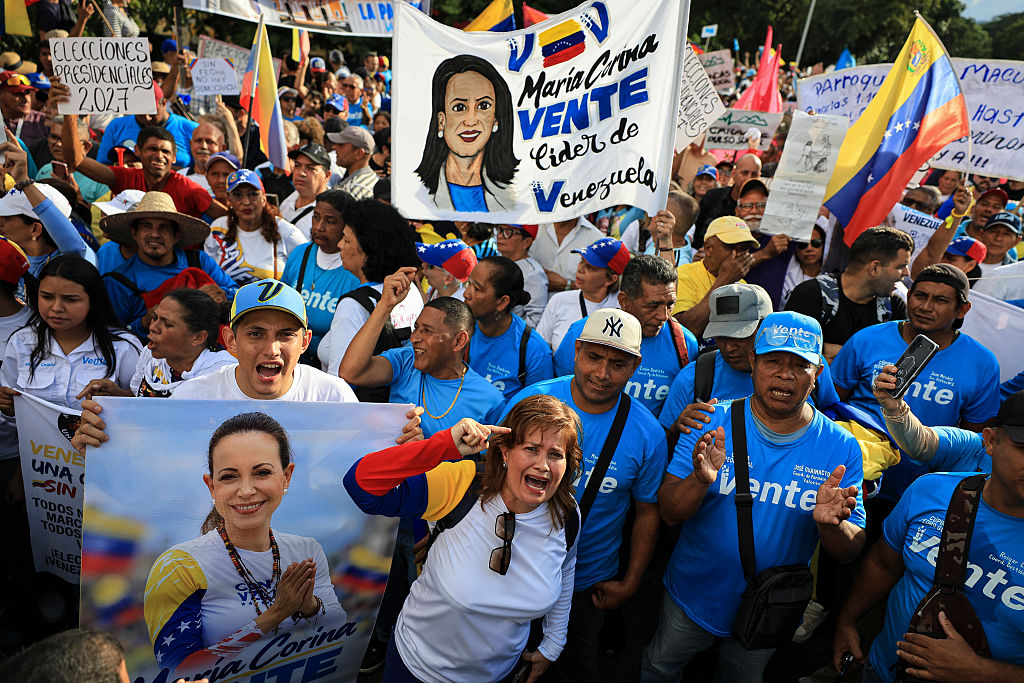
Demonstrators hold Opposition leader Maria Corina Machado's signs during a protest to demand a free presidential election in Caracas, Venezuela on Oct. 22, 2026. —Jesus Vargas—Getty Images

Thousands of protesters took to the streets in Venezuela on Thursday afternoon to demand presidential elections and call for the return of exiled Nobel Prize-winning opposition leader María Corina Machado.

In the capital, Caracas, protesters gathered in Plaza Venezuela and called for presidential elections to be scheduled as early as 2027, as well as the release of all political prisoners in the country.

“We will have presidential elections very soon with María Corina as president,” said former congressman Piero Maroun, who attended the protests, according to independent local news organization Efecto Cocuyo. The Machado-led activist group Vente Venezuela spearheaded the protests, which led to the closure of some streets in Caracas. Others also staged protests in the states of Nueva Esparta, Táchira, and Zulia. 

The ruling party that acting President Delcy Rodríguez belongs to, the United Socialist Party of Venezuela, also staged a gathering near the opposition demonstrators in Caracas, though for a women’s march for Breast Cancer Awareness Month. 

Protesting has become common for disgruntled Venezuelans since the forced end of Nicolás Maduro’s presidency. Maduro and his predecessor Hugo Chávez heavily cracked down on political dissent. But since Maduro’s removal in January by U.S. forces, protesters have taken to the streets “with increasing frequency,” according to the international civil society alliance CIVICUS, citing data from the Venezuelan Observatory of Social Conflict, which recorded 1,101 protests during just the month of September, or about 37 demonstrations per day. These protests, however, have not necessarily been large.

Until this week. The Thursday protests, which Reuters described as “the first nationwide opposition protest in ​nearly two years,” coincided with the third anniversary of the opposition’s presidential primary elections, in which Machado emerged victorious. 

Machado is still the opposition’s most prominent figurehead in the transition toward a democratic government: in an AtlasIntel survey conducted for Bloomberg News, Machado received 52% support, compared with 19% for Rodríguez. But Machado has her work cut out for her.

The protests also happened as Rodríguez met with Dinorah Figuera, the opposition representative backed by the U.S. State Department in negotiations for a political transition, inside the Venezuelan presidential palace. The three rounds of U.S.-backed talks between the Venezuelan government and Figuera’s faction have yet to yield an agreement on elections.

In a statement reported by El País after the meeting, Rodríguez appeared to reference the opposition protests, saying in Spanish: “There are still very, very small groups that resist and believe that trying to set the country ablaze and block streets is the way for Venezuela to move forward. I recognize the good Venezuelans who, through this dialogue, are promoting necessary changes.”

Since arresting Maduro in an extraordinary military operation in January, the U.S. has been working with an interim government led by Rodríguez, Maduro’s former deputy. Rodríguez and U.S. President Donald Trump both have said elections will eventually be held in the country, though Trump told TIME in late September: “It’s so raw now, you know that I just think it’s too soon.”

Why has an election not yet been scheduled?

The post-Maduro government opened talks in August with the opposition faction led by Figuera, the president of Venezuela’s 2015 National Assembly, to help the country achieve a democratic transition. But the changes are expected to take time.

Domestic opposition and international observers have long slammed Maduro’s 2018 and 2024 re-elections for lacking transparency and fairness, disputing the results and arguing that Machado’s proxy, Edmundo González Urrutia, actually won in the latter. This raised questions about the independence of the Supreme Court and Venezuela’s National Electoral Council, which have been packed with loyalists of the regime.

For the transition, the establishment and the opposition are trying to iron out details of reforming the court and the council. Even if this happens, experts told Reuters that authorities will still need to update voter rolls and ensure that parties can reach a consensus on how subsequent elections would work.

The twin earthquakes that struck Venezuela in June and caused extensive damage also complicated efforts toward stability in the country.

But the U.S. has also set certain prerequisites that could affect how soon elections could happen. President Trump and Secretary of State Marco Rubio outlined that they seek stabilization, economic recovery, and national reconciliation in Venezuela, on top of a political transition. Axios reported that it’s a multi-step process: change the court makeup, reform the electoral commission, and then announce an election date. Rubio also announced other requirements, including a truly free press. 

“What would threaten an enduring republic in Venezuela would be that someone is elected and they inherit a complete catastrophe, economic and social, and then the whole project is endangered because now anything can happen,” Rubio said on Sept. 23, following Trump’s meeting with Rodríguez in New York. “We want to do two things at the same time.”

Critics argue that the Trump Administration’s position sidelines the opposition faction led by Machado and instead prioritizes oil agreements and economic stabilization over Venezuela’s democratic transition. In August, Trump announced that Washington agreed to a deal with Caracas, saying it would give the U.S. majority control over more than 65 billion barrels or about a fifth of Venezuela’s oil reserves.

Dhayana Fernández-Matos, a professor of political science at the Federal University of Pelotas in Brazil, told Spain’s broadcaster RTVE last month that an election in Venezuela is not a priority for Trump, as his “primary interest lies in oil and the geopolitical power of controlling the world’s largest proven crude oil reserves.” 

TIME’s September interview with Trump hinted at the U.S.’s potential financial bias for a delayed election: after saying that it would be too soon for Venezuela to hold an election, the President said, “A lot of money is being made by us, but a lot of money is also being made by Venezuela, and we have complete control of all of them.”

  •  

Meta Sued in Australia Over Alleged Harm to Children

A smartphone screen displays applications developed by Meta, including Facebook and Instagram. —Samuel Boivin—iStock/Getty Images

Social media giant Meta was hit with a class action lawsuit in Australia on behalf of children and teenagers who allegedly suffered harm over the addictive design features and exposure to harmful content on its platforms Facebook and Instagram.

Australian law firm MinterEllison filed the class action in the country’s Federal Court on Oct. 9. The firm announced the suit on Wednesday, saying it seeks to “recover compensation for both current and former users” of the two Meta social media platforms.

The class action, funded by Sydney-headquartered Litigation Lending Services, was brought in the names of eight unnamed lead applicants. Australia’s Federal Court on Monday ordered a gag on reporting any information that could reveal the applicants’ identities and their ​statements of claim.

“This proceeding raises important questions about the design and operation of social media platforms and their impact on children and teenagers in Australia,” MinterEllison Partner William Nolan said in its press release. “Those questions will now be considered through the Federal Court process.”

TIME reached out to Meta for comment. A spokesperson told Reuters: “We are aware of ​this claim and we will defend ourselves vigorously.”

The Australian government, which enforced the world’s first social media ban for children under 16, is also set to take action against Meta and other social media companies. In a Bloomberg interview published Tuesday, Communications Minister Anika Wells, a 2026 TIME100 Next honoree, said that the government expects to bring Meta’s Facebook and Instagram, ByteDance’s TikTok, Snapchat, and Google’s YouTube to court for allegedly failing to comply with the country’s laws.

U.S. parallels

The Australian class action follows several civil victories against Meta in the U.S. In March, a Los Angeles jury ordered Meta and Google to pay $6 million in damages to a 20-year-old plaintiff in a bellwether social media addiction trial. In August, a New Mexico court ordered Meta to pay more than $900 million and introduce a slew of reforms to its platforms, including rigorous age verification, time limits for users under 18 years old, and enhanced protection against sextortion and child sexual exploitation. The same month, Meta agreed to pay up to $18 billion to settle a nationwide lawsuit that alleged its platforms were “addictive” by design and harmed children.

Rob Nicholls, a senior researcher at the University of Sydney with expertise on digital regulations, tells TIME in an email that he was “not surprised” with the class action, given the cases in the U.S.

“The U.S. lawsuits were primarily concerned with negligence,” Nicholls tells TIME. “It’s likely that in Australia the suit will be both negligence and the consequences of the supply of an unsafe product.”

Regulatory enforcement

Australia has led the way in trying to rein in social media platforms in the name of child safety. Last year, it enforced a blanket ban on children under 16 from having social media accounts, a move that other countries have followed. 

The effort, however, has been criticized by some, including politicians and digital rights advocates, for not being aggressively enough enforced since the ban took effect in December 2025. The latest data from the country’s online regulator, eSafety, shows that 42% of children aged 10 to 15 still own a social media account.

In a podcast published Thursday, Wells, the Communications Minister, said there was a “great initial response” with 5 million accounts deactivated, but that has since “tapered off.” She added that the eSafety Commissioner believes the five platforms in particular could be doing more to comply with the law and the Commission is investigating potential violations.

Asked why there haven’t been any fines yet, Wells said: “Unfortunately, this isn't a police officer on duty pointing a speeding radar at a car and issuing an on-the-spot fine. This is asking the eSafety Commissioner, our independent regulator, to take on some of the biggest, richest, most resourced companies in the world.” 

In September, the Australian government increased the fines for noncompliant social media firms. Failing to take “reasonable steps” to prevent underage Australians from creating or keeping accounts could incur a maximum penalty of 109.2 million Australian dollars (around $76 million).

But speaking to Bloomberg, Wells pointed to the multi-billion-dollar settlement Meta agreed to in the U.S. and said, “I’m not convinced that any particular dollar value is going to change it.” For her, the policy should be measured on how it creates cultural change. “And cultural change,” she said, “takes time.”

  •  

Trump Keeps Promising Cash on the Campaign Trail—but Has a Poor History of Following Through

U.S. President Donald Trump arrives to speak at a midterm campaign rally at Pitt-Greenville Airport in Greenville, N.C., on Oct. 20, 2026. —Kent Nishimura—AFP/Getty Images

Donald Trump is betting that the promise of more money in Americans’ pockets will translate into support at the ballot box. With his approval ratings low and November’s midterms just weeks away, the President has made a series of financial pledges in a bid to preserve Republicans’ majorities in Congress.

At a Kansas rally on Monday, Trump announced that the Administration is offering an $8 billion aid package to help American farmers offset higher diesel costs in the current harvest season. Diesel has remained above $6 per gallon since mid-September, per the American Automobile Association, as oil prices have been pushed up by the war with Iran, which Trump started in late February.  

Some rural voters, who helped elect Trump in 2024, have grown disillusioned with him, but he continued to court them in Kansas, adding: “When the Republicans win, we will pass even more funding for our farmers. We love our farmers.”

Several opinion polls show that rising costs of living are top of mind for voters ahead of the elections. Some polls rate the President’s handling of the U.S. economy as very poor. Disenchantment with the current political and economic system has also reached a point where socialism has grown more popular among Americans.

Trump’s efforts to woo voters with offers of cash gained attention in September, when he explicitly promised a Dallas crowd that his Administration would dole out a $5,000 dividend to every American adult if the GOP maintains its majorities in Congress. But with about 240 million adult citizens, the proposal would cost around $1.2 trillion—a gargantuan financial undertaking that even some in his own party questioned how the U.S. could afford. Democrats, meanwhile, called the dividend proposal a vote-buying scheme.

The same month, the Administration promised to refund more than 950,000 Obamacare enrollees in 30 states $500 each for “overcharges” collected by the Biden Administration. Earlier this month, it promised a one-time $90 payment per person to help more than 20 million enrollees pay for their Medicare premiums. Some voters have already reported receiving these payments.

While mentions of these handouts have earned cheers at Trump’s supporter-packed rallies, it is unclear if they will translate to any additional earned votes. Voter turnout in the U.S. is historically lower during midterm and off-year elections, and Trump, in a bid to boost the GOP’s chances, has repeatedly called on his supporters to imagine that he is on the ballot. 

It’s also unclear if voters are sold on Trump’s cash-based solutions. For example, a Wall Street Journal poll in September found that 64% of respondents thought Trump’s proposed $5,000 checks were a “bad idea right now.” And even if Republicans won the election, an Economist/YouGov poll from September found that most voters are skeptical that Trump would deliver—and they have good reason to be.

What happened to Trump’s past cash proposals

Trump has made many big promises, but he hasn’t always kept them.

He has repeatedly floated the idea of giving a $2,000 stimulus check or tax rebate to most Americans, supposedly funded by revenue from the global tariffs he’s imposed throughout his second term. But since making that promise in November 2025, as of this month, such dividends have yet to materialize. TIME has reached out to the White House for comment.

When his on-and-off friend Elon Musk was implementing a cost-cutting initiative across the federal government last year, Trump said he was considering using some of the savings to give Americans cash. “We’re thinking about giving 20% back to the American citizens, and 20% down to pay back debt,” Trump said in February last year. That plan also never materialized.

During his first term, while he was seeking re-election in 2020, Trump promised that his Administration would send $200 discount cards to 33 million older Americans on Medicare to help them pay for prescription drugs. Critics slammed the plan for lack of a clear funding source and how it appeared to be designed just to court voters, but his term eventually ended without distributing those cards and he did not pursue the policy in his second term that began in 2025.

To save Americans in economic freefall during the COVID-19 pandemic, Trump in 2020 promised to get money to them “as quickly as possible.” It also coincided with his campaign for re-election. Eligible adults were able to receive as much as $1,200 as well as $500 per qualifying child. By October that year, the Internal Revenue Service delivered more than 160 million payments totaling over $270 billion. Although he did make good on his promise, the effort did not help Trump’s re-election, however, as he lost the 2020 presidential race to former Vice President Joe Biden.

Trump pours his own cash into election

Trump appears to be ramping up his own political spending to ensure the GOP’s political victory on Nov. 3. “I have spent, or will be spending, over 400 Million Dollars by Election Day,” he posted on Truth Social on Tuesday. “More than 300 Million Dollars has already been spent on Advertising, Direct and Indirect Voter Contact, Rallies, Rally Arenas, Telerallies, Get Out the Vote Programs, Election Integrity, and more.”

Trump’s super political action committee, MAGA Inc., allocated $277 million, a record amount for a second-term President, from the start of September through the first two weeks of October to help the GOP in the midterms, according to the latest Federal Election Commission filings.

The latest filings also show that MAGA Inc. received about $25 million in donations during that period. Some of the biggest donors include Trump-allied billionaire Diane Hendricks, Blackstone CEO Stephen Schwarzman, and casino-resort developer Steve Wynn.

MAGA Inc. has raised about $473 million since Trump’s re-election in 2024.

  •  

Trump Open to ‘Denuclearization’ Summit with Putin and Xi

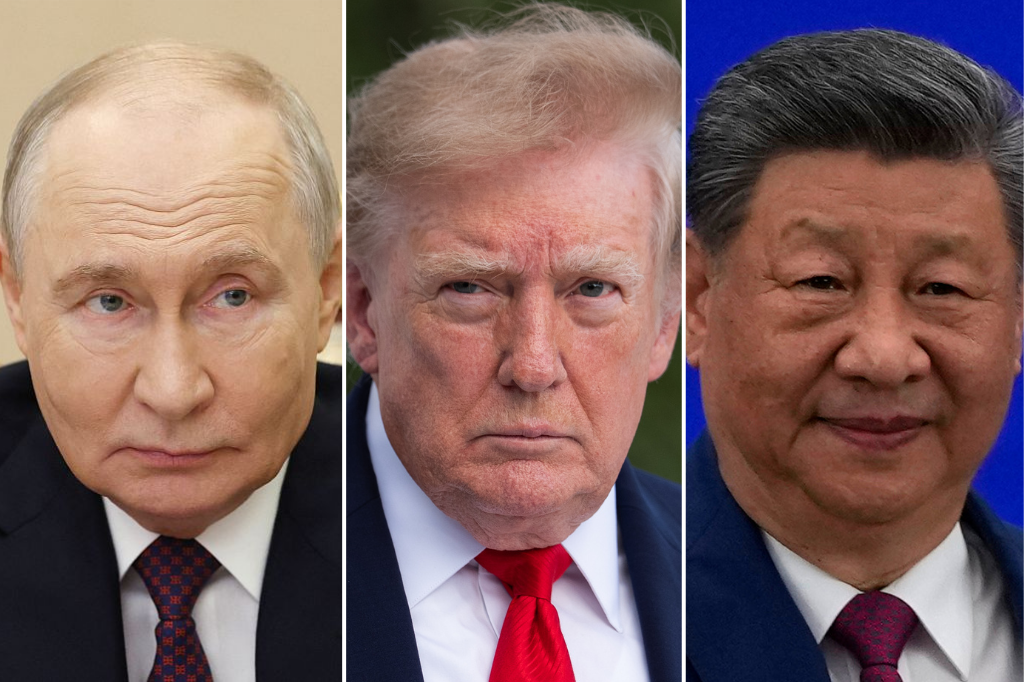
Russian President Vladimir Putin, U.S. President Donald Trump, and Chinese President Xi Jinping. —Vyacheslav Prokofyev—Pool/AFP/Getty Images; Aaron Schwartz—Getty Images; Ng Han Guan—Pool/Getty Images

President Donald Trump said on Monday he wants to hold a trilateral summit with Russia’s President Vladimir Putin and Chinese leader Xi Jinping in China to discuss “denuclearization.”

Speaking to reporters at the White House, Trump said such a meeting, which would be the first time the three leaders met outside of a larger multi-leader gathering, would be a “very positive thing for the world.” The U.S. President added: “If they’d like to have it, I think it would be held in China.”

The three leaders are expected to attend the Asia-Pacific Economic Cooperation summit next month in Shenzhen, the southern Chinese tech hub.

Trump was responding to Putin’s reported proposal for a three-way meeting with Trump and Xi. The Wall Street Journal reported, citing unnamed sources familiar with discussions, that Putin suggested the idea to Trump in an Oct. 9 call, seeking the summit to potentially broker an end to the war Russia started in Ukraine more than four years ago, without having a Ukrainian representative at the table. 

Kremlin spokesperson Dmitry Peskov confirmed to the Journal that discussions of a potential meeting were underway, and U.S. Secretary of State Marco Rubio also suggested publicly that talks about a meeting were happening.

Trump, however, said that a trilateral summit would focus less on Ukraine: “We would have it to talk about nuclear weapons and denuclearization.”

Since his first presidential term, Trump has mused about scaling back the three countries’ defense spending. In a 2018 social media post, Trump said that he was “certain that, at some time in the future, President Xi and I, together with President Putin of Russia, will start talking about a meaningful halt to what has become a major and uncontrollable Arms Race.” He’s also made clear a goal to “de-nuke the world.”

A possible summit of the 3 biggest nuclear powers

According to the Stockholm International Peace Research Institute (SIPRI), of the estimated 12,187 nuclear warheads in the global inventory as of January 2026, about 9,745 were in military stockpiles for potential use. Of these, Russia has the world’s largest, with the U.S. a close second—together making up 83% of the global stockpile.

China is third with more than 600 nuclear warheads, representing only 6% of the global stockpile, though SIPRI notes Beijing is “expanding its nuclear arsenal faster than any other country.” 

The research institute says Russian and U.S. deployments of new nuclear warheads “are likely to rise in the years ahead,” with Moscow’s increase mainly due to military modernization allowing missiles to carry more warheads. Washington’s increase, on the other hand, “could happen as a result of more warheads being deployed to existing launchers, empty launchers being reactivated and new non-strategic nuclear weapons being added to the arsenal.”

Future nuclear proliferation in the U.S. and Russia is also uncertain after the bilateral Treaty on Measures for the Further Reduction and Limitation of Strategic Offensive Arms (New START) expired in February this year. That treaty placed verifiable limits on all Russian and U.S. deployed intercontinental-range nuclear weapons. 

“The whole thing is a shame, because I’d love to denuclearize if possible,” Trump told Newsmax on Oct. 15. 

In the interview, Trump said the U.S. was discussing denuclearization with Russia and China, but he added that Beijing “was probably less inclined.” During his first term, amid negotiations to extend the New START pact, Trump tried—and failed—to bring China into nuclear arms reduction talks. The U.S. is trying to bring China into the fold again, but Beijing has rejected past U.S. efforts, arguing that the U.S. and Russia must first reduce their larger arsenals.

A possible summit on Ukraine, without Ukraine

Putin’s suggestion of a trilateral summit on Ukraine would leave out a key player in the ongoing war: Ukraine, which unsurprisingly rejected the idea.

“A trilateral meeting between the leaders of Ukraine, the U.S., and Russia could help end the war sooner,” Ukraine’s foreign minister Andrii Sybiha posted Monday on X. “A trilateral meeting between the leaders of Russia, China, and the U.S. would do only the opposite: encourage Putin to continue this war.”

Speaking to reporters Monday, Peskov, the Kremlin spokesperson, said a final peace deal would obviously involve Ukraine​: “Of course, a final settlement is impossible without the participation of someone in Kyiv who is prepared to take responsibility.”

But the proposal comes as Russia increasingly appears to be in Trump’s favor. Trump unveiled a diesel deal with Russia earlier this month in an attempt to lower fuel prices, and he also stopped implementing scheduled sanctions on Russia—moves that his allies have criticized. Meanwhile, Trump has pushed Kyiv to stop striking Russian refineries, one of its advantages in the war. He’s also blamed Ukrainian President Volodymyr Zelensky for rising diesel prices and has called on Ukrainians to replace him.

  •  

Trump Endorses Netanyahu Days Before Israeli Election as Iran War Tests Friendship

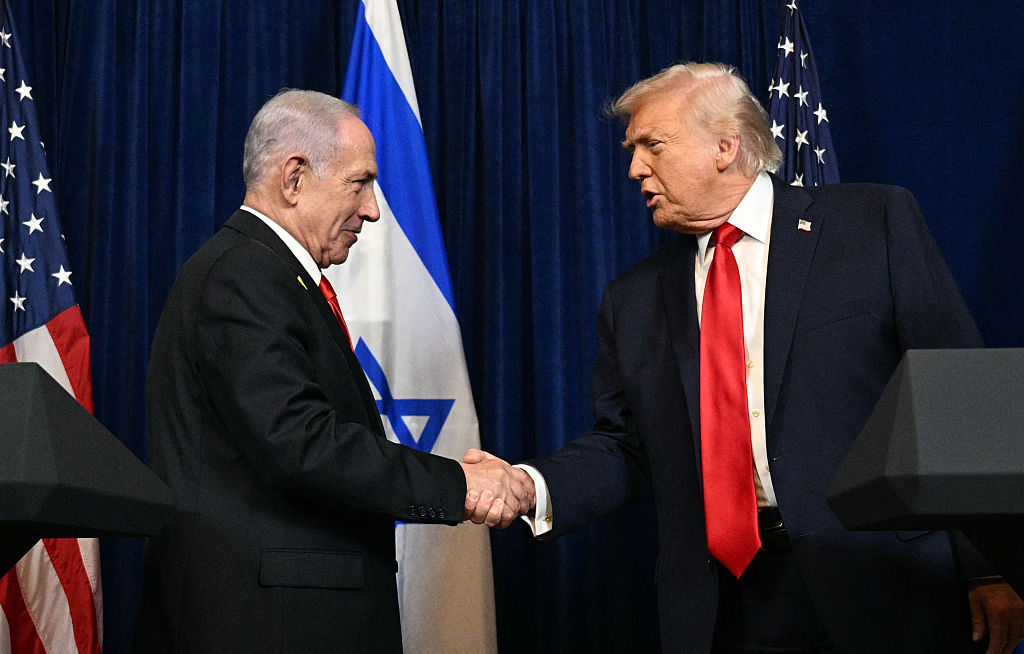
Israeli Prime Minister Benjamin Netanyahu and U.S. President Donald Trump during a joint press conference at Trump's Mar-a-Lago residence in Palm Beach, Fla., on Dec. 29, 2025 —Jim Watson—AFP/Getty Images

With days to go before a crucial general election in Israel, Prime Minister Benjamin Netanyahu received a last-minute endorsement for re-election on Sunday from his longtime friend, U.S. President Donald Trump.

“Bibi Netanyahu has been a Great Warrior Prime Minister, and an even greater Partner for Peace in combatting the Islamic Republic of Iran,” Trump posted on Truth Social Sunday. “Please let this Letter serve to represent my Complete and Total Endorsement of Bibi Netanyahu in his upcoming Race for Re-Election as Prime Minister of Israel.”

It’s a ringing, albeit late, recommendation for someone Trump hasn’t seen eye-to-eye with in recent months over how Netanyahu’s government has navigated the Middle East conflict. Trump explained his delayed endorsement to Axios reporter Barak Ravid, saying that he’d always meant to endorse Netanyahu because they “have a good relationship, and because we’ll continue to do good things together.” 

Trump said in his post that, if Israel were to have “the wrong Leader, which would be anyone other than Bibi,” the U.S. would be left alone to face the Iran threat. The U.S. and Israel jointly struck Iran in late February, kickstarting a conflict that has not only upended global markets but also thrust Middle Eastern regional security into turmoil.

“Bibi Netanyahu has been Strong, Brave, and Brilliant in the face of tremendous opposition, including that coming from even Israel, itself,” Trump added, in apparent reference to Netanyahu’s domestic challenges, including a corruption trial, some of which the U.S. President has previously tried to influence. “Despite all of that, he has endured and, in fact, he has thrived!”

Trump’s endorsement comes just before Israelis head to the polling booths on Oct. 27, some three years after the country’s war with terror group Hamas ignited. Since then, Netanyahu has been criticized by opponents for failing to deliver on his promise of restoring regional security.

Public disillusionment with Netanyahu was among several factors that led to the formation of the Yashar! (“Straight!”) Party, whose founder, former Israel Defense Forces Chief of Staff Gadi Eisenkot, is challenging Netanyahu for the premiership. Eisenkot’s son and nephews were killed in the war in the Gaza Strip.

It’s unclear how big of an electoral boost Netanyahu will get from Trump’s endorsement. An opinion poll from nonprofit The Jewish People Policy Institute in Jerusalem released this month shows that most Israelis still see Trump as a great friend of Israel. A separate opinion poll from JPPI, however, shows their trust in him has eroded. Eisenkot, reacting to Trump’s endorsement, said at an event in Tel Aviv that while he appreciates Trump, only Israelis will decide on their next Prime Minister. Some surveys show Yashar! is in a tight race with Netanyahu’s right-wing Likud party.

Netanyahu nonetheless thanked his “dear friend Donald” in a video posted on social media, saying he was “honored” and “humbled” by Trump’s backing, adding that the U.S. was “fortunate” to have Trump as its leader in the fight to denuclearize Iran.

Trump and Netanyahu’s fraught friendship

Even before Trump became U.S. President, he had publicly endorsed Netanyahu, though Trump, still only a TV personality in 2013, said that the Israeli politician asked for it. Since Trump was first elected, the two have been political allies and friends. Their relationship, however, has seen a number of ups and downs since Trump returned to the White House last year.

Netanyahu was the first foreign leader invited to the White House during Trump’s second-term Administration, and he has met with Trump repeatedly since. Netanyahu pushed Trump to target three key Iranian nuclear facilities in June last year. Last November, Trump sent a letter to Israeli President Isaac Herzog, asking him to pardon Netanyahu on his drawn out corruption trial, which the U.S. President deemed to be “political, unjustified prosecution.”

On Feb. 11, when Trump and Netanyahu met in a closed-door meeting at the White House, Israel and the U.S. failed to reach an agreement on how to proceed with Iran. Netanyahu has long sought to decapitate the Iranian leadership, but Trump at the time insisted on negotiations. Netanyahu, nonetheless, reportedly pressed Trump to launch the Iran operation later that month.

Since their last meeting, their relationship has markedly shifted. Trump has since tried to find an off-ramp to the war in Iran, but Israel’s actions made such peace deal talks thorny.

In March, after Israel attacked Iran’s South Pars gas field in the Persian Gulf, Trump said he told Netanyahu to stop such attacks. Then, on April 17, Trump declared on Truth Social that Israel was “PROHIBITED” from further bombing Lebanon, where it was at war with the militant group Hezbollah. Netanyahu, however, insisted that Israeli troops would remain in southern Lebanon and that security threats persisted—complicating Washington’s efforts toward peace as Tehran indicated that any deal would need to include a halt of the attacks in Lebanon.

When Netanyahu in June ordered strikes on a Hezbollah stronghold in Beirut to retaliate against the group’s alleged attacks on Israel, Trump phoned and excoriated the Israeli Prime Minister, reportedly calling him “f-cking crazy.” Asked by CNBC about the call, Netanyahu said: “We have common goals. Sometimes we have, as in the best of families, you have these tactical disagreements. We always find a way to work them out, and we do so as great friends.”

During Netanyahu’s seventh U.S. visit in July, Trump went public with his frustration. During a telephone interview on Fox News, Trump criticized Netanyahu over reports that the Israeli leader planned to share intelligence showing Iran rebuilding its nuclear program. The U.S. President said: “I don’t need Bibi to tell me that. Bibi is telling me that because he wants me to stay involved.”

Netanyahu is part of Trump’s U.N. alternative called the Board of Peace, though Israel broke again with the U.S. President by rejecting having Turkish and Qatari representatives on the board’s subpanel, the Gaza Executive Board, which is tasked with overseeing post-war reconstruction in the Gaza Strip.

Then Netanyahu rejected the Board of Peace’s 15-point plan to advance a cease-fire in the Gaza Strip and insisted that Israel would not withdraw before Hamas fully disarmed. 

In Trump’s extensive interview with TIME in late September, Trump did not answer directly when asked repeatedly if the Israeli population should give Netanyahu another term. “I can only say that I’m not involved in politics anymore,” the U.S. President said. 

But despite the lack of clear endorsement then, Trump seemed confident that “Bibi” could still win. “People have written off Bibi many, many times, just like they’ve written off me many, many times,” Trump told TIME. “I wouldn’t underestimate Bibi.”

  •  

What We Know So Far About the Elementary School Shooting in Bend, Oregon

Police tape is placed outside Silver Rail Elementary school in Bend, Oregon, on Oct. 15, 2026. —Joe Kline—AP

The 16-year-old suspect who opened fire at an elementary school in Bend, Oregon, on Thursday, has been identified as Griffin J. John II. The assailant killed three children and a teacher before he was shot dead by a community member, police said. 

Bend Police Chief Mike Krantz identified the suspect in a press conference late Friday, adding that John was a former special education student at the school, Silver Rail Elementary School. He was not enrolled in the school district at the time of the shooting. 

In a press conference on Thursday, Krentz said that the children killed were ages 5, 8, and 11. A 7-year-old and a 54-year-old teacher were transported to St. Charles Bend hospital with critical injuries. As of Friday, the 7-year-old is alive and in “serious but stable” condition, according to officials.

The police also shared the names of two of the victims on Friday: 5-year-old Rhoam Summer and 25-year-old teacher Megan Lambert.

Krantz said a community member saw the suspect entering the school, pursued him inside, and shot him. Officials have not publicly named the bystander, but family members identified him as Kaylub Giamanco, 36, whose two daughters attend the school. His brother, Kyle Giamanco, told NBC News that Kaylub was on a break from work when he drove past and saw the gunman entering the building. Kyle said his brother has a concealed-carry permit.

The chief said the suspect forced his way into the school by firing at locked doors.

He fired 15 rounds and had 44 more in a backpack, the police said, adding that it would have been a much deadlier attack if not for a teacher who threw a phone at the shooter, and the bystander, a father of two students at the school, who killed the attacker.

FBI Director Kash Patel posted on social media that the agency’s Portland field office is assisting in the investigation. “We will make every resource they need available,” he added.

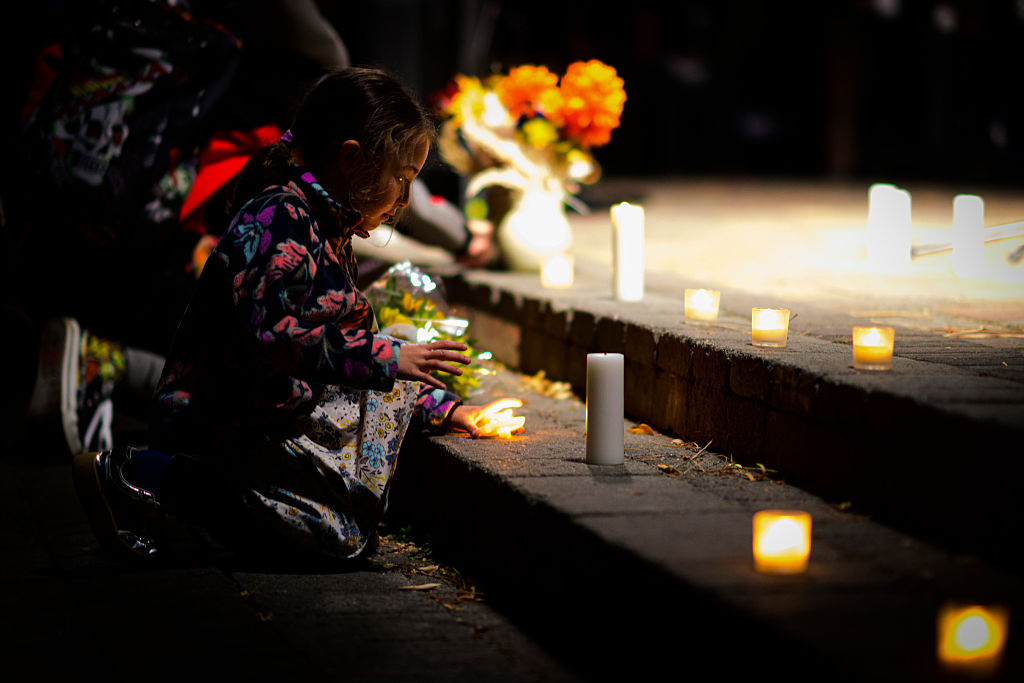
A vigil was held Thursday evening in the wake of the shooting.

Community members grieve during a candlelight vigil at Drake Park in Bend, Ore., on Oct. 15, 2026. —Mathieu Lewis-Rolland—Getty Images

“A school should be a safe place where children can learn and feel secure,” Bend Mayor Melanie Kebler said at the press conference. “What happened today should never happen.”

Oregon Gov. Tina Kotek said at the same conference that her heart was “absolutely broken” over the incident: “No parent should have to have this kind of day, and no community should have to live through this kind of day.” She also thanked the community member who pursued the shooter.

CNN’s analysis of incidents reported by the Gun Violence Archive, Education Week, and Everytown for Gun Safety shows that the shooting at Silver Rail Elementary marks the 36th on K-12 school grounds this year. It is the 52nd school shooting in the country this year.

What happened?

In the press conference Friday, officers provided a clearer picture of what happened during the shooting. The assailant jumped over the fence by the school’s playground and shot through the glass panes on the side doors in order to get into the building.

He then entered a mixed special education classroom and opened fire.

Krantz said that at 12:59 p.m., police received a 911 call from a person in a vehicle who reported being shot at multiple times by someone “with a long gun.” 

Multiple calls followed, reporting that a shooter had entered Silver Rail Elementary School, which is about 120 miles southeast of Portland. The school enrolls more than 400 students from kindergarten to 5th grade. 

Krantz said police directed the school to go into lockdown at 1:01 p.m. and first responding officers arrived a minute later. Upon entering the school building, Krantz said, officers confirmed that the suspect was dead and found the four other people who died from their injuries, and their families have been notified.

Officers located a Maverick 88-pump and 12-gauge shotgun near the suspect, as well as a backpack with the added ammunition.

How are politicians reacting?

Oregon’s Republican candidate for governor, state senator Christine Drazan, posted on social media that her heart was with the affected families, students, and teaching staff. “We have to commit to protecting our kids,” she added. “We have to put a complete stop to shootings at our schools. This has to end.”

Rep. Janelle Bynum, a Democrat who represents the district that includes Bend, said in a statement: “Our babies are supposed to do arts and crafts at school, not use their desks as cover from gunfire. They’re supposed to make friends, not mourn them.”

U.S. Senator Ron Wyden (D, Ore.) lamented in a statement that the victims in Silver Rail Elementary School and their loved ones faced the “awful consequences” of another school shooting in the country. He added that the “best way to honor” them is to “at long last pass common-sense gun laws that reduce the risks of more children, parents, teachers and staff forced to live in fear of similar nightmares for their schools.”

When asked about the shooting on Friday, President Donald Trump praised the bystander who shot and killed the suspect.

“We had a great hero who went in and did the business. He took care of business,” Trump said. “It’s a terrible thing, but thank goodness for a man that had a gun and knew how to use it.”

  •  
❌