❌

Reading view

What to Say—and Not Say—to Someone Having Intrusive Thoughts

—Photo-Illustration by TIME (Source Image: Deagreez/Getty Images)

Have you ever had a disturbing thought pop into your head out of nowhere—something you'd never consider actually doing?

Intrusive thoughts are unwanted thoughts, images, or urges that can feel upsetting, confusing, or wildly out of character. They're more common in people with obsessive-compulsive disorder (OCD) but can happen to anyone, and they can involve everything from violence and sex to religion, relationships, and the fear of having done something wrong.

Many people are able to brush off the occasional intrusive thought and move on quickly. People with OCD, on the other hand, can get stuck trying to figure out what the thought means—and whether they might act on it. “We stop and we treat that thought as super important and meaningful,” says Alissa Jerud, a clinical psychologist and clinical assistant professor of psychiatry at the University of Pennsylvania.

Intrusive thoughts can feel especially disturbing because they often involve someone or something the person cherishes. “We tend to have intrusive thoughts about the things we care most about,” Jerud says.

Some of Jerud’s patients have kept their intrusive thoughts to themselves for 20 years before telling her. They might be thinking: “Why am I having these thoughts? What does it say about me? Maybe I’m a monster,” she says.

A calm, compassionate response can make it easier to keep talking. “It can help them feel like there’s hope,” Jerud says. “Maybe I don’t have to beat myself up for having these thoughts in the first place.”

Here’s what to say if a loved one tells you they’re having intrusive thoughts. 

Start with, “I’m so glad you shared this with me”

Start by thanking your friend for trusting you. Skip responses like “How could you think that?” or “Don’t say that,” which can reinforce the shame they’re already feeling.

It’s helpful, too, to make it clear that what they told you won’t affect your relationship: “This doesn’t change how I think about you,” suggests Madeline Thompson Smith, an Atlanta-based licensed professional counselor who specializes in OCD. Then acknowledge how upsetting the thoughts sound: “That sounds really scary to have stuck in your head.”

Pay attention to how you sound and look, too. A warm invitation to explain more can feel like judgment if you’re staring intensely or using a sharp tone. If you look startled, acknowledge it instead of hoping they didn’t notice. Kimberly Leonte, a psychologist in Boston who specializes in OCD, suggests wording it like this: “I guess I wasn’t expecting that, but I want to hear more.”

Offer support without repeatedly reassuring them

When someone you love is distressed by an intrusive thought, reassuring them can feel like the kindest thing to do. But if they keep coming back with the same question, answering it again and again can become part of the OCD cycle.

Say your partner keeps asking whether an unwanted thought means they’re dangerous. You reassure them, they feel better, and you both get back to your evening. Until another question arrives: But what if you’re wrong? What if they didn’t explain the thought accurately enough? Next thing you know, they’re asking for reassurance again.

A single reassuring response isn’t necessarily a problem, Thompson Smith says. The concern is when seeking reassurance becomes a compulsion—a behavior someone feels driven to repeat to relieve their distress. Each answer briefly helps them feel better, but it leaves them needing another answer when the doubt returns.

Instead of debating what the thought means, acknowledge how they’re feeling and express confidence in their ability to get through the discomfort. Thompson Smith suggests: “I know this feels really uncomfortable right now. I’m not going to help you go down the rabbit hole, but I’m happy to sit with you while it’s hard.”

If reassurance has become a routine between you, talk about changing it together, ideally with guidance from their therapist. Abruptly refusing to answer can leave your loved one wondering what happened. “It’s tough if the person’s used to getting reassurance, and you just stop giving it and they don’t know why,” Leonte says. Instead, discuss how you’ll respond the next time they ask—and make sure you both understand why you’re trying something different.

Meanwhile, aim to avoid suggestions like “Just stop thinking about it” or “Replace it with a happy thought.” Besides being considerably easier said than done, trying to force an intrusive thought away can keep someone preoccupied with whether it’s gone yet.

Ask whether they want you to listen or help

Find out what your loved one wants from the conversation. They might be seeking support in taking a step toward getting mental-health help, or they may simply want you to know what they’ve been going through.

“Do you want me to just listen, or do you want help figuring out what to do next?” Thompson Smith suggests asking. If this is the first time they’ve said their intrusive thoughts out loud, they might not be ready to discuss next steps.

If they’re already in therapy, ask how you can support what they’re learning: “What would your therapist recommend trying right now?” Leonte suggests asking. If they’re interested in learning more about intrusive thoughts but feel overwhelmed, you could offer to read about them together.

Sometimes, they simply want someone to listen. Your loved one might be telling you because “they just don’t want to be alone in this, and you can help them hold it,” Thompson Smith says. Or they may need to know “you’re not gonna judge me or people aren’t gonna run away if I start trying to be open and get help.”

Know when intrusive thoughts call for professional help

If unwanted thoughts are causing significant distress or interfering with daily life, offer to help your loved one find a therapist. Keep it low-pressure: “If you ever want me to help you find a therapist, I’d be happy to do so,” Jerud suggests saying.

For OCD, look for a therapist trained in exposure and response prevention, or ERP, Jerud suggests. It helps people learn to tolerate intrusive thoughts without turning to rituals like repeated reassurance. The International OCD Foundation maintains a directory to help people find one.

There’s also an important distinction between an unwanted thought about harm and wanting or intending to act. Don’t assume that every disturbing thought is benign, Thompson Smith says. If you’re unsure what someone means, ask calmly and directly: “Is this a thought that scares you, or something you want to do?” If they describe wanting to act, ask about plans and help them get professional support right away.

Keep being the friend you’ve always been

After someone opens up about their intrusive thoughts, keep treating them like you always have. Send the ridiculous meme, ask whether they’re still coming to dinner, and keep including them in the things you usually do together.

People often fear that sharing their intrusive thoughts will change how others see them, Thompson Smith says. Pulling away—or asking about their mental health every time you talk—can leave them wishing they’d kept quiet.

You might get frustrated or struggle to find the right words, Leonte says. If you react in a way you regret, apologize and let them know you’re still there for them. “No one’s perfect,” she says. “The goal isn’t to be perfect, it’s just to be supportive.”

  •  

The New Relationship Minefield: Your Partner’s AI Chats

—MASTER—Getty Images

Lindsey Hall’s boyfriend was asleep on her shoulder when she accidentally discovered what he’d been telling ChatGPT about her.

Her phone had died, so she picked up his to look up something for work. Then she noticed a chat titled “Relationship Issues and Uncertainty.” Inside, she says, were complaints about her appearance, doubts about his attraction to her, and a sentence she still remembers verbatim: “I’m just not proud of her.”

While he peacefully snoozed beside her, she learned that ChatGPT had issued a verdict on the state of their relationship: Her boyfriend needed to end it.

When she first saw the chat title, Hall figured it was about a familiar disagreement: She loved her three cats; he wasn’t an animal person. “This is probably about the cats,” she remembers thinking. She hadn’t expected a list of complaints about her. “Nothing was positive,” she says. “Not one thing.”

Hall got up, collected her toothbrush and charger, and slipped out the front door. “I just had nothing to say,” she says. “I had nothing but rage at that point.”

Couples have long had ways to discover things they weren’t supposed to know about each other: rifling through a journal, stealing a glance at incoming texts, poking around in Instagram or Snapchat DMs. Now, there’s another place to look—and plenty to wish you hadn’t seen. Therapists say they’re working with couples who have discovered their partners asking AI whether they should break up, sharing sexual fantasies, or contemplating how to bring up something they were too nervous to say out loud.

Why a partner’s AI chats can feel like a betrayal

Reading the chats doesn’t necessarily tell you what the other person meant. Was your partner venting after a fight or seriously considering leaving you? Were they asking for help talking to you—or finding a way to avoid it? And who owes whom an apology: the person who read the chats, or the one who shared intimate details about their partner with a chatbot?

When Ilana Grines, a licensed marriage and family therapist in Los Angeles, works with couples, her first question is now: “What have you told AI?” She wants to know if and how both people are using it, what they’re sharing, and whether they’ve discussed any of that with each other. Most haven’t, she says.

“We don’t have a language around our conversations with AI,” Grines says. Couples may understand that a journal is private without having discussed whether the same goes for a chatbot conversation. When someone discovers their partner’s chats, “it creates this huge rupture where one person accessed the other person’s history,” Grines says. “And then it’s nuclear.”

One couple Grines worked with paid for a single AI subscription. The wife, a teacher, used it to grade papers. Her husband used it to explore sexual fantasies, apparently without realizing that conversations from his computer would be visible through their shared account, Grines says. His wife discovered the topic in the platform’s sidebar.

“We know about a third person entering our relationship,” Grines says. “But we don’t know about this third space that we’re creating.”

Sometimes, one partner doesn’t even know that space exists. They might be aware their partner asks AI for help with work or vacation planning—not that they’re also discussing their sex life or wondering whether to stay together. Hall used chatbots herself, but discussing her relationship with one hadn’t occurred to her. “I just didn’t think of it as a tool for that,” she says.

Part of what stings is realizing your partner talked to a chatbot about something they felt like they couldn’t bring up with you, says Shemiah Derrick, a relationship therapist in Chicago. You might also wonder how long they’ve been feeling this way—and whether you would have known if you hadn’t read the chats.

Derrick has seen couples finally talk through a problem—only to start fighting when one person admits they used AI to figure out what to say. The other person’s reaction, as she describes it: “You had to go to chat for us to do that?”

In those cases, Derrick points out that the person turned to AI because their usual way of bringing up problems wasn’t working. They wanted to get through a tough conversation without having the same old fight. “They were trying to do something different,” she says.

What AI chats can reveal about relationships 

Giulia P. Davis, a licensed marriage and family therapist in San Francisco, recalls working with a couple after one partner read the other’s AI chats without permission and found complaints and doubts about their relationship. The person who wrote them was still sorting out how they felt. Their partner assumed they’d already made up their mind.

“The partner didn’t find a straightforward confession or plan to leave the relationship,” Davis says.

Davis helped them distinguish “what you really think” from “what you might think about.” Someone might complain to a chatbot after a fight or ask what would happen if they broke up, for example, but not feel that way once they’ve cooled down.

If you find these types of messages, you should ask your partner how they’re feeling, Davis suggests—not assume everything they typed is something they’ve been hiding from you. “A person can have private thoughts without being deceptive,” she says. “Couples need boundaries around private digital spaces just as they do around journals, therapy, or conversations with trusted friends.”

A chatbot also does something a journal doesn’t: It answers. But remember that it’s getting only one side of the story, says Shayce Johnston, a licensed mental health counselor in Gainesville, Fla., and the founder of Human AI Dynamics, which explores how people form emotional and relational bonds with AI. If your partner complains about you and the chatbot agrees, they may feel that someone else has confirmed you’re in the wrong. Johnston describes the reaction this way: “Even the AI agrees with me.” That doesn’t make it true.

How to set boundaries around AI in a relationship

Don’t assume you and your partner agree on what should stay private, says Tammy Nelson, a psychotherapist in Los Angeles and author of Open Monogamy: A Guide to Co-Creating Your Ideal Relationship Agreement. You might think nothing of opening their ChatGPT account; they might consider it the equivalent of reading their journal. Talk about that before you’re staring at something you wish you hadn’t seen.

“What parts are private?” Nelson asks. Keeping a password to yourself, for example, doesn’t automatically mean you’re concealing something that would hurt your partner. “I really do think that it’s important to revisit that conversation pretty often,” she says.

Reading the chats is only part of the issue. What’s OK to put into them? Johnston works with couples in which one person uses AI enthusiastically while the other has privacy, ethical, or environmental concerns. Your partner might be fine with you asking for date-night ideas but uncomfortable with you pasting in their texts or describing your sex life.

Grines suggests starting with a question: “Can you share something you’ve asked AI about our relationship?” You can also ask whether there are subjects they find easier to discuss with a chatbot than with you. The answers can help you get specific about what you’re both comfortable with: using AI to prepare for a difficult conversation, for example, or talking through an argument afterward. Discuss whether those exchanges will stay private or whether you’d like to share what came out of them.

If you’re tempted to skip the conversation and start scrolling through your partner’s chat history, Nelson suggests asking yourself why. Has something happened that makes you distrust them, or are you feeling anxious and hoping what you find will reassure you?

As Davis puts it: “What gets in the way of asking your partner directly?”

What to do after reading your partner’s AI chats

If you’ve read something upsetting, ask your partner what it meant before assuming you know. Davis encourages couples to wait until they’re calm enough to have that conversation. The person who used AI can explain what they were working through; the person who read the chats can explain what hurt.

Johnston wants couples to stop treating the chat history as a verdict on their relationship. Instead, she helps them understand “what the need was, what the fear is, and where the disconnection was that led to the conversation in the first place.” That means making room for both people’s feelings: You can be hurt by what your partner wrote, and they can be upset that you read it without permission.

There may still be a useful role for AI in the relationship. Grines has worked with couples who use their therapy notes to ask a chatbot for questions they can discuss together at home, for example. Johnston sometimes encourages clients to rehearse a difficult conversation with AI before having it with their partner.

“I don’t think AI is inherently anti-relationship,” Grines says. But she wants couples to consider whether it’s helping them talk to each other—or becoming the only place they’re willing to be honest. “AI can be a bridge into communication,” she says, “or it can be a place where communication goes to die.”

For Hall, finding out how her boyfriend used AI made her question conversations she’d once felt good about. Before meeting in person, they’d spent months messaging. He’d seemed warm over text, she says, but could be colder face-to-face. She’d wondered: “What am I doing wrong?”

His chat history offered a possible explanation. When they’d discussed serious or emotional subjects, she says, he’d pasted her messages into ChatGPT and asked it to help him respond. She remembers his instruction: “Placate her.”

“It’s horrifying,” she says now.

She still wonders whether he would have spoken so harshly about her to another person, or whether something about talking to AI encouraged him. “Would you have said all those things to a person in that way?” she asks.

After she left his house, he began texting her. She turned off her phone. When he later came to her home, she told him she’d read the chats. By then, she says, she felt there was little left to discuss: “I just read exactly how you feel.”

  •  

This 30-Second Habit Can Improve Your Balance

—Photo-illustration by TIME (Source image: DAPA Images via Canva)

Standing on your own two feet might be no problem. Lift one up to balance, though, and you might have a few concerns.

Fortunately, there are ways to get a leg up on better balance. “Balance is not a trait—it’s a skill,” says Dr. Cory Calendine, an orthopedic surgeon at the Bone and Joint Institute of Tennessee. One way to practice: Stand beside a sturdy counter, lift one foot, and work toward holding the position for 30 seconds before switching sides.

Staying upright can be surprisingly humbling. “It’s free, it’s simple, but it’s also honest, brutally honest,” Calendine says. “It’s a good assessment of where you are.”

Here’s why it’s worth practicing, plus how to get started.

The benefits of standing on one leg

You might not give your balance much thought, but it helps get you through the day—from stepping into the shower to climbing upstairs when you get home from work. Even walking down the sidewalk involves briefly supporting yourself on one foot with every step.

There’s a lot going on to keep you from tipping over: Your brain processes information from your eyes, inner ear, and sensory nerves, while your muscles help keep you steady. When you lift one foot, for example, the muscles along the outside of your standing hip help keep your pelvis level. “All of these things are being coordinated for you to stand in one position without falling,” Calendine says.

Your balance can improve with practice: A review of 13 studies found that single-leg balance training improved balance performance in healthy adults. Calendine suggests working toward 30 seconds on each side, starting with however long you can safely manage.

Still, preventing falls takes more than good balance—you also need strong muscles to support you. A large Cochrane review found that exercise programs that focused on balance in addition to everyday movements, like getting up from a chair, reduced the rate of falls in older adults by about a quarter. While standing on one leg is a good start, it shouldn’t be the only exercise you do. “Balance is the front door, but strength is the whole house,” Calendine says.

How to stand on one leg to improve your balance

Find a sturdy counter you can hold onto, says Kevin Pozzi, an assistant professor in the doctor of physical therapy program at Johnson & Wales University in Providence, R.I. Check that the floor isn’t slippery, and give your footwear some thought: “Sneakers would be ideal,” he says, as long as “they’re tied well and they fit.”

If you’ve fallen before or had a significant injury or surgery involving your legs, hips, or spine, talk to a health professional before getting started. Pozzi also recommends getting help if you can’t hold the position for 10 seconds. A physical therapist can assess your balance and suggest a routine that’s safe for you.

Otherwise, start with your hands on the counter, stand tall, and lift one foot off the floor. Keep your core engaged and avoid slumping over, Pozzi advises. Bending your lifted knee so your foot is slightly behind you often feels most comfortable, though you can also lift it in front if there’s room. “See how long you can hold first while holding on,” he says. 

If that feels easy, you can start easing up on your hands. “Maybe you go down to one hand,” he says. “Then lighten your grip even with that one hand so that you’re really not relying on it quite so much.” Keep it close enough to grab the counter if you need to.

Work toward 30 seconds, then switch legs. One side might feel easier than the other, especially if you’ve had an injury. “They’re not always the same,” Pozzi says. Once you can comfortably manage 30 seconds on each side, try repeating it a few times throughout the day.

And don’t expect to be perfectly still. “It’s normal to have a little bit of wobbling,” he says. You might feel your ankle moving or notice small shifts at your knee and hip as you try to stay upright. That doesn’t mean you’re doing it wrong. But if you’re wobbling so much that you keep grabbing the counter or putting your foot down, hold on and make it easier.

Don’t expect immediate results; this balance exercise takes time to work. Pozzi says people may start noticing changes after four to six weeks of consistent practice, including being able to hold the position longer. “Getting their socks and shoes on might be a little easier,” he says.

How to make balance exercises a daily habit

Calendine works on his balance while his coffee brews, both at home and at work, giving each leg a turn. “Nobody even knows I’m doing it,” he says. “They’re standing beside me, but you can kind of hide it, which is nice.”

Dr. Vonda Wright, an orthopedic surgeon in Orlando, practices so often that she sometimes catches herself standing on one leg while giving a speech. She also asks rooms full of executives to try it—and watches them struggle. “It may be one of the only things they fail at,” she says.

To make practicing easier to remember, she suggests pairing it with something you already do. Once you feel steady enough, try standing on one leg while brushing your teeth or taking a phone call beside your desk, with a sturdy surface nearby. “You’ve got to brush your teeth anyway,” she says. “Do it on one leg.”

When holding the position for 30 seconds feels easy, you can gradually increase the challenge. Wright suggests placing a folded towel under your standing foot, which makes the surface less stable. Another option is moving your arms while you balance. Change one thing at a time, with support within reach.

Think you’ve gotten pretty good at the whole thing? Try briefly closing your eyes; without being able to see, staying upright gets trickier. “Always be near something you can grab onto,” Wright says. If you lose your balance, put your foot down and start again. “We’re trying to make this a lifestyle,” she says, “not a workout regimen.”

  •  

What to Say When Someone Cuts in Line in Front of You

—Photo-Illustration by TIME (Source Image: Antenna/Getty Images)

Wait a second. You’ve been standing in line for 20 minutes, famished and desperate to order one of the viral bagels that keep selling out—or for six hours outside a concert venue, determined to claim a spot at the barricade to see your favorite band.

And then someone strolls up and slips in line ahead of you. Apparently, the rest of you have been standing around for the ambiance.

How much of a sin are line-cutters committing? “You are ripping the fabric of society apart,” says Nick Leighton, an etiquette expert and co-host of the podcast Were You Raised by Wolves? Queue-jumpers have to live with that, he adds. “But worse, we have to live with you.”

Here’s exactly how to handle this maddening situation—including when and how best to speak up.

When to speak up about someone cutting in line

If a stranger jumping ahead of you feels strangely personal, Richard C. Larson, a professor emeritus of data, systems, and society at MIT who has studied queuing, understands why. “We only have a finite number of minutes of life on Earth,” he says. The cutter’s implied message: “A minute of my life is worth more than a minute of yours.”

Before you decide whether to confront the offender, think about what speaking up would accomplish. Are you trying to reclaim your turn or get revenge? Sometimes, the impulse is “to sort of let them know you think they’re a jerk,” says Ryan Martin, a professor of psychology and dean of the College of Arts, Humanities and Social Sciences at the University of Wisconsin–Green Bay, known online as the Anger Professor because he studies strong emotions.

Martin would speak up to help someone recognize “that what they did wasn’t OK and that I wanted them to go to the back of the line,” he says. But he’d also consider: “What is going to allow me to have the kind of night I want to have?” If you spend the concert replaying a confrontation instead of singing your happy heart out, you’ve lost more than your place in line.

Leighton's gut check for situations like these is to ask yourself: Is this the hill you want to die on? “That’s always a good etiquette question,” he says.

Consider your safety, too. If the person seems hostile or you feel uneasy approaching them, you can ask staff for help or let the cut go. “Health and safety always trumps etiquette,” Leighton says.

What to say—if you do decide to say something

Marie Helweg-Larsen, a professor of psychology at Dickinson College who studies social norms, has explored what makes line-cutting so rage-inducing. For a 2008 study, she and a colleague surveyed U2 fans waiting for prime concert-floor spots, asking how they would react to hypothetical line-cutting scenarios.

Interestingly, fans reacted just as negatively to someone cutting behind them as ahead of them—even though their own place wasn’t affected. “You have to have people follow the rules,” she says, “or your investment into the line falls apart.” Helweg-Larsen’s co-author also heard fans invoke a higher authority when someone misbehaved: “Bono wouldn’t like that!” 

You don’t need a rock star’s moral authority—or a grand speech—to point out where the line starts. Helweg-Larsen’s suggested opener: “Excuse me, but the line starts down there.” Aim for an “‘I’m just trying to be helpful’ kind of vibe,” she says.

That approach gives the person a chance to correct their mistake without having to defend their character. And you don’t have to believe it was an innocent oversight to deliver the message graciously. “Even if they’re doing it on purpose, you still need to use that tone,” Leighton says.

He’s been on the receiving end of a polite correction himself: At a deli, he once joined what he thought was the back of the line, only to discover he’d guessed wrong. He was happy for someone to point him in the right direction.

If you decide to speak up, do it promptly. “Your window of opportunity is short,” Leighton says. “As soon as it happens, that’s when you need to say something.” Waiting until you’ve spent five minutes glaring at the back of someone’s head won’t make the conversation any easier.

For a line that represents a serious investment of time, Martin suggests spelling that out: “Hey, I’m not sure you noticed, but there’s actually a really long line here, and people have been waiting all day.” You’ve identified the problem and given them an opening to say “Oops.”

Of course, some situations are murkier than a stranger breezing past the entire queue. Someone returning from a bathroom break is different from four friends arriving hours later to join the person who saved their places. Leighton is sympathetic to a water or restroom run. Holding spots all day for a last-minute entourage? “I don’t love that,” he says.

What to do if a line-cutter won’t move

Sometimes, your kind reminder won’t be met with the same level of helpfulness: They saw the line. They’re staying put. Now what?

If you feel comfortable continuing, Martin suggests a firmer follow-up: “I really think you should go back to the back of the line.” You’re making a direct request without adding an insult.

Larson advises skipping any confrontational nicknames or demands—like “What do you think you’re doing, bud?” You’re pointing someone toward the back of the line, not challenging them to a duel.

If the person still refuses to move, resist the urge to keep arguing. “We can’t control everybody,” Martin says. Continuing to push someone who’s already refused could lead to “a more significant confrontation.”

At a concert venue, amusement park, or other staffed location, you can ask an employee or security person to step in. “You can always appeal to a higher authority,” Leighton says. Whether they’ll enforce the rules is another question, but it’s an option worth trying when the cutting is particularly egregious.

If you decide to drop it, drop the parting shot, too. A sarcastic “Must be nice!” might feel irresistible, but Leighton advises against adding more rudeness to the encounter. “It will not achieve anything,” he says.

As Larson puts it, “A fight can ruin your whole day—or life.”

  •  

Why You Should Turn Your Walk Into a Color Hunt

—Courtesy of Kim Bernard

The last time you went for a walk, you might have focused on your favorite podcast, a call to your sister, or the number of calories your Apple Watch said you were burning.

Meanwhile, on a walk around her neighborhood, Kim Bernard noticed everything that was yellow: “A manhole cover, a yellow rain jacket, a fire hydrant, the numbers on someone's mailbox,” recalls the Maine-based artist. A “children at play” sign, part of a Pennsylvania license plate, and even a bucket of cat litter became part of the neighborhood’s palette.

Bernard was on a color walk, a simple scavenger hunt organized around intentionally noticing a certain color—and how much of it is hiding in your ordinary surroundings. We asked experts why you should make the activity part of your routine and how it can brighten an otherwise ho-hum day.

Why a color walk can help you tune in

About a year ago, Bridget Campbell, a content creator in Venice, Calif., realized she had become tethered to her phone. Even as she moseyed along the Venice canals, she brainstormed business ideas instead of admiring the colorful homes and flowers along the water. That’s when she decided to do a color walk, a concept she had stumbled upon on social media.

“It was a way to get out of my mind and come back into my body, slow down, and be present,” she says. While an ordinary walk might leave her mind racing toward work, looking for a particular color gave it something else to do, effectively putting all that other mental chatter on mute.

That’s exactly why color walks work so well: They encourage focused attention, says Cheryl Fisher, a licensed clinical professional counselor in Annapolis, Md., and associate professor of clinical counseling at Alliant University. She describes a “skim-scan-scroll world,” where it’s easy to move through your surroundings without really seeing them. Searching for color gives you a reason to look up from your phone and pay attention to what’s in front of you.

It also gives people who don’t consider themselves particularly creative an easy place to start, says Mari Reisberg, a licensed professional counselor and creativity coach in Boulder, Colo. Choosing a color to focus on provides a bit of structure while leaving plenty of room for discovery.

Reisberg still finds surprises on neighborhood sidewalks she’s traveled many times. “Oh my gosh, I’ve never seen that before,” she’ll think. Even on the most familiar routes, “There’s so much joy that shows up,” she says.

Pick a color that makes you curious

There are lots of ways to play color roulette and figure out which shade to hunt for. You could, of course, opt for your favorite color. Fisher collects paint swatches, cuts them up, and tosses them into a basket so people can draw one before heading out. A teacher once shared an even simpler approach with her: Have kids pick a color from their clothing, then look for matches along the way. You can even choose midway through your walk. Campbell sometimes spots an orange flower and decides that’s the color she’ll look for the rest of the way.

How specific you get is up to you. Finding nine fuchsia objects on a 15-minute walk? “It’s pretty difficult,” Bernard says. Reisberg sometimes opts for a particular shade, like midnight blue or sky blue, to give her eyes a more precise target. On other days, green is plenty. “There’s no right or wrong way to do it,” she says.

Take your usual walk—and see what you’ve been missing

Once you’ve settled on a color, head outside and see where it turns up. You don’t need a picturesque trail or a neighborhood full of flower gardens. Campbell encourages people who think their surroundings are too gray to give it a try anyway: Color can pop out in places you’ve passed countless times without a second glance.

When you find a match, resist the urge to mentally check it off and rush toward the next one, Fisher says. Spend a moment looking at what caught your eye. “The real gift is sitting with it and not just finding it,” she says.

You don’t have to keep your discoveries to yourself, either. “You can do it with a friend, you can do it with your mom,” Campbell says. Searching together gives you something new to talk about.

If you want a souvenir, snap photos along the way. Bernard asked participants in a color walk she led to select their nine favorite images and arrange them into a grid. Together, the collections resembled a patchwork quilt of color. You could make your own collage or save a few pictures to revisit when you need inspiration.

Or simply enjoy the walk. “We live in a day and age where everything is content,” Reisberg says. Sometimes she takes photos to share; other times, the discoveries are hers alone. If the whole thing feels a little silly at first, that’s OK, she says. Adults aren’t always used to indulging this kind of curiosity. “Keep giving it a little more space, a little more opportunity to surprise you.”

  •  

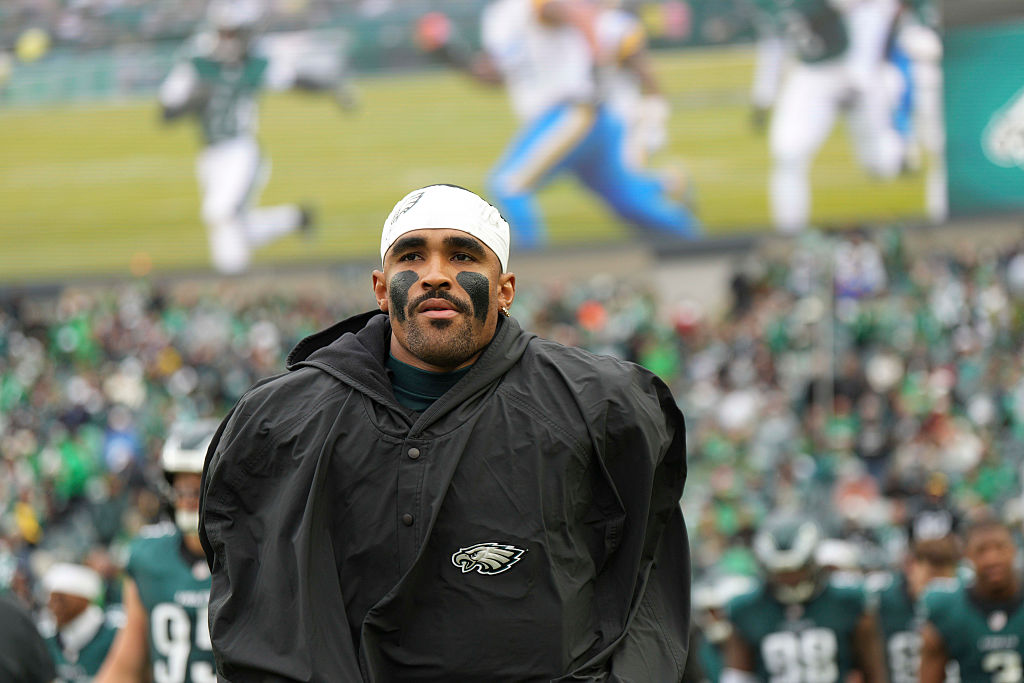
Jalen Hurts Has Deep Vein Thrombosis and Blood Clots in His Lungs. Here’s What to Know

Philadelphia Eagles quarterback Jalen Hurts looks on during the game between the Los Angeles Rams and the Philadelphia Eagles on October 4, 2026 at Lincoln Financial Field in Philadelphia. —Icon Sportswire—Getty Images

Jalen Hurts is expected to miss the rest of the NFL season after doctors diagnosed blood clots in both lungs, ESPN and NFL Network reported.

The Philadelphia Eagles quarterback has deep vein thrombosis (DVT) and bilateral pulmonary emboli, according to an Oct. 19 statement from the team. He is clinically stable and has no significant functional limitations, they said, but needs blood thinners—and can’t participate in contact activities, including football, while taking them.

“Jalen’s prognosis is very good, and we expect a full recovery,” the statement said.

The news raises questions beyond football: How do you recognize a blood clot? What does treatment involve? And why can some people stop blood thinners after a few months while others take them for life? We asked doctors who aren’t involved in Hurts’ care what everyone should know.

How to recognize a possible blood clot

Deep vein thrombosis, or DVT, occurs when a clot forms in a vein deep inside the body, often in the leg. Those veins carry blood back toward the heart. They’re different from superficial blood clots——Hurts’ original diagnosis—which form closer to the skin, explains Dr. Geoffrey Barnes, a cardiologist and vascular medicine specialist at University of Michigan Health.

The distinction matters because deep-vein clots are more likely to break loose and travel through the heart into the lungs. Once a clot lodges in an artery there, it causes a pulmonary embolism.

DVT often causes pain, swelling, and redness or a darker skin color. Patients commonly tell Barnes, “My entire calf and ankle are swollen.” One leg might look noticeably different from the other.

An injury can make those symptoms easier to dismiss. “If you’re worried that you have a DVT, it’s important that you get medical care quickly,” Barnes says. Seek a same-day evaluation through your doctor, urgent care, or an emergency department rather than waiting to see whether it goes away.

Unexplained shortness of breath, chest pain, coughing up blood, or fainting require emergency care because they can signal a pulmonary embolism. A dry cough without a cold, pain when taking a deep breath, or a racing heart can also be clues, says Dr. Stephan Moll, a hematologist and professor of medicine at the University of North Carolina who runs an Athletes and Blood Clots Clinic. 

Some pulmonary embolisms cause only mild symptoms—or none at all. People can mistake the discomfort for bronchitis, pneumonia, or a strained muscle, Moll says.

Clots become more common with age. Other risk factors include surgery, injury, prolonged inactivity, cancer, certain inherited conditions, and estrogen-containing medications. But young, active people can develop them, too.

How doctors diagnose and treat blood clots

To check for a leg clot, doctors usually use ultrasound. They move a handheld device over the skin to get pictures of the veins underneath, gently pressing as they go. A normal vein should flatten under that pressure.

With a clot, “you can’t squeeze it closed because that solid clot is in the way,” Barnes says.

Doctors typically use a specialized CT scan to look for clots in the lungs. Finding them in both lungs doesn’t, by itself, establish how sick someone is, Barnes says. Doctors also check oxygen levels, blood pressure, and whether the heart is struggling to pump blood through the lungs.

Pulmonary embolisms range from mild cases to medical emergencies, Moll emphasizes. Some people need treatment in the hospital, including medication that dissolves clots or a procedure to remove them. Many others can be treated with anticoagulants, commonly called blood thinners.

Blood thinners help keep clots from growing and prevent new ones from forming. “They do not dissolve blood clots,” Moll says. Your body gradually breaks down the existing clot, though some people are left with scar tissue.

Many people with DVT can take medication at home, Barnes says. Some people with lower-risk pulmonary embolisms can, too.

Treatment for DVT or pulmonary embolisms generally lasts at least three months. “For the first three months it’s uninterrupted blood thinners,” Moll says.

After that, doctors weigh the chance of another clot against the risk of bleeding from continued medication. What caused the clot helps guide that decision. Someone who developed one after surgery may be able to stop once treatment is complete and that temporary risk has passed. “But if this kind of came out of the blue,” Barnes says, longer-term treatment may make sense. Cancer, continued immobility, and certain clotting disorders can also affect the decision.

Having a scan that looks better doesn’t automatically mean it’s time to stop medication, Moll says. Doctors generally follow symptoms rather than ordering repeated scans to watch a clot disappear.

Even someone who stops daily medication may need a prevention plan for future surgery or another period of increased risk. “Risk factors vary, and the length of treatment varies, and the recovery varies,” Moll says.

What recovery looks like

A blood-clot diagnosis doesn’t necessarily mean you need to stay on the couch.

“I’m not asking them to go for a jog or run a marathon,” Barnes says. “But I want them to be up and walking around as much as they can tolerate,” gradually doing more every day.

Getting tackled is another matter. Blood thinners make bleeding harder to stop, so a collision or fall—especially one involving a head injury—can become much more dangerous. When it comes to contact sports like football, “I would not let an athlete play on blood thinners,” Moll says. 

For some athletes who need long-term treatment, specialists may consider a carefully managed, intermittent medication schedule after the initial three months, Moll says. It isn’t suitable for everyone and requires expert oversight; patients shouldn’t skip doses to play sports. Ask your doctor which activities you can safely return to and when.

Keeping your legs moving can also help reduce the risk of future clots. On long flights, Barnes recommends getting up to walk every one to two hours. While you’re seated, pretend your big toe is a pen and trace the alphabet with it to get your ankle moving and help pump blood through your legs. “You can do that just sitting in your seat. Nobody knows,” he says. If you’ve recently had a clot, check with your doctor before flying.

Some people feel much better relatively quickly. Others experience lasting damage to the veins after DVT, which can leave blood struggling to flow back up the leg. That can result in what doctors call post-thrombotic syndrome: “chronic swelling, chronic pain, chronic leg heaviness,” Moll says. After a pulmonary embolisms, some people continue to have shortness of breath, chest discomfort, or fatigue, particularly if the clots haven’t fully cleared.

Depending on what’s causing the symptoms, treatment might include compression stockings for leg swelling, specialized rehabilitation, or a procedure to address damaged veins or lingering clots. Tell your doctor if those symptoms linger. “We have treatments that we can offer to try and make that better,” Barnes says.

  •  

12 Symptoms ENT Doctors Say Never to Ignore

—Photo-Illustration by Chloe Dowling for TIME (Source Images: PM Images/Getty Images, Plume Creative/Getty Images (2))

You might see an ear, nose, and throat (ENT) doctor for recurring sinus infections. Someone else might see one for a thyroid tumor, a voice that won’t return after a cold, or trouble breathing during sleep. They’re all within an ENT’s purview.

These doctors, formally called otolaryngologists, treat conditions involving the ears, nose, throat, and much of the head and neck. That includes problems affecting your hearing, swallowing, breathing, and voice—and some that require urgent care. “A lot of people will think, ‘Oh yeah, there’s no emergencies at ENT,’ and there absolutely are,” says Dr. Ryan Salvador, an ENT surgeon at Sinus & Snoring Specialists in Austin.

We asked three otolaryngologists what they wish patients wouldn’t ignore.

Sudden hearing loss in one ear

You answer your phone and realize you can barely hear your friend’s voice out of your left ear. Switch to your right side, and everything sounds normal. It’s tempting to assume the muffled ear needs to pop, Salvador says. But an abrupt change in hearing can be a medical emergency.

One possibility is sudden sensorineural hearing loss, which affects the inner ear. Salvador knows how easily it can be mistaken for something else: His father went to urgent care and was told he had fluid behind his eardrum. By the time he saw an ENT, about eight weeks had passed. “He’s completely deaf in that ear now,” Salvador says.

An ENT can examine the ear and arrange a hearing test to find out what’s causing the loss. If it is sudden sensorineural hearing loss, steroids may help—but, as Salvador puts it, “the earlier the better.” Seek medical care immediately if you suddenly lose hearing, even if your ear just feels full or you’ve recently had a cold.

A neck lump that doesn’t hurt

You might discover it while shaving, when your razor passes over a spot that suddenly isn’t smooth. Or perhaps you notice an unfamiliar bump in the mirror. Because it doesn’t hurt, you decide it can’t be that serious.

Dr. Arnbjorn Toset, the director of head and neck surgery at Good Samaritan University Hospital and Catholic Health in New York, hears that reasoning from patients: “Doctor, it’s not hurting me. I don’t have any symptoms.” But pain isn’t a reliable way to judge a neck lump. It might be an enlarged lymph node, a thyroid nodule, or a growth in a salivary gland. But some lumps are cancerous.

Dr. Shaun Desai, chair of otolaryngology at New York Medical College and Westchester Medical Center in New York, recalls a medical student who assumed his lump was related to a cold. “For eight months he sat on this lump in his neck,” Desai says. It turned out to be a salivary gland tumor. If a new lump has no clear explanation or is still there after two weeks, make an appointment.

A sore throat that keeps getting worse

A sore throat is hardly unusual. One that progresses from “this hurts” to “I can barely swallow” is another matter. Salvador pays particular attention when the pain keeps worsening and you’re also having trouble opening your mouth or your voice sounds muffled. “You talk like you’ve got a hot potato in your mouth,” he says.

Those changes can signal an abscess—a pocket of pus that forms around a tonsil. “These can be life threatening,” Salvador says. If swelling makes it difficult to breathe, seek emergency care. Worsening throat pain with trouble swallowing, opening your mouth, or speaking normally also warrants prompt evaluation.

Your partner says you stop breathing at night

Your partner hears you snoring. Then, suddenly, nothing. After a pause, you gasp and start breathing again. By morning, you may have no idea it happened.

The snoring may be what your partner complains about. Desai wants to know about the silence. “The bigger worry is, does your partner kind of stop breathing for a couple of seconds?” he says. Repeated pauses can be a sign of obstructive sleep apnea, in which the airway narrows or closes during sleep. You might wake up exhausted despite spending the whole night in bed. Untreated sleep apnea can also contribute to high blood pressure; Desai worries about people who become so sleepy during the day that they struggle to stay awake while driving.

Tell your doctor about the pauses, gasping, and any daytime sleepiness. A sleep study can show whether apnea is the cause. As Desai puts it, “Apnea is the bigger question, and that can be dangerous if not treated.”

Swelling around an eye during a sinus infection

Sinus pressure can make the area around your eyes ache. What Salvador doesn’t want you to chalk up to ordinary sinus misery is new swelling around an eye—especially if the area is red or your vision changes.

“The only thing that separates the sinus cavity from the eye is a very thin plate of bone,” he says. Rarely, an infection spreads into the tissues around the eye. Salvador has treated patients whose infections formed pockets of pus that had to be drained to protect their vision.

Get urgent medical attention for a newly swollen eye during a sinus infection. If you develop double vision or have trouble moving the eye, seek emergency care. Don’t wait for those symptoms to appear: Double vision is “a pretty late sign,” Salvador says.

Swelling under your jaw when you eat

Halfway through a meal, you notice a tender bump beneath your jaw. It settles down later—then returns the next time you eat.

Toset says that pattern can point to a blocked salivary gland. Eating triggers saliva production, but a stone can keep the saliva from draining, causing the gland to swell. It may also become painful or red.

If it keeps happening, have it examined. Toset says the cause is often benign, but an exam and sometimes imaging can distinguish a stone from another problem with the gland. If the swelling keeps returning, have the gland checked—even if it goes down between meals 

A voice that won’t come back

You talked all weekend. You recently had a cold. Of course your voice sounds rough—or maybe it’s become oddly breathy, and you can’t project the way you used to. These are reasonable explanations for a temporary change, Desai says. They become less reassuring when your voice doesn’t recover.

Salvador remembers a teacher who was struggling to speak loudly enough for her class. “I can’t project,” she told him. When he examined her, he discovered that one of her vocal cords wasn’t moving properly because of a thyroid tumor. Persistent hoarseness can have other explanations, including irritation or a benign growth, but an ENT needs to look to find out.

If hoarseness lasts four weeks, see an ENT—sooner if you smoke or have other concerning symptoms. The doctor may pass a small camera through your nose to look at your vocal cords. If that sounds daunting, Desai says the office exam “just takes a minute or two.”

Dentures that suddenly don’t fit comfortably

Your dentures fit fine last month. Now they rub the same spot every time you put them in, or they don’t sit quite right. You might need an adjustment—or someone to look at what’s going on underneath.

Toset says new discomfort may draw your attention to “a little ulcer on the gum line.” Rubbing can cause a sore, but a growth in the mouth can also change how dentures fit. That’s one possible sign of oral cancer, though there are other explanations.

Ask your dentist to examine the tissue beneath the denture, especially if a sore hasn’t healed after two weeks. They can check what’s changed before adjusting the fit.

A nosebleed that won’t stop

Most nosebleeds start near the front of the nose and stop with pressure. A bleed that starts farther back can be harder to control. The blood vessels there can “pump and pump and pump,” Salvador says, and blood may run down the back of your throat. Doctors call this a posterior nosebleed.

If your nose starts bleeding, lean forward and pinch its soft part with steady pressure for 15 minutes. If the bleeding is heavy or won’t stop, or you feel weak or lightheaded, seek emergency care.

A nosebleed that does stop can still be worth investigating if it keeps coming back. Salvador remembers a man in his 30s who had consistent nosebleeds for about six months before an examination revealed a tumor inside his nose. That’s an uncommon cause, but a good reason to tell your doctor about repeated bleeding—especially if it keeps happening on the same side.

Ear pain when nothing seems wrong 

Your ear hurts, so you probably have an ear infection, right? Not necessarily. Sometimes an examination turns up nothing wrong with the ear itself. Nerves in the head and neck carry a signal from somewhere else, and sometimes, “your brain is tricking you” about where it started, Toset says.

The source might be your jaw joint, which sits just in front of your ear. Less commonly, it could be a problem in your throat or at the base of your tongue. If the pain persists despite a normal ear exam, ask your doctor what else should be checked—especially if it hurts to swallow or you’ve noticed a lump in your neck.

One nostril that stays blocked

Colds and allergies can make your whole nose miserable. A blockage that sticks around on just one side gets Desai’s attention. “When you can’t breathe out of one nostril, it’s always a little more concerning,” he says.

The explanation might be a deviated septum, but a growth inside the nose or sinuses can also block one side. Desai worries about the delay when people tell themselves, “Oh, it’s a cold,” or “I just have a bloody nose.” If the blockage outlasts what seems like an ordinary cold—especially if that side also bleeds repeatedly—have it examined.

A sore on your tongue that won’t heal

Most small mouth sores clear up within a week or two. Toset is more concerned about one that stays put, grows, or becomes increasingly painful—particularly on the side of the tongue.

He remembers seeing a young woman in the emergency room on a Friday night. She had developed swelling in her neck, and the doctors who called Toset thought it might be an abscess. During his examination, he noticed a sore on the side of her tongue. She’d seen dentists and other specialists, and earlier biopsies had come back benign, but the sore had persisted for about six months.

“I had a biopsy. Biopsy was negative, so I left it alone,” Toset recalls her telling him. He examined the sore and grew concerned. “I had to break it to her,” he says: “I think you have tongue cancer.” Another biopsy confirmed it; the swelling in her neck was where the cancer had spread.

A reassuring biopsy shouldn’t be the end of the conversation if the sore is still there. Any mouth sore that hasn’t healed after two weeks should be evaluated, according to the American Academy of Otolaryngology–Head and Neck Surgery.

“I’d rather see someone early on in the process where I can pick up on something that is possibly benign or an early type of cancer,” Toset says, than see them after a delay that makes treatment more difficult.

  •  

What to Know About the Blood Clot Sidelining Jalen Hurts

Jalen Hurts of the Philadelphia Eagles looks on during the NFL match between Philadelphia Eagles and Jacksonville Jaguars at Tottenham Hotspur Stadium on October 11, 2026 in London. —DeFodi Images—Getty Images

For an NFL quarterback, a sore calf might seem like an unsurprising consequence of getting hit by a cleat. In Jalen Hurts’ case, an ultrasound revealed something else: a superficial blood clot.

The Philadelphia Eagles quarterback was struck in the calf during an Oct. 4 game and sought treatment four days later, according to a statement from the team. An ultrasound in London revealed the clot, but doctors cleared him to play in the team’s game there the next day.

Then, a follow-up ultrasound Wednesday night revealed “movement in the small blood clot.” The Eagles announced Thursday that Hurts would miss Sunday’s game against the Carolina Panthers while the team determines his treatment.

What makes a clot superficial—and when does it become dangerous? We asked doctors to explain.

What’s the difference between a superficial clot and deep vein thrombosis?

To understand blood clots, picture a road map. Your deep veins run within the muscles of your arms and legs, carrying most of the blood returning from your limbs to your heart. Superficial veins sit closer to the surface, just underneath the skin and in the tissue beneath it. Connecting veins bridge the two systems.

“You have a really well interconnected network of veins,” says Dr. William Shutze, a vascular surgeon at Texas Vascular Associates in Dallas and vice president of the Society for Vascular Surgery (who was not involved in Hurts’ care). Think of it as “a very well developed road and highway system,” with multiple routes to get where you need to go.

When a clot blocks one route, blood can take a detour through other veins.

A superficial clot forms in one of the veins near the skin. The area can become red, warm, and tender. “It’s usually very uncomfortable,” Shutze says. Some develop in varicose veins; others form where a needle or IV has irritated a vein.

You can sometimes feel the affected vein beneath your fingers. “It’s like a pencil underneath the skin, or a knot,” says Dr. Stephan Moll, a hematologist and professor of medicine at the University of North Carolina who runs an Athletes and Blood Clots Clinic (who was not involved in Hurts’ care).

Deep vein thrombosis involves a clot farther inside the body. Its symptoms can be more widespread—the whole calf or ankle might become swollen and painful, Moll says. You can’t feel the deep vein itself.

Many superficial clots stay put and get better without blood thinners. But sometimes, a clot grows into one of the deeper veins. A piece can then break off and travel to the lungs, causing a potentially life-threatening complication called a pulmonary embolism.

Doctors use ultrasound to assess the clot and check for deep-vein involvement, Shutze says. They’re particularly concerned about superficial clots longer than 5 centimeters or within 3 centimeters of where a superficial vein joins a deep one.

The Eagles haven’t specified those details. And “movement” isn’t precise enough to establish what happened. “That’s not a term we use in clinical practice,” Moll says. It could describe a clot growing or extending; it doesn’t, by itself, establish that a piece broke loose or reached the lungs.

How do these clots happen—and how are they treated?

Being in excellent shape doesn’t make someone immune to a blood clot. An injury can damage a vein, while prolonged inactivity slows blood flow. Surgery, certain inherited clotting disorders, cancer, and pregnancy can also increase risk, says Dr. Alina Mitina, an emergency medicine physician at Hackensack University Medical Center in New Jersey (who was not involved in Hurts’ care).

Veins near the skin have less cushioning when someone takes a hit. “The deeper veins are protected,” Shutze says, although a severe impact can injure those, too.

A clot can form within hours of an injury or develop over several days, he adds. If your leg already hurts from getting hit, you might not realize there’s another reason it’s sore.

Travel can add another risk: Sitting through a long flight or car ride means the legs aren’t moving as much, slowing blood flow. 

Some superficial clots can be managed with warm compresses, anti-inflammatory medication, elevation, and monitoring. Others need blood thinners to help keep the clot from growing—even if it hasn’t reached a deep vein.

If blood thinners are needed, treatment is usually temporary, Moll says, often lasting several weeks.

That doesn’t necessarily mean spending recovery on the couch. “We like them to be active because we want to keep the blood flowing,” Shutze says.

Getting up for a walk, of course, is different from getting tackled. Shutze worries about athletes taking another hit where they already have a clot. Blood thinners add another concern: An injury that causes bleeding can become much more dangerous when blood doesn’t clot as readily.

In football, “you have constant significant contact,” Moll says, which raises the risk of serious bleeding, including inside the head or muscles.

What symptoms shouldn’t you ignore?

Athletes are used to being sore. “They often minimize clinical symptoms, completely understandably, because they don’t want to be taken off the roster,” Moll says.

Pay attention when discomfort feels different, persists, or worsens. Pain, swelling, discoloration, and warmth can signal a clot. Mitina says patients sometimes describe tightness in the leg; redness around a superficial clot can resemble an infection.

If you think you might have a superficial clot, “don’t ignore it,” Shutze says. Have a doctor check it out rather than assuming it’s a bruise or muscle strain.

Unexplained shortness of breath, chest pain, coughing up blood, or fainting require emergency care because they can signal a pulmonary embolism. Moll also flags an unexplained cough and fast heart rate as possible warning signs.

And getting checked once doesn’t mean you should brush off symptoms that persist or worsen. “If something feels weird or symptoms aren’t getting better, always return to the ER,” Mitina says. “You know your body best.”

  •  

13 Habits Food-Waste Experts Practice in Their Own Kitchens

—Esin Deniz—Getty Images

At the grocery store, you’re a person who roasts squash. You make salads. You have exciting plans for fresh herbs. A week later, you’re a person throwing away unused squash, salad, and wilted herbs.

Even food-waste experts know the gap between the meals we imagine and the food we actually eat. Shelie Miller, who studies sustainability at the University of Michigan, understands how an acorn squash can end up in your cart without a plan. “It’s fall. I’m feeling the fall vibes,” she says, describing the temptation. That’s why she and her husband try to stick to a shared grocery list—and know what they’ll do with what they buy.

We asked experts what else they do to keep good intentions out of the trash.

Read more: How to Stop Wasting So Much Food in Your Kid’s Lunchbox

Make a kitchen-sink potato

Once a week, Miller bakes a potato and gives the odds and ends in her refrigerator somewhere to go. Leftover fajita vegetables? On the potato. Little extras from other meals? Those go on, too.

“I always call it a garbage potato, or maybe it’s better to call it a kitchen-sink potato,” she says. The toppings change often enough to keep things interesting: “My husband always plays a guessing game of what my potato is going to be this week.”

The potato solves a familiar problem: You have some food left, but not quite enough to call it lunch. Miller combines those small portions on something she already wants to eat. “It’s such a great blank canvas,” she says.

Stir-fries can serve a similar purpose. But Miller knows where her loyalties lie: “My go-to is a potato.”

Give broccoli stems a chance

Jonathan Deutsch has watched fellow cooks buy cases of broccoli, cut off the florets, and throw away the stems. He considers this a terrible loss. The tender interior of a broccoli stem, he says, is “one of the most delicious vegetables.”

Deutsch, a professor in the department of food and hospitality management and founding director of the Drexel Food Lab, cooks both parts at home. The night before we spoke, he made broccoli salad with tahini and chili crisp. The stem was woody on the outside, so he peeled it, cut up the tender interior, and then air-fried it along with the florets.

Trim the woody bottom and peel away the tough exterior as needed. Deutsch wants people to recognize the good food underneath.

“The same care and love that went into the florets,” he says, “went three inches lower into the stem.”

Give your ingredients a second assignment

A recipe that calls for half a cabbage leaves you with another decision: What happens to the other half?

Miller and her husband try to answer that before they start cooking. Cabbage rolls might take care of some; soup or a roasted side dish can use the rest. The same thinking applies to the tomato paste left in a can or the extra chicken breast in a package. “Getting comfortable with all the different ways you can prepare different ingredients really helps extend the menu,” she says.

Deutsch starts by checking what’s already in his kitchen. When his now-adult daughters were teenagers, they would announce there was nothing to eat. He could usually find the makings of a meal: a can of tuna, a can of beans, or chicken in the freezer. Only after taking stock would he figure out what he needed to buy.

“Instead of generating more waste that you have to deal with, you’re taking surplus food,” he says, “and you’re making it into new things that you want to eat.”

Put your apples in the fridge

Brian Roe is willing to commit to a Costco-size bag of apples. He just doesn’t leave it on the counter.

“I’m an apple kind of person,” says Roe, a professor of agricultural, environmental, and development economics at Ohio State University who leads its Food Waste Collaborative.

He keeps the apples in the refrigerator, where he says he rarely loses one to spoilage. On the counter, he’s more likely to throw a couple away before finishing the bag.

Shop in your freezer first

Miller knows what can happen to food you freeze with the best intentions: “It just goes into the abyss of a freezer.”

Eventually, you clean it out and find “freezer-burned chicken breasts and chili from three years ago,” she says. “What happened?”

She and her husband now make a point of shopping in their freezer before deciding what to buy or cook. Sometimes, that means discovering they already have lunches covered for the week. Other times, it means remembering the portions of tomato paste they froze after a recipe called for only a spoonful.

There are only two of them at home, so a big batch can mean eating the same dinner several nights running. “By the fourth day, the last thing you want is more gumbo,” she says.

Their approach: “We’ll eat a day or two of leftovers. We’ll freeze the rest.” Then, when they need lunches another week, they can pull out a meal they haven’t just eaten three days running.

File your soup

Miller’s husband has figured out how to fit more leftovers in their freezer: He freezes soups and other liquids flat in zip-top bags on a sheet pan. “It ends up like these little folders of soup,” she says.

Once frozen, the thin packages stack neatly, taking up less space than bulky containers. Use bags intended for freezing, leave room for liquid to expand, and follow safe cooling, storage, and reheating practices.

Keep a stock bag

Deutsch keeps a bag in his freezer for the parts of dinner that don’t make it onto the plate: onion trimmings, mushroom bits, and herb stems. When he’s ready to make stock, he has a head start.

“Stock is like magic,” he says. When people wonder why their soup doesn’t taste as good as their favorite restaurant’s, he points to what might be missing: stock, along with generous seasoning. He also uses it in place of water when cooking rice, polenta, or vegetables to give them extra flavor.

He’s selective about what goes into the stock. Add beet scraps, and “you’re gonna have a pink or brownish stock,” he says. Add broccoli trimmings, and “it’s gonna have a little bit of a cabbagey broccoli smell.” That could be delicious in broccoli mac and cheese, but it’s probably not the flavor you want in butternut squash soup. “You have to be a little strategic about what goes in there,” he says.

Make leftovers worth looking forward to

Roe’s air fryer helps him get another meal out of restaurant leftovers. Recently, he used it to reheat half a tuna steak and vegetables his wife had brought home. “That makes things kind of tasty and crispy again,” he says.

He thinks about the next meal while putting food away, taking an extra minute to make leftovers easy to reheat. The goal is “storing your leftovers in a way that helps you want to use them the next time,” he says.

Sometimes, that means turning last night’s teriyaki chicken into today’s salad. His adult son has found another opening for leftovers: breakfast. “They’re the freshest they’ll ever be because it’s the first meal after,” Roe says.

Ask for ideas before buying more groceries

Ground turkey, two green peppers, and feta: Is that dinner? Deutsch suggests asking a chatbot before adding anything else to your grocery list.

He’s experimented with AI to find ways to use ingredients on hand, and recommends giving it more than a list of what’s in the fridge. Tell it how much time you have, what equipment you’re using, and how comfortable you are in the kitchen.

“Make me an easy recipe with these ingredients,” he suggests instructing your AI platform of choice. You can ask for something that takes less than 30 minutes, too—so you don’t discover halfway through the instructions that dinner needs to marinate overnight. “You could really customize it,” he says.

Buy portions that match your appetite

Throwing away part of a chicken breast means wasting more than dinner. It also wastes the resources used to raise and feed the chicken. Animal products generally have a larger environmental footprint than plant foods, Miller explains, which makes keeping meat, eggs, and dairy from going uneaten especially consequential.

Her rule: “Respect the protein.”

Miller and her husband still eat meat, but they’ve started serving smaller portions. “Meat is an accent to the meal,” she says. They’re trying to avoid a familiar outcome: “We both have two huge chicken breasts and waste a quarter of them.”

Plan for your guests—not an army

Roe describes himself as an evangelist for buying less food—a habit that’s followed him home, “maybe not to the happiness of everybody in my household,” he says.

When they’re having people over, Roe tries to calculate what guests will actually eat, while his spouse comes from a tradition of making sure there’s enough to “feed the army.”

At Thanksgiving, Roe uses the Guest-imator, an online tool from Save the Food that estimates how much to prepare for a gathering. “A lot of it is just buying less or really thinking about what’s being purchased and why,” he says.

Don’t make plastic-free the only goal

Miller studies the environmental impact of plastic packaging. She also has a freezer full of soup in zip-top bags. “Very honestly, we go through a lot of single-use plastic,” she says.

Her research helps explain that choice. A 2022 analysis she co-authored found that plastic packaging accounted for less than 10% of the total environmental footprint of 23 out of 30 foods across most measures examined. And in a 2019 study comparing meal kits with grocery-store meals, the greenhouse-gas savings from reduced food waste outweighed the extra packaging emissions. 

Miller uses reusable containers for lunches and tries to minimize disposable items. But she considers what the packaging helps her accomplish. “A good zip-top bag is really hard to compete with for certain applications,” she says.

For her, the environmental cost of throwing away food matters more than the bag used to save it. “When you look at the environmental impacts of food waste versus a single-use plastic bag, the food waste is the much more important thing,” she says.

“My big philosophy is not to sweat the small stuff,” she says.

Compost what you can’t use—but try to eat it first

Miller collects food scraps in a metal pail with a liner. “It’s nothing fancy,” she says. But she doesn’t consider composting a substitute for eating the food she buys.

“A lot of folks think, well, hey, I’m composting, so it’s OK to waste food,” she says. Composting can’t recover all the resources used to produce food that never gets eaten, so she focuses first on using what’s in her kitchen—whether it becomes lunch, soup, or next week’s potato.

When food does go uneaten, “throw it in the compost rather than the trash if you have that option available,” she says.

  •  
❌