❌

Reading view

‘I left shellshocked’: writers on their scariest non-horror movies

For Halloween, Guardian writers have picked the most efficiently terrifying films outside of the horror genre from How to Have Sex to The Hunchback of Notre Dame

Minor spoilers ahead

Hiding in plain sight throughout Lee Chang-dong’s deliciously enigmatic Burning, in which a spirited young woman (Jeon Jong-seo) disappears, and a wealthy playboy (Steven Yeun) gives serial killer vibes, is a disaffected male rage. That’s perhaps the most commonplace horror of our times, whether on the internet or politics, and you feel the tremors of it steadily breaking the surface in Yoo Ah-in’s performance. He plays Jong-su, an aspiring writer, quietly frustrated with his lot in life. Jong-su works odd jobs and tends to his incarcerated father’s dilapidated farm, growing more desperate to grasp some sense of control over the world around him, which is where the scary part comes in. Lee is the master dramatist who with Burning tilts violently into thriller territory, navigating elements from Taxi Driver, The Vanishing and Michael Haneke’s Caché, using the language of horror movies to conjure up a creeping anxiety and dread that erupts into pure existential fear. Radheyan Simonpillai

Continue reading...

© Photograph: Landmark Media/Alamy

© Photograph: Landmark Media/Alamy

© Photograph: Landmark Media/Alamy

  •  

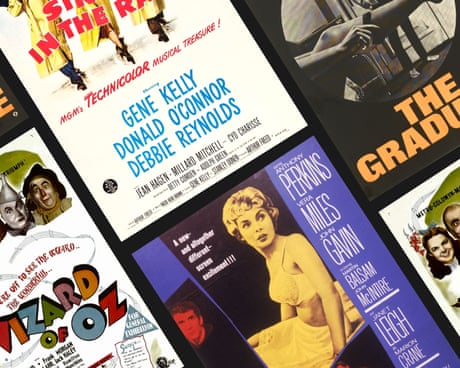
Film buffs love it. Trump and Tom Hanks hosted it. Can TCM survive a Hollywood mega-merger?

Since 1994, Turner Classic Movies has been a haven for old film lovers. Now with Skydance’s David Ellison calling the shots, fans are panicking over its unclear future

I have made many attempts to lessen the existential disaster we call Tuesday – tacos, trivia – but lately only one thing works. Every night just before 8pm, I hide my phone under a pillow in the next room, plate up a carb-heavy dinner, and turn on Turner Classic Movies (TCM) for Sweater Weather, a series of films dedicated to the transitional season.

Every Tuesday in October, Alicia Malone, an affable Australian film historian wearing business casual and a flippy bob, introduces a double feature. These are often midcentury melodramas featuring striking leads, serpentine plots, and the burnt hues of fall rendered in indulgent Technicolor. Like All That Heaven Allows (1955), about a widow who finds herself crushed under the weight of 1950s suburban conformity – and the teeny waistline of her swing skirts – while nursing a crush on her much-younger gardener. Or Leave Her to Heaven (1945), about a beautiful socialite so obsessed with her hapless husband that she will kill anyone who threatens their bond.

Continue reading...

© Composite: The Guardian/Getty Images

© Composite: The Guardian/Getty Images

© Composite: The Guardian/Getty Images

  •  
❌