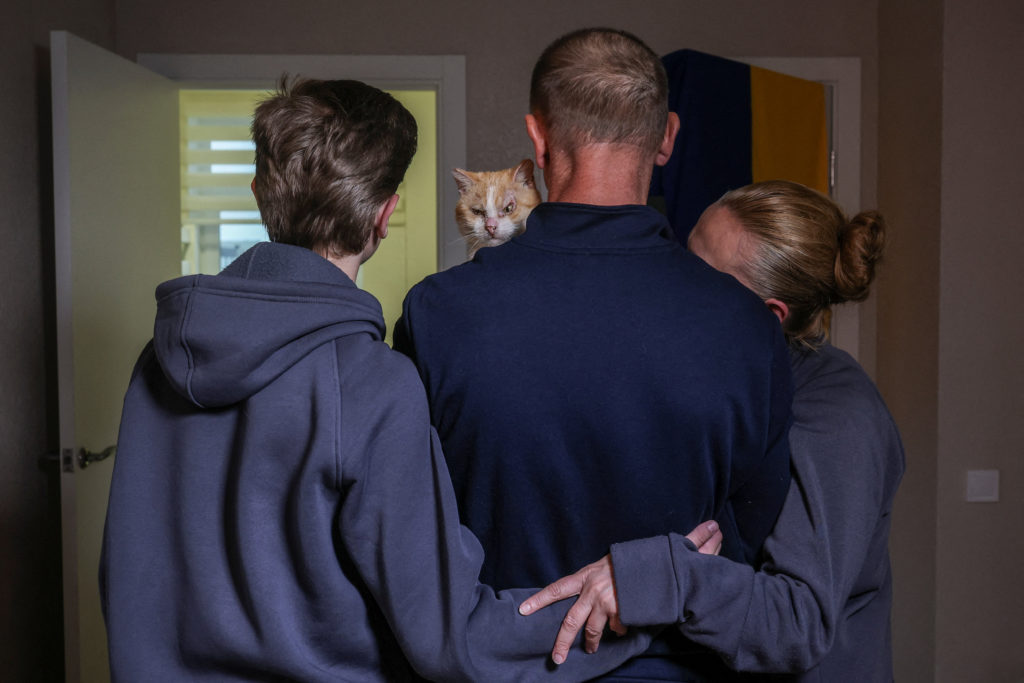
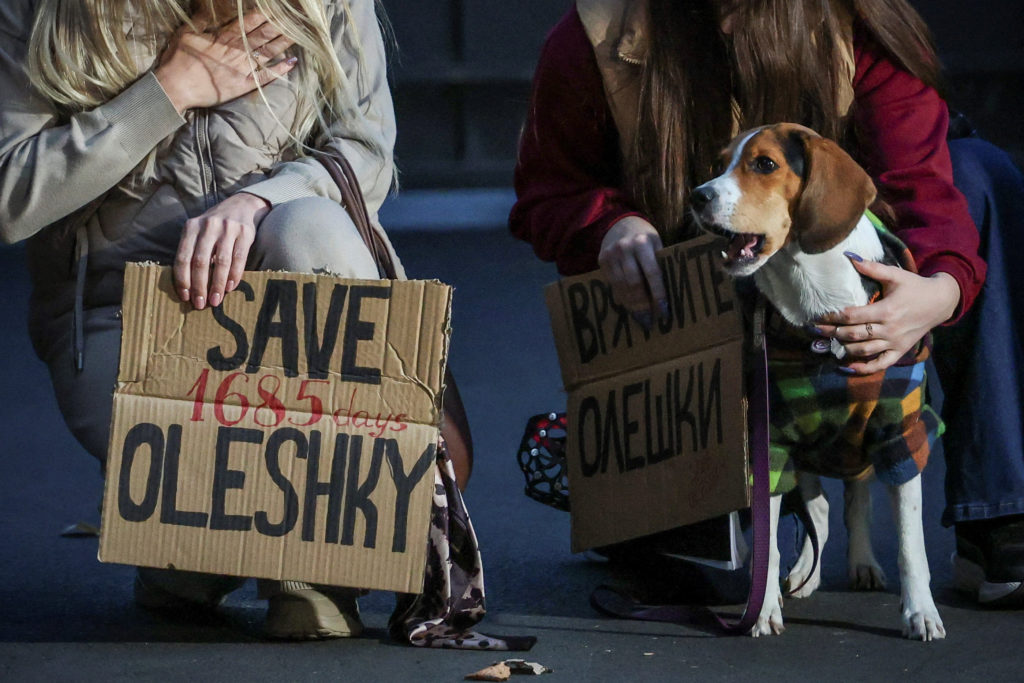
A humanitarian mission entered the devastated city of Oleshky on Friday, officials said, as Russia and Ukraine observed the most significant truce of the 4½-year war that began with Moscow's full-scale invasion of its neighbor.
Recent efforts to throttle Ukraine's access to satellite systems have created a blame game of sorts among Trump administration officials and their allies, who have offered mixed messages about what led to the sudden restrictions on Kyiv's ability to intercept Russian strikes.
Ukrainian, Russian and U.S. negotiators reached a deal Friday to provide humanitarian assistance in the Russian-occupied town of Oleshky, in the war-divided region of Kherson in southern Ukraine.
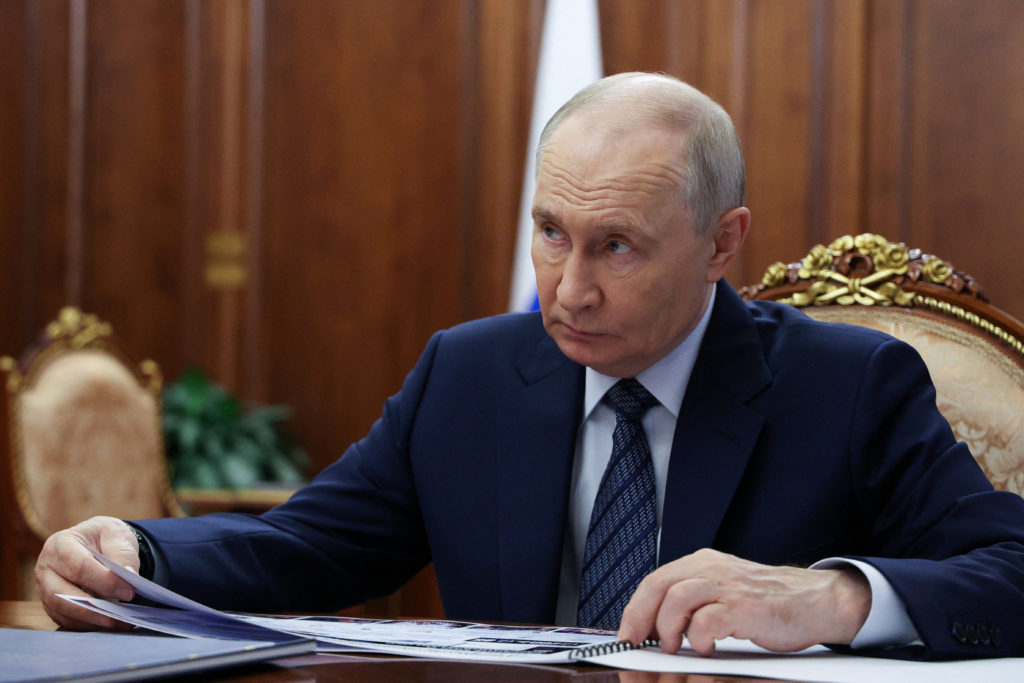
A first tanker carrying Russian diesel to the United States under a new import agreement has set sail, the Kremlin said Friday, two weeks after President Donald Trump said he struck a deal with President Vladimir Putin despite Moscow's invasion of Ukraine.
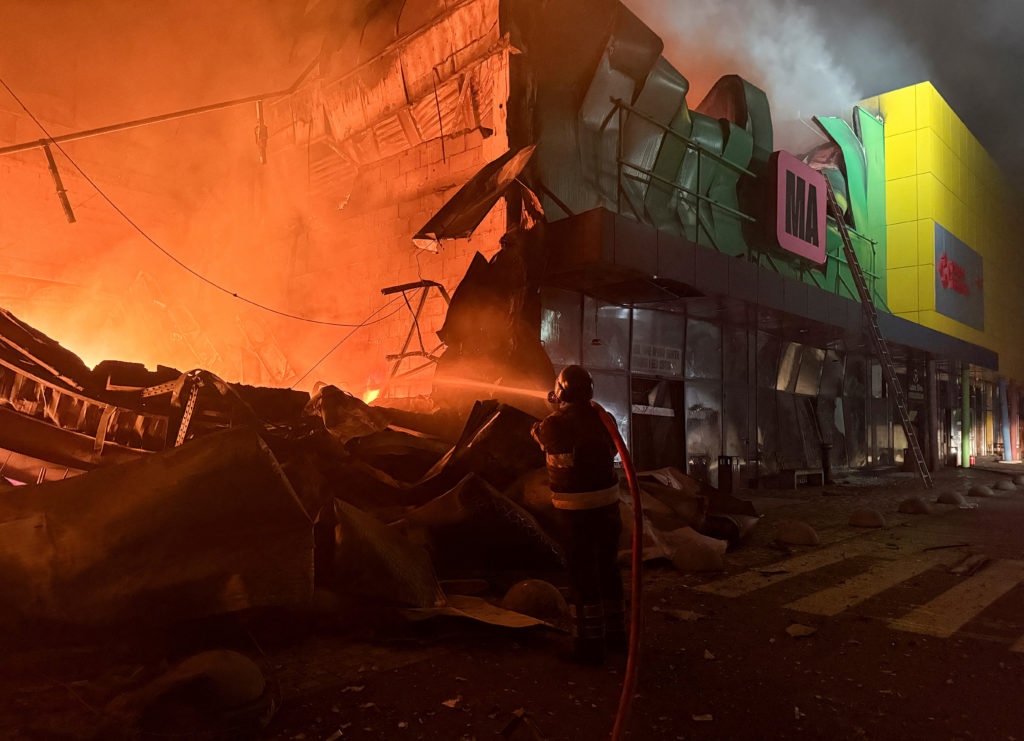
Russia bombarded Kyiv with ballistic missiles in an hourslong nighttime barrage, while the Russian military said Thursday that its air defenses intercepted over 800 drones fired by Ukraine at Moscow and other cities.
Donald Trump speaks during an RNC fundraising event at Mar-a-Lago on October 16, 2026. | Eric Lee/Getty Images
This story appeared in The Logoff, a daily newsletter that helps you stay informed about the Trump administration without letting political news take over your life. Subscribe here.
Welcome to The Logoff: President Donald Trump is cozying up to Russia again.
What’s happening? On Wednesday, Russia released an American prisoner, 74-year-old retired teacher Stephen Hubbard, back to the US. The US, Trump said in a social media post, “out of respect for President Trump, was not required to give anything in return.”
Hubbard’s release is unquestionably good news. But Trump is wrong: In just the last month, his administration has delivered for Russia in more ways than one, often inexplicably and despite bipartisan condemnation.
What is Trump doing for Russia? Late last week, he waived upcoming economic sanctions on Russia that he had only recently signed into law after they passed Congress with overwhelming bipartisan support. He also:
Announced — seemingly without talking to either party — a Russia-Ukraine “energy ceasefire” favorable to Russia (which has since fallen apart);
Temporarily interrupted US intel sharing with Ukraine and played a role in interfering with Ukraine’s access to Starlink, which helps power the country’s drone warfare against Russia; and
Called on Ukrainian President Volodymyr Zelenskyy to be replaced.
Last month, Trump also invited Russian President Vladimir Putin to the annual G20 summit later this year, which would mark Putin’s first appearance since 2019.
What does Trump get out of all of this? There’s Hubbard’s release, but taking that on Trump’s own terms (muddled though they are), the US didn’t give anything to secure it — which means that all of those favors have amounted to not much at all, other than papering over Russia’s role as an international bad actor and breaking with US allies in Europe.
Why does this matter? Trump’s Russia embrace comes at an awful time for Ukraine, which, as the New York Times reported earlier this month, is facing a Russian campaign to “freeze Ukrainians into submission” as winter approaches. Nevertheless, on Wednesday, Trump envoy Steve Witkoff called Putin a “humanitarian.”
And with that, it’s time to log off…
I was delighted to learn about the US’s new national park yesterday, its 64th. Chiricahua National Park — until Tuesday, only a national monument — is the first new park in six years. Located in southeastern Arizona, it’s also called the “Wonderland of Rocks,” according to the Washington Post; you can read more about it here with a gift link.
Have a great evening, and we’ll see you back here tomorrow!
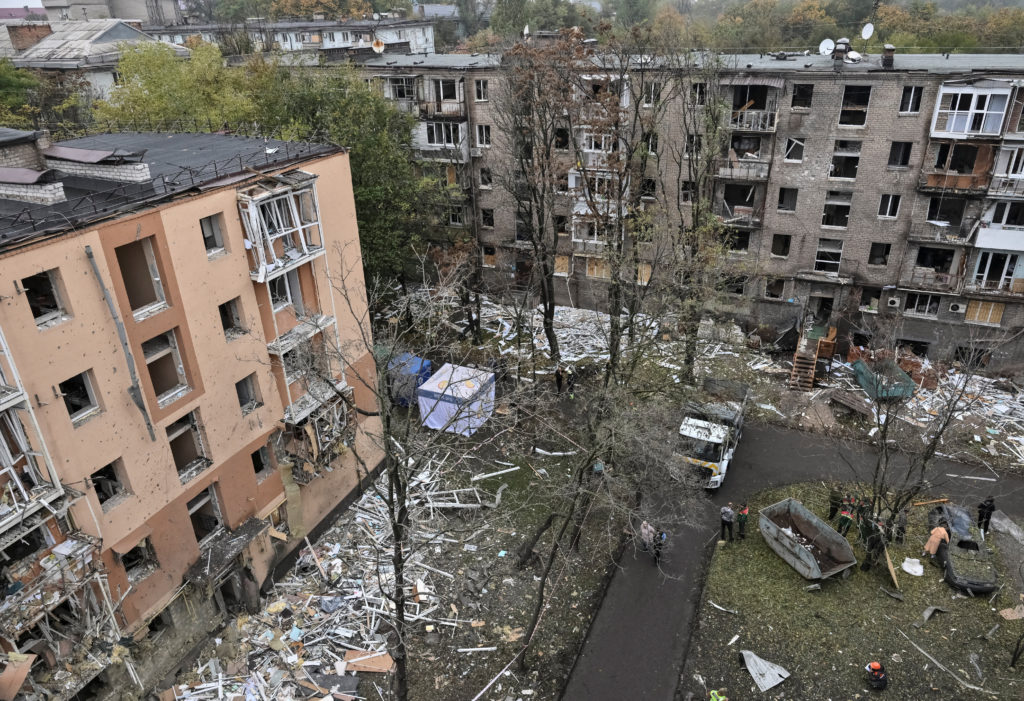
A man clears debris at the site of an air attack in Kyiv on October 19, 2026, amid the Russian invasion of Ukraine. | Oleksii Filippov/AFP via Getty Images
This story appeared in Today, Explained, a daily newsletter that helps you understand the most compelling news and stories of the day. Subscribe here.
You can’t quite say that President Donald Trump is “turning” on Ukraine President Volodymyr Zelenskyy, because he never truly seemed to have Zelenskyy’s back.
There was that time Trump panned Zelenskyy as a “modestly successful comedian.” Or that excruciating meeting where Trump and Vice President JD Vance harangued Zelenskyy for inadequately “thanking” them.
But over the past week, Trump has dropped even the meager niceties he sort of faked before. On Monday, he blamed Zelenskyy for failing to end Russia’s invasion…and suggested it was time for “somebody else” to take over negotiations.
Three days earlier, he delayed a package of tariffs and other sanctions designed to pressure Russia to end its four-year onslaught in Ukraine. And a week before that, Trump announced — after an apparently chummy phone call with Russian President Vladimir Putin — that the US would reopen its market to Russian diesel, reversing a ban imposed shortly after the invasion.
All this diplomatic whiplash comes as Russia continues to bombard Ukraine with drone and missile strikes, killing hundreds of civilians in September alone and leaving hundreds of thousands of people without power. The first two weeks of October ranked among the deadliest periods for civilians in the country since 2022, according to UN monitors.
But while those escalating strikes threaten both human lives and long-standing international norms around territory and sovereignty — norms that actually matterquite a lot to American security, long-term — there’s another issue that Trump is more concerned with right now: Ukrainian strikes on Russian oil refineries.
Those strikes drive up the cost of gas, and those prices are, of course, of profound concern to American voters, who are paying near- record highs for gasoline and diesel fuel (…primarily due to the war in Iran, I am obliged to note). More than any other issue, high living costs threaten to hamstring the GOP in next month’s midterm elections.
Trump has, perhaps predictably, pursued a Russia policy that he says could ease prices at home. In addition to allowing imports of Russian diesel, Trump has demanded that Ukraine stop targeting Russian oil refineries and ramped up pressure on Zelenskyy to negotiate an end to the war.
In either case, it will likely take more than arm-twisting to make the whole situation go away for good. As Vox’s Josh Keating laid out earlier this year, the US does have quite a lot of leverage over Ukraine — and Trump could very well pressure Zelenskyy to accept a peace deal with no real assurance that Russia won’t just invade again.
But we’ve all seen this movie before, as recently as 2014: Without credible guarantees, Putin could catch his breath, regroup, and return to Ukraine in a few months or years to take even more land.
The real, long-term threat there is that a stronger Russia would be even better positioned to menace the rest of Europe. And America’s power could suffer as its allies look elsewhere for less fair-weather friends.
But uh…diesel might be a bit cheaper? Thank God for small mercies, I guess.
One link for later
➨ May we suggest a truly miserable read? My colleague Marina Bolotnikova calls The Opposite of Happiness: How Bad Feelings Make and Break Us “a bracing, useful, and even comforting lens on what it means to be alive.” The recent book, by the noted economist George Loewenstein, examines the (necessary!) role of negative emotions in our lives and civilization…and suggests, albeit indirectly, some paths for making peace with them.
Before you go…
Did you know…that Turkey is the world capital of hair transplants? There are at least 500 clinics for that purpose in Istanbul alone, beloved by medical tourists.
Today’s trivia: What’s the currency of Poland? (You can find this and other brain puzzles in Vox’s daily crossword. Look for the answer in tomorrow’s edition.)
Yesterday’s trivia: Yesterday we asked you for the mass-market beer named after a Dutch river. That would be Amstel. The city of Amsterdam is also named for a dam on the same river.
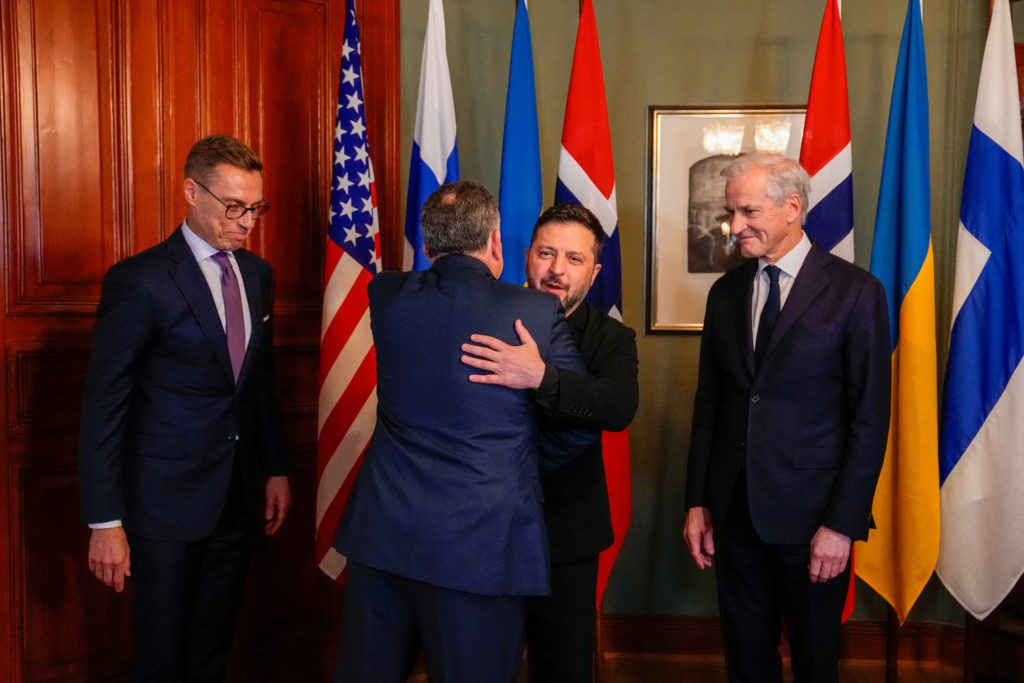
Zelenskyy called Trump's decision unfortunate but avoided directly criticizing the U.S. leader despite deepening tensions between Ukraine and Washington in recent days.
Donald Trump walks to the White House from the South Lawn on October 10, 2026. | Alex Wroblewski/AFP via Getty Images
This story appeared in The Logoff, a daily newsletter that helps you stay informed about the Trump administration without letting political news take over your life. Subscribe here.
Welcome to The Logoff: Is Trump turning on Ukraine?
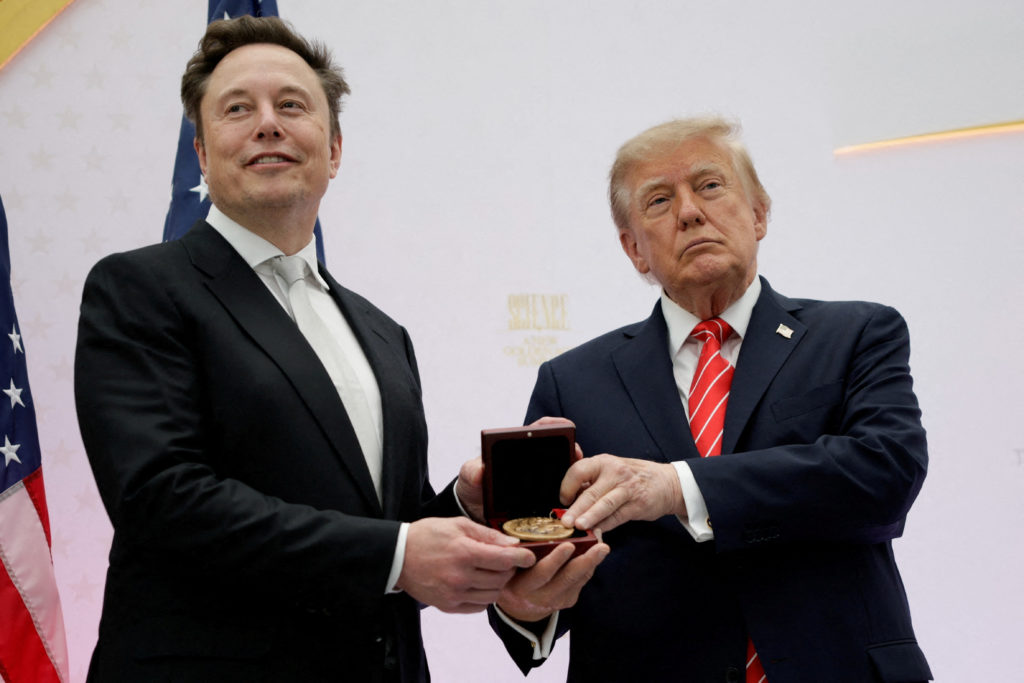
What’s happening? Ukraine says its access to Starlink, the satellite internet system run by Elon Musk’s SpaceX company, and Starshield, the military version of the same technology, is being throttled as President Donald Trump’s animosity toward the country mounts.
Why is Trump angry with Ukraine? Trump has been hot and cold on Ukraine since he returned to office, but his current anger is driven by oil prices and successful Ukrainian strikes on Russian oil refineries — particularly ahead of the US midterm elections.
Last week, Trump announced a US-Russia diesel deal, which has elicited bipartisan anger and probably won’t do much, if anything, for diesel prices in the US. Ukrainian President Volodymyr Zelenskyy has criticized the deal, leading Trump to lash out and call for Zelenskyy’s replacement.
Over the weekend, Trump also announced an “ENERGY CEASEFIRE” between Ukraine and Russia that doesn’t really seem to exist. “Both parties have agreed,” he wrote. “Do not break it!” (Russia appears to have broken it the same day, while Ukraine is complying for now.)
Is Ukraine actually to blame for high oil prices? Partially, but not primarily; as the BBC explains, while Ukrainian refinery strikes play a role, ongoing disruptions to the Strait of Hormuz and the Gulf oil industry from Trump’s war with Iran have had a greater impact (though Trump has tried to shift the blame to Ukraine).
Why is Starlink so important? Starlink and Starshield provide vital communications infrastructure in Ukraine, especially on the battlefield. The technology is also used to control offensive and defensive Ukrainian drones, which have emerged as a key part of Ukraine’s military efforts against Russia.
What’s next? Despite the fact that neither Russia nor Ukraine seemingly signed on to Trump’s “ENERGY CEASEFIRE” and Russia is still attacking Ukrainian energy facilities, Trump is trying to bind Ukraine to it: The US has reportedly threatened to suspend US intelligence sharing, which has helped give Ukraine early warning of Russian missile attacks, if Ukraine strikes more Russian refineries.
And with that, it’s time to log off…
I appreciated this New York Times story, pegged to Pope Leo XIV’s diagnosis yesterday, about all of the ways that science has made lung cancer massively more survivable than in years past, with a fatality rate half of what it was in the 1990s. You can read it here with a gift link.
Thanks for reading, have a great evening, and we’ll see you tomorrow!

 Login