Annette and Kevin Maxwell say children with special needs have become moneymaking tool for private companies
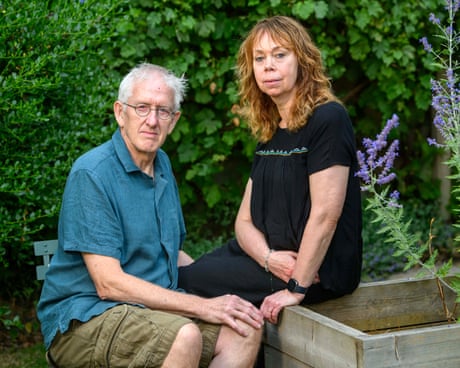
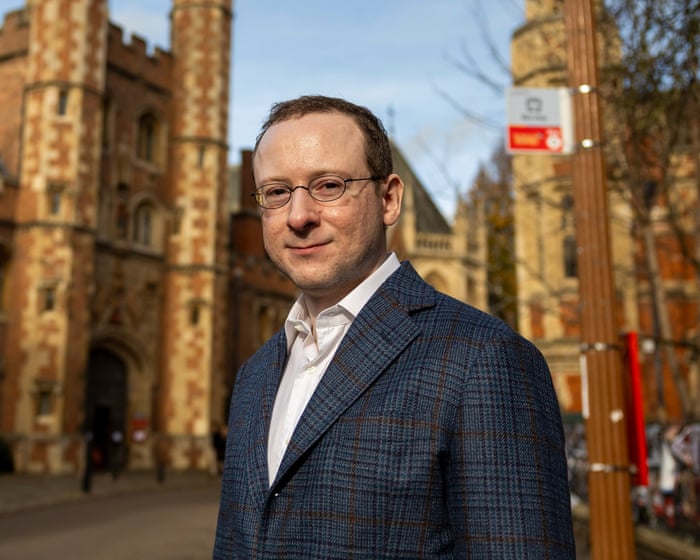
Annette and Kevin Maxwell were nervous about sending their son Jonah to a residential home for children with special educational needs and disabilities (Send). Jonah has severe autism – he is non-verbal, has epilepsy and behavioural problems and needs round-the-clock care.
“It was a huge decision, but we almost had no choice because with Jonah at home, you can’t work and we had two other children to think about. He’s beautiful, but he is very, very complicated,” said Annette. “Outsourcing parenting is just foreign to us and it’s horrible, but we didn’t have another option.”
Premium of nearly 10% paid by housebuyers comparable with cost of a cheaper private school over seven years
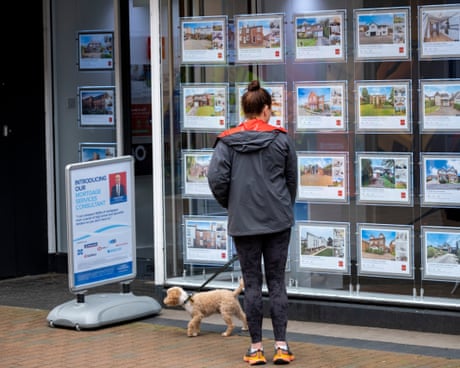
A house near a top state secondary school costs an extra £40,000 on average, according to research that reveals education premiums that rank alongside some private school fees.
The average property in a postcode district that includes a top 50 state secondary commands a price tag of £415,791, compared with £375,217 across the wider local authority areas in which those schools are located, a UK-wide analysis by the estate agent Yopa found.
43 Australians still missing, with concerns growing ‘every day, every hour’ that goes by, Wong says
The foreign affairs minister, Penny Wong, says there are still 43 Australian missing after the flooding in Nepal, saying the government holds grave concerns for their safety that only gets worse as the days go by.
This is such a distressing time and I know this is so difficult for the family and friends of those 43 Australians.
Every day, every hour, only increases our concern for those who have not been found and remain missing, and that is many Australians. … You can imagine how many families and friends are traumatised as a consequence.
Colleges around the country are seeking approval for a new federal grant program, Workforce Pell, to aid students enrolled for short-term job training.
Exclusive: Dr Will Tullett says better understanding of scents can improve wellbeing and perception of the world
Children need a better education in sniffing aromas, a leading historian of smells has said, noting it may improve their wellbeing and help them understand the world around them.
Dr Will Tullett, of the University of York, said pollution had been found to impair people’s olfactory abilities, while many objects and substances today – from margarines to car interiors and even our own homes – were stripped of their original smells and “reodourised” with synthetic scents.
Exclusive: Dr Will Tullett says better understanding of scents can improve wellbeing and perception of the world
Children need a better education in sniffing aromas, a leading historian of smells has said, noting it may improve their wellbeing and help them understand the world around them.
Dr Will Tullett, of the University of York, said pollution had been found to impair people’s olfactory abilities, while many objects and substances today – from margarines to car interiors and even our own homes – were stripped of their original smells and “reodourised” with synthetic scents.
Unions say ban will take time to enact, while president also wants under-15s social media ban as key legacy
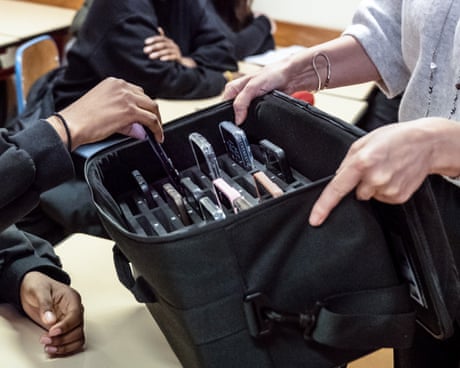
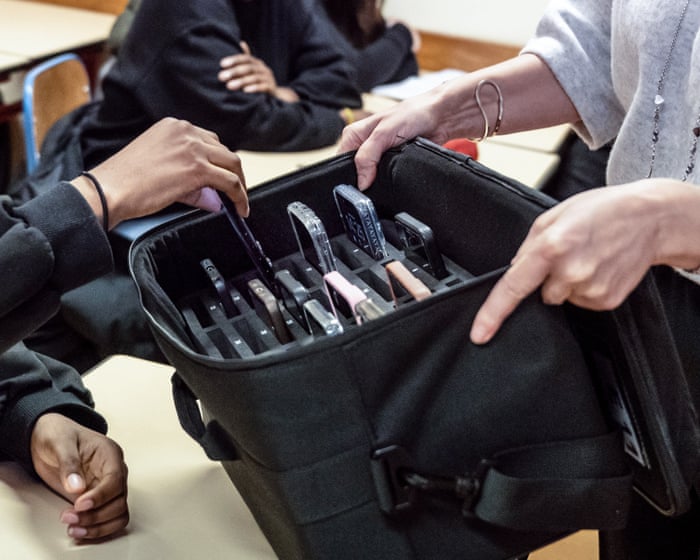
French high schools are rushing to put in place a ban on mobile phones this week as Emmanuel Macron pushes for children to spend less time in front of screens.
Education unions warned that banning mobile phone use in lycées – where children are aged 15 to 18 – would be hard to implement quickly.
Unions say ban will take time to enact, while president also wants under-15s social media ban as key legacy
French high schools are rushing to put in place a ban on mobile phones this week as Emmanuel Macron pushes for children to spend less time in front of screens.
Education unions warned that banning mobile phone use in lycées – where children are aged 15 to 18 – would be hard to implement quickly.
The Australian government is working with Russian officials in a bid to secure the release of Australian Oscar Jenkins, Matt Thistlethwaite says.
Speaking to ABC news breakfast, the assistant minister for foreign affairs declined to answer whether a prisoner swap was on the table.
Obviously, we try and negotiate as best we can on behalf of all Australians who find themselves in difficulties such as this. We obviously have to abide by international laws and we always uphold them. But the Australian officials on the ground will work with their counterparts to ensure that, hopefully he’s returned to Australia safely.
Nathan Cofnas told by Ghent University to work remotely as US ambassador claims credit for lifting of suspension
Prof Jason Arday’s accuser Nathan Cofnas has been barred from teaching on Ghent University campus for three months but has been allowed to continue his research position.
Cofnas, an American academic, was suspended from his postdoctoral research position at the Belgian institution earlier this month pending a “preliminary investigation” launched after Arday’s death.
Nathan Cofnas told by Ghent University to work remotely as US ambassador claims credit for lifting of suspension
Prof Jason Arday’s accuser Nathan Cofnas has been barred from teaching on Ghent University campus for three months but has been allowed to continue his research position.
Cofnas, an American academic, was suspended from his postdoctoral research position at the Belgian institution earlier this month pending a “preliminary investigation” launched after Arday’s death.
Some young people are teaching in countries like South Korea as education funding is gutted and recent grads face a tough job market in their own countries
A year ago, Arianna Marie, 25, was struggling to control the students in her Florida elementary school classroom.
She was living with her parents to save on rent and quickly feeling her passion for teaching dry up, even though it was her first job since graduation.
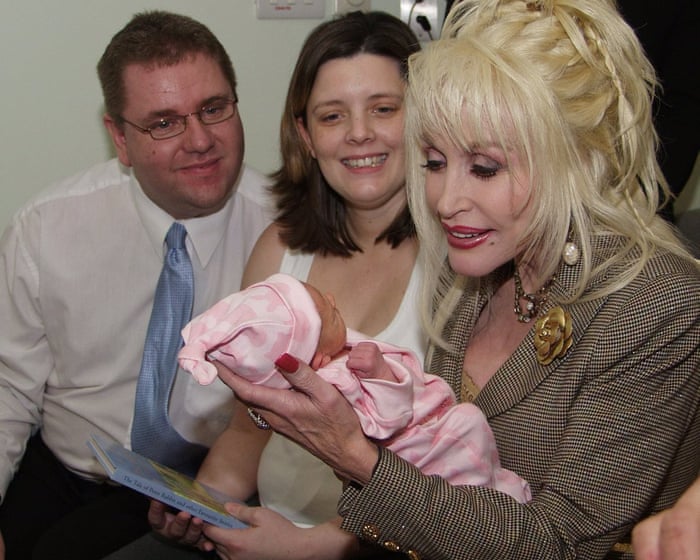
Country star came to South Yorkshire town in 2007 for UK launch of the Imagination Library, her book donation scheme
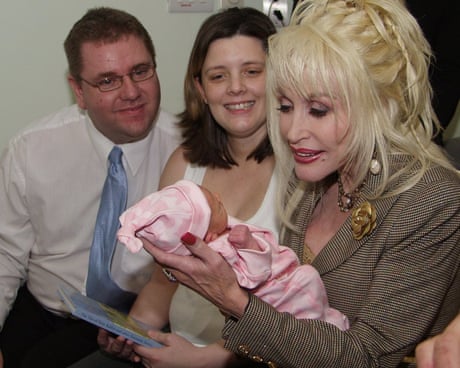
Shane Jarman was up a ladder decorating a Christmas tree at the school where he was deputy headteacher when he got a call asking him to come to Rotherham hospital ASAP. It was December 2007 and Jarman’s wife, Claire, had given birth the previous day to their first child, a girl called Emma, so of course he rushed to the phone. All was well, he was told, but that “everything would become clear” when he got to the hospital.
Once there, his wife told him – somewhat unexpectedly – that they were going to meet Dolly Parton. “And literally within what felt like five minutes,” he recalled, “there were great camera flashes, lots of noise, lots of clicking and in walked this real big bundle of energy.”
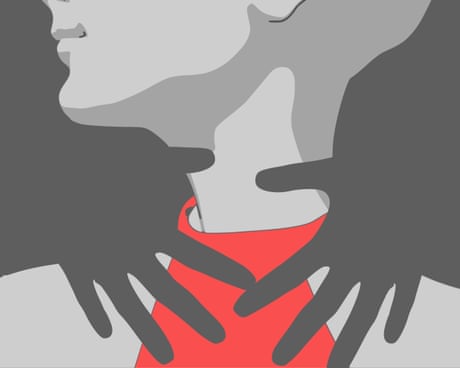
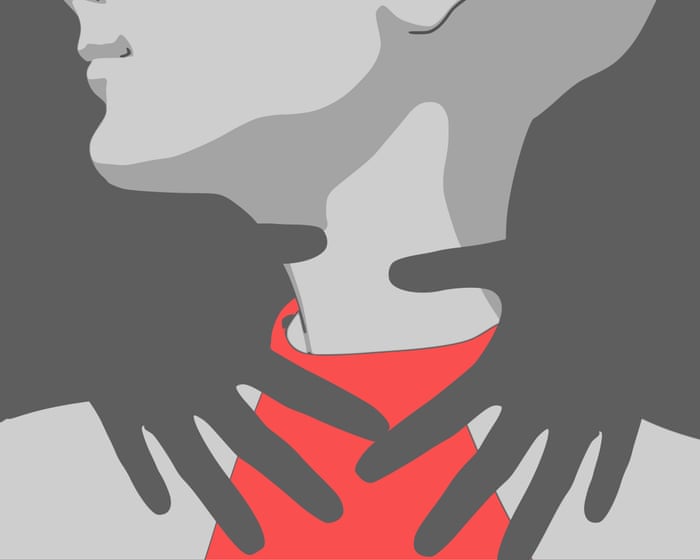
More and more young people are engaging in sexual strangulation. But experts say there’s no safe pressure – and we have to start talking to teenagers about it
When touching someone’s throat, it can only take the pressure of a handshake to cause serious injury, unconsciousness or death. These injuries, which include brain damage and stroke, are often internal and invisible, showing up days or even months after the initial incident occurred. Experts say many who participate in sexual choking are not aware of the risks.
Choking or sexual strangulation is common among young people, says Prof Heather Douglas of the Melbourne Law School. In a 2024 survey of 4,702 Australians aged between 18 and 35, she and her research team found that 57% reported ever having experienced sexual strangulation; 51% reported ever having strangled a partner and 43.9% reported participating in both.
Editor’s note, August 9, 8 am ET: We’re bringing you some of our best-loved Your Mileage May Vary columns while Sigal Samuel is on parental leave. The one below was originally published in April.
This unconventional advice column offers you a unique framework for thinking through moral dilemmas. It’s based on value pluralism: the idea that each of us has multiple values that are equally valid but that often conflict with each other. Submit your own question here.
I’m trying to decide whether to keep my elementary school-age kid in the neighborhood public school or move him to a more exclusive private school. Our public school is okay, but my partner and I feel that he might be more challenged and ultimately better off moving to a private school.
But I’m very aware of the increasing flow of students around the US out of public schools, and the effect that is having on the children who remain there. For one thing, since public schools get more funding the more students they have, every family that leaves effectively takes money with them. I worry that by taking my child out of public school, I’m contributing to that problem, but I also don’t want my child to bear the personal burden of my politics.
Dear Public School Parent,
The way you’ve framed the question makes it sound like keeping your kid in public school means imposing a burden on him. And if that were the case — if we really were talking about sacrificing your child’s well-being — I know exactly what I’d tell you.
I’d tell you not to be bullied by utilitarian philosophers. They argue we have to consider everyone’s well-being equally, with no special treatment for our own kids, so they’d probably say it’s wrong to give your child a fancy education while consigning other children to a school with fewer resources. But the 20th-century British philosopher and critic of utilitarianism Bernard Williams argues that this sort of total impartiality is an absurd demand — and I agree.
Williams points out that moral agency — the capacity to act on values and commitments — always comes from a specific person. And as specific people, we have our own specific, individual, core commitments. These “ground projects,” as Williams calls them, are the commitments that give a life its meaning and continuity. A parent has a commitment to ensuring their kid’s well-being, over and above their general wish for all kids everywhere to be well. Williams would say any moral theory that requires you to ignore such personal commitments severs you from the very things that make your life recognizably yours.
So if keeping your kid in public school really meant hurting him, I wouldn’t say you have to do it.
But you said your neighborhood school is okay. It sounds like it’s not bad and not unsafe. So I don’t have reason to think that it is actually hurting him. In fact, it might be helping him in ways you’re not fully accounting for.
Have a question you want to have answered in the next Your Mileage May Vary column?
Just fill out this anonymous form! Newsletter subscribers will get my column before anyone else does, and their questions will be prioritized for future editions. Sign up here.
Education is complicated. If I were to get into all the details about school choice and vouchers and charter schools and magnet schools, I’d have to write a whole book. So let me just stick to the main points relevant to your dilemma, starting with this: There’s a popular narrative that says private schools are better than public schools, but the evidence does not support that — especially if we take a broad look at what we mean by “better.”
Although studies do show private school students outperforming their public school counterparts on tests, the studies also show that private school advantages disappear mostly or entirely once you control for family background.
Longitudinal research led by Robert Pianta and Arya Ansari at the University of Virginia tracked more than 1,000 children from birth to age 15 in 10 locations nationwide. After controlling for family income, parental education, neighborhood socioeconomic makeup, and other background variables, the private school advantage…vanished.
“If you want to predict children’s outcomes — achievement test scores, the things we care about socially — in high school, the best thing you can use to predict that is going to be family income — regardless of what high school you go to,” Pianta said.
Pianta’s was a modest-sized study with some methodological limitations. But another analysis of two large, nationally representative datasets also found that public school kids did just as well in math as private school kids — or even outpaced them — after accounting for demographic differences. (Math is considered a particularly robust indicator of school quality writ large because, unlike reading, it’s a subject learned mostly at school and not at home.) The researchers suggested that might be because public school teachers have to do stricter certification and can be required to do more frequent professional development, so they may be more reliably up-to-date on the latest pedagogical approaches, like those developed by the National Council of Teachers of Mathematics.
Admittedly, the very fanciest of private schools do offer some special advantages. Network effects are real. Maybe you want your kid rubbing elbows with a future senator. And maybe if you send your kid to ultra-elite Andover or Exeter, he’ll have a leg up if he applies to a fancy private college.
But that is not the same as ensuring your child actually thrives. I’m sure you also care about your child’s psychological well-being. And here, some of the evidence about exclusive, high-achieving schools is worrying.
The most important educational institution in your kid’s life is you.
The unrelenting pressure to compete and achieve can be brutal in those schools. When students constantly compare themselves to others and peg their self-worth to achievement, the results are alarming. Studies conducted over decades by psychologist Suniya Luthar and colleagues found that students attending high-achieving schools are at significantly higher risk for anxiety, depression, and substance use. (These are often private schools, though hyper-competitive public schools can also fall into this trap.) In fact, the National Academies of Sciences now names these students an “at-risk” group for mental health problems, alongside kids who live in poverty or in foster care or who have incarcerated parents.
In addition to potentially providing a less stressful environment, public schools can confer other important advantages. For one thing, your local public school can help you and your child be part of the neighborhood community, which is incredibly valuable for social development and countering loneliness. And being in an environment that’s more diverse in terms of race, ethnicity, or class can teach your kid to empathize and get along with a wide variety of people.
As the American philosopher John Dewey pointed out, these are essential skills and capacities for a flourishing adult life and for a flourishing democracy. Democracy is a way of being in community with people unlike yourself; that’s a mode of life that has to be cultivated, and public schools are great grounds for learning to navigate a shared world.
Plus, public education is free! (Well, “free” — you’ve already paid for it with your taxes, whether or not your kid uses it.) So you could save all the money you’d spend on private school and instead use it on enriching opportunities to expand your child’s horizons. Personally, I’d take my kid to Italy and teach them about Ancient Roman gladiators and Renaissance art and the many flavors of gelato! Or you could collaborate with your child to decide where to donate some of that money to fund education resources for kids elsewhere.
On balance, since the evidence suggests that a child at a decent public school, with involved parents, probably won’t gain meaningful advantages from switching to an exclusive private school — and may face real psychological risks in a hyper-competitive environment — I don’t see a compelling reason to make the move. If you’ve got the resources to even consider private school, then your home life will probably play the biggest role in your kid’s academic trajectory, regardless of which building he sits in during the day. The most important educational institution in your kid’s life is you.
That said, I’m not arguing that parents should never pick private school. To some extent, this depends on the unique needs of your kid and your family. Maybe your kid is absolutely in love with music and the private school nearby has an amazing music program. Maybe your kid is being bullied at his current school but has a couple great friends who attend the private school. Or maybe a religious education is very important to you, so a private parochial school makes sense.
If you do make the choice to send your kid to private school, you’ll have to grapple with the collective action problem you hinted at: Any single family’s departure from a public school barely registers, but when every family with options reasons the same way, the cumulative effect on the school’s funding — and on the kids who remain — can be devastating.
Here, the American political philosopher Iris Marion Young can help you. She points out that our usual model of responsibility — the “liability model,” which says that when something bad happens we should assign blame to a particular individual — is inadequate when we’re dealing with situations of structural injustice. In these situations, it’s a whole system that’s producing predictable patterns of disadvantage.
Just look at the complex web that breeds educational inequality: Historical housing segregation has concentrated poverty in certain neighborhoods. Poorer neighborhoods generate less property tax revenue, which means less money for local schools. States can try to offset that, but schools in poorer areas still tend to end up with fewer resources. Families with options leave for better-resourced schools, enrollment drops at the local public school, and the school loses even more funding. The kids who remain get less of the materials — from textbooks to counselors — that would have set them on the path to success. There’s a clear downward spiral, but no one person or decision is the villain.
So instead of blaming any one individual for their personal lifestyle choices, Young says that in cases of structural injustice, we should adopt the “social connection model” of responsibility. Under this model, you don’t bear blame if you send your kid to private school, because systemic problems shouldn’t rest on one family’s shoulders. Young doesn’t think you need to discharge your obligations through personal lifestyle choices.
But that doesn’t mean you owe nothing.
You do still have a political obligation: to work toward changing the structure that produces injustice. As a participant in the political system that shapes education in this country, you have some power to act on it. You can vote and organize and advocate. You can pressure decision-makers and support reform movements. The more power you’ve got, and the more privileged you are by the current system, the greater your obligation to take action.
Make the effort to act on that obligation. Let your child watch as you do. Better yet, involve them in the process. Kids learn from seeing what their parents do: Show them that you’re bent on enacting your values, and you’ll be giving them an education for life.
Bonus: What I’m reading
This is a fun piece in Asterisk about how high-school science fairs have become so ridiculously competitive that they no longer give students a chance to do real independent research.
This week’s question prompted me to listen to the podcast series “Nice White Parents.” It’s a fascinating look at what happens when parents think that choosing public school would mean sacrificing their child’s prospects on the altar of their own political ideals. Spoiler: Practically no parent is willing to sacrifice their own child. But they often don’t realize they’ve constructed a false trade-off.
Living life requires making choices. It’s unavoidable that we’ll feel regret about some of the paths not traveled. But this Aeon essay explains how “living in closer alignment with our values and authentic preferences may help us avoid the worst pain of regret.”
This story was originally published in The Highlight, Vox’s member-exclusive magazine. To get access to member-exclusive stories every month, become a Vox Member today.

 Login
Login