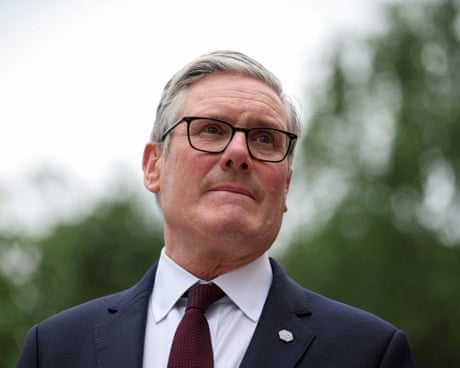
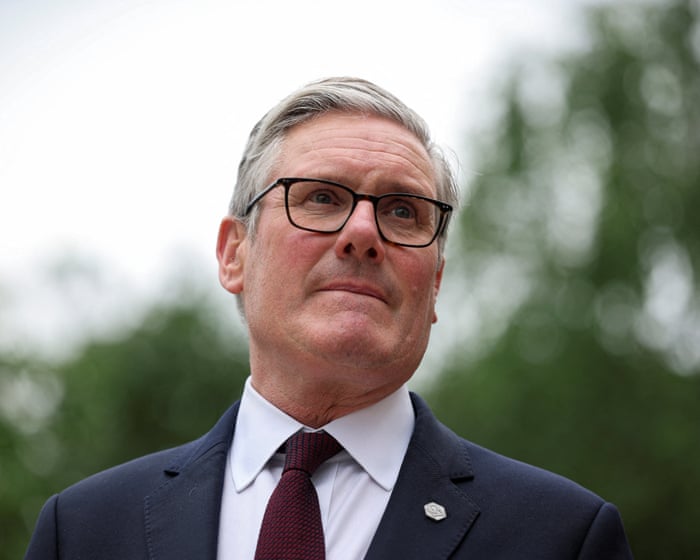
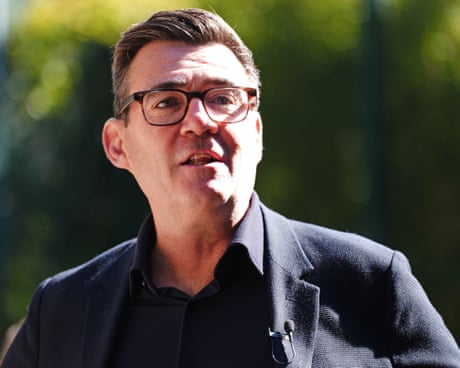
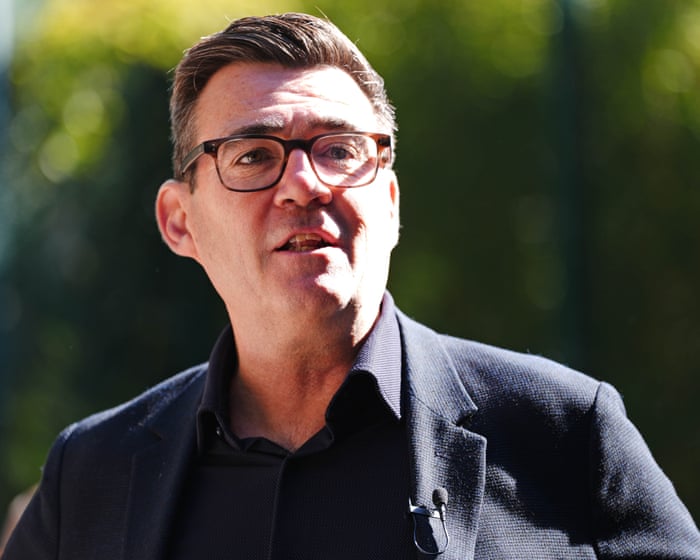
Former PM announces he will no longer represent Holborn and St Pancras on the day his successor, Andy Burnham, is to give first Commons address as prime minister
My colleague Richard Partington, the Guardian’s senior economics correspondent, grew up, like Andy Burnham, in the Warrington suburb of Culcheth. He has been home to find out what people there are saying about the new PM.
Yesterday, Kemi Badenoch announced a reshuffle, replacing Mel Stride with Andrew Griffith as shadow chancellor and Priti Patel with Tom Tugendhat as shadow foreign secretary.
We send our love and support to the Jewish community in Manchester and beyond who last night gathered to remember Melvin Cravitz and Adrian Daulby, who were killed defending their synagogue last year. My thoughts are with their families and all those who have been affected by the attack.
I know for many Jewish people, the sorrow and fear from that day has not lifted and I know we must do more to protect communities across the country.
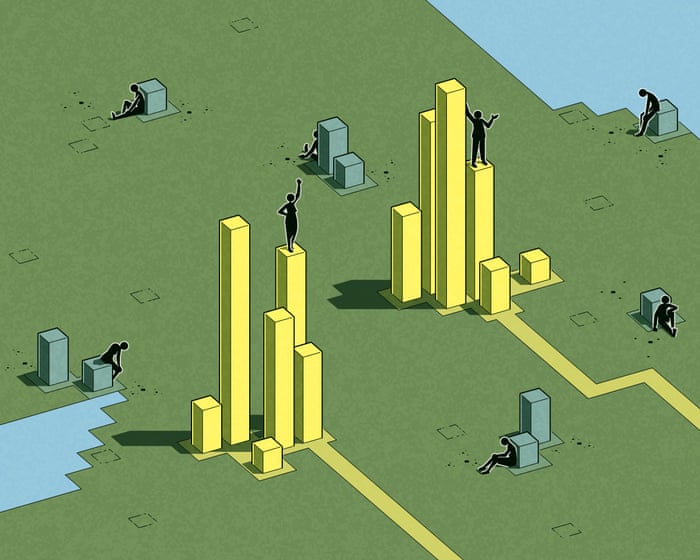
Britain is poorer than we often think. We won’t get richer based on higher public spending alone, and we can’t tax billionaires who don’t live here.
We shouldn’t rely on public spending as a route to some romantic version of making Britain great again as we look in the rearview mirror for a great history that is no longer available to us. We must face the future, and I know my colleagues are up to the challenge.
Crucially, we must create the right conditions for a dynamic, thriving market. This includes getting ahead of what artificial intelligence will mean for our services-dominated economy.
Politically, we shouldn’t see conflict between growth and fairness, or business and workers, or the market and the state. These are false choices.
Labour has promised a ‘fundamental rewiring’ of power. But some areas are years into their devolution journey while others scramble to get started
Apart from the joyous hyperactivity that comes with suddenly making it to No 10, there are good reasons why Andy Burnham seems to be a prime minister in a hurry. If he decides that his first term is going to run to its maximum length, he has three years, which is a maddening time-frame: too long for him to just tinker here and there, set out his long-term vision and then ask the electorate for permission to do more, but probably too short to start and finish many of his key projects. His chosen solution, it seems, is a mixture of the strategies he would use for each approach, which includes running at some issues at breakneck pace.
So it is with his specialist subject: devolution for England. The huge changes now afoot actually began under Keir Starmer, with the English Devolution and Community Empowerment Act passed earlier this year. Areas that previously had two tiers of local government will see them replaced with new unitary councils. But the most historic move centres on regional mayors – what the government calls “strategic authorities” – and a shift that the Whitehall PR machine is hyping up as a “fundamental rewiring of the way our country works, surrendering power that for too long has been held in Westminster and Whitehall”. In principle, this is unquestionably worth celebrating. But it also gives rise to a whole range of increasingly urgent and awkward questions.

 Login
Login