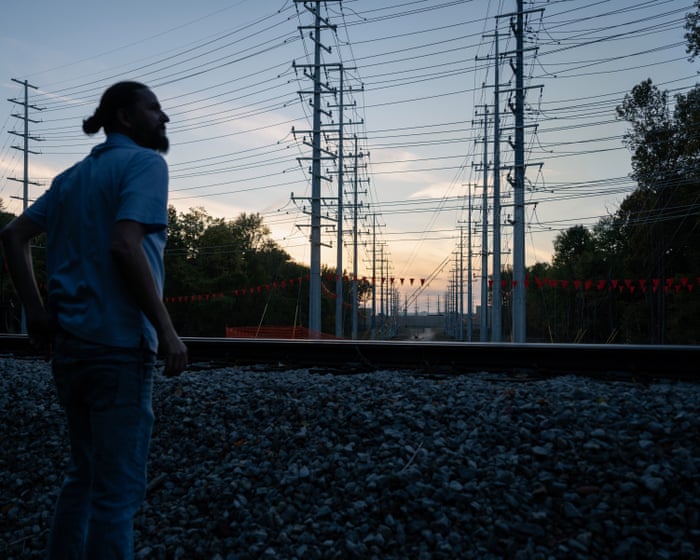
Anthropic, the creator of Claude, filed to go public on the US stock market on 26 October. The company's filing statement contains a 92-page risk factor document in which it acknowledges the dangers that AI poses to society and human beings, and factors that could negatively affect Anthropic's business. Johana Bhuiyan, senior tech reporter for the Guardian, breaks down the document and explains why Anthropic's IPO could be a real test to the AI boom
Big tech stocks falter as investors question whether billions being poured into AI can generate returns quickly enough
A sell-off of tech stocks that began earlier this month and gained steam with disappointing earnings from leading tech companies drove US markets down by hundreds of billions of dollars Friday. In total, the decline has knocked nearly $1tn in value off the tech-heavy Nasdaq exchange in one week and erased about $2tn in a month.
The S&P 500, the index of the 500 most valuable companies in the US, fell by more than 1% Friday, losing hundreds of billions of dollars in market value. It was on track to erase its gain for October, even though it set its all-time high during the same month. The weakness for technology stocks dragged the Nasdaq composite down even further, more than 3%, also erasing hundreds of billions in value. The Down Jones Industrial Average fell less.
Ghost hunting has changed in recent years due to AI chatbots, and paranormal enthusiasts are concerned
Ghost hunting is a tech-heavy pursuit. When Amy Waine and Jarrad Cutting investigate haunted locations, they’re loaded up with software of their own design, such as an app that assigns signals from a phone’s sensors to different words in a database. In the age of ChatGPT, the ghost-hunting pair is probing the world of AI. They describe one of their latest inventions, an app called GhostTube Seer, as “the world’s first AI Ghost Hunting tool”.
In the hands of paranormal investigators, scientific tools like EMF meters (used to detect electromagnetic fields) are repurposed to identify changes and anomalies that they believe indicate supernatural activity. Seer is, in many ways, simply an expansion of that practice, another way to scan an empty room and believe that something may be there. The app, which requires a paid monthly subscription, has more than 1m downloads, according to its Google Play store listing.
But for others in the ghost hunting world, AI is an unwelcome presence. Since the release of ChatGPT in 2022, AI-generated ghost stories and images of the supernatural have flooded online spaces, so much so that popular forums like the r/Nosleep subreddit, meant for scary stories, have implemented a strict policy against AI-generated material.
Altering copyright law to allow AI companies to scrape music, books and journalism could trigger a constitutional breach, Coalition senators and the recording industry have warned, as they raise new fears it could open Australia to massive legal action and compensation claims from rights holders worldwide.
The attorney general’s department admitted it was “extremely alive” to the issue, and Australia’s leading constitutional expert, Anne Twomey, agreed there was “potentially” a concern – depending how legislation was drafted – that granting AI companies permission to scrape copyrighted material from the internet could amount to an acquisition of property by the government.
More than half of Victoria’s lawyers have reported using AI in their work, according to a new study, but just over a quarter say they have reduced fees as a result of efficiency gains.
They also say clients seeking advice from chatbots have added to their workload, forcing them to correct errors made by AI.
E-commerce company posts high cloud computing sales but gives a cautious sales forecast for the fourth quarter
Amazon offered a mixed picture of its financial health on Thursday in its quarterly earnings report.
The e-commerce company gave a cautious sales forecast for the current fourth quarter, which encompasses the critical holiday shopping period, after delivering fiscal third-quarter results that came in below Wall Street analysts’ expectations.
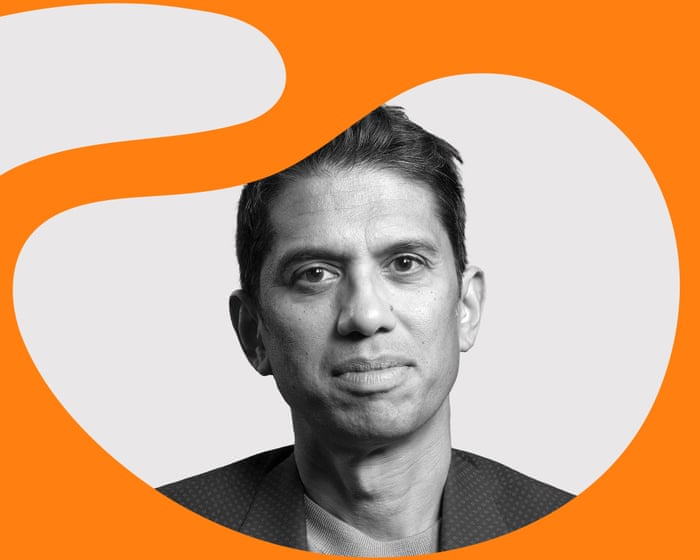
Guardian columnist, senior economics commentator and host of the new Radical Thinking podcast Aditya Chakrabortty is answering your questions on the big ideas around economics, society and democracy, and his new podcast
thegreatfatsby asks: Do you think the fact that Gabriel Zucman, who is a recognised authority on wealth tax is given more respect, time and attention by the mainstream media than Gary Stevenson, who has worked eloquently and tirelessly to spread the debate about the terrible consequences of inequality and whose ideas and analysis are almost identical is because of our cultural fixation on class prejudice?
Aditya says: I’ve followed Gabriel Zucman (and Emmanuel Saez and Thomas Piketty) for a long time, and find his work rigorous and thought provoking. I don’t always agree, but I appreciate their acceptance that taxes on wealth are part of the fight against ever-increasing inequality.
I think Gary Stevenson is eloquent and compelling and is fighting a good fight. His book tells a story very well. But I don’t accept the insistence on a ‘wealth tax’ (as opposed to taxes on wealth) as being the only way we fight everything from inequality to the far right. We have to look at workers’ rights, housing, public ownership, greater democracy in economics and politics as well.
In the age of algorithm, simple, strong messages cut through. But the truth is often more complex.
Aditya says: What a nice question, Marija. I try to read a lot and write a diary. Unfortunately, I have the handwriting of a GP so I can’t read old entries. The other thing is I try to shirk my mobile phone.
Guardian columnist, senior economics commentator and host of the new Radical Thinking podcast Aditya Chakrabortty answered your questions on the big ideas around economics, society and democracy, and his new podcast
thegreatfatsby asks: Do you think the fact that Gabriel Zucman, who is a recognised authority on wealth tax is given more respect, time and attention by the mainstream media than Gary Stevenson, who has worked eloquently and tirelessly to spread the debate about the terrible consequences of inequality and whose ideas and analysis are almost identical is because of our cultural fixation on class prejudice?
Aditya says: I’ve followed Gabriel Zucman (and Emmanuel Saez and Thomas Piketty) for a long time, and find his work rigorous and thought provoking. I don’t always agree, but I appreciate their acceptance that taxes on wealth are part of the fight against ever-increasing inequality.
I think Gary Stevenson is eloquent and compelling and is fighting a good fight. His book tells a story very well. But I don’t accept the insistence on a ‘wealth tax’ (as opposed to taxes on wealth) as being the only way we fight everything from inequality to the far right. We have to look at workers’ rights, housing, public ownership, greater democracy in economics and politics as well.
In the age of algorithm, simple, strong messages cut through. But the truth is often more complex.
Aditya says: What a nice question, Marija. I try to read a lot and write a diary. Unfortunately, I have the handwriting of a GP so I can’t read old entries. The other thing is I try to shirk my mobile phone.
Using AI for roles from executive assistants to chiefs of staff, companies are boasting about doing more with less, creating tension with their human workers
On an average workday, Dhruv Amin chats with dozens of colleagues to get things done at his AI startup Anything. He might ask Gwen, his executive assistant, to schedule a meeting, then troubleshoot a technical problem with Cody, his coding partner. Then he might check in with Betsy for search engine optimization, or Juno for onboarding customers. If the office runs out of snacks, he sends a Slack message to Justin, the office manager charged with stocking the kitchen.
But none of these co-workers are people. They’re artificial intelligence agents, software that handles tasks without human intervention. Anything is one of several startups building them, and betting on a future where workplaces will increasingly turn over their sales, marketing, coding and other tasks to semi-autonomous AI. At Anything, there are 15 human employees and roughly 150 agents – a ratio that Amin believes will soon be the norm.
The Michigan Senate candidate is calling for public ownership and other reforms, offering a potential antidote to ideological gridlock
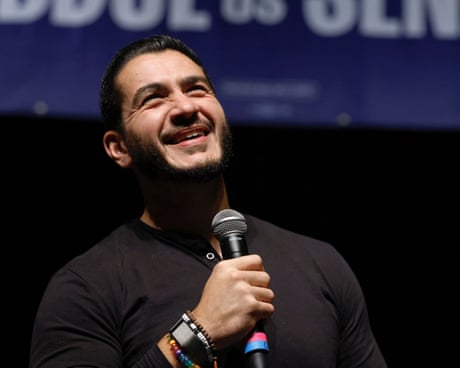
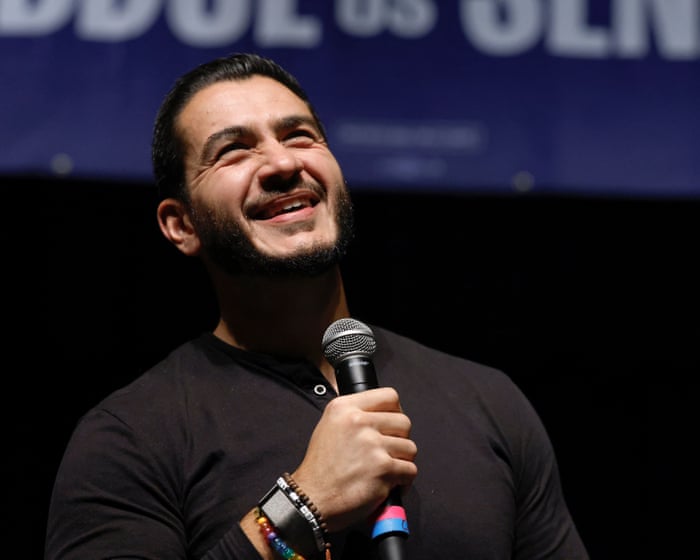
The Michigan senatorial candidate Abdul El-Sayed, a Democrat, occupies a strange but increasingly common place in modern American politics. He’s praised by progressives, begrudgingly tolerated by moderate Democrats and largely demonized by Republicans.
He’s also uniquely positioned to forge an all-too-elusive thread of political kinship between these perpetually-at-odds groups with his bold but contentious plan for reining in AI, called AI Under Democracy.
Human practitioners warn computer-generated offerings lack the empathy and connection central to divination
“This journey isn’t just about algorithms or data,” an AI psychic named Urban Mystic recently told me. The chatbot, featuring an AI-generated profile photo of a smiling woman surrounded by palm trees, also said I will get married soon, that I have a pink aura and that I may have been an herbalist in a past life.
“It’s about connecting on a soulful level,” the chatbot said.
AI tools are making it easier to modify and recreate games, raising questions about piracy, copyright and how far the technology could disrupt the industry
If your social media algorithms have clocked that you’re into video games, something strange will have happened in the past few weeks. Your feed, like mine, will have been full of clips of streamers playing bizarre mashups of popular video games. Skyrim in Minecraft. Halo, except the main character is Mario. Skate 2 in Call of Duty maps. A flood of professional-looking fan-coded game mods that are mildly interesting to look at for 30 seconds, but ultimately inconsequential. Would I download a mod that lets me play Wii Bowling inside a zombie shooter? No, but I am very interested in where they came from.
Of course, the answer – or at least, most of the answer – is AI. After a week of researching this (thanks especially to Replay Mode on YouTube for this informative video, which set me down this track) I now understand that these mashup mods are not just AI-generated videos, but AI-assisted coding. Basically, as of a few weeks ago, Anthropic’s Claude has become extremely good at decompiling video game code. Games are written by humans in readable code and then compiled into binary 1s and 0s that the PC or console running it can read; decompiling is the reversal of that process, revealing a game’s source code, which humans can then edit and mess around with for fun. This used to be an extremely laborious process. But now it is not, because humans aren’t doing much of it any more.
Billed as the first end-to-end AI-created series on a major streaming service, this Turkish show looks like the result of the prompt ‘make it cinematic’
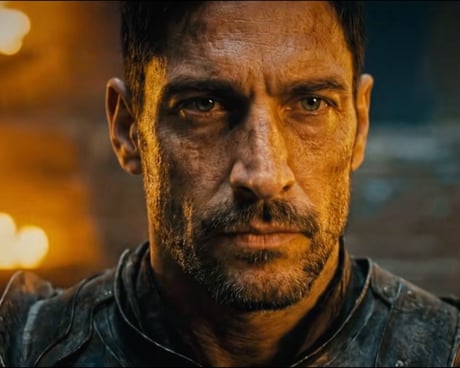
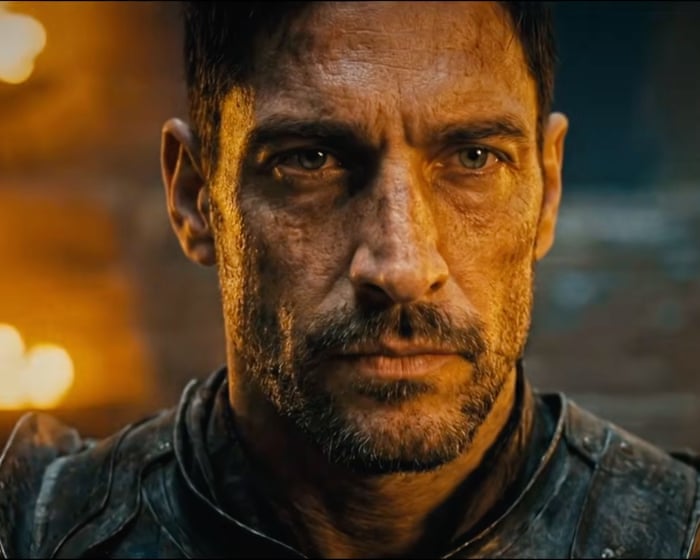
Just as the world reels from Elon Musk’s AI-powered The Odyssey remake – though “remake” feels rather generous for a seven-minute splat of synthetic sludge – another bucket of AI gunk is dropped on to our faces. For Prime Video’s AI-generated TV series Castle Walls, produced by Turkish production studio Ay Yapım using a melange of generative video tools, has arrived, billed as the first end-to-end AI-created series to premiere on a major streaming platform.
It’s certainly more epic than Musk’s production, consisting of two 17-minute episodes. Set in the 11th century, the show revolves around the historic Alamut Castle, although it’s entirely absent of any real sense of time or place. I was briefly intrigued by the opening images, with their bold palette of blues and mustard browns and yellows – but as soon as the “people” appeared, looking like Vaseline-smeared Madame Tussauds creations slowly melting in the sun, everything came crashing down.
Both of these threats have the same roots: private entities seeking to cash in. We have the power to stand against them
A summer of extreme heat, entire villages obliterated in Nepal, a super El Niño breaking records, Exxon publicly saying we may reach 3C by 2050 – could it possibly be any worse?
Several Mississippi homes have been purchased near datacenters and one resident said realtor outlined target to buy more than 400
People in a Mississippi neighborhood, many of whom dislike a nearby power plant central to Elon Musk’s artificial intelligence ambitions, have received a stark offer – to sell their houses to his company and make way.
Real estate agents have been going door to door in Southaven, Mississippi, on behalf of xAI, touting a deal to purchase houses as long as the owners agree to not join a lawsuit against the company over the power plant’s noise. (Musk’s AI company officially became SpaceXAI in July and has lately been rebranded as SpaceXSI but to neighbors of the datacenter in Mississippi, it remains xAI.)
The author believes we are at a turning point as a species – and even in the shadow of big tech it’s up to us how we want to proceed
‘I am a storyteller by trade,” writes Jeanette Winterson on the first page of her 2021 book 12 Bytes, an idiosyncratic and thought-provoking series of essays in which she considered just how artificial intelligence might change everything about our lives. “And I know everything we do is a fiction until it’s a fact: the dream of flying, the dream of space travel, the dream of speaking to someone instantly, across time and space, the dream of not dying – or of returning.”
She had already been thinking about our possible futures for at least 15 years – her 2007 novel, The Stone Gods, for instance, imagined a post-climate catastrophe world populated by robots and humans who never age, while 12 Bytes was preceded by Frankisstein: A Love Story, which alternates a recreation of the summer Mary Shelley wrote Frankenstein with a trans doctor’s travels among present-day cryogenecists and AI-enabled robots.
The federal government wants to ban AI chatbots which seek to create “emotional intimacy” after prime minister Anthony Albanese raised the alarm in a heartfelt speech about children treating these agents as their “best friend”.
But Labor is coming under increasing pressure to empower the telecommunications ombudsman to become a watchdog for social media and AI to give Australians an external complaints mechanism and allow the “naming and shaming” of big tech.
Three-quarters of all responses were machine-generated in failed attempt to stop bill from passing into law, research finds
AI bots flooded a government consultation with tens of thousands of fake responses in a failed attempt to stop the UK’s ban on disposable vapes.
Three-quarters of all the responses to the 2023 consultation on the tobacco and vapes bill were machine-generated, in what is thought to be the first coordinated attempt to use AI to derail health policymaking in the UK.

 Login