 Login

Germany’s young conservatives are angry with their own party
Members are disappointed with Friedrich Merz, but pleased with themselves


One of the last decade’s most consequential changes to how the Supreme Court operates is the growth of the so-called shadow docket — a process that allows the justices to decide cases unusually quickly, and often without full briefing or oral argument.
Historically, the Court would typically allow contentious legal issues to percolate in the lower courts for months or even years before the justices agreed to decide one of those issues. Then they’d spend months reading briefs, hearing arguments, and debating the case amongst themselves before they finally issued an opinion. This slow process existed because the Supreme Court is the final word on many legal questions — the Court can even override Congress if it claims a law is unconstitutional — and so it should be cautious before it hands down a decision that cannot easily be displaced.
A new case, which recently arrived on the Court’s shadow docket, embodies all the reasons why America’s highest Court should act carefully and slowly. K.M.K. v. Washington Interscholastic Activities Association involves a highly contentious issue — the plaintiffs in the case effectively want the Supreme Court to bar transgender women from women’s sports teams at high schools and universities, even in states that support trans inclusion in sports.
It also involves an appalling sexual assault allegation. One of the plaintiffs in the case is a high school women’s team wrestler who is identified only by her initials because she is a minor. She claims that one of her wrestling opponents, who is transgender, “forcefully” penetrated the plaintiff’s vagina with her fingers during a match.
As a memo from the local prosecutor’s office points out, if these allegations are true then K.M.K. is the victim of a very serious crime — rape in the third degree. The prosecutor’s office, however, decided not to prosecute because it concluded that it could not prove that a sex crime was committed beyond a reasonable doubt. Among other things, prosecutors spoke to the referee who officiated the match, and he said that “nothing stood out to him during the match” and that “after watching the video of the match, he could not say that the suspect’s hand placement was ‘anything out of the ordinary.’”
The school district, meanwhile, says that it has reviewed video of the match, interviewed both competitors, and that its investigation into the allegation is “still ongoing.”
K.M.K., in other words, is exactly the sort of case that the justices should step away from, sending it back down to the lower courts to gather more information and to fully think through the difficult legal issues presented by the case. Setting aside the horrifying allegations against her one-time opponent, K.M.K.’s lawyers — most of whom work for a Christian right law firm, the Alliance Defending Freedom (ADF) — make novel legal arguments that ask the Court to make broad pronouncements that go far beyond its previous precedents.
One of their arguments, if taken seriously by the justices, could potentially make it impossible for any school athletes, whether cis or trans, to participate in competitive sports of any kind.
There is a very real risk, in other words, that the Supreme Court will, if it moves too quickly in this case, harm millions of school athletes throughout the country. The factual question of whether a particular wrestler committed a crime is separate from the legal question of whether federal law strips states of their authority over trans participation in women’s sports. And this legal question deserves more deliberation than the Court can give it if it decides this case on the shadow docket.
In West Virginia v. B.P.J. (2026), the Supreme Court warned that judges should not be given the power to decide which athletes may compete on a women’s sports team. “The legislatures and the schools are better equipped — and under the Constitution, are the more appropriate entities,” Justice Brett Kavanaugh wrote for his Court, “to assess the competing medical and scientific considerations and draw appropriate lines.”
B.P.J., of course, was a loss for transgender rights. The Court rejected a constitutional challenge to state laws that forbid trans women from playing on school sports teams within that state. But the legal question in B.P.J. was whether laws barring trans women from women’s sports are allowed — a question that the Court’s Republican majority answered in the affirmative. A victory for the plaintiffs in K.M.K., by contrast, would likely establish that no state may permit trans women to compete on women’s sports teams, regardless of what the people of that state want.
This Court is often skeptical of claims by trans rights advocates, and it almost always resolves disputes between cultural liberals and religious conservatives in favor of the religious right. That said, this Court has thus far respected states’ rights on another contentious issue that is a high priority for the religious right: abortion. Although the Court’s Republican majority overruled Roe v. Wade and eliminated the constitutional right to an abortion, it has rejected some attempts to restrict abortion in blue states — including by repeatedly ruling against litigants who seek to ban the abortion medication mifepristone.
So it is, at least, possible that this Court will follow a similar path in K.M.K. and conclude that the question of which team trans women should play on should be answered by the states and not the Supreme Court.
Broadly speaking, ADF raises two legal arguments against Washington state’s policy allowing trans women to play on women’s sports teams. It claims that Title IX, a federal law that bars “sex” discrimination by most schools, implicitly requires those schools to have sports teams that only cisgender women may play on. It also claims that the Court’s recent decision in Mirabelli v. Bonta (2026), which requires public schools to out trans students to their parents even if the students wish to keep their gender identity secret, also requires those schools to exclude trans women from women’s sports.
There’s no reason for the Supreme Court to decide either of these questions now, however. As Chief Justice John Roberts wrote in Lux v. Rodrigues (2010), when a party that lost in the lower courts seeks an injunction from a Supreme Court justice before their case is fully litigated in those lower courts, they must demonstrate that “the legal rights at issue are ‘indisputably clear.’” This rule, like many old rules disfavoring shadow docket decisions, exists to prevent the justices from rushing into a decision that may later prove unwise.
There is no plausible argument that Title IX “indisputably” bars trans women from women’s sports. That’s because, just a few months ago in B.P.J., the Court held that it was not deciding the question of “whether, under Title IX and the Equal Protection Clause, schools may allow biological males who identify as female to participate on girls’ and women’s sports teams.” So that’s a recent Supreme Court precedent holding that the answer to this legal question remains open.
Mirabelli, meanwhile, is an unusually thinly reasoned decision. The Court’s Republican majority held that schools must out trans students because of a judicially created doctrine saying that parents have “primary authority with respect to ‘the upbringing and education of children.’” But the Court’s analysis of this issue was just a single paragraph long, it relied on the most malleable doctrine in all of US constitutional law, and it had nothing to say about sports.
Moreover, as the school district points out in its brief, the Court has never held that a parent’s right to direct the upbringing of their child includes a right to dictate which rules will be used by school sports teams. If such a right existed, a parent might insist that a school bar players of a particular race. Or they might demand that their child be allowed to play football without being tackled.
Competitive team sports simply cannot exist if one player’s mother is allowed to demand changes to the rules that neither the league nor the other players support.
In any event, at this stage in the litigation it should be enough for the Court to say that the unique right claimed by K.M.K.’s mother — the right to dictate which rules a multischool competitive sports league will use — is not “indisputably clear” under current law.
It is, to borrow from Lux, indisputably clear that the Court should not give the K.M.K. plaintiffs the sweeping policy change that they seek in a shadow docket ruling. But the justices cannot avoid, forever, the question of whether federal law forbids trans women from playing on women’s teams. So how should they resolve this question when it is more properly presented to them?
Let’s dispose of the plaintiffs’ Mirabelli argument first. While the Court has held that parents have some right to direct the education of their children, prior to Mirabelli, this right was construed narrowly. One older case held that states may not forbid parents from sending their children to private schools. Another held that the government may not bar teachers at these schools from teaching the German language.
Prior to the Court’s barely explained decision in Mirabelli, however, the Court had never held that parents may dictate how public schools operate, and the school district’s brief in K.M.K. cites several court decisions warning against giving parents too much authority over public schools. (The Court did hold, in Mahmoud v. Taylor (2025), that parents who object to a school’s curriculum on religious grounds may opt their children out of certain lessons. But the K.M.K. plaintiffs do not raise a religious objection.) As the Supreme Court said in Prince v. Massachusetts (1944), states may “restrict the parent’s control by requiring school attendance, regulating or prohibiting the child’s labor and in many other ways.”
It’s clear from Mirabelli that the Court’s Republicans do not share this caution about judicial control over public schools. But, because Mirabelli was so thinly reasoned, it’s also impossible for outside observers to determine why these justices want an unprecedented amount of control over public schooling, or whether they have good reasons for asserting this new power.
I will simply reiterate the school district’s objection that, once the Supreme Court opens the door to parents dictating which rules will be used in school sporting competitions, the lawsuits will not end with parents seeking to kick trans women out of women’s sports. The next parent may object to their child wrestling Black people. Or they may demand that their child be given protective gear that gives them a competitive advantage. Some parents may also demand rules changes that conflict with changes demanded by other parents. And there is no principled way to distinguish these requests from a request to exclude trans women.
There are myriad problems, meanwhile, with the K.M.K. plaintiffs’ Title IX argument. That statute provides that schools that receive “Federal financial assistance” may not exclude individuals from “any education program” on “the basis of sex.” This statute has long been read to require equal treatment of men’s and women’s sports by schools that receive federal funds.
But, as the school district argues in its brief, Washington schools do not discriminate on the basis of “sex” — which the Court has defined to mean sex assigned at birth in this context. Instead, they classify athletes on the basis of gender identity. There is one team for all people who identify as male, whether trans or cis, and another team for all people who identify as female. Social conservatives may object to this arrangement, but it does not classify students based on their sex assigned at birth at all.
The K.M.K. plaintiffs’ argument is also undermined by federal regulations implementing Title IX. Those regulations provide that schools generally should not separate women and men in sports, but that they “may operate or sponsor separate teams for members of each sex where selection for such teams is based upon competitive skill or the activity involved is a contact sport.” It is quite a stretch to read regulations saying that schools “may” have sex-segregated teams to say that schools must ensure that their teams are strictly sex segregated.
Finally, recall that Title IX only applies to schools that accept federal funding — schools have the option of rejecting Title IX’s requirements if they also forego federal grants. This matters because, as the Court recently held in Landor v. Louisiana Department of Corrections (2026), “Congress must clearly and unambiguously alert a grant recipient to any condition on federal funds.”
Thus, if there is any ambiguity about whether Title IX requires schools to exclude trans women from women’s sports, that ambiguity must be resolved against imposing any requirements on public schools. Title IX may only be read to ban trans women from women’s sports if it “clearly and unambiguously” does so.
Again, there’s no reason for the justices to resolve either of these questions because, at this early stage in the litigation, the Supreme Court should simply decline to decide K.M.K. because the plaintiffs’ legal rights are not “indisputably clear.” But this Court is often impatient, especially in cases involving culture war issues. Mirabelli was also a shadow docket case, but that didn’t stop the Court’s Republicans from inventing a new legal rule compelling teachers to out their trans students.
There’s a serious risk, in other words, that this Court will rush to decide K.M.K. before it fully considers the legal arguments on either side, or even learns whether the genuinely shocking allegations raised by the plaintiffs have merit.

At first glance, chair yoga might seem like a workout just for older adults with mobility issues. The gentle, accessible workout offers a modified take on the ancient movement and meditation practice, usually from a seated position. No one’s asked to climb down onto the floor or independently hold themselves upright in tricky standing postures—which makes it ideal for those with limited strength or balance.
But experts say chair yoga shouldn’t be pigeonholed, because anyone can benefit. “It is a practice that meets you where you are,” says Divya Balakrishnan, a yoga instructor in New York City. “You’re still using your strength and flexibility, just in other ways.”
A yoga teacher named Lakshmi Voelker first began adapting some yoga poses to a chair in 1982 to make the practice more accessible for a student with arthritis. Since then, numerous instructors have found ways to use a chair for adapted versions of a surprising number of traditional yoga movements, like lunging warrior poses and standing-to-lying sun salutations.
While students typically crouch, sit, and lie down on a mat in traditional yoga classes, the chair, in a way, brings the floor closer. Some chair yoga classes are done entirely seated, moving through modified variations of classic yoga sequences without ever asking participants to get up. Other classes transition between sitting and standing while holding onto the back for a little extra help with balance, or doing poses like downward dog with hands on the seat instead of reaching to the floor.
In a sense, the chair is simply another prop. “Just like you would use a strap or blocks to increase the accessible range of motion or bring different awareness to the body, the chair can be used in a similar way,” says Jessica Pate, a Boston-based yoga teacher.
Experienced yogis also use a chair for athletic feats that wouldn’t be possible on a mat alone. In particular, the Iyengar style of yoga uses a yoga chair (designed with an open back and a completely flat seat) for advanced postures like an upside-down inversion where the yogi’s shoulders rest on two chairs while their head hangs in between.
“There's an infinite number of ways that you can use the chair,” says Jules Mitchell, a Las Vegas–based yoga educator.
Research on the physical benefits of seated chair yoga has found that practitioners tend to improve their functional fitness and experience a decrease in how much pain interferes with their daily life. Much of that research has focused on older adults, who generally have a lower baseline of fitness than younger, healthy adults. It’s unlikely that people who are in peak shape would see as much benefit.
“You're not challenging your muscles or your balance as much as traditional yoga,” says Justin Smith, an assistant professor at Wichita State University who recently co-authored a case series on the benefits of chair yoga.
But that doesn’t mean it’s a waste of time for more athletic folks.
For experienced yogis, doing yoga from a chair can offer new ways to explore familiar movements, says Pate, who incorporates a chair into many of her regular yoga classes. By sitting, the body’s weight gets distributed differently, which makes the muscles engage in new ways and can bring a fresh awareness to the body. “For example, with Warrior 2, having the chair underneath [my] pelvis, I'm able to feel where my sit bones are,” she says. This can help people better recognize if their hips are twisted or tilted.
Although most people assume that sitting makes everything easier, that isn’t always the case. Sometimes the challenge just changes: Pate says she actually feels her outer hips working harder in Warrior 2 on a chair than they do when she’s standing in the pose because she’s forced into a more neutral alignment, and bigger muscles can’t take over.
Sitting on a chair can also sometimes help people go deeper into poses. Say you’re trying to target your glutes with a Figure 4 pose, where one ankle rests on the opposite knee as you bend forward. When you’re seated, you’re able to focus more on the stretch because you’re not struggling to balance, Balakrishnan says. “If I was doing a standing Figure 4, half of my attention is going to be on the standing foot and keeping myself upright, so I may not sit as deep,” she says.
The same is true for breathing. Pate says that the extra support of the chair makes it easier to focus on breathing deeply and intentionally—something that many students forget to do once poses get challenging.
One group that might particularly benefit from chair yoga is people who are stuck sitting in front of a computer all day. “For anyone who works at a desk, it is a lifesaver,” Balakrishnan says. A simple seated yoga routine can relieve tight, achy joints, and multiple studies have found that chair yoga can significantly reduce stress. Balakrishnan regularly takes yoga breaks right from her chair, doing neck rolls, spinal twists, or anything else her body is craving to bring some movement and mindfulness back to her day—without feeling like she has to stop what she’s doing and carve out time for a full yoga session. “You don't have that mental barrier of, ‘Okay, let me get out of my chair, go roll out my yoga mat, go get my blocks,’” she says. “It requires less of you to begin the practice.”
There’s also a simpler reason to do seated chair yoga: It just feels good. The low-key movement can help stretch out tense muscles and get some blood flowing without feeling like you have to do a workout that impresses anyone. Smith says that all the participants in his case series were incredibly enthusiastic about their routine. “You can tell that they really just love chair yoga,” he says.
Seated chair yoga may not build Olympic athlete–level strength and agility. But experts agree it still has plenty to offer, no matter your age or fitness level. “We all can benefit from calming down, observing our sensations in our body, and getting in a little bit of stretching,” Mitchell says.

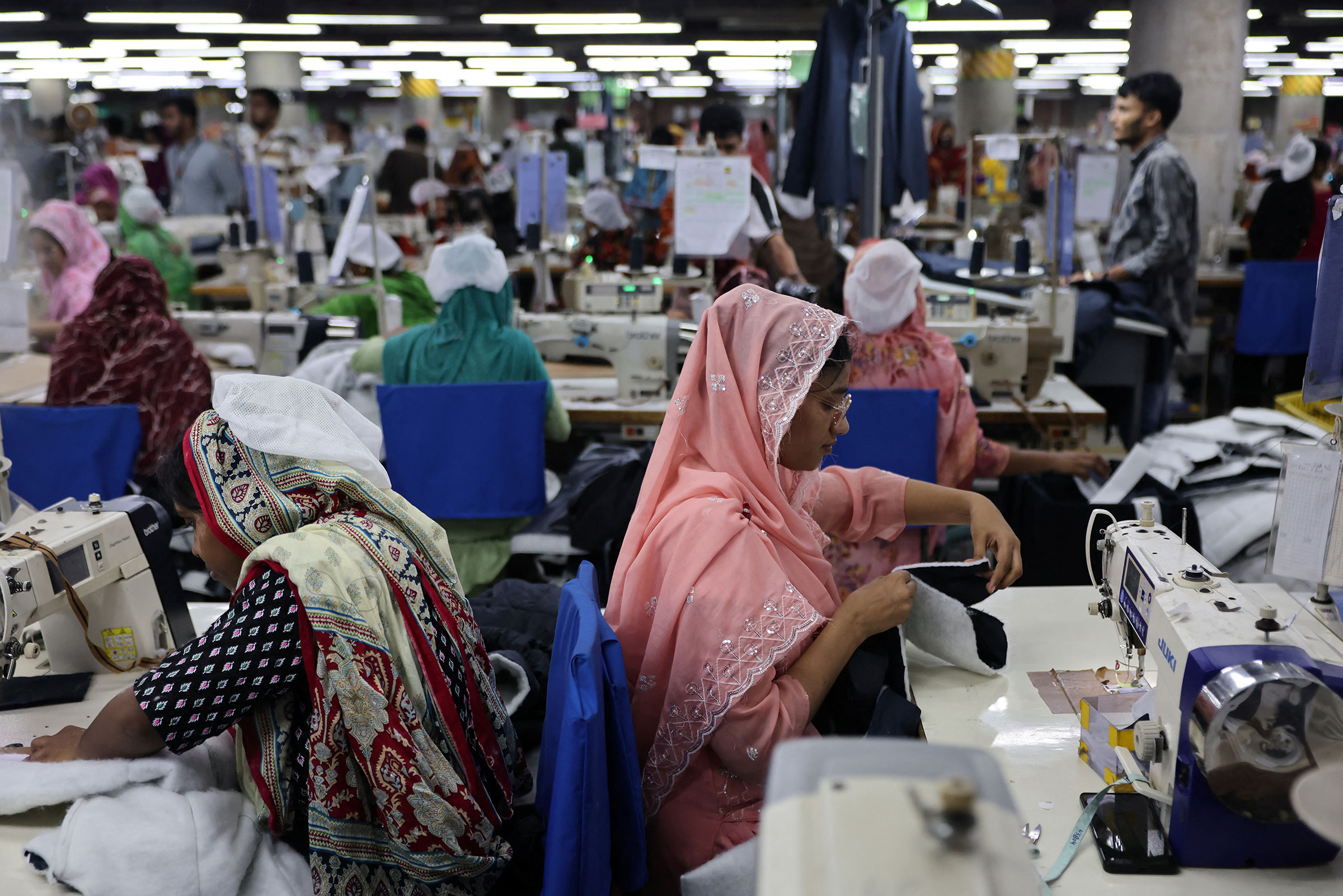
It’s 11 a.m. at Ha-Meem Group’s Ashulia garment factory north of Dhaka and every floor is a whirlwind of feverish labor. Industrial jigsaws slice stacks of denim into precise panels, which nearby seamsters then stitch into jeans, skirts, and jackets.
Next comes washing, ironing, and affixing buttons and zips before the brand labels are attached—Gap, American Eagle, and JCPenney are major clients—and the finished garments are stacked into boxes by some of the group’s 90,000 staff, who together produce 9.3 million apparel items every month.
Read more: What Bangladesh’s New Leader Tarique Rahman Means for South Asia and the World
But suddenly the lights flicker, the workshop dims for a moment, and then full illumination returns accompanied by four cacophonic British-made diesel generators, which automatically splutter into life whenever the gas supply weakens.
“In Bangladesh, the grid electricity is bad, there are frequent interruptions,” says Tanul Chakraborty, head of power, energy and environmental sustainability for Ha-Meem Group. “After gas the most reliable energy in Bangladesh is diesel. Grid electricity is third. Almost the entire economy moves on diesel.”
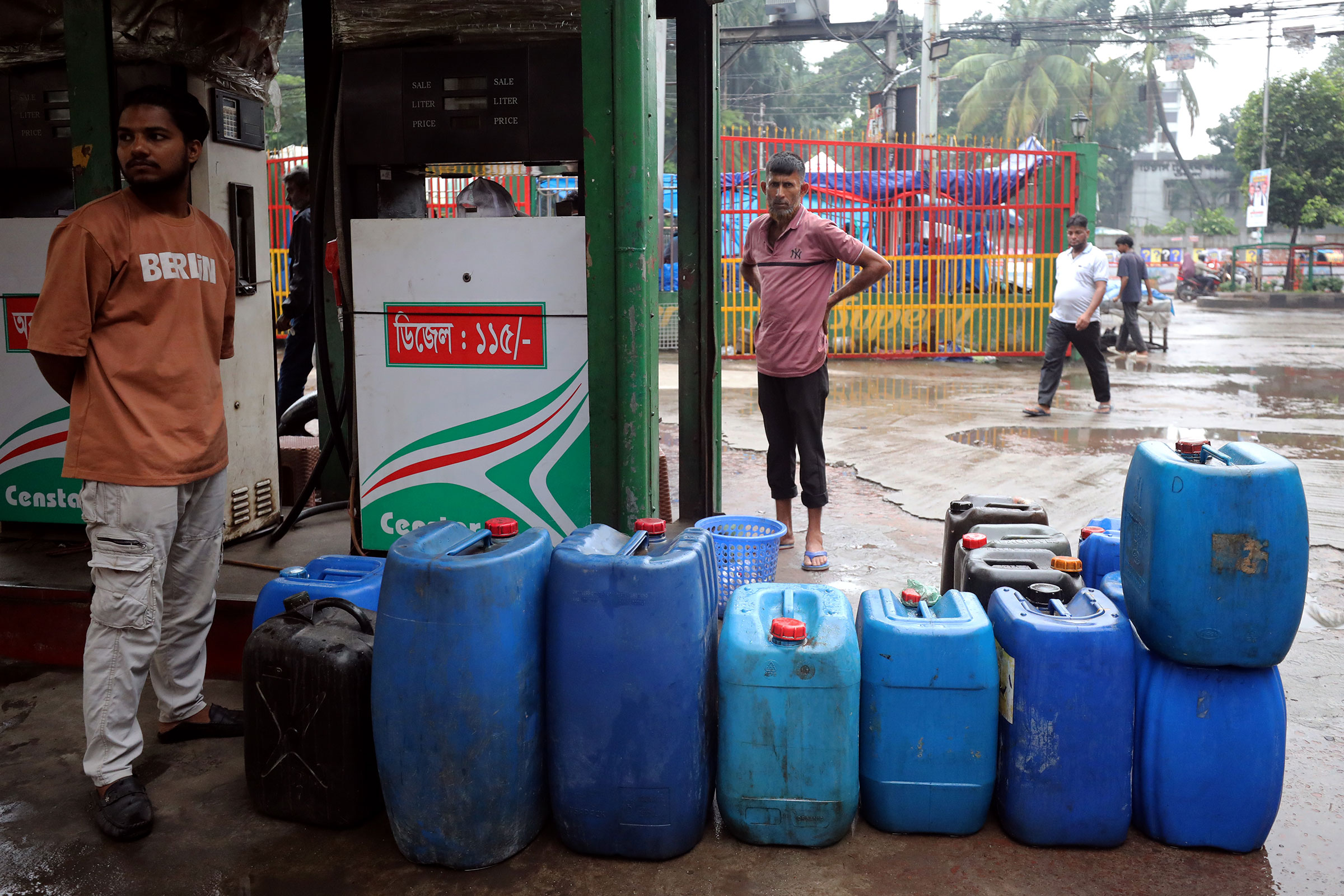
It’s a startling admission given that Bangladesh’s economy is worth $510 billion, South Asia’s second-largest after India. But the nation is in the grip of a severe power crunch, as wars in Ukraine and Iran expose the fragility of its growing dependence on imported fuel. Since Russia’s invasion, industrial gas prices have risen by 150%, and diesel by about 70%. Since the Iran war began, the cost of spot liquefied natural gas (LNG) has nearly tripled.
That’s bad news for a garment industry that is the country’s largest source of formal employment, directly providing 4 million jobs and supporting countless more livelihoods, while generating $38.7 billion last year—over 80% of export earnings. (Ha Meem alone accounted for $1 billion of exports.)
But the strain extends across the Global South, where developing nations struggle with a prolonged energy crisis that disproportionately squeezes the planet’s most deprived. In the Philippines, heavy dependence on imported Gulf oil has forced emergency conservation measures, including four-day working weeks, restrictions on official travel, and flight cancellations. Diesel prices have risen 86% in Nigeria and more than 50% in Tanzania and Ethiopia, driving up the cost of farming, trucking, and electricity from generators—and, in turn, the price of staples such as rice and corn.
“The poorest people, who spend the highest share of their income on food and fuels, will be hit the hardest,” Indermit Gill, World Bank Chief Economist, warned in April.
In Dhaka, a sprawling megacity of almost 40 million that is usually defined by relentless momentum, the nights have grown eerily dark. With the national power shortfall exceeding 3,000 megawatts, the government has imposed sweeping cuts, exempting only essential services such as hospitals and pharmacies. Illuminated billboards along busy commercial corridors now dim soon after sunset, while shops close an hour early. The burden is even heavier in rural villages, where residents have recently endured blackouts lasting as long as 16 hours a day.
For ordinary citizens, daily life has become a relentless calculus: Residents are forced to rise before dawn in the hope that their stove's gas pressure might be strong enough to cook. Other quandaries include how long they can run a fan against the suffocating humidity, and how far the queues will stretch at the gas station. As businesses flounder, a secondary crisis looms: global malnutrition monitors warn that 18.1 million Bangladeshis may soon face food insecurity.
Internal missteps have only tightened external bottlenecks. The country of 175 million drastically underinvested in both transmission infrastructure and domestic gas fields, meaning today it relies on imports from the Middle East for almost half of its energy. But between July and August, imports of LNG plummeted 83% largely owing to disruption around the blockaded Strait of Hormuz as well as a blaze that temporarily disabled one of its two floating regasification terminals.
Last month, thousands of opposition supporters staged a long march to pressure Prime Minister Tarique Rahman—who only took office in February, just weeks before the Iran war broke out—to do more to tackle soaring fuel costs. “Energy is the biggest test for the new government and has become a galvanizing point for the opposition,” says Michael Kugelman, resident senior fellow for South Asia at the Atlantic Council.
While the global energy crisis is tied to geopolitics, Bangladesh’s woes are uniquely entwined. Rahman’s Bangladesh Nationalist Party took power following the popular ouster in 2024 of autocratic former Prime Minister Sheikh Hasina, whom India granted sanctuary, deepening the rift between the neighbors.
Bangladesh imports roughly one-sixth of its electricity from India, which hasn’t been shy in wielding that strategic vulnerability as diplomatic leverage. Compounding the disruption, many of the key architects of national energy policy over Hasina’s 15-year reign have been placed on special duties ostensibly due to their ties to her Awami League party.
Bangladesh also finds itself hostage to shifting Great Power rivalry beyond its neighborhood. Dhaka invested $12.65 billion—chiefly via Moscow-backed loans—in its first nuclear power station in the town of Rooppur built by Russian energy giant Rosatom. The plant was supposed to begin operations in July 2024 but faced repeated delays due partly to the Ukraine war, which complicated payments to Russian banks and blocked the arrival of air and maritime cargo. After finally completing its first controlled nuclear reaction on Oct. 11, it is now expected to go into service in December, although months of staged testing will be required before it reaches a touted output of 1,200 MW.
Complicating matters, the U.S. Sanctioning Russia and Iran Act comes into force on Oct. 18, with provisions including sanctions on senior Russian officials and businesses supporting Russia’s energy sectors. This could mean Dhaka has to secure specific U.S. Treasury waivers or approved payment channels to service its plant debt and buy nuclear fuel.
Meanwhile, Washington is dangling its own alternatives. On Sept. 25, Bangladesh and the U.S. signed a memorandum of understanding (MoU) on strategic civil nuclear cooperation that focuses on small modular reactors. That comes on top of an Agreement on Reciprocal Trade inked in February that committed Dhaka to massive purchases of U.S. commodities, including $15 billion worth of U.S. energy products over a 15-year period.
But Bangladesh is also looking to Washington’s superpower rival. Rahman’s first overseas trip in June was to Malaysia and China. In Beijing, the two nations signed 17 agreements and other instruments to mark a “new era” of bilateral relations, with one explicitly covering renewable energy cooperation. But two of the agreements involved corporate groups subject to U.S. sanctions, and the growing ties between Dhaka and Beijing have caused consternation in Washington, State Department sources tell TIME. Bangladesh is also in advanced negotiations with a Chinese state-owned firm to build a third floating LNG terminal.
Seemingly pulled in every direction, Dhaka is desperate to instill more energy independence. The government recently launched a special incentive package for rooftop solar, slashing import duties on solar equipment from 17% to 1%, while particularly encouraging systems paired with battery storage. Bangladesh added some 200 MW of solar capacity to the national grid over the first half-year, according to government figures. However, that rate must be ramped up sixfold to have any hope of achieving ambitious five-year targets.
“We are actually looking into diversification, new areas where we can source energy from,” Shama Obaed Islam, State Minister for Foreign Affairs, told TIME as part of a panel at the 2026 Bay of Bengal Conversation last week. “We have [also] been looking into solar energy [and] making every citizen self-sufficient in energy.”
But while rooftop solar may work well for homes, it is far less useful for energy-intensive factories. Ha-Meem has 29.2 MW installed on its roofs—one of the largest private solar installations nationwide—though Chakraborty says it is only helpful for perhaps four hours per day when the sun is highest at a factory complex that operates around the clock.
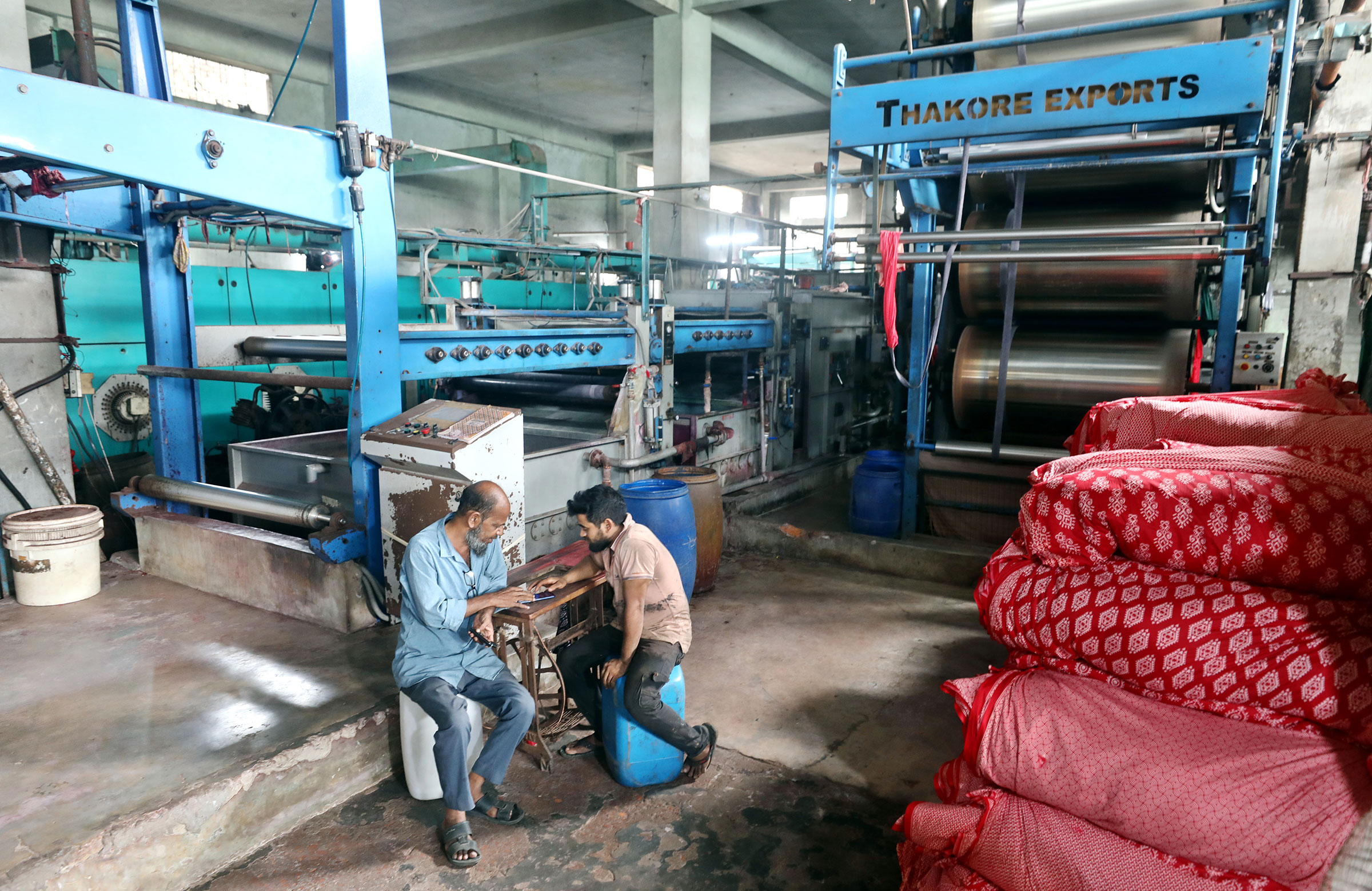
Paradoxically, Ha-Meem has seen demand increase since the energy crisis. It has absorbed orders from some of the more than 400 smaller factories forced out of business in the three years till June (as well as from customers shifting production out of China to skirt Trumpian tariffs.) But with Ha-Meem’s energy bills rising from roughly $200,000 to $300,000 every day, and clients refusing to budge on prices, there is a relentless drive to boost efficiency.
In the office of Ha-Meem Senior Executive Director Brig-Gen (Ret.) Mohammad Abdul Moeen, a computer spreadsheet maps every employee against hourly targets. Workers who fall behind are counseled by managers—“maybe she had some problem with the machine,” says Moeen. “She may have just been tired”—and offered additional support and training. Those who consistently fall short are replaced by some of the dozens of applicants clutching résumés who queue up at the factory gate each morning.
“We may be facing some kind of energy crisis but that’s more reason why we cannot compromise with productivity,” says Moeen.
Moeen’s relentless focus on efficiency is easy to fathom. The garment industry is ruthlessly competitive and manufacturers fear that any rise in costs or supply disruption could see orders shift to rival Vietnam, Cambodia, or Pakistan. However, simply securing energy is not alone sufficient; with many Western brands making ambitious sustainability commitments that rely on shifting away from fossil fuels, how power is generated is also a key concern.
And if preserving Bangladesh’s dominant role in global garment production is precarious, diversifying the economy is harder still. The nation has ambitious goals of ramping up existing pharmaceutical and leather industries, and even moving into autos, medical devices, and semiconductors. But competition is tough, and few serious investors are charmed by candlelight meetings.
Last month, Bangladesh unveiled a new energy roadmap that aims to add 12,940 MW of generation capacity via new solar installations and coal-fired projects, alongside modernization of grid distribution networks and a total of 300 new exploration wells to firm up domestic gas supplies (31 have already been drilled.)
“We are satisfied with that plan,” says Mohammad Hatem, president of the Bangladesh Knitwear Manufacturers and Exporters Association, which represents over 2,500 garment factories. “Within three or four years, maybe there will be no more electricity crisis.”
For now, however, Bangladesh’s garment workers—and billions across the Global South—have little choice but to endure given scant signs of relief in oil markets. In recent days, Yemen’s Houthis have intensified missile and drone attacks on Saudi airports, cities, and oil infrastructure, killing civilians in Riyadh, disrupting flights, and provoking Saudi-led strikes that have stoked fears of a wider regional war.
“It’s a difficult situation for the present government,” says Fazlee Shamim Ehsan, managing director of Fatullah Apparels Ltd., which produces 22,000 finished garments per day. “It would be much better if there was no war in the Middle East.”
—With reporting by Zia Chowdhury/Dhaka
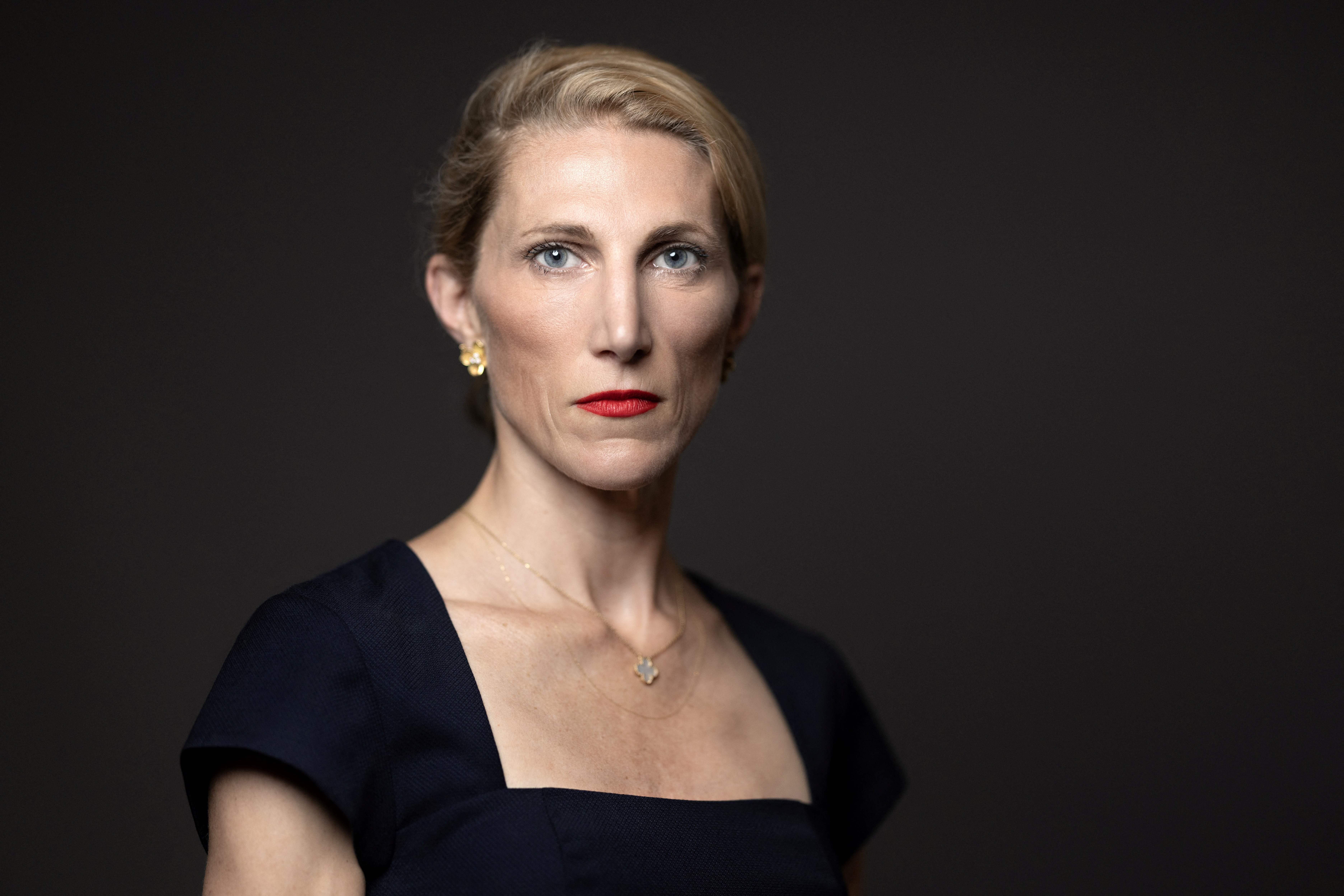
A respected figure in the world of global health, Dr. Kerry takes on a new responsibility. She says it's challenging but not "daunting."
(Image credit: Joel Saget)

