 Login
Login
TikTok reaches $400M settlement over children’s privacy lawsuit
Two years after the U.S. Department of Justice alleged that TikTok violated the Children’s Online Privacy Protection Act, it has reached a $400 million settlement.


This story appeared in Today, Explained, a daily newsletter that helps you understand the most compelling news and stories of the day. Subscribe here.
Do the words “data center” make you want to drop everything and call your congressional representative? You’re not alone, if we judge the nation’s mood by the actions of politicians who poll-test what they eat for breakfast (and there are worse ways).
This looks like the week that the data center backlash broke containment and became the defining issue of this political moment.
In the Texas governor’s race, Democrat Gina Hinojosa went up with an ad against Republican Gov. Greg Abbott over data centers with the punchline: “Greg Abbott is selling you out.” In a critical toss-up House race, Rep. Marcy Kaptur (D-OH) launched an attack against her Republican challenger over his support for data centers. Pennsylvania Gov. Josh Shapiro, a likely contender for the 2028 Democratic presidential nomination who had previously touted data center investments, signed an executive order to limit their construction. He also bashed his opponent on data centers in a new campaign ad — a response to the Republican attacking him over those same facilities.
In my home state of Ohio, national Republicans are so worried about data centers damaging Sen. Jon Husted’s reelection chances that they sent a memo this week to top AI companies to warn that they could lose the seat because of the issue. And Mike Rogers, the Republican trying to win the Michigan Senate race for the GOP, went so far as to endorse a moratorium on data center building.

In one image, this is why politicians are screaming at anyone who will listen that they loathe these data centers just as much as you do and want to stop Big Tech from building any more. It is a stunning turnaround: The percentage of Americans who “strongly oppose” a data center being constructed in their area has more than doubled in a single year.
As Molly Taft documented in a recent feature story for Wired, the relationship between the ubiquitous data-center backlash and the fears about AI is becoming hard to ignore: Most people still say they oppose data centers even when they don’t live anywhere near one, and most people opposed to data centers are also more likely to be skeptical of AI. And those sentiments are clearly bipartisan, which is why you have a Democrat and a Republican in the Michigan Senate race striking the same tone on data centers.
The merits of both sides in the data-center debate are probably more nuanced than the political slogans popping up around it. But this phenomenon is clearly about something bigger than the brick-and-mortar buildings that have become these political boogeymen. As Marina Bolotnikova put it in a story for Vox earlier this summer: Americans don’t know how to fight AI. So they’re fighting data centers instead.
And now the politicians are following their lead.
➨ Print your photos like it’s the 1990s. When everybody carries a camera in their pocket and snaps candids as casually as taking a sip of water, it’s easy to become jaded about all those pictures. Don’t be. The best way to appreciate them, Adam Clark-Estes argues in his latest piece on living in our tech-dominated world, is to print those images out like you did a few decades ago. Cherish your memories by holding them in your hands.
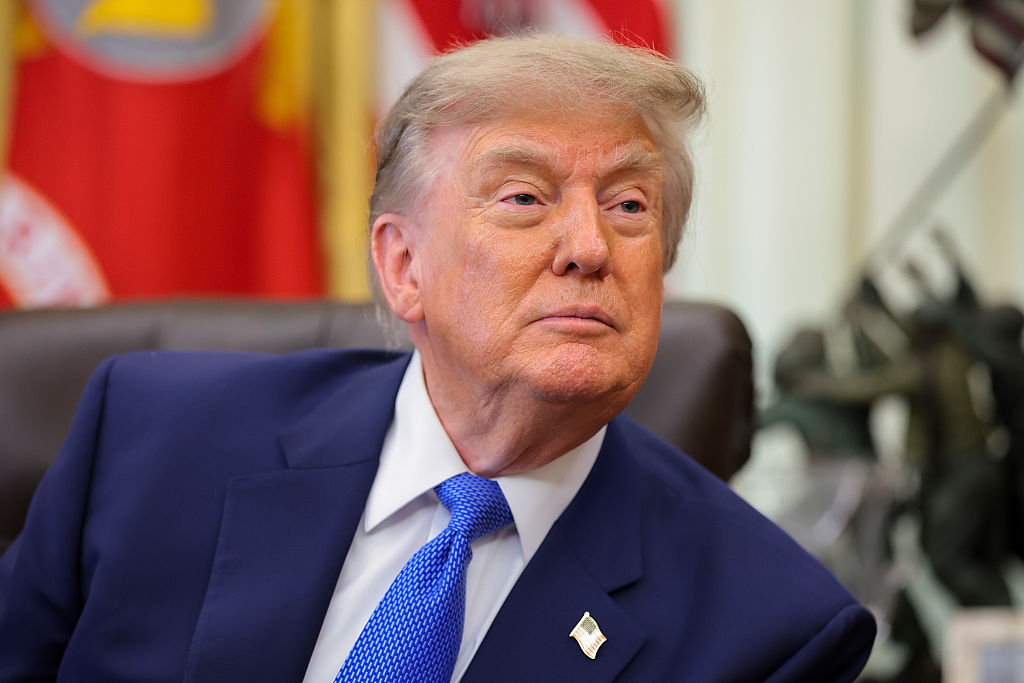
President Donald Trump announced on Friday that he has coordinated a new deal to lower beef prices in the U.S.
“Today, I concluded a deal to substantially lower the price of ground beef for working American families,” he said in a Truth Social post. “For the next 90 days, the United States will allow up to 300,000 metric tons of product for ground beef to be imported with no out of quota tariff. We have a commitment that this beef will be sold at 25 percent below current market prices.”
“This deal will reduce prices for Americans while giving space for our Great American Beef Herd to grow again,” he continued.
An “out of quota tariff” is a higher tariff that is triggered if the amount of a product imported into the U.S. exceeds a certain quantity.
Read More: Why Ground Beef Prices Are Hitting Record-Highs in the U.S.
It’s unclear who the deal is with or which countries will be importing the beef into the U.S. A White House official told TIME that Trump secured an agreement with foreign beef exporters to sell beef at a 25% discount, which will be passed on to American consumers, in exchange for Trump lifting the out of quota tariff on lean beef trimmings that will be used for ground beef production. The White House official added that the President plans to sign an Executive Order regarding the deal within the next couple of weeks.
Both Trump and the White House official cited the soaring price of beef as the motivation behind the new deal. Last month, the average price of ground beef for American consumers was about $6.885 per pound—a jump of roughly 57% from just five years earlier, according to data shared by the Federal Reserve Bank of St. Louis. The price of uncooked ground beef went up by 9% in July, compared to the same time last year, according to data released by the U.S. Bureau of Labor Statistics last month.
Beef prices have skyrocketed in large part because of supply shortages: American cattle herd sizes are at a low not seen in years, even as consumer demand for beef remains high in the country.
The American Farm Bureau Federation reported last month that, while the total cattle inventory went up a bit at the start of July for the first in eight years, the beef cow herd dropped to 28.5 million head, decreasing by about 1% compared to the same time last year, making it the “smallest July inventory on record,” with data dating back to 1973. Experts attribute the pressure on herds largely to droughts driven by climate change.
The deal that Trump announced on Friday isn’t the first time his Administration has made efforts to try and address the soaring price of beef for consumers. The President also signed an Executive Order earlier this year aimed at increasing the amount of lean beef trimmings imported from Argentina by 80,000 metric tons per year.
Experts, however, cast doubt on whether boosting beef imports from Argentina will be effective at lowering the cost on Americans, saying that the boost in imports would make up too small a portion of the overall supply in the U.S. to have a significant impact. And the cattle industry has objected to such efforts in the past, expressing concerns that those moves would undermine producers within the U.S.
Colin Woodall—the CEO of the National Cattlemen’s Beef Association, a trade association for cattle farmers and ranchers—said in a statement on Friday that he was “disappointed” by Trump’s announcement.
“While America’s cattle producers share the goal of keeping groceries affordable for consumers, flooding the market with government-subsidized, below-market beef is not the way to rebuild the American cattle herd,” Woodall said. “We are already working to rebuild after years of ongoing drought, high input costs and other challenges that have reduced U.S. cattle numbers. Today’s announcement and other market interventions throw cold water on the prospect of herd expansion and sacrifices long-term stability for short term messaging.”

The ruling comes after months of back-and-forth between the Trump administration and the National Trust for Historic Preservation.
(Image credit: Alex Wong)


Joyce Beatty, a Democratic representative from Ohio, asked a federal judge to stop the Kennedy Center trustees from putting President Trump's name up in three places at the arts complex.
(Image credit: Alex Wroblewski)

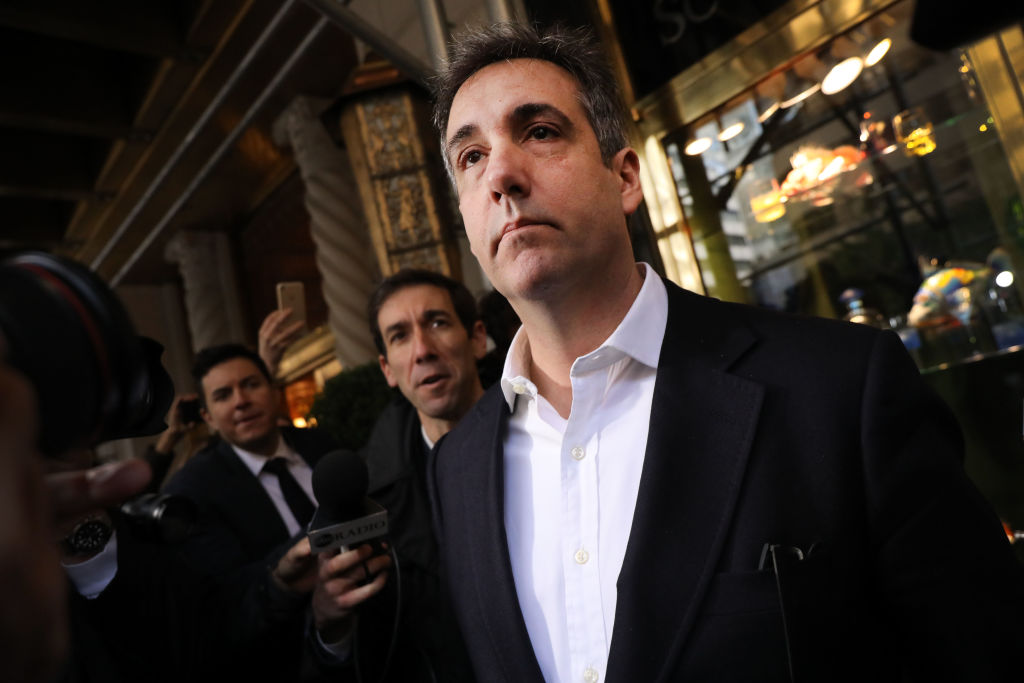
President Donald Trump on Thursday buried the hatchet with his former attorney Michael Cohen, appearing on Cohen’s radio show in what was the first public exchange between the two men in eight years.
Trump and Cohen have a tumultuous history. Cohen worked as Trump’s personal lawyer dating back to the mid-2000s. But he severed ties with Trump around 2018, when he pleaded guilty to federal crimes, including campaign finance violations, and said he had made payments to two women at Trump’s direction in an effort to keep them from speaking publicly about alleged affairs with the then-presidential candidate. He went on to serve a three-year sentence following his guilty plea. Cohen later made a number of explosive claims about Trump in testimony in front of Congress, and served as a key witness in the criminal hush money trial that resulted in Trump’s conviction on 34 felony counts.
Read More: Trump and Hush-Money Trial’s Central Witness Share a Tortured History
“You and I have obviously traveled a pretty rocky road together,” Cohen said to Trump on his radio show 77 WABC-AM in New York on Thursday. The program will air in its entirety on Sunday.
Trump did not dwell too much on the past during the portion of the show that aired on Thursday, but voiced sympathy and appreciation for Cohen.
"They weaponized you like nobody's ever been weaponized, like few have been," Trump told his former lawyer. “They weaponized a lot of people, and I respect the fact that you recanted everything you said. And that’s a big — that’s a big thing that you did. That’s a very big thing.”
The men’s conversation also criss-crossed through a range of other topics related to Iran, the economy, and Democrats.
Cohen appeared on CNN ahead of the airing of the program and commented on his relationship, and conversation, with Trump.
“How is it possible after all of what took place? All of the name calling, the years of the public war, the verbal missiles that we threw at one another. How is it possible that the two of us can ever sit down again?” Cohen told CNN anchor Jake Tapper. “The answer is that we forgave.”
When asked to define the current state of his relationship with the President, Cohen remarked, “it’s being resuscitated.”
Cohen was also pressed on whether he has asked Trump for a pardon.
“I have not,” Cohen first responded. But he went on to clarify that he did submit a pardon application to President Joe Biden, which he later altered after Trump took back office.
“What I did is I took that same application with the same documentation, and I just rewrote the cover letter, removing the name of President Joe Biden and inserting the name President Donald Trump,” Cohen said.
Cohen also took to his Substack on Thursday to speak about making amends with Trump, which he said made people “furious.” Referencing the Bible, Cohen asserted that Colossians 3:13—a passage that reads, ”Forgive as the Lord forgave you”—was the “foundation” of what transpired between him and Trump.
“We forgave,” Cohen wrote. “Forgiveness doesn’t require amnesia. It requires the courage to stop allowing yesterday to dictate tomorrow.”
Cohen’s remarks ring in stark contrast to previous words he has offered about the President.
In 2019, after pleading guilty, Cohen was called by the House Oversight and Reform Committee to further detail his role as Trump’s attorney and said Trump “is a racist. He is a conman. He is a cheat.” When asked how many times Trump had asked him to threaten an individual or entity on his behalf, Cohen responded that Trump had done so on over 500 occasions throughout their professional relationship.
The following year, Cohen published Disloyal: A Memoir: The True Story of the Former Personal Attorney to President Donald J. Trump, a 432-page tell-all about the years he spent as Trump’s lawyer and fixer.
“I knew Trump better than anyone else did,” Cohen wrote at one point in the book. “I knew him better than even his family did, because I bore witness to the real man, in strip clubs, shady business meetings, and in the unguarded moments when he revealed who he really was: A cheat, a liar, a fraud, a bully, a racist, a predator, a con man.”
And in 2024, Cohen was the prosecution’s main witness in Trump’s criminal trial over charges of falsifying business records related to hush money payments made to Daniels when Trump was running for President for the first time in 2016.
“What I was doing, I was doing at the direction of and benefit of Mr. Trump,” Cohen said on the stand in 2024.
© Valentyn Ogirenko/Reuters
The Mexican government's creation of lists of journalists and opposition figures has stirred memories of the 'enemies list' of the Nixon administration in the United States.
© Agence France-Presse/Getty Image

