❌

Reading view

Fatherland Is One of the Most Quietly Surprising Films of the Year
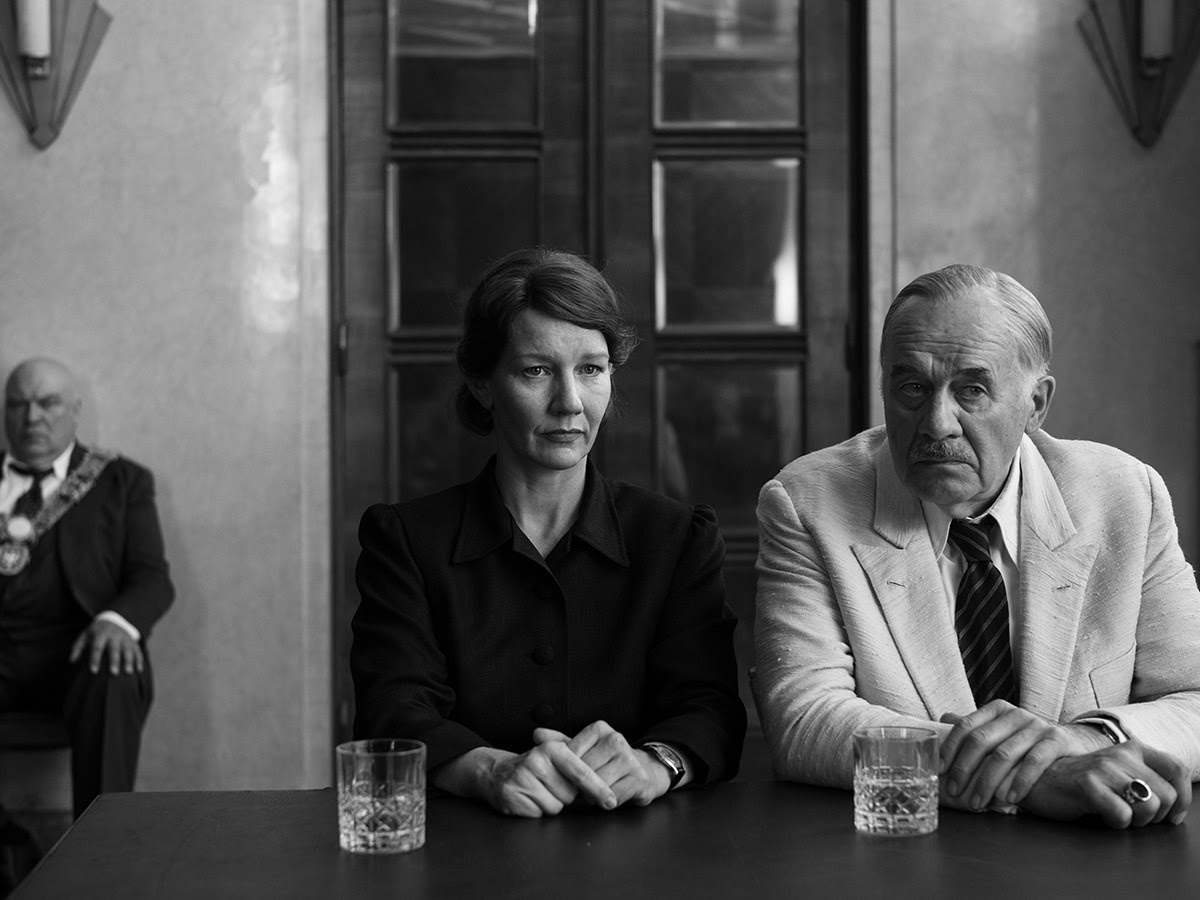
Sandra Hüller and Hanns Zischler in Fatherland —Courtesy of Mubi

The title of Pawel Pawlikowski’s extraordinary, compact drama Fatherland has a double meaning. In this somewhat fictionalized story of Thomas Mann’s brief 1949 visit to Germany, the Nobel Prize-winning author, after having lived in exile in California for 16 years, is challenged with finding his mooring in a country he can no longer call home; if it’s his fatherland, it long ago turned its back on him and his ideals. But fatherland can also be a state of mind where fathers live, a state both more specific and more elusive than fatherhood. In Pawlikowski’s telling of this portion of Mann’s story, it’s during this trip that Mann learns of the death of his son, Klaus—also a writer, though not as successful as his father—by suicide. If the elder Mann feels any emotion when he hears this news, it’s frozen inside him, a bubble of feeling isolated on its own ice floe. Fatherland, so secure in its rigid borders, is a cold, cold place.

Mann’s freedom from this interior island prison happens in the film’s last five minutes, a wordless reckoning that’s as quietly moving as anything you’ll see at the movies this year. But that moment wouldn’t hold so much power if Pawlikowski—with the help of his cowriter, Hendrik Handloegten—weren’t so skilled at sketching in the feathery details leading up to it. Pawlikowski is also the director of the 2013 Ida, as well 2018’s Cold War, pictures that, like this one, deftly balance postwar Eastern Bloc realities with the truth that all humans strive for connection and belonging. These aren’t dour movies, but serious, lustrous ones, less “political” pictures than movies about people trying to sort out what living really means.

At the beginning of Fatherland, no one—not even the aged Mann, played here in a quietly extraordinary performance by Hanns Zischler—has figured that out. The movie opens with a long-distance phone call: Mann’s semi-estranged son Klaus (August Diehl), living in Cannes and clearly in emotional distress, has reached out to his sister Erika—we’ll later realize it’s Sandra Hüller’s voice we hear on the other end of the line. Erika, an actress, writer, and onetime race-car driver, has become her father’s assistant, and she now urges Klaus to join her and their father on the trip they’re about to undertake, from California to the “new” barely postwar Germany. In the year of Goethe’s 200th birthday, Mann will be accepting two awards, one in Frankfurt, in the West, the other in the East, in Weimar: his justification is that his literary idol was born in one city and died in the other, though it’s obvious that Goethe couldn’t have imagined that chasm that would open between the two within 200 years' time.
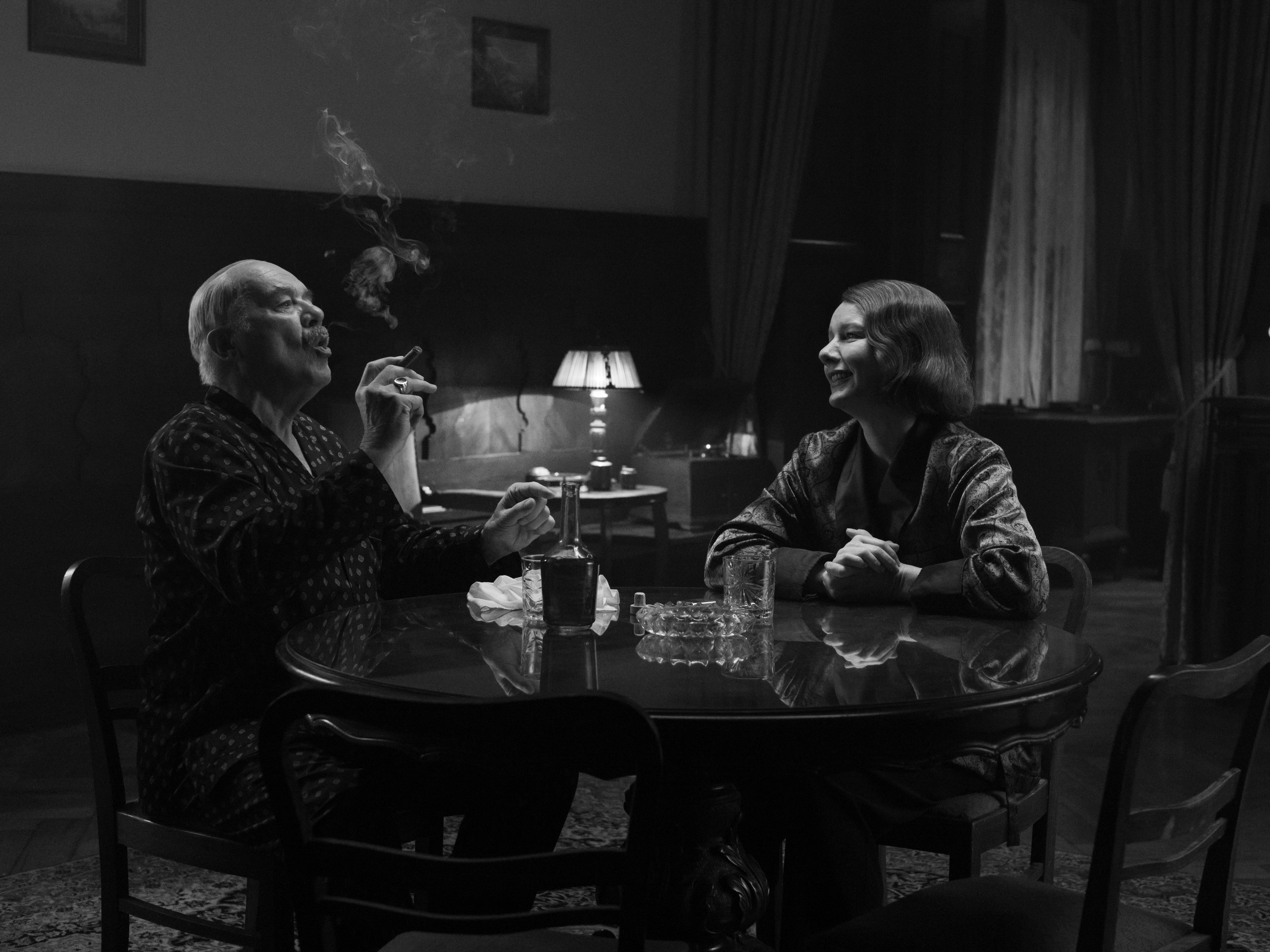
Zischler and Hüller —Courtesy of Mubi

Both cities are in transition, and in crisis, though neither wants to admit as much. In Frankfurt, a gray city crumbling at the corners and still finding its footing after the war, though somehow doing its best to pretend all is well, Mann and Erika are greeted by the mayor and hustled off to a press conference. There, the esteemed man himself answers the respectful but probing questions of journalists. Once they learn that he’ll also be traveling to the East, it’s not lost on them that doing so could make him a target at home in the States, where anti-Communist storm clouds have long been gathering. And there are other, more spiritual questions for him to consider. An American journalist, a woman who, it turns out, is an old friend of Erika’s and possibly a former lover (she’s played by Anna Madeley), asks him where he feels his true home is, now that he’s an American citizen. His answer is courtly but honest. He may live in the United States, he says, “but where my Heimat is, my home, is a much more difficult question.” He’s a man between states, both literally and figuratively.

In Weimar, the chief way to welcome a returning hero is apparently to greet him with a somber folk song sung by a choir dressed in dark clothing; at one point, he’s serenaded by a group of children singing the then-newly pened East German national anthem. Mann accepts it all gracefully, but there’s also something a bit quizzical and lost in his expression. He’s jarred by one alarming moment: a wild-eyed man appears at the hotel suite where he and Erika are staying, begging him to reveal in his speech that the nearby former concentration camp Buchenwald is now being used as a detention center for political prisoners. The man is whisked way by officials before he can finish his spiel, though it’s doubtful any of it has swayed Mann at all. In both the East and West, when it’s time to address the audiences who have eagerly gathered to hear his thoughts, he gives heartfelt speeches, anchored in the legacy of Goethe, about the power of art to transform and sustain not just individuals, but whole nations. He seems to truly believe, as he says at one point, that art doesn’t recognize borders—or at least, he truly wants to believe it.

Through all of this, Hüller’s Erika serves her father dutifully. When necessary, she translates his responses to journalists into fluid French; she attends cocktail parties in his honor, even when it means suffering the indignity of running into an oily, traitorous, Nazi-loving ex-husband she’d rather forget forever; she drives her father through the countryside, and though we can’t see her face as she does so, we wonder if this particular task gives her some joy, given her car-racing past. But through it all, because Hüller is such a subtly expressive actor, almost gossamer in the ways she shifts moods, we see the ways in which her resentments toward her father can’t help simmering to the surface. When she learns of her beloved brother’s death, her composure doesn’t crumple visibly—only somehow we know her emotional reserves are folding in and flattening like a house of cards. And when she sees how little this event seems to trouble her father, she can barely go through the motions of helping him on his mission, which, as he seems to envision it, is to save his homeland with his lofty views on art.

How these two find their way back to one another, and to a place of acknowledged and shared grief, is a kind of unspoken miracle that unfolds in last 15 minutes or so of this elegant, remarkably economical movie. Artistically and emotionally, Fatherland accomplishes more in its 82-minute runtime than any two-hour-plus movie released this year. Cinematographer Lukasz Zal, who also shot Ida and Cold War, renders Fatherland in the same satiny black and white, as well as the same serenely squarish, or Academy, aspect ratio. Every frame is spare, elegant, intimate, and the film moves along so gracefully that you’re barely prepared for how exhilarating, and how quietly devastating, its final moment is. At one point, Hüller’s Erika tells her father that Klaus had once said he felt Bach made him feel life was worth living. Her father shrugs that information off, but the final moments of Fatherland—incorporating a serendipitous conjuring, like a specter, of “Jesu, Joy of Man’s Desiring”—bring it back to him. Can a person have more than one Heimat? Or can that place of spiritual belonging shift over time? Perhaps Bach had the answer. Perhaps he put it in a piece of music, for us to find when we most need it, in a church or even in a movie.
  •  

Once Upon a Time in Harlem Is One of the Great Documentaries of the Year

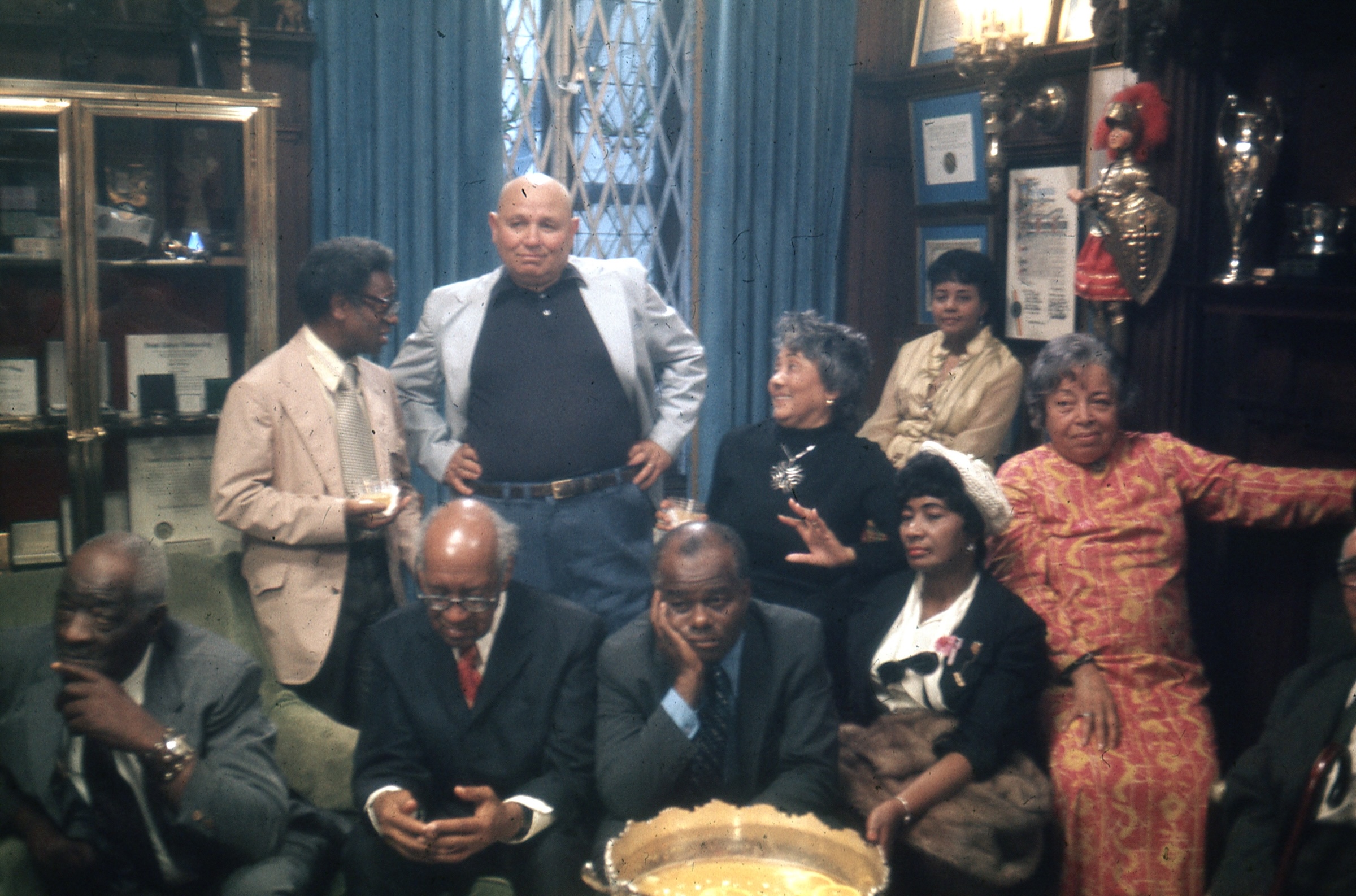
Once Upon a Time in Harlem —Courtesy of Neon

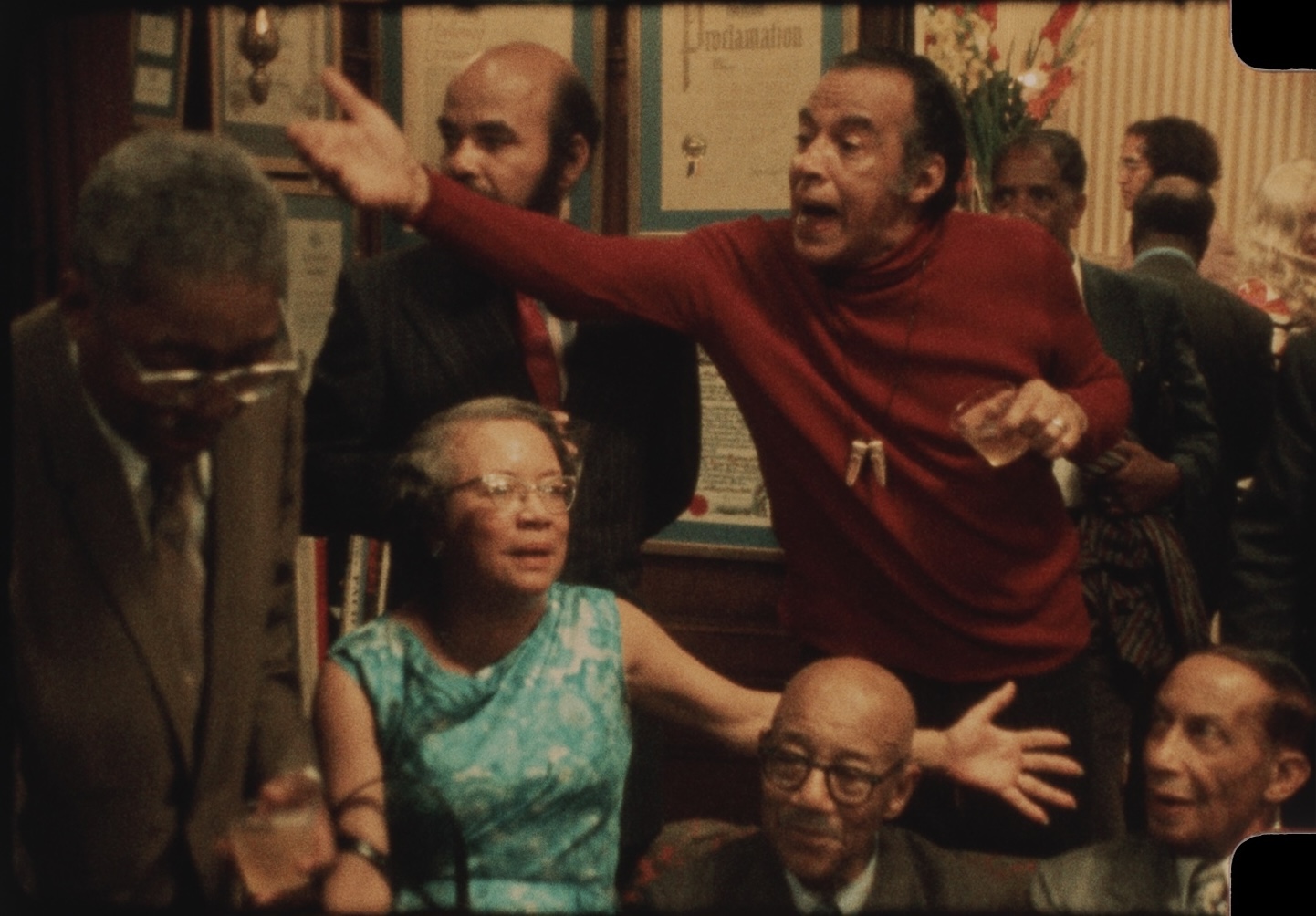
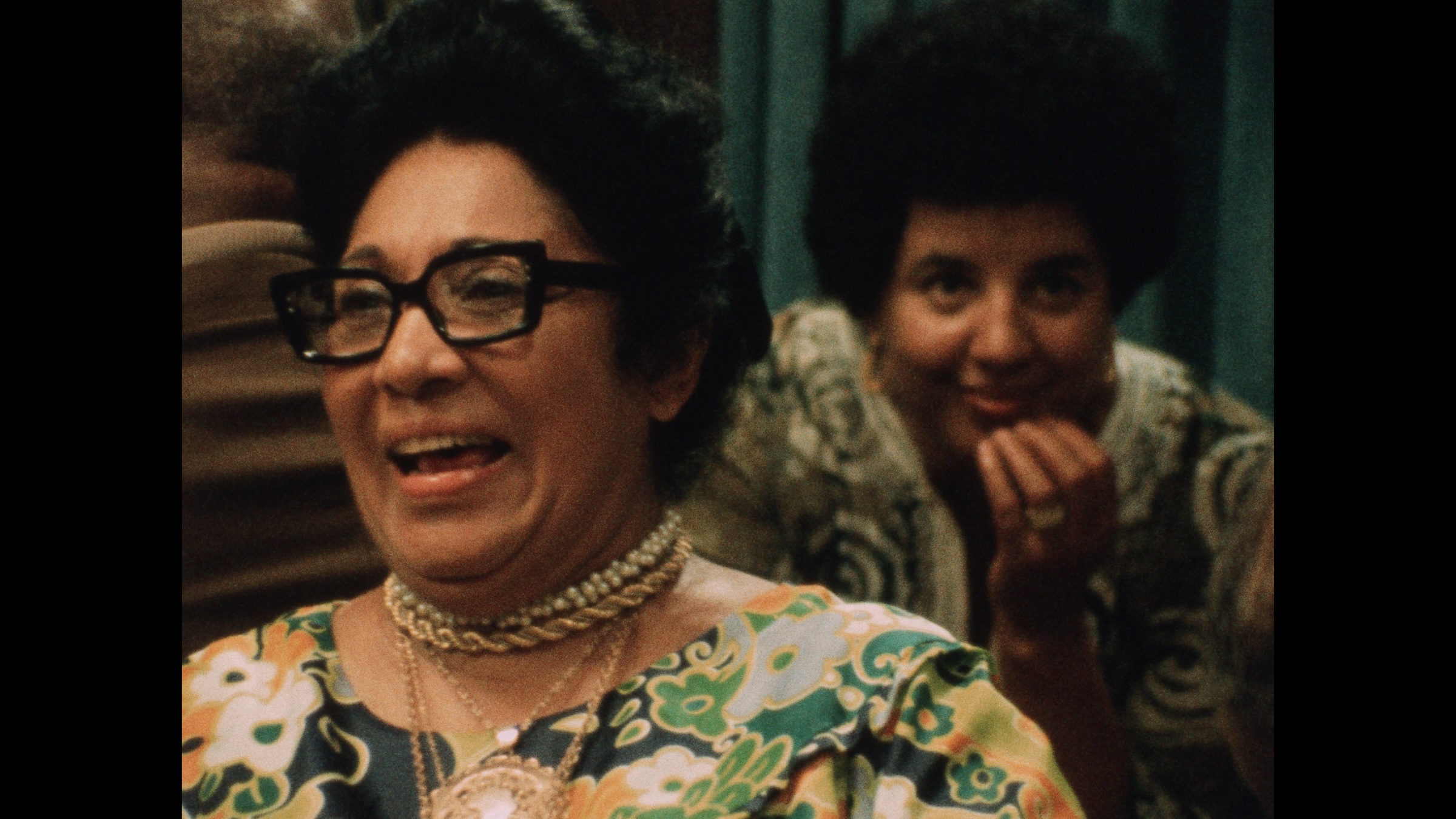
In 1972, filmmaker William Greaves arranged what we now know was one of the great parties of the 20th century: He commandeered the Harlem apartment of Duke Ellington and arranged for a special group of old friends and colleagues, many of whom had not seen one another in 50 years, to reconnect. The invitees were key figures of the Harlem Renaissance, including muralist Aaron Douglas, poet and novelist Arna Bontemps, society editor Gerri Major, jazz pianist and composer Eubie Blake, and many more. Greaves’ aim was to film the event—he appointed his son, David, as one of the cinematographers—and turn it into a documentary that would serve not just as a record of how these people lived and what they accomplished, but as a way of thinking about how we honor those who are a repository for our past. For a few hours in 1972 Harlem, it was circa 1925 again. This group of people laughing, arguing, and reminiscing about a great era of American history—and also about members of their cohort who were long gone—recaptured lightning in a bottle. And yet the resulting film, Once Upon a Time in Harlem, is one we almost didn’t see.

Greaves, who’d made a name for himself with experimental documentaries like Symbiopsychotaxiplasm: Take One (1968), as well as establishing the pioneering public television program Black Journal, considered his Harlem Renaissance film to be one of the most important projects of his life. But although he worked on it off and on for years, he wasn’t able to complete it before his death, in 2014. At last, the film he envisioned has been brought to life by David Greaves and his daughter—William’s granddaughter—producer Liani Greaves. Once Upon a Time in Harlem is one of the great documentaries of its era, and certainly of this year. It’s history that breathes.

Gerri Major —Courtesy of Neon

Ellington's elegantly appointed flat fills up quickly; for the viewer, it’s like dropping into a party right in the middle, as clusters of beautifully dressed people greet one another, embracing, laughing, talking. (Ellington himself was ill and unable to attend.) The guests make themselves at home: Photographer James Van Der Zee, who took extraordinary portraits of the major “show people” of the 1920s, as well as everyday citizens of Harlem, steps up to Ellington’s piano and runs through a few graceful, rippling phrases. We learn that he was trained as a classical musician before turning to photography, just one reminder of the ways people in the arts often need to find a means to support themselves—and sometimes those means can leave us with a lasting record of an era, as we can see from Van Der Zee’s gorgeous, expressive portraits, which flash on the screen like a blessing. Painter and activist Richard Price Nugent, when asked what it was like to be a part of the Renaissance, can’t really say. “While you’re living it, it is the now,” he reflects. Actor Leigh Whipper, the first Black man to join Actors Equity and one of the oldest in the group, and publisher and bookseller Richard B. Moore, recite long poems and passages from the era by memory. Moore calls up Claude McKay’s brilliant, lacerating poem “If We Must Die” as if he’d just learned it yesterday, but you know he’s been living with it for years.

Conversations swell through the room in waves, often prompted by Greaves himself, who was not just a filmmaker but also a poet and sculptor, a man who acted and danced. (The film has been brilliantly edited by Anne DeMare and Lynn True.) Ida Mae Cullen, the peppery widow of poet Countee Cullen, pipes up to remind the group, vigorously, that the Harlem Renaissance really lasted for just one decade, the 1920s, though its ripples began years before and resonated for decades after. For this group, politics and art are so entwined as to be indistinguishable. At one point, a vigorous yet civil cross-talking argument breaks out over the principles and philosophy of Back-to-Africa activist Marcus Garvey: there’s mutual respect in this room, but no such thing as consensus. Among other things, Once Upon a Time in Harlem might make you yearn for an era when people, including intellectuals, really knew how to dress: society editor Major, resplendent in a bold, patterned dress, sports about 10 glittery bracelets on each wrist and pulls it off with aplomb.

Aaron Douglas, Jean Blackwell Hutson, Richard Bruce Nugent, Eubie Blake, and Irvin C. Miller —Courtesy of Neon

What’s striking about Once Upon a Time in Harlem is the seemingly casual quality most of these captured conversations. But casual isn’t the same as insignificant. Regina Andrews, a regal woman decked out in a white lace dress and vivid turquoise earrings and necklace, speaks of the job she started as a young woman, as a librarian at the 135th Street branch of the New York Public Library. Shortly after she was hired, her superiors explained that certain poets and authors would often come to the library to work; they had special rooms reserved for them. She and her roommate became friendly with many of these luminaries, among them Cullen and Langston Hughes, and would often host little get-togethers in their apartment. The problem? They didn’t have enough dishes to go around. And so one New Year’s Day, when Andrews and her friends set out on a tour of the area’s Chinese restaurants, the men—unbeknownst to her—collected a few plates here and a few cups there. Suddenly, Andrews had enough dishes and cutlery for everybody, pieces she treasured for years.

Maybe that sounds like a minor thing, having enough dishes to entertain your friend group of poets and writers. But as Andrews tells that story, it feels anything but small. “It was just the joy of living and creating together,” she explains—as good a summation as any of what it must have been like to be alive in such a glorious time, a “now” that, thanks to Greaves and his family, becomes a part of our lives too.

  •  

Daisy Edgar-Jones Is the Austen Heroine We Need in a Charming Sense and Sensibility

Daisy Edgar-Jones and George MacKay —Courtesy of Focus Features

When news got around that a new movie version of Sense and Sensibility was in the works, cries of dismay rang forth from Bath to Brooklyn. How could anyone dare try to top Ang Lee’s 1995 adaptation, penned by—and starring, alongside Kate Winslet— Emma Thompson? But the idea that fine adaptations of great books need to be stopping points, rather than springboards, is alarming by itself. Why is a new adaptation of any Jane Austen novel such a bad thing? There are always new movie audiences, eager for their own fresh take. And just as important, why shouldn’t another generation of actors have a crack at these roles? Our ability to stream anything we want, whenever we want, hasn’t necessarily made us more adventurous; sometimes it’s just a way of clinging to familiar favorites at the expense of welcoming anything new. Austen herself, with her aversion to sentimentality, would have disapproved.

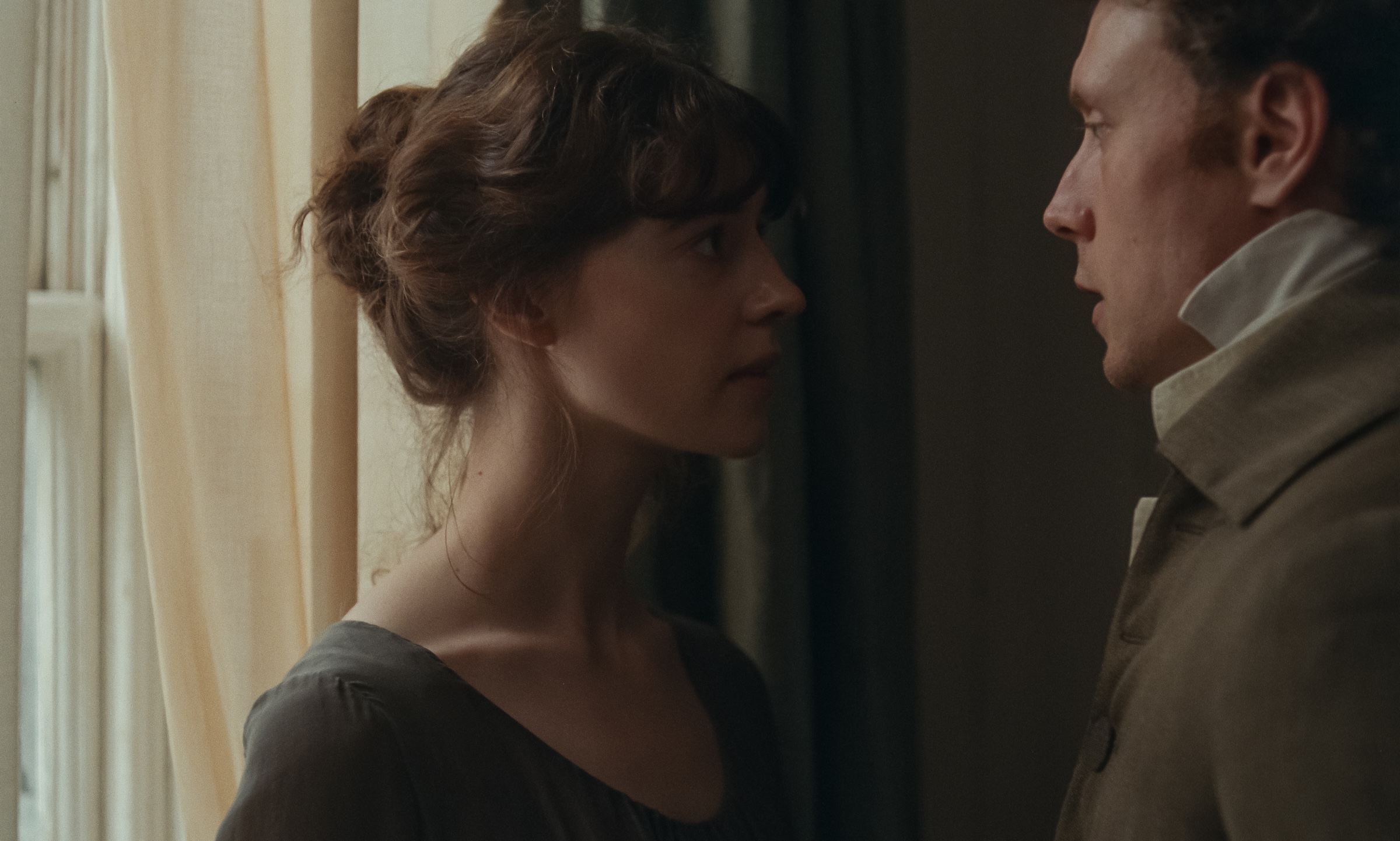
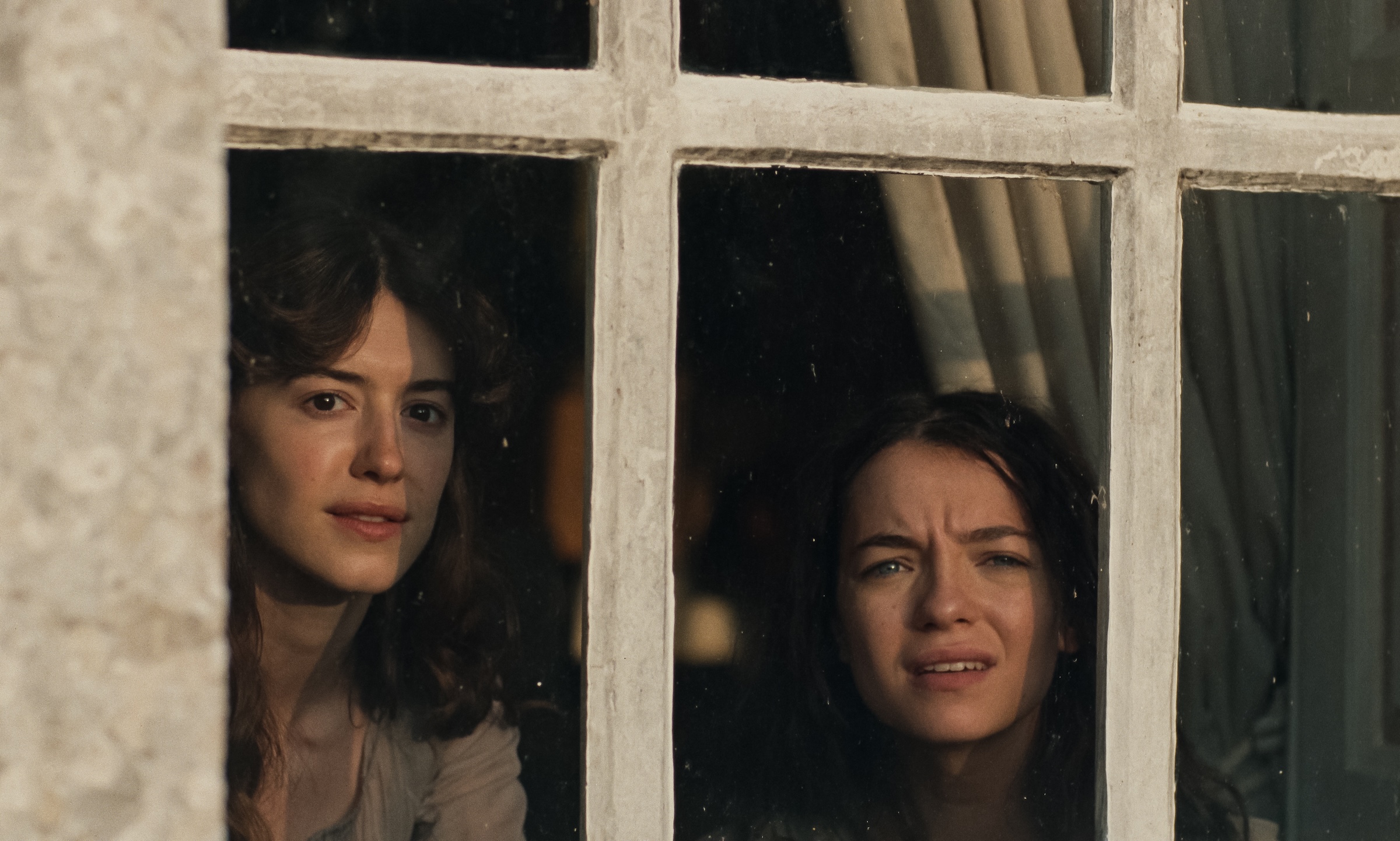
Then what would she make of Georgia Oakley’s amiable, if occasionally a little sluggish, reading of her debut novel, published anonymously in 1811? It’s hard to say for sure, but there’s nothing that’s offensive about this new Sense and Sensibility, and plenty that’s lovely. Daisy Edgar-Jones and Esmé Creed-Miles play Elinor and Marianne Dashwood, sisters in a close-knit family whose temperamental differences temporarily drive them apart. As the film opens, Elinor and Marianne, along with their mother (Caitríona Balfe) and younger sister Margaret (Bodhi Rae Breathnach), are just learning that they’ll soon have to vacate the airy, comfortable house they’ve called home for years. The girls’ father has just died; his property will not go to his daughters, but to his son from a previous marriage, John (Tom Brooke), who nevertheless hopes to do right by making sure his father's second family well provided for. But his disagreeable wife Fanny (Stacy Martin), feels differently, and to maintain their pride, the Dashwood women choose to move into far more modest quarters, in an arrangement brokered by a family friend, Mrs. Jennings (a blissfully dithery Fiona Shaw).

Mrs. Jennings is also an unrepentant meddler, and she believes she can easily marry off the two eldest Dashwood girls. Ever-sensible Elinor, who never asks for much, has already met, and fallen for, Edward Ferrars (George MacKay), Fanny’s brother, as kind and modest as Fanny is arrogant. And Marianne, a dreamer who lives for music and books, has her sights set on flirty, fun Mr. Willoughby (Frank Dillane): He loves to laugh and sing and dance, and Marianne is sure he’s perfect for her, though another potential suitor, the stalwart and rather dull Colonel Brandon (Herbert Nordrum), is also circling. If you’ve never read Austen’s lively and perceptive novel—or seen either Lee’s 1995 version or the 2008 BBC miniseries adaptation—you’re left to guess which men the sisters will end up with, which is just one of the story’s delights.

Daisy Edgar-Jones and Esmé Creed-Miles —Courtesy of Focus Features

But as always with Austen, there’s more to love than romance: The economics of “making a good match” are always, by necessity, lurking somewhere in these characters’ minds. In the case of the sisters Marianne and Elinor—one too dreamy, the other perhaps not dreamy enough—the differences in what they look for in a partner are almost enough to pull them apart. Oakley, who previously directed the 2022 drama Blue Jean, has a deft touch with the material and a deep respect for the English countryside setting. There are drowsy closeups of wildflowers, and shots of placidly grazing deer; a country dance feels lively and lived-in, contrasted with a later ball, set in London, where the steps are more formal and regimented—Oakley leaves no doubt as to which is more fun. Shot by Arnaud Potier, the film has a handsome, genteel look. And if at times the movie comes off as a bit decorous and stiff, the actors, particularly Edgar-Jones and Creed-Miles, do their best to keep the proceedings whirring. Creed-Miles shows that there’s a slightly self-centered quality to Marianne’s romantic preoccupations—she takes pride in wearing her heart on her sleeve, though in some sense it’s also a means of getting her way. And yet as Creed-Miles plays her, it’s impossible to dislike her. When Marianne become truly hurt, we hurt for her, thanks to the bruised anguish in Creed-Miles’ eyes.

And Edgar-Jones plays Elinor, the practical sister, with just the right amount of subdued fire. Elinor is the one who always matches her expectations with reality, and as much as she loves Edward Ferrars, she doesn’t put up much of a fight when she learns she might have to give him up. Edgar-Jones gives us clues to Elinor’s submerged longing, but only in flashes. And in a pivotal scene, where Marianne accuses Elinor, angrily, of “always being right,” we can see how wounded she is, even as she recognizes that Marianne is onto something: Elinor would rather be correct than look foolish. Edgar-Jones plays Elinor as reserved without making her recessive; we can see the ways in which she wants to want more. In an age of lowered expectations—for movies, for romance, for just about everything—maybe she’s the Austen heroine we need, ready to break out of the box she’s drawn around herself. Austen knew what she was talking about, and time hasn’t eroded her wisdom.

  •  

Elizabeth Holmes Is Not the Problem With You Can See Everything

—Courtesy of A24

Warning: This post contains spoilers for You Can See Everything

We might like to believe that documentary filmmakers are adamantly neutral parties, aiming their cameras at people who are just being themselves and, later, turning whatever the camera captures into objective truth. But because documentaries are, for now, made by humans and not robots, pure objectivity is impossible. When Albert and David Maysles captured Little Edie Bouvier Beale’s exuberant flag-twirling dance in Grey Gardens, they weren’t just casually showing us some random American eccentric in an outlandish headscarf; they were both in awe of her and, at least somewhat, laughing at her. The sequence is funny, jaw-dropping, a little sad. The camera isn’t human, but for better or worse the sensibility behind it is. It may not tell us what to think, but its job is to lead us there.

Since its surprise debut at the Telluride Film Festival earlier this fall, You Can See Everything, directed by Nathan Fielder and Lance Oppenheim, has been widely praised as a groundbreaking documentary work, one that will change the face of nonfiction filmmaking forever. Not so fast. The first half of Fielder and Oppenheim’s film chronicles the 34 days leading up to the incarceration of Elizabeth Holmes, founder of the blood-testing technology company Theranos. Holmes was convicted of fraud in 2018 and sentenced to just over 11 years in federal prison, commencing in May 2023. To make this documentary, Fielder, Oppenheim, and their crew camped out with Holmes, her partner Billy Evans, and their two small children, observing their lives up-close—or as up-close as possible. The filmmakers had come at Evans’ urging: some time earlier, he and Holmes, who had completely withdrawn from the public eye, had approached A24 to see if the studio might be interested in making a documentary about them. In a roundabout fashion, Fielder and Oppenheim became the filmmakers charged with the task. Early in the film, we hear Evans explaining that he wanted the world to get an accurate picture of the woman he knew, a devoted partner and mother, whom he felt had been unfairly villainized. The film’s title comes from Holmes’ spoken promise to Fielder: She vowed to keep nothing hidden from the filmmakers—but did she fulfill that promise?

—Courtesy of A24

Throughout You Can See Everything, Fielder is often on-screen, with Oppenheim working behind the scenes. Over and over again, Holmes assures Fielder she has nothing to hide, and over and over again, his probing—if insistently performative—questions catch her in slippery half-truths. Her transparency, to paraphrase the words of Courtney Love, is so real it’s beyond fake. This is the major pattern of the film’s first half. When Fielder isn’t asking the questions, he’s lurking behind the scenes, listening in on Evans and Holmes’ conversations with a headset; when he hears something he can’t believe, his eyes widen dramatically, or his brow furrows, or his jaw hangs as slack as that of a puppet. The audience I saw the movie with giggled every time. Faux-Kabuki irony is the new earnestness. If this is the future of documentary filmmaking—or at least that of its loopier cousin, creative-nonfiction filmmaking—many of us will come to miss the late Frederick Wiseman even more than we already do.

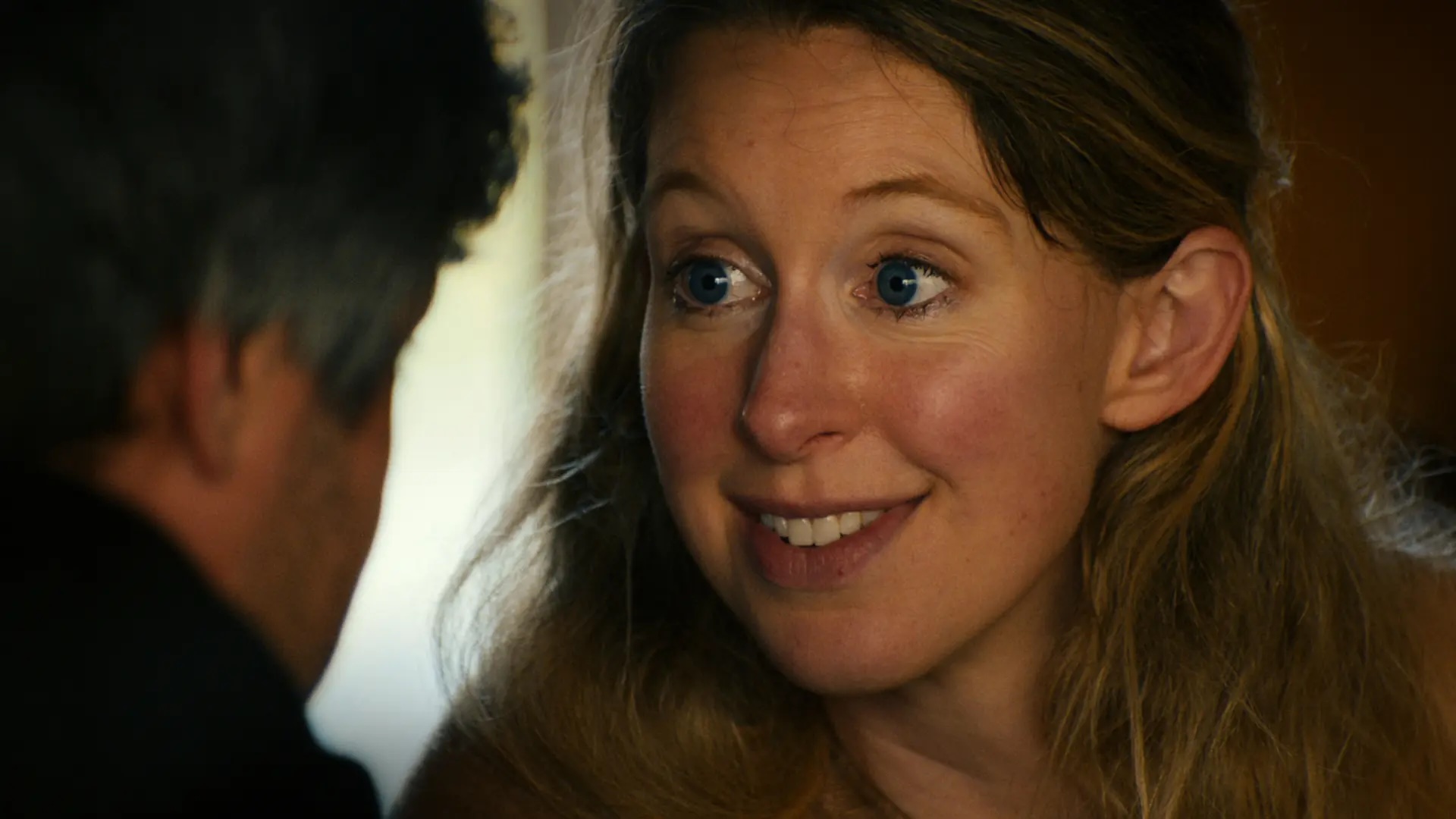
Holmes and her let-it-all-hang-out evasiveness isn’t the problem here. If anything, her whirligig insistence on her inability to lie, or even inadvertently deceive, is at least a kind of self-invented honesty. She spins out phrases like “All I know is my truth,” before speaking tearfully about her fear of being separated from her family. As the camera rolls, Holmes works overtime to convince the filmmakers, and us, of her innocence, with Evans butting in frequently to add his 3,268 cents—2 would never be enough. (He keeps insisting that the couple have plans to start a new company, though he seems to have more invested in this scheme than his partner does.) Holmes is one of those smile-talkers—people who grin as words pour out of their mouths. One of her tricks is to never break eye contact, and we can see her working this voodoo on Fielder. Her eyes are a glassy, translucent blue. I’ve never seen eyes like this, except on creepy European-made porcelain dolls from the 19th century. Are we seriously going to trust this woman?

We’re not, and Fielder doesn’t seem to be headed in that direction either, at least at first. This is a dense picture—there’s almost too much to unpack, if you can be bothered to care about any of it. Holmes is fascinating, and weirdly compelling. But by design, Fielder is as much a player in You Can See Everything as Holmes is, and your feelings about the film overall will depend on how much of him you can take. Fielder has made a name for himself with the shows Nathan for You and The Rehearsal, in which he essentially makes himself look foolish, a little, and makes others look foolish, a lot. Oppenheim, his friend and filmmaking partner, is the director behind the recent nonfiction feature Primetime, as well as docs like the 2020 Some Kind of Heaven, which turns a sarcastic eye on the Florida retirement community known as The Villages—the ultimate in shooting-fish-in-a-barrel filmmaking. It’s hard to say who’s more responsible for You Can See Everything’s stultifying smirkiness, at least in the first half; these two are clearly of like mind.

But there’s a major shift in the film's second half, one that suddenly, and blessedly, makes it at least watchable. (If you don’t want to know anything about this twist, stop reading here.) The film's second section picks up two years after Holmes has gone off to prison, which means Fielder and Oppenheim have been deprived of their subject. What little access they might have had is severely curtailed by Evans, who now seems less like a caring husband and more like an evil puppetmaster, eager to use his wife’s words and likeness for his own gain. (His increasing aura of evil is unnerving, especially when you consider that he’s almost fully in charge of raising the couple’s two young children.) Fielder and Oppenheim are at a loss—until it occurs to them to enlist the help of Amanda Seyfried, who played Holmes in the 2022 miniseries The Dropout, both to stand in for the disgraced entrepreneur and to weigh in on her plight.

—Courtesy of A24

As evidence mounts that Evans appears to be a megalomaniac, Fielder grows increasingly concerned about Holmes, and his sympathies shift before our eyes: Is she a victim, not just in the court of popular opinion, but also of the person closest to her? Seyfried seems to feel similarly, at least at first. What’s clear is that she hates to see any woman under the thumb of a potentially dangerous man (or any man, for that matter), and she thinks out loud about the possibility that Holmes, as a woman who’d been convinced that the company she’d founded could disrupt the health-care system and actually help people, may have been both manipulated and misjudged. Still, she’s clear-eyed enough to see that Fielder may be going overboard in his emotional attachment to his subject. That’s the dynamic that makes the second half of You Can See Everything click. Seyfried’s presence is the movie’s saving grace: Unlike Fielder, there’s nothing calculating about her, and the film’s second half is uncomfortably alluring.

But is that really enough? You Can See Everything is designed to make us think, hard, about the relationship between a documentarian and his subject. But anyone who's never considered that relationship before probably hasn't been watching documentaries closely enough. The intensity of the filmmaker-subject relationship—in addition to any potential untrustworthiness—is almost always implied, if not explicit. That’s true of all the films made by the great documentary filmmakers—people like Wiseman, the Maysles brothers, Agnès Varda, Werner Herzog, and many others—whether they insert themselves directly into the narrative or not. You Can See Everything has some inventive touches, and no matter what, it’s remarkable that Fielder and Oppenheim were able to keep the film a secret for the three-plus years they were working on it. But they haven’t revolutionized the documentary film; they’ve only reinforced what distinguishes a novelty from a work of genius, mere cleverness and snark from true depth of perception. Their movie feels more like a product they’ve brought to market than an example of the documentarian’s art. Are we buying or not?

  •  
❌