In 2015, Chicago’s public health department identified three cases of invasive meningococcal disease, a highly dangerous pathogen that can kill within hours. To determine whether these cases signaled a larger outbreak, the department—which one of us, Dr. Julie Morita, led at the time—needed to know not just total cases, but the total population and demographics of affected areas. The team turned to a pillar of our nation’s public health system: the U.S. Census.
The data showed that men who have sex with men—including gay and bisexual men—among the city’s Black population were disproportionately affected. That finding drove the health department’s response, which included working with community partners to surge thousands of free vaccines into neighborhoods across Chicago. Instead of a larger and far deadlier outbreak, the outbreak ended with 11 cases in Chicago and one death.
Census data informs every aspect of our nation’s public health system. As former leaders of local and federal health agencies, we have seen this firsthand. Unfortunately, the Trump Administration has proposed radical changes to the census that would make our country less healthy, less safe, and less fair.
The public comment period on this proposal closes on Nov. 2. Health leaders must move quickly to oppose these deeply misguided changes. It is clear to us that these changes would amount not only to an assault on our public health system but also on the U.S. Constitution.
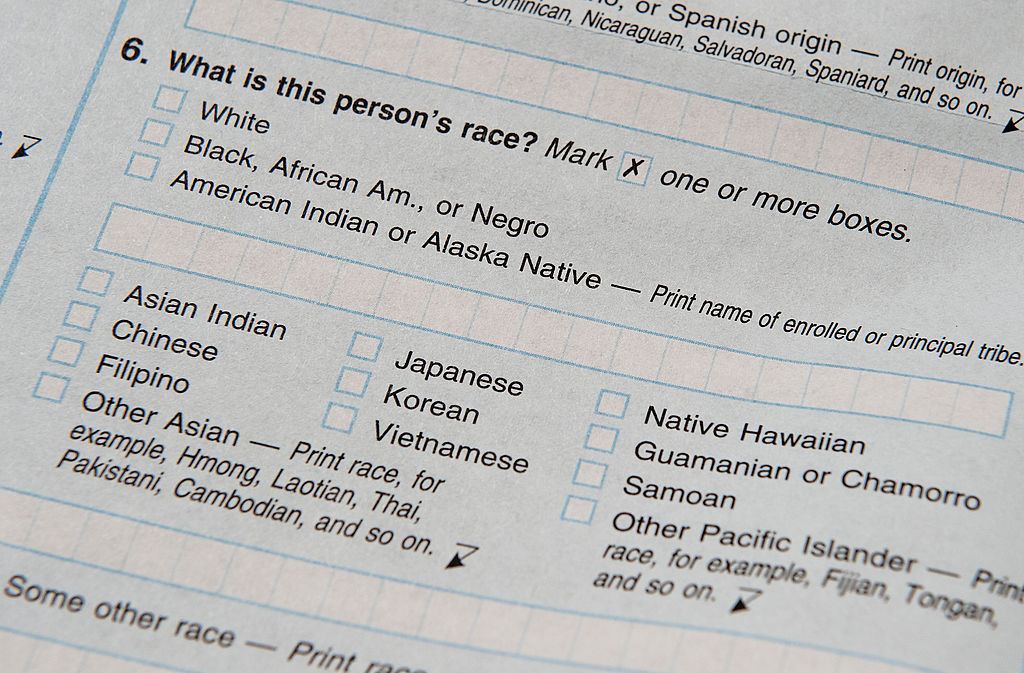
Per the Constitution, the federal government has carried out a national census every decade since 1790—through wars, depressions, and pandemics. Everyone who resides in our country matters and should be counted. But the Trump Administration is suggesting that the census should intentionally exclude people. This includes undocumented residents and nonimmigrant visa holders, such as foreign national students and temporary workers whose visas may permit them to live in the U.S. for several years. The Administration is further attempting to remove demographic questions related to race, ethnicity, and sexual orientation from the census questionnaire.
The repercussions would be vast. An inaccurate count would negatively affect congressional representation. The idea that some people do not deserve to be counted uncomfortably echoes the “3/5 compromise,” an insidious and later repealed clause in the original Constitution under which enslaved persons were counted as less than full people. Incomplete and unreliable demographic data could distort how trillions of federal dollars are distributed across hundreds of programs such as Medicaid, SNAP, WIC, and Head Start. Communities with the greatest needs, especially those with immigrant or mixed-status families, would likely be hardest hit.
These are our neighbors, families, and friends. But let’s be clear: the impacts would extend beyond those communities, especially the public health consequences. As the Chicago meningococcal outbreak illustrates, health officials need a complete picture to protect people from disease and other threats. They must know who is getting sick, where, and at what rate. Take any of those data out of the equation, and the people who need the most help are far less likely to get it.
During the H1N1 influenza pandemic in 2009, when one of us, Dr. Richard Besser, served as acting director of the Centers for Disease Control and Prevention (CDC), census data were instrumental in tracking the outbreak. CDC relied on this data to calculate infection rates by age, which showed that children and young adults were getting sick at far higher rates than older adults—a striking departure from typical patterns observed with seasonal flu. When a vaccine became available, these data directly informed recommendations that prioritized children and young adults.
A decade later, the COVID pandemic demonstrated the importance of these data on a massive scale. As case counts surged in the initial months of the outbreak, population and demographic data revealed who was shouldering the greatest burdens. CDC found that hospitalization rates were highest for American Indian, Alaska Native, Black, and Hispanic populations. CDC later used census population estimates to calculate vaccination rates by race and ethnicity, allowing health officials to identify disparities in vaccine uptake. States like North Carolina relied successfully on census-tract data to increase vaccination rates among target populations.
These examples span different locations, diseases, and levels of government, but illustrate common themes: public health officials rely heavily on census data to save lives and protect communities, and protecting communities at greatest risk helps keep us all safer and healthier.
Health officials use population counts to study cancer, heart disease, HIV/AIDS, and many other diseases. Demographic data expose disparities that raw numbers can obscure and show whether those gaps are growing or shrinking. Together, they offer a roadmap to direct resources where they can do the most good.
The next census count is still a few years away, but what our leaders decide now matters a great deal. A census that deliberately counts fewer people while telling us less about them will leave our nation ill-prepared for future outbreaks and pandemics, while making it harder to handle daily health challenges. It is essential for the public health community to speak out now.
The 1,300 survivors of sexual abuse by clergy members and lay workers have all agreed to the settlement, according to an attorney for some of the plaintiffs.
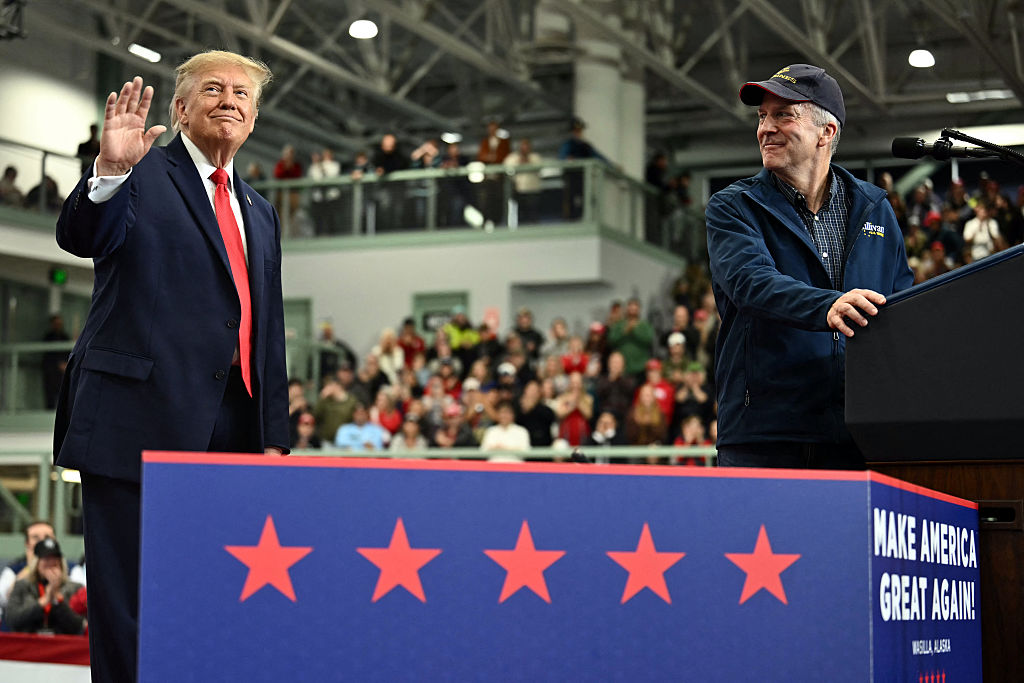
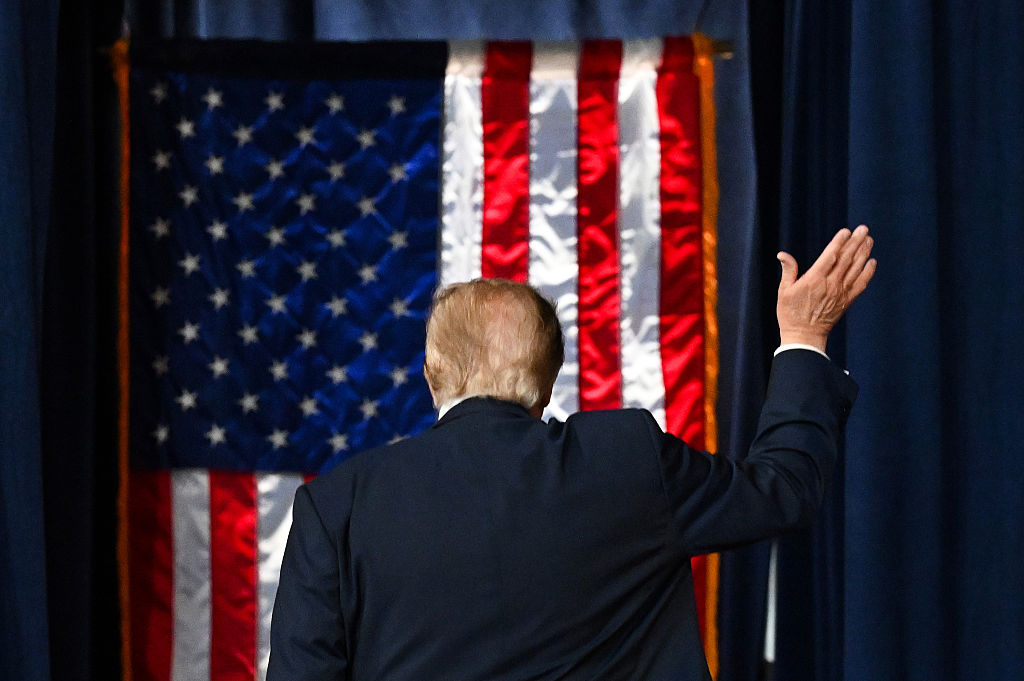
U.S. President Donald Trump waves to the crowd as Sen. Dan Sullivan speaks during a campaign rally at Curtis D. Menard Memorial Sports Center in Wasilla, Alaska, on Oct. 13, 2026. —Kent Nishimura—AFP/Getty Images
The Department of Justice (DOJ) last week filed a lawsuit that intends to weigh in on the results of the Senate race in Alaska. It seeks to block certification of the election results under certain conditions if Republican Sen. Dan S. Sullivan loses.
Experts question whether it has the legal basis to do so—and if this intervention is a preview of how the Trump Administration might respond to unfavorable midterm results across the U.S.
The DOJ, in its Oct. 22 filing, expressed concern that there might be “voter confusion” stemming from the fact that two candidates on the ballot are named Dan Sullivan. Republican Sen. Dan S. Sullivan is currently seeking re-election, and one of his challengers is Daniel J. Sullivan Jr. (a Republican whose party affiliation does not appear beside his name on the general-election ballot).
The GOP first raised concerns in May, prompting a proposal to add “incumbent” beside the sitting senator’s name on the ballot. But the party continued to warn that voters could split their votes between the two Sullivans, opening the door for Democrat Mary Peltola.
Alaska has traditionally been a state that leans Republican: Trump won the state by 13 points in 2024, and the state has not had a Democratic governor since 2002.
The DOJ lawsuit claims that the “sole purpose” of Daniel J. Sullivan’s candidacy is to benefit Peltola. Therefore, it seeks to block certification if the incumbent loses but would have won with all of Daniel J. Sullivan’s votes. To determine that, it proposes recalculating the ranked-choice count as though those votes had gone to the incumbent instead.
Under Alaska’s ranked-choice system, voters rank candidates by preference. If no candidate initially wins a majority, the lowest-ranking candidates are eliminated in successive rounds and their ballots transfer to the next remaining choice.
In a Truth Social post on Oct. 21, Trump said he was “very concerned” about the race and described the situation as “totally confusing.”
“Even 1, 2, or 3% could make the difference,” he wrote of the potential outcomes.
The DOJ said there would need to be an “investigation” to determine which vote was meant for which Sullivan. The DOJ said an “investigation” would be needed to determine which Sullivan voters intended to support.
Attorney General Todd Blanche suggested on CNN’s State of the Union on Sunday that voters’ rankings could provide clues: “There are a number of scenarios where it could be obvious that a voter was confused by the way they wrote down candidates.” He did not elaborate on what those scenarios might look like within the parameters of a formal investigation.
Neither the DOJ nor the candidates’ campaigns responded to TIME’s requests for comment.
On Oct. 23, Peltola’s campaign and the Democratic Senatorial Campaign Committee asked to join the DOJ’s case as defendants, writing: “Alaskans, apparently, must elect Senator Dan S. Sullivan or the President will not let them elect anyone at all.”
On Sunday, Peltola’s campaign and the DSCC asked the court for permission to seek dismissal and requested an expedited ruling this week. They proposed requiring a DOJ response by Tuesday afternoon, arguing that the pending lawsuit could undermine confidence in the election.
Voting rights experts are calling it a “garbage lawsuit” and “an unprecedented intervention by the federal government.”
Lisa Murkowski, the state’s other Republican Senator who is not up for re-election, endorsed the incumbent Sullivan in January. Last week, however, she condemned the DOJ’s efforts to intervene.
“Alaskans don’t need any help voting for their preferred candidates,” she wrote Oct. 23 in a post on X. “The Department of Justice should never have filed this lawsuit.”
Trump responded to her comments with a scathing post on Truth Social on Oct. 24, calling Murkowski “Republicans’ Worst Senator, by far” and “a DISGRACE to Alaska and our country.”
He also criticized the state’s ranked-choice voting system, writing: “Ranked Choice Voting Ballot is a TOTAL DEMOCRAT SCAM meant to confuse the Voter.”
Asked to comment on the DOJ filing the next day, Trump told reporters: "I'm the one that said do it."
Blanche declined to confirm whether the Justice Department acted at the behest of the President during his appearance on CNN on Sunday.
He denied that the Trump Administration was laying the groundwork to overturn election results, arguing that the lawsuit would allow Alaska officials and courts to address any unlawful voter confusion after the election.
“It is an obligation of the states to avoid confusion, among other things, confusion in the minds of voters in the election process,” he said. “So the question is whether Alaska, by allowing this to happen, is violating the law and the federal law and the constitution by allowing confusion in the ballot.”
Why experts question the DOJ’s Alaska election lawsuit
Prior to the DOJ lawsuit, Republicans sought to remove Daniel J. Sullivan from the ballot in June.
When he decided to run, Republicans sent complaints to Carol Beecher, the director of Alaska’s Division of Elections. She wrote a letter to Sullivan in June saying that election officials had determined that he would be removed, claiming his candidacy was not filed “in good faith for the purpose of genuinely pursuing” leadership.
Sullivan challenged the decision and sued the state. Judge Thomas Matthews of Alaska’s Third District Superior Court ruled in June that he could remain on the ballot beside the other candidates. He wrote in a 32-page decision that elections officials were introducing a “new, previously unstated ‘good faith’ criteria” and said that this requirement is not present in state law or the Constitution.
That decision was upheld by the Alaska Supreme Court on June 29.
It was later determined that a “mitigating remedy” would be to present each candidate’s name with the middle initial and to add “incumbent” to the sitting senator’s name.
The Alaska Supreme Court ruling did not end scrutiny of Daniel J. Sullivan’s candidacy. In August,Reuters reported that the DOJ had issued grand jury subpoenas while investigating whether he entered the race to confuse voters.
The DOJ then filed its new lawsuit amid October polling that showed Peltola ahead.
The department justifies the move using language in the National Voter Registration Act (NVRA) that says its purpose is to “protect the integrity of the electoral process.”
Experts, however, dispute whether that language authorizes the intervention.
Derek Muller, a professor of election law at the University of Notre Dame, wrote in a blog post after the filing that the proposed investigation is “essentially impossible.” But succeeding is not the point, he continues.
“The legal claim is so absurdly thin, there’s essentially no likelihood of success,” he wrote, adding that the real purpose of litigation is to signal to the press and public that the Trump Administration is “ready” if the result goes against the GOP’s interests in Alaska.
The Center for Election Innovation and Research (CEIR), a nonpartisan nonprofit working to inform voters, called the move “unprecedented” in a statement that also said the lawsuit “raises serious concerns about political interference.”
“I cannot recall an administration ever attempting to stop the certification of an election—and certainly not 11 days before polls close,” CEIR Executive Director David Becker said in the statement.
“Furthermore, this issue has already been fully litigated by Alaska’s courts,” he continued. “Alaska election officials are following state law, as the Constitution requires, and the courts will uphold that.”
Richard Hasen, a professor of law at UCLA, called the move a “desperate and unprofessional assault” on the American elections system.
Common Cause, a nonpartisan organization represented by the ACLU, filed a motion on Oct. 23 seeking to join the case to oppose the DOJ’s effort. Its president and CEO, Virginia Kase Solomon, said in a statement Oct. 24: “Politicians don’t dictate election outcomes; the people do.”
Nate Adams, a spokesperson for Dan S. Sullivan’s campaign, expressed confidence in his candidate’s re-election but told local media outlet KFSK last week: “We’ll let the DOJ complaint run its course.”
How has the federal government used the National Voter Registration Act?
The National Voter Registration Act was enacted in 1993 to address barriers to voter registration that depressed participation and disproportionately affected racial minorities. It was predicated upon the fundamental right of every eligible citizen to vote, as well as the duty of local and federal governments to protect that participation in the democratic process.
In the past 30-plus years, it has been used to sue states that fail to maintain their voter rolls or enforce registration requirements.
The Biden Administration also reckoned with Alaska in 2022, finding that the state wasn’t consistently letting residents register to vote—or update their voter registration—as part of their routine paperwork at the Department of Motor Vehicles. An agreement reached that June required Alaska to bring those procedures into compliance with the NVRA.
In 2012, the Obama Administration sued the state of Florida over a program intended to identify and remove suspected noncitizens from its voter-registration rolls too close to the elections. The parties agreed to dismiss the case in January 2013.
The George W. Bush Administration also sued several states under the NVRA to enforce requirements for offering voter registration and maintaining accurate voter rolls.
The DOJ’s Alaska lawsuit goes further than those earlier cases. Experts say the NVRA does not expressly authorize blocking election certification over suspected voter confusion.
If courts accept the DOJ’s argument, the consequences could extend beyond Alaska, warns Walter Olson, a senior fellow at the libertarian Cato Institute. It could give the federal government a new basis to challenge how states design ballots, determine which candidates qualify, and certify election results—all in the name of protecting election integrity.
“[The lawsuit] attempts to stretch a federal statute, the National Voter Registration Act (NVRA), beyond recognition by snipping language from the law’s preamble and treating it as if it creates vast and open-ended new duties that the federal government can enforce on states,” Olson said in a statement Oct. 23. “If accepted, it would suddenly federalize many issues of local election administration.”
The vaccine is personalized to a patient’s tumor, and results from the Phase 3 trial are yet another example of the promise of mRNA vaccines in treating cancer.
President Trump is making a final push to help Republicans maintain control of Congress as some of the most closely watched races remain competitive. But the battle for the Senate is also playing out in court. In Alaska, the Trump administration sued to potentially block certification of the election if the Republican incumbent loses. White House correspondent Liz Landers reports.
"You Can See Everything," the documentary co-directed by Lance Oppenheim and Nathan Fielder, is a breakthrough success. It follows Elizabeth Holmes, the convicted founder of Theranos, just weeks before she goes to prison. The intimate access and the questions it raises are the talk of this fall movie season. Jeffrey Brown sat down with Alissa Wilkinson for our arts and culture series, CANVAS.
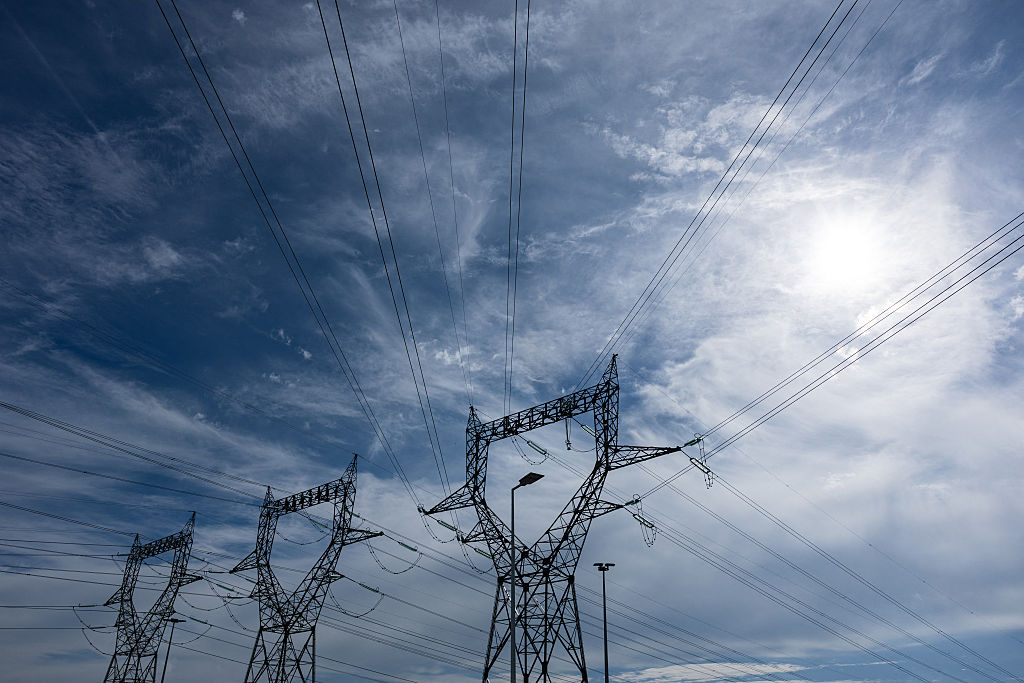
Power lines near the Gravelines Nuclear Power Station in Gravelines, France on Sept. 15 —Sameer Al-Doumy / AFP—Getty Images
Recent weeks have brought red flag after red flag for investment in AI and the related data center boom. Bond yields soared for AI infrastructure giant CoreWeave, a sign that investors view the buildout as increasingly risky. And Meta’s reporting of negative free cash flow for the quarter to fund its infrastructure buildout while saying it might need to raise even more capital to fund its AI buildout not only hit its own stock but contributed to a price decline across the big tech companies.
These developments raised questions across Wall Street about whether too much is being spent too quickly on data center expansion. How questions over data center investment play out has big implications for how companies and investors approach the future of energy and, by extension, climate. A pullback in the pace of new data centers could ease pressure to build fossil generation, but it would also weaken the commercial case for clean energy technologies that need big, reliable buyers who are willing to pay a premium for power.
Most obviously, a dent in the AI buildout would translate directly into a slowdown in related electricity demand growth. In advanced economies like the U.S., data centers will account for 20% of that growth through 2030. By then, data centers are expected to account for 3% of global electricity demand, according to data from the International Energy Agency.
Some climate advocates may initially rejoice at slowing electricity demand. Even as renewable energy expands, grids around the world still rely on fossil fuels. In the U.S. in particular, AI demand has sparked a wave of building new natural gas infrastructure. In the short term, slowing demand would mean lower emissions from the existing system than today’s baseline assumptions and less investment in new natural gas infrastructure.
But a slowing data center build out leaves less mature technologies at risk. From advanced geothermal to new ways of producing nuclear power, big tech companies have been willing to pay more to lock in reliable power sources, thereby accelerating the market for these new efforts. Even unproven technologies like nuclear fusion have received a big financial boost from tech firms speculating that they might help solve their power challenges and give them a competitive leg up in the AI race. In a tighter financial environment with lower projected electricity demand, both the incentive and the financial capacity to make bold bets diminish.
To be clear, data centers are not the only source of growing electricity demand. New manufacturing continues to create the need for power. The need for air conditioning has ramped up in many emerging markets, particularly in the Global South, creating new grid pressures. And electric vehicles continue to take off in many markets outside the U.S.
Even as gas remains resilient, much of the power built to meet demand will come from clean sources, including and especially solar and battery storage. Solar is increasingly cost competitive. And this year’s spike in fuel prices—particularly natural gas—has made local power more appealing. But the companies behind growing sectors like air conditioning and EVs are less involved in local power systems and lack the capital to really shape them like the world’s wealthiest tech companies have. In short, clean energy will take a hit without the backing of big tech.
It’s too soon to tell whether, in the long run, this week’s AI infrastructure recalibration will be a blip in time or part of a much broader realignment. But it’s something that anyone invested in clean energy and climate should be watching closely.
President Donald Trump delivered remarks on Oct. 10, 2026 in Clarksville, Tenn. —Roberto Schmidt—Getty Images
Not content with renaming an international gulf and a cross-border lake, on Oct. 10, U.S. President Donald Trump recently floated the idea of renaming the Atlantic or Pacific Ocean as “Trump Ocean” or the “Ocean of the Americas” at a political rally in Clarksville, Tenn.
“We need an ocean. So, I was thinking of either the Atlantic or the Pacific,” he said to laughter and applause. “We call it ‘Trump Ocean’ or ‘Ocean of the Americas,’ something like that.”
Then, at an Oct. 21 rally in South Carolina, Trump said he asked Google’s CEO, Sundar Pichai, to rename the Atlantic Ocean on Google Maps. According to Trump, Pichai replied, “Please don’t ask us to do that.”
“So, I'll probably pass,” Trump said. “I think let's keep it the Atlantic Ocean.”
While Google has not issued a formal statement on the matter, Trump’s obsession with naming places for himself or America is remarkable. In our view, it reflects a textbook case of “toponymic narcissism”—the use of place naming to remake the world in one’s own image.
Let’s not fool ourselves: Trump knows a thing or two about branding. In fact, his business career has largely revolved around marketing the Trump brand on hotels, golf courses, and even golden sneakers. We shouldn’t be surprised to find him following the same playbook in his second presidential term.
Yet the world map is not a private real estate development. Nor can place names be reduced to a branding exercise. Place names have a greater civic purpose as shared global symbols that should transcend the personal glorification and political interests of any individual leader.
Place names form part of our intangible cultural heritage with cultural significance that will outlive the cartographic whims of President Trump. They shape our geographical imaginations and the way people perceive and understand the world. Geographical naming also has important consequences for education, international relations, and the types of messages we wish to project to the world.
For instance, it is notable that Trump has focused much of his renaming energy on places with Indigenous names, such as Lake Ontario and the Gulf of Mexico. In the case of the Atlantic Ocean, this could also be seen as an attempt to erase an etymology that points through Greece to North Africa. The name derives from the Greek for “Ocean of Atlas,” referring to the mythology of a giant who lives in the Atlas Mountains of northwestern Africa.
As place name scholars, we have spent decades studying the cultural, social, and political aspects of place naming. There is a long history of political leaders and cartographers using place naming to assert raw power by rewriting the world map. In one sense, Trump’s renaming shenanigans are simply the latest flashy example in this broader story of mapping and politics.
But Trump is not merely renaming places to project American power on the world stage. He is also making a mockery of the very act of place naming itself—and, along with it, the international norms that inform the map-making process.
The international community must reaffirm its commitment to respecting the cultural value of place naming and to articulate responsible place-naming principles, especially for geographical features that are shared across international borders. In an open letter co-authored with place name experts around the world, we propose five key principles for responsible place naming:
The first principle is recognizing that place names are culturally significant forms of intangible heritage and shared resources whose stewardship carries responsibilities extending beyond the interests of any particular government, leader, institution, or generation.
Given the cultural significance of place names, our second principle highlights the need for meaningful public participation in place naming decisions. Place names that are changed arbitrarily and without due process should not be recognized by the international community.
Thirdly, place names should not be used to proclaim cultural superiority, advance territorial ambitions, or assert exclusive national ownership over geographical spaces shared among different peoples.
Places should generally not be named for living people. Instead, place naming should serve the public interest rather than promoting the personal legacies of those seeking to commemorate themselves as a form of self-aggrandizement.
Lastly, we recognize that a shared geography need not always have a single name, since multiple place names can bear witness to the layered histories, languages, and attachments through which places acquire meaning. However, this recognition should not extend to condoning the unilateral renaming of shared geographic features without international dialogue among affected countries and communities.
If Trump moves forward with attempting to rename the Atlantic or Pacific Ocean, the international community should stand united in rejecting this attention-seeking act of cartographic malpractice and defend the cultural value of place naming as a cornerstone of our shared world map and geographical imagination.
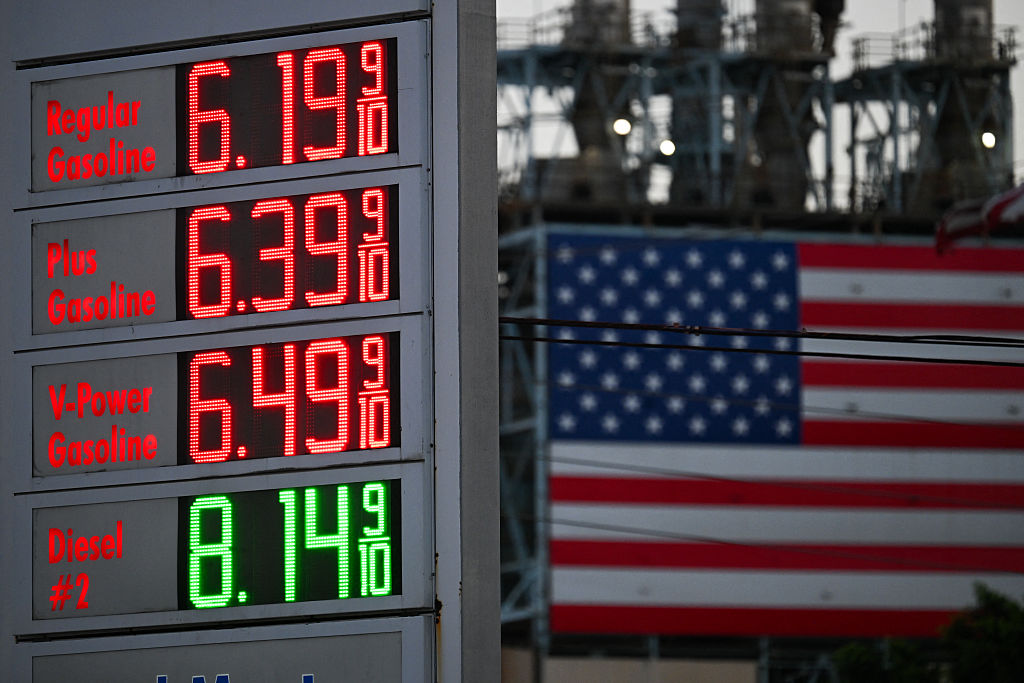
Gas prices at a Shell gas station above $6 a gallon for regular gasoline and $8 a gallon for diesel are displayed across from a U.S. flag outside of the Marathon Petroleum Corp. Los Angeles Refinery in Carson, Calif., on Sept. 22, 2026. —Patrick T. Fallon—AFP/Getty Images
President Donald Trump has invoked a Cold War-era law in an effort to boost oil production and lower energy prices.
In a presidential memorandum issued Thursday, Trump determined that petroleum production, refining, and related activities are essential to national defense under the 1950 Defense Production Act. The determination follows Trump’s declaration of a national energy emergency in January 2025.
“Ensuring resilient domestic petroleum production, refining, and logistics capacity is central to United States defense readiness,” the memo reads. “Without immediate Federal action, United States defense capabilities will remain vulnerable to disruption.”
The memo comes as the price of gas and diesel has soared across the country amid supply disruptions caused by the U.S. and Israel’s war against Iran. Brent crude futures rose 1.2% to $114.47 a barrel early Friday, extending gains after Thursday hit a five-month high. U.S. diesel pump prices averaged $6.32 a gallon, slightly higher than Thursday but below the September record, according to AAA. The high energy prices, and related inflation, have become a defining issue for voters in the coming midterm elections.
Here’s what to know.
What does the memo mean for energy production?
The memo means that energy production shortfalls are seen as a national defense risk.
The memo invokes Section 303 of the Defense Production Act, a law that allows the federal government to intervene in private industry for national defense. Section 303 allows the President to make purchases, purchase commitments, provide financial support and equipment, and expand production through other measures.
The memorandum also removes certain Section 303 requirements through an emergency waiver, including ordinary congressional notification and authorization constraints.
While the memo does not specify which projects could be funded, Vice President J.D. Vance said last week that the Administration would use the Defense Production Act to expand capacity at a Delek U.S. Holdings-owned refinery in Texas.
Without taking action, the memo said, U.S. industry would be unable to provide sufficient energy services in a “timely manner due to constrained financing, long lead times, permitting and infrastructure bottlenecks, and supply chain limitations.”
Has the Defense Production Act been invoked before?
Enacted during the Korean War, the Defense Production Act was first used to expand domestic industries in critical materials, such as aluminum and titanium, for national defense.
Section 303 of the act was also used during the pandemic to fund domestic production of medicines and vaccines. Former President Joe Biden also invoked the statute to support clean energy manufacturing and supply chains, including minerals used in electric vehicle batteries and the production of of energy-efficient heat pumps and insulation.
In April, more than a month after Iran began disrupting shipping through the Strait of Hormuz in retaliation for U.S.-Israeli Feb. 28 strikes, Trump invoked the act to declare petroleum, natural gas, coal, electricity grid, and other energy infrastructure essential to national defense. Citing April’s natural gas determination, the Department of Energy on Monday committed up to $42 million to advance the proposed Constitution Pipeline linking Pennsylvania and New York. The department also announced up to $50 million last week for transmission upgrades in Virginia and West Virginia, citing April’s grid determination.
Last year, Trump signed legislation providing $1 billion for Defense Production Act activities, including energy projects deemed critical to national security.
Trump’s use of Section 303 of the act for fossil fuel projects has drawn criticisms from environmentalists, with the Center for Biological Diversity calling the April memoranda, which waived congressional notification, “unlawful.” Nevertheless, the statute expressly includes energy production and construction in its definition of national defense.
How else has Trump tried to lower energy prices?
The Trump Administration has pursued a number of other measures aimed at lowering energy prices since the Iran War began. Earlier this month, Trump signed an executive order temporarily expanding access to tax-exempt dyed diesel, which is typically reserved for off-road farm and construction vehicles. The Group of 7 countries, including the U.S., also agreed to release 100 million barrels of diesel and crude oil reserves to the world over four months.
In August, the Administration extended the Jones Act waiver for another 90 days, allowing foreign-flagged ships to transport oil and certain other commodities between U.S. ports.
For many of these measures, industry analysts and stakeholders have said the reduction in energy prices is likely to be limited and possibly short-lived. Analysts estimated that the Jones Act waiver was expected to reduce gasoline prices by only pennies per gallon. Capital Economics economist Hamad Hussain said the reserve release could lower diesel prices temporarily, but would not resolve the underlying supply crunch. And analysts warned that the dyed diesel measure would have a limited effect on most consumers since the tax-exempt fuel isn’t widely available at ordinary commercial pumps. A Council on Foreign Relations analysis also suggested that damaged Russian refining capacity may make a near-term effect of the Russia deal on diesel markets unlikely, although Trump said the agreement would supply more than 300,000 tons of diesel to U.S. and global markets immediately.
Meanwhile, oil exports from the Middle East topped prewar levels last week, marking a rebound in regional oil shipments despite continuing security risks. Ships sailing through the Strait of Hormuz, however, still face attacks from Iran, while the Bab el-Mandeb Strait near Yemen has been threatened by the Houthi rebels. Analysts previously told TIME in June that the risk of further attacks and damage to facilities could delay a full-scale recovery.
Thursday’s memorandum could support investment in fuel capacity, but it’s uncertain how quick or measurable an effect it will have on energy prices. Gas prices still depend heavily on globally traded crude, according to the U.S. Energy Information Administration, although they can be influenced by domestic refining and distribution conditions. The U.S. was the largest crude producer globally last year, averaging 13.6 million barrels of crude a day.
Analysts warned, after the April memorandum, that federal support would not necessarily translate into immediate price relief.
“Until the pipes are in the ground and the fuel is flowing or transported, it may not be able to be called a true structural shift,” Cyrus Brooks, director of marketing at energy research firm RBAC, wrote in April.
Still, Brooks said of the April action that federal recognition of energy as important to national security could support important infrastructure investment, potentially relieving a bottleneck in domestic fuel production, refining or transportation.
“Energy security seems to be the brightest neon sign flashing,” he wrote. “Not because it’s everything, but because nothing works without it.”
Governors have no shortage of ideas about how to improve education. But before deciding what to change, they need an honest answer to a more basic question: How are our students doing?
That sounds simple. It isn’t.
We governed Tennessee at different times and from different political parties. But we learned the same lesson: you cannot improve what you are unwilling to measure honestly.
Governors will get the chance to see how students in their state are doing in a critical,often-overlooked subject: civics. But they have to sign up by the end of January to get state-level results on the National Assessment of Educational Progress civics assessment, also known as the Nation’s Report Card, or NAEP.
For newly elected governors, that will mean making a quick decision shortly after taking office. It shouldn’t be a hard one, though.
U.S. students get limited instruction, particularly in early grades, about how our government works, the rights and responsibilities of citizens, and how to apply civics knowledge beyond the classroom. Governors can help change that by prioritizing and measuring what students know and can do in civics.
What we know now is limited but concerning: only 1 in 5 eighth graders in U.S. schools reached the NAEP Proficient level on the most recent Nation's Report Card in civics, meaning the vast majority of students likely struggle to identify the separation of powers and checks and balances spelled out in the Constitution.
Unlike in subjects like reading and math, we don't have state-specific information about how our own students are doing compared to students in other states in civics. That puts leaders at a disadvantage when trying to improve schools and communities and help young people develop the civic knowledge and skills they need to excel academically, in the workforce, and in their communities.
But beginning in 2028, if they meet the January deadline, states can get state-specific results in eighth-grade civics rather than just national averages. Tennessee's academic progress over the past two decades serves as an example of why all states should capitalize on this opportunity. In 2007, Tennessee’s extremely low Nation's Report Card scores in reading and math, which contradicted our own state assessment results, served as a wake-up call. Our state got to work raising K-12 expectations, increasing the rigor of our end-of-year state tests, and improving classroom practices.
The strategy worked: Between 2011 and 2015, Tennessee became the fastest-improving state on NAEP. And progress continues. Recently, for the first time, the state ranked in the top quarter of states for reading and math achievement.
This is why we believe NAEP is a particularly valuable tool. It’s considered the gold standard in assessments and is the only common yardstick that measures student learning across the country. It lets us know whether students today are doing better or worse than kids in those same grades did two years or two decades ago and how students in our state are doing compared to other states.
We didn't always have the benefit of state-level NAEP results. NAEP didn’t produce any state-specific data at all until the 1980s, when Tennessee joined other southern states in a pilot program to determine whether valid state results could be obtained from NAEP data. That paved the way toward a federal requirement 25 years ago that results for all 50 states in 4th- and 8th-grade reading and math be reported publicly.
That was a win for states and kids. But today, we have to ask ourselves, what about those other essential things that children learn in school besides reading and math?
States now have an opportunity to answer that question in civics. We hope they'll take it. We know from experience how valuable it is to have an honest, independent measure of how students are doing. Good policy requires good information. And good leadership requires being willing to confront what that information tells us.
Although the case is considered exceptional, investigators are working to determine how the infection occurred and whether the pathogen played a role in the patient’s death.
 Login