Reading view

Andy Burnham Weighs In As Prince Harry and Meghan Set For Return to U.K.

Harry and Meghan, the Duke and Duchess of Sussex, are expected to move back to the United Kingdom later this year, after six years of living in the U.S. during a period of estrangement from the rest of the Royal family. 

The couple are set to move with their children, Prince Archie, 7, and Princess Lilibet, 5, to a non-royal residence that is said to be outside of London, with both children enrolled to start at a British school in September. The news was first reported by the Daily Telegraph on Wednesday, with multiple outlets since reporting similar details. 

The move follows years of Prince Harry arguing that the security arrangements provided for his family in the U.K. were insufficient. In May 2025, Prince Harry lost an appeal after the British government downgraded his security arrangements following his decision, along with Meghan, to step back from Royal duties in 2020. 

Asked on Thursday about the move and if the British government would pay for the family’s security, Prime Minister Andy Burnham said the issue was “a private matter” and that he “wishes them well in the move that they are making.”

King Charles III was reportedly informed of the couple’s move on Sunday, and in line with their wishes, the Duke and Duchess will not return to their duties previously held as members of the Royal family.

The Duke and Duchess of Sussex last visited the U.K. in July and were hosted by Charles and Queen Camilla at their private residence, Highgrove House, in Gloucestershire, west England. 

Prince Harry also spent time attending events across the country linked to the Invictus Games, a sporting event established by the Duke involving injured or sick international servicemen and women.

Neither the Royal family nor Harry and Meghan have responded publicly to the reports. When asked about the speculation during a roundtable event in Washington on Wednesday, Harry said he had “nothing to say,” per the Associated Press

TIME has reached out to Buckingham Palace, as well as representatives of the Duke and Duchess for comment. 

Harry and Meghan’s break from the Royal family 

Harry and Meghan initially lived and worked in the U.K. following their wedding in May 2018. But amid intense media scrutiny and other issues, they soon expressed desires to pull back from public-facing Royal duties. 

In October 2019, the couple said they would be taking “family time” away from their duties towards the end of the year, CNN reported.  

Then in January 2020, the Duke and Duchess announced their decision “to step back as ‘senior’ members of the Royal Family and work to become financially independent.” The couple said they would split time between the U.K. and North America, to “enable us to raise our son with an appreciation for the royal tradition into which he was born, while also providing our family with the space to focus on the next chapter.”

The late Queen Elizabeth II issued a statement in support of the decision after “constructive discussions” with the family, and following a 12-month review, Buckingham Palace confirmed in February 2021 that Harry and Meghan would not be returning as working members of the Royal family. 

“While all are saddened by their decision, The Duke and Duchess remain much loved members of the family,” a statement read. 

The next month, Harry and Meghan sat down with Oprah Winfrey for a now-infamous interview during which they detailed their decisions to move away from the Royal family and the apparatus around it, which Meghan referred to as “The Firm”.

In the interview, Harry said the decision to withdraw from public duties and move to California was both due to the amount of tabloid press scrutiny and harassment, as well as a lack of support from “The Firm.”

Tabloid headlines focused on Meghan have included descriptions of the Duchess as “gangster royalty” and coming from a “crime-ridden neighborhood.”

In 2023, Harry published his memoir, Spare, outlining details of Royal life. In his book, the Duke revealed how he learned of his grandmother’s death, Queen Elizabeth II, via the BBC, and how his father, Charles, did not hug him following the death of his mother, Princess Diana, in 1997.

While in the U.S., the couple have launched a number of business ventures, including several with Netflix. In December 2022, the couple released a six-episode docuseries on Netflix detailing more details about the early days of their relationship, as well as discussions around racism and stereotypes experienced by the Duchess since the start of their relationship. 

Harry’s battle with the British press

Speaking in 2021 the Duke also detailed his relationship with the British media which has been dominated in recent years by a number of legal battles. Most recently Harry lost a lawsuit against Associated Newspapers Ltd., the publisher of The Daily Mail, with a judge ruling a lack of proof for privacy invasion claims against the paper.  

Before the legal defeat, expected to be the Duke’s last challenge against tabloids, the publisher of the Sun newspaper was forced in January 2025 to pay Prince Harry “substantial damages after using “unlawful techniques” to acquire information on his private life. 

The Duke also won 15 claims in December 2023, accusing Mirror Group Newspapers of unlawfully gathering information for stories published about him through phone hacking and other methods. 

Meghan’s struggles

During the March 2021 interview, the Duchess also opened up about her suicidal thoughts while pregnant with their first child, Archie, in 2019. 

“I just didn’t want to be alive anymore,” she said. “And that was a very clear and real and frightening constant thought.” Meghan added that when she approached Royal staff about seeking outside support, her request was refused. 

The Duchess also relayed conversations between Harry and family members, during which they raised concerns with the Duke about how dark Archie’s skin might be. 

Harry said such conversations took place at the start of his relationship with Meghan. “There were some real obvious signs before we even got married that this was going to be really hard,” he said. 

In 2016, when the couple began dating, a statement from Harry’s communications secretary denounced the wave of racist and sexist comments targeting Meghan, as well as the tone of some of the media coverage about her. “Some of this has been very public—the smear on the front page of a national newspaper; the racial undertones of comment pieces; and the outright sexism and racism of social media trolls and web article comment,” the statement from the Duke’s communications secretary read. 
  •  

UAE Suspends Trade With Iran After Reported Missile Strikes

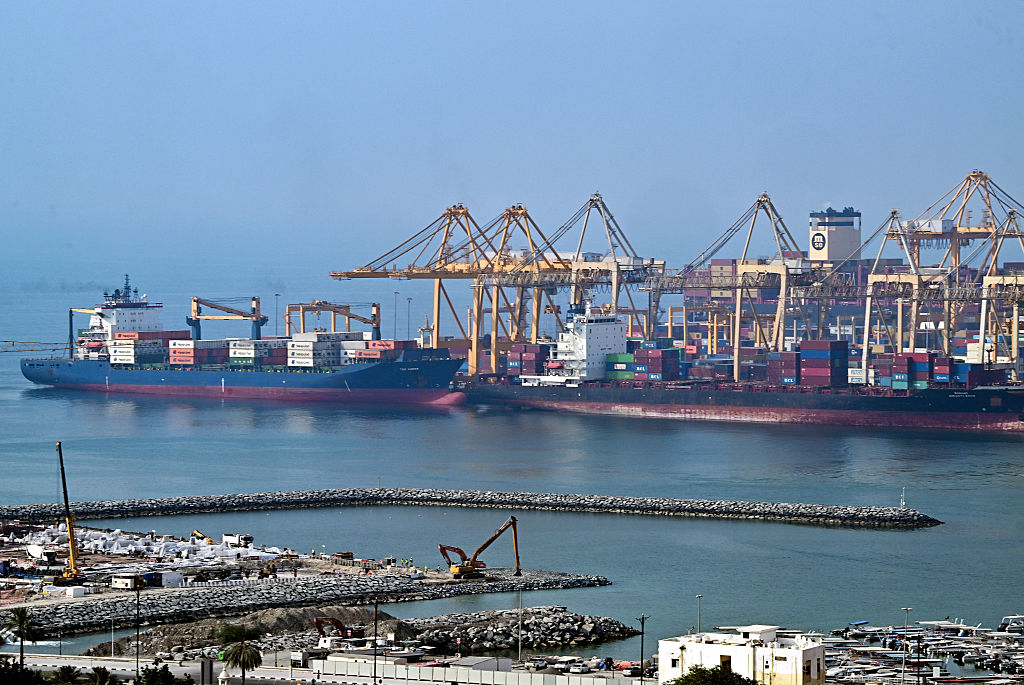
Ships dock at the container terminal in the port of Khor Fakkan, in the United Arab Emirates, on July 14, 2026. —AFP via Getty Images

The United Arab Emirates (UAE) announced Tuesday that “all trade, commercial exchanges, and financial transactions with Iran have been halted until further notice,” alleging that Iran had fired two ballistic missiles toward it. 

The country’s foreign ministry said the decision comes “in light of regional escalations that undermine regional and international peace and security.”

Earlier Tuesday, the UAE’s Ministry of Defense reported that two missiles launched from Iran toward the country, both of which fell into the sea. The statement said it “affirms its readiness to respond to any threats and to resolutely counter any attempts to undermine the security of the country or the safety of maritime navigation in the region.”

Read More: Trump Again Threatens to Bomb Oman

Esmaeil Baghaei, a spokesperson for Iran’s foreign ministry, rejected the Emirati claim on Tuesday, saying that it “undermines ongoing efforts to strengthen trust between countries in the region and prevent the escalation of insecurity,” according to the semi-official Fars news agency. 

“The impact on the Iranian economy could be significant,” Simon Henderson, director of the Bernstein Program on Gulf and Energy Policy at the Washington Institute, tells TIME. “The UAE is one of the top non-oil trading partners with Iran.”

As of April, the UAE accounts for 12.5% of Iran’s exports and 30.43% of its imports, according to Iranian news agency WANA

Iran’s dollar currently ranks as the least valuable currency in the world, and its government told a Russian news agency in April that the war has already cost it some $270 billion in direct and indirect damages.

Regional instability amid the war in Iran

Stability in the region is fragile, as a number of incidents have been recently reported in the Strait of Hormuz. On Tuesday, a vessel reported that it had been struck by an unknown projectile, causing damage to the engine room and a crew casualty, according to the U.K. Trade Maritime Operations Centre (UKMTO). Last Thursday, a separate vessel was struck by a drone. 

The UAE has previously reported the detection of missiles coming toward it, most recently on July 12, when it confirmed that a missile fell outside of its borders.  

In May, the defense ministry reported that it had intercepted six unmanned aerial vehicles within 48 hours that “attempted to target civilian and vital areas in the country.”

One drone, launched from the direction of the UAE’s western border, struck an electricity generator near the Barakah Nuclear Energy Plant on May 17. Its origin has not been confirmed and is under investigation.

During the first few weeks of the conflict, Iran launched a series of more aggressive strikes on targets in the UAE, hitting military, energy, and civilian infrastructure. Iran’s Islamic Revolutionary Guard Corps (IRGC) vowed at the time to “punish aggressors throughout the region,” pointing toward U.S. military assets stationed in the country, as well as other Gulf states. 

Tehran resumed targeting U.S. allies in the Middle East, including Kuwait, Qatar, and Bahrain during the return to hostilities in early July, when negotiations based upon a Memorandum of Understanding collapsed. 

Where do peace plans between the U.S. and Iran stand?

Peace talks between the United States and Iran have made little progress in recent weeks.

President Donald Trump said Tuesday that “there are no talks or conversations going on, or scheduled,” between the U.S. and Iran. He also reaffirmed that the naval blockade on Iranian ports and vessels remains in place, amid ongoing claims that the Strait of Hormuz is “open and operating.”

Marine traffic data suggested Wednesday that some ships were indeed passing through the Strait, but still at significantly lower levels than before the conflict began. 

Earlier this week, the President also threatened to “bomb the s---” of Oman, a U.S. ally and mediator between Washington and Tehran, should it “get in the way” of U.S. attempts to gain  effective international control of the Strait of Hormuz. 

Oman and Iran have reportedly been working toward an agreement to manage traffic through the Strait, which carries roughly a fifth of the world’s oil and gas supply. 

  •  

‘A Flagrant Attack’: International Criminal Court Slams Trump Administration Sanctions

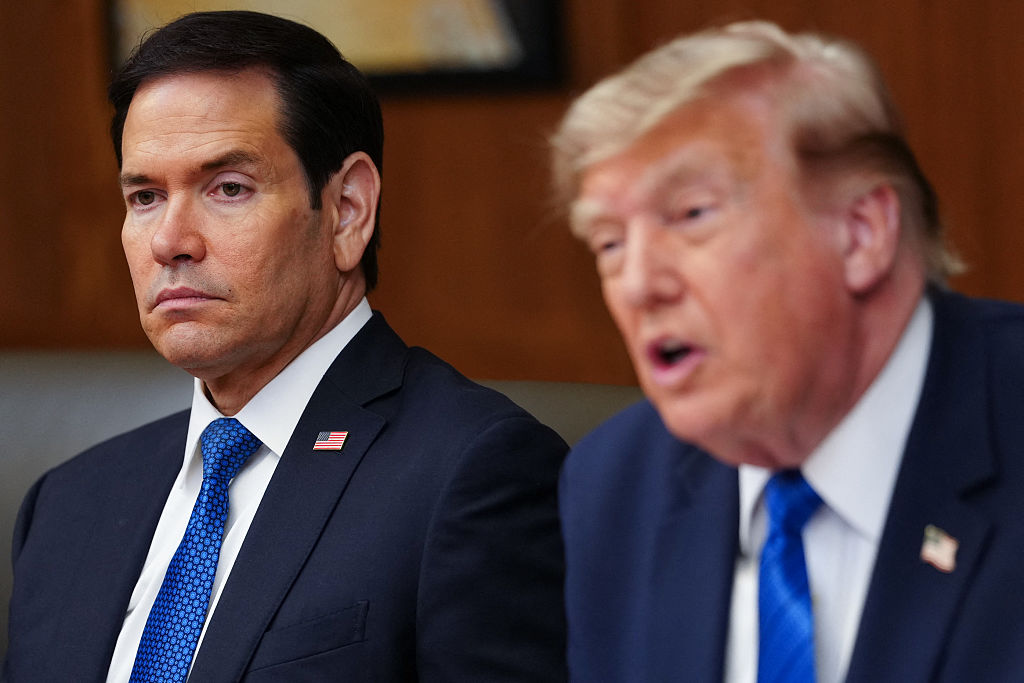
Secretary of State Marco Rubio sits next to President Donald Trump during a Cabinet meeting at Camp David in Maryland on July 31, 2026. —Aaron Schwartz—AFP via Getty Images

The International Criminal Court (ICC) said Wednesday that it “deplores” sanctions imposed this week by the U.S. State Department on its president, Judge Tomoko Akane, and Abdoulaye Seye, a Senegalese senior trial lawyer for the Office of the Prosecutor.

The State Department announced the sanctions Tuesday, accusing Akane and Seye of having “directly engaged in efforts by the ICC to investigate, arrest, detain, or prosecute officials whose government has not consented to ICC jurisdiction.” 

The sanctions include the freezing of assets in the country, blocking financial transactions, and prohibiting entry to the U.S. They were imposed under an Executive Order issued by President Donald Trump in February 2025, which reads: “The United States unequivocally opposes and expects our allies to oppose any ICC actions against the United States, Israel, or any other ally of the United States that has not consented to ICC jurisdiction.”

Neither the U.S. nor Israel is a state party to the Rome Statute, the treaty that founded the ICC and went into effect in 2002, and therefore do not recognize the jurisdiction of the court. 

Read More: Trump Administration Vows to Dismantle the International Criminal Court

“These sanctions are a flagrant attack against the independence of an impartial judicial institution which operates pursuant to the mandate conferred by its states parties,” the ICC statement said. “Such measures targeting judges, prosecutors and staff who work towards the fulfilment of the mandate that was conferred to the ICC by states undermine the rule of law.”

The Court further warned that the sanctions put “international legal order” at risk.

In his first term, Trump imposed sanctions on ICC Prosecutor Fatou Bensouda and another senior official, Phakiso Mochochoko. These were later lifted under the Biden Administration. 

The ICC says that nine of its 18 judges are now under sanctions from Washington, as well as both deputy prosecutors, a former prosecutor, and one other member of staff. 

Why does the Trump Administration oppose the ICC?

Announcing the sanctions on Tuesday, Secretary of State Marco Rubio called the ICC a “corrupt and fatally politicized supranational court.” He accused it of repeated attempts “to assert authority over nationals of the United States and other countries that have not consented to its jurisdiction or ratified the Rome Statute.”

The Trump Administration has long pushed back against the ICC’s investigations and charges against nationals from both the U.S. and Israel. February’s Executive Order said the ICC’s recent actions against both countries “set a dangerous precedent.”

The State Department also launched a campaign in July to “dismantle” the ICC’s jurisdiction, saying it will “systematically disable the ICC’s ability to operate, target American servicemen or officials, or otherwise threaten American sovereignty.” 

But the tensions trace back to Trump’s first term, when the ICC sought to investigate possible war crimes committed by the CIA and military personnel in Afghanistan. Bensouda requested authorization in 2017 to investigate those allegations. Trump then brought sanctions against her in 2020.

The U.S. has also rebuked its actions in recent years against Israel.

In November 2024, the ICC issued arrest warrants for Israeli Prime Minister Benjamin Netanyahu and the recently dismissed Defense Minister Yoav Gallant. Both were accused of “crimes against humanity and war crimes" pertaining to the ongoing Israel-Hamas War, including “starvation of civilians as a method of warfare” and “intentionally directing attacks against a civilian population.”

The conflict was ignited by Hamas’s terror attack in southern Israel on Oct. 7, 2023, which left some 1,200 people dead and 250 taken hostage. Since then, over 73,000 Palestinians have been killed in Gaza—1,262 of whom have been killed since a cease-fire began last October, according to Gaza’s Ministry of Public Health on Aug. 15. 

The prosecutor also pursued arrest warrants for Hamas leaders Mohammed Deif, Ismail Haniyeh, and Yahya Sinwar, all of whom have since been killed. 

During Rubio’s Senate confirmation hearing in 2025, he addressed the warrant for Netanyahu. “This is a test run. This is a trial run to see, ‘Can we go after a head of state from a nation that’s not a member?’” he said, adding: “If we can go after them and we can get it done with regards to Israel, they will apply that to the United States at some point.”

Israel has denied the ICC’s war crimes accusations and challenged its jurisdiction. The Pre-Trial Chamber initially rejected that challenge, but in April 2025 the Appeals Chamber sent it back for reconsideration. The arrest warrants against Netanyahu and Gallant remain in effect.

Netanyahu commended Rubio’s sanctions announcement on Tuesday, describing the ICC as “a kangaroo court that cloaks its abuse of power in the language of international law while undermining the very principles of justice.” 

  •  
❌