From state and local food-safety response to the federal health agencies that fund that work, a record-breaking year for cyclosporiasis cases runs up against the Trump administration's cuts last year.
Unable to force Tehran’s surrender, President Donald Trump appears to be taking his frustration out on Oman and other U.S. partners in greater measure.
In a new Gallup poll, 54% of Americans said they drink alcohol, tying last year’s record low. —Getty Images
Americans continue to drink less alcohol than ever before, according to a new Gallup poll.
Only 54% of U.S. adults surveyed by the analytics firm in July said they ever drink alcohol—the same share as last year and the lowest recorded since Gallup began surveying Americans on this topic in 1939, says Lydia Saad, Gallup’s director of U.S. social research.
“We saw a significant decline in people’s use of alcohol last year, but whether that was a one-time reaction or a trend, we had to wait and see,” Saad says. “This year’s result tells us that whatever is happening out there is a sustained change. Drinking has gone down across all age groups.”
More public awareness of alcohol’s health risks could be prompting Americans to drink less, the poll results suggest. A little more than half of Americans surveyed this year said that alcohol is “bad for health,” compared to the less than 30% of people who said that a decade ago; and 86% of people polled said they had heard of recent studies about the long-term health effects of alcohol—a 7% increase from 2024. Drinking alcohol has been linked to several forms of cancer, as well as higher risks of liver and heart disease, among other health effects.
“The decline in alcohol use coincides with a sharp increase in concern about the health risks of drinking,” Saad says.
But researchers who study alcohol say the poll results don’t provide a complete picture of alcohol use in America. While drinking might be declining overall, alcohol remains the country’s second-deadliest drug, behind tobacco. Alcohol kills about 178,000 people yearly, and harmful drinking remains a challenge for many people.
“Many people are changing their attitudes towards drinking and intoxication for health reasons, which means that the number of people who say they drink may be declining because lighter drinkers who are more health conscious and more capable of changing their drinking are maybe choosing to cut back or not drink at all,” says Thomas Babor, a professor emeritus at the University of Connecticut School of Medicine who studies alcohol and alcohol addiction.
“But the rates of drinking and drinking problems remain unacceptably high” among some groups, including college students and older people, Babor says. “The big picture is: alcohol consumption is one of the biggest risk factors for chronic diseases and many other health conditions.”
According to the 2025 National Survey on Drug Use and Health (NSDUH), 44% of U.S. teenagers and adults who drank alcohol said they had engaged in binge drinking in the past month, and about 10%—about 14.5 million people—said they engaged in heavy drinking, defined as binge drinking on 5 or more days in the past 30 days.
NSDUH results show that the numbers of binge and heavy drinkers declined overall since 2021. But percentages for binge and heavy alcohol use among underage drinkers didn’t change from 2021 to 2025. Among people aged 65 and older, about 10% in 2025 said they engaged in binge drinking, compared to about 12% in 2021.
In the new Gallup poll, people were asked if they “sometimes drink more alcoholic beverages than you think you should.” Some 13% of respondents said yes to that question, another record low, according to Gallup.
More research is needed to better understand why people are drinking less, says Traci Toomey, a public health policy expert at the University of Minnesota who studies alcohol and cannabis. Health concerns are likely a factor, but there may be other reasons too, she says.
It isn’t clear if an increase in cannabis use, for example, is driving some of the decline. “We don’t know if it’s a substitution, but that’s a question we need to answer,” Toomey says.
Use of GLP-1 drugs, which studies suggest may help reduce alcohol consumption and craving in people with alcohol abuse disorder, along with higher alcohol prices and policies to curb harmful and underage drinking, may also be playing a role, she says.
Saad, of Gallup, says there could be political factors at play too. According to the new Gallup poll, alcohol use has declined significantly among Republicans and Independents, while Democrats’ alcohol consumption has remained virtually unchanged since 2023.
“It could be worth looking into what kind of political messaging is going on, and if it’s more effective among Republicans and Independents than Democrats,” Saad says.
She notes, however, that “we haven’t seen strong anti-alcohol messages out of the [Trump] Administration.” In January, the administration released updated dietary guidelines that no longer specified a daily limit for alcohol consumption.
Dr. Mehmet Oz, who leads the Centers for Medicare & Medicaid Services, said at the time that alcohol is a “social lubricant that brings people together.”
“In the best-case scenario, I don’t think you should drink alcohol, but it does allow people an excuse to bond and socialize, and there’s probably nothing healthier than having a good time with friends in a safe way,” he said. The World Health Organization, supported by emerging research, has asserted that no amount of alcohol is safe for health.
A hacker pretending to work for a leading cryptocurrency news website targeted several cybersecurity professionals using Google Docs as a way to deliver malware.
Google is giving publishers a new button that lets readers make them a preferred source across Search, Discover, and Google News, potentially boosting their traffic as AI search sends fewer clicks to the web.
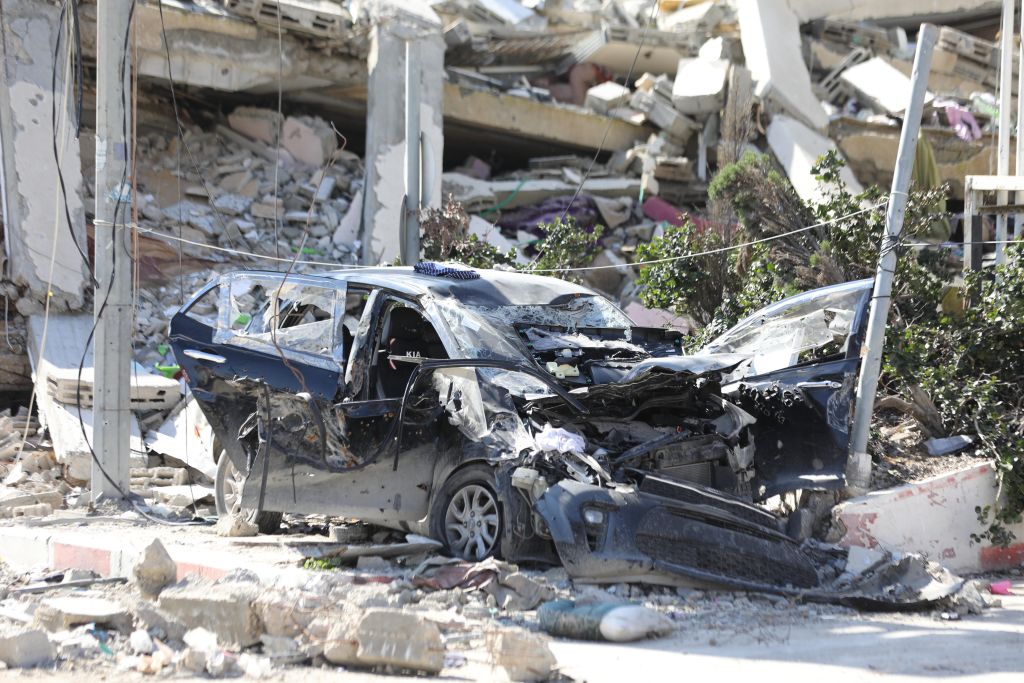
A general view of the damaged car in which 5-year-old Hind Rajab and members of her family died after Israeli forces fired on the vehicle in the Tel al-Hawa neighborhood of Gaza City, Gaza. —Dawoud Abo Alkas—Anadolu/Getty Images
The Israel Defense Forces (IDF) has acknowledged for the first time that its soldiers opened fire on a vehicle carrying 5-year-old Palestinian girl Hind Rajab and six of her relatives in Gaza, and said it would launch a criminal investigation into the incident.
The admission, issued Wednesday as part of the IDF’s review of roughly 150 “exceptional” incidents involving its troops during the war in Gaza, reverses the military’s previous denial that its forces were in the area when Rajab and her relatives from the Hamada family were killed in January 2024.
In findings published by its General Staff Fact-Finding and Assessment Mechanism (FFAM), an internal IDF body tasked with conducting factual reviews of exceptional operational incidents, the IDF said Israeli troops fired on the Hamada family’s vehicle as it approached them, killing five passengers.
Rajab and her 15-year-old cousin Layan Hamada initially survived. Twelve days later, their bodies were recovered from the vehicle by rescue workersreturning to the area, along with those of the five relatives who had been killed in the initial shooting.
The IDF said it was opening a criminal investigation after its review identified alleged failures in coordinating the movement of a Palestine Red Crescent Society (PRCS) ambulance that was sent to rescue the girls. The two paramedics inside the ambulance were also killed.
“In the hours shortly after the firing, following a telephone call to rescue authorities, in which the two girls participated and later Hind alone, the movement of a Palestine Red Crescent ambulance was coordinated for the purpose of evacuating the casualties,” the Israeli military said.
It continued: “According to the allegations raised, upon the ambulance’s arrival at the scene of the incident, a shell was fired toward it, resulting in the deaths of the two paramedics travelling in it. Several days later, the bodies of the seven members of the Hamada family, including the bodies of Hind and Layan, were recovered from the vehicle. In addition, the bodies of the two paramedics were recovered from the ambulance.”
In a statement on Thursday, Hind Rajab’s mother, Wesam Hamada, said, “I do not want a closed military investigation. I want an independent, transparent investigation and genuine accountability for everyone responsible.”
What happened to Hind Rajab
The Hamada family was traveling through Gaza City on Jan. 29, 2024, after Israeli evacuation orders prompted them to leave the city’s Tel al-Hawa neighborhood, when their vehicle came under fire.
The girls contacted rescue authorities for help. Recordings released by the PRCS in February 2024 captured Layan speaking with an emergency dispatcher before gunfire was heard and the call ended.
When the organization called back, Rajab answered and remained in contact with emergency personnel for hours as they tried to arrange her rescue. In the recording, Rajab tells a dispatcher that everyone else in the car is dead and that a tank is approaching. She repeatedly pleads for someone to come and rescue her, and as daylight fades, says she is afraid of the dark.
The recordings later became central to Kaouther Ben Hania’s The Voice of Hind Rajab, which uses Rajab’s real voice and was nominated for an Academy Award for Best International Feature Film 2026.
“IDF troops fired at a vehicle that was approaching them while travelling contrary to the advanced notice that had been published in an announcement by the IDF Spokesperson to residents of the area,” the Israeli military said in its findings Wednesday. “As a result of the fire, five of the vehicle’s passengers were killed, and two survived: Hind Rajab and her cousin Layan Hamada.”
In the hours after the shooting, the PRCS sought to send an ambulance to evacuate the girls and coordinated its movement to the scene. According to the IDF, allegations reviewed by the FFAM indicated that a shell was fired toward the ambulance after it arrived, killing the two paramedics inside.
“Following review of the findings and due to alleged failures in the coordination of the movement of the Palestine Red Crescent ambulance, it has been decided to initiate a criminal investigation of the incident by Military Police Criminal Investigation Division,” the IDF said Wednesday.
AWashington Post investigation previously found that the PRCS dispatched the ambulance after coordinating with Israeli authorities to secure a safe route. The ambulance came under fire after it reached the area, killing the two paramedics.
Days later, the bodies of all seven members of the Hamada family, including Rajab and Layan, were recovered from the vehicle, while the bodies of the two paramedics were found in the ambulance.
The deaths of Rajab and her relatives were among the most high-profile civilian casualties of the early months of the war in Gaza. Her fate became the subject of international concern as recordings of her calls with emergency personnel circulated around the world and prompted widespread calls for her rescue.
The IDF had previously denied involvement. In February 2024, it told The Times of Israel that “IDF troops were not present near the vehicle or within firing range of the described vehicle in which the girl was found.”
Before Rajab’s body was recovered, the IDF also told the Washington Post that it was “unfamiliar with the incident.” It gave a similar response to CNN, which had provided the military with coordinates supplied by the PRCS.
What else the IDF announced
The criminal investigation into the Rajab case was one of five decisions announced Wednesday involving incidents examined by the FFAM.
The IDF said a second criminal investigation would examine the deaths of 15 Palestinians, including medical personnel and a U.N. employee, during three shooting incidents in Tel al-Sultan, a neighborhood in Rafah, on March 23, 2025.
“They were killed in their uniforms. Driving their clearly marked vehicles. Wearing their gloves. On their way to save lives. This should never have happened,” said Jonathan Whittall, then head of the U.N. Office for the Coordination of Humanitarian Affairs in the occupied Palestinian territory, who helped coordinate the recovery mission. Whittall said that a U.N. vehicle, an ambulance, and a fire truck had been crushed and partially buried and that the bodies had been recovered from a mass grave.
Referring to the incident, the IDF said Wednesday that its soldiers had been conducting an ambush against suspected Hamas operatives when they opened fire on the vehicles. “It later became apparent that the vehicles struck in the first and second shooting incidents were a fire truck and ambulances, and that the vehicle struck in the third shooting incident was a Palestinian UN vehicle,” the military said. It said six of those killed were identified as members of Hamas.
The IDF also acknowledged that after the shooting, troops “decided to crush the vehicles and to cover the bodies with metal mesh.” The Military Prosecution, the legal body responsible for reviewing FFAM findings, concluded that “the firing conducted during the incident raises a reasonable suspicion of criminal misconduct,” prompting the second criminal investigation.
The Military Prosecution declined to launch criminal investigations into three other incidents reviewed by the FFAM: the Israeli strikes that killed seven World Central Kitchen employees in April 2024; an IDF strike on a Médecins Sans Frontières (MSF) building in Khan Yunis on Feb. 20, 2024, that killed two employees; and an incident in Gaza City on Nov. 18, 2023, in which two MSF employees were killed.
In the World Central Kitchen case, the IDF said its review found “serious failures” that led Israeli forces to mistakenly conclude that Hamas operatives were traveling in the aid group’s vehicles, but determined that commanders’ decisions did not raise a reasonable suspicion of criminal misconduct. Two officers had previously been removed from their positions and three others formally reprimanded over the strike.
The five cases are among roughly 150 incidents that the IDF says the FFAM has reviewed since the war in Gaza began after Hamas launched its Oct. 7, 2023, attack on southern Israel, killing roughly 1,200 people and taking about 250 hostages.
More than 73,000 Palestinians have been killed in Gaza since the start of the war, according to Gaza’s Health Ministry. In the absence of independent monitoring on the ground, the ministry is the primary source for casualty data relied upon by humanitarian groups, journalists, and international bodies. Its figures do not differentiate between civilians and combatants and cannot be independently verified by TIME. Data from the IDF suggests a Palestinian civilian death rate of 83%.
Israeli rights groups have long questioned the effectiveness of the military’s system for investigating alleged wrongdoing by its own forces.
An analysis by the Israeli human rights organization Yesh Din of complaints involving soldiers’ conduct in the West Bank between 2018 and 2022 found that just 0.4% of cases in which a Palestinian was killed and the fatality was brought to the military’s attention resulted in a prosecution—one prosecution for every 219 fatalities. B’Tselem, another prominent Israeli human rights organization, has cited Yesh Din’s 0.4% prosecution rate, saying it demonstrates the failure of Israel’s military and civilian legal systems to hold soldiers accountable for killing Palestinians.
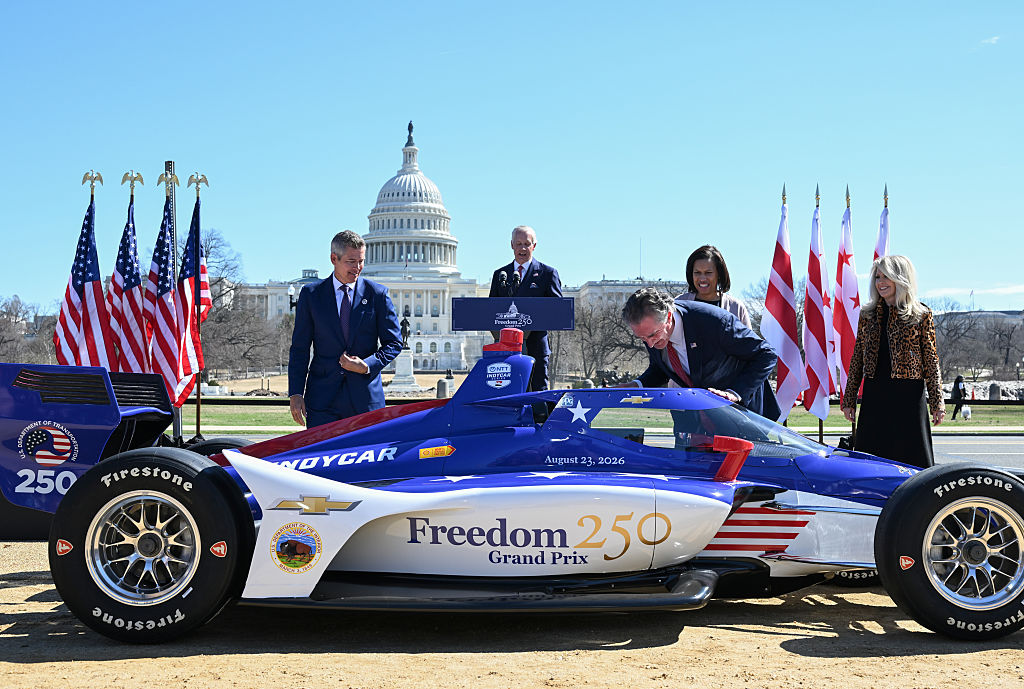
Transportation Secretary Sean Duffy; Interior Secretary Doug Burgum; Washington, D.C., Mayor Muriel Bowser; and Monica Crowley, chief of protocol at the State Department, unveil the new Freedom 250 Grand Prix Indycar during a news conference on the National Mall in Washington, D.C., on March 9, 2026. —Matt McClain—Bloomberg/Getty Images
An IndyCar race consisting of 25 drivers will take place around the National Mall in the heart of Washington, D.C., on Saturday and Sunday.
IndyCar is the top level of single-seater auto racing in the U.S., best known for the “Indy 500,” an annual 500 mile race in Indianapolis.
"This will be like no other race ever. This will get the highest ever ratings of any such race," Trump said in July, when the top IndyCar drivers participating in the race visited the White House.
Trump himself is scheduled to take a ride around the 1.7 mile race track in his presidential limousine, known as “The Beast” before the competition begins, White House officials told multipleoutlets.
The event is being hosted by Freedom 250, the organization Trump established through an Executive Order in January to coordinate the Administration’s semiquincentennial events. The race follows other high profile events this summer in celebration of the milestone anniversary, including a UFC fight on the White House grounds, an athletics tournament dubbed the Patriot Games, and the world’s largest fireworks show.
Here’s what to know about the 250 Grand Prix .
When is the race?
Practice races will take place on Saturday, beginning at 9 a.m. local time and continuing throughout the day.
The real race will then begin at 1:10 p.m. on Sunday.
What is the route?
Drivers will race for 147 laps, covering a distance of roughly 250 miles.
The 1.66 mile, 7-turn track begins on 3rd Street near the Capitol building at the east end of the National Mall in Washington, D.C., before jutting down Pennsylvania Avenue, the course’s longest straight at 0.4 miles. It then makes turns on 9th Street, 7th Street, and Independence Avenue, passing sites including the Lincoln Reflecting Pool and the Smithsonian Museum before circling back onto 3rd street to finish off.
Who’s paying?
Penske Corp., the owner of IndyCar, is picking up most of the tab for the race, according to Bud Denker, Penske Corp. president and chair of the Freedom 250 Grand Prix.
An exact price tag for the event is unknown, but Denker said in July that the race is “much more” than IndyCar’s Detroit street race, which has a budget of $20 million.
A $90 million budget allocated by Congress for special events in Washington will cover security costs, according to Deputy Mayor for Public Safety and Justice Lindsey Appiah, who spoke at a public briefing in July.
The federal funding is a part of the Emergency Planning and Security Fund, which is designed to support presidential events, including those related to the U.S.’s 250th birthday.
How can you watch?
Organizers expect roughly 140,000 spectators to attend the race in person throughout the weekend.
Free tickets were given to 100,000 people through a lottery. The only other way to watch the event up close is to purchase an all-inclusive food and beverage weekend pass to the Champions Club, an exclusive viewing venue built for the race overlooking 7th Street and the National Mall, for nearly $5,500.
Venues for the race open to the public at 8 a.m. on both days.
For viewers watching the race remotely, FOX will be streaming the events.
You can also access FOX’s coverage through certain streaming platform bundles such as YouTube TV, Hulu +, Fubo, or Sling TV.
Flight disruptions
The Federal Aviation Administration last week said it expects to pause flights at Reagan National Airport for three hours for the race from 10:15 a.m. to 1:15 p.m. on Sunday.
“The FAA has been planning and coordinating with stakeholders to help ensure the safe and efficient movement of air traffic during Freedom 250 events,” the agency said in a statement. “As part of that effort, the agency will implement traffic management initiatives at Ronald Reagan Washington National Airport.”
Flights were also halted for several hours on July 4 due to Trump’s fireworks show.
Concerns for D.C. artifacts
Due to the vibrations caused by the race cars, some preservationists and museum representatives are worried for the safety of artifacts stored in the many museums along the race route.
Mary Okin, the assistant director of the Living New Deal, a non-profit dedicated to preserving the legacy of President Franklin Delano Roosevelt, wrote a letter last month to the U.S. General Services Administration (GSA) expressing her concern that the vibrations could damage the frescoes of the Wilbur J. Cohen Building, which the GSA manages.
“In the foreseeable event of a race vehicle losing control, or a crash that sends debris, such as tire marbles flying, or sparks a fire, what protective features will be in place ahead of the race to ensure that vibration, flying car parts, and other high speed or collision impacts do not damage this national treasure?” Okin additionally cautioned in her letter, referencing the Wilbur J. Cohen building.
The National Gallery of Art previously conducted a study to gauge the potential threat of the vibrations, but did not reveal its findings.
“In preparation for the Freedom 250 Grand Prix, the National Gallery conducted an extensive vibration study and based on the results we have implemented a set of measures to ensure the safety of our staff, visitors, collection, and facilities during the race,” gallery spokesman Chris Abanavas said in a statement to The Washington Post. “While we are not releasing the specifics, I can share that any such measures are only being taken out of a great abundance of caution.”
The International Congress of Mathematicians met in Philadelphia last month, its first U.S. meeting since 1986. Minutes after accepting the Fields Medal, mathematics’s highest honor, Jacob Tsimerman told reporters he was leaving academia to work on AI safety. “I think the world is changing,” he said, adding that he did not expect the mathematical career to survive in its present form.
Two months earlier, he had been one of nine mathematicians asked to review whether an AI model had truly refuted an 80-year-old central pillar of modern geometry, known as the Erdős unit distance conjecture. Tsimerman and his peers determined that it had, and their commentary alongside the 18-page proof helped translate the machine's argument into mathematics a human could understand.
The breakthrough, and subsequent report, reflected how the bottleneck that holds us back from forging new discoveries in mathematics, and, increasingly, in every other field, is changing. For most of history, the scarce resource was discovery. With AI, discovery is nonstop, and human confirmation is now what is scarce.
To be clear, we are AI optimists. We believe AI tools will complement human ingenuity and expand what we can know and build, but our infrastructure for vetting and certifying discoveries was built for human throughput, and that is now the binding constraint. That is what holds innovation back. The answer to this problem is formalization: translating AI’s outputs into precise forms whose correctness can be checked automatically. Building the infrastructure to make verification routine is now a national-scale engineering problem.
Machines are outrunning us in more than math. The same is happening to the code that runs hospitals, banks, and power grids. In April, for example, Anthropic disclosed that its Mythos model could find unknown vulnerabilities in major operating systems and browsers, and restricted access to fifty organizations racing to patch them. Soon after, Microsoft engineers found 90 critical flaws in a widely used product; and in June, Sen. Mark Warner told a Senate hearing, citing the NSA director, that the tool "broke into almost all of our classified systems, not in weeks but in hours."
All of this arrives in a world that already runs on code we assume is correct. In July 2024, a single faulty software update, not a cybersecurity attack, grounded flights and disrupted hospitals worldwide. Nowadays, developers can “vibe code,” or use generative AI to write code with natural language prompts. This lets teams build quickly, but at the same time can produce vast quantities of code nobody fully understands.
The same AI systems accelerating discovery can also solve the resulting information overload — if we pair their generative power with the rigor of mathematics.
For decades, researchers in defense, intelligence, academia, and industry have built an alternative to blind trust: formal methods, systems for proving that software mathematically will do exactly what it was designed to do. Like the way a software compiler translates a program into instructions a computer can execute, formal verification takes code, a specification of what it should do, and a proof connecting the two, and accepts the program only if every logical step checks out. This makes it possible to automatically validate AI output, and more broadly rigorize software and other security guarantees. And generative AI tools have made this sort of formalization broadly accessible in a way it never was before.
Once proof checking is cheap, the next bottleneck becomes writing the right specification. Deciding precisely what a system should do and capturing the world around it remains a matter of human judgment. A flawless proof of the wrong specification is still an answer to the wrong question. Formal verification cannot stop phishing, prevent every failure in a complex human system, or certify an AI model's overall safety—but it can eliminate whole classes of errors in critical software. For systems where failure can mean harm to millions, this should be a crucial step in the adoption of AI-generated code.
The Leiden Declaration, endorsed in June by the International Mathematical Union, warns that AI threatens the verifiability of proof. We would put it the other way around: mathematics offers the infrastructure to make generative AI more trustworthy. For this reason, the United States should treat that mathematical rigor as a national mission. We need public infrastructure for verified software: open libraries of verified components and specifications, standards and benchmarks, better tools for checking updates, and training programs that connect mathematics, computer science, engineering, and national security—coordinated across agencies rather than confined to one program. And because formal methods rest on deep mathematical foundations, this requires sustained investment in mathematics research and education, not only in the applications built on top.
Companies operating critical infrastructure should not rely solely on reactive patching and bug bounties where failure could hurt the public. Instead, they should aim to build in auditing and formal guarantees from the start. The goal is not to formally verify every line of every program, but to identify the logic of critical systems, specify what that logic must and must not do, and achieve mathematical assurance in that logic.
Mathematics has weathered crises of trust before. Geometry, infinity, logic, and the nature of proof each threw the field into foundational doubt, and each time the response was more precise languages, stricter standards, and better verification. That rigor is what made mathematics scalable, and software now needs the same transformation. As AI writes more of the code the world runs on, blind trust is no longer good enough. The question is whether the United States will lead the shift to mathematical trust, or wait for the failures that force it.
 Login
Login