Reading view

Meet Sean Parnell, Pentagon's Chief Spokesperson and a Contender to Succeed Army Secretary Driscoll
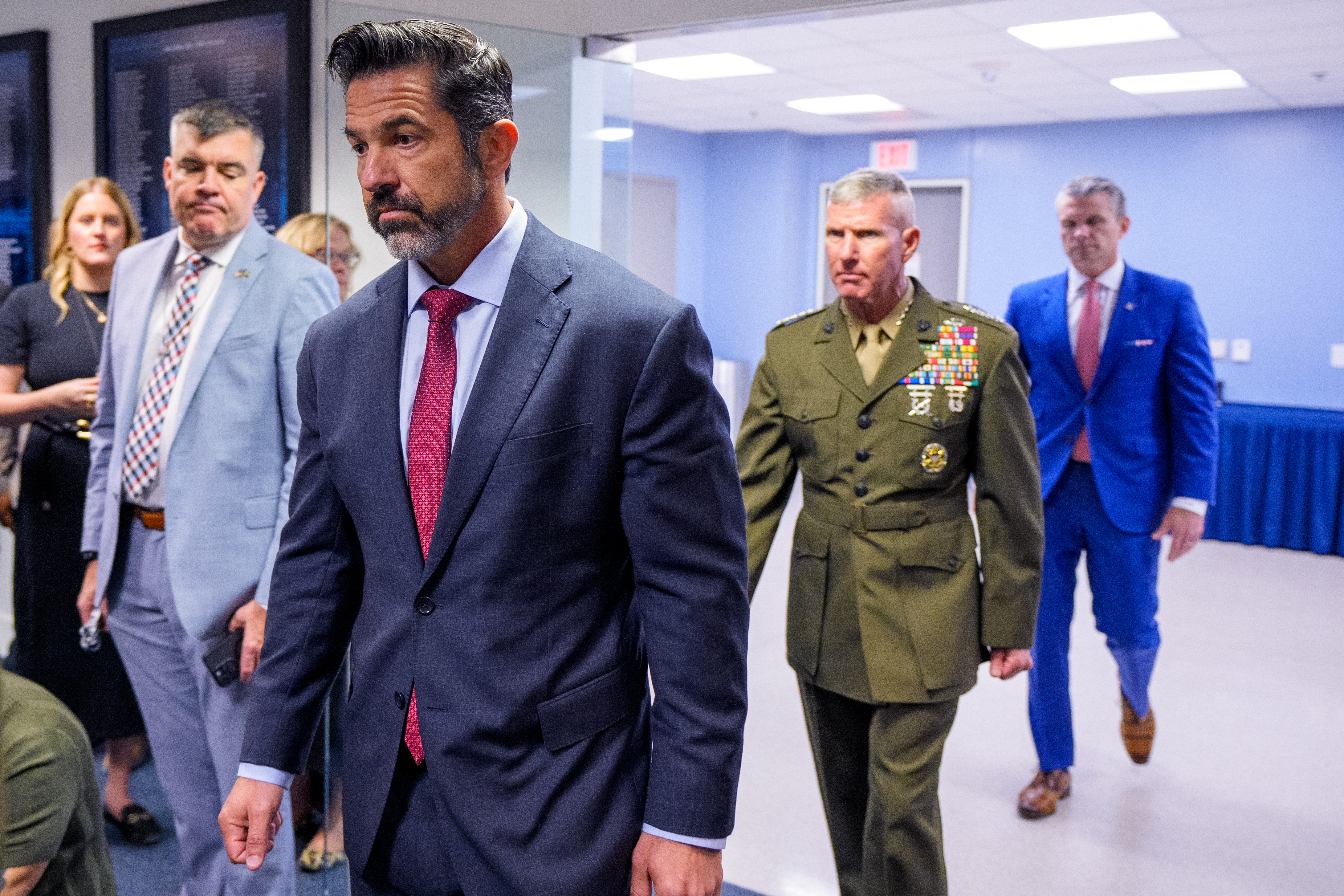
Chief Pentagon spokesman Sean Parnell, Commandant of the Marine Corps General Eric Smith, and Secretary of War Pete Hegseth at the Pentagon on Aug. 26, 2026. —Andrew Harnik—Getty Images

Prior to Army Secretary Dan Driscoll submitting his resignation Monday, Chief Pentagon spokesperson Sean Parnell had been suggested by some close to Defense Secretary Pete Hegseth as a potential replacement for the Senate-confirmed position.

The Hill reported last week that Parnell’s name was being floated, citing two unnamed sources familiar with the matter.

Asked about the reports, a senior Administration official told TIME: “Sean Parnell is 100% focused on the job he was appointed to by President Trump and Secretary Hegseth.”

News of Driscoll’s departure from the role he held for around 18 months came after months of reported tensions with Hegseth and turmoil within the department.

According to the Atlantic, a person familiar with Driscoll’s resignation said he had recently “brought up concerns with the Administration surrounding Army transformation and readiness and Hegseth’s blocking those efforts specifically by firing the generals who were responsible.”

White House spokesperson Anna Kelly did not address the tensions and fallout when approached by TIME, but instead emphasized that the United States Army is “more powerful than ever thanks to [Driscoll’s] work alongside the Commander-in-Chief and Secretary of War.”

Driscoll’s resignation is the latest in a series of high-profile departures within the Pentagon, following the April ouster of the Army’s top uniformed leader, Gen. Randy George, and the June departure of the lead commander in Europe and Africa, Gen. Christopher Donahue.

The Washington Post reported that Hegseth had sought to remove George several times and that Driscoll had previously blocked or delayed those efforts, arguing that George had done nothing wrong and should be judged on merit.

Driscoll openly praised George, referring to him as “an amazing, transformational leader” whom he loved and respected during an April House Appropriations Committee Hearing.

Alongside the reported tensions, Hegseth has also come under serious scrutiny for the duration and mounting cost of the Iran war, which surpassed the six-month mark last week.

“I don’t have any confidence in him anymore. I think he’s all over the place—he’s accelerating the retirement or forcing out some of the most distinguished leaders in the DOD that we have,” Republican Sen. Thom Tillis of North Carolina said in July.

Meanwhile, under Parnell, the Department of Defense has imposed various restrictions limiting journalists’ access in the Pentagon.

In an unprecedented move in June, the department designated its press office a classified area.

“The Pentagon Press Office has been redesignated as a Sensitive Compartmented Information Facility due to speechwriters from the Office of the Secretary of War sharing the facility,” said deputy Pentagon press secretary Joel Valdez. “As a result, journalists will no longer be permitted to enter the office space. There’s nothing controversial about that.”

Now, with talk turning to who may replace Driscoll in the pivotal role of Army Secretary, Parnell's name continues to be floated. Notably, whoever is selected would need to be confirmed for the position by the Senate. 

Here’s what to know about Parnell's military record, his past controversies, and more.

Parnell is an Afghanistan veteran who penned a memoir on his experience

Parnell arrived in Afghanistan in 2006 and during his 16-month deployment was awarded two Bronze stars and the Purple Heart. He was deployed alongside his platoon, nicknamed the Outlaws.

He returned home with shrapnel in his leg and a brain injury that had left him with vision problems.

Following retirement on medical grounds, he penned a 2012 war story memoir titled Outlaw Platoon, in partnership with author John R. Bruning, detailing his experiences in the region.

Parnell went on to become a senior advisor for the Concerned Veterans of America and is credited with playing a key role in the passage of the Mission Act in 2018 under President Donald Trump, with the goal of delivering care and support for U.S. veterans.

Parnell previously criticized Trump before becoming a staunch supporter

Parnell backed now-Secretary of State Marco Rubio for the 2016 Republican presidential nomination where he faced off against Trump, who went on to win both the nomination and presidency.

According to Parnell, his support for Rubio, who at the time was a Senator in Florida, was cemented by his vocal backing of matters related to Veterans Affairs (VA).

“There are lots of strong options. But if fixing the VA, rebuilding our military, and doing right by our veterans is a top priority for you, then Senator Rubio should be your first and only choice,” Parnell said in a campaign press release.

In a separate interview, he described Rubio as a "unifying voice” who the country “desperately needs” and labeled him “my guy.”

By contrast, Parnell had called out Trump in 2015, referring to his criticism of the late Republican Sen. John McCain, a prisoner of war, as “the height of arrogance,” arguing that Trump had “no clue what our Vietnam POWs endured.”

However, Parnell had a change of heart once Trump took office, stating in a 2019 interview that the President had earned his respect “because he forces us to talk about issues. Political correctness doesn’t allow us to talk about them.”

At the 2020 Republican National Convention, Parnell further praised Trump, insisting he had “unleashed the economic might of this nation like no other President in our history.”

Parnell suspended his campaign for Senate amid abuse allegations

Parnell, after running unsuccessfully for the House in 2020, went on to launch a bid as the GOP Senate candidate in Pennsylvania. He suspended his Trump-backed campaign in November 2021, after losing a fight for custody of his children to his then-estranged wife, who had accused him in court of abuse.

Laurie Snell had alleged that Parnell choked her and injured their children. Parnell vehemently denied the claims.

Snell also testified in court that Parnell had been unfaithful.

Following Trump’s announcement in February 2025 that Parnell was tapped to become chief spokesperson for the Pentagon, some media coverage saw the abuse allegations revisited.

If Parnell were put forward for a Senate-confirmed position in the future, the historical allegations could be brought up in his confirmation hearing.
  •  

Former U.K. Prime Minister Keir Starmer Steps Down From Parliament. Read His Full Statement Here

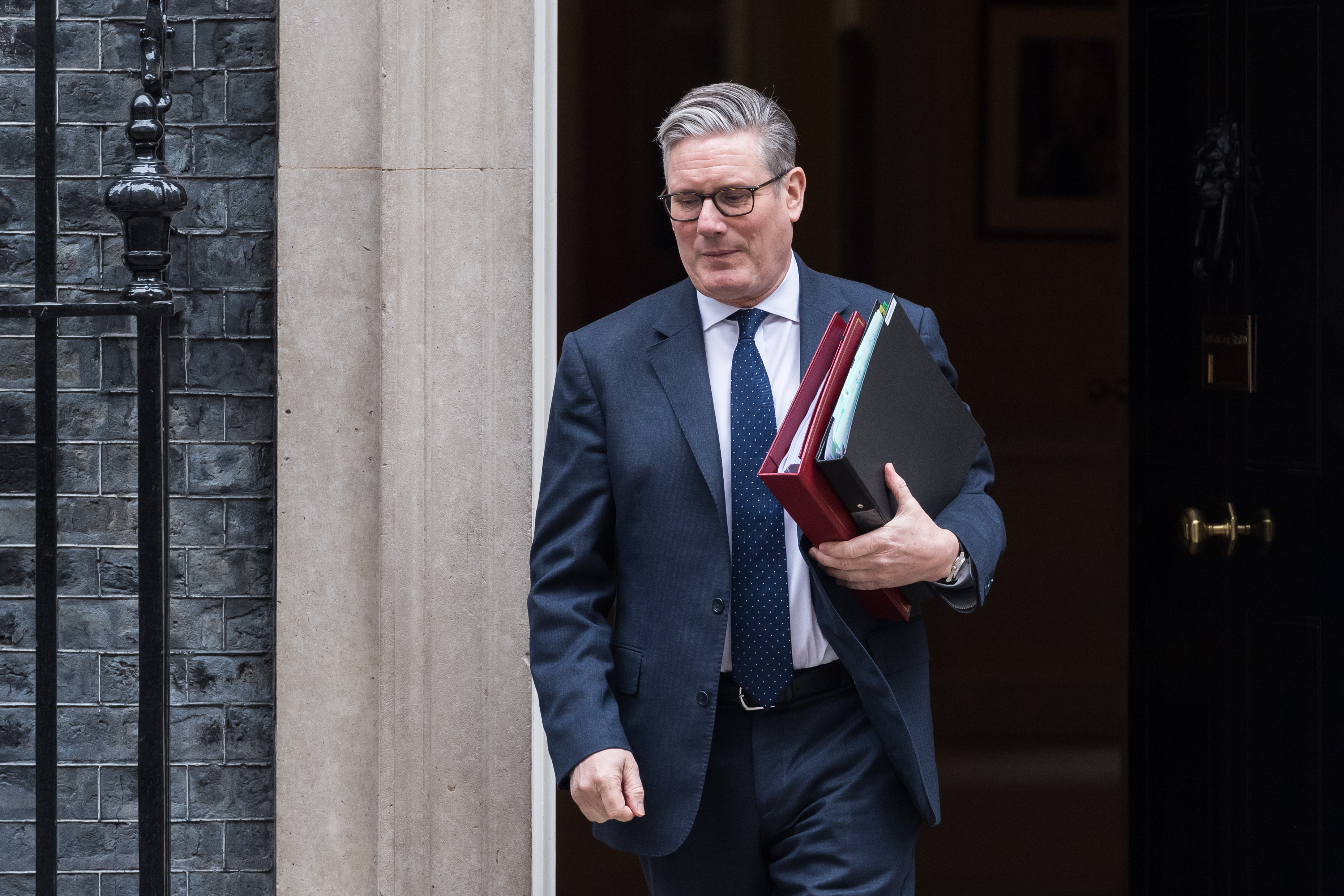
Keir Starmer departs 10 Downing Street in London, England, on March 4, 2026. —Wiktor Szymanowicz—Getty Images

Keir Starmer, who resigned as Britain's Prime Minister in June, announced Tuesday he will also be stepping down from Parliament to focus on international affairs.

Speaking to Camden New Journal, Starmer—who led the Labour Party to a landslide victory in 2024—said it had “been a huge honor and privilege” to serve as the Member of Parliament (MP) for Holborn and St. Pancras in North London for the past 11 years.

Prime Minister Andy Burnham paid tribute to Starmer during his first address to parliament since taking over leadership of the nation, crediting Starmer for securing one of Labour's "best victories" and creating a "platform to change this country for the better."

A by-election will now take place to replace Starmer as MP, with details to be finalized on the contenders and exact date.

Shortly after the news broke, Starmer shared a statement via social media, further explaining the reasons behind his departure.

You can read his words in full, below:

“Over the summer, I have had time to reflect and consider my future. I have decided that now is the right time to step down as MP for Holborn and St Pancras and hand the baton over to a successor.


It’s been an honor and privilege to represent the best constituency in the country since taking over from the great Frank Dobson 11 years ago. But it is now time to step aside and focus on other issues: international affairs including defense, security, trade and technology in a fast changing world. I will also continue working with others as I have done over many decades to tackle violence against women and girls.

As I do that, I will always remain immensely proud to have represented the place Vic, the kids and I call home.

I look back with pride on what my constituency team and I have delivered in Holborn and St Pancras since 2015 and I thank all those who I was privileged to work with on so many issues of local concern: affordable housing projects, delivering first class education and tackling youth violence through our Camden Youth Safety Taskforce.


I want to thank my CLP team who have always stood firmly by me, and given me the support I needed as I stood for Leader of the Labour Party and then as I took my Party from political, moral and financial ruin to an historic landslide election win in 2024 and two years as Prime Minister when we stabilised the economy, rebuilt our public services, invested record amounts in our defense and security, began lifting hundreds of thousands of children out of poverty and transformed Britain’s reputation with international partners.


I want to thank my constituency staff who, throughout all those 11 years, have worked tirelessly on casework and helped me do my utmost to serve the people of Holborn and St Pancras. I could not have done this job without them.

There will now be a process to appoint my successor ahead of a by-election. Whoever is lucky enough to become the Labour candidate here will have my full support and backing and I will continue to give my full support to the Prime Minister and this Labour government.”

Read More: Andy Burnham Calls for 'New Politics' in U.K. in First Speech as Labour Leader

Starmer's final months at Downing Street

Starmer announced his resignation as Prime Minister and head of the Labour Party in June following months of scrutiny over his leadership.

The one-time lawyer initially fought against calls from within his own party to step down over his handling of the appointment of Peter Mandelson, the former British ambassador to the U.S. who held a yearslong correspondence with the late convicted sex offender Jeffrey Epstein.

After it was revealed in April that Mandelson had failed the security vetting in January 2025, only for his appointment as ambassador to go ahead the following month anyway on account of the Foreign Office overruling the decision, Starmer faced tough questions in parliament. Starmer denied having prior knowledge of the failed vetting process, telling parliament that “a deliberate decision was taken to withhold that material” from him.

Starmer weathered the storm, but faced renewed calls to step down in May, after Labour's poor performance in local polls.

Amid a flurry of ministerial resignations from his Cabinet, speculation grew as to who could might potentially challenge and replace Starmer. When Burnham—who had been open about his desire to launch a leadership challenge—cleared his own path back to Westminster through winning the Makerfield by-election, Starmer announced his departure.

Read More: How the Iran War Splintered U.K.-U.S Relations as Trump Turned on Starmer

Starmer endured a splintered relationship with Trump towards the end

Soon after Trump returned to the White House in early 2025, Starmer paid a visit to Washington, D.C., and presented the U.S. President with an invitation from King Charles for a second historic state visit to the U.K.
Downing Street later secured one of the first international agreements with Washington following Trump’s “Liberation Day” tariffs, marking the early success of the relationship between the two world leaders.

Trump and Starmer’s partnership was further strengthened when the President traveled to the U.K. in September, as the pair went on to sign a "groundbreaking" billion-dollar U.K.-U.S. Tech Prosperity Deal.

But cracks started to appear earlier this year, as Starmer was among the European leaders to staunchly oppose Trump’s threats to annex Greenland. Another disagreement occurred when Trump downplayed NATO’s contributions in the war in Afghanistan, prompting a public rebuke from Starmer.

Relations further splintered when Trump repeatedly lambasted Starmer for refusing to actively involve the U.K. in the Iran war.

“He ruins relationships. We are very surprised. This is not Winston Churchill that we're dealing with,” Trump said of Starmer in March.

Weeks later, the British Prime Minister admitted he was “fed up” with the President’s war in Iran and the detrimental financial impact it was having on the U.K.

  •  

Trump Defends Hosting Russia at G20 as Europeans Voice Disapproval

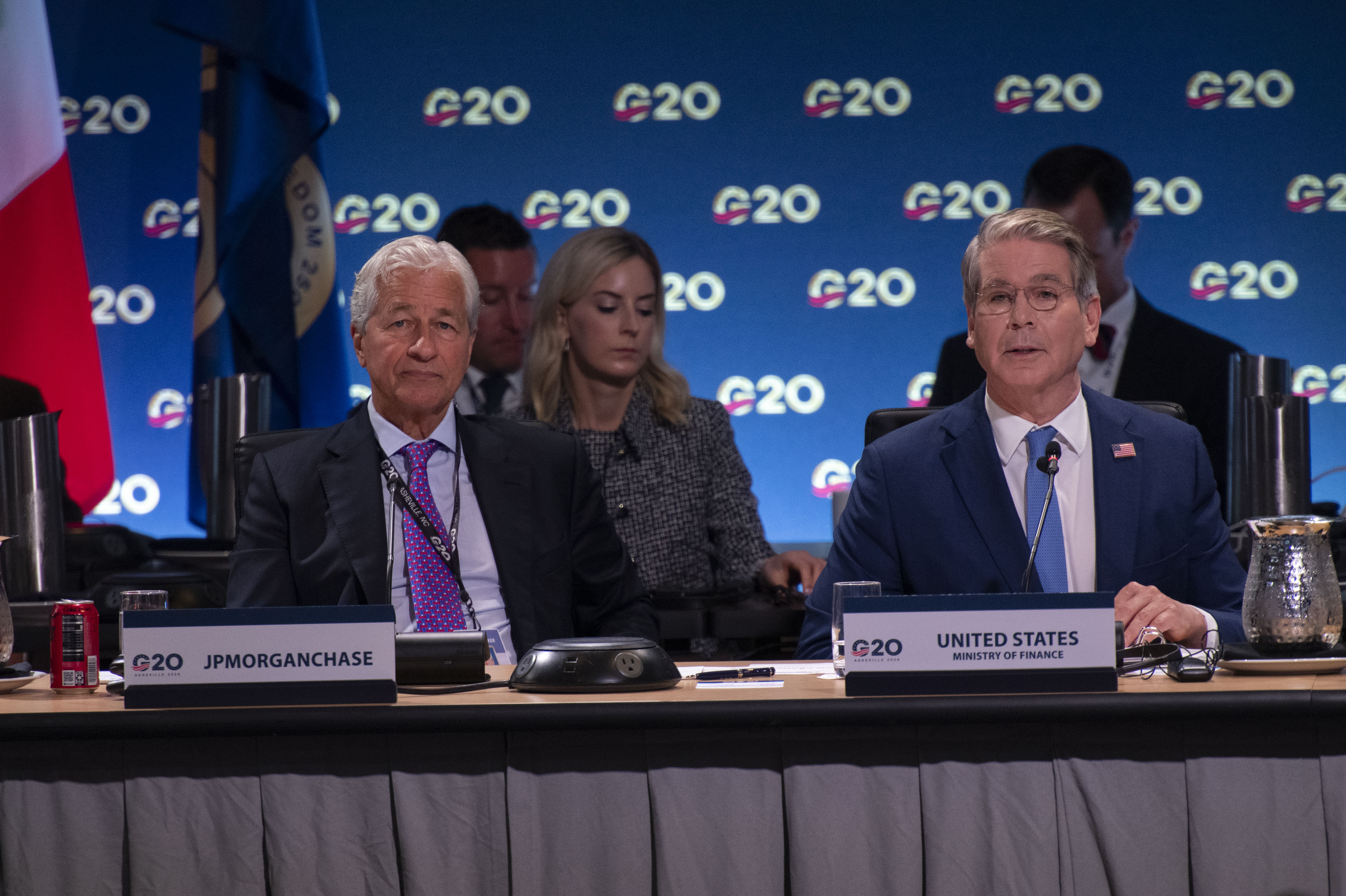
CEO of JPMorgan Chase Jamie Dimon and Treasury Secretary Scott Bessent at the 2026 G20 Financial meetings in Asheville, North Carolina, on Aug. 31, 2026. —Melissa Sue Gerrits—Getty Images

President Donald Trump has defended having Russia at the G20 finance meeting amid backlash from European officials who disapproved of the move.

“We’re going to see what happens, but we like getting along with everybody. One of the reasons that I’m so successful, I get along with everybody,” Trump told reporters when asked about the matter.

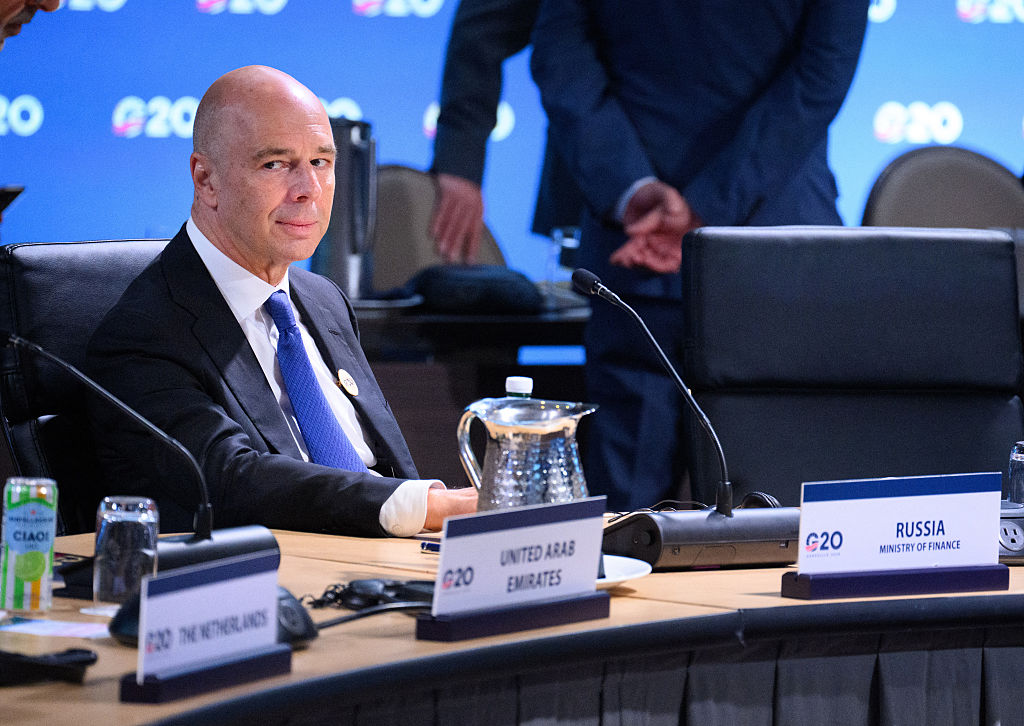
The U.S. hosted Russian Finance Minister Anton Siluanov at the meeting in Asheville, North Carolina, on Monday where finance officials, central bank governors, and other international figureheads from 20 major economies gathered.

Russia has remained a member of the G20, but the country’s Finance Minister had been physically absent from the G20 summits since the country launched its full-scale invasion of Ukraine in February 2022. European officials remain committed to isolating Moscow over the war.

This time, however, U.S. Treasury Secretary Scott Bessent met with his Russian counterpart on the sidelines of the event in Asheville. Russia's Finance Ministry said the pair discussed Russia-U.S. cooperation on financial matters and interaction within the G20 framework.

A Treasury spokesperson told Axios that Bessent and Siluanov spoke about Trump’s Ukraine peace plan and economic growth. A source familiar with the matter is quoted as telling the publication that Bessent ruled out economic relief for Moscow as long as the war in Ukraine continues.

TIME has reached out to the U.S. Treasury and White House for comment.

The U.S. had not publicly announced Russia’s planned attendance ahead of the meeting.

European leaders were irked by the move, with some reportedly refusing to participate in a group photograph if Siluanov was included. Instead, Bessent posed for a photo alongside Siluanov on the sidelines of the summit.

European leaders, U.S. lawmakers voice disapproval over Russia’s inclusion

A spokesperson for Germany's Finance Ministry pointed TIME to remarks Finance Minister Lars Klingbeil shared with reporters at the summit, during which he said he “would have wished that the Russian Finance Minister is not received here at the G20 in the USA as a normal guest.”

Klingbeil added: “Every day, people die due to the Russian attacks. One cannot simply return to normality under those circumstances.” Klingbeil also expressed he had made clear to his fellow European officials he would not pose alongside Russia’s finance minister for the G20 group photo.

The final so-called “family photo” notably did not include Siluanov alongside the ministers and senior officials from other countries.

Polish Finance Minister Andrzej Domanski told Reuters he was unhappy to see Russia represented, although he recognized the right of G20 hosts to invite guests.

"We do not trust Russia. They lie constantly and you need to be really, really cautious while discussing with them,” he said. "So for me it would be very difficult to have any kind of conversation with Russia.”

Russia’s attendance also drew ire from lawmakers in the U.S.

Democratic Sen. Jeanne Shaheen of New Hampshire, the ranking member of the Senate Foreign Relations Committee, said: “As Russia kills civilians in Ukraine, the White House hosts Putin's sanctioned Finance Minister on U.S. soil. The Trump Admin needs to pressure Putin and his cronies, not offer them a platform. With the House back in D.C., it’s time to pass Russia sanctions.”

A package of tougher sanctions on Russia—pushed by late Republican Sen. Lindsey Graham—is making its way through Congress after it was approved by the U.S. Senate early August.

Democratic leaders on Monday jointly urged the White House not to wait to restart stalled Russia sanctions.

“Donald Trump already has ample authority to impose sanctions on the companies, individuals, and vessels propping up a Russian war machine that continues its deadly attacks on Ukraine. Congress does not need to greenlight new tariff authority for the President to impose those sanctions on Russia today,” Representatives Don Beyer of Virginia, Gregory Meeks of New York, Richard Neal of Massachusetts, said in a joint statement, alongside Senators Elizabeth Warren of Massachusetts and Ron Wyden of Oregon.

Anton Siluanov, Russia's Finance Minister, attends the G20 meeting on Aug. 31, 2026. —Bernd von Jutrczenka––Getty Images

U.S. officials have previously objected to Russia attending G20 meetings

In the past, U.S. officials have strongly opposed Russia’s participation in G20 meetings.

Asked in March 2022, whether Russia should be removed from the G20, Biden answered: “On the latter point, my answer is yes. That depends on the G20.” If members could not agree to remove Russia, Biden said Ukraine should be invited to attend and observe G20 meetings.

During a finance meeting with global senior finance officials in April 2022 in Washington for the International Monetary Fund-World Bank Spring meetings, former U.S. Treasury Secretary Janet Yellen and officials representing Britain, Canada, and the European Central Bank walked out when Siluanov began addressing the gathering virtually.

“My decision to work with others to leave when the Russian Finance Minister began to speak was intended to make clear Russia’s behavior so violates, is so offensive to international norms, we’re not willing to allow Russia to participate or to listen to what the Russians have to say,” said Yellen during a subsequent press conference.

The Administration underscored their opposition to Russia’s inclusion in international forums during another meeting with G20 finance ministers in Indonesia in July 2022.

“Russia’s actions are not the actions of a government that upholds international norms and laws. Representatives of the Putin regime have no place at this forum,” said Yellen.

  •  

King Harald V of Norway Has Died After 35 Years On the Throne. Meet His Successor, Haakon

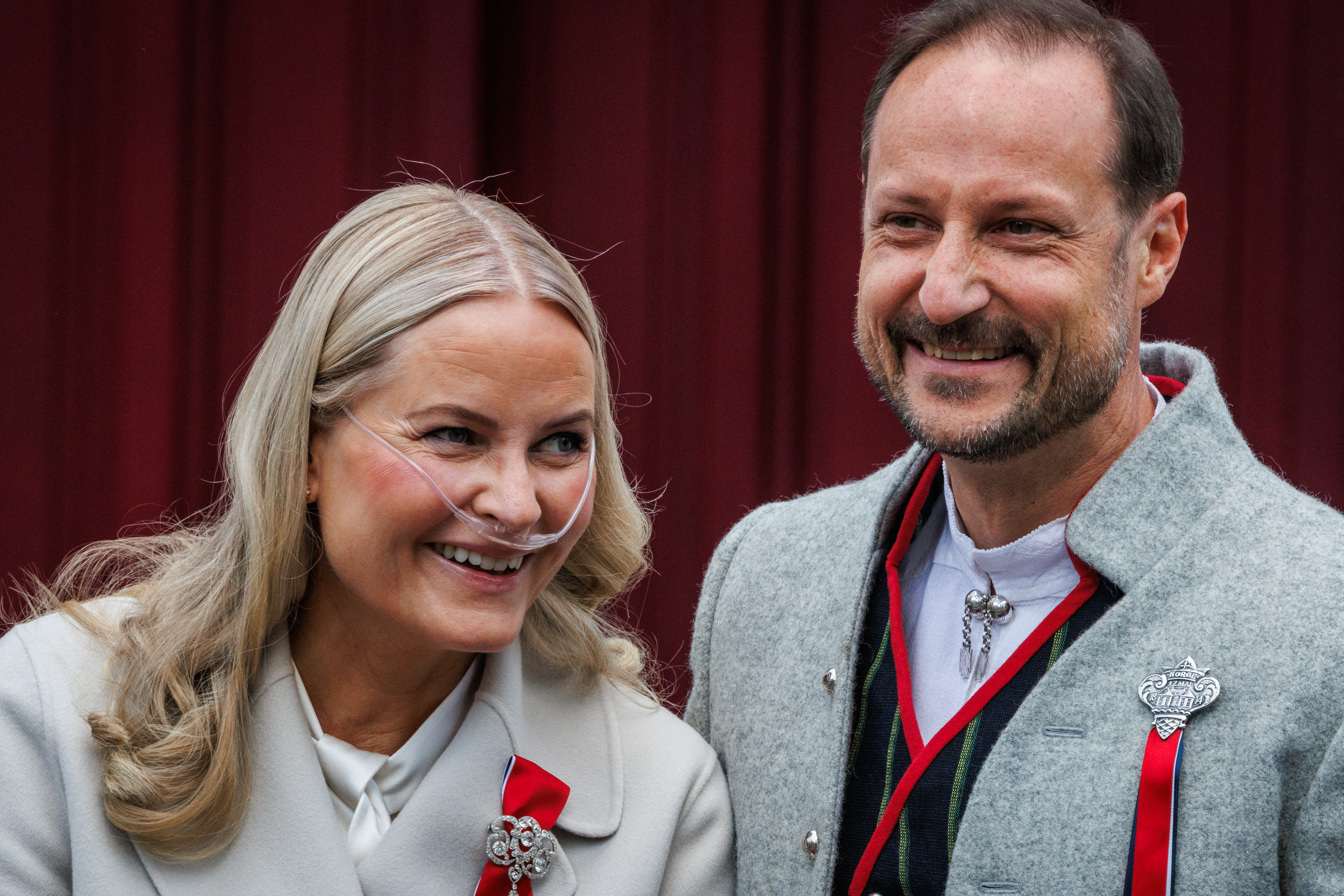
The new King and Queen of Norway, Mette-Marit and Haakon, are seen here at the Norwegian Constitution Day in Oslo on May 17, 2026. —Per Ole Hagen—Getty Images

King Harald V of Norway, a reformer and Europe’s oldest monarch, died Friday at the age of 89. His son, the newly-proclaimed King Haakon VIII, has inherited the Norwegian throne.

Harald passed away peacefully in his sleep at Oslo University Hospital Rikshospitalet at 6:35 a.m., local time, the Royal Palace of Norway said.

“A whole nation is in mourning and the people of Norway are left with a deep sense of gratitude for a long life in the service of Norway,” said Norwegian Prime Minister Jonas Gahr Støre. “For more than three decades as monarch, Harald V demonstrated an unwavering faith in the Norwegian people. He helped us to see the best in ourselves—and in one another.”

Harald had been admitted to the hospital on Aug. 17 and placed on sick leave after corticosteroid treatment for haemolytic anemia caused fluid retention that required hospital care, the palace revealed. His son, then-Crown Prince Haakon, 53, served as regent while his father was on leave.

In an update on Aug. 23, the palace announced the King’s condition had worsened and that he would remain in the hospital to receive antibiotics for a bacterial infection in his bloodstream. In recent days, Norwegians had begun to lay flowers in front of the palace in Oslo after the royal household said his condition had become “very serious.”

Harald has been described as a monarch who modernized the institution. His marriage broke with royal convention when he wed the non-royal Sonja Haraldsen in 1968 after a lengthy struggle for permission from his family.

In a widely noted 2016 Palace garden speech, Harald defined Norwegianness as encompassing immigrants, people of different religions, and members of the LGBTQ+ community.

While Norway is a constitutional monarchy, with the king serving as head of state similar to other royal houses in Europe, Norwegian monarchs have largely held symbolic roles, as legislative power rests with an elected parliament.

Stortinget, Norway’s parliament, said Friday that the King’s reign “was marked by closeness to the people” thanks to “the unifying way in which he has exercised his royal duties.”

Norway will observe a period of mourning, with flags at royal residences, government buildings, and military installations set to remain at half-mast.

Church bells rang out on Friday and thousands of people lined the streets as Harald V's coffin, accompanied by a motorcade of black cars, was transported to the Royal Palace in Oslo.

As Norway mourns its long-reigning monarch, thoughts are also turning to his successor, who has been tasked with carrying on his father's legacy.

Here’s what to know about what comes next and how King Harald is being remembered by his peers and European leaders.

What happens next—who has succeeded King Harald of Norway?

When a monarch in Norway passes away, the next person in the order of succession automatically becomes King or Queen, as the country cannot be without a head of state.

While succession was previously restricted to male heirs, since 1990 the Constitution was amended so female and male children would be included on an equal footing in the order of succession. However, for those born before the change, a male child retains precedence over an older female sibling. As such, although Princess Märtha Louise was Harald’s eldest child, the crown automatically passed down to his son, Haakon.

King Haakon VIII’s wife, Mette-Marit Tjessem Høiby, is the new Queen of Norway. The late King Harald's wife, Queen Sonja, will also retain her title. Haakon and Mette-Marit's daughter Ingrid Alexandra is now Crown Princess and heir apparent—the next person in line to the throne.

The Norwegian government convened for an extraordinary cabinet meeting at the palace on Friday at 11:30 a.m., local time, where ministers met the new King.

Haakon announced his royal motto, opting to keep the words used by his father, grandfather, and great-grandfather: "All for Norway."

There will be no formal coronation for Haakon as Norway’s parliament removed the constitutional requirement for coronations in 1908, deeming the ceremony to be undemocratic and outdated.

What to know about King Haakon VIII and his wife, Mette-Marit

As the only son of Harald and Sonja, Haakon somewhat broke with tradition in his younger years when he moved out of the country to attend the University of California, Berkeley, where he obtained a BA in political science in 1999.

Haakon wed Mette-Marit in 2001, a non-royal and single mother of Marius Borg Høiby.

The couple welcomed their first child together, Ingrid Alexandra, in 2004 and had their son, Sverre Magnus, a year later.

Marius Borg Høiby, Mette-Marit’s eldest child, was found guilty of two counts of rape and was sentenced to four years in prison in June.

In recent years, Mette-Marit has suffered with poor health, after being diagnosed with a chronic lung disease—what the palace referred to as an “unusual variant of fibrosis”—in 2018. 

In July, Mette-Marit shared a statement upon being discharged from hospital after undergoing a lung transplant. “It has given me the gift of life, and words fall short when I try to describe how grateful and humble I am for this,” she said of the surgery. 

Mette-Marit has come under scrutiny over her contact with the late convicted sex offender Jeffrey Epstein.

Files released by the Justice Department in January showed she had maintained correspondence with Epstein in the years after he pled guilty on two counts of soliciting prostitution from a minor in 2008.

“Jeffrey Epstein is personally responsible for his actions. I must take responsibility for not checking Epstein’s background more thoroughly and for not understanding quickly enough what kind of person he was,” Mette-Marit said in a statement on Jan. 30 2026. “I deeply regret that, and this is a responsibility I must take. I showed poor judgment and regret ever having had any contact with Epstein. It is simply embarrassing. I want to express my deep sympathy and solidarity with the victims of the abuses committed by Jeffrey Epstein.”

During a TV interview in March, Mette-Marit, while sitting beside her husband Haakon, said she wished she had never met Epstein and again expressed regret over the contact.

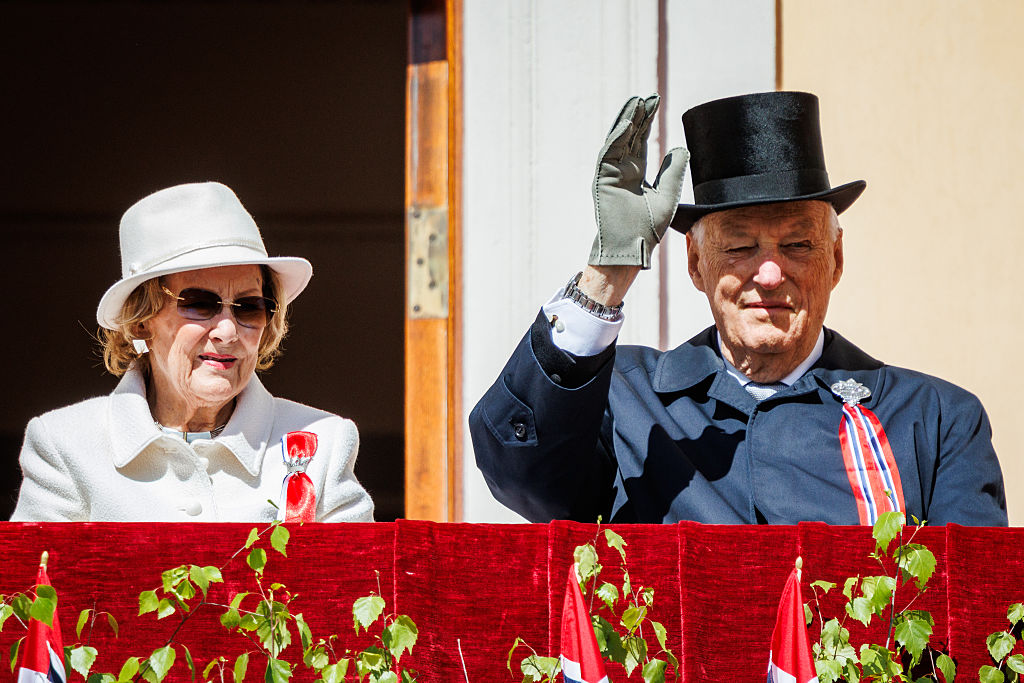
Her Majesty Queen Sonja of Norway and His Majesty King Harald of Norway attend a Norwegian Constitution Day event at the Royal Palace in Oslo, Norway, on May 17, 2026. —Ole Hagen––Getty Images

How the world has reacted to King Harald’s death

Tributes have poured in from around the world to honor the late King and his legacy.

Britain’s King Charles III, who is a cousin of Harald, said he and his wife, Queen Camilla, had learned of the news with “the most profound sadness.”

“For thirty-five years, King Harald served his people with unwavering dedication, guiding Norway through times of great change with warmth and humility,” Charles said. “As Norway mourns the loss of so towering a figure, my whole family join in remembering a much-loved kinsman and friend whose kindness, compassion and deep sense of duty echoed from across the sea and across the decades.”

Spain’s monarchy said Harald was “an example of responsibility, dignity, simplicity, and tireless dedication to the service of Norway and its people, before and during his 35 years of reign.”

NATO Secretary General Mark Rutte described the late King as a “dedicated leader,” whose “military roots made him a champion of the Norwegian military and a long-time friend of NATO.” Harald's military roots go back to when he attended the Norwegian Military Academy in Oslo as a young royal and went on to be appointed general and admiral in 1977, as part of the royal tradition where the Crown Prince is appointed to the highest rank in the branches of defense at the age of 40.

Senior officials within the European Union also offered their condolences, with Norway serving as a close trading and security partner of the bloc.

E.U. foreign policy chief Kaja Kallas said Harald was “truly the people’s King, a lifelong defender of freedom and champion of an open Norwegian democracy and society.”

European Commission president Ursula von der Leyen said the late King had brought Norwegians together “in moments of joy and sorrow.” 

German Chancellor Friedrich Merz lamented that Norway had lost “a great personality who stood for composure and unity,” while French President Emmanuel Macron said Harald had “worked tirelessly throughout his reign to strengthen the bonds uniting Norway and France.”

Norwegian soccer player Erling Haaland, who met with the late King in July after returning from the World Cup 2026, said: “Rest in peace, King Harald. Thank you for everything you meant to Norway. It was an honor to meet you."

  •  

'Security Nightmare': Ireland Braces For Major Protests During Trump's Visit

Protesters stand at the peace camp on the road to Shannon Airport following the arrival of U.S. President Donald Trump in June 2019. —Brian Lawless ––Getty Images

Protests are set to take place in Ireland when President Donald Trump attends the Irish Open at his golf course in Doonbeg, County Clare, next month.

Local groups, including the Irish Neutrality League, which advocates for Irish neutrality in international conflicts, and The Irish Anti-War Movement, have expressed their intention to take part in demonstrations.

Irish Labour Senator Nessa Cosgrove has referred to the visit taking place from Sept. 12 to 13 as a “security nightmare” and said she hopes the U.S. President “takes time to learn why people might be exercised" about the trip.

“They are angry about fuel prices, which have spiraled because of his unnecessary war of aggression in Iran,” she told Irish media last week, adding that people are also angry about the “ill-treatment of the Palestinian people by his closest allies in Israel.”

In a follow-up statement to TIME, Cosgrove states that “protecting a serving U.S. President is a serious responsibility, and An Garda Síochána [Ireland's police force] must have the resources necessary to do that safely.”

“We should also be very clear that people have every right to peacefully protest President Trump’s visit. We expect there will be significant protests and many Labour Party members and elected representatives will be joining them,” she tells TIME. "Many people in Ireland have profound and legitimate objections to his Administration’s actions and policies, to put it mildly, and they have every right to make those views heard."

An Garda Síochána told TIME the force does not comment or speculate on operational matters.

Amid much discussion over the trip and the expected protests, here’s what we know so far.

Security concerns mount as protests loom

Planning is already underway for various protests, with one of the most significant demonstrations set to take place in Ireland's capital, Dublin.

The protest is scheduled to start on Sept. 12 at the Garden of Remembrance, a public memorial to those who "gave their lives in the cause of Irish freedom."

Sara O’Rourke of the Irish Neutrality League told the Irish Times that the “protest will be under the banner of no welcome for Trump.”

Protest organizers said they expect a “big” but “safe event,” which they described as a “family-friendly, peaceful protest.”

Paul Murphy of the People Before Profit-Solidarity party said he is expecting a “massive protest” which will have “a broad coalition with a basic theme of no welcome for Trump.”

Another demonstration is planned for Shannon in the west of Ireland. (Trump arrived at Shannon Airport during his presidential visit to Ireland in 2019.) Shannon Airport is used by the U.S. military as a transit, refueling, and logistical hub.

An additional protest is also expected to unfold nearby Trump’s golf course in Doonbeg, which is around 60km from Shannon. A social media post from organizers involved in the planned protests raised issue with some of the Trump Administration’s actions, including the President’s repeated threats to annex Greenland.

Trump's visit has also drawn backlash from some Irish lawmakers.

Aodhán Ó Ríordáin, a Labour Party lawmaker and Member of the European Parliament (MEP) for Dublin, released a video on Aug. 3, in which he stated: “Donald Trump is not welcome in Dublin.”

The lawmaker referenced the war in Iran and the U.S.' fractured relationship with the European Union as being among his reasons for opposing the trip.

Ó Ríordáin tells TIME the idea that Ireland would “roll out the red carpet and treat [Trump] with the sort of celebrity and respect that we have done to others in the past, to my mind, makes absolutely no sense.”

“I do believe there's a groundswell of people who don't want this visit, who don't want him here, who would rather he wasn't coming,” he says of the planned protests. “They certainly will make their views known if and when he does arrive.”

Trump’s last official visit to Ireland as President in 2019 drew thousands of protesters to Dublin’s streets. The Trump “baby blimp,” which had previously featured in anti-Trump protests in London, also made a notable appearance.

Trump’s expected itinerary in Ireland

Trump is set to visit Ireland from Sept. 12 to 13, a White House official told TIME.

Although that would mean missing the first two days of the Irish Open, it allows the President to remain in the U.S. for the 25th anniversary of the Sept. 11 attacks.

Once in Ireland, the President is set to attend an event with embassy personnel and business officials, ahead of attending the Irish Open at Trump Doonbeg.

Details of the trip are still being finalized, however Irish media reports suggest Trump is expected to hold a bilateral meeting with Irish Taoiseach [Prime Minister] Micheál Martin at Farmleigh House, the Taoiseach’s official guest residence. Trump is also expected to turn the sod—the ceremonial first digging of earth to mark the start of construction—on the new U.S. Embassy in Ballsbridge, south Dublin, according to BBC NI.

Trump may also visit Irish President Catherine Connolly at her official residence, Áras an Uachtaráin, in Phoenix Park, although such a meeting has yet to be confirmed.

Trump’s relationship with Irish Taoiseach Micheál Martin

Martin and Trump have established a friendly relationship, with the Irish Taoiseach attending St. Patrick’s Day celebrations at the White House.

The St. Patrick’s Day visit marks a respected tradition when the Irish leader brings a bowl of shamrocks to the U.S. President as both reflect on the importance of Irish-American relations and history.

“We have tremendous business relationships with Ireland and that will only get stronger, and the relationship we have personally, and every other way, is very very strong,” Trump said in March 2025.

However, there have been some tense moments, most notably when Martin defended former British Prime Minister Keir Starmer while seated alongside Trump in the Oval Office in March this year.

Relations between the U.S. and U.K. had deteriorated as Trump repeatedly criticized Starmer for refusing to get actively involved in the Iran war.

“I’m disappointed with Keir. I like him. I think he’s a nice man, but I’m disappointed,” Trump said at the time, repeating his criticism that, “Keir is not Winston Churchill.”

Martin defended Starmer, praising the then-Prime Minister for helping to “reset” the Irish-British relationship.

“I just want to put that on the record,” Martin told Trump. “I do believe that he's a very earnest, sound person, who I think you have a capacity to get on with, and you've got on with him before.”

Martin has also taken a different position from Trump on other key issues. In April 2025, following Trump’s levies, most of which were later struck down by the Supreme Court, Martin said “the imposition of tariffs is bad for the world economy.”

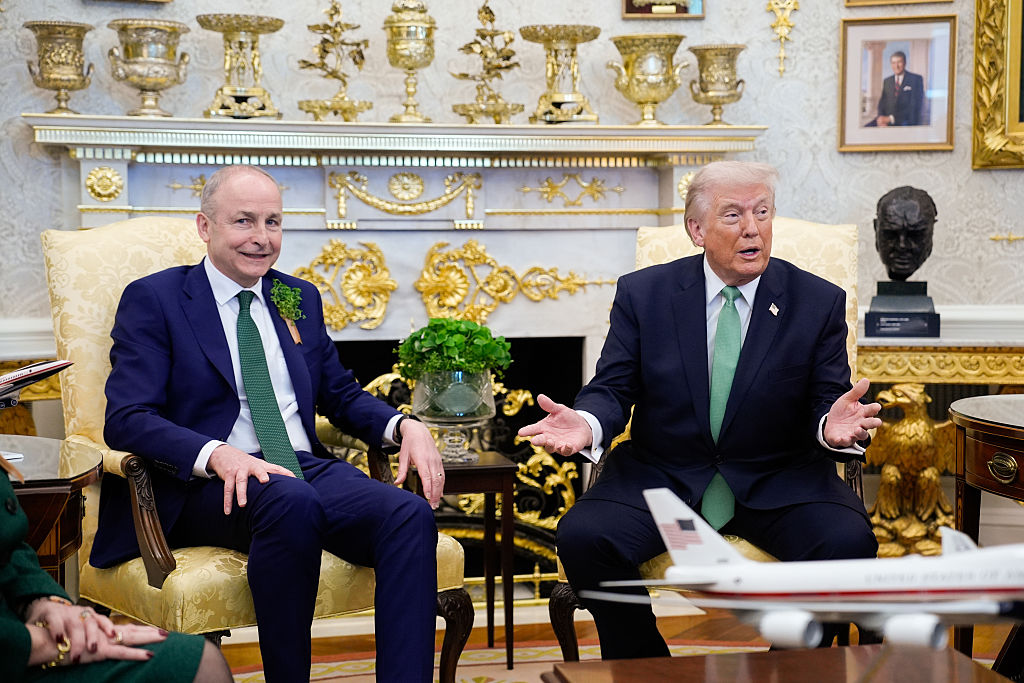
Martin and Trump during a meeting in the Oval Office of the White House in Washington, D.C. on March 17, 2026. —Yuri Gripas––Getty Images

Trump’s first visit since Catherine Connolly became President

This will be Trump’s first presidential visit to Ireland since Catherine Connolly was elected President in October 2025.

Connolly previously expressed “grave concern” over the initial U.S.-Israeli strikes on Iran in February, warning against “the normalization of war” and calling for a return to diplomacy, international law, and the U.N. Charter.

She repeated that message during her St. Patrick’s Day address.

When asked about the Irish President’s concerns, Trump appeared not to know who Connolly was and misgendered her in his response.

“He’s lucky I exist, that’s all I can say,” Trump said in the Oval Office on March 17.

The pair have significant ideological differences, with Connolly largely viewed as a left-wing President.

Connolly pledged “to be a catalyst for change, resist militarization, and work toward a United Ireland—potentially putting her at odds with Ireland’s own government, and its allies in Europe and America,” Irish political correspondent Gavan Reilly wrote in a November 2025 article for TIME.

  •  

Dolly Parton’s Death Prompts Rare Bipartisan Outpouring From U.S. Political Leaders

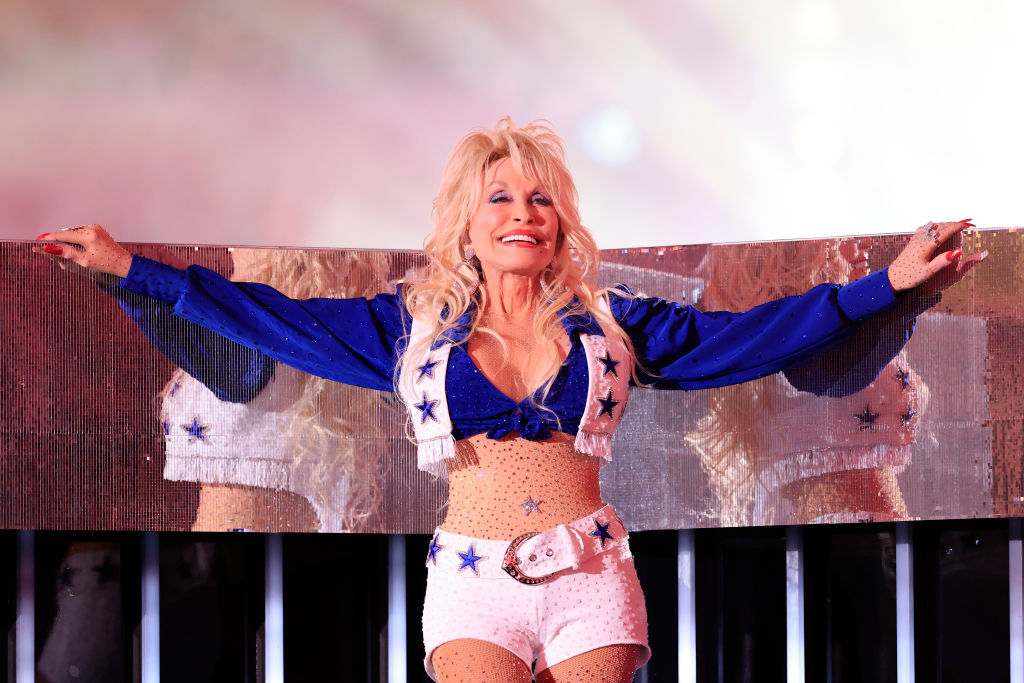
Dolly Parton performs during halftime in the game between the Washington Commanders and the Dallas Cowboys at AT&T Stadium on Nov. 23, 2023, in Arlington, Texas. —Ron Jenkins––Getty Images

The death of country music legend, actor, and philanthropist Dolly Parton has prompted a rare moment of bipartisanship, with tributes pouring in from both sides of the political aisle.

Parton, who died at the age of 80 on Tuesday, was widely loved and celebrated around the world and leaves behind a life that touched the lives of millions of Americans.

“Dolly Parton’s legacy is one of love, compassion, and resilience. With a seven-decade career, she inspired multiple generations of artists and fans with her music and an unwavering commitment to making the world a better place,” read a statement shared on Parton’s social media page.

Read More: Dolly Parton Dies at 80

President Donald Trump ordered U.S. flags at the White House and other federal facilities to be flown at half-staff through Sept. 1.

Trump called Parton an "amazing" person who and "to lose her is like to lose her a member of the family."

"She wasn't a very political person," Trump said during a live radio interview Wednesday morning with conservative host Glenn Beck.

Despite her grand public presence and persona, Parton often chose to stay out of political discourse.

“Everybody knows I don't do politics because my mother was a Democrat, my daddy was a Republican, so I'm a hypocrat,” she joked in 2017 when asked on Fox & Friends why she had not joined Jane Fonda and Lily Tomlin’s anti-Trump remarks at the Emmys.

“I've got as many Republican fans as Democrats, and I don't want to make any of them mad at me, so I don't play politics. Plus, I'm an entertainer, I don’t usually voice my opinion in a situation like that,” Parton added.

Parton reiterated her apolitical stance during an interview with ABC's David Wright in 2018, where she again repeated, “I'm not being political.”

“I don't do politics. I'm not getting into any of that because I have a lot of fans out there, and I don't want to offend anybody,” she said.

When pressed to answer questions about Trump, who at the time was just over a year into his first term as President, Parton said: “I have my opinion about everybody and everything, but I learned a long time ago: Keep your damn mouth shut if you want to stay in show business.”

“I'm not in politics. I'm an entertainer,” she said.

That broad appeal was reflected in tributes from across the political spectrum.

How Democrats are remembering Parton’s advocacy

Major Democratic figures have cast Parton as a progressive figure who advocated for minority rights through her music, philanthropy, and public comments.

Sen. Bernie Sanders of Vermont, an independent who caucuses with Democrats and is a leading voice of the progressive movement, said Parton “was one of the great entertainers of our era” whose “music and humanity touched millions.”

“She was not only a talented musician & songwriter, but a lifelong philanthropist and advocate for literacy, education, LGBTQ+ rights, healthcare and disaster relief,” he said.

Despite Parton’s desire to remain politically neutral, her reputation as an advocate for LGBTQ+ rights stems from both her public comments and her work.

When asked in an interview aired in 2009 with Joy Behar whether she supported gay marriage, Parton said: “I always say, sure, why can't they get married? They should suffer like the rest of us do.”

At the time, the statement was politically significant, with same-sex marriage not becoming legal nationwide in the U.S. until 2015 and the issue still a source of intense political division.

Again in 2016, Parton underscored her support for the community, saying: “I do not believe that we should criticize and judge other people.”

“I think we should be accepting and loving. We are all God's children. We are who we are, and we should be allowed to be who we are,” she told Larry King during an interview.

Similarly, Tennessee Democratic gubernatorial nominee Jerri Green said Parton was one of "Tennessee's finest," noting that Parton "always used her platform to lift others up."

"She was also an unapologetic advocate for the most marginalized, including our LGBTQ+ neighbors. The world is brighter and better simply because she existed,” she added.

Asked in 2023 about Tennessee’s anti-trans legislation, Parton said she wanted “everybody to be treated good,” described the queer and transgender people in her life, and said their identities were as intrinsic to them as hers was to her.

“That’s who they are. They cannot help that any more than I can help being Dolly Parton, you know, the way people know me. If there’s something to be judged, that is God’s business. But we are all God’s children and how we are is who we are,” she told The Hollywood Reporter.

Former President Joe Biden also reflected on Parton’s legacy, describing her as “an American original” who “was an inspiration to millions” and “a relentless advocate for women and for equality.”

Rep. Ro Khanna of California said Parton “chose to continue her life pursuing the arts, and pushing boundaries to advocate for inclusion, women’s rights, children’s literacy, and more.”

The Country Music Hall of Fame credits Parton and her female contemporaries with revolutionizing country music through their “strong feminine stances.”

In 1995, Parton began her Imagination Library project, which sent an age-appropriate book to children in the U.S. every month until they turned 5. The program has since expanded to multiple countries around the world and delivered more than 300 million books to over 3 million children from all backgrounds.

New York City Mayor Zohran Mamdani called Parton “an extraordinary person and an irreplaceable champion of the working class.”

How Republicans are honoring Parton as an American icon

On the other side of the political aisle, Republicans have sought to highlight Parton as a symbol of American and Appalachian identity.

“Today our nation lost an American icon. Dolly Parton stood on the global stage for many decades and helped define the cultural image of our nation,” said Secretary of State Marco Rubio. “Dolly was an Ambassador for American music and entertainment. She will be missed, but her legacy will continue.”

House Republicans, in a statement, described Parton as an “unmistakable voice” and “joyful presence” whose “deep love of country made her a national treasure.”

Parton was one of 12 children and was raised in poverty in rural Tennessee amid church music and a strong extended-family tradition. Rather than leaving the region behind, she invested heavily in East Tennessee with the opening of the Dollywood amusement park, which became a major tourism and employment engine, while the separate Dollywood Foundation funded scholarship opportunities.

Sen. Marsha Blackburn of Tennessee said that all Tennesseans feel “the loss of Dolly Parton.”

“Dolly’s life and career are forever woven into Tennessee’s music, culture, and history. Her extraordinary talent, generosity, and love for the Volunteer State (the nickname for Tennessee) touched hearts around the world and will continue to inspire generations to come. Tennessee will forever be grateful for Dolly,” she added.

Rep. Diana Harshbarger, who represents East Tennessee's 1st Congressional District, where Parton was born and raised, said the singer “never forgot where she came from” and praised her ability to appeal to people across the political aisle.

“She was so apolitical. She did not want to be on one side or the other, and that made people love her,” she said. “She remained true to who she was, she was a genuine person. She was authentic as all get out, and nothing could sway her.”

  •  

Canada Retaliates Against Trump’s Tariffs With Levies of Up to 50% on U.S. Goods

Canada has imposed retaliatory tariffs of up to 50% on U.S. goods in response to President Donald Trump’s sweeping tariffs and amid an escalating trade war between the neighboring allies.

Canada’s Finance Minister François-Philippe Champagne announced Tuesday that effective Sept. 8 the country “will match the United States tariffs dollar for dollar, rate for rate," by imposing counter tariffs of up to 15%, 25%, or 50% on near $20 billion U.S. imports.

“For each product, our tariff would match the American tariff on the same type of Canadian goods,” he said during a press conference alongside Canadian federal officials.

Read More: 'We Don't Need Canada': Trump Escalates Trade War

Tensions between the U.S. and its northern neighbor have deepened after trade negotiations broke down over the weekend, with both sides blaming one another for last-minute changes.

A broad set of 50% tariffs affecting about $20 billion of Canadian exports to the U.S. came into effect Saturday, after which Prime Minister Mark Carney vowed to match them “dollar for dollar.”

“Ultimately, the terms proposed by the U.S. Administration were uneconomic, unfair, and ultimately unacceptable. They asked too much of Canada and offered too little in return,” Champagne said.

The tariffs are set to target more than 700 U.S.-made products and, if matched against the U.S. tariffs on Canada, will include everyday purchases such as seafood, cheese, clothing, cosmetics, and toilet paper.

Canadian officials said the goal is not to raise revenue, but to protect Canadian companies and reduce reliance on U.S. imports.

“Canada's counter tariffs are designed primarily to provide protection for Canadian industry impacted by U.S. tariffs and allow them to compete against U.S. products in the Canadian market. It's all about fairness. It's all about level playing field. It's all about supporting Canadian workers and Canadian businesses,” he said.

Trade between the U.S. and Canada totaled an estimated $872.3 billion in 2025.

In Addition to Tariffs, Trump Targets Canada With Taunts

The announcement came shortly after Trump began taunting the Canadian government over a range of cultural issues.

The President said his Administration is considering renaming Lake Ontario to “Lake America” in the latest cultural swipe at Canada amid the broader trade war.

“The United States is giving serious consideration to changing the name of Lake Ontario to Lake America in that we don’t expect to be doing much business with Ontario any longer,” Trump said Tuesday morning.

Lake Ontario is the easternmost of the five Great Lakes and is bordered by the Canadian province of Ontario and the U.S. state of New York and Pennsylvania.

Canada’s retaliation also drew Trump’s ire, with the President unleashing a barrage of insults against the U.S.’s second-largest trading partner in goods.

“I deal with many countries, and Canada is easily the most difficult and unreasonable,” Trump said Tuesday before the official counter tariff announcement by Ottawa, adding his repeated accusation that Canada “has been 'ripping off' the U.S.A. for decades.”

Trump announced Monday that, on top of the initial 50% tariffs, the U.S. would raise tariffs on all Canadian cars and trucks, automotive parts, and steel to 50% starting Jan. 1, 2027.

U.S. officials, including the President, have also appeared to publicly undermine Canada by repeatedly comparing the country to a U.S. state.

“They feel entitled, but they are not a State, and will be entitled no longer!” Trump repeated Tuesday.

Similarly, Vice President J.D. Vance referred to Canada as a “state” during a political rally in Maine on Monday, which he claimed was a "Freudian slip.”

Trump has repeatedly expressed his desire to annex Canada and make it the 51st U.S. state—an idea Carney has strongly rejected.

Why French Language and Culture Became a Sticking Point in U.S.-Canada Talks

Both sides have blamed the other for the breakdown in negotiations over the weekend, but French language and culture have emerged as a contentious point of tension.

Carney said Monday that U.S. negotiators had raised the discoverability of French-language content on streaming platforms, along with French-language labeling rules, as trade irritants.

"For the Americans, French language, francophone culture, Quebec culture, and Canadian culture, for them these are irritants. Here in Quebec, here in Canada, they are rights—fundamental rights,” Carney said in French while taking questions from the media at an event in Lévis, Quebec.

The Canadian leader added that there was “an enormous gap between the U.S. perspective and Canadian perspectives” during negotiations when it came to French culture.

Trump has moved to deny the accusations made by his Canadian counterpart, framing them as a “lie” by Carney to “to gain political support” from those in Quebec.

“I would never interfere with Canadians speaking French! In fact, I have never even thought of doing such a stupid thing,” he said on social media Tuesday.

Last year, Quebec implemented a law requiring streaming giants to add French-language content and make it more easily accessible to users. The French-speaking province also has strict labeling rules requiring packaging to include French.

Which Canadian Goods Are Hit by Trump’s 50% Tariffs?

The tariffs placed on various Canadian goods affect around 5% of all trade between Canada and the U.S. and cover a wide range of products.

Although the Administration has framed the tariffs into three categories of alcoholic beverages, dairy products, and motor vehicles, these are far broader than at first glance.

A variety of Canadian alcoholic beverages, including beer made from malt, sparkling wine and other grape wines, and various spirits are the primary target of the first list, but this also includes a range of wood-based goods, such as selected wooden kitchenware and decorative products, as well as ice hockey and field hockey equipment.

The tariffs set to target a variety of dairy ingredients include powdered or otherwise concentrated milk and cream, various milk protein and whey protein concentrates, and lactose and lactose syrup.

The lengthy list of “motor-vehicle” related items includes a variety of products beyond vehicles themselves. The list ranges from agricultural and plant goods, including natural honey, feathers, selected animal products, and plant extracts, to salt and baking mixes.

Textiles and clothing are also set to be hit by the tariffs, including silk, wool, cotton, yarn, fabrics, carpets, dresses, trousers, T-shirts, sweaters, coats, padded jackets, suits, blazers, tracksuits, and even wigs. Tech-related goods are also included, such as smartphones, video recorders, and camera and computer equipment, alongside leisure and cultural products including toys, puzzles, arcade machines, and video game consoles. Other technology products covered include television and radio transmitters, cameras, radar equipment, and computer monitors.

Canada's newly announced counter tariffs are set to target similar products.

  •  

Iran Vows Retaliation After U.S. Widens ‘Economic D-Day’ Sanctions

Motorists drive past an anti-U.S. billboard in Tehran on August 24, 2026. —AFP––Getty Images

Iran has pledged to “attack” the U.S. financially after Washington unveiled a sweeping set of sanctions as part of ‘Economic D-Day',  an attempt to further isolate Tehran and curb its access to the global financial system as the war between the two countries drags on. 

Treasury Secretary Scott Bessent unveiled the measures as part of President Donald Trump’s announcement of the "most crushing economic operation" against Tehran, labeled “Operation Economic Outcast.”

"D-Day marked a historic campaign with our allies,” Bessent said Monday. “Today, in that same spirit, we are launching an economic onslaught against Iran's financial connections around the globe."

After the measures were announced, Tehran’s Economy Minister Seyed Ali Madanizadeh said the government was prepared to counter the newly-unveiled U.S. sanctions.

“They want to launch an economic terrorist attack against us. We also have our own tools, and we know the rules of this game,” he said in response to Bessent’s announcement during a televised interview with Iranian state media Monday.

“This time, they shouldn't think that our approach is purely defensive; they should also expect an attack from us.”

Although the Iranian minister did not elaborate on what such an attack would entail, he said the country had developed plans in preparation for the economic threats.

“Plans have been developed for various scenarios, including what actions should be taken if they attempt to cause damage in the financial sector or in the country's financial relations,” he said, adding that “the global financial system is not structured in a way that allows anyone to claim they can cut off” Iran’s economy.

During the announcement, Bessent stopped short of immediately imposing secondary sanctions on countries that trade heavily with Iran, instead favoring an approach that would give them time to decouple from that trade.

When asked why he was waiting to impose those sanctions, Bessent responded: "Why would I want to blow up the global financial system?"

“We believe that it is important to level set and give people a cure period, but they should know that that will move very quickly, and that we are serious,” he added.

Bessent did not name any countries that could face sanctions, but said "they know who they are."

China, one of Iran's biggest trading partners and the primary buyer of Iranian oil exports, has already pushed back against the threat.

Foreign Ministry spokesperson Lin Jian said China-Iran cooperation "should not be disrupted or undermined," noting that it had been conducted in accordance with international law.

“China has made clear on many occasions its firm opposition to illicit unilateral sanctions that have no basis in international law or the authorization of the U.N. Security Council. Economic warfare and maximum pressure provide no solution,” Jian said during a press conference Tuesday.

The Office of Foreign Assets Control (OFAC) has sanctioned nearly 60 entities, individuals, and vessels connected to Iran’s regime, while also gaining powers to impose additional sanctions on any person operating within the digital assets, technology, gold, aviation, and shipping sectors of the Iranian economy.

Iranian leaders had previously dismissed the impact of extensive economic sanctions on the country and instead sought to highlight struggles within the U.S. economy.

Trump, meanwhile, claimed Monday that Iran is "completely collapsing,” without elaborating on what he based the claim.

Strait of Hormuz attack raises stakes after sanctions announcement

Following Bessent's economic announcement, an oil tanker was hit by a projectile off the coast of Oman in the Strait of Hormuz, according to a report by U.K. Maritime Trade Operations.

The incident highlights the continued danger for shipping companies attempting to transit the key waterway, through which roughly a fifth of the world's oil supply passed before the war. The closure of the Strait has rattled energy markets and thrown the global economy into disarray.

Islamic Revolutionary Guard Corps (IRGC) spokesperson Hossein Mohebbi had previously threatened heavy blows against vital U.S. interests and energy chokepoints if Iran’s economy was targeted with sanctions.

"The U.S. President says that he ordered an economic war and launched the most severe economic campaign against Iran,” he said, as reported by Iranian state media Sunday. “We have repeatedly announced that we have scenarios in place for any hostile action by the enemy. One of the enemy’s hostile actions is economic measures and warfare.”

The attack came as a high-level delegation from Pakistan, which has been a key mediator between the United States and Iran, was wrapping up meetings in Tehran aimed, once again, at bringing a return to negotiations and an end to the nearly six-month-old war.

The cease-fire established under the Memorandum of Understanding (MoU) signed between Washington and Tehran expired on Aug. 17, but the agreement had already deteriorated after each side presented differing interpretations of its terms.

Both parties had vied for control of the Strait of Hormuz, eventually leading to tit-for-tat strikes, the reimposition of the American blockade on Iranian ports, and minimal dialogue between Washington and Tehran.

Iran has since released a comprehensive list of demands for the U.S. to meet, which Trump immediately rejected. Both sides have since shown little sign of progress in negotiations, despite relatively limited fighting in recent weeks.

  •  

‘We Don’t Need Canada’: Trump Escalates Trade War With Threat of 50% Auto Tariffs

President Donald Trump threatened to raise automobile tariffs on Canada to 50% as the trade rift and political slanging match between the neighboring nations escalated.

Trump announced Monday morning that U.S. tariffs on all Canadian cars and trucks, automotive parts, and steel will increase to 50% starting Jan. 1, 2027.

“Build in the U.S. and there are zero tariffs. Canada will be treated like a State no longer! On trade, and in other ways, also, they are among the worst nations in the world to deal with,” he said on social media.

Trump’s comments came after trade talks between the two countries broke down, with each side accusing the other of making eleventh-hour demands that derailed negotiations.

“They feel entitled, and yet, we don’t need Canada, they need us!” the President said, repeating his accusation that “Canada has been ripping off the United States of America for years.”

Trump previously touted the nearly finished deal between the two countries last Tuesday.

However, negotiations broke down on Friday, and the Administration's 50% tariffs on about $20 billion worth of imports into the U.S. from Canada took effect Saturday.

Canadian Prime Minister Mark Carney vowed to match the U.S.’s tariffs “dollar for dollar.”

“We are stronger now than when the United States started this trade war. More unified, more determined, and more ambitious,” Carney said during a press conference Saturday, referring to the year-long trade rift that has come to affect both countries.

“Last spring, I warned that America is trying to break us so that they can own us. And promised: “That will never, ever happen.” We are keeping that promise. Canada is becoming stronger and less dependent on America.”

Both sides have since blamed the other for making unreasonable demands late in the negotiating process.

“While we believed, earlier this week, that we were moving toward a mutually beneficial agreement, in recent days, the U.S. proposed new terms that were uneconomic, unfair, and undermined the net benefits to Canada, calling into question the reliability of any deal,” Carney said on Saturday. “In short, they asked too much and offered too little.”

U.S. Trade Representative Jamieson Greer, meanwhile, framed the breakdown in negotiations as leaving the U.S. with little choice but to retaliate against Canada.

“We’ve said enough, and so we’ve taken countermeasures. Our interest is in protecting American workers and protecting American supply chains,” he told "Fox & Friends" on Saturday.

Greer said the Republican Administration had offered to cut tariffs on steel, autos, and lumber, “things that are sensitive for them. And they’ve always had the best deal, and they still would have an even better deal, but they didn’t want that.”

As a result, he said, “We’re moving forward with measures that respond to Canadian retaliation.”

The broader 50% tariffs that took effect Saturday were initially announced in July, and would affect around 5% of trade between the U.S.-Canada.

Shortly after the collapse of the talks, Trump took to Truth Social on Sunday and said that Canada “wants the benefits of being a State, without being one” and that it has “also charged our great farmers, for many years, massive amounts of tariffs. No more!!!”

Despite not being clear what the President meant, Trump has repeatedly expressed his desire to annex Canada and make it the 51st U.S. state—an idea Carney has strongly rejected.

Canada retaliates as U.S. lawmakers warn of higher costs

The collapse of the deal and escalating trade tensions between Washington and Ottawa have been met with both praise and criticism on either side of the border.

Ontario Premier Doug Ford praised Carney for standing firm and refusing to accept what he described as a “bad deal.”

“It was a bad deal for Ontario. It was a bad deal for the auto sector, the steel sector and manufacturing sector,” he said. “We never started this fight, but I can assure you we're going to win.”

On the U.S. side, Trump has faced criticism from both sides of the aisle.

Democratic Sen. Amy Klobuchar of Minnesota said Trump’s tariffs “have created higher costs and chaos.”

“His 50% tariffs on Canadian goods will raise prices. And now Canada is retaliating dollar for dollar, which will hurt Minnesota farmers, businesses, and workers,” she said Monday of the newly announced tariffs.

Republican Sen. Susan Collins of Maine similarly warned that the “on-again/off-again trade talks between the U.S. and Canada lead to higher costs, risk, and uncertainty for Maine businesses.”

“If the Administration proceeds with these tariffs, they will increase costs for Maine families, as most businesses will have no choice but to pass on the tariffs to their customers through higher prices,” she said Saturday after trade talks broke down, urging “both sides to return to the negotiating table.”

Democratic Gov. Abigail Spanberger of Virginia warned that this latest round of automobile tariffs will have “devastating consequences.”  

“President Trump’s new 50% tariffs on Canada will disrupt supply chains and raise costs for Virginia businesses of every size and in every industry, and retaliatory tariffs will hurt Virginians,” she said Monday.

  •  

Backlash After Hakeem Jeffries Holds Private Meeting With Jared Kushner Ahead of Midterms

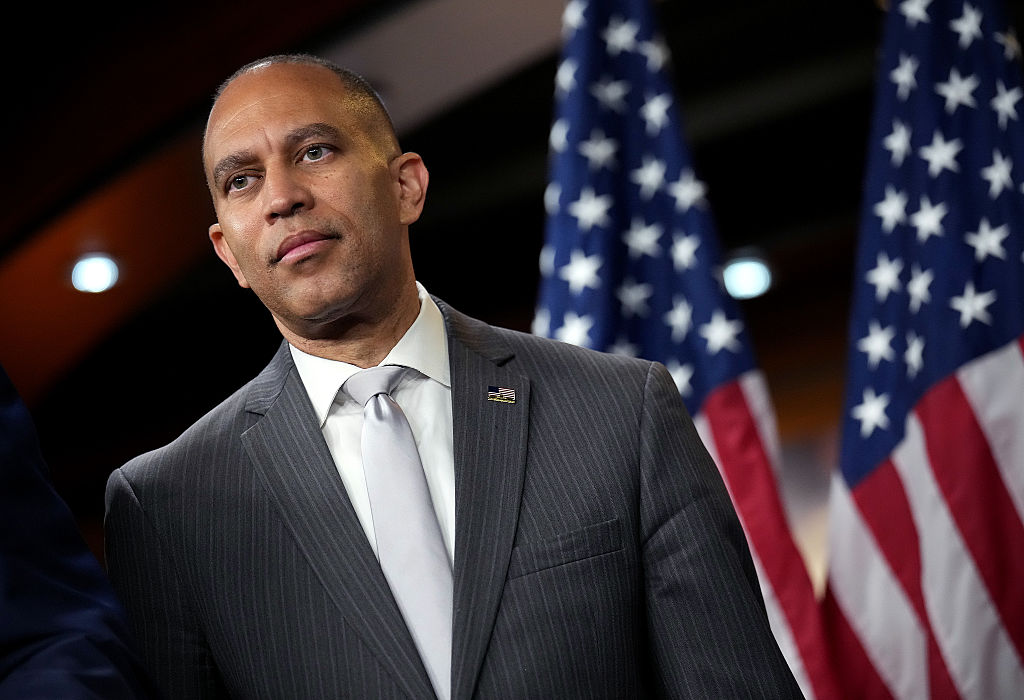
House Minority Leader Hakeem Jeffries speak at a press conference at the U.S. Capitol on June 11, 2025 in Washington, D.C. —Kevin Dietsch––Getty Images

House Minority Leader Hakeem Jeffries met privately with President Donald Trump’s son-in-law and adviser Jared Kushner in recent weeks, prompting criticism from some Democrats ahead of approaching midterm elections, according to reports.

Although Kushner, who served as a senior West Wing adviser during Trump’s first term, does not have a formal role in the current Administration, he has remained involved in Trump’s diplomatic efforts in the Middle East and Russia.

During the meeting, the pair were said to have discussed housing, immigration, and the high cost of living as potential areas of common ground.

The report comes less than three months before the November midterms, when Democrats are favored to retake control of the House from Republicans, who currently hold both chambers of Congress. A Democratic victory would put Jeffries in line to become speaker and give the party greater oversight powers to investigate the Trump Administration.

The meeting—an unusual instance of a top Democrat and a Trump confidant coming together to discuss potential areas of agreement—has drawn scrutiny from some within Democratic circles. It was first reported Sunday by The New York Times and has since been confirmed by multiple outlets.

“Throughout this Congress, Republicans have adopted a my-way-or-the-highway approach to governing that has failed the American people," Jeffries says in a statement to TIME. "To stop the madness, we have repeatedly made clear that an extremist approach will not work and will be met with forceful opposition. The American people want bold change and that’s what House Democrats will deliver.”

“In every conversation that we have with the Trump administration, we will continue to make it explicitly clear that the affordability crisis is not a hoax and nothing short of transformational policy change is acceptable. We are fighting for an affordable America. The question is whether Republicans will join us,” the statement reads.

TIME has also reached out to the White House and Kushner for comment.

Asked whether he supported the meeting during an interview on NBC’s Meet the Press on Sunday, Democratic Sen. Chris Van Hollen of Maryland said: “I’m in favor of people meeting with whoever they want to discuss ideas. But it’s one thing to have a meeting. It’s another thing to see something real come out of that.”

Tommy Vietor, a former aide to President Barack Obama and now a co-host of the podcast Pod Save America, was far less diplomatic.

“Jared Kushner has no actual government job, he just uses his family connections to get money from Gulf autocrats and fund corrupt deals. The only way Jeffries should work with him is with demands for documents and subpoenas,” Vietor said.

House Speaker Mike Johnson said Sunday that he first learned of the meeting that same day, when reports began circulating in the media.

"I don't know what that's about," Johnson said on Fox News. "I know Jared has interests and lots of other things going on. He's not really directly involved in the admin, at least in the day-to-day in the White House."

Johnson, however, remained confident that Republicans could retain control of the House.

“I’m telling you what, you better not bet against the House Republicans,” he said.

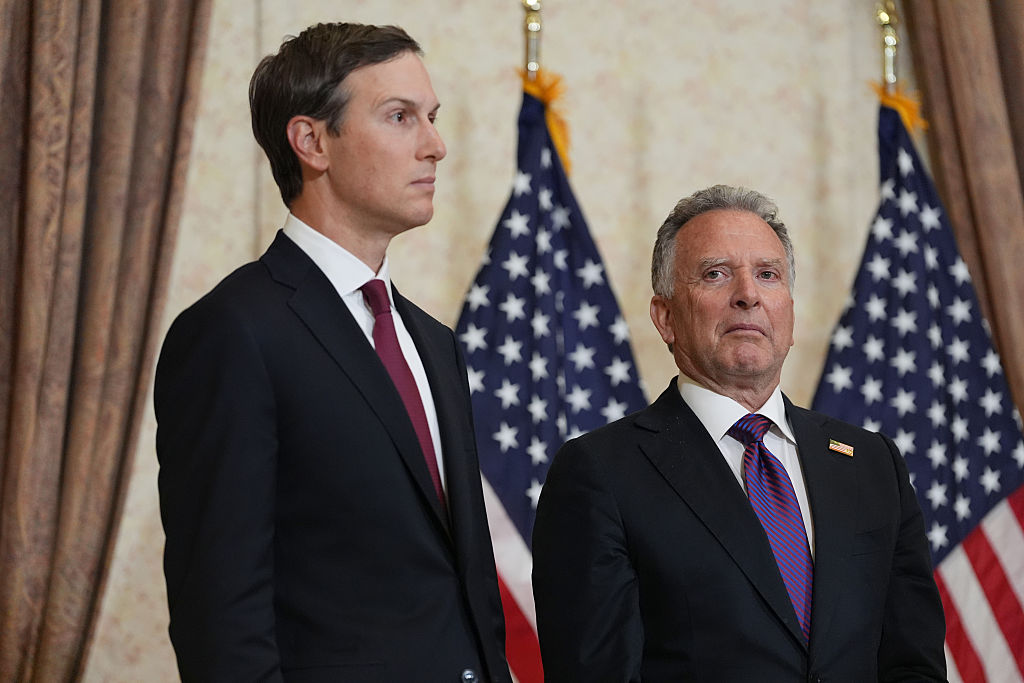
Jared Kushner, left, and Steve Witkoff, Special Envoy for Peace Missions listen as Vice President JD Vance speaks during a news conference after meeting with representatives from Pakistan and Iran, April 12, 2026 in Islamabad, Pakistan. —Jacquelyn Martin––Pool/Getty Images

Trump has met with the top Democratic leaders of the House and Senate only once since returning to office, when the President attempted last year to reach an agreement to prevent a government shutdown. Those talks ultimately failed, leading to the longest government shutdown in U.S. history.

The relationship between Trump, Jeffries, and other members of the Democratic leadership has often been marked by conflict and back-and-forth name-calling.

In late April, Trump called Jeffries a “low IQ person” and attacked Senate Minority Leader Chuck Schumer over their opposition to the Iran war, branding them “traitor Democrats.”

Jeffries, in turn, called Trump the “dumbest President ever” in response to the President’s insults during a press conference.

Trump has continued to attack the top House Democrat as "low IQ" and a "thug” branding him as a “danger” to the country.

More recently, however, Trump’s tone toward Jeffries appears to have softened. In an interview earlier this month with Punchbowl News, the President said he could work with the Democratic leader and described him as a "nice guy."

"People are harsh on me. I'm harsh on them. It's part of the world," Trump said. "I'd probably get along with him very well."

Since returning to the White House, Trump has often sought to bypass Congress and pursue policy through executive action, from curbing birthright citizenship to the implementation of tariffs.

That dynamic could change if Democrats take control of the House, where Republicans currently hold a slim majority of 218 Republicans to 212 Democrats and one independent.

A Democratic-controlled House would give the party the power to block parts of Trump’s legislative agenda, launch high-profile congressional investigations, issue subpoenas, and initiate impeachment proceedings.

Trump—who was impeached twice during his first term—has urged voters to back Republicans in the midterms, arguing that Democrats would use their power to impeach him again.

“I’m going to be impeached. They're going to impeach me. They have no idea why,” he told a crowd during a rally in South Carolina last Friday.

The latest Emerson College polling, released August 20, found congressional Democrats leading Republicans by nearly 8 points. A separate Reuters/Ipsos poll released Aug. 17 found Democrats ahead by 5 points. All 435 House seats are up for election in November.

  •  

Iran Hits Back at Trump’s Threat of a ‘Crushing’ Economic ‘D-Day’ Campaign

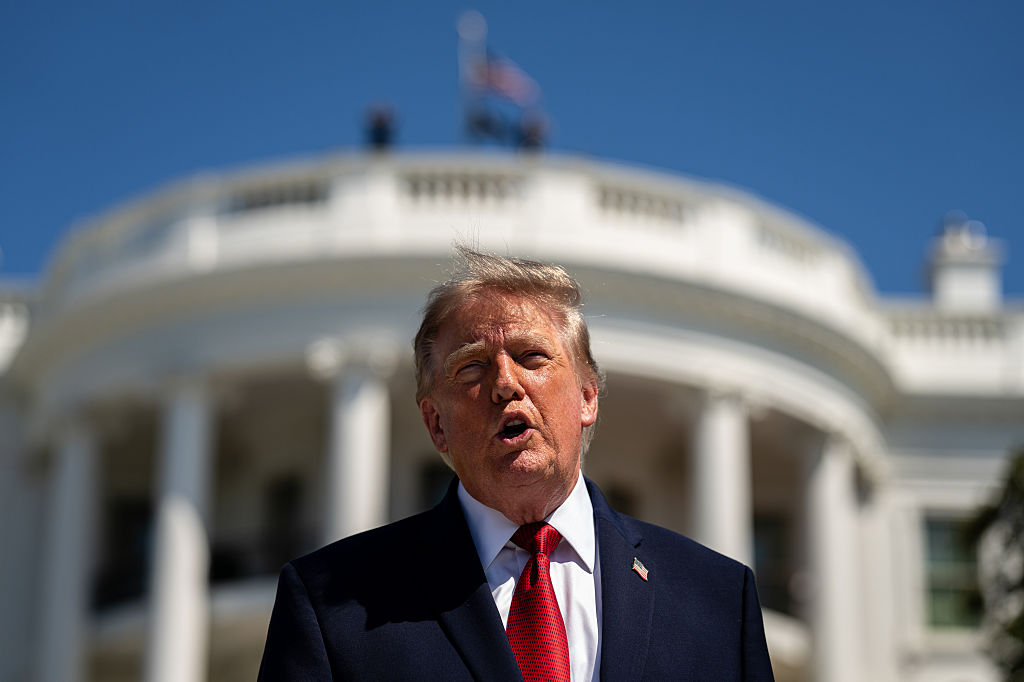
President Donald Trump speaks to members of the media near the White House helipad construction on the South Lawn of the White House in Washington, D.C., U.S., on Wednesday, Aug. 19, 2026. —Al Drago––The Washington Post/Bloomberg/Getty Images

Iranian officials have dismissed President Donald Trump’s threat to launch what he called  the “most crushing economic operation”against Tehran, as the nearly six-month war enters a new phase of economic pressure and negotiations between the two countries remain stalled.  

Trump announced the campaign late Wednesday, threatening consequences for countries that continue to provide Iran with access to global trade and financial networks. 

“This will be economic warfare and isolation on an unprecedented scale,” he said. “Any country that allows its financial institutions, businesses, airports, or government entities to provide any type of lifeline to Iran will itself face tremendous economic consequences.”

Trump did not specify what specific measures would be imposed on countries that continue to do business with Iran. TIME has reached out to the White House for comment.

The President also called on U.S. allies to impose additional restrictions on Tehran in order to “cripple them and their ability to project terror worldwide.”

“This will be an economic D-Day, and we need all of our allies to stand with the United States of America to isolate, and defeat, the Iran threat,” he said. 

D-Day commonly refers to June 6, 1944, Allied landings on the beaches of Normandy, France, which opened a major Western front against Nazi Germany. 

Treasury Secretary Scott Bessent said on Thursday the United States ​will impose "maximum economic pressure" on Iran.

"It ⁠is a one-two punch. We have the blockade (on Iran), and we are going to have the toughest sanctions in history," Bessent told CNBC. "It is going to work in Iran and we are going to collapse this regime."

How Iran responded

Iranian officials rejected Trump’s threats and instead pointed to the strains the conflict has placed on the U.S. economy.

Iranian Foreign Minister Abbas Araghchi called the move a “diversion from America's own crisis: unprecedented debt & surging interest costs.”

“Doubling down on failed policies will only bring further defeat—and enmity of Iranians. U.S. economic terrorism threatens global economy and sovereignty worldwide,” he said Thursday morning.  

The U.S. national public debt surpassed $40 trillion threshold this week.

Iran's deputy foreign minister Kazem Gharibabadi similarly took aim at Trump’s rhetoric, arguing that the President’s threats have become less relevant as the conflict, which began on Feb. 28, approaches its six-month mark.

“They claim Iran is on the brink of collapse and hanging by a thread, yet they beg all their allies to help them! The problem is the wrong calculations that, each time to cover them up, they’re forced to create a bigger failure for themselves,” he said Thursday on social media. “The military war didn’t yield results, so now they’ve named the next failure “economic war”.”

Trump has repeatedly used maximalist rhetoric during the war, previously warning that a “whole civilization would die” if Iran failed to meet a deadline for a deal in April and, more recently, weighing a "massive attack” against Tehran at the end of July.

Neither threat resulted in the action that Trump initially described.

The latest warning came a day after the United Arab Emirates (UAE), a major regional trading hub with Iran, announced that it would suspend trade with Iran following reported missile strikes.

Since the start of the war, the U.S. has imposed additional heavy economic sanctions on Iran as part of a “maximum pressure” campaign intended to restrict funding for Tehran’s military capabilities.

Some Iranian officials have responded by calling for the country to abandon its international nuclear commitments. 

“The best response to Trump's escalation of the economic war is to withdraw from the NPT,” said Iranian member of parliament Ebrahim Rezaei.

The NPT, also known as the Nuclear Non-Proliferation Treaty, is an international agreement aimed at stopping the spread of nuclear weapons.

The Islamic Republic of Iran signed the treaty in 1968 and ratified it in 1970, committing as a non-nuclear-weapon state not to manufacture or acquire nuclear weapons.

Trump has repeatedly cited preventing Iran from obtaining a nuclear weapon as a justification for U.S. military action 

“They have to get rid of it completely. They have to get rid of nuclear weapons. Iran cannot have a nuclear weapon,” Trump repeated Wednesday during the unveiling of the new White House helipad.

Where U.S.-Iran negotiations stand

Trump’s renewed economic threats come as negotiations between Washington and Tehran appear to have stalled amid disagreements over the Memorandum of Understanding (MOU), signed by both countries on June 17.

The document outlined commitments aimed at ensuring the full, toll-free reopening of the Strait of Hormuz, and established a  60-day cease-fire intended to allow technical talks to take place, including over Iran’s nuclear capabilities. Before the war, roughly a fifth of the world's global petroleum liquids consumptions passed through the waterway.

But  Washington and Tehran have since offered differing interpretations of the agreement, and fighting resumed before the diplomatic process produced a broader settlement.  

The dispute over the Strait has since reignited, with Iran releasing a list of six key demands that it says the U.S. must meet before the waterway can reopen.

Senior Iranian lawmaker Ebrahim Azizi on Thursday reiterated one of Iran’s demands to end America's “presence in the region immediately” and warned that “any further mistake or miscalculation will carry consequences far greater than before.”

Trump has dismissed the demands and instructed his representatives to seek compensation "for all of the people" that Iran has "killed and gravely wounded with their roadside bombs and many conflicts."

The 60-day threshold has now passed and there is  little sign of a renewed cease-fire agreement.

Trump has also increased pressure on Oman, a longtime U.S. security partner that had reportedly been nearing a deal with Iran over  commercial shipping through the Strait, repeating threats to bomb the country

“If Oman gets in the way, we’ll bomb the sh-t out of them,” Trump told Fox News reporter Trey Yingst on Monday.

China could present an even greater test of Trump’s economic strategy. The U.S.-China Economic and Security Review Commission stated that the country remains Iran’s largest trading partner and the primary buyer of Iranian oil.

When asked whether the sanctions would target China, Bessent responded: “Many conversations are best to have in private, and we are confident that everyone wants the Strait (of Hormuz) re-opened, and for energy prices to come back down,” adding “it would do them a big service to get with the program.”

Trump’s warning that countries doing business with Iran could face economic consequences raises questions about how the policy could affect Beijing as Chinese President Xi Jinping prepares to visit the U.S. next month. 

  •  

U.K. Signals Willingness to Reconsider Digital Services Tax After Trump Tariff Threat

Prime Minister Andy Burnham visits the Met Office in Exeter on Aug. 14, 2026 —Press Association—AP

The U.K. government has indicated its willingness to reconsider its digital services tax amid increasing pressure from the Trump Administration.

The concession came in response to an interview published Monday in which U.S. Trade Representative Jamieson Greer told The Times that President Donald Trump’s threats to scrap a trade deal with Britain and impose a 100% tariff were “not a bluff.”

When asked if the interview might lead Downing Street to change its stance on the tax, a government spokesperson told TIME, “We remain open to discussing U.S. concerns and working with partners internationally.”

The digital services tax imposes a 2% levy on the revenues of “search engines, social media services, and online marketplaces which derive value from U.K. users.” Several other European countries, including Portugal, Spain, and Poland, have also implemented similar taxes.

Greer said Britain was using American companies as “piggy banks” and that he was “not going to tolerate that.”

“We have very good relations with the U.K. We’ve had very constructive relationships, we’d love to keep talking to them about this issue. The President is quite serious about digital services taxes all over the world,” he said.

Read More: Why Trump Is Threatening to Impose a ‘Big Tariff’ on the U.K.

“This tax is about making sure that businesses pay their fair share of U.K. tax based on the value they derive from U.K. activities. It is an interim measure, and we are still committed to removing it once a global solution is in place,” the spokesperson said, adding that both countries “share a strong trading relationship.”

A White House official tells TIME that “the Administration continues to address digital services taxes and other tech issues with our trading partners.”

Rising trade tensions between the U.S. and the U.K.

The U.K. and the U.S. agreed to a “groundbreaking” Tech Prosperity Deal in September 2025, which was expected to bring billions of dollars in investment from U.S. tech companies into the U.K. technology sector.

However, relations between the two countries have splintered since the onset of the Iran war.

"This is not Winston Churchill we're dealing with," Trump said of former British Prime Minister Keir Starmer at the height of tensions in March, as he accused the former U.K. leader of "ruining" relations.

Trump later warned the U.K. that he would implement a “big tariff” in April if the country did not drop its digital services tax on U.S. tech companies. And in June, he threatened to impose a 100% tariff on imports from any country that taxes digital services provided by U.S. companies.

“This tariff will supersede trade deals made with the country, whether implemented, signed, or not,” Trump said June 26.

The Trump Administration has not yet made any official tariff announcements linked to these threats.

However, the U.K. government, which has recently come under new leadership, has signaled that it is open to discussions.

Burnham aims to bridge relations between the two nations

Prime Minister Andy Burnham, who took office in July, has indicated intentions to mend the relationship between the two countries.

Asked whether there was a deadline for discussions with the new Burnham government, Greer declined to set one, instead emphasizing cooperation with the U.K.

“I don’t set artificial timelines. All I know is the President is eager to enforce our trade policy, he’s eager to make sure our companies aren’t discriminated against,” he said.

Since taking office, Burnham has appeared keen to repair relations with Trump. The two have spoken by phone, and Burnham extended an invitation for Trump to visit Manchester in the future—where the 2027 G20 summit is rumored to be taking place and where Burnham served as mayor before becoming Prime Minister.

But he may be hesitant to remove an important source of revenue for the U.K.

Between 2021 and 2025, the tax generated more than £2.4 billion ($3.2 billion) in revenue for the British government.

Read More: ‘We Won’t Be Bullied’: U.K. Responds to Russian Threat Over Ukraine Drone Support

Trump has pushed the U.K. on policy in the past, including his consistent calls for Britain to allow new North Sea oil and gas licenses—something the Starmer government intended to ban.

On the eve of Burnham’s entry to Downing Street, Trump claimed: “The people of Aberdeen, in Scotland, are dancing in the streets because the new Prime Minister, Andy Burnham, has stated that he will be opening up, all the way, the invaluable North Sea Oil."

Burnham has signaled that he is open to reconsidering Britain’s access to North Sea oil and gas.

“I’ve got something of an open mind, you know. I don’t have a sort of fixed position,” he said in early June.

Trump has continued to tout the new British Prime Minister’s willingness to reconsider the issue.

“One of the things he is going to do, I think he's going to open up the North Sea. That'll make the U.K. pretty rich,” Trump said on Monday in the Oval Office.

Burnham, however, has yet to make a final decision.

  •  

Trump Delays 50% Canada Tariffs as the Two Countries Race to Finalize a Deal

President Donald Trump welcomes Canadian Prime Minister Mark Carney outside the West Wing of the White House on Oct. 7, 2025, in Washington, D.C. —Anna Moneymaker––Getty Images

President Donald Trump announced late Tuesday a temporary pause on 50% tariffs on Canada as both countries race to finalize a trade deal.

The President’s announcement came hours before a series of tariffs set to cover about $20 billion worth of imports into the U.S. from Canada were set to take effect.

“I have paused the 50% tariffs against Canada, that were scheduled to kick in tomorrow morning for a three day period, based on the fact that Canada and the U.S.A., subject to the finalization of documents, have a deal!” Trump said on social media.

Canadian Prime Minister Mark Carney released a statement moments later, confirming that there had been “intensive discussions” with the U.S. to “address outstanding trade issues.”

“Substantial progress has been made, although there is important work still to be done,” he said.

Read More: Trump Imposes 50% Tariff Hike on Canadian Goods

The tariffs will now be paused until Aug. 21, subject to the finalization of an agreement between the two countries.

U.S. Trade Representative Jamieson Greer said the deal will include "comprehensive market access for ​all ⁠American goods, economic security commitments, digital trade alignment," along with other provisions.

Trump added in his social media post that the Keystone XL pipeline—a cross-border oil pipeline project between the U.S. and Canada that was canceled by former President Joe Biden in 2021 after pushback from environmentalists, Native American tribes, and Indigenous advocates—"may be awoken from the grave," but did not provide further details.

The President later posted what appeared to be an AI-generated image of himself dragging the Keystone pipeline out of the ground.

Neither side has provided further confirmation about the contents of the agreement.

TIME has reached out to both the White House and the Prime Minister's office for comment.

U.S. and Canada push toward a deal

Carney said earlier this week that he planned to speak with the U.S. President ahead of the tariff deadline. The announcement follows a period of negotiations between the two sides.

During a tour of a tire factory in Iowa last week, Greer told reporters that the U.S. and Canada were engaged in “constructive negotiations” but warned that if a “country retaliates” they would “take action.”

Canada's minister responsible for U.S. trade, Dominic LeBlanc, and chief trade negotiator Janice Charette have been in Washington since last week for talks.

The negotiations unfolded against a backdrop of ongoing grievances between the two countries, including Trump’s repeated statements about his desire to annex Canada and make it the 51st U.S. state—an idea Carney has strongly pushed back against.

In August, Carney took a swipe at Trump, mocking the U.S. President after a teleprompter malfunctioned in the middle of an on-camera speech.

The tense relationship between the pair has also played out over the Gordie Howe International Bridge—a cross-border bridge connecting the two countries that has repeatedly become a source of disagreement between Washington and Ottawa.

How U.S.-Canada trade tensions escalated

The last-minute tariff pause comes after more than a year of escalations between the two countries.

In February 2025, the White House hit Canada with a 25% tariff on most goods and 10% on energy resources, citing what it regarded as inadequate progress in curbing cross-border illegal immigration and drug trafficking.

Canada then imposed tariffs on some vehicle imports from the U.S. in April 2025, amid a larger trade war sparked by Trump’s global tariffs—the majority of which were struck down by a Supreme Court ruling earlier this year.

The 50% tariff hike on a range of Canadian goods was announced in July, with Trump signing a series of proclamations citing Canada’s “discriminatory treatment” of American products.

The new levy, a retaliation for Canada’s tariffs, would apply to a range of Canadian goods, including electronics, sports equipment, and essential oils.

The Administration had also announced targeted new tariffs on Canadian dairy products and exports of wine and other alcoholic beverages.

According to economists, the tariffs could have had significant economic consequences if enacted. TD Economics estimated that, if maintained, they could reduce Canadian GDP growth by 0.3 to 0.6 percentage points over the following year.

A Canadian Federation of Independent Business survey of 1,833 firms found that 77% of affected exporters expected revenue losses, while 35% expected their revenue to fall by at least half.

In a new proclamation issued Tuesday suspending the tariffs, Trump said: “Canada has expressed a commitment to remove the discriminations or unreasonable and unequal impositions.”

In a statement late Tuesday, the Distilled Spirits Council of the U.S. applauded Trump's announcement and called for "a negotiated solution that gets American spirits back on retail shelves in all Canadian provinces and returns the spirits sector to a zero-for-zero tariff framework."

The new tariffs were set to apply despite the U.S.-Mexico-Canada trade agreement (USMCA)—which had shielded Canadian industries from earlier U.S. tariffs.

The USMCA, which was signed by Trump in 2018, is a trilateral agreement that eliminated or reduced tariffs on goods traded between the nations of North America. It governs nearly $2 trillion in annual trade among the three countries.

In early July, the U.S. declined to renew the U.S.-Mexico-Canada Agreement for a 16-year term. Rather than terminate it outright, this puts the USMCA under annual review. Trade experts told TIME that the move is expected to carry profound long-term economic consequences.

  •  
❌